Author: Casino Connection Staff

New York Fund Backs Out of Bid for William Hill

New York investment fund Apollo Global Management will not seek to acquire sportsbook operator William Hill. The firm had until last Wednesday to submit an offer to better Caesars £2.9 billion (US$3.8 billion) bid, which was recommended by management and approved by shareholders. Company Chairman Roger Devlin said the Caesars-Hill merger secures “the best foundations from which to accelerate William Hill’s U.S. multi-state wagering ambitions.”

Apollo is interested, however in William Hill Plc’s non-U.S. assets, which Caesars has said it wants to sell. A new look Caesars would prefer not be saddled with the company’s European portfolio.

Betfred founder Fred Done, for one, expressed interest in the U.K. holdings while 888 Holdings leans towards online and Scandinavian online casino Mr Green.

Ontario Seeks to End Online Gaming Monopoly

The Ontario Lottery and Gaming Corporation’s monopoly on online gambling in the Canadian province could end as plans are being made to introduce legislation to open up the market to private operators.

The Ontario Lottery and Gaming Corporation is the only operator approved to offer online gambling in the province through its PlayOGA.ca website. But the government has also not cracked down on offshore, black market operators so many bettors in Ontario choose those sites over the government monopoly. It’s unclear if the Ontario government will do more to block illegal online wagering in the province.

However, the province’s government has outlined plans to end the lottery’s monopoly in budget plans and now appears ready to introduce legislation to establish a more open market. Plans are for the province’s Alcohol and Gaming Commission of Ontario (AGCO) to serve as regulator for the market. In addition, a AGCO subsidiary will manage the relationships between the government and licensed operators and affiliates.

The Ontario government said it will also encourage the Canadian federal government to sports betting across the country. A bill that would repeal existing laws and make it legal for Canadians to wager on single sporting events is scheduled to be introduced into the country’s parliament. Currently only parlay betting (wagering on two or more outcomes) is permitted.

The Canadian Gaming Association hailed the measure.

“As we grapple with the economic recovery from novel coronavirus, it will be helpful for Ontario to generate revenue from the licensing and taxation of offshore online operators who qualify to operate in Ontario,” CGA president and chief executive Paul Burns said in a press statement. “It will also allow land-based casino operators to access online gaming, enabling them to diversify their entertainment options and interact with customers outside of property walls.”

Murphy’s Law Draw Fire in A.C.

As of November 12, Atlantic County reported 6,012 cases of Covid-19, right behind Gloucester, but ahead of only six other counties. The numbers fall well behind those in populous Essex, Bergen, Hudson and Middlesex counties, all with over 20,000 cases, according to the latest data from Centers for Disease Control and Prevention.

Using cases per 100,000 residents as a yardstick, Atlantic County’s 2,280 also falls well behind most counties in North Jersey. Passaic County reported 4,607 cases per 100,000; Essex, 3,516; Union, 4,059; and Hudson, 3,777.

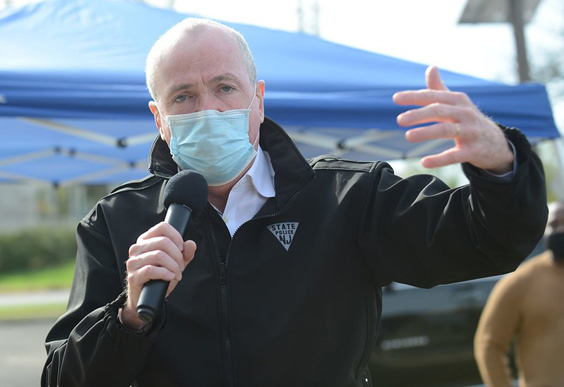
Yet if you run a restaurant or bar in Atlantic City, whether inside a casino or not, you fall in lock step with Governor Phil Murphy’s latest executive order to shut down at 10 p.m., a move designed to stem the growing number of cases in the state.

Does that seem fair?

Depends on who you ask.

“We do believe there should be a regional approach as many areas of the state don’t have high numbers and this will at least help those businesses,” said President Marilou Halvorsen, of the New Jersey Restaurant & Hospitality Association.

Then again, there is a point to be made that Atlantic County can’t go just by who lives in the county.

“I understand the desire to have a more targeted regional approach. But it would be difficult to make decisions based solely on number of cases per county per capita as visitors come to the city from multiple counties in New Jersey and several other states. The county by county approach is more feasible in non-resort locations where customers are typically locals,” said Jane F. Bokunewicz, coordinator of the Lloyd D. Levenson Institute of Gaming, Hospitality & Tourism at Stockton University.

Bokunewicz said the restrictions—which also include a ban on seating at a bar—seem a better solution than a complete shutdown of indoor dining.

Still, the restrictions will clearly impact customer service and limit guests’ ability to enjoy all the amenities Atlantic City has to offer, she said.

“Most casinos in Atlantic City have at least one 24-hour restaurant because casino guests enjoy dining at all hours while they are on vacation or on an overnight stay,” Bokunewicz said.

But even in areas prone to high risk, there are other options, more palatable ones, Halvorsen said. Instead of having no bar seating, put up Plexiglas partitions to achieve the same results without impacting livelihoods more than they do.

Worse still, is the uncertainly from week to week, she said. “Businesses need to plan and forecast.  Having specific data to look for and anticipate is critical,” Halvorsen said.

Food and beverage operations and their employees already feel the effects of the 25 percent indoor capacity limit, Bokunewicz said. Employers can only bring back a certain number of staff.

“Further restrictions could make recovery even more difficult. Requiring restaurants and other food and beverage services to close at 10 p.m. will reduce the number of staff members that can return to work and limit work hours for those employees who have already returned,” Bokunewicz said.

In a briefing in Trenton on November 9, Murphy defended his actions. “The last thing I want to do…is to shut our economy back down, and thankfully, we are not at that point. No one up here wants to take the type of broad and all-encompassing actions like those we had to take in March. We are acting with more precision-based actions on what we are seeing on the ground.”

Murphy’s new edict did not score high marks in South Jersey especially with the one-size-fits-all approach.

“Businesses in South Jersey are hurting. New blanket restrictions are not what we wanted to hear,” Assemblyman Vince Mazzeo, D-Atlantic, posted on Facebook. “These new restrictions were put in place due to soaring North Jersey Covid cases.”

The Chamber of Commerce of Southern New Jersey put out a statement 9 expressing disappointment with Murphy’s refusal to “consider the vast disparities in health metrics throughout different geographical areas of the state.”

John Exadaktilos, owner of Atlantic City’s Ducktown Tavern, said he was “sick to his stomach” following Murphy’s announcement. He already told his 27 employees to file for partial unemployment, according to the Press of Atlantic City.

“Anybody who wears the same shoes I wear is nervous and mentally irate at the decisions because it does not make sense,” he said.

Since July, there have been 251 reported positive cases among those who work at a casino, with more than 60 percent occurring in October, based on data collected by the state Division of Gaming Enforcement. Of the total, 172 involved employees who work directly for a casino hotel, among them executives, housekeepers, bell hops, security personnel, kitchen workers, administrative staff, slot attendants and dealers. Another 79 cases work at various restaurants and bars.

Indoor dining resumed in early September.

While 251 sounds high, the numbers represent little more than 1 percent of the casino workforce, based on September employment figures. The low numbers speak to the success of health and safety policies implemented as part of the reopening plan.

In a statement, the Casino Association of New Jersey, which represents the nine casinos, said such policies are working.

“The industry has taken extraordinary measures to safely welcome back thousands of hardworking employees and valued guests, while also helping to minimize the exposure to Covid-19,” President Steve Callender said in the statement. “We will continue to work to give our guests the exciting experience they have come to expect from our first-class properties.”

And, he said indoor dining outlets remain open except between 10 p.m. and 5 a.m. Room service is available 24/7. So is the casino floor.

“As we see a rise in cases across New Jersey, we are focused on the health and safety of our employees, guests and fellow residents and will continue to work with AtlantiCare, our regional healthcare provider, as well as local and state officials, to refine and update protocols as local and state mandates evolve,” Callender said. “We remain dedicated to complying with, or exceeding, local or state-imposed mandates, restrictions and occupancy limits to try to maintain a healthy environment.”

(Casino) operators have to maintain the highest level of vigilance to stem the spread of this virus, said industry consultant, Daniel Heneghan. “A number this small shouldn’t come as any great surprise.”

Loss of Convention Biz Hammers Atlantic City

Nothing spells optimism for a sunny future than pools, RVs and boats.

On January 26, the Pool & Spa Show returns to the Atlantic City Convention Center. A couple weeks later on February 12, the Atlantic City RV and Camping Show comes back, and two weeks after that, the Progressive Atlantic City Boat Show.

All three are annual winter staples on the convention center calendar, and expect to draw more than 60,000 visitors in total. But the cloud of Covid-19 hangs over these and other trade and public shows on the docket. The pandemic wiped out just about all the shows for November and December, and unless the number of cases diminishes, the same fate could await the January and February calendar.

“While we have a few events remaining on the calendar for 2020, we are closely monitoring the guidelines set forth by the governor and the CDC and will pivot accordingly, if necessary,” said Jessica Kasunich, communications manager for Meet AC. “We are still holding onto our first quarter events and remain hopeful that we will continue to see positive signs in the new year.”

Good riddance to 2020; hello to 2021.

The millions of dollars forfeited in 2020 when the New Jersey Education Association and New Jersey State League of Municipalities scuttled their annual conventions in Atlantic City in favor of virtual events, which do nothing for business in or out of the casinos. Meet AC, the resort’s group sales and marketing organization, lost over $182 million in convention economic activity through October 29.

Casino operators fear the limitations imposed by the state will result in a ripple effect on the hospitality industry, according to the Press of Atlantic City. The lack of meetings exacerbates an already exasperating situation, especially this time of year and especially midweek, when conventions fill otherwise vacant hotel rooms.

“The lack of volume midweek has always presented favorable midweek hotel pricing when compared to Philadelphia and New York City. However, it has become a dire need and more meaningful with business being negatively impacted by Covid-19,” Property President, Joe Lupo, Hard Rock Hotel & Casino Atlantic City said.

Without midweek conventions, you have less hotel rooms occupied, less volume in restaurants, less banquet and catering business, less gaming and less business to the local operators of Atlantic City as well, Lupo said. Limiting the number of participants to 25 per meeting has scratched any bookings at Hard Rock. And without an increase in capacity for meetings in hotels and in the convention center, the dominoes fall.

Bottom line: it is the convention business that keeps the city afloat during the offseason. “This will further cripple the industry and may have a very negative long term impact if a casino does not survive this,” said Michael Busler, Ph.D., Professor of Finance at Stockton University.

State lawmakers, city officials, casino executives and labor union leaders have asked Governor Phil Murphy to ease the restrictions on indoor gatherings. But with an increasing number of Covid cases, it’s unlikely he will fully allow conventions to return to Atlantic City. ”Since the virus tends to grow during the colder weather, allowing conventions anytime soon will probably not happen,” Busler said.

The longer restrictions keep conventions away, the more the long term damage.

“We need meetings and conventions, and an increase to 50 percent (for indoor dining). We feel pretty passionate that we can do this, and we can do this well,” said Steve Callender, president of the Casino Association of New Jersey and regional president of Caesars Entertainment Inc., which operates four of the city’s nine casinos.

Because of their massive size, state-approved health and safety protocols, top of the line ventilation systems, and rigorous regulatory oversight, Atlantic City’s casinos believe they are uniquely equipped to resume holding larger indoor gatherings.

“I think that the state is being as cautious as they can,” McDevitt said. “The only thing that we’ve asked is that they be creative in the way that they deal with this situation. … I think, with all the precautions that are already in place, probably one of the safest places to be is in a ballroom of an Atlantic City casino.”

Bob McDevitt, president of UNITE HERE Local 54, the union that represents some 10,000 casino workers said the return of meetings and conventions and the additional business they bring would mean more hours and more money.

“My best guess is that assuming a vaccine is available by the end of the year, sometime in early spring conventions will be allowed,” Busler said.

The impact of the loss of midweek business is felt in the already struggling casinos and the lack of revenue from casinos erodes the contributions to the Casino Reinvestment Development Authority, which erodes its ability to repay interest and debt on bonds secured to finance projects. Bonds become riskier.

So it isn’t any surprise that Fitch Ratings reduced the CRDA rating. $215 million worth of bonds went from BBB+ to BBB, according to CalvinAyre.com.

While the agency still believes the default risk for the bonds is low, a rating of BBB indicates “adverse business or economic conditions are more likely to impair” the risk, Fitch wrote in a report.

The cancellation of conventions, trade shows and other events reduce the likelihood of recovery in revenues to support the luxury tax bonds Fitch rates, said Doug Offerman, senior director at Fitch. In this case the bonds relate to the luxury tax on rooms, alcoholic beverages and entertainment.

“These are many of the things that make Atlantic City a popular destination and generate the luxury tax,” Offerman said. “If the tax falls below historical levels we won’t see recovery right away. This is a signal to bondholders that we are concerned about the risk related to revenue stream.”

Said Busler, “When the credit rating agencies come up with the bond ratings, their primary concern is the bond issuer’s ability to pay the annual interest charges and to re-pay the debt when it matures. As the issuer’s cash flow position weakens, the risk of default increases and so the bond rating falls.”

The downgrade means that CRDA’s borrowing cost will increase, leaving them with less money to pay for the projects that they usually approve, Busler said.

Gross gaming revenues, a percentage of which funds the CRDA dropped 15.1 percent in September to $190.5 million. The online segment the one bright spot, helped limit the losses, but some are concerned that the switch from physical casino gambling to online gambling will become permanent. “This will place further pressure on the CRDA, as well as on brick-and-mortar casinos in Atlantic City,” Fitch said.

But if the restrictions ease up and planned conventions are held, revenues generated for the luxury tax would show up in a few weeks, Offerman said.

“That would help cushion against the risk we have another economic contraction,” he said.

Clean Sweep for Gaming Referendums in U.S.

Despite facing campaigns that repeated all the warnings of the “evils” of gaming, six states and one California city approved expansions of gaming, completing a unanimous win for gaming ballot measures in last week’s elections.

Sports betting was legalized in Louisiana, Maryland and South Dakota and expanded casino gaming in Colorado, Nebraska and Virginia. San Jose, California voter agreed to allow more tables at two local cardrooms.

“As a result of successful ballot measures in six gaming states, more Americans will have access to much needed job opportunities, dedicated tax revenue, and safe, regulated entertainment options closer to home,” said Bill Miller, president and CEO of the American Gaming Association.

“Some form of legal gaming is currently authorized in 44 states, and more than 45 percent of American adults—115 million—live in states with legal, regulated sports betting and the safeguards these markets provide.

“Our industry has a long history of working successfully with federal and state governments that span party lines, and we look forward to our continued collaboration with champions in Washington, DC to shape a favorable policy environment for gaming.

“The AGA will work with the bipartisan Congressional Gaming Caucus in the 117th Congress to ensure policymakers understand our industry’s commitment to responsibility and the positive economic impact we have in communities across the country.

“We also look forward to continuing to work with members on both sides of the aisle to address overly burdensome and unnecessary regulations and taxes, as well as reducing illegal gambling operations that continue to pose a risk to the American public and the economic success of our industry.”

VIRGINIA

By a ratio of nearly two to one, voters overwhelmingly supported referendums in Bristol, Danville, Norfolk and Portsmouth, Virginia, which will allow a commercial casino to be built in each of those cities.

In Danville, with all 17 precincts reporting, 68.7 percent of in-person voters approved the $400 million Caesars Entertainment Inc. casino resort. In Bristol, with all five precincts reporting, 71 percent of voters approved the $400 million Hard Rock casino to be built at the former Bristol Mall. In Norfolk, with 46 of 49 in-person precincts reporting, 65 percent of voters voted approved a $500 million casino. And in Portsmouth, with all 32 in-person precincts reporting, 66.7 percent of voters approved the $300 million casino referendum.

Analysts predict the Bristol casino will create 2,000 jobs and generate $130 million in revenue and $35 million in taxes annually, and attract more than 4 million people to the region. Investors Jim McGlothlin and Clyde Stacy, along with Jim Allen, chairman of Hard Rock International Inc., said in a statement: “We are incredibly grateful for the strong support we have received from the voters of Bristol, Virginia. Today’s referendum vote to bring a Hard Rock Hotel & Casino to Bristol is a vote in favor of more jobs and greater economic opportunity for local residents. This is a win for Bristol and a win for the entire region.”

McGlothlin added, “When Clyde and I launched this idea over two years ago, we called it a ‘moonshot.’ Well, thanks to the voters in Bristol, Virginia, for providing the fuel, with passage of the referendum, to launch us to that successful landing.” The project includes a 2-level casino floor, outdoor entertainment venue with 20,000 capacity, 3,200-seat indoor theater, seven restaurants, four bars, retail shopping, convention and meeting space and a 350-room hotel.

Officials said a temporary casino will open in the former Belk location in the mall in the third or fourth quarter of 2021 in the mall while the property is renovated. The permanent casino is expected to open in late 2022.

In Danville, Caesars Entertainment plans to build a casino resort in the Schoolfield neighborhood. The deal includes a one-time payment of $20 million to the city, including $5 million to purchase the property. An analysis indicated the project will generate at least $190 million in direct revenue and $51 million in tax revenue annually by 2025.

Caesars Chief Executive Officer Tom Reeg said, “Caesars Entertainment thanks the voters of Danville for their support of the referendum that will bring Caesars Virginia to Danville. We look forward to fulfilling the trust the voters have placed in us by bringing 1,300 good-paying jobs, tourism dollars and economic development to the city, and we are incredibly excited to begin construction. We would also like to express our deep gratitude to the many respected business owners and citizens who shared the positive impact this resort will bring to the community with their customers, friends and neighbors. We are pleased to be welcomed into the Danville community and look forward to a long, successful future.”

The Pamunkey Indian Tribe and its partner, Tennessee billionaire Jon Yarbrough, estimated the Norfolk casino will create 1,500 permanent jobs and generate $185 million in annual revenue including $50 million in annual taxes. , according to JLARC projections. The tribe has said it plans to use the casino income to invest in the Norfolk community and its tribal lands in King William County. Officials said 90 percent of the resort jobs will be filled with area residents, including 50 percent from minority groups. The tribe also committed $150,000 to help open a grocery store in the St. Paul’s neighborhood.

Pamunkey Chief Robert Gray said, “We are moved beyond words by the tremendous display of support we’ve received from the Norfolk community. To everyone who advocated on our behalf, shared our message with their friends and neighbors, put up a yard sign, wore a sticker or simply voted yes, we cannot thank you enough. We look forward to working with you to make Norfolk even stronger for decades to come.” The Pamunkey casino resort will feature 3,000 slots and 150 table games, plus a 300-room full-service hotel, steak and seafood restaurant, sports bar and grill, cafe, spa and 2,500-seat entertainment venue.

Chicago-based Rush Street Gaming LLC will operate the Portsmouth casino resort, which is expected to generate $167 million in annual revenue and $45 million in annual gaming taxes, and create 1,380 permanent jobs. Rush Street officials pledged to solicit 5 percent of the equity or $5 million, whichever is greater, from local minority owned businesses or private, accredited investors who are minorities.

Company officials issued a statement saying, “Rush Street Gaming is excited that Portsmouth residents have approved the casino gaming referendum. Rivers Casino Portsmouth will be a proud community partner, a great workplace and a strong economic engine for Portsmouth and Hampton Roads.”

The referendums represent the last step in a process approved by the General Assembly earlier this year to legalize casinos in five economically struggling cities. Richmond is the fifth but officials there chose to wait until 2021 to put a casino referendum on the ballot. The Pamunkey Tribe has expressed interest in building a casino resort there.

Now the casinos’ operators must submit gaming license applications to the Virginia Lottery Board, which will regulate the venues. By law, lottery officials have up to 12 months to review the application,

When the General Assembly legalized commercial casino gambling, it also created a treatment and support fund for problem gambling services. The first $200 million of adjusted gross receipts will be taxed at 6 percent; between $200 million and $400 million at 7 percent; and revenue exceeding $400 million at 8 percent; 0.8 percent of the tax revenue will be directed to the treatment fund according to state law.

MARYLAND

The voters of Maryland last week overwhelmingly approved amending the state constitution to allow sports betting. The vote, which was “yes” on sports betting by a 2-to-1 margin, caps two years of waiting for the state’s proponents of sports betting, after the state legislature failed to vote the measure onto the 2018 election ballot.

The constitutional amendment path was chosen because the state General Assembly was consistently unable to agree on legislation to legalize sports betting, and state officials decided not to add sports betting as a new game under the Maryland Lottery.

Regardless of those facts, the legislature will now be charged with agreeing on the terms of sports betting in Maryland, including how fans would place bets. Wagers could be limited to casino sportsbooks and/or lottery outlets, since the Maryland Lottery and Gaming Control Agency is the regulator of both the lottery and the casinos. The issue of online/mobile sports betting needs to be addressed as well.

Another issue to be resolved is the state’s cut of revenues. Maryland has one of the highest gaming tax rates in the nation, so there no doubt will be discussion of keeping the tax lower on sports betting to compete not only with neighboring jurisdictions like Pennsylvania, the District of Columbia and New Jersey, but also with illegal sportsbooks.

A nonpartisan analysis performed for the legislature assumed a 20 percent tax for sports betting, mirroring the revenue tax on table games at the state’ six casinos. D.C. taxes sports betting at 10 percent, Pennsylvania at 37 percent, New Jersey at 8.5 percent.

The analysis estimated Maryland could generate $18.2 million per year in revenue from retail and mobile sports betting, assuming the 20 percent tax.

The ballot measure linked sports betting proceeds to education funding, asking if sports betting should be authorized “for the primary purpose of raising revenue for education.”

Before the details are hammered out, lawmakers will examine the results of a “disparity study” to determine whether provisions in the enabling legislation should guarantee participation by women and minority groups.

The successful ballot drive was supported by sportsbook vendors, casinos, the horse racing industry and the Washington NFL football team, whose stadium is in Maryland—and whose owner threatened to move the team to D.C., where sports betting is legal and where other Washington teams like the NHL’s Capitals are considering creating stadium-based sportsbooks.

COLORADO

Colorado voters approved Amendment 77 to the state’s constitution in last week’s election, giving residents of Central City, Black Hawk and Cripple Creek the authority to approve or veto new casino games and to raise single-wager limits.

With 84 percent of precincts reporting, 60 percent of Colorado’s voters approved of the amendment. Voters in the three casino host municipalities are expected to vote to expand the available games beyond slots, blackjack, poker, craps and roulette, the only currently allowable games; and to increase the limit on a single wager, set at $100 in 2008. The gaming industry and local politicians had complained that the low limit was pushing gamblers to other jurisdictions where the limits were higher.

“We appreciate that Coloradans supported our town’s right to determine our future so we can improve economic opportunities for the people who live and work here,” said Bruce Brown, Cripple Creek’s former mayor and a proponent of Amendment 77, in an interview with Denver7 TV news. “Things won’t change overnight, but I believe this will help us get back on our feet.”

“Hopefully, a modest boost in revenue will help as these towns rebuild their economies, as well as help students stay in school and graduate,” added former state Senate President Bill Cadman, who also supported the measure.

NEBRASKA

Nebraska voters ended the state’s ban on the gaming industry, approving three measures on November 3 that will allow Ho-Chunk Inc. to $300 million to build casinos at existing racetracks in the state’s largest cities, Omaha and Lincoln that will open next year. They will be followed by a racino at Atokad.

The voters approved the three constitutional amendments—Initiatives 429, 430 and 431—needed to make this happen by about two-thirds. This, despite opposition from Governor Pete Ricketss, who donated $250,000 of his own money to fight the measure.

Ho-Chunk President and CEO Lance Morgan, was a main mover behind Keep Money in Nebraska, backers of the initiative. The other was the Nebraska Horsemen’s Benevolent and Protective Association.

The Winnebago tribe owns one of the racetracks and the WinnaVegas Casino Resort in Iowa, however, Ho Chunk Inc. has no connection with the latter—just the racetrack. Ho Chunk Inc.’s original purpose was to diversify from gaming. By backing the Keep the Money in Nebraska effort, however, it is returning to gaming.

Morgan told the Associated Press, “We want to come out swinging with a high-quality, competitive product. We’re not going to slow down. We’re going to press down on the gas a little bit.”

To accomplish that, Ho-Chunk this week formed WarHorse Gaming LLC to operate the casinos. The Horsemen’s Association will be partnering with Ho-Chunk in operating the racinos.

Morgan told the Sioux City Journal, “This represented a large investment for us. I think it’s going to be a huge deal for Nebraska.” He added, “You don’t get more of a mandate than 65 percent – 70 percent on something. For it to come through, with all the hurdles is a huge deal.”

The amendment allows any of the six racetracks to become racinos. Moreover, new racetracks could be built. Some of the money raised in taxes will provide property tax relief. However, each individual casino will require the nod from state regulators.

Locations for possible racinos include Lincoln, Horsemen’s Park in Omaha, Fonner Park in Grand Island, Ag Park in Columbus, Atokad in South Sioux City, and Hastings.

Many Nebraska residents who voted for the measure said they supported the referendum because of the casino in Council Bluffs, Iowa, which attracts most of its patrons from Nebraska, who cross the Missouri River to reach it. Some estimate that they spend $500 million annually there.

Riverboat casinos in Council Bluffs, proved too much for Omaha’s Ak-Sar-Ben Race Track, which closed in the 1990s.

Proponents have estimated that the state will collect $65 million in taxes from the new industry.

LOUISIANA

Voters in at least 52 of Louisiana’s 64 parishes agreed to legalize wagering in their parishes on sports events. Three parishes, however, voted not to allow gambling in their legal limits. Results in another nine parishes were still being tabulated.

The parishes that approved the sports betting measure cover most of the state’s population and major urban areas. Louisiana already allows casinos, a lottery and video poker and slot machines at racetracks.

While the sports betting measure did well, state lawmakers must still set regulations and tax rates. That process could take up to a year, according to an analysis by the Associated Press.

The fight for sports betting saw more than $2 million in advertising from the political action committee called Louisiana Wins, which was supported by gambling companies. The measure was opposed by many local pastors and the conservative Louisiana Family Forum.

“The people of Louisiana have spoken. Louisiana was missing out on tax revenue from not having legal sports wagering, and now we will be able to raise revenue to support our state’s many needs,” Ryan Berni with Louisiana Wins said in a press statement.

Parishes where voters refused to legalize sports betting include rural Franklin, LaSalle and West Carroll. In nine parishes, the decision remained unclear: Beauregard, Caldwell, Catahoula, Grant, Jackson, Richland, Sabine, Union and Winn, according to the AP.

The state legislature must now determine which sports can be bet on, where the wagers can happen and how the activity will be taxed. The legislature agreed in a two-thirds vote to let parishes decide whether to legalize sports betting.

SOUTH DAKOTA

Deadwood has a storied past, one partly revived with the introduction of casino games. Thanks to the support of voters in South Dakota for Amendment B, sports betting can join the list of approved games.

The South Dakota Attorney General said any approval would also be allowed at on-reservation tribal casinos, according to KELO. The tribal governments that could offer sports betting include the Sisseton-Wahpeton Sioux, Yankton Sioux, Flandreau Santee Sioux, Lower Brule Sioux, Crow Creek Sioux, Rosebud Sioux, Oglala Sioux, Cheyenne River Sioux and Standing Rock Sioux.

Supporters say the amendment would boost tourism and add new tax revenue to help local cities, schools and the state.

CALIFORNIA

Although not an important issue to gaming in general, voters in San Joes approved a measure that would increase taxes on two local cardrooms, but also increase the number of tables they can offer.

The city’s two cardrooms, Bay101 and CasinoMatrix, can now spread 64 games rather than the previous limit, 49 games. The extra 15 tables will cost the casinos an increase in taxes from 15 percent to 16.5 percent. Proponents said it would add another $15 million to city coffers. City council voted 10-1 to place the measure on the ballot and it was approved by more than 70 percent of the voters. It was quietly supported by the cardrooms.

NEW YORK

Although New York had no gaming measures on the ballot, the results could spur some action for online sports betting in the state legislature.

State Senator Joseph Addabbo is still the chief cheerleader for online sports betting. He hopes he can muster enough support from his colleagues to approve a law by the end of the year.

Addabbo, chairman of the Racing, Gaming, and Wagering Committee, said Senate Bill 17D can bring in revenue for worthy programs. The bill failed to receive the required support in the previous legislative session.

Right now, sports betting is only allowed at upstate commercial casinos and tribal gaming properties. New York Governor Andrew Cuomo opposed statewide mobile sports betting, calling it unconstitutional, according to Casino.org.

Addabbo has continued to hammer home the loss of $1 billion a year in revenue as bettors place with wagers online in New Jersey and Pennsylvania.

“We can’t decline opportunities for revenue,” Addabbo said. “We don’t have the luxury.”

The senator also wants the three unassigned New York downstate gaming licenses issued sooner than 2023, the current plan.

Twin River Takes Over Bally’s

The New Jersey Casino Control Commission granted Twin River Worldwide Holdings an interim casino authorization to purchase Bally’s Atlantic City from Caesars on November 5. The move is a preliminary step towards a full license.

The transaction expects to close by the end of this year.

Meanwhile, third-quarter results that beat Wall Street projections and a pending brand change to Bally Corporation put shares of Twin River Casinos Worldwide up 59 cents, or 2.48 percent, last week.

In a Thursday morning statement, Twin River announced net income of $6.7 million, or 22 cents per share, for the three months ended September 30. Despite its properties operating at 50 percent capacity, the profit was down much less than projected compared to net income of $7 million, or 18 cents per share, for the same quarter in 2019. Analysts had projected earnings 13 cents per share for the quarter.

Twin River’s earnings before interest, taxes, depreciation, and amortization, a cash flow measure that excludes one-time costs, rose 6.7 percent to $38 million from $35.6 million.

Twin River announced on October 11 that it will change its company name to Bally Corporation effective November 9, as its acquisition of Bally’s Atlantic City is pending regulatory approvals. The company announced it will rebrand most of its 14 properties in 10 states with the Bally’s name.

In announcing the third-quarter results Twin River CEO George Papanier said results at the Isle of Capri Casino in Kansas City, Missouri, and the Lady Luck in Vicksburg, Mississippi, which Twin River bought for $230 million from Eldorado Resorts in July 2019, drove the EBITDA increase.

“Our disciplined approach has preserved flexibility and moderated financial leverage to levels that have allowed us to have the liquidity to better deal with the kind of uncontrollable events 2020 has dealt us,” Papanier said. “Our first announced sale-leaseback transaction highlights, even during these challenging times, the untapped potential of our predominantly owned real estate portfolio.”

In Atlantic City, Caesars Entertainment Inc. operated the property until the commission agreed to the authorization. VICI Properties owns the land and building. The sale will pay the real estate investment trust $19 million with $6 million heading to Caesars.

When the acquisition concludes, the Wild Wild West Casino and the William Hill Sportsbook will move from Bally’s ownership to Caesars Atlantic City.

To deal with the loss of the William Hill sportsbook, FanDuel will open an in-person sports betting site at Bally’s. At that point, each of the nine casinos will contain retail sportsbooks, a boost to New Jersey’s growing fortunes as a sports betting capital.

FanDuel told The Associated Press the plan is to construct a temporary sportsbook by the end of the year and a permanent venue on the casino floor by next spring.

“They are great partners and we are thrilled to work with them in another exciting, gaming-centric market like Atlantic City,” said George Papanier, Twin River’s president and CEO. “The permanent sportsbook location is going to be one of the many changes we have in store for the Bally’s property.”

The Bally’s sportsbook will be FanDuel’s second in New Jersey, the other being at the Meadowlands Racetrack outside New York.

An investment of $90 million will help make Bally’s “a place to see and be seen” again. The money will refurbish rooms, add suites, bring in new restaurant brands and more gaming options, and renovate meeting and convention space, among other improvements.

“We want to make sure Bally’s is competitive again and return it to its former glory,” said Marc Crisafulli, a Twin River executive vice president. “We’re committed to making it a signature property again at the center of the Boardwalk.”

These days, Bally’s often finishes last among the nine casinos. For the first nine months of this year, Bally’s has won nearly $72 million; in contrast, the city’s top casino, the Borgata, won $373 million over that same period.

Offshore Sportsbook to Seek License in New Jersey

5D is one of the larger offshore sportsbooks, one of several operating relatively unfettered in the Caribbean. They usually make more money than legal sportsbooks in the U.S. And they pay no taxes.

But now 5D wants to go legit and find a home in New Jersey. But first, the company has to get past the gatekeepers, the regulators who issue a license to do business in the state. And 5D comes with baggage and plenty of it,

William Sean Creighton, owner of the company, disappeared two years ago, the victim of a botched kidnapping. At the time, he was close to a guilty plea for money laundering, illegal gambling and fraud. A year ago, authorities identified his remains in Costa Rica, where he ran his business and lived with his wife, Laura Varela, according to the Philadelphia Inquirer.

In October, Varela agreed to pay $47 million to call off U.S. agents and federal prosecutors in Philadelphia over the money laundering.

“The Department of Justice understood. I felt their sympathy throughout this long process,” said Varela.

Varela, who owns the sportsbook with a million gamblers in its system, has enlisted the help of high power attorneys in Washington and Philadelphia to go legal in New Jersey, a stepping stone to other states. New Jersey operators accepted $3 billion in bets to date this year, paying the state $200 million in taxes.

But 5Dimes takes in billions in bets each year, and could grow New Jersey’s already record shattering business. As part of the settlement, Varela will block U.S. access to 5Dimes’ websites and stop handling U.S. bets, but can still take those from other countries.

“The illegal business is certainly larger than the legal business,” says Chris Grove, partner at the Eilers & Krejcik gambling-business advisory firm in Irvine, Calif.

Her lawyers expect it could take several months for an initial response from New Jersey. If approved, it could pave the way for other offshore gambling operations to seek legitimacy in the U.S.

Can 5Dimes make the jump? “It’s a huge if,” said Michael Pollock, a former New Jersey Casino Control Commission spokesman who is managing director at Horsham-based consulting firm Spectrum Gaming Group. “That assumes they will be able to get licensed and take whatever steps the state deems necessary.”

But Grove, of Eilers & Krejcik, said there are powerful reasons for New Jersey to approve. Offshore companies “are doing wagers worth hundreds of billions of dollars,” especially on NFL and NCAA football games.

Varela knew her husband was under investigation, said Stephen Miller, a lawyer at Philadelphia-based Cozen O’Connor, who is representing. “She hired us to engage the prosecutors and propose 5Dimes would go legitimate.”

Gamblers using 5Dimes and other big online Caribbean bookmakers tend to spend more than U.S. regulated customers.

“A U.S. company might have a customer spending $125 or $150 a year on average. The Costa Rican books gamblers might spend $1,200 on average per year. They cater to more serious gamblers,” said Jeff Ifrah, a veteran Washington casino lawyer also representing Varela.

Besides taxes, Ifrah says it costs tens of millions for the marketing, security, payments and compliance systems to start a legal sports-betting operation. Her lawyers say Varela can raise the needed cash.

European Casinos Start Second Covid 19 Lockdowns

Casinos in the UK, Italy, France, Germany, Holland, Ireland and Belgium are closing for at least two weeks, likely longer, during a second wave of closures due to Covid 19.

Among the closures are:

  • German casinos shut down for at least one month starting on November 2, which will be reviewed every two weeks.
  • Holland casinos will close for two weeks, November 4 – 18.
  • French casinos will be closed until December 1.
  • Belgian gaming venues are closed until December 13.
  • Irish gambling venues will be closed until December 2.
  • Italy’s shops and casinos are closed until November 12.
  • UK gambling shops and casinos will close November 5 to December 3.
  • Wales will close shops from November 5 to November 9.
  • In the UK, shops in Northern Ireland and Scotland will remain open.

Horseracing racing and other elite sports will also be able to continue operating behind closed doors, unlike during the first lockdown.

According to a statement from the British Horseracing Authority: “The horseracing industry has worked hard to maintain the safety of our participants and the communities in which we live and work. We have done all we can to play our part and will continue to do so under the new restrictions.”

The statement said the permission to remain operational was “welcome news for the tens of thousands whose livelihoods depend upon our industry.”

GVC Holdings reacted to the UK shutdown in a market update saying it will cost the company an estimated £37 million. The company said England’s retail closure will cost the betting group an estimated £27 million, while the closure of its Eurobet Italia and Ladbrokes BE subsidiaries are estimated to cost about £10 million.

Further, if Wales and Scotland call for full lockdown, the company’s total loss would be £43 million, GVC said.

“We are following government advice in each area of our operations and are enacting contingency plans to minimize the impact on the business,” GVC said in a press statement emphasizing that “the safety and well-being of customers and staff were paramount.”

GVC has recently estimated that its full-year 2020 profit forecast will be between £770-£790 million, due to growth in online revenue across all regulated markets.

Meanwhile the UK Betting and Gaming Council is reportedly seeking guarantees from the government that UK betting shops and gambling venues will be allowed to reopen when the current lockdown ends. Betting venues in the UK were delayed from opening for months this summer after the country’s first lockdown as the industry was classified as nonessential.

In Belgium, the country’s government has announced new Covid-19 restrictions that includes closing all cultural, festive, sporting, recreational and events establishments on October 28 and running until at least November 19. The closures were later extended into December.

Belgium is facing rising numbers of Covid 19 cases and related deaths. This is the second time Belgian gambling venues have been shut due to thee pandemic after closures that lasted from March until June.

In Italy, Prime Minister Giuseppe Conte has ordered a second national lockdown in Italy as Covid 19 cases peak in the country, overwhelming the country’s emergency services.

Branded as non-essential businesses, Italy’s betting shops, arcades and bingo halls have been ordered to shut down until November 24. Lotto and SuperEnalotto ticket purchases will still be available to Italian consumers, at stores, kiosks and tobacconists that can ensure social distancing.

Italy’s Ministry of Finance has said that a previous 100-day mandatory closure of all gambling venues had cost the government €2 billion in lost tax earnings. The Italian Gambling trade group Acadi estimates that in 2020 operators have lost a total of €1.8 billion in revenues and will carry total losses of €700 million by the end of November trading.

Holland Casinos, the country’s state owned casino operator, shut all 14 of its casinos until November 18.

At this time, however, most sporting events that do not include live fans can continue, so the continent’s most popular sports can continue and online sports betting is not hindered. During the first lockdowns, sports were discontinued as well.

Small Wins for A.C. Mayor

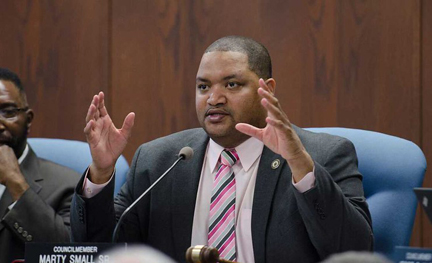
Amid all the hoopla of the Presidential election, it could be easy to miss the Atlantic City mayor’s race. In that race, incumbent Marty Small Sr. apparently defeated his Republican challenger, Thomas Forkin to fill a one-year unexpired term.

“I’m truly humbled and honored to have the support that the good people of Atlantic City have shown me,” Small said November 3 from his campaign headquarters on Atlantic Avenue.

Forkin did not concede the election when contacted after the first results were released, according to the Press of Atlantic City.

“It’s been a very interesting and challenging election cycle,” he said. “We will see when the election is certified and the results of the provisional ballots come in.”

The possible victory comes after Small beat back a proposed change-of-government attempt in May.

“It means everything,” the mayor said, reflecting on his political wins while acknowledging the unusual difficulties he faced in 2020, which included overseeing a local response to a global pandemic and national civil unrest that spilled out into the streets of the resort in the spring.

Forkin said his campaign received a boost with a get-out-the-vote effort by political operative Craig Callaway, who was working on behalf of U.S. Rep. Jeff Van Drew against Democratic challenger Amy Kennedy.

“A lot of people just wanted someone to mix it up a bit, they wanted change,” Forkin said. “The good news is it’s only for one year; the bad news is it’s only for one year.”

Small was appointed interim mayor in October 2019, when former Mayor Frank Gilliam Jr., who pleaded guilty to federal wire fraud, resigned.

He said he would seek the full four-year mayoral term on the 2021 ballot. Forkin may do the same.

2nd Pandemic Surge Cuts Hours For Bay State Casinos

A battered Massachusetts gaming industry took another right cross to the jaw Monday, November 2 when Governor Charlie Baker announced a stay home order for most residents that mandates the Bay State’s casinos close their doors between 9:30 p.m. and 5 a.m. The order takes effect October 6.

Like many states, Massachusetts has seen a surge in the spread of Covid-19 recently, something the governor’s orders are meant to slow.

Baker told reporters, “These measures are meant to disrupt rising trends now, so the Commonwealth can keep the economy and schools open for residents and to prevent the need to roll back to Phase I or Phase II of the reopening plan.”

Leading up to the order the state had nine consecutive days of new cases exceeding 1,000 per day, signaling a possible second surge.

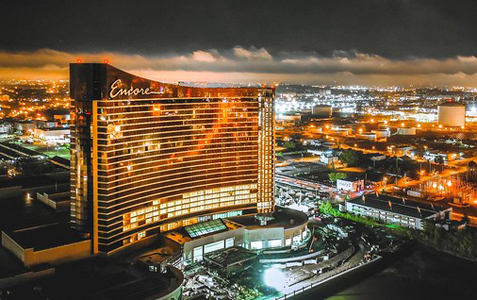
The Encore Boston Harbor, MGM Springfield and Plainridge Park slots parlor will all be affected by Baker’s executive order. Encore Boston Harbor announced it would temporarily close its hotel as well and open the casino floor between noon and 9 p.m.

Carlo Santarelli, a gaming analyst for Deutsche Bank told CDC Gaming Reports, “In and of itself, we don’t see the shortened hours hampering demand tremendously during the mid-week, but we imagine weekend play levels could be impacted by the earlier closures, especially considering the lack of alternative entertainment offerings that were previously available.”

Santarelli does see risks of effects from the further scaling back of operations in some markets, especially in the Midwest.

The governor’s order included a stipulation that all individuals over 5-years-old must wear a mask out of the home. Wynn spokesman Michael Weaver told CDC Gaming Reports that the Encore has required masks since reopening in July.

Another Wynn spokesman, Rosie Salisbury, added, “We need to better understand what the business demand will be under this new operating model.” All Encore Boston Harbor hotel reservations have been cancelled through December 15 and the hotel has closed. Most retail operations at the resort remain open.

A spokesman for MGM Springfield said that company has also required masks since reopening its casinos nationwide. The spokesman added, “We are evaluating the impacts on operations. We are in this together and remain committed to the health and safety of our guests, employees and the overall wellbeing of the state.”

MGM Resorts Might Close More Casinos Midweek

It might not be a happy holiday for certain MGM Resorts International properties on the Strip and their employees. The company is considering closing some casinos midweek during the next couple of months, a lingering effect of the coronavirus pandemic. The company started by closing the recently reopened Park MGM except for weekends.

“We’re going through an exercise, we’re doing it now, about what do we keep open and what do we close,” MGM CEO Bill Hornbuckle said during a quarterly earnings call. “There are certain amenities, certain towers, certain brands potentially that could face closure from mid-November…through the holiday season.”

Hornbuckle’s comments came in response to a question whether MGM would follow other operators like Wynn Resorts and offer limited hours. Citing weak demand, Wynn said it would cut Encore operations to four days a week, according to the Las Vegas Sun.

Park MGM hotel in Las Vegas will reduce days of operation beginning next week. It will close at noon on Mondays and reopen for the weekend on Thursdays.

The information was sent as a memo to employees. The hours for the casino, pool and restaurants will not change. According to Hornbuckle, business has slackened at casino hotels midweek due to the pandemic. This is expected to be even more true during the holidays.

Park MGM reopened September 30 as a non-smoking resort.

In September, midweek hotel occupancy in Las Vegas dropped to 39 percent from 47 percent during the same month in 2019, according to the Las Vegas Convention and Visitors Authority. Weekend occupancy was 66 percent, off 30 percent from September 2019.

Overall occupancy rose 4 percent to 47 percent from August to September, but fell 88 percent from last September.

The LVCVA offered some good news for the pandemic weary tourism industry. September’s visitor totaled 1.7 million, an 11 percent increase over August. But the report, issued October 28, also pointed out that September visitation tumbled 51 percent from the same month in 2019.

Casinos in Nevada closed for almost three months beginning in mid-March to control the spread of the coronavirus. When reopened, casinos followed strict health protocols which chiseled away at visitation.

Through the first nine months 14.4 million people visited Las Vegas in 2020, less than half the almost 31.9 million tourists who visited for the same period in 2019.

In other MGM news, for the three months that ended September 30, the corporation reported net revenues of $1.1 billion, down 66 percent from the third quarter of 2019. At MGM’s 10 Strip properties, net revenues came in at $481 million for the quarter, down 68 percent. Blame the pandemic for the poor results.

Foxwoods Reopens Indoor Theater

Foxwoods Casino has reopened its largest entertainment venue, the Grand Theater, at 25 percent capacity. The theater has been closed since March and wasn’t included when the casino reopened in May.

Connecticut has entered phase three of Governor Ned Lamont’s reopening, which in part accounts for the theater reopening. Outdoor venues may reopen with 50 percent capacity. However, indoor venues are limited to 25 percent.

Monique Sebastian, vice president of entertainment and marketing for Foxwoods told the Hartford Courant: “We have been intricately planning how to safely resume live, indoor entertainment for over four months, which resulted in a thoughtful and slow process to ensure we rebuilt the right infrastructure in our theaters.”

The Grand Theater will be employing rigorous safety protocols, including increased ventilation and hygiene, plus social distancing and timed entry of patrons. Masks for all are required.

Comedian Bob Marley was the first show on October 16 and 17.

Upcoming shows include Queen tribute band Almost Queen, Vic DiBitetto, Anthony Rodia, Jerry Seinfeld, Rob Schneider and Bob Marley.

Michigan Law Offers Escape from Lifetime Casino Ban

A leading tool for problem gaming, the self-exclusion lifetime ban, may not be for a lifetime under a new Michigan law. Folks who banned themselves can now make a request to the state Gaming Control Board to be removed from the list after five years.

Proponents say the law removes a deterrent from signing on to the list to begin with.

“Previously, the state used criminal law to combat a gambling problem for a lifetime, which is an expensive, harsh way to deal with an addiction,” Richard S. Kalm, executive director of the Michigan Gaming Control Board said in a statement. “A lifetime ban actually may deter some people from signing up. For others, their life circumstances may have changed. Of course, people with gambling problems may request removal and resume behaviors they sought to prevent by going on the list.”

As of October 1, the list of those self-banning themselves from Detroit casinos since 2001 numbered 4,825 people. No exclusion list applies to the 12 tribal casinos throughout the state, according to the Detroit News.

Michael Burke, president of the Portage-based Michigan Association on Problem Gambling, said the five-year law may help those with a gambling addiction.

“Gamblers may be more likely to sign up if they have other self-exclusion options such as a two- or five-year ban available,” he said.

The Gaming Control Board received its first request October 19. The agency has 30 days to respond. Removal from the list does not guarantee gaming privileges in any of the three casinos. The person would have to contact one of the casinos for that permission.

Churchill Downs to Limit Capacity for May Derby

During a third quarter conference call on October 29, Churchill Downs CEO Bill Carstanjen said the Kentucky Derby will return to its normal date on the first Saturday in May, but ticket sales for the time being will be no more than 50 percent of capacity and only for reserved seating.

No general admission will be permitted unless the coronavirus pandemic is overcome.

In other conference call news, Carstanjen said the company will delay rebuilding Turfway Park in Northern Kentucky because of a recent ruling by the Kentucky Supreme Court that invalidated a type of gambling machine at use at racetracks throughout the state, according to DRF.

Come January 3, the legislature will reconvene and the hope is that with support from Governor Andy Beshear, they will enact a law to address a court decision considered problematic. The machines earn millions of dollars each year for operators, and subsidies from the games doubled purses at Kentucky tracks over the past decade. The machines are so profitable that a casino Churchill opened at its Trackside training center two years ago has recouped its entire investment, Carstanjen said.

Churchill Downs also delayed the start of construction for hotel and casino at the Louisville track, again the result of the court ruling, plus the pandemic impact.

While Churchill’s third-quarter earnings suffered as a result of the pandemic, racing operations rose in large part due to the rescheduled Derby from May to September.

Revenue from Churchill Downs in the quarter more than doubled to $68 million, up from $32 million in the third quarter of 2019. Revenue from Churchill’s online wagering business jumped 77 percent from $70.4 million to $126.4 million, the company said. Handle through the account wagering company, TwinSpires, went from $368.7 million last year to $622.4 million this year.

But the migration of wagering to online operations has proven a thorn to some horsemen because online bets return less revenue than retail off-track betting sites. Carstanjen believes online customers will continue to bet mobile even after tracks return to full operations.

“The customers tend to be very sticky to the product,” he said. “They hang around and do most of their betting online.”

In all, Churchill reported net income of $43.2 million in the third quarter of 2020, up from $14.8 million in the third quarter of last year. Net revenue for the quarter was $337.8 million, up from $306.3 million in 2019. Net revenue for Churchill’s casinos declined almost 25 percent due to closures and reductions because of the pandemic.

MGM Growth in Market for Strip Casino

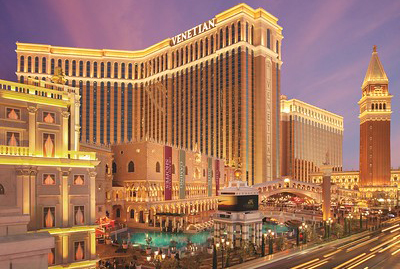
MGM Growth Properties has announced that it is on the market for a casino much like the Venetian, which is for sale by Las Vegas Sands Corp., if it can find suitable partner to run it.

The real estate investment trust (REIT)’s CEO James Stewart told investors during a conference call: “We would definitely be interested,” he said. “If we can go to bed at night without having anything keep us up over worrying about — is the rent going to get paid? It’s absolutely a deal that we would do.” MGM Growth’s largest shareholder is MGM Resorts International.

He added, “I think that (in) the city, in particular, those properties are going to be set up for some very, very significant growth once we get to the other side of Covid.”

REITs usually buy properties and then lease them to others to operate.

Sands reportedly wants $6 billion for the Venetian, the Palazzo and the Sands convention center.

Although Las Vegas is recovering from the Covid-19 pandemic, Stewart told investors that the city still has potential, as shown by the fact that the Sands believes its properties are worth $6 billion. The company probably wants capital to invest in Asia.

MGM Growth is one of several REITs created by casino companies. Others include Gaming & Leisure and Vici. Such trusts provide tax advantages and avoid corporate income taxes.

After seeing losses during the worst of the pandemic, MGM Growth has posted third quarter cash flows that beat forecasts—all while continuing to collect the rent.

Stewart said he was looking forward to conventions returning to the city. “We’re long-term believers in Las Vegas as one of the premier destinations for business and leisure travel in the world.”

Although MGM Growth is on the market for more Las Vegas properties, MGM Resorts International’s CEO Bill Hornbuckle says it is not. He told investors last week: “We think we own enough of Las Vegas to be open about it But there will be other opportunities that the market presents to us that we’ll have to take a sincere look at.”

Analysts say there are many properties—as many as 60—MGM Growth might consider suitable, i.e. with a larger than $40 million annual cash flow.

Sports Betting Goes Live In Tennessee

Early in the morning on Sunday, November 1, sports betting launched in Tennessee, 16 months after being legalized by the state legislature. Three of the four allowable sports betting platforms—BetMGM, DraftKings and FanDuel—began taking wagers within the first hour, and Tennessee Acton 24/7 went live at 8 a.m. Analysts predicted sports betting will bring in an estimated $50 million in tax revenue to the state.

DraftKings Head of Sportsbook Johnny Avello said, “We at DraftKings couldn’t be more excited to be part of the Tennessee sports betting landscape. Tennesseans now gain the opportunity to wager on their favorite teams, as well as all other popular offerings on DraftKings’ extensive sports betting menu.”

FanDuel took its first Tennessee bet from former National Football League star Eddie George. FanDuel Chief Marketing Officer Mike Raffensperger said, “We know how passionate sports fans in the state of Tennessee are and we are no different, but our true passion is all about our customers. We are excited to offer a sports betting app experience that brings fans closer to the game with a number of unique sports betting opportunities, promotions and offers right in the palm of their hands.”

Raffensperger said another reason FanDuel wanted to set up shop in Tennessee is, “it’s the first state to be legislating and now regulating without a historic gaming marketplace. They didn’t have licenses or kind of physical gaming locations that served as sort of a backbone, but rather went directly to online sports betting and bringing that marketplace to life directly. It’s exciting.”

BetMGM Chief Executive Officer Adam Greenblatt stated, “We’ve been eagerly working with regulators in Tennessee to make this momentous launch a possibility and look forward to introducing the state’s passionate fan bases to the excitement of betting on sports with BetMGM.”

Local operator Tennessee Action 24/7 is the first local operator to launch live sports betting anywhere in the U.S. Owner Tina Hodges said the first bet was placed by “Sam in Old Hickory on the hometown favorite.” She added, “We are excited to be the only Tennessee-owned and operated licensed sportsbook.”

Brian Pempus with tnbets.com noted, “I think bettors will be happy with the product. It’s good that it’s launching during the NFL season which is a very positive time for betting.” Pempus said adding sports betting in Tennessee could bring new professional sports leagues to the state. “Major League Baseball and other sports leagues have forged relationships with gambling operators and I think a baseball team in Nashville is a natural fit, especially with sports betting.”

DraftKings now has live mobile platforms in nine states, FanDuel in eight and BetMGM in seven.

Tennessee is the 19th state to offer sports betting and the only U.S. jurisdiction to legalize digital-only sports betting. The state has no commercial casinos or sportsbooks. Apps for the three national operators are available for iOS and Android platforms. Bettors may wager on professional and college sports, the Olympics and eSports. Prop bets on college sports are banned.

Canadian Bill Would Allow Single-Event Betting

In Canada, Bill C-218, the Safe and Regulated Sports Betting Act, recently had its first hearing in the House of Commons. Introduced by Saksatoon-Grasswood MP Kevin Waugh, the bill would legalize single-event sports betting, which supporters said could help communities rebound from economic losses due to Covid-19. “Everything has changed. Safe, regulated betting, that’s all we’re asking for. I think it’s time that we move forward on this,” Waugh said.

Under current gambling laws, bettors must make parlay bets—correctly pick at least two outcomes in order to win a wager.

Canadian Gaming Association President and Chief Executive Officer Paul Burns said, “Amending the Criminal Code to legalize single-event sports wagering will provide provinces with the necessary tools to deliver a safe and legal option to Canadians while enabling economic benefits to flow to licensed gaming operators, communities and provincial governments. I can’t emphasize enough how this small change to the Criminal Code would help communities recover from the economic devastation of the ongoing Covid-19 shutdown.”

Burns warned if nothing is done to regulate sports betting for single events, an estimated $14 billion a year would continue to flow to offshore websites and illegal bookmaking operations, with only $500 million flowing through provincial sports-betting organizations.

Ontario Premier Doug Ford’s government in its 2019 budget said it would push the federal government on the subject on single-event wagering, stating the time had come “to treat the people of Ontario as adults by allowing them to bet on the outcome of a single sporting event.” Ford and the Progressive Conservatives (Ontario Tories) have said the Ontario Lottery & Gaming Corporations’ limited offerings can no longer match sports wagering opportunities available in the U.S. Observers in all Canadian provinces plan to keep an eye on single-event wagering developments in Ontario.

Additionally, professional leagues have encouraged the Canadian government to legalize single-event betting. In June, the commissioners of the National Basketball Association, National Hockey League, Major League Baseball, Major League Soccer and the Canadian Football League wrote to a letter to Prime Minister Justin Trudeau emphasizing that Canada must drastically update its sports betting laws to protect franchises and national consumers. “People have been preparing, and anxious, because the customers are asking for it. We just think it’s time,” Burns said.

Casino Gambling Approved At Illinois’ Fairmount Racetrack

After decades of seeking new revenue sources to raise purses, on October 29, Fairmount Park in Collinsville received final approval to offer sports betting and tentative approval for a planned casino in unanimous votes by the Illinois Gaming Board. The expansion will provide about 400 new jobs.

The gaming expansion law passed last year allows casino gaming at four racetracks across Illinois. Besides Fairmount, the board previously approved a casino at Hawthorne Race Course, which has opened a sportsbook in a temporary location. Arlington International Race Course did not apply for a gaming license. A partnership led by Churchill Downs Inc., Arlington’s owner, applied for the gaming license in Waukegan, Illinois, one of six allowed by the 2019 gaming law.

Both Fairmount and Hawthorne still face several regulatory steps before their casinos can open. Both venues said they’ll offer casino gambling by late 2021.

Fairmount President and General Manager Melissa Helton told the board purses have steadily declined at Illinois racetracks while those in other states increased when gaming was added. Helton noted Fairmount Park, located across the Mississippi River from St. Louis, opened in 1925. “It has been a very enduring and hardy establishment. It has survived tornados, floods, fires and financial hardships. And that was before a global pandemic,” Helton said.

She added, “With the inception of new forms of gaming throughout the years, horseracing has suffered greatly with decreased purses and handle. The state of Illinois has been asked many times in the past to pass legislation that would lighten the burden that increased gambling has caused. The gaming bill giving us the right to apply for a racino, along with the sports wagering opportunity, has been the biggest event to bring Illinois horseracing back to what it was and forward to greater heights,” Helton stated.

Gaming board Administrator Marcus Fruchter said he could not commit to a firm timeline for license approvals, especially since there are multiple bidders for two licenses, including the one designated for Waukegan. “This may be unsatisfying to some, but we have a process and we’re sticking to it. History teaches what happens when corners are cut,” Fruchter commented.

He added the Covid-19 pandemic has moved licensing approvals back at least six months. “Like all government agencies and private businesses, the board’s work has been impacted by Covid-19. This is not an excuse or a crutch. It is simply a recognition of the realities that work and life are different in a global pandemic.”

Latest Ohio Sports Betting Bill Emerges

The latest draft of the Ohio sports betting bill reduces the number of licenses for each casino and racino from three to two. Senator John Eklund, one of the bill’s sponsors, told LSR he considered a lot of the major details in the previous draft as just placeholders.

“They’re all subject to conversation with other senators, state reps and other interested parties,” Eklund said. “I commit to all of them that their input will be sought and considered, and I think that’s important for all parties that are interested in this to know.”

The legislature has until the end of the year to pass the Ohio sports betting law or start over again in 2021.

Other changes to the latest draft include:

  • Casinos and racinos do not have to issue both of their licenses;
  • Management service providers will pay $10,000 every three years to renew the license;
  • Operators can no longer subtract the 0.25 percent federal excise tax paid on all wagers from their total gross receipts. There’s a renewed movement to get that tax repealed at the federal level.

There are a couple of positives that remained in the bill, among them the   8 percent tax rate; $100,000 fee for a five-year license for casinos and racinos; and no official league data mandate.

Judge Overturns Montana Sports Betting Rule

A Montana District Court judge has overturned a state rule that limited sports betting to establishments with alcoholic beverage licenses.

Lewis and Clark County District Court Judge Kathy Seeley found the rule was not what lawmakers intended when they authorized sports wagering last year, according to The Associated Press.

“If the legislature intended to limit sports wagering facilities in this way, the legislature could have done so,” the judge wrote in her decision. “The court will not insert a provision that the legislature omitted.”

Montana approved sports betting in 2019, making Montana the ninth U.S. market to legalize wagering. Actual betting, however, did not launch until March of this year.

Since it began seven months ago, sports betting in Montana has brought in more than a half a million dollars in revenue ($531,000) to about 250 businesses that have sports betting at their establishments, according to the AP.

The rule that was overturned was challenged by Arete Group LLC, a downtown Billings-based limited liability company created in Oct. 2018, by attorney Lyndon Scheveck, partner in Scheveck & Salminen Law Firm PLLC.

“It’s a win for Montanans, when it comes to communities and not letting monopolies take advantage of Montanans and their businesses,” Scheveck told the AP.