Author: Casino Connection Staff

AC Casino Exec Files Wrongful Termination Suit

In a whistleblower lawsuit filed September 22, Loretta Pickus, who served as senior vice president and general counsel at Ocean Casino Resort before her January termination, claimed she was fired for raising concerns about a falsified document. Her complaint, filed in Atlantic County Superior Court, also charged that the casino discriminated against Pickus because of her gender.

“It’s disappointing that in this day and age women in our industry are still dealing with good old boys clubs and misogyny at the highest level,” Pickus said in an interview.

Pickus, an industry veteran, worked for more than two decades with Trump casinos. She joined Revel in 2013 during its preparation to be sold in bankruptcy.

The suit revolves around a dispute over the hiring of a director of surveillance at Ocean last year. If Mark Evans was hired on a temporary basis in January 2019, he had four months before a permanent successor could be hired, according to the Courier-Post.

In June, “suspected deficiencies” in Evans’ performance led to the hiring of a new surveillance director. An audit committee member did not want the hiring and demotion of Evans in the public record, the suit alleges. Pickus complained to CEO Terry Glebocki, who recommended Pickus correct the minutes. The committee rejected the corrections, the complaint said. The DGE launched an investigation in August 2019.

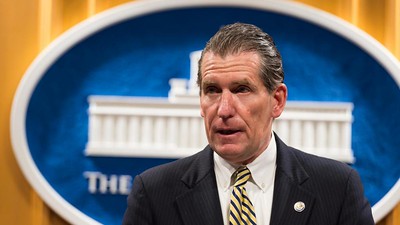
DGE director, David Rebuck, sent a letter to Ocean in November which Pickus claims “targeted her with inaccurate accusations.” Further Pickus accused Rebuck of saying to the effect “there are people you shouldn’t have in your organization. They are holdovers. They need to go.”

Station Loses Another Union Battle, But War Drags On

The running battle between Station Casinos and the Las Vegas local of the Culinary Union has shifted to three more Station properties.

At the Fiesta Henderson, whose workers have been waiting a year for contract negotiations with Station management, a hearing officer with the National Labor Relations Board (NLRB) has recommended the full board reject Station’s challenge to the September 2019 election that certified the Culinary as the workers’ representative.

“I recommend that the employer’s objections be overruled in their entirety,” NLRB Hearing Officer Alvaro Medina stated in his September 17 report on the Fiesta challenge. “The employer has failed to meet the board’s standard and therefore has not provided evidence that raises a reasonable doubt as to the fairness and validity of the election.”

Fiesta is one of eight Station casinos in the Las Vegas Valley to seek representation by the Culinary over the last three years. None have a contract despite repeated promises from Station to acknowledge their employees’ right to choose union representation in NLRB-supervised elections. Instead, the company continues to challenge the elections before the NLRB and through various court maneuverings and refuses to negotiate in defiance of previous rulings by the board.

“Station Casinos continues to disrespect their workers by wasting time with litigation and union-busting efforts,” said Geoconda Argüello-Kline, secretary-treasurer of the Culinary, whose locals represent some 60,000 casino and hospitality workers in Las Vegas and Reno.

Yet, the company’s delaying tactics are being rewarded in at least two cases where a majority of workers, tired of waiting for contracts, are reported to have signed petitions to leave the union.

At both Boulder Station, the first to vote in the union back in September 2016, and Palace Station, which voted union in March 2017, Station said it has stopped recognizing the unions based on the petitions.

The Culinary is challenging the validity of Station’s actions to unilaterally decertify it and continues to fight for contract negotiations at both properties.

The other Station properties in and around Las Vegas where union members are waiting for contracts are: Red Rock Resort, Fiesta Rancho, Sunset Station, Palms and Green Valley Ranch.

Caesars Gets $400 Million From VICI

VICI Properties, the real estate investment trust affiliated with Caesars Entertainment, is lending the gaming giant $400 million.

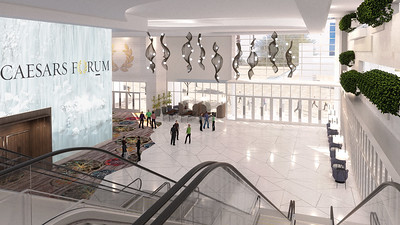
The five-year loan is payable at 7.7 percent interest and is secured by a mortgage on the new $375 million Caesars Forum Convention Center on the Las Vegas Strip.

The loan, which VICI said it funded with cash on hand, is seen as a balance sheet-strengthening move for Eldorado Resorts, which completed its $17.3 billion acquisition of Caesars in July.

The REIT said also it is negotiating a $103.5 million deal with Caesars to acquire 23 acres of developable land adjacent to the convention center and behind three Caesars resorts, Harrah’s Las Vegas, the Linq and Flamingo Las Vegas.

The acquisition, together with an additional 27 acres of undeveloped land behind three other Caesars resorts which VICI owns𑁋Bally’s Las Vegas, Paris Las Vegas and Planet Hollywood𑁋gives the REIT a full 50 acres which VICI CEO Ed Pitoniak has termed “the only large-scale opportunity to deepen the Las Vegas Strip at its center.”

“We see this as a way of capitalizing on what we still very strongly believe to be the long-term growth of Las Vegas,” Pitoniak said on VICI’s second-quarter earnings conference call in July. “We see that land as giving us a chance to participate, not only in the growth of Las Vegas tourism but in the growth of Las Vegas as a place where people choose to work and live as well as to play.”

VICI owns 29 casinos and racinos nationwide, including Harrah’s Las Vegas and Strip landmark Caesars Palace and 16 other casinos operated by Caesars under the Harrah’s, Horseshoe, Caesars and Harvey’s brands.

Five Strip Casinos Top List for Covid Infections

Nevada health investigators have ranked Las Vegas casinos higher than other businesses in the surrounding region as “possible exposure sites” for Covid-19.

Data obtained by the Las Vegas Review-Journal show The Cosmopolitan on the Las Vegas Strip at the top of the list of exposure sites based on five analyses conducted in July and August, with other Strip resorts also near the top.

“Clearly the data paint a picture of hotels and casinos being high risk for transmission,” Professor Samuel Scarpino, head of Northeastern University’s Emergent Epidemics Lab, told the newspaper.

State officials and casino representatives, however, contend the data is not clear on whether the resorts are generating infections or are part of the larger movement of the potentially deadly virus. They emphasized their analyses do not pinpoint where people caught the virus but list locations most frequented by people during the time period when they probably became infected.

“This is more a reflection of general community spread than a specific issue with the employer or business, but it deserves investigation from the appropriate regulatory entities to confirm,” said Shannon Litz, a spokeswoman for the Nevada Department of Health and Human Services.

The Review-Journal requested the data after a June report in which Cosmopolitan workers said they felt unsafe at the property, that visitors were routinely disregarding safety guidelines and that management was not being forthright about the numbers of their fellow employees who were contracting the disease.

Management maintains otherwise.

“Since reopening in June, we have implemented and enforced an extensive set of health and safety policies and procedures, all of which meet or exceed the directives from local health and government authorities,” the property said in a statement. “As we, along with our industry and country, further navigate through this unparalleled time, we continue to adapt our practices to ensure we are in alignment with the latest knowledge and guidance from medical and safety professionals.”

As of September 17, local health officials reported more than 63,000 residents of Las Vegas and surrounding Clark County had contracted the virus and more than 1,300 had died from it.

The August data obtained by the Review-Journal and covering 30 days of contact tracing and other monitoring showed that of around 5,300 infected people who volunteered responses, almost 1,600, roughly one in four, reported being at a hotel or motel. Of those, about 1,300 said they had visited the Strip.

The largest number of possible exposures were at five gaming properties: The Cosmopolitan (304), Bellagio (153), MGM Grand (133), The Venetian (89) and Caesars Palace (86).

The only non-casino location with comparable numbers was the Clark County Detention Center, which tests all inmates. It ranked fourth overall with 93 cases.

The second-largest group of possible exposures, about 1,360, were in a non-specific “other” category, which the state said represents businesses that do not align with other listed categories.

“Food establishments,” a broad classification including both restaurants and grocery stores, ranked third with about 700 cases.

The Cosmopolitan’s statement went on to say that the data “does not describe where or when someone contracted Covid-19, but merely what locations they visited during a certain period of time.”

Health experts interviewed by the Review-Journal dispute that.

“The argument that they could have gotten this anywhere else, while that may be true, it is not reflected in the data,” said Oscar Alleyne, an epidemiologist and a senior adviser with the National Association of County and City Health Officials.

“This is suggestive at the very least there is something going on at the Cosmopolitan that needs to be fixed,” said North Carolina State University Professor Julie Swann, who served as an advisor to the U.S. Centers for Disease Control and Prevention for the H1N1 pandemic response.

The analyses did not delineate between workers and patrons, leading Brian Labus, an epidemiologist who serves on Governor Steve Sisolak’s medical advisory board for Covid-19, to suggest the data could be skewed in this respect.

“I can’t imagine (Cosmopolitan’s) testing program is way better than anybody else’s, but they do have a lot of positive (test results) in comparison to everybody else,” he said. “If I was at the (Southern Nevada) Health District, that would definitely be something I’d want to look into a lot more.”

Employee testing policies vary by operator. Wynn Resorts, which tests on a regular basis, has said that nearly 550 of its staff have tested positive. Las Vegas Sands, which also tests heavily, has reported more than 400 positive results.

Others, like MGM Resorts International, test all employees who are new or returning to work but do not mandate tests for the majority of employees.

“The positivity rate among our employees has almost consistently been below the positivity rate for the surrounding community since reopening,” an MGM spokesman said.

Complicating the process is that when tourists test positive in their home state after visiting Las Vegas that information frequently does not make it back to Nevada, whose officials have yet to identify any spreading events or case clusters beyond those at nursing homes and other state-licensed facilities.

Around 2.5 million people visited the city in July and August.

“The only way in which we can have a more targeted intervention, that will keep large sectors of the economy open while bringing the case numbers under control, is to understand more specifically what the risk factors are within the hotels and casinos,” Scarpino said.

Virginia To Ban Electronic Gaming Machines In 2021

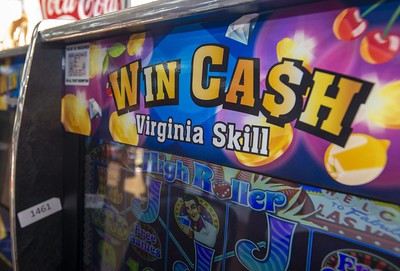
At the start of 2020, the Virginia General Assembly discussed banning the 9,000-plus electronic gaming machines operating in the state. However, in April, lawmakers decided to allow the machines to continue to operate for one more year to provide additional revenue for Covid-19 services.

Legislators determined the companies making the machines could place them in convenience stores, restaurants and truck stops until July 1. According to the Virginia Department of Taxation, in July the games generated about $12 million in tax revenue, which mostly went into the new Covid-19 relief fund.

Manufacturers of the machines claim they are games of skill, and therefore not banned by the state’s prohibition on gambling.

Senate Minority Leader Tommy Norment urged the Virginia Alcoholic Beverage Control Authority to closely monitor the machines to ensure operators are paying taxes on them and are not installing more of them. State Senator Janet Howell, chairwoman of the Senate Finance Committee, assured committee members that she and Governor Ralph Northam still agree that the machines will be banned by next June.

Vegas Jobless Rate Worst in Nevada

Nevada figures show unemployment in Las Vegas slid lower in August, but the region’s tourism-dependent and pandemic-battered economy still leads the state in the number of jobless.

An estimated 15.5 percent of the Las Vegas workforce was unemployed in August, down from 16.6 percent in July but still almost twice the national rate, according to a report from the state Department of Employment, Training and Rehabilitation.

Nationwide, the jobless rate was above 8 percent last month.

Elsewhere in Nevada, Nye County’s unemployment rate was 9.6 percent last month, Reno’s was 7.2 percent and Elko’s was 4.7 percent, the department reported.

Moreover, Las Vegas, where most of the state’s residents live, also is seeing “the slowest rebound in jobs,” the DETR said, noting “the extreme impact” the pandemic’s shutdowns have had on the valley’s tourism and gaming industries.

The local jobless rate, just 3.9 percent in February, skyrocketed after Governor Steve Sisolak in mid-March ordered the state’s casino industry to close to contain the spread of the pandemic. By April, unemployment in Las Vegas had soared to 34 percent.

Overall, the region has shed more than 127,000 jobs since August 2019, according to seasonally adjusted figures from DETR.

Kentucky Partnership Seeks Casino, Racetrack License

A partnership of the Lexington, Kentucky-based Keeneland Association and Ron Winchell and Marc Falcone, the majority owners of Kentucky Downs, recently applied for a racing license to build a casino in Williamsburg and a new harness racetrack 10 miles north in Corbin, both located on I-75 about 30 miles from the Tennessee border. Kentucky Horse Racing Commission Executive Director Marc Guilfoil said the license would apply to both facilities; he noted the state will has two open licenses.

The casino would offer historical horseracing machines, which have generated hundreds of millions of dollars for Kentucky operators and generous subsidies for racing purses and breeders’ awards since they were legalized in 2012.

Guilfoil said the racing commission will schedule a meeting of its racing dates committee to begin discussions of the Keeneland partnership license application.

The Kentucky Horse Racing Commission previously awarded an adjunct license to Churchill Downs to operate a casino at its Trackside training center.

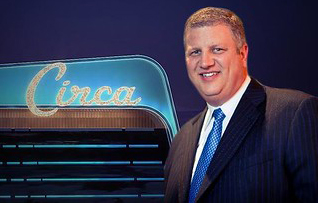
Derek Stevens Doubles Down on Vegas

In June, casino magnate Derek Stevens made headlines with a contest to fly in 2,000 people for the grand reopening of his Downtown Las Vegas casinos, which had closed in March due to the coronavirus.

At 12:01 a.m. on June 5, Stevens opened the doors of his D Las Vegas and Golden Gate casinos, the moment the resorts could legally open.

“Our team has worked around the clock to bring back the Vegas experience our visitors know and love,” Stevens said at the time. “We’re excited to get our employees back to work and to welcome guests to the entertainment capital of the world.”

Since then, the path to recovery hasn’t been smooth or straightforward. Is Stevens still as confident about Vegas’ recovery as he was last summer? The answer is yes, with an asterisk. 

‘Still Bullish’

“I’m still bullish on the Las Vegas recovery, but it’s going to be a bit more delayed, and it’s going to recover in a different manner and with a different customer,” said Stevens, in an interview with GGB News last week. “The bigger and mid-size conventions are going to take a little longer to return. But independent travelers are saying they want to come back to Las Vegas.”

That group includes leisure travelers—vacationers who want to get away for a weekend—and a new category of remote workers who are mobile, flexible, and would rather work poolside at a Vegas resort than the living room couch. “They’re independent, but instead of working in their house or apartment, they’re taking trips and working remotely,” Stevens said. “These are the two groups leading Vegas back.”

On October 28, Stevens will double-down on the recovery, introducing the first new Las Vegas resort in decades: the Circa Resort & Casino, also on Fremont Street in Downtown Vegas. The grand opening fits in with the recovery narrative.

“Before the pandemic, there was a great pent-up demand for a new product, (and) the pandemic has maybe intensified the interest in new projects,” Stevens said. “Historically, new casino openings have always been widely attended, a lot of people set their trips up for such a thing. I think Circa is going to be good for our properties, and I really think Circa is going to be great for Las Vegas as a whole.”

Amazingly, while other casinos are sending out layoff notices, Stevens has been hiring scores of new workers. Does he know something other casino owners don’t?

“That’s another reason Circa is coming into the market at the right time,” he said. “In Las Vegas, the hospitality business took a big hit. We’re hiring 1,500 people for our project, and that’s great for the overall community.”

Hindsight Is 20/20

For all his optimism, knowing what he knows now, would Stevens have done anything differently going into 2020?

“If you look with 20/20 hindsight, we did a major expansion at the D—opened a new sports bar, high-limit slots and keno. We did that before the shutdown. That wasn’t optimal.”

In addition, last November, the D closed its stage show and replaced it with a sportsbook to take advantage of March Madness. Clearly, Covid-19 made short work of that plan. But now, with major sports back on, “It’s really amazing,” Stevens said. “The handle is far in excess of what we figured for our Year 2 projection.

“The key thing for us was letting all our employees know, ‘As soon as we can reopen, we’re going to,’” he added. “’We’re going to be here and we can’t wait to have you back.’ I think everybody felt really, really good about that.”

These are hectic days for the entrepreneur, whose new venture will debut in fewer than 40 days. “We’ve got a lot of last-minute things and we have to be prepared to operate,” Stevens noted. “This is a five-year project, and we have a little more than a month.”

Forward-Thinking

Although the casino’s design doesn’t necessarily reflect the new realities of Covid-19, “A couple of key things are now more important,” he said. “First, at our Stadium Swim venue, our outdoor pool amphitheater, we’re focused on the importance of clean water. Four years ago, we talked about the cleanest water and the best and most robust filtration, including UV filtration. Now in 2020, that’s even more important.”

Second is the property’s unique air flow system. “All our fresh air comes through the raised floor. There are no air ducts in the ceiling. It’s more efficient to cool a large space, but it also creates an atmosphere where air is always rising. We felt that would create a better and cleaner air environment. Again, that was something we designed a few years ago, and it’s even more important now.”

Hopefully, one day the current health and economic crisis will be history. Until that time, Stevens has work to do. “Everything is right on schedule” for Circa, he said. “And October 28 is the date.”

As for the larger community, its primary business and economy, he added, “The great thing about Las Vegas is that it’s a city that reinvents itself. It’s done that time and time again. The demand to come to Las Vegas will be back. Structurally, Las Vegas in the long term is in a really good position.”

Penn National Seeks $1 Billion Post-Barstool Opening

Penn National Gaming last week launched its Barstool online sportsbook, the 10th online/mobile wagering site in Pennsylvania. As a result, the company announced it would seek to raise nearly $1 billion with a public offering of 14 million shares of stock. Penn is clearly trying to capitalize on the young sports betting market in the U.S., which has seen runups in share prices of William Hill and very successful IPOs by DraftKings and Lancadia Holding and its Golden Nugget brand.

Penn has lost $800 million this year due to the lockdown of casinos, but like most casino companies, is experiencing a quicker-than-expected rebound. Share price for Penn dipped 8 percent after the announcement of the sale, but over the past year, Penn’s share have appreciated 170 percent.

Penn’s strategic partnership with Barstool Sports gives it access to 66 million active monthly users, a number that dwarfs anything that DraftKings or any other site can boast. Over 60 percent of Barstool subscribers describe themselves as active sports bettors, with 60 percent below the age of 30. Penn bought 36 percent of Barstool earlier this year for $450 million and is using the Barstool brand for its sports betting operations.

The site operates with odds supplied by Kambi, the sixth Kambi-powered sportsbook in the state.

The Barstool site duplicates the European firm’s odds, which are also used by rivals books including DraftKings, Unibet, Parx, BetRivers and PlaySugarHouse.

Deutsche Bank analyst Carlo Santarelli, who has a Sell rating on the stock with a $22 price target, says he believes the raised capital is likely to be put to work towards competing in the highly promotional sports betting arena. He expects Penn to use the capital towards additional Barstool Sportsbook app content and Barstool branded retail sportsbooks.

“At 11.2x our 2022 adjusted EBITDAR forecast, versus the historical average multiple ~6.5x, the equity raise, in our view, should have been largely expected,” Santarelli wrote in a note to investors. “While we would not view the transaction as a positive for shares, we do believe it was a necessary strategic decision, given the run in shares and the unrealistic, in our opinion, implied value of the sports and iCasino verticals.

“At current levels, we estimate the sports and iCasino segments represent roughly $6.2 billion of the $9.3 billion equity market cap, a valuation that far exceeds the value implied in peer equities with similar prospects for success in sports and iCasino.”

New York Lawmakers Consider Online Sports Betting

New York’s legislature has yet to approve online sports betting, so the only bets come courtesy of the state’s eight brick-and-mortar casinos.

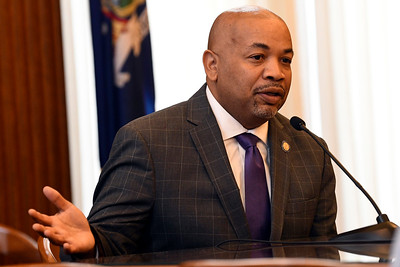
Reports have circulated that New York State Assembly Speaker Carl Heastie could possibly include online and mobile sports betting in an upcoming revenue bill, according to Gambling.com.

“When we return to session, the mobile sports betting part of the bill will be in some kind of a revenue package, but we have to wait to see when and if we will be getting any federal stimulus help from the federal government,” said New York State Senator Joseph P. Addabbo, Jr., long a proponent of online sportsbooks.

Addabbo hopes the proposal becomes law by the Super Bowl in February.

The New York Senate passed mobile sports betting bill last year, but it did not get through the Assembly.

“It is frustrating to us as a state, because we know a lot of New York residents go to both of those states to wager,” Addabbo said.

The current proposal enables the four New York operators to partner with a single online sports betting platform. The likely sportsbooks will be Bet365, BetRivers, DraftKings and FanDuel.

“It’s a starting point for a state that has certainly shown no great rush,” Addabbo said. “We can start with single skins when passed and implemented and then over the next three years, expand to other places like stadiums, arenas, etc. It is so rational and such a no-brainer to do it, but we have to continue the process.”

Sports Betting, iGaming Boost PA Revenues

Sports betting and online gaming shored up Pennsylvania’s revenue numbers last month, as a full sports calendar saw sports wagering handle hit a record $365 million in August. That’s a 234.7 percent increase over August 2019, and a 121.5 percent jump over July 2020. It also is 4.8 percent higher than the state’s previous all-time record of $348.4 million, bet in January.

Mobile sports betting in Pennsylvania remained the primary wagering method, with more than 88 percent of all bets coming from the internet.

Online casino games and poker reached another all-time high for August with $56 million in revenue, topping the $54.4 million generated a month earlier. This resulted in a $15.8 million tax into state coffers and another $6.3 million in local share assessments.

Overall, sports betting and iGaming revenue pushed total August revenue for Pennsylvania’s 12 casinos to $310.7 million, an almost 6 percent increase over the same month last year—this despite brick-and-mortar casinos operating at 50 percent capacity.

DC Arena Outpaces Mobile Sportsbook

Results in New Jersey and elsewhere indicate that mobile sports betting rakes in far more money than retail operations, thanks to the convenience factor. Indeed, the percentage of mobile revenue accounts for 85 percent to 90 percent of the total in many cases.

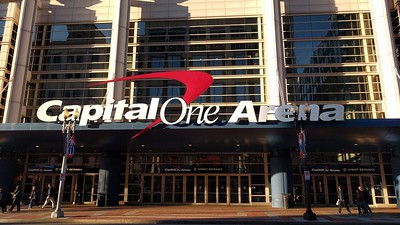
That situation is not happening in Washington, based on August results. Bettors in the District of Columbia have two options. Place wagers online via GambetDC or trek over to Capital One Arena. Patrons prefer Cap One’s sportsbook, operated by William Hill U.S.

William Hill took $9.1 million in bets, the first full month of operations. Revenue amounts to $1.4 million, which means a high 15.6 percent hold rate, according Legal Sports Report.

In August, GambetDC attracted a handle of $2.1 million with revenue of $278,141. Results should have exceeded a typical August, when the NBA and NHL seasons were not playing. GambetDC, operated by Intralot, brought in $3.1 million in bets since the platform launched May 28. Blame poorly priced lines for the less than stellar results. Those odds produced a 14.7 percent hold since launch with $457,166 in revenue.

There were 66,831 bets placed in August on the GambetDC platform, or $31.90 per wager, compared to 69,085 bets for William Hill, which comes to $132.16 a bet.

ESPN Makes Deal with Caesars, DraftKings

ESPN         struck deals September 14 with Caesars Entertainment and sports betting operator DraftKings.

The network and Caesars agreed to a multi-year partnership to link ESPN’s digital platforms with Caesars sportsbooks. William Hill U.S. operates Caesars sportsbooks and will become the exclusive odds provider and co-exclusive sportsbook provider to ESPN.

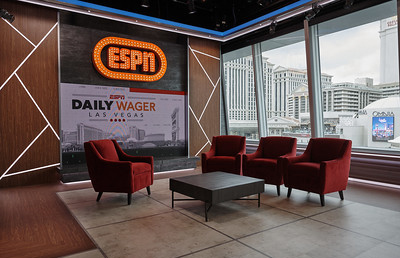
The agreement comes a week after ESPN premiered its Las Vegas studio at the Linq resort where it offers betting-centric programming, including The Daily Wager. ESPN’s digital platforms will connect fans to DraftKings’ products and services.

ESPN Vice President Mike Morrison said the partnerships bring together the network and “two of the top brands and best products” in the sports betting sphere.

“With Caesars utilizing odds from William Hill’s sports betting data, we are able to deliver content in new and innovative way,” Morrison said.

Deutsche Bank gaming analyst Carlo Santarelli said the accord connects Caesars with more than 95 million users of ESPN’s digital channels. ESPN’s following is about 45 percent larger than Barstool and a partnership with the network comes across at important “given the importance of monetizing the value of the Caesars brand, its large Total Rewards database, and its other sports-related assets,” Santarelli said.

ESPN Senior Vice President Mark Walker said legalized sports betting is critical to the experience of sports fans. The agreement with DraftKings, he said, “means greater opportunities to innovate and deliver the best and most seamless experience for fans, which will ultimately expand ESPN’s brand and audience and increase engagement.”

Since becoming Caesars Entertainment’s exclusive sports betting partner a month ago, William Hill has opened 12 branded sportsbooks at Caesars’ properties in Nevada, Iowa, and most recently, New Jersey. The mobile sports betting app, Caesars Sports Book by William Hill, anticipates opening in Indiana, Pennsylvania, New Jersey, and Nevada pending regulatory approvals.

“Tens of millions of fans will now have a direct link to our sports betting apps and odds,” said Ulrik Bengtsson, group CEO of William Hill. “Giving ESPN users this access will accelerate our leadership, as we continue to expand in the U.S.”

Caesars CEO Tom Reeg said William Hill added “immediate value” to Caesars properties nationally and the agreement with ESPN completed “what is sure to be a momentous partnership in gaming and sports wagering.”

BetMGM Partners with Raiders

BetMGM has become the official sports betting partner of the Las Vegas Raiders—just in time for the team’s initial home game in Allegiant Stadium.

A joint venture between MGM Resorts International and GVC International, BetMGM’s announcement came as part of an extension of the team’s multi-year deal with the casino company. BetMGM, which operates in seven states, will look to market its mobile app to Raiders fans.

“The addition of BetMGM will open new levels of engagement for Raiders fans and guests of Allegiant Stadium,” said Raiders President Marc Badain.

MGM Resorts is a founding partner in the stadium and features branding throughout the building, along with signage and an MGM Resorts VIP entrance on the west side. The stadium also includes a private MGM Club that offers an in-game-viewing experience, a full-service bar, luxury lounge, and upgraded stadium seating, according to CDC Gaming Reports.

BetMGM also has relationships with the Denver Broncos and Detroit Lions. Indeed, the American Gaming Association said the NFL and its teams have 26 marketing and data-sharing partnerships with firms associated with sports betting.

“This new partnership complements what is already a wonderful and rewarding relationship with MGM Resorts and the Raiders,” said BetMGM’s CEO Adam Greenblatt.

Said MGM Resorts CEO Bill Hornbuckle, “We look forward to providing Raiders fans a world-class sports betting and entertainment experience.”

Ohio Lawmakers Negotiate Sports Betting Bill

In Ohio, state Senate and House leaders, sports betting operators and Governor Mike DeWine’s office have been negotiating a sports betting bill, HB 194, which would allow statewide mobile and retail sports betting. The measure could be taken up in the Senate after the general election, before the end of the year. Sports wagering wouldn’t actually begin in the state for at least six months, observers noted. The House passed the bill in June and it was sent to the Senate but has not yet been assigned to a committee.

State Senator John Eklund said, “The notion of a deal and being close to a deal carries with it kind of this connotation to me, that it’s just a few jots and tiddles and all will be well and we’ll have sports betting in Ohio. But that’s just not the way it works. We’ve been talking and we kind of went through and did the best we could. We’ve not come to any kind of agreement among us, but we’re working on a document that would place some placeholders in those spots for conversation with leaders in both houses and other interested parties.”

Kindred and theScore recently announced deals to bring digital sports betting platforms to Ohio. Both companies secured market access to offer sports betting in Ohio through deals with Penn National, which owns Hollywood Casino locations in Dayton and Toledo plus a venue at Dayton Raceway. Kindred’s online platform is Unibet.

Eklund said House sponsors have “acquiesced” to having the Casino Control Commission as the regulator; under state Rep. Dave Greenspan’s HB 194, which passed the House earlier this year, most representatives wanted to create an 11-member Lottery Commission to oversee sports betting. Also, Eklund wants a tax rate of 6.25 percent, the lowest among U.S. states, while the House is lobbying for 10 percent. Eklund said the final rate most likely will be around 8 percent, which would attract operators.

Neither chamber supports using official league data or banning wagers on college sports. Still up in the air is the number of skins each of the state’s 11 casinos would be allowed.

Virginia Approves Sports Betting Regulations

The Virginia Lottery Board recently approved sports betting regulations. The legislation legalizing sports betting passed on April 22 and took effect July 1 and since then the lottery board, which was designated to regulate sports wagering, created the framework and released draft rules for public comment in July and August. The public weighed in, the rules were tweaked and the board approved them on September 15.

Virginia Lottery Board Executive Director Kevin Hall said, “Creating a regulatory structure for sports betting within the aggressive timeline that was mandated by the legislature consumed a lot of bandwidth over the summer, and today’s board action will represent a really significant step forward.” Sports betting is projected to generate up to $55 million in annual state tax revenue.

The approved regulations will take effect as soon as there are posted to Virginia Register in early October. Sports betting permit applications will be accepted October 15 through midnight October 31; state legislation allows for four to 12 sports betting permit holders. Permit applicants also can start applying for licenses for their principals, vendors, suppliers and employees on October 15. Each application will be subject to a 90-day review period; a consultant has been hired to assist in that process.

Lottery Deputy Director for Gaming Compliance Gina Smith explained, “So an applicant will have to provide us all the documentation that we’re requesting prior to us deeming it complete. Once it’s completed, we’ll do our investigations and our due diligence and within 90 days issue a decision.” Smith said she hopes operators will be up and running by January. At first, sports betting in Virginia will be online, primarily through mobile apps.

The lottery received 183 comments on draft regulations during the public comment period—many on the final day, September 9. Those commenting included DraftKings, FanDuel, Penn National Gaming and BetMGM. The National Football League, National Basketball Association, Major League Baseball and the Professional Golf Association also commented.

Changes were made, based on public comments, in the areas of self-exclusion, bonds, permissible wagers, system integrity and security assessment, minors and prohibited players, advertising and marketing, geolocation and the sports betting consumer protection program, including the bettors’ bill of rights.

Definitions of certain terms, including college sports, gross revenue, prohibited conduct, affiliate, affiliated marketer and principal, also were clarified. For example, commenters expressed concern about the $50,000 licensing fee for each “principal” above and beyond the $250,000 licensing fee. Operators said the original description of a principal as someone with “managerial capacity” could apply to anyone from the chief executive officer to a shift manager, thereby significantly raising licensing fees. Smith clarified a principal was defined as a person critical to the high-level operation of the business. Other employees of sports betting operations will pay a $500 fee for a 3-year license.

Additionally, an information security system section was added that “requires the permit holder to implement, maintain, review and revise and comply with a comprehensive information security system to protect data.” And a section on identification cards was deleted since operators will be online.

The lottery board declined to allow betting on Olympic sports. Smith said, “We did not adopt that recommendation. We reviewed the definitions and because Olympic sports include minors, we were concerned about going outside the bounds of the statute.” She said the legislature could revisit the issue later.

DraftKings Director of Global Communications and Public Affairs James Chisolm said, “Virginians are ready to bet on sports legally. We all share a common goal of creating a robust, dynamic, customer-centric sports betting market in Virginia that generates much-needed tax revenue for the commonwealth, and pulls thousands of Virginians, who are already regularly betting on sports, off of illegal platforms, which offer no consumer protections or responsible gaming resources.”

Louisiana Group Campaigns for Sports Betting

Louisiana Wins premiered its first televised commercial on September 13 during the Saints-Buccaneers game. The ad supported the November 3 ballot initiative to allow sports betting in parishes that vote yes.

For now, Louisiana residents go to Mississippi and Arkansas to place bets, depriving the state of tax revenues.

“We can keep those dollars here in Louisiana to grow our economy and make investments in things like education and infrastructure by legalizing sports wagering this fall,” said Ryan Berni, speaking on behalf of Louisiana Wins. Berni served as Deputy Mayor of External Affairs to New Orleans Mayor Mitch Landrieu.

Voters in 47 of 64 parishes in 2018 favored regulated fantasy sports, which involves paying to pick players for teams, then winning prizes based on how well picks did in real games. But setting up the regulations and tax structure got entangled with efforts to legalize sports betting in casinos, according to The Advocate.

The evangelical community opposes the expansion, often with alliances comprised of truck stops, bars and other smaller venues that have video poker machines. These locations want in whenever the casinos seek to expand gambling options. Louisiana has 20 state-regulated casinos plus three on tribal lands.

The state Constitution requires parish approval via a referendum for any new game, including sports betting. If voters approve sports betting in any parish, lawmakers and the Gaming Control Board will have to establish regulations for administering, licensing, setting tax rates and collection processes in 2021.

Maryland Sports Betting Campaign in Gear

On November 3, Maryland voters will finally get the chance to authorize sports betting, by answering yes or no to a question on the election ballot that reads, “Do you favor the expansion of commercial gaming in the state of Maryland to authorize sports and event betting for the primary purpose of raising revenue for education?”

Question 2 on the Maryland ballot is the result of two years of wrangling in the state legislature over the sports betting question, after lawmakers failed to pass a bill to place the issue before voters in 2018, the year the Supreme Court struck down a federal ban on sports wagering.

The two largest sports betting companies in the U.S., FanDuel and DraftKings, are joining forces to help the effort along. The two companies donated a combined $750,000 to the “Vote Yes on Question 2” campaign, which was confirmed by a campaign finance report published by Legal Sports Report.

The campaign’s first television ad was broadcast last week, featuring public school teachers who say sports betting will help the state recover education funding lost to the Covid-19 pandemic.

A representative of FanDuel told the Washington Post the company donated $500,000 to the initiative after the filing deadline for the most recent campaign finance reports. FanDuel said it plans to spend an additional $1 million to $1.5 million on the push to make sports betting legal in Maryland.

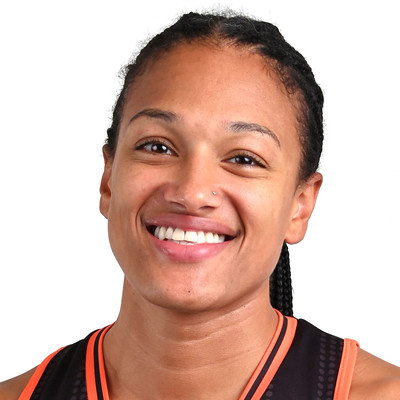
The ballot initiative, Vote Yes on Question 2, is chaired by basketball star Marissa Coleman, a former Women’s National Basketball Association player who was part of the 2006 University of Maryland team that won the NCAA Championship.

“You’ll hear a lot of my voice—see a lot of my face—to educate as many people as possible,” Coleman told the Post from France, where she’s playing in a European league this fall to finish out her professional career.

“Sports fans in Maryland are ready—and waiting—to bet on sports legally,” DraftKings said in a statement to the Post. “Legalizing sports betting will allow for a customer-centric experience and shut down illegal sites that offer no consumer protections. It will also keep money in Maryland that’s currently going to legal markets in neighboring states.”

Sports betting in Maryland could raise as much as $40 million in annual tax revenue, according to a recent estimate from Oxford Economics. The majority, or potentially all, of that would be earmarked for education.

The “Yes on Question 2” campaign’s website focuses on the education funding aspect, and also on the revenue that Maryland is leaving on the table to be snatched up by neighboring jurisdictions like Delaware, Pennsylvania and Washington, D.C.

Before Maryland lawmakers abandoned efforts to define a Maryland sports betting program through legislation and concentrate on the referendum bill, draft legislation called for sportsbooks at all six of the state’s casinos and two racetracks, as well as potentially at the stadium of the Washington NFL team. The Senate bill called for a licensing fee of $1.5 million to $2.5 million depending on how many slot machines a casino has. Sports betting revenue would have been taxed at 20 percent.

DraftKings and FanDuel are calling for multiple skins for each online sportsbook to maximize revenue.

NetEnt Partners with Wind Creek in PA

NetEnt has launched its portfolio of casino games in Pennsylvania through a partnership with Wind Creek Hospitality, which owns the Wind Creek Bethlehem casino.

The new partnership is part of NetEnt’s plan to expand its iGaming footprint in Pennsylvania, expanding the fast-growing U.S. state market. Having added RMG options to its existing social offering in August, Wind Creek can now offer the supplier’s casino content to online audiences, including its popular range of table games and local top performer Divine Fortune.

The partnership further increases NetEnt’s market share in Pennsylvania, where it has expanded significantly since first launching last year. The state has proved to be a major success for the company with consistent quarterly growth.

“It’s a major achievement to be supporting Wind Creek in its online journey,” said Brian Kraft, NetEnt vice president commercial, Americas. “The deal underlines our status as a go-to supplier in Pennsylvania both with established operators and emerging brands. Given the strong performance of our content with local players, this partnership will no doubt see Wind Creek make a big impact in the online landscape.”

Ken Rohman, chief marketing officer at Wind Creek Hospitality, added, “It’s an exciting time to be adding iGaming to our offering in Pennsylvania’s online arena, and with NetEnt’s portfolio of market-favorite casino games, we are in a strong position to quickly gain market share. We look forward to working with their knowledgeable team to build on our offering and deliver a first-rate online experience to our players.”

Big Time Gaming to Launch Megaquads Game Engine

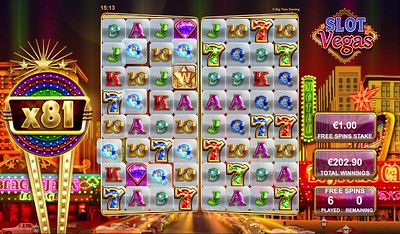
Australian iGaming developer Big Time Gaming (BTG) will unveil its highly anticipated Megaquads mechanic this September with the launch of brand-new game Slot Vegas Megaquads, via Scientific Games’ OpenGaming ecosystem.

The Megaquads engine enables four sets of reels running simultaneously, all set against a retro Las Vegas backdrop.

One week later, Slot Vegas Megaquads will be available across Scientific Games’ entire OpenGaming network.

Megaquads builds on recent groundbreaking technology from BTG, like the game changing Megaways and Megaclusters engines, to provide the latest in quadrilateral gaming entertainment, with enticing wins.

“The Megaquads engine is the latest phase in our mission to reimagine the slot machine in exciting new ways, using technology that increases engagement and sets new standards for the industry,” said BTG CEO Nick Robinson. “The pace of innovation at BTG has been nothing short of miraculous over the past few years, and that’s a testament to the hard work and ingenuity of my team. Slot Vegas demonstrates the breath-taking excitement the Megaquads mechanic can bring to the slots experience.”

Dylan Slaney, senior vice president of gaming, digital at Scientific Games, said, “We’re thrilled to bring the exciting Megaquads feature to our OpenGaming players in partnership with BTG. Our partnership with BTG grows from strength to strength with their ongoing innovation focused on gameplay and pure entertainment powered by our truly open gaming platform. Together we remain committed to driving breakthrough gaming experiences for players in regulated markets across the globe.”