Author: Casino Connection Staff

Nevada Win Inches Up in July

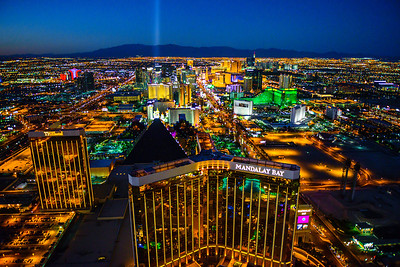
Nevada gaming revenue totaled $756.8 million in July, a year-on-year decline of 26 percent that mostly is attributed to softness on the Las Vegas Strip.

Official returns for the casino industry’s first full month of operations after a 78-day lockdown show the Strip down year on year by 39.2 percent at $330.1 million as the market’s recovery continues to face headwinds from the pandemic.

The Strip, in fact, accounted for more than 79 percent of the July decline statewide.

“This illustrates the challenges this market is facing and will continue to face due to limited air travel, no mid-week convention business, and the lack of large-scale events and entertainment options,” said Michael Lawton, senior research analyst with the Nevada Gaming Control Board.

Still, the results both statewide and on the Strip were significantly better than June’s, when Strip win was down 61 percent versus last year over the 26 days the casinos were open, and revenue statewide was down 45.5 percent.

The sequential increase “exceeded our expectations,” Lawton said.

Downtown Las Vegas, whose challenges mirror the Strip’s, also gained some traction in July, with win down 20.6 percent following a 55.6 percent drop in June.

Macquarie Securities analyst Chad Beynon told the Las Vegas Review-Journal he expects the challenges facing Las Vegas to continue.

“During tough times, gamblers are more likely to avoid costly trips to the Strip or spend less. We believe these same people are more likely to stay local and gamble.”

Data from Earnest Research, a New York-based firm that tracks the credit and debit card purchases of U.S. consumers, would appear to bear this out. Compared to last year, spending on media and entertainment in Las Vegas was down 21 percent the last week of July, travel spending was down 57 percent, with the disappearance of the MICE trade likely the main culprit.

Through the first seven months of the year, gaming revenues statewide are down 43.4 percent. The Strip is down 46.7 percent. Downtown Las Vegas is down 42.2 percent. Washoe County is down 34.8 percent.
Illinois Counties Enforce Stricter Regulations

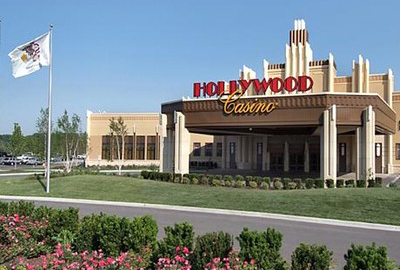
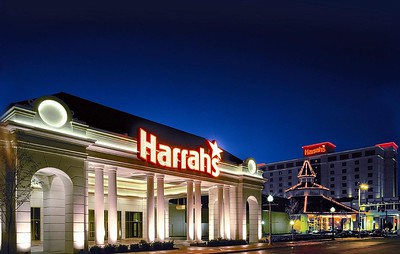
At casinos, bars and restaurants in Will and Kankakee counties in Illinois, new regulations were implemented Wednesday, August 26 after the region had a Covid-19 test positivity rate of 8 percent for three consecutive days. The stricter rules cover Harrah’s Joliet Casino & Hotel and Hollywood Casino Joliet.

The new rules will remain in place for 14 days and if no improvement is shown, the state may enforce even stricter rules. However, if the positivity rate declines to 6.5 percent by the end of that 2-week period, the region can return to Governor J.B. Pritzker’s phase four rules, which took effect in July. The new rules will remain in effect if the positivity rate stays between 6.5 percent and 8 percent at the end of the period.

Under the new rules, casinos are limited to 25 percent capacity and must close at 11 p.m.. Bars or restaurants may not offer indoor service and outside bar and food service must close at 11 p.m. Other rules require outdoor bar patrons must maintain social distancing and each party must have a reservation.

In a statement, state Rep. Margo McDermed said Lawmakers had been told the regional increase in the positivity rate was driven people age 20 to 29 who do not follow social distancing at bars, gather in large groups and “travel to COVID hot spots.” She said, “Whether you disagree or agree with the governor’s rules, he is the one with the power right now while the courts consider the constitutionality of his executive orders. Like it or not, failure to follow his rules have consequences that extend beyond any one individual.”

McDermed added, “This retreat from reopening our local economy demonstrates that the fate of area businesses is directly related to our personal behaviors, regardless of age. I would encourage everyone to consider how their choices impact our entire community, especially business owners, who are just now beginning to recover and are struggling to stay afloat during this health crisis.”

Barry Diller Joins MGM Board

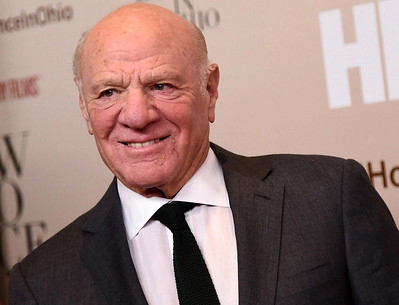
On the heels of IAC’s $1 billion investment in MGM Resorts International, the Las Vegas-based casino giant has expanded its board of directors to make room for IAC Chairman Barry Diller and CEO Joey Levin.

MGM Chairman Paul Salem said in a statement that adding Diller and Levin would “elevate” the company’s ambitions in the digital realm.

“IAC’s significant investment, expertise and support come at a pivotal time and will play a key role in MGM’s strategy to seize emerging opportunities and lead the industry with unparalleled in-person and digital experiences.”

IAC has acquired more than 59 million MGM shares, good for 12 percent of the company, because Diller, the billionaire founder of Fox Broadcasting and USA Broadcasting and owner of online travel giant Expedia, likes MGM’s future in cyberspace.

He termed the investment a “once-in-a-decade opportunity for IAC to own a meaningful piece of a pre-eminent brand in a large category with great potential to move online.”

“IAC has always been opportunistic with its capital, and if ever there was a time, this moment is unique,” he said.

Mohegan Sun’s Cantone: Live Arena Broadcasts ‘Beat the Pandemic’

In mid-March, heavyweight boxers Otto Wallin and Travis Kauffman tested positive for Covid-19. At the same time, the virus knocked down most major league and college sports in the U.S. Casino resorts like Mohegan Sun went down for the count, too.

It’s been a long climb back for all involved, and the culmination played out August 15 when Wallin and Kauffman squared off in the ring at the Mohegan Sun Arena, a fight broadcast by Showtime Championship Boxing.

Wallin emerged a winner on a TKO, but that’s almost beside the point for this story. The fact that the fighters lived to fight another day is a story. The fact that the competition returned to an arena, albeit one without fans, is a story. The fact that the arena in question is in the middle of a Connecticut tribal casino is a story.

Tom Cantone, president of sports and entertainment for Mohegan Gaming & Entertainment (MGE), stands at the center of these stories.

“I sat in my office surrounded by 8 million square feet of darkness, thinking of ways to stay relevant during this unprecedented time,” Cantone said of those early days in March.

He reached out to Viacom with an idea to use the resort’s arena to broadcast events for the company’s sports brands. The result was a residency partnership with Showtime Championship Boxing and Bellator MMA, with fights broadcast live on Showtime and the Paramount Network. Bellator kicked off the residency on July 24, and Showtime launched August 1 with a bout between Angelo Leo and Tramaine Williams for the Junior Featherweight World Championship. On August 21, Paramount aired Ryan Bader versus Vadim Nemkov, part of the Bellator 244.

“Tom Cantone and his team have been excellent partners and the venue has suited our unique needs to deliver both boxing and MMA sports,” Stephen Espinoza, president of Showtime Sports, told GGB News.

While no fight fans crowded the stands, all combatants were still tested and quarantined before each fight, Cantone said.

The first event almost brought Cantone to tears. “When I heard them say ‘Live from Mohegan Sun Arena,’ I got a little emotional as I saw my crew and people clapping. I remembered sitting in my office all alone, wishing for this day to come true. And like magic, it did.”

Viacom could have gone to Vegas or L.A, Cantone said. They chose rural Connecticut. “It was a combination of a good relationship and a great team to back it up here at Mohegan Sun,” he said. “It’s an incredible endorsement for our team. We found a way to beat the pandemic.”

“For us, it’s about leadership to show how a venue can reinvent itself even in a pandemic environment.”

The broadcast contract extends at least through December.

Of course, the series’ success begs the question: Could this work for musical entertainment and comedy as well?

“I’m getting calls now to explore just that after seeing us on national TV,” Cantone reported. “I have social distancing models ready just in case,” in case fans may be permitted to attend on a limited basis.

Meantime, the September 26 Showtime event will feature five world titles in one night, Cantone told GGB News with pride. ”It’ll be a huge pay-per-view audience.”

MGM Finally Reopening Mirage

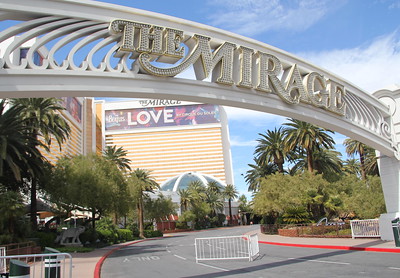
MGM Resorts International will be reopening the Mirage in the next several days, leaving Park MGM as the Las Vegas-based casino giant’s only Strip resort to remain dark.

The 3,000-room Mirage has begun taking room reservations and will be opened to the public on August 27, MGM said.

No timetable was announced for a resumption of business at Park, which had been eyed as a host hotel for the National Hockey League if Las Vegas had been selected as one of the two locations for the season’s restart and playoffs. That changed when the city’s recent surge in Covid-19 infections caused the league to opt for Toronto and Edmonton, Alberta, instead.

Including Park and its adjoining NoMad hotel, 11 Las Vegas casinos remain shuttered. The others are: Caesars Entertainment’s Cromwell and Planet Hollywood on the Strip and the off-Strip Rio; Red Rock Resorts’ locals venues Texas Station, Fiesta Henderson, Fiesta Rancho and the off-Strip Palms; and Boyd Gaming’s Main Street Station in Downtown Las Vegas, Eastside Cannery on the Boulder Strip and the Eldorado in the suburb of Henderson.

Nevada’s gaming industry reopened June 4 after a 78-day lockdown, but absent any convention trade, the lifeblood of the Las Vegas market, particularly on the Strip, analysts don’t expect visitation to even approach pre-pandemic levels before the second quarter of next year, if then.

As it stands, weekend hotel occupancy on the Strip has recovered to around 70 percent, but midweek has stalled at around 30 percent on average. Some resorts, Las Vegas Sands’ Palazzo, for one, have stopped taking midweek reservations.

40 PA Casino Workers Positive for Covid-19

The Pennsylvania Gaming Control Board reported last week that between early June, when the state’s casinos reopened after a two-and-a-half-month shutdown, and August 9, some 40 casino employees tested positive for the Covid-19 virus.

Each of the 12 casinos is required to notify the gaming board when a worker tests positive for Covid-19. The regulatory agency initially had rejected inquiries about coronavirus among casino employees, citing “employee confidentiality” after a request from the Erie Times-News. The board relented after right-to-know requests were filed.

“In each case, the casino’s pandemic officer reports the matter to the PGCB and the Department of Health the day the employee contacts their employer, the respective casino, to notify their employer that they were tested and the test was presumptively positive,” gaming board spokesman Doug Harbach told the newspaper. “Steps are immediately taken to follow appropriate protocols per the (state) Department of Health and CDC including for sanitization and contact tracing conducted through Health officials.”

NH Developer Wants to Build a Charitable Casino

Pizza entrepreneur and developer Sal Lupoli wants to build a charitable casino in Salem, New Hampshire, on the former site of his pizza restaurant. He has filed the proposal with the Salem planning board for the location, known as the Salem Depot.

The board would need to approve of the proposal and then it would need a state license, which Lupoli has so far not filed for. The town has a charitable casino called Chasers Poker Room and Casino. There are 55 such casinos in the Granite State.

Report: Sports Betting’s Future Is Super-Social

In a lengthy analysis on Medium.com, sports analyst Lloyd Danzig said the track faced by sports betting moving forward resembles the one taken by fantasy sports. The early years of fantasy leagues focused on season-long models.

But when companies shifted the emphasis to daily competitions, the industry took off to the tune of $350 million in revenue last year. Danzig, founder and CEO of Sharp Alpha Advisors, argues that a similar phenomenon is about to explode in the world of sports betting with “significant commercial implications.”

DraftKings and FanDuel, which have 63 percent of the online sports betting market in the U.S., have come up with new in-game betting and other options, as well as new rewards programs.

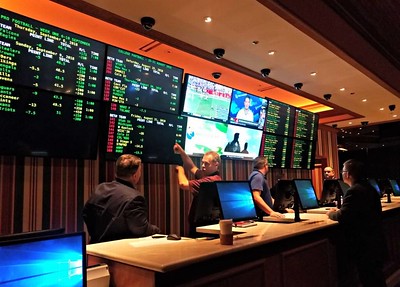
Except for Nevada, the U.S. has a more nascent sports betting landscape than the more mature U.K. marketplace. Betting parlors in the U.K. operate similar to off-track betting locations in the U.S.—people go there primarily to place a bet, not to socialize. But sportsbooks in Nevada and elsewhere have become social destinations as well.

The social nature of all things sports in the U.S. can also be seen in daily fantasy sports, where 70 percent of players never see a return on their investment long-term, but enjoy the social aspects the activity brings to the table. The same holds true for sports betting. Some 40 million Americans bet on office pools for the NCAA basketball tournament each year.

But when it comes to organized sports betting, it isn’t so simple. In order to generate $71 million in revenue during the second quarter, DraftKings had to spend $230 million, the cost of entering new states, attracting new customers and operating technology.

Those who have a bullish approach to the U.S. sports betting market claim there is under-penetration as a share of consumption compared to other countries.

Fan engagement plays a central role in any discussion. Before the Supreme Court overturned the sports betting ban, the American Gaming Association predicted legalization would lead bettors to make up 36 percent of the NFL audiences, accounting for 56 percent of the viewing minutes of regular season games. This would also hold true when it came to other sports.

Another factor in the budding sports betting ecosphere speaks to the social aspects of wagers. Like betting on a game just for something to root for. Like bragging rights. Like socializing with friends revolving around placing bets. But this trend has yet to translate into digital offerings from sportsbooks.

Also missing from the discussion is pairing sportsbooks with celebrities as a marketing ploy.

Innovative sports betting products can capture a share of the reallocation of discretionary spending in a post-Covid-19 world. Another possibility for the future involves personalizing betting opportunities based on past behaviors, not unlike the way Netflix recommends certain shows based on past viewing habits. In a best case scenario, operators can increase revenue without customers increasing spending.

“This confluence of trends will manifest as a fusion of sports betting, content, analytics, social channels, investment opportunities, and experiences into a single, cohesive fan ecosystem that also seamlessly integrates esports, video gaming, online casino play, and hobby gamification,” Danzig said.

IRS Memo Could Cost DFS Companies Millions

On the surface, it doesn’t seem like daily fantasy sports fall under the umbrella of sports betting. After all, the player chooses his team’s makeup based on some skill sets. And the real performances of the athletes determine whether the player wins cash.

But an IRS memo says otherwise, meaning fantasy sports giants FanDuel and DraftKings may have to pay a federal excise tax on entry fees—including back taxes and an annual occupational tax.

“This is one of the most significant events in the evolution of sports betting in the United States,” said Kate C. Lowenhar-Fisher, a Nevada-based gaming attorney at Dickinson Wright PLLC. The taxes due could be “potentially business-destroying” in some jurisdictions, she said.

The industry collected $3.2 billion in entry fees and $335 million in total revenue in 2018. And the memo makes clear, entry fees come under the tax code as wagers.

“Our position continues to be, which we believe has been reaffirmed through state legislatures and courts throughout the country, that DFS is not wagering,” DraftKings CEO Jason Robins said. “We believe that the arguments at the federal level are incredibly strong.”

Legal sports wagers pay an excise tax of 0.25 percent on the amount wagered, along with an occupational tax of $50 for each person accepting those bets. Illegal wagers are subject to an excise tax of 2 percent and an occupational tax of $500.

Gaming attorney Daniel Wallach of Wallach Legal LLC said the memo doesn’t equate with court rulings from the feds in New Jersey. A 2007 ruling said entry fees for fantasy sports fell outside the definition of a bet. But that particular case centered on season-long fantasy games, not daily ones.

Then again, a recent appeals court in New York ruled fantasy sports are an illegal form of gambling.

Should the IRS exercise the memorandum, it will be expensive. “You’re talking about lots of zeros in liability, lots of zeros,” said Marc W. Dunbar, a shareholder at Florida-based law firm Dean Mead.

In related news, in its initial full quarterly report as a public company, DraftKings indicated it had $1.2 billion in cash and no debt. The firm added $800 million during June, the result of an equity offering.

“DraftKings is well-positioned to build upon the growth of the online sports betting and iGaming market in the U.S.,” Robins said in a statement. “As a technology-first organization, we will continue to focus on bringing new and innovative products to market that strengthen our engagement with customers and maintain our competitive differentiation.”

The second quarter saw the launch of sports betting in Colorado and online gaming in Pennsylvania. DraftKings also added sports betting in Illinois and iGaming in West Virginia and is working on Virginia, Tennessee and Michigan.

BetMGM Launches Casino in West Virginia

BetMGM, the online betting brand owned jointly by MGM Resorts and GVC Holdings, last week launched a BetMGM Casino in West Virginia, delivering a wide range of online casino games to players in the Mountain State.

BetMGM Casino will launch with 30 games ranging from best-in-class Blackjack and Roulette games to a host of slots, including West Virginia’s only online progressive jackpot-linked games with the potential for huge payouts with every spin. The new casino product will be presented as a dedicated tab within the BetMGM Sports West Virginia mobile app, complementing BetMGM’s market-leading sports betting product with an interactive and comprehensive online casino experience.

“The addition of the leading iGaming offering in West Virginia is a powerful differentiator for BetMGM,” said Adam Greenblatt, CEO of BetMGM. “With the largest slate of casino games in the state, we’re confident that our superior offering will quickly become the online gaming destination of choice for players.”

Available for download on both iOS and Android, as well as accessible via desktop, BetMGM Casino features an extensive game line-up that includes the popular jackpot slot title ‘MGM Grand Millions’ which utilizes Las Vegas icons for its reel symbols. The slots suite of games also features an exciting free spin module and branded table games.

BetMGM Casino operates in conjunction with The Greenbrier, the mountain luxury resort synonymous with world-class hospitality in West Virginia. BetMGM Casino is also available in New Jersey and will be available in Pennsylvania and Michigan in the coming months, subject to obtaining regulatory approvals.

Two More Illinois Casino Sportsbooks Open

Illinois now offers bettors six sportsbooks, the latest two opening on Thursday, August 20 at Hollywood Casinos in Aurora and Joliet, both owned by Penn National Gaming, increase the number of places sports betting is available in the state of Illinois to six. Earlier this month, William Hill launched its sportsbook at Grand Victoria Casino in Elgin and DraftKings debuted its venue at Casino Queen in East St. Louis.

In March, prior to Covid-29 closures, sportsbooks opened at Rivers Casino in Des Plaines and at Penn National’s Argosy Casino Alton. Altogether, the Illinois Gaming Board has issued eight sports betting licenses; FanDuel’s sportsbook at Par-A-Dice in East Peoria and PointsBet’s operation at Hawthorne Race Course haven’t opened yet.

Of the state’s six active sportsbooks, only BetRivers at Rivers Casino and DraftKings at Casino Queen offer online wagering. First, however, bettors must register in person at the casinos.

Hollywood Aurora offers four ticket windows and 10 self-service kiosks for placing sports bets. Aurora Mayor Richard Irvin, who placed the ceremonial first bet at Hollywood Aurora for $20 on the Chicago White Sox to defeat the Detroit Tigers, said, “It has been a little nerve-wracking. We’ve been on pins and needles hoping this day would come so we can infuse some excitement and energy back into gaming, especially sports betting. The hope is sports betting takes the revenue back up to a very respectable amount for the city as well as Hollywood Casino and their investment in the city.”

Hollywood Aurora General Manager stated it took nearly three months to open the sportsbook, due to the Covid-19 shutdown, then steps to reopen. He said, “I think we’ve partnered with the right people. We’ve got Kambi, we’ve been working with them closely on all the equipment and technology and they’ve been very helpful. I think the biggest thing was working super closely with the regulators. It’s new to the state, new to Illinois, new to this property with Penn despite it having a lot of other properties.”

Moore added he’s not concerned about sports-betting over-saturation of the Chicago-area market. “What we’ve seen at a lot of other places is sports betting is largely contingent on the size of the population. Chicagoland is a huge metropolitan area,, so I don’t think anyone is overly concerned about not getting a big enough piece of the pie to be viable. I think it’s just another way we can offer something for everyone here,” he said.

At Hollywood Joliet, the sportsbook is not adjacent to the gaming floor, like Aurora, but it’s a destination, located one floor above the main gaming area, part of 99 Hops House. There, bettors can order food and drinks and watch games on 37 TV screens and two large projection screens. A casino regular placed the first wager. It offers five ticket windows and six self-serve kiosks nearby, plus eight additional self-serve kiosks located throughout the gaming floor.

Hollywood Joliet Vide President Lydia Garvey noted, “Not knowing when we were going to reopen was the biggest factor for us. Making sure the people we hired when we thought were going to open in March, who still wanted to work for us, and how we were going to get the licensing and training pieces done were major concerns.”

Garvey added, “We’re very happy with the set-up. We think that here in Hops House with all the TVs and great food, it’s a great environment and we’re looking forward to being the place to watch games.”

Masks and social distancing still are mandatory at all 10 Illinois casinos. “We took a very diligent approach to the sportsbook, the same way we have with reopening the casino. Our focus was on being safe, being cautious and being responsible. We wanted to make sure we did it right instead of doing it fast,” Garvey said.

Indiana Sports Betting Explodes

July proved lucrative for the Indiana sports betting market, rising 138 percent to $70.9 million, based on Indiana Gaming Commission figures. In June, sportsbooks took in $29.8 million.

Credit the return of Major League Baseball and the NBA for the July success and expect higher results in August. Still, the numbers pale from the pre-coronavirus total of $187.2 million in handle in February.

For July, baseball bets exceeded $14.5 million, tops of any sport, followed by almost $6 million in basketball wagers, according to the Cincinnati Business Courier.

“July’s staggering increase in handle tells us that betting activity in Indiana is on the path to returning to pre-pandemic levels,” said Max Bichsel, Gambling.com Group’s vice president of U.S. business. Sports betting would likely reach pre-pandemic levels in September if football returns, he said.

Indiana sports betting generated $633,000 in tax revenue in July. That’s based on $6.7 million in adjusted gross revenue, representing the amount casinos win after paying out gamblers’ winnings. Hollywood Lawrenceburg was responsible for $43,000 of that revenue while Belterra generated $39,000.

The overwhelming amount of bets—$65 million—relied on mobile gambling. But Hollywood Lawrenceburg raked in $2.7 million in sports bets at its sportsbook, but only $1.1 million through mobile means.

Sportradar Awarded NHL Data Rights

A competitive auction awarded Sportradar the rights to distribute data for the National Hockey League to sportsbooks in the U.S. and elsewhere.

Final terms have yet to be disclosed but the bidding for the ten-year term of the contract is believed to be more than $250 million, according to Sportico. If finalized, the agreement would give Sportradar domestic gambling data rights in all four major U.S. sports, including exclusivity in the NFL.

Sportradar, which declined comment, becomes the gatekeeper for all NHL data as it relates to sports betting, including stats like goals and assists, but also a whole new set of data devised by the league, such as chips to the puck and player shoulder pads, technology that produces thousands of data points per second.

The goal of these pieces of data is to get sportsbooks to fork over money to Sportradar for official league data. Like all U.S. sports leagues, the NHL views gambling as a way to increase fan involvement and attract mew people to the sport.

The league could make more than $216 million a year in added revenue due to sports betting, based on a 2018 study by the American Gaming Association and Nielsen. Over the last five years, Sportradar has been the league’s official distributor of play-by-play data to media organizations.

Sportico wrote last month that Sportradar was exploring plans to go public through a reverse merger. The company, with investors from Mark Cuban to Michael Jordan, carries a value of $2.4 billion as recently as 2018.

ESPN Opens Media Studio at Linq

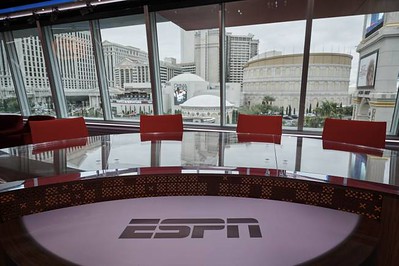
Caesars Entertainment has teamed with sports media giant ESPN to open a studio complex on the Las Vegas Strip for the production of an array of betting-themed programming.

A joint statement described the 6,000-square-foot facility at The Linq Hotel as the “epicenter of ESPN’s sports betting-themed content for linear, digital and social shows,” one that will play “a vital role during major sporting events, including the growing number of franchises and marquee events in Las Vegas.”

The complex houses three studios and features 12 cameras, including two exterior robotic cameras, and has the capacity to transmit and receive information to and from ESPN control rooms and technical operations around the country.

This project is an outgrowth of an expansion of the network’s sports betting-themed content onto multiple platforms that includes the launch of a new digital show coming to the ESPN app, Facebook, Twitter and YouTube.

The studio also will permanently host the network’s popular “Daily Wager” show, which is returning September 8 from a pandemic-related hiatus.

“In our ongoing mission to serve sports fans, we are committing to a bigger presence both in Las Vegas and with our content across platforms to authentically serve a fast-growing, highly engaged audience,” said Mike Morrison, the network’s vice president of business development.

Chris Holdren, co-president of Caesars Sports, said he views the collaboration a “testament both to Las Vegas’ position as the sports betting capital of the world and its transformation into a sports city.”

“With the marquee location of the studio right at the heart of the Strip, we’re excited to see the unique programming that could only be produced here in Las Vegas,” he said.

Illinois Governor Rescinds Registration Requirement

Maybe you shouldn’t invite DraftKings CEO and co-founder Jason Robins to any party thrown by Rush Street Gaming. Seems he has issues with the competitors’ actions in Illinois.

It happened on August 21, after Governor J.B. Pritzker rolled back the requirement that customers must register for sports betting accounts in person, a requirement Rush Street supported.

Rush Street responded to Sports Handle August 24 by attacking DraftKings. “Rush Street has never been asked to leave a state, pays taxes on every wager, and has not been named in multiple consumer class action suits.”

DraftKings last week mounted a grassroots campaign to encourage patrons to request re-instatement of an order to allow remote registration. The order lapsed July 27.

The flip-flop in Illinois sent mixed signals to operators.

“Illinois continues to triumph in bad policy,” said consultant Brendan Bussmann of Global Market Advisors. “Creating an anti-competitive market should never be the goal of any stakeholder, especially when it comes to sports betting. Playing pandemic political games that circumvent legislative intent through executive overreach is just as bad.”

Pritzker’s change of heart benefits DraftKings, whose casino partner, Casino Queen, is located five hours from Chicago. With the order back, DraftKings will attempt to sway a lot of bettors to sign up for their mobile sportsbook.

Colorado Sports Betting Stock Rises

Thanks to the return of Major League Baseball and the NBA, Colorado’s sportsbooks generated almost $60 million in July, making it a Top 5 market in the U.S. With new operators coming online, it should do even better when August figures are released.

July’s handle resulted in $2.4 million in net betting proceeds, up 11.4 percent from $2.2 million in June. The state realized $241,867 in taxes.

Baseball attracted $9.2 million in bets and soccer took in another $7.6 million. With just a few days of NBA games, basketball produced $3.2 million in wagers. Still, table tennis brought in $5.1 million.

Even with the opening of Colorado’s first retail sportsbooks, online sports betting at the 11 online locations, accounted for 99 percent of the handle.

Connecticut OTB Operators Press for Sportsbook

Connecticut’s off-track betting operators are becoming more assertive in arguing that they have a right to a piece of the action as it relates to sports betting.

They are also more willing to call the state’s two gaming tribes, the Mashantucket Pequot and Mohegan tribes, an impediment to a settlement because they insist on a monopoly of sportsbook, which they say is guaranteed by their state tribal gaming compacts.

The tribes own, respectively, Foxwoods Resort Casino and the Mohegan Sun.

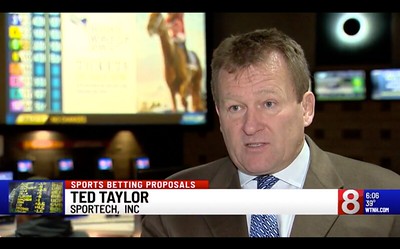
One such OTB operator, Ted Taylor, president of Sportech Venues, wrote an Op-Ed in CT News Junkie entitled “The State Must Remove the Artificial Barriers to Sports Betting,” in which he first asked, “So why can’t we get this done when we need revenue from Sports Betting more than ever?” And then answered himself: “Simply, and perhaps surprisingly for the neutral observer, the Tribes are the roadblock.”

Taylor argues that both OTB operators and tribes should be authorized to begin offering sports betting. The sooner the better, he writes, because the state, reeling from the effects of the coronavirus, needs the money from taxing sports betting.

Taylor doesn’t buy that the tribal compacts give the tribes exclusive rights to sports betting because, when the compacts were adopted in the 1990s, the federal government banned sportsbook in all but four states. So the compacts didn’t mention the activity.

The matter of whether the tribes do have this right is a vital one, though, because the compacts obligate them to pay 25 percent of slots revenue to the state. If the state allows a non-tribal entity to offer casino games, they can hold back those payments.

So the legal question is, is sports betting a casino game by the definition of the compacts? A former Connecticut state attorney general, George Jepson wrote an opinion in 2018 questioning the tribes’ position. So have others.

Taylor concludes, “The clear solution is for the State to break the stalemate and license the State’s existing gaming operators, including the Tribes,” adding, “The State will secure additional revenues and consumers will enjoy competitive choice, innovation, and safety in gaming entertainment.”

Needless to say, Mashantucket tribal Chairman Rodney Butler took issue with Taylor’s arguments. He dismissed the piece as “incredibly offensive,” and added, “For a company that is contributing $3 million a year to the state to suggest that we should put $255 million at risk while at the same time they recognize the dire financial situation Connecticut is in is reckless and self-serving.”

He concluded, “As an elected official myself, I would be and should be thrown out of office if I entertained an idea like that.”

Butler does advocate that the state get moving to modernize and “take advantage of existing technology in all aspects of business,” adding, “In the gaming industry, that means online gaming, which is already going on illegally through offshore operators. To the extent there’s one ready-made revenue solution at our disposal, it’s incumbent on government to act.”

The Mohegan Tribe, the other gaming tribe in the state, responded to Taylor’s piece by largely mirroring Butler’s points, but added that the Mohegan tribe already operates sports betting in the properties that it operates in other states.

Mohegan Chief of Staff Chuck Bunnell added, “They do also feel that if it is offered, it must be within existing agreements that have been very beneficial to the state of Connecticut.”

Governor Ned Lamont has been working all year on a possible deal that would include the tribes offering sports betting, but would also extend it to the state lottery and Sportech off the reservation.

Progress on this was interrupted with the arrive of the pandemic in March.

Tennessee Settles on Sports Betting Date

Could Tennessee finally have a launch date for sports betting?

If Tennessee Lottery President and CEO Rebecca Hargrove is right, bettors will be able wager on NFL games by November 1, making the state the first mobile-only market in the country. Tennessee has no casinos for conventional sportsbooks.

The lottery has taken a lot of criticism for some stifling regulations, such as a high hold cap and high licensing fees of $750,000. The hold of 10 percent could impact betting lines, and that could impact the number of customers.

The states with more than a billion dollars in sports betting handle since June 2018—Nevada, New Jersey, Pennsylvania and Indiana—range from 6.1 percent to 8.2 percent holds. The national hold average is about 7.5 percent, according to a study of Tennessee’s proposed cap by industry analysts Eilers & Krejcik Gaming. Eilers estimated Tennessee could cost itself $11 million because of the hold rule.

The legislation established a tax rate of 20 percent, again one of the highest in the country and requires the use of official data from sports leagues. The regs also prohibit in-play betting on college sports, according to

BetMGM, DraftKings, FanDuel and a local Tennessee outfit have filed applications with the lottery, according to Sports Handle. The local applicant, Action 24/7, runs a free-to-play website.

Operators will be penalized if they don’t meet the 10 percent cap. The lottery folks discussed a $25,000 penalty to operators if they go below the 10 percent hold, but the council did not agree on a time frame, according to TN Bets.

Special Sports Betting Election in California?

A sports betting measure proposed by a coalition of more than two dozen California gaming tribes could be put on the ballot of a special election before 2022.

At this point, the best the coalition will be able to do is get on the next general election, in 2022, having failed to make this year’s ballot, the victim of the Covid-19 pandemic. The effort to gather signatures for the measure was sidelined a few thousand signatures away from qualifying, say supporters.

The measure would allow gaming tribes and racetracks to offer sports betting, but only in brick and mortar establishments. It would also allow gaming tribes to add some table games they are not able to offer now.

Recently the spokesman for the group, Jacob Mejia, who is also vice president of public and external affairs for the Pechanga Development Corp., conceded the proposal will not make the 2020 ballot. “Given the timing and ongoing restrictions, there is no chance of qualifying for this November,” he said.

A state judge did grant the group an extension on the state deadline to gather signatures until October 12. The required number is 997,139 and the group claims it has many more than that. “The way it works is that if we qualify the initiative then it’s teed up for the next statewide election,” Mejia added.

Even with the extension, gathering signatures is still a challenge, says Mejia. He told CDC Gaming Reports, “More than half of California counties—home to 97 percent of the state’s population—are on the state’s watchlist, which is making signature gathering very challenging.”

The next statewide election could be a special election, if the governor or the legislature calls for one. The last time that happened was in 2009.

Getting on a special election ballot would give the tribes an advantage because they would be able to beat any competing sports betting initiatives to the punch.

William Hill Expands Nevada Portfolio

Until recently, William Hill U.S. managed the sportsbooks for just two casinos on the Las Vegas Strip: Circus Circus and Sahara. That figure will multiply tenfold by the initial kickoff of the NFL season.

Nevada gaming regulators gave preliminary approval for the sportsbook to take over operations of six casinos under the management of CG Technologies, which it acquired in November. At the same time, William Hill added 11 more sportsbooks—nine on or near the Strip—thanks to the purchase of Caesars Entertainment by Eldorado Resorts. William Hill also manages five Downtown Las Vegas resorts: The Strat, Downtown Grand, Binion’s, Plaza, and Four Queens.

Speaking before the Nevada Gaming Control Board, William Hill CEO Joe Asher said the transition with CG Technologies should be seamless to customers.

The CG transaction expected to close August 27. “It’s a positive for CG to become part of William Hill,” said control board member Terry Johnson.

Through the acquisition, William Hill will oversee sports betting operations at Venetian Las Vegas, Palazzo, Tropicana Las Vegas, and Cosmopolitan of Las Vegas on the Strip, as well as the Palms Casino Resort, and the Silverton. The Palms and Tropicana have not re-opened since the Covid-19 closures.

William Hill is working on taking over management of the Caesars Entertainment sportsbooks. Hill had an agreement with Eldorado prior to the Caesars deal, but Caesars CEO Tom Reeg told GGB News that the terms of that agreement must now change due to the merger, making Caesars the largest gaming company in the U.S.

For Asher, the assumption of CG would be a homecoming. He served as managing director of the firm, then known as Cantor Gaming, when the company came to Nevada in the mid-2000s. Cantor Gaming was the sports betting side of Cantor Fitzgerald.

He left Cantor Gaming in 2007 to form his own sportsbook management firm, Brandywine Bookmaking, which evolved into 16 sportsbooks under the Lucky’s Race and Sports name. Cantor sued Asher in 2011 when he agreed to sell Brandywine to William Hill for $15.7 million, with Asher as CEO of the U.S. operation. In 2017, a Nevada jury sided with Asher.