Author: Casino Connection Staff

House Approves Bill Protecting Mashpee Reservation

The U.S. House of Representatives has approved a bill that would prevent the Trump administration from removing the 300 acres of tribal lands of the Mashpee Wampanoag tribe of Massachusetts from federal trust.

The legislation, part of an omnibus spending bill, would forbid the Interior Department from revoking its Obama-era 2015 decision to put the land into trust, a decision that was later reversed by the current administration.

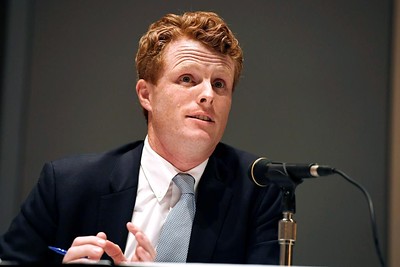
Massachusetts Rep. Joseph Kennedy III, who sponsored the bill, commented, “In recent months, the Trump administration has used the Covid-19 pandemic as cover to try to steal the tribe’s land and define their people out of existence. This amendment will put an immediate stop to those dangerous efforts.”

Co-sponsor Rep. William Keating added that the bill would foil “constant efforts to undermine the tribe’s rights.” One right the tribe seeks to exercise is the right to develop a $1 billion casino in Taunton.

To take effect, the bill would require passage in the Republican-controlled Senate, which has resisted attempts to support the tribe.

The Trump administration contends the Interior Department had no authority to put the land into trust, citing the Supreme Court’s Carcieri v. Salazar decision, which holds that a tribe not under federal jurisdiction in 1934 cannot put land into trust. The Mashpee tribe, based in Cape Cod, was recognized in 2007, but can trace its interaction with European settlers back to 1620, when its ancestors greeted the Pilgrims at Plymouth and later helped them survive their first winter in the New World.

In the most recent court ruling on this matter, in June, a federal judge ordered the Interior Department to stop the revocation process and review the matter before issuing new findings.

Tropicana Las Vegas Sales Pitch Accelerates

Real estate investment trust Gaming and Leisure Properties Inc. (GLPI) is looking to sell the Tropicana Las Vegas. This came as no surprise, as the Tropicana has been unofficially on the market for the last few years, but Michael Parks, who is brokering the sale as head of CBRE Group’s global gaming division, provided more details.

Parks said no asking price has been set at this point, but he told the Las Vegas Review-Journal he believes the 1,470-room hotel casino, which occupies 35 prime acres at Las Vegas Boulevard and Tropicana Avenue, is worth “at least” the $360 million Penn National Gaming paid to acquire it five years ago.

GLPI has made no secret of its desire to sell the resort, which it took over after the pandemic hit for $307.5 million worth of rent credits and leased it back to Penn to operate.

There has been speculation that the Trop could be worth $400 million to $700 million, but that was before the pandemic overturned the lucrative dynamics that had governed deals on the Strip.

Macquarie Group gaming analyst Chad Beynon said, however, he believes there is still demand.

“Anytime it feels like we’re at the bottom and it’s the end of the world, that’s generally when buyers come out, and at least have conversations with the holders of some of these assets.”

Apparently, that what’s happening, according to Penn President and CEO Jay Snowden, who recently told analysts there had been “unsolicited interest” in the resort.

“We got another call two days ago with interest in potentially acquiring some or all of the landholdings there, so it’s very active,” he said.

The Tropicana, he added, is “extremely valuable.”

Virginia Casino Voting Begins September 18

Virginia Circuit Judge Sage B. Johnson signed an order July 17 adding a casino referendum to the upcoming ballot in Bristol.

Although the general election will be held November 3, a new Virginia law allows “no-excuse absentee voting” by mail and in-person early voting starting September 18. It’s the culmination of a two-year effort to legalize gaming in the state.

The ballot question will read: “Shall casino gaming be permitted at a casino gaming establishment in Bristol, Virginia at 500 Gate City Hwy., as may be approved by the Virginia Lottery Board? Yes. No.”

This election will be the first time extended early voting will be allowed in Virginia, as the Bristol city hall and other government buildings are closed due to Covid-19.

General Registrar Penny Limburg anticipates a record turnout. “I think the combination of the how the presidential race is shaping up and the casino… will be a big driver in turnout,” she said.

If voters approve the casino, developers and operators must then undergo a lengthy review during the license application process, according to lottery officials.

Bristol is one of five cities authorized by legislation to develop a casino. Earlier this month, the Virginia Lottery Board pre-certified Hard Rock International, the United Company, Par Ventures and H.R. Bristol LLC, as qualified and capable of operating a gaming business. Hard Rock Bristol is anticipated to create 2,000 jobs and generate $15 million to $20 million annually for the city in tax revenue, in addition to the city’s share of gaming tax revenue.

The “Vote Yes for Bristol” committee recently was formed to promote voting for the casino in the referendum. The group issued a statement, saying, “In the coming months, the committee will engage directly with local residents to answer questions and provide information about the project which will generate thousands of new good paying jobs; millions in new tax revenue for schools, first responders and infrastructure; and spur billions in economic development across the region.”

The Virginia Lottery Board also recently pre-certified the Pamunkey Indian tribe as the preferred operator in Norfolk, Caesar’s Entertainment in Danville and Rush Street Gaming in Portsmouth. Richmond officials have not as yet selected a preferred operator.

Developers of Rivers Casino Portsmouth recently released renderings of the proposed property. Portsmouth Economic Development Director Robert D. Moore said the location off Victory Boulevard “is the center of Portsmouth. This is really the center of Hampton Roads so it makes sense to have a casino right here.”

The venue will feature a casino with slots, table games and poker, plus several dining options, a hotel and conference center. It’s expected to create 1,400 construction jobs and 1,300 permanent positions. “You have the opportunity now to increase the quality of life for someone in the city of Portsmouth,” Moore said.

Portsmouth Mayor John Rowe said the casino hotel will generate $16 million in annual new revenue. When he looked at the renderings of the project, he said, “It was very exciting, I got goosebumps.”

Maryland Workers Fear for Safety, Lawmakers Told

The general managers of Maryland’s six casinos testified last week before a video meeting of the state House of Delegates Ways and Means Committee, telling lawmakers that while Maryland casinos are beginning to recover after a three-month closure, workers do not feel safe on the job.

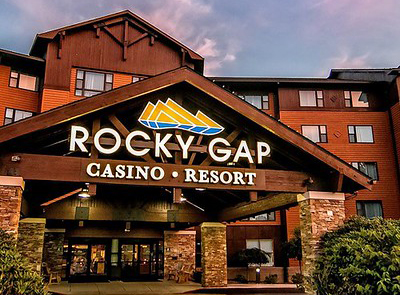
Skylar Dice, general manager of the Rocky Gap Casino Resort in western Maryland, told the panel that some workers refused to return to work due to Covid-19 concerns. “There was fear and trepidation upon reopening, and not all of our team members want to come back to work,” Dice said.

“They just don’t feel comfortable working in the new conditions,” added Jorge Perez, president of MGM National Harbor near Washington, D.C.

Gordon Medenica, director of the Maryland Lottery and Gaming Control Agency, told the lawmakers his agency was expecting a long-term dip in casino revenues. “To be probably brutally frank, I think we have to accept a long-term lowering of our expected casino contributions,” Medenica said, according to the Baltimore Sun. “The reality for the future is incredibly uncertain.”

Medenica did have more upbeat news for the committee members in the area of lottery sales, which he said are up more than 20 percent despite the ongoing coronavirus pandemic.

“We were still up even that first week in March, and then we just started seeing the bottom fall out,” he said. “Sales were going down 20 percent, 25 percent, 30 percent, and we really didn’t know where the bottom would be. Obviously we lost some of our retail base but also people weren’t going out, they weren’t driving, they weren’t visiting the gas stations.”

Medenica called the increase a “very strange phenomenon,” attributing it to a lack of other places to spend discretionary money.

“Our theory at this point is that there really is just no place for people to spend some discretionary entertainment dollars—there are no movies, there are no sports there are no concerts, there are no bars and restaurants,” he said.

Florida Casino Sues Over ‘Business Interruption’ Losses

The operators of Magic City Casino in Miami have sued four insurance companies they claim wrongfully denied coverage for “business interruption” losses due to Covid-19 closures.

Magic City said AXA XL Insurance Group, Indian Harbor Insurance, Hallmark Specialty Insurance and Ategrity Specialty Insurance sold the casino “all-risk” policies that include business-interruption losses. The lawsuit, filed in federal court in South Florida, states, “In an all-risk insurance policy, all risks of loss are covered unless that are specifically excluded.”

The lawsuit also claims the casino was closed as a result of orders issued by Governor Ron DeSantis and local officials. Court documents note the disputed policies contain identical sections about providing coverage for losses resulting from an “order of civil or military authority.”

The lawsuit reads, “As a result of the presence of Covid-19 and the closure orders, plaintiff sustained a suspension of business operations, sustained losses of business income and incurred extra expenses. Plaintiff has also sustained business income losses due to direct physical loss or physical damage at the premises of dependent properties.”

In April 24, the Insurance Information Institute said, “Global pandemic risks are uninsurable.” The group also stated, “Only a handful of business interruption policies cover communicable disease contamination. Very few U.S. businesses purchase them.”

In May, the Federal Reserve Bank of Chicago also stated business owners’ policies do not cover losses related to the pandemic. “Some business owners have fought back by filing lawsuits, while legislators in a few states have talked about passing laws to mandate pandemic coverage, potentially retroactively. The outcomes of these actions may not be known for several years but are likely to be important, because the losses from the pandemic by businesses with business interruption insurance are very large and could leave some insurers insolvent after just a few months of payments.”

Wynn Resorts Cutting Strip Staff

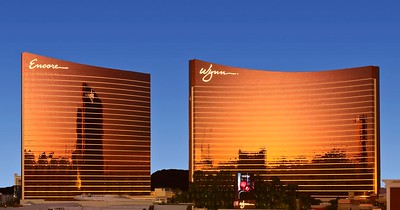
Wynn Resorts has begun furloughing workers in response to slackening demand on the Las Vegas Strip.

The company didn’t say how many of the thousands of employees at its marquee casino hotels, Wynn Las Vegas and Encore, are being affected.

“Although we retained all of our people while we were closed, we now know how challenged business volumes in Las Vegas are and are staffing to the significantly reduced demand,” spokesman Michael Weaver said.

He said those laid off will continue to receive company-paid health benefits through October 31.

Wynn employs around 30,200 people across its operations in Massachusetts, Macau and Las Vegas. Roughly 16,400 of those were based in the U.S., where the company’s Las Vegas resorts reopened June 4 and Encore Boston Harbor reopened July 12.

The furloughs come as visitation to Las Vegas reportedly is slowing, a worrying trend observers attribute to the spike in new coronavirus infections in and around the city the last two months and the deluge of new cases reported in much of the rest of the country.

“Let’s face it, Covid-19 is putting a damper on anyone’s travel plans,” said Wynn Las Vegas and Encore President Marilyn Spiegel. “We are trying our very best to encourage our guests to come back and visit. Their concerns for their health and safety are overriding their desire to travel.”

Spiegel said casual restaurants will be closed midweek and operations at gourmet outlets will be limited in response to the slowdown. The spa and salon at Encore also will not open midweek.

“We are going to have a rolling schedule of closures by day of week,” she said. “You may see that one restaurant is closed four days a week, but it’s always going to be open on weekends, when we have the most demand. Another may be closed three days a week or two days a week.”

Main valet parking at both properties also are closing, although the service will remain open for guests at Wynn Tower Suites and Encore Tower Suites and for private access members and VIP customers.

Earlier this month, Las Vegas Sands said it would not accept midweek room reservations at its Palazzo resort on the Strip.

For Nehme Abouzeid, president of consultants LaunchVegas and a former marketing and entertainment executive with both Wynn and LVS, the cutbacks are a sign that things on the Strip “are not even close to normalized yet.”

Stanley Ho and Community

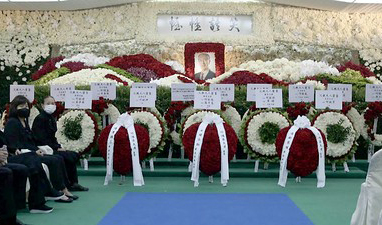
Stanley Ho has died, and anyone who knows anything about Macau and gambling knows that Dr. Ho was “The Man.” Granted monopoly control of gambling in the Portuguese colony in 1961, one of the many nicknames Dr. Ho acquired was “The Godfather,” and this nickname is a most appropriate way to help American audiences understand what he was all about–and more.

Toward the end of the last decade I had the opportunity to live in Macau for a bit, and teach a course on Casino Management and Regulation, held at both the University of Macau and Macau Polytechnic. I had a group of interesting students. Professors Bill Eadington and Nelson Rose sat through the first week of lectures (I think Bill was just keeping an eye on me); Grant Bowie, the CEO of the Macau MGM, was very supportive of the class and sent a number of his employees to attend; as did and Raymond Yap of Galaxy; and the Wynn folks sent a few people. I also had about five Ph.D. professors from the area take the class and that made me double-check all of my math lectures. Then there always seemed to be a group of four or five people who basically just showed up and dropped one name or another, and I have never been one to turn anyone away who wanted to listen to me talk.

During this time, I made a friend of one of the older students taking the class, and I would occasionally have dinner with him, and he and I would often walk the streets of Macau at night to look about and visit. What was most interesting about this gentleman was that he had worked for Dr. Ho for a number of years, and he had worked for Dr. Ho back in the day, as we say.

I always enjoyed our walks because I would get to hear stories about this bigger than life character who was Stanley Ho, for not only was Macau known for gambling in the last century, it was also known for a number of other industries that typically generate interesting stories. I will not share these stories, but I will share one that I found terribly important in understanding the life of Stanley Ho.

My friend told me that the government of Macau had often failed the people, and Dr. Ho had always been the one who held the safety net in these failures. If a neighborhood was flooding on too regular a basis, Dr. Ho would see that the problem was resolved. If a school needed uniforms, it would be an employee of Dr. Ho’s who would make the delivery of new uniforms. If there was someone who was bothering the people of a neighborhood, or being threatening or obnoxious, that person would go away, and no longer be a bother. And so on and so forth it went. The reality of Dr. Ho was that he was loved and revered in the community, and he truly had a social contract with the people of Macau. While he was a most successful businessman withing the region, he was also a very good citizen and understood the importance of community.

In 2014, there was an event at the Mob Museum in Las Vegas, and Ms. Elaine Wynn was one of the speakers. During this talk, Ms. Wynn lamented that “We don’t have the homeboys.” The point she was trying to make, as I understood it, was that there was not that person or group of people of influence within the community who kept an eye on things. What seemed a bit ironic about her statement was that one of the best at that role, in my opinion, was her ex-husband, Steve Wynn.

Las Vegas does not have a Steve anymore, nor a Kirk, nor a Hank, nor a Charlie Mathewson keeping a watchful eye on things. Mr. Binion has long passed and Jack is no longer involved in the game. Mr. Boyd has slowed down materially as has Mr. Adelson, whose focus seems to be on Ms. Adelson, supporting all things Republican and Israel. Gary Loveman never fit the bill, and Jim Murren struggled with multiple distractions, be it a licensing issue in New Jersey, the Great Recession, or a tragic shooting. The steady hand and mind of Bob Faiss is gone from the legal side of things, as is the vision of E. Parry Thomas in finance. There are others, but they are either gone, or did not seem to want that role.

Las Vegas has changed, and it has changed for the players are now private equity firms, hedge funds, and the like. The town does not have a Stanley Ho-type person(s) who can keep a watchful eye on things, handle what needs to be handled, and who can reel-in the traditionally bad stable of politicians who seem to continually replicate themselves year after year after year thinking that Las Vegas is about them.

One of the interesting things I find about the new Las Vegas is that everyone is working behind the scenes, or so they tell me. I recently published an article concerning an issue of interest for Las Vegas and Nevada, and was contacted by a number of people who were working “behind the scenes.” Las Vegas now seems to have a situation once described by John F. Kennedy, where: “Victory has a thousand fathers, but defeat is an orphan.” Moreover, all of these folks working behind the scenes basically seem to have done little more than experience a pyrrhic victory.

Where does this take Las Vegas? Nowhere good, is my guess. Vegas presently appears to be a rudderless ship, wounded and damaged and in need of a major course adjustment. It needs a leader and it needs a vision. It seems to need a Dr. Ho, but there just doesn’t seem to be one around.

Rivers Philadelphia Reopens

Rivers Casino Philadelphia (formerly SugarHouse) reopened Friday, July 24, with a number of safety measures that are part of owner Rush Street Gaming’s “Rivers Clean” program for its three Rivers-branded casino properties.

Pursuant to state guidelines to prevent the spread of the Covid-19 virus, masks must be worn by patrons and employees, and social distancing on the slot floor is achieved by disabling alternating machines or separating games with Plexiglas barriers.

Other safety measures exceed state requirements. While casinos in the state are permitted to operate at 50 percent capacity, Rivers will limit capacity to 25 percent until further notice. There will be no indoor dining or beverage service, though the state permits indoor dining at 25 percent capacity. Smoking is banned indoors, under orders of the state gaming board.

The casino will be open from 9 a.m. to 5 a.m. on weekdays, and around the clock on weekends, until further notice.

All guests must go through a temperature sensor upon arrival, and no one with a reading of 100.4 degrees or higher will be permitted to enter the casino. Employees’ temperatures also will be checked upon arrival, and all employees are required to complete a daily Covid-19 “self-assessment” before reporting to work.

Guests are required to visibly clean their hands before touching chips or cards. Chips, cards and dice will be sanitized and swapped out continuously.

Pennsylvania Casinos Look at Smoking, Drinking Amid Pandemic

The Covid-19 pandemic and the reopening of Pennsylvania casinos with restrictions that include a ban on smoking, are forcing gaming operators, regulators and lawmakers to re-examine the issues of smoking and drinking on the casino floor.

State Rep. Dan Frankel of Pittsburgh, who introduced legislation early this year to repeal the casino industry’s exemption to Pennsylvania’s Clean Indoor Air Act of 2008—allowing casinos to be one of very few establishments to permit indoor smoking—told the Penn Bets news site last week that his bill has not seen any movement, even in the wake of Covid-19 casino shutdowns.

Frankel told the news site the reason is the gaming lobby, which fought hard for the casino smoking exemption in 2008 and continues to exert strong influence, despite the temporary smoking ban imposed by the Pennsylvania Gaming Control Board.

“They have an active lobby that was very effective when carving out that exemption when first passing the legislation, and they’re pretty effective in tamping down efforts to change it,” Frankel told Penn Bets.

The gaming board imposed the temporary ban as one of the safety restrictions mainly due to Governor Tom Wolf’s order requiring that masks be worn in all indoor locations. Board members have commented publicly that the smoking ban was imposed because of the simple fact that a person cannot wear a mask and smoke at the same time.

Penn National Gaming spokesman Eric Schippers, when asked by Penn Bets whether the temporary smoking ban may become permanent in the wake of the pandemic, was noncommittal.

“We are all trying to figure out what the ‘new normal’ is from an operational standpoint,” said Schippers. “We know historically that smoking bans can have a significant negative impact on revenue, but that is without an ongoing pandemic and mandatory mask policy, etc. (It is) just too speculative on many levels right now in terms of impact on business or customer behavior and what the future policy might be.”

Meanwhile, the state mask order has also raised concerns about allowing drinking on the gaming floor, since a mask must be removed to drink as well as smoke. Mohegan Sun Pocono announced last week it will stop serving alcoholic beverages on the casino floor in wake of the mask order from Wolf.

“In order to comply with Governor Wolf’s latest Covid-19 mitigation efforts, Mohegan Sun Pocono will temporarily suspend alcoholic beverage service on the gaming floor,” said a statement on the casino’s website. “Alcoholic beverages can be consumed while dining in our restaurants.”

“The Pennsylvania Department of Health issued a comprehensive FAQ document addressing Governor Wolf’s recent mitigation efforts,” Mohegan Sun President and General Manager Anthony Carlucci told the Wilkes-Barre Times-Leader. “This FAQ provided clarity for several industries that were not referenced in the initial announcement.”

Carlucci said the suspension of alcohol on the gaming floor resulted from the clarification offered by the Health Department. As of press time, no other Pennsylvania casinos had announced the suspension of alcohol service on the gaming floor.

Casino bars have remained closed under Pennsylvania’s reopening guidelines, with alcohol service restricted to restaurants, which are operating at 25 percent capacity for indoor dining. The casinos themselves are operating at 50 percent capacity.

Meanwhile, the Covid-19 pandemic had predictable results on the nation’s No. 2 commercial gaming state, as Pennsylvania logged an 18 percent drop in revenue for the fiscal year that ended June 30.

Due to the shutdown of casinos on March 17 and subsequent reopening on June 9 at 50 percent capacity, Pennsylvania recorded gaming revenue of $2.7 billion for the fiscal year, compared to a record $3.3 billion a year ago.

Revenue from slot machines was down by $680 million and table games were down by about $240 million, both nearly 30 percent. Those losses were mitigated by online gambling, which generated $240 million, and sports betting, which brought in $114 million in the first full year for both in Pennsylvania.

Judge Dismisses Sexual Harassment Suit Against Wynn Resorts

A federal judge has dismissed a lawsuit filed by nine female employees of Wynn Resorts who claim the company did nothing to protect them from sexual harassment by Steve Wynn.

The women, manicurists and makeup artists at Wynn Las Vegas identified by their attorneys as “Judy Doe No. 1” through “Judy Doe No. 9,” accused Wynn Resorts and Wynn Las Vegas of fostering a hostile work environment. They alleged the defendants were aware of misconduct by Wynn towards female employees but did not investigate it and instead covered it up.

They said that sought to remain anonymous out of fear of legal retaliation by the company and fear of being ostracized at work. They also claimed that sensitive details contained in the court action would disrupt their lives if made public.

In voiding the suit, District Judge James C. Mahan agreed with another judge’s earlier ruling that the women did not sufficiently justify their need to file the suit anonymously.

He also ruled that the women did not sufficiently make their case in the complaint but used “generalized and vague statements without individualized factual support for their allegations.”

He did, however, dismiss the suit without prejudice, meaning it can be refiled.

Wynn, 78, resigned in February 2018 as chairman and chief executive of Wynn Resorts and later sold off his financial interest in the company after explosive testimony published in The Wall Street Journal claimed that for years the tycoon had preyed on his female employees for sexual favors.

Wynn, who was not named in the lawsuit, has repeatedly denied any misconduct, but his departure triggered investigations by regulators in Nevada and Massachusetts and led to the resignation of several of Wynn Resorts’ high-level executives and a purging of the board of directors of Wynn’s close associates.

The Nevada investigation concluded last year by finding the company did not act on numerous complaints lodged over the years by Wynn’s reputed victims and instead engaged in a cover-up which extended to a secret $7 million payoff the tycoon made to a former Wynn Las Vegas manicurist he allegedly made pregnant. The company was fined a record $20 million.

In Massachusetts the company was fined $35 million for failing to disclose the complaints, the $7 million payment along with them, during its licensing for a multibillion-dollar resort that opened last year outside Boston.

Rush Street Interactive to Go Public

Rush Street Interactive, LP (RSI), one of the fastest-growing online casino and sports wagering companies in the U.S., and dMY Technology Group, Inc., a publicly traded special purpose acquisition company, announced that they have entered into a definitive agreement pursuant to which RSI and dMY will combine. As a result of the transaction, RSI will become a publicly listed company on the New York Stock Exchange.

The combined company is anticipated to have an initial enterprise value of approximately $1.78 billion. Upon closing, dMY intends to change its name to Rush Street Interactive, Inc. and its NYSE trading symbol to “RSI.”

Founded in 2012 by gaming industry veterans Neil Bluhm, Greg Carlin and Richard Schwartz, RSI is a market leader in online casino and sports betting in the United States. RSI currently operates online gaming sites in Illinois and Pennsylvania, the two largest populated U.S. states that have legalized online gaming and where a scarcity of online gaming licenses also exists, as well as in New Jersey, Indiana and Colorado.

The company launched its first online gaming casino site, New Jersey’s PlaySugarHouse.com, in September 2016 and subsequently became the first online gaming company to launch online sports wagering in Pennsylvania, Indiana, Colorado and, most recently, Illinois. Additionally, RSI is the first U.S.-based gaming operator to launch a legal and regulated online sportsbook on a national basis in Latin America. (RSI only operates in legal and regulated markets.)

The company’s proprietary iGaming platform provides a wide range of specialized bonusing tools and premier in-game and live event streaming, and expects to launch a new iOS sportsbook app later this year.

Following the closing of the transaction, Bluhm will continue to serve as chairman of the Board of Directors, Greg Carlin will continue to serve as chief executive officer, and Richard Schwartz will continue to serve as president of the combined company, supported by a deep management team with substantial expertise in the online gaming industry.

The combined company’s board will include dMY Chairman Harry You and CEO Niccolo de Masi. You is the former executive vice president of EMC and previously served as the chief financial officer of Accenture and Oracle. De Masi is the current chairman and former CEO of Glu Mobile, a leading developer and publisher of mobile games for smartphone and tablet devices.

“We started RSI in 2012 to create a fun and engaging online experience for the U.S. gaming customer, and we now have a great opportunity to accelerate our growth in this dynamic market,” said Carlin. “We are looking forward to investing further in market expansion, product innovation, and growing our talented team.”

“RSI has achieved leading online casino and sportsbook market positions by focusing on what players want—a high-quality product, helpful customer service, and transparency and honesty,” Schwartz said. “This transaction will help enhance and broaden our product offerings and attract more players.”

Bluhm added, “This transaction with dMY Technology will provide RSI access to growth capital to allow for the expansion of the business in this fast-growing market, and we expect it will serve our customers and investors well.”

“With their dozens of years of online casino and sports wagering experience, RSI has developed a leading customer-focused online gambling platform,” said de Masi. “Harry and I are tremendously excited about RSI’s positioning and the long-term growth opportunity they have in the expanding U.S. market.”

The transaction values the combined company at an anticipated initial enterprise value of approximately $1.78 billion, or 5.6 times RSI’s projected 2021 revenue of $320 million.

The consideration payable to RSI shareholders will consist of a combination of cash and rollover equity in dMY. Upon the closing of the transaction, Bluhm and his affiliates will hold a controlling economic interest and a controlling voting interest in the combined company.

Cash proceeds from the transaction will consist of dMY’s $230 million of cash in trust (subject to reduction for any potential redemptions by existing stockholders of dMY) and an additional $160 million PIPE investment led by Fidelity Management and Research Company at $10 per share in the common stock of dMY.

Any cash proceeds from the transaction remaining on the combined company’s balance sheet are expected to be used to accelerate RSI’s growth in both domestic and international markets, support marketing efforts and provide additional working capital.

Before any potential redemptions by existing stockholders of dMY, there is approximately $230 million currently held in dMY’s trust account. Upon payment of the purchase price and related transaction fees and expenses (including payments to existing RSI shareholders in connection with the redemption of their equity) and the substantially concurrent closing of the PIPE transaction, it is anticipated that the combined company will have over $235 million on its consolidated balance sheet at closing and an anticipated initial equity market capitalization of over $2 billion.

The boards of directors of both dMY and RSI have each unanimously approved the transaction. The transaction will require the approval of dMY’s stockholders, and is subject to other customary closing conditions, including the receipt of certain regulatory approvals. The transaction is expected to close by the end of the year.

Jefferies LLC and Oakvale Capital LLP are acting as co-lead capital markets and financial advisors to RSI. Kirkland & Ellis LLP is serving as legal advisor to RSI. White & Case LLP, Cleary Gottlieb Steen & Hamilton LLP, and Greenberg Traurig LLP are acting as legal advisors to dMY. Goldman Sachs & Co. is serving as financial advisor to dMY. Needham & Company and Oakvale Capital acted as placement agents for the PIPE transaction.

The total estimated size of the U.S. market for online casino and online sports betting is approximately $33 billion, according to Eilers & Krejcik and RSI estimates.

Scientific Games Looks to Digital as Earnings Slump

Casino supplier Scientific Games Corp.’s second-quarter net loss widened to $203 million, from $77 million a year earlier, according to a filing last week. Revenue decreased 36.2 percent to $539 million, down from $845 million in the prior-year period.

In a press release, the company reported that the increase in net loss was “due to lower revenue and the effects of Covid-19” during the reporting period. The company said revenue from its gaming and lottery segments was “negatively impacted” by the health crisis.

In the second quarter, revenue in the brick-and-mortar gaming segment fell 78.7 percent year-on-year, to US$91 million. That included an 89.3 percent decline in the gaming operations segment and a 64.2 percent drop in revenue from sales of gaming machines. The gaming segment recorded an adjusted EBITDA loss of $31 million, compared to a positive result of $215 million a year earlier.

However, a bright spot has been the company’s digital offerings, including SG Digital real-money and SciPlay digital social games.

In the SciPlay segment, revenue rose by 40.7 percent year-on-year, to $166 million, while the separate digital segment saw a 5.8-percent growth in revenue, to $73 million. The digital and SciPlay segments saw nearly 70 percent and 80 percent adjusted EBITDA growth, respectively, “driven by new launches and the continued ‘stay at home’ environment,” the company said.

Barry Cottle, Scientific Games’ president and chief executive officer, credited “strong cost containment and cash management,” which allowed the digital group “to deliver better than expected cash flow for the quarter.

“The diversity of our businesses and our position on the forefront of digital gaming were critical to allow us to successfully navigate the worst of this environment,” Cottle said.

The group said it had available liquidity of US$943 million at the end of the second quarter. Total liquidity increased by approximately US$200 million in July, following a private offering of senior notes, it added.

A note from Deutsche Bank Securities reiterated the digital bright sport for the company, writing that SG Digital is “likely to produce strong second-half 2020 growth.” Deutsche Bank analysts Carlo Santarelli and Steven Pizzella said in their note that there would be “tougher” comparisons ahead for 2021 due to the “stay-at-home outperformance” in terms of consumers using the digital products during the Covid-19 emergency, but that this development will likely be “mitigated somewhat… by the return of sports and new states coming online.”

Scientific Games’ net debt as of June 30 was nearly US$8.53 billion, from US$8.65 billion a year earlier.

NJ Track Close to Fixed-Odds Betting

When a bettor makes a wager on which baseball team will win a game, the odds won’t change between then and game time. It’s known as fixed-odds wagering.

But go to a racetrack and the system differs. With pari-mutuel wagering, the odds—set by the track—can vary, sometimes dramatically, between the time the bettor makes the wager and when the race goes off.

That could change if the New Jersey Racing Commission approves fixed-odds betting at Monmouth Park in Oceanport. If approved, it would be the first in the country to go that route, and it could mean more revenue.

Take The Haskell, Monmouth’s highlight race which ran July 18. Authentic carried 4:5 odds on the morning line. But so many bettors placed wagers on the favorite, the line slipped to 3:5 by race time.

Australia-based BetMakers Technology Group signed a five year deal with Dennis Drazin, owner and operator of Monmouth Park, to provide fixed-odds racing if approved.

Bill Pascrell III, trustee at GVC Foundation US and a leading expert on online gaming, lottery and sports betting, told Legal Sports Report it’s not a question of if, but when.

Australia has run with fixed-odds betting for 10 years and the results speak for themselves, according to ROI NJ. In a country of 24.6 million, people bet $25 billion on horse racing annually, with 84 percent fixed-odds wagers. The U.S., with a population of 330 million people, bets about $11 billion none through fixed-odds.

Massachusetts Sports Betting Over For This Year

David Friedman feels Massachusetts’ pain.

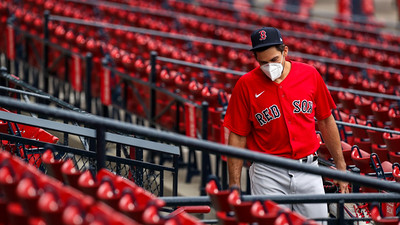
Friedman, senior vice president of legal and government affairs for the Red Sox, testified during a State House hearing that passage of a bill to allow sports wagering on games would not only help Massachusetts, but help the Red Sox as well.

“The Red Sox would likely enjoy a modest financial impact due to the sale of ads and sponsorships from sportsbook operators in Fenway Park,” Friedman told GGB News. “We also see value in fan engagement.”

But despite Friedman’s testimony, the bill failed to gain traction and was removed.

“As it relates to sports gaming, sports wagering, I believe that certainly, the time is close when we are going to be tackling this issue, but the time is not now,” State Sen. Michael Rodrigues, chairman of the Senate Ways and Means Committee. “Nor is this the proper vehicle to do so in.”

The coronavirus pandemic has slammed the Red Sox the same way it’s slammed Massachusetts. In his testimony, Friedman described the impact as “falling off the cliff.”

More than half of games were cancelled, and those to be played will have no fans, so ticket revenues don’t exist. And who knows what the rest of the shortened season will bring, given the Miami Marlins rash of positive tests? “It’s such a fluid situation,” Friedman said.

Massachusetts could face a deficit of as much as $8 billion from the pandemic, and realize more than $35 million in sporting betting taxes.

For those reasons, Governor Charlie Baker supports legislation to approve sports betting, according to Boston.com.

“We wanted to give Massachusetts the ability to have people play here rather than playing elsewhere,” Baker said.

Because of Baker’s support, many expect a sports betting bill to be revived later this year.

In addition to the sponsorship and advertising dollars the Red Sox could enjoy, the team may get some revenue from Major League Baseball due to the requirement in the pending law to use official data from the league, including statistics, results, outcomes and other info provided to sportsbooks to determine the outcome of a wager.

“The vendor would act in behalf of the league with the operator paying MLB. That would provide is with money indirectly distributed to the teams,” Friedman said.

Should the state tack on a codicil that permits a sportsbook at Fenway Park—there is nothing of that sort on the legislative drawing board—the team could realize leasing revenue.

Whether the commonwealth and the Red Sox get their wish remains to be seen.

House Bill 4887 passed the economic development bill 156-3 on July 28, according to the state legislative action calendar. The vote came two days after reviewing more than 500 amendments. Tucked away is sports betting language. The bill establishes three types of licenses for mobile and retail sports betting: online and in-person wagering at land-based casinos; in-person wagering at race tracks; and online only.

To qualify for online only, an operator had to offer daily fantasy sports in Massachusetts for a year and also offer sports betting in at least two other states. The Massachusetts Gaming Commission also offered such licenses to operators that have sportsbooks in at least two other states for more than a year. DraftKings and FanDuel meet those requirements, as do GVC and MGM.

An application fee of $250,000 covers the first five-year period, and can be renewed for another five years for $100,000. Gross sports wagering receipts will be taxed at 15 percent of adjusted gross sports wagering receipts, plus an additional 1 percent for events that take place in Massachusetts.

“As we confront an economic downturn and budget shortfalls, this is a unique moment for the Legislature to act to protect consumers, create jobs, and bring an infusion of tens of millions of dollars in much-needed revenues to the Commonwealth,” DraftKings, FanDuel, MGM and the Boston Red Sox said in a joint statement, according to the Boston Herald.

The bill allows in-game wagering, including the individual performance statistics of athletes. The bill would also legalize single-game bets, pools, proposition bets, according to MassLive.

Restaurant and bar owners who want to be cleared for sports wagering operating under Fair Play Massachusetts say the House and Senate bills currently leave them out. Ryan McCollum, spokesman for Fair Play Massachusetts, said pushing the bill to the fall might give lawmakers more time to discuss the market.

”Whenever you’re introducing a new industry, you do not want to leave out folks who should be incorporated, such as small local businesses, and you don’t want to necessarily make monopolies,” McCollum said. “It’s not just about leaving them out. It can hurt them.”

NY Lawmakers Hopes Budget Crunch Spurs Mobile Sports Bets

The Covid-19 pandemic has devastated revenue collections in every state, New York included. So any opportunity to increase those revenues should be most welcome, and in the case of New York, that opportunity could be the legalization of online sports betting.

Proponents indicated it could happen within weeks when lawmakers return to session tasked with balancing the 2020 budget. The state deficit of around $13 billion has spurred calls to seek ways to raise revenue.

“It’s going to happen,” Assemblyman Gary Pretlow said.

Still, a few wrinkles need to be ironed out, per the Buffalo News:

  • Some lawmakers believe pro sports leagues and sportsbooks would take in too much money at the expense of proceeds to the state.
  • Others say there’s already too much gambling in New York.
  • Governor Andrew Cuomo says adding mobile gaming requires a time-consuming constitutional amendment.

Sports betting is permitted at brick-and-mortar casinos in New York, which remain closed except for Native American ones. And both Pennsylvania and New Jersey permit online wagering adjacent to New York.

So what happens next? Maybe nothing. Could be lawmakers begin the constitutional amendment process, but that would require legislators to pass something by August 3. Could be lawmakers could throw the mobile sports betting authorization into the legislation in the coming weeks and hope Cuomo doesn’t veto it.

Last week, State Senator Joseph Addabbo, a sponsor of the sports gambling bill, was buoyed that the Assembly did not pass the constitutional amendment at its July session. Still, he and Pretlow would agree to the amendment vote as a placeholder in case Cuomo wouldn’t budge.

Given the financial crisis, Pretlow and Addabbo hinted that Assembly Democrats may be taking another look at the issue.

“In my conversations with leadership, they indicated that it will probably be put in the revenue package … whenever that is,’’ Pretlow said.

Said Assemblywoman Deborah Glick, “I have no idea whether other people are softening on this. I am not. The reality is that there are many other revenue proposals with which I am more comfortable.”

PointsBet Ups Its Share in N.J.

PointsBet saw its share of the New Jersey sports betting market jump from 5.7 percent in the first quarter to 8.7 percent in the second quarter.

The company credited “non-traditional” markets for its success. As the coronavirus pandemic sidelined major sports in the U.S., darts, table tennis and eNASCAR fueled gains for PointsBet, according to Legal Sports Report.

“We made the most of those second-tier sports,” said PointsBet CEO Sam Swanell, who added that some operators focused more on online casino games.

The company raked in $31 million during Q2, down 13 percent year over year, but with the gain in market share, PointsBet took less of a hit.

PointsBet’s share may decrease to about 6 percent as other sportsbooks increase spending in New Jersey, Swanell said. PointsBet may spend less time focusing on the state and pivot towards ramping up to a 10 percent share in other states.

Swanell expects to accept bets in Illinois by the end of August, a boon considering its partner, Hawthorne Race Course, lies just outside of Chicago and its fertile market.

“And we’ll be looking to execute a more well-rounded brand strategy. We want to introduce to the market that there’s alternatives to FanDuel and DraftKings, and that PointsBet is here,” Swanell.

Caesars, William Hill, Launch Sportsbooks in Colorado

When Eldorado Resorts merged with Caesars Entertainment, it set the stage for the first partnership between William Hill U.S. and the newly minted company, known as Caesars.

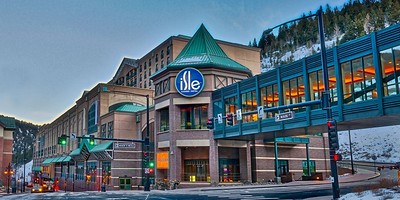
Under the agreement, both companies will develop long term relationships to expand sports betting. The latest offering brought six kiosks to the Isle Casino Hotel and Lady Luck Casino in Black Hawk, Colorado on July 24, according to CDC Gaming Reports.

“We are thrilled to have the opportunity to expand our business in the state with these new kiosks,” said David Grolman, president of retail operations for William Hill U.S. “Our relationship with Caesars Entertainment allows us to engage with Colorado sports fans in a new and exciting way. With the recent return of professional baseball, we think the timing could not be better.”

William Hill expects to establish localized futures and odds aimed for the Colorado bettor. The company will also expand into mobile sports betting as soon as regulators approve. The goal is to have the sports betting app ready by football season.

Colorado launched sports betting in May with four sportsbooks and added two more mid-month. By June, the state had six mobile and one retail sportsbook in play, according to Sports Handle.

Rhode Island Governor Signs Off on Remote Signups

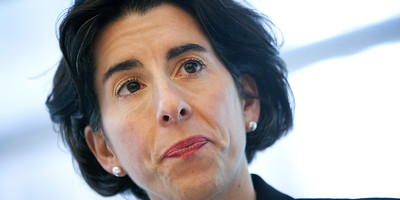
On July 23, Rhode Island Governor Gina Raimondo signed bills from the legislature that fixes a flaw in the state’s sports betting law that had prevented thousands of potential customers from making wagers.

Sports bettors will now be able to sign up to use the mobile sportsbook remotely, instead of having to trek to one of two Twin River casinos to finish the applications in person.

The bills were passed overwhelmingly in both chambers of the legislature.

They should be implemented in about a month. This should give plenty of time before the NFL season begins.

IGT, which operates sportsbook for Rhode Island Lottery, had previously issued a statement that it was “prepared to quickly adapt our IGT PlaySports technology to accommodate mobile registration should it be approved.”

Some supporters had claimed that thousands of new registrations will result from the new policy. The Department of Revenue says there are 14,000 applications that are sitting unfinished within the system because the applicants hadn’t gotten to either casino yet to complete them.

Lottery Spokesman Paul Grimaldi commented on the incentive this had given the state to fix the process. “Like any new product, player feedback is important. We’ve worked with our partners to improve the sports betting experience since it launched. The evolution of player registration to a fully remote process mobile is part of that effort as we work to provide the best possible player experience.”

The lottery anticipates that it will attract some out of state customers to cross state lines to sign up and play while they are in the state. They could attract residents of Massachusetts and New Hampshire, which don’t have sports betting. Boston is about an hour by car from both Twin River casinos.

The pandemic had added another reason for the new legislation: It will encourage less travel within the state by residents.

Some lawmakers fear that making this change could invite a lawsuit challenging the constitutionality of the sports betting law. Some critics say a vote of the people is required to make this much of a change to the state’s gambling laws.

With Rhode Island’s action, only three states that offer sports betting mandate in person registration.

Illinois Sports Bettors Steamed About In-Person Registration

Effective July 27, individuals in Illinois who want to wager on sports are required—once again—to register in person at one of the state’s 10 casinos.

The casinos closed in mid-March due to Covid-19, and on June 4, Governor J.B. Pritzker suspended the in-person requirement, so bettors could register and bet online. But last week, online registration ended.

Reactions from stakeholders were fast and furious, since the announcement came just days after Major League Baseball started its 60-game season, days before the NBA and NHL started their playoffs, and just as PointsBet, FanDuel and DraftKings were getting ready to launch in Illinois.

In addition, the Illinois Gaming Board changed the list of sports bettors may legally wager on, pulling PGA Tour events, NASCAR, Korean baseball and some lower-tier soccer league games.

Global Market Advisors Consultant Brendan Bussmann said, “In another Dr. Jekyll and Mr. Hyde move, the state of Illinois has changed the rules on operators again as they try to move forward with sports betting. The tug of war continues between operators and the political moves they make under the disguise of SARS-CoV-2.

“It is not healthy for a regulatory structure that should allow a regulated, competitive market and the level playing field it needs to compete against the illegal market that continues to reign in Illinois.”

Casinos in Illinois were allowed to reopen on July 1. A total of seven of the state’s 10 casinos have been licensed to offer sports betting in Illinois, but only two—Rivers and the Argosy in Alton–have been provisionally approved to accept wagers.

DraftKings and FanDuel were awarded temporary operating permits in Illinois on July 17, and PointsBet received approval on July 14. Only DraftKings is partnered with a licensed gaming venue—the Casino Queen in East St. Louis, which recently was rebranded as DraftKings at Casino Queen. The deal could allow DraftKings to go live with sports betting as soon as the gaming board extends provisional gaming status to Casino Queen.

Observers said Pritzker’s goal has been to protect Rush Street Interactive, the Illinois-based gaming company that owns Rivers Casino Des Plaines and the BetRivers mobile sports betting app, the only digital sports betting app in the state.

Rush Street and other brick-and-mortar casinos had an 18-month-plus window to establish a foothold in the online/mobile market before DraftKings and FanDuel could go live. Rush Street claimed DraftKings and FanDuel were operating illegal daily fantasy sports platforms in the state—according to a 2015 ruling by the state attorney general–and shouldn’t be allowed to leverage their databases for sports betting. In fact, the Illinois attorney general issued an opinion that both companies were operating illegally in the state.

Just before the in-person registration rule kicked in, to get consumers to register online, BetRivers offered a $250 sign-up bonus and DraftKings offered a $100 sign-up bonus to anyone who pre-registered on its site by the end of Sunday.

Observers naturally wonder why, in the midst of a pandemic when people are encouraged to stay home, sports bettors must risk their health to register in person at a casino.

DraftKings, PGA Deepen Partnership

The PGA Tour and DraftKings have expanded their multi-year content and marketing relationship with the designation of the Boston-based sportsbook as the first “Official Betting Operator of the PGA Tour.”

This comes after the PGA touted DraftKings as their first “Official Daily Fantasy Game of the PGA Tour” last July.

“The growth in consumption and fan engagement we have seen over the last year in our DraftKings Daily Fantasy games has been tremendous,” said Norb Gambuzza, PGA Tour senior vice president, media and gaming. “The expansion of the relationship to now include sports betting is a natural evolution and one that fully supports and promotes the PGA Tour’s objectives of reaching and engaging new segments of fans while introducing them to our players, tournaments and media platforms.”

The latest selection offer DraftKings the rights in the United States to use PGA Tour’s trademarks and to advertise on the tour’s media and partner platforms. In addition, the sportsbook can create pre- and post-games betting content, according a press release from the PGA Tour.

“DraftKings and the PGA Tour have continued to make history with the innovative additions to our agreement which began last year,” said Ezra Kucharz, chief business officer of DraftKings. “Golf has been an especially important outlet for fan engagement over these past few months, and this latest collaboration is a significant next step for both the golf and gaming industries.”

When it comes to sports betting, golf is DraftKings’ fourth most popular sport at the moment.

In 2018, the Tour formed a global partnership with IMG ARENA to license its official live-scoring data to betting operators all over the world.

Last July, the Tour and DraftKings relaunched “PGA Tour’s DraftKings Fantasy Golf.” In March, The Action Network and the PGA Tour began GolfBet, a golf-focused betting-content platform.