Author: Casino Connection Staff

Virginia Sports Betting Regulations Issued

In Virginia, sports betting legislation was approved in April and took effect on July 1. Two weeks later, at the lottery board’s July 15 meeting, the first part of draft regulations were released for 60 days of public comment. Executive Director Kevin Hall said those will include the timeline, the application process, what sports may be bet on, advertising guidelines and the Consumer’s Bill of Rights required by law.

Hall said on August 10, supplemental proposed rules will be released, including financial controls, operational and technical requirements and internal controls.

Hall noted all of the regulations must be approved by September 15, when the lottery board will review and vote on them. Next, from October 15 through October 31, the lottery will accept and review license applications from potential sports betting operators. The first licenses will be issued and platforms will be authorized in January 2021.

Hall commented, “We’ve known it was coming. We had some nominal impact during the sausage-making process, but we got started ahead of the July 1 date. We’ve already kind of done a deep dive on some of the models out there. We’ve established relationships with operators.”

Virginia’s sports betting law sets an application fee of $250,000 for a 3-year license. Gross gaming revenue will be taxed at 15 percent. of gross gaming revenue. Sports betting will be allowed on professional and college sports excluding Virginia college teams. Sports wagering will be legal statewide via online/mobile platforms and at brick-and-mortar locations at the five proposed casinos, also approved by the legislature, and two professional sports facilities.

The five proposed casinos were approved for Bristol, Danville, Norfolk, Portsmouth and Richmond. The lottery has approved their casino partners, except for Richmond which is on a different timeline and did not request approval for a casino partner, Hall said. All five require voter referendums in November.

Implementing sports betting and overseeing five new casinos has its share of challenges, Hall said. “We are kind of building the plane while we are flying it. It’s important to get it right and get it right from the start, and I think we’ve done a good job getting ourselves ready. It’s no small thing that I think we are going hit the deadlines,” Hall said.

He added he’s been following other jurisdictions’ processes for launching sports betting. “My sense is that the New Jersey framework is kind of road-tested and the industry is comfortable with it, and it’s operating pretty successfully. We can take from here and borrow from there. We’re glad not to be first movers.”

Colorado Sports Betting Makes Strong Debut

If May was any indication, sports betting in Colorado will hit it out of the park when major sports resume in full. Colorado’s first month of sports betting topped $25.6 million, eclipsing the debut month of most of the largest markets in the country.

The official release of data on July 13 confirmed revenue of $946,741.

“Considering the circumstances of its first month, Colorado debuted about as well as any market could,” said Dustin Gouker, lead analyst for PlayColorado.com. “Ultimately the revenue that was driven while sports were mostly dormant is less important than sportsbooks launching and engaging sports bettors so they’re ready when major sports resume. By that metric, Colorado’s launch was a success.”

Only Indiana, which attracted $35.2 million in bets when retail sportsbooks launched in September 2019, produced a larger handle in its first month than Colorado. Indiana, the country’s fourth-largest sports betting market, won $37.3 million in wagers in May, while Oregon recorded just $7.3 million.

“One of the primary reasons why Colorado fared well in its first month is that the top brands were ready to go from the beginning,” Gouker said. “Having FanDuel and DraftKings, in addition to BetMGM and BetRivers, accepting bets on the first day of operation is unprecedented. It shows just how much confidence operators have in the future of the Colorado market.”

As a sports betting marketplace, Colorado has many firsts going for it: a tribal casino offers an online sportsbook available throughout the state; both Circa and the SuperBook chose to expand beyond Nevada; U.K.-based Smarkets debuted in America; and Australia-based PointsBet established U.S. headquarters.

On May 1, the state saw the debut of eight mobile apps, with as many as 25 expected when built out, along with 33 retail sportsbooks. Two brick and mortar locations are doing business as well. The Denver Broncos, the first NFL team to partner with sports betting company, signed agreements with BetFred, BetMGM, and FanDuel.

How do they stick out in a crowded marketplace?

The Southern Ute tribe, which launched the Sky Ute app last month, offers better odds, as does Circa, which went live July 1. The Sky Ute Casino, situated near the New Mexico border, represents one of two tribal casinos in the state.

The Sky Ute and its partner, USBookmaking, can offer better odds, in part, because the tribe doesn’t have to pay the 10 percent tax on gross gaming revenue that commercial casinos pay. They also allow higher limits, according to SportsHandle.

The better odds will replace the sign-up bonuses offered by many if not most competitors.

Circa’s moneymaker will be attracting big bettors.

“We built a reputation as a place that takes on all comers (regardless of skill level) and takes a fair bet,” Circa Sportsbook Strategic Operations Manager Mike Van Erman said. “Bettors who are currently having a difficult time getting large bets at other sportsbooks will especially value what our product has to offer once it is ramped up.”

With more mobile apps coming on line, look for odds and limits changes to favor the customer.

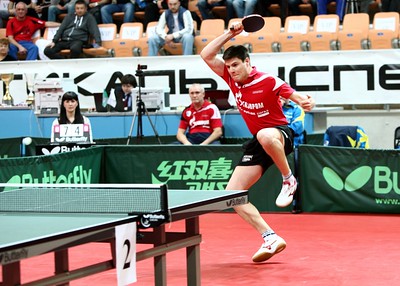
Table tennis has kept online sportsbooks in Colorado busy during the shutdown of major sports amid the Covid-19 pandemic. According to a report on the Play Colorado news site, table tennis has been the sole consistent performer since the state launched sports betting on May 1.

According to the report, even amid the recent return of UFC matches, PGA golf, NASCAR and the English Premier League, table tennis still rules among Colorado sports bettors on the BetRivers site. Observers are beginning to predict the trend may hold up even with the return of U.S. major professional sports.

Play Colorado listed the following Top 10 sports wagers on BetRivers for the weekend of July 11-12:

Sport/League                                         Percentage of total wagering volume
Moscow Liga Pro (Russian table tennis)                            20.91%
US Pro Tennis Series (women’s singles)                             19.18%
PGA Tour (tournament bets)                                                15.09%
English Premier League                                                          5.56%
PGA Tour (2 balls, 18 hole bets)                                            4.80%
Serie A (Italy)                                                                             4.67%
KBO (Korean Baseball Organization)                                   4.23%
La Liga (Spain)                                                                          4.10%
NASCAR (Cup Series)                                                                   4%
US Pro Tennis Series (men’s singles)                                    3.34%

Top 10 Sports                                         Percentage of total wagering volume
Tennis                                                                                          26.34%
Table tennis                                                                                22.84%
Golf                                                                                               19.90%
Soccer                                                                                           19.08%
Baseball                                                                                             5.7%
Motorsports                                                                                   4.02%
Basketball                                                                                       1.16%
Australian Rules Football                                                              .51%
Rugby League                                                                                   .19%
Rugby Union                                                                                     .17%

Nevada Regulators Weigh Past-Posting Debacle

The Nevada Gaming Control Board is examining what action should be taken concerning incidents of past-posting in wagers on Asian baseball at betting terminals in the Bellagio.

An error in the BetMGM system entered the wrong start times for games, which enabled customers to bet pre-game prices well after the games had begun. The edge resulted in bettors winning nearly $250,000 on the terminals.

Since neither MGM or the state has specific rules relating to past-posting, the gaming board is weighing how to deal with the situation. Experts quoted on the Legal Sports Report website predicted last week that the board is likely to void the wagers, and refund the wagers to players.

According to ESPN, around 50 wagers were placed, including a bet on over 9.5 runs in one game after five runs were scored in the first inning. On another bet, a team was backed as an underdog despite leading 10-2.

Washington Tribes Negotiate Sportsbook Terms

Four gaming tribes in Washington have begun renegotiating with the Washington State Gambling Commission to include sports betting, which was legalized by the legislature in March.

The first step is for each tribe that intends to participate to renegotiate the tribal state gaming compact. Once Governor Jay Inslee signs the compact the legislature must approve it before it takes force.

There are 29 eligible tribes, although only 22 of those have casinos. The tribes that have begun this process are the Tulalip, Suquamish, Snoqualmie and Kalispel tribes. They are negotiating details with the Washington State Gambling Commission (WSGC) that include integrity of betting, licensing, enforcement and funding of problem gambling programs. It is likely that once an acceptable format for a compact amendment is found that it will serve as a model.

At the same time regulators will be developing the framework under which sports betting will happen. They will be researching what sports betting operations do in Nevada, New Jersey and Pennsylvania, the most successful states that offer sportsbook.

WSGC Executive Director Dave Trujillo told SportsHandle, “There is not one specific state we are looking to model. But we’re not looking to reinvent the wheel. The regulations are going to be relatively similar to other states.”

Tribes will be contracting with sportsbook operators.

All of the steps involved are unlikely to be completed before the end of 2020. Washington is the first state to authorize tribal only sports betting.

Rebecca George, executive director of Washington Indian Gaming Association, told the Northwest News Network: “There’s definitely excitement from the sports bettor to the operator and other companies that are involved.” She added, “This is the first new opportunity for a gaming product in our state for quite a while.”

The current US sports landscape is somewhat in flux, with no real national sports on the immediate horizon, but sports betting is still a hot topic nationally. Most experts expect some sports to begin playing before the end of the year. How much college and how much professional sports that includes is not yet known.

The Washington law allows betting on college and professional sports, overseas leagues and Olympic and World Cup play. It does not allow wagering on college play within the state.

The Washington law gave sports betting exclusively to the tribes and left out the commercial casinos. It will be available only at brick and mortar casinos, not on mobile platforms.

Four Winds Selects Kambi to Manage Sportsbooks

Pokagon Band of Potawatomi Indians selected Kambi Group PLC to provide sportsbook management services to its three Four Winds Casinos in Michigan. Terms were not disclosed, but the retail sportsbooks will begin before mobile wagering launches.

“The partnership was approved by the Pokagon Gaming Commission and Pokagon Gaming Authority,” said Matthew Wesaw, Tribal Council Chairman and CEO of the Pokagon Gaming Authority.

Bettors will be able to place wagers at self-serve kiosks at the tribe’s casinos in New Buffalo, Dowagiac, and Hartford. Indeed, Four Winds Casinos premiered the sportsbook at its New Buffalo property July 13 allowing people to wager on basketball, football, hockey, baseball, soccer and other sports.

Chicago Bears legend Steve “Mongo” McMichael, an ESPN commentator, placed the ceremonial first bet, according to Northwest Indiana Times.

Four Winds New Buffalo has 18 kiosks across the casino floor where guests can place bets. They also can use their camera to scan a QR code to reach the website. After they place their bets, they get a new QR code they can take to the Sportsbook counter to be scanned to make the bet official.

“The Pokagon Band and its Four Winds Casinos continually strive to exceed expectations and enhance the entertainment experience of our guests. We feel the Four Winds Sportsbook will add an additional level of excitement sports enthusiasts have been looking for,” said Frank Freedman, chief operating officer of Four Winds Casinos.

Pokagon also operates a casino across in South Bend, Indiana. While the state allows sports betting, the current tribal compact does not. Negotiations continue to change the situation, according to Native Business Magazine.

Penn Sports Betting App to Be Ready for NFL Season

Penn National Gaming CEO Jay Snowden said last week that the operator’s Barstool online sports betting app will be ready in time for the 2020 NFL football season.

Penn acquired a 36 percent stake in Barstool Sports, Inc. in January for $163 million, with an option to increase its stake in the sports media company to 50 percent for another $62 million and eventually own it outright for a total of $450 million. In the same deal, Barstool granted Penn rights as its exclusive gaming partner for up to 40 years, with the sole right to utilize the Barstool Sports brand for all online and retail sports betting products.

Snowden said in a keynote panel at the SBC Digital sports betting conference that the app—which includes a “traveling wallet” feature that enables its use in multiple states—eventually will be rolled out to all Penn’s 41 properties, covering 19 states, although it initially will be available only in the operator’s home state of Pennsylvania.

“There are many important states, including Illinois and Michigan, but we wanted to get it launched in one state first,” Snowden said. “We’ll have it fully launched when the major sports are back at it.”

Barstool has been a popular online wagering site, with its own distinctive characters featured as hosts for various wagers. Under Penn’s agreement with Barstool the operator’s retail sportsbooks around the country are being rebranded as Barstool sports locations, with events featuring Barstool personalities during major sporting events.

“Barstool went to other locations for these events, such as the Dunkin’ Donuts parking outside a stadium,” Snowden said. “Now, they will have a home at one of our casinos. We believe Barstool will bring a lot of excitement into our properties.”

Betfred to run Sportsbook at Mohegan Virgin Hotels Las Vegas

Betfred USA Sports will operate sportsbook at the Mohegan Sun Casino at Virgin Hotels Las Vegas, which is slated to open this fall eight months of renovation and rebranding from its former Hard Rock name.

Betfred USA Sports is the American sports betting operation created last year by the British-based Betfred Group to enter the U.S. market.

The property was purchased in March 2018 by Richard Branson in partnership with Bosworth Hospitality Partners, Fengate Asset Management and Juniper Capital Partners for $200 million.

Betfred’s incursion into the U.S. market has been accelerating since its first license in New Jersey with its partnership with the Denver Broncos and as the licensed operator in Colorado, Iowa and Pennsylvania. The latest announcement is its first in Las Vegas.

The sports betting lounge will offer luxury seating, a video wall, OTC wagering, kiosks and a mobile gaming platform for use within the casino.

Betfred USA COO Bryan Bennett commented, “There is so much opportunity in Nevada. A location like this property, just off the Strip, allows us to announce our presence to a great market. Variety is always good, and this won’t be our last location here.”

Mohegan Gaming Vice President of Interactive Aviram Alroy said in a statement: “Our affiliation will introduce new and attractive competition to the Las Vegas market. Betfred will create a seamless and best-in-class experience on our gaming floor, which will cater to both domestic and international visitors.”

California Tribes Get OK To Pursue Sports Betting Vote

A California tribal gaming coalition is moving quickly to gather enough signatures to qualify a sports-betting measure for the ballot.

Before the Covid-19 pandemic took hold, the coalition of 25 gaming tribes and racinos was on the verge of collecting the 1 million-plus signatures required by the state (of 1,096,853 signatures, it had collected 971,373).

On July 2, with the state cautiously moving out of lockdown, Judge James P. Arguelles gave members 90 days to get the rest of the signatures, or until October 12.

The measure would amend the state constitution to allow tribes and racetracks to conduct sports betting. It would not allow mobile sportsbooks or card clubs to offer the bets. It would also allow the tribes to add some table games, including roulette and craps.

Jacob Meija, vice president of public affairs for the Pechanga Band of Luiseno Indians and spokesman for the coalition, talked to GGB News about the group’s plans.

Asked if the coalition has polled California voters on the measure, Meija replied, “Of course. We invested very heavily in conversations with voters statewide, understanding from them what’s important. There’s a lot of voter enthusiasm for the measure. One million people signed our petition in a couple of months.”

“Surprisingly,” he said, there was a lot of support for authorizing craps and roulette, and support in general for tribal gaming.

“Voters have a high degree of confidence in tribes’ ability to regulate gaming,” Meija said. “They have deep respect for the contributions they make to nonprofits. They’ve seen first-hand the job growth and job creation tribes have made, the contributions back to local communities and how tribes have been able to achieve self-sufficiency in terms of healthcare programs and important services that were long neglected by the federal government.”

As of a month ago, the coalition has spent $7 million on the petition drive. Meija declined to speculate on how much the campaign will cost if the measure qualifies for the ballot.

Now that the judge has ruled, what’s next? “First off, we appreciate the court’s appreciation of these unusual circumstances,” Meija said. “There was a lot of enthusiasm for this thoughtful and responsible measure. We’re continuing to do what we can to gather signatures in what is otherwise a difficult environment, given the restrictions caused by the increased number of Covid cases.”

With cases on the rise in the Golden State, how will the coalition gather signatures? “Not every county is subject to the state-at-home order, and not everyone is on the watch list,” said Meija. “There are parts of California that are not. Good for them. We’re doing what we can to collect in the 19 counties that are open. We found some stores that are open, and with physical distancing, face covers and gloves, voters are engaging—just not at the levels they were pre-Covid.”

It’s unclear whether the tribe will be gathering signatures for this year’s ballot or 2022’s. Meija said, “There’s some factors and considerations there. Our focus is to collect our remaining signatures and to get certified and qualified.”

Often a ballot measure campaign involves a lot of educating of the public. This time, says Meija, the public made known its desire that sports betting should be limited to brick-and-mortar facilities.

“It’s actually the voters who told us it’s not a good idea at this time. That was part of the polling,” he said. So were other factors. “The measure would permit sports betting at tribal casinos and racetracks. It would be limited to those over the age of 21 and bettors must be physically present to place a wager.”

He added, “It would not allow for marketing to minors and would authorize the legislature to create consumer protections to ensure protection of the sporting event. This is the most comprehensive measure to be offered in California since the Supreme Court ruled that sports betting was legal.”

Some of the consumer protections the legislature might adopt include protections against corruption within the sports themselves. “There are standards that have been discussed, including addressing whether participants, owners and executives should be able to place wagers.”

Asked whether the coalition tribes see the measure more as a way to put more money in tribal coffers or as an amenity to bring more players to tribal casinos, Meija said, “I think by and large tribal leaders view it as a simple amenity to offer. All the research indicates that it’s not a big revenue driver for individual properties. Tribal leaders are proposing this measure to establish sports wagering in a very responsible manner, in a way voters can have confidence in and which hopefully earns their support.”

Bill Colleoni of Odds.com projects that if sports betting is legalized in California, it would generate as much as $1.5 billion and pay the state $200 million. How much the state would actually get would be subject to negotiations when the tribes seek new compacts.

Several weeks ago, an attempt by State Senator Bill Dodd to craft a referendum that went around the tribes ran aground on their opposition. Dodd’s bill would have allowed card clubs to continue a banking practice that gaming tribes consider illegal, and would have authorized mobile sports betting, which they currently oppose.


WSOP Makes History With World’s Biggest Online Tourney

In April, Caesars Entertainment announced that the 51st running of the World Series of Poker (WSOP) would not take place as usual at the Rio All-Suite Hotel & Casino in Las Vegas, due to the ongoing Covid-19 pandemic. However, tournament host Caesars Entertainment already had plans to keep poker players happily occupied, and winning money, this year.

Caesars has partnered with the global-facing GGPoker Network to formulate the WSOP Super Circuit Online Series, a full slate of contests leading to a virtual Main Event in September. Participants will vie for the coveted WSOP winning bracelets as well as the cash.

Last week, GGPoker announced that September’s Main Event will be the largest tournament in the history of online poker. Some 54 total bracelets will be up for grabs in events running from July 19 through September 6, with a record-breaking $25 million guaranteed prize pool for the finale.

“We knew GGPoker would go big on the WSOP Online Series, but this is ridiculous,” commented WSOP Executive Director Ty Stewart in a press announcement detailing the tournament plan. “The single biggest guarantee in the history of online poker is exactly what this once-in-a-lifetime event deserves.”

GGPoker is running a series of micro and low-stake qualifying events leading up to the WSOP Online Series start date of July 19, giving all players the opportunity to win a WSOP bracelet, regardless of bankroll.

“This reminds me of poker’s boom years,” said Daniel Negreanu, famous poker pro and GGPoker ambassador, in the press statement. “Anyone who has dreamed of winning a real WSOP bracelet can now do so across the globe. There’s no feeling like winning a WSOP bracelet, and GGPoker is opening that opportunity to the masses.”

Players interested in standard satellite tournaments will be accommodated, with satellites scheduled throughout the series. Players who reach the final tables will be required to play under their real names, allowing viewers on GGPoker.TV and PokerCentral, similar to the familiar national TV broadcasts of tournaments during the boom years of casino poker in the early 2000s.

“The WSOP Online main event table will be broadcast on GGPoker.TV, and will feature well-known commentators and poker superstars,” said Paul Burke, spokesman for GGPoker, in an interview with GGB News. “All of the excitement of the concluding hours of the world’s richest and most prestigious online poker tournament will be showcased. Poker is fun, and this is a once-in-a-lifetime event. GGPoker and WSOP hope to deliver a viewing experience that matches or exceeds the best seen during the boom years.

“Additionally, PokerGO will be both curating a weekly WSOP Online recap show and broadcasting Main Event and other WSOP Online tournaments, giving viewers another opportunity to catch the most exciting poker action out there.”

According to Burke, GGPoker worked closely with WSOP officials to make the online events as close as possible to the live events that have drawn millions to the Rio over the years. “GGPoker and WSOP have collaborated closely on the design of the WSOP Online 2020 series, and while it is not a direct replacement for the live tournament, making participation in the online tournaments as authentic a WSOP experience as possible is extremely important to both organizations,” he said. “These are real WSOP bracelets. Linking past poker championships to this history-making event is an important connection.”

Burke says GGPoker and WSOP also worked hard to create a seamless experience for even novice players who want to participate in the famous tournament. “The GGPoker account creation process has been designed to be as intuitive and pain-free as possible,” Burke said. “New players will have their account set up within minutes—similarly with funding their account and claiming their WSOP Welcome Bonus; this takes just a few more moments.

“All WSOP tournaments are listed within clearly marked lobbies within the GGPoker app, so they are very easy to find. There are no obstacles placed between new players and their preferred WSOP Online events and a shot at a WSOP bracelet.”

The WSOP Online Series is headlined by the $5,000 No Limit Hold’em Main Event, with the $25 million prize pool guaranteed, the biggest in the history of online poker. This massive tournament will feature multiple Day 1s, similar to its live predecessor, running from August 16, with Day 2 kicking off on August 30.

Other highlights include:

  • WSOP Event #1: $100 The Opener – July 19 (Day 2) – $2 million prize pool guarantee
  • WSOP Event #2: $1,111 Every 1 for Covid Relief – July 19 – $111 from each entry goes to the Caesars Cares fund
  • WSOP Event #10: $400 COLOSSUS – July 26 (Day 2) – $3 million prize pool guarantee
  • WSOP Event #17: $1,500 MILLIONAIRE MAKER – August 2 (Day 2) – $1 million first prize guaranteed
  • WSOP Event #25: $10,000 Heads UP NLH Championship – August 9 – Limited to 128 players
  • WSOP Event #31: $500 Mini Main Event – August 16 (Day 2) – $5 million prize pool guarantee
  • WSOP Event #38: $25,000 NLH Poker Players Championship – August 23 – $10 million prize pool guarantee
  • WSOP Event #39: BIG 50 – August 23 (Day 2) – $50 buy-in, $1 million prize pool guarantee, lowest WSOP bracelet event in WSOP history)
  • WSOP Event #52: $10,000 WSOP Super MILLION$ – September 6 – $10 million prize pool guarantee

For more information about the WSOP Online Series and to view a full schedule, visit https://en.ggpoker.com/tournaments/wsop-2020-online/ .

DraftKings, SBTech May Prove Imperfect at First

When sportsbook companies move from one tech company to another especially in merger mode, the transition is not always smooth. To illustrate, look at the merger between DraftKings and SBTech, where the giant sportsbook company has to migrate from Kambi to SBTech technology.

DraftKings faces two hoops to jump through: one to go from DraftKings platform to that of SBTech; and another to move its sportsbook from Kambi to SBTech.

“Despite DraftKings referring to itself as ‘the only vertically integrated sports betting company in the U.S.’, the vertical integration has not actually happened yet,” said analyst company, Redburn.

Indeed, DraftKings may not arrive at its destination points until late 2021, according to Legal Sports Report.

“Right now, we’re still in the early stages of planning around integration and migration,” DraftKings CEO Jason Robins said. “The goal for us is to make sure we have a high-quality migration and putting that above speed is the approach we’re taking.”

Turns out, Kambi and SBTech are not perfect meshing platforms, said Andrew Daniels, the CEO of Sharp Gaming. “There will be a lot of little differences. Assuming they want the exact same functionality on the front and back ends, they’ll have to develop it to match it.”

Also posing an obstacle: a mountain of data that might not be compatible between the two platforms, including pricing histories and customer intelligence.

On top of that, comes the need for talent.

Sports betting platforms aside, it’s difficult to find tech crews who also understand the nuances of every sport. And you have to keep your business on hold while working out the kinks, Daniels said.

Report: Mobile Carrier Billing Could Boost iGaming Revenue

A new white paper from Dimico Carrier Billing, released by Telemedia Publishing in its “Mythbuster” series, finds that iGaming operators could be missing out on up to 70 percent of potential new players without offering mobile direct carrier billing (DCB).

DCB is a mobile payment solution that enables players to fund online gaming play through their mobile phone bill, instead of using a credit or debit card. Dimico’s payment program, available worldwide on any mobile device, is backed by the European Union’s Payment Services Directive. It bills players for up to around €50 per day with a monthly limit of €300.

The Dimico white paper reports that 70 percent of first-time iGaming users convert with carrier billing, comparted to 12 percent with a credit card. It also shows that 45 percent of all online gamblers use mobile devices, generating some €50 billion in annual spending. It also reports that mobile carrier billing has resulted in a 15 percent increase in revenue.

DraftKings Launches Mobile App in PA

DraftKings announced the launch of its stand-alone casino app in Pennsylvania. This marks the second state where the app will be made available, following last month’s successful launch in New Jersey.

Online gaming fans in Pennsylvania will now have the opportunity to experience a more holistic product suite and dynamic gaming experience in a DraftKings-created casino app. Like in New Jersey, the app features new games only found on DraftKings, plus revamped classics, including blackjack and roulette.

DraftKings Casino was previously made available to Pennsylvanians through embedment in the DraftKings Sportsbook app earlier this spring. DraftKings is prepared to unveil its casino product in additional states where regulations allow.

In addition to popular slot and table games found only on DraftKings Casino, the new app will also offer games from third-party providers like International Gaming Technology. DraftKings customers in Pennsylvania will soon have access to the custom DraftKings Live Dealer Studio, which will operate 24/7.

Michigan Invites iGaming, Sports Betting Applications

The Michigan Gaming Control Board recently began accepting applications from commercial and tribal casino operators for online gaming and sports betting operator licenses. The casinos’ online technology partners also may submit vendor registration applications. Prior to final approval, each applicant must submit to an investigation of their internal controls, technical standards, lab certifications and other requirements.

MGCB Executive Director Richard Kalm said the state expects to launch both online gambling and sports betting “by late 2020 or early 2021.” He urged interested operators to submit their applications soon, making it “more likely” the launches could occur in late 2020.

Michigan legislators approved online gambling and sports betting legislation last December. Retail wagering operations debuted in early March but were shut down within a few days due to Covid-19. Most tribal casinos have reopened but Detroit’s three commercial casinos remain closed.

European betting tech provider Kambi Group and the Pokagon Band of Potawatomi Indians recently signed a retail and online betting partnership.

The tribe operates three Four Winds casinos in New Buffalo, Dowagiac and Hartford; its Indiana property is not included in the deal.

West Virginia Online Casino Could Launch Soon

An online casino could launch soon after the West Virginia Lottery Commission meets July 22.

“We have had discussions with all of our casinos,” said Lottery Director John Myers. “We expect one could be in a position to launch in July if their suppliers achieve licensing approval.” The lottery submitted emergency rules for online casinos to the secretary of state in May, and the public comment period ended July 11.

Observers said DraftKings Casino or FanDuel Casino could operate the state’s first online casino app. Both recently released new, stand-alone online casino apps: DraftKings in New Jersey, and FanDuel in Pennsylvania. The two daily fantasy sports operators also offer online sports betting apps. DraftKings currently provides the sportsbook for Hollywood Casino in Charles Town, and FanDuel is the online sportsbook provider for the Greenbrier in White Sulphur Springs.

Online casino apps are expected to offer slots, blackjack, roulette, video poker and live dealer games. DraftKings also is creating some exclusive titles. According to FanDuel, 82 percent of new online casino customers play slots.

Besides, Hollywood Casino and the Greenbrier, West Virginia land-based casinos include Mountaineer Casino in New Cumberland, Wheeling Island in Wheeling, and Mardi Gras Casino in Cross Lanes. All were closed from mid-March through early June due to Covid-19. Every casino in the state is eligible to receive an online license.

Borgata to Open July 26

Borgata Hotel Casino & Spa will host an invitation-only “soft opening” for three days beginning July 23, officials told The Associated Press.

Borgata chose not to open at the beginning of the month after Governor Phil Murphy issued an order that prevented indoor dining as a result of the risk from the virus. The property used the extra time to increase its outdoor dining capacity.

“We took a step back to reassess our re-opening date to ensure we could give our guests the world-class experience they expect from us, safely,” said Borgata president, Melonie Johnson. “Borgata will introduce new outdoor dining experiences, as well as a convenient takeout program from several of our fine and casual dining outlets.”

The property plans to offer room service; an outdoor beer garden; food and beer trucks; poolside dining at The Water Club; and a location for top rated player’s card members. Takeout will be available from Old Homestead Steak House, Noodles of the World, and Bread + Butter. The Marketplace Eatery, Borgata Baking Company, and Starbucks will also be available for walk-up service.

The property will follow MGM Resorts’ “Seven-Point Safety Plan” protocols to protect both customers and employees.

The plan includes:

  • Employee and guest screening, with temperature checks;
  • Masks in all public areas for both employees and guests (provided free of charge);
  • Physical distancing;
  • Polycarbonate barriers where distancing is not possible;
  • Hand-washing stations on the casino floor;
  • Electrostatic sprayers in public spaces so that disinfectant is applied efficiently;
  • Digital menus for view on cell phones;
  • Restaurant guests will receive text message notification when tables are ready.
  • Every other slot machine will be disabled;

The state also prohibited smoking, eating or drinking on the casino floor. The self-parking garage will be open, but the surface parking lot and valet will be closed until further notice.

No Drinks, No Food But AC Casinos Open

With record-breaking spikes in coronavirus cases, attributed to crowds of maskless patrons in reopened bars, the governors of Florida and Texas have shut bars back down.

New Jersey Governor Phil Murphy knows a cue when he sees one. On June 29—days before Atlantic City’s casinos were due to start reopening—he postponed the start of indoor dining as well as alcohol service on casino floors, and banned smoking inside casinos as well. Murphy said reports indicated that people in New Jersey were failing in the face mask and social distancing department, according to the Associated Press.

“Unfortunately, the national scene compounded by instances of knucklehead behavior here at home are requiring us to hit pause on the re-start of indoor dining for the foreseeable future,” Murphy said. “Casinos will open. I feel comfortable in the distinction.”

Most of the nine casinos expected to open over the weekend anyway, relying on outdoor dining, takeout and room service.

“All of the casino operators are in the same boat and are still waiting for official guidelines in regards to reopening,” said Tom Pohlman, general manager of Golden Nugget.

But Borgata Hotel Casino & Spa nixed its reopening plans. “Our guests expect a special experience when they come to our property and if we cannot provide that level of hospitality, we feel it best that we remain closed until such time that the governor lets us know it is safe to offer food and beverage,” said a statement from Borgata’s parent company, MGM Resorts International.

Steve Callender, president of the Casino Association of New Jersey (CANJ), told the AP the smoking ban could lead additional casinos to shut down again.

Asked when indoor dining may resume, Murphy said, “I don’t think it’s a matter of days, but a matter of weeks. We have enormous sympathy, but the alternative here is worse and unacceptable. None of us, none of us want to go back to that hell,” meaning the almost total shutdown of businesses. “We’ve worked too hard to get here.”

Joe Lupo, president of Hard Rock Hotel & Casino Atlantic City said he’s disappointed with the governor’s decision, especially given the effort to reopen the hotel casino safely. “We are confident our enhanced ‘Safe + Sound’ protocols are a responsible approach to safely opening our property and bringing our team members back to work.”

Complicating matters is the uncertain future of thousands of out-of-work casino employees. The bans on dining and drinking will also reduce the number of laid-off workers who will return. Drink servers and indoor restaurant workers were to have comprised a significant portion of the returning force.

“I really don’t even think (casinos) should open,” said Bob McDevitt, president of Unite Here Local 54, which represents nearly 10,000 employees in Atlantic City. “Why would they?” McDevitt said 60 percent of his union members had been scheduled to return to work this week. Now, as few as 30 percent may go back. McDevitt’s union filed suit against several Las Vegas casinos last week for alleged failure to protect their workers.

Jim Allen, president of Hard Rock International, said the company and its thousands of workers are eager to reopen and start making up for some of the losses they have experienced since March.

“People are really desperate for a job and a paycheck,” he said.

Casinos can offer outdoor dining, and those with beach bars, outdoor decks or Boardwalk seating still plan to offer it. Alcohol was sold in bars off the casino floors, as well as liquor stores and non-casino businesses.

In a statement, the CANJ said, “Atlantic City casinos are ready and excited to welcome back employees and guests to our properties, but we recognize the experience will be different than what our guests have come to expect from the beachfront destination.

“We are living in unprecedented times, and we must be vigilant. That is why we are taking extraordinary measures to ensure we are well-positioned to welcome back thousands of hardworking employees and valued guests. In the best interest of their guests and employees, properties such as Borgata Hotel Casino & Spa have decided to remain closed. We look forward to a successful reopening and welcoming employees and guests back safely to Atlantic City.”

The gaming halls will operate at 25 percent capacity to start, and face masks will be required of everyone. “If any visitor refuses to comply with these simple safeguards, you will be escorted out of the casino,” Murphy said last month. Casinos will also increase hand sanitizers on hand and enforce safe social distancing.

Union president McDevitt summed up his feelings about the governor’s decision, saying, “This is like Catholic school: A handful of people misbehave, and the entire class gets punished.”

Fertitta to Take Golden Nugget’s Online Gaming Public

Texas gaming mogul Tilman Fertitta said June 29 that he plans to take the online gaming section of his privately-owned Golden Nugget Casinos public into a company that will be worth $745 million.

It is expected to be launched this fall through Landcadia Holdings II, a special purchase acquisition company. It will be the second publicly traded online gaming company to be launched in the U.S.

The company called Golden Nugget Online Gaming (CNOG) will be traded on the Nasdaq and will own the existing Golden Nugget online gaming in New Jersey and as it expands, in Michigan and Pennsylvania. Fertitta will remain chairman and CEO of CNOG.

Golden Nugget owns five properties in Las Vegas, New Jersey, Louisiana and Laughlin.

Golden Nugget launched its online gaming operations in New Jersey in 2013 and brought in more than $177 million in revenue last year. It plans to go live in Pennsylvania and Michigan early next year.

Golden Nugget Online Gaming becomes the second online gaming company to go public, following DraftKings, which issued its IPO in April and is now with in the neighborhood of $5 billlion.

Scientific Games, Caesars Extend Sports Betting Partnership

Scientific Games Corp. and gaming operator Caesars Entertainment have extended their existing digital sports betting partnership in preparation for the relaunch of the 2020-21 major league sports seasons. The move comes following recent mobile sports wagering launches in Pennsylvania and Indiana and the launch of online casino gaming in Pennsylvania.

“We’re delighted with our partnership with Caesars Entertainment,” said Jordan Levin, group CEO, digital for Scientific Games. “We’re working side by side, supporting their excellent teams and playing an important role in delivering digital casino and sports betting products to their players across multiple states.

“Caesars has always been a market leader, well known for delivering superior player experiences in the traditional gaming space. Our scalable technology, complemented with a U.S. player centric experience, enables Caesars to deliver on their service legacy by offering exceptional betting and digital gaming experiences that reach new audiences across key markets.”

In addition to extending the duration of their operating agreement, Scientific Games and Caesars Entertainment are partnering to bring digital sports betting and iGaming experiences to players in Pennsylvania.

Following Caesars’ successful January 2019 launch of The Book at Harrah’s Philadelphia, the operator has now gone live with a new online offering in Pennsylvania powered by Scientific Games’ OpenSports and OpenGaming product suites. And even more recently, the companies launched the digital sports offering in Indiana, which follows on the heels of multiple Caesars retail site launches in Q3 and Q4 of 2019.

“We are pleased to extend our collaboration with Scientific Games and thrilled to see our players experience the benefits of our continued partnership,” said Christian Stuart, Caesars Entertainment executive vice president of gaming and interactive entertainment. “Scientific Games’ technology is not only highly scalable, but most importantly it provides our players with feature rich content fully integrated with Caesars Rewards.”

PA Lawmakers Push for Legal Skill Games, VLTs

Republicans in the Pennsylvania state Senate are following lawmakers in other jurisdictions in pushing for the legalization of tens of thousands of so-called “skill games” currently operating around the state, as well as VLTs in bars and taverns, as time ticks away on the current session.

A draft bill sponsored by Senate President Pro Tempore Joe Scarnati is being pushed by out-of-state lobbyists representing companies like Georgia-based Pace-O-Matic, which distributes games under the “Pennsylvania Skill” brand that has appeared in convenience stores, pizza shops, laundromats and other diverse locations around the state.

The state’s gaming licensees, as well as law enforcement and gaming regulators, have considered these unlicensed, unregulated machines to be illegal slot machines. Many have been confiscated, leading to an ongoing court battle by manufacturers who claim they are legal because some dubious element of skill goes into determining the results.

Wyoming and Virginia recently passed legislation to legalize and regulate the unlicensed games, at least on a temporary basis. In Wyoming, the games must first be certified by a testing lab.

Scarnati’s draft bill would legalize the games as video lottery terminals, subject to regulation by the Pennsylvania Gaming Control Board to be taxed as VLTs, in the same manner as VLTs currently operating at truck stops in the state. However, the legislation would further legalize VLTs in an Illinois-style route operation in thousands of bars, taverns, social clubs and other liquor-licensed establishments—a provision intentionally left out of Pennsylvania’s 2017 gaming expansion bill, which legalized VLTs only in truck stops.

The VLT provision was left out of the 2017 bill largely because of opposition from casinos and the Pennsylvania Lottery, which view the machines as unfair competition because of the billions already invested in the legal gaming industry by heavily taxed licensees.

In an interview with the Philadelphia Inquirer, Senate Majority Leader Jake Corman said the expansion would serve to regulate an estimated 20,000 skill games currently operating in retail locations, many where children have easy access to the slot-like games. “They are everywhere and they are completely unregulated, and I think it’s time to bring them into the light of day,” Corman said.

Corman added that it would be unfair to legalize and regulate the skill games without adding VLTs in bars and taverns.

Other lawmakers do not agree with the proposed expansion. “The timing to me is just wrong,” Philadelphia-area state Senator Robert Tomlinson told the newspaper. “I believe we’ve expanded gaming enough, and that we should just eliminate (skill games) and not make them legal. We are rewarding bad behavior.”

Governor Tom Wolf evidently agrees. A spokesman for the governor old the Inquirer that gaming has already gone through enough expansion. “There are a multitude of legal gaming options already available for Pennsylvanians to play, including lottery, ilottery, slot machines, table games, sports gaming, internet gaming, fantasy sports, etc.,” spokesperson Lyndsay Kensinger, said. “Any new gaming dollars will siphon existing gaming revenue streams that benefit Pennsylvanians, like the lottery fund and property tax relief fund.”

There was doubt a bill could be introduced and voted on before the General Assembly adjourns for the summer July 8. Proponents say they will take the effort up anew in the fall.

Pritzker Signs Measure Lowering Chicago Casino Taxes

In a major victory for Chicago Mayor Lori Lightfoot, Illinois Governor J.B. Pritzker recently signed Senate Bill 516, clearing the way for a new Chicago casino by making the proposed tax structure more attractive to potential developers.

In addition, the bill will allow gaming machines at the Illinois State Fair and will provide Covid-19 relief for casinos and other gambling operations. The bill was approved during the state legislature’s special legislative session in May.

In a statement, Pritzker said, “Working with the general assembly and Mayor Lori Lightfoot, we accomplished what eluded so many others, and now this momentous legislation tackles key priorities for the state of Illinois by helping to ensure that Chicago can pay for first responders’ pensions and alleviate the burden on property taxpayers, along with investing in universities and hospitals throughout the state.”

He added, “Thousands of Illinoisans will be working on these projects, earning a good living that will support their families as we do the important work of rebuilding our crumbling infrastructure and investing in the future.”

Last year the state legislature passed a bill approving a Chicago casino license, but a comprehensive study by Las Vegas-based Union Gaming Analytics indicated due to the proposed “onerous” tax structure, finding investors for the project would be difficult since their profit margins would be in the low single digits.

As the law originally was written, a Chicago casino operator would have had to pay an upfront license application fee of $250,000, a $15 million reconciliation fee when the license was issued and up to $120 million in gambling-position fees. The operator also would have been required to pay an additional 33.3 percent privilege tax on top of the taxes paid by all Illinois casinos.

The new legislation offers a lower tax schedule ranging from 22.5 percent to 77.4 percent of adjusted gross receipts from slot machines, and 15 percent to 35 percent on table games. That revenue will be shared by the state and the city of Chicago. The bill also extends the time period for paying the reconciliation fee.

The legislation also will allow the Illinois Department of Agriculture to operate video gaming terminals at the Springfield and Du Quoin state fairs.

State Rep. Jay Hoffman said, “This legislation will provide jobs and economic opportunity for all of Illinois by helping fund the largest infrastructure improvement program in the history of the state”—Pritzker’s $45 billion “Rebuild Illinois” capital construction program.

Lightfoot lobbied lawmakers since the original bill was passed to win bipartisan support for the more favorable tax structure. She said the new casino will serve “as the impetus for a dynamic new entertainment district in our city.” No location for the new casino has been selected as yet.