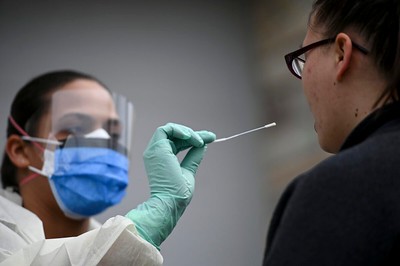
Face masks. Temperature checks. Socially distant gaming floors, dining facilities and public areas. All are part of the new casino experience, at least for now. After a 10-week lockdown, many casinos in the U.S. reopened last week. And gamblers looking for some fun and camaraderie lined up to enjoy them.
ALABAMA
In Alabama, Wind Creek Hospitality CEO Jay Dorris said small groups of invited guests will be invited to a soft opening of the company’s four casino hotels on Thursday, June 4, followed by a public opening on Monday, June 8. The properties, owned by the Poarch Band of Creek Indians, are located in Wetumpka, Atmore, Montgomery and the Mobile Greyhound Track.
Dorris stated once the casinos reopen, at one-third capacity, special waiting areas will be available for guests if a property is at maximum occupancy. However, Wind Creek guests can make a reservation for a particular session up to 14 days in advance. “Just like your favorite restaurant on a Friday night, a reservation isn’t required. But if you absolutely want to join us on a given day and time, reservations are available,” Dorris said.
He noted the company has been working to create new health and safety measures under guidelines from the Centers for Disease Control, the Alabama Department of Public Health, a Montgomery pulmonologist and an epidemiology team from a non-profit organization representing 30 federally recognized tribal nations.
Dorris said public areas in the casino will be closed four times a day for 1‐hour intensive cleanings, meaning guests will have to exit the property after each 5-hour session, except hotel guests. These cleaning periods are “a step above” efforts by other casinos, Dorris said.
Other new rules will include mandatory face masks for guests and employees; players who do not have their own mask may acquire one for a small donation supporting local first responders, health care providers and patient relief funds. Patrons who refuse to wear one will be asked to leave, Dorris said. Smoking only will be allowed in designated areas. Restaurants will be reconfigured to assure six feet between diners and wait-staff service will replace self-service dining options.
Ventilation will be increased and hand sanitizer dispensers will be located throughout the properties. Dorris said Wind Creek “may deny entrance to our properties to guests who arrive from a county that may represent minimal, moderate or substantial levels of Covid-19 community transmission.” Also, groups of more than four people will be asked to separate into socially distanced groups.
ARIZONA
Indian casinos opened last week in the Phoenix area on the same day that Governor Doug Ducey’s stay-at-home order expired. Harrah’s Ak-Chin casino typified the response, with a long line of patrons waiting to get in when it opened May 15 at 8:45 a.m. and then cheering when they were able to begin streaming past staff members in face masks.
Every other slot machine was shut down and patrons were asked to maintain social distancing and frequently wash their hands. They were not required to wear masks, but it was suggested strongly.
Some customers took precautions without urging, including washing hands frequently and using hand sanitizer.
Blackjack tables offered limited seating. Poker, keno and bingo were closed.
The Wild Horse Pass Casino also welcomed players who began curling around the building early, even though it didn’t open until noon.
Most wore masks, although some smoked through their masks. Slot machines were separated by Plexiglas shields and some were shut down.
Security staff handed out water bottles and urged social distancing, but many chose to ignore the suggestions.
The Lone Butte casino also welcomed large crowds on May 15, with about 100 waiting to get in when doors opened at 3 p.m. Guards maintained a maximum level of guests allowed inside.
All four Desert Diamond Casinos, operated by the Tohono O’odham Gaming Enterprise, will reopen June 5.
They will implement new health and sanitizing protocols, including deep cleaning during the hours when the casinos are closed, social distancing and protective equipment such as Plexiglas barriers.
Guests will be scanned for temperature and employees will be screened daily for symptoms. Masks are required by all. Occupancy will be limited, at least in the early phase.
Desert Diamond Casinos in Glendale and Tucson and Sahuarita Bucky’s & Yavapai Casinos in Prescott Valley promise to reopen June 1.
Mazatzal Hotel & Casino in Payson has not said when it will reopen.
Talking Stick Resort and Casino and Casino Arizona near Scottsdale have said they will stay closed through the end of the month, at least.
Cliff Castle Casino in Camp Verde and Twin Arrows Casino Resort in Flagstaff also remain closed.
ARKANSAS
Arkansas’ two racinos and one casino annex, closed since March 16, reopened Monday, May 18. Both racinos—Oaklawn Racing Casino Resort in Hot Springs and Southland Casino Racing in West Memphis–submitted reopening guidelines to the Arkansas Department of Health, and will follow health and safety protocols including operating at one-third capacity; have only one guest entrance; check temperature of team members and guests, who also must wear masks at all times. Also, every other slot machine will be unavailable; live blackjack games will allow three players at a time and live craps will allow three players per side. Roulette will not reopen.
In addition, smoking will be banned throughout the facilities. Hand sanitizers will be offered in all public areas. The frequency of cleaning all public areas during the day will increase, and they’ll be electrostatically disinfected nightly when closed.
The sportsbook and kiosks will remain closed and simulcast racing, marketing promotions, events, tournaments and entertainment also will not reopen immediately.
Oaklawn General Manager Wayne Smith said, “We are fully prepared to meet or exceed all recommended health and hygiene protocols. While we understand this timing might not be right for some people, just know we will be ready and safe for you when you are.” He noted the racetrack held a meet before empty stands on May 2. “We proved that by following strict protocols we could keep our horsemen and staff safe,” Smith said.
One issue he’s concerned with is the acceptance of masks by patrons. “All of our team members will have to be social distancing police, so to speak. It will be a monumental task,” Smith noted.
At Southland, hundreds of people began filing in when the casino opened at 9 a.m. Observers said people wore masks but pulled them down as they stood in line, and most did not observe social distancing of six feet. A security guard’s announcement caused people to spread out and adjust their masks. Entry into to the facility was slow as guards took temperatures and scanned driver’s licenses.
Inside, cleaning crews with masks, paper towels and spray cleaners sterilized individual slot machines every time a player left. Senior Marketing Director Jeff Strange said employees went through extra training to become familiar with the new safety guidelines. Also, extra security guards will roam the floor space to ensure patrons follow the social distancing guidelines. “We’re keeping a close eye on it all,” Strange said.
A line also formed to enter the Saracen Casino Annex when it opened at 10 a.m. Carlton Saffa, Saracen Development project manager, said, “Everyone, employees and guests, are required to wear a face mask inside. If they don’t have one, we’ll provide them with one, but they must be worn at all times inside the building, and social distancing requirements must be observed.”
Pine Bluff City Council debated a resolution asking the Saracen Casino Annex to remain closed through June 18. But the resolution lost in a 3-5 vote and the casino has reopened. Operating hours and capacity are limited and requirements for social distancing, personal protective equipment and sanitizing protocols were implemented after approval from the state Health Department.
CALIFORNIA
The wave of Indian casino re-openings last week occurred despite the protests of California Governor Gavin Newsom, the first large-scale defiance since the state went into lockdown on March 15.
The governor had appealed, “I urge tribal governments to reconsider and instead make those determinations based on how they align with the current local public health conditions and the statewide stage of reopening.” He added, “However, I cannot stress enough that the risk of Covid-19 transmission remains a serious threat for all Californians.”
Perhaps not big enough to trump an $8 billion a year market.
San Diego County: San Diego County has more Indian casinos than any other in California, and more than any county in America. At the epicenter of California Indian gaming, County’s Public Health Officer Dr. Wilma Wooten claimed authority to rein in the cascade of casino re-openings, beginning May 18 with Viejas Casino and continuing with Sycuan Casino on May 20 and then Valley View Casino on Friday, May 22.
“We are very concerned, and we want to make it perfectly clear we do not agree with reopening casinos on May 18,” declared Wooten. “We feel our health officers order extend to the tribal nations in this situation. We will work through the Centers for Disease Control & Prevention (CDC) to determine if we can address the issue further to prevent the openings on May 18.” Her concerns delayed the openings not at all since the casinos are on sovereign tribal land not subject to county regulations. There was no report as to whether the CDC responded to her concerns.
Sycuan Casino told news agencies they were taking strong sanitation measures, imposing social distancing between patrons, requiring masks and taking peoples’ temperatures when they enter the casino, a total of 700 best practices. That includes the addition of TruClean, that functions like Scotch Guard, making surfaces anti-bacterial by piercing cell membranes. Sycuan Band of the Kumeyaay Nation Chief Administrative Officer Adam Day added, “We disagree with any legal interpretation that allows the county any jurisdiction over activities on a tribal reservation.”
Bucking that trend was the small Pauma Casino, which in a release declared, “Chairman Temet Aguilar, the tribal council and Casino Pauma leadership do not believe in gambling with the health and safety of our guests, our Team Members or the community. In the spirit of our sovereign-to-sovereign relationship, we will continue to follow Governor Newsom’s recommendations or until we are more confident it is safe for us to reopen.”
Another small casino, the Jamul Casino in San Diego’s backcountry, was the fourth in the county to reopen on May 18. It has no hotel. It has adopted physical distancing, deployed 150 hand sanitizing stations, required masks for guests and employees and gloves for employees, upped sanitation protocols, temperature screenings, reduced occupancy limits and will operate with limited hours, 10 a.m. to 2 a.m. Guests will be separated from employees where possible by Plexiglas dividers. Dining will reopen in phases. General Manager Mary Cheeks commented, “This has been an unprecedented season of uncertainty, and we understand it may take time for some guests to be ready to come back.”
A worker at Viejas Casino & Resort decided the risk was too great and quit as a security guard before the reopening. Tony Wolf told KPBS, “For basically my health and for my family’s health, I just had to resign.” He added, “It sucks. I really liked working there. I don’t feel they are going to have everything up in place that’s necessary.”
Viejas is using “cutting edge UV germicidal technology” to sanitize the property, it says. “providing medical-grade, hospital clean conditions not matched anywhere else.”
Soboba Casino Resort will reopen May 27, and plans to take, “cleanliness to a new level by implementing an aggressive new health and sanitation program to complement the already rigorous cleaning standards currently in place,” according to its website. “Upon reopening, all guests and team members will be required to wear a mask; gloves will be optional for guests.”
Pechanga Resort Casino in Riverside County, the largest casino on the West Coast, announced a possible June 1 reopening: “Our reopening will be centered around the health and safety of our team members, guests, community, and the Tribe,” adding “Operations and amenities will be limited at first, and our new health and safety protocols will be paramount.”
Harrah’s Resort Southern California in Valley Center planned a May 22 open. Its hotel, fitness center, buffet, pools, spas and valet service won’t open for a while. Face masks and temperature checks at the door will be required and social distancing will be enforced.
Employees will wear personal protective equipment (PPE) and have their temperature checked before each shift. Gaming tables and slots will be limited, and players topped at three for blackjack and four for roulette.
Restaurants will use disposable menus; tables and chairs will be arranged to maximize distance and drinks will be served with lids.
Coachella Valley and Inland Empire: The second-largest California market, the Coachella Valley, also began reopening. With Spotlight 29 Casino in Coachella and Tortoise Rock Casino in Twentynine Palms planning to open Friday, May 22 at 10 a.m.
Preparation for Covid-19 realities can be exhausting, as Spotlight 29 Casino General Manager Ryan Walker told KESQ: “Personally I’ve worked harder more during this period of closure than I have during the normal operation. There is a lot of strategy, a lot of unknowns. We’ve never encountered something like this before.”
The safety measures are largely the same: masks, temperature checks, operating at 50 percent capacity, sanitizing stations throughout, limited players at tables, many of which have been removed. Slots will be disinfected hourly.
Guests will be able to take in all the policies and protocols at a glance from a large digital board. Such as no group gaming, and enforced social distancing.
The buffet and lounge will be closed at the beginning.
In addition, Spotlight employees must be tested for Covid-19 before resuming work and get periodic tests going forward.
Spotlight’s neighbor Augustine Casino, which contemplates a June 1 opening, is following nearly identical guidelines, with the addition of no smoking being allowed. Food and beverage service will be minimal. General Manager Jeff Bauer commented, “Just cleaning alone and spacing and all of the things we have to think about are going to create a whole new normal for us and most of that I believe will be semi-permanent.” He estimates the casino lost $10 million and won’t be profitable again until early 2021.
In California’s Inland Empire, Jacob Mejia of the Tribal Alliance of Sovereign Indian Nations, argued that tribes must reopen because gaming is their main source of revenue: “For tribes, their gaming facilities are essential businesses, as they represent the only means of government revenues for healthcare, public safety, education and more.” He added, “They are extensions of tribal government, not corporate entities driven by stock prices.”
Morongo Casino, Resort & Spa near Cabazon had a May 22 opening at 2 p.m. planned. Its poker and bingo rooms and some restaurants, including the buffet will remain closed. Plexiglas shields are installed between slots.
Its measures are similar to those at other casinos, including temperature checks for everyone as they enter, with entrances limited to make it easier to monitor entries.
San Manuel Band of Mission Indians announced May 21 that San Manuel Casino’s closure was being extended beyond May 31.
The announcement said the health and safety was the number one priority and “Therefore, the San Manuel Band of Mission Indians has decided to extend the closure of San Manuel Casino beyond May 31. While we are hoping for a reopening date in June, it is too early to announce one with absolute certainty.”
Pechanga Casino Resort in Temecula announced it would open on June 1, but specifics were not announced Most of the health stipulations imposed at other casinos are expected to be part of the Pechanga plan as well.
NORTH CAROLINA
Win-River Resort & Casino in Redding, Shasta County was first out of the gate in the Golden state. It opened at 8 a.m. with a long line waiting and 60 minutes later reached maximum capacity. The number of Covid-19 cases were declining rapidly and the County had begun lifting some restrictions.
A guest of the reopened casino told KRCR, “Oh man, it feels good. It feels good not to be a prisoner of my own house anymore.”
Win River requires guests to wear masks and have their temperatures taken as they enter. It is not serving alcohol because, well, imbibing encourages friendly behavior, such as hugging, which is a no-no.
It has cut its number of slots in half, to about 350.
In Humboldt County Bear River Casino plans to reopen on May 24, operating 9 a.m. to 5 a.m., with four hours set aside for “deep cleaning.”
Blue Lake Casino plans to open early June.
Humboldt County officials say they are getting emails from employees concerned about the safety of reopening. Humboldt County Health Officer Dr. Teresa Frankovich told her board of supervisors, “The casinos are a very big concern of mine.” She added, “We have been dealing with some cases related to relatively smaller gatherings. And to have a large number of people gathering in a spot where they stay for long periods of time, no matter how safe you try to stay in that environment, it is a risk.”
The six tribal casinos near the state capitol of Sacramento are also planning to open if they haven’t already. JC Rieger, general manager and senior vice president at Harrah’s Northern California, prefers “the end of the month, first of June,” as he told the Sacramento Bee. Harrah’s may close all or most of its smoking sections to keep cleaner air, he said. It is also looking at procedures for sanitizing chips. It will also employ fewer slot machines to enhance social distancing.
Hard Rock Hotel and Casino Sacramento reopened last week to long lines snaking around the building.
“Few things are more rock ‘n roll than a long-awaited band reunion, and we’ve missed our loyal guests these past few months,” said Mark Birtha, Hard Rock Hotel & Casino Sacramento at Fire Mountain president, in a release. “I’m happy to say that when our guests return, they’ll discover more to love here than ever.”
His staff has been meeting with the governor’s staff.
Cache Creek Casino is looking at early June, although its golf course is already open. It is still paying its 2,300 employees through the end of the month but faces “difficult decisions ahead.” It plans to have touchless thermal scans, fewer gaming stations, and to limit occupancy when it opens.
Thunder Valley, Jackson Rancheria and Red Hawk have been quiet about their intentions. Red Hawk plans to require masks for all and may install Plexiglas barriers to protect employees.
Rolling Hills Casino will require masks, shields at cashier stations and reconfigure the casino floor with fewer slots—which will be instantly sanitized when customers leave. The casino will have “temperature kiosks” and allow no one with a higher than 100.4-degree temperature inside. The enhanced air filtration system will “replenish” the air every 4.5 minutes.
Some customers waiting to enter the reopened casinos drew the criticism of many who noted they were failing to social distance, although man were wearing masks.
Placerville’s Red Hawk Casino will reopen June 1. The Shingle Springs Band of Miwok Indians have mandated thermal cameras at all entrances, facial coverings for all, reduced slot machines and seating and hand sanitation stations throughout. Dining will also have reduced seating and disposable menus.
CONNECTICUT
Connecticut’s Mashantucket Pequot Tribal Nation and the Mohegan Tribe, will begin reopening parts of their casinos on June 1. The tribes announced this is a joint statement last week. That’s too soon for Connecticut Governor Ned Lamont.
Phase one will include the Pequots reopening portions of Foxwoods Resort Casino and the Mohegans reopening parts of the Mohegan Sun. But only for Nutmeg state residents.
The tribes worked together to create new safety protocols and reopening guidelines. According to the announcement, “each property has incorporated protective equipment and physical distancing in its policies. Neither property will open its concert venues, buffets or poker rooms and tenant restaurants will be open for take-out only. Additionally, both Foxwoods Resort Casino and Mohegan Sun will be catering to Connecticut and Rhode Island residents only.”
Rodney A. Butler, chairman of the Mashantucket Pequot Tribal Nation, declared, We’re proud to partner with the Mohegan Tribe to ensure we develop the most responsible plan for helping the state of Connecticut recover swiftly and safely from the crippling economic impact of this pandemic.”
He added that the tribes had made significant investments to increase the safety in the casinos. “Some of the operational changes will be obvious from the infrared temperature scanners installed at all entrances, to the requirement that guests wear masks and members of our team wear appropriate PPE. Behind the scenes, ongoing disinfection of all common surfaces will be performed at short intervals, as well the replacement of dice, tiles and cards in use at our table games,” he said.
James Gessner, chairman of the Mohegan Tribe, added, “We have spent the past 10 weeks putting extraordinary measures in place including cutting edge technology to protect the safety and health of all individuals who walk through the doors of Mohegan Sun as well as to ensure the safety of our community as a whole.”
Kimberly Doubleday, the casino’s vice president and general counsel said many protocols would be put into place to mirror restrictions the governor is requiring for some businesses to reopen. All entering will have their temperatures scanned. Every other slot machine and gaming table will be closed. Employees will be separated from patrons in many places such as the hotel front desk and at retail countertops, with Plexiglas. Wherever there are lines, customers will be asked to practice social distancing.
Hand sanitizing locations will be scattered throughout the property.
Governor Ned Lamont said during a press briefing that June would be too soon but added that he wanted to consult with the tribes. He pointed out that casino clients have a large percentage of seniors, many of who are at increased risk from the coronavirus. He added, “A drive up from New York or a drive down from Massachusetts is the opposite of what we’d want to see.”
Lamont added, “Our reopen committee and frankly the governors in the region just think that’s not the right way to go right now given the nature of the casinos — indoors, older populations, food and alcohol. It’s time to wait a little longer.”
He noted that hospitalizations were declining while testing was going up. He said, “I appreciate the ongoing concern that people have, but I think we’ve got the right balance going forward right now.”
He added, “I think you have a sense that we put public health and public safety first and foremost. Whatever we do, we’re doing very cautiously.”
FLORIDA
Seminole Hard Rock Hotel & Casino Tampa reopened Thursday, May 21. It’s the first of Seminole Gaming’s six Florida casinos to welcome back gamblers since they closed March 20 due to the Covid-19 pandemic. Hard Rock International Chairman and Seminole Gaming Chief Executive Officer Jim Allen said, “We are making sure our resorts are safe and sound so our guests and team members have peace of mind when they return. This requires a tremendous commitment to sanitary protocols and a safety-first mentality for both guests and team members.”
The other five Hard Rock casinos and hotels in Florida, owned by the Seminole Tribe, may open in late May or early June, Allen said. The properties closed March 20 due to Covid-19. Allen said, “Our business is actually in 76 countries around the world, so we’ve been dealing with this situation since January. Domestically, our casinos we’re thinking about opening in Florida, the end of May, early June.”
However, although the Tampa facility has reopened, Seminole Hard Rock spokesman Gary Bitner said Allen was speaking in generalities. “There is no confirmed date or dates and all plans are tentative at this time,” Bitner said. Miami-Dade and Broward counties have excluded casinos and hotels from reopening on Monday, May 18, although many other businesses were allowed to do so.
If and when all the properties reopen, Allen said, “We’re anticipating very large crowds and we will be prepared for that.” Seminole Hard Rock in Tampa will operate at half capacity, Allen said, noting, “At all of our large properties we’ll be utilizing thermal body imaging. Those devices are anywhere from $15,000 to $20,000 apiece.”
Other health and safety plans include taking guests’ and employees’ temperatures; turning off some slot machines to create social distancing; requiring employees and guests to wear gloves and masks; and offering hand-sanitizing stations throughout the casino. Table games will have plexiglass dividers and only four positions will be open. The Hard Rock Cafe and Rise Kitchen & Deli will be open with enforced social distancing . Two hundred of the hotel’s 800 rooms will be available at first.
One primary concern, Allen said, is ongoing demand, considering more than one in five workers has lost his or her job. “Frankly, we’re more concerned about third quarter, fourth quarter, first quarter of next year. I think after the initial pent-up demand is behind us, then the question is, what’s the frequency and available discretionary income to come to an entertainment facility such as an integrated resort?” Allen asked.
Meanwhile, the Miccosukee Tribe’s Miccosukee Resort & Gaming, closed for more than a month, reopened Sunday, May 17. The casino’s new rules include only 500 people allowed in at one time; guests and employees must have their temperature taken and wear masks at all times. There will be only one entrance and exit. Smoking will not be allowed except in designated areas. Guests must also wipe down each machine after each use with disinfecting wipes available throughout the resort.
The hotel, valet services, bingo poker, buffet and other restaurants and lounges plus the salon and spa and teen arcade will remain closed.
IDAHO
The Shoshone-Bannock Casino Hotel reopened Tuesday, May 19, Shoshone-Bannock tribal officials announced. Guests will be limited to tribal members and others who have received invitations.
Gaming and Hotel Operations Interim Chief Executive Officer Colista Eagle said, “We are monitoring the current situation, and our concern is for the safety of our team members and guests. We believe we have done our due diligence, created processes and implemented protocols that will provide a safe space for entertainment.” Eagle added the tribe’s Sage Hill Casino, Bannock Peak Casino and High Stakes Bingo will remain closed until further notice.
Under new protocols at the Shoshone-Bannock Casino Hotel, guests must have their temperatures checked and wear face masks on the property. Social distancing will be enforced with the aid of floor stickers. All players must use their Players Club Cards until further notice.
In addition, hand sanitizer stations will be located throughout the property. Smoking will not be allowed except in a designated smoking area inside the bingo hall. Food will not be allowed on the gaming floor.
Team members must wear face masks and where applicable, disposable gloves, and they’re required to maintain strict handwashing schedules.
Plexiglas has been installed at several locations. Electrostatic sprayers are on order; this technology uses the highest classification of disinfectants recommended by the Centers for Disease Control to treat known pathogens.
The hotel will be limited to 50 percent occupancy. The RV park is tentatively scheduled to reopen May 30.
INDIANA
Indiana’s 13 casinos are considering reopening on June 14, the first day of Phase 4 of Governor Eric Holcomb’s Back On Track plan to reopen the state following Covid-19 closures. Gaming Commission Executive Director Sara Tait said the health and safety mandates “serve to provide confidence to the public that gaming will commence in a measured and responsible manner under conditions now necessary during the Covid-19 pandemic.”
Under the plan, casinos will be limited to half occupancy. All employees and guests must answer questions about recent travel, contacts and health symptoms; have their temperature checked; wear a face mask; and sanitize their hands before entering a casino. The Gaming Commission said casinos may establish procedures for removing patrons who refuse to wear a face mask.
Patrons must stay at least six feet apart at all times. Every other slot and sportsbook kiosk will be turned off and machines in use will be sanitized between patrons.
Table games will be limited to three players for blackjack, four for roulette and six for craps. All table games patrons and employees must wear face masks. Cards must be replaced after each shift and card touching by anyone besides the dealer will be limited. Chips must be disinfected every two hours and dice after each shooter. No one will be permitted to simply watch table games.
Smoking will be prohibited throughout the casino except for a designated area. Food and drink also will be banned on the casino floor buffets must remain closed. Concerts, nightclubs, live events and shows will not be allowed, along with any promotions that could attract a crowd. Valet service, coat check, poker and pai gow rooms will be closed.
IOWA
Iowa Governor Kim Reynolds issued an emergency proclamation declaring the state’s 19 casinos may reopen at 50 percent capacity on June 1, the day the state’s ban on gatherings of more than 10 people will expire. Casinos also must reduce their gaming positions by half.
Reynolds said, “For our state, recovery means striking a balance between getting life and business back to normal while continuing to manage the virus activity. Our recovery is contingent upon our ability to protect both the lives and livelihoods of Iowans. We can’t prioritize one over the other.”
Keith W. Henson, senior vice president of operations at Boyd Gaming, owner of Diamond Jo Casino in Dubuque, said new restrictions and increased sanitizing are essential to reopening. “As we return to business in Iowa, our highest priority will be protecting the health and safety of every person who comes through our doors,” Henson said.
Employees will be required to have their temperature checked and must wear face masks, and maintain social distancing requirements on the casino floor and in restaurants, Henson added.
In fact, all Iowa casinos must ensure social distancing, with gaming positions at least six feet apart. Protective shields also must be installed at table games. Casinos may not reopen buffets or salad bars, and all properties must increase hygiene practices.
KANSAS
In Kansas, four state-owned casinos reopened over the Memorial Day weekend. The Boothill Casino in Dodge City and the Kansas Crossing Casino in Pittsburg reopened Friday, May 22 and the Kansas Star Casino in Mulvane welcomed guests on Saturday, May 23.
A long line of players snaked around Hollywood Casino at Kansas Speedway in Kansas City on Monday, May 25. In fact, some potential patrons gave up and left as the queue slowly inched forward. Vice President and General Manager Rick Skinner said that was due to limited capacity and mandatory temperature screenings of guests.
Despite the early lines, Skinner said the casino’s reopening day went smoothly. “Everybody seems to be having fun. We’ve sanitized this building within an inch of its life. I personally have been involved in it, so I know for a fact all 2,000 machines are completely sanitized,” he said.
All four casinos will offer limited hours of operation to allow for deep cleaning every night. Slot machines will be located to allow for social distancing and table games will not be open at first. Food service will be limited. In addition, patrons will have their temperature checked and must complete contact and symptom forms; entry will be allowed based on the results. Plexiglass dividers and hand-sanitizing stations will be placed in designated areas. Masks and gloves will be available to staff and visitors.
Kansas Crossing has instituted a casino-wide Extra Care program that includes the above precautions and more. Officials said, “We believe that with enhanced cleaning and sanitization procedures in place and increased physical distancing measures throughout the property, we can safely get back to some good, clean fun!”
Operated by Boyd Gaming, Kansas Star Casino Hotel Event Center, the facility will participate in the Boyd Clean program, “a set of comprehensive protocols aimed at protecting the health and safety of its team members and guests.”
In Missouri, non-tribal casinos in the Kansas City area are under an order to remain closed until at least June 1. The order affects Ameristar Casino, Harrah’s Casino and Isle of Capri Casino in Kansas City and Argosy Casino in Riverside. Bingo halls may reopen, depending on local orders.
On June 1, both the Kickapoo Tribe’s Golden Eagle Casino and the Sac and Fox Nation’s Sac and Fox Casino will reopen. The Prairie Band Casino and Resort has not announced a reopening date.
LOUISIANA
More than half of Louisiana’s 19 casinos and racinos reopened on Monday, May 18, more than two months after Governor John Bel Edwards ordered them to close due to the Covid-19 emergency.
Edwards issued a new order last week allowing the properties to reopen, but with a reduced capacity of 25 percent and only half of the gaming seats available. Guests and employees must have their temperature checked and employees must wear masks; they’re optional though recommended and offered to guests.
Louisiana Gaming Control Board Chairman Ronnie Jones said officials at several properties reported crowds that “felt like a Friday instead of a Monday. It was a pretty good day for us. We got off to a really good start.”
Harrah’s New Orleans, owned by Las Vegas-based Caesars Entertainment, will remain closed under a more restrictive order by Mayor LaToya Cantrell. “A casino is considered high risk in terms of contact intensity, volume and potential for visitors congregating in large groups and presents significant challenges in mitigation,” a Cantrell spokesman said. Fair Grounds Race Course and Slots in the city also will remain closed.
At the Belle of Baton Rouge, General Manager Jim Rigot said all table games will be closed, and hours of operation will be limited. A deep-clean will take place while the casino is closed. The hotel will not reopen yet and food service will be limited. “People shouldn’t come in here with the expectation that things are going to be normal. I want everybody to have a good experience. There’s going to be limitations, there’s going to be restrictions, but if everybody works with us, we’ll get through this together,” Rigot said.
At Hollywood Casino, General Manager Jeannie Magdefrau stated, “It will be a little different when you arrive since our number one priority is to ensure the safety and health of our customers and our employees. There will be some amenities that will not be available at this time.” Magdefrau added valet, bars, buffet and Celebrity Grill will remain closed.
Golden Nugget Lake Charles also has reopened the casino floor, hotel pool and restaurants. Owner Tilman Fertitta said, “We have anxiously awaited this reopening and look forward to welcoming the Lake Charles and surrounding communities back to our hotel and casino.” He noted the company is following all Centers for Disease Control and state guidelines to maintain a safe environment for employees and guests.” Fertitta added several restaurants will reopen, as well as the pool, lazy river, golf course and private beach.
Reno-based Eldorado Resorts reopened Isle of Capri Lake Charles, Belle of Baton Rouge and Eldorado Shreveport on May 18. Barron Fuller, senior vice president for Eldorado Resorts, which operates the Belle of Baton Rouge, Isle of Capri Lake Charles and Eldorado Shreveport, said there were lines at all three casinos when they opened at noon Monday. There was a challenge early on with getting security staff used to the new protocols for admitting guests, which include temperature checks. “But an hour into that, we learned how to expedite the procedures,” he said.
Eldorado President Anthony Carano said, “We have been working very hard over the last two months to prepare for the reopening of our casinos, and we look forward to providing the outstanding service and hospitality experiences Eldorado is known for in a safe manner.”
Boyd Gaming reopened Delta Downs Racetrack Casino Hotel in Vinton, Evangeline Downs Racetrack Casino Hotel in Opelousas and Treasure Chest Casino in Kenner on May 20; Amelia Belle Casino and Sam’s Town Shreveport will reopen May 27. Vincent Schwartz, Boyd Gaming senior vice president, said, “We probably could have opened them sooner, but we wanted to lay it out and make sure we had all the i’s dotted and the t’s crossed.” He said the Boyd Clean program requires new health and safety protocols.
Penn National Gaming Chief Executive Officer Jay Snowden said the company’s five Louisiana properties reopened May 18 under federal, state and local health and safety requirements: Boomtown Casino Bossier City, Boomtown Casino New Orleans, L’Auberge Casino Baton Rouge, L’Auberge Casino Lake Charles and Margaritaville Casino Bossier City.
Also in Shreveport, Horseshoe Casino and Hotel and Eldorado Resort Casino reopened May 18; so did Harrah’s Louisiana Downs in Bossier City. Sam’s Town Hotel & Casino in Shreveport will open May 27.
One Bossier City venue, DiamondJacks Casino, announced it will close permanently. Diamondbacks Vice President of Finance Diana Thorton said, “In light of the sudden, unforeseeable market conditions that have resulted from the Covid-19 pandemic, the difficult decision has been made to close the casino. We have worked diligently to be a valued member of the Shreveport-Bossier City business community. We are saddened for the loss of a longtime business here in Louisiana.”
Thornton said DiamondJacks managers were working on a closure plan, including employees, vendor, and other key stakeholders, as well as disposal of the casino’s physical assets. Officials said there are no plans for new ownership.
In addition, Delta Downs in Vinton does not plan to reopen in the foreseeable future, officials there said.
Finally, Stan Guidoz, vice president of southern operations for Jacobs Entertainment, with 23 Cash Magic video poker truck stops across the state, reported strong volume on May 18 and long lines of customers waiting at several locations. “I’m not aware of any truck stops that decided not to open,” he said.
MASSACHUSETTS
The Massachusetts Gaming Commission May 15 voted unanimously to push back any casino openings to at least June 1, extending the date back from May 18. The commission’s vote is somewhat moot since the actual date of reopening will be decided by Governor Charlie Baker.
The vote applies to the Encore Boston Harbor, MGM Springfield and Plainridge Park slots parlor, which have been shuttered since the middle of March.
Commission Chairwoman Cathy Judd-Stein said that the panel “looks forward to a preliminary discussion with its licensees to discuss health, sanitation and safety proposals for the resumption of casino operations.”
During the meeting the commission discussed issues such as protocols to achieve social distancing, sanitizing, staffing and operations and screening. Judd-Stein indicated that they were waiting for state and medical officials to flatten the curve of the Covid-19 virus but were ready to discuss, “the beginning of an iterative process to support a future safe and sustainable reopening of all three gaming establishments.”
Brian Gullbrants, president of Encore Boston Harbor told commissioners during the virtual meeting that stools will be taken out of bars, every other slot machine will be turned off and gaming tables will seat fewer players, who might be within cocoons of plastic that would allow players and dealer to pass cards through a slot at the bottom. “We want this to be a safe environment for all concerned,” he said. “Whatever it takes. That will be done.”
Representatives from MGM and Plainridge Park also spoke via teleconference. MGM’s plan includes screening patrons and employees for signs of the virus, numerous hand-washing stations and masks for all with employees wearing PPEs. It may or may not reopen its poker room.
All told the commission that the Bay State may be among the very last in the country to reopen its casinos. Once open they may be closed some days during the week.
They will also strictly enforce social distancing when necessary. Patrick Madamba, senior vice president at MGM Resorts International told commissioners, “If someone needs to leave, we will make sure that they leave.”
MGM and Penn National, which have casinos in other states, will use their experiences in reopening them to inform what procedures to put in place in Massachusetts.
Madamba added that MGM would be opening some properties before Memorial Day. “We are going to have a lot of data, I suspect, from our other properties before we open Springfield,” he said. That would include whether staying open 24/7 or open only on some days would be more cost effective.
Wynn Resorts is studying a four-day work week for the Encore. But it all depends on how many patrons show up when they open, and when.
Covid-19 cases in Massachusetts are among the hottest in the nation, only somewhat removed in intensity from New York City and environs.
MICHIGAN
Several of Michigan’s 12 federally recognized tribes plan to reopen their 23 casinos, despite Governor Gretchen Whitmer’s order that casinos remain closed at least through June 12. The tribes “are regulated by their own gaming commissions and under federal law,” said Mary Kay Bean, a spokeswoman for the Michigan Gaming Control Board. Twenty-five Indian and three commercial casinos operate in the state.
Some that announced earlier openings now have decided to wait at least two more weeks. That includes the five Kewadin casinos of the Sault Ste. Marie Tribe of Chippewa Indians in the Upper Peninsula. Tribal officials recently extended the temporary closures from May 16 until June 1, due to ongoing concerns about Covid-19 and Governor Gretchen Whitmer’s extension of stay-at-home orders, now set to expire on June 11.
Kewadin Casinos Chief Executive Officer Allen Kerridge even when Kewadin opens, it will be in phases with table games, resorts and restaurants remaining closed. He added noted casino employees will continue to receive emergency pay and benefits throughout the closure.
The tribe recently received more than $37 million in Covid-19 relief money, Sault Tribe chairman Aaron Payment announced. He said these funds will help cover costs related to the shutdown.
However, the Hannahville Indian Community’s Island Resort and Casino, closed since March 21, did reopen on May 16, after previously announcing it would reopen on May 6.
General Manager Tony Mancilla said, “All industry precautions are being taken at this time. The facility will be cleaned and sanitized on a continual basis. Food and beverage will be served in to-go containers and customers will be offered their own golf cart if requested. Customers and employees will be temperature checked at the facility doors. Per Centers for Disease Control guidelines, any person with temperature over 100 degrees will not be permitted in the facility. There will be hand sanitizers throughout the casino and masks upon request.”
One factor in changing the reopening date, according to Tribal Chairperson Kenneth Meshigaud, was a warning from the state that although it could not legally prevent Island Resort from opening, off-reservation casino employees and customers could have been charged with violating the governor’s orders, making them. subject to fines of $1,000 per violation or per day for entering the casino.
Meshigaud said, “We got a letter by email on May 5 that told us about the measures the governor had taken to deal with the Covid-19 pandemic in Michigan, such as declaring the state of emergency, stay-at-home orders and explanation of the governor’s authority. The letter told us we should limit our operations, otherwise our enrolled members living off reservation and customers could be cited and subject to civil and criminal penalties.”
Meshigaud said all employees and guests must wear masks on the gaming floor. Also, smoking is not permitted; plexiglass shields have been installed; hand sanitizer stations have been increased; and social distancing is encouraged. Currently, only slot machines are open with limited bingo. Casino bars are open and limited food service is available. The pool, spa and convention center are closed.
Detroit’s three commercial casinos—MGM Grand, Greektown and MotorCity—remain closed until at least June 12, under orders from the governor. The city is losing about $600,000 a day in casino tax revenue due to the shutdowns, according to city estimates. Casino wagering taxes represent about 16 percent of Detroit’s general fund revenue and its third largest revenue source, after local income taxes and state revenue sharing payments.
Whitmer has not indicated when she will allow Detroit’s casinos to reopen. Detroit Mayor Mike Duggan has said the city’s casinos may initially reopen at only 25 percent to 30 percent capacity for several weeks or months.
MINNESOTA
Some Native American-owned casinos in Minnesota have reopened following more than two months of closures due to Covid-19. The first to reopen on the first day Minnesota’s new Stay Safe MN rules took effect was Prairie’s Edge Casino Resort in Granite Falls, on May 18. At a news conference, Tribal Chairman Kevin Jensvold said, “We chose today to reopen our facility based on the simple fact that we believe we have incorporated and put into place practices and protocols that ensure the safety of our employees and our guests who choose to come to entertain themselves at the Upper Sioux Community. We all understand the dangers and risks associated with what we are doing. We are not arrogant to believe we are any better suited than anybody else. We’re only the first to do so.”
Jensvold said just before the news conference he received a call from the state attorney general’s office, asking of he knew Governor Tim Walz had issued an executive order closing bars and restaurants. “I take that as a direct affront and offense on behalf of my people,” Jensvold said, noting the tribe is a sovereign nation that makes its own decisions.
Customers had their temperature checked before entering, and staff and many customers wore face masks. Slot machines were separated by plexiglass shields and disinfected whenever a player left. The casino reduced its number of slot machines by one half to 584 to allow for social distancing space. Only 780 people were allowed in at a time.
The Shakopee Mdewakanton Sioux Community announced Mystic Lake and Little Six Casinos will reopen in Prior Lake on Tuesday, May 26. Tribal Chairman Keith Anderson said, “Our tribal members, team members and guests depend on us to make decisions with their well-being in mind, and we have not taken this responsibility lightly as we carefully deliberated these decisions over the past several weeks.”
The two casinos will open in phases Anderson said. Occupancy limits and physical distancing will be enforced. All employees and guests will be asked to wear masks. Every other slot machine will be disabled and half of table games chairs have been removed. Also, officials said all public areas will be cleaned and sanitized throughout the day.
Grand Casino, operated by the Mille Lacs Band of Ojibwe, has not announced when it will reopen is casinos in Onamia and Hinckley. However, officials said they have developed a phased reopening plan. The first phase will include reopening the gaming floor with limited seating and social distancing. Bingo, poker and pull-tabs will not be available. Restaurants will remain closed but carry-out service will be offered. Valet and shuttle services will not be available, and the pool, fitness center and arcade will remain closed.
Treasure Island Resort and Casino, owned by the Prairie Island Indian Community in Red Wing, also remains closed. A website statement says, “We are just as eager to welcome you back and are actively working on a reopening plan that will keep everyone safe and healthy.”
MISSISSIPPI
Casino-starved patrons began lining up at 5:30 a.m. to enter Golden Nugget Biloxi, said General Manager Chett Harrison. Similar scenes occurred as casinos in Mississippi reopened Thursday, May 21 after receiving permission from the state Gaming Commission. The rest intend to open later this week or June 1. Mississippi casinos have been closed since March 17 due to the Covid-19 pandemic.
The casinos must abide by guidelines established by the Gaming Commission and state Department of Health. These include operating at half capacity; asking patrons to not enter if they’ve had Covid-19 symptoms (some venues are taking guests’ temperatures before entering); requiring employees to wear face masks; shutting down every other slot machine; and limiting table games to three guests per table and three per side at craps tables, spacing out slot machines and limiting the number of guests per table game. VIP lounges and poker rooms will remain closed. Most buffets will remain closed and food service will be limited. Most sportsbooks will remain closed. At several facilities, a fog machine will disinfect and sanitize every night.
The following Coast casinos opened May 21: Boomtown Casino Biloxi, Golden Nugget Biloxi, Hard Rock Hotel Casino, Harrah’s Gulf Coast, Hollywood Casino Gulf Coast, IP Casino, Island View Casino Resort, Palace Casino Resort, Scarlet Pearl, Silver Slipper Casino and Treasure Bay Casino Hotel. Beau Rivage will open June 1.
Tunica casinos also reopened Thursday, May 21: Hollywood Casino, First Jackpot Casino Tunica, Sam’s Town Hotel and Gambling Hall, Fitz Casino and Hotel and Horseshoe Tunica Hotel and Casino. Gold Strike Casino Resort will reopen May 25.
Other casinos reopening on May 21 are Trop Casino Greenville, Magnolia Bluffs Casino Hotel Natchez and in Vicksburg, Ameristar Casino Hotel, Riverwalk Casino Hotel and Waterview Casino & Hotel; Lady Luck Casino will open June 1.
At MGM Resorts International, owner of Gold Strike Casino Resort in Tunica and Beau Rivage Resort and Casino in Biloxi, President and Chief Executive Officer Bill Hornbuckle said, “Our hearts are with everyone in our communities, and around the world, who has been personally impacted by this crisis. As we plan to reopen our resorts, the health and safety of our guests and employees guide all of our decision making. Getting many of our employees back to work and welcoming guests through our doors once again will allow us to do what we do best–entertain. We can’t wait.”
At Boyd Gaming, President and Chief Executive Officer Keith Smith said the company has implemented new health and safety protocols called Boyd Clean at its seven properties in Mississippi and Louisiana. “We are optimistic that we will be able to reopen most of our properties over the next several weeks, and we look forward to offering our guests a safe and enjoyable entertainment experience,” Smith said.
The Mississippi Band of Choctaw Indians announced its Pearl River Resort and Bok Homa Casino, closed since March 19, will remain shuttered for now. Tribal Chief Cyrus Ben said a plan is being developed to install additional equipment and implement new safety measures. “We know our associates are ready to return to work and our wonderful guests are ready to come back to the Pearl River Resort and Bok Homa Casino experience they know and love. And we look forward to welcoming everyone back soon,” he said. No timeline was given for reopening.
MISSOURI
In Missouri, St. Charles County officials met with Ameristar Casino Resort Spa management to discuss how the casino, closed since March 17, plans to handle the large crowd expected Monday, June 1 when casinos reopen statewide.
However, Las Vegas-based Boyd Gaming, owner of the casino, recently filed a WARN Act notice with the Missouri Office of Workforce Development, stating, “Due to evolving guidance from public health authorities and government agencies, we cannot currently determine exactly how many team members will be laid off, or which individual team members will be impacted.” The notice indicated 947 employees would be permanently laid off.
Ameristar in Kansas City also filed notice with the state that nearly 600 employees there could be affected. Employees who aren’t laid off may expect their furloughs to last longer than six months.
In the St. Louis area, Ameristar could open with little competition, since two St. Louis County casinos—Hollywood Casino and River City Casino—remain closed under stay-at-home orders issued by St. Louis County. Lumiere Place in downtown St. Louis also plans to open Monday, June 1. Two casinos in Metro East in Illinois—the Casino Queen and Alton Belle–will remain closed.
A spokesman for Boyd Gaming stated, “It is very difficult to predict what business levels will look like when we reopen, and how long it will take for business to recover to normal levels.”
NEVADA
In Las Vegas, Governor Steve Sisolak finally revealed June 4 as a likely start date for casinos to reopen.
Sisolak has given responsibility for opening the casinos to the state Gaming Control Board, which is scheduled to meet on Tuesday, May 26 to consider regulations surrounding the openings. Previously GCB Chairwoman Sandra Morgan told GGB News that a casino would need to provide the board with a plan to reopen at least 7 days prior to the planned opening.
Sisolak pegged the reopening of state business to the decline in Covid-19 infection rates, which have been falling for the past two weeks.
“Without a thoughtful and measured reopening of Nevada’s gaming industry, all of the work that Nevadans have done to fight the spread of this viral pandemic will have been for naught,” Sisolak said.
Several operators𑁋 notably Wynn Resorts, MGM Resorts International, Boyd Gaming and Station Casinos𑁋have begun accepting hotel reservations for June 1, and Las Vegas Sands joined the group last week with an announcement that it would be welcoming guests at The Venetian on the Strip at that time.
The Venetian’s sister resort, Palazzo, will remain closed for now, LVS said.
In line with plans being publicized industry-wide, The Venetian reopening will occur in phases that will initially include the gaming floor, more than a dozen restaurants, the pool deck and several retail outlets, and it will be implemented under an extensive health and safety protocol requiring, among other measures, thermal body temperature scans, personal protective equipment for employees, social distancing and the pre-testing of all returning staff for COVID-19.
To date, Nevada’s casinos were excluded from the first batch of non-essential businesses that were permitted to reopen earlier this month under a partial relaxation of a statewide shutdown dating back to mid-March. However, restaurants within casinos are allowed to accept customers provided they comply with guidelines issued by the state Gaming Control Board. These include separate entrances to restaurants apart from casino floors and dedicated restrooms. Alternatively, properties must show the ability to provide access to restaurants and/or to outside restrooms by means that don’t involve crossing their casinos. Properties also must present plans to prevent customers from congregating outside restaurants prior to entry.
Looking ahead to casino reopenings, the Control Board is requiring operators to submit health and safety plans and has outlined baseline measures of its own derived in part from the comprehensive plans publicized in recent weeks by LVS and Wynn.
Locals giant Station also has released a 16-page set of health and safety protocols.
Last week, MGM joined this group with the release of a 19-page “seven-point safety plan” that includes social distancing, increased sanitation, contactless hotel check-in and a requirement that employees wear masks.
MGM also has said it won’t reopen its entire portfolio of 13 Strip resorts at first but will pursue a phased restart that likely will begin with Bellagio and New York-New York and with only around 25 percent of available rooms.
Generally, all the plans share a number of key elements, including limited occupancy and restrictions on crowd sizes, social distancing on gaming floors and in restaurants and other public spaces, non-invasive temperature checks of employees and at guest entrances and enhanced measures for cleaning and disinfecting table games and equipment, slot machines and all public and back-of-house areas.
On the Strip, Caesars Entertainment announced that it would reopen Caesars Palace and the Flamingo first, followed slowly by the company’s other properties. Bally’s is reported the last in line to reopen.
NEW YORK
The Oneida Indian Nation plans to reopen its three central New York casinos on June 10.
The tribe said its flagship Turning Stone Resort Casino in Verona and its two smaller Syracuse-area properties, Yellow Brick Road Casino in Chittenango and Point Place Casino in Bridgeport, will offer gaming and a limited menu of amenities in accordance with health and safety guidelines developed in-house which the tribe says incorporate best practices on social distancing, a stringent program of cleaning and disinfecting and a requirement that employees and guests wear masks.
As part of a phased resumption of business, some but not all of the restaurants at the three properties will be accepting customers, as will the hotel and spa at Turning Stone and at least one of Turning Stone’s golf courses. All buffets will remain closed, as will all concert and entertainment venues, and no food or beverage service will be permitted on the gaming floors.
In addition, every employee will undergo a daily non-invasive thermal temperature check and answer brief survey questions to identify potential exposure to the Covid-19 virus. Gloves also will be required for all employees working in direct contact with guests, including in all restaurants, at registration desks and on the gaming floors.
Karen Ramirez, the nation’s senior vice president of hospitality, said, “We are confident that the comprehensive plan we have put together for reopening, along with the people we have in place to execute that plan, will ensure the safest environment possible for our employees and guests when we reopen.”
The first phase also will be restricted to customers living within a 120-mile radius of the casinos, a policy that will include cities as far as Albany in the east, Rochester in the west and Binghamton in the south, while excluding residents of the New York City metro area𑁋the epicenter of the pandemic in the U.S.𑁋and the Buffalo-Niagara Falls region, the main catchment area of the Seneca Indian Nation’s three casinos.
Significantly though, the boundaries will free the casinos, at least theoretically, to strike at the markets of three of the state’s four commercial casinos𑁋Rivers Casino & Resort in Schenectady, del Lago Resort & Casino in Waterloo and Tioga Downs Casino Resort in Nichols. Along with Resorts World Catskills in Monticello the four remain under Governor Andrew Cuomo’s statewide shutdown order.
The Oneidas, along with New York’s three other gaming tribes, joined the rest of the state’s gaming industry in shutting down back in March. But it was a voluntary compliance as far as the tribes are concerned. Though the four operate under federally mandated gaming agreements with New York they are sovereign entities under federal law and are not bound by state law or oversight.
This was made clear more than a week ago when the Cayuga Nation reopened portions of its Lakeside Entertainment slot hall in Union Springs in defiance of the shutdown.
Local leaders, meanwhile, have hailed the Oneidas’ decision.
“I have closely reviewed the detailed reopening plan put together by the Oneida Indian Nation and found it to be thorough and measured,” said Oneida County Executive Anthony Picente. “What the nation has proposed prioritizes safety first for all visitors and employees along with the need to reopen the local economy for the benefit of all Oneida County residents.”
John Becker, chairman of the Madison County Board of Supervisors, seconded that sentiment, saying, “I have faith that the Oneida Indian Nation has the safety and health of their employees and patrons as their top priority.”
NORTH CAROLINA
In North Carolina, Harrah’s Cherokee Casino Resort in Cherokee and Harrah’s Cherokee Valley River in Murphy, owned by the Eastern Band of Cherokee Indians, launched the first phase of reopening on Monday, May 18. It began with tribal members and small groups of invited guests, with numbers of patrons increasing as appropriate to maintain social distancing.
Officials said the gaming floor, hotel and some restaurants will open first, with significant limitations on occupancy. The spa, valet, poker room, buffet and concerts will remain closed.
As they are called back to work, furloughed employees will complete a screening including a questionnaire and temperature check, and will be required to wear face masks.
Senior Vice President and General Manager Brooks Robinson said, “This is uncharted territory for the casino industry, but what is clear is that when we return to work it will not be exactly as it was prior to closing. We look forward to welcoming back our guests and team members, also understanding that social distancing is going to be a part of our business and lives for a while.”
OHIO
Horseracing resumed in Ohio on May 22—without spectators. No decision has been announced yet regarding reopening the adjacent seven racinos or four casinos—located in Cleveland, Cincinnati, Columbus and Toledo. All of the venues have been closed since March 14, following Governor Mike DeWine’s order banning large gatherings of people. Horseracing continued until March 20, with wagers placed by phone or online.
The Ohio gaming industry had been off to a promising start in 2020, with monthly records of $167.5 million in January and $171.4 million in February. Revenue dropped to $71.9 million in March and to nothing in April.
OKLAHOMA
On May 15, about 400 people lined up in the rain ahead of the 10 a.m. reopening of the Osage Casino Hotel in Tulsa, Oklahoma, and in less than two hours the gaming floor was filled to its new 25 percent occupancy limit of 1,200 people. The Osage Nation also reopened five other locations on May 15 in Bartlesville, Hominy, Pawhuska, Skiatook and Sand Springs. The tribe’s Ponca City casino opened May 8.
Casino staff offered disposable masks to guests and hand sanitizer stations were available at the entrance to and around the gaming floor. Numerous slot machines were deactivated to facilitate social distancing. Table games were not open. Employees wearing masks and gloves frequently wiped down chairs and slot machines between guests. Food service is not available and bar service is limited. The hotel and pool will remain closed.
The Muscogee (Creek) and Cherokee nations have not announced reopening dates for their casino resorts. Muscogee (Creek) Nation Principal Chief David Hill said the tribe’s 11 casinos, including River Spirit Casino Resort in Tulsa, will remain closed at least through May 31. “Our first priority is, and will remain, the health and well-being of 2,200 employees and the thousands of guests that visit our properties. Ultimately, the local health benchmarks do not suggest that now is the time to reopen River Spirit Casino Resort or the Muscogee (Creek) Nation Casinos,” Hill stated.
He noted employees at Creek Nation Casinos and River Spirit Casino Resort will continue to be paid.
River Spirit Casino Resort Chief Executive Officer Pat Crofts said, “We have been working closely with our gaming board, our tribal gaming regulatory agency and the nation’s health department to determine how to safely reopen. We are developing a comprehensive, phased plan that prioritizes safety but can also deliver the top-tier entertainment and hospitality experience for which River Spirit and our casinos are known.”
The Cherokee Nation’s 10 casinos throughout Oklahoma will remained closed until at least June 1, said Cherokee Nation Businesses spokesman Brandon Scott. He explained reopenings will be done in phases, starting with the tribe’s smallest casinos. Employees will be paid through May, Scott said.
“We’ll probably open up in an area where incident rates have been low and play it by ear. We’re taking a very informed, scientific approach to this whole situation. We’re talking to the Centers for Disease Control, Johns Hopkins and state and local health officials, trying to get the best information before we do anything,” Scott said.
He noted CNB has developed a program, Responsible Hospitality, to address protocols for the health and safety of employees and guests. CNB Chief Executive Officer Chuck Garrett said, “How we move forward from this pandemic will be a part of our legacy. We intend to emerge confident in the knowledge that we did all we could to implement industry-leading protocols that promote the health and safety of our team members and guests. While the guest experience will be different than before, we will continue to deliver the same first-class hospitality and entertainment our guests have come to know and love.”
OREGON
The Mill Casino Hotel in North Bend on May 18 and the Chinook Winds Casino Resort in Lincoln City on May 21 will be the first tribal casinos in Oregon to reopen since the pandemic closed the state’s nine casinos in March.
Three Rivers Casino will open later in the month.
The Chinook will reopen in phases with fewer hours, allowing staff to clean and disinfect when it’s closed. It will operate at half capacity with fewer slot machines in service.
The need to social distance will require a lower occupancy limit. Masks are being required and patrons must have their temperatures taken as they enter.
The Mill will have similar restrictions in effect, with only 300 allowed in the facility at any one time and no table games open. This is similar to guidelines for a Walmart or supermarket, said Coquille Indian Tribe Chairwoman Brenda Meade.
Governor Kate Brown’s Press Secretary Liz Merah stated, “Because the tribes are sovereign nations, the state does not provide guidance for casino reopenings. But tribes have been sharing information with the Oregon Health Authority and our office, and we’re encouraging counties to work and consult with the Tribes as well.”
The Confederated Tribes of Coos, Lower Umpqua and Siuslaw Indians of Oregon Tribal Council announced its Three Rivers Casino Resorts in Coos Bay and Florence would reopen on May 22.
Its rules will include temperature checks, facial coverings for all, social distancing, and multiple statins for hand sanitizer. Staff will constantly clean and sanitize touch points on the gaming floor and hotel rooms.
PENNSYLVANIA
Pennsylvania last week issued guidelines the state’s 12 casinos must meet when reopening during the next phase of Governor Tom Wolf’s plan to restart the state’s economy.
The Pennsylvania Gaming Control Board released a 10-page document that laid out requirements the venues must meet before opening their doors to the public again once their county goes into the “green phase,” which permits businesses to operate with revised requirements to battle the spread of Covid-19.
Patrons to casinos will be required to wear masks, are “discouraged” from wearing hats, and will be observed by casino staff for signs of illness, according to the guidelines. A six-foot social distance will be enforced between people on the casino floor, and casinos may have to adjust occupancy rates to ensure this distance can be maintained.
Plexiglas barriers will have to be installed between slot machines, which will be frequently wiped down, according to the guidelines, and all patrons and staff at table games must keep their masks on and maintain a safe distance between each other.
Employees must receive coronavirus training and appoint a Pandemic Safety Officer to whom colleagues can report confirmed cases of the coronavirus, as well as questions and concerns.
The requirements apply to the commonwealth’s 12 casinos, which include Harrah’s in Chester, Parx in Bensalem, Valley Forge Casino and Resort in King of Prussia, and Rivers Casino (formerly Sugar House) in Philadelphia. The casinos will have to send the board confirmation that they have met these requirements before reopening.
SOUTH DAKOTA
The Royal River Casino & Hotel in Flandreau, South Dakota held a soft reopening for a limited number of invited guests over Memorial Day weekend, and will reopen to the public on Friday, May 29. Owned by the Flandreau Santee Sioux Tribal Nation, the casino closed April 1.
In a statement, General Manager James McDermott and Tribal President Anthony Reider said, “When the casino reopens to the public, guests are going to notice many new features upon visiting. Our top priority is the health and safety of all guests, team members, and the community.”
McDermott and Reider said all team members will receive extensive training on the new cleaning and social-distancing protocols, and will have their temperature checked before each shift. They also will be required to wear face masks, a clear face shield and gloves at all times while on property.
Shields have been installed between slots and at table games. A cleaning and restoration service is fully disinfecting and sanitizing all areas of the casino and hotel. Guests may enter from two locations; they will be asked to use hand sanitizer available throughout the casino and offered masks and gloves.
The buffet will remain closed and the restaurant will offer menu-only dining. The pool and spa will remain closed.
WASHINGTON
Against the wishes of Washington Governor Jay Inslee, three casinos reopened last week—with others planning to.
The governor told reporters, “On several occasions I have expressed the wish that they’d wait to be more consistent with other operations for obvious reasons.”
He added, “I have expressed to the tribes that I would be more pleased if their openings would be more consistent with the some of the business openings in our state.”
Most of the state remains in Phase 1 of Inslee’s reopening plan.
The Spokane Tribe Casino reopened May 13. Angel of the Winds Casino in Arlington and Northern Heights Casino in Airway Heights had previously reopened.
Emerald Queen Casino in Fife reopened May 18 and plans to open its Tacoma location early next month. Joining it was Red Wind Casino in Olympia and Little Creek Casino in Shelton. When its doors opened at 10 a.m. a long line of guests snaked around the building. It is operating at 30 percent capacity.
One customer told KOMO News, “It feels a lot different but it feels good to be back here, the safety measures are very good.” He added, “They said they are opening up and I thought I have to see what it’s like. I want to see how their sanitation process works, because I work with a lot of people.”
The Washington Indian Gaming Association said that safety protocols for all Indian casinos include limiting guests, increased cleaning, new staff training protocols, encouraging use of PPEs and physical changes that encourage social distancing.
The Puyallup Tribe’s Emerald Queen will operate at 30 percent capacity. Red Wind Casino will take temperatures at the entrance and not allow anyone in who registers higher than 99.9 degrees.
The Spokane Tribe’s Casino reopened May 14 with limited hours and no smoking until further notice. It handed out gifts to the first 200 guests. Guests must wear facial coverings and have their temperatures taken at the entrance. Tables at the Three Peaks Restaurant are separated to maximize distancing. Team members will be constantly cleaning. Slots are separated by Plexiglas. During the five hours when it is closed it will be deep cleaned and sanitized.
Little Creek Casino Resort and Nisqually Red Wind Casino near Olympia opened May 18 with Lucky Eagle Casino and Hotel holding back until June.
The Nisqually Red Wind Casino and Little Creek will not allow smoking. Guests will have their temperatures taken and must wear a face covering. Both casino’s slots operate at half capacity. Constant sanitizing will be observed.
Little Creek Casino Resort COO Ray Peters told the Olympian, “As the Indian gaming industry looks to reopen, each sovereign nation is developing a responsible safety and health plan for their patrons, employees, and economic welfare.” He said the tribe considered the number of cases of Covid-19 in surrounding counties before opening. He added, “We understand that things will be changing and we will be nimble, because we will be looking at and assessing data on a daily basis.”
The Cowlitz Tribe’s iLani Casino will reopen on May 28, with reduced dining seating, half of the machines operating and temperature checks for guests entering.
The casino industry has been observing other industries operating during the pandemic and taking some of their best practices for its own, he said. Such as sanitizing machines as customers leave.
WEST VIRGINIA
West Virginia Governor Jim Justice announced the state’s five casinos will be allowed to reopen on June 5. Limited video lottery retailers will reopen May 30.
The state’s five licensed casinos are Hollywood Casino & Inn at Charles Town Races, Mardi Gras Casino & Resort at Nitro, Wheeling Island Hotel-Casino-Racetrack, Mountaineer Casino Racetrack & Resort in Hancock County and the Greenbrier Resort, which is owned by Justice’s family.
Justice said state Lottery Director John Myers has been involved in developing health and safety requirements.
The state recently entered its fourth week of Justice’s phase-in plan.
WISCONSIN
Recently, in a 4-3 vote, the Wisconsin State Supreme Court reversed Governor Tony Evers’ stay-at-home order in response to Covid-19, leading a wide array of businesses statewide to reopen.
Evers said, “We are the Wild West. Just because the Supreme Court says it’s okay to open, doesn’t mean the science does. Folks, deadly viruses don’t go away on their own, and they don’t go away because the Supreme Court says so.” But the state’s 11 tribes are split on maintaining their own stay-at-home orders and when to reopen casinos, closed since March 18. Some tribes announced they’ll reopen their casinos on May 26 or soon after.
As sovereign entities, tribes can set their own guidelines regarding reopening, what games will be offered and safety precautions. Some may require temperature checks and hire additional cleaning staff to disinfect slots machines and furniture.
The Stockbridge-Munsee Community Band of Mohican, based in Bowler, released a statement noting its Isolation Order is still in effect through May 26; it limits gathering, requires people to stay at home and establishes a curfew. Tribal President Shannon Hosley said, “It’s not a partisan issue, it’s a human issue.” She added the council will not rush into reopening if it cannot be accomplished safely.
She added, “We’re going to have to be hyper-vigilant. Our casino customers are a high-risk group. Our demographic is 63 and over.” Holsey said when the casino, located in Bowler, reopens, it will not offer table games and will separate slots with clear shields or physical distancing. “We’ll probably have very limited food and entertainment,” Holsey said.
Ryan Amundson, spokesman for the state’s largest casino, Potawatomi Casino in Milwaukee, said, “We’re not quite ready to talk about reopening plans or operational changes.” The venue takes in $400 million annually from gamblers, according to available data. “We are working to make sure when we do reopen, we’ll do so with the goal of protecting our team members, guests and suppliers,” Amundson added.
When the Potawatomi tribe announced it was closing Milwaukee casino on March 17, Oneida National Chairman Tehassi Hill said, “We immediately got calls from Milwaukee casino customers asking if we would be open.” As a result, Oneida officials closed their casinos near Green Bay the next day—a few days earlier than planned. Hill said tribal officials feared a wave of customers coming to Oneida from Milwaukee, putting customers ad team members at risk. “The impact of suddenly shutting that income flow has been devastating to the tribes. Essentially the tribe doesn’t have a budget right now,” Hill said.
Recently the tribe announced it will resume limited operations at three of its casinos on May 26. Social distancing, protective equipment and other precautions will be enforced, said Oneida Gaming General Manager Louise Cornelius. “We acknowledge our responsibility as an employer and entertainment facility to open with an environment that maintains the highest level of recommended health protocols possible,” Cornelius said. Between 350 and 450 employees will return to work initially with more returning as additional operations resume. Meanwhile, the Oneida Nation’s safer-at-home order will continue until at least June 11.
The Lac du Flambeau Band of Lake Superior Chippewa Indians Tribal Council issued a statement noting, “in alignment with the government order” of the tribe, its Lake of the Torches Resort Casino may reopen “with reduced operations” on June 1. The statement said, “All staff will continue to be compensated and maintain their benefits during this time. The health and safety of our associates, guests and community members is a priority as we plan for the eventual reopening of the Lake of the Torches property. Thank you for your extraordinary patience during this unprecedented situation.”
The statement also noted the tribe’s shelter-at-home and curfew will remain in place. “Once the tribal council and its legal counsel review the state Supreme Court ruling, we will announce our plan going forward. The tribe has been working on and continues to work on a plan to safely reopen.”
The Kenesha-based Menominee Indian Tribe of Wisconsin also issued a statement noting it is following the recommendations of the Centers for Disease Control and Prevention, which include restricting groups of five people or more. Officials said, “Thank you to all of have reached out inquiring on our opening date. We here at Menominee Casino Resort are continuing to prepare for your return. Once our preparation and procedures are fully in place and it is deemed safe to do so, we will announce our return.”
They added, “In response to the Wisconsin Supreme Court decision to reverse the Wisconsin Safer at Home order, the Menominee Tribal legislature issues a reminder that the tribe’s adopted orders remain in place through May 25, or until such guidelines or emergency orders are modified by the tribe.”
Ho-Chunk Nation officials announced Ho-Chunk Gaming-Madison will reopen on a limited basis on May 27. President. Marlon WhiteEagle said, “The staff at Ho-Chunk Gaming-Madison has implemented and will enforce the utmost health and safety of its guests and employees.”
The casino reopening will be a “phased-in process” with only Ho-Chunk Gaming-Madison Players Club Wisconsin members allowed in. They will have to have their temperature checked and wear a mask. Only 400 of the casino’s 1,300 slots will be available. Food and beverage service will remain closed. Plexiglas shields will be installed and hand sanitizer will be available throughout the facility.