Author: Casino Connection Staff

PointsBet Teams with Michigan Tribe

PointsBet is launching its first foray into iGaming as part of its deal with the Lac Vieux Desert Band of Lake Superior Chippewa Indians in the Upper Peninsula. The partnership marks the Australian company’s first with a tribal market.

“The opening of the U.S. sports betting and iGaming market was already a once-in-a-lifetime opportunity,” PointsBet CEO Sam Swanell, said on a conference call detailing the quarterly business report. “The trending behaviors of moving to an online environment as a result of Covid-19 … will likely create an even larger opportunity.”

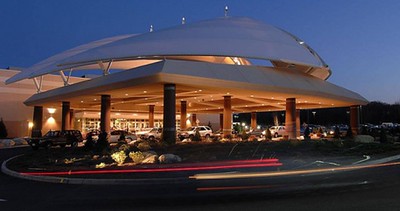
The Lac Vieux tribe operates Northern Waters Casino Resort in Watersmeet, near the Wisconsin border, according to PlayMichigan.

In addition to mobile sports betting and negotiations to operate the Northern Waters retail sportsbook, the deal will be PointsBet’s first online casino anywhere once Michigan sorts through the regulatory framework.

“We will have that iGaming opportunity seen side by side with sports betting, which is really important,” Swanell said. “We’re productively using this time that’s very available to us to progress our technology and our go-live solution to our iGaming product.”

Some Michigan state legislators and industry advocates expect the process to accelerate in the wake of gambling revenue losses, Swanell said.

“We’re monitoring that situation closely,” he said. “We think we can go live earlier than otherwise planned, and we would work towards that.”

Whenever PointsBet does launch in Michigan, the app will offer a unique spin on mobile sports betting. In addition to traditional wagers, “PointsBetting” offers variable bets where outcome amounts are dictated by the margin of a bet’s win or loss. The company also boasts more prop bets than competitors, including such as quarterback completion percentage bets in football and the time of a first basket by a particular player in basketball.

Ainsworth Game Technology Comes to New Jersey

Slot supplier Ainsworth Game Technology has signed a multi-state, omnichannel content agreement with Golden Nugget, Inc. While the deal will see Ainsworth games in Golden Nugget’s land-based casinos when the industry powers back up, it immediately places Ainsworth content exclusively on Golden Nugget’s online gaming sites in New Jersey.

“We are very excited to be partnering with Golden Nugget to provide world-class Ainsworth slot content to online and mobile casino players,” said Ainsworth Online General Manager Jason Lim, according to CDC Gaming Reports. “We believe Golden Nugget players will be instantly familiar with our games and enjoy the experience of our top titles.”

Thomas Winter, general manager and senior vice president, online gaming at Golden Nugget, added, “Golden Nugget prides itself on its extensive selection of online games, and now with the addition of exclusive slot games from Ainsworth, we further strengthen our portfolio with their land-based pedigree content. We are thrilled to partner with Ainsworth on a multi-state agreement as we prepare for our U.S. market expansion.”

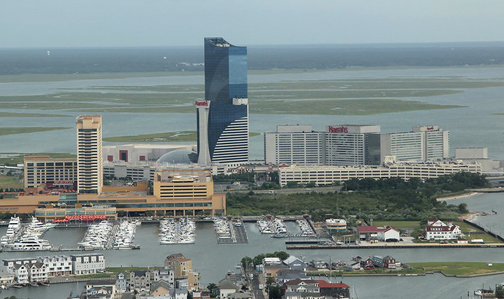
Bally’s Atlantic City Sold to Twin River

Twin River Worldwide Holdings expanded its portfolio last week, announcing plans to buy casinos in Atlantic City, New Jersey; Shreveport, Louisiana; and Lake Tahoe, Nevada.

The trio of deals constitutes a major expansion of Twin River, which currently owns and manages seven gaming halls in four states: two in its home state of Rhode Island, one in Mississippi, one in Delaware, and three casinos and a horse racetrack in Colorado.

The sale of casinos owned by Caesars Entertainment and Eldorado Resorts will also facilitate the $17.3 billion Caesars-Eldorado merger. In Atlantic City, the merged entity was looking to divest at least one property to avoid the perception of “undue market concentration,” or owning too many assets in a single jurisdiction.

Caesars currently owns the eponymous Caesars Atlantic City Hotel & Casino; Harrah’s Resort Atlantic City; the Wild Wild West; and the adjoining Bally’s Atlantic City Hotel Casino. Eldorado also owns one property in the market, the popular Tropicana Atlantic City.

One of the five had to go, and the logical choice was 40-year-old Bally’s, an aging Boardwalk property referred to dismissively as “Caesars’ stepchild.” The sellers, Caesars Entertainment and VICI Properties, a real estate investment trust, will get $25 million in an all-cash deal. VICI will receive $19 million, while Caesars $6 million.

The Bally’s sale “will significantly reduce the level of economic concentration and that will make it a lot easier for the (New Jersey) Casino Control Commission to approve it,” said Daniel Heneghan, former spokesman for the commission. “The fact that it is being sold to a new player for the market here will help increase competition. I’m sure the need to get New Jersey approval was a big factor in deciding to sell the property.”

Twin River will also pick up two Eldorado properties: Eldorado Shreveport Resort and Casino in Louisiana, and the Mont Bleu Resort Casino & Spa in Lake Tahoe. The price tag for the two is $155 million.

“This is a great deal for Twin River, and diversifies our business across eight states,” said Soo Kim, chairman of Twin Rivers’ board of directors. “It reaffirms our commitment to employees, customers and the communities in which we operate that Twin River will be stronger than ever.”

Eldorado had previously made a deal with Maverick Gaming to purchase the two properties, but the deal never closed, likely a result of the current challenging economy.

“At this time it is more important for Maverick to nurture and protect their existing assets than it is to expand our asset base” said Eric Persson, owner of Maverick Gaming. “They are great assets, and in a normal environment, we would be very excited to own them.”

Caesars will hang onto Bally’s $8.4 million sportsbook and the Wild Wild West casino, an area adjacent to the sportsbook. Those facilities will now become part of Caesars casino, which is next door to Bally’s on the Boardwalk. Combined, Bally’s and Wild Wild West have 185,000 square feet of gaming space, with nearly 3,300 slot machines and 168 table games.

“We look forward to the reopening of Bally’s Atlantic City as soon as appropriate once the public health emergency related to COVID-19 has passed,” said Tony Rodio, CEO of Caesars Entertainment. “We appreciate Twin River’s commitment to this property, which has a great future ahead under its stewardship.”

According to NJ.com, the sale is unrelated to industry pressures caused by the coronavirus, which led to the layoffs of about 16,000 Atlantic City resort and casino workers.

“The sale of Bally’s Atlantic City is a strategic initiative that Caesars Entertainment had been pursuing long before the onset of the Covid-19 pandemic,” said Noel Stevenson, a spokesperson for Caesars.

If approved by regulators in the respective states, the deals are due to close in the fourth quarter of this year.

Atlantic City Job Losses Among Nation’s Worst

When it comes to job losses, Atlantic City and Atlantic County have taken the hardest hit in New Jersey, and among the worst in the nation.

Fueled by the closure of casinos and other non-essential businesses in mid-March, the situation is near catastrophic.

Another 141,420 New Jerseyans applied for unemployment in the week ending April 11, based on data from the state Department of Labor and Workforce Development. A total of 429,388 people statewide are now receiving benefits, collecting an all-time record of $140.7 million per week. The amount of benefits paid before March 14 was about $46 million a week. Last year at this time approximately 80,000 state residents received unemployment benefits.

In the U.S., the five-week total of 26 million applications for benefits marks the worst stretch of joblessness on record. More than 718,000 people in New Jersey filed unemployment claims due to layoffs or furloughs from the start of the coronavirus pandemic shutdown through April 11. Atlantic County residents accounted for 9,233 applications, bringing the number in the county to 35,213 from March 15—a day before the casino shutdown—and April 11.

Here’s another startling statistic: the county has 3 percent of the state’s population, but 6.1 percent of its unemployment claims.

The reason for the high numbers is simple. “Thirty-four percent of all jobs in Atlantic County are in at-risk industries,” said economic consultant Rich Perniciaro, citing a Brookings Institute study. These at-risk jobs include casino, tourism and accommodations positions.

The Brookings study said the metro area from Atlantic City to Hammonton ranked as the nation’s third most at risk for job loss due to Covid-19, behind Midland, Texas and Kahului, Hawaii. Las Vegas was fourth.

The casino closures alone put close to 30,000 employees out of work, Michael Busler, professor of finance, and finance program coordinator at Stockton University, told GGB News.

“Although they will collect unemployment compensation and the federal government generously added $600 per week to the payment, the impacts are still great,” Busler said. The added money continues to the end of July.

“Small businesses that service the employees will also lose. That means they will have to lay off people,” he said.

Some businesses may not survive, Busler said. And not just small ones, but perhaps larger chains at the malls. Macy’s, Penney’s, and others face an uncertain future, maybe bankruptcy. The upcoming summer season at the Jersey Shore also faces calamity, depending on when retailers can re-open and under what conditions.

“My view is that the casinos and the resort businesses must be able to re-open prior to Memorial Day,” Busler said.

Governor Phil Murphy has estimated reopening state businesses by June 1. That may be the right date for Northern New Jersey which, along with New York City, represents the epicenter of the pandemic in the U.S., Busler said. Atlantic and Cape May counties have seen less than 500 total cases and about two dozen deaths from the virus. “The risk is lower here, so I think it is reasonable to start to re-open the shore around May 15, so the casinos and other businesses are ready for Memorial Day.”

If the timetable holds, the negative impact for the summer can be minimized, Busler said. “That also depends on any further restrictions placed after opening.”

Will masks be required to enter a casino, or gloves or social distancing? “I think a likely, although maybe somewhat optimistic outcome is that the casinos and the rest of the shore open fully on Memorial Day with some restrictions which will ease as time progresses.”

By the Fourth of July weekend, all restrictions can be eased and result in a somewhat normal summer season, Busler said. “But if the shore is not fully opened by July 4, the economic consequences will be devastating.”

The coronavirus’ impact on the South Jersey economy could be more than $5 billion, and the regional recovery may take even longer than the 2008-09 recession, depending on how long the shutdown and how soon business returns to normal.

According to the most recent South Jersey Economic Review produced by the William J. Hughes Center for Public Policy at Stockton, a 12 percent to 28 percent economic contraction exceeds that during the fiscal crisis more than a decade ago.

“The regional economy’s reliance upon the leisure and hospitality sector again looms large,” said Oliver Cooke, associate professor of economics at Stockton. “We play and vacation together. And, personal, intimate, high-quality service (whether provided at a poker or restaurant table) arguably lies at the heart of the hospitality business.”

The length of the economic lockdown and the lasting effects of the coronavirus pandemic—a distaste for restaurants, casinos, convention halls, entertainment venues, beaches and shopping districts—will influence just how large of an impact the pandemic has on South Jersey, both immediately and in the near future, according to the Press of Atlantic City.

“While the speed of the return to normalcy will dictate the number of lost summer 2020 shore weeks, my own sense is that the Covid-drag will eventually play the more important role in determining the trajectory of the regional economy,” Cooke said. “While we will eventually begin to work and play again, it strains credulity to believe that we will all do so at the same levels we previously did for what remains of 2020.”

The leisure and hospitality sector makes up 15 percent, or roughly $2.8 billion of the regional economy, while the retail trade sector accounts for nearly $1.4 billion, or 8 percent. The largest portion of the regional economic output is the real estate, rental and leasing industry, which accounts for $4 billion.

“The longer it takes for the economy to re-establish some semblance of normalcy, the shorter the 2020 summer shore season will be and thus the greater the impact on the regional economy’s real estate industry,” Cooke said.

Small Business Administration Opens Door to Smaller Gaming Companies

It was good news for small U.S. casinos last Friday as the Trump administration revised guidelines to allow small casinos hit by the coronavirus to get small business loans.

The Small Business Administration (SBA) announced that size-eligible small gaming entities can participate in the Paycheck Protection Program (PPP). According to TheHill.com, in the initial package, businesses that received more than one-third of their gross annual revenue from legal gambling activities were ineligible for loans.

American Gaming Association President and CEO Bill Miller hailed the decision, saying in a statement: “In the nearly one month since the CARES Act was enacted to provide economic relief to blunt the impact of the COVID-19 pandemic, the American Gaming Association and our allies have fought tirelessly to correct the Small Business Administration’s antiquated policy that precluded gaming companies from qualifying for loans through the Paycheck Protection Program.

“We are pleased that the new regulatory guidelines released today make small gaming companies eligible for this critical program just as Congress has replenished its funding,” he said. “I’m grateful to President Trump and his administration for recognizing that commercial and tribal gaming industry employees deserve the same support available to other small businesses, and for the significant, sustained efforts of members of Congress to amplify the need for changes to the guidelines to get small gaming operators and their employees through this challenging time.”

The first $349 billion of the PPP was exhausted in less than two weeks. The program is due for a second infusion of funds in the amount of $310 billion.

Online Gaming Boom Could Continue, Even After Casinos Reopen

Casinos may be closed and sports betting may be minimal due to the Covid-19 virus, but online gambling is booming across the U.S. And that may lead to more states legalizing it. Morgan Stanley Analyst Thomas Allen said, “We believe the impact of Covid-19 could spur more states to legalize online casino and sports betting.”

In March, New Jersey revenues from online slots and table games climbed 66 percent to $65 million. Based on those numbers, and taking into account that New Jersey casinos temporarily closed in March, Allen said gambling revenue in New Jersey, excluding sports betting, could exceed $700 million this year, up from $483 million in 2019.

He added, “Covid-19 will likely have a negative impact on state budgetary positions, forcing them to look for new sources of taxes. In addition, legalization and the rollout of online forms of gambling can be much quicker than building brick-and-mortar casinos. Massachusetts a good example. Finally, online can be at least a slight offset to lost revenues during phases of social distancing as we are experiencing today.”

Currently only a handful of states, including New Jersey, Pennsylvania and Nevada, allow online casino gambling. More than 15 states permit online sports betting and even more allow sports betting at physical casinos.

The Pennsylvania Gaming Control Board released revenue figures for March which, predictably, revealed a deep year-on-year drop with all of the state’s 12 casinos shuttered for half the month. Revenues for Mach were down by 51 percent overall for the month, compared to the $316 million logged in March 2019.

However, the sole bright spot in Pennsylvania was online. Internet casino revenues were up by 25 percent compared to March 2019, as gamblers continue to seek out the iGaming option while casinos are closed.

“Pennsylvania is one of the few states that has an online gaming option,” said Doug Harbach, spokesman for the Gaming Control Board, according to the Philadelphia Inquirer. “That has continued to keep tax revenue flowing.”

For the first quarter, Pennsylvania online casinos generated more than $57 million in wagers compared to $34 million the entire first half of 2019.

Meanwhile, neighboring Delaware, along with Pennsylvania and New Jersey one of the three Northeastern state with online gaming, reported similar results. Online gaming revenue in Delaware rose by 78 percent to $515,000 in March. While final revenue numbers for the casinos were unavailable at press time, results were expected to be down by at least half from just under $12 million the same month last year.

Most online sports bets are placed on mobile phones. Experts say once professional sports resume, the trend may continue, causing fewer people to visit a casino for traditional games like blackjack, craps, and slots.

Sports bettors don’t have a lot of action right now. Five U.S. Thoroughbred horseracing tracks remain open, but other offerings are limited to table tennis from Russia, pro basketball from Taiwan and English darts.

PGA Tour Set to Return June 11

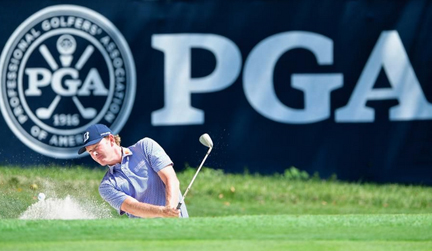
The PGA Tour could be the first major sport competition to return to play after shutting down in the wake of the coronavirus pandemic. Tour officials announced April 16 it will attempt to resume its season in mid-June, welcome news for both sportsbooks and bettors.

The Charles Schwab Cup, scheduled to start June 11 at Colonial Country Club in Fort Worth, Texas, would be the first tournament played. The Schwab Cup and the three scheduled events to follow will be played without spectators, but officials will review Covid-19-related protocols that could be implemented to maximize the health and well-being of participants and others involved.

“The health and safety of all associated with the PGA Tour and our global community continues to be our No. 1 priority, and our hope is to play a role—responsibly—in the world’s return to enjoying the things we love,” said tour Commissioner Jay Monahan. “The announcement is another positive step for our fans and players as we look toward the future, but… under the guidance of the leading public health authorities.”

The tour would grab sportsbooks attention, Patrick Eichner, PointsBet‘s director of communications, told Sports Handle about the increased betting attention. PointsBet, which usually offers over 100 potential bet types per PGA Tour event, would “go up immediately with markets” and “adjust as needed,” Eichner said.

The PGA Tour has a wealth of data that helps create betting markets through its ShotLink proprietary content, and it has struck deals with betting operators to be an official league data provider. The ShotLink technology has resulted in the PGA Tour offering a greatly enhanced selection of statistics, which includes standard categories for golfers such as driving distance, driving accuracy and greens in regulation.

A key offering for bettors is the strokes gained category, which ranks golfers based on tee-to-green performance, putting and a combination of the two for total performance. Those statistics can be further broken out by season or by tournament, which gives bettors a wide range of insight on golfers, such as historical performances at a scheduled venue or possible quantitative comparisons in a facet of the game based on recent play.

Finding the staff to operate ShotLink may prove challenging. Its official website says the “system is operated by a small staff of PGA Tour employees and a volunteer workforce each week. It normally takes approximately 350 volunteers per event to score the golf tournament.”

Andy Levinson, the senior vice president, tournament administration on the PGA Tour, did not say if ShotLink would be available by mid-June.

ShotLink has helped sportsbooks offer a ton of betting options. Some of the more popular ones include head-to-head wagering between golfers, ranging from two or potentially more high-profile players in the field to those in the same group playing together.

This can be done for both the entire tournament and on a round-by-round basis, and it makes an attractive opportunity for the four majors and other high-profile events including The PLAYERS Championship, World Golf Championship events, and the FedEx Cup.

Betting then can expand to a player’s individual performance over a round, such as an over/under on the number of birdies. The eventual end point, given the ShotLink technology, is the potential to place a wager on nearly every potential shot a golfer takes.

The PGA Tour has not held a full event since the Arnold Palmer Invitational in early March, with nine events canceled or postponed thus far. The pandemic has also dramatically altered the tour’s schedule, including the shifting of the three majors held in the United States. At the moment, most sportsbooks’ golf offerings are limited to futures bets on those three majors and the Ryder Cup scheduled for late September.

The Masters has been tentatively scheduled for mid-November, while the U.S. Open has been pushed back to mid-September. The PGA Championship was moved back to August to 9. Golf’s other major, the Open Championship run by the Royal and Ancient and scheduled to be played in July at Royal St. George’s in England, was canceled earlier this month.

There are other logistical hurdles to overcome, most notably involving the states’ varying rules regarding travel and self-quarantine. Texas Governor Greg Abbott extended an order requiring a 14-day quarantine for anyone flying into the state. It is also possible the PGA Championship, which is run by the PGA of America, could be relocated from its site in California.

Idaho Casino To Be First to Reopen

The Coeur d’Alene tribe of Idaho last week announced it would reopen its casino on May 1, becoming the first casino to reopen in the U.S. since the advent of the coronavirus pandemic. The casino closed on March 20, five days before the order from Idaho Governor Brad Little issued a stay-at-home order, which expires on April 30.

Thus far there have been no Covid 19 cases on the reservation or in surrounding Benewah County.

“Based on local trends and the consistently low number of confirmed cases in the region, we believe we can safely start to reopen the reservation,” said Ernie Stensgar, chairman of the Coeur d’Alene Tribe. “Protecting lives and protecting livelihoods don’t have to be mutually exclusive. We have a plan that we believe can do both and frankly, it is time to take action.”

The reopening followed a task force set up by tribal council that decided on the process and procedures for reopening. The task force included tribal members, casino executives and medical professionals.

“We made the difficult decision to enact an early stay-home order and shut down the casino, which is an essential tribal operation that keeps many of our other vital programs running,” Stensgar continued. “Our swift and deliberate actions worked to keep our community safe. The curve has flattened in our region.”

The property will reopen in phases, starting with an April 27 opening for tribal members. The general public will be admitted on May 1, according to CEO Laura Stensgar.

Some changes include:

  • Significant social distancing, including more space between tables in restaurants, fewer operating slot machines (every other machine switched off) and plexiglass barriers at key locations throughout the property.
  • Facemasks will be required of everyone on the property, employees and guests alike.
  • The spa, buffet, OTB and bingo parlors will remain closed.
  • The casino will shut down between 3 a.m. and 7 a.m. each day for a deep cleaning.
  • All concerts and special events will be postponed to a later date.

Under a statewide plan issued by Governor Little, Idaho will begin a four-phase reopening plan on May 1. Phase one will permit the reopening of retail and places of worship on May 1. On May 15, restaurants, hair and nail salons and gyms may reopen, all under the mandate of social distancing. Bars, nightclubs, concert venues and movie theaters would remain closed until further notice.

Las Vegas Operators Look to a Cautious Reopening

A partial reopening of Nevada’s economy, including the all-important casino industry, could come in the early days of May, although state officials and industry leaders both stress that nothing is certain without reasonable assurances that the Covid-19 pandemic is containable.

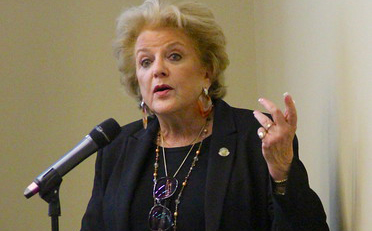
Last week, Las Vegas Mayor Carolyn Goodman sparked widespread criticism and outright ridicule for her contention, in an interview with CNN’s Anderson Cooper, that the city’s billion-dollar gaming industry should reopen at once, and serve as “a control group” for the rest of the region. Goodman’s jurisdiction does not include the Las Vegas Strip. But Governor Steve Sisolak maintained last week that he won’t assign a date for reopening until testing has ramped up enough to allow infections to be tracked𑁋and in that way, hopefully, contained𑁋and treatment capacity is sufficient to handle any new cases.

He said state officials will be looking for 14 days of “consistent and sustainable” downward trends in the number of new cases and hospitalizations.

It’s been a difficult call, considering the near total dependence of Nevada’s economy on gaming and gaming-related tourism. The jobless rate has soared in the space of a month to more than 6 percent, nearly double the all-time low of 3.6 percent in January and February. The state has been swamped with claims for unemployment benefits at the same time that the casino closures have shut off its principal source of direct and indirect tax revenues. Oxford Economics has ranked state the second-most economically vulnerable state behind Maine to the pandemic’s impacts.

As Wynn Resorts CEO Matt Maddox said, “Our economy is in a freefall.”

Culinary Local 226, the industry’s largest union and the largest in the state, has begun pushing for the industry to continue paying workers for the duration of the closure.

It’s expected casinos will be included in the federal guidelines for partially reopening the U.S. economy known as Phase I. That would point to a resumption of business sometime between May 5 and 15. But if that happens it will be anything but business as usual. Many non-gaming amenities will remain closed, strict social distancing measures will dictate limited activity on gaming floors, there will be constant cleaning and sanitizing of all public and back-of-house areas, employees will be equipped with face masks, it’s likely guests will be too, and body temperature scans will be mandatory on arrival.

Then again, whatever form the reopening takes, it’s not expected to bring a swift end to Nevada’s woes, considering the havoc the pandemic has wrought on the travel industry nationwide amid widespread stay-at-home orders, mandated business closures and fears of big gatherings.

As Las Vegas analyst John Restrepo of RCG Economics noted, “Even if we were under a glass bubble and everything was open here, there wouldn’t be people traveling here.”

In any event, Sisolak is adamant that the state must reach a point, as he put it, “where saving lives and restarting our economy are not mutually exclusive.”

The gaming industry, despite the tens of millions of dollars it’s losing every day, apparently agrees.

“Our members understand it is critical to take a measured approach that ensures the reopening of Nevada’s tourism industry is done strategically and correctly for the long-term health of our industry and its reputation,” said Virginia Valentine, president of the Nevada Resort Association.

“It is imperative to flatten this curve so we can re-emerge in a safe, sustainable way,” Maddox said.

William Hornbuckle, acting CEO of MGM Resorts International, concurred in a video message to employees recorded from his home, “We have to consider every aspect of our business so we can welcome our guests safely and keep each other safe while we do it.”

As he put it, “This is a completely uncharted path.”

As of Friday, state health officials reported 4,200 confirmed cases of the virus and 195 deaths, far fewer what was initially feared𑁋a “strong indicator,” Sisolak said, “that our aggressive control measures were both necessary and effective.”

“All of the measures that we’re monitoring do indicate that Nevada has started to reach a plateau,” Kyra Morgan, a state biostatistician, said last week. “However, there’s not sufficient data to indicate that we’ve actually started to see a significant decline in new cases.”

Which means things could change if there’s any reversion or uptick in infections.

“This is atypical,” Sisolak said. “The reopening needs to be flexible, because it’s going to rely on data, and this is a virus. There’s going to have some real-time decision-making, if we see a spike in cases.”

The possibility has not eluded gaming operators. Maddox addressed it specifically in an opinion piece published last week in The Nevada Independent detailing the company’s plans for reopening.

“The only way to cross this river is one stone at a time,” he wrote, “and we need to put our feet in the water before it is too late.”

PA’s Wolf Announces Reopening Plan

Pennsylvania Governor Tom Wolf announced a plan to reopen the commonwealth, including the 12 casinos that have been shut down since mid-March due to the Covid-19 pandemic. In an address to citizens on April 17, Wolf called on the state legislature to pass several relief measures for businesses and individuals as the state gradually reopens its businesses.

“Over the next few weeks, we will need to continue our social distancing efforts while we continue to plan for a phased reopening,” Wolf said. “There is no magic wand to wave to get us back to where we want to be. I will work every day to repair the damage this virus has caused.”

Wolf emphasized the state’s reopening should only occur once adequate testing for the Covid-19 virus is available and health-care officials have adequate personal protective equipment. He said there must be a monitoring and containment system at the ready, and that unnecessary large gatherings will remain banned until further notice.

Wolf laid out six standards that will need to be met before a gradual reopening can begin:

  • The approach must be “data-driven,” informing a regional approach to reopenings;
  • The state will have guidance for employers, individuals and health-care facilities for “assured accountability” during reopening;
  • Adequate personal protective equipment and COVID-19 testing must be available (Wolf did not specify what exactly the capacity would need to be);
  • There must be a monitoring and containment system to deal with new cases of the disease after reopening has begun;
  • Protections for vulnerable populations must remain consistent throughout reopening; and,
  • Limitations on large gatherings unrelated to occupations must remain in place throughout the reopening process.

Wolf also proposed legislation to offer relief to Pennsylvanians, including expansions of paid sick leave and unemployment and workers’ compensation insurance, and called for changing the law so no Pennsylvanians would be denied health insurance coverage due to pre-existing conditions, “no matter what happens at the federal level.”

In related news, officials in Bucks County, home of Bensalem’s Parx Casino, have announced that the county is making $150,000 in host-community casino revenue taxes available to the Covid-19 Emergency Nonprofit Relief Program, which aids local nonprofit relief efforts related to the coronavirus pandemic.

The funds are being distributed to nonprofits through the county Redevelopment Authority (RDA).

“Our nonprofits have shown an amazing ability to meet the public’s need on shoestring budgets, but now they would have almost no ability to assist if it weren’t for the generosity and quick response of the RDA,” commissioner Chair Diane Ellis-Marseglia said, according to the Bucks County Courier Times.

Funds must be used to support human and emergency services, health and public safety or facility costs. Eligible nonprofits can apply for a maximum grant of $10,000 by submitting a request at bcrda.com by May 1.

“During this unprecedented time, the Redevelopment Authority is going to do everything possible to support Bucks County communities,” Jeff Darwak, redevelopment authority executive director, told the Courier Times. “I want to thank the county commissioners and county staff for their efforts to initiate these emergency relief programs.”

The money for nonprofits is in addition to $600,000 in gambling revenues set aside as part of the emergency economic rapid response loan program that offers one-time loans to private companies in the tourism and hospitality industry in the county.

Oklahoma AG: New Tribal Compacts Invalid

In an elaborate ceremony on April 21, officials of the Comanche Nation and Otoe-Missouria Tribe of Oklahoma signed new gaming compacts that allow them to offer sports betting and banked table games like blackjack at their casinos in the state.

Governor Kevin Stitt said in a statement, “The new compacts recognize the sovereign rights of individual tribes to conduct gaming in Oklahoma. The compacts take a sound approach to assessing the value of substantial exclusivity in a modernized tribal gaming industry, and importantly, the compacts expand opportunity for both the compacting tribes and the state to compete in future gaming markets.”

But later the same day, state Attorney General Mike Hunter proclaimed that the agreements “are not authorized by the state Tribal Gaming Act” because they permit sports betting.

“The governor has the authority to negotiate compacts with the tribes on behalf of the state,” Hunter said. “However … sports betting is not a prescribed ‘covered game’ under the act.”

It’s the latest dustup in the battle between Stitt and Oklahoma tribes over gaming compacts. A number of tribes claimed the compacts, giving them exclusive gambling rights automatically renewed on January 1. Stitt argued that the 15-year compacts expired on that date. The Cherokee, Chickasaw and Choctaw nations sued Stitt on December 31; they later were joined by nine other tribes, including the Otoe-Missouria and the Comanches. Mediation in that suit has been postponed until May 31 due to the Covid-19 pandemic, which also shut down the state’s casinos.

Stitt had expressed the desire to negotiate higher exclusivity fees under the existing compacts for the right to operate Class III gaming. The current fees range from 4 percent to 10 percent. The compacts signed last week are totally new and include several oversight measures and clarifications. They actually allow for lower rates; the state’s share would increase if each of the tribes builds up to three new off-reservation casinos—one of the provisions of the new compacts, in addition to allowing banked card games and on-site sports betting.

Observers note the Comanche compact would allow the tribe to build three casinos in Chickasaw territory. In 2017, the Chickasaws received federal approval to build a casino at Comanche, near the Comanche Nation’s headquarters in Lawton. The Comanches currently operate casinos in Lawton, Devol, Elgin and Walters.

Based in Red Rock, the Otoe-Missouria operate five casinos in north central Oklahoma that produce about half the revenue of the Comanches’ four venues.

Oklahoma Indian Gaming Association President Matthew Morgan said, “We respect the sovereignty of each tribe to take what actions it believes it must on behalf of its citizens. All the same, Governor Stitt does not have the authority to do what he claims to have done. Without the engagement of the Oklahoma legislature, he has entered agreements based on a claim of unilateral state authority to legalize sportsbooks, to revamp the Oklahoma Lottery and to authorize new gaming facilities in Norman and Stillwater, among other places. That’s simply not the law.

“I expect tribal and state officials are now reviewing the documents he released and trying to understand what exactly it is Governor Stitt is trying to do,” Morgan said. “But at the end of the day, I suspect his actions have not helped matters for anyone.”

In 2018, the tribes paid a total of $6 million in exclusivity fees to the state. They continue to operate Class III gaming and remit fees to the state.

The new compacts would have to be approved by the Department of the Interior and are certain to face legal and political opposition.

Stitt said additional compacts would be filed later, representing the unique requirements and interests of each tribe.

Virginia Lawmakers Approve Amendments

The Virginia General Assembly recently convened for one day to consider gambling legislation amendments focusing on electronic skill games, casino revenue and sports betting.

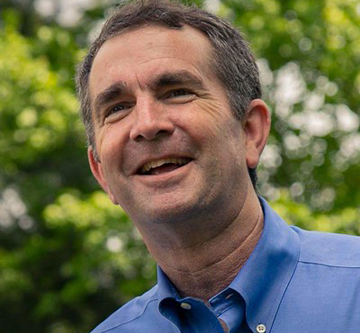
The most controversial proposal concerned the thousands of electronic games of skill that have sprung up across the state. Governor Ralph Northam had supported a ban on the unregulated, untaxed games which legislators said would cannibalize Virginia Lottery profits that help fund public education. However, legislators granted the games a one-year extension to operate. Northam promised to veto any future legislation that would extend the games beyond June 30, 2021.

He also will require the Virginia Alcoholic Beverage Control Authority to adopt regulations to govern the industry. Each machine will be taxed at $1,200 a month, which would generate $150 million over the next year for a Covid-19 relief fund to help small businesses survive the economic shutdown from the pandemic.

Pace-O-Matic subsidiary Queen of Virginia Skill & Entertainment, which operates 7,500 machines in 2,500 businesses, issued a statement thanking Northam and legislators. “We are pleased that a system for regulation and taxation of skill games has been put in place. This is something our company has long advocated that the commonwealth do,” the company said.

Legislators also adopted amendments legalizing casinos in Richmond, Danville, Bristol, Norfolk and Portsmouth. Now referendums can be held in each city on November 3 to allow residents to determine if they want a casino.

The original casino measure was passed and sent to Northam last month but he added several amendments, including raising gambling license fees, allocating the state’s share of gaming revenue to education and including the state’s two NASCAR racetracks among others allowed to partner with bookmakers on mobile sports betting. Sports wagering will be allowed on professional and collegiate sports, except those involving Virginia colleges and universities.

Casinos will pay 18 percent in taxes on their first $200 million of annual gaming revenue, increasing to 23 percent on revenue between $200 million and $400 million, with a maximum of 30 percent on revenue above $400 million. Sports wagering revenue will be taxed at 15 percent.

Tribes Line Up to Sue Over Covid-19 Relief

Several tribes have sued the U.S. Treasury Department to prevent any of the $8 billion Covid-19 relief under the CARES (Coronavirus Aid, Relief, and Economic Security) Act legislation earmarked for federally-recognized tribes from being disbursed to Alaska’s Native corporations.

Tribes that filed in U.S. District Court in Washington D.C. last week included the Tulalip Tribes and Confederated Tribes of the Chehalis Reservation of Washington State, the Houlton Band of Maliseet Indians of Maine, and the Akiak Native Community, and the Asa’carsarmiut Tribe and Aleut Community of St. Paul Island in Alaska. They filed the lawsuit in U.S. District Court in Washington, D.C.

The Cheyenne River Sioux Tribe in South Dakota plans to seek a court order halting the distribution of the funding, claiming that at least $3 billion is intended to go to the Alaska Native corporations.

The department is scheduled to begin paying out of the fund on April 26. It is intended to help sovereign tribes go under as all tribal casinos have closed along with other businesses.

Cherokee Nation Principal Chief Chuck Hoskin Jr. commented that the money “is what Indian Country will rely on to start up again,” adding, “Congress surely didn’t intend to put tribal governments, which are providing health care, education, jobs, job training, and all sorts of programs, to compete against these Alaska corporate interests, which looks like a cash grab.”

Tribal casinos fund governmental services such as health care, elder care, education and housing. Tribes rarely have large reserves, because as soon as money flows in, it flows out.

Two weeks ago, the Great Plains Tribal Chairmen’s Association called for the dismissal of Bureau of Indian Affairs Assistant Secretary Tara Sweeney over her proposal to give Alaskan Native Corporations some of the $8 billion. California Nations Indian Gaming Association and National Congress of American Indians wrote letters highly critical of the proposal, although they fell short of calling for Sweeney’s ouster.

Alaskan lands were not considered Indian land after Alaskan tribes in 1971 rejected the reservation system of the lower 48 states. Instead of reservations, the tribes received fee land under state jurisdiction. Alaska Native villages are recognized on the list of federally recognized Indian tribes. However, Alaska Native Corporations are state corporations subject to state law and taxation and without tribal sovereignty.

The Interior Department insists that the Alaska Native corporations qualify since they fit the definition of “Indian Tribe” in the bill.

Tribes retorted that Congress intended the money to go to the nation’s 574 federally recognized tribes with sovereign lands that treat with the U.S. government to government.

Jonodev Chaudhuri, chairman of the Indian Law and Policy Group at the law firm Quarles and Brady LLP and former chairman of the National Indian Gaming Commission, told the Associated Press: “The federal government’s responsibility to consult with tribal nations is based on not only longstanding policies, but it’s also based on important standards of respect.” He added, “Consultation is to be meaningful and timely.”

Sweeney was criticized because she was a longtime executive and stockholder of Arctic Slope Regional Corp., one of the largest Alaska Native corporations.

The Interior Department defended Sweeney, saying, “To suggest she has personal motives or that she is attempting to divert funds away from American Indians is completely false. Her approach has always been focused on inclusiveness, transparency and partnerships.”

Senate Minority Leader Chuck Schumer and Sweeney exchanged tweets, with Schumer writing: “President Trump’s Assistant Secretary for Indian Affairs Tara Sweeney is diverting funds for tribal governments during coronavirus to for-profit Alaska Native Corporations. We can’t put these corporations before tribal governments and people. Sweeney used to be an exec for an ANC, and she wants to profit!”

Sweeney responded, “Even for you, this is an ignorant and despicably low attack that could not be further from the truth. Perhaps you should read the law you negotiated and voted for as Alaska Natives are entitled to receive the funding from US Treasury.”

In a related development, the Harvard Project on American Indian Economic Development projects that Indian gaming could lose about $49.5 billion to effects of the pandemic on wages and benefit.

The Cambridge, Massachusetts-based project wrote to U.S. Treasury Secretary Steven Mnuchin: “The Covid-19 crisis poses an immediate threat to the states and regions in which tribal economies are embedded. Tribes’ enterprises and governments, and their employees, support huge amounts of direct and indirect (spillover) economic activity and tax revenues in their regional economies, and in the US as a whole.”

The brunt of the damage “would be borne by non-Indians. Our estimates indicate that approximately 70 percent of the impact—915,000 jobs, with wages and benefits totaling $40.2 billion—would be suffered by non-Indian workers.”

Collateral damage is also being felt by state and local governments which are losing $9.4 billion annually under present trends and the federal government, which is losing $15.9 billion. Losses come from revenue sharing and taxes paid by Indian casinos.

The Harvard Project urged federal action: “The need for federal COVID-19 response funds in Indian Country is as urgent as it is overwhelming. Speed is important, but it is no less important that forthcoming funds be allocated to tribes in ways that reflect the federal-tribal government-to-government relationship and the economic realities of Indian Country.”

Rhode Island’s Casino Money Melts Away

Rhode Island, whose two casinos in Lincoln and Tiverton provide the third largest source of revenue to the state, is watching that source of funding melt away after the Twin River operations closed indefinitely March 14 under the Covid-19 threat and an executive order by Governor Gina Raimondo. Meanwhile 5,000 residents have the virus and 155 have died.

Last year, the state’s casinos brought in $400 million in taxes. It estimates it is losing $1 million a day in lost revenues.

Whenever they reopen they will face the necessity to impose social distancing that could prevent them from bouncing back.

Richard McGowan, a Boston College professor who closely watches the gaming industry, told the Boston Globe: “They’re going to have to come up with a completely different business model,” He continued, “Having six feet between slot machines would be death for Rhode Island.”

McGowan predicts that casinos will have to rely more on non-gaming amenities since players won’t be able to sit next to each other when the casinos reopen. “It’s going to take a long time for people going to want to be close together,” he said.

Twin River says it has enough liquidity to meet all its obligations for the next 12 months, including “debt service, required capital expenditure and acquisitions.” That hasn’t stopped the company from studying whether it might qualify for any federal aid in the CARES Act relief funds. It is considering applying for a loan through the Federal Reserve’s Main Street Lending Program.

The governor has said she would support applying some federal allocations aimed at low and hourly wage workers to some employees of Twin River.

WSOP Postponed Until Fall

After weeks of will-they-or-won’t-they, organizers finally postponed the annual World Series of Poker in Las Vegas.

The 51st annual tournament—the country’s single largest live poker event—was scheduled to run from May 26 to July 15. The tourney will take place sometime in the fall instead, another victim of the coronavirus pandemic.

Besides its size, the tournament ranks as one of the most lucrative annual poker events. Last year’s World Series of Poker drew a record 187,298 entries from 118 countries and awarded a record $293.2 million in prize money.

Despite pleas from Las Vegas Mayor Carolyn Goodman, the resort remains uncertain when Nevada’s casinos, including the tournament’s home since 2004, the Rio, will reopen.

“We are committed to running the World Series of Poker this year, but need additional time to proceed on our traditional scale while prioritizing guest and staff well-being,” World Series of Poker Executive Director Ty Stewart said in a statement.

Stewart said World Series of Poker events will be played online through the WSOP.com site during the summer. Details of an expanded series of tournaments, he said, will be announced. WSOP.com is only available in four states: Nevada, New Jersey, Pennsylvania, and Delaware.

The WSOP tournament as it was scheduled planned to feature more than 70 events, but the rescheduled version will be shortened. Still the world championship, the $10,000 buy-in Main Event championship, will remain, according to CDC Gaming Reports.

Before the postponement, officials wondered whether the 2020 tournament would be the last at the Rio. The event uses 500 poker tables and covers 200,000 square feet of ballroom space inside the Rio’s convention center, taking over the entire facility for seven weeks.

In December, Caesars Entertainment sold the Rio for $516.3 million in a sale/leaseback to New York-based Dreamscape Companies. Caesars will continue to operate the Rio for at least the next two years. But Eldorado Resorts purchased Caesars, which owns the World Series of Poker, in a $17.3 billion deal. Last June, when the transaction was announced, Eldorado CEO Tom Reeg twice referred to the World Series of Poker as “an iconic brand.”

Seth Palansky, vice president of communications for Caesars Interactive, believes the Rio will continue to be the home of the tournament. The sheer size of the event will pose a challenge in finding new home.

Many of the World Series of Poker’s circuit events in the U.S. are held at non-Caesars properties, as is the World Series of Poker Europe, so Las Vegas can still host the event in a property not owned by Caesars.

Fertitta Named to Texas ‘Reopening’ Task Force

Texas Governor Greg Abbott has named Golden Nugget owner and billionaire Tilman Fertitta to a task force that will advise on how to reopen the state after the pandemic shutdown.

Abbott’s Special Advisory Council to the Governor’s Strike Force to Open Texas, composed of business leaders, medical experts and public and private figures will have the job of putting together a plan to resurrect the Lone State’s economy, which has been closed by executive order since March 19.

Besides owning the two Golden Nugget casino in Las Vegas, plus one each in Louisiana, Mississippi and New Jersey, Fertitta also owns Landry’s restaurants in 35 states. He has furloughed about 40,000 workers nationwide. Forbes has estimated that he is worth $4.8 billion.

In Las Vegas, Caesars, MGM Taking May 1 Reservations

Several of Las Vegas’ largest casinos have begun taking hotel reservations for May 1, despite a recent statement from Governor Steve Sisolak that he’s not ready to begin relaxing the Covid-19 restrictions that have all but shut down the state’s economy.

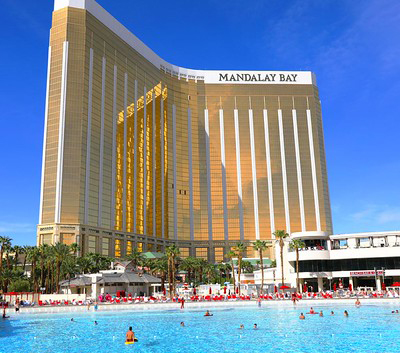
It was reported last week that resorts operated by Caesars Entertainment and MGM Resorts International𑁋18 in all, including MGM’s Mandalay Bay Convention Center and MGM Grand Garden Arena𑁋have been accepting reservations, although prospective visitors were being informed that the May 1 date could change subject to orders from the governor.

If he doesn’t issue such an order, it may not matter anyway, with travel at a standstill nationwide and fears of large public gatherings likely to persist.

Nevada’s largest industry was ordered closed on March 17 to try to contain the spread of the potentially deadly contagion, which is known to have infected more than 3,500 people in the state and killed more than 140.

The order is in place through April 30, and Sisolak has not indicated whether that would change. In a news conference last Tuesday night,

he said he will rely on doctors to advise him about the pandemic while considering factors such as rates of infection and deaths, the impacts on hospitals and input from business.

President Trump, meanwhile, facing what promises to be a difficult re-election bid in November, is anxious to reopen the battered national economy though the virus continues to spread and the U.S. death toll, the highest in the world at more than 36,000, continues to mount. Medical experts have been harshly critical of the reopening guidelines the administration released last week, and Sisolak appeared to address that in Tuesday’s media gathering.

“This is not going to be a political decision as far as when to open,” he said. “We’re going to take it slow and steady and listen to the doctors.”

In response to Trump’s push to reopening, several states have banded together to frame their own plans, including seven in the Northeast, the region hardest hit by the contagion, and California, Oregon and Washington. Sisolak didn’t say whether Nevada was asked to join the Western coalition, though he said he shares its goals and is in communication with California Governor Gavin Newsom.

He’s mainly engaged in trying to address the humanitarian crisis, he said. With an estimated one in three Nevada workers employed in the gaming and tourism industries, the state’s unemployment could end up the highest in the country. It’s estimated that 320,000 jobs are at risk, twice the number affected by the 2008-09 recession.

The state’s unemployment office has been swamped with filings for benefits, which have hit 10,000 a day, and has begun staggering phone and online claims by assigning different days by alphabetical order of claimants’ names. Sisolak said the state is adding staff to help with the crunch and that claimants who are unable to get through to the system initially will be paid retroactively.

The casino industry, the state’s largest employer, generated more than $12 billion from gambling alone last year, and analysts say if it remains closed for longer than a month, it could take a year or more to recover that money. Losses could exceed $30 billion over that time

The industry also is the state’s largest single taxpayer, and estimates put the state’s potential revenue loss from a protracted shutdown at upwards of $40 billion.

Will Sports Jumpstart the U.S. Recovery?

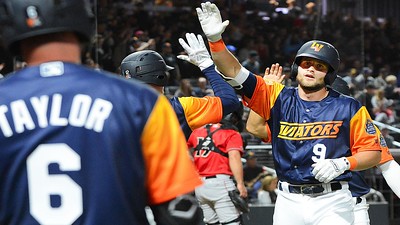
In recent years, Las Vegas has evolved into a major sports center, buoyed by the NHL Golden Knights, the WNBA Las Vegas Aces, the Las Vegas Aviators (minor league baseball), and the incoming NFL team, the Las Vegas Raiders. Don’t forget to add in NASCAR, UFC, boxing and the NBA Summer League.

It all came to a crashing halt March 11, when Utah Jazz star center Rudy Gobert tested positive for the coronavirus. In a matter of days, every sports team, casino and sportsbook in Las Vegas—and everywhere else—was shut down. And the long drought began.

Of all the activities people will welcome back in the post-coronavirus world, sports will be near the top of the list, Don Logan, president and COO of the Aviators, told GGB News (Casino Connection’s sister site).

“As a sports guy, I do believe sports is a catalyst for a return to normal, particularly baseball,” he said. “Everyone is optimistic, and there’s a mental comfort when sports get cranked up. But we don’t know when we’ll play. This is way bigger than sports.”

Logan hopes for some clarification by the end of April. “Maybe we’ll have a better understanding then about what’s going on, how to deal with it and how to begin to get some semblance of a new normal.”

The same holds true in Atlantic City. While no pro teams call the resort home, AC is just a short drive from Philadelphia, as rabid a sports region as any.

The return of sports “would signify some type of new normal for everyone,” said Steve Callender, president of the Casino Association of New Jersey. “The Atlantic City casino industry always saw an increase in gaming and non-gaming revenue whenever the Eagles played, regardless of the day.”

It would certainly be best if fans could attend games, but at the very least, people could watch at home, Callender said. Logan, however, wants no part of games without spectators, and neither do his players. “It makes no sense to play without fans,” he said. As for social distancing, “You have the umpire, catcher and batter in close proximity.”

Testing team members for the virus before games won’t sit well with ballplayers either, he added.

Of course, the return of sports goes beyond restoring a sense of normalcy. It means something to bet on, whether online or at a retail sportsbook. “Casinos have invested millions of dollars into building world-class sportsbooks,” Callender said. “Last year, the gaming industry pushed new and innovative programming to their respective sportsbooks to enhance trips and the overall sports betting experience,” only to see the doors slam shut.

The industry would love to see the NBA finish its season, Callender said, even if teams went straight to the playoffs—“and especially if the playoffs were in Atlantic City.”

If Major League Baseball can kick off its 2020 baseball season—even if that season is shortened—it could help Americans feel like things are getting back to normal, and the NFL would complete the cycle. While the NFL Draft in Las Vegas was a casualty—it starts today, but without all the attendant hoopla—a return of pro football would be an even bigger boost, especially in Vegas, because this will be the Raiders’ inaugural season in town.

“Fans watch because of the love of the game, or the time they share with family and friends, experiencing the ups and downs of winning and losing with their teams,” Callender said. “Sports provide a sense of stability for generations who’ve supported their teams, purchased players’ jerseys, sat in the stands and cheered or watched from their favorite sports bar.”

As it stands right now, we can only wait and hope for players to suit up and hit the field.

“It will be a challenging year ahead,” said Lori Nelson-Kraft, senior vice president of communications and government affairs for the Las Vegas Convention and Visitors Authority. “There are still many unknowns regarding when we’ll be able to resume large gatherings inside event venues, and what will be required to safely do so.”

Colorado Sportsbooks Could Rival Nevada, NJ

When Colorado’s sportsbooks begin operating, they could rival the sports wagering operations in New Jersey and Nevada. Practically speaking, no one expects much sportsbook activity until pro sports return. But with or without action, Colorado sports betting is set to launch May 1.

New Jersey, which challenged the federal law that banned sports betting in most states, was first out of the gate when the U.S. Supreme Court lifted the ban in 2018. It currently offers the most lucrative sportsbook operation in the nation, with about 85 percent coming from online sportsbooks.

Last November, Colorado voters narrowly approved Proposition DD, which authorized the state’s three casino towns to offer sports betting at brick-and-mortar operations and across the state with online operators.

Colorado’s Limited Gaming Control Commission (LGCC) has been working overtime to approve applications, and despite the coronavirus has insisted it will launch on time.

PlayColorado.com has released figures that project a handle as large as $6 billion annually, with $40 million paid to the state in taxes. According to chief analyst Dustin Gouker, “With a significant base of existing land-based casinos, a regulatory framework that will be attractive to operators, and one of the largest metropolitan markets in the country to draw from, Colorado is well-positioned to capitalize on sports betting. But assuming the industry does launch on May 1, it will be doing so in unprecedented circumstances with almost no sports to wager on.

“There are some advantages to a forced soft opening, but it also means that it will be some time before we learn with confidence just how Colorado’s bettors will respond to legal sports betting.”

Of course, that would depend on professional sports relaunching, since without it there will be little to wager on. Most don’t expect any leagues to begin playing before June.

Gouker praised Colorado lawmakers for consulting with casino operators and bettors and taking to heart lessons from other states with successful operations, such as New Jersey. “Colorado’s methodical approach might have been frustrating to bettors by slowing the launch, but there is plenty to be encouraged about. Sports betting operators have inked partnerships and regulators are listening to stakeholders. That will serve Colorado well,” he said.

The betting landscape in Colorado will include the largest sportsbook in the world. For years, SuperBook dickered with the idea of expanding beyond its long-time home at the Westgate in Las Vegas, the largest sportsbook in the world. Now it’s found a new base at the Lodge Casino in Black Hawk in the Rocky Mountains.

“We believe the Lodge is a perfect fit for our initial expansion opportunities,” said SuperBook Executive Vice President, Jay Kornegay, a Colorado native. SuperBook still awaits a license from the state.

Will Tennessee Tax Turn Off Sportsbooks?

For Tennessee, getting sports betting signed, sealed and delivered was a long time coming. But the arrival of the first mobile-only system faces a hurdle in competition with neighboring states: a 10 percent hold on all wagers.

When the Tennessee Education Lottery Corp. board of directors unanimously approved the final betting rules in a telephone conference on April 15, the state became the first in the U.S. to stipulate how much money legal sportsbook operators may pay out.

Lottery president and CEO Rebecca Hargrove said including a cap would ensure a guaranteed amount of profit that is taxable for the state. But Jennifer Roberts, the lottery’s new sports betting program director, had recommended no cap so the state could be fully competitive, according to an Associated Press story.

After dickering with the percentages for months, the board settled on a 90 percent cap so sportsbooks will retain at least 10 percent of all wagers each year. Will that turn-off sportsbooks? Will it turn off bettors?

A study released by gaming analyst Eilers & Krejcik in January projected that the original 15 percent hold could cost Tennessee $11 million in annual state tax revenue and decrease the number of operators that apply by more than half.

The reason: a minimum hold leads to substandard odds and that sportsbooks may have to further worsen odds on local teams to help balance risk, the study said.

The only other jurisdiction to consider a payout cap was Washington, D.C., where the D.C. Lottery pushed for an 80 percent cap, but the city council rejected the idea.

“Based on some of the provisions and the wait-and-see approach, it is turning into a model of how not to craft an ideal market that maximizes revenue and provides the best opportunities for customers, operators and the state,” said Brendan Bussmann, of gaming consulting firm Global Market Advisors.

Lottery Corp. Chairwoman Susan Lanigan said the board will revisit the cap issue a year from now, according to SportsHandle.

“This is an unprecedented requirement,” Daniel Wallach said last week on ESPN 105.1 The Zone. “The 10 percent would exceed the requirement of every other state.”

Wallach is the nation’s preeminent legalized sports wagering attorney and founder of Wallach Legal, America’s first sports betting law firm.

Other states have holds, but they are not mandated. Nevada has historically maintained a hold rate in the 5-6 percent range. New Jersey has been around 7 percent.

The cap is only one number that can make sportsbooks think twice before signing up in Tennessee. The 20 percent tax rate ranks higher than most states. Indeed, tax rates generally range from 6.75 percent to 15 percent.

The approval of the regulations sets the table to go live as early as July, a year after sports betting became legal. Of course, the date depends on what there is to bet on given the continued impact of the coronavirus on sports.

“We will post the rules by the end of the week, and then 90 days from when the first application is filed” we will move forward, Lanigan said.

There is no cap on the number of licenses permitted, but the cost per license is $750,000 annually.

Another first for Tennessee is a requirement for sportsbooks to use official league data. In the last year, Illinois and Michigan also passed legislation with the mandate, and it’s likely Virginia will, too.

“Still, online and mobile sports betting is going to thrive big time in the kind of fan-free, stadium-empty environment,” Wallach said in the Chattanooga Times Free Press.

Fans will home watching the game on TV or a laptop or a phone, that will lead to more betting and more folks who have access to immediate wagering, he said.