Author: Casino Connection Staff

Online Keeps Gaming Alive—Up to a Point

There’s no question that the near-universal shutdown of casinos and sporting events has sent gamblers scurrying to digital options: online slots and table games, virtual sports and mobile betting on the few professional sports teams still in play, like the newly famous Belarusian Premier League.

But the uptick in mobile bets, while a bright spot among the many grim headlines, can’t make up for losses that will be incurred over the weeks or months that casinos remain closed.

According to the Motley Fool, only a few of the nine casinos in Atlantic City generate significant revenues from their online operations. One, the Golden Nugget, actually reaps more from its online casino than the brick-and-mortar property, and in February, Resorts AC saw $14 million in casino win and almost as much—$12 million—from online gaming.

But for most AC gaming halls, it’s the opposite. Market-leading Borgata, for example, posted $66.4 million in total revenue in February, but 86 percent was generated at the casino itself, and only 12 percent came from online. Internet win for the city’s Caesars Entertainment casinos is only 7 percent of the total.

Even so, operators have little choice during the current emergency but to pivot online—and it helps, to an extent. Rush Street Interactive, which offers iGaming through PlaySugarHouse.com in Pennsylvania and New Jersey and BetRivers.com in Pennsylvania, has witnessed a dramatic increase in traffic, according to Chief Operating Officer Mattias Stetz.

Shortly after the states’ casinos closed last month, BetRivers.com saw “about four to five times as many new casino customers signing up compared to what we would expect considering seasonality right now,” Stetz said.

With most professional sport teams shut down, sportsbooks are offering wagers on the most obscure sports and teams, and making them almost famous, like those Belarusian soccer players. According to the Las Vegas Review-Journal, William Hill has been taking bets on table tennis, chess and European soccer—along with futures bets on the NFL draft, the 2020-21 NFL regular season win total and the 2020-21 college basketball championship.

And last month, the Nevada Gaming Control Board authorized wagering on Counter-Strike, ESL Pro League season 11: North America, a video game tournament.

The shift to online, combined with the stress of long-term nationwide quarantines, has sparked concerns that some gamblers will have a tough time controlling the urge to play. According to the Press of Atlantic City, while research indicates that 2 percent to 3 percent of Americans display some form of problem gambling behavior, a report from the Center for Gambling Studies at Rutgers University suggests that problem gambling is more prevalent among online players.

Neva Pryor, executive director of the Council on Compulsive Gambling of New Jersey, said she is “very concerned about problem gamblers” during the pandemic.

“A lot of people are going to reach out to gambling, they’re going to reach out to substances and other activities that might prove to be harmful, and then come out of it with a problem,” Pryor said.

Jody Bechtold, clinical social worker and CEO of the Better Institute in Pittsburgh told the Philadelphia Inquirer, “People in recovery will go back to gambling, thinking that this will be a way to deal with their economic problems. These are desperate times, and they will use the desperate measures of the gambler’s attitude. We’re going to see more relapses.”

As for available online betting opportunities, here’s a sampler:

  • The World Series of Poker’s Spring Online Championships, which started April 1 and will run through May 3 for players in Delaware, Nevada and New Jersey. The tourney will feature more than $4 million in guarantees and include 100 events, plus daily tournaments and a 12-event warmup series.
  • Tennis is going virtual with the launch of the ATP Masters 1000 from the Association of Tennis Professionals and IMG Arena. The games promise the most authentic “fan-first” experience for tennis enthusiasts, organizers say.
  • Sports data company Sportradar is going the virtual route with Simulated Reality, a new AI-based product that became available April 3. Bookmakers can use the product to offer pre-match and in-play betting markets, starting with the top-tier soccer leagues in England, Germany and Spain. During the 90-minute matches, fans can place bets, access match analysis and watch real-time visualizations of the game.

The situation also presents an opportunity for esports. For example, Veloce esports’ “Not the Australian Grand Prix” event, which occurred after the cancellation of the Formula One season-opener in Melbourne, featured driver Lando Norris and the event led to Norris breaking the Formula One record for concurrent viewers on Twitch, clearing 70,000. Some of the leading esports titles are breaking gaming records.

So, when casino doors reopen, will those properties be bombarded with eager players, or will they stay online, because they’re wary of public places or because they’ve simply grown accustomed to it? Opinions vary.

“I feel that the entire landscape will be changed for a long time, probably until a vaccine is completed,” Melanie Weisner, a poker pro from Houston, told the Review-Journal. “Even if they’re allowed to reopen in the near future, live card rooms will experience a dearth in player activity. A poker table is just about the worst Petri dish you can imagine.”

“Going from playing live at the Wynn to playing a dumb, stupid app on my phone, I can’t do it; I can’t take it seriously,” said 21-year-old Chris Konvalinka. “It doesn’t feel like real money.”

“Once (the virus) runs its course, or we have an effective vaccine, I will certainly play,” said Neil Blumenfield, who placed third in the WSOP Main Event in 2015. “Poker is just one of a zillion activities that requires multiple people congregating.”

No Mobile Betting in NY Budget

New York Governor Andrew Cuomo remains adamantly opposed to legislation to institute mobile sports betting, a position that state Senator Joseph Addabbo, a leading proponent of legalization, called “astonishing” in light of the massive crisis the Covid-19 epidemic has visited upon the state.

According to Legal Sports Report, a U.S.-facing news site covering the online sports betting and fantasy sports industries, negotiations between lawmakers and the Cuomo administration to include remote betting in the state budget have broken down over the governor’s stance that extending land-based betting, which is legal in New York’s casinos, to the internet requires an amendment to the state Constitution.

The talks also failed to persuade the administration to rescind a moratorium that blocks the legalization of casinos in New York City until 2023.

It appears that Addabbo and other proponents in the Legislature believed the economic and health-care disaster the epidemic has wrought upon New York𑁋the state hardest-hit by the virus so far𑁋would move Cuomo off his opposition, and they’re more than disappointed that it has not.

“What is so astonishing is that we had a need for revenue before the virus crisis, and we’re still being asked to make cuts to health care,” Addabbo said. “Unbelievable. Totally irresponsible.”

Normally, the Senate and Assembly submit individual budget proposals around the middle of March as a starting point for negotiations with the administration aimed at producing a final spending plan by April 1.

In response to the Covid-19 crisis, the two chambers scratched their proposals and began negotiating with the governor early in hopes of completing the process by the end of March.

With Assembly Speaker Carl Heastie siding with Cuomo in opposition to legalization by legislation it was doubtful remote betting would have made the cut in the lower house anyway. Nevertheless, both Addabbo, who believes he can steer a bill through the Senate, and his ally in the Assembly, Gary Pretlow, thought that this go-round time was firmly on their side.

Addabbo, for one, feels he and Pretlow have addressed every concern Cuomo has raised on the constitutionality of a legislative solution.

“All the governor and the speaker are doing is delaying the inevitable because mobile sports betting in New York is not a matter of ‘if’ but ‘when,’ and we need the revenue now,” he said.

Addabbo, who plans to continue to press his case, said he will wait to see what’s in the final budget before deciding how to move forward. However, it was unclear last week when the Legislature will meet again after it was confirmed that three Assembly members had tested positive for the potentially deadly virus. The legislative session is scheduled to end June 2.

Rush Street, Scientific Games Partner in PA

Casino operator Rush Street Interactive (RSI) is partnering with gaming supplier Scientific Games to become the first casino operator in Pennsylvania to premier SG’s popular games online. SG games will be available on Rush Street’s BetRivers.com and PlaySugarHouse.com sites.

The newly launched games include 88 Fortunes, which is the most popular slot game on the PlaySugarHouse.com online casino site in New Jersey, as well as a player favorite at Rivers Casinos in Philadelphia and Pittsburgh, along with Spartacus, Starmania and Mad Mad Monkey.

“We are excited to partner with Scientific Games to be the first online operator in Pennsylvania to bring these top-quality and well-known casino games to our players,” said Richard Schwartz, president of Rush Street Interactive, which operates BetRivers.com and PlaySugarHouse.com. “88 Fortunes is already the most popular slot game out of over 550 slot games on PlaySugarHouse.com in New Jersey, and we expect Pennsylvania players will love playing it online just as much.”

With the combination of beautiful Asian artwork and bonus features, 88 Fortunes is a fan favorite because of the multitude of winning opportunities it offers players. 88 Fortunes’ Fu Bat Jackpot feature offers four progressive levels with a Grand Jackpot possible. Players also enjoy the ability to trigger the free games feature that can also be retriggered.

“Scientific Games is thrilled to partner with Rush Street Interactive, a proven online gaming operator and market leader for online casinos in Pennsylvania,” said Bob Hays, vice president, commercial, North America for Scientific Games. “We are proud to be close partners with RSI as we collaborate together to grow the exciting online casino category in the US market.”

Both BetRivers.com and PlaySugarHouse.com currently offer a match of a new customer’s first deposit, up to $250. The award-winning sites/apps also focus on offering high-quality customer service, great deposit/withdraw methods and quick payouts. Both sites have seen an uptick of four to five times more players signing up in the past few weeks.

Scientific Games slots join a robust but growing online casino catalog that now contains over 100 real-money slots, table games and video poker variants in Pennsylvania. In addition to fan-favorite casino slots, BetRivers.com and PlaySugarHouse.com feature online exclusive slots as well as progressive jackpot slots. New titles are added weekly.

SBTech Online Platform Knocked Out by Cyber-Attack

Two online casinos in Atlantic City were among the casualties of a cyber-security threat against their platform provider, SBTech.

The company informed its clients of the incident late on March 27. The attack affected the Golden Nugget and Resorts in AC, as well as the Oregon Lottery and BetAmerica, according to Legal Sports Report.

More than 50 sportsbooks reliant on the provider were taken offline March 20 and 21 when the company monitoring system detected the possible attack. SBTech shut its global data centers as a protective measure, and law enforcement agencies are looking into the attack.

On March 30, SBTech confirmed no customer data had been breached. But customers of operators have complained about a lack of access to their funds in the wake of the shutdown. To get back up at full power, SBTech will need clearance from regulators in the U.S. The company has a presence in six states.

The attempted cyber-attack came weeks before DraftKings’ acquisition of SBTech is expected to close.

PokerStars Founder Isai Scheinberg Pleads Guilty to Illegal Gambling

Isai Scheinberg, founder of iGaming giant PokerStars, has pleaded guilty in a New York federal court to charges of operating an illegal gambling business.

The 73-year-old could face up to five years in prison, but it’s unlikely he’ll do any jail time. Scheinberg was one of 11 executives of major online poker rooms charged with bank fraud, money laundering and illegal gambling on “Black Friday” in 2011. They operated U.S.-facing offshore poker and casino sites after the passage of the Unlawful Internet Gaming Enforcement Act.

The U.S. government seized the domain names and funds of online poker rooms that were still operating in the U.S. after the 2006 law went into effect. Scheinberg stayed outside the U.S. and continued to operate his business, then sold the company to Canada’s Amaya in 2014 for $4.9 billion. PokerStars now operates in New Jersey and Pennsylvania under that parent company, now known as the Stars Group.

After resisting extradition, Scheinberg, a duel citizen of Canada and Israel, turned himself into U.S. authorities in January. He cut a plea deal admitting to a single count of illegal gambling. The fraud and money laundering charges were dropped.

Atlantic City Casinos: Covid-19 Closures and Updates

To contain the spread of the coronavirus, New Jersey Governor Phil Murphy ordered the closure of all Atlantic City casinos effective March 16, 2020. As of this writing there is no set date for re-opening. As a way to keep the public informed, Casino Connection has listed the cancellations and policies for each Atlantic City casino.


BORGATA CASINO HOTEL & SPA

In compliance with Governor Murphy’s order, Borgata has temporarily suspended operations. All hotel/dining reservations, casino promotions, and events have been canceled as a result. Daily poker tournaments, the Borgata Spring Poker Open poker tournament, and poker promotions are canceled.

Borgata’s Customer Care team can be reached at 609.317.1000 from 8:00 a.m. to 8:00 p.m., daily.

Sports Betting Transactions Update
Customers who have placed bets on an individual or upcoming game and/or event that is ultimately canceled or one that has already been canceled will receive a full refund.

For bets placed at Moneyline Bar & Book or the Race & Sports Book at Borgata, guests can bring their bet slips back to either location upon reopening to receive a refund. Tickets can also be redeemed by mail. The instructions and mailing address appears on the backside of wagering tickets.

For bets placed within the BetMGM or Borgata Sports mobile app, customers have been refunded for games that have already been canceled.

Upcoming Events Update
Borgata apologizes for any inconvenience this causes ticket holders.

CANCELLED: Orders purchased for cancelled events with a credit card will be refunded automatically to the credit card used for purchase. Please allow up to 30 days for this refund to reflect with your financial institution.

For guests who utilized a 3rd party to secure tickets, please reach out to your original point of purchase for information regarding a credit. Please reach out to our Box Office team at boxoffice@theborgata.com for additional inquiries.

CASH TICKET PURCHASERS CLICK HERE: https://www.theborgata.com/updates/cash-tix

RESCHEDULED: If an event is postponed and has been rescheduled with a new date, fans will be able to attend the newly rescheduled date with their existing tickets. Should fans no longer be able to attend the rescheduled date, they may request a refund at their original point of purchase.

UPDATES COMING SOON: Guests are advised to hold onto their tickets pending updated show information.


CAESARS ENTERTAINMENT
Caesars, Bally’s and Harrah’s Casinos

Caesars Entertainment Corporation has temporarily shut down its owned properties in North America, consistent with directives from various government bodies.

“It has become clear that we must take this extreme action to help contain the virus and protect the safety and well-being of our team members and guests,” said Caesars Entertainment CEO Tony Rodio.

Caesars is working to ensure a smooth closing process throughout its network and looks forward to welcoming back team members and guests as soon as appropriate. Caesars recognizes the disruption that these property closures will have on team members and is committed to helping employees manage the impact.

An update on property closures throughout the Caesars network can be found at https://www.caesars.com/corporate/newsroom/press-releases.

Hotel Reservations
All hotel reservations during the closure period will be cancelled automatically. Any prepayments will be refunded within the next few days. Please visit caesars.com/book/my-reservation for more information.

Caesars Sportsbook
In response to official game and/or tournament cancellations, Caesars Sportsbooks will refund any associated wagers. “Futures” wagers will remain active until the leagues issue guidance on how currently suspended seasons will conclude. For wagers made in-person at a Sportsbook, please refer to the back of the ticket for mail-in instructions. If the wager was made on the app, the funds will automatically be returned.

Caesars Entertainment Live Entertainment
All ticketed live entertainment held in Caesars Entertainment venues in Las Vegas are suspending performances through at least April 30, 2020. Information on refunds and exchanges for affected dates are available here.

https://www.caesars.com/corporate/coronavirus-guest-information/frequently-asked-questions


GOLDEN NUGGET ATLANTIC CITY

Golden Nugget Atlantic City is temporarily closed in compliance with the order by New Jersey Governor Phil Murphy. At this time, Golden Nugget Atlantic City is taking room reservations beginning April 13.

In the event they are unable to reopen April 13, Golden Nugget representatives will contact guests with reservations. Please check back for updates.

Online gaming will remain available for Golden Nugget guests at www.goldennuggetcasino.com.


HARD ROCK HOTEL & CASINO ATLANTIC CITY

In compliance with Gov. Phil Murphy’s order, Hard Rock Atlantic City has temporarily suspended operations until further notice.

Wild Card Rewards
Hard Rock have frozen Comp Dollar expiration. Therefore, you will not lose earned comp dollars during this time of closure.

Hard Rock will pro-rate your Tier Point earnings based on the length of its closure to ensure you are not penalized. Upon re-opening, they will offer a 2x Tier Point promotion that will run through May 31, 2020.

Entertainment
All concerts and events have either been canceled or re-scheduled until June or later. For a complete list of live events visit: https://www.hardrockhotels.com/atlantic-city/event-calendar

All canceled show are will be refunded at the point of purchase.

Hold on to the tickets you purchased, they will be valid for the new show date unless otherwise noted. If a show is postponed and you can not attend the new date you are able to be refunded for tickets purchased through Ticketmaster, by calling Ticketmaster at 1-800-653-8000.

Hotel Reservations
For all existing reservations or future bookings through 4/30/2020, no penalties will be charged to cancel these reservations.

For re-booking an existing reservation, Hard Rock hotel rates fluctuate based on season and availability. They cannot guarantee you will get the same rate when re-booking for a later date.


RESORTS CASINO ATLANTIC CITY

Hotel Reservations
All reservations booked through April 30, 2020 have been cancelled and your credit card will not be charged. For Non Refundable reservations, your credit card will be refunded within 7-10 business days.

Resorts is still taking future hotel reservations. At this time, there is no cancellation fee on future reservations. To book a future reservation visit ResortsAC.com.

Entertainment & Eateries
Restaurants and bars continue to be temporarily closed, along with the concert venue. The Dennis DeYoung concert on April 24, 2020 has been cancelled.

Star Club Membership
All comp dollars, cashback, and card tier levels will not expire while Resorts is closed. New expiration dates will be communicated when they reopen.

Resorts looks forward to welcoming you back soon and will keep you updated regarding the opening date and upcoming events and promotions.

Resorts Online Play
Guests can still play their favorite slot and table games online at ResortsCasino.com
Join today and use code WIN1000 for a 100% bonus match on your first deposit.


TROPICANA CASINO HOTEL ATLANTIC CITY

Eldorado Resorts announced that, in accordance with New Jersey Governor Murphy’s order, it will temporarily suspend casino operations at the Tropicana Atlantic City. The Company is continuing to monitor developments related to COVID-19 and reinforcing our policies as necessary.

Hotel Reservations
Tropicana is accepting reservations for June and look forward to seeing you then.

Entertainment
For shows that have been postponed, Tropicana advises you to hold onto your tickets pending updated show information as they will be honored at the rescheduled event.

Guests who would like a refund can reach out to the original point of sale for a refund. Please reach out to Tropicana’s Box Office Supervisor at 609-340-4000 x7328 for additional inquiries.

Offers, including comp tickets, are based on your casino play at that time. If you maintain your status, you will receive comp tickets for the new event date.

Offers and Comp Dollars
Daily TROP Advantage® offers including, but not limited to, bonus slot dollars, gift cards, free gifts, etc. are subject to cancellations or changes at any given time.

Comp dollars will not be expiring during the closure. There will not be any tier downgrades while the property is closed.

Contact Information
Call center will be open daily from 10 a.m. to 5 p.m. 1-800-THE-TROP


OCEAN CASINO RESORT

During this time of uncertainty, Ocean Casino Resort wants to put your mind at ease and help you stay connected.

Hotel Reservations
Due to the temporary suspension of operations, Ocean Casino Resort will be canceling previously made hotel reservations through April 30th. If you made a deposit for your reservation, it will be refunded within 7-10 business days.

Future Cancellation Policy – If you decide to change your travel plans, Ocean team members will be happy to assist you with modifying your plans by rescheduling or canceling your reservation without fees outside the 48 hours cancelation period.

All cash rooms will be refunded to you for any canceled date. You may rebook new dates with updated rates that fluctuate depending on seasonality.

Comp room offers are sent out every month. April monthly offers allows you to book for May and June. May offers will be sent soon and will allow you to book through July. (Offers fluctuate based on seasonality and demand.)

Comp Dollars & Rewards
Comp dollar and Same-Day Free play expirations will not occur during this temporary suspension of operation. Your earned balances will remain intact upon re-opening. Your balance information is available for you to view via the Player Portal located at https://sso.theoceanac.com/account/login

Ocean Wow Rewards – Tier status earned will remain valid through September 30, 2020, however, you can earn points to upgrade your status when Ocean Resort reopens. Learn more about tier levels at https://www.theoceanac.com/rewards/

Previously mailed gifts, events, and entertainment missed due to the temporary suspension of operations are being reviewed and the staff is diligently working to reschedule those events as dates permit.

Entertainment
Jay Leno – April 3 show has been rescheduled to next year – May 7, 2021.
Melissa Etheridge – April 4 show has been rescheduled to September 5, 2020.
Terry Fator has been postponed and we’ll be announcing a new date shortly.

Those who purchased tickets are encouraged to hold onto their tickets and those who previously made reservations for complimentary tickets, your reserved tickets will carry forward to the new dates.


NON-CASINO HOTELS REMAIN OPEN

Claridge Hotel Atlantic City
The Claridge Hotel is still open for business and would be happy to accommodate you with any of your lodging needs and for meals they have both takeout and room service available.

For reservations please call our toll free number 866-431-4430 or visit https://www.claridge.com/

Showboat Hotel

Showboat is open and offering 15% off Stay. For information and reservations visit: https://www.showboathotelac.com

Atlantic City Could Face Long Climb Back

On March 16, by order of New Jersey Governor Phil Murphy, Atlantic City’s nine casinos shut their doors—not for a few days to weather a hurricane, but for two weeks or more to ride out the nationwide Covid-19 outbreak.

The precautions were necessary to protect visitors and employees,” said Rummy Pandit, executive director of the Lloyd D. Levenson Institute of Gaming, Hospitality and Tourism at Stockton University. “Gaming floors typically tend to put people in close proximity to each other.”

Still, the decision was a difficult one, given the importance of the industry. According to employment figures from the New Jersey Division of Gaming Enforcement, at the end of February, Atlantic City’s casinos employed a total of 26,450 individuals. Of these 19,652 were working full time. “The livelihoods of these and other gaming, hospitality and tourism workers are at risk,” Pandit said.

Most casinos in the city paid their employees for two weeks, with health care benefits extending beyond that. It’s quite possible the shutdown will last a month, maybe more, before the virus’ effect lessens enough to open the casinos again.

“The impact on employees, their families and communities is staggering, and the implications extend far beyond the casino floor,” said Bill Miller, president and CEO of the American Gaming Association, which just released a report that forecast a two-month shut down will cost the industry in Atlantic City $1.1 billion in economic activity.

At some point, casinos will re-open and people will go back to work to service visitors freed from shelter-in-place confinement. Then what?

Hopefully, all nine will return to business as usual, but that’s not a given.

Much will depend on the broader impact on the national and regional economy. “If consumers experience financial hardship and discretionary spending declines it could result in a contraction of the local gaming market,” Pandit said.

“A sustained closing beyond 30 days could place some operators on a narrow path to a reorganization, possible sale or closing” without financial assistance from Washington, said Bob Ambrose, former casino industry executive, consultant and adjunct professor at the International School of Hospitality and Tourism Management at Fairleigh Dickinson University.

Fortunately, the federal government stimulus package passed last week includes options for the gaming industry, but the impact of this disaster has brought Atlantic City’s 21 straight months of growth to a grinding halt. “The gambling houses were literally learning to walk again on their own, after some very tough years, reporting $3.3 billion in gaming revenue in 2019,” said Ambrose.

The health of New Jersey’s casino industry is important to the overall state economy. It’s a major employer and financial contributor to the state, with $279.2 million in gross gaming tax for the year ended 2019.

Ambrose said Atlantic City can rebound. “It’s come-back ability from negative influencers has always amazed me.” But there will be delays on capital projects and a reduction in other areas of spending for the remainder of the year. “One positive note for all the properties in Atlantic City is that any plans for someone to open a new casino anytime soon is not going to happen here,” he said.

For those casinos that do return, what’s the game plan to ramp up?

“We can have the property open in 48 hours,” said Joe Lupo, property president, Hard Rock Hotel & Casino Atlantic City.

Turning on the lights and unlocking the doors won’t get things back to normal, and getting people to visit depends on the length of the shutdown, the state of the larger economy and possible travel restrictions, Lupo said.

But there’s good news, according to Ambrose: “The East Coast is coming off of a very mild winter with no weather-related disruptions. And we’re now headed into the summer time business model.”

Will laid-off employees be forced to seek other work in the interim to meet their expenses? Pandit said, “They may not be immediately available to return to their prior positions. The recruitment process could significantly impact the timeline for operators seeking to reopen. However, just as workers may be delayed in returning to their casino jobs, demand for casino products and amenities may likewise be delayed.”

Reopening will likely be incremental, with operators gradually raising staff to meet consumer demand while matching employee availability, he said.

A slow ramp-up could still impact employee hours through the remainder of the year, requiring partial unemployment subsidies, Ambrose said.

“The city and the hotel casinos must work closer together in the weeks ahead in anticipation of business resuming,” he said. “There should be an on-going collaborative effort, perhaps a special task force on a temporary basis to coordinate this effort with property, city and state representatives working under one mission statement. I would also suggest an outside consultant familiar with the industry and this market.”

Marketing executives for each property should be developing plans now to create strategic initiatives for the remainder of the year, Ambrose said.
“Communication is paramount from the casinos to their customer base, through all forms of media.”

Gaming Gets a Piece of $2.2 Trillion Aid Bill

The federal government’s $2.2 trillion economic rescue package should go a long way toward helping the gaming industry weather the nationwide Covid-19 shutdown if it lasts longer than a month.

As it stands, some 980 commercial and tribal casinos in 43 states are closed, according to the American Gaming Association. The number of direct jobs in limbo has been put at 650,000. In all, the cost of a shutdown lasting longer than 30 days could cost the U.S. economy more than $43 billion, the trade group says.

Operators, meanwhile, are currently burning through more than $27 million a day to maintain payrolls and benefits and keep their properties intact. They’re drawing down lines of credit, foregoing executive salaries and planning for ways to stave off the time, as yet unknown, when their solvency could be in danger.

With last week’s passage of the “The Coronavirus Aid, Relief, and Economic Security (CARES) Act,” as it’s titled, they were able, at least for now, to take a deep breath.

“The bill is an important first step to preserve the gaming industry’s ability to continue to serve as a valuable job creator and community partner,” said AGA Chief Executive Bill Miller.

The massive package provides hundreds of billions of dollars for the industries and small businesses—gaming included—as well as the unemployed workers and health care providers hit hardest by the pandemic. Billions will be allocated to speed the purchase and distribution of critical medical equipment such as ventilators and to provide free virus testing.


Loans Available, Tribes Included

The $2 trillion economic stimulus package recently approved by Congress includes an $8 billion Tribal Government Relief fund, giving the country’s 574 federally recognized tribes direct “one-stop” access to resources during the coronavirus pandemic. The funds will offer economic recovery and continuation of essential government services based on local needs, according to U.S. Senator Tom Udall, vice chairman of the Senate Indian Affairs Committee.

The package also contains more than $2 billion in emergency supplemental funding for the Indian Health Service, Bureau of Indian Affairs, Bureau of Indian Education and Office of Native American Programs at the Department of Housing and Urban Development.

The Centers for Disease Control and Prevention announced it will give $80 million to tribes, tribal organizations and urban Indian organizations as part of the government’s effort to prevent the spread of coronavirus, according to the Department of Health and Human Services. These funds are in addition to $64 million allocated through the Families First Coronavirus Response Act, which allows the Indian Health Service to provide testing for the virus.

The economic relief allocated to tribes falls short of the National Indian Gaming Association’s March 17 request to U.S. Reps. Deb Haaland and Tom Cole of the House Native American Caucus for $18 billion in U.S. federal aid. Due to the spread of the coronavirus, dozens of tribes voluntarily closed their casinos—frequently the sole source of commercial revenue. NIGA officials wrote that tribal governments will be unable to provide health and education services and will default on loans unless they get federal help to make up for lost casino revenue. “Providing the means for tribal governments to continue paying all employees’ salaries and benefits will immensely help this country recover,” according to the letter .

The nation’s approximately 460 tribal casinos employ more than 700,000 people directly and indirectly and generated more than $37 billion in 2017.

Unlike state and local governments, tribes generally have little or no tax base to produce income, but instead rely on casinos and their hotels for revenue.

Eastern Band of Cherokee Indians Principal Chief Richard Sneed, whose tribe suspended operations at its two western North Carolina casinos, said, “When you talk about tribes, you’re talking about all the programs and services to their people. It’s a negative impact to an entire community. All of our funding to operate our tribal government comes from gaming.”

Bay Mills Indian Community Chairman Bryan Newland, whose tribe closed its two northern Michigan casinos, noted one way tribal gaming operations can produce revenue without relying on direct federal aid is to speed up internet gambling. The Michigan legislature approved a bill allowing online gambling in December, but it won’t be ready to debut until next year.

Some casino operators can apply for portions of the $367 billion in loans available to affected small businesses, while larger operators are eligible for another $454 billion in loans backed by the federal government. They’ll also be able to tap government loans for “disaster assistance,” a payback after the industry was frozen out of the tax breaks extended to other businesses after Hurricane Katrina in 2005.

“Importantly, this bill generously funds the unemployment system,” Miller said. “But more importantly, it provides a way to get the economy back on track and allows companies to retain their workforce.”

Tribal governments, which have been slammed as hard as the commercial sector, will be eligible for portions of $150 billion set aside for state and local governments. Another $8 billion has been earmarked specifically for the tribes in the form of federal loan guarantees and direct aid, unemployment insurance assistance and support for health and housing programs.

“Our primary concern is the ability of tribal governments to provide critical governmental services to our communities during this disaster,” said James Siva, chairman of the California Nations Indian Gaming Association.


Ebbs and Flows

By the time the Senate passed the bill on Wednesday, investors hunting for anything resembling good news already had sent the Dow into its biggest three-day gain since 1931. The S&P 500 rose more than 6 percent on Thursday, and through midweek, was up 20 percent.

By early Friday, however, most of the momentum had petered out on a spate of bad news: that the U.S. had surpassed China as the country with the most confirmed cases of the virus𑁋more than 85,000 known infections and more than 1,200 fatalities; that unemployment claims for the week had hit a record 3.3 million; and that a key index of consumer sentiment was headed to a four-year low.

Ahead of Friday’s close, though, nearly all the major gaming names were still riding the week’s rally, pushing past the 52-week lows they’d plumbed the previous week to notch significant gains. Eleven companies posted double-digit increases: Boyd Gaming, Churchill Downs, Caesars Entertainment, Eldorado Resorts, MGM Resorts International, Penn National Gaming and Wynn Resorts, among them.

U.S.-listed suppliers weren’t left out, either. International Game Technology was up 33 percent through Thursday; Everi Holdings was up 15 percent; Scientific Games was up 45.7 percent.

How long it would last, of course, was another question entirely.

Brad Boyer, associate vice president of equities research for Stifel Nicholas, told GGB News, “You can’t project forward what you don’t know. The issue is, we’re in unchartered territory here.”

Matt Sodl, managing director of Innovation Capital, a boutique investment bank specializing in mid-cap gaming, hospitality and retail, isn’t hazarding any guesses either. “We’re going to come out of this. It depends on the time horizon. But we’re seeing some signs in China that when you do come out, it can look pretty good.”

He suggests it could spell a “buying opportunity”—for those determined to stick for the long term. As he put it, “You’re looking at tremendous companies at bargain prices.”

But, he added, “The question is, where’s the bottom?”

Nevada Braces for ‘Unprecedented’ Impact

Nevada’s tourism-dependent economy has weathered its share of 21st century crises𑁋the dot-com crash, 9/11, the global financial meltdown and the Great Recession that followed and the 2017 mass shooting on the Las Vegas Strip. None of them compares to the destructive whirlwind of Covid-19.

The Nevada Resort Association, the gaming industry’s lobbying arm, described the threat in stark terms in a letter to the state’s congressional delegation.

“Nevada depends more on tourism than Alaska does on oil; Wyoming does on coal mining; or, New York City does on the financial sector,” association President Virginia Valentine wrote. “Las Vegas, the state’s largest economic center, is more dependent on tourism than Detroit is on auto manufacturing; Seattle is on aerospace; or, Nashville is on music and entertainment.”

Just how dependent was painfully clear last week in an assessment from Las Vegas-based economic research firm Applied Analysis, which stated that gaming and tourism support more than 450,000 jobs in the state𑁋one of every three𑁋while the taxes they pay annually account for some 40 percent of Nevada’s general fund. Combined, gaming and tourism are responsible for 45 percent of the state’s aggregate economic output𑁋$75 billion a year, in dollar terms, according to the NRA.

The engine that drives that output is gaming, which generated $12 billion in casino revenue alone in 2019. Most of it, nearly $7 billion, was generated on the Las Vegas Strip, the largest casino market in the U.S. and the second largest in the world after Macau.

As it stands, the Strip and the rest of the state’s 200-plus casinos are closed by order of Governor Steve Sisolak for at least 30 days, a move aimed at trying to contain the spread of the virus and one that’s thrust some 320,000 supported jobs, 260,000 of them direct jobs, into limbo.

Cancellations in the conventions and meetings sector, the other key component of the Las Vegas economy, have already approached losses of $2 billion, “and subsequent events are generating losses multiple times this in the coming weeks,” Valentine said.

In the meantime, the major Las Vegas casino companies are continuing to pay their workers, but they’re burning through millions of dollars a day to do so.

Some, like MGM Resorts International, Caesars Entertainment, Wynn Resorts and Boyd Gaming, say they’ll maintain full- and part-time salaries for at least two weeks, and health benefits for longer.

But then, as Charles Protell, president and CFO of Golden Entertainment, put it, “The longer this shutdown lasts, the greater the impact it will have.”

The federal stimulus package, known as the CARES Act, will give the nation’s businesses, casinos included, some relief in the form of tax breaks and loans. But there’s no telling what happens if the epidemic continues for a second month, or a third. As of last week, Covid-19 was known to have infected more than 81,000 people nationwide, the most confirmed cases of any country, and claimed more than 1,000 lives.

Applied Analysis called the threat “unprecedented” and “far-reaching,” with a “very real potential to cripple the Nevada economy.”

“Based on current information and over two decades of industry-specific expertise, we believe that the industry is at risk of losing $39 billion over the next 12 to 18 months. As a result, 320,000 employees relying on $1.3 billion in wages and salary payments each month are at immediate risk, numbers nearly twice that reported during the peak of the Great Recession.”

Job losses in Nevada from the 2008-09 recession totaled around 186,000, and the aftershocks lasted for years. The state, an epicenter of the housing crash that helped sparked the recession, was still leading the nation in new foreclosures as late as 2015, according to RealtyTrac statistics cited by CDC Gaming Reports.

The state has been pushing ever since to diversify its tourist- and gaming-centric economy, albeit with mixed results. While the crisis it faces now is far worse than a decade ago, in all its 90 years as a legal industry, gaming in Nevada has never closed. The state could be looking at the loss of 5 percent of its private sector jobs, according to a recent study by the Economic Policy Institute.

Then there’s the public-sector fallout from the loss to state and local government coffers of more than $1 billion in tax revenue. That’s just from gaming. It’s not counting the certain plunge in sales tax revenue and other essential sources of funding.

It’s coming at a time when the demand on those sources, from unemployment checks to Medicaid coverage to fire, police and emergency services will likely never be greater.

The state’s rainy day fund contains more than $400 million in addition to other surplus funds, but as state Senator Joyce Woodhouse, co-chair of the legislature’s Budget Committee, said, “Of course there will be a very significant impact on the stage budget. Our hotels are empty of guests, and now with the shopping malls and all of that closed too, it has a huge impact.”

Meanwhile, Las Vegas Mayor Carolyn Goodman has made no secret of her belief that Nevada Governor Steve Sisolak erred too far on the side of health and safety when he called for casinos to close.

Las Vegas is not like New York, Los Angeles or San Francisco, she said. Shutting down businesses for more than two weeks will cause “untenable hardship.”

“Our economy depends on tourism and being open for dining, entertainment, gaming, sports,” she said. “Forty-two million people come to us every year as tourists. Our own 3 million Nevadans depend on the income from that tourism. I know we, they, cannot survive any total shutdown of the economy beyond the immediate week or two.”

Sisolak, needless to say, was not amused.

“Your life and the life of your neighbors and family members will always be more valuable to me than the perceived and mistaken economic gain we have by cutting this isolation period short or by waiting one more day to get serious,” he said in a statement addressing Nevada’s citizens. “I am not asking them anymore. I am telling them they must close their doors or they will face the consequences.”

“Elected officials,” he added, should “understand the severity of the situation they are facing and become part of the solution.”

Tribes Reject Settlement Offer From Oklahoma Governor

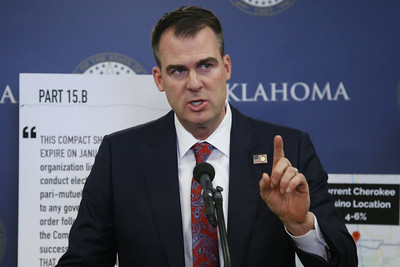
In a letter to state tribes, Oklahoma Governor Kevin Stitt proposed a deal to end the standoff about gaming compacts. The compacts expired on December 31, 2019, and Stitt wants them renegotiated. The tribes claim the compacts renewed automatically, setting up this showdown.

Stitt asked for 5 percent of gross gaming revenues. Last year the tribes paid between 4 percent and 6 percent, netting the state $150 million. The letter also proposes the legalization of sports betting, with the state taking 2 percent of the gross revenue. But the state also wants approval of casino vendors and a rule that requires the tribes to include a certain number of Class III games on their floors. Class II games are not taxable under federal regulations.

The tribes reacted badly to the letter, and claimed the governor was using the coronavirus pandemic as leverage.

“We are disappointed in the action taken by Governor Stitt through one of his attorneys to take advantage of tribes as they focus on protecting their tribal citizens and non-tribal citizens during this pandemic,” said Oklahoma Indian Gaming Association Chairman Matthew L. Morgan in a statement. “Since July we have made it clear that we are open to renegotiating rates as outlined in Part 11 of the compacts.   Any party may request to renegotiate rates and exclusivity. Governor Stitt, however, has steadfastly rejected that framework, dismissed the tribal position, insisting on tossing overboard an intergovernmental agreement that has worked well for all Oklahomans.

“This letter is yet another unsuccessful attempt to divide the tribes. The letter confirms the real intent of Governor Stitt is to destroy the tribal interest outlined in the existing compacts. The tribal leaders who received the letter reject the proposal as disrespectful and disingenuous.

“Perhaps more than anything, though, we are dismayed Governor Stitt would exploit the current pandemic for these purposes. Consistent with the advice of public health professionals, the tribal governments have suspended gaming operations to help blunt the spread of COVID-19. Nothing is more important to the Tribes than working together to fight this deadly virus. Public health is our main focus at this time.”

Meanwhile, Chief U.S. District Judge Timothy DeGiusti recently extended the filing deadline by two months and postponed a hearing indefinitely due to the coronavirus. DeGiusti also delayed a conference to review the case’s status and scheduling that had been set for April 3. And extended the deadline for mediation from March 31 to May 31.

Three Oklahoma tribes sued Stitt on December 31, asking for a declaration that their 15-year gaming compacts automatically renewed January 1. Stitt argued the compacts expired January 1 and gaming taking place at the tribes’ casinos is illegal. Stitt has said he wants to renegotiate the compacts to raise exclusivity rates from the current 4 percent to 6 percent graduated rate tribes pay for Class III gaming machines and 10 percent rate they on table games.

The Cherokee, Chickasaw and Choctaw nations filed the lawsuit, and since have been joined by the Muscogee (Creek) Nation and others. That list includes the Wichita and Affiliated Tribes which recently filed another suit in federal court claiming the state reneged on its exclusivity agreement by allowing the state lottery to let players participate in online second-chance promotions. As a result, the tribe said it is no longer legally obligated to share a portion of gaming revenue with the state and is entitled to damages from the state for violating the gaming compact.

Wichita Tribes President Terri Parton said, “Even if the Lottery Commission didn’t expand its online operations, this new form of electronic gaming not only violates the exclusivity guaranteed to tribal gaming operations under the tribal-state gaming compacts, but likely violates federal laws controlling gaming in Indian country.

“The Lottery Commission’s plans threaten gaming operations and the educational funding they provide for the state, Our support for education has not wavered but if violations of our compact continue, we may have no choice but to redirect our payments to the local schools near us. At least then we will know the money will make it to the classroom where our children and our neighbors’ children need it most.”

Penn National Sells Trop Las Vegas to GLPI

Penn National Gaming announced last week a coronavirus survival plan that includes the sale of the Tropicana Las Vegas and a planned casino in Pennsylvania. The buyer is Gaming & Leisure Properties Inc. (GLPI), the company’s main real estate investment trust (REIT) partner.

Penn National CEO Jay Snowden, who recently succeeded Tim Wilmott in the leadership role, said the nationwide pandemic, which has closed virtually all casinos and other non-essential businesses in the United States, forced the company’s hand. But Penn had publicly discussed selling the Tropicana, its only resort on the Las Vegas Strip, during quarterly earnings calls. As recently as February, Snowden said the 1,500-room resort was attracting “unsolicited” interest.

Under the terms of the deal, Penn National will continue to operate the Vegas property as well as a Pennsylvania “mini-casino,” now under construction in Morgantown, paying $337.5 million in rent. The deal also gives Penn National the option to take over the operations of GLPI’s wholly-owned and operated Hollywood Casino in Perryville, Maryland, according to CDC Gaming Reports.

Penn would receive a share of the sale proceeds if the Strip resort is sold within two years.

“This is a win-win agreement that significantly enhances GLPI’s certainty from the master leases with Penn National,” GLPI CEO Peter Carlino said in a statement. “It assists Penn National in meeting its GLPI rent obligations while helping to create a stronger liquidity roadmap for Penn.”

“We greatly appreciate the cooperation, creativity, and partnership shown by GLPI during this challenging time,” Snowden said in a statement. “While this transaction will help to relieve liquidity pressure in terms of rent obligations, we are committed to taking further steps to reduce our ongoing operating expenses in order to ensure we have a healthy business to return to when we are able to re-open our doors.”

In related news, Snowden said the company will continue to pay Tropicana’s laid-off 26,000 employees through March 31. “This decision was extremely difficult to make for all of us at Penn,” Snowden said in a letter to Penn employees. “Penn National is a family, and we deeply regret the hardship this will place on you and your loved ones. We are extremely motivated and focused on re-opening our properties as soon as it is safe and legal to do so.”

Snowden said Penn will maintain medical benefits for its workers through June 30 for those employees enrolled in the company’s health plans.

Massachusetts Reservation ‘Disestablished’

In a surprising development Secretary of the Interior David Bernhardt has ordered that the reservation set aside for the Mashpee Wampanoag Tribe in Massachusetts be “disestablished.” While the federal recognition for the tribe remains unchanged, the land-into-trust decision reverses a previous decision made by the department to take the land into trust.

“Today’s action was cruel and it was unnecessary. The Secretary is under no court order to take our land out of trust,” Tribal Chairman Cedric Cromwell wrote in a post on the tribe’s website.

A spokesman for DOI says, however, it was a court decision that spurred the action.

“In Fall 2015, Interior issued a decision approving a trust acquisition for the tribe,” said Connor Swanson according to the WBUR radio. “Subsequently, both a federal district court and a federal circuit court panel comprised of former Supreme Court Justice David Souter, former Chief Judge Sandra Lynch, and Senior Judge Kermit Lipez, found there to be no statutory authority for this decision. The tribe did not petition for a panel rehearing or a rehearing en banc. On March 19th, the court of appeals issued its mandate, which requires Interior to rescind its earlier decision. This decision does not affect the federal recognition status of the tribe, only Interior’s statutory authority to accept the land in trust. Rescission of the decision will return ownership of the property to the tribe.”

Jean-Luc Pierite, head of the North American Indian Center of Boston, emailed the tribe and called the decision an “existential crisis” not only for the Mashpees but for every other tribe recognized after 1934. He said the decision was based on the 2009 Supreme Court ruling Carcieri v. Salazar, which stated that the federal government cannot take land into trust for tribes that weren’t “under federal jurisdiction” in the year 1934.

“For the federal government, it could mean a situation in which hundreds of tribes seek reaffirmation through an act of Congress, as the Massachusetts delegation has done,” Pierite said.

Massachusetts Congressman. Bill Keating, who introduced a federal bill to give the Mashpees recognition, called the decision one of the most cruel and nonsensical acts I have seen since coming to Congress.”

Keating has co-sponsored a bill with Oklahoma Congressman Tim Cole that would clarify the Carcieri decision and ensure that this kind of “disestablishment’ does not happen again.

The Mashpees have been trying to build a casino in Taunton for many years but have been blocked at many points by lawsuits and rulings by the Interior Department. The casino was to have been funded by Malaysia’s Genting Corp., which has now written off the investment.

Illinois Casino Closures Extended

On Friday, March 20, Illinois Governor J. B. Pritzker issued an executive order to “stay at home” through April 7 in response to the coronavirus pandemic. As a result, the Illinois Gaming Board extended its order requiring all casinos and video gaming terminals to shut down through April 8. Originally the gaming commission shut down all casinos and video gaming terminals from March 15 through March 29.

The gaming board stated, “The health and safety of patrons, gaming industry employees, gaming board staff and all others in Illinois is the gaming board’s top priority. The gaming board will continue to monitor the situation and update licensees and the public as warranted if any further extension is necessary.”

On March 9, Rivers Casino in Des Plaines became the first in Illinois to open a sportsbook, the BetRivers Sportsbook. Argosy Casino in Alton planned to open its sportsbook March 16. Officials at both casinos said they would pay employees during the closure.

Virus Could Stall Virginia Casinos

Until recently, Virginia was one of the few U.S. states where casinos were banned. But about three weeks ago, legislators approved bills allowing casino resorts in five cities: Richmond, Bristol, Danville, Norfolk and Portsmouth. Then, within days, the coronavirus pandemic forced nearly all U.S. casinos to close.

But, state Senator Louise Lucas said, “We have time on our side. I’m the eternal optimist.” Governor Ralph Northam has not signed the legislation, and voter referendums still will have to be held in the host cities, followed by a vetting process before licenses can be granted and construction can begin.

Currently Norfolk, Bristol and Portsmouth already have either formal or informal agreements with potential casino operators. Danville is considering proposals from seen possible operators. Caesars Entertainment spokesman Richard Broome said, “Caesars will continue to pursue a gaming license in Virginia and hopes to build and operate a casino in Danville.”

The owners of Colonial Downs and the Pamunkey Indian Tribe have expressed interest in a potential Richmond casino and the tribe also hopes to develop a waterfront casino resort in Norfolk. In a statement, tribal officials said, “The Pamunkey Tribe is eager to move forward with its plans to build a world-class resort and casino in Norfolk and ready to respond to Richmond’s Request for Proposals to bring a casino to the River City. The tribe will keep profits in Virginia through reinvestment locally and will provide tremendous benefits to these regions of the Commonwealth for decades to come.”

The Indian Gaming Regulatory Act also requires a Class III compact if the tribe intends to offer slot machines and table games.

Virginia Secretary of Finance Aubrey Layne said no one, including lawmakers, has considered the coronavirus’ long-term impact. He questions whether gamblers still would want to spend time and money on crowded casino floors. “Certainly, there’s going to have to be some additional scrutiny. Casinos are not the panacea everybody thinks they are,” Layne said.

Nebraska Casino Petition On Hold

In Nebraska, the coronavirus has forced organizers of a petition drive to legalize casinos to stop collecting signatures to place the issue on the November ballot. But organizers said they’ve already gathered a large portion of the 121,000 signatures that will be required by the July 2 deadline.

Lance Morgan, president and chief executive officer at Ho-Chunk Inc., the group behind the petition drive, said, “We’re within shouting distance of getting what we need. It won’t take a huge effort to get there. It’s still snowing and cold out there and people are nervous, so it makes sense to take a little hiatus.”

Campaign organizers said they already had slowed their signature-gathering activities during the winter. They simply decided to extend that break for a few more weeks in response to the coronavirus and hope to resume collecting signatures later this spring.

Because legalizing casinos requires a constitutional amendment, the petition campaign needs signatures from at least 10 percent of the state’s registered voters, or about 121,000. Signatures also are needed from at least 5 percent of voters in 38 of the state’s 93 counties.

Nebraska Secretary of State Bob Evnen said he does not plan to extend the deadline for submitting signatures. “There has been time prior to the spread of this virus for those seeking signatures to do so,” Evnen said.

Morgan said he believes legalizing casinos will be an easy sell, based on polling numbers. He said a study showed Nebraska spent $11.1 billion at Iowa casinos since they opened in the 1990s. Opponents include Governor Pete Ricketts who has said expanded gambling will lead to societal problems.

Detroit Casinos Will Pay 19,681 Employees

According to Detroit Mayor Mike Duggan, the city is losing $600,000 a day in casino revenue and has spent $11 million in response to the coronavirus. Under normal circumstances, the city’s three casinos contribute $200 million annually to the city’s $1 billion general fund.

In addition to the three Motown casinos—the MGM Grand, Greektown and MotorCity—Michigan’s other 23 casinos also have closed. The properties could lose a total of $1 billion-plus if they remain shuttered for the eight weeks recommended by the Centers for Disease Control and Prevention.

Detroit’s recently opened sportsbooks also are closed; these closures are estimated to cost the three casinos more than $10 million in revenue. Wagerers may return betting slips for games that didn’t happen, as well as for future over-unders.

Duggan said the loss of casino revenue “is something we’re going have to deal with. Right now, we’re not under any pressure that any other city or state or any business isn’t under. But we gotta beat this virus, and then when we beat the virus we’ll deal with our financial problems.”

The three Detroit casinos have pledged to pay their 19,681 employees at least through the end of the month.

On March 23, Michigan Governor Christie Whitmer issued a shelter-in-place order limiting travel outside home for at least three weeks. All three casinos have donated thousands of pounds of food to local food banks; MotorCity and MGM Grand also donated thousands of gloves to DDOT bus drivers and Greektown offering its space for makeshift hospital use.

Missourians Can Still Gamble—on Unregulated Machines

Prior to the outbreak of the coronavirus, about 14,000 unregulated video gambling machines were operating in Missouri gas stations, clubs and bars. Since the outbreak, the state’s 13 licensed casinos have shut down, at least through March 30. But the number of video gambling machines still in use is unknown. A reporter for the St. Louis Post-Dispatch found several available at gas stations in Columbia.

State Senate President Pro Tem Dave Schatz said, “I don’t expect them to just voluntarily shut off. They’re willing to break the law as it is.” Missouri Gaming Commission Chairman Mike Leara said, “I don’t know that the gas station machines would be restricted or shut down because they are not a gathering of people. If they were under our jurisdiction we would have considered shutting those down.”

Legislation to license and regulate the machines has stalled in the Senate. Now it’s uncertain when the measure will be taken up again. Because the machines are unregulated, any revenue they generate does not help fund education or problem gambling services, nor are they required to follow rules regarding acceptable payouts.

Operators claim the games are legal under Missouri law because a player can press a button to see the outcome of a wager in advance; the player must play the losing hand for the opportunity to win again.

One of the largest companies in unregulated video gambling machines is Torch Electronics, based in Wildwood, Missouri, which donated $20,000 to Governor Mike Parson’s election campaign and retains three lobbyists in the Capitol. Torch spokesman Gregg Keller said the company’s machines are legal, “so naturally they continue to be enjoyed by Missourians” during the coronavirus outbreak.

The Linn County prosecutor sued Torch for felony illegal gambling charges; a hearing is scheduled for April 23. Another illegal gambling case against a Kansas-based operator is pending in Platte County.

WSOP Holds Out Hope for 2020 Events

Although most of the U.S. gaming world is shut down due to the coronavirus, the World Series of Poker is still holding out hope that the tournament will begin May 23 in Las Vegas.

WSOP is still making preparations to begin the tournament at the Rio All-Suite Hotel & Casino in Las Vegas. WSOP Vice President and spokesman Seth Palansky told the Casino City Times last week, “We’ve been taking it day by day, and at this point, it’s hour by hour. We’re still more than two months away, so as of now, we’re planning on running as scheduled.”

However, all live WSOP Circuit events have been cancelled through the end of April and the event is totally dependent on whether players are willing to take the chance to travel to Las Vegas or sit it out.

The tournament has come under considerable pressure from those who think it should be cancelled this year because, in the words of one article headline, the WSOP “is a petri dish for disease.”

Palansky says the event will act responsibly. “We’ll do the right thing,” he said. “We’ll follow the guidelines from the medical experts and make a decision when the time comes. But for now, we remain optimistic. It would be great if we’re able to host it. It will be sad if we can’t. But life will go on either way.”

Just because the opening series might have to be cancelled doesn’t mean that the more than 70 events between May 23-July 15 would all have to cancel. Many players feel that an abbreviated series would be better than none at all.

Some credit WSOP with being practical by taking all contingencies into account and being prepared to spring into action should most or some of the restrictions be lifted.

There is also the possibility of holding some of the events online. WSOP is already holding 14 “gold bracelet” online contests. It could expand that amount. It is not gone unnoticed that since the shutdowns of casinos began that the online poker rooms offered by WSOP.com in the states where it is legal are higher than ever before.

Palansky said, “We almost can’t even keep up with the demand,” he said. “A lot of new player registrations, we’re adding tournaments and we’ve seen peak capacity, bigger than we’ve ever seen.”

He told Casino City, “And if something were to happen with the 2020 World Series of Poker as far as the live events, we now feel even more confident in putting together something online.”

PA County Uses Casino Taxes to Help Local Companies

Pennsylvania’s Bucks County is acting to help local tourism and hospitality companies that have been hardest-hit by the ongoing coronavirus crisis. The Bucks County Redevelopment Authority announced a “rapid response loan program” that will use gaming revenue taxes collected from the local Parx Casino to provide emergency zero-interest loans to eligible tourism and hospitality companies within the county.

The agency has set aside $600,000 from the revenues collected as a Parx host community to provide loans to companies in the Lower Bucks County communities of Bensalem, Bristol borough and township, Hulmeville, Langhorne, Langhorne Manor, Lower Southampton, Middletown and Penndel.

Businesses can apply for loans of up to $8,000 under the program, Bucks County Commissioner Bob Harvie told the Bucks County Courier Times. The plan is to process loans within five business days from application.

“We know the economic impact of the COVID-19 pandemic will be very serious and that it has the potential to ruin the hard work and dreams of business owners and their employees in Bucks County,” Harvie told the Courier Times. “As the county commissioners continue to develop other economic assistance initiatives, we hope this loan program we are launching with the redevelopment authority can provide some immediate relief.

“This program is a great example of how the redevelopment authority can quickly and efficiently partner with county government,” Schafer said. “I’m extremely proud of the work that has been done by redevelopment authority staff, along with county staff, for creating and implementing this program in less than a week.”

“These critical funds will help businesses survive and sustain while we work to defeat the coronavirus,” state Senator Tommy Tomlinson of Bensalem (where Parx is located) told the newspaper.

Foxwoods Furloughs Interrupt Union Negotiations

Foxwood Resort Casino’s furloughing of workers due to the coronavirus came when the casino was in the midst of negotiations with its dealers union Local 2121 of the United Auto Workers. The contract expired in December.

The casino has been closed for nearly two weeks and that could be extended. The Connecticut casino, one of two Indian-operated casinos in the state, sent home more than 5,000 workers. The union represents 1,200 of those.

Mohegan Sun also has closed after being urged to do so for several days by Governor Ned Lamont.

After the casino closed the union told its members that Foxwoods had not agreed to pay them while they are gone. The union is helping members apply for unemployment.

John DelMonte, Local 2121 president, issued this statement: “Our local is very disappointed Foxwoods refused to negotiate paid leave for our members in the week prior to announcing the inevitable shutdown.” He added, “We were proactive in seeking their assistance early on, and they instead chose to be reactive.”

DelMonte said the union got 24 hours’ notice before the workers were furloughed without pay.

Foxwoods President and CEO John James responded with this statement: “These are unprecedented times for all of us and we are making business decisions based on a variety of factors, including the safety of our Team Members and guests as well as the requirements and/or guidance of executive orders/requests from the governor and other state leaders.”

He added, “We recognize and respect our duty to bargain and intend to continue that obligation as things progress. However, we also have to be nimble as things develop rapidly. We value and respect all of our Team Members and want to do what is best for them and the business such that we can all come out of this in a manner that allows us to recover.”

Unlike Foxwoods, Mohegan Sun announced that its furloughed employees “will continue to receive health benefits, access to key services and regular communication remains in effect as well. The top priority of our leadership team is to return all affected team members upon a re-open, at which point we have the ultimate confidence we’ll return as strong as ever.”