Author: Casino Connection Staff

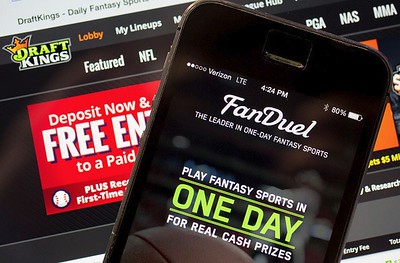
Daily Fantasy Sports = Gambling, Says NY Court

The New York Appellate Division last month sided with a 2018 Supreme Court ruling that invalidated legislation that defined daily fantasy sports as mostly a game of skill, not chance.

The courts said that while some skill may be involved in DFS, there are too many factors left to chance.

Hence, it’s gambling. Hence, it’s unconstitutional.

The state attorney general’s office has decided if it will take an appeal to the Court of Appeals, the highest court in New York,.

In 2018, Acting Justice Gerald W. Connolly of Albany County Supreme Court agreed with the plaintiffs—four people affected by problem gambling—who said lawmakers acted properly when they exempted daily fantasy sports from the penal code.

The legislation resulted from a lawsuit filed by the New York attorney general against FanDuel and DraftKings; that suit also declared daily fantasy sports as a form of gambling. According to the New York Times, the bill, known as the Racing, Pari-Mutuel Wagering and Breeding Law, also featured tax regulations, consumer safeguards and other details.

The law brought both DFS giants back to the state, only to have the court take another swipe at the sporting games. FanDuel said in a statement, “We expect that there will be an appeal, and we’ll be able to continue to offer contests while that appeal is decided.”

DraftKings also issued a statement, calling the original legislative action authorizing fantasy sports in New York “constitutional and in the best interests of taxpayers and fantasy sports fans.”

According to Lexology, while the court accepts that fantasy sports involve some level of skill, it also ruled there’s a material degree of chance, as participants cannot influence how athletes perform on the field.

“Allowing the legislature unfettered discretion to determine what is not gambling would render meaningless the constitutional prohibition,” the appellate court majority said. “Daily fantasy sports are not excluded from the constitutional meaning of ‘gambling’ merely because the legislature now says that it is so.”

According to Sports Handle, the judges concluded there also is a “material degree of chance” based on variables such as injuries, unexpected weather, inaccurate calls by officials, and “a selected player having a particularly bad day or an unselected player having a particularly good day.”

Judge Stan L. Pritzker dissented. While agreeing with the concept that the legislature’s power to declare what is or isn’t gambling isn’t unlimited, he said the court should stay out of this issue, as “the record demonstrates with vigor that the lawmakers, without caprice, acted rationally, carefully and with measured consideration.”

Pritzker added that the plaintiffs “assert their own opinions as facts, but at the same time, brand opposing opinions as fiction.”

“We’re very gratified by the decision,” plaintiff attorney Neil Murray told the Associated Press. We think the integrity of the New York state constitution has been upheld.”

The lawsuit was coordinated by the group Stop Predatory Gambling. Les Bernal, its national director, said, “The reason New York state has a constitutional prohibition on commercialized gambling promoted by the state is because it’s a form of consumer financial fraud.”

Mark Conrad, a sports business professor at Fordham University, told the seventh annual Penn Law Sports and Entertainment Law Symposium that New York’s laws on the issue are somewhat complicated.

“New York has a very broad definition of gambling, and that’s part of the problem. Most would think that if something is more a game of skill than chance, that’s not gambling. (New York) sees it instead as if a significant level of chance could be gambling. This is a unique New York problem that has reared its head,” Conrad said.

According to NJ Online Gambling, Cory Fox, counsel for policy and government affairs for FanDuel, said the courts have decided that previous definitions of gambling by the legislature should be followed.

“But the legislature also has said that fantasy sports are not gambling,” Fox said. “So to me, it’s a flawed decision, and I think the attorney general will have some luck with this.”

New York gaming law professor Marc Edelman said it’s not that simple. “The recent ruling is more adverse to the fantasy sports industry,” he said. “It not only overturned the regulations, but at the same time it said that deeming fantasy sports a game of skill was not permissible as well.”

The Fantasy Sports & Gaming Association, an industry group, estimates that 59 million people played fantasy sports in the United States and Canada in 2017, more than double the numbers in 2009. Two out of three were men, their average age was 32, and each user spent an average of $653 annually on the sites.

And DraftKings and FanDuel, which operate in 43 states, including New York, together accounted for almost all the $390 million in revenue generated by DFS in 2019, according to Chris Krafcik, a managing director at Eilers & Krejcik Gaming, a research and consulting firm.

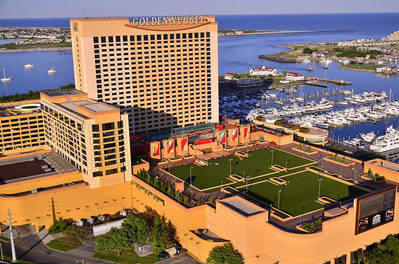
Scientific Games, Golden Nugget Expand iGaming Alliance

Building on a long-term partnership, Scientific Games and Golden Nugget LLC have agreed to expand their iGaming partnerships in a multi-state, multi-product, multi-channel agreement.

In a February 24 news release, the company announced Scientific Games will provide its solutions to Golden Nugget across multiple states through 2024 and potentially beyond.

Scientific Games will supply Golden Nugget with its OpenGaming in New Jersey and Pennsylvania and, as regulations allow, potentially other states that legalize iGaming in the future. Golden Nugget will benefit from the Open Gaming System content aggregation platform, portal, and player account management solution to enhance its iGaming presence.

Golden Nugget has also selected to utilize the full OpenSports product suite and world-class managed trading services from Don Best Sports. The deployment of OpenSports will start with mobile sports betting in New Jersey with additional states included as new states launch. There is also an option to roll out OpenSports in retail locations across multiple states including New Jersey, Mississippi and Nevada.

Thomas Winter, senior vice president and general manager for online gaming for Golden Nugget, said, “We have a long history with Scientific Games, and their technology is a cornerstone of our sports betting and iGaming strategy. We’re thrilled to continue working with them to bring a consistent and best-in-class experience to our players across multiple products, nationwide.”

Jordan Levin, group chief executive, digital for Scientific Games, said, “Following Golden Nugget’s transition to our solutions, we look forward to launching Sports on top of our long-standing player account and iGaming relationship. Golden Nugget has a wide player base across the U.S., having pioneered the iGaming space in New Jersey from its earliest days, and we’re excited to power their sports betting and iGaming presence, providing a seamless and reliable end-to-end betting experience.”

Coronavirus Now A Global Concern

An employee of the Wildhorse Resort and Casino in Oregon was hospitalized after testing positive for the coronavirus. After the employee was hospitalized, the Confederated Tribes of the Umatilla Indian Reservation ordered the casino closed, asked all resort guests to leave, and canceled all hotel reservations.

The Wildhorse was the first casino in the United States to close due to the Covid-19 virus, which originated in mainland China, spread to Macau, and, in a stunning development, caused all casinos in the gaming hub to shut down for more than two weeks.

The Wildhorse had never before closed in its 25-year history, and reopened 48 hours later. But officials with the Oregon Health Authority have warned that the virus is now on the loose, and could surface elsewhere in the state. State epidemiologist Dean Sidelinger told the Associated Press that three cases were “fairly quickly identified. That would indicate to us that this disease is circulating in our community, and we will likely see additional cases.”

The Umatilla Tribe has assembled a Covid-19 incident command team to deal with the threat, and other gaming enterprises have followed suit. The Navajo Nation, for example, which occupies parts of Arizona, New Mexico and Utah, has created a preparedness team to “monitor, plan, prepare and coordinate precautionary efforts to address the coronavirus.” So far, there have been no cases of Covid-19 in the Navajo Nation.


Deal Breaker

But the biggest impact of coronavirus seems to be on the business of gaming, as well as many other tourism, transportation and hospitality segments

An article in Bloomberg late on Friday speculated that the economic chaos being spawned by the virus could impact Eldorado Resorts purchase of Caesars Entertainment, the biggest pending deal in the gaming industry.

The article reported that the banks committed to funding the $7 billion in loans— JPMorgan Chase & Co., Credit Suisse Group AG and Macquarie Group Ltd.—were getting nervous with a tight timeline looming to close the deal as soon as next month.

While the Maryland State Lottery & Gaming Control Agency last week gave its approval to the pending merger, it is just is the seventh state-level approval of the merger, with some major decision still yet to be made. “We can see the finish line from here,” said Eldorado CEO Thomas Reeg in an February 26 investor conference after the approval.

In Maryland, Caesars owns Horseshoe Baltimore, the state’s second-largest property with a 122,000-square-foot gaming floor. Unlike other states still considering the deal, Eldorado had no presence in Maryland.

The transaction is expected to be consummated in the first half of 2020 and remains subject to the receipt of all required regulatory approvals, and other closing conditions. The deal also must receive the nod of the Federal Trade Commission. “If I was making a bet, I would say early second quarter (for the transaction to close),” Reeg told investors.

Reed said that there was “zero risk” that the loans would not go through.

“We feel very good about the execution that we’ll get in the credit markets,” Reeg said.

Reeg also told investors to remain cautious about the sports betting element of the deal, saying sportsbooks—still illegal in Maryland—“should be driving value decades down the road.” Eldorado and Caesars currently have potentially competing agreements involving sports betting, and last week, William Hill, Caesars’ partner, expressed frustration at the slow pace of resolution.

But with the economic impact of the coronavirus still unknown in the U.S. investors are getting nervous.

“The best comparison might be 9/11, when people were scared to fly,” said Gene Neavin, a senior investment analyst and portfolio manager at Federated Hermes in the Bloomberg article. “Now people may be scared not only to travel but also to be in a casino with thousands of people.”

Eldorado shares have plunged more than 50 percent over the past week. Caesars stock has declined from $14.50 on February 21 to $11.09 at the close of business on March 6.

The banks scheduled to make the loans to the two companies did not comment for the Bloomberg article.


Vegas Holds Steady

Businesses in markets throughout the world are exercising caution to stop the spread of the coronavirus, which has killed more than 3,400 people. Flights between Las Vegas and South Korea were set to be suspended this week due to ongoing concerns about the outbreak, a suspension that was scheduled to last until at least April 25.

In addition, software giant Adobe canceled its Adobe Summit, which was to have been held at the Venetian in Las Vegas this month. Currently, however, it seems to be conventions as usual in the city. The Digital Signage Expo is still set for April 1-2 at the Las Vegas Convention Center. Speaking to the Las Vegas Review-Journal, spokeswoman Geri Wolff shrugged off the scary headlines, saying, “This isn’t the zombie apocalypse.”

SunTrust Robinson Humphrey analyst Barry Jonas told the newspaper the first quarter looks good for gaming in Vegas, and management teams “continue to emphasize no discernible impact to forward-looking booking trends so far.”

Caesars Entertainment CEO Tony Rodio weighed in, saying the company “has seen no business impact whatsoever” from the virus.

Roger Dow, CEO of the U.S. Travel Association, added, “Obviously the traveling public should be exercising caution just as they would for the average flu season. But for the many of us who have upcoming plans to attend a convention or meeting or go on a family vacation, public health officials have repeatedly said there is no cause to alter those U.S.-based plans at the moment.”

The largest trade show in North America— ConExpo-Con/Agg—also will go on in Las Vegas as planned. “We encourage exhibitors and attendees to take common-sense precautions by using hand sanitizer and following CDC guidelines,” said Dana Wuesthoff, director of the show, which is held every three years at the convention center. “Instead of shaking hands, maybe people can bump elbows or something like that. We’re committed to doing everything necessary to host a safe and successful show. We’re putting attendee and exhibitor health, safety and comfort at the forefront.”

The latest figures available from the Las Vegas Convention and Visitors Authority show China comprising only around 4 percent of international visitation. Gaming revenues, however, tell a different story. Baccarat, the preferred game of high rollers from Asia, and China especially, is the largest revenue-generating game on the Las Vegas Strip, and while the game has been on the decline in recent years, any significant disruption to volume is going to make a fairly loud noise.

As it stood at the end of January, overall visitor volume and hotel occupancy were up compared to the previous years. January gaming revenues were up 9 percent from the same time last year, according to a SunTrust report.

What this indicates is the mass market, the city’s core business, which is driven overwhelmingly by domestic travel, is holding steady.

Becky Harris, an academic fellow at UNLV’s International Center for Gaming Regulation and former chairwoman of the Nevada Gaming Control Board, said it’s a waiting game at this point to see how far and wide the virus spreads, and how it might affect Las Vegas, an area that depends on tourism.

“If there were to be a coronavirus outbreak in Southern Nevada, that would potentially have serious consequences for the economy here,” Harris said. “We’re just going to have to wait and see what happens and how this unfolds.”


Global Scale

Gaming industry events were also being impacted. G2E Asia was pushed back to July 28-30; it will be held at the Venetian Macao. “Like all of you, we have carefully monitored this global health crisis,” said Josephine Lee, chief operating officer, Reed Exhibitions China. “Our top priority is ensuring a safe environment for employees, customers, and exhibitors at G2E Asia.”

The 2020 ASEAN Gaming Summit, which was to have taken place March 17-20 in Manila, has been postponed until July 28-30 due to ongoing concerns about the coronavirus. In a February 14 statement, trade show host Asia Gaming Brief announced that, “after careful consideration, we have made the decision to postpone our highly popular ASEAN Gaming Summit due to the disruptive influence of the coronavirus on travel and the potential risk to health.”

AGB made the decision “to protect our community by helping to curb the spread of the coronavirus, as well as to give our industry sufficient time to focus on recovery.”

But due to the postponement of G2E Asia, the organizers of the ASEAN Gaming Summit have said they are evaluating when to hold the show later this year.

There’s no word yet on whether ICE Asia, currently scheduled for June 8-9 in Manila, is considering moving its date.

On February 23, Kangwon Land in South Korea announced it would close for several days due to the virus, but then remained closed until March 9. According to GGRAsia, operator Kangwon Land Inc. said it expects to lose KRW55 billion (US$45.6 million) because of the shutdown.

Late last week, Paradise Co. Ltd., which operates foreigner-only casinos in South Korea, told GGRAsia it’s “not yet considering” closing its venues for business due to the contagion.

On the manufacturing side, AGS and Everi Holdings were the only suppliers in the gaming sector to come through February 27’s historic stock plunge unscathed, while IGT reported positive results among coronavirus fears.

The historic 1,191-point plunge in stock prices on February 27, fueled by fears of a widening coronavirus outbreak, affected most companies, including nearly all of the gaming sector. However, operator Wynn Resorts was joined by two suppliers, Everi Holdings and AGS, as the only companies in the gaming sector not to experience a stock price decline for the day, which recorded the worst drop in the Dow index in history.

“While there has been no evidence of coronavirus impacting the gaming business in the U.S. yet, the threat and fear are growing,” Union Gaming Group analyst John DeCree said in a note to investors. “The outlook could shift rather quickly as it did in China and Macau.”

But that didn’t last long. The AGEM Index decreased by 71.59 points in February 2020 to 468.91 points, a 13.2 percent decline from January 2020. The drop was driven by stock price declines for all 13 AGEM Index companies as markets around the globe reacted to the uncertainty surrounding the COVID-19 outbreak. The stock price for Aristocrat Leisure Limited (ASX: ALL) dropped by 8.5 percent, accounting for a 28.12-point decrease in the AGEM Index, while Crane Co. (CR) experienced a 20.5 percent stock price drop that led to an index contribution of negative 15.56 points.

In fact, by last Wednesday, the nearly 1,200-point plunge had reversed itself with a 1,200-point gain, and markets in general appeared to have stabilized. But they soon plunged again and by the end of the week, some of the major gaming stocks have dropped by as much as 45 percent.

IGT executives, in an earnings call announcing revenues that have beaten estimates, also cautioned potential coming disruptions due to the virus. “Our outlook does not factor in any impact from coronavirus, which is a very dynamic situation right now,” said CEO chief executive Marco Sala. “We are monitoring its evolution closely, in Italy in particular. And our priority has been to ensure the wellbeing of our people and customers. The weeks ahead will be crucial in assessing its impact on our businesses.”

Answering a question on the overall impact, Sala added, “It is unpredictable, as all the CEOs are saying to everybody. And we are saying within our management team, we are well prepared to control what we can control. And that’s first of all about people.

“Let me spend a couple of minutes on people, because it’s important that our priority being our people, I want to say that we have taken immediate measures including restricting travels, encouraging telecommuting, creating a centralized people resource center and preparing a contingency plan where appropriate, and we continue to monitor the situation in Italy and across all the regions because we feel that the health and wellbeing of our people and the community we operate in is our utmost concern.”

Although IGT recorded a fourth-quarter loss due to a $99 million goodwill impairment charge, the company reported it was net-income positive for the quarter, topping Wall Street forecasts thanks to jumps in sports betting revenue and lottery sales.

In a statement, London-based IGT, which produces and operates gaming and lottery machines in more than 100 countries, said its net loss was $168 million, or 82 cents per diluted share, for the three months ended December 31, wider than the loss of $102 million or 50 cents per diluted share, a year earlier.

Back At the Epicenter

Back in Macau, the hotel occupancy rate is showing some improvement from the effects of the epidemic, which has all but shut down travel from mainland China. Analysts expect the going will continue to be rough for the territory’s casinos.

Occupancy climbed up to 21.5 percent last week, a welcome step up from the low of 11.8 percent experienced during the two weeks last month when the 39 casinos were closed by government order to stem the spread of the virus.

The measure, extreme as it appeared, has been a success for the most part, with no increases in known infections beyond the 10 identified to date by local health authorities. Nine of those were reported recovered last week and are no longer hospitalized.

Conrad Macao at Sands Cotai Central, the 13 Hotel and five other hotels remained closed as of last week, although all have reported to the government that they are preparing to reopen this month.

For gaming, it’s still anything but business as usual, with individual and group travel from the mainland still suspended and most air carriers planning to continue to halt flights into and out of the city through March.

As of last week, only 11 routes were operating at Macau International Airport, most of them belonging to home carrier Air Macau, and none included China.

Gaming revenue plunged more than 87 percent in February compared to last year, and near-term forecasts are nearly as grim:

  • Kenneth Fong of Credit Suisse expects March revenue to fall 80 percent and April to be down 60, as the restrictions on visitation continue to take a toll.
  • Macquarie’s Edward Engel expects March to be down 76 percent.
  • Stifel’s Steven Wieczynksi is forecasting a decline of 75 percent – 85 percent in March and a 60 percent decline through the first quarter.
  • Carlos Santarelli of Deutsche Bank sees March down 73 percent and the first quarter down by 57 percent.
  • JP Morgan Securities (Asia Pacific) Ltd. said in a client note last week that it isn’t expecting the market to return to normalcy until the end of the year.

In a move that clearly indicates how bad things have gotten, Wynn Macau raised the revenue share paid to junkets operating its VIP rooms from 40 percent to 42.5 percent, the first time the property has adjusted the rate since entering the market 14 years ago.

Credit Suisse analysts professed themselves “surprised, especially with such minimal demand now.” They attributed the increase to Wynn’s declining share of the high-end trade, which fell from 23 percent to 20 percent of the market last year and was down as low 16 percent in virus-wracked February, according to estimates.

“Wynn’s actions highlight the industry’s difficulty (low revenue and cost pressure as they cannot fire staff) and the cautious outlook,” they said. “As volume shrinks, junkets will naturally allocate business to operators offering higher commission.”

Luiz Lam, a spokesman for a loose association of junkets called the Association of Gaming and Entertainment Promoters, told news site GGRAsia that daily VIP volume market-wide has shrunk to 15 percent of normal since the casinos reopened February 20.

“Many junket operators have chosen to reopen since February 20, somehow due to peer pressure,” he said. “But since reopening we saw only very few clients and business has been really quiet.”

Major junkets such as Suncity Group, which runs 17 VIP rooms in the city, have resumed operations with most of their casino clients. Suncity has said also it plans to open more rooms before the end of the year.

It’s not expected that all the smaller promoters will fare so well, according to reports. Many of those lacking the liquidity to survive the current crisis will go by the boards or be absorbed by the big groups, much like what happened when the central government’s corruption crackdown hammered the VIP market back in 2014 and 2015.

There were 95 junkets licensed with the city at the start of 2020, according to government records, but Lam said he expects that number will “dwindle” to around 80 before the year is out.

“For the mid-sized and smaller junket operator, with fewer financial resources to maneuver amid the current situation, they may choose to close their Macau business or reduce the number of VIP gaming rooms they operate here,” he said. “It is also possible they will choose to shift their resources to the Southeast Asian markets. When conditions stabilize, it is also possible that the city’s bigger junkets will acquire the resources of the smaller ones, and further expand their footprint in the city.”

The Ripple Effect

As if the coronavirus outbreak isn’t doing enough damage to Macau operations, the three U.S. companies with casinos in the Chinese territory are warning that the contagion could hurt their revenues in Las Vegas.

The U.S. government imposed a ban on travel from mainland China last month, part of an upheaval in global communications unprecedented in scope since the potentially deadly virus spilled out of China last month and spread rapidly to dozens of countries.

By some estimates, at least 94 percent of Fortune 1000 companies have cited the coronavirus as a significant disruption to supply chains, and analysts are slashing earnings and revenue estimates for companies across multiple industries.

Industry experts that while say it’s too soon to assess the impacts, the uncertainty, coupled with the massive blow to gaming revenues in Macau, is weighing heavily on investors in Las Vegas Sands, Wynn Resorts and MGM Resorts International, whose shares last week plunged to 52-week lows.

MGM has fallen 21.5 percent since January 30, Wynn 14.7 percent, LVS by 11.9 percent. Among other Las Vegas-facing operators, Red Rock Resorts is down 17.5 percent, Boyd Gaming 13.5 percent, Caesars Entertainment 7.8 percent.

“The market, in our view, has moved from underappreciating the risk to potentially over-penalizing the stocks,” said Macquarie gaming analyst Chad Beynon. To halt the spread of the disease, the Macau government closed the city’s casinos for two weeks last month, costing operators𑁋Wynn, MGM and LVS among them𑁋millions of dollars a day. Most have since reopened, but with travel from China effectively shut down, customers are few and far between, according to news reports.

Not surprisingly, estimates for 2020 earnings at Wynn have fallen by 50.3 percent. Forecasts for MGM are down 39.3 percent.

And with eyes now turned to the U.S., where the coronavirus is spreading, the unknowns continue to mount.

“Strip operators haven’t noted any impact from the coronavirus outbreak on their Las Vegas properties yet, but we know the situation is fairly fluid,” said Barry Jonas.

In a report to investors, Wynn said, “A significant portion of our U.S. business relies on the willingness and ability of premium international customers to travel to the U.S., including from mainland China,” adding, “Our Las Vegas operations and operations at Encore Boston Harbor may be adversely impacted.”

MGM said, “The extent to which the coronavirus impacts the company’s results will depend on future developments, which are highly uncertain and cannot be predicted.”

LVS said that if the virus escalates it could impact company subsidiaries’ ability to generate sufficient earnings and cash flow to pay dividends.

Caesars said business may be “adversely affected” by the outbreak if it leads to “business disruption, reduced customer traffic and reduced operations.”

Meanwhile, only one case of coronavirus was reported in Las Vegas—a traveler who had previously spent time at a nursing home in the state of Washington, the epicenter of the U.S. infections.

Florida, Seminole Agreement Unlikely

The Florida legislative session will end March 13, but House Speaker José Oliva said it’s unlikely lawmakers will finalize a compact with the Seminole Tribe of Florida before then.

However, Oliva said it is “inevitable” the session will run overtime because of delays in reaching agreement on a budget. Observers said the issue of gambling revenue has taken on more urgency as lawmakers negotiate a 2020-2021 budget and as the state faces unexpected expenses due to the coronavirus. Oliva said, “Logistically, it’s very difficult” to reach an agreement with the tribe by the end of the session. “I wouldn’t say that it’s dead, but for the regular scheduled session, next Friday the 13th, probably difficult,” he noted.

Still, Senate President Bill Galvano, who helped pass a 2010 agreement with the tribe, and Governor Ron DeSantis both said there was hope that a new compact agreement could be negotiated. Galvano said lawmakers had “made progress internally, and we are now engaged in negotiations with the tribe.” Tribal officials until now had remained on the sidelines while House and Senate negotiators discussed options.

DeSantis said “there’s a good chance” that agreement can be achieved. “I hope we get to a deal there. But again, I’d rather have a good deal and do it a few days later, or even you can even bring people back potentially, than try to force things under an artificial timeline,” referring to the possibility of a special session.

Oliva said negotiations were “moving slowly” because those involved want a proposal “that addresses the main concerns that have broken down negotiations in the past,” referring to “some of the existing games”–like designated player card games, the basis of ongoing legal battles between the tribe and state–and “whether some of those existing games create a violation of the 2010 compact or not. Those are sticking points.”

Oliva noted, “Rather than try to roll something out with only a few days left in session, we’re trying to have conversations about these things in a way that, if we can reach agreement on how they should be possibly pursued, then maybe we could put a piece of legislation forward to go to committees, to be vetted that way and then brought to the floor,” he said.

Observers said proposed legislation would require the tribe to pay $500 million in the first year and eventually up to $700 million in annual payments. The proposal would allow the tribe to add craps and roulette to its casino games, which currently includes slot machines and banked card games like blackjack. In addition, the Seminoles would have exclusive rights to offer online sports betting; players could place wagers on the online sites from anywhere in the state. In addition, the tribe could add one or two casinos in Broward County, where it already operates the Seminole Hard Rock Hotel & Casino in Hollywood. Sources said the tribe also wants online casinos, which would be a huge expansion of gambling; so far, legislators are resisting this.

Under the state’s proposal, parimutuel cardrooms could continue to offer controversial and lucrative designated player card games—which could be a deal-breaker for the tribe. Parimutuel cardrooms, particularly those outside of Miami-Dade and Broward counties, are not allowed to have slot machines, so they rely on the designated-player games as major revenue sources. Parimutuel operators claim thousands of jobs and tens of millions of dollars in revenue would be lost if they games were prohibited.

A federal judge ruled the designated player games violated the 2010 compact which gave the tribe exclusive rights to offer banked card games. That agreement expired in 2015. Then-Governor Rick Scott negotiated an agreement with the tribe to continue to pay the state $350 million a year. But last May the Seminoles stopped making the payments after DeSantis rejected a potential deal arranged with state Senator Wilton Simpson, stating he needed more time to review the proposal.

A source close to the negotiations who requested anonymity said, “My guess is the tribe is analyzing whether the additional games authorized under the deal are worth the requested payment to the state versus having no new compact and paying nothing to the state.” The source, a lobbyist, said it was doubtful that lawmakers would come back for a special session on gambling. “Anything is possible. But typically deals come together while in the pressure-cooker of the legislative session. Once these members go home to their districts, the will to act and leverage tend to dissipate.”

The lobbyist said if the tribe rejects a deal, the state would have to make a “bold move to bring the tribe to the table in earnest.” That could include allowing parimutuels to offer games that the Seminoles exclusively offer now, or authorizing sports betting. But a constitutional amendment voters approved in 2018 could complicate matters, especially in regard to sports betting. The amendment, primarily financed by the Seminoles and Disney Worldwide Services Inc., gave voters the “exclusive right to decide whether to authorize casino gambling,” removing legislative control.

Lawmakers Join Push for NYC Casinos

The push to bring full-scale casinos to New York City is intensifying as lawmakers wrestling with a massive state budget deficit find there are plenty of campaign dollars around to help ease their concerns.

The 2013 law that brought seven prospective commercial casinos to the state anticipated three licenses for the Big Apple but imposed a 10-year moratorium on awarding them in order to give their four upstate competitors time to establish themselves.

That’s a problem for deep-pocketed operators like Genting Group and Las Vegas Sands, which are lobbying to have the city opened up prior to 2023, despite the fact that the upstate operations are struggling financially in a statewide market crowded with gambling options, seven full-scale tribally owned casinos among them.

The $6.1 billion state budget deficit lawmakers are facing for the upcoming fiscal year isn’t hurting their case, considering that each of the operators eventually selected for the city would be required to ante up $500 million for their licenses.

Neither are the campaign contributions flowing to mainstream politicians fearful of election year challengers looking to build on the success of insurgents like U.S. Rep. Alexandria Ocasio-Cortez and state Senator Julia Salazar in ousting incumbents from seats in the city’s boroughs that once were deemed safe.

Like Queens Assemblywoman Aravella Simotas, who is opposed in June’s Democratic primary by a challenger backed by the Democratic Socialists of America, the party that helped Ocasio-Cortez and Salazar win in 2018.

Simotas has discovered she shares similar views on the moratorium issue with Genting, which wants to convert its giant Resorts World New York City racino at Queens’ Aqueduct Racetrack to a full-scale casino. Genting has founded a political action committee to contribute to her campaign and those of several others, among them Brooklyn Assemblyman Joe Lentol, chairman of the Democratic Assembly Campaign Committee, who has a primary opponent for the first time in a decade, and Queens Senator Michael Gianaris, who faces an insurgent as well.

“New York City is facing a significant budget deficit, and tax revenues from gaming will be used to ensure that our schools are not underfunded,” Simotas said.

The PAC also has donated to Governor Andrew Cuomo, whose campaign has received $50,000.

Genting is also paying Patrick Jenkins, a former college roommate of Assembly Speaker Carl Heastie, $30,000 a month to advocate on its behalf.

“As the largest taxpayer in New York state, Genting, like many others in the gaming and hospitality industries, is an active participant in the policy debate,” a spokesman for the Malaysia-based resort conglomerate said.

Sands has employed the services of former Gov. David Paterson to lobby on its behalf.

MGM Resorts International, which wants live tables at its Empire City racino in Yonkers, also has representation in Albany.

As Kathryn Wylde, CEO of the Partnership for New York City, which represents many of the city’s largest businesses, put it, the state’s budget woes make a compelling case for issuing the licenses sooner rather than later.

“If (casinos) are making a substantial contribution in terms of taxes and jobs to the state, it’s hard to turn down.”

Could MGM Springfield Spark New Development?

Authorities in Springfield, Massachusetts are working to bring development through zoning and tax incentives to the city’s South End, near the $960 million MGM Springfield casino. Last week, officials enlisted the help of the Massachusetts Gaming Commission (MGC) in this effort.

Springfield Mayor Domenic J. Sarno supported the casino resort as a way to lift up the South End area of the city, which was ravaged by a freak tornado in 2011. Sarno hoped the to spur business development by hitching a ride on the casino’s traffic.

Now, the city recognizes that the casino alone isn’t enough to rebuild the area. It will have to step in to make locating there more attractive.

Springfield Chief Development Officer Timothy Sheehan told commissioners the city is looking at zoning and special incentives to create a downtown casino impact district that would encourage occupancy of buildings along Main Street. Special-use permits, development guidelines and land-use controls, all tied to fast-track approvals, could be part of the plan.

While conceding that the casino is “vibrant and active,” Sheehan told the MGC, “At this point, it’s clear that the city ultimately needs to be the driver in what the next phase of development needs to be. Ultimately, we really need to galvanize and guide and facilitate the development and investment that happens within that area.”

Commissioners sounded all on-board with the city’s efforts. Commissioner Enrique Zuniga declared, “It’s not hard to imagine the potential on a lot of those buildings you mentioned as foreclosed upon and the neighborhood around it.” Commissioner Gayle Cameron added, “It’s exciting, it really is, to think about what you are trying to accomplish there and what a difference it will make.”

The commission also voted 5-0 to give final approval for MGM Springfield’s proposal to invest $16 million in a $51 million housing project that will help fulfill its previous commitment to provide local housing. The $16 million from MGM is structured as a loan, but a large portion of it includes guaranteed loan funding.

Commission Chairwoman Cathy Judd-Stein praised the collaboration between the casino, state, city and developers. “It’s a testament to the strength of collaboration, innovation and in this case, true vision,” she said. “We are excited to be a part of it.”

In some good news from MGM’s perspective, the casino has exceeded its hiring goals for Springfield residents and minorities. But the total number of employees has fallen to 2,000 workers, or two-thirds the number MGM promised to employ when it was vying for a gaming license. Two months ago, the Springfield Business Journal reported that that MGM’s major rival in the Bay State, Encore Boston Harbor, had dropped 200 employees, and was also about 1,000 below the number of people it told the commission it would employ.

Caesars Hikes Resort Fees at Four Vegas Resorts

Four Caesars Entertainment resorts on the Las Vegas Strip have raised their nightly fees on hotel rooms. The Las Vegas Review-Journal reported that the Linq, Harrah’s Las Vegas, the Flamingo and Bally’s upped the charge by $2 to $37 a night, not counting taxes.

A Caesars spokesman said the increase “brings these properties in line with their competitive set, such as MGM Grand and the Mirage,” which charge $39 per night before taxes.

The fees, which cover amenities like wifi, newspapers, local phone calls and access to fitness facilities, were largely initiated in Las Vegas over the last decade and have since been adopted at hotels nationwide, angering many consumers in the process.

“I think people are upset, and people want to see an end to these fees, so it’s really disappointing to see these hotels go in the opposite direction,” said Lauren Wolfe, an attorney for a group called Travelers United, which is lobbying for passage of a bill in Congress requiring hotels to be more transparent in disclosing the fees.

The four Caesars properties implementing the increases are at the center of what’s expected to be an extremely busy corridor in late April, when the 2020 NFL Draft is staged near the Linq Promenade and the soon-to-open Caesars Forum convention center.

The main stage for the draft will be located just east of the Linq’s High Roller observation wheel and near Caesars Forum.

New York Won’t Win Until It Goes Mobile, Downstate

A double whammy awaits New Jersey from across the Hudson River: mobile sports betting and downstate New York casinos.

Until both happen, the lack of mobile sportsbooks and retail books in New York City is driving bettors to the Jersey side, where they can place bets at on-site sportsbooks or by phone.

“I’m getting the complaints,” state Senator Joseph Addabbo recently told CBS2’s Marcia Kramer. “I go to the coffee shop and hear it from my people. They don’t want to go to Jersey. They don’t want to get in their car, or jump on the train and go to Jersey. They want to stay here.”

New Yorkers bet an estimated $837 million in New Jersey on sports events last year, according to Chris Grove, a partner at Eilers & Krejcik Gaming and managing director of the firm’s Sports & Emerging Verticals Practice. Grove co-authored a study on New York’s dilemma when it comes to New Jersey.

The $837 million represents almost 18.3 percent of the $4.6 billion that was bet in the state in 2019. That handle translated to $57 million in revenue, meaning New York lost about $6 million in tax revenue. New Jersey is off to a good start this year, with $540 million in January handle, up 40 percent from last year.

Without mobile and retail options in New York City, New Yorkers could bet $1.56 billion in New Jersey by 2022. That would equate to $105 million in sports betting revenue and $11 million in tax revenue, the study found.

“If New York authorizes downstate casinos and online sports betting, we expect that most of the demand currently flowing to New Jersey will shift back,” Grove said.

But downstate casino authorization is a matter of when, not if, he added. “Pressure appears to be building for lawmakers to move at an accelerated pace, but handicapping the situation is difficult due to the sheer number of moving parts.”

Addabbo has introduced a new bill that he said would reap millions for New York, which is facing a $6 billion budget gap. With online taxed at 12 percent and retail at 8 percent, tax revenue from sports betting would hit $166 million. The state would also get an additional $36 million in license fees should the state charge $12 million per license.

Not all of that projected revenue will come from in-state bettors. Eilers & Krejcik estimates anywhere from $51.7 million to $66.9 million could be attributed to tourists and commuters.

Addabbo said he’d like to get the bill passed by the April 1 budget deadline. The Senate is on board, but the Assembly is not. Complicating matters is continued opposition from New York Governor Andrew Cuomo.

Cuomo’s office did not respond for comment, but in a USA Today article, the governor urged caution as gaming companies seek expansion of the Empire City Casino in Yonkers and Resorts World New York City in Queens, and also stump for another casino in New York City.

MGM-owned Empire City and Genting’s Resorts World have video-lottery terminals and electronic table games owned by the state. They want to be able to add slot machines, live table games and sports betting, and are eager to get state approval for two of three remaining casino licenses in New York, while the Las Vegas Sands Corp. is lobbying to open a casino in New York City.

New York has a ban on new casino licenses until 2023 to allow the four upstate ones to develop their businesses. But gaming giants are hoping to pressure lawmakers and Cuomo to lift the ban sooner, hoping to entice the state with additional revenue.

Cuomo didn’t include any casino expansions in his budget plan for the fiscal year that starts April 1. “These are complicated issues, and I am skeptical about quick, knee-jerk reactions to doing something like that, especially if it’s conditioned on money,” he said.

Should New York get its wish list, what does it mean for New Jersey?

“While this is a significant share of the market, it is not the whole market, especially as sports betting is still showing a high degree of growth,” said Rummy Pandit, executive director of the Lloyd D. Levenson Institute of Gaming, Hospitality and Tourism at Stockton University. “That New Yorkers will no longer need to cross state boundaries to place a mobile sports bet will have an impact on New Jersey’s sports betting handle from non-residents, but is unlikely to have much impact on wagers placed by residents.”

The smaller share of sports betting handle, generated by retail sportsbooks, may see a greater impact from the introduction of full-fledged casinos in New York City and Yonkers. The Meadowlands, which captured $149.9 million of New Jersey’s $299.4 million in sports wagering revenue last year, has benefited from being a short distance from the New York border and would likely be hardest hit.

“Still, given its proximity to MetLife Stadium and Meadowlands Racetrack, the Meadowlands sportsbook has access to amenities that other facilities could find difficult to replicate,” Pandit said.

And New Jersey’s early adoption of mobile sports betting has given the state an edge in capturing customers. If the mobile product is essentially the same on either side of the border, it’ll come down to the amenities and rewards offered by the individual sportsbooks to influence consumer choice, Pandit said.

“New Jersey’s sportsbooks have invested in their retail books to provide a quality customer experience,” he said, “and they have all the amenities of Atlantic City to offer as a way of differentiating their service from the competition.”

In Aftermath of Merger, Expect a ‘Leaner’ Caesars

Big changes are in store for the new Caesars Entertainment as Eldorado Resorts moves steadily toward completing its $17.3 billion acquisition of the Las Vegas-based casino giant.

Eldorado CEO Tom Reeg, who will hold the same position in the super-sized Caesars that will emerge at some point in the first half, is already engineering what a new Bloomberg report terms a “leaner” operation focused on its “core gambling business.”

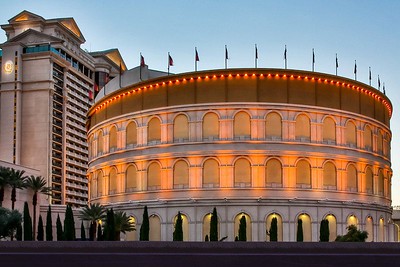
Already jettisoned are Caesars’ pursuit of a resort license in Japan and a unit that licenses the Caesars name to hotel operators, and further moves Reeg is contemplating could involve selling an interest in Caesars’ online and sports betting businesses, which includes 29 sports books in seven states, and outsourcing the company’s entertainment operations, including its theaters and showrooms, the report said, citing unnamed sources familiar with the situation. These deals could include properties such as the Colosseum concert venue at Caesars Palace and the $375 million Caesars Forum Conference Center scheduled to open on the Las Vegas Strip next month.

It’s been well-publicized that Eldorado and Caesars both are actively shopping some of the 60 owned or managed casinos the new company will command once the merger closes. Given Caesars’ sizable Strip presence, eight resorts in all, that shouldn’t be difficult. And it is seen as key to Eldorado’s ability to pay down some of the hefty debt load the merger will entail, including more than $8 billion of existing Caesars debt.

To this end, the Eldorado brain trust also is looking for $500 million in cost cuts from the new company.

Caesars, meanwhile, has already unloaded several resorts as part of prior deals with VICI Properties, the real estate investment trust spun off in 2017 as part of the company’s Chapter 11 reorganization and sold the off-Strip Rio last year to a New York-based real estate group.

Eldorado has been busily doing the same with its own portfolio, in part to sidestep potential anti-trust problems.

To date, regulators in five states have approved the transaction, leaving 13 still to sign off, along with the Federal Trade Commission.

Caesars CEO Tony Rodio said on the company’s fourth-quarter and full-year earnings call earlier this month that $100 million was being cut through personnel reductions and other moves independent of Eldorado.

The company reported $8.74 billion in net revenues for the year, a 4.2 percent increase over 2018, a result Rodio attributed mainly to “strong demand at our Las Vegas properties, excellent cost controls and the addition of sports betting in several states which drove increased visitation.”

“In addition, our focus on costs and operating efficiencies across the company contributed to the excellent performance,” he said.

He said also the company has experienced no fallout so far from the coronavirus that is spooking gaming investors as it continues to rage worldwide.

“We’re pleased and pleasantly surprised because there has been no business impact from coronavirus,” he said. “We’re watching things closely and we have contingency plans in place. Our bigger concern going forward will be if we start seeing cancelation of domestic travel to Las Vegas because of fears from coronavirus.”

The company reported a paper net loss of $1.2 billion for the year, which was down from $1.5 billion in 2018, on a variety of financial recalculations.

Jefferies’ David Katz was one of the analysts who came away from the call in a bullish frame of mind.

“We maintain our view that the business continues to evolve positively ahead of the merger and has considerable opportunity post-closing,” he said.

Wynn Scandal Leads to New Regulations in Nevada

The sexual harassment scandal that caused Steve Wynn’s downfall has inspired a new gaming regulation that went into effect March 1 in Nevada.

The regulation imposed by the Nevada Gaming Commission in November came about as a direct result of allegations that came to light two years ago in an investigative piece about Wynn published in the Wall Street Journal. The piece detailed years of alleged sexual harassment by Wynn, including a $7.5 million payment he made to a massage therapist who claimed he raped her and made her pregnant.

Wynn resigned as CEO of the company he founded, Wynn Resorts Ltd., and divested himself of any shares or connection to the company. But his legacy lives on in the new regulation. It requires any license gaming operator with more than 15 employees to “adopt and implement written policies and procedures prohibiting workplace discrimination or harassment of a person based on the person’s race, color, religion, sex, sexual orientation, gender identity or expression, age, disability, or national origin, including, without limitation, sexual harassment.”

One criticism of the new rule is that it’s redundant, and that such policies are required by other state and federal agencies. But the Gaming Control Board and the commission apparently felt that the “and-we-really-mean-it” regulation was called for after the Wynn allegations surfaced and after the company he founded paid fines of $35.5 million in Massachusetts and $20 million in Nevada for violating existing rules.

On the other hand, smaller companies may not have had such policies in place, and will be required to do so by the new regulation.

According to Gaming Control Board Chairwoman Sandra Douglass Morgan, the board’s Tax and License Division “will confirm each applicable licensee’s compliance” with the new regulation. “Additionally, the compliance unit of the board’s Investigations Division will continue to monitor the compliance committees of such gaming licensees and evaluate whether their respective compliance plans adequately address the necessary policies and procedures required by Regulation 5.250.”

According to experts on employment and labor law, the new regulation may encourage companies to look at those policies and make sure they’re in compliance.

The new regulation does have teeth. Companies that don’t have the policies can be fined. They are also required to explain how they will enforce those policies and to describe the process that someone making a complaint would have to go through.

Wynn is no longer involved in gaming in any way, and no longer lives in the state. But, in reaction to a complaint filed by the Control Board, the Gaming Commission said in December that it has the authority to reach out to him and judge his suitability to hold a gaming license.

Wynn’s attorney has said he will appeal, since Wynn has left the industry and so no longer holds a license for the commission to judge him on.

Massachusetts Seeks Public Input on Third Casino

The Massachusetts Gaming Commission (MGC) is seeking public comment on whether the panel should reignite a process to awarding a casino license in Region C in the southeastern part of the state. It is also asking for qualified market research firms to answer questions about the gaming market in that region.

The deadline for comments and proposals is March 16.

Region C includes Barnstable, Bristol, Nantucket and Plymouth counties.

And when a court rejected the latest appeal from the Mashpee Wampanoag tribe asking to overturn a lower court decision that rejected the tribe’s land-into-trust status, the possibility for a third casino in Massachusetts was reopened again.

Commissioner Enrique Zuniga commented on the request for a market research firm. “We are generally targeting questions to understand more about the viability of the market, especially in the context of prior market studies and current results,” he said. “We want to see how likely it is that there could be a good proposal or a good viable license in that region.”

Three years ago, the commission voted 4-1 not to issue a license for the area, and specifically rejected the license application by Mass Gaming & Entertainment (MG&E) to operate a $677 million casino at the Brockton Fairgrounds.

At the time, commissioners were reluctant to approve a casino that might compete with First Light Resort & Casino, which the Mashpees wanted to build in Taunton in partnership with Genting Malaysia. If a commercial casino competed with a tribal casino, the tribe wouldn’t have to pay any share of its profits to the state, which would harm the competitiveness of the other commercial casinos in the state: MGM Springfield, Encore Boston Harbor and the Plainfield Park slots parlor.

The planned Taunton casino foundered when a federal judge ruled that the Department of the Interior acted incorrectly to put the land into trust for the tribe. Last week’s decision widened the odds against the tribe since its options are now to request a full hearing by the appeals court or to directly appeal to the U.S. Supreme Court.

According to Zuniga, the public’s response will help policymakers know “whether we should take another look at it.”

The 2011 state law that created the commission authorized three casino resorts and one slots parlor. Two of the three casinos have been built, and only Zone C remains. However, the two casino resorts have not lived up to profitability forecasts, which might be a factor in whether the commission reopens the process.

Meanwhile, MG&E, a subsidiary of Neil Bluhm’s Rush Street Gaming, argues that the city of Brockton could benefit economically if a casino rises in the fairgrounds. Company spokesman Joe Baerlein says such a casino would create nearly 2,000 jobs in the area, and mean “$10 million-12 million in annual payments to the city of Brockton and $700 million plus investment in the city.”

He added, “When the legislature in Massachusetts passed this statute in 2011, the principal concerns raised by legislators is that the southern border of Massachusetts was exposed and all of that revenue was dumping out into two other states.”

10 Million MGM Guests’ Data Posted on Hacking Forum

Information on the personal details of 10.6 million plus guests who stayed at MGM Resorts International hotels last summer has appeared on a hacking forum. A law firm representing some of those people whose information was hacked has sued the entertainment firm.

According to MGM the security breach occurred last summer and customers were informed shortly thereafter. However, the data finally appeared on a hacking forum, and a spokesman for the company acknowledged that the data came from its files.

It wasn’t just details of tourists and regular customers that appeared, the lives of celebrities, government officials, reporters and employees at high tech companies were also laid bare. Full names, home addresses, phone numbers, dates of birth and emails were among the hacked information.

MGM plans to launch Under the Breach, a service that monitors such online invasions.

An MGM spokesman told ZDNet: “Last summer, we discovered unauthorized access to a cloud server that contained a limited amount of information for certain previous guests of MGM Resorts.” The spokesman said the company was “confident” that the information did not include financial, payment card or password data.

The company released this statement: “At MGM Resorts, we take our responsibility to protect guest data very seriously, and we have strengthened and enhanced the security of our network to prevent this from happening again.”

Morgan & Morgan filed the lawsuit last week in the U.S. District Court for the District of Nevada. This isn’t the first such lawsuit the firm has filed. Previously one of its attorneys represented Yahoo losers whose data was breached.

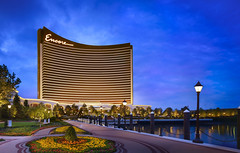
Encore Boston Proposes Aerial Gondola to Transport Guests

The Encore Boston Harbor in Everett, Massachusetts is proposing a gondola to bring visitors across the Mystic River from Somerville and Everett. The idea of an airborne cable car is running afoul of residents who want a footbridge.

On Facebook, Somerville Mayor Joe Curtatone posted this statement: “Of all the things I figured I’d never need to address in public life, gondolas have to rank near the top of the list.”

Encore counters that the gondola would be cheaper and faster to construct. “Our primary goal on any initiative that connects Somerville and Everett is to provide viable transportation options for our employees and guests,” said a spokesman.

Mayor Curtatone said a footbridge will accommodate more people and won’t just benefit the casino. “If you just need to get across a river, build a bridge,” he said on Facebook. “This isn’t rocket science.”

Is Kentucky Sports Betting Bill Losing Steam?

Kentucky is home of one of the most celebrated sporting events in the world: the Kentucky Derby, first leg of the fabled Triple Crown. While sports fans in the state can bet on the Derby and other pari-mutuel races, other legal sports wagers are strictly off-limits.

House lawmakers seemed ready to change that in January, when they voted unanimously for a sports betting bill that would allow betting on professional and college sports at Kentucky’s racetracks, Kentucky Speedway and online.

The proposal calls for a $500,000 license fee, a $50,000 renewal fee, and a tax rate of 10.25 percent, rising to 14.25 percent for online betting revenue. The Kentucky Horse Racing Commission would regulate sport betting activities. According to one estimate, sports betting would bring in up to $22.5 million in annual revenues for the state, which now offers just three forms of legal betting: pari-mutuel racing, a state lottery, and charitable gaming, such as bingo and raffles.

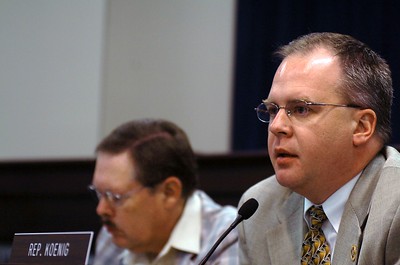
The bill, sponsored by Rep. Adam Koenig (R-Erlanger), was expected to go directly from committee to the full House, but abruptly stalled. It’s languished ever since, and caused an ideological rift among House Republicans.

“I like to say this bill has bipartisan support and partisan opposition,” Koenig told GGB News last week, “and that partisan opposition is coming from my own party.”

Republicans are said to be split into two camps: pro-business lawmakers who want the additional tax revenues that could be generated by sports betting, and those who object on moral grounds. “And really, there’s a third camp,” Koenig said, “people in the middle who aren’t motivated, in an election year, to mess with a controversial bill.”

In his view, adults should be free to make their own decisions about sports betting, which is now legal in some form in 20 states, including many that border Kentucky. “If they’re going to do it, let’s do it in a regulated, safe, effective manner that protects people,” he said. “The opposition basically wants to protect people from themselves.”

Kent Ostrander, executive director of the Lexington-based Family Foundation Executive Director, spoke for critics when he said he’s concerned about 24/7 mobile access to gambling, especially by young people. He added that sports betting “targets the family.”

“Corporations can’t gamble, businesses can’t gamble, nonprofits can’t gamble—all the money comes from families,” Ostrander told GGB. “Gambling can corrupt the government, and the vulnerable are literally destroyed by it. The state should not be working mechanisms to fleece its own people.”

Rep. David Hale, R-Wellington, is also part of the loyal opposition. “From the beginning, I’ve been opposed to this piece of legislation, for two reasons,” he said. “I oppose it from a moral position—I feel it’s not a good policy—and I oppose the fact that, from all the figures we’ve been given, sports betting might generate between $10 million and $20 million. I just think the social costs far outweigh that.”

Koenig hears the argument, but obviously disagrees. “I honestly don’t care if it brings in any money—it’s a choice grown people should be able to make, and we shouldn’t be outlawing it. But I’m not upset that it’s going to generate some revenue. I would rather generate it that way than by increasing taxes.”

According to Koenig, some House Republicans “would outlaw horse racing, lottery and charitable gaming if they could. There are some who think what we have is more than enough, and don’t want to see it increase. But the American Gaming Association estimates that $2 billion is spent illegally wagering on sports, in Kentucky alone.”

The bill was expected to sail to an easy victory this year, especially with a new, pro-gaming governor in office, and support from influential organizations like the Kentucky Education Association, the Kentucky Chamber of Commerce and Greater Louisville Inc. But it’s still stuck, and voices both sides of the debate have been duking it out in dueling op-ed pieces.

In the Cincinnati Business Journal, Dave Spaulding, of the Northern Kentucky Chamber of Commerce, wrote that anti-betting forces “aren’t protecting Kentuckians from anything. They’re only costing us badly needed revenue. If they truly care about Kentucky families, why not allow us to use some of that revenue for our schools and pensions?”

In the Louisville Courier-Journal, Martin Cothran, senior policy analyst for the Family Foundation, countered, “There are many reasons to be concerned about the societal effects of this bill, and in particular, its effects on those who can least afford to be on the losing end of the wagers made under it. It would target the poor and particularly young people.”

The legislative session ends April 15, and Koenig said he’ll spend the next month working to drum up support for the measure, “and maybe altering the bill.” Hale said inaction on the bill means it doesn’t have the votes to pass—and he’d like to keep it that way. “As every day goes by, it’s less and less probable that it will go to a vote,” he said.

In an email from the office of Governor Andy Beshear, Deputy Communications Director Sebastian Kitchen sounded optimistic. “Governor Beshear knows sports betting would pass now if it was brought up for a vote,” Kitchen wrote. “Kentuckians are already spending this money, but must cross into other states, where the dollars go to Indiana infrastructure or Ohio’s healthcare or West Virginia’s schools.

“We should keep this money in Kentucky,” he wrote, “and use this revenue to fund education and pensions without raising taxes on our hardworking families.”

Until that time, Kentuckians will still have to cross the border to place most of their bets—or else venture into the gray and black markets that thrive outside the legal industry.

PGA, Action Network Launch GolfBet.com

You wouldn’t think golf would have the kind of action-packed thrills to enchant bettors. Think again, duffers.

In a move designed to give fans more of what they crave in the sport, the PGA Tour has partnered with the Action Network to launch GolfBet.com, a betting content provider for the tour. The site went live March 2.

The deal, which runs through the end of the 2021 PGA Tour season, appears to make the tour the first professional organization in the U.S. to profit from sports gambling directly.

“The Action Network users have proven to be passionate golf fans, and the Tour has consistently been one of the most forward-thinking leagues and rights holders when it comes to the nascent sports betting industry,” said Ari Borod, chief commercial officer for the company.

The PGA Tour contributes rights to data, video footage, and promotional support. The Action Network also provides content for NASCAR and the new XFL. What makes this agreement different is the dedicated domain, the next step in a growing relationship between sports organizations and betting in the U.S.

“We envision GolfBet as a one-stop platform where fans can get all of the most relevant and up-to-date betting information,” Action Network CEO Patrick Keane said.

The Action Network’s golf page has been rebranded to “GolfBet presented by the PGA Tour.” The deal allows the Action Network to build upon its already expansive golf coverage. The firm will produce the majority of the golf betting-related content.

In 2019 alone, the Action Network produced over 800 pieces of golf-related content with well-known experts like Jason Sobel, Josh Perry and Peter Jennings. Almost all those pieces relate to the tour itself, but not for the tour.

What attracted the PGA Tour? “The Action Network was already producing a lot of quality content about our sport, and we liked their product-first approach, and this partnership structure offered both of us a lot of flexibility to operate our respective businesses while learning/growing together,” said Norb Gambuzza, PGA Tour’s senior vice president for media and gaming.

GolfBet will provide insights and analysis for all the major golf betting markets in legal betting states, including outright winners, match-ups and finishing position props such as Top 5, Top 10, Top 20 and so on. GolfBet also allows users to track their outright and matchup bets within The Action Network app. Last year, more than 50 million picks were tracked in the app, with golf the fastest segment growing, up more than 300 percent year-over-year.

GolfBet will also be the arm accepting any bets. “Users of GolfBet will be sent to betting operator platforms to place bets,” Gambuzza said. “We have no plans at the current time to offer retail betting at tour events, even in legal states. We believe the majority of betting will occur via mobile devices, which we are open to supporting at tournaments in legal betting states.”

According to Keane, the partners will share revenues made from affiliate marketing and advertising.

The PGA Tour said a content site would help engage and educate.

“We believe that golf fans and sports bettors alike are in search of a deeper level of information that has not existed until the launch of GolfBet,” Gambuzza said. “We are bullish that GolfBet content and the growth of sports betting will drive fan engagement and expand our overall audience.” The PGA Tour expects to hire a gaming director to oversee this effort.

The third leg of the endeavor involves the PGA Tour partnership with IMG Arena, which provides an official data feed, the exclusive licensor of official PGA Tour data for betting purposes.

“The PGA Tour will be working with IMG Arena throughout our partnership to determine the bets available for bettors based on official PGA Tour data,” Gambuzza said. “Any operator on a global basis that wants the fastest, most reliable data to offer its users can only get this data from IMG Arena.”

That partnership is complementary to GolfBet, said Borod. “We haven’t even scratched the surface of the In-Play betting opportunity for golf in the United States, and once IMG Arena’s official PGA Tour betting data is available to the U.S. market, GolfBet will be well-positioned to provide added insights and information to serve that market.”

In a statement, Max Wright, senior vice president of IMG Arena, said the three-pronged approach will be a plus for everyone. “We believe that an information hub like GolfBet, which delivers high-quality content to help to inform and educate users about golf and golf betting will be a net positive for the growing golf betting market,” he said.

NFL Stadiums to Open ‘Betting Lounges’

By the time football season begins again in the U.S., sports wagerers can expect to be welcomed at sports betting lounges located in NFL stadiums.

The National Football League, which for years resisted legal sports betting, has seen reason to capitulate. In May 2018, the U.S. Supreme Court overturned the Professional and Amateur Sports Protection Act (PASPA), which had outlawed the bets in most states since the 1990s. Since then, 14 states have climbed onto the sports betting bandwagon, and more are waiting in the wings. The NFL has signaled its clear approval of the new industry by opening its stadiums to sports betting lounges.

According to Sports Business Journal, only teams with legal sports betting in their state can sign such sponsorships, and only with licenses casinos or sportsbooks. Casino sponsors of teams will be allowed to use team logos in their advertising and marketing.

As for the lounges, they won’t accept bets, but can sign up customers, and will offer designated areas for mobile betting.

The lack of betting windows was “a key point of focus from our committee of owners, and also in our fan research broadly,” Chris Halpin, the NFL’s VP of strategy and growth, told Yahoo Finance. “We didn’t want betting windows or kiosks or signups in the broader concourse where all fans are exposed to it, including underage fans but also fans who are not interested in betting and don’t want to be overwhelmed by it. Relative to our brand, having it within lounges or on mobile is the right way to do it, and it’s also really where the market’s going. That’s the approach we feel comfortable with.”

Washington Advances Tribal-Only Sports Betting Bill

A bill in the Washington legislature to limit sports betting to Indian gaming tribes—without any mobile sports betting option—has sparked protests from the groups that would be left out: the 44 commercial casinos along with a threat by the state’s largest card room casino owner to sue.

The bill has moved forward to the Senate Ways and Means Committee after being passed by the Senate Committee on Labor & Commence last week. A parallel bill was already passed by House on an 83-14 vote several weeks ago. If it passes the Senate it would require the signature of Governor Jay Inslee to become law. The legislative session ends March 12.

During the debate on the bill, the biggest concerns that came up were about problem gambling and wagering by minors. Senator Karen Keiser, chairwoman of the Labor & Commerce Committee, commented, “Gambling brings with it the threat of addiction and corruption. That’s why it’s wise for our state to take a very small first step and work with our trusted partners who have shown their ability to contain the problem of addiction and thwart the threat of corruption.”

Under questioning by other senators, Keiser added that limiting sports betting to tribal casinos would slow down the expansion of gambling and control the size of the market. She said, “It seemed that my colleagues on both sides of the aisles were really concerned about the expansion of gambling. This was a good middle path, a narrow path to take this on, to investigate it and see how the citizens of Washington react to that.” She argued that it was “very wise of us to take a very small first step in moving forward with the ability to have sports gambling.”

Senator Rebecca Saldana, who also serves on the committee, told Sports Handle, “Protecting consumers is critical, and our approach is about integrity and intentionality about how we allow sports betting in Washington.” She added, “With sports betting activities only at tribes’ brick and mortar facilities, they will be doubly regulated — internally by the tribes as well as by the state Gambling Commission.”

Senator Maureen Walsh, who voted against the bill, declared, “I find it very disappointing that we can’t just open this up to the state. I think the state could use the infusion of revenue. I think also what’s good for the goose is good for the gander. … I think this is terrible. If the argument is the tribes can do it better, then I’m not buying it.”

Opposition to the bill is being led by Maverick Gaming LLC, whose CEO Eric Persson purchased more than a dozen card clubs last year, making Maverick the largest card club owner in the state with 19 total. Persson argues that excluding his casinos is unfair. A spokesperson for Maverick told lawmakers, “We cannot fathom why there needs to be a monopoly provided on a system to bet on sports. This proposal has no inclusivity, no tax revenue and no public voice.”

Asked by Legal Sports Report if he would be filing a lawsuit if the bill is passed, Persson answered, “Of course.”

An amendment to the bill offered two weeks ago includes a section that would fast-track sports betting and earmark $6 million to the Washington State Gambling Commission’s revolving account; for investigations. The amendment states: “The gambling commission may expend from the gambling revolving account from moneys attributable to the appropriation in this section solely for enforcement actions in the illicit market for sports wagering.”

Washington has a large number of tribal casinos: 29. The bill would allow the tribes to renegotiate their tribal state gaming compacts with the state.

Connecticut Bill Would Permit Sports Betting Statewide

A new bill introduced in the Connecticut legislature February 25 authorizes retail and online sports betting at Mohegan Sun, Foxwoods, a proposed East Windsor tribal casino, off-track betting parlors and the Connecticut Lottery Corp.

According to Rep. Joe Verrengia, the co-chair of the Joint Public Safety and Security Committee, H 5168 features:

  • A tiered tax rate of 10% for in-person wagers, 14.75% for online wagers.
  • An operator license fee of $750,000 and an application fee of $100,000, renewable every five years for the same amounts. The lottery is exempt from such fees.
  • A sports wagering vendor license fee of $300,000 and an application fee of $100,000, also renewable every five years.
  • Establishes entertainment zones in Bridgeport, Hartford, New Haven, Waterbury or other municipalities. However, each facility conducting sports betting must be at least 10 miles away from one another.

In addition, the lottery can offer sports wagering online and at no more than four claim centers.

According to Legal Sports Report, the law, if approved, will not go into effect until the governor amends the tribal-state compacts to allow for sports betting. The U.S. Department of the Interior and the state General Assembly must approve the amendments also.

The committee introduced a sports betting bill last session but there were differences. License fees and renewing time were less. This time around, the proposal adds a higher tax rate for mobile wagers, allows for entertainment zones and limits the lottery to four locations.

Also, this version eliminates the requirement that patrons have to establish an account in person prior to placing an online bet. Also gone is the integrity fee for leagues. The idea of entertainment zones, or sports betting facilities in major cities, is from State Senator Cathy Osten’s S 212, a comprehensive gaming expansion bill.

At last week’s hearing, leaders of the Mashantucket Pequot and Mohegan tribes asserted they would sue the state for breaching their contract for exclusivity to offer casino games if the state passed a law allowing other entities to provide sports betting. If that happens, the tribes would stop their annual payments of approximately $250 million in slot revenue to the state.

At issue is whether sports betting counts as a casino game. Verrengia hopes to reach an agreement between the state and tribes to avoid such a situation.

“It’s my hope that the state can continue to work with our tribal friends to reach a mutually acceptable agreement that’s not only good for the state of Connecticut, but also good for the other stakeholders,” he said.

Kansas Senate, House Bicker on Betting

The state Senate in Kansas approved a sports betting bill last month, despite objections by lawmakers on both sides of the aisle. Some critics complained the bill favors companies managing the state’s four casinos.

The House has its own legislation in the works, which is significantly different than the Senate version.

Rep. Don Hineman told Legal Sports Report that Governor Laura Kelly won’t support the sports betting bill as passed by the Senate, because she wants more money in the bill through the online lottery.

“There will definitely be some changes on the House side,” Hineman said.

Under the Senate bill, bettors can place wagers at casinos or online. The state’s four casinos include Hollywood Casino at Kansas Speedway in Kansas City, Kansas Star Casino in Mulvane, Boot Hill Casino in Dodge City and Kansas Crossing Casino and Hotel in Pittsburg. The legislation also permits a limited number of lottery ticket sales online, according to the Associated Press. The casinos would negotiate deals with digital platform providers.

Supporters don’t see sports betting as a big moneymaker since 95 percent of the money wagered would go back to bettors.

“It certainly puts us in a position where we can establish sports gaming in Kansas and pull, hopefully pull, wagers from a black market, off-shore, unregulated, untaxed market and bring it into Kansas under a regulated, safe market,” said Senate Vice President Jeff Longbine, a Republican from eastern Kansas.

Senate Democrats complained that the proposal gave too much control to the companies managing the casinos. Instead, the bill should have insisted on separate sports-betting contracts with the lottery. Critics also opposed restrictions on online lottery sales.

Moreover, the lottery is barred from using a slot machine sound or visual in plugging sales and won’t let someone play more than a game at a time.

The lottery says it could boost sales $3 million a year under the bill but by as much as $26 million if the provisions were less restrictive.

The state would get 7.5 percent of the profits for bets placed inside the casinos and 10 percent of the profits for bets placed online. Some of the state revenue would funnel into the Horse Fair Racing Benefit Fund and to establish a new White Collar Crime Fund for investigations led by the Kansas Attorney General’s Office. The chamber also adopted a proposal by Senate President Susan Wagle, a Republican from Wichita, to divert 2 percent of revenue into a state fund for treating gambling addiction.

“We’re very happy with SB 283 as it passed the Kansas Senate,” said Jeff Morris, vice president of public affairs for Penn National Gaming. “I think it has some of the best practices we’ve learned from other states on how to make a successful sports betting law. The tax rate is comparable with neighboring states. Iowa is 7.5 percent and Colorado is 10 percent, so it’s right there in the middle and allows us to compete with those markets.”

The proposal is expected to unleash up to $600 million in sports bets in the first year, but the state’s cut would be no more than $3 million. Senator Tom Holland, a Democrat from northeast Kansas, said he was afraid the state is “leaving money on the table.”

Holland introduced an amendment to shift profits away from casino operators and into state coffers. Under his proposal, which failed to win support, the Kansas Lottery would have control over online gambling for sports and, potentially, other games, according to the Topeka Capital-Journal.

The House will hold hearings later this month on its version. Republican chairman John Barker said that the House bill includes a larger share of the revenue and would allow hundreds of retail stores that sell lottery tickets to accept simple bets on sports. Barker developed H 2671 in collaboration with the governor’s office.

“We thought we would spread it out,” Barker said. “You could be able to go down and buy a lottery ticket and bet on the K-State-KU game, hopefully buy a loaf of bread and 10 gallons of gas or whatever and go home.”

Hineman says the tax rate for the House bill is too high. He also thinks the way the bill allows sports betting in Kansas at more than 1,200 lottery retail vendors in the state is problematic in the heavy competition it provides for casinos.

Another logjam concerns whether Kansas should try to revive long-closed dog and horse racing tracks. State law allows slot machines at the tracks, but critics say the state taxes are too high for them to be profitable. The Senate voted against lowering the tax rate for a park in Kansas City, for example.

Senator Kevin Braun, a Kansas City Republican, introduced a plan to bring business back to the Woodlands, a horse and dog racetrack in his district that opened in 1989 and filed for bankruptcy in 1996. The Woodlands was purchased by Kansas billionaire Phil Ruffin in 2015. If revived, the track would include horse racing but no greyhound racing.

Braun’s amendment would have slashed the state’s cut of profits from slot machines at the Woodlands, which would ignite a court battle with casinos.

The deadline for legislation to pass in Kansas is April 3. If the House passes the Senate bill with changes, it would need to go to a conference committee.

The legislature will return April 27 to wrap up the session by addressing bills vetoed by the governor: the omnibus appropriations act and omnibus reconciliations spending limit bill.

Massachusetts Begins Sports Betting Process

An amendment to Massachusetts House bill H 366 spells out new taxes, application and licensing fees for sports betting in the state. Based on a copy obtained by Sports Handle, the amendment also bars sports betting on colleges that are not Division I, as well as Olympic sports, esports and daily fantasy sports.

According to the 17-page amendment, the Massachusetts Gaming Commission will regulate sports betting, determine which wagers will be legal and establish a maximum-bet cap. The amendment sets the tax rate at 10 percent for gross revenues on retail sports betting, and 12 percent for mobile.

The new amendment also creates four tiers of licensing. For three of those tiers, the application fee would be $500,000 with a $500,000 licensing fee, good for five years, and a $500,000 renewal fee every five years. The licenses were detailed as follows:

  • S1: Las Vegas-style casinos and includes retail sports betting plus three online skins
  • S2: Slot-only casinos and includes retail sports betting plus two online skins
  • SH: Racetracks would allow for retail sports betting only. The application fee would be $50,000, with a $100,000 licensing fee and a $25,000 annual renewal fee
  • SM: Mobile-only license, which would allow companies like DraftKings, which is based in Boston, or FanDuel, to have stand-alone mobile sports betting. The bill caps the number of mobile-only licenses at five

In addition to the mobile-only licenses, there would be at least six additional skins available between MGM’s Springfield Casino and Boston Encore.

The bill originated in the Economic Development and Emerging Technology Committee, which held multiple informational hearings on sports betting last year. State lawmakers filed about a dozen sports betting bills in 2019, approving none of them, preferring to move at a slower speed.