Author: Casino Connection Staff

Caesars Slapped With Largest Fine Ever in UK

In its continued effort to crack down on violations in the VIP market, the UK Gambling Commission last week fined Caesars Entertainment UK a ₤13 million (US$16 million) for many violations in that space. The fine is the largest every handed down by the commission, topping a fine of ₤11.6 million imposed on Betway just last month. In addition to the fine, three senior executives were forced to give up their licenses.

Gambling Commission Chief Executive Neil McArthur blamed the violations on “serious systematic failings” at Caesars in incidents that occurred between January 2016 and December 2018.

“A culture of putting customer safety at the heart of business decisions should be set from the very top of every company and Caesars failed to do this.

“In recent times the online sector has received the greatest scrutiny around VIP practices but VIP practices are found right across the industry and our tough approach to compliance and enforcement will continue, whether a business is on the High Street or online.

“We are absolutely clear about our expectations of operators—whatever type of gambling they offer they must know their customers. They must interact with them and check what they can afford to gamble with—stepping in when they see signs of harm. Consumer safety is non-negotiable.”

Violations included ignoring signs of problem gambling and a lack of knowledge of the source of funds used by gamblers.

Caesars acknowledged its errors.

“Caesars Entertainment UK acknowledges falling short of its standards and accepts the settlement reached with the British Gambling Commission,” said Caesars chief regulatory and compliance officer Susan Carletta.

“Since discovering, immediately addressing and reporting deficiencies in 2018, we have enhanced our compliance policies and procedures, and are complying with the license conditions and commission’s guidance for best practice. We are confident of the efficacy of our compliance initiatives going forward.”

Meanwhile, the UK commission completed a conference with 30 operators and emerged with a scheme to provide “safer gambling” in the country. Factors include a minimum age for a VIP customer of 25, a reduction in the “intensity of play” but slowing down the action and the removal of “turbo” buttons, and a closer eye on online advertising to avoid marketing to vulnerable groups.

“We have been encouraged by the progress on VIP incentives, safer advertising and safer products,” said McArthur. “We set these challenges to deliver real and rapid change for consumers in key areas of risk.

“However, it is important these commitments are implemented as soon as possible. It should not take months to implement safeguards many would expect to be in place already.

“We will now consult on the necessary changes to our rule book to ensure all operators have to meet the new standards.”

With Tropicana Sale, Penn Buys Breathing Room

Penn National Gaming’s sale of the Tropicana Las Vegas has bought the regional gaming giant some financial maneuverability in the midst of the Covid-19 crisis that has shuttered its entire portfolio of 41 properties in 19 states.

The sale to Gaming and Leisure Properties (GLPI), announced at the end of last month, was concluded for $337.5 million in rental credits, effectively eliminating five months of rents Penn would have owed to the real estate investment trust under two master leases covering the 30 Penn casinos owned by GLPI. Prior to the deal, Penn’s payments to GLPI were expected to total around $900 million for the year.

“We don’t believe this is a deal that happens in a normal operating environment, but ultimately it buys Penn more time to survive and pay its rental obligations to GLPI, in this anything but normal environment,” SunTrust Bank gaming analyst Barry Jonas said.

“In a sense, this is ‘found money,’ or, in this case, savings,” said Deutsche Bank’s Carlo Santarelli.

Macquarie Securities has said Penn is spending $6.4 million a day to maintain its portfolio, including wages and benefits over the two weeks since the shutdown went into force nationwide three weeks ago.

The company, however, is furloughing roughly 26,000 employees nationwide and cutting management salaries as part of a plan to keep the company afloat with less than 850 workers. Those laid off will continue to receive medical benefits through the end of June.

The sale of the Tropicana, the company’s only Las Vegas Strip resort, was not a surprise. Penn has discussed selling the aging 1,500-room property for months.

Under the deal with GLPI, Penn will operate the resort under a cancelable lease with “nominal rent.” GLPI said it “plans to explore all options with respect to the Tropicana Las Vegas” and Penn would receive a share of any sale if it’s sold within 24 months.

Penn is also selling an under-construction casino in Morgantown, Pennsylvania to GLPI and has an option to acquire the operations of GLPI’s Hollywood Casino Perryville in Maryland.

West Virginia Shuts Down Election Wagering

Within about two hours, FanDuel Sportsbook’s presidential wagering came and went. Company officials said they had received approval from the West Virginia Lottery on Tuesday, April 7 to offer betting on the November presidential election. But FanDuel abruptly dropped the market after hearing being notified by West Virginia Secretary of State Mac Warner. “I do not know the exact facts, but I can tell you it’s illegal, somebody jumped the gun, nobody should be betting on presidential elections in West Virginia or anywhere,” Warner said.

He added, “Gambling on elections has been illegal in West Virginia since 1868. Gambling on the outcome of an election has no place in our American democracy. Not today. Not tomorrow. Not ever. This is a terrible idea. Let’s shut this down right now and be very clear about it.” Warner said his office plans to investigate the sequence of events.

Governor Jim Justice, whose family owns the Greenbrier, where FanDuel operates, said he was unaware of the situation until later. He commented, “I thought, you know, are you kidding me? The first thing that came to my mind was, you know, what next? It’s humorous but it’s ridiculous.”

Within a few hours of announcing presidential wagering, FanDuel issued a follow-up statement. “While the markets were approved, the West Virginia Lottery has asked FanDuel to refrain from offering the markets until they have time to fully work through the implications of this new market offering.” The lottery followed with this statement: “The markets were initially approved, however the West Virginia Lottery has asked FanDuel to refrain from offering the markets until we have time to fully work through the implications and research it further.”

If FanDuel’s launch were allowed to continue, it would have been the first legal betting on the U.S. election. It had President Donald Trump as a slight favorite over Democrat Joe Biden.

FanDuel released information on the categories in which it would take bets if it’s ultimately allowed to accept election wagers in West Virginia:

  • Winner of 2020 Election (Trump -110, Biden +125)
  • Democratic Nomination (Biden -714, Cuomo +1400, Sanders +1600)
  • Democratic Vice Presidential Nomination (Harris +188, Klobuchar +400)
  • Presidential Election 2020 – Winning Party (Republican -125, Democrat -110)
  • State by State Winning Party

However, election betting seems to be illegal under the West Virginia Code, which states, “It shall be unlawful to bet or wager money or other thing of value on any election held in this state.” It defines an election as “every general, primary or special election held in this state, or in any of its subdivisions, for the purpose of nominating or electing federal or state officers.”

Legal writer John Holden noted, “Wagering on political markets is explicitly prohibited by statute in a number of states, and most states have found it incompatible with public policy in a number of other places.”

South Point sportsbook in Las Vegas posted 2020 election odds for entertainment purposes only. Oddsmaker Jimmy Vacarro said wagers will not be accepted on them.

Virginia Gaming Bills Await Governor’s Signature

Two gambling bills passed by the Virginia legislature are waiting the signature of Governor Ralph Northam. Senate Bill 36 and House Bill 896 would permit five land-based casinos, online sports betting and up to 2,000 additional historical horse racing machines. Northam can suggest changes to the legislation as a condition of signing, which must occur by April 7.

Senate Bill 36 permits the Virginia Lottery Board to issue one casino license in Norfolk, Bristol, Danville, Portsmouth and Richmond, following local voter approval in the November 2020 general election. Each applicant for a casino license must make a $300 million minimum capital investment and the operator must have a minimum 20 percent equity interest in the casino. The licensing fee is $15 million for 10 years.

The five approved casinos will be allowed to offer slot machines, table games and on-premises online casino gaming. A casino will be able to operate for up to two years in a temporary facility that must be built on the same site as the permanent facility.

The Senate bill also allows casino operators to operate on-site sportsbooks but does not authorize casino operators to conduct online and mobile sports betting. However, the House bill allows the Lottery Board to give casino operators preferential treatment in the process of awarding the 12 new online and mobile sport betting licenses.

The bill taxes the casino’s annual net win at 18 percent on the first $200 million of gross gaming revenue, 23 percent on gross gaming revenue between $200 million and $400 million and 30 percent on gross gaming revenue above $400 million.

In fairness to Colonial Downs Group, owners of Virginia’s only horseracing track plus off-track betting and historical horseracing machines, the bill allows the company to add 600 historical horseracing machines each time a local casino referendum passes, up to a maximum of 2,000 additional machines. Up to 1,650 of the additional machines may be located in Dumfries, Virginia, located 30 miles from Washington, D.C.

HB 896 permits 12 online-only operators to offer statewide mobile sports betting, giving casinos “substantial and preferred consideration.” If all five new casinos are granted sports betting licenses, only seven of the 12 authorized licenses would be available for mobile-only operators. The sports betting bill is not linked to the casino bill or casino openings, so the seven mobile-only sports betting operations could start sooner.

Operators would pay a $250,000 application fee and a $200,000 license renewal fee every three years. They also would pay a 15 percent tax on adjusted gross gaming revenue. Wagering is prohibited on Virginia collegiate sports and proposition bets on any individual collegiate athlete. Operators also must purchase official league data to settle in-play wagers but they can use any data source to settle end-of-game bets.

HB 896 also requires the Lottery Board to give “substantial and preferred consideration” only to a major league sports franchise headquartered in Virginia or one that plays five or more regular season games per year at a facility in Virginia. If the National Football League’s Washington Redskins builds its new football stadium in the state it could obtain a sports betting license. Any sports betting license issued to a major league sports franchise would not count toward the 12 authorized licenses.

The two bills are designed not only to increase tax revenue―by keeping gambling dollars in Virginia rather than neighboring states―but also to create jobs and revitalize struggling Virginia cities.

MGM Confident In Its Cash Position

As hard as the Covid-19 pandemic has hit MGM Resorts International, forcing the closure of its more than 20 gaming resorts nationwide, the

casino giant says it believes it’s in a strong enough cash position to “weather this downturn and ultimately rebound.”

The Las Vegas-based operator said in a statement that it has around $3.9 billion on its balance sheet, including approximately $1.5 billion drawn under its revolving credit facility, and doesn’t have any debt repayments due until 2022.

“While this will undoubtedly have a significant negative effect on our business in the near term, we are well-positioned to emerge from the current crisis in light of our strong liquidity position and valuable asset portfolio,” said President Bill Hornbuckle, who has been serving as acting CEO since James Murren’s departure at the end of March.

The big question is long the crisis will last. Macquarie Securities gaming analyst Chad Beynon said MGM is burning through $14.4 million a day to maintain the company, which would give it approximately nine months before it runs out of cash. Deutsche Bank gaming analyst Carlo Santarelli said MGM could withstand a “roughly 10-month closure of its domestic assets before having to resort to further sources of liquidity.”

Currently, only MGM’s two Macau casinos are generating revenue, but the industry there was shut for two weeks in February and patronage has been scanty since, with visitation from its core mainland China market largely halted to contain the spread of the potentially lethal virus.

The company has fixed rent payments for the remainder of 2020 of approximately $184 million and $219 million under its sales and lease-backs of Bellagio, MGM Grand Las Vegas and Mandalay Bay to two real estate investment trusts. MGM also has fixed rent payments of $621 million for the rest of the year under its master lease with MGM Growth Properties, a separately REIT created by MGM in which the company owns roughly 60 percent, which could be converted under previous agreements into up to $1.4 billion in cash.

It could also draw additional liquidity from the properties it still owns MGM Springfield in Massachusetts, its 50 percent interest in the CityCenter resort complex on the Las Vegas Strip, and its 55.95 percent interest in MGM China, the Hong Kong-listed holding company for the Macau casinos.

The company said 60 to 70 percent of its operating expenses are variable and it is looking at ways to minimize costs by way of hiring freezes, furloughs and other job reductions. It also plans to delay 33 percent of the capital expenditures that were planned for its U.S. properties this year.

“We believe the company will be able to manage its expenses while navigating this unprecedented event,” Hornbuckle said. “We are currently making very difficult decisions, but believe these will be in the best interest of the company long term.”

Although casinos are one of the many distressed sectors of the economy that are expected to take advantage of the $2.2 trillion federal rescue package signed into law by President Trump on March 27, MGM said last week it will not accept any of the money being made available, although it will consider accepting the loan guarantees the government is offering should the pandemic force the industry to remain closed for an extended period.

Las Vegas Sands, which is enduring the shutdown of its two Strip resorts and has been especially hard-hit by the slowdown in Macau, its principal source of revenue, likewise said it does not plan to accept any of the bailout money. The company also said last week that it was still paying its employees and hadn’t cut staff.

Sheldon Adelson, the company’s billionaire chairman and CEO, was reported to have made calls to garner support for the rescue package in his role as one of the Republican Party’s largest donors.

Murren also was an important player in the industry’s lobbying for the aid and traveled to Washington to meet with Trump as the legislation was winding its way through Congress.

Construction for Philly Live! Continues

While all businesses in Pennsylvania that have been deemed non-essential are under an order to cease operation during the current coronavirus pandemic, Stadium Casino LLC, a subsidiary of Baltimore’s Cordish Companies, has received a waiver from the state to continue working on its $700 million Live! Casino & Hotel project in Philadelphia.

According to a report on WPVI-TV, the waiver was granted because of the economic development importance of the project for both Philadelphia and Pennsylvania. The complex, including a 200-room hotel and entertainment center, is slated to be complete by the end of this year.

Carolina Tribes Tussle Over Off-Res Casino

The Eastern Band of Cherokee Indians in North Carolina and the Catawba Indian Nation in South Carolina have a long history of fighting each other for survival. The battle continues today as the 3,400-member, financially struggling Catawbas seek to open a casino in Kings Mountain, North Carolina, 30 miles northwest of their reservation in Rock Hill. The Cherokee also claim the area as part of their ancestral lands.

Currently, the Cherokee own the mammoth Harrah’s Cherokee Casino Resort in Cherokee, North Carolina, which opened in 1997, and Harrah’s Cherokee Valley River Casino & Hotel, one-third the size, which opened in 2015 in Murphy. The two venues attract about 5 million visitors annually, and generated $400 million in profits in 2019, according to the Bristol Herald Courier.

Principal Chief Richard Sneed said tribal members receive two distributions for a total of $12,000 from resort revenue every year. Over the years, casino revenue has financed an $83 million hospital, affordable housing, healthcare supplements, a Cherokee language-immersion academy for tribal children and a K-12 school system as well as cultural attractions.

Catawba Chief Bill Harris said the South Carolina tribe’s poverty rate stands at 23 percent, 11 points above the national average. “We haven’t prospered. To grow, we need our own source of economic development,” he said—like a casino in Kings Mountain, located about 30 miles from Raleigh.

Although the tribe is based in South Carolina, “We have an ancestral right to be here. The borders we recognize in 2020 are not the borders of the Revolutionary War or earlier,” Harris said. The tribe tried twice, unsuccessfully, to open a gambling resort on its South Carolina reservation.

Kings Mountain Mayor Scott Neisler said having a Catawba casino resort in the town “would be a real shot in the arm.” A recent economic impact study estimated the venue would generate more than $350 million annually and create 4,000 jobs, plus lead to a tribal school, healthcare and more.

The Cherokee have strongly opposed the Catawbas’ efforts. They also claim Kings Mountain as ancestral land. Sneed said his tribe especially is concerned with how the Catawbas are trying to move forward. The Indian Gaming Regulatory Act has strict rules regarding land being taken into federal trust for the purposes of gambling. However, in March 2019, Senators Lindsey Graham of South Carolina and Thom Tillis and Richard Burr of North Carolina submitted legislation calling for a Catawba casino in Kings Mountain, exempting the tribe from paying for environmental impact studies, receiving the North Carolina governor’s approval and other rules.

Graham said, “The Catawba Nation has been treated unfairly by the federal government, and our legislation rights that wrong. I hope this legislation will be quickly passed through the Congress and signed into law so we can once and for all bring resolution to this issue.”

But North Carolina state Rep. Mark Walker said, “Instead of going through the proper channels with state and local officials in North Carolina, this casino is trying to circumvent the traditional process.” Sneed concurred, stating, “No other tribe has received this sort of treatment. We all have to play by the rules.”

Sneed naturally is concerned that a Catawba casino would steal some of the tourists who currently drivel up I-85 to Harrah’s Cherokee to gamble. The degree to which it will impact the resort, no one knows. But Harris said, “Greed should not be the thing that says, ‘You aren’t entitled to it.’”

Sneed noted the developer of the proposed Catawba casino is Wallace Cheves, who, according to the Charlotte Observer, has donated almost $50,000 to the three senators sponsoring the casino bill since 2015. He also co-chaired Graham’s 2016 presidential campaign. Cheves has had interests in a video-poker company, a sweepstakes company and riverboat gambling. Sneed said Cheves is “a bad actor,” with several lawsuits and at least one government raid during his career.

But the Cherokee aren’t innocent bystanders. The tribe’s political action committee is the largest and most influential in North Carolina. It spent $135,000 on lobbyists in Raleigh last year and donated $162,000 to Democratic and Republican political campaigns. The Cherokee convinced 38 out of 50 state senators to sign a letter to the U.S. Indian Affairs Committee opposing a Catawba casino. North Carolina Governor Roy Cooper also has expressed opposition.

It’s not clear when the U.S. Department of the Interior will rule on the Catawbas’ off-reservation casino in Kings Mountain. Even if the Catawba casino is approved, it’s sure to be contested in court. If it’s not, Harris said, “I don’t know any other card I have to play.”

Video Gaming Machines Banned in Missouri

Due to the risk of coronavirus, the Missouri Department of Health and Senior Services recently issued an indefinite ban on using the estimated 14,000 unregulated video gaming machines found in gas stations, bars and convenience stores. The move is a victory for the state’s casinos, represented by the Missouri Gaming Association which has been urging the state to eliminate illegal slot machines.

MGA Executive Director Mike Winter said, “Often lined up one right next to each other in gas stations and other establishments, the cleanliness of these illegal and unregulated slot machines is questionable. We believe the state should shut down these illegal slot machines, for the safety of our residents.”

Scientific data is not available regarding how long the coronavirus could survive on slot machines or similar devices. A National Institutes of Health study said coronavirus was detectable for two to three days on plastic and stainless steel.

Missouri Governor Mike Parson ordered the state’s 13 licensed casinos to close at least through April 6.

Gregg Keller, a spokesman for Torch Electronics, supplier of the machines, said the games are legal since players know the outcome in advance. Last year the Missouri Gaming Commission concluded the Torch machines are “gambling devices,” meaning they’re illegal unless they are located in licensed casinos.

The Missouri Highway Patrol has forwarded dozens of illegal gambling cases to local prosecutors who are waiting for the outcome of a case in Platte County. In Linn County, Prosecuting Attorney Shiante McMahon charged Torch with first-degree promotion of gambling, after Brookfield police officers seized three Torch machines from a local convenience store. If Torch is found guilty, it could face a $10,000 fine.

To date, Missouri Department of Health and Senior Services spokeswoman Lisa Cox said, “No businesses have been closed and no machines have been targeted by the state. Right now, we are focused on promoting social distancing and good hygiene. This would be more easily enforceable by local health departments.”

Missouri Lottery officials said the unregulated video gambling machines have cannibalized $50 million in tax revenue, which helps fund education.

New Jersey Horseman Suit Unresolved

In May 2018, the U.S. Supreme Court sided with the state of New Jersey in its claim that a ban on sports betting under a 1992 law was unconstitutional. Everyone knows about that case.

But another related matter has yet to be resolved. In 2014, the New Jersey Thoroughbred Horsemen’s Association sued to allow sports betting at Monmouth Park. Because the 2018 ruling paved the way for races, the association has returned to court seeking compensation from the major sports leagues for lost revenue between 2014 and 2018.

The suit may not turn in the horsemen’s favor, according to NJ Online Gambling. The association wants to unseal depositions from league commissioners in the original case.

Early last month the leagues filed a motion with the U.S. Supreme Court seeking to overturn a 2019 Third Circuit Court of Appeals ruling that vacated a lower court decision dismissing the horsemen’s claims of as much as $150 million in damages. The leagues argue that should the Supreme Court accept the case and then overturn the ruling, then time-consuming discovery now will prove to have been a waste of time.

The leagues also say conflicting rulings in different district circuit courts show that courts have a lot of discretion to deny recovery of a temporary restraining order bond, which amounted to $3.4 million for a four-week period before a lower-court judge sided with the leagues.

In addition, the leagues say a delay in discovery does not harm the horsemen, since sportsbooks are already offering wagers, at least they were prior to the coronavirus pandemic.

“If anything, continuing to hold discovery in abeyance benefits [the horsemen]. They will save time and expense devoted to discovery that could be moot in whole or in part,” documents said.

In the recent filing, the leagues claim the horsemen agreed to stipulations in May 2018, when they filed their $150 million damages lawsuit just 10 days after the Supreme Court ruled.

“The parties agreed that no discovery in connection with that motion would take place until the Court resolved three threshold legal issues: (1) whether NJTHA was ‘wrongfully enjoined’ as a matter of law; (2) whether NJTHA was summarily entitled to the full $3.4 million bond amount as a matter of law (without having to prove its actual damages through subsequent proceedings); and (3) whether NJTHA’s claim for ‘bad faith’ damages of nearly $150 million should be dismissed as a matter of law.”

Since not all three thresholds were met, the association violated the agreement, the leagues insist.

In this filing, the leagues still claim that the horsemen “falsely contend that they faced no risk of injury from the expansion of state-sponsored sports gambling.

“This court noted that, among other evidence, congressional studies, consumer surveys, and the fact that the State of New Jersey exempted its own colleges from legal sports gambling all demonstrated the threat of potential harm posed by New Jersey’s sports gambling proposal.”

States Open New Sports Betting Choices

On April 3, Nevada’s Gaming Control Board added the 2020 eNASCAR iRacing Pro Invitational Series and 2020 ESL One-Dota Los Angeles to its list of approved sports to bet on.

The approval marked the second time in as many weeks the board has added new betting opportunities, and the first time Nevada sportsbooks have been allowed to take bets on a virtual auto racing event.

On March 25, the board permitted betting on Counter-Strike: Global Operations, under the auspices of the ESL Pro League.

“In a world without your traditional streams of sports, operators are continually looking for additional content to deliver to avid sports fans and regulators are responding,” consultant Brendan Bussmann of Global Market Advisors told Sports Handle.

The Indiana Gaming Commission added a more traditional offering April 6. Hockey fans can wager on the Belarus Extraleague, adding to the already approved Kontinental Hockey League. Both leagues are located in former Eastern Bloc countries.

ESL One-Dota was originally scheduled to be the league’s first live event in Los Angeles, till the coronavirus forced it online. The event, which began March 28 and runs through April 19, features 34 teams competing for $375,000 in prize money. The tournament is a round-robin best-of-three format with a best-of-five series for the grand finale.

eNASCAR features professional drivers playing a virtual game with a live television broadcast that sounds a lot like one at a live race, with the first for wagering being the virtual Bristol Motor Speedway on April 5. The races feature stars like Dale Earnhardt Jr., Kyle Busch, Denny Hamlin and Clint Bowyer competing against other Cup Series regulars as well as drivers from other series on NASCAR’s iRacing simulation platform.

“The global interest in the eNASCAR iRacing Pro Invitational Series has ranged far and wide and we continue to recognize the role this series is playing in providing sports fans worldwide with a much needed respite during the most challenging of times,” Scott Warfield, NASCAR managing director of gaming, told ESPN.

The iRacing Pro Invitational Series, created to keep fans engaged during the coronavirus pandemic-enforced shutdown has picked up good traction. The broadcasts of main-event races have been a hit, according to ESPN. Fox Sports drew 900,000 viewers for the inaugural race, the most-watched esports broadcast in national history.

“I’d love to have it on the board,” Matt Metcalf, head of Las Vegas sportsbook operator Circa Sports, told the sports network. “A million viewers last week … people are paying attention.”

Nevada sportsbooks must notify patrons that the iRacing simulators and equipment used in the eNASCAR races might differ slightly, and that official rules must be posted on the event organizer’s or sanctioning body’s website.

However, a controversy broke out last week when real-life NASCAR driver Bubba Wallace got into a bumping match with another driver and simply put down the controller and walked away, something that would never happen in real life.

eNASCAR has also updated its free-to-play mobile gaming app to feature the eNASCAR iRacing esports series, with updated fantasy and prop betting integration, according to SportsPro. The app is available to download on iOS and Android devices and will also give users a chance to win a $5,000 jackpot by accurately predicting the top two finishers and the highest finishers across the esports series’ six different groupings of four drivers.

Maryland Sports Betting Fails Due to Coronavirus

The sponsor of a bill in the Maryland state Senate that would have set up a referendum on the November election ballot to legalize sports betting in the state says lawmakers were close to passing the legislation, but ultimately could not work out differences in a session that was shortened due to the coronavirus pandemic.

The bill was nearing a conference to work out differences between Senate and House versions when the session ended prematurely. The bill would have legalized sports betting at four casinos, three racetracks and a potential new Washington Redskins stadium.

“I think if we had the three weeks, it absolutely would have made a difference,” Senator Craig Zucker, the bill’s sponsor, told Legal Sports Report. “I just don’t think we had enough time to work out the issues with the House, given that we were on a severely truncated schedule.

“In the Senate, we wanted to make sure it was as inclusive as possible. We had a bipartisan workgroup that worked out what the legislation would look like. That’s why it passed unanimously out of the Senate.”

Zucker noted that 1 percent of revenue from Maryland sports betting is set to go to the minority business enterprise program in the Senate bill came out of that bipartisan group.

“A lot of people worked to make this the best possible legislation to put in front of Maryland voters. We wanted to make sure it had a strong minority business enterprise component. Ultimately, this is about Marylanders deciding they want to have sports betting and making sure we’re funding children’s future.”

Zucker said the legislation could still be wrapped up before the election if the national emergency subsides. “The way the legislation finished is, it allows Marylanders to have a say on sports betting at the ballot box in November,” Zucker said. “If it’s their wisdom to move forward, we’ll decide what it looks like another day when we have more time.”

The stadium portion of the bill was meant to keep the NFL team in Maryland, as lawmakers fear the team will move to the District of Columbia, where sports betting is legal and Washington’s other two sports teams, the NHL Capitals and MLB Nationals, are both planning to add sportsbooks.

Sports Betting Launch Delayed in D.C.

March was supposed to have been a good month for U.S. sports betting, with four jurisdictions launching: Michigan, Illinois, Montana, and the District of Columbia. Alas, there were no sports to bet on. No NBA playoffs. No March Madness. No baseball.

With the Covid-19 pandemic shutting down all casinos and most sports for the near future, D.C. has delayed its launch until sports return.

“We are revising our sports wagering launch strategy based on the current state of world events, but will be posting information about the platform in the coming days, including introducing the brand and its functionalities,” said Nicole Jordan, director of marketing and communications for the Office of Lottery and Gaming, which runs sports betting.

The app and web platforms have passed the tests needed to go live.

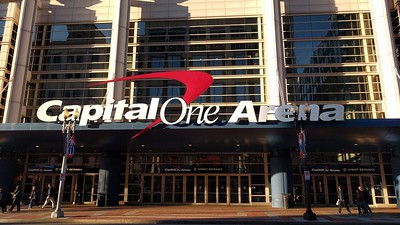
D.C. also authorized bars, restaurants, and sports venues to offer sports betting, but only within the confines of each locale, a practice known as geofencing. William Hill, which has partnered with Capital One Arena, has applied for a license to operate its sportsbook. Without any problems, OLG should issue the license by early May.

Data provider Sportradar and sportsbook technology supplier Scientific Games also submitted applications.

Getting to this point has been problematic. The proposed rules were criticized and revised and a mobile app developer filed a lawsuit against the D.C. Office of the Chief Financial Officer, which oversees the lottery.

The officer, Jeffrey DeWitt, told the City Paper the rush to approve sports betting was to reduce what could be a $500 million shortfall.

MLB Looks to Future Play

In a normal year, Major League Baseball would be three weeks into the 2020 season. But this is anything but a normal year. Like every other professional sport, baseball shut down when the coronavirus pandemic ramped up.

And like other pro leagues, MLB wants to get back to games sooner rather than later. So the league has discussed several ideas, including playing games in one central area like Phoenix once it’s deemed safe to begin the season.

The option has not gone beyond the talking stage. Officials have not sought approval from government and health agencies or from the players association. According to the Los Angeles Times, ESPN reported a plan to start the season as early as May with all games played in the Phoenix area with no spectators present.

The Associated Press said the proposal got an airing in a phone call between the league and players association on April 6.

“MLB has been actively considering numerous contingency plans that would allow play to commence once the public health situation has improved to the point that it is safe to do so,” the league said in its statement. “We continue to interact regularly with governmental and public health officials, but have not sought or received approval of any plan from federal, state and local officials, or the Players Assn.“

The pandemic ended spring training on March 12 and pushed back opening day until mid-May, maybe later.

The Arizona plan requires sequestering of players, coaching staffs and other essential personnel at local hotels, with only travel to and from stadiums allowed. There are 11 ballparks within 50 miles of each other in the Phoenix area, many serving as spring training facilities.

Agent Scott Boras told the Associated Press he thinks players would largely support the plan.

“I think players are willing to do what’s necessary because I think they understand the importance of baseball for their own livelihoods and for the interest of our country in providing a product that gives all the people that are isolated enjoyment, “Boras said.

But it won’t be easy, he said.

“You’re going to be largely separated from your families and you’re going to have to function in a very contained way,” Boras said. “It’s not a normal life, this idea. You’re going to have limited access of those people to the outside world so you can assure an uncontaminated league.”

NFL Draft Details Emerge

The 2020 National Football League Draft will be conducted in a virtual format, with team executives all working from their respective homes, as opposed to club facilities.

NFL Commissioner Roger Goodell outlined the procedures for the April 23-25 Draft in a memo sent to the 32 teams. Club personnel will be allowed to communicate with each other and Draft headquarters by phone or internet.

“After consulting with medical advisors, we cannot identify an alternative that is preferable from a medical or public health perspective, given the varying needs of clubs, the need properly to screen participants, and the unique risk factors that individual club employees may face,” Goodell said.

The original three-day Las Vegas event was to be free to the public and include the NFL Draft Experience, featuring games, autograph sessions, a pro shop, and special performances. At least 500,000 fans were expected to attend the festivities.

It has already been announced that future NFL Drafts will be held in Cleveland (2021) and Kansas City (2023), opening the door for the event to be held in Las Vegas in 2022.

According to NBC Sports, there is growing momentum for ESPN and NFL Network to produce a combined Draft telecast. It will likely be based from ESPN’s main studio in Bristol, Connecticut, with NFL Network talent either co-hosting or being major contributors to the coverage. ABC’s Draft coverage will remain separate, the report added.

The event is being eagerly awaited by legal sports books in the U.S. as the first betting opportunity from a major sports league since all games in all leagues in most of the world have been suspended.

NBA May Play Finals in Vegas

Las Vegas could be the site of an NBA tournament when the regular season resumes, followed by the NBA Finals, according to a report on CNBC. That is, if the coronavirus suspension of the season ends.

The Las Vegas Review-Journal said league executives and agents spoke with CNBC on a condition of anonymity. The Thomas & Mack Center seems to be the site favored by league officials. The NBA has rented the center and Cox Pavilion from July 10 to 20 to host the annual Summer League. But others connected to the center and the league called the report conjecture only.

The NBA suspended operations in early March, the first American pro league to do so. The league could cancel the remainder of its regular season and use a play-in tournament to finalize its seeding, the report said. If the plan comes to fruition, the first round of the playoffs would be best-of-five, with the winners playing a single-elimination tournament to determine who would play in best-of-five finals.

Dallas Mavericks owner Mark Cuban has said when the NBA returns to play it likely would be without fans. The NBA has held its annual G League Winter Showcase in Las Vegas for the past two years, holding games without fans at Mandalay Bay Convention Center. Games were televised and only essential team personnel were at the event, along with some family, friends and media.

Will Colorado Start Sports Betting in May?

Colorado law says legal Colorado sportsbook operators must be ready to accept bets on May 1. There won’t be much to bet on, with major professional sports shut down, but the start date is fixed. An initiative passed by the voters in November specifically names that date and so does the enabling legislation HB 19-1327.

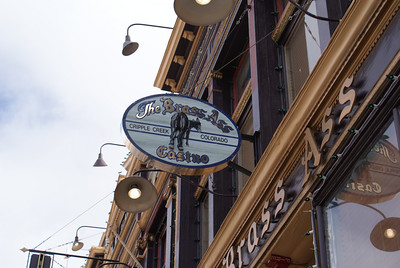
So far, Colorado’s Limited Gaming Control Commission has approved sportsbooks in brick-and-mortar casinos including Billy’s, Brass Ass, Bronco Billy’s, Christmas, Dostal Alley, Double Eagle, Golden Gates, Golden Gulch, J.P. McGill’s, Mardi Gras, Midnight Rose, Monarch, and Saratoga.

Of those, at least six have partnered with sportsbooks. PointsBet will run the books for the Double Eagle, DraftKings has partnered with the Mardi Gras, BetFred USA will run the Saratoga sportsbooks and Smarkets, Wynn and Bet America have partnered with FHR Colorado, which owns Billy’s, Bronco Billy’s and Christmas casinos. DraftKings Sportsbook was the first to get approval for mobile wagering.

The commission will meet April 16 by video conference when it will mull how to move forward. According to a spokesman: “The broader question hinges on the current state of the unknown reality we all find ourselves in now. How long will closures and stay at home orders last? What other actions and measures might be put in place?”

The NBA may be ready sooner rather than later.

“Hopefully, by the middle of May, we’re starting to get back to normal, and the NBA is playing games. Maybe not with fans, but we’re playing it because sports plays such an important role,” Dallas Mavericks owner Mark Cuban said on radio station WFAA.

Colorado is authorized to approve as many as 33 licenses for retail and internet sportsbooks.

Sportsbook for Live! Pittsburgh Dropped by Cordish

Officials of Corish Companies told officials of the Pennsylvania Gaming Control Board last week that the company’s Pennsylvania casino licensee, Stadium Casino LLC, will not be paying $10 million for a separate sports betting license for its Pittsburgh mini-casino, Live! Casino Pittsburgh, under construction at the suburban Westmoreland Mall.

Stadium Casino officials had requested that the board waive the $10 million fee, since it already had paid a $10 million fee to offer sport betting at Live Hotel & Casino Philadelphia, currently under construction in Philadelphia’s Stadium District.

Company officials testified before the board in October that its sports betting license for Stadium should apply to the mini-casino as well as the stand-alone casino hotel. They argued that it makes no economic sense to pay $10 million to operate a retail sportsbook at a mini-casino, which is restricted to 750 slots and 40 table games, and drew a parallel to off-track betting facilities, which do not pay the fee.

“As you look at the direct revenue associated with sports betting, though it’s been an impressive start, it’s a very small fraction of overall gaming revenue,” Rob Norton, president of Cordish Gaming Group, told the board October 30.

At its regular monthly meeting last week—held remotely due to the coronavirus pandemic—the board actually voted 4-3 to waive the $10 million fee for the mini-casino, but the request was denied under the state gaming law requirement that licensing actions must be approved by a “qualified majority,” achieved by approval votes from all four legislative appointees and at least one of the three gubernatorial appointees.

All four of the board’s legislative appointees voted to approve the request, but none of the three gubernatorial appointees—Chairman David Barasch and members Obra Kernodle IV and Denise Smyler—approved the waiver.

Cordish quickly released a statement expressing disappointment with the board’s decision and indicating it will not pay the extra fee for a retail book in Pittsburgh.

“While other gaming companies have postponed and canceled projects, and shed thousands of jobs, our company is investing close to $1 billion in the commonwealth, creating thousands of new jobs in one of the most economically challenging periods in our country’s history, and will pay hundreds of millions in taxes to the Commonwealth when open,” the statement said.

Iowa Casinos Delay Sports Betting

The two tribal casinos in Northwest Iowa hoped to have sportsbooks in operation by now. But details and then the coronavirus have bogged the process down. Governor Kim Reynolds closed casinos on March 17.

Last summer, WinnaVegas Casino & Resort, owned and operated by the Winnebago Tribe of Nebraska near Sloan, was eyeing a mid-September start for its sports betting. Blackbird Bend Casino, owned and operated by the Omaha Tribe near Onawa, saw mid-October as a launch date.

Reynolds signed a sports betting law in May 2019 and the Iowa Racing and Gaming Commission approved casino application rules in late July. Several opened up a month later. As tribal casinos, Blackbird Bend and WinnaVegas went through a different process than the 19 Iowa casinos regulated by the IRGC, according to the Sioux City Journal.

“It is still in the works, pending additional legal review of the contracts. The current suspension of professional and college sports and all of the uncertainty that the COVID-19 pandemic has evoked gives us further pause in the process, of making sure we develop the best possible sports betting options for our guests,” Blackbird Bend Spokesman Mike Krysl said.

While Blackbird Bend had a successful 2019, the closure in 2020 has had “a chilling, jarring impact,” Krysl said.

WinnaVegas Spokesman Michael Michaud said the timing is uncertain.

“We are working with the National Indian Gaming Association to implement sports betting in the future, so there is no timeline as of yet,” he said.

Washington Sportsbooks Are Legal, But Unavailable

Washington residents who are physically at Indian casinos can now bet on sporting events. Unfortunately, Indian casinos are not open currently, and most professional sports are out of commission too.

On March 25, Governor Jay Inslee signed the law making Washington the 21st state to legalize sportsbooks. The legislation limits sports betting to tribal casinos, elbows out commercial casinos, and doesn’t allow for online apps. Bettable sports include college, professional, overseas, Olympic, and even esports contests.

As he signed the bill, the governor declared, “This will give people an opportunity to participate in a new gaming activity that is safe and well-regulated by the tribes.” Washington has 29 federally-recognized tribes.

Rebecca Kaldor, executive director of the Washington Indian Gaming Association, moderated her praise in light of the Covid-19 crisis, telling NW News Network, “We’re excited that it got over the finish line and the governor signed it today, but we’ve got bigger problems right now than sports betting.”

Pointing out that the state’s tribal casinos are closed, she added, “As we recover from this crisis, the addition of this amenity will help tribal governments fund the essential services their members will need to get back up on their feet.”

Passage of the bill was controversial, and was fought by commercial card rooms and operators of racetracks because they weren’t included in it. Maverick Gaming, which owns the lion’s share of the so-called “mini-casinos,” and its CEO Eric Persson said it would create a “tax-free monopoly for tribal casinos,” and cost the state tax revenues.

He wrote a letter to the governor urging him to veto the bill and arguing that the state was “giving up millions of dollars in tax revenue that could support local and state priorities,” because the tribes don’t pay state taxes.

Many critics of the bill pointed out that it was rushed through the legislature using an “emergency” clause, which meant that there didn’t have to be a referendum as the state’s constitution requires when there is a change to the gaming laws.

Connecticut Council Pushes for Online Gaming

The Southeastern Connecticut Council of Governments (SCCOG), which represents 22 municipalities in the region served by the state’s two tribal casinos, last week urged Governor Ned Lamont to allow by executive order—if temporarily—the Mashantucket Pequot and Mohegan tribes to offer online gaming. They see it as a way to staunch some of the hemorrhaging of funds due to the closure of Foxwoods and Mohegan Sun.

They weren’t being altruistic. The cities are tied to the casinos with umbilical cords because they are among the largest employers in the state; and they pay into a fund that directly benefits the cities’ budgets.

Lamont dismissed the idea as impractical: “Authorizing online gaming and enabling consumers to more easily access gambling is a significant policy decision that has not yet been embraced or acted upon by our legislature. Doing so at a time when so many Connecticut residents are in financial distress would be a particularly significant policy decision to make without legislative approval.”

In the letter to Lamont the SCCOG Chairman Mark Nickerson, who is also First Selectman of East Lyme, wrote, “This public health emergency has altered their livelihood in an unprecedented way. We need to do everything we can to assure that they are able to survive now and thrive again in the future. This is why we are respectfully requesting that you issue an Executive Order to allow the two casinos to begin utilization of online gaming during this time that they have voluntarily closed their doors.”

The letter argued that the immediate infusion would help tribes “immediately offset the losses they are facing,” adding, “It will help get people back to work more quickly when the pandemic ends. It will help assure that the many municipalities that depend on revenue from the Pequot Fund are able to continue to receive this much needed funding.”

The Pequot Fund, aka the Mashantucket Pequot and Mohegan Fund, is funded by the 25 percent of slots revenue the tribes pay to the state.

Lamont’s letter noted that he had taken steps to “alleviate the financial distress” of the tribes by deferring their slot contributions. “We have also agreed to reduce the amount of the regulatory assessment for the time period of closure for which such services were not provided.”

Legislation by state Senator Cathy Osten would give tribes the exclusive right to offer sports betting and a monopoly on online gaming. Lamont prefers something less all-encompassing. Osten’s district includes both Mohegan Sun and Foxwoods.

GGB News spoke to Senator Osten, who clarified that the effort by SCCOG is not her initiative and she wasn’t involved in the request to the governor. As a former first selectman from North Stonington, a member city of SCCOG, she can empathize: “I know why the council is interested in doing this. They’re very worried. We have some 12,000 workers in Eastern Connecticut that are out of a job right now. I understand their concerns. iGaming is working well in other states that have it now, and I’m supportive of the idea, should we ever get to that. I’m not certain that the governor will ever approve it. He came out right away and said no.”

Osten added, “The Norwich, New London labor market was the ninth worse in the country five or six years ago, and we’re all very concerned that that’s where we are going to end up being again—one of the worst in the country. I get they think it’s a way to return jobs at both casinos and salvage the industry. The governor is allowing home delivery of alcohol and medical marijuana, why not this?”

She said her bill “incorporated sports betting and online gaming, online keno, online lottery. All the others are already being done. We just need to facilitate the online form of it. I know the council thought it was the right way to go. Maybe the governor will change his mind.”

Lamont prefers to address sports betting in a bill that includes nothing about online gaming.

The Mohegan and Pequot tribes say they would be able to introduce online gaming quickly because they have already created “free-play” online sites.

Fred B. Allyn III, mayor of Ledyard, Connecticut, near Foxwoods, explained why he agreed to the letter. “The two tribes are both in the top ten employers in the state,” he said. “We felt that we understand that the online gambling mechanism and legalities need to be put in place. That a short term solution to help the tribes with their operations would be a good thing to do. When the pandemic is pulled back, then we could pull back the gaming. The governor declined.”

He hopes the governor changes his mind. “His response to the council was that he has other things to do in this pandemic. He indicated that it wasn’t as simple as turning on the switch that a number of legislative maneuvers would be needed. It’s still a possibility.”

His city, like the others, depend on the 25 percent of slots paid by the tribes to the Pequot Fund.

“They distribute that in a formula that I maintain is flawed, because it’s not done to address the impact to the nearby municipalities but on population. So Hartford gests $6.5 million from the Pequot fund and we get $850,000 a year, even though we are next door,” said the mayor.

Allyn said the reservation makes a major impact on the city. “One hundred and fifty of their kids attend our schools. They live on untaxed property, and we’re fine doing that, but it comes at a cost.”

According to Allyn, Ledyard will receive $1,391,000 from the Pequot Fund, but spend $3.6 million schooling the reservation’s children. “What I wanted to get through to the legislature is an inequity there,” he said. “We have a pretty substantial impact from the students. We do get federal impact aid $556,000 for those children. The formula is not in balance but it’s difficult to make headway when I’m a town of 15,000 unlike the cities of Hartford, New Haven and Bridgeport which each receive on average over $6 million annually from the Pequot Fund.”

That was one reason the cities that make up SCCOG appealed to the governor, said Allyn. “We are thinking because March and April are closed and we don’t know what May will bring. Two of the 12 months are gone, and potentially more.”

He concluded, “The relationship between the tribe and town has been up and down over the years but it’s an important employer in our area and the state. While we need to mitigate the spread of the virus we need to be good partners with them because they are as important to the state as the state is to them.”

Michael Passero, mayor of New London, Connecticut, told GGB News, “I’m not a fan of gambling but if you live here in Southeastern Connecticut you can’t avoid the casinos because they have all the large ballrooms. They are beautiful places.”

His city collected $1.7 million revenue last year from Indian gaming via the Pequot fund. “That is significant revenue,” he said. “Our budget is $97 million. Half of that is school, half of the school budget comes from state grants. If we lost that $1.7 million it would add more than a million in taxpayers’ support.”

It’s budget time, he said. “All the municipalities are adopting our budgets. Normally that money is secure. We started working on our budget before the pandemic struck. We are going to leave it in and hope the tribes get back to work soon. At least by the beginning of the new fiscal year that they will be up and running.”

Sports betting has become an important income stream for casinos all over the country, he said. “If it adopted, it would provide them with an immediate stream that they don’t have—to help with the Pequot fund. There must be some money in sports betting because both tribes were strongly behind it and encouraged us to do this. They are very appreciative that we are supporting this effort and making this request to the governor.”

Passero says “it’s been a heavy lift” trying to get a sports betting bill through the legislature. “There are legal issues about whether the exclusivity deal that the state has with the tribes covers online gambling that didn’t even exist when the tribes negotiated their compacts with the state. Plus the commercial gaming conglomerates, such as MGM, wants a piece of it. Candidly, that’s going to be the problem with getting that approved.”

Nevertheless, said the mayor, “Our motives are clear. The casinos help us sustain the local economy in southeastern Connecticut.” When Mohegan Sun and Foxwoods first opened in the 1990s the economy of that region of the state had crashed because the Navy had stopped building submarines there. “They laid off everybody. It was terrible.” The casinos helped alleviate that problem, he said. “Those jobs didn’t replace on the same pay and benefits as the union trade jobs but it was employment and it was good employment and eventually the casinos were unionized and its’ an important part of our revenue here.”

The tribes have non-voting representatives on the SCCOG. “We are all part of a team. They attend the meetings and participate. They sit at the table,” he said.