Author: Casino Connection Staff

Atlantic City Considers Reopening Strategy

At some point, Atlantic City will open for business again. Shoppers will stroll the stores at The Walk. People will play blackjack at live tables, and shove the equivalent of $20 bills into slot machines.

Guests will stay in hotel rooms. Dine at restaurants. See a show.

The overhanging question in the age of a coronavirus pandemic is when. And equally important, how.

Not everything will welcome customers at once. And customers will not rush the city like its Black Friday. The return will be measured. And it won’t be as the world was on March 16, when the casinos and so much more shut down.

Temperatures may be taken at the door for both employees and customers. Slot machines will practice social distancing. Tables games, too. Cash might be banned.

Plexiglas barriers could separate visitors and dealers. Masks for everybody, gloves as well, especially for games that involve touching cards or chips. Workers will wipe disinfectant on anything touched by hands, including elevator buttons.

Annoying? Yes. Required. Almost certainly.

Even with these additions to the environment inside a casino hotel, reopening could be weeks, if not months away, according to the Associated Press.

“It’s important to focus on safety,” said Jim Allen, president of the worldwide Hard Rock casino and hotel chain. “But I sincerely feel there are those who do not have a clue as to the economic challenge this is creating. The ripple effect of the trillions of dollars in debt we’ve just put on the United States…is something that we all need to be very focused on.”

Said Dennis Levinson, county executive for Atlantic County, “It’s not going to be easy. We won’t get back to where we were anytime soon.”

But revenue is not coming in, for the casinos, the city, the county, the state, he said. More than 30,000 people are out of work, plus those who supply the casino hotels.

“It’s a nightmare for them. There needs to be a clear strategy put in place,” Levinson said.

Local leaders want a regional approach to reopening soon, in recognition of both the smaller number of cases in South Jersey and the special needs of seasonal businesses here.

Atlantic County ranks 16 out of 21 counties with 868 cases and 35 deaths as of April 29. Cumberland County had 659 cases and 10 deaths, while Cape May registered 299 cases and 20 deaths. Compare that to the higher populated, much denser Bergen County with 15,251 cases and more than 1,000 deaths and Essex County with over 13,000 cases and almost 1,100 deaths.

“We said in the beginning that it’s not one size fits all in the state,” Levinson said.

Atlantic County Freeholder Chairman Frank Formica said county officials in Atlantic and Cape May counties are working together on a regional plan they hope the governor will support, according to the Press of Atlantic City.

“…the Cape Atlantic has to be under completely different criteria than the rest of the state,” Formica said.

But Governor Phil Murphy said despite the disparity, he is going to move the state forward as one, he told Chuck Todd on Meet the Press.

And that’s the way it ought to be, said Michael Pollock, managing director of the Spectrum Gaming Group.

“There aren’t enough potential visitors in South Jersey alone to justify the expense of a widespread opening,” he said.

Said Executive Director, Rummy Pandit, of the Lloyd D. Levenson Institute of Gaming, Hospitality & Tourism at Stockton University, “Standards are in place to provide a baseline of protection for all individuals and are a matter of public health and safety and must be adhered to and applied uniformly.”

When asked about the push to be open on Memorial Day, Pollock quoted California Governor Gavin Newsom. “The virus does not take weekends off. From the standpoint of Atlantic City, the virus is not observing Memorial Day.”

There is certainly a great deal of interest across the region in salvaging as much of the 2020 tourism season as possible. “The opening will to a large extent depend on what the pandemic numbers look like,” Pandit said.

To that end, Murphy released a six-point plan to get the state economy back on sound footing. “Our priority is to use science, data, and facts to put New Jersey on the road to recovery. In order to restore economic health, we must first promote public health,” he said.

Benchmarks include:

  • Sustained reductions in new cases and hospitalizations.
  • At least doubling the current testing capacity.
  • Contact tracing.
  • Resources for isolation and quarantine.
  • Economic restart plan, including social distance measures, face coverings and such.
  • Prepare for resurgence in cases in the future.

“The Division of Gaming Enforcement continues to engage with the casino industry in developing plans for the safe reopening of Atlantic City’s casinos when authorized by the Governor. These plans include protections for both casino employees and patrons,” said spokesman, Leland Moore.

According to a source in the industry, the casinos and the sportsbooks at the race tracks will be given directions similar to what the gaming houses did to reopen after Superstorm Sandy.

In addition, the casinos will compare protocols for Las Vegas counterparts like Wynn Resorts, MGM Resorts and Sands, a lot of it coordinated through the Casino Association of New Jersey. The association has sought guidance from John Hopkins, the Centers for Disease Control and the National Restaurant Association.

The casino association on April 29 announced a collaboration with AtlantiCare to develop a comprehensive plan that will prioritize the safety and well-being of employees, guests and the community.

“The pandemic not only threatened our health and safety, but the stability of the gaming and tourism industry, the industry’s workforce and families, and our state and local economies,” said Lori Herndon, President and CEO, AtlantiCare. “Reopening it at the right time, along with rest of our shore and regional businesses, must be our shared priority.”

AtlantiCare will provide resources in the weeks and months ahead including regional healthcare metrics, data, and forecasts; information about the effectiveness of protocols and best practices AtlantiCare adopted within its own health system; and assistance with other potential healthcare partners.

”We want Atlantic City to be ready to open as soon as the government determines it is appropriate. That is why we are working with our regional healthcare provider to ensure our properties are prepared and ready,” said Steve Callender, president of the Casino Association of New Jersey.

Callender went on to say the casino industry will make changes as needed, exceeding local or state-imposed mandates, restrictions and occupancy limits.

Pennsylvania is in the same boat.

“We do not know specifically when state and local government in consultation with health experts will give the OK to reopen,” said Kevin O’Toole, executive director of the Pennsylvania Gaming Control Board. “The board staff will coincide with responsible initiatives taken by licensees to ensure appropriate social distancing throughout the gaming floor along with other protections like cleanliness of gaming equipment, furniture, restrooms, cage and cashier counters, and any area that patrons or employees access.”

Governor Murphy’s plan sets a high bar, and it is not likely that all points will be met, Pollock said. “Most important, it is not likely that there will be sufficient demand by Memorial Day among nervous consumers to take the risk and return in anything close to pre-Covid-19 numbers.”

Atlantic City has to be patient, Pollock said, as the risk of opening too soon outweighs the risk of opening too late.

“The ramp up will hinge on the operators ability to staff properties adequately, as well as implement new guidelines,” Pandit said. “Additionally, consumer confidence with regards to their safety will dictate visitation. Disposable income for recreational purposes will always be a consideration. It seems likely that achieving pre pandemic levels will take the better part of this year.”

Executive Shakeup at MGM

With nearly 1,000 casinos shut down in 43 states due to the coronavirus pandemic, gaming companies have had to drastically trim their workforce. In a radical move, MGM Resorts International has laid off several high level gaming executives and consolidated their management structure.

The Las Vegas Review Journal reported that the four presidents of MGM Resorts Las Vegas Strip properties would not return. The newspaper cited sources as saying that Randy Morton of Bellagio, Cindy Kiser Murphey of New York-New York, Cliff Atkinson of Luxor and Eric Fitzgerald of Excalibur were laid off. Other senior level management were also dismissed.

MGM Acting President & CEO Bill Hornbuckle—who took over from longtime CEO Jim Murren last month—said that New York-New York and Bellagio would be the first two properties to reopen when the date is finalized, with other properties to follow.

While MGM has already laid off some 63,000 workers nationwide, the latest layoffs were the first at the upper levels of management.

Over the weekend, MGM announced the revised lineup of property presidents and top executives, responsible for more than one of the MGM properties on the Strip:

Bellagio and Park MGM/NoMad:
Anton Nikodemus, President
Franz Kallao, SVP of Hospitality
Doug Sandoval, CFO

ARIA and Vdara:
Steve Zanella, President
Mark Lefever, CFO

Mandalay Bay/Delano and Luxor:
Chuck Bowling, President
Kevin Holyfield, VP Hospitality
Heith Bettelman, CFO

MGM Grand Las Vegas and New York-New York:
Mike Neubecker, President
Patrick Miller, SVP Hospitality
Mark Czerniak, CFO

The Mirage and Excalibur:
Nik Rytterstrom, President
Jeff Segan, VP Hospitality
Sarah Rogers, CFO

In Atlantic City, Borgata Hotel Casino & Spa’s Chief Operating Officer and President Marcus Glover has been replaced by MGM executive Melonie Johnson. Glover was appointed to run Atlantic City’s most lucrative property in 2016, shortly after the Borgata was acquired by MGM.

Melonie Johnson, who has been with MGM since 2015, will now take over Glover’s duties. Johnson’s prior position was president and COO of MGM National Harbor in Maryland. Johnson took the helm of the $1.4 billion National Harbor resort in November 2017, about a year after its opening.

The Borgata has also promoted Hugh Turner to chief financial officer. Turner formerly served as vice president of finance for the property since it opened and has been there for 18 years.

Just the day before the MGM announcement, Station Casinos revealed that it has begun executive cuts as well, both at the property and corporate levels.

“We have tried to retain our entire team, but in the face of this continued uncertainty we can no longer do so,” CEO and Chairman Frank Fertitta III said in a letter sent to staff last week.

Fertitta said that the company would open several properties in phases once the opening date is announced. Red Rock Resort, Green Valley Ranch Resort, Santa Fe, Boulder Station, Palace Station, Sunset Station and the company’s Wildfire casinos are likely to be first out of the gate. After those openings are evaluated, the Palms, Fiesta Henderson, Fiesta Rancho and Texas Station may ramp up, but it depends upon business, says Fertitta. Significant layoffs should be expected at those second phase properties, he said.

“When we are permitted to reopen, we don’t know what business will look like,” Fertitta said, “other than knowing that business levels will be lower as a result of this unprecedented crisis.”

“This has been the most challenging and painful situation in our company’s history,” Fertitta wrote in the letter. “We are hopeful though that Las Vegas will rebound swiftly and allow us to rehire many of our valued team members when we emerge on the other side of this crisis.”

Pandemic Threatens Atlantic City’s Financial Stability

Of all the New Jersey municipalities, Atlantic City has occupied a unique position. Since 1978, the city has been home to casino resorts, once believed to be cash cows doling out tax dollars to fill the coffers at city hall. No other municipality enjoyed such luxury.

But starting in 2007, the cow stopped producing as much cash. Competition from Pennsylvania made Atlantic City casinos less attractive. Less revenue coming into the casinos meant less money going out to the city. Successful tax appeals by the beleaguered industry reduced the city’s take even more, leading to the formation of the PILOT program in which casinos paid a fixed amount in exchange for not filing appeals.

Then came the coronavirus pandemic and the forced shut down of casinos in Atlantic City and beyond. Some six weeks later, there is no clear re-opening date and even when there is, the casinos face a long road back to normalcy in terms of gaming and other revenue.

That means Atlantic City faces a long road back to normalcy when it comes to property tax payments. Add to that the heavy reliance on state aid that has taken a hit and the issue gets even more complicated, according to the Press of Atlantic City.

In 2019, the combination of state aid and the casino’s collective payment accounted for nearly 43 percent of revenue in Atlantic City’s $208 million operating budget.

“It’s more about the uncertainty,” said Council President George Tibbitt, who sits on the city’s Revenue and Finance Committee. “I’m very concerned right now.”

Mayor Marty Small Sr., who chaired the municipal finance committee for several years at the start of a state takeover, said the city is on “solid fiscal ground for the foreseeable months ahead, which is a stark contrast from where the city was just a few short years ago,” he said.

Ah, but there’s the future to think of. Local officials are ready to deal with the situation in a proactive way, Small said, aware that municipal tax collections are likely to be lower than usual since non-casino property owners’ income streams have been cut off or reduced.

The fiscal crisis created by the coronavirus has renewed interest in revisiting the PILOT law which is directly tied to the industry’s gaming revenue. Revenue down. Taxes down. No other businesses have that kind of safety valve.

“(The indefinite shutdown of the casinos) is a part of the PILOT they never planned for,” Tibbitt said.

Assemblyman Vince Mazzeo, D-Atlantic, a primary sponsor of the 2017 PILOT legislation, said the bill had been working as intended, but lawmakers never saw the pandemic coming.

“We’re going to have to have a conversation about how to sustain, not only Atlantic City and the casinos and how they’re going to pay their bills, but the whole state of New Jersey.”

Under PILOT, Atlantic City casinos reported more than $3.2 billion in revenue in 2019 and will pay out roughly $152 million in 2020. Payments for next year will be a lot less.

“There are going to have to be new solutions here that can get everybody back to where they have to be,” Mazzeo said. “It’s going to be a slow process…and as legislators, we’re gonna have to come up with policies that help us along the way.”

Caesars Casino Launched in Pennsylvania

Caesars Entertainment has officially launched the Caesars online casino, in partnership with Harrah’s Philadelphia casino in Chester.

With casinos and live sports still shut down due to the Covid-19 pandemic, it is hoped Caesars online will make up for disappointing results of the Caesars online sportsbook, which launched just as live sport were shutting down.

The addition of Caesars online brings the total online casinos in Pennsylvania to nine. The casino can be found at pa.caesarsonline.com.

The new online casino site shares the same platform as the Caesars online sportsbook, which recorded handle total for March of just $139,790.

Caesars online is offering a welcome bonus of a 100 percent match on first deposits of up to $300 by new customers. According to a report by PlayPennsylvania.com, as well as being available to play on PC or laptop, players can play online via their Android phone. Caesars has also extended its rewards credits scheme to players online.

The New Jersey version of Caesars casino offers over 500 slot titles and a wide range of table games.

White House Talks Sports with Leagues

Major League Baseball hopes to have all its ducks lined up health wise to start a shortened season by late June or early July. Reports say MLB will divide into three 10 team divisions with no National or American League breakdowns.

Games will be played in home team stadiums, without fans.

Whether any of that happens depends on a lot of factors, not the least of which is precautions taken to minimize the threat of the coronavirus for players, broadcast teams and stadium personnel.

Such requirements were behind a White House call with league medical officers from professional and collegiate leagues, according to ESPN. The April 28 teleconference was organized by Seema Verma, a member of the White House coronavirus task force and administrator for the Centers of Medicare and Medicaid Services.

Verma informed the team med people on the latest in testing but also encouraged them to follow guidelines established by the Centers for Disease Control and Prevention.

In addition to MLB, the call included reps from the NFL, the NBA, the WNBA, the NHL, the PGA Tour, the LPGA Tour, the NCAA, the College Football Playoff, the National Women’s Soccer League, NASCAR, PGA of America, the Masters Tournament, the United States Tennis Association, and a few others.

The PGA Tour announced play will resume on June 8 with the Charles Schwab Challenge at Colonial Country Club in Fort Worth, Texas. The first four tournaments of the new schedule will be played without fans in attendance, and the PGA Tour has acknowledged the need for safety precautions that will have to be implemented at the events.

Verma emphasized to the league officials the importance of finding innovative ways to allow sports while keeping the athletes, coaches, staff and fans safe. She also acknowledged the president’s commitment to supporting the efforts to reopen in a way that is consistent with public health data.

“They just told us what they knew, and told us they were anxious to help in any way they could,” said Big 12 commissioner Bob Bowlsby who represented College Football Playoffs. “We learned that there were likely going to be a lot more tests available, both the antibody tests and point of contact tests, which was a good thing for all of the pro guys and colleges.

The number of tests expected to rise in the coming months, Bowlsby, who added too many unknowns still existed to determine when the fall season might start.

Massachusetts Talks Safe Reopening of Casinos

The Massachusetts Gaming Commission (MGC) has begun talking about a “safe and sustainable” way of reopening the Bay State’s three casinos, the Encore Boston Harbor, MGM Springfield and Plainridge Park slots parlor. It is looking to Macau, China for an example of how this might be accomplished.

The casinos closed March 15 on the executive order of Governor Charlie Baker and won’t open again at least until May 5. During the MGC meeting on April 23 Chairwoman Cathy Judd-Stein commented, “We are fully engaged with our licensees in preparation for a new normal and the myriad of considerations for a safe and sustainable reopening.” She added, “What we do know for sure is it won’t be as simple as unlocking the doors and switching the lights back on.”

Two of the companies that own casinos in Massachusetts, MGM Resorts and Wynn Resorts, previously closed and have now reopened properties in Macau. This experience will be helpful, said Judd-Stein. A team of commission employees has begun meeting to learn some of the lessons from that experience.

They will also draw from a paper by Wynn CEO Matt Maddox that gives a detailed proposed policy for limiting casino capacity, disinfecting surfaces and protective gear for employees and guests.

Judd-Stein added, “Whatever the plans are, they will require robust public education campaigns for customers and employees. Right now though, the focus remains on staying home to stop the spread and flatten the curve. But as we think about looking towards the next phase, whatever that may be, there will be no shortage of logistics to consider.”

The governor has said that he doesn’t yet know whether businesses and agencies will reopen on May 4. April 27 during his weekly press conference Baker said he was waiting for more coronavirus data before he decides.

He said, “The trend data remains reasonably high, but obviously whatever decision we make needs to come with a little thought and a plan behind it, so we’ll probably put that out later this week.”

He noted a decline in the numbers of Covid-19 cases and death and especially in declines in hospitalizations. The governor said he expected that the decline in cases will be gradual, mirroring the initial increases, but that it might take longer than was projected, which would affect when the state can reopen.

Some states, such as Texas and Georgia, have begun reopening. Others, such as California, remain firmly locked down. Baker referenced this when he said, “The numbers vary so much from state to state that you would expect states to act relatively independently based on their own data and to try to act with the states around them.”

‘Play My Way’ Extension

Because of the uncertainty, the commission unanimously voted to give the three casinos a one-year extension to launch the “Play My Way” program that will help players track their spending and assist them in limiting their wagers.

The Encore and MGM casinos had been scheduled to launch the program by September 1, 2020 but, given the hardships imposed by the closures, they convinced the commission to give them another year. Plainridge Park had already implemented the program.

MGC’s Director of Research and Responsible Gaming Mark Vander Linden credited MGM and Wynn with working “diligently and in good faith toward the completion and launch of a play management system.”

He described the “Play My Way” program as a way for players to keep track of how much they spend and “inform their decision to continue to stop their play. “They make decisions about gambling and monitor it in real time.”

Missouri Casinos May Remain Closed Past May 15

Missouri’s 13 casinos will remain closed due to Covid-19 at least until May 15, even though Governor Mike Parson is allowing certain businesses to reopen Monday, May 4. Parson ordered the casinos to close on March 17. Missouri Gaming Commission Chairman Mike Leara said, “We are not ready to give casinos the go-ahead to open.” In fact, he said the state’s casinos could remain closed beyond May 15 based on the status of the pandemic at that time. “We’re going to reevaluate everything early that week. It could change,” Leara said.

St. Louis County Executive Sam Page has extended the county’s stay-at-home order until at least mid-May due to concern reopening too soon could create a second wave of infections. Officials in the city of St. Louis, Kansas City and Jackson County also have extended stay-at-home orders through mid-May.

According to earlier estimates, the casino closures could cost the state $60 million in revenue, which would be directed to public schools and universities.

No reopening dates have been announced for the two St. Louis market casinos in Illinois, the Alton Argosy and the Casino Queen. In East St. Louis, which depends on the Casino Queen for revenue, officials are concerned about the potential negative impact from Missouri casinos reopening, especially Lumière Place in downtown St. Louis and River City in Lemay.

Las Vegas Sands To Require Temperature Checks

Las Vegas Sands plans to use thermal cameras to conduct temperature checks on guests arriving at the company’s Venetian and Palazzo casino hotels on the Las Vegas Strip.

In line with measures Wynn Resorts publicized late last month, LVS will deploy the cameras at every entry point and require secondary screenings for anyone registering a temperature higher than 100 degrees. Those confirmed with a high fever will “undergo further medical assessment and be directed to appropriate medical care,” the company said.

The company also plans to employ a team of 25 emergency medical technicians, with eight on duty at all times at the two resorts, and employees will undergo safety, sanitation and response training and will wear protective equipment according to their responsibilities.

Hotel rooms will be equipped with hand sanitizer and disinfecting wipes, latex gloves and protective face masks, although guests won’t be required to wear them.

The suite of any guest who tests positive for the Covid-19 virus will be removed from service and undergo cleaning by a third-party expert

Other measures will include greater spacing between slot machines and table games to adhere to best practices for social distancing, and elevators will be limited to four passengers at a time.

Casino chips in play will be disinfected every two hours, and electrostatic sprayers will apply hospital-grade disinfectant on high-touch surfaces during off-peak hours. UV lights will be used to decontaminate shipments arriving and leaving receiving docks, mailrooms and warehouse spaces and on hotel equipment like baggage carts.

The state Gaming Control Board is developing guidelines for this month’s expected casino reopenings that could include restricting admissions and occupancy, though details hadn’t been released as of last week.

Control Board Chairwoman Sandra Morgan said gaming operators are being consulted on the plans.

LVS, in the meantime, said it will continue to pay its 10,000 Venetian and Palazzo employees through May 17 and also will pay some 1,200 people left without jobs when the resorts’ 14 third-party restaurants were closed.

Wynn Resorts and Station Casinos are the only Nevada operators still paying workers during the state-imposed shutdown, now in its seventh week.

LVS is reported to be spending around $12 million a day to maintain its properties during the closure. The company’s balance sheet had $2.6 billion as of March 31 and access to almost $4 billion through lines of credit.

Mississippi Casinos Await Go-Ahead

Mississippi Governor Tate Reeves recently said he will allow some businesses to open with certain restrictions—but not the state’s casinos, which closed March 16 in response to the Covid-19 pandemic. “We don’t think that the gaming market is ready to reopen yet,” he said in an interview on MSNBC. Reeves explained on the negative side, casinos attract large numbers of people; on the positive side, their large size allows for social distancing. He said casinos will be able to open when both the Mississippi Gaming Commission and the state health department give the go-ahead.

Mississippi Gaming Commission Executive Director Allen Godfrey noted, “Opening a casino is something we’ve done on a regular basis. Reopening a casino is not the issue in South Mississippi as it is in a lot of places.” Godfrey said as soon as Reeves eases some regulations and gives the gaming commission some direction, “we will take it from there.” For example, casinos could reopen with thermal temperature scans of employees and staff, wearing of masks, placing slot machines for social distancing and closing or reconfiguring buffets.

South Mississippi’s 12 casinos were closed for several months following Hurricane Katrina; several also closed in the past for hurricanes on the Coast and flooding on the Mississippi River.

In Biloxi, Palace Casino General Manager Keith Crosby said Coastal casino operators are eager to reopen, but “the last thing we want to do is to open up and have something happen.” Crosby said Palace Casino Hotel and several others are taking reservations for early May, but staff are calling week by week to cancel those reservations.

He added guests who have to cancel casino and golf packages at the Preserve are rescheduling for the fall. “Our expectations swing from extreme one side to extreme the other side. Reality probably will land in the middle with some customers eager to return and others not ready to venture out,” Crosby stated.

Bill Hornbuckle, chief executive officer at MGM Resorts International, parent company of Beau Rivage Resort & Casino in Biloxi, said, “Everything–from how often we clean to how we greet our guests–could and will change. Our casino floors will look different and our restaurants ultimately will be impacted as well.”

Spectrum Gaming Capital Chief Executive Officer Robert Heller said he believes the recovery from Covid-19 will go slower than post-Katrina, partly because customers will be afraid to return. Four months after Katrina, some Coast casinos reopened; however, it took one year for Beau Rivage, the largest casino in Mississippi, to reopen and for revenue to return to near pre-Katrina levels.

Heller noted following the 9/11 attacks, Atlantic City rebounded within three months, despite its proximity to New York City. However, Las Vegas did not recover for years, due to the disruption of business and customers’ fear of air travel, Heller said. Fear of flying also impacted the Las Vegas Strip during the national recession that started in 2007. “The lack of visitors was painful,” he said. Heller added, “Regional markets are going to perform better and gamblers will gamble. When people come back to life they want to go have fun.”

Geoff Atkinson, senior data analyst at Management, said while many Coast casinos were closed in 2005 and part of 2006, inland casinos experienced a surge in business. A similar situation could occur now if one state reopens casinos while they remain closed in a neighboring state. He pointed out that happened in Florida after Hurricane Irma; one casino reopened within a few days, while neighboring casino didn’t reopen for eight months. “It’s a big advantage if your casino is open and your competitor’s casino is not,” Atkinson said.

Atkinson said once the casinos reopen, restoring confidence and getting people to return will be the key issues—not necessarily how to position slot machines.

Pennsylvania Racetracks Prepare to Reopen

The Pennsylvania State Horse Racing Commission is taking steps toward reopening the state racing industry, which has been idle since March 16 due to the coronavirus pandemic. Pennsylvania has three thoroughbred tracks and three harness tracks.

Members of the racing commission held a phone conference last week to offer a public debate on restarting racing. Tom Chuckas, who oversees thoroughbred racing in the state, asked track operators to submit formal reopening plans by May 8.

The phone conference focused on protocols and procedures for reopening. “The goal is quite simple,” Chuckas told commissioners. “And that’s to develop best practices for safety that are Pennsylvania-centric.” He said the goal is to be “ready to go” as soon as the racing ban lifts, even though no precise date is set.

Members of the commission followed up by agreeing they would send a letter to Governor Tom Wolf.

Nevada Casinos Open Uncertain

Nevada Governor Steve Sisolak continued his reticence to announce a plan to reopen the state and the casino industry when he kicked the can down the road yet again, extending the stay-at-home order until May 15. While Sisolak outlined his “Roadmap to Recovery” plan, there were little specifics about the plan. After May 15, phase 1 will commence opening certain unspecified businesses will be permitted to open. When asked about reopening casinos, he said that would be determined by the state Gaming Control Board upon consultation with the industry.

Earlier in the week, the governor said casinos would not open until phase 3 or 4, but with the phases undefine, even the number of different phases the industry was confused as to the way forward. Some Las Vegas casinos are already taking reservations for May 15, but most with caveats those dates could change.

Earlier last week, Nevada joined a coalition of five Western states seeking to work together on plans to reopen their economies without sacrificing the health and safety of their residents and visitors.

Sisolak said the partnership with California, Oregon, Washington and Colorado will help in “sharing critical information and best practices on how to mitigate the spread” of the Covid-19 virus.

“Millions of visitors from our fellow Western states travel to Nevada every year as a premier tourism destination, and this partnership will be vital to our immediate recovery and long-term economic comeback,” he said in a statement.

The group has announced a set of shared principles that include prioritizing health and safety and relying on medical science, not politics, to guide their decisions to modify stay-at-home orders.

“We need to see a decline in the rate of spread of the virus before large-scale reopening, and we will be working in coordination to identify the best metrics to guide this,” the agreement states.

Goals include: protecting vulnerable populations in places like nursing homes and other long-term care facilities, ensuring hospitals are at adequate surge capacity for supplies and personal protective equipment, mitigating the virus’ impacts on marginalized communities and establishing expanded testing, contact tracing and isolation.

Sisolak is set this week to unveil a plan to gradually reopen Nevada’s economy, whose dominant gaming and tourism industries have been devastated by the pandemic.

A statewide directive in force since March closing all schools and non-essential businesses, including the state’s 435 casinos, was set to expire last Friday. However, Sisolak has indicated the order will be extended, though for how long was not known last week. He has said he will base his decision on key medical benchmarks that include a downward trajectory of new infections and hospitalizations over a 14-day period, maintenance of hospital capacity without crisis standards of care, a sustained ability to protect vulnerable populations and confirmed protective measures in places of business.

As of Friday, Nevada had 4,998 known infections and 243 deaths, most of them in the south of the state in and around Las Vegas. Washoe County, home to the casino markets of Reno and Lake Tahoe, reported 834 cases last week.

Pandemic Hits Twin River’s R.I. Properties

Forced to close March 14, the two Rhode Island casinos owned by Twin River Worldwide Holdings in Tiverton and Lincoln brought in a meager $16 million in taxes for the month, according to data released by the Rhode Island Lottery. This was a 67 percent decline over the March 2019 figures.

Table game tax revenues for both casinos were $662,000 compared to $1.5 million the month before.

Sportsbook revenue to the state was $1 million for March, compared to $2.3 million the previous month.

Gaming taxes are the state’s third largest source of government revenue. Normally it pays $400 million into the state’s coffers.

The city of Tiverton, which is near the state line with Massachusetts, could see a $2.2 million shortfall for the fiscal year because of the closure. The town had budgeted $3.1 million in anticipated being paid by Twin River, but so far it has collected $1.2 million.

The legislation that authorized the casino in Tiverton stipulated that the town was guaranteed $3 million a year from gaming revenue. If there is no revenue, however, there can be no payments.

The city has put a lot of that revenue into its operating budget, which means that, with the casino closure, it could be forced to make cuts in police and fire. The city manager has said that all discretionary and non-essential spending must cease at least until the end of the year.

Rhode Island Governor Gina Raimondo said recently that she was consulting with Nevada’s governor about how he plans to reopen that state’s casinos. She said he is aiming at a May 9 lifting of restrictions that would begin gradually.

In a separate but related development, the Rhode Island Ethics Commission voted 7-1 to dismiss a complaint against Governor Raimondo that she had violated ethics rules when she negotiated a $1 billion non-bid, 20-year contract with International Game Technology (IGT) to continue to be the state’s lottery provider through 2043.

After the vote the commission issued this statement: “After consideration, the Commission concurred with the prosecutor’s recommendation and voted (7-1) to find that there does not exist probable cause to believe that the Respondent [Raimondo] committed a knowing and willful violation of the Code of Ethics, and to dismiss the complaint with prejudice.”

Raimondo issued this statement: “We are pleased that the Ethics Commission voted to dismiss this baseless complaint, following a thorough review.”

The complaint filed in July 2019 was made by the Rhode Island Republican Party, which commented, “In recent years, the Ethics Commission has interpreted the conflict of interest provisions of the Ethics Code in a way that benefits State House politicians.” The GOP centered on the fact that IGT’s negotiator and former IGT Chairman Donald Sweitzer , who was the former treasurer of the Democratic Governors Association, which Raimondo chaired at the time.

Raimondo’s attorneys successfully argued that Sweitzer’s title was honorary and that he had nothing to gain personally by the contract extension.

It also alleged that she violated the code by negotiating a contract without “an open and public competitive bid process.”

The legislature is currently not in session, due to the pandemic, and so the extension of the contract has not yet been voted on by lawmakers. The existing contract expires in 2023.

Mohegan Sun May Reopen May 12

The Mohegan Sun in Connecticut has announced that it won’t reopen before May 12 at the earliest. That’s two weeks later than what the tribe previously announced.

The delay was because of continued worries associated with the Covid-19 pandemic. The casino sent the following to the Republican: “As the health and safety being the top priority of all team members and guests, Mohegan Sun will remain closed to the public through May 12, 2020. Re-opening date options continue to be discussed by working closely with the Mohegan Tribal Council and the state of Connecticut’s Governor’s Office, and by monitoring federal health and safety guidelines.”

The other Connecticut casino, Foxwoods Resorts Casino, remains closed, without an announced reopening date.

Because both casinos are owned by sovereign Indian tribes they are not required to abide by Governor Ned Lamont’s stay at home executive order, but chose to do so.

When Governor Lamont lifts the stay-at-home order it will probably be on the advice of a special task force: the 47-member Reopen Connecticut Advisory Group. The group, which has drawn considerable criticism because it isn’t subject to the state’s open records laws, includes 13 public officials, merchants, restaurant owners and the chairman of the Mashantucket Pequot Tribal Nation. It is already meeting via teleconference 14 hours a day.

Vincent Candelora, Deputy House Republican leader of the Connecticut legislature, told the Hartford Courant: “I don’t think it would be harmful to have Zoom meetings or have the meetings live-streamed like we’re doing elsewhere so people can see and hear the conversations.”

Leaders of the group will answer media questions once a week, said Lamont.

Vegas Icon Roy Horn in Treatment for Covid-19

Roy Horn, one half of the legendary Las Vegas big-cat act Siegfried & Roy, has tested positive for the coronavirus and is undergoing treatment, a representative for the duo announced last Tuesday.

In a statement, Dave Kirvin of Kirvin Doak Communications said, “We can confirm that Roy Horn has tested positive for the virus that causes Covid-19 and is currently responding well to treatment. Most importantly, Siegfried and Roy send positive wishes to everyone impacted by the pandemic. We will have no further comment on Roy’s recovery at this time and ask everyone to respect his right to privacy.”

Horn is 75 years old. He retired from his flamboyant act, which featured performing lions, tigers and leopards, after an incident in October 2003 when a tiger named Mantecore mauled him onstage during a show at the Mirage.

Horn always insisted that Mantecore actually pulled him to safety after he got dizzy onstage. The animal continued to live in the performers’ animal sanctuary until its death in 2014.

Sports Betting Live in Colorado

Colorado became the 18th U.S. state to legalize sports betting as the state’s industry was launched. Despite the fact that all casinos are currently closed in Colorado, players could participate online since Colorado permits full and immediate participation by allowing players to register, deposit, bet and withdraw online. All Colorado casinos are permitted to offer online and retail sports books, but also provides for stand-alone licenses for companies like PointsBet, which recently located its headquarters to Denver.

The terms are also reasonable in Colorado, with a $54,000 operating fee for 2020 and a 10 percent tax rate. DraftKings, FanDuel, BetRivers, BetMGM, William Hill and PointsBet all launched on May 1, despite the lack of sports to bet on. At least a dozen other companies will eventually be operating in Colorado, including Circa Sports based in Downtown Las Vegas and Westgate SuperBook, home of the SuperContest, in their first ventures outside of Nevada. The operator- and bettor-friendly sports betting rules have encouraged the entry of a wide selection of operators into the state.

Exotic sports will also get more visibility in Colorado than virtually any other state. Sports like futsal, floorball and pesapallo will be available for betting, but the state has many options for eSports bettors as well—Call of Duty, Counter-Strike: Global Offensive, DOTA2, E-Nascar, League of Legends, NBA2K, Overwatch and Rainbow Six have all been approved by the state gaming commission.

Ironically, sports betting narrowly passed a referendum in November, garnering just 50.8 percent of the vote.

Virginia Gaming Bills Finally Passed

Virginia Governor Ralph Northam signed two bills legalizing sports betting in the state. Due to the Covid-19 pandemic, the General Assembly and Senate met in separate tents on the statehouse grounds for a 1-day reconvened session, reapproving HB 896 and SB 384 with Northam’s recommendations, which state Rep. Mark Sickles said were “largely administrative.” The measures will take effect July 1 and sports betting could launch later this year, following the Virginia Lottery Board’s completion of regulations by September 15.

Under the legislation, sportsbooks will pay $250,000 for a 3-year license. Revenue will be taxed at 15 percent. Between four and 12 online licenses will be available. Northam wanted the state’s two NASCAR tracks included; they each could apply for a sports betting license or partner with a licensed sportsbook operator.

The legislation does not allow betting on in-state colleges, however Northam clarified that betting on tournaments including those schools would be allowed. The law also mandates using official league data to settle in-play betting.

One area of contention was Northam’s requirement that, in addition to high licensing fees, interested sportsbook operators pay $50,000 for background checks on each principal of their company. Some operators may have up to 20 employees who could be considered principals. State Senator Jeremy McPike said during the regulatory process, the lottery will clarify who actually is a principal.

The sports betting bills were part of a package that allows the development of five $3 million-plus casinos, one each in Portsmouth, Danville, Richmond, Norfolk and Bristol, with local voter approval. One of Northam’s amendments required the state to use its portion of any new tax revenue from the planned casinos for school construction and repair.

The five planned casinos could produce a total profit of about $970 million within five years, analysts said. That would provide the state with $114 million in tax revenue, plus $65 million for the host communities and their surrounding regions.

The Pamunkey Tribe also may build casinos in both Richmond and Norfolk. Colonial Downs racetrack, which offers historical horseracing machines and operates several Rosie’s Gaming Emporiums, also is bidding for the Richmond casino. The casinos, Colonial Downs racetrack and professional sports teams headquartered in Virginia all could receive mobile sports wagering licenses.

In Bristol, businessmen Jim McGlothlin and Clyde Stacy have partnered with Hard Rock International to turn the vacant Bristol Mall into the $400 million Hard Rock Hotel & Casino Bristol. Forecasts predicted the venue could generate $7.8 million annually for Bristol and its 17,000 residents, and produce $15 million for the state.

In a statement, McGlothlin and Stacy said, “We find ourselves in even more difficult economic conditions than when this legislation started and completion of this project could not come soon enough considering the overall economy of our city and nation at this time. The resort project is definitely worth pursuing by our city and all the hard work is worthwhile if we accomplish the end result.”

The Eastern Band of Cherokee Indians and real estate developer Steve Johnson also want to develop a casino at the Pinnacle shopping complex, owned by Johnson, located in the Bristol area but not in Bristol County, the area approved by the legislation.

Chicago-based Rush Street Gaming most likely will develop the casino in Portsmouth, and several casino operators are competing for the Danville venue.

Meanwhile, Virginia Lottery profits fell 25 percent to $48 million in March, comparted to March 2019. Year to date, the Lottery has taken in $439.8 million in profits, down 11 percent from 2019. Last July the Lottery, which supports K-12 education, announced record annual profits of $650 million.

Regarding the Covid-19 pandemic, Lottery Executive Director Kevin Hall said, “The Lottery field team of sales representatives continues to work remotely to service retailers and prize drawings continue to occur. Essential employees have maintained ongoing operations necessary to continue the generation of profits for K-12 public education, though sales and profits have been significantly diminished due to the public health emergency and the related economic instability.”

Hall said the Lottery waived fees for retailers who stop selling Lottery tickets, canceled advertising and emphasized ways to play that minimize person-to-person contact, such as self-serve vending machines.

Northam issued a statewide shutdown order in mid-March. Since then, officials said the Lottery had been closely tracking its revenue forecast for the year, posting “significant impacts on sales and profits” in the last two weeks of March. “That slowdown has accelerated into April, and we estimate sales of all lottery products have declined 20 percent to 25 percent compared to forecast during a period that is typically the Lottery’s highest seasonal period. We anticipate lottery profits will fall behind the forecast with April’s results, and those declines can be expected to continue through the remainder of this fiscal year.”

Also during the reconvened session, lawmakers approved allowing games of skill to be legally offered by venues in Virginia until July 2021. Northam said he’ll veto any subsequent legislation extending the date for the so-called “grey zone” games to operate past that date. In exchange, venues must pay a monthly tax of $1,200 per machine, which could generate $150 million for a Covid-19 relief fund for small businesses.

Michigan Tribes Ponder Casino Reopenings

The 23 tribal casinos operated by Michigan’s 12 federally recognized tribes all closed by March 22 due to the Covid-19 pandemic. As sovereign land, tribal territory is not subject to Governor Gretchen Whitmer’s stay-home order, but so far the tribes have followed her decision to close nonessential businesses, including casinos, which recently was extended to May 15.

Tribal leaders across the state said they are tracking daily infection rates and considering when may be the right time to reopen casinos. Frank Cloutier, tribal spokesman and former chief of the Saginaw Chippewa Indian Tribe, owner of the Soaring Eagle Casino and Resort in Mount Pleasant, said the casino could reopen sooner than Whitmer would prefer. “I hope and pray she is completely aware of the negative impact on tribal communities. There could possibly be a point where we have no other alternative,” Cloutier said.

He noted gaming revenue accounts for three-quarters of the tribe’s budget. As a result of the tribe’s casino being closed for several weeks, some government programs could be eliminated. “Most people hear about tribal gaming and they think slot machines and blackjack tables. I’m talking about education. I’m talking about lunch programs for our youth. I’m talking about elder care, I’m talking about housing infrastructure, tribal court, fire and police,” he said.

Casino host communities near also are taking a hit. Under state gaming compacts, casino-owning tribes share 2 percent of gaming revenue with local nontribal governments. In 2018, those agreements accounted for $30.1 million going to schools, fire and rescue services and other local government institutions in local communities. The loss of gaming revenue is hardest felt in the Upper Peninsula, where five of Michigan’s 12 tribes are located and operate casinos in isolated, economically limited regions.

Once source of assistance is the federal government’s $2 trillion Coronavirus Aid, Relief and Economic Security Act, or CARES Act, which set aside $8 billion for tribes. However, many Michigan tribes have said they’re having difficulty accessing the funds. Aaron Payment, chairperson for the Sault Ste. Marie Tribe of Chippewa Indians, said the tribe expects a budget gap of $20 million if the closure continues through June. If the federal funds were accessible, “it’d be a lot easier for me to be able to argue to my council that we should remain closed to keep people safe,” he said. Small Business Administration loans also have been difficult to access because the SBA will not loan to businesses that generate more than more than one-third of their revenue from gambling.

Bryan Newland, chairman of the Bay Mills Indian Community, said launching online gaming, which was legalized in December, would be a tremendous help to the tribes. Although tribes don’t need state permission to own casinos on their land, online gaming is an exception, since it allows customers to patronize a casino without being present on tribal land. The state planned to launch online gaming by early 2021 but Newland said his and other tribes, and Detroit casino operators, have urged Whitmer and the Michigan Gaming Control Board to expedite the rulemaking process and offer online gambling before then. A spokeswoman for Whitmer said she is reviewing the requests.

Meanwhile Newland said casinos will look different when they finally do reopen. “You’ll see us and a lot of casinos start to bring things back slowly. Maybe slot machines, but not table games. Maybe no hotels at first. Buffet foodservice is going to be a thing of the past,” he said.

The three non-tribal casinos in Detroit will remain closed through at least May 15, officials said. Greektown Casino-Hotel, MGM Grand Detroit and MotorCity Casino closed on March 16, along with Caesars Windsor across the Detroit River in Canada. The sportsbooks at MGM and Greektown had just opened on March 11.

Heavy Betting for NFL Draft

In 2019, coronavirus pandemic was not in anyone’s lexicon. So when New Jersey allowed betting options on the NFL Draft, it was treated more as a novelty. What a difference a year made.

With the pandemic shutting down most sports betting action and bettors thirsting for something to put their money on, the draft looked like a very viable option. The early results bore that out, according to NJ Online Gambling.

Play Sugarhouse saw an increase in betting handle of four times the 2019 figures, while total bet count was up five-fold. Almost three-quarters of the overall sports betting handle on April 23 at Play Sugarhouse centered on the draft.

A PointsBet Sportsbook official, while not as specific said the handle for the late April event, “absolutely crushed” the 2019 numbers.

At FanDuel, betting before the first picks equaled that of a popular Thursday night NFL game.

“We are delighted with the strong wagering action and how bettors supported many imaginative prop bets,” said Mattias Stetz, chief operating officer for Rush Street Interactive, which operates the Play Sugarhouse sportsbook. “They really prepared well for the draft, and they weren’t afraid to bet heavily on some long shots.”

Wagering on quarterbacks such as Alabama’s Tua Tagovailoa drew the bulk of the headlines about position wagers, but the largest bet of the day at Play Sugarhouse was almost $5,000 on CeeDee Lamb of Oklahoma being the first wide receiver chosen in the draft.

At PointsBet, the fate of Oklahoma quarterback Jalen Hurts drew bettors, both before the first round and before the second round. Jacob Eason of the University of Washington opened the second day as the favorite to be the “Next Quarterback Drafted” at even money, while bettors could get Hurts at +180 and Jake Fromm of Georgia at +425.

Then the Philadelphia Eagles picked Hurts as the 53rd player drafted so the late money on Hurts did not pan out but earlier Hurts backers profited. It still proved to be an overall win for PointsBet thanks to the late action.

Ohio Still Has No Sports Betting Bill

More than a year ago, Ohio lawmakers introduced legislation to approve sports betting. There’s still no sign of passage. State Rep. Brigid Kelly co-sponsored the House version.

“We’ve had, I believe, nine hearings. We’ve had a number of meetings with people who are interested parties in the bill. It’s been vetted very thoroughly by the finance committee,” Kelly told The Cincinnati Enquirer.

After all that time, the legislation is far from a done deal. The House has to vote it out of committee, then approve it on the floor then send it to the Senate where the process begins all over. The House bill gives regulatory power to the Ohio Lottery Commission, while the Senate anoints the Ohio Casino Control Commission.

Oh, and don’t forget the coronavirus pandemic.

House Bill 194, co-sponsored by State Representative Dave Greenspan, features mobile betting, in-person wagering at casinos and racinos, and allow wagering on collegiate athletics, including the schools and events in Ohio. Not even New Jersey allows that.

When the lawmakers proposed the bill, all 13 of the Division I college athletic directors in Ohio opposed that part of the bill. If Ohio did not include that clause, fans would go to neighboring states or illegal markets to bet on Ohio State.

“Sports betting is a way that we can provide more resources for public education, for kids in our communities, so that’s really sort of what got me into this from the beginning,” said Kelly.

Before the pandemic, Ohio acknowledged lost tax revenue to neighboring states, including Indiana, Michigan, West Virginia and Pennsylvania.

“The sooner the better,” Kelly said. “It takes 90 days for a bill to become law so there is the time it will take in order to implement this even after it passes, but we know that for every day that passes, someone else, somewhere else is working on this in states that are right across the river from us.”

NFL Awards 2022 Draft to Las Vegas

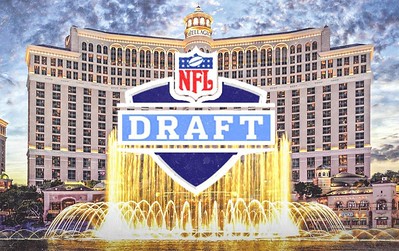
The coronavirus pandemic that shuttered casinos across the U.S. and abroad also cost Las Vegas its chance to host the three days of festivities known as the NFL Draft.

The league still held its draft April 23 to 25, but without audiences, fans or a staging arena. To placate the resort, Commissioner Roger Goodell announced during the first round that Las Vegas will get to hold the draft in 2022, according to the Las Vegas Review Journal.

Steve Hill, chief executive officer and president of the Las Vegas Convention and Visitors Authority, said the tourism agency is set to make it an event fitting of the entertainment capital of the world.

“We’re thrilled the NFL has given us the opportunity to host in 2022,” Hill said in a statement. “While disappointed we were unable to bring this event to life this year, we plan to make the 87th annual NFL draft an only-Vegas experience football fans will never forget.”

If the draft had proceeded as planned this year, prospects would be introduced on a stage constructed over the Fountains of Bellagio, then transported down Flamingo Road to the Caesars Forum, where draft choices were announced. Fans were expected to line up along Flamingo and Las Vegas Boulevard to greet the prospects during their commute between staging areas.

“As the first-official casino partner of the NFL, Caesars Entertainment is honored the NFL Draft will return to Las Vegas with the all-new Caesars Forum conference center at the heart of the action, said Caesars Entertainment Chief Marketing Officer Chris Holdren.

MGM Resorts International, which operates the Bellagio, said it is ready to welcome the draft and show fans what they missed this year.

“We can’t wait to show NFL fans around the world how we throw a party. For now, we hope everyone stays safe and healthy,” an official said.