Author: Casino Connection Staff

OK Governor: No More ‘One-Size-Fits-All’ Compacts

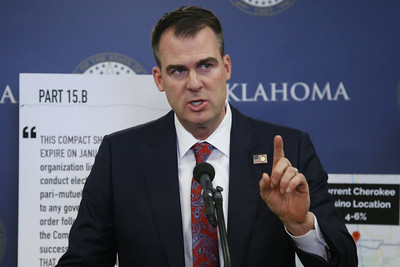
Oklahoma Governor Kevin Stitt’s new gaming compacts with the Otoe-Missouria and Comanche nations illustrate how he’d like to proceed with future compacts: by expanding gambling through new casinos and new types of gambling like sports betting, and basing fees paid to the state on geography, not a flat rate statewide. “No longer are we going to have a one-size-fits-all compact. Other states have different compacts for different tribes and we’re going down the same path here,” Stitt said.

Stitt previously expressed that he’d like to raise exclusivity fees paid by tribes to the state; however, the two new compacts actually have lower fees. Stitt explained the state would receive more revenue from new casinos and sports betting as allowed in the new compacts. However, lower fees would not be part of new compacts with tribes that operate casinos in more desirable locations, like those closer to urban centers and along highways out of Texas. Stitt said if a casino can attract players from Texas or Kansas, its fee should be much higher than a casino in a more isolated area.

Oklahoma tribes sued Stitt last year, claiming the 15-year old compact automatically renewed on January 1. Stitt claims the compact expired. The tribes disagree.

A court-ordered mediation is ongoing. The tribes who lead the lawsuit against Stitt–the Cherokee, Choctaw and Chickasaw nations–account for over half of all gaming business in the state. Even the Otoe-Missouria and Comanche tribes that signed new compacts disagree with Stitt’s interpretation of the original compact, although the Stitt administration believes smaller tribes have not always been happy with the larger tribes’ power and influence.

The new compacts allow the Otoe-Missouria and Comanche tribes to seek land for gaming outside their boundaries. However, any new casino they build must be approved by the Bureau of Indian Affairs. Also, Oklahoma Attorney General Mike Hunter has said the two new tribal gaming compacts were “not authorized” by state law.

Regarding sports betting, the tribes suing Stitt assert the governor does not have the authority to approve it, and legislators, who receive thousands of dollars in campaign contributions from the largest tribes, said sports betting requires their approval. In a joint statement, House Speaker Charles McCall and Senate Pro Tem Greg Treat said, “The legislature is interested in gaming agreements that truly unite the state of Oklahoma with all tribal nations. Sadly, the documents signed between Stitt and the Otoe-Missouria and Comanche nations are legally flawed and sow more division than unity.”

NJ Lottery Suspends 5 Card Cash Due to Pandemic

The New Jersey Lottery has temporarily suspended sales and drawings of its 5 Card Cash game, effective Monday, May 4, according to the lottery to safeguard employees and customers from the Covid-19 virus.

“The temporary suspension of 5 Card Cash is designed to protect the health and safety of lottery employees and its customers,” the agency said in a release. “Not only does this game require two additional staff members to be in the office beyond the teams for other drawings, it does not permit multi-draw play or advance play, so purchases are only applicable to the day they are purchased.”

Players who purchased tickets prior to the game suspension will still have one year following the drawing to claim any prizes won.

During the game suspension, the 5 Card Cash “All In” progressive jackpot will remain static and will continue to be displayed on all media.

The lottery hasn’t set a date when the game will resume.

Vegas Superstar Roy Horn Dies at 75

Roy Horn, one-half of iconic Las Vegas act Siegfried and Roy, died last week due to complications from the Covid-19 virus. Horn and longtime partner Siegfried Fischbacher produced a popular stage show at the Mirage featuring magic and trained animals, including lions, tigers and other exotic cats.

In 2003, Horn was seriously injured in an onstage mauling by a tiger named Mantecore. The attack left him partially paralyzed and the popular duo retired.

At the time of his passing, on Friday, May 8, Horn was 75.

“Today, the world has lost one of the greats of magic,” Fischbacher said, “but I have lost my best friend. From the moment we met, I knew Roy and I, together, would change the world. There could be no Siegfried without Roy, and no Roy without Siegfried.”

According to CNN News, Horn and Fischbacher met on a cruise ship, then launched their dramatic act in Europe before moving to Las Vegas, where they performed for 40 years.

Other Las Vegas performers remembered Horn with gratitude. Fellow magician Penn Jillette of Penn and Teller tweeted, “S&R pioneered the idea that a magic show could be a full evening in Vegas. He was so full of life, wild and unpredictable.” Illusionist Criss Angel tweeted, “You paved the road and forever will be missed.”

And Governor Steve Sisolak wrote, “Thank you, Roy, for your years of entertainment to Nevadans and visitors.”

No Border Openings Yet, Macau Officials Say

Macau officials said last week there is still no confirmed date for the easing of border restrictions with mainland China.

The closures, which have cut the city’s casino industry adrift from its main source of players, have been devastating for Macau’s tourism-driven economy, but the government said nothing will change until key details regarding health and safety have been finalized with officials on the mainland.

Macau has largely been sealed off from the mainland since late January, when the central government stopped issuing visas for group travel outside the country and most forms of individual travel in order to contain the spread of the Covid-19 virus, which was first detected in December in and around the populous south-central city of Wuhan. The virus has infected at least 82,000 people in the country and resulted in more than 4,600 deaths, though it appears to have been brought under control there.

Macau is the most densely populated city in the world, home to more than 600,000 people in an area of around 10 square miles. Yet it’s recorded only 45 cases of the disease, and no confirmed cases in the last month, clearly indicating there’s been nothing like the community spread that’s devastated the U.S. and other Western countries. This is despite the city’s proximity to China and the fact that prior to the pandemic it was hosting around 150,000 tourists a day.

Officials attribute their success to strict border controls—currently all outsiders are barred save for residents of China, Hong Kong and Taiwan𑁋as well as effective screening and quarantining of those who do enter.

Not surprisingly, visitation has slowed to a trickle, and the cost to the tourism-dependent casino industry has been severe. Gaming revenues were down more than 85 percent year on year in March and more than 90 percent in April𑁋60 percent through in all through the first quarter𑁋and experts aren’t forecasting much relief until visa restrictions are meaningfully eased.

That said, pent-up demand is estimated to be massive, and optimism is on the rise about the industry’s eventual recovery. JP Morgan Securities (Asia) now believes gaming revenue will decline by around 39 percent for all of 2020, a much more moderate fall-off than analysts were expecting a few weeks ago.

And while it’s still a big number𑁋should it prove accurate it will amount to a decline of around US$14 billion from last year’s world-leading $36.1 billion𑁋the JP Morgan group said it’s possible 2021 could see a return to positive growth.

Maryland Takes $60 Million Hit Due to Closure

The Maryland Lottery and Gaming Agency released a zero revenue report for the month of April, since all six of the state’s casinos have been closed since March 16. For the state of Maryland, the goose egg translates into more than $60 million of lost revenue from gaming taxes.

The lottery agency announced the loss in a press release last week. In April 2019, total revenue was about $145.2 million. Contributions to the state in that month were about $60.2 million. That includes $45.2 million set aside for the state’s Education Trust Fund. Casino revenues also support jurisdictions where the casinos are located and Maryland’s horse racing industry.

“These are truly unprecedented times,” said Maryland Lottery and Gaming Director Gordon Medenica in the press release. “The casinos generate vital revenue for the state, but we remain focused on the health and safety of the casinos’ patrons and employees as we plan for reopening.”

Medenica said the casinos are working hard on preparations for reopening when restrictions are lifted.

“One advantage is that they already have extensive surveillance and security measures in place, which gives them unique capabilities for monitoring their patrons’ adherence to social distancing and other safety protocols,” Medenica said.

Meanwhile, Maryland gaming officials are discussing ways to safely reopen the casino industry, including plans to limit capacity by possibly one half, temperature checks of guests at entry points, PPE like masks, extensive cleaning, and Plexiglas barriers between slot machines and at the cashier’s cage.

“These operating procedures and protocols we are developing will be in place for some period of time,” Medenica told ABC News. “So it really is establishing a new normal that we will be following for some period of time. We want to get it right, but we also know we are going to constantly be tweaking it to make it even better as we go forward.”

Pennsylvania, Maryland Push for Racing

Customers and employees of horse racetracks in Pennsylvania and Maryland are pushing for racing to resume after being suspended in mid-March due to the Covid-19 pandemic. Both states anticipate restarting live racing with empty grandstands and only essential personnel in attendance.

In Pennsylvania, some 6,000 racing fans signed a petition asking Governor Tom Wolf, who suspended live racing March16, to allow racing to restart without spectators. According to Horse Racing Nation, the governor, who has announced that the state’s economy was to begin a phased reopening on May 8, has not determined when racing will resume. “We haven’t determined the final list,” Wolf told the publication, adding that a racing restart is “under consideration.”

In Maryland, the state Thoroughbred Horsemen’s Association announced that it is confident racing will be one of the earliest industries to resume, hopefully within the next few weeks, according to comments by Governor Larry Hogan.

“Racing industry leaders believe live racing under Covid-19-specific health and safety protocol and with only essential personnel permitted access is very likely to be included in the low-risk stage,” the association posted on its website.

Thousands Face Layoffs in Las Vegas

Thousands of furloughed employees of MGM Resorts International could be losing their jobs, and for many the losses could be permanent.

This was the substance of a notice the company recently sent to an unspecified number of workers, according to a report in the Las Vegas Review-Journal.

The notice, which is required under federal employment law, also announced the extension of employee health benefits through August 31. However, at that point, MGM said, it will begin cutting jobs.

The company employs around 70,000 at its two dozen resorts in eight states. Nearly 63,000 have been on furlough since the Covid-19 pandemic began ravaging the U.S. in earnest in March.

Nevada’s casinos are expected to reopen in phases around Memorial Day, but with domestic tourism likely to remain stunted for no one knows how long, the expectation is the Las Vegas Strip, and the core of MGM’s portfolio along with it, will be mired in a prolonged downturn.

“When our industry bounces back, we will welcome you with open arms,” acting CEO Bill Hornbuckle said in the notice. “However, we understand you may find permanent employment elsewhere. We encourage you to do whatever is best for you and your families during this challenging time.”

The industry’s largest Nevada union lashed out at the plan.

“MGM can afford to be a socially responsible corporate leader in this unprecedented crisis instead of following the commands of its Wall Street masters who only see numbers and are blind to the people who have made this company successful,” said Geoconda Arguello-Kline, secretary-treasurer of Culinary Workers Local 226 in Las Vegas.

Meanwhile, more than 5,000 employees have applied for assistance with basic living expenses from an MGM emergency fund. Through the end of March, about 1,300 requests have been completed and around $1.8 million paid out, the company said.

Hornbuckle has said the company is working on a reopening and safety plan that will include guidelines on personal protective equipment, social distancing, sanitizing and crowd management. The plan is expected to published over the next week or so.

MGM has been spending around $270 million a month during the nationwide casino shutdown that was instituted in mid-March. The company recently raised $750 million in new debt and has some $4.6 billion in cash on hand and access to an additional $1.4 billion from its operating partnership units with real estate investment trust MGM Growth Properties.

Las Vegas locals giant Station Casinos also said it plans to lay off a sizable portion of its workforce. Station informed employees of the anticipated cuts, though the letter didn’t specify how many would be affected.

CDC Gaming Reports cited a company statement indicating 39 percent of a total workforce of some 14,000 could be out of work.

“Please know these are not decisions that we took lightly,” said CEO Frank Fertitta III. “This has been the most challenging and painful situation in our company’s history. We are hopeful, though, that Las Vegas will rebound swiftly and allow us to rehire many of our valued team members when we emerge on the other side of this crisis.”

Employees who are not laid off will continue to receive regular pay and benefits through at least May 31, the company said. Medical, dental, and vision benefits will be extended until September 30.

In line with plans released by Governor Steve Sisolak for a gradual reopening of non-essential businesses in Nevada, Station said it will resume operations in phases at most of its Southern Nevada properties when allowed.

The company operates 19 large and small casinos in the region and a tribally owned gaming resort in Northern California, all currently closed in response to the Covid-19 pandemic.

Meanwhile, as casinos nationwide look forward to opening their doors again and resuming business, workers want conditions: more protective equipment, social distancing policies and tough cleaning regimens.

Union leaders and workers from casinos in Las Vegas, Atlantic City, New Orleans and Biloxi gathered for a video news conference May 5 to insist employees be tested at the casinos’ expense before returning to their jobs, according to the Associated Press.

The largest unions, UNITE Here and the Culinary Workers Union, also unveiled health and safety protocols unique to each job.

“I’m scared to touch dirty beds and towels and catch the virus and get my children sick,” said Gladis Blanco, a guest room attendant at the Bellagio in Las Vegas.

Based on a handful of reopening plans, there appears to be agreement on some of the workers concerns. Companies including Wynn Resorts, Hard Rock and Las Vegas Sands have all endorsed providing masks and gloves, and embraced social distancing.

But the union’s requests also ask for major new commitments of time and resources to implement them. Donald “D” Taylor, Unite Here’s national president, said workers have to be given ample time to do the higher level of cleaning guests will expect.

The American Gaming Association said specific plans will vary among casinos, but “our commitment to the well-being of our team members and guests is consistent all across the country.”

The economy of South Jersey depends on tourism, and that’s going to be one of the hardest to recover, said New Jersey Senate President Steve Sweeney, a sponsor of legislation to help casinos recover. “We have to find ways to get these casinos open safely and get people back to work.”

Jeff Payne, a lounge server at Caesars Atlantic City, said the most important thing is that casino management and workers realize they are in this together.

“The casino industry, built on rewards and tiers, must understand that we are all equal,” Payne said. “Covid virus doesn’t care how much you gamble or what tier you are.”

MGM Hopes to Host NBA, NHL

In what seemed like an offhand remark during MGM Resorts first-quarter earnings call April 30, CEO Bill Hornbuckle acknowledged that the casino behemoth has considered offering its facilities to host the NBA, NHL and other sports.

“We have been in dialogue with leagues and other sporting activities around televised-only events,” Hornbuckle said.

NBA spokesman Mike Bass said, “We have been approached by multiple properties regarding potential options for hosting NBA games, including MGM. We have not engaged in any substantive discussions.”

MGM officials declined further comment, and completing the season in Las Vegas is just one of many scenarios being bandied about, NHL Deputy Commissioner Bill Daly told the Las Vegas Review-Journal.

When it comes to the basketball or even hockey, Mandalay Bay comes to mind. But MGM Resorts has more than a dozen resorts at its disposal in Las Vegas, most with some sort of event center.

For sportsbooks, it could be a match made in heaven.

“Like many sports fans, DraftKings is eager for the return of major sports leagues across the U.S. Whether games are played in empty venues or at neutral locations, we are committed to providing our customers with the ultimate gaming experience they’ve come to expect. In the meantime, the safety and well-being of the nation’s sports fans remains priority,” Johnny Avello, DraftKings sportsbook director, told GGB News.

A proposal sent to the NBA and WNBA detailed MGM’s plan to host the leagues. It would allow players to have their families with them, along with league and broadcast media employees. All would have access to amenities including gambling.

The centerpiece revolves around Mandalay Bay, which has 4,700 rooms combined between the Four Seasons and the Delano. The setup is connected by an enclosed walkway to the Luxor hotel, where MGM service staff such as housekeepers and caterers would live.

The New York Times indicated that 24 basketball courts could be built in Mandalay Bay’s 2.1 million-square-foot convention center. Of those, five would highlight televised games.

The NBA has held its annual G League Winter Showcase at Mandalay Bay Convention Center the past two Decembers.

MGM hired a health and safety consultant as an adviser to ensure the proper medical testing and oversight is provided, the Times reported.

Churchill Downs Moves Forward and Backward

Churchill Downs on April 29 announced a Newport horse racing and gaming center just as demolition of the grandstand at Turfway Park in Florence in Northern Kentucky moves ahead, CEO Bill Carstanjen said in an earnings call with investors April 30.

But in Louisville, a $300 million project at Churchill Downs has been halted because of the coronavirus, according to the Courier-Journal.

The 46,500-square-foot leased space in the Newport Plaza Shopping Center will offer simulcast, pari-mutuel wagering and historical racing machines while Turfway Park undergoes renovation, according to a press release.

On April 21, the Kentucky Horse Racing Commission approved plans to begin construction at Newport as an extension of Turfway Park. The commission’s decision included conditional approval of pari-mutuel wagering. The board also agreed to as much as $38.4 million in capital spending at Newport, according to the Cincinnati Enquirer.

The Newport center will support funding for purses at future Turfway Park live races, and will include a simulcast area with a separate VIP room, a 17,000 square feet gaming floor with 500 historical racing machines, and a bar. Newport will remain open once a new Turfway Park opens.

The anticipated opening date for the Newport center is the last quarter of the year.

The racing center, especially with Simulcasting, will help existing businesses around Newport Plaza Shopping Center, said Mayor Jerry Peluso. It may attract new businesses as well.

“I think this is a big boost, not only to the city because of Newport shopping center, but for the horse industry,” he said.

Meanwhile, the corporation has stopped the $300 million project announced in October.

Based on plans, the project would feature a new seven-story, 156-room hotel; a 900-machine historical racing facility; and a Millionaires Row renovation described as a “finely-curated culinary experience.”

Carstanjen said the delay is “until we have better visibility into the full impact of the pandemic on the regional economy and until after we have completed the next two (Kentucky) Derbies.”

The company remains committed to the build-out of Churchill Downs racetrack, Carstanjen said.

Carstanjen hopes fans will be back for the Derby on September 5. “It’s still four months away. A lot can happen in our country, and I expect that it will. We will adjust and respond to whatever the circumstances.”

Meanwhile, despite revenue declines brought by the coronavirus pandemic, Churchill Downs first-quarter beat some analyst expectations.

Consensus estimated net revenue for the first quarter at $251.4 million, down 5.3 percent year over year. But the company posted $252.9 million. Earnings per share were forecast at $0.33, a decrease of 47.6 percent from Q1 2019. It turned out the decline was 92 percent.

Overall, the company generated $2 million in adjusted net income for the first quarter, compared with $25.5 million last year. The company said a $20.2 million after-tax decrease, linked to the temporary closure of gaming facilities as a result of the Covid-19 pandemic, ravaged results, according to CDC Gaming Reports.

Churchill Downs reports that it ended the quarter with $700.9 million in cash reserves after drawing down its revolving credit facility. Second quarter results will likely be worse, given the postponement of the Kentucky Derby, according to the Motley Fool.

Despite the results, investors retained their belief in Churchill Downs. The company’s shares rose $6.62, or 6.49 percent, on April 29 to close at $108.63 on the NASDAQ.

The Louisville Courier-Journal reported that Kentucky Governor Andy Beshear said the company can open its track’s backside to horses May 11.

“Our strong balance sheet and the deep experience and resilience of our team will enable us to emerge from these challenging times as a stronger company ready to execute on all of the growth opportunities we have shared with our investors,” Carstanjen said.

Pennsylvania Casino Applies for Sports Betting License

Wind Creek Bethlehem has applied for approval to operate both a casino sportsbook, along with mobile and internet betting. The application, filed April 29, follows a deal in January between Wind Creek Hospitality and Betfred to operate the sportsbook.

The filing release issued by the Pennsylvania Gaming Control Board provides little in the way of details as the company requested confidentiality, according to lehighvalleylive.com.

Wind Creek won’t be the first Lehigh Valley location for a sportsbook if approved. The Downs at Lehigh Valley, operated by Mohegan Sun, opened a sportsbook for a test period March 2.

Wind Creek Bethlehem revenues from gambling and fantasy sports dropped 71 percent in March compared to the same month a year ago. By contrast, the industry itself fell 52 percent, according to the gaming board.

Louisiana Sports Betting Faces Uphill Battle

In 2018, Louisiana lawmakers put the decision to legalize daily fantasy sports to the voters. Residents still can’t play. A two-thirds majority of Louisiana lawmakers must approve any tax bill, and that’s been too high of a bar to clear so far on the daily fantasy front.

Legal sports wagering may be headed in the same direction.

A Senate committee approved three amended sports betting bills, two going to the Finance Committee. But the bills call for a referendum and do not include a tax rate.

“We are again going down the path to ask people if they want sports betting,” said Senator Barrow Peacock, sponsor of bills on both daily fantasy sports and sports betting. “And if that’s the will of the people, and if we can’t pass the taxation, the people of Louisiana are going to be” upset.

Of Louisiana’s 64 parishes, 47 voted in favor of legalized fantasy sports in 2018. This time around, sports betting will be on the ballot if SB 130 gets through both chambers. Should voters in any parish approve sports betting, lawmakers would then be tasked with developing infrastructure, including rules for licensing, regulating, and taxing sports betting.

Senator Cameron Henry offered one amendment, which clarifies that the Louisiana Gaming Control Board will be the regulator. The amendment and bill passed the Judiciary B committee with little discussion. Henry’s bill is the most likely to gain traction. It asks residents if they favor sports betting and has no regulatory application or tax framework.

“We’re just going to pass the referendum bill, see if folks like it and next year, start the process of putting regulations in a bill that we’ll have months to work on rather than days or weeks,” he said.

But senators did discuss the two other bills—SB 378 and SB 332—initially similar bills that call for sports betting on riverboat casinos as well as at the Harrah’s Casino in New Orleans and statewide horse racetracks. The proposed legislation allows for on-site mobile sports betting and sets the minimum age at 21. The bills would also allow for betting on all professional, Olympic and collegiate sports, but not on eSports.

SB 378 was amended to match the language in the referendum-only bill and passed easily, before discussion on SB 332. Besides the tax issue, Peacock opened discussion about a Louisiana tax on casino promotional offerings. According to state law, promotions are taxed at 23 percent, meaning casinos are essentially taxed “on their own money” every time they send out a promotional voucher.

According to lawmakers, neither neighboring Mississippi nor Oklahoma has such a tax. SB 332 was ultimately stripped of the tax rate. The net result is that a package of three bills—none with a tax rate—will move forward.

The legislature is set to adjourn on June 1, meaning lawmakers are on a tight schedule. But there could be a special session this summer during which tax issues would be discussed. Tax bills can only originate in the House in Louisiana.

“If there is any way to jumpstart this industry again, it will be to allow them to issue promotional play at a much greater threshold, said Senator Ronnie Johns, who also pointed out that the state is down $100 million in revenue since shutdowns around coronavirus began in March.

If passed, the sports betting would become legal on June 10 of this year.

Lawmakers are likely feeling increasing pressure to legalize. Mississippi was among the first five states to offer legal sports betting nearly two years ago, and the coastline from the Louisiana border to Biloxi is dotted with casinos and now sportsbooks.

Legal Sports Bets Haven’t Driven Out Illegal Action—and Here’s Why

A number of mantras emerged in the wake of the 2018 U.S. Supreme Court decision to overturn the ban on sports betting.

One said legal sports betting would boost casino revenues. The second said sports wagers would boost tax revenue for states that legalized sports betting. The third said legal betting would do away with the illegal variety. Here’s the batting average so far:

  1. Cite New Jersey as Exhibit A.
  2. Again, New Jersey, Exhibit A.

Two out of three ain’t bad, but legal sportsbooks may never eliminate illegal bookies, for a couple of reasons.

“People may choose to bet illegally because it’s easier, because they can bet on credit, or because they aren’t taxed on wins,” said David G. Schwartz, professor and gaming historian at the University of Nevada, Las Vegas, in an interview with GGB News.

To make legal sports betting as competitive as possible, states should consider keeping tax rates low, according to Andrew Silver, an associate with Ifrah Law. By doing so, “States are more likely to drive illegal operators out of the market and increase tax revenues in the long run.”

The legal sports betting industry has inherently low profit margins—operators win slightly more than 50 percent of wagers—and licensed operators continue to be squeezed by competition from underground bookies. For one thing, illegal bookies can offer more attractive odds than legal operators, who must build tax payments into their revenues and adjust their odds accordingly.

When underground bookies have better odds, they can retain high-volume bettors, and “thus possess a competitive advantage,” according to Silver. That advantage helps them survive, especially if state taxes are too high.

Which leads us to Pennsylvania. The Keystone State levies a tax rate of 36 percent for both brick-and-mortar and online sportsbooks. In February, based on taxable revenues of $4.7 million, the state received $1.7 million. In March, on taxable revenues of $6.9 million, it received $2.4 million. According to Silver’s hypothesis, a lower tax rate could yield even higher returns.

David Purdum, who covers gaming for ESPN, believes the biggest advantage of the underground bookmaking market is credit. “I think the amount that is bet on credit is often underestimated,” he told Silver, for an article in the April 7 edition of Forbes. “It’s going to be difficult for regulated U.S. books to overcome, especially if they’re burdened with exorbitant tax rates.”

Of course, legal bookies have the law on their side, and enforcers will crack down on shady operators as they find them. The Pennsylvania’s Gaming Control Board (PGCB) gets an annual $2 million grant to investigate violations of and enforce laws relating to unlawful gambling, Doug Harbach, PGCB communications director, told GGB.

But states can foster market conditions that enable legal operators to naturally attract consumers.

The illegal market has been valued at between $50 billion and $200 billion in aggregate bets placed, according to such groups as the American Gaming Association, Eilers & Krejcik Gaming and H2 Gambling Capital.

“Although not all bettors will immediately shift from illegal operators to legal ones,” in Silver’s view, “research indicates that many individuals who do not currently wager on sports would start betting if it became legal.

“Similarly, survey results show that gamblers who presently bet through illegal channels would be likely to wager even more with legal operators if sports wagering were to become legal in their state.”

In short, “A favorable tax and regulatory environment could make legal sports wagering operators more attractive than their counterparts in the illegal marketplace.”

Don’t discount consumer protection benefits associated with placing a wager with licensed, legal operators, Silver noted. “The risk of funds on deposit is close to zero. The same cannot be guaranteed in the illegal marketplace.”

Results from a 2018 National Research Group poll illustrate the legal market’s potential:

  • 46 percent of people who already wager on sports would likely wager more if gambling was legalized in their state.
  • 27 percent of those who watch sports would like to wager on sports if it were legalized.

If the 46 percent increased their wagers by 25 percent, that would represent an estimated increase of $5.75 billion to $23 billion over illegal market estimates. If the 27 percent bet on sports, that could add from $7.8 billion to $31 billion over illegal markets.

Can the two sides, the yin and yang, attract the same clientele? Sure, Silver said.

“It’s a combination of making the legal marketplace both economically attractive, in addition to it being viewed as less risky than illegal operators.”

Until it’s inconvenient and less financially beneficial for people to bet illegally, the illegal component will maintain a place at the table, Schwartz said.

“It’s certainly possible that some consumers may continue to wager with illegal operators, while simultaneously shifting some of their business to licensed, legal ones,” he told GGB. “But states that make it less expensive for licensed sportsbooks to do business will have more success in getting their residents to shift to the legal marketplace.”

Alas, the conversation at the moment is more informational than practical, given the lack of sports to bet on, thanks to the coronavirus pandemic. But once the outbreak abates and most traditional sports return in some form, sports betting will rise to the occasion.

According to Purdum, “There’s little certainty right now, but a case can be made that sports betting, because of its popularity online, could explode, post-pandemic.”

iGaming Reaps Rewards of Shutdown

In March, New Jersey’s online poker revenues were up more than 100 percent from the previous month; iGaming revenue overall rose 25 percent from February, and the numbers soared 65 percent year over year. All told, in that month, the state set a new internet gaming revenue record: $64.8 million. And April’s iGaming revenue finished just shy of $80 million.

The reason is simple: on March 16,the coronavirus pandemic shut down all casinos, along with most traditional sports. For the last two weeks of the month, online gaming was the only game in town.

“I expect to see these numbers soar even higher when April revenue numbers are released,” said attorney Jeff Ifrah, founder of iDevelopment and Economic Association (iDEA), which seeks to expand online interactive entertainment in the U.S.

In Europe, meanwhile, online casino play increased 22 percent from February through May 3. The rise was even more pronounced in online poker, according to marketing firm Optimove, which reported an increase of 43 percent in online games.

Canadian gaming firm The Stars Group, driven in large measure by PokerStars and its online casino business, posted record revenues for the first quarter. BetMGM’s Jason Scott said the U.S. gaming giant has seen growth in eSports during the pandemic, but nowhere near that of poker or online gambling.

The online spike wasn’t generated only by the absence of sports, said Amit Bivas, Optimove vice president of marketing. “Only a small portion of customers migrated from sport betting activity to products like online casino/poker,” he said. “The rest are newly acquired players, who probably wanted to spend their time (gambling) while at home.” Slots are the most played online game, Bivas said.

The dramatic increase in revenues over the past six weeks “demonstrates how online gaming can be a boon for casinos, state taxes and consumers looking for internet-based entertainment options,” said Ifrah. “Even during statewide shutdowns of retail casinos, iGaming and iPoker are bolstering tax revenues at a time when money is desperately needed to fund needed projects and programs.”

As long as sporting events are few and brick-and-mortar casinos are shut, online gaming will continue to grow—which could prove tempting to states that don’t yet have it.

“We believe the impact of Covid-19 could spur more states to legalize online casino and sports betting,” Morgan Stanley’s Thomas Allen said in a recent note to clients. “Online can be at least a slight offset to lost revenues during phases of social distancing, as we are experiencing today.”

States like Indiana and Iowa, which already have regulated mobile sports betting tied to land-based casinos, are ideally situated to look at iGaming as an additional offering, Allen added. “Layering iGaming on top of an existing mobile product will be an easier lift for state legislators who may be skeptical of expanded gambling.”

Ifrah’s iDEA has been actively working in Michigan to fast-track the state’s iGaming regulations. As a result, Michigan will be able to launch sooner than planned (Q1 2021 was the anticipated launch) and its cash-strapped retail casino industry may have a revenue stream by fall.

Ifrah and his team are mapping out other target states and gathering data to share with lawmakers—which requires a cautious approach. “Often, when states are in a budget crunch, they tend to over-tax and impose huge fees on a new industry,” he told GGB News. “To be clear, the revenue from iGaming will not solve any state budget crisis. It needs to be looked at as one option of many that states will consider this year and in 2021.”

Many casino gamblers have tried online gaming for the first time due to the pandemic. “To what degree those individuals choose to maintain an online presence with or instead of gaming at the casinos cannot be determined until all gaming options are once again fully available,” said Doug Harbach, director of communications for the Pennsylvania Gaming Control Board.

Bivas said the level of online casino play will likely fall once other options return. “Operators will try and retain new players as much as they can, but people will have less time to play at home,” he said.

Ifrah has a different take. He believes iGaming will continue at the same pace, or an accelerated pace, as casinos re-open and traditional sports resume.

“This is primarily because land-based customers don’t significantly overlap with online customers,” he said. “As data from New Jersey indicates, land-based casino revenue has actually grown since online gaming legislation was introduced.”

West Virginia Eyes Summer Start for iGaming

Online gambling in West Virginia could launch as early as July, instead of late 2020 or early 2021 as originally anticipated. Public demand is at a peak with the state’s casinos closed due to Covid-19, said Lottery Director John Myers.

According to Myers, the commission recently approved a 39-page emergency rule regulating iGaming in the state; the iGaming bill that passed in 2019 gave commissioners more than a year to create and implement regulations at the state’s five casinos. Those rules will be submitted to the secretary of state by May 15; the office has 42 days to approve or reject them.

“Our emergency rules were already being finalized when the pandemic hit,” Myers said. “All that remains is approval by the secretary of state and the approval of our minimum internal controls by the lottery commission. It is conceivable that some of our iGaming operators could be up and running as early as June or July under the emergency rules.”

The legislature could give final approval in next year’s session. Before then, the rule could change following a public comment period and legislative review during the 2021 session, he added.

Getting online gambling up and running will not be as labor-intensive or take as long as sports betting. “The initial build-out of the iGaming system, they can almost take the new games, which will come in a suite, and they can lay that right on top of a sports wagering-type of platform,” Myers noted.

The emergency rule gives the lottery commission the authority to grant interim licenses for up to 270 days while applicants are fully vetted. The gaming sites will be able to offer live-dealer casino games, such as poker. Each of the state’s casinos will be able to have up to three online partnerships. Like sports betting rules, players must be physically located within the state.

Myers said he anticipates revenue similar to sports betting, which is taxed at 10 percent, similar to casinos and mobile apps. “The tax rate is 15 percent in iGaming and 10 percent in sports wagering but with the number of people we have I expect the same revenue generation,” Myers said.

Myers said the emergency rule includes three pages of civil penalties that can be applied to anyone who breaks the law. “Hopefully, this can act as a deterrent to any type of that activity,” he said.

iGaming POGOs to Reopen in Philippines

Philippine Offshore Gaming Operators (POGOs) can get back to business as usual, per the Philippine Amusement and Gaming Corp. (PAGCOR). The iGaming providers were shut down on March 18 due to the spread of the coronavirus; according to CNN Philippines, the government is allowing them to resume in order to generate much-needed gaming revenues.

POGOs were forced to shut down March 18 as a result of the crisis. They will be allowed to resume operations under “stringent conditions for both compliance with tax obligations and employee safety,” PAGCOR stated. Prior to relaunching, they must settle all tax liabilities, be current with regulatory and license fees, and pay any performance bond or penalties due to PAGOR.

As for safety measures, staffers will be temperature-tested on arrival, and social distancing standards will be observed, with face masks mandatory.

“Even with the partial resumption of POGO operations, we will put premium on the safety of their employees, and the gaming industry as a whole,” PAGCOR chairwoman and chief executive Andrea Domingo said.

“While we recognize their huge contributions to nation-building, and their great viability as a funding source in these difficult times, we still have to practice extra precaution in striking a balance between health and economic benefits.”

PAGCOR defended its support of POGOs as some lawmakers called for a ban on the industry. In a newsletter titled “The Truth about POGO: A Primer,” cited by Inside Asian Gaming, the state-run regulator refuted allegations that link the online providers to prostitution, crime, money laundering, Chinese espionage and even murder.

It also highlighted the revenues derived from POGOs, established in 2016 in response to the proliferation of illegal iGaming operators in the country. Since then, the report said, POGOs have generated a total of PHP20.83 billion (US$412 million).

“These revenues are over and above the other fees and taxes imposed by other agencies such as the Bureau of Internal Revenue for their corporate taxes and the employees’ income tax, the Bureau of Immigration for their visa fees, the Local Government Units for their local taxes and fees imposed by other agencies,” PAGCOR said.

“POGO is NOT prostitution,” PAGCOR added. “POGO is NOT a spy network.”

ACJokes.com Launches Live Drive-In Comedy at The Jersey Shore

ACJokes.com will host Atlantic City’s first live professional comedy show—since the lockdown—on Saturday, May 16th. Shows will be held every Saturday moving forward. Think of it as comedy that follows all the rules to keep you safe, and breaks all the rules to make you laugh!

ACJokes.com is proud to bring live and professional comedy back to the city and feature many of the area’s top Comedians. Co-Owner Mike Merk said,

“This drive-in show will keep people safe, all while experiencing a cutting edge live comedy experience.”

The event will take place at the John King Memorial parking lot located at 146 S. Tennessee Avenue in Atlantic City on May 16th. The idea had originated from Co-Owner Ray Vazquez’s fiancé Natalia Christine who said “It’s times like these we need to laugh the most.” Guests can arrive beginning at 5pm, and the show starts at 6pm. Tickets are $10 per person in your vehicle, and you’ll be able to get the live audio feed right to your car radio.

To enhance the experience, ticket holders can order from the Tennessee Avenue Beer Hall and have food delivered directly to their vehicle. In addition to providing amazing entertainment, Mike Merk made it very clear that there will be FREE entry to all first responders and healthcare workers who RSVP ahead of time, as space is limited at the venue.

Who: ACJokes.com
What: Live Drive-In Comedy
Where: 146 S Tennessee Avenue – Atlantic City,NJ When: Saturday’s beginning May 16th at 6pm Tickets: $10pp and FREE ADMISSION to FIRST RESPONDERS and HEALTHCARE WORKERS

For more information or to RSVP, please contact Matt Bridgestone at info@acjokes.com or 908-670-0012.

Michael Buble Tour Rescheduled for March 14, 2021 at Jim Whelan Boardwalk Hall

Michael Bublé will be returning to his hugely successful “An Evening With Michael Bublé” Tour to Atlantic City’s Jim Whelan Boardwalk Hall on March 14, 2021.  A complete list of dates follows this release.  The official announcement was confirmed by Beaver Productions, the national promoter and his label, Warner Records.

“I am so looking forward to getting back on stage. I’ve missed my fans and my touring family. Meantime, I hope everyone stays safe.  We can all look forward to a great night out,” commented Bublé, a four-time Grammy-winning artist.

Tickets for previously scheduled dates will be honored.

Michael’s new single, “Gotta Be Patient,” a collaboration with Barenaked Ladies and Mexican singer Sofia Reyes has just been released.  He also just completed a series of Facebook Live shows while in quarantine with his family in Vancouver.

Managing Stress virtual workshop scheduled for teens, adults

The Atlantic City Free Public Library will hold a virtual program – Managing Stress for Teens and Adults – Thursday, May 21, at 4:30 p.m. Melissa J. McLean, a Licensed Professional Counselor and owner of Morning Joy Counseling, LLC, will lead the program.

When individuals have to balance work, school, relationships or kids – on top of managing a new sense of normalcy during the COVID-19 pandemic – life can feel overwhelming. McLean will discuss stress, and how to identify and manage stressors.

McLean’s company, Morning Joy Counseling, LLC, is a multi-clinician group practice that helps people dealing with anxiety and depression, couples who want to rebuild or strengthen their relationships, and other issues.

Online registration is required for this program; a link to the meeting will be emailed after registration is completed. To access the registration form, visit the library’s website – www.acfpl.org – and click on the Online Programs image and then the link provided in the workshop description.

In addition to this workshop, the library is offering other virtual programs and clubs:

  • Atlantic City Reads Online Book Club – The book club will read titles from the Hoopla Book Club Spotlight Selection – available for checkout from Hoopla Digital. Book discussions will take place on the A.C. Reads group discussion board hosted by Goodreads. Registration is required. The first book is “The Mountains Sing.”
  • Basic ESL – This is a beginning English class for non-native English speakers. Classes include interactive learning activities that focus on increasing the listening, speaking, reading, grammar, and writing skills of the students. Registration is required.
  • ESL for Customer Service – The class features an English language curriculum that focuses on customer service and job readiness skills. Students will learn how to effectively communicate with customers and employers. Registration is required.
  • Conversational Spanish – Students will improve their speaking ability and knowledge of Spanish vocabulary. Through dynamic conversational activities, participants will be able to improve comprehension, expression and fluency. Registration is required.
  • Film Society – The Film Society, which is open to adult library members in good standing with the library, will be holding virtual meetings to discuss films and the industry. Those interested in joining the group or attending the meetings must email Film Society coordinator Theresa Hawkins at thawki@acfpl.org.
  • Facebook story time and craft programs – The library posts weekly children’s programs on its Youth Services Department Facebook page. Story times are posted 10:30 a.m. on Mondays and kids crafts, using items commonly found in the home, are posted 2 p.m. on Wednesdays.

Please follow the library on social media or visit www.acfpl.org for updates.

Hard Rock Atlantic City to Distribute 3,000 Grocery Gift Cards to Team Members

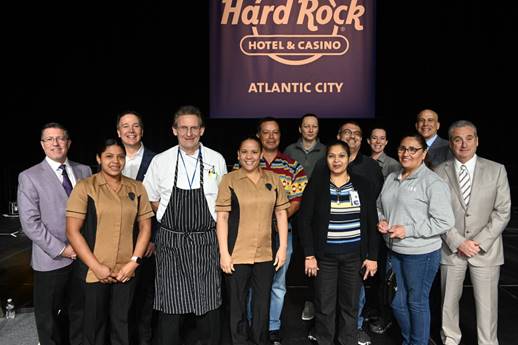
In effort to show their continued commitment to team members and the company’s timeless core values, including “Take Time to be Kind,” Hard Rock Hotel & Casino Atlantic City will distribute 3,000 ShopRite gift cards valued at $100 each to the most vulnerable team members and their families during these unprecedented times. ​Those eligible include all salary and hourly team members, along with personnel who work on-call shifts and earn less than $50,000. ​

The distribution will take place May 7-8 at Hard Rock Atlantic City.

Hard Rock reached out to their workforce with the following message:

Dear Hard Rock Team Members,

We hope everyone is staying safe and healthy during this unprecedented time. We look forward to the day where we can welcome all Team Members back and live our mission of creating authentic experiences that rock! We want to show​how much we value our commitment to ​you, Hard Rock ​Atlantic City Team Members during this time​.​Hard Rock will be providing $100 ShopRite gift cardsto ALL hourly Team Members including full-time, part-time, on-call and salary Team Members who make less than $50,000.00 annually. Hard Rock Atlantic City is very proud to be part of a company that is leading the hospitality industry during this difficult time.

​With that being said, we have outlined critical details below on how to retrieve your gift card. Most importantly, you will need your Hard Rock ID readily available to receive your gift card. Please read all instructions carefully, as it is extremely important ​these are followed for the safety of all Team Members. In an effort to ensure we supply the appropriate quantity of gift cards, we ask that all eligible Team Members arrive during their designated session specified below.

Where to pick up cards:
Please drive down Virginia Avenue to the casino main entrance under the porte-cochere until you get to the gift card distribution area (in front of hotel check-in). Hard Rock Leadership will be handing out gift cards through your car window. Three lanes will be available.
If you utilize public transportation or are walking​, please walk down Maryland Avenue and turn right into Buddy’s Alley. (Valet cross section). There will be a walk-up window on your left where you can pick up your gift card.
We ask that if you are sick​ or showing any sort of symptoms, please stay home. If you are unable to pick up your gift card​for this reason during these distribution times​, please email communication@hrhcac.com to make arrangements.

To keep everyone safe and healthy we ask the following when picking up your gift card:
Arriving by personal vehicle:
Stay in your car- we know it has been some time since you have seen your leaders​, but we ask that you wave from your cars
​A face mask is required
Roll down your window to retrieve – please do not open your door
Have ​your Hard Rock ID out and ready
Only Hard Rock Team Members ​are permitted to pick-up their gift card

Arriving by public transportation or walking:
Only Hard Rock Team Members ​are permitted to pick-up their gift card
A face mask is required
Have ​your Hard Rock ID out and ready
Practice social distancing by staying 6ft away fromall other Team Members

Team Members will be able to pick up their gift cards over the course of two days broken out by the first letter of their last name.
Thursday, May 7th, 2020: Last names beginning A- K
Morning Session 10am-1pm: A-D
Afternoon Session 1pm-4pm: E-K
4pm-5pm- Hard Rock Cafe Team Members
Friday, May 8th, 2020: Last names beginning with L-Z
Morning Session 10am-1pm: L-P
Afternoon Session 1pm-4pm: Q-Z
4pm-5pm- Hard Rock Cafe Team Members

We ask that if you are sick​ or showing any sort of symptoms, please stay home. If you are unable to pick up your gift card​for this reason during these distribution times​, please email communication@hrhcac.com to make arrangements.

Borgata Honors Local Health Heroes

MGM Resorts International has announced an array of initiatives intended to support those impacted economically by the coronavirus (COVID-19) pandemic, including a $1 million crisis and disaster relief pledge into an employee emergency grant fund and donating the equivalent of 400,000 meals across the United States.

“As we confront extraordinary events and an unprecedented  global pandemic crisis, we know that this is an extremely challenging and uncertain time for many of our employees, their families, friends and neighbors and we are committed to help those in need,” said Bill Hornbuckle, Acting CEO and President of MGM Resorts International. “We have done a number of things to help our colleagues, including significantly expanding eligibility coverage for the MGM Employee Emergency Grant Fund. MGM Resorts International is donating $1 million towards disaster relief to offer additional support to employees impacted by the crisis and who may be experiencing hardships.”

Hornbuckle added, “We’ve also stepped up our commitment to communities around the country. Over the past week, MGM has donated the equivalent of 400,000 meals through local food banks to alleviate food insecurity in the United States.”

In November, MGM Resorts launched its bold vision for social impact and sustainability, Focused on What Matters, a company-wide program focused on a goal-centered approach to making positive impacts in its communities. Company goals by 2025 include 5 million meals to be donated through its Feeding Forward program and surpassing 1 million volunteer hours within the community.

“In battling the current global crisis, at MGM Resorts we intend to embrace humanity, exemplify inclusion and exhibit compassion. Our commitment to our employees and the communities in which we operate, conduct business and serve our customers, remains steadfast,” said Jyoti Chopra, Senior Vice President, Chief Diversity & Sustainability Officer for MGM Resorts International.

Additional information below:

MGM Resorts Emergency Relief Fund

The MGM Resorts Emergency Relief Fund provides employees and their immediate families with short-term relief in making payments or to meet obligations during unexpected hardships and emergencies. MGM Resorts’ $1 million pledge will provide expanded coverage for the fund to assist those impacted by the coronavirus, including: full-time employees, on-call employees and those facing layoff, separation or furlough.

Community Food Donations Across the Nation

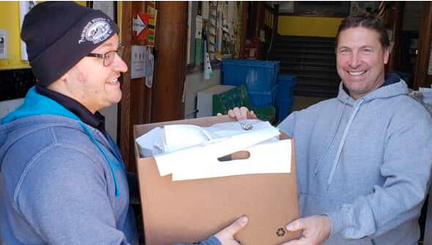
Because of the difficult decision to temporarily close its properties across the country, to date MGM Resorts International has donated over 480,000 pounds of food – or 400,000 meals – to the communities in which it operates. The company is working with local food banks to ensure all available fresh food from its resorts is safely and quickly donated to charitable organizations in several underserved areas.

MGM Resorts International (Las Vegas, NV): Across Las Vegas, MGM Resorts has provided extensive on-the-ground support and in-kind donations to several local community organizations and agencies. So far, the resort group has donated 301,000 pounds of food to Three Square Food Bank, providing 251,000 meals to community members in need. Nonperishable food has been donated from multiple MGM Resorts’ properties across The Strip along with bags for the distribution of food and meals to those in need. MGM will continue to work with Three Square as well as other food banks throughout the city to manage donation intake and food storage.

MGM National Harbor (Oxon Hill, Md.): MGM National Harbor worked with food donor partner Nourish Now to contribute 55,000 pounds of food to community nonprofits such as Nourish Now. The food will provide more than 45,000 meals to Maryland residents throughout Montgomery County and Prince George’s County.

MGM Springfield (Springfield, Mass.): MGM Springfield has donated 12,000 pounds to the Food Bank of Western Massachusetts, Open Pantry Community Services and Friends of the Homeless. These donations will provide over 10,000 meals to Springfield residents in need.

Beau Rivage (Biloxi, Miss.):  Beau Rivage has donated 25,000 pounds of food to multiple organizations including Extra Table, Loaves & Fishes, Lord is My Help and the Hancock County Food Pantry for individuals and families across the city. The effort will provide more than 20,000 meals to South Mississippi families who may have suddenly found themselves in need.

Gold Strike: (Tunica, Miss.): Gold Strike has donated 10,000 pounds of food which is more than 8,000 meals to Sacred Hearth Southern Mission.

MGM Northfield Park (Northfield, Ohio): Working with JACK Casino and JACK Thistledown, MGM Northfield Park has donated more than 3,000 pounds equal 2,500 meals of food to the Greater Cleveland Food Bank, offering support to the Northeast Ohio community. They are continuing to donate throughout the week.

MGM Grand Detroit (Detroit, Mich.): To provide critical help to the city, MGM Grand Detroit has donated approximately 15,000 pounds of produce and dairy products to Forgotten Harvest, a food distribution channel equal to 12,500 meals. MGM Grand Detroit also donated 3,000 gloves to medical professionals in the City of Detroit.

Borgata: (Atlantic City, NJ):  The Borgata has donated more than 35,000 pounds or about 30,000 meals to the Boys and Girls Club of Atlantic County and to the Community Food Bank of NJ.

Empire City:(Yonkers, NY):  Cariats of Port Chester NY received approximately 25,000 pounds of food from Empire City which equals to 20,000 meals.