Author: Casino Connection Staff

Borgata Hotel Casino & Spa to remain closed for July 4th Weekend

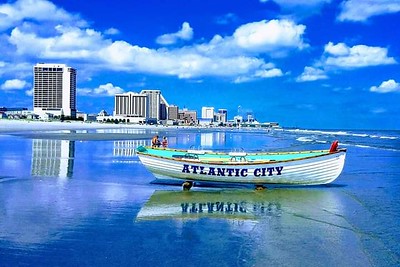
Reopening plans for Atlantic City’s nine casinos just got a little more complicated, as Gov. Phil Murphy has imposed new restrictions on indoor dining and the serving of alcohol on the casino floor, as well as a smoking ban. 

The surprise announcement, made on Monday, June 29—just days before a July 2 planned reopening—has gambling operators scrambling to meet the new requirements in time for the July 4th weekend. The Borgata Casino Hotel & Spa has decided to delay its planned re-opening. The casino was to host only invited guests for four days over the holiday weekend and open to the general public July 6. But with the new restrictions, those plans have been put on hold, and the casino remains closed until further notice.

In a statement MGM Resorts International, Borgata’s parent company, explained the decision:

“We respect the Governor’s decision to postpone the reopening of indoor dining in New Jersey to protect the public. Given this decision, our property Borgata Hotel Casino & Spa in Atlantic City will remain closed. Our guests expect a special experience when they come to our property and if we cannot provide that level of hospitality, we feel it best that we remain closed until such time that the Governor lets us know it is safe to offer food and beverage. The health and safety of our employees and guests are at the center of all that we do, and we regret that, at this time, we are unable to welcome back the thousands of employees who are anxious to return to work. We look forward to a time when it is safe to welcome everyone back.”

Murphy made the decision to suspend indoor dining at a limited capacity over a lack of public adherence to social distancing and face mask policies. The governor has also banned the service of any beverage, including alcohol, on gaming floors or at indoor bars, and has banned smoking.

The news comes as the shore town was gearing up for a return to business for possibly the most important weekend of the season. Murphy ordered casinos closed back in March to curb the spread of the coronavirus. The recent spike in cases has led to more precautions, including a 14-day quarantine travel advisory for New York, New Jersey and Connecticut for any persons coming in from a state with a high-positive rate of the virus. How the tri-state area will enforce the rule is still not clear.

“All of the casino operators are in the same boat and are still waiting for official guidelines in regards to reopening,” Tom Pohlman, general manager of Golden Nugget, wrote in an email to loyalty program card members. “This is a very fluid situation and we continue to adapt as we receive new information.”

Atlantic City’s casinos are permitted to resume business at 25% capacity on July 2. The reopening schedule for all casinos are as follows:

Golden Nugget, Hard Rock Hotel & Casino Atlantic City, Ocean Casino Resort, Tropicana Atlantic City and Resorts Atlantic City are scheduled to reopen Thursday, July 2.

Bally’s Atlantic City, Caesars Atlantic City and Harrah’s Resort Atlantic City will open to invited guests on July 2 before opening their doors to the general public the next day.

Borgata Hotel Casino & Spa closed until further notice.

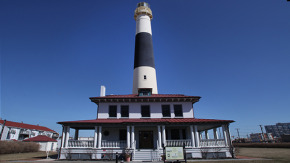
Absecon Lighthouse Open Daily, Offering Free Yoga & Moon Climb

Atlantic City’s own Absecon Lighthouse has been hit by the Covid shutdown like many other businesses, but now this historic landmark is coming back in a big way.

Absecon Lighthouse will be open every day July and August, from 10am to 5pm, and Thursdays until 8pm through Labor Day, with the last climb 1/2 hour before closing.  Adding to the excitement is FREE YOGA at 6pm on Thursdays, sponsored and instructed by “The Leadership Studio” of Tennessee Avenue, Atlantic City.

Join them for their first Full Moon Climb of the summer season this coming Sunday, July 5 evening with the last climb at 9:00pm to see the moon rise out of the ocean.  If you’ve never experienced the 360 degree view of AC’s skyline at night, you’re in for a treat!

Parking, exhibits & Keeper’s Cottage museum are free.  Admission to climb the 228 steps to the top is $10 for adults, $9 for seniors, $6 for children 4-12, and $5 for Atlantic City residents; active military are free.  Dogs on leashes are welcome on the two-acre lawn and in the museum space.

Masks and social distancing are required, plexi glass shields are installed in the gift shop and Watch Room at the top for your safety, and plastic gloves will be issued to climbers.

First lit in 1857, Absecon Lighthouse is the tallest lighthouse in New Jersey and the third tallest in the country.  It is the oldest man-made structure in Atlantic City, boasts a first-order Fresnel lens still in place at the top, and offers fabulous views of Atlantic City and Brigantine.  Absecon Lighthouse – 228 Steps – One Amazing Journey!

Absecon Lighthouse received a general operating support grant from the New Jersey Historical Commission, a division of the epartment of State.  For more information call (609) 449-1360 or visit us on the web at www.abseconlighthouse.org.

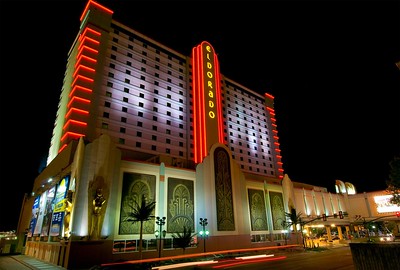
Caesars-Eldorado One Step Closer

The Federal Trade Commission last week gave its approval to the Caesars-Eldorado deal, valued at $17 billion. The OK was given after Eldorado sold two of its properties, the Montbleu in Lake Tahoe and the Eldorado Shreveport to Twin River Holdings for $155 million, a condition of the approval.

The FTC nod means that only three regulatory bodies, the gaming boards in Indiana, Nevada and New Jersey, need to be obtained before the deal goes through. Indiana is scheduled to hear testimony on July 10 but nothing has yet been schedules in Nevada or New Jersey.

The complicated deal was first announced in June 2019, but faced a lot of obstacles, including Covid-19. Eldorado CEO Tom Reeg has worked tirelessly to sell properties in competing markets to obtain regulatory approval and raised more than $7 billion to get the deal done.

The FTC approval wasn’t without its difficulties. The board approved it in a 3-1-1 vote, with one member absent. Dissenting member Rohit Chopra said he was concerned because the deal to sell Montbleu and Eldorado Shreveport wouldn’t close right away.

“I am concerned that the commission is rolling the dice with this complex settlement that will clearly not lead to an immediate restoration of lost competition,” Chopra said.

Nevada OKs Cashless Transactions

It’s “all systems go” in Nevada after the state Gaming Commission took the first baby steps toward establishing a cashless wagering process when it changed and approved several regulations. The prohibition against using such systems was the first to go which opens the door to beta tests for systems developed by various manufacturers.

The commission unanimously approved eight regulations that will make it easier for players to establish accounts, create e-wallets and buy tickets to gamble at the state’s slot machines. The tickets, such as Everi’s QuikTicket, are purchased at kiosks with a set amount and can be used at slot machines and tables, and maybe later restaurants and retail.

“It’s a monumental first step in cashless wagering systems,” Commissioner Steve Cohen said.

Acting Commission Chairman John Moran said the changes will be good for the industry and for the patrons, saying it will “enhance the gaming experience.”

Direct transfers from patron’s bank accounts to gaming machines will still be prohibited, but several systems envision transfers to a second account—an e-wallet—can then be transferred to gaming devices. Any winnings would then be transferred back to the e-wallet.

Gaming Control Board officials noted that the use of e-wallets will allow a transparent view of the money used to gamble should investigations be required.

Atlantic City Casino Losses Hurt State Agencies

The three-month closure of casinos in Atlantic City did more than cripple the bottom line for gaming companies. It also hurt the state and local programs that depend on healthy casino revenues.

The Casino Revenue Fund, financed by a tax on gaming revenues, pays for a variety of programs for senior citizens and disabled residents, including pharmaceutical assistance, the community care program, food distribution, medical and public transportation and emergency housing needs.

The total estimated loss to that fund due to the shutdown is $94 million—$63.8 million from casino taxes, and the balance from the loss of hotel room fees and promotional gaming credits.

“The state is going to need help from the federal government to plug a lot of budget holes if we are going to fund these programs like we did in past budgets,” Assemblyman Vince Mazzeo, who was just reappointed to the fund’s advisory board, told GGB News.

Atlantic City’s nine casinos took in almost $86 million in May, nearly all from online operations. While that figure jumped 124 percent from the same month last year, the overall revenue numbers fell 65 percent compared to May 2019. Sports betting generated less than $10 million for the casinos and two racetracks.

On June 15, the state Senate approved a series of tax breaks for the casino industry, according to the Press of Atlantic City—among those breaks, a reduction in the amount of money dedicated to the Casino Revenue Fund.

While some lawmakers expressed reservations about both the optics of pumping money into casino corporations and the impact on the fund, other senators said otherwise.

“My concern has been and remains with the families who overnight found themselves unemployed and left to deal with a broken unemployment system for the last three months,” said Senator Chris Brown, a Republican who serves the New Jersey’s 2nd Legislative District, which includes Atlantic City. “Working in a bipartisan manner, we took a step toward saving 27,000 casino jobs while also assisting our small businesses so we can put our Atlantic County families back to work.”

Senate bill S2400 cuts gaming revenue taxes for one year, beginning from the date the nine casinos reopen. It also eliminates hotel fees through 2020, defers certain licensing fees and permanently allows for a 100 percent deduction of provisional gaming credits and coupons against gross revenues. The bill also allocates $100 million of Covid-19-related federal grant money to the state Economic Development Authority for small business assistance.

The bill includes an amendment that decreases the time casinos can receive a reduction in gaming revenue taxes, and could reduce the amount of casino-related taxes and fees paid to the state and the Casino Reinvestment Development Authority (CRDA).

That agency gets funding from a host of tourism-related services, all of them shredded by the closures of casinos, hotels and restaurants and bars. Here’s a breakdown:

  • $2 per night room fee funds the Convention Center Division budget, minus the Urban Revitalization Program funds
  • $3 per night room fee funds repayment of hotel room bonds and to a minimum extend, the CRDA operating budget
  • $3 of parking fee allocates 50 cents for the Casino Revenue Fund while $2.50 pays down CRDA debt service
  • 25 percent of gross revenues go towards non-gaming expansions/improvements, as well as CRDA project funding, but now redirected to Atlantic City to help pay down its debt
  • Luxury tax collected from casinos and non-casino entities, which includes a 9 percent hotel tax, a 3 percent tax per alcoholic drink and 9 percent entertainment per ticket tax. These taxes pay for bonds as well as operations maintenance and promotion of the Convention Center and Boardwalk Hall, and funding for Meet AC, the former convention and visitors authority

The bill could reduce the amount of casino taxes and fees paid to the state and CRDA by more than $225 million over a two-year period, according to the Press. The agencies that still get their money are the ones that regulate the industry: the Casino Control Commission (CCC) and the Division of Gaming Enforcement (DGE).

“We anticipate the closings will have minimal impact, as the casino industry continues to fund the regulatory expenses of the DGE and CCC,” DGE spokesman Leland Moore told GGB.

Covid Death Shuts Down Gila River Casinos in Arizona

The first casino to be hit with a Covid case after reopening has closed, along with two of its sister properties.

Arizona’s Gila River Community announced its three casinos, Wild Horse Pass, Lone Butte, and Vee Quiva—closed at 2 a.m. on June 18. The casinos reopened in mid-May after being closed for two months due to the lockdown.

Security guard Robert Washington, 68, died of Covid-related illness on June 11, after returning to work in mid-May when most Arizona casinos reopened. According to the Arizona Republic, Washington had complained about the guests, most of who didn’t wear masks or practice social distancing. Washington suffered from diabetes and had recently recovered from pancreatic cancer. As such, he fits the profiles of Covid-19 deaths, which almost always have other immune system weaknesses related.

Tribal officials said the three casinos would close down for two weeks. During that time the tribe will “reassess its current safety standards” after evaluating its safety plan with the Gila River Indian Community Council. The tribe said it would seek “feedback from its community and team members,” as well.

When casinos reopened there were some expectations that some team members may contract the virus. Most expected to handle it by isolating those diagnosed and contact tracing the employee’s movements and test anyone who worked with or came in contact with the member. But Washington’s death, relatively suddenly, has apparently changed that strategy. The tribe has not announced if other employees have contracted the virus or how they were handling anyone who can in contact with Washington.

Gila River Governor Stephen Lewis released a statement that the temporary shutdown will help protect casino employees and customers, as well as those who live in the Gila River community.

“Like our sister tribes and businesses all over Arizona, we have tried to do what is best for all, while processing new information and new guidelines about the pandemic with little in the way of definitive guidance,” he said.

In New York, Commercial Gaming Still in Limbo

New York’s commercial casinos and racinos are not among the businesses that have begun reopening across the state.

Unlike their tribal competitors, which are not bound by state law and have been gradually resuming operations since mid-May, the 12 casinos and racinos are still waiting for the go-ahead from the administration of Governor Andrew Cuomo to get back in the fray.

According to former Lieutenant Governor Bob Duffy, who is advising Cuomo on the reopenings, “Areas such as the malls, gyms, movie theaters, casinos, will not open on the first day of Phase Four, but will open at some time during Phase 4,” as the current round is known.

Phase 4, however, has no specific timeframe, unlike the two-week periods for the previous three phases.

“Phase 4 could last two months, it could last three months,” Duffy said. “There won’t be a Phase Five, so it’s going to be a gradation of certain activities just based on some of the research and feedback that the state is getting. And, really, it’s the measurement of these activities, region by region.”

The Oneida Indian Nation’s three central-state casinos have been open on a limited basis since June 10. The Seneca Nation’s three casinos Buffalo, Niagara Falls and Salamanca began reopening in phases on June 18. The small Lakeside Gaming slots venue run by the Cayuga Nation in Union Springs has been open since mid-May.

Meanwhile, the commercial operators, which have been closed since mid-March, have no choice but to wait.

“We had hoped to be able to open by July 4,” said Jeff Gural, who owns Tioga Downs Casino Resort, a full-scale gaming facility near Binghamton in the Southern Tier, and the racino at the Vernon Downs harness track in Oneida County east of Syracuse. “There are people who are waiting for the casinos to reopen. I know the governor is prioritizing health and safety, not economics, and I applaud that, but it makes sense to reopen as soon as we can.”

It’s not just the tribal competition in New York that concerns him, he told the Syracuse Post-Standard.

“People who like to gamble are going to go to the casinos they can find. That’s their mentality. So they’re going to travel to these places in other states, and perhaps they’re exposed (to the virus). Then they come back here. We don’t have a big problem here, and we’re going to follow all the guidelines issued by New York state. But we don’t need people bringing back anything from Wilkes-Barre (Pennsylvania) or Atlantic City.”

At del Lago Resort & Casino in the Finger Lakes region, General Manager Lance Young told the Post-Standard his property will be prepared when the big day finally arrives.

“Del Lago Resort & Casino continues to plan for a safe reopening that protects our employees, customers and the general public. We have developed a comprehensive reopening plan, with input from various stakeholders, that meets or exceeds CDC and OSHA guidelines. We are ready to reopen upon state approval.”

Rhode Island Town Leaves Casino Money out of Budget

Tiverton Casino was closed for three months, and although it has started to reopen, the town of Tiverton, Rhode Island is not getting the money that the casino normally pays the town out of its profits.

The city is reworking its budget and a making new tax levy to make up for the loss of the money. It also doesn’t plan to include casino revenue for the upcoming fiscal year because of the uncertainty of whether there will be a second wave of the coronavirus that might cause Twin River Tiverton Casino Hotel to cease operations again.

The casino normally pays the city $3.1 million. It had only been paid $1.2 million in mid-March when the pandemic caused both casinos in the state to close.

The town thought that it was guaranteed the money from the state if the casino closed, but later found out that wasn’t true.

Each year in May the voters of Tiverton vote on the new city budget in a referendum. This year the town council did not want to do that without knowing how much money it will get from the state for the next fiscal year.

Covid Reignites Pennsylvania VGT Debate

Lawmakers in Pennsylvania are reconsidering a bill to legalize video gaming terminals in the state’s bars and restaurants as tavern owners and restaurateurs struggle to recover from state-imposed shutdowns due to the Covid-19 pandemic.

Lobbyists for tavern owners, VGT manufacturers and route operators lobbied hard but were unable to get bar VGTs a place in the major gaming expansion bill signed into law in 2017. That law did add VGTs to truck stops, but the revenue and taxes those locations generate is a fraction of what would be possible with a VGT law in the style of Illinois or Montana. Ultimately, the casino lobby won out and VGTs were dropped from the bill.

Now, the issue is being revived both to help small businesses and to bring back some of the tax revenue lost to the brick-and-mortar casino shutdown.

“I think the expansion that we’re seeing is being pushed by the desire to kind of find another revenue source for the commonwealth,” Democratic state Senator Tim Kearney of Swarthmore told the Delco Times. “It’s been an issue that’s been batted around for years, and there’s all sorts of different definitions about what a ‘game of chance’ is and what the VGTs actually do and everything else, and there’s really strong feelings on all sides.”

Republicans controlling the state Senate also are pushing for a new VGT bill, a subject that has caused some controversy. Senate President Pro Tempore Joseph Scarnati has received significant campaign contributions from Golden Entertainment, one of the nation’s top route operators for VLTs.

With Golden standing to be one of the bill’s main beneficiaries, some lawmakers have criticized Scarnati’s push for an early vote on the VLT bill.

Proponents of VGTs say they would replace gray-area machines that have been unregulated in the bars for years, as well as addressing the so-called “skill machines” that are considered illegal in Pennsylvania by the courts, but proliferate due to well-financed manufacturers and a lack of enforcement.

VGT suppliers and operators are once again lobbying for the legislation. Rick Meitzler, CEO of Illinois-based slot and VGT supplier Novomatic Americas—and a board member of the Pennsylvania Video Gaming Association, VGT lobbying group, told the Times that the Illinois VGT industry has taken in $2 billion of revenue since 2009, and has helped small businesses produce anywhere from $40,000 to $500,000 annually in extra income.

“That really became a nice little added bonus to them that they could revitalize their bars, put some money into them, and it became a viable option for them,” Meitzler said. “And whatever their getting, the state’s getting the same, or about the same, so the state’s happy, bars are happy and obviously manufacturers like us are happy for providing games to a regulated market.”

Not unexpectedly, Pennsylvania’s casino licensees were among the first to oppose the new VGT push, which they say would include legalization of the unregulated “skill games” still flooding the market.

“We are shocked and alarmed by the persistent speculation that the General Assembly is considering an expansion of gaming to include both broad-based VGT gambling throughout communities and the legalization of currently illegal skill game slot machines that are being operated outside of our facilities,” 13 licensed casino owners and operators wrote in a letter last week to legislative leaders. “The legislature determined that such broad-based gaming expansion would have had a devastating impact on both Pennsylvania’s casinos and the Pennsylvania Lottery. This is even more true today.”

Bias Alleged In Arkansas Casino License Vote

The Arkansas Racing Commission on June 18 awarded the state’s fourth and final casino license to Mississippi-based Gulfside Casino Partnership for a proposed $254 million casino resort in Pope County. However, the other contender for the license, a $225 million casino resort proposed by the partnership of the Oklahoma-based Cherokee Nation and Dallas Cowboys owner Jerry Jones’ Legends Hospitality, alleged bias scoring by Commissioner Butch Rice. The commission’s decision has been referred to the Arkansas attorney general.

An affidavit submitted by Cherokee Nation Business Counsel Dustin McDaniel alleges Rice “consistently attempted to protect Gulfside Casino Partnership from facing competition in an effort to award them a license by default.”

Rice gave Gulfside’s bid a perfect score of 100 and CNB’s bid a score of 29. Rice’s 71-point scoring difference gave Gulfside the victory with a total score of 637-572.

Rice said he conducted an objective evaluation of the competing proposals and he wasn’t biased toward Gulfside. He said he believes Gulfside is a better fit for the Pope County casino since Gulfside wants to build a larger casino than CNB, meaning more jobs and more tax revenue.

Rice said, “It is almost like comparing apples and oranges when comparing job creation and tax revenue. The job creation was big to me, and that’s what Gulfside proved, and that’s what the people of Pope County would have been looking at.”

McDaniel said Rice’s scores must be eliminated—giving CNB a higher point total. “Despite the AG’s office expressly warning commissioners not to engage in arbitrary, capricious or biased scoring, Commissioner Rice in fact single-handedly overturned the score given by the rest of the commission.”

He added, “We anticipate both an administrative appeal and a request for injunctive relief from a court. This is a uniquely significant state decision, and such an egregious act of bad faith should not be allowed to control it.”

Commissioners faced three options: 1) excluding Rice’s scores; 2) restarting the scoring process; or 3) bringing in an independent consultant. With Rice absent, on June 22 the commission instead voted that Gulfside and CNB must meet with the attorney general’s office to seek “common ground on a solution,” commission spokesman Scott Hardin said. “This will have to be determined fairly quickly as a letter was issued to Gulfside on Friday announcing the intent to award the Pope County casino license. The commission has 30 days from the date the letter is received to formally issue the license. Prior to the end of the 30-day period, the commission should have feedback following meetings with both parties.”

Commission Chairman Alex Lieblong said he hoped the meeting of attorneys could give the commission a “game plan.”

In November 2018, Arkansas voters approved Amendment 100, allowing expanded casino operations at Oaklawn Racing Casino Resort in Hot Springs, Southland Casino Racing in West Memphis and new casinos in Pope County and Jefferson County, where the Quapaw Nation’s $350 million complex is under construction .

The deputy attorney general for state agencies, Butch Reeves, warned the commission at the outset to make sure there were not major differences between the scores.

“If you give somebody 30 and then the next party zero, your score is considered arbitrary and can get us in trouble,” he said.

Selling Sin City—Safely

Like miniskirts and sensible shoes, indulgence and prudence aren’t usually spotted at the same parties. And Las Vegas never needed to make friends of the two until now.

That’s where the Las Vegas Convention and Visitors Authority (LVCVA) and its go-to ad agency, R&R Partners, came in. They have crafted an initiative titled #VegasSmart that’s now hitting social media with a video campaign that manages to convey an urgent message about personal safety with energy and humor.

It’s the hallmark of a fruitful partnership the LVCVA has enjoyed with R&R going back to the now-iconic “What Happens Here Stays Here” campaign.

“When you think about the past year, things have been very dynamic, right? For us, it’s been necessary to be flexible and to be able to pivot and adjust the message with events,” H. Fletch Brunelle, vice president of marketing for the LVCVA, told GGB News.

That’s no easy task these days. To start, Brunelle explained, a year or so ago the LVCVA began retooling “What Happens Here Stays Here,” looking for something new, restorative and inviting in the aftermath of the 2017 mass-shooting on the Strip.

As the partners discovered, the theme had grown dated in the brave new world of Facebook, Instagram, YouTube, WhatsApp, WeChat, Tumblr and Twitter, in which people, younger people especially, want to broadcast their experiences, not conceal them.

The result was “What Happens Here Only Happens Here,” a campaign that turned the focus away from vignettes of secretive adult misbehavior to showcase the scope and variety of attractions the city has to offer. An array of multimedia messages was set to kick off with a TV commercial that ran during the Grammy Awards on CBS on January 26.

Then everything went on hold with the death of Kobe Bryant and his daughter in a helicopter crash the day before the telecast. It was sensitivity to the former L.A. Lakers star’s ties with Southern California, a major source of visitation to Las Vegas, that sealed the decision, Brunelle said.

After that came the Covid-19 pandemic, and with it, the ultimate test for the creative powers of the LVCVA and R&R. “What Happens Here Only Happens Here” was filed away once more.

“The No. 1 priority is health and safety,” said Brunelle. “For us, in terms of marketing strategy, we need to continue to understand our key origin markets, but we want to make sure people stay safe in the destination.”

On May 18, two months into the lockdown, the strategy surfaced with a social media initiative tagged “OnlyVegas” and a 30-second TV spot constructed around the catchphrase “A new Vegas for a new reality.” It set an emotional stage for the city’s reopening, with visuals centering on a handsome couple enjoying a romantic getaway on the Strip—mostly evening scenes, with shots of the city skyline and beneath it, a woman’s voice, warm and reassuring: “The world has changed, and Vegas is changing with it. So yes, things will be a little different when we open again. At least for a while.”

But, she promises, the experience is going to be better than ever. “So if you ever imagined a Vegas that’s just for you, it’s only here. And when it’s ready, you’ll be the first to know.”

That was followed by the countdown to June 4, when the city’s casinos were permitted to reopen. When the big day arrived, the LVCVA was ready, with a commercial spot that opens with a suited man in silhouette who approaches an industrial-looking power switch, throws it, and rekindles the “Welcome to Fabulous Las Vegas” sign. As the rest of the resorts light up on the Strip, two simple words flash into the frame: “Now Open.” Fade to black.

“The Light,” as it’s called, was slated to run nationally on network and cable channels, but once again, the unforeseen happened, and the commercial was pulled when street protests erupted nationwide over the death of George Floyd, an African American in police custody in Minneapolis.

As Brunelle explained, “When we saw things throughout the country, saw what the national conversation was, we knew we needed to be respectful of what was happening.”

By that point, though, the LVCVA was ready with the core message it wanted to convey under the #VegasSmart rubric, with highlights that include a pair of 30-second videos posted on the agency’s website and on social media that aim to cover the demographic gamut.

The first depicts masked employees cheerfully going about their jobs𑁋front desk clerks, housekeepers, bartenders, doormen and bell hops𑁋while overtop roll the words: “We’re happy to see you again. We’re doing what we can. To ensure you can do everything without worrying about anything. Now let’s get back to the Vegas we know and love.”

The second consists of speeding aerial views of the Strip with a heavy-metal soundtrack and the words: “We know it’s been a while. But guess who’s back. Welcome back to Las Vegas.”

The balance of the initiative enlists celebrities for a series of lighthearted messages that work in a way that’s direct and personal:

“How To Be Vegas Smart” begins one 10-second spot featuring a Cirque de Soleil character arched in a handstand over a sink: “Say ‘Vegas Baby’ 20 Times While Washing Your Hands.”

One spot stars magician Jen Kramer, who flips over a jack of diamonds whose faces change, each now wearing a mask. Another spot features illusionist Shin Lim, who out of nowhere makes a mask appear on his face. In another, comedian Carrot Top fumbles to don a tie-dyed face covering over horn-rimmed glasses, and when he’s finally got it on, says, “I think I look a lot better in a mask.”

Brunelle said the LVCVA will continue to work with R&R to “tweak” the message. “We’re in the reopening phase right now, and we will adjust.”

The next phase, with a new message—a post-reopening message, if you will—is already on the drawing board, and likely will be unveiled the end of July or early August.

“We’re always keeping a beat with our customers’ thinking,” he said. “We’re always in development.”

Majority of Tribal Casinos Defied States to Reopen

Gaming tribes in California, Connecticut, Oregon, New York, Florida, North Carolina and other states defied their governors who advised them against reopening their casinos too early due to Covid-19 concerns.

That amounts to 315 casinos out of 524 tribes, or about 60 percent. They range from the Mashantucket Pequot and Mohegan tribes in Connecticut to the Oneida Indian Nation in New York, to dozens of tribes operating casinos in the Golden State.

Tribal nations are considered sovereign and so don’t fall under the jurisdiction of state governments. Many governors issued executive orders banning large gatherings, including at casinos. But pressures created by the lack of revenues and widespread unemployment proved to be the dominant argument for reopening in most cases.

In South Dakota, tribes set up checkpoints to discourage visitors from out-of-state. In Connecticut, the state Department of Transportation put up signs to discourage motorists from visiting Mohegan Sun and Foxwoods, warning, “Don’t Gamble With Covid,”’ but it doesn’t seem to have had much effect. The casinos opened June 1 with 25 percent occupancy.

Nevertheless, Governor Ned Lamont defended his tactics. “People over the age of 65 should not be in large settings. We think that’s dangerous, even now. So, we tried to put some good, strong advice in place as people are on their way to taking a gamble.”

Mashantucket Pequot Tribal Nation Rodney Butler countered, “I have tribal elders that I’m concerned about. I’m not going to put my community at risk. We’re doing this very, very cautiously and with every safety precaution in mind.” Some tribes implemented clear plastic screens and sneeze guards to protect players and employees.

New York Governor Andrew Cuomo, who imposed some of the strictest lockdown measures in the nation, said tribal casinos are an exception. “Tribal nations are just that, they’re nations. So they are not bound by state laws,” he said. Commercial casinos remain closed in the Empire State, but the Oneida Indian Nation partially opened three casinos last week.

California Governor Gavin Newsom’s warnings that the “virus does not recognize jurisdictional boundaries” largely fell on deaf ears.

Although Florida Governor Ron DeSantis didn’t try to take on the state’s gaming tribes, Miami-Dade Mayor Carlos Gimenez attacked Miccosukee Resort & Gaming on social media for reopening earlier than other businesses. He also urged senior citizens to stay away from the casino.

Danielle Her Many Horses, deputy executive director of the National Indian Gaming Association, commented about the national trend: “You have tribes in states that do want to open up and tribes that are like, ‘No, no, no, we’re going to back off on this because we don’t think that’s the right idea,’” she said. “And you have others who are like, ‘We need to get our people working,’ who are thinking of it in terms of rebooting the economy.”

Washington Governor Jay Inslee worked very closely with the state’s tribes, meeting with them regularly, she pointed out.

On the other hand, when several Sioux tribes in South Dakota set up checkpoints along state and federal highways, Governor Kristi Noem balked. “If the checkpoints are not removed within the next 48 hours, the state will take necessary legal action,” she wrote.

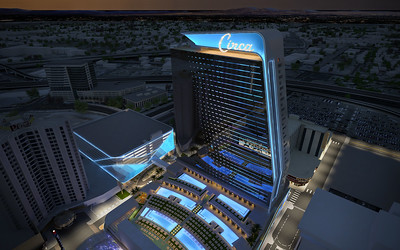
Circa Las Vegas Vows Adults-Only Resort

Fremont Street’s new Circa resort will be off-limits to anyone under 21 when it opens in October.

The first ground-up resort to come to Downtown Las Vegas in decades announced the policy on Twitter.

“Once, Las Vegas held a certain mystique as this fabulous place where only grown-ups could play,” the message states. “Call us old-fashioned, but we think adults need some of that mystique back in their lives.”

Developer Derek Stevens later verified the post in a direct message, joking, “Circa was expensive to build and we couldn’t afford the arcade LOL.”

He said his other Downtown properties, the Golden Gate and the D Las Vegas, will continue to allow guests with children.

The last Las Vegas casino that sought to bar minors as a matter of policy was Steve Wynn’s Bellagio, which opened in 1998 at a time when the era of the so-called family-friendly Las Vegas was coming under mounting criticism. Wynn initially banned strollers from entering the Strip resort, but this was relaxed after guests made it known they wanted their children to see the floral displays at property’s popular Conservatory.

When MGM Resorts International bought out Wynn’s Mirage Resorts in 2000, the policy was quietly allowed to lapse.

Casinos Are Back, But Are They Making Money?

In Nevada, gaming revenues have been surprisingly robust since casinos reopened June 4, following a three-month closure due to Covid-19. One caveat: these customers seem to be primarily locals and Californians who are driving in to Nevada.

Mike Lawton, senior research analyst at the Nevada Gaming Control Board, pointed out that two key demographics are missing. “There’s not a lot of high-end play,” he said. “And the big piece missing is that convention business, that corporate customer.”

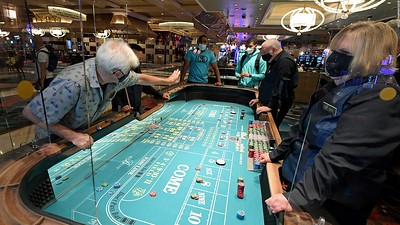
Reno, Carson City and Lake Tahoe are down by less than 20 percent, he said, although 90 percent of the gaming businesses have now reopened, with the remainder expected to be operating by the July 4th holiday. About 59,000 slots, 2,020 table games and 186 card games are currently open in the state. Casino restaurants and the casino floors are limited to 50 percent capacity. There is no such rule for hotel rooms.

Snapshot: Caesars’ Performance

Caesars Entertainment estimates that revenues for the first week of casino reopenings in Nevada came in about 58 percent below the same period last year. The preliminary results for June 4-10 were released in a filing in conjunction with balance sheet-boosting moves announced by Eldorado Resorts ahead of its $17.3 billion acquisition of Caesars, which is expected to close in July.

The five properties in the filing𑁋Caesars Palace, the Flamingo Las Vegas, Harrah’s Las Vegas, the Linq casino and Linq Promenade and Harrah’s Lake Tahoe𑁋generated operating income that was down between 110 percent and 120 percent versus last year. Adjusted cash flow was down 70 percent to 80 percent.

All five properties are operating under state-mandated restrictions on slots and table games, a 50 percent limit on capacity and with no live entertainment.

Six regional casinos Caesars casinos reopened beginning May 18: Harrah’s Bossier City and Harrah’s Louisiana Downs in Louisiana, Harrah’s Gulf Coast and Horseshoe Tunica in Mississippi, Horseshoe Council Bluffs in Iowa and Harrah’s North Kansas City in Missouri. Revenues there were either flat or up slightly against last year. On a more promising note, operating income at the six increased by 60 percent to 70 percent, while adjusted cash flow was up 35 percent to 40 percent.

In the Heartland

The numbers are sparse for now, but continue to file in. In Arkansas, for example, casinos reopened May 18 at one-third capacity with limited gaming options. The Arkansas Racing Commission released revenue figures from May 18 through May 31, and based on slots only, the data show Oaklawn Racing Casino Resort in Hot Springs posted $52.6 million in wagers and a $4.6 million house win before taxes, compared to $157.4 in wagers in February.

For the 14-day period in May, Southland Park Gaming and Racing in West Memphis posted $92.1 million in slots wagers and $7.2 million in house win, compared to $303.4 million in wagers in February.

And Saracen Casino Resort in Pine Bluff posted $14.5 million in wagers and nearly $1 million in house win, compared to $65 million in wagers in February.

Still, daily wagers placed in May exceeded 33 percent of daily average in February, with 47 percent at Saracen, 63 percent at Southland and 69 percent at Oaklawn.

Way Down South

Louisiana’s 14 riverboat casinos and three racinos produced $70.4 million in May, down from $218 million in May 2019, according to figures released by the Louisiana Gaming Control Board. Video poker revenue fell by 56 percent to $23.9 million compared to $54.2 million in May 2019. Riverboat casino admissions totaled 432,612 people for May, a 75 percent drop from the 1.75 million admissions for all of May 2019.

The numbers are similar to those from March, when casinos closed March 17 and revenue fell 58 percent from $23.6 million in 2019 to $10 million.

However, Louisiana Casino Association Executive Director Wade Duty said the two-week May results were encouraging, since the volume of gamblers was down only 13 percent compared to the same period in May 2019. “Turnout was greater than what we were expecting. Understandably, folks are cautious,” he said, “but the casinos are trying to balance a lot of regulatory and health care concerns.”

Most riverboat casinos, racinos and video poker parlors reopened at 25 percent capacity on May 18. Harrah’s New Orleans reopened Saturday, June 13. For the 13-day reopening period in May, Baton Rouge’s riverboat casinos generated $7.5 million, or 36 percent of the $20.6 million they posted for the full month of May 2019.

Hollywood Casino Baton Rouge revenue fell 58.5 percent to $2 million in May, compared to $4.7 million one year ago. L’Auberge Baton Rouge dropped 63.1 percent from $13.2 million to $4.9 million. And revenue at the Belle of Baton Rouge declined 76.5 percent from $2.6 million to $617,758.

Due to the closures of Harrah’s and the Fair Grounds, New Orleans casino market revenue dropped 87.5 percent in May, from $54.5 million to $6.8 million. The riverboat market fell 72.1 percent from $24.3 million to $6.8 million.

Boomtown revenue dropped 61.9 percent, from $10.3 million to $3.9 million. At Treasure Chest, which reopened two days after most of the other Louisiana casinos, revenue declined 75.5 percent, from $9.9 million to $2.4 million. Revenue at Amelia Belle, which reopened more than a week after the other riverboats, dropped 89.6 percent, from $4.1 million to $423,715.

The Lake Charles market posted the smallest decrease in Louisiana, with revenue down 56.9 percent. Revenue at the market’s three riverboat casinos and the slots at Delta Downs fell from $77.8 million to $33.5 million in May.

The Shreveport market had one less riverboat this year than in May 2019; its revenue dropped 64.5 percent, from $57.5 million to $20.4 million. And Acadiana, made up the slots at Evangeline Downs, decreased 70.8 percent, from $7.7 million to $2.3 million.

The May 2019 revenue figures also included the Diamond Jacks riverboat casino in Bossier City, which announced it would permanently close due to the impact of the pandemic.

While no tribal casinos reveal their revenue numbers this quickly, anecdotal evidence indicates that the casinos in California, Arizona and the northwest have welcomed good crowds, albeit smaller numbers than normal. The tribes are using the same health and safety stipulations found at commercial casinos. Most California casinos are requiring masks.

Churchill Downs Properties Reopen

Kentucky-based Churchill Downs’ properties in five states began reopening on Friday, June 12, bringing seven of the company’s 10 gaming properties back into operation. Chief Executive Officer Bill Carstanjen said, “We are grateful to our teams who have ensured smooth, safe and successful reopenings over the past month and to our returning guests who have enthusiastically adapted to new protocols

First to reopen were Calder Casino in Miami Gardens, Florida and Lady Luck Casino Nemacolin in Pennsylvania, followed by the Fair Grounds Racecourse & Slots in New Orleans; the company’s 12 off-track betting locations in Louisiana reopened on May 18. Ocean Downs Casino in Maryland and Miami Valley Gaming in Ohio reopened June 19.

Each property will operate under specific capacity restrictions in compliance with state and local requirements. All Churchill Downs properties will operate under state and local restrictions and comply with company guidelines, Carstanjen said, including maintaining social distancing, mandatory face masks and enhanced cleaning.

Fitch’s Forecast

Overall, Fitch Ratings Services is predicting that full recovery from the Covid-19 crisis for the casino/hospitality industry will not happen until 2023 at the earliest.

In a statement published by CDC Gaming Reports, Fitch gaming analyst Alex Bumazhny said it will be 2023 before the casino industry completes what he called a “U-shaped” recovery, regaining revenue and cash flow levels seen before the Covid-19 crisis. Bumazhny predicted a 30 percent drop in revenues for regional markets in 2020, and 45 percent for the Las Vegas Strip.

“Generally, Fitch is forecasting a roughly three-year recovery to pre-pandemic levels for the gaming sector,” Bumazhny said in the statement. “Recovery will be the slowest on the Strip, given its greater reliance on inbound visitation, air capacity, and conventions. Regionals are less cyclical than Las Vegas and should recover quicker, as they have mostly local, drive-in visitation.”

The statement follows a June 11 report from Fitch Ratings on the hotel sector, which it predicts will see a revenue decline of 60 percent per available room (RevPAR) in Europe in 2020, and no recovery to pre-crisis levels until at least 2023. It also predicts the leisure travel, regional areas and budget hotel categories to rebound faster than the business travel, urban destinations and upscale categories.

Meanwhile, consultancy H2 Gambling Capital has downgraded its prediction on the cumulative effect of the pandemic on the global gaming sector for this year, reporting likely revenues of $362 billion, which is lower than the figure for 2011.

“The gambling sector has been hit harder than most, or at least significantly harder than the current IMF GDP expectations, as its share of global GDP is set to fall from 0.5 percent last year to c0.38 percent this year,” H2 said in its report. In the mid-2000s, this was in the range of 0.60-0.65 percent.

H2 added that average gross win per adult is now estimated to come in at $72 this year, down from $91 in 2019, at “a level not seen since 2004.”

Has Gambling on Esports Finally Arrived?

As states and municipalities across the country implemented stay-at-home orders in response to the coronavirus pandemic, Americans had to adjust to new ways of life in the age of social distancing. As workplaces went fully remote, meetings switched over to video chat. As movie theaters were shuttered, studios released many movies direct to video on demand. As concerts were canceled, musicians performed online to fans on social media. As bars and restaurants were restricted to carry-out only, people gathered for virtual happy hours.

But noticeably absent from all of this were live sporting events.

Although many leagues initially proposed holding games without fans, the danger of transmission between athletes eventually led all traditional college and professional sports leagues to cancel or postpone their seasons.   This meant that for the better part of two months, sports fans were limited to spending each weekend watching reruns of prior-year PGA tournaments or reliving the glory of Michael Jordan at his prime by bingeing “The Last Dance.”

Although it might be enjoyable to re-watch Tiger at last year’s Masters or Jordan’s performance in Game 6 of the 1998 NBA Finals, these reruns lack the thrill of live sports, and because everyone already knows the outcome, there’s no betting on them.

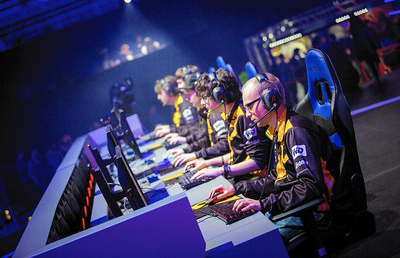
Throughout all of this, one notable exception to the lack of live sports has been esports. What began as a niche market only a few years ago, esports—or competitive video games—has grown into a multibillion-dollar industry. Because video games are a digital entertainment medium playable from home, esports virtual competitions are thriving. And yet, sportsbooks have largely not offered wagers on esports.

With the Nevada Gaming Control Board’s recent approval of sports betting for a CounterStrike Global Offensive (CS:GO), Call of Duty and Overwatch esports leagues, are sports books and regulators ready to embrace esports?

Now the PGA, UFC and NASCAR have returned to hosting live tournaments, fights and races. The NBA and MLB have announced plans to return later in the summer. At the same time, other leagues are still weighing options for a safe return. The landscape for traditional sports has changed dramatically and may remain that way for the foreseeable future. While it’s too early to tell whether esports can compete with traditional sports for gamblers’ attention once live traditional sports have returned in full force, for the many reasons listed below, esports provide an attractive avenue for growth in the gambling industry.

Nevada Approves Esports Wagers

Sportsbooks decreased significantly during the Covid-19 lockdown. Nevada sportsbooks saw a 76 percent decline in March when compared to last year, and that includes bets placed in the first weeks of March before the Covid-19 shutdown was complete. Betting on New Jersey sports books dropped 68 percent in April, and that was even with a five-fold increase in bets placed on the NFL draft.

During much of March and April, available bets on William Hill’s Nevada Sports Book were limited to futures bets for a variety of traditional professional sports and bets on such obscure traditional sports and leagues as Division 1 Handball in Belarus, Moscow Liga Pro Table Tennis and Tajikistan Higher League Soccer matches. During this time, William Hill has also offered a suite of bets for esports leagues and tournaments.

For the first time ever, the Nevada Gaming Control Board has approved betting on esports league play. Pursuant to an order issued March 25, the Nevada Gaming Control Board approved offering wagers on Counter-Strike—ESL Pro League Season 11: North America. Since then, Nevada regulators have also approved betting on the 2020 Call of Duty League and the 2020 Overwatch League, along with various tournaments for CS:GO, League of Legends, Dota 2 and iRacing. For the three leagues, the Gaming Control Board approved three wager types—head to head, winner of each match and overall season winner—with a note that any other wager types will require separate approval. While New Jersey regulators had previously approved sports betting on a handful of esports tournaments, these decisions mark the first time that U.S. regulators have approved betting on esports league play.

Overwatch, Call of Duty and CS:GO are all multiplayer first-person shooter (FPS) games, where teams of five or six players compete in head-to-head matches. The CS:GO ESL Pro League consists of 24 teams. Matches for Season 11 began on March 16, and daily best-of-three matches continued over a period of four weeks capped by a best-of-five final on April 12, 2020. The Call of Duty League 2020 season consists of 12 teams based in 11 major markets in Europe and North America (Los Angeles hosts two teams).

The Call of Duty League 2020 season initially began in January 2020 with live matches hosted in each team’s home city. After a hiatus in March, the season resumed in April with fully virtual matches that will continue through the end of July. The Overwatch League consists of 20 city-based teams. The 280-match 2020 season began in February and will conclude with postseason playoffs in the fall. As with the Call of Duty League, the Overwatch League initially began with live, in person matches before pivoting to virtual competitions.

Why Haven’t U.S. Sportsbooks Offered Esports Wagers?

In the past few years, esports has grown into multibillion-dollar industry, with hundreds of millions of fans worldwide. In the same time frame, sports betting in the United States has also increased.

In 2018, the U.S. Supreme Court allowed states to legalize sports wagering in its decision, Murphy v. National Collegiate Athletic Association. Prior to the Murphy decision, sports betting had been restricted to just four states—Nevada, Oregon, Delaware, and Montana—that had legal sportsbooks or sports lotteries before the passage of a 1992 law. Since Murphy was decided in May 2018, sportsbooks have accepted $17 billion in wagers, and 17 states spread throughout the U.S. (with three more on the way) now have legal sports betting.

Despite this, state regulators had only approved wagers on a limited number of esports tournaments prior to Nevada’s recent approval of the ESL Pro League Season 11 for CS:GO. Why the dearth of wagers for esports despite their clear popularity?

There are at least four reasons that may help explain this phenomenon.

  • First, many video games are marketed to and played by children and adolescents, and video game publishers have traditionally wanted to steer clear of gambling for obvious incompatibility with their primary customers.
  • Second, many games marketed at adult audiences—typically FPS games—had content with too much blood, gore, weapons or vice to attract wagers from sportsbooks (which, for an industry that was illegal outside of a few states and long struggled against associations with illegal activity, makes sense).
  • Third, there has been a sense that wagering on esports events would not be approved because the purely online nature of the competition was too open to manipulation.
  • Finally, and most importantly, bringing this new form of entertainment medium to a highly regulated industry has led to the delays in making it available for wagering.

Although esports had not experienced significant interest from sportsbooks operators or regulators prior to the Covid-19 pandemic, esports by their very nature are appealing platforms upon which to place and accept wagers. In order to preserve the integrity of matches, powerful anti-cheat software programs are integrated into video games. Because all of the action occurs virtually, esports also generate a wealth of stats and data with which to verify an outcome. Additionally, the lack of a human referee removes an element of human error that can cause controversy in traditional sports bets.

With esports, there can be no controversial penalties (or lack thereof) or winning by a nose—all the stats are recorded as the match progresses, and at the end, the winner is clear. Finally, while the outcome of esports events, like any other sport events, can be open to manipulation by the players (such as match fixing or “throwing the game”), that risk is not any greater in esports than in other sports. In fact, because esports are based on intellectual property owned by a specific company, a player who is caught cheating in esports can be subject not just to a ban from the league or from entry into the Hall of Fame (like Pete Rose), but to a lifetime ban from playing the game itself (meaning, in the Pete Rose analogy, he can never hit a baseball ever again).

The esports community as a whole has also actively worked to instill an ethic of integrity in the matches. This includes the common practice of calling out cheaters in online esports communities, and partnerships between esports league owners and organizations that fight cheating in esports, such as the Esports Integrity Commission (ESIC). In fact, since 2017, ESIC and the Nevada Gaming Control Board have agreed to share information regarding suspicious bets and suspected match fixing.

Even more recently, Activision Blizzard, publisher of both Call of Duty and Overwatch, signed a multiyear betting integrity partnership with Sportradar, a company that also provides its betting integrity services to professional sports organizations such as the NFL, NBA, MLB, NHL, FIFA, and Tennis Australia. Under the terms of its deal with Activision Blizzard, Sportradar will use data monitoring to identify potential issues such as match fixing, create a player education program, develop an app to anonymously report integrity issues, and provide Activision Blizzard with investigation support services.

Future Growth in Esports and Gambling in the U.S.

Although the gambling industry has traditionally steered clear of FPS games, the CS:GO, Call of Duty, and Overwatch approvals may indicate that, in the post-Murphy world, sportsbooks appear to have shrugged off their hesitation over the FPS format. In addition to FPS games, multiplayer online battle arena (MOBA) games such as League of Legends and Dota 2 have been subject to sports betting on a smaller scale, and the MOBA format provides an additional outlet for sports betting because of the similarity with traditional sports.

In MOBA games, each player controls a single character as part of a team competing against another team of players. MOBA games are typically viewed on a map in an isometric perspective to give a three-dimensional visual perspective. MOBAs mimic many aspects of the traditional sports from the single end goal (defeat the other team) to the isometric view on a map (think of the angled overhead view of most football broadcasts and the grid of the field). Although the medium is relatively new, the pieces that makeup the MOBA esports experience are similar to traditional sports, and that similarity may help to lower the barriers to entry for both sport books and regulators.

Esports games based on traditional sporting leagues also provide an easy avenue for sports betting. One of the most popular of these games—NBA 2K—already has a professional esports league that is a joint-venture between Take-Two Interactive, the game’s publisher, and the NBA. NBA players and fans have flocked to the game when the NBA suspended its current season. Esports leagues also already exist for games portraying professional football, baseball, hockey, soccer and racing. With the disruption in traditional sports due to the Covid-19 pandemic, esports based on traditional sports present a fertile sector for sportsbooks to embrace.

Finally, the rise of esports and sports betting presents the unique opportunity for collaboration between the two “gaming” industries and for further growth for both. A partnership between a casino or sportsbook operator and a video game publisher might provide an opportunity to either convert an existing game—like INDYCAR’s iRacing—or to develop a fit-for purpose game that it is exclusively tailored to wagering and casinos in the same vein as greyhound racing. Esports also represent a broad new market and consumer base that the gambling industry has yet to tap in a significant way.

Not since the start of UFC and MLS in the 1990s have U.S. sportsbooks had a new professional sport available for wagers, and esports, as a new entertainment genre, offers multiple games and leagues and numerous fan bases. The Covid-19 pandemic has shaken the global economy, disrupted many aspects of daily life and presents a significant threat to the lives and wellbeing of millions of people.

However, this period of uncertainty may also present opportunities for new and emerging industries, and the time appears to be ripe for continued growth in sports betting on esports.

First Retail Sportsbook Opens in Colorado

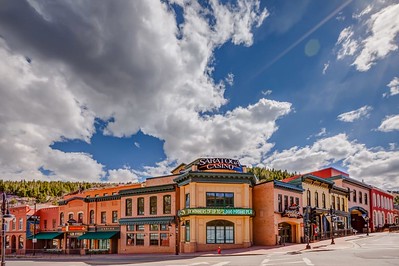
Saratoga Casino Black Hawk June 17 became the first casino in Colorado to accept a retail sportsbook wager. The wager was a $100 bet on the Denver Broncos to win the Super Bowl next year.

The sportsbook is operated by Betfred USA Sports and the occasion was the reopening of the Black Hawk casino after three months of shutdown due to the coronavirus.

Coincidentally Betfred USA signed a multi-year sponsorship with the Broncos. Part of the agreement allows Betfred to operate a sportsbook lounge outside Empower Field at Mile High, where the Broncos play.

The Broncos made a similar deal with the FanDuel Group, becoming the first NFL team to partner with a sportsbook operator since the NFL changed its policy to allow such arrangements.

Last month the Colorado Division of Gaming reported that the state had a sports handle of $25.5 million. The main activity in betting was on Capital One’s The Match: Champions for Charity with Tiger Woods and Phil Mickelson, NASCAR and UFC since no professional sports teams are active yet.

AGA to Media: Stop Promoting Offshore Bookies

In a March 17 article entitled, “Without Sports, U.S. Bettors Are Getting Creative,” a Wall Street Journal reporter wrote, “Online sports book Bovada has a solution: it is allowing patrons to wager on the weather.”

The next day, a similar post on Yahoo Sports! said, “Customers at Bovada can place bets on when Bernie Sanders will drop out of the presidential race, which Westworld character will be the next to perish or what Wednesday night’s winning power ball number will be. The online sportsbook is now even offering gamblers the chance to bet on the weather.”

Consumers looking at those news outlets on those days got what amounts to free advertising for an offshore website that is not legal for players in the U.S.

Other mainstream media outlets also have lent legitimacy to that provider, which is based in Costa Rica, and other bookies that exist in gray and black markets around the world. Collectively, they generate an estimated $150 billion per year from bettors, with little to no accountability to either their players or the markets and regulators where they operate.


What’s the Difference?

A central tenet of the campaign to expand legal sports betting in the United States was that it would keep Americans from resorting to offshore sportsbooks, which are unregulated and in some cases have been linked to criminal enterprises.

The distinction between legal and illegal online bookies may be even more important in the post-Covid age, as additional states consider sports betting as a potential source of jobs and revenues.

According to Bill Miller, president of the AGA, major media outlets only muddy the waters when they tout offshore sportsbooks.

“Unfortunately, many consumers are still unable to distinguish between safe, legal U.S. sportsbooks and unregulated offshore operators,” wrote Miller in a LinkedIn column in mid-May. “This becomes especially difficult when mainstream publications continue to legitimize the dangerous illegal market, blurring the lines between legal, regulated sports betting and the predatory, unregulated offshore market.”

Some publications and news sites aren’t at all discriminating in their coverage, he added, “with some pieces reading like they’re copied and pasted from a PR pitch.”

He added that the illegal market has been used to launder money, fund the illegal drug trade and even underwrite the suffering of human trafficking.

“So it’s more than frustrating that legitimate news outlets would give them the patina of credibility,” Miller told GGB News. “These are not just offshore operators. They are illegal, and the public should stay away from them.”


Why It Matters

In a 2012 column for USA Today, then New Jersey Senator Ray Lesniak made the case for expanded legal sports betting in the U.S., saying it would “take some of the power away from organized crime and offshore internet operators and put it in the regulated hands of existing casino and racetrack operators.

“Legalizing sports wagering recognizes the inevitable—that people are going to bet on sports, whether the practice is legal or not, and that we should provide a safe and legal avenue for them to bet on their favorite teams,” wrote Lesniak, who went on to spearhead the drive to bring legal sports betting to New Jersey.

In May 2018, the U.S. Supreme Court struck down the Professional and Amateur Sports Protection Act (PASPA), which had banned sports gambling in every state except Nevada and a few that had been grandfathered in, Oregon, Montana and Delaware. Since then, 40 states have introduced legislation to legalize sports betting, and 16 more are in some phase of implementation.

Lesniak pointed out that a legal sports betting industry in the U.S. would mean new jobs and new economic opportunities for the “ailing gaming establishments” in Atlantic City, where four casinos closed in the years following the Great Recession.

In a June interview with GGB News, Lesniak said his thesis was proven with the opening of two new casinos in Atlantic City—Ocean Casino Resort and Hard Rock—since sports betting launched, and the return of some 15,000 jobs.


‘Education Gap’

Miller said the AGA is going after news organizations not to excoriate them, but to educate them.

“Yes, these legitimate news organizations should know better,” he said. “In the pre-Covid world, part of the excitement of the successful launch of legal sports betting in America was the fact that it’s a safe, transparent and regulated marketplace, unlike the illegal market, which is still unfortunately cited by reputable news organizations.”

He said offshore books are sometimes cited because they take odds on political races and other matters that aren’t covered by legal sportsbooks. Even so, he added, the news outlets are “really looking for eyeballs.”

Bettors should beware of offshore bookies “because they don’t contribute to tax revenues in the state, they don’t produce any jobs in the country and there is no guarantee you’ll get paid.”

“You don’t know where the proceeds of the betting are going,” Miller said. “You’re not at all clear how your personal information is going to be used. If you’re funding (bets) with a PayPal account, what happens with that data? It’s a worry for all of us, all the time, even in the most legitimate business transactions in cyberspace.”

Needless to say, he added, “there is no such thing as responsible gaming” with illegal sportsbooks.

Much of the day-to-day work of calling the media to task falls to Caroline Ponseti, director of media relations for the AGA. “Any time we see an outlet that references some offshore site, we reach out with some educational material, saying this is not regulated in the U.S., and here are the dangers associated with promoting them,” Ponseti told GGB. She also points news outlets to the AGA’s interactive map of legal operations in the U.S., which is regularly updated.

“Sometimes you don’t get a response,” said Ponseti. “Sometimes they say, ‘Hey, I didn’t realize this,’ and print a correction. It depends. We’re trying to be as diligent as we can with outreach, because there’s obviously an education gap out there.”

“There’s an element of whack-a-mole to all this,” Miller conceded. “It’s somewhat frustrating.”’


Allies in the Fight

The issue could take center stage with the upswing in iGaming, as well as increased participation by the states, Miller said. He pointed to New Jersey’s iGaming revenues for the month of April: almost $80 million in online casino ($74.8 million) and poker revenue ($5.15 million), according to the state Division of Gaming Enforcement, up 23.4 percent from $64.8 million in March and more than double the $36.6 million the state won last year in April.

“It’s a significant amount of money,” said Miller. “It’s unclear what it’s going to be like once the world opens back up again, but I agree that we’ll probably continue to see growth in the iGaming space, and the states, who all have a vested interest in the success of those platforms, will be our allies in helping to call out the illegal operations. We have a shared imperative.

“As the states become more aggressive, my hope is that the Department of Justice also will be more vigilant in helping us grow the nascent U.S. market and destroy the illegal market. I talk all the time with regulators, who understand and share that view.” Miller called on the Federal Trade Commission and Federal Communications Commission to exercise their muscle as well.

Most of all, he appealed to consumers to do their homework, and check the AGA list of legal sportsbooks before they place their wagers.

But what of gamblers who claim to prefer illegal bookies because of purportedly better odds and the fact that their winnings aren’t subject to reporting?

“My response would be, No. 1, you have no recourse if you win big and they don’t pay. You can’t take an illegal company to court. Then I’d ask, ‘Are you comfortable with the knowledge that the money being made on this illegal site could be funding money laundering and drug trafficking?’ And if somebody says, ‘I’m okay with those things because of better odds,’ well, there’s no talking to that person.”

Miller feels most U.S. bettors, given the right information, will realize that doing business with shady operators, with all the associated risks, just isn’t worth the gamble.

Sports Betting in Washington Requires New Compacts

At its June 23 meeting, the Washington State Gambling Commission made no promises as to when sports betting will see the light of day.

“We’ll be realistic even if realism is not what people want to hear,” said David Trujillo, commission director.

His comments came in response to renegotiations between tribes and the commission to permit sports wagering.

The state legalized tribal-only sports betting in March. Under the new law, tribes can offer in-person sports wagering on casino properties, but statewide mobile betting is not included, according to Sports Handle. Bettors can wager on professional and college sports, with the exception of college teams from Washington.

“I think we all agree that we want sports betting to be beneficial … and that any ills are mitigated,” Trujillo wrote in a statement. “We want the process to move as quickly as possible, but the reality is that we are only one agency.”

The Kalispel and Suquamish tribes have already begun compact negotiations and the Tulalip and Muckleshoot tribes requested to do so. The Kalispel owns the Northern Quest Casino in suburban Spokane, and the Suquamish run the Clearwater Casino Resort northwest of Seattle.

Washington hosts 29 casinos run by 22 tribes across the state. There is also limited gaming at the state’s card rooms, which were shut out of sports betting by lawmakers.

The gambling commission will regulate and license sports betting. Besides licensing and regulations, the commission must develop a framework for enforcement, problem gambling programs and integrity measures. But regardless of the commission’s progress, sports betting won’t be able to start until the compacts are renegotiated.

California Sportsbook Legislation off Table Until 2022

A measure that would allow California voters to consider legalizing sportsbook won’t happen now at least until 2022.

State Senator Bill Dodd June 22 has yanked his SCA 6, which would have amended the Golden State’s constitution, from consideration.

SCA 6, if passed by both chambers and, after being put on the 2018 ballot, by the voters, would have given tribal casinos and racetracks the right to offer sports wagers, while formalizing into law third-party proposition player services for card clubs that most tribes consider illegal. As Mark Macarro, chairman of the Pechanga Band of Luiseño Indians, put it “Legalizing these illegal games played by the card rooms is a non-starter for us.”

SCA 6 would have also allowed online sports betting, something most tribes also consider anathema because they fear it will draw players away from their brick and mortar casinos.

It would have opened up the largest sports betting market in the country, which some estimate to be more than $13 billion. Dodd had claimed that his proposal would generate about $700 million a year in revenue for the state.

Co-sponsor Rep. Adam Gray, who had carried the bill in the Assembly, commented, “It remains important that we lift this widespread practice out of the shadows to make it safer and to generate money for the people of California. I will continue to be engaged in the issue as we work toward 2022.”

The 25-member Coalition to Authorize Regulated Sports Wagering that is pushing a rival proposition that would allow sports betting for tribes and racetracks, but not card clubs, issued a statement hailing the bill’s failure. Spokesman Jacob Mejia declared, “We appreciate that legislators saw through the smoke and mirrors and stopped SCA 6, the effort to break yet another agreement between California and Native American Tribes and expand Nevada-style games to card rooms.”

Some Sacramento observers said the failure of the bill owed to the fact that its author never included tribes. This demonstrated the reality that no sports betting bill without their support stands much chance of approval.

The tribal coalition’s own signature campaign to obtain about 1 million signatures to put their measure on the ballot was torpedoes by the Covid-19 shutdown when they were within striking distance of enough signatures and a 10 percent buffer.

Mejia said, “Over 1 million voters have signed our petition to legalize sports wagering at racetracks and tribal casinos, and we respect their preference to authorize sports wagering in a responsible and incremental manner,” but they still missed the deadline.

The tribes have gone to court to petition that the signatures they have already collected be counted toward raising enough for the 2022 ballot. A hearing on their request is set for July 2. If they don’t win there, they will have to restart the effort from square one.

At a recent webinar, tribal leaders vented over the attempt by Senator Dodd and other legislative leaders to go around them.

James Siva, chairman of the California Nations Indian Gaming Association (CNIGA) and of the Morongo Band of Mission Indians, which owns Morongo Casino Resort, declared, “I think it’s outrageous how they are using the pandemic to further break promises they have made to tribes and chip away at our sovereignty.”

Mark Macarro, chairman of the Pechanga Band of Luiseño Indians, who operate the largest casino on the West Coast added, “SCA 6 began during the pandemic. We had just qualified our ballot measure and had started to collect signatures. And then everyone had to stay inside. To the authors, that seemed like a good time to proceed, when we were down on the mat. That is the sucker punch I’ve been talking about lately.”

James Potter, chairman of Win-River Resort, observed, “They think Indians are foolish enough to grasp at anything.” He added, “We don’t know what the tax means to the tribes … they want to tax us at 10%, can small tribes afford that? But they think they’re being nice by saying, ‘Here, tribes, here, have a piece.’ ”

In Illinois, Rivers First with Mobile Sports Betting

On March 9, Rivers Casino became the first in Illinois to accept sports bets at its retail location in the Des Plains property. Now, more than three months after casinos shuttered amid the coronavirus pandemic, Rivers Casino will again be the first back, this time through its online mobile app. The casino has partnered with BetRivers and Rush Street Interactive to bring the app to life as of June 18.

“We are excited to make history in bringing the first online sportsbook to sports fans in our home state just in time as American sports are coming back into action,” Rush Street Interactive president Richard Schwartz said in a statement.

NASCAR and professional golf have resumed action and the NBA, NHL and MLB expect to return at some point this summer.

The introduction of online sports betting comes after Rivers Casino Chairman Neil Bluhm, along with other casino executives, employed lobbyists to help ensure a massive gambling reform bill signed almost a year ago gave brick and mortar casinos a head start on the sports betting market over online-only giants such as DraftKings and FanDuel. Those companies are locked in an 18-month “penalty box” before they can bid for licenses that go for $20 million apiece, according to the Chicago Sun-Times.

Illinois Governor J.B. Pritzker’s office estimated sports betting will eventually pump upwards of $100 million into state coffers each year, funds earmarked for his statewide capital projects plan.