Author: Casino Connection Staff

Twin River Completes Buy of Kansas City And Vicksburg Casinos

Twin River Worldwide Holdings last week announced that it has completed the previously announced acquisition of Eldorado Resorts, Inc.’s subsidiaries that own the Isle of Capri Casino in Kansas City, Missouri and the Lady Luck Casino in Vicksburg, Mississippi. The purchase price of the acquisition was $230 million, subject to customary adjustments.

“Isle Kansas City and Lady Luck Vicksburg expand our geographic footprint with assets in attractive markets. We believe these assets are a great fit for our portfolio and see the opportunity to increase the net cash flow from these properties with our redevelopment and operating plans,” said George Papanier, president and chief executive officer of Twin River. “We are very pleased to close on this transaction, the latest in our ongoing efforts to diversify our portfolio. Equally exciting are our three additional casinos under contract in Shreveport, Louisiana, Lake Tahoe, Nevada and Atlantic City, New Jersey. We see significant opportunities to create cross marketing connections for customers at multiple Twin River locations nationwide.”

Isle Kansas City is located in Kansas City, Missouri overlooking the Missouri River in close proximity to downtown Kansas City and the Berkeley Riverfront. The property reopened on June 1st, currently has the ability to operate all amenities and consists of approximately 40 thousand square feet of casino space, 939 gaming machines, 13 table games and two dining venues. It is located at a premier location on the riverfront near downtown and is readily accessible to suburban traffic. The Company expects to substantially reposition the casino with a transformational redevelopment plan. Most of the related capital expenditures are expected to occur in 2021.

Lady Luck Vicksburg is located along the Mississippi River in Vicksburg, Mississippi. The property reopened on May 21st, is currently operating 50% of slots and features approximately 25 thousand square feet of casino space, 603 slot machines, eight electronic table games, three dining venues and an 89-room hotel.

These acquisitions closed just months after Twin River announced its plans to also acquire Eldorado Shreveport Resort and Casino in Shreveport, Louisiana and the Mont Bleu Resort Casino & Spa in Lake Tahoe, Nevada for an aggregate purchase price of $155 million. Separately, the company has entered into an agreement with Caesars Entertainment Corporation and Vici Properties Inc. to acquire Bally’s Atlantic City Hotel & Casino for $25 million in cash.

All together, these acquisitions significantly expand Twin River’s footprint into four additional U.S. states. The five properties combined contain 4,860 slots, 2,181 hotel rooms and 189 tables. After acquisition of these properties, the Company will operate 12 properties in eight states.

Washington Tribe Diversifies With Gaming Revenues

On June 30, Chehalis Tribal Enterprises in Western Washington State opened a new brewery, distillery and restaurant called Talking Cedar just off Interstate 5 in a community called Grand Mound.

What makes it special is that was funded by revenues generated by the tribe’s Lucky Eagle Casino in Rochester, Washington—although you won’t find a single slot machine in the place.

The $20 million project is the brainchild of Chris Richardson, managing director of Chehalis Tribal Enterprises and the man in charge of spinning economic success from tribal gaming. “I’ve been working on this project for five years,” he said in an interview with GGB News. “I’m the only one left. I feel it’s my child.”

The mission of Chehalis Tribal Enterprises “is to build new enterprises outside of gaming, to diversify off the success of our casino,” which opened in 1995, Richardson added. Unlike commercial casinos, tribal operations are used to fund governmental services such as education and elder care, and are “a 100 percent tax that goes to the tribe.”

The Covid-10 pandemic, which closed the Lucky Eagle in March, “cut down an important cash flow to our government services,” said Richardson. But the flow resumed June 11, when the casino reopened.

A member of the Chehalis tribe, Richardson has a lot of experience in gaming, and was formerly chief financial officer of the Lucky Eagle. His job now is much different. “It all falls under hospitality,” he said. “Casinos are entertainment, hotels. We’re everything but the slots.”

Casino revenues have acted as a catalyst for the tribe’s growing economy, and enterprises that now include a construction company, an RV park and the Great Wolf Lodge Water Park Resort.

“The Talking Cedar project is built around the whole craft food movement: craft beer, craft spirits. That whole wave of people who are interested in locally grown ingredients, sustainability processes and quality. We’re going to try to get our grains and oats and wheat and barley from Washington.” When the tribe creates a flavored beer—say, with raspberries—those raspberries will be locally sourced.

“The source of the water is a well on site, so we are drawing from an aquifer. The grounds are on reservation land. We designed Talking Cedar to be a destination—but not a casino destination. It’s a brewery, and a brand we are developing,” said Richardson.

The tribe fell into the brewery, distillery and restaurant business rather serendipitously. It was conducting a feasibility study for the 88-room Marriott hotel it opened two years ago, and “the experts said there was a market, but that it was on the soft side. We went down the block to our Great Wolf Lodge property and talked to those managers and explained our concerns about the potential for light occupancy. They suggested a sports bar.”

The tribe then searched for a brewer. They talked to people who knew other people, including one who worked for Heritage Distilling. “So from having a hotel and the need to get more heads and beds, we ended up with a 35,000-square-foot operation that’s half-retail and half-production.”

It includes a 200-seat restaurant and upstairs, offices and classrooms where the local South Puget Sound Community College has started an education program offering certificates in brewing. “That’s why the college started this program,” said Richardson. “To bring back beer production locally.”

Despite all the alcohol production, Talking Cedar is “designed for children and families,” said Richardson. “It’s not like a bar where folks under 21 can’t enter. Kids can enter the whole facility. Nowadays your 20- and 30-somethings bring their families to breweries, which have kiddy parks and sand castles. The younger families don’t have that stigma against places that sell alcohol.”

The facility will distill spirits for Heritage, also plans a white-label beer that can be distributed to other casinos, creating, say a Muckleshoot IPA or a Talking Cedar IPA. “We feel there’s a market for an Indian-to-Indian business model,” said Richardson. “The vision is to reach as far as the East Coast, but one state at a time. We realize we are in a very competitive market.”

Even the name “Talking Cedar” was chosen with great care in a process that involved tribal members and a marketing company. “Originally we didn’t want it to be Indian, because we wanted to appeal to all people,” said Richardson. “But as we did research and focus groups it kept going back that there was interest in native American culture. The ‘Talking’ part involves native culture and storytelling, telling myths. We knew that would resonate with our tribes. The ‘Cedar’ is identifiable with Pacific Northwest, and we like that connection. Our tribe was known as basket-makers, and one of our materials was cedar bark and roots. Take those together, and it echoes our native origins but left our name or specific tribe out of it.”

He added, “We didn’t want to put our culture up for sale and commercialize it. We think this is a pretty good compromise.”

The Covid-19 pandemic has forced the tribe to rethink everything, and “more than rethink,” said Richardson. It delayed completion of the complex, which originally was set to open in April. “But the stills are made in Italy, and we know what happened in Italy. (The stills) on the water on a freighter as we speak, and will get here in July.”

The pandemic has turned many breweries and distilleries into temporary sanitizer manufacturers, and the Chehalis Tribe did the same. “We had eight 83-gallon tanks that were sitting there. We put the system to work making denatured ethanol. We now have the capacity to make 30,000 gallons of sanitizer a day. We’ve made half a million gallons to date. We did it because we knew reservations were having trouble getting sanitizer, and through our network we made sure our tribes didn’t have to stand in line. We did it out of native social responsibility, although we did make money.”

The tribe also developed a truly Covid-inspired way of hiring new workers. “We had to hire 65 people for the restaurant, cooks, servers, etc.,” said Richardson. “How do you hire 65 people when you can’t get within six feet of each other? So we did something bold. We had the only job fair in the last 90 days that was live, in a very large parking lot.”

About 150 applicants showed up. “They checked in, we took cell phone numbers and when it was their turn for an interview they came to tents. We processed them on the spot and hired. We had all the positions filled in a week. I don’t whether that made us crazy or bold but it was successful and manageable. I’d like to say we got lucky.”

Hard Rock Appoints Sheldon As Entertainment Chief

The appointment of Keith Sheldon as president of entertainment for Hard Rock International and Seminole Gaming couldn’t come at a more difficult time. Casino capacity is limited. Showrooms remain dark. Most lounges are also closed.

Entertainment, which usually involves crowds of people seated together in a club or concert arena, has been put on indefinite hold due to the coronavirus pandemic, which shuttered casinos across the country in March.

“This is unprecedented for the hospitality, gaming, and live events industry, so an immediate goal will be to ensure that Hard Rock and Seminole Gaming properties are well positioned to identify quality content opportunities as the live entertainment business makes its comeback,” Sheldon said.

Chairman of Hard Rock International and CEO of Seminole Gaming Jim Allen said the team will play a long game. Success will be defined by how well the corporation raises the bar when it comes to entertainment offerings over time.

“To that end, my vision is to ensure that we are consistently offering guests world-class events across our network of global properties.”

Sheldon will also connect the dots from property to property, so the company maximizes the potential of each venue and strategically networks the entire portfolio.

“A flagship property like the Guitar Hotel outside Fort Lauderdale puts all eyes on Hard Rock—whether through destination events, artist residencies, award shows, or unique one-off concerts—which elevates the overall brand and serves as a consistent reminder to the artist community that all Hard Rock venues should be firmly on their radar,” Sheldon said. “I strongly believe that a rising tide lifts all boats, and as individual properties find heightened levels of success, so too will our other venues.”

Despite the challenges of his new role, Sheldon said he’s excited to be part of an iconic brand, recognized around the world. He will work with hundreds of properties in 76 countries, all subscribing to the belief that music as a language brings people together, he said.

“To lead an entertainment vertical with that backdrop in mind was more than enough to pique my interest,” he told GGB News. “But as I explored the specifics, it was all about Mr. Allen’s vision. It’s easy to see that the growth trajectory of the Hard Rock brand is incredible and the commitment to world-class entertainment is undeniable.”

Sheldon’s bona fides are clear. A native of Sudbury, Massachusetts, he started booking events and parties at a children’s museum at the age of 13. He graduated from Bucknell University with a B.S. in business management, and received his law degree from Brooklyn Law School. He arrives at Hard Rock after six years with BSE Global, parent company of the Brooklyn Nets and Barclays Center, which also operates the Nassau Coliseum on Long Island and Webster Hall in Manhattan. “In this role, I led the entertainment division, overseeing the programming of content across all venues and new business development..”

At BSE, he secured iconic stars such as Bruce Springsteen, Barbra Streisand, Jay-Z, Ed Sheeran, Madonna and Justin Bieber, and was named to Billboard Magazine’s 40 Under 40 list in 2016. He also was a finalist for Pollstar’s Venue Executive of the Year three years running—in 2017, 2018 and 2019. Prior to BSE, he worked for AEG Worldwide

The hope is that soon, in a post-Covid-19 world, live entertainment will be back, as well as live fans. But to get there, Sheldon needs to instill confidence in guests and performers alike that the arena, showroom or lounge has taken every reasonable precaution to mitigate risk and to ensure everyone’s safety: fans, staff and entertainers.

Allen said he’s confident Sheldon can do the job, with his “proven track record of success and an impressive list of accomplishments.”

NJ Casino Commissioner Harrington Retires

Casino Control Commission Vice Chair Sharon Anne Harrington retired July 1, leaving a vacancy on the three-member board. Harrington, 65, of Bradley Beach, Monmouth County, had been a commissioner since July 2009. Her current term expired in August 2018.

Governor Phil Murphy has not nominated a replacement either for Harrington or Commissioner Alisa Cooper, whose term expired last summer.

“I’ve had a fantastic career,” Harrington said, citing her time on a variety of other commissions as well as serving on staff for two U.S. senators, Robert Torricelli and Frank Lautenberg.

Passionate about arts and culture, Harrington plans to continue working for both. She is currently the chair of Art Pride New Jersey and previously served as chair of the New Jersey State Council on the Arts, according to the Press of Atlantic City.

“Art touches so many aspects of people’s lives, from education to quality-of-life issues,” she said. “I’ve loved my vocational public service.”

Casino Control Commission Chair James Plousis said Harrington has been a “dedicated public servant” and wished her well in retirement.

“Everywhere she went she has brought enthusiasm to that position and she’s added value to that position,” Plousis said.

Illinois Casinos Back In Business

Governor J.B. Pritzker and the Illinois Gaming Board allowed the state’s 10 casinos and 36,000 video gambling machines in 7,300 locations to reopen Wednesday, July 1 after three months of closures due to Covid-19.

Each venue was required to submit a detailed individual plan in order to be permitted to reopen. Pritzker commented, “I’m not an expert about how many times you need to wipe down a video gambling terminal to make it safe. Like other activities, we’re trying to do these things in measures, with lots of health and safety guidance. The Number 1 driving factor is people should not get sick while doing those activities.”

Guests will see several new health and safety protocols as they’re welcomed back to their favorite gambling spots. Gaming Board Administrator Marcus Fruchter said, “The Gaming Board worked with the governor’s office, the Illinois Department of Public Health and the Department of Commerce and Economic Opportunity to develop a gaming resumption process that protects the public health of patrons and employees, while restarting gaming activities in meaningful way.”

Under the new rules, casinos will operate at 50 percent capacity. Face masks and health screenings will be mandatory for guests and employees. Social distancing will be maintained with fewer seats available at table games and slots. Buffets and valet parking will remain closed. All gaming equipment including dice, chips, cards and roulette wheels will be regularly sanitized.

Illinois Casino Gaming Association Executive Director Tom Swoik said, “The casinos are gonna be some of the safest places people can be. All of them are being totally disinfected. They’re gonna have people continuously monitoring the machines and the tables, wiping every possible surface down.”

Partitions have been installed between video gambling machines or they have been physically rearranged at bars, veterans and fraternal organizations, truck stops and other locations.

The shutdown, which began March 16, put more than 5,000 casino employees out of work. Also, with no video gambling available for three months, state and local governments are down more than $105 million in gaming tax revenue compared to last year. State Senator Dave Syverson said, “Each day that it’s not turned on for video gaming, that’s money away from small business, local municipalities, and the state of Illinois. Three levels are all helped by turning video gaming back on. They’re all set. They’ve spent the money, they’ve made the investments, they’re ready to go.”

Detroit Casinos Still Closed

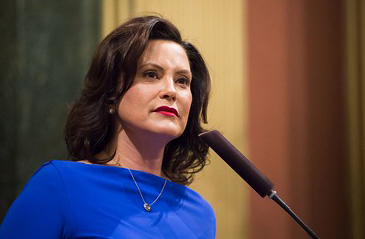
Casinos in Detroit are preparing to reopen soon, but no official date has been announced, though Governor Gretchen Whitmer had said she’d like to launch Phase 5 of Michigan’s reopening plan in response to Covid-19 by July 4. Whitmer lifted her stay-home order on June 1, but casinos and many other businesses were required to remain closed.

The MGM Grand Detroit, MotorCity and Greektown casinos all closed on March 23.

On June 8, the Michigan Gaming Control Board (MGCB) issued new health and safety protocols for casinos, including limiting capacity to 15 percent; mandating masks for guests and employees; mandating temperature screenings; keeping poker rooms, buffets, valet and coat checks closed; and prohibiting smoking on the gaming floor.

In addition, hand sanitizers will be readily available. Plexiglas barriers have been installed and chairs have been removed to promote social distancing. Also, cleaning staff will continually clean and sanitize surfaces.

Most of Michigan’s tribal casinos have reopened with guidelines similar to the Detroit casinos.

However, as new daily cases of Covid-19 continue to climb throughout the state, the casino reopening date may change, Whitmer’s office said.

Meanwhile, state Senator Adam Hollier introduced Senate Bill 969, which would allow commercial and tribal casinos to launch online gaming as a way to boost revenue lost due to Covid19—months before statewide regulations are finalized.

“This is fundamentally about revenue,” he said. “Casino gaming is a significant revenue source for a variety of governments across the state, and is used for essential needs.” The bill was referred to the Senate Committee on Regulatory Reform.

Hollier’s bill would allow internet-based gaming—apart from onsite and online sports betting—until social distancing measures are “no longer necessary” in Michigan and before the state issues online gaming licenses, he said.

MGCB spokesperson Mary Kay Bean said regulations are being developed for online gaming, which could launch in early 2021 or by late this year “if all goes well during the rulemaking process.” Hollier noted, “That’s five months of lost revenue we could be talking about. In my opinion, it’s a no-brainer: It brings revenue here and allows people to be home and safe.”

The bill would grant provisional internet gaming supplier licenses to commercial and tribal casinos and allow license holders to contract with a person or tribe outside the state to provide the necessary software. Legislation signed by Whitmer in late December 2019 established a framework for internet gaming and onsite and online sports betting. In early 2020, several tribes began offering online gaming.

The Senate Fiscal Agency indicated sports betting and iGaming could produce $15 million to $40 million annually for the School Aid Fund.

Casino Gambling Now Legal In Virginia

On Wednesday, July 1, more than 1,200 new laws took effect in Virginia—including one legalizing casino gambling, if local voters approve gambling operations in their communities in the November election. Casino gambling will be regulated by the Virginia Lottery Board. The five locations specified are in Bristol, Danville, Norfolk, Portsmout and Richmond.

Sports betting also now is legal, although wagering on games including in-state colleges or universities is banned.

Casino adjusted gross receipts will be taxed at 18 percent to 30 percent, depending on the licensee’s annual adjusted gross receipts. Licensees will pay taxes of 18 percent to 30 percent on adjusted gross receipts, depending on the licensee’s annual adjusted gross receipts.

Massachusetts Soon to Reopen, Encore Furloughs 3,000

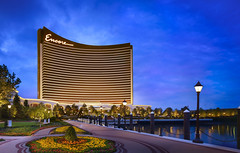
Wynn Resorts, which operates the $2.6 billion Encore Boston Harbor in Everett, Massachusetts, announced furloughs for 3,000 workers, just as it planned to reopen following the Covid-19 shutdown.

The largest casino in the state, Encore had postponed furloughs when it first closed on March 15, and continued to pay 4,200 employees, which cost it about $3 million a day. The furloughs were announced about a year after the casino opened across the Mystic River from Boston.

Encore planned to open as soon as July 6, but with limited attractions: the casino floor and some eight of its 18 dining venues, the company said in a statement on June 29. The hotel will only be open four nights a week under the plan. The nightclub won’t be able to reopen until the state’s Phase 4 allows bars and taverns to reignite.

Under the current Phase 2, indoor dining was allowed as of June 22, with the governor wanting to see how that works out before further loosening restrictions.

Encore, and the Bay State’s other two casinos—MGM Springfield and Plainridge Park—have been meeting with the state’s casino regulator, the Massachusetts Gaming Commission (MGC), on proposed protocols for reopening. Those regulations, approved on June 25, include operating only half of slot machines to promote social distancing, allowing only 25 percent of the normal number of patrons at any time, and making hand sanitizer ubiquitous throughout.

Casinos may issue plans that are even more strict than those imposed by the MGC. Encore’s additions include temperature checks, digital menus accessible from a patron’s phone, clear partitions and personal protective equipment (PPEs) for staffers.

Top Court to Hear Oklahoma Sports Betting Case

The Oklahoma Supreme Court expected to begin hearing arguments July 1 regarding the legality of Governor Kevin Stitt’s approval of sports betting as part of two new tribal compacts. His approval led to a backlash, with many questioning Stitt’s power to authorize sports wagering and other games.

Senate President Pro Tempore Greg Treat and House Speaker Charles McCall brought the action to the court to clarify Stitt’s powers.

According to Legal Sports Report, sports betting was not expected to be law any time soon. Then Stitt issued his approval of such activity in two renegotiated compacts with the Comanche Nation and Otoe-Missouria Tribe back in April.

Attorney General Mike Hunter condemned the moves, saying Stitt didn’t have the authority to contradict state gaming law in tribal compacts. Hunter called for the Department of the Interior to reject the compacts.

But Interior took no action, which allowed the compacts to come into force 45 days after submission. Stitt asked the federal court for clarification and in June, the court said. “Any question that has arisen regarding the extent of Governor Stitt’s authority with respect to tribal gaming or gaming compacts, the powers granted to him by state law or the balance of powers within the state’s internal government structure is not a matter for decision in this case.”

In light of Interior’s refusal to get involved, the compacts need to be published in the Federal Register first. Once that happens, the two tribes will be clear to offer sports betting at their casinos. But with the ongoing legal battle, it’s doesn’t seem likely either will take that step until there is more clarity.

DraftKings Slips Through Side Door in Illinois

When Illinois lawmakers designed sports betting regs, they included a provision which prevented online giants like DraftKings from applying for a license for 18 months after the first sportsbook got its license. The purpose was to give brick and mortar casinos a chance to establish themselves as bookmakers.

But the law also had a loophole if companies like DraftKings could partner with a brick and mortar casino, according to Sportico.

They did just that by striking a deal with Casino Queen in East St. Louis, according to a recent SEC filing. The partnership should allow DraftKings to skirt the part of the legislation known as the penalty box. DraftKings will operate the casino’s mobile and retail betting, in exchange for an undisclosed percent of net gaming revenue.

“We look forward to working with both the Illinois Gaming Board and Casino Queen to bring our legal sports betting product to Illinois,” DraftKings said.

The agreement means early access for DraftKings into one of the country’s largest sports betting markets, one which could reach $1 billion in annual sports betting revenue, according to Eilers & Krejcik Gaming.

The workaround also saved DraftKings from having to shell out $20 million for the right to wait 18 months to launch sports betting. Casinos pay $10 million for a license.

DraftKings declined to provide an exact timeline.

BetRivers is currently the only online betting platform live in Illinois after it launched in June.

Another company trying to get around the penalty box, FanDuel, has talked about buying Fairmount Park, one of three horse racing tracks in Illinois to apply for a sports betting license. The deal could drop sooner than later since DraftKings may go live by mid-July.

Washington Tribes Renegotiate Compacts, Add Sports Betting

The Kalispel, Snoqualmie, Suquamish and Tulalip tribes of Washington have begun negotiations to amend their state tribal gaming compacts to include the right to offer sportsbooks.

Sports betting became legalized in March when Governor Jay Inslee signed ESHB 2638 into law. Only tribal casinos are allowed to offer retail sportsbook and onsite mobile apps only on the reservation.

If the coronavirus had not struck the tribes could probably have sportsbook before the advent of the NFL season, but since no one knows if there will be an NFL season this year, that’s now up in the air.

Only the Northern Quest Casino is talking about its possible plans for sportsbook operation. Kevin Zenishek, executive director of casino operations at Northern Quest casino told Legal Sports Report that the Kalispel tribe, which operates the tribe, is now talking to five possible operators to partner with. They include both well-known and not very well known names, he said.

Mobile sportsbooks will be necessary, because they makes it easier to place wagers touch-free, said Zenishek. Because of this, the retail footprint won’t be large.

The bill that authorized sports betting was passed earlier this year as an emergency bill so it could take effect faster. This allow removed the requirement that the bill be submitted to the voters as a referendum. It does not allow the state’s small commercial casinos to offers sportsbook.

Because of the rushed nature of the bill, Maverick Gaming CEO Eric Persson, who owns the largest number of commercial casinos in the state, has promised to challenge the law in court. He wants to force the state into a referendum on the bill.

Oregon Tribes Pick Sportsbook Partner

Oregon’s Confederated Tribes of the Grand Ronde have partnered with New Jersey-based Roar Digital LLC to operate the BetMGM Sportsbook at the casino.

Besides a retail sportsbook, Roar will offer on-reservation mobile sports betting and will eventually make its app available statewide.

Stan Dillon, general manager of Spirit Mountain Casino, commented, “This joint venture between two of the gaming industry’s most recognizable brands will bring a world class sports betting offering to Oregon.”

Roar CEO Adam Greenblatt, promised “to bring a leading retail and online sports betting experience to Oregon.”

Roar Digital was founded in 2018 and concentrates on the U.S. sports betting and online gaming market. It is a partnership of GVC Holdings and MGM Resorts International.

Massachusetts Postpones Action on Simulcast Racing

As it’s done for several years now, the Massachusetts legislature just reauthorized horse racing and simulcast wagering for another year, even though there are no places left in the state where racing is happening.

H 4817 was passed by both chambers and sent to Governor Charlie Baker, who is expected to sign it. If he doesn’t, horse racing and simulcast racing will become illegal in the Bay State.

The bill extends the activities to July 2021. It also authorizes Suffolk Downs to continue to offer simulcast wagering, although it held its last races last month and has not announced plans to hold any again. Suffolk Downs was recently sold to a real estate developer, but has been authorized to continue to offer simulcast racing until the transition to a mixed, multi-use, retail and residential development begins.

Raynham Park is also authorized to offer simulcast racing.

None will be allowed to open before July 6 under Baker’s reopening plan.

Currently the only location in the state that offers live racing is Plainridge Park Casino, which hosts harness racing. It hasn’t started its season due to the Covid pandemic.

State Senator Paul Feeney, who with Rep. Tackey Chan co-sponsored the bill, commented, “As we face a looming racing & simulcasting deadline this week, I believe we should extend the date to a time-certain while we consider the modernization bill that we hope to release soon. It’s vitally important that we do everything we can, in every sector of our economy, to keep workers working and businesses open as we deal with the sudden economic downturn.”

The senator added, “I’m hopeful that we can agree to an approach that allows these businesses to continue to operate in the short-term while we consider a bill that will create stability in the long-term.”

Feeney was willing to support the extension, but opposes a series of short tern extensions and added, “as long as everyone remains committed to advancing a bill that promotes long-term security for the industry, its workers, local farms and agricultural stakeholders.”

Suffolk Downs plans to reopen for simulcasting in time for the Saratoga Race Course Meet on July 16, provided Baker’s Phase 3 reopening stays on track.

Georgia Lawmakers Fail to Approve Sports Betting

Despite efforts late in the legislative session, Georgia lawmakers failed to secure enough votes to get sports betting approved in any form. The failure meant no tax revenue to address a budget deficit brought on by the coronavirus pandemic closures.

The bills in each chamber did not go beyond their committees by the time the legislative session ended, according to Legal Sports Report.

Since the proposals required a constitutional amendment, the legislature required two-thirds vote—an almost impossible task, said Rep. Ron Stephens.

Sports betting revenue would be taxed at 10 percent and could have generated $50 million to $60 million in annual revenue for the state, Stephens said.

Luxor Las Vegas Reopens Esports Arena

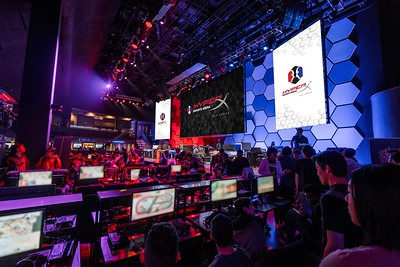
The HyperX Esports Arena at Luxor re-opened June 25, along with safety precautions for the kids and non-kids who compete.

“There were certain things that MGM required and certain things that the state required, but we wanted to make sure the players were comfortable coming back,” Vice President of Properties for Allied Esports Mark Green said.

The Luxor put in the usual prerequisites: six feet between gaming stations; masks; hand sanitizer and gloves for players; and hourly disinfecting of all common spaces, according to the Las Vegas Review-Journal.

Players will also have their temperature checked, Green said. Those playing hourly will be escorted to a gaming station. An attendant will wipe down the station before the player sits.

“Esports has taken off since the quarantine. People are playing more; parents are playing more with their kids. We’re excited to have the opportunity to serve the community again in person,” Green said.

The schedule begins with limited tournaments on Wednesdays (Super Smash Bros. Ultimate), Fridays (Fortnite) and Saturdays (Mario Kart 8). The arena will also continue to offer online tournaments, which it started while the arena was shutdown.

“We realized we should have been doing online events from day one,” Green said. “Now, we can synergize our online events and our in-arena events. We’ve taken so many precautions, and we’ve worked hard to make sure everyone feels safe.”

Michigan Considers Interstate Player Pools in iGaming Bill

Michigan lawmakers are pushing to add a provision for interstate player pools to fast-track legislation to legalize online gaming in the state. State Senator Curtis Hertel Jr., one of the Democratic sponsors of the Lawful Internet Gaming Act, is contemplating a bill that will clarify the original legislation to specify that online poker can include multi-state player pools.

According to a report on the news site MIbets.com, Hertel is proposing language for the amendment or bill that reads:

“The Michigan Gaming Control Board may enter into agreements with other jurisdictions, including Indian tribes, to facilitate, administer, and regulate multijurisdictional internet gaming for poker by internet gaming operators to the extent that entering into the agreement is consistent with state and federal laws and if the internet gaming under the agreement is conducted only in the United States.”

Currently, among states with legal iGaming, Nevada, New Jersey and Delaware pool players to increase liquidity. Pennsylvania does not participate in the pool. Hertel wants Michigan to tap into those pools.

“I believe (the absence of internet pools in the iGaming bill) was an unintentional problem that was created by an oversight in the drafting and negotiating process,” Hertel told MI Bets. “I don’t think it was intended by anybody, so it should be an easy fix.

“I can’t imagine anyone’s opposed to this. There were certainly issues that were raised about slot machines with large out-of-state pools and how they could compete with the lottery. Those concerns were voiced during the process. But the concerns did not include worries about poker being played across state lines.

“If you said Michigan players can only play poker with other people from Michigan, you really would limit the ability of people to find games,” Hertel noted. “You don’t need multiple people to play blackjack online. You don’t need multiple people to play slot machines online. But if you’re trying to get a poker game, you need people that want to play the same game and same limits, and you’re already dividing them among different platforms, so it really does become very limiting. And there’s absolutely no policy reason to limit it.”

Deal Brings Betsson to U.S. iGaming Market

Betsson will enter the online sports betting market in the U.S. in the first half of next year, thanks to a deal with Dostal Alley Casino in Colorado

The partnership runs for 10 years, according to Gambling Insider.

“I am very excited to reach this milestone, further expanding Betsson’s global reach by entering a new continent, “said Pontus Lindwall, CEO and president of Betsson AB.

Last year, Betsson struggled in Europe, according to Gambling Insider. The operator’s full-year revenue for 2019 was SEK 5.16 billion (US$ 556.1 million), a five percent decline. The company blamed the performance on difficulties in Sweden after the market’s re-regulation in January 2019.

Apple Targeted by Loot-Box Complaint

Tech goliath Apple has been targeted by a California parent in a class action complaint against the “loot box” mechanisms Apple sells through its App Store.

The parent, Rebecca Taylor, alleges that Apple is helping to promote gambling products to minors. She filed the lawsuit through the U.S. District Court for the Northern District of California on June 15.

The complaint, which compares Apple to Big Tobacco, said, “Even Apple implicitly concedes the Loot Boxes in its App Store games are a form of gambling. Like the California state lottery, Apple requires its app developers to disclose the ‘odds of winning’ particular items in the Loot Boxes for the games it distributes.”

Loot boxes are employed in some of the most popular video game apps. The complaint alleges that Apple “engages in predatory practices enticing consumers, including children to engage in gambling and similar addictive conduct in violation of this and other laws designed to protect consumers and to prohibit such practices.”

The complaint also argues that loot boxes violate California’s anti-gambling laws, citing a recent opinion by the California Bureau of Gambling Control.

Kenyan President Nixes iGaming Tax

Kenyan President Uhuru Kenyatta has signed legislation to remove the 20 percent excise tax on sportsbook stakes—a tax doubled from 10 percent when last year’s finance bill was signed in September 2019. The tax hike has already spurred Kenya’s two largest operators, Sportpesa and Betin, to leave the market.

According to iGamingBusiness.com, the tax was part of the 2020 Bill, but the National Assembly’s Finance and National Planning Committee submitted an amendment to remove it, saying, “The high level of taxation had led to punters placing bets on foreign platforms that were not subject to tax and thereby denying the government revenue.”

Finance Committee Chairman Joseph Kirui Limo, who introduced the amendment, said the tax had led to revenue “going down” as operators left the market and bettors played with unlicensed operators. But concerns lingered about Kenyatta’s opposition to the betting industry. Last year, the president called for a total ban on gambling in the country.

“We have this thing called gambling and it’s so bad, I alone can’t finish it,” he said, and claimed that the betting industry was “leading to hopelessness and greater poverty.”

But Kenyatta opted to sign the bill as passed in Parliament.

Sportpesa has been in discussions with Kenya’s government regarding a possible return, and CEO Ronald Karauri called the ruling a “significant development” for the betting sector.

Last month, Betsson-owned operator Betsafe agreed two new sponsorship deals in Kenya, with Nairobi-based rivals Gor Mahia and AFC Leopards, both of which had previously been sponsored by Sportpesa. The operator said at the time it was planning to enter the Kenyan market “in the coming months.”

Borgata Hotel Casino & Spa to remain closed for July 4th Weekend

Reopening plans for Atlantic City’s nine casinos just got a little more complicated, as Gov. Phil Murphy has imposed new restrictions on indoor dining and the serving of alcohol on the casino floor, as well as a smoking ban. 

The surprise announcement, made on Monday, June 29—just days before a July 2 planned reopening—has gambling operators scrambling to meet the new requirements in time for the July 4th weekend. The Borgata Casino Hotel & Spa has decided to delay its planned re-opening. The casino was to host only invited guests for four days over the holiday weekend and open to the general public July 6. But with the new restrictions, those plans have been put on hold, and the casino remains closed until further notice.

In a statement MGM Resorts International, Borgata’s parent company, explained the decision:

“We respect the Governor’s decision to postpone the reopening of indoor dining in New Jersey to protect the public. Given this decision, our property Borgata Hotel Casino & Spa in Atlantic City will remain closed. Our guests expect a special experience when they come to our property and if we cannot provide that level of hospitality, we feel it best that we remain closed until such time that the Governor lets us know it is safe to offer food and beverage. The health and safety of our employees and guests are at the center of all that we do, and we regret that, at this time, we are unable to welcome back the thousands of employees who are anxious to return to work. We look forward to a time when it is safe to welcome everyone back.”

Murphy made the decision to suspend indoor dining at a limited capacity over a lack of public adherence to social distancing and face mask policies. The governor has also banned the service of any beverage, including alcohol, on gaming floors or at indoor bars, and has banned smoking.

The news comes as the shore town was gearing up for a return to business for possibly the most important weekend of the season. Murphy ordered casinos closed back in March to curb the spread of the coronavirus. The recent spike in cases has led to more precautions, including a 14-day quarantine travel advisory for New York, New Jersey and Connecticut for any persons coming in from a state with a high-positive rate of the virus. How the tri-state area will enforce the rule is still not clear.

“All of the casino operators are in the same boat and are still waiting for official guidelines in regards to reopening,” Tom Pohlman, general manager of Golden Nugget, wrote in an email to loyalty program card members. “This is a very fluid situation and we continue to adapt as we receive new information.”

Atlantic City’s casinos are permitted to resume business at 25% capacity on July 2. The reopening schedule for all casinos are as follows:

Golden Nugget, Hard Rock Hotel & Casino Atlantic City, Ocean Casino Resort, Tropicana Atlantic City and Resorts Atlantic City are scheduled to reopen Thursday, July 2.

Bally’s Atlantic City, Caesars Atlantic City and Harrah’s Resort Atlantic City will open to invited guests on July 2 before opening their doors to the general public the next day.

Borgata Hotel Casino & Spa closed until further notice.