Author: Casino Connection Staff

Rhode Island Casino Workers Reassured About Jobs

Twin River Worldwide Holdings (TRWH) is reassuring its employees that they will have jobs once the coronavirus crisis has passed. TRWH operates Rhode Island’s two casinos, plus one in Mississippi, one in Delaware, and three casinos and a horse racetrack in Colorado.

TRWH, based in Rhode Island, last week sent out a letter assuring investors that it has “sufficient liquidity” to meet all obligations. It will continue health coverage for its employees who work at the closed casinos during the shutdown and all salaried and hourly workers currently not working will have their jobs when they reopen.

In the letter the company wrote, “Twin River is also establishing a fund to provide financial assistance to employees who experience severe hardship during the shutdown period and is working diligently to bring employees back to work as soon as possible when permitted.”

The company first ordered its holdings closed for a week last week, and then the Rhode Island Department of Revenue, Lottery Division extended the closure to March 27. Marc Crisafulli, president of Twin River Casino Hotel and Tiverton Casino Hotel, commented, “We believe our temporary closure for an additional week is necessary to help ensure the health and safety of our employees, customers, and all residents of Rhode Island.”

When casino employees will return is not yet clear, according to company spokeswoman Patti Doyle. “It’s just a fluid, emerging situation. We should know a bit more in a couple of days,″ said Doyle, who was also unclear on how many employees have been laid off. Whenever the operations do reopen it will be to thoroughly sanitized casinos, especially the most-used “touchpoints” and including items such as chips.

The letter notes that the company recently funded $250 million in revolving credit and has $360 million on its balance sheet and is “carefully managing expenses to ensure that it has sufficient liquidity to last through these uncertain times″ and “is confident that it will have sufficient liquidity in excess of 12 months to meet all of its obligations including debt service, required capital expenditures and acquisitions.″

Gaming is the third largest source of revenue for the Ocean state’s government. Before the coronavirus interrupted operations, it anticipated collecting nearly $300 million from slots, $15 million from table games and $9.4 million from sportsbook.

The town of Tiverton also depends on casino money. At a city council meeting held remotely last week, Town Council President Patricia Hilton was unable to answer the question of whether the state would be paying the up to $3 million that the Tiverton Casino Hotel is committed to paying the town each year.

Since the casino is closed, that funding source is jeopardized, she admitted. “I don’t know, because it’s closed,” Hilton said. Councilwoman Donna Cook added, “This is unchartered territory.”

Stadium, Other Major Vegas Projects Still a Go

Las Vegas’ casinos may be closed for business but work on most of the city’s largest construction projects continues, including the $2 billion Allegiant Stadium, the expansion of the Las Vegas Convention Center, the Strip’s $4.3 billion Resorts World Las Vegas and Downtown’s Circa gaming resort.

The 65,000-seat Allegiant Stadium, future home of the NFL’s Las Vegas Raiders, is expected to be completed in time for a concert by country music superstar Garth Brooks on August 22.

The Raiders are slated to begin their season there in September.

The stadium is being partly financed with $750 million generated from an increase in the Las Vegas hotel room tax, which means that even with the city’s casinos closed for at least 30 days, there is plenty of money in reserve to complete the facility.

Construction is also moving forward on the 1.4 million-square-foot convention center expansion on a site along the northern end of the Strip.

Las Vegas Convention and Visitors Authority spokeswoman Lori Nelson-Kraft told CDC Gaming Reports that funding for the project is in hand.

“The LVCVA raised $900 million through the bond markets and has also made transfers from our general fund amounting to more than the remaining $80 million necessary to complete the project.”

The expansion is expected to be completed by the end of the year, in time for the January 2021 Consumer Electronics Show, one of Las Vegas’ largest conventions.

The 700-room Circa, which is expected to open in December, also has construction workers on site, said a spokeswoman for developer Derek Stevens.

The 3,500-room Resorts World, under development at the north end of the Strip by Malaysia-based resort conglomerate Genting, is expected to open next July.

The property’s president, Scott Sibella, said he is working with lead contractor, W.A. Richardson Builders, “to ensure appropriate measures, including social distancing and good hygiene practices, are being taken to protect the health and safety of our workers while they remain on site.”

He said employees who work in closer quarters, such as the administrative offices, and who can perform their jobs remotely, are required to work from home.

“This is a constantly evolving situation and we will continue to evaluate and take direction from local, state and federal health authorities to determine appropriate next steps,” he said.

At the Allegiant site, Tommy White, secretary-treasurer of Laborers Local 872, said, “We are very proactive about what’s going on with the virus. We supply hand sanitizer. We’re also allowing our sites to split the shifts to where one whole shift comes off the job site before the other shift comes on.”

Likewise, at the convention center, Nelson-Kraft said the LVCVA is working with the contractor to ensure proper social distancing and other health and safety measures are in effect during the remaining construction.

Maryland Passes Stripped Down Sports Betting Vote

Faced with an early legislative adjournment due to the coronavirus pandemic, and a desire to get the sports betting issue on the ballot this year, the Maryland General Assembly on March 18 stripped the bill of major details so it sailed through both houses.

Both the House and the Senate overwhelmingly approved SB 4, which was stripped clean of everything from the tax rate to problem gaming funds to where sports betting could take place.

The law, SB 4, now awaits the signature of Governor Larry Hogan, according to SportsHandle.

The approved version the voters will pass judgment on includes the referendum language, a section about minority business, a provision that gives regulatory authority to the Maryland Lottery and Gaming Commission, sends revenue for public education, and calls for a study.

The parts removed centered on the proposed 20 percent tax rate on gross gaming revenue, application fees of $1.5 to $2.5 million, and the location of physical sportsbooks, including the possibility of allowing the Washington Redskins to operate a sportsbook should they choose to keep their field in Landover.

Virginia, also soliciting the team, likewise sent a bill to the governor with a similar provision that includes sports betting at a Redskins stadium in that state.

That Maryland only permits referendums in even numbered years added to the heightened sense of urgency to not sweat the details. If sports betting wasn’t placed on the ballot in 2020, according to the state constitution regarding gambling expansions, it would have to wait until 2022.

The referendum will read: “Do you favor the expansion of commercial gaming in the State of Maryland to authorize sports and event betting for the primary purpose of raising revenue for education?”

Only two other states have approved sports betting by referendum: Colorado and Arkansas. Colorado operators are set to go live with sports betting by May 1, as mandated in the new law. Arkansas voters approved sports betting at four casinos in November 2018.

Maryland becomes the third legislative body to approve sports betting in 2020, joining Washington and Virginia, both passed in early March.

It seems the General Assembly was in a sprint to make sure the referendum would get on the November 2020 ballot.

Some industry onlookers say a referendum with no infrastructure backing it is a huge risk.

“In the legislative sausage-making process, someone needs to get a shipment out, but apparently forgot all the ingredients,” said Brendan Bussmann, of Global Market Advisors. “Voters may not approve sports betting without some of the details needed.

But Sara Slane, former American Gaming Association senior vice president of public affairs and now a sports betting consultant, thinks Maryland lawmakers took the right course of action.

“I think they will be called back for special session, and I think it’s the tip of the spear, and this will get hashed out. You have to have the language ready to get on the ballot by August,” she said.

Voters should be entitled to know what they are voting for and the execution of it, said Brianne Doura-Schawohl, the legislative director for the National Council on Problem Gambling. “To strip the bill in its entirety, I think it says a lot more about what they are going to have to do to craft the bill later.”

Slane disagrees.

“Typically voters on referendum questions will vote on what they are educated about. Operators are going to actively support seeing the referendum pass and the education and messaging to voters will be about the benefit of legalizing sports betting.”

Nevada OKs Betting on Esports

With the dearth of sports betting due to the shutdown of virtually all live sporting events across the globe, the Nevada Gaming Control Board last week approved betting on esports, the first state to do so. Nevada and New Jersey had previously allowed betting on standalone esports events, but this is the first time a state has allowed betting on a specific league and multiple events.

With this ruling the state has approved betting on Counter-Strike: Global Offensive’s ESL Pro League Season 11: North America for three wager types: head to head, winner of each match, and overall season winner. William Hill in Nevada immediately picked up the betting and posted lines for two events last Thursday. Other licensed sports books in the state are required to inform the board’s enforcement division of their intention and to post rules for setting esports odds. The books are required to halt betting prior to the start of the match. If they want to offer additional wagers outside of the three approved bets, such as in-play wagering, they must submit a separate application.

New Jersey last year OK’d bets on the League of Legends World Championship finals. Most other U.S. regulatory bodies have yet to act on esports betting. A state Assembly committee has approved a bill that would legalize esports betting in the state, which has now moved on for consideration by the full Assembly.

California Sportsbook Initiative Pulled Until 2022

In light of the coronavirus emergency a consortium of 18 gaming tribes in California have sheltered-in-place their efforts to qualify an initiative for the November ballot that would give Golden State voters the chance to legalize sports betting but would limit it to gaming tribes and racetracks.

Governor Gavin Newsom issued a stay at home order March 19 that included all residents except for members of essential services.

The consortium hasn’t officially dropped its efforts, according Jacob Mejia, a spokesman for the campaign, who told the San Francisco Chronicle on March 22, “We are at nearly one million signatures and were on a trajectory to reach our goal well ahead of the deadline before the unprecedented orders around COVID-19.” He added, “The health and well-being of Californians is foremost. Thus, paid signature-gathering efforts have paused for the time being.”

The effort was close to obtaining the 997,139 signatures required to put the initiative on the ballot, but such efforts usually try to get at least 10 percent more than the required number to serve as a buffer.

Earlier in the month the group announced that it had 600,000 signatures and hoped to easily meet the April 21 deadline. Then the pandemic struck and people began staying home even before the governor’s order.

If the group can’t meet the deadline the earliest they could qualify would be 2022.

The proposal is controversial because it quite deliberately elbows aside the state’s 72 card clubs, an industry that the tribes have been at sword’s point with for nearly a decade over their insistence that the clubs are violating state law when they operate a form of house-banked card games.

It is also controversial because it doesn’t include online sports betting, which is the most lucrative form of sports betting—In New Jersey it accounts for 85 percent of all bets. It would also create a monopoly for sports betting centered in casinos that are generally not near metropolitan areas.

As an added bonus for tribes, the initiative would allow them to offer traditional Las Vegas style table games, including roulette and craps.

Colorado Hopes for May 1 Sports Betting Launch

Colorado regulators still hope to launch sports betting on May 1, coronavirus or not.

Whether that target is met in the face of the coronavirus pandemic will likely be decided next month.

“We’re still moving everything forward as far a licensing and everything to make sure we reach that May 1 date and are able to go,” said Dan Hartman, the director of the Colorado Division of Gaming. “Those discussions certainly will happen later on, probably in April as this COVID crisis moves forward and we see where the casino industry is at, at this time.”

Earlier this month, the gaming control commission said it would hold extra monthly meetings for licensing purposes to stay on track, according to Legal Sports Report.

In response to the virus, Colorado shut down its casinos through at least mid-April. The state had 216 coronavirus cases as of March 18.

A total of 16 licenses were approved for 11 companies at a March 19 meeting. Three master licenses went to both Twin River, known as Premier Entertainment Black Hawk in Colorado, and Full House Resorts. Full House expects to partner for sports betting with Churchill Downs‘ BetAmerica, Smarkets and Wynn Resorts. Twin River will team up with both FanDuel Sportsbook and DraftKings Sportsbook.

Online sports betting licenses went to FanDuel Sportsbook, Fox Bet and PointsBet, which also received its land-based license. Fox Bet, operated by The Stars Group, gets access through an agreement with Eldorado Resorts, which also has a deal with William Hill. PointsBet will debut sports betting at the Double Eagle Casino.

Kentucky Sports Betting Bill Doubtful

If approved, House Bill 137 would make sports betting legal in Kentucky. A recent poll shows the majority of residents favor legalization. But the bill went nowhere after a second reading on January 16.

On March 18, the bill went back to the House Licensing, Occupations, & Administrative Regulations Committee. With the session ending on April 15, sponsor Rep. Adam Koenig, has his doubts about its success, according to the Courier-Journal.

The results of the poll indicated that 66 percent supported sports wagering. The approval rose to 74 percent when told almost all the revenues brought in would go to the public pension system.

The Koenig bill set tax rates at 10.25 percent for land-based locations and 14.25 percent for mobile and internet applications. Estimates peg the revenue gained from the law at $22.5 million a year.

“It may not be dead, but it’s on life support,” Koenig said of the chances.

Still, he’ll fight the good fight to the end, with the backing of Governor

Andy Beshear.

“I will keep running it until they kick me out of this place, and I may not leave until it passes,” Koenig said.

PA Online Casinos Surge Amid Crisis

Many of Pennsylvania’s online casinos have reported a surge in new signups as a result of the shutdown of land-based casinos due to the ongoing Covid-19 crisis. Operators of those casinos also are making sure to promote their operations to players who are stuck at home.

“During this very difficult and unprecedented period of time while most are staying home, it’s nice that we can provide another outlet for entertainment and a chance to win life-changing jackpots,” said Mattias Stetz, chief operating officer of Rush Street Interactive, after a player won a $278,430 jackpot on Rush Street’s PlaySugarHouse.com site.

“We are seeing an increase in casino play online as all land-based casinos in New Jersey and Pennsylvania have closed,” Stetz told the news site PennBets.com. “We are seeing about four to five times as many new casino customers signing up compared to what we would expect considering seasonality right now.”

Pennbets.com reported statements from several other of the state’s iGaming operators reporting surges in online signups and play. “We’ve seen a jump in new casino players in the last week in Pennsylvania as casino games have become some of the most appealing content within our sportsbook app,” said market leader FanDuel in a statement to the site.

Others were more cautious. “It’s far too early to tell what the impact might be in terms of online gaming,” Penn National Gaming spokesman Eric Schippers told the site.

“Before the Covid-19 crisis hit, we had launched new features and content to our site/app, but those changes were based on enhancing the customer experience and had nothing to do with the coronavirus outbreak.”

KamaGames, Hard Rock Partner on Social Games

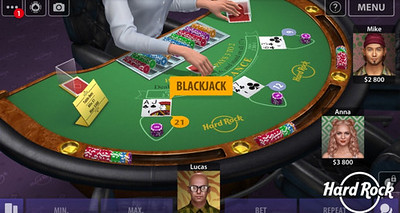
KamaGames, the largest European social casino operator, announced the launch of a new app in partnership with the iconic global brand Hard Rock International. The new app, titled Hard Rock Blackjack, contains the most popular casino-style games in the KamaGames portfolio.

The standout feature of Hard Rock Blackjack is the inclusion of high-caliber, 3D versions of classic casino table games including roulette, craps, baccarat and of course, the core title within the app, blackjack. In addition, the app will include a number of other casino-style games such as slots and video poker, familiar to even the most casual of players.

Hard Rock Blackjack also includes a fully comprehensive and market-leading social poker game based on the Pokerist Texas Poker model, currently the third-largest social poker game in the world. In addition to the popular Texas Hold ‘em Poker, and a number of other poker-based titles including fan favorites Set Poker and Split Bet Poker.

As well as the strong line up of social casino games, Hard Rock Blackjack will also play host to a range of competitive poker tournaments including Sit’n’Go, Shootout, multi-table tournaments (MTT) and weekly tournaments, all of which have experienced longstanding success among KamaGames’ existing user base, a success that both KamaGames and Hard Rock International anticipate to be replicated among the millions of Hard Rock International customers.

Alongside tournaments, the app offers unique “Party” modes and poker game variations for players of every skill level as well as providing a host of different ways to encourage a feeling of community. Social interaction between players will be made possible via a range of creative chat options such as in-game instant messenger, animated emojis and the ability to send gifts back and forth throughout the many highs and lows of a game.

“We are excited to announce this partnership and the release of the highly sophisticated Hard Rock Blackjack app, a perfect expansion of our free-to-play games portfolio and a major draw for both current and new Hard Rock customers,” said Kresimir Spajic, Hard Rock’s senior vice president of online gaming and sports betting. “The exciting table games, multi-player functionality and availability in 28 different languages will empower us to stay regularly connected with our guests in a new and creative way between visits to our cafes, hotels and casinos around the world.

“Hard Rock has seen positive results leveraging free2play mobile games to extend the legendary experience guests have come to expect from the 262 Hard Rock venues around the world into a digital format to both deepen relationships and drive incremental brand engagement both online and at our real-world venues.

“Partnering with KamaGames and their industry-leading technology in the social casino space gives us the opportunity to amplify the reach of our social casino portfolio with best-in-class casino gameplay and global availability.”

KamaGames CEO Andrey Kuznetsov said, “For KamaGames, this partnership holds an unparalleled opportunity for growth. Using our expertise, which has been honed over many years in the social casino industry, we are confident that we have created a product that will offer true entertainment value for Hard Rock International customers. KamaGames is very proud of the product we’ve brought to the market with Pokerist Texas Poker and are happy to share this technology with Hard Rock to provide their loyal customers with a high-quality product which will give them even more opportunities to interact and engage with Hard Rock’s iconic, globally recognized brand, leading to a continued positive relationship and greater brand loyalty.”

The partnership between KamaGames and Hard Rock International is expected to generate a variety of cross-promotional campaigns and projects, as well as incorporating even more new slots, game modes, tournaments and events into the app.

BetConstruct Offers Live Streaming of Casino Games

U.K.-based digital gaming supplier BetConstruct announced it is offering land-based casinos its services to live-stream casino games during the coronavirus crisis, to help offset the damage caused by mandated casino closures.

“The response actions to COVID-19 outbreak cause massive shutdowns of gambling hotspots for the safety of both visitors and casino employees leading to significant revenue drops,” the company told Asia Gaming Brief. “Fortunately for on-premise casino owners, this isn’t the end of the world.”

The company said its online solutions allow the live streaming of casino games from a venue, integrated onto a dedicated gaming platform.

“While being far from any casino location, by simply logging in to a gaming account a player still gets the true flare of Vegas and Macau and enjoys the game elevated by the live communication with a dealer.

“This is a highly profitable solution which allows to raise player convergence via targeting new online audiences and converting the existing casino visitors into online players.”

eSports Replace Real Ones in Viral Era

Sports of all sorts have disappeared during the coronavirus pandemic, games postponed or cancelled around the world. MLB, NBA, NHL, FIFA, all gone, leaving emptiness in much of the public psyche, a symbol of a lack of normalcy.

When the time comes next month, two months, six months from now that major sports returns, with it comes the comfort of normality, a sense that all is right with the world again.

Until then, sports fans have looked elsewhere, to archives of past games as one outlet, according to Forbes magazine. Some sports teams have engaged in “tic-tac-toe” and “connect four” contests via social media.

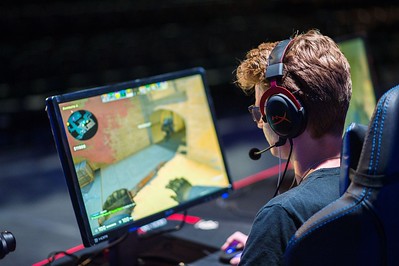
But the biggest vacuum filler belongs to eSports and video games. In England, the Football Association has simulated the FA Cup quarter-finals in FIFA 20 and broadcast them over social media. And a 128-team FIFA tournament organized by Leyton Orient’s social media manager hopes to raise funds for English Football League clubs affected by the pandemic, as well as other charities.

Rugby league teams have also created eSports content for their social channels as have U.S. sports organizations. One of the more sophisticated operations has been Formula 1, with its virtual Grand Prix.

Since in 2016, F1 has placed significant emphasis on digital technologies as a way of reaching new audiences, including its own streaming service, F1 TV, and has partnered with Amazon Web Services to provide data to television viewers.

Formula 1 will stage a Virtual Grand Prix series, which will feature real-world drivers, including Max Verstappen and Lando Norris. While the series will have no bearing on the current season, it showcases how important eSports can be at times like these.

Philippines Look to iGaming for Revenues

The Philippines’ gaming regulator contends that restarting online gaming as well as VIP casino operations can help the country fund its battle against the coronavirus pandemic.

Andrea Domingo, head of the Philippine Amusement and Gaming Corp. (PAGCOR), has asked the government’s Interagency Task Force on Emerging Infectious Diseases to lift the suspensions on “high-earning” gaming operations including Philippine Offshore Gaming Operators (POGOs), which serve clients in other countries, including mainland China.

Domingo compared POGOs to business process outsourcing (BPO) operations that have been permitted to continue operating on a work-from-home basis, according to CalvinAyre.com.

The PAGCOR chairwoman also wants to resume VIP casino activity, whether in person or via proxy betting, in which wagers are made by phone. Domingo insists even live VIP operations can take place using social distancing protocols, since high-roller tables usually accommodate only one or two players at a time.

Online Gaming Spikes in India

Indian online gaming operators have seen a significant uptick since the coronavirus outbreak, according to Asia Gaming Brief.

Sudhir Kamath, CEO and co-founder of 9stacks, an online poker platform, told local newspaper the Hindu that he’s seen a 10 percent gain in the number of concurrent users and a boost in play during the daytime hours.

“Usually evenings/nights are the busiest times for us, but in the last few days we’re seeing more people playing during the day as well,” Kamath said.

Adda52, an online poker website, says it has seen the average time spent by a user every day on their platform grow by 18 percent over the past couple of weeks. The number of daily active users also grew 12 percent since March 10.

MPL (Mobile Premier League), a mobile e-sports platform saw a 400 per cent increase in the number of daily gameplays for the WCC (World Cricket Championship) game, between March 2 and March 18. While social gaming platform, Hello Play, run by Mech Mocha, a Bengaluru-based company, saw a 15 percent increase in the time spent per daily active user, the newspaper reports.

U.S. Gaming Industry to DC: Help!

Before the Covid-19 pandemic subsides, there may be few if any U.S. industries that don’t turn to their local, state and federal governments for help and support. The gaming industry is no different.

Last week, MGM Resorts Chairman and CEO James Murren, along with representatives of the hospitality and tourism sectors, met with President Donald Trump to discuss the impact of the virus, which has brought their industries to a standstill.

“We know your industries are among the hardest hit,” Trump said after the White House meeting. And Trump should know, having been a casino operator for decades, and at one time owning three gaming halls in Atlantic City, all emblazoned with the Trump name.

“Within days, we have transformed from a vibrant industry welcoming people from around the world, to one experiencing a total shutdown of business,” Murren said of the industry’s plight, which shut down the company’s casinos around the country. He said the crisis “comes at a cost to our tens of thousands of employees, small businesses and communities who depended on us. We look forward to a productive dialogue on how to ensure that when it’s safe, we can be in a position to open our doors, and for the gaming industry and the nearly 2 million jobs that depend on us to be part of the economic recovery that is to come.”

Some pundits have scoffed at the notion of casinos, of all business entities, asking for a bailout. But at that White House meeting, which was also attended by Vice President Mike Pence, officials from other billion-dollar businesses—with names like Disney and Hilton—also lined up for their fair share of any stimulus package.

Back in Nevada, Rep. Dina Titus of the 1st Congressional District, which includes the Las Vegas Strip, said she’s contacted Speaker of the House Nancy Pelosi to advocate for the industry.

Titus’ Communications Director Kevin Gerson told the Nevada Independent the congresswoman “emphasized that any long-term relief package must include the travel and tourism industry and the millions of workers whose jobs depend on it.”

According to the Las Vegas Review-Journal, UNITE HERE union leaders, who represent casino workers nationwide, have called for industry and congressional leaders to “act decisively” with assistance following the mass shutdowns of casinos, hotels and restaurants.

“We need a bailout for the American worker, not just a bailout for American industry,” said UNITE HERE International President D. Taylor. “We have problems with unemployment. We have a crisis brewing on health care. We have a crisis on housing. We have a crisis on sick-leave pay. And, we’ll probably have a crisis on food stamps because if it’s that hard to do unemployment, I would imagine many states make getting food that much more difficult, too. The American worker needs to be at the table when we have discussions.”

The American Gaming Association joined the chorus, releasing a statement asking Congress to provide “liquidity to allow us to support employees.”

AGA President and CEO Bill Miller added a personal appeal, noting that some 616,000 casino employees have been sent home from work due to the contagion, which has caused 95 percent of the country’s commercial casinos and 76 percent of tribal casinos to close indefinitely.

“The impact on our employees, their families and communities is staggering, and the implications extend far beyond the casino floor,” Miller continued. “The federal government must act swiftly and comprehensively to get America’s hospitality employees, and the small businesses that support them, back to work. Gaming employees, their families, and communities are bearing the brunt of this economic standstill and will continue to suffer if Congress and the administration don’t take immediate action.”

He said the coast-to-coast shutdown of the industry over eight weeks would “rob the U.S. economy of $43.5 billion in economic activity.”

According to the AGA, the impact on gaming is staggering.

  • Casino closures risk nearly$74 billionin total wages annually for workers and their families.
  • Casino gaming supports$41 billionin annual tax revenue and tribal revenue sharing nationwide – essential support for local hospitals, first responders, and vital public services.
  • Half the jobs our industry supports are at non-gaming businesses such as restaurants and local shops—all will be dramatically affected by a local casino’s closure.
  • Casino gaming is vital to local small businesses, delivering$52 billionannually in small business revenue, including construction, manufacturing, retail, and wholesale firms.

On March 18 the tribal gaming industry in the U.S. requested $18 billion in U.S. federal aid. In a letter to members of the U.S. House of Representatives, the National Indian Gaming Association said tribal governments cannot provide health and education services for their communities without the revenue generated by casinos. The letter said the tribes could be at risk for default on loans unless they, too, receive federal support.

“Providing the means for tribal governments to continue paying all employees’ salaries and benefits will immensely help this country recover,” said the letter to Representatives Deb Haaland and Tom Cole of the House Native American Caucus.

The tribes asked Congress to consider legislation to impose a temporary 26-week restructuring and suspension on interest rate accrual on all loans with tribal governments and their entities.

According to CDC Gaming Reports, the possibility that the gaming industry might be included in a federal government stimulus package may have checked the freefall of share values.

But gaming industry consultant Richard Schuetz, CEO of Schuetz LLC, sounded skeptical about the plan in a Twitter post. Schuetz called it “somewhat surreal” that the soon-to-retire MGM Chairman Jim Murren, “who is personally taking over $50 million out of the company, went to the White House to meet a billionaire that bankrupted numerous casinos by not paying his lenders, to work on a plan to secure taxpayers’ money.”

Murren Exits MGM Immediately

It was an abrupt ending to his time with MGM Resorts, even though he had announced his departure at the end of the year. On Sunday, Jim Murren announced he was stepping down as president, CEO and chairman of the board effective immediately. The reason for the departure, according to the company, was a continuity of leadership during this burgeoning coronavirus crisis. Longtime MGM executive Bill Hornbuckle will assume the roles of president and CEO, while board member Paul Salem will take over as chairman of the board.

Murren exits MGM at a critical time for the company, as it tackles the coronavirus pandemic. Hornbuckle joined the company when it bought Mirage Resorts and has served in many capacities. Salem has been chairman of the board’s real estate committee, which led the sale of most MGM properties to its spinoff, MGM Growth Properties (MGP) and also to the Blackstone Group, in the case of Bellagio and MGM Grand.

At the same time, Murren has been appointed to the new COVID-19 Response, Relief and Recovery Task Force, a public-private partnership formed to address the spread of the coronavirus.

Murren said he was totally behind the decision to step down.

“I fully support accelerating the planned leadership transition to help MGM Resorts address the rapidly changing environment,” Murren said in the statement. “I have great confidence in Bill Hornbuckle and the management team to lead MGM Resorts at this critical juncture, as we have together through numerous hardships of the past.”

Salem said the change in leadership at this point made sense.

“The nation is facing an unprecedented crisis, causing the travel and hospitality industry to grind to a near halt,” Salem said. “It is clear that once the threat to the public health has subsided and we are ready to reopen our resorts and casinos, it will take an incredible effort to ramp back up.

“We believe continued steady, skilled leadership is needed in this time of great upheaval and uncertainty.”

Nevada Governor Steve Sisolak says Murren came to him with the idea for a task force.

“It is inevitable that we will need to rely on both government and businesses to see us through this crisis in the best way possible,” Sisolak said. “It’s on us as Nevadans to tackle this, and that requires some out-of-the-box and proactive approaches.”

Sisolak cited Murren’s relationship with Vice President Mike Pence, who is heading up the Trump administration’s efforts to combat the virus.

“It’s going to take all of us working together to battle COVID-19 in our state and around the country, and I’m thankful we have an ally in Jim Murren who can enhance and expand our response and recovery efforts,” Sisolak said. “This public-private partnership represents the best of Nevada, the belief that when we all work together we can tackle anything.”

NJ Committee Passes Esports Wagers

In an effort to expand sport betting opportunity, the newest New Jersey proposal to approve esports events passed the Assembly Tourism, Gaming & the Arts Committee March 5.

“I would say esports are the ‘next big thing’ when it comes to sporting events, but the fact of the matter is that video game tournaments are already a prominent form of skill-based competition,” said Assemblyman Ralph Caputo of Essex County, one the bill’s primary sponsors and chairman of the gaming committee. “We want to be ahead of the curve on this. The millennial generation is into this in a major way.”

Caputo, a former Atlantic City casino executive, said hundreds of millions of people watch esports each year.

Another sponsor, Assemblyman Eric Houghtaling, represents Monmouth Park Racetrack, which has a sportsbook.

“It’s important for our state to capitalize on this rapidly growing industry in order to both give our residents what they want and boost our economy,” Houghtaling said, according to the Press of Atlantic City. “The time is right for us to expand legal wagering beyond traditional sports.”

Atlantic City has hosted several esports tournaments in recent years. Caesars Atlantic City hosted the city’s first esports event, Gears of War Pro Circuit, in 2017. Harrah’s Resort Atlantic City held the Rainbow Six Siege Pro League event in 2018.

“The legalization of wagering on esports has the potential to make Atlantic City the esports capital of the U.S. and draw thousands of tourists to the area,” said Nicholas Casiello Jr., partner in Fox Rothschild’s Atlantic City office and chairman of the law firm’s gaming group.

The bill advanced prohibits betting on tournaments involving high schools.

Last year, the Division of Gaming Enforcement permitted legalized esports wagers for the League of Legends World Championship on a one-time basis with a $1,000 maximum bet.

According to Newzoo, an online gaming data provider, there were nearly 450 million esports viewers in 2019, and the gaming competitions generated more than $1 billion in revenue from various streams, such as sponsorship, advertising, merchandise and tickets.

“Our natural next step will be to allow e-sports betting in New Jersey, which will undoubtedly add a new revenue stream for our state. I’m pleased to see this legislation move forward in the Assembly and look forward to seeing it being signed into law,” said Assemblyman Vince Mazzeo, D-Atlantic.

According to the Associated Press, the state’s existing sports betting law is a bit too vague in terms of betting on esports, and lawmakers want to clarify what could be a lucrative source of revenue, as well as tourism dollars.

Steve Batzer, an advisor to G3Esports, said “the potential for esports in New Jersey is really incredible. This really is a new demographic target for Atlantic City.”

Newzoo projects it will generate $1.8 billion in economic activity by 2022. It projected the global esports audience would reach more than 453 million people in 2019.

The bill advanced Thursday would maintain a prohibition on betting on esports tournaments involving high schools, but would allow betting on college-level teams, as long as they are not based in New Jersey—the same prohibitions that apply to wagering on the state’s football, basketball and other athletic teams.

AC to Icahn: Tear Down Crumbling Casino

Officials in Atlantic City have announced they will seek a court order to have the former Trump Plaza Hotel & Casino demolished. A video recently posted on social media showed large chunks of debris falling from the structure’s facade to the sidewalk below.

Lawmakers in the town say the former gaming hall, closed for years, is a safety hazard, particularly given its location on the Boardwalk, a famous oceanfront promenade traveled by millions of people each year.

During a news conference last week, Mayor Marty Small Sr. said the city and the building’s owner, Carl Icahn, have been engaged in “good faith negotiations” over the future of the shuttered casino hotel, but the “game has changed,” as the old Plaza continues to deteriorate.

“Our legal department has been working hand-in-hand with the state of New Jersey on this matter,” said Small, who added he is willing to take “aggressive” action on the matter.

“Today, we are saying to Carl Icahn that we want this building torn down,” the mayor said. “We want the world to know that we mean business.”

But apparently Atlantic City officials failed to talk to Icahn before holding the press conference. Hunter Gary, president of real estate for Icahn Enterprises, issued a statement last week.

“We are puzzled by the city’s actions,” Gary said. “In fact, we have already decided to demo the building and have commenced the process, including finalizing contracts. If the mayor had simply called us instead of holding a press conference, we could have updated him too.”

Icahn bought the building in 2016 when he purchased the debt of bankrupt Trump Entertainment Resorts. According to the Press of Atlantic City, the city has put a 24-hour police detail in the vicinity of the property to prevent passersby from using the sidewalk next to the building. Additionally, city officials said a portion of the Boardwalk would be fenced off as a precautionary measure.

Small said estimates to demolish the former Trump Plaza were between $11 million and $14 million.

Anthony Cox, a city construction official, said an “imminent hazard notice” was sent “to the owner and agent.”

Fire Chief Scott Evans added that the Plaza’s oceanfront location make it susceptible to the elements, and exposed portions of the building could cause water damage to spread.

“Sooner or later, the water is going to work its way into different areas,” Evans told the Press. “And through expansion and contraction, these connections are going to fail. We’re going to see more panels fall. This is a serious hazard.”

Is Now the Time for Mobile Betting in New York?

A new survey shows that 61 percent of New Yorkers support legalizing remote sports betting in the state.

State Senator Joseph Addabbo, the Queens Democrat whose push for legalization has been repeatedly rebuffed in the Legislature, said he plans to use the poll’s results to argue for including remote wagering in the state budget for the next fiscal year.

With more than 3,000 confirmed cases of the coronavirus late last week and at least 20 deaths, New York has been especially hard hit by the contagion. The state also is facing a projected $6.1 billion shortfall in the 2021 budget, and with taxpaying land-based gaming in disaster mode in the wake of last week’s closure order by Governor Andrew Cuomo, Addabbo may finally have the silver bullet he’s lacked up to now.

“Given the fact that the sports betting industry is growing rapidly, along with our current budget’s need for revenue and educational funding, the time is now,” he said.

The survey was commissioned by DFS giants DraftKings and FanDuel, both of which now found themselves on the outs in New York after last month’s state Supreme Court decision upholding a 2016 ruling that the legislature overstepped its authority in legalizing daily fantasy sports without an amendment to the state Constitution.

The poll indicates that 62 percent of voters surveyed disagree with that decision compared to 24 percent who agree.

Not surprisingly, it also found the strongest support for remote wagering, which would include phone betting, among men younger than 50. Significantly, though it scored almost as high across the demographic spectrum, garnering pro sentiments in the range of 66 to 71 percent from Latinos, college-educated white voters and women of color.

It also showed that 44 percent prefer legalization in the Legislature as opposed to 30 percent who want a constitutional amendment, the position held by the governor.

Covid-19 in Nevada: It’s ‘War’

As the coronavirus continues its lethal march across the U.S., for the first time in Las Vegas’ long, glitzy history, the lights on the Strip are out, and operators are groping for ways to deal with a crisis without precedent.

The monthlong closure ordered by Nevada Governor Steve Sisolak on Tuesday applies to all non-essential businesses𑁋casinos, machine gaming venues, bars, movie theaters, restaurants, fitness facilities, and even Hoover Dam. It came in response to the state’s first confirmed death from the contagion, which has infected at least 50 Nevadans, including two Las Vegas resort workers.

“For gaming companies, it’s critical spending only right now,” said Steve Gallaway, principal for Global Market Advisors. “We’re seeing development projects being canceled, and rightly so. It’s battening down the hatches, figuring out what bills have to be paid and how much capital is needed to stay in business. Casinos care about their employees, they want to make sure they’re provided for, and also they have to make sure they remain solvent.”

As of Wednesday, the number of confirmed cases in the U.S. approached 7,500. The death toll had hit 117. In the three months since the virus was first identified in China, more than 200,000 people have been infected worldwide, and more than 8,000 have died.

The Trump administration is considering invoking wartime powers to prevent a complete economic shutdown. Officials are warning the nation to prepare for critical shortages in health care and disruptions to daily life that could last 18 months or more.

As it stands currently, with the economy sinking into a certain recession and Wall Street in full-blown panic, gaming investors have followed everyone else in fleeing for the exits. Prices have blown past their 52-week lows, with no bottom in sight.

“I think it’s inevitable that all casinos will close down temporarily due to this epidemic,” Gallaway told GGB News. “The question is, is it for two weeks, four weeks, eight weeks? It’s the length of the shutdown that’s going to determine the effect on the economy.

“Remember, too, there’s a ripple effect. This is not only operator revenues we’re talking about, it’s payroll for employees, which is going to impact consumer spending. This is going to ripple throughout the entire economy.”

Brendan Bussmann, GMA’s director of government affairs, added, “This is way bigger than anything the industry has gone through, including 9/11 and the Great Recession.”

While it’s still too early to assess the financial impact of a monthlong closure of Nevada’s principal industry, it’s sure to be severe. Gaming taxes are second only to sales taxes as a percentage of the state’s annual budget. According to the Nevada Resort Association, leisure and hospitality directly employ one of four workers in the state, and generate an economic output of around $68 billion a year.

Sisolak said over the weekend that the state was in “relatively good shape” to pay unemployment claims, but cannot do so indefinitely. The state was working to get additional assistance from the federal government.

In Las Vegas this week, the industry’s largest labor union, Culinary Workers Local 226, entered emergency negotiations with operators to secure protections for its workers, including paid sick days and up to six months of paid health benefits for laid-off workers.

Matt Sodl, a principal of Innovation Capital, an industry consultancy specializing in investment, finance and M&A, said the human factor will figure uppermost in the minds of management adjusting to what he describes as “Armageddon.”

“You have to make sure money is flowing to your employees—they’re your critical resource,” he told GGB News. “It’s hard to find and keep good people. So they’re going to prioritize their employees, first and foremost. Casino operators will be stepping up and making sure their employees get paid. One hundred percent.”

Then there’s the obvious need to focus on other essential costs.

“Isolate the draconian downside payments that have to be made, whatever you need to stay in business,” Sodl advised. “Make sure you have sufficient liquidity, and prepare for uncertainty. If you think you have enough, you don’t. We’re talking to a lot of our clients about this right now.”

Examples of the extraordinary measures being taken were in evidence last week, with MGM Resorts International’s decision to cancel a planned $1.25 billion share buyback and Wynn Resorts’ announcement that it would begin to draw down on its $850 million revolving line of credit.

Sodl believes we’ll see more𑁋like lenders deferring interest and principal payments, and opcos deferring the fixed rents they’ve contracted with the real estate investment trusts (REITs) that own their properties.

“They’re stakeholders in this as well,” he said. “That’s the Armageddon we’re in right now. We’re in a war against this virus. Everyone has to do what they can and do their part.”

But will it be enough?

“I don’t think necessarily it’s a long-term problem,” Gallaway said. “But we don’t know. If it last longer than two months, we’re going to see a lot of bankruptcies and a lot of corporate restructurings.

PA Lockdown

Over the past two weeks, various Pennsylvania casinos began shutting down operations voluntarily to deal with the Covid-19 crisis.

On Monday afternoon, the Pennsylvania Gaming Control Board made it official: The board instructed any of the 12 casino properties that remained open to close to the public by 6 a.m., Tuesday, March 17.

“The order to close follows the rapid expansion of reported Covid-19 cases, and is aimed at mitigating the spread of the virus,” the board said in its press announcement of the closure. “While the closure of the casinos is temporary, there is no specific indication of when reopening will occur.”

As it turns out, only six properties had not closed by that time. Half of Pennsylvania’s casino licensees had already taken the initiative and closed on their own.

“Valley Forge was the first to close; Parx was closing, Harrah’s Philadelphia was closing,” Richard McGarvey, spokesman for the Pennsylvania Gaming Control Board, told GGB News. “Rivers in Philadelphia voluntarily closed, and others were in the process of voluntarily closing when we made the announcement. In the end, they all closed by order of the board, but we do that in conjunction with the (advice) coming out of the governor’s office, and out of the Pennsylvania Department of Health.”

Meanwhile, Penn National Gaming voluntarily halted construction on its two licensed mini-casinos—Hollywood Casino York at the York Galleria Mall, and Penn National Morgantown in Berks County.

Jay Snowden, president and CEO of Penn National Gaming, said in a statement that the construction halt is a voluntary move to minimize the economic effect of the Covid-19 shutdown on the company. “We fully support the governor’s effort to try to stem the tide of this unprecedented public health threat,” Snowden said. “We also believe it’s prudent to revisit any and all capital expenditure commitments in order to help preserve liquidity in light of the impact of Covid-19 on our business.

“We look forward to continuing to consult with the governor’s office, as well as local, state and federal health authorities to determine when construction might resume. In the meantime, we appreciate the patience, understanding and support of our community leaders in Morgantown and York, as well as our local construction teams.”

As of Thursday, there was no official announcement from Cordish Companies on its two Pennsylvania construction projects under the Stadium Casino subsidiary—Live! Casino & Hotel Philadelphia, and its licensed mini-casino, Live! Casino Pittsburgh at the Westmoreland Mall in Western Pennsylvania.

However, McGarvey indicated it is likely that construction will be halted as well, although not under the board’s direction. “We do not direct them on that particular front; we were really concerned about the public coming into the casinos and the gatherings and the entertainment side of it, not on the construction side,” he said.

“The public health and safety of patrons, casino employees and others are of paramount importance,” the gaming board’s statement said. “The board is continuously monitoring developments and will update licensees and the public as frequently as possible with any new developments. Up-to-date information on the impact of the Covid-19 virus on the commonwealth’s gaming industry regulated by the Gaming Control Board can be found on the agency’s website.”

The closure brings the second-largest casino gaming market in the U.S. from a revenue standpoint to a grinding halt. The state has 12 operating casinos, plus the 13th and three mini-casinos under construction.

Pennsylvania also has a thriving sports-betting business, which is likewise at a standstill because of the suspension of sports due to the Covid-19 crisis. In February, Pennsylvania sportsbooks surpassed $2 billion in lifetime bets. February handle produced $4.7 million in gross revenue, with $1.6 million going to the state.

“The next few months are impossible to predict until we get a better handle on how long the coronavirus will affect not just sports and the gaming industry, but all of daily life,” said Dustin Gouker, lead analyst for PlayPennsylvania.com, in a report published Wednesday.

“The immediate outlook of sportsbooks is secondary right now. But there is little doubt that the industry will be affected significantly, at least in the short term…

“After a slow start, Pennsylvania sportsbooks have continually matured into the market that we all thought it would be when the state first legalized sports betting,” Gouker said. “The state has only begun to scratch the surface of its potential. In fact, Pennsylvania was on track to reach $4 billion in lifetime handle by the beginning of the NFL season. But it would take a quick recovery from the coronavirus outbreak to reach that milestone now.”

Online casino gaming is one way the state can make up some of that money. The state’s online casinos and poker rooms generated a record $19.5 million in revenue last month, up from $14 million in January.

Online casinos continue to jump into the market, including FanDuel/Valley Forge Casino and BetAmerica in late January,” said the PlayPennsylvania.com report. “But unforeseen issues, including iOS problems that have reduced the size of game libraries, and relatively high fees and tax rates, have conspired to slow the industry’s start compared with booming New Jersey.

“Online casinos have dealt with headwinds that have been more forceful than anything that New Jersey operators have had to face,” Gouker said. “These are mostly just growing pains, and it is a near-certainty that online casinos will take off.”