Author: Casino Connection Staff

Sports Bets Fuel French iGaming

Sports betting made up the majority of French iGaming revenue for 2019—€880 million—despite the lack of a major international football tournament, and compared to a prior year that included the FIFA World Cup.

Even so, according to online gambling regulator L’Autorité nationale de régulation des jeux en ligne (ARJEL), sports betting revenue growth slowed after a 56 percent increase in revenue for 2018.

This figure came on a record €5.06 billion worth of stakes on sports bets, up 30 percent year-on-year. Almost all of these stakes came on fixed-odds bets, with €14 million staked on pool bets.

There were a total of 3.4 million active sports betting accounts in France in 2019, up 6.7 percent year-on-year.

Looking to other verticals, horse racing and online poker both posted year-on-year growth, though at slower rates than the dominant sports betting vertical, reported CDC Gaming Reports.

Horse racing revenue grew 5.9 percent to €271m, after player stakes grew 5.4 percent to €1.11 billion worth of bets, the highest amount staked since 2012. This was driven in part by increased player activity, with the number of active accounts up 1.9 percent to 599,000.

Online poker, meanwhile, saw revenue grow 5.4 percent to €272 million, of which €88 million came from cash games, and €184 million from poker tournaments. There were 1.2 million active poker players in the country in 2019, an increase of 5.5 percent.

Portuguese iGaming Take Up More than Half of All Revenue

Online gaming revenue in Portugal came to €65.4 million (US$70.9 million) in the fourth quarter of 2019, up 55 percent, reflecting health in most segments of the gaming industry. Online gaming taxes for Q4 amounted to €38.8 million, up by 67.4 percent. But land-based gaming revenues saw a slight decline of 0.8 percent year-on-year.

According to statistics from the Serviço Regulação e Inspeção de Jogos do Turismo de Portugal (SRIJ), revenue for the three months ending December 31 saw a rise of 52.1 percent year-on-year from €43.0 million in the last quarter of 2018. This period also represented the eighth consecutive quarter in which the market set a new record in revenue, going past the previous high of €54.1 million in Q3.

The revenue from sports wagering for the quarter came to €33.4 million. Consumers bet €185.3 million, which is 67.5 percent higher than the same quarter in 2018. Football was the most popular sport among gamblers, accounting for 74.6 percent of all bets. Basketball was a distant second with 13.3 percent, followed by tennis at 6.3 percent.

Revenues from online games of chance also saw an increase of 49.1 percent year-on-year to €32.0 million, with the amount spent by players amounting to €852.2 million, a 47.9% percent gain. Slots accounted for 69 percent of online casino wagering action in Q4.

Pennsylvania Man Hits Divine Fortune Mega Jackpot

It’s the Twelfth Online Progressive ‘Divine Fortune’ Jackpot Since PlaySugarHouse.com Launched Last Year

This Valentine’s Day just got a whole lot sweeter for a Glenside, PA man who hit the Divine Fortune jackpot this week while playing online at PlaySugarHouse.com. Marc M. was sitting in his living room playing with his puppy, and was on his last spin, when he hit the jackpot with a $2 bet, winning $148,172. After his big hit, the online chat room was full of congratulations from other players and eluded to his trip to Philly to cash in on his winnings.

“I was definitely shocked and it took a minute for the realization to set in,” the 49-year-old said.  “I was relaxing after a long day of work and was ready to head to bed when it happened. It was surreal.”

“These jackpots are changing the lives of our players, even when small bets are placed,” said Mattias Stetz, C.O.O. of Rush Street Interactive, the site’s operator.  “It shows that no matter what the bet, anyone can be a winner!”

This is the twelfth Divine Fortune jackpot at PlaySugarHouse.com in Pennsylvania since its launch last summer.

HardRockCasino.com Launches World’s First Live Slots

There is a lot of buzz coming from a locked room at Hard Rock Hotel & Casino Atlantic City, but don’t try to open the door if you are visiting the property because only online players at HardRockCasino.com have a virtual invite to step inside.

HardRockCasino.com in partnership with Softweave Ltd. announced today that they are the first in the world to introduce the ground-breaking innovative technology of Live Slots, slot machines located in a private room at Hard Rock Atlantic City available for players to enjoy from the comfort of their own home.

“We are excited to introduce an entirely new way to play floor favorites without being there,” said Kresimir Spajic, Senior VP of Online Gaming and Sports Betting at Hard Rock International. “With Live Slots, you can control real, physical slot machines located at Hard Rock Atlantic City from anywhere in New Jersey using your PC, Mac, tablet or mobile device. It is a first-of-its-kind experience unavailable anywhere else on the planet.”

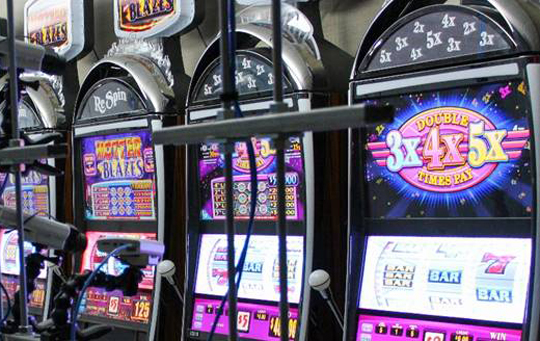
Slot players can bet and spin Live Slots at HardRockCasino.com using cutting edge technology created by Softweave Ltd. designed exclusively for players to win on some of the most popular land-based slot games that are not available in the virtual world through a traditional online slot experience including Leprecoins, Buffalo, Spitfire Multipliers, Hotter than Blaze and 3x4x4x Double Times Pay.

“The partnership with Hard Rock creates optimal settings for the delivery of the Live Slots product,” said Roy Greenbaum, CEO of Softweave Ltd. “Our cutting-edge technology will enable HardRockCasino.com to extend the real gaming experience from the casino floor directly to the players fingertips.”

In the Live Slots section of HardRockCasino.com, players will see a row of real slot machines, as if they were walking through Hard Rock Atlantic City. The true-to-life experience means that players can find their lucky slot machine, win big and return to it later if the machine is not occupied.

“We are thrilled to present ground-breaking and innovative technology as real-money, online gaming continues to evolve in New Jersey,” said Joe Lupo, President of Hard Rock Hotel & Casino Atlantic City. “Similarly, to Live Table Games Dealers, Live Slots enables our players to have one seamless experience to earn Wild Card Rewards including hotel rooms, entertainment and dining at Hard Rock Atlantic City. Bridging the gap to provide a ‘Live’ experience to our online consumers is something we are not only excited for, but very proud to be the first in the world.”

Hoop Dreams: ‘Historic Basketball’ Games Head to New Jersey

For bettors who are also basketball fans, a new game heading to New Jersey casinos should be a slam dunk.

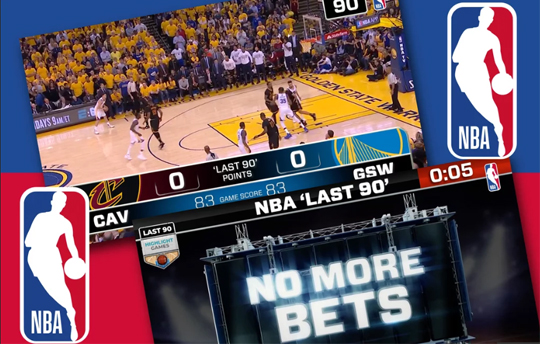
NBA Last 60 takes clips from actual pro basketball games and puts them together to create a whole new match—or at least, the last minute of it. Offered by U.K.-based Highlight Games and Spin Games, NBA Last 60 replaces a 90-second version of the game; in testing, the shorter version proved quicker-paced and more engaging.

Spin Games, headquartered in Reno, Nevada, is providing free and real-money versions of the game through its ROC Remote Gaming Server (RGS) platform. Four online casinos will offer it, including Virgin, Tropicana, Golden Nugget and Resorts, pending approvals from the state Division of Gaming Enforcement.

Spin Games CEO Kent Young told GGB News the game is “a different category of product, actually a first in terms of using historical sports footage. We think it will appeal to both sports betting and casino players—probably skewing on the side of the sports bettors, but applicable to both.”

The virtual sports betting game should be available in the Garden State by the end of March, he added.

Here’s how it works. Players choose two opposing teams, then make up to four wagers, such as which team will win, which will score first, or which will score the first three-pointer. After they place their bets, a random number generator chooses an offensive or defensive clip of those particular teams, always chosen from the last 60 seconds of a real game.

With thousands of clips to choose from and millions of possible combinations, it would be virtually impossible to determine the outcome, Young said—all of which makes for an exciting, suspense-filled game.

The NBA has opened its game vault to game developer Highlight Gaming, which generally pulls video clips from the last three or four seasons. Conceivably, players could see the late Kobe Bryant play again, along with current greats like LeBron James, Steph Curry, Russell Westbrook, Joel Embiid and many others.

Previously, historic sports in the U.S. have been limited to horse racing and dog racing, or virtual sports played by animated figures. Young predicts that NBA Last 60 could launch a trend that brings more professional-league sports to the iGaming arena. Even so, he said basketball—a fast-paced game even novices can easily follow—may be ideally suited for the format.

“Basketball ball is a very good fit. It’s fast-moving and the scores change rapidly. One second you think one team’s going to win, then it’s the other.

“We’re optimistic about the game,” said Young. “Obviously the NBA brand is extremely powerful, and fans definitely have an emotional attachment toward their teams, teams they’ve been rooting for years. So I think this has a lot more appeal than traditional horse races or greyhounds. The other part is that it’s on-demand. Players don’t have to wait for a particular game.”

Only time will tell how NBA Last 60, and the whole concept of historic sports betting, goes over among sports fans and online casino patrons who are unfamiliar with the genre. But Young has high hopes. “We think it will do very well in the market,” he said.

Nevada Sets Sports Betting Record

New Jersey’s still fledgling sports betting business surpassed Nevada in handle in May, but in the end, Nevada set another record by growing its take by 6.2 percent to $5.3 billion.

The results marked the tenth straight annual handle record set in the state and the second time figures eclipsed the $5 billion mark, based historical figures from the University of Nevada Las Vegas.

Revenue for the full year also hit a new record at $329.1 million, up 9.3 percent from last year’s record, according to LegalSportsReport.com. December’s handle hit $571.1 million, while revenue exceeded $36.3 million.

Handle for all sports categories except for parlays rose year-over-year in 2019 while hold rose for all but basketball. Football fell short of the $2 billion handle mark, coming in at $1.9 billion. That number included a drop in Super Bowl betting for only the second time in 10 years.

Basketball followed next with $1.7 billion in handle, while baseball ranked a distant third at $1.1 billion. All other sports accounted for $594.8 million. Parlay handle surpassed $50.1 million.

Last year’s 6.2 percent hold is the highest since 2007 when the state held 6.49 percent.

Mostly good stuff. But could 2019 mark the last year Nevada will lead U.S. states in sports betting handle? New Jersey sports betting finished 2019 with $4.6 billion in handle, in spite of a market yet to mature.

Online sports handle accounted for 83.7 percent of New Jersey’s total last year. There’s no exact breakdown for Nevada sports betting, but Gaming Control Board Senior Research Analyst Michael Lawton assumes mobile market share rose last year from an estimated 48 percent in 2018.

Nevada appears ready to match other jurisdictions throughout the country in reporting its mobile wagering share. Even though mobile Nevada sports betting began in 2010, the state’s regulator has never separated out how much came from mobile.

Lawton confirmed the state will break out mobile betting share every month moving forward.

That increasingly detailed reporting will provide a clearer picture of how Nevada compares to other states. The ballpark figure of nearly half suggests that the state’s onerous in-person registration and funding requirements hamper mobile potential.

Nevada sports betting app technology also lags behind what flourishes in the east. DraftKings co-founder Matt Kalish recently cited the in-person sign-up mandate as a primary reason the company has not launched its app in Nevada.

Macau Casinos Shuttered Due to Coronavirus

The Macau government’s decision last week to close the territory’s 41 casinos could hammer first quarter gaming revenues by 50 percent𑁋and it could get worse. If the potentially lethal coronavirus continues to spread, the 15-day shutdown could be extended.

Either way, 2020 promises to be “awful” in the early going, said analysts at brokerage Sanford Bernstein.

“Assuming only a two-week shutdown followed by some soft business resuming in late February and March, Q1 could show GGR y/y decline of 50 per cent,” the firm said in a client note issued in the wake of the closures. “If casinos were to remain closed for the rest of Q1, GGR would show a y/y decline of over 70 per cent.”

Macau Chief Executive Ho Iat Seng announced the shutdown at a February 4 press conference after health officials confirmed that at least 10 residents of the self-governing Chinese territory had contracted the SARS-like respiratory illness, two of them employed by casinos, though not on the gaming floors.

Government offices also have been closed, except for “urgent services,” as have schools, nightclubs, cinemas and theaters in the city of 600,000 residents.

“This is not a holiday,” Ho said. “It’s not for you to go out, go to gatherings, go jogging or do exercises, it’s not for this, but for people to stay at home.”

Macau’s casinos have been closed only once before, in September 2018, in response to Typhoon Mangkhut. It lasted for a relatively brief 33 hours, but cost the industry an estimated US$182 million.

The government said last week it is not considering closing the border crossings from China, although hours at the main Barrier Gate checkpoint have been reduced, and bus and light rail service has been cut back.

In any event, visitation from the mainland, the bread and butter of the casinos, has slowed to a “trickle,” Sanford Bernstein said, after the central government halted group tours and stopped issuing individual visitor visas, and Hong Kong suspended ferry service to and from Macau.

It’s considered that the two-week closure may be longer by many observers. Even Las Vegas Sands President Rob Goldstein speculated, “It could be two weeks, it could be two months.”

It’s believed the virus first appeared early in December at a wet market in the south-central city of Wuhan in Hubei province, carried most likely by one or more of the wild animals sold there. Wild animals are popular fare in China, and are sold alongside domestic poultry and livestock in markets across the country.

According to news reports, the disease began to infect workers and shoppers at the market almost immediately. Medical personnel quickly raised the alarm, but initially local officials refused to act, fearful in no small part of censure from Beijing. Thus, a critical period of several weeks passed that allowed the contagion to spread. The situation was made worse by the fact that, by the time the epidemic was officially acknowledged and the central government began to mobilize to treat and contain it, the weeklong Lunar New Year had arrived. It’s China’s busiest travel season, and it occurred as the contagion rapidly spread throughout Hubei and beyond.

As of last week, mainland officials had confirmed more than 35,000 cases nationwide, over 700 of them fatal, with most of the deaths to date occurring in Hubei. Outside China, more than 270 cases have been confirmed, most of them in East and Southeast Asia, with Thailand reporting the most infections as of last week. Twenty-eight cases have been reported in Europe, 16 in North America. The World Health Organization has declared the virus a “public health emergency of international concern.”

Hong Kong, Macau’s much larger sister city, reported its first fatality last week, adding urgency to calls across the city of 7 million to close all borders with the mainland, a move the local government has resisted.

The fatality was the second outside mainland China, the first occurring in the Philippines, where the victim was reported to have visited Wuhan. The Hong Kong victim had not been to China, however, and local person-to-person transmissions have been reported elsewhere, including in the United States.

“There could be invisible chains of infection happening within communities,” Dr. Chuang Shuk Kwan of the Hong Kong Centre for Health Protections told the South China Morning Post last Wednesday. “We are not ruling out a large spread (of the virus) in the future.”

In Macau, where extended New Year celebrations normally find the casinos packed wall to wall with gamblers, January gaming revenue took a hit of more than 11 percent year-on-year as visitation plummeted 78 percent overall, and by 83 percent from China, the industry’s principal feeder market by far.

Gaming is the main driver of the city’s economy and its largest taxpayer, “so this year’s economy will be in the red for sure,” Ho said. “Income in other sectors will be very little in terms of taxes. Plus, we’re preparing for tax relief measures as a support measure for people at this difficult time.”

The position in China currently is that the coronavirus won’t prove as deadly as the 2002 epidemic known as SARS (Sudden Acute Respiratory Syndrome), a similar coronavirus that also originated in the country and killed almost 800 people worldwide before it subsided, costing the global economy an estimated $33 billion.

Analysts for S&P Global predict the crisis will stabilize by April. “The economic hit for China will be felt most by industries exposed to household spending, especially activities that take place outside the home,” they wrote last week.

In the meantime, dozens of countries are restricting travel to and from China, more than 20 airlines have suspended flights in and out of the country, and experts are forecasting a decline in world output of up to 0.3 percentage points as the world’s second biggest economy faces increasing isolation and disruption.

However this plays out, it’s not good news for gaming in close-in markets like Singapore, Cambodia, the Philippines and South Korea, where gamblers from China are the mainstay of everybody’s VIP rooms, and in Australia as well.

The U.S. is prohibiting entry of most foreign nationals who have been to China in the last 14 days, and is also quarantining all U.S. citizens returning from Wuhan. But a January report from Wells Fargo said U.S. consumer spending will “likely not be materially affected, assuming that the current episode does not become more widespread than the SARS outbreak.”

This bodes well for Las Vegas.

SunTrust analyst Barry Jonas, writing at the end of January, said high end baccarat play tends to be concentrated around events like the Lunar New Year, and while those results could take a hit, he said, “As it stands now, we see very limited potential direct impact.”

It isn’t surprising. MGM Resorts International CEO James Murren has said that baccarat makes up only 6 percent to 7 percent of cash flows on the Strip, so expectations surrounding the sector have been rather muted anyway.

Caesars and Wynn Resorts both have reported no notable impact to date on their Strip operations.

“If you look at room rates before the coronavirus was announced and (room rates) now, there hasn’t been a noticeable deceleration,” Jonas told the Las Vegas Review-Journal. “In some areas, you’ve seen rates accelerating for some periods.”

As for the three Las Vegas operators with exposure to Macau—Wynn, MGM and Las Vegas Sands—it might be safer to say the jury is still out. Yet, all three have been weathering a virus-sparked sell-off the last few weeks without significant ill effects, at least not so far. They even rebounded around the middle of last week with share price increases of 3.4 percent (Wynn), 3.6 percent (MGM) and 2.6 percent (LVS). The U.S.-listed shares of Hong Kong-based Melco Resorts & Entertainment were up 2.9 percent.

What seems likely is that investors have priced in the impact of the virus and are ready to hear more positive news in the weeks ahead.

“The announced closure of the Macau casinos for two weeks is not all that surprising and prospectively included in estimates and stocks,” Jefferies analyst David Katz wrote in a client note the day the Macau closures took effect.

Katz believes the impacts should be confined to the first quarter, after which things should start ramping up again.

As Sands President Rob Goldstein put it late last year, “The investment proposition in Macau, going back to the beginning, was always 1 billion or so people at your doorstep. We’ve always believed that the engine here would be, and should be, all those people across the border.”

Super Bowl Handle Exceeds $268 Million in 10 States

The Super Bowl proved super for sports betting. With 10 states checking in, LegalSportsReport.com reported $268.6 million in legal Super Bowl handle. Arkansas, Indiana and New York haven’t reported specific Super Bowl figures. A few states ended up with a negative hold thanks to the Chiefs win.

Adding illegal wagers to the mix and the American Gaming Association estimated a record $6.8 billion was wagered on the Super Bowl.

Nevada again led the way with $154.7 million in Super Bowl handle, up 6 percent from last year. Nevada also enjoyed a positive hold of 12.1 percent, or $18.8 million in revenue. But the state fell short of 2018’s record of $156.8 million.

The two states that could eventually top Nevada for U.S. sports betting handle, New Jersey and Pennsylvania, ranked second and third, respectively. New Jersey took $54.2 million in bets, up about 55 percent from last year’s total. But revenue was a negative $4.3 million, or a negative hold of 7.8 percent.

Pennsylvania pulled in $30.7 million in Super Bowl bets. Online accounted for 78.3 percent of the wagers. New England‘s sportsbooks would have done bigger business if the Patriots were in big game. Rhode Island reported $5.5 million in handle, down from $6.5 million in 2019. Revenue was almost $805,000.

New Hampshire only launched the mobile DraftKings Sportsbook at the end of December but has had a solid performance throughout the NFL playoffs. More than $2.3 million was bet on Super Bowl LIV.

In Mississippi, the handle rose from $4.7 million to $6.7 million. Oregon reported more than $2 million bet with $150,000 in revenue.

Delaware, which offers no mobile sports betting, took $2.1 million in bets but ended up with negative revenue of $229,000. The majority of the handle, $1.4 million, came from straight Super Bowl bets. Another $359,000 in handle resulted from parlay cards.

West Virginia bettors wagered $3.9 million in the Super Bowl thanks to the help of two long-shuttered properties. Delaware North‘s Wheeling Island and Mardi Gras casinos both reopened their sportsbook operations on the Friday before the Super Bowl. Both shut down last year after Delaware North’s previous supplier had an issue with third-party tech suppliers. The re-launch comes with the help of It’s technology and Genius Sports‘ data services.

A majority of Iowa‘s casinos reported taking more than $6.5 million in Super Bowl bets, according to the Iowa Gaming Association.

Some of those casinos had heavy action on the Kansas City Chiefs, which led to losing large sums of money from their hold. Handle likely would have been higher if Iowa did not require in-person registration for its mobile apps.

In Vegas, Success Beyond Baccarat

Nevada’s casinos overcame a flat year on the Las Vegas Strip to post $12.03 billion in gaming revenue in 2019.

It was the first time in 12 years the state averaged $1 billion or more a month, and in total represented a 1 percent increase over 2018. It was also the third best revenue year ever, trailing only the pre-recession totals posted in 2006 and 2007, with the latter still standing as the all-time record at $12.8 billion.

Gaming revenue statewide has now been on the rise for five consecutive years, and for nine of the last 10.

Totals compiled by the Nevada Gaming Control Board show machine games as the year’s solid performer, up nearly 3 percent versus 2018, to $7.93 billion. It was enough to offset a somewhat disappointing year for table win, which was down 2.5 percent to $4.09 billion. The culprits there were the state’s two biggest games, blackjack and baccarat: the former was down 2.9 percent to $1.11 billion, the latter plummeted nearly 13 percent to $1.05 billion.

It was the drop in baccarat that accounted almost entirely for the softness on the Las Vegas Strip. It’s where most of the casinos that deal it are located, where 98 percent of the year’s $1.05 billion was won, and where the decline in revenue from the game, not surprisingly, was more pronounced at minus-13.5 percent.

The end result Strip-wide at $6.58 billion, tables and slots combined, for the 51 operators that constitute the market for the Gaming Control Board’s purposes was a tepid performance against 2018 at minus-0.02 percent.

But analysts like Brent Pirosch, director of Gaming Consulting at the Las Vegas office of the commercial real estate giant CBRE Group, stress that gauging the true health of the market requires digging past baccarat’s outsized impact on the top line.

“When we look at baccarat we treat it as VIP play and assume these are wealthy Asian customers who represent a very, very small percentage of visitation,” he told GGB News. “It’s an important component of gaming win on the Strip, but really we’re talking about a handful of players at a handful of properties. Yes, the headline number looks great, but we’re talking about maybe six places.”

Baccarat aside, the fact is, 2019 was a mixed year for table games on the Strip. But with baccarat accounting for more than one-third of the sector’s win, an off year like last year𑁋and there have been several over the past decade tends to obscure what Pirosch, among others, view as the market’s underlying strength.

“We see the mass market as really the representative of what’s going on the Strip,” he said.

From that perspective, it was a pretty decent year. Slots were up 4 percent to $3.44 billion. Excluding baccarat, table win at $2.11 billion was up 1.2 percent. Total Strip win would have been up 3 percent. And that’s in spite of a 3.6 percent decline in blackjack, the market’s second-biggest table game.

Perhaps this isn’t so surprising, considering that visitation reached its second highest total ever at 42.5 million, an increase of 1 percent over 2018, boosted by record convention attendance of 6.6 million.

As Pirosch noted, “A 1 percent visitor volume increase translated into a 3 percent increase in gaming win, backing out baccarat. That’s pretty good.”

Downtown Las Vegas, overwhelmingly a mass-market destination, highlighted this strength at the core fairly clearly. Gaming revenue there increased 5.4 percent to $684.9 million. It was the largest single-year total since 1993.

In all, six of Southern Nevada’s seven markets posted year-on-year increases.

The north of the state didn’t fare as well. Win was down 1.6 percent in Reno, down 6 percent in North Lake Tahoe and down 2.4 percent in South Lake Tahoe.

But the state’s sportsbooks came through in stellar fashion, winning a record $329.1 million and largely erasing fears that the spread of legal bookmaking nationwide was going to exact a toll. It was a 9.5 percent increase in revenue, and it came on $5.31 billion in wagers, a 6.2 percent increase over 2018 and also a record.

Looking ahead to this year, the books already have started strong, collecting $154.7 million in bets on the Super Bowl, up 6 percent from a year ago, and keeping $18.8 million of them, which worked out to a win percentage of 12.1 percent, the highest of the last 10 years.

Hard Rock’s Allen Says ‘The Fix Is In’

Reports that Mohegan Gaming & Entertainment has been awarded the right to develop an integrated resort on the site of the former Hellenikon International Airport near Athens were premature, according to Jim Allen, the chairman and CEO of Hard Rock International, the only other competitor still participating in the process.

In an exclusive interview with GGB News, Allen said that the appeals process is ongoing. “Mohegan hasn’t been officially awarded the license because the appeal process needs to be completed. The government has yet to open the technical and financial offers. So no one, in fairness to Mohegan, has been confirmed as the winner at this time.”

Allen agrees that Hard Rock received a letter from the Greek government disqualifying his company for several reasons, all of which are very questionable, according to Allen. One of those reasons was a lack of financial viability. Allen takes exception to that.

“We have the strongest financial balance sheet in the industry,” he insists. “We’re the first gaming company to achieve and maintain an investment grade rating from Moody’s, Standard & Poors and Fitch. Bank of America supplied a highly confident letter supporting our ability to finance this project, and with our group of companies being one of the lowest leveraged in the industry, we find it difficult to believe that Bank of America’s recommendation was insufficient.”

Hard Rock was also accused of allowing their bank guarantee to lapse, but Allen says it was Hard Rock that caught that, not the Hellenic Gaming Commission (HGC).

“The Hellenic Gaming Commission and the group administering the tender were inconsistent in the reporting of their requirements related to the bank guarantee dates,” he says. “Our guarantee as signed with Bank of America was valid to a date that exceeded the tender requirements of one year but when issued by the National Bank of Greece, it was issued with a date that was four days short of the requirement. The bank guarantee also allowed for extensions at our request, so we had National Bank of Greece extend the guarantee and then advised the Committee and the Gaming Commission of the extension and the inconsistencies in their virtual data room.”

As for the lack of development experience cited in the letter, Allen just laughed.

“In my career, I have developed over 150 hotels, casinos and restaurants,” he says. “I have raised billions of dollars for development projects all over the world. The Hard Rock brand has more than doubled under our leadership, so to suggest that we do not have the experience; it just validates the corruption in the process.”

Allen said if Hard Rock had lost the bid because the competition’s financial offer was greater or that Hard Rock had not proposed as large of a facility, he would have accepted that result, but they didn’t, and they haven’t even opened up those sections of the document yet.

“You’ll never hear Jim Allen say anything negative about a process like this as long as it’s fair,” he says. “This was not fair right from the start.”

Allen points to Mohegan’s local partner, Gek Terna, and the law firm who represents them, as the main culprits.

“Mohegan’s partner was convicted of participation in a price-fixing cartel, and these convictions were not disclosed in the application even though it was legally required,” he says. “I’ve been licensed in countless jurisdictions—I got my first key license in 1981—and I know that withholding information like that would be grounds for immediate disqualification in every one of them.”

Allen also contends the fix was in because of the close relationship between the partner’s law firm, the Tender Review Committee and the HGC.

“KLC, the law firm that has been representing Mohegan’s partner for the last 10 years, is the same law firm advising the Committee and the Commission on our disqualification,” he claims. “They claim there is no conflict. Come on.”

In addition to those problems, Allen cites Mohegan’s regulatory problems in Pennsylvania.

“The Mohegan Sun Pocono is the entity with the most fines in Pennsylvania gaming history,” he says, “$1.8 million. No one even comes close to that and there were allegations of money laundering and other crimes. And none of that was disclosed on the application either when there were questions specifically requesting such information. Another reason for automatic disqualification.”

Allen says Hard Rock has already filed their appeal and despite the odds he holds out hope for a successful appeals process.

“One of the ministers issued a statement that our appeal won’t matter, even before our appeal had been filed,” he says. “They didn’t even know what we were planning to appeal. He basically stated that it’s predetermined that the appellate process will still be in Mohegan’s favor. So one has to ask, if you’ve already made up your mind that you’re not going to listen to any of our issues before you’ve even read them, then how is that a fair process?

“Our hope is that the Prime Minister and other officials were not aware or involved in this situation and that Prime Minister Mitsotakis and the Parliament will make the appropriate corrections to ensure a fair process.”

At the other end of the Mediterranean Sea, Hard Rock is the developer and operator for an integrated resort in Catalonia and was granted a license, however, political changes have delayed the process but Allen says now its back on track.

“We are targeting a March deadline and we are still navigating forward in that process. We’re not there 100 percent yet, but we should have an updated announcement sometime in the middle of March.”

Rhode Island’s Twin River Continues Explosive Growth

The January 24 announcement that Rhode Island-based Twin River Worldwide Holdings (TRWH) had closed on its $50 million deal with Affinity Gaming to acquire three Colorado casinos—the Mardi Gras, Golden Gates and Golden Gulch—would be big news for any up-and-coming regional operator.

But for TRWH, a public company formed last March with the reverse acquisition of Delaware’s Dover Downs Gaming & Entertainment, the Colorado announcement, followed a few days later by news that DraftKings and FanDuel will manage its retail and online sportsbooks, is par for the course. Twin River shows no sign of slowing its aggressive path of expansion; it’s been in rapid expansion mode for more than 15 years. When the company began to diversify, it was the private owner of one racino, the Twin River Casino (formerly Lincoln Park) in Lincoln, Rhode Island, plus the Arapahoe Park racetrack in Aurora, Colorado.

By 2014, the company’s owners had decided to hedge their bets in the face of coming competition in New England. It was a year away from the opening of the first full-blown Massachusetts racino at Plainridge Park, with MGM Springfield to follow a few years later. Twin River began the diversification that continues to this day, acquiring the Hard Rock Hotel & Casino Biloxi from Leucadia International in 2014 for $250 million. The following year, the operator bought out its local competition, buying the Newport Grand racino, which would be replaced by the new Tiverton Casino Hotel near the Massachusetts border.

The growth has not slowed since—and in fact, has accelerated in the past year.

On March 29, 2019, the operator celebrated its listing on the New York Stock Exchange (ticker symbol: TRWH) after closing its purchase of Dover Downs Gaming & Entertainment and its main property Dover Downs Hotel & Casino, the only full-blown hotel-casino property in Delaware. Twin River had barely begun a program of capital improvements at that property when it was announced last July that it had agreed to purchase the Isle of Capri Casino Kansas City and the Lady Luck Casino Vicksburg in Mississippi from Eldorado Resorts.

When the Eldorado deal closes in the second quarter of this year, Twin River will have grown from that single Rhode Island racino and Colorado horse track into a multi-jurisdictional operator of 10 properties—nine casino properties, along with Arapahoe and its network of off-track betting facilities—across four states.

“We really started our diversification strategy in 2014, with the acquisition of Hard Rock,” said George Papanier, president and CEO of TRWH, in an interview with GGB News. “That was one casino asset, and we’re on our way to nine. And our strategy has been to diversify into markets that are strategic—as in Colorado, because we had Arapahoe Park there. And we’d like to enter into densely populated markets—Kansas City is a good example of that.

“We feel we can compete in any market for market share, and we’d like to be in markets that are somewhat predictable from a cash flow perspective, but also places insulated from any future competition—a good example is Vicksburg, which we’ll be closing on in the second quarter.

“We’re still in a heavy acquisition mode.”

Phil Juliano, the gaming industry veteran who is senior vice president and chief marketing officer of Twin River Management Group, told GGB News that the company’s “heavy acquisition mode” has been one of the highlights of his in a 30-plus-year career.

“George and I are having a good time,” Juliano said. “This is fun. Rather than sitting there with one asset, sweating bullets that expansion doesn’t happen right around you, and then making it difficult to operate day-to-day, this diversification strategy made all the sense in the world.”

“In 2014, we were very aggressive about diversifying away from what we saw was going to be a wave of gaming expansion in New England,” said Papanier. “One of the things we did was acquiring Newport Grand, which was the other license in Rhode Island. We did it for two reasons—one was defensively, because it was good to control as a company the only two licenses in the state. But also, we wanted to take an offensive posture.”

Southern Exposure

That offensive posture shows no signs of slowing to this day, but in the meantime, Twin River has made the most of all of its acquisitions, in a pattern of generating profit in some of the most challenging markets in the U.S.—like Biloxi, Mississippi, where TRWH has turned the Hard Rock into its greatest success story.

“That’s our shining property on the hill,” said Juliano. “It won two awards for running the best Hard Rock in the Hard Rock brand, and it’s a property Hard Rock doesn’t own.”

According to Juliano, in Biloxi, TRWH implemented a practice that has led to success in all its markets—strategic capital spending. “There’s a lot of irrational spending down there, but we compete hard, and we think our spends are rational,” he said. “And under George’s leadership, his vision for the use of capital in that property, and how we enhanced that property, we don’t have to spend irrationally.

“And we’ve sustained our market share and profitability over the course of the time we’ve been there. We actually grew it dramatically in the beginning, and we’ve sustained it, even though we did not anticipate a new competitor coming into the market, in the form of Scarlet Pearl.”

He added that it helps to be the next-door neighbor of Beau Rivage, the 1,700-room juggernaut of the Biloxi market. “I think we own the best neighborhood in the market; we execute just wonderfully down there. It’s a well-run property, and it’s held its own financially. It improves every year.”

“That actually dovetails really nice into our philosophy,” added Papanier. “When we enter into markets, we have a focus on growing market share. But that is supported by a cap-ex component. Obviously, we want to operate in an efficient manner, but from a cap-ex perspective, we’re interested in brands that we feel are effective in driving traffic, as opposed to just servicing the business that’s already there.”

At Biloxi, the company added national chain restaurants like the Sugar Factory candy and ice cream emporium, Pitbull’s iLov305 restaurant, and Ruth’s Chris steakhouse. “But we also look for brands we consider to be local favorites, and we try to get them to set up shop in our property,” Papanier said. “A good example of that is a local favorite there called Half Shell Restaurant. Phil had a big part in introducing them to our property and getting them to set up shop there. They’re literally a block away. And they do a considerable amount of business at both locations.”


Investing In Delaware

TRWH is currently in the middle of similar cap-ex improvements at Dover Downs. The company recently transformed a former lounge adjacent to the lobby that was closed most of the time into Michele’s Steakhouse Lounge, a beautiful, hardwood-clad classic offering a menu of the very best of steak fare, complete with signature cocktails and appetizers, in an elegant setting that has made a mostly idle space come alive.

Another success story is Longo’s, an outlet of a popular South Philadelphia Italian restaurant—an example of creating a local draw that replaced what was a money-losing restaurant. “It’s been a home run,” Juliano said.

More F&B improvements are on the way, including the first Delaware outlet of the Sugar Factory.

The Longo’s location has two table games in the front, which is symptomatic of an ongoing revitalization of the table-game business at Dover. “We’re growing our table games business,” says Juliano. “We’re seeing Asian play come in here for the first time, ever. We have three mini-baccarat games going many times here on the weekends, and even during the week.

“George tasked us with re-laying out the casino. We took advantage of the central bar; the energy coming near those games will be great. You’ll have a pit that’s quieter that opens on the weekends in the back.” The slot floor, meanwhile, is in the midst of a major renovation. “The communication between us and the lottery (which owns the slot machines) has been excellent,” Juliano said. “They’re bringing in new equipment. We’re leveraging the e-bonusing that was in place there.”

He added that the changes at Dover are already paying off. “We’ve had some wonderful success,” Juliano said. “You only had to follow the record last year. Our market share grew faster than the other competitors. The market grew a little bit, but we grew faster than the market. The success here goes back to a balancing act I always talk about. You’ve got to give the customers what they need to visit here. You’ve got to take care of the employees so they want to work here. You’ve got to take care of the shareholders, so they know the deal they made was accretive, and enhance the value of our company. We never lose sight of that.”

Juliano is quick to credit his property executives, including GM Nick Polcino and Frank Policastro, executive director of casino operations in player development. “We’ve got casino guys here—real, genuine casino guys,” Juliano said. “And the people who were already here when we arrived have stepped up, big time. They’re responding in a fantastic way, and I’m proud of them.

“The way to success here will be the balance of the capital we inject into the property and the marketing programs we design that are targeted at the right people—and the way we take care of these people and build relationships with them. Relationship is built off the idea that ‘I’m interested in you.’ You’re the customer, and I’m interested in you. You get that going throughout the property, and you drive that home. That’s one of the bedrocks of our success in Rhode Island, with a 72 percent tax. At the end of the day, we’ll make sure we don’t waste anything, so we’ll return a maximum profit.”

“Phil doesn’t give himself enough credit,” added Papanier. “We’ve produced really good early results. Again, we acquired (Dover Downs) effectively April 1, 2019. And it was mostly on the strength of the marketing strategies. We started to deploy some capital, we feel we’ve driven some incremental gaming business from the opening of Michele’s Steakhouse Lounge. We’ve configured our table-game pits around the Fire & Ice Bar, which was really under-utilized. It’s created a lot of higher energy on the gaming floor.”


Looking Ahead

Papanier and Juliano say the same strategies are likely to ensure success in TRWH’s new ventures in Colorado, Kansas City and Vicksburg. In all three cases, the operator has acquired properties seen as underutilized. In Colorado, the Affinity casinos had been on the sales block for a long time, and according to Juliano, improvements will begin immediately. “We think there’s opportunity there,” he said. “There are three casinos with three separate brands. I envision someday it being just the Mardi Gras, (the brand of) the casino in the center of it all.

“And we also have the recognized-brand sportsbook, which will put some life into it. We’ll tell a good story there.”

Vicksburg has been a challenging market, but “better days are in front of Vicksburg,” says Juliano. “I think we’ll reinvigorate the property with our marketing philosophy, and a sensible, reasonable capital plan that addresses some of the immediate needs they have. No one’s paid attention to them. Eldorado had them on the selling block from jump street. We think we can reinvigorate that, and also think there’s a little bit of a cross-marketing opportunity between Vicksburg and Biloxi. I’m excited about that.”

“The good news about that market is that it’s a finite market,” added Papanier. “There are four properties there. I don’t want to blame Eldorado, but that was one of the stepchildren of the company, and they started to remove focus from that asset. And that’s similar to what they did in Kansas City, as well. That became an opportunity for us.”

Papanier said he is particularly excited about the prospect of maximizing the potential of the densely populated Kansas City market. “We like to enter into densely populated markets, and Kansas City is a good example of that,” he said. “We feel we can compete in any market for market share, and we’d like to be in markets that are somewhat predictable from a cash flow perspective, but also in places insulated from any future competition.”

Don’t expect the expansion fiesta to end soon. “We’re open to all markets,” Papanier said, noting that even an opportunity in Atlantic City, where Juliano worked for the Wynn and Trump organizations earlier in his career, is not out of the question. “As I said, we’re not afraid of competitive markets, and that’s a significant-sized market—$3 billion, including internet gaming,” Papanier said of Atlantic City. “The market’s there, and if the asset’s right and we can get it at a fair price, we’d be interested in pretty much any market.

“Our company’s about building value. If there’s an opportunity to build the value and it’s accretive to the company, we’re going to be taking a hard look at it.”

Another Massachusetts Casino? Could Be

The Massachusetts Gaming Commission (MGC) is mulling whether to reopen a process for approving a third Las Vegas-style casino in the Bay State. The consideration comes at a time when the recently opened casinos are not living up to their hyped profit projections.

If the MGC reopens hearings on a third and final casino license, it would be for the southeastern part of the state, formally known as Region C. It includes Bristol, Plymouth, Barnstable, Dukes and Nantucket counties.

Recently, the commission posted this question on its website: “Does Massachusetts need another casino?” it sought public input on the matter, and also issued a Request for Information (RFI) from interested parties. The public has until March 16 to submit comments. The MGC is also consulting gaming experts on the subject.

MGC Chairwoman Cathy Judd-Stein commented, “We encourage the participation of the public and other interested parties as we conduct critical due diligence on this complex matter that will inform our ongoing evaluation and examination of what is in the best interest of Region C and the commonwealth. The RFI and public comment processes will strengthen our ultimate decision as to whether to reopen the application process for Region C.”

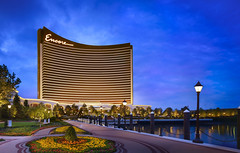
The southeastern part of the state already hosts the one slot parlor authored by 2011 legislation that expanded gaming in the state. That’s Plainridge Park, which was the first casino to open in the state, five years ago. Other casinos in the state include MGM Springfield, which opened in 2018, and Encore Boston Harbor, a Wynn Resorts property, which opened in July 2019.

One reason the last casino license wasn’t issued was the commission’s sensitivity to efforts by the Mashpee Wampanoag tribe to build a $1 billion casino in Taunton. At that time, it looked like the tribe’s efforts would inevitably produce a casino at that location, and the commission was wary about overloading the gaming market. Currently, the tribe’s efforts have been stalled, perhaps permanently, by a court decision that questioned the tribe’s ability to put land into trust.

The tribe is in federal appeals court in Boston trying to overturn that lower court ruling. If it’s successful, that would undoubtedly influence the commission’s attitude towards issuing the third license.

In 2016, the commission declined to issue a license for a $677 million casino for the Brockton Fairgrounds, which was proposed by Mass Gaming and Entertainment. After the Mashpee project was halted by a federal court, Mass Gaming pushed for the commission to reopen its license application. However, commissioners felt that if the Region C license process was reopened, it was more appropriate to allow other bidders to participate. At the time, Mass Gaming’s proposal was the only one submitted.

Mass Gaming argues that not issuing that license denies the state the opportunity to realize profits and taxes from a third casino, especially since it’s unclear whether the Taunton casino will ever move forward.

Recently released figures that show MGM Springfield had its worst gaming revenue month in December, that Encore Boston Harbor is also not meeting expectations, and that Plainridge Park slots parlor is seeing some revenues siphoned off by the two Rhode Island casinos. That’s led some to claim that Bay State’s gaming market may have already peaked.

At the same time, Massachusetts still has not entered the sports gaming market that some experts say would help add revenues to its casinos by giving them an additional amenity that gaming patrons love. It’s already been legalized in Rhode Island and New Hampshire.

Massachusetts House Speaker Robert DeLeo is so far withholding judgement on whether the state’s casinos have failed to live up to their promises. He told CBS Boston, “They will tell you although they may be below expectations, they’re still progressing and making money.” He added, “I can tell you there’s still money coming into the state coffers relative to that. I think it’s still a little bit early to make a long-term determination in terms of the success or failure.”

Although the three casinos haven’t delivered as much as advertised, they’ve paid a total of $525 million in taxes so far.

Before it opened in August 2018, MGM projected $34.8 million per month, but has never exceeded $26.9 million per month. In December, it reported $18.9 million. MGM is floating the idea of selling the property to a real estate investment trust (REIT) and leasing it back. Other casino companies have successfully employed REITs to improve cash flow.

Although more profitable than the MGM, Encore Boston Harbor has also failed to meet expectations. Its December revenue was $54 million, an improvement from the $47 million in November, but still not as good as Wynn Resorts had hoped for its $2.6 billion investment. And gaming analysts note that typically a casino’s best years are its first years.

Commenting on Encore, the speaker said, “Obviously, I’d like to see them do better, but I am happy in terms of the thousands and thousands of jobs, which was important.”

Kentucky’s Beshear Continues Push for Gambling

In his recently proposed budget, Kentucky Governor Andy Beshear asked for increased funding for public education, a $2,000 raise for Kentucky teachers and a teachers’ scholarship program, funds for school transportation projects, fully funding the state’s Medicaid program, hiring 350 new social workers and completing the Mountain Parkway.

How would these programs be funded? Beshear said, “My hope, moving into the future, is that we can embrace full, expanded gaming to compete with Indiana, Ohio and the rest of our neighbors, Republican-led states that are taking Kentucky dollars, Your viewers probably can drive 40 miles in any direction and hit a casino.”

In particular, sports betting, plus small taxes on cigarettes and vaping and an increase in the limited liability entity tax would fund Beshear’s proposals for generating more money for Kentucky. “Sports betting represents some expanded gaming even if it is not full blown. In sports betting $20 to $40-million we can do great things. Let’s just keep the dollars here and let’s take the jobs it creates,” Beshear said.

Legislation to expand casino gambling and allow sports betting has been filed in the General Assembly. Senate Majority Leader Damon Thayer said, “I’m for sports wagering in Kentucky and I think that is something I agree with the governor on as something we need to pass.” Senate Minority Leader Morgan McGarvey added, “We should have expanded gaming here. We should give people the ability to vote on it.” State Senator Johnny Ray Turner noted, “I think we should have a constitutional amendment and we should vote it out and let people vote on it.”

Lawmakers opposed to expanded gambling include State Rep. Danny Bentley who said, “We already have gambling on horses. I think to expand it I don’t think the tax we get from it would cover the cost of the socio-economics of it.” State Senator Robin Webb added, “I personally don’t like casinos. I think it preys on the vulnerable citizens of people that can’t afford it.” And state Sen. Whitney Westerfield tweeted, “Awfully easy to deliver a speech of promises to which no one objects and no cuts when the money is make believe”.

Virginia Legislators File 20-Plus Gambling Bills

More than 20 gambling bills have been introduced in the Virginia General Assembly’s current 60-day session. Several have passed out of subcommittees, but none have yet made it to the House or Senate floor. Proposals include legalizing casino gambling, online lottery ticket sales and sports betting, and regulating so-called games of skill.

Virginia is one of a handful of states that prohibit any type of casino gaming. But the Senate General Laws and Technology Subcommittee on Gaming approved the legislation, which was introduced in November by Senate President Pro Tempore Louise Lucas.

The statute, which was referred back to the full Committee on General Laws and Technology, would legalize casinos in Bristol, Danville, Richmond, Norfolk and Portsmouth, with local referendums required for approval. A similar version of the legislation is expected to advance in the House.

Supporters claim casino resorts in economically depressed areas would create new jobs and boost tax revenue. Chief sponsor of the measure, state Senator Louise Lucas, said, “Just give us an opportunity to determine our own destiny.”

Developers, local governments, casino operators and lawmakers have been negotiating behind the scenes regarding how many casinos the state should allow and who will operate them. Key players include Jim McGlothlin, a Bristol coal industrialist who wants to build a Hard Rock casino and resort in Bristol, and the Pamunkey Indian Tribe, which has proposed casinos in Richmond and Norfolk. The Eastern Band of Cherokee Indians also has proposed a Bristol casino and Chicago-based Rush Street Gaming is targeting Portsmouth. Each project must have a minimum investment of $200 million.

The legislation is a continuation of SB 1126, which was passed and signed by Governor Ralph Northam. However, the bill only called for the Joint Legislative Audit and Review Commission to review regulations in states with commercial casinos.

The current measure would task the Virginia Lottery with regulating the casinos. Gross gaming revenue would be taxed at 27 percent, with 89 percent of that revenue directed to the state’s general fund, 10 percent to the host city and 1 percent to problem gambling services. The JLARC study estimated that the 27% rate on the five proposed casinos would generate more than $262 million in state revenue by 202

The Senate subcommittee also recently rejected a measure that would have permitted Colonial Downs horseracing track to expand its Rosie’s Gaming Emporium satellite location, featuring 1,800 historical horseracing machines, to the northern part of the state. Colonial Downs operates Rosie’s venues in Richmond, Hampton, Vinton and New Kent.

Two years ago, the Virginia legislature approved the games to help boost financially troubled live horseracing. Myles Louria, a lobbyist for Colonial Downs, said the Senate panel’s decision rejecting expanding historic horseracing machines is “inconsistent” with lawmakers’ decision two years ago, and threatens the future of the horseracing industry.

Mobile-only sports betting legislation looks promising this year, said state Senator Jeremy McPike. “I think the votes are there for online sports betting to take place,” he said. His bill, SB 384, was reported out of the General Laws and Technology Committee and referred to the Finance and Appropriations Committee.

McPike said sports betting revenue will be taxed at 15 percent to 20 percent; a study by the Joint Legislative Audit & Review Commission (JLARC) indicates mobile sports betting revenue could generate up to $55 million in annual gaming tax revenue for the state. The bill allows for 10 mobile sports betting licenses, with a minimum of six issued by the Virginia Lottery Board, which would determine how many licenses would be economically viable. Operators would pay a $250,000 application fee for a state sports betting license, good for three years.

The bill also calls for official league data for in-play betting, modeled after Michigan‘s sports wagering law. League data must be made available on “commercially reasonable” terms.

The Senate subcommittee also voted to pass HB 881, which would classify electronic games of skill as illegal gambling, except for games that offer non-cash prizes or coupons for non-cash prizes. The machines have proliferated throughout the state in recent years.

The measure’s sponsor, State Rep. David Bulova, said deliberations have been intense regarding regulating casinos and sports betting, but the electronic games have slipped in under the radar. “I think it sends the wrong message for somebody to come in, use a loophole in the law and then to go ahead and ask for forgiveness and say, ‘Hey, since we’re here, we want to be taxed and regulated,’” he said.

Another bill would allow online lottery ticket sales. The JLARC study noted Georgia, Illinois, Kentucky, Michigan, New Hampshire and Pennsylvania allow internet ticket sales and said “in the first year, the Virginia Lottery would have iLottery sales of around $78 million, which would translate into additional lottery proceeds of around $12 million.”

Washington Hashes Out Sports Betting Bills

A pair of competing bills to bring sports betting to Washington are under discussion in the state Senate. The biggest difference between the two is who gets to offer wagering. SB 6394 limits betting to tribal casinos. SB 6277 includes card rooms, race tracks and tribal casinos—and permits online bets.

Folks on both sides of the issue spoke before a Senate committee on January 30. Chris Reykdal, the state school superintendent, told the Labor and Commerce Committee he opposed online sports betting because it would be irresistible to children. “I oppose any bill that opens gambling to the populace by online means,” Reykdal said.

But Eric Persson, owner of Maverick Gaming, which owns 19 card rooms statewide, said people in Washington are already illegally betting on sports, with bookies and offshore companies. He also argued that the state stands to reap tens of millions of dollars a year in tax revenues from online sports gambling.

“Sports gambling is going on in this state right now,” said state Senator Curtis King, sponsor of SB 6277. “I believe it needs to be controlled by the state.”

Maverick employees testified that the company provides lots of family-wage jobs in the state and that sports betting would provide even more. Some tribal representatives spoke against adding card rooms to the venues for sports gambling, saying those are private businesses that don’t provide widespread benefits to state residents.

Chris Masse, a consultant to the tribes, also contended the citizens of Washington wanted a conservative approach to gambling, limited to brick-and-mortar buildings, instead of via mobile phones or computers.

“We are completely different from the Mavericks of the world,” said Jerry Allen, who runs the 7 Cedars Resort tribal casino for the Jamestown S’Kallam Tribe.

Gambling revenues support education, health care, care for seniors and other social programs on previously-impoverished reservations.

“Tribal gaming isn’t just about tribe,” said David Bean, chairman of the Puyallup Tribe and vice chairman of National Indian Gaming Association. “The way gaming runs today, it benefits our neighbors, too. Tribal casinos account for 55,000 jobs in Washington State. Our casinos are safe where you can come and bet in highly regulated environments.”

Said King, “But why can’t we do the same things with the same controls in non-tribal card rooms?”

Kevin Zenishek, the executive director of casino operations for the Northern Quest Casino, owned and run by the Kalispel tribe, said he feels positive about the tribal-only bill. “I would say that Maverick Gaming is taking money out of the state and that is their goal. We keep the money in the state and help the local economy thrive.”

Rebecca Kaldor, the executive director of the Washington Indian Gaming Association, said Indian casinos pay $1.5 billion a year in wages and benefits, pay $722 million in taxes and are worth $5.7 billion to the state’s economy.

On the other side, Persson says the situation is moving as anticipated from a Maverick perspective. “The biggest thing coming from our side is an awareness of Maverick. The awareness level was very low coming in. It’s a short session and I think that neither bill is going to pass. I think going forward we’ll work together and come to an agreement,” he told SportsHandle.com.

The House has a version which would also prohibit online betting as well as games played by universities in Washington.

The bill is an attempt to “figure out a slow and steady way to kind of enter into this new arena of gambling,” House Commerce and Gaming Committee Chairman Strom Peterson, the sponsor, said January 27 at its hearing. “It’s incumbent on us to find the best way forward.”

According to the Spokane Spokesman-Review, Peterson said the prohibition on in-state colleges is an attempt to uphold the integrity of college sports, where young athletes may be more susceptible to pressure and bribery. But he admits it could create some problems with big events, like the Apple Cup or basketball’s NCAA Tournament if Washington teams make the tourney.

“These are some interesting conversations we’re going to have to have,” he said.

Representatives of the horse racing industry also testified, saying race tracks should be allowed to offer sports betting as well.

Patrick Lepley of the Washington Horsemen’s Benevolent and Protective Association said sports betting is legal at horse tracks in most states. He added the race tracks support sports betting in tribal casinos, also, but not at private card rooms.

Maryland Debates Sports Betting Bills

Maryland is surrounded by states that offer sports betting. To stop Marylanders from placing their wagers in Pennsylvania, New Jersey or Delaware, the state legislature has introduced bills to approve the wagers at home.

“These states are generating significant revenues from their sports betting franchises while Maryland sits on the sidelines,” said Senator Chris West, who introduced SB 58. “Senate Bill 58, which makes it clear that if sports gambling is legalized in Maryland, any licensed thoroughbred racing track may obtain a sports wagering license. Specifically, this will include the Maryland State Fairgrounds.”

Senate Bill 58 does two other things. It states that it’s the intent of the General Assembly that revenues generated by sports wagering be used for “dedicated purposes, including the funding of public education.”

Delegate Eric Ebersole sponsored two House bills, symbiotic companion pieces. HB 169 spells out the constitutional amendment requiring a referendum if the legislation passes. HB 225 sets up the framework for the actual sports betting.

The referendum will be held in November and if approved, sports wagering will be ready to go. While margins are small on sports betting, whatever amount it generates is better than nothing, Ebersole said.

Senate Bill 4 offers a different approach. Unlike SB 58, it would legalize online sports betting. Sportsbooks could begin taking bets online almost immediately, while permanent books are under construction. Along with all professional and collegiate events, betting on esports would also be allowed as long as participants are 18 or older.

The principal difference between the Senate and House bills relates to racetracks. HB 225 includes them; the Senate bill does not.

Each casino would get one sports betting license for six total in the state. That’s one difference from HB 225, which would allow the horse tracks to be licensed as well for 11 total licenses. Revenue would be taxed at 20 percent, the same rate for table games in the state.

According to LegalSportsReport.com, the fees are a little heftier for SB 4, however, with $2.5 million due as an application fee. The licenses are for one year with a $250,000 license fee.

West called online betting a “horse of a different color” and added the state needed to “walk before we run,” starting with retail first.

Ebersole expects the two houses will reach an acceptable compromise.

Sports betting serves important functions. It curbs illegal betting and it keeps more wagering money in Maryland rather than in the surrounding states with sportsbooks. “We want to keep Maryland revenue in Maryland,” he said.

Regardless of the outcome, the betting will be under the aegis of the Maryland Lottery and Gaming Control Agency.

“Maryland Lottery and Gaming is participating in a legislative work group that includes lawmakers and representatives from the casinos, the state’s horse racing tracks, and other interested entities. We are using that opportunity to interact with stakeholders and decision-makers and help them to frame the discussion and the factors to consider,” said Gordon Medenica, director of the lottery office.

Whatever the legislature passes will require a majority referendum vote by residents.

Medenica says sports betting is needed, and not just because other states offer it.

“It is well known that sports betting is also conducted by illegal, unregulated and untaxed entities, so there is a clear mandate to bring the activity into a controlled structure with unquestioned integrity.  Secondly, sports betting can serve to bring more customers into existing gaming venues such as Maryland’s casinos.  And finally, sports betting has some modest potential to raise incremental state tax revenue, although we must be careful not to overestimate this benefit.”

Tribal Casino Bill Introduced in Connecticut

Two leaders of the Connecticut Senate have introduced a bill to authorize the state’s two gaming tribes, the Mohegans and the Mashantucket Pequots, a monopoly on sports betting and allow them to open a commercial casino in Bridgeport, the state’s largest city.

The bill would also authorize iKeno and three entertainment zones in Hartford and New Haven, as well as a third location to be determined later.

This 41-page bill is almost identical to the one introduced last year, but which Governor Ned Lamont opposed. Senators Cathy Osten and Saud Anwar, co-sponsors of the bill, are taking the side of the tribes, which already own the Foxwoods and Mohegan Sun casinos, two of the largest in the nation. They want to force Lamont’s hand, and compel him to negotiate and amend the existing tribal compacts by October 1. Legally, though, there’s no way they can require the governor to act.

Anwar issued a statement saying, “We are talking about a win-win strategy. If you look at the details, everyone wins. Not only will we have significant new investments in East Windsor and Bridgeport, but we have jobs for the people who will build these places.

“In East Windsor, we anticipate 2,000 jobs in building the casino and 2,000 more jobs when the casino is built and running. All of the neighboring towns, including East Hartford, Ellington and South Windsor, will also benefit, getting new revenue sources as residents work at these casinos and individuals travel through them to access the casinos. It’s the same in Bridgeport—new jobs will come not only where the casino is built but the surrounding areas. I am excited to support these plans and look forward to the project’s progress.”

Meanwhile, Senator Dennis Bradley, whose district includes Bridgeport, pronounced himself “ecstatic” that a bill is being considered that would bring a casino to his city.

In an interview with GGB News, Bradley said, “I’m elated about the prospect of us talking about a casino in this beautiful city. And for legislators from the eastern part of the state, who have a strong relationship with the tribes, to present meaningful legislation to do that.”

The bill is a compromise between the Bridgeport delegation, which last year opposed the tribes’ push for a third commercial casino, and supported a proposal by MGM Resorts International for a casino in Bridgeport—and the legislators from the eastern part of the state.

Those lawmakers are led by Osten, whose district includes both casinos. She has staunchly defended the tribes’ exclusive rights to offer gaming in the state. Something that MGM continues to challenge in all arenas, including the courts, legislatively and in the court of public opinion.

MGM Resorts, responding to a request for a comment by GGB News, stated, “MGM strongly believes that the best path for Connecticut, whether in establishing sports betting or moving ahead with a third casino in the state, is an open, competitive process.

“As we have said consistently, if Connecticut is to maximize the economic impact of a commercial casino license, a transparent, competitive process is in the state’s best interest. That is equally true for sports betting, and the most direct path to bring the greatest results for Connecticut taxpayers, economic growth and state revenue.”

Senator Bradley represents almost 80 percent of Bridgeport. He noted that there have been discussions of a casino “in meaningful ways” since the early 1990s, around the same time the tribal casinos were launching.

“It has been sort of a Santa Claus type of conversation that people talk about year after year. Bridgeport is a gem of a city and anyone who has ever driven by there will say what a beautiful place it is,” he said. “A casino lets us start to bring the dream of what Bridgeport could be.” He added, “It’s not a cure of all our woes but it’s a big leap forward in realizing all of our potential.”

Since this bill is very similar to the bill introduced last year, GGB News asked why it might have a better chance of succeeding. “It’s leadership,” said Bradley. “It always down to the people who are pulling that.” He added, “There is now a strong partnership with the delegation from the eastern part of the state and the Bridgeport delegation. They are going to lock arms.”

One way in which the bill is different is that it would distribute $88 million annually to municipalities, allowing them to reduce property tax rates.

Bradley supports the bill “110 percent,” he said, and added, “I’ve made it clear to the governor that it is dear to my heart. It’s something that Bridgeport needs and If I can do something for my constituents to have their day in the sun, I will.” He said he’s told the governor that his support for some items on the governor’s agenda would be contingent upon his support for the bill.

He added, “There are some other things that the governor feels are important to the state that I would differ with him if he disagreed about this bill. Of the industries that I feel we should be investing with and supporting, the number one industry is in casinos. I would hope and expect his support for those things.”

As for the sports betting portion of the bill, Bradley said, “I feel that the tribes have been a partner to the state in meaningful ways and we have to make sure that the businesses that are here and have put in sweat equity benefit. The tribes have made it clear that sports betting will make them more prosperous and increase their profits. When someone is prosperous there will have to be a sharing of the wealth. I have no issue with the tribes getting sports betting in light of them making a significant investment that Bridgeport would get a casino.

James Gessner, chairman of the Mohegan Tribe, issued this comment, “I am very optimistic that my discussions with Governor Lamont will bear fruit. He and I agree that Connecticut has waited too long to modernize our industry and be competitive with our surrounding states.”

The chairman added, “The Tribal Council also has a great friend in Senator Osten and we are hopeful that the Connecticut General Assembly sees that through the Connecticut Jobs and Revenue Act every wins.”

The tribes are not showing a unified front on this proposal, however. Although in the past both tribes insisted that the state give them exclusive rights to offers sports betting, an official of the Mohegans last week indicated it might be willing to compromise on that point.

At the press conference where Osten announced her bill Chuck Bunnell, Mohegan chief of staff, commented during questioning, “I think my chairman and our tribal council has been pretty consistent that they believe that these are casino games that are covered under the compact, but the chairman has also expressed to the governor that we are also open to discussions, because that’s what partners do.”

At the same event Latoya Cluff, vice chairman of the Pequot tribal council, reiterated that her tribe feels that existing compacts call for any new market to be the exclusive provenance of the tribes.

This has led to speculation that the Mohegans are more open to a deal that would move sports betting forward quickly rather than fight over an extended period for a monopoly.

According to Senate President Pro Tem Martin M. Looney, this highlights the complexity of the issue. He told the CT Mirror, “This issue in particular, as we know, is a difficult one. It’s complex, because it contains so many different components that have to be negotiated and reconciled in order to move us forward.”

So far Governor Ned Lamont has offered low level support for the bill. “The administration is reviewing the proposal and will discuss this issue during the regular session,” said spokesman Max Reiss.

Under the existing arrangement, the gaming tribes pay the state 25 percent of revenue in return for exclusivity. Since the 1990s they have paid about $8 billion to the state.

If the state were to violate the exclusivity clause, by, for example, granting MGM a license to operate in Bridgeport, they would not be obligated to pay the 25 percent. Since the share the tribes pay has fallen from of peak of $430 million 13 years ago to $225 million in 2019, MGM has argued it can more than make up for that taxes it would pay for a Bridgeport casino.

The revived bill is seen partially as an act of frustration from legislators annoyed at the inability of Governor Lamont and the tribes to reach an agreement on sports betting.

It is also a return to the legislature being united around dealing with the tribes rather than MGM. In 2017 the legislature voted to authorize the Mohegans and Pequots to build a third, satellite casino in East Windsor. MGM vowed to fight it, and has been largely successful at delaying it.

MGM has sued, claiming that the Department of the Interior did not have the authority to issue a waiver for amendments to the existing tribal state gaming compacts.

Missouri House OKs Sports Betting, Slots Bill

Efforts to bring sports betting to the Show Me State didn’t pass in time for fans to wager on the Kansas City Chiefs. Maybe sports wagering will be on the books if the team repeats next year.

The first legislative step to legalize sports betting and slot machines got the green light January 28 when the House Special Committee on Government Oversight approved HB 2088 and sent it to the House floor.

The comprehensive 31-page gaming bill, sponsored by state Rep. Dan Shaul, included an amendment to allow sports wagering and slot machines in “entertainment districts.”

“What this does is basically allows the Power and Light District (in Kansas City) and also Ballpark Village areas to become an entertainment district so that they could also do sports betting and VLT’s,” Shaul testified.

VLT’s—video lottery terminals—are slot machines. State Rep. Peter Meredith asked whether the amendment just applies to the two districts.

“I believe before this bill is done, they’ll be some expansion of that to some other players that will want to be involved,” Shaul said.

Slot machines have been a high-profile issue, dominating discussion at several House interim gaming hearings in the fall. The Missouri State Highway Patrol testified that the number of complaints about illegal gambling increased from 39 in 2018 to at least 145 in 2019. Most of those complaints dealt with slot machines.

Shaul’s legislation would allow the Missouri Lottery Commission to implement a system of video lottery game terminals and to issue licenses to manufacturers, distributors, operators and handlers. Terminals would be connected to a centralized computer system developed by the Lottery Commission.

Truck stops and fraternal organizations could operate up to 10 video lottery terminals at one location. Bars could operate up to five in a single locale.

Meredith said the legislation should go to a statewide vote, noting the Missouri Lottery’s creation and other major gaming issues went to voters.

Rush Street to Link BetRivers.com to Sportsbook

Rush Street Interactive (RSI), through its partnership with Rivers Casino Philadelphia, is linking a BetRivers.com online casino to the existing Rivers Casino Pittsburgh online sportsbook. BetRivers.com players can immediately begin placing online and mobile wagers on a range of slots and table games across the state of Pennsylvania.

The online casino and sportsbook products share the same accounts and wallets for bettors convenience. Players can switch seamlessly between the sportsbook and casino using phones, tablets and computers.

“We wanted to launch our award-winning online casino platform prior to the Super Bowl,” said Richard Schwartz, president of Rush Street Interactive, which operates BetRivers.com and PlaySugarHouse.com. “Our experience in New Jersey and Pennsylvania with PlaySugarHouse.com has validated that online sportsbook players also enjoy the full services of our casinos, especially the table games.”

BetRivers.com casino debuts with a complete portfolio of table games, such as blackjack, roulette and baccarat, as well as a fast-growing slot library currently live with over 60 slot games, including the player popular Double Ruby and Atomic Meltdown slots from Everi. More games will be added quickly as additional game vendors obtain the necessary approvals to launch their game libraries in Pennsylvania.

Players also will access what is considered to be one of the premiere loyalty programs in the industry, the inrush Rewards program. BetRivers.com also offers the fastest bonus-to-cash conversion rate in the market. Unlike some of the other online casino sites, BetRivers.com’s welcome offer for new players of a $250 match has just a one-time play through.

“We are proud to now offer more betting action and excitement by adding the online casino at BetRivers.com,” said Schwartz. “The unique full-service casino on PlaySugarHouse.com in Pennsylvania, which launched in July using the same platform, achieved market share of greater than 40 percent in Q4 of last year, and we expect players will similarly enjoy the BetRivers.com experience.”

In addition to offering fast payouts, BetRivers.com accepts a market-leading variety of deposit options, including credit and debit cards (Visa, MasterCard and Discover), ACH (e-check), PayPal, online banking, wire transfers, BetRivers prepaid cards signed up for online, or cash deposits either at the Rivers Casino cage or at popular retail stores in the state through the PayNearMe service.

“Rush Street Interactive has grown market share in Pennsylvania and New Jersey on PlaySugarHouse.com, in large part due to the quality of the user experience and the time we’ve invested listening to what our players want to improve their experience in both the sportsbook and casino and by offering responsive customer service and fast payouts,” said Schwartz. “We are proud to now bring that same first-class, award-winning interactive casino service to players at BetRivers.com in Pennsylvania.”

UK Looks at Flutter-Stars Merger

The UK’s Competition and Markets Authority will investigate the proposed mega-merger between Flutter Entertainment and the Stars Group.

In October last year, Flutter, the parent company of Paddy Power Betfair, agreed a deal to acquire all shares in The Stars Group and merge with the PokerStars operator to form a combined business with annual revenue of £3.8bn (US$4.9bn).

At the time, Flutter said the agreement would create the largest online betting and gaming operator in the world, with the deal set to see Flutter shareholders own approximately 54.64 percent of shares in the business, with Stars Group shareholders having 45.36 percent.

The CMA will consider whether the merger would result in a “substantial lessening of competition within any market or markets in the U.K.” Any parties interested in the deal are invited to submit comments by February 18.

The merger also remains subject to various other closing conditions, including the approval of both Flutter and Stars Group shareholders, which is not expected until the second quarter of this year. The deal would require the support of at least 66 percent of the latter’s shareholders in order to proceed.

Other closing conditions include approval from the FCA, London Stock Exchange and Euronext Dublin, as well as the satisfaction of various merger controls, foreign investment and gaming-related approvals in the U.K., Ireland, Australia, the U.S. and Canada.

If the approvals come through, Flutter and The Stars Group hopes to complete the deal during the second or third quarter of 2020.