Author: Casino Connection Staff

Wing Wars at Golden Nugget

Join 21 South Jersey eateries, bars and restaurants as they compete for ultimate wing supremacy at Atlantic City Weekly’s 4th Annual Wing Wars.

Admission includes unlimited wings and dipping sauces from all participating restaurants, live music from Quasimodo’s Bride, killer drink specials, contests and much more!

Grand Ballroom at the Golden Nugget
Saturday, January 25, 2020, 12 P.M. – 4:00 P.M.
Ticket Prices: 12pm – 4pm | $45 (Includes early entry and a special gift) • 1pm – 4pm | $30
Contact: (609) 441-2000; www.goldennugget.com

Ocean Casino Hits Stride in November. How Goes AC?

If Ocean Casino Resorts were a Broadway play, it would have received a boffo review for November, with a 66.2 percent increase in casino revenue compared to November 2018, and a 48.2 percent increase in overall revenue, including sports betting and online gaming.

“That the property is succeeding both in monthly year-over-year revenues and third quarter gross operating profit growth ($10.2 million Q3 2019 compared to $581 thousand Q3 2018) is evidence that Ocean is finding its stride,” said Rummy Pandit, executive director of the Lloyd D. Levenson Institute of Gaming, Hospitality and Tourism at Stockton University.

Terry Glebocki, CEO of Ocean Casino Resort, credits new marketing efforts, among other steps. “Our offers have been a major driver of our increased business levels and profitability,” she said.

As for Atlantic City itself the industry surpassed $3 billion in overall gaming revenue for the first time since 2012. She’s back, baby!

Well, maybe. There’s still a lot of climbing to do. In 2012, gaming fortunes were on the way down, not up, thanks to the arrival of casinos in Pennsylvania and the downturn of the economy several years earlier.

Since 2014, five properties in the shore resort closed, including the Taj Mahal and Revel—the former a response by owner Carl Icahn to a strike by Local 54, the latter because it aimed in the wrong direction.

In June, 2018, Ocean Casino Resort and Hard Rock Hotel & Casino Atlantic City both opened their doors on the same day. The two Boardwalk properties, separated from each other by Showboat, were reclamation projects, much like Atlantic City itself. One replaced the shuttered Taj Mahal, the other, replaced Revel, which closed just two years after it opened.

Hard Rock established itself as a force to be reckoned with from the get-go, emerging as one of the stronger properties in town. Credit its affiliation with the established and successful Hard Rock brand. Credit its stable corporate office, topped by an Atlantic City native, Jim Allen. Year to date, Hard Rock came in second behind Borgata in casino win, and third in overall win, trailing Borgata and Golden Nugget.

Ocean entered play snake-bitten by its affiliation with Revel, if only by structure. The property had no corporate support system, no track record. It lagged behind like a horse that stumbled out of the gate.

Some management changes later, and Ocean has turned the corner.

“The property had a history of being tone deaf to most Atlantic City customers, and we’ve now overcome that,” Glebocki, said. “To turnaround, we needed to make a lot of changes fast. I called it a top/down bottom/up approach.  We needed to grow the revenues while reducing expenses.  Certainly not the easiest thing to do, but that’s exactly what we did. We increased marketing offers to drive visitation, examined every expense and changed the fixed cost structure.”

Ocean has also taken a casino first philosophy, she said. “We put our casino guests first in absolutely everything we do, from offers to comp rooms to entertainment.  We knew it was important to listen to our guests’ ideas and concerns, and I’m proud to say we’ve tailored the improvements made thus far to be responsive to what our guests expressed.”

Pandit called the 48 percent year-over-year increase in monthly total gaming revenue remarkable. “But not inconceivable for a property finishing only its 16th full month of operation.”

Is Atlantic City also doing remarkable given the past dozen years?

Third-quarter industry total gross operating profit has increased 12.5 percent year over year.

“This and other positive indicators are evidence that an industry wide strategy of diversifying both gaming and non-gaming products is beginning to pay off,” Pandit said.

But signs also point to the lack of growth in the overall pie, meaning the success of the two newcomers come at other properties’ expense. Based on year to date figures in November, six of the seven existing properties generated less casino win year to date in 2019, with Borgata only slightly in the plus column, based on figures released by the state Division of Gaming Enforcement (DGE).

Truth be told, sports betting and online gaming have also served as Atlantic City’s savior. Internet gaming win was $49.1 million in November compared to $26.9 million in the prior period, reflecting an increase of 82.4 percent. Sports’ wagering gross revenue was $32.9 million for the month, compared to $21.2 million for the same month last year, reflecting a 54.8 percent increase. Year to date, Internet gaming win increased 60.7 percent to $433.4 million when compared to the prior period. Sports’ wagering gross revenue was $270.0 million.

On the internet gaming front, Golden Nugget led with $18.9 million, doubling its November 2018 output and putting it in a position of making more money online than from its brick-and-mortar property.

Regardless of where it comes from, it all counts for the bottom line.

“The gaming product is changing nationwide,” Pandit said. “That New Jersey is taking the lead with respect to new gaming products such as online gaming and sports betting can only be a positive. We should expect to see New Jersey’s gaming properties continue to innovate and diversify their gaming product to remain competitive with neighboring casino markets such as New York and Pennsylvania.”

But let’s put these two sources in perspective.

“While internet casino gaming revenue and sports wagering revenue continue to grow at double digit rates this year, they still represent a fraction of the brick-and-mortar gaming market,” said DGE spokesman Leland Moore. “So far this year, brick-and-mortar win is $2.5 billion, compared to $433 million for Internet casino gaming win, and $270 million for sports wagering.”

Because brick-and-mortar revenue is so much higher, so are the taxes collected, even with a lower tax rate.

The question still unanswered is whether nine casinos can survive. Tilman Fertitta, owner of the Golden Nugget, says no. Caesars saw its profits fall 18 percent to $23.3 million while its Bally’s property decreased almost 23 percent to $14 million and Harrah’s declined 8 percent at $33 million.

“It’s not a nine-casino market, and I don’t understand why nobody realizes that,” Fertitta told the Press of Atlantic City. “It’s a seven-casino market, and when it was seven casinos, everybody was putting money back into the properties. Now, they won’t.”

Although all nine casinos were profitable for the third quarter, only six saw their operating profits increase, and year-to-date profits are down 4.5 percent, according to the Motley Fool.

While the casinos appear to be getting healthier, Atlantic City isn’t out of the woods yet. It’s been down this road before, and the end result has often been ugly.

Do iGaming Fines Reduce Problem Gambling?

The Jersey Division of Gaming Enforcement (DGE) levied fines last month against casino companies mobile and brick-and-mortar sportsbooks, drawing a response from an organization opposed to iGaming. Most of the violations were self-reported by the companies involved.

According to the Coalition to Stop Internet Gambling, the slew of sanctions, totaling $150,000, rounds out a rough year for online operators in the iGaming market—a year of damaging software glitches, age- and self-exclusion verification failures, geolocation errors, and illegal bets, according to the coalition.

The fines were handed out to multiple gaming companies for infractions ranging from offering unapproved internet games to losing data. The DGE imposed civil actions against SG Digital, PokerStars, iGaming Cloud, GAN, and William Hill for violations ranging from $1,000 to $100,000.

The largest fine—a total of $110,000—went to SG Digital, a combination of companies that offers online gaming through partnerships with Caesars Interactive Entertainment New Jersey, Golden Nugget Atlantic City, and Resorts Digital Gaming. SG Digital also offers online games to all Atlantic City casinos via their platform providers.

  • The first complaint, which resulted in a $100,000 levy, alleged that SG Digital deployed versions of three internet games that “were not the versions tested and approved” by state regulators. By law, gaming software must be identical to what was tested and approved, and officials must be notified of any changes to software at least three days in advance. The three games were Zeus III, Epic Monopoly II and 88 Fortunes, according to the Press of Atlantic City. SG Digital discovered the unapproved launched in March during an internal audit.
  • Another $10,000 was assessed after a complaint filed in October for “multiple regulatory violations” that included failing to provide information, documentation or assurances pertaining to qualifications to regulators.
  • William Hill, which operates sportsbooks at Ocean Casino Resort and Tropicana Atlantic City as well as Monmouth Park Racetrack, was fined $26,500 for allowing 16 self-excluded patrons to wager online, according to the August complaint.
  • PokerStars, in partnership with Resorts Digital, received a $5,000 levy after it failed to permanently record poker-hand history data for 202 patrons for approximately two hours on April 30. The data could not be recovered and resulted in a reporting variance of $988.24. PokerStars self-reported the incident to gaming regulators.
  • The DGE assessed iGaming Cloud $11,000 from three individual complaints: $2,000 for deploying an unapproved game version and failing to generate either a patron account summary and wagering summary reports for Hard Rock Hotel & Casino Atlantic City; $2,000 for being unable to recover slot tournament data after a system crash, and for subsequently fixing the system error without notifying regulators; and $7,000 for permitting self-excluded players to create online accounts and wager.
  • GAN agreed to a settlement of $1,000 for failing to ensure adequate website performance.

This batch was not the first, according to the agency, nor will it be the last.

DraftKings reported a software glitch related to its “cool-off status” feature in November 2018 that allowed gamblers who had selected to have their wagering ability limited for a set amount of time to continue betting.

The DGE handed DraftKings a $5,000 fine and had to release the $3,200 won from gamblers, according to an article in Forbes.

The New Jersey Online Gambling Regulations state that “internet and mobile gaming systems shall employ a mechanism that places an internet or mobile gaming account in a suspended mode.”

Mobile betting applications make it easier than ever for participants to lock in their wagers from the comfort of their own homes, but it also allows patrons the ability to make spontaneous, ill-timed decisions brought on by emotional responses. The 72-hour restriction requirement was put in place to allow a sports bettor time to clear his head and regroup before going down one of these holes.

Online gambling technology firm Gaming Innovation Group (GiG) got nailed for $25,000 by regulators for allowing an out-of-state gambler to wager online with a locally licensed operator.

As of May, GiG signed only a single New Jersey online platform client, the Hard Rock Atlantic City casino. Hard Rock’s online casino launched in June 2018, so the geolocation failure in question was relatively recent. The DGE issued similar geolocation penalties against GAN in 2016, PokerStars in 2017 and more recently against the Borgata and Caesars Interactive Entertainment New Jersey.

The DGE levied $10,000 against PokerStars in April for accepting more than 200 bets on prohibited events involving New Jersey college teams.

“We generally don’t comment on regulatory matters like these, but we had a manual gating error from our international games into New Jersey. We cooperated with the DGE as we always do, have learnt from the problem, and are confident it won’t reoccur,” Matt Primeaux, senior vice president for strategy and operations, USA at the Stars Group, told the Press.

State sports betting regulations prohibit wagers on collegiate events involving teams who play in-state or events taking place at venues in the state. New Jersey is the only jurisdiction with legalized sports betting to prohibit such wagers.

According to the Coalition to Stop Internet Gambling, the slew of sanctions rounds out a rough year for online operators in the iGaming market, a year filled with deeply damaging software glitches, age- and self-exclusion verification failures, geolocation errors, and illegal bets.

“The serious trouble that surrounds the state’s online operators wasn’t just envisioned but expected given the frequency with which the industry finds itself under fire the world over,” said a spokesperson for the Coalition to Stop Internet Gambling. “On an exceedingly regular basis in the United Kingdom, for instance—the world’s largest iGaming market—news reports reveal scores of similar problems associated with Britain’s online gambling industry.

The seriousness of the latest infractions in the Garden State grows in the context of the Council on Compulsive Gambling of New Jersey’s fresh warning concerning iGaming. According to a recently issued report—”Sports Betting and the Impact on the Problem Gambler and the Family”—by Executive Director Neva Pryor and Assistant Executive Director Dan Trolaro, “There are so many options to choose from coupled with the ease of access, creating a virtual sports book in the gamblers’ pocket 24 hours a day. For some, this can lead to time away from family, financial devastation of and even suicide.”

Helpline calls where sports’ gambling was the primary issue prior to 2018 legalization ranged from 1 percent to 5 percent per year. Calls received on the 800-GAMBLER helpline since June 2018 where sports gambling was the primary issue jumped to 10.8 percent of all helpline calls for the period ending October 31. In addition, the council’s treatment providers report that more than 50 percent of their practice is geared to people struggling with sports gambling issues.

Particularly jarring is how New Jersey’s iGaming companies continue to mirror the troubling manner in which their scandal-plagued counterparts operate overseas, the coalition spokesperson said. “The misconduct responsible for the latest batch of fines only underscores the need for the Department of Justice’s enforcement of the longstanding federal ban on all forms of Internet gambling.”

But a report from an online gaming industry group says otherwise, thanks to the DGE’s regulatory efforts.

“To date, there has been no measurable evidence of increases in gambling harm, underage gambling, fraud, or money laundering as a result of the legalization of iGaming,” according to the report, from iDEA, an online gaming advocacy group. “The industry has successfully addressed the valid concerns voiced by opponents and skeptics of legal iGaming and proven that geo-fenced interactive wagering can be successfully operated and safely regulated in an intrastate environment.”

Cordish, FanDuel Partner in Philly, Beyond

Baltimore-based Cordish Companies and the FanDuel Group have announced a strategic partnership that will place FanDuel Sportsbooks at all of Cordish’s gaming properties.

The first new retail and online FanDuel Sportsbooks Cordish will launch will be at two of its Live! casino properties currently under construction in Pennsylvania.

Stadium Casino, Cordish’s Pennsylvania subsidiary, has received permission from the Pennsylvania Gaming Control Board to launch its online sports betting operation in Philadelphia before its Live! Casino and Hotel opens next year. The retail book at Live! Philadelphia is expected to be one of the state’s most lucrative, being located in the center of the city’s Stadium District, home to the stadiums and arenas of the NFL’s Philadelphia Eagles, MLB’s Philadelphia Phillies, the NHL’s Flyers and the NBA’s 76ers.

Meanwhile, Cordish plans a FanDuel Sportsbook at its Live! Casino Pittsburgh, also slated to open by the end of 2020 in a space formerly occupied by an anchor department store in the Westmoreland Mall outside that city.

“We are excited to partner with FanDuel to bring our customers the premier sports betting experience in the country, including unique promotions and sports engagement opportunities that will only be available at Live! properties,” said Joseph Weinberg, principal of the Cordish Companies.

“With 10 decades of experience, the Cordish Companies have created the model for world-class integrated sport, gaming, entertainment and hospitality destinations,” said Matt King, CEO of FanDuel Group. “This partnership allows us to capitalize on the incredible success of sport betting to date and brings FanDuel’s top sports betting operations to Cordish destinations across the United States.”

In addition to Pennsylvania, Cordish is pursuing sports betting and online gaming licenses in its Live! entertainment districts in Maryland, Washington, D.C. and elsewhere across the U.S.

NJ Bill Would Let Ex-Drug Offenders Work in Casinos

Under existing New Jersey law, a drug conviction bars casino employment. But a vote by the full Senate this week would eliminate the restriction, according to the Press of Atlantic City. Governor Phil Murphy expects to sign the law, approved in the Assembly last month.

“I believe the best way to give love and truly help anyone struggling with addiction is to provide real hope for their long-term recovery by creating job opportunities,” said prime co-sponsor state Senator Chris Brown.

The measure would allow the state Casino Control Commission to issue a casino employee license and the state Division of Gaming Enforcement to allow a casino employee registration to any applicant who has successfully completed a term of special probation, or recovery court.

Brown developed the original bill after a conversation with Joe Jingoli, a partner in Hard Rock Hotel & Casino Atlantic City, who believes it’s Hard Rock’s corporate responsibility to give recovering addicts a second chance.

“At a time when the scourge of addiction has touched all of us, what better way to combat it than true opportunity and jobs?” Jingoli asked.

The original legislation passed the Senate last year, but the Assembly made some changes, which required a new Senate bill.

Under the recovery court, low-level drug offenders spend up to five years being testing for drug use instead of doing prison time. The program requires regular court appearances and supervision by a host of officials.

A lot of participants end up in prison anyway, because they can’t stay clean.

But according to a Press editorial, since 2002, more than 5,400 people have completed the program—called Recovery Court in Atlantic and Cape May counties—and fewer than 3 percent of graduates ended up in prison within three years.

Giving offenders a genuine second chance is another motivation to remain law-abiding. A new conviction of any sort could restore their entire criminal record with no expungement possible.

The law would allow people who have put their mistakes behind them to start building a career in the gaming industry. The license is needed for supervisory and management positions.

AC Mayor, City Council Ask for Share of Sports Betting Revs

The New Jersey communities that house the two race tracks with sports betting—East Rutherford and Oceanport—receive a piece of the action for the trouble of hosting the tracks. Each collects a 0.75 percent cut of the gross sports betting revenue. In addition, their host counties, Bergen and Monmouth, obtain 0.5 percent.

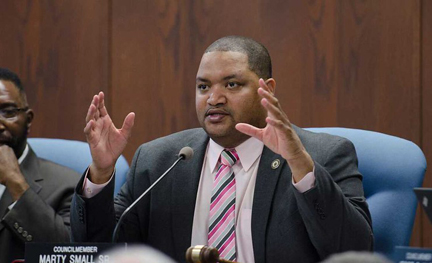
Atlantic City gets zilch, and Mayor Marty Small and City Council want that rectified.

Under state law, Atlantic City’s cut of 1.25 percent of the taxes on sports betting goes to a state agency, the Casino Reinvestment Development Authority, which uses it to market the resort.

Appearing before the Atlantic City Taxpayer’s Association last month, Small decried, “In 14 months, New Jersey has overtaken Las Vegas as the number 1 sports betting destination, and a lot of it has to do with the success of Atlantic City, and a lot of it is online. But we don’t get one penny. Just think about that. That’s unacceptable.”

State officials aren’t buying the city’s argument so far, according to the Associated Press. One reason? The municipality has to prove it can be trusted with the resources it already has.

Atlantic City remains under a state takeover of most municipal power that was launched under former Republican Gov. Chris Christie, with the blessing of the Democratic-controlled state Legislature, including Sweeney.

Since sports betting began in New Jersey a year and a half ago, the CRDA has received nearly $1.6 million in sports betting payments earmarked for marketing Atlantic City, and the municipalities and counties that host the two horse tracks have gotten nearly $2 million.

California Card Rooms: New Rules Will ‘Kill Us’

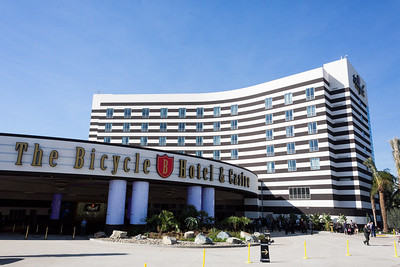
The Golden State of California has 72 card clubs, many of them in urban centers where tribal casinos don’t operate. Examples include the Bicycle Hotel and Casino in Bell Gardens and the Hustler Casino in Gardena.

In addition to poker, these clubs also operate pai gow poker, blackjack and baccarat—so-called “California games.” If new rules proposed by the state Bureau of Gambling Control are adopted, card room operators say, playing the games will be so complicated, players will go to tribal casinos that aren’t bound by such rules.

The bureau has been holding hearings on the proposed new rules for about a year, but kept the information close to the vest. All the while, card clubs accused the bureau of hauling water for Indian casinos, which have long held that card clubs violate the state constitution and profit from “illegal gaming practices,” as former California Nations Indian Gaming Association (CNIGA) Chairman Steve Stallings called it several weeks ago.

The California Gaming Association (CGA), which represents many of the card clubs, called the proposal “a clear attack on the card room industry and a message that the bureau is intent on eliminating this lawful $5.6 billion industry and putting 32,000 Californians out of work.”

Tribal casinos and casinos in Nevada offer card games in which a dealer who works for the casino also acts as the banker. California, by contrast, does not allow commercial card clubs to have a financial stake in the outcome of the game. So at most card rooms, an employee serves as the dealer and a representative from a licensed third-party business is the banker, who collects from the losers and pays the winners. Card rooms generate revenue by collecting a fee from each player during each hand, with the fee based on the bet limit at each table.

Under the new rules, players would be required to take turns acting as the banker, i.e. “the house.” They would have to rotate every two rounds, which would create delays between rounds, meaning casinos would collect fewer fees per hour. In addition, many players would away shy from being the banker, and might go to a tribal casino instead. Players who refuse to be the “house” wouldn’t be able to play. The game would stop if no players accept being the banker.

The bureau held hearings on the new rules at a December 18 hearing in Sacramento. The rules have been introduced informally, but for them to be adopted, the bureau must hold more hearings and do an economic impact report.

Before the hearing, CGA President Kirk Kirkland held a press conference in which he declared, “It’s so disruptive,” and introduced several card club owners to speak, including the owner of the Capitol Casino in the state capitol, who said his business would be killed by the regulations.

“I’d be deeply concerned if they used this as a starting point,” Kirkland told the Sacramento Business Journal. He added, “We would have to go into an injunction to stop them. Our industry, our communities couldn’t survive.”

Several weeks ago, the CGA released the results of a study that estimated the card club industry supports 32,000 jobs and generates $1.64 billion in wages and benefits and $500 million in state and local taxes.

Last week, the recently elected CNIGA Chairman James Siva issued this statement: “The card clubs are engaged in a desperate attempt to mislead regulators and the public. We commend the Attorney General and the Bureau of Gambling Control for moving forward with regulations that will clarify current law and ensure a well-regulated gaming industry in California.”

Siva added, “Nothing in the proposed regulations would cause a California card room to shut down. These regulations merely clarify existing law that limits the types of gaming allowed in California. We look forward to the Bureau of Gambling Control moving forward with the formal rule-making process.”

Tribal criticism of card clubs began intensifying after 2007, when former state gambling enforcement chief Robert Lytle issued far less onerous rules for the card clubs in a memo. Those rules would be superseded if the California Bureau of Gambling Control’s proposal takes effect.

Lytle later left the state service and almost immediately began working as a consultant for one of the casinos that he once had regulated. In May 2016, he lost his gaming license and ownership in two card clubs, part of an agreement worked out after the Bureau of Gambling Control accused him of obtaining confidential information for his consulting business from an agent in the bureau.

Richard Schuetz served four years on the California Gambling Control Commission, later was executive director of the Bermuda Casino Gaming Commission, and currently owns Schuetz LLC, a gaming and regulatory consulting entity. He told GGB News, “The card club industry ought to put up a statue to Lytle. He wrote a letter redefining how card games should be treated. Ten days later, he retired and became a consultant. As a result of his corrupt behavior, he can no longer set foot in the industry. His participation in the industry is an embarrassment, and the card rooms should be ashamed they owe so much to him.”

Needless to say, Schuetz is not sympathetic towards the card clubs’ plight. “It’s absolutely time that they were forced to obey the law,” he said. “What’s gone on since Bob Lytle’s infamous memo is ludicrous. The card rooms continually rely on talking about all the jobs they create. Hawaiian Gardens has gone beyond itself to prove itself corrupt. You’ll see that about 85 percent of the city’s budget comes from that card room.”

Schuetz added, “When they have meetings with the regulatory authorities, the card rooms bring the dealers and minority people, and it’s like ‘Don’t forget the jobs!’

“It’s not an issue of jobs. It’s an issue of the law. It’s like saying, ‘Yes, meth is a terrible drug, but think of all the jobs that are created in the emergency rooms, and if we stop it, those jobs will stop.’ It has to do with the law. They have clearly been outside of the law.”

Schuetz says California’s state regulatory entities “have this underpinning of corruption.” The existing laws are not enforced against the card rooms, he says, “because there is a huge amount of discrimination against the Indians.”

When he served on the commission under Governor Jerry Brown, Schuetz said, “I was terribly uncomfortable with the absence of ethics and I was terribly critical of the card rooms. There have been more federal raids on card rooms than against any gaming segment in the U.S. It’s a group that cannot behave. This is one reason the Indians don’t want them involved in sports wagering. These guys can’t play by the rules, and the main thing in sports betting that must be maintained is integrity.”

Several card clubs are huge taxpayers in their host municipalities, including the cities of Commerce and Hawaiian Gardens. Edgar Cisneros, city manager of Commerce, recently told the Los Angeles Times, “It’s going to devastate a lot of working-class communities, not just the city of Commerce.” The Commerce Casino, which offers 240 tables, is responsible for 45 percent of the city’s tax revenues.

One of the gaming tribes that went to court to fight the card clubs is the Yocha Dehe Wintun Nation, which owns Cache Creek Casino Resort in Yolo County. The tribe sued the state, saying it was not enforcing its own rules against banked games. It also argued that this violated the state-tribal gaming compact. Last summer, the case was dismissed, but the tribe is appealing to the Ninth Circuit Court of Appeals.

Last week, the tribe issued this statement about the new proposed rules: “Yocha Dehe Wintun Nation applauds Attorney General Xavier Becerra and the Bureau of Gambling Control for proposing regulations requiring cardrooms to follow the law the State Legislature and California voters have put in place. This is an important first step to have state law enforced and to stop the play of clearly illegal banked games in card rooms in our communities.”

Several weeks ago, a consortium of 18 gaming tribes began gathering signatures for a state constitutional amendment referendum in 2020 that would legalize sports betting in the state. Their amendment mentions gaming tribes and racetracks—but quite deliberately omits card clubs.

In Macau, China’s Web Tightens

With Macau on virtual lockdown last week for a visit from President Xi Jinping, it appears December will add to the pressures that have kept high rollers away from the baccarat tables through most of 2019 and dragged gaming revenues into negative territory for the first time in three years.

The Communist Party leader was in town three days to mark the 20th anniversary of Macau’s return to Chinese sovereignty after nearly five centuries of Portuguese rule.

The celebrations included the inauguration of Ho Iat Seng as Xi’s hand-picked chief executive. He is the third executive in the city’s history as a self-governing “special administrative region” (SAR) of China, as both Macau and Hong Kong are known.

Macau’s loyalty to the constitutional principle of “one country, two systems” has stood in somnolent contrast to the anti-Beijing protests that have rocked Hong Kong for months. As a hedge if things go terribly awry in its unruly sister SAR, Xi’s visit was accompanied by a number of policy initiatives aimed at developing Macau as a secondary financial center for the Pearl River Delta region.

These include establishing a yuan-denominated stock exchange and accelerating a renminbi settlement center already in the works. “The financial industry used to be an idea that we reserved for Hong Kong,” said a Chinese official who spoke with Reuters anonymously. “We used to give all the favorable policies to Hong Kong. But now we want to diversify it.”

Two officials who helped develop the Shanghai Stock Exchange moved to Macau this year to help with the nuts and bolts, according to sources cited by the news agency, and Beijing has instructed state-owned banks and businesses to lend a hand.

The stock exchange had been in discussions for some time, but it’s taken on fresh urgency as Beijing grows anxious to avoid any major market disruption in Hong Kong that could hurt Chinese businesses.

“Xi Jinping has made it very clear that he wants a diversified Macau economy,” another Chinese official said. “The future focus will be on tourism and finance, to make it a center to host international meetings, like Singapore.”

In a client note issued last week, analysts with brokerage Sanford Bernstein said, “We do not view these policy initiatives as supportive directly of the gaming industry in the near or medium term. However, overall support for Macau by the PRC (Peoples’ Republic of China) is positive, and it is less likely that there will be any policy measures directed specifically at reigning in the gaming industry (in light of VIP weakness and Hong Kong turmoil).”

While there is nothing new in this, it appears Beijing intends to be more proactive in binding the city closer to the mainland economically, while simultaneously steering it away from the history of the last two decades, when Macau morphed into the largest pure gambling market in the world. More than 70 percent of total visitation last year originated from the Chinese mainland, mainly from the south of the country, from close-in markets in and around the populous Pearl River estuary, and mainly from neighboring Guangdong Province. In terms of gaming win, the market has grown to outstrip Las Vegas seven times over, and the 35 percent tax on that win accounts for 80 percent of the government’s revenue.

But then, this where the central government holds all the cards. Six years ago, Xi launched his young administration with a nationwide crusade against corruption and lavish spending within the ranks of the Communist Party and the state-owned enterprises. There were arrests, trials, demotions. It scared off Macau’s high rollers en masse. At the height of the purge, gaming revenue went negative for three straight years, plunging in 2015 by 34 percent.

Nothing nearly as radical is being contemplated these days. But it was a frightening reminder, as Warwick Bartlett of UK-based Global Betting and Gaming Consultants told GGB News, “The growth of Macau relies on the political whim of Beijing. With 1 billion Chinese citizens as a market it is quite possible for Macau to produce double-digit growth if Beijing wishes to allow it.”

Revenues were edging down year-on-year by close to 3 percent through November, but not because of political policy𑁋although the junkets have been stepping warily after giant Sun City was called out in a state-sponsored news outlet earlier this year for promoting illegal online and proxy betting. Rather, the weakness stemmed from a broad fall-off in VIP volumes connected mostly to concerns surrounding China’s economy.

As Brendan Bussmann, director of government affairs for Global Market Advisors, a U.S.-based industry consultancy, explains it, “You have to factor in (the political turmoil in) Hong Kong. But it’s mostly the overall Chinese economy, which has taken a hit. You’ve got the trade war. And what we’re seeing is the lowest growth since the early ’90s.”


A Future ‘Ex-VIP’

The negative impact from Xi’s visit was not unexpected, but, as Sanford Bernstein said, “The impact has been more severe than we initially expected.”

The brokerage noted that visa controls limiting visits to the city from the mainland were imposed weeks beforehand and were followed last week by reductions in ferry service from Hong Kong and “significantly increased security at the border crossings.” The city’s newly opened Light Rail Transit system was shut down. Cash flows were tightened as street-level money changers and lenders came under greater scrutiny, and security was heightened around “underground banking movements.” There were even worries that ATMs would be allowed to run out of cash. This proved unfounded. “But rumors have an effect on people in any event,” the brokerage said.

“I don’t think visa restrictions alone have a material impact on the game’s gross revenue,” local casino consultant David Green told Macau Business magazine. “What can really have an impact, however, is the biggest concern about the growing vigilance and active policing. Some high-value players may prefer to be left out during this period rather than being seen playing actively.”

As Pedro Cortés, an industry attorney, put it, “The VIP player is not very fond of being identified and, in these circumstances, not because he is committing any illegality, but because he values ​​his privacy and is discreet in nature, it is natural to avoid traveling to Macau.”

Through November, gaming revenue was down 2.4 percent year on year, with November finishing at minus 8.5 percent and down 13.5 percent sequentially. It was the second-worst month of the year after August’s minus 8.6 percent.

Through mid-December, analysts with Jefferies & Co. estimated mass market revenues down 3 percent to 5 percent and VIP volume down by upwards of 33 percent. They expect the trend to result in a total decline for the month of 14 percent to 17 percent compared with December 2018.

Sanford’s analysts likewise expect December to finish down more than 15 percent, with VIP’s decline in the high 20s and mass declining for the first time since early 2016.

They were quick to note, however, that mass remains on a solid growth trajectory, up an estimated 20 percent in the fourth quarter over the same period two years ago.

The Jefferies team is optimistic as well. “For now, the weakness should be well understood and should have little impact on the stocks. What’s more, we believe the beginnings of a trade deal between China and the U.S., while not comprehensive as yet, should indicate an economic rebound in 2020, which would impact the higher-end play in Macau.”

Global Betting and Gaming Consultants is modeling revenue growth market-wide over the next few years at 4 percent to 5 percent, a climb-down from recent years, but healthy nonetheless.

“The operators are broadening their offer, and have been doing so for some time,” Bartlett said. “There is more family entertainment, better MICE facilities, and in that respect, Macau will gain from the troubles in Hong Kong. The Macau casino operators have been adjusting to an ex-VIP market for some time.”

In essence, Bussmann agrees. “With VIP, you’ve seen an ebb and flow over the years,” he told GGB News. “There is plenty of room for growth in this market. It just depends on how you define it from a gaming or non-gaming perspective.”

In the long run, the policy initiatives announced ahead of Ji’s visit could prove immensely valuable by attracting a greater diversity of visitor, and from farther afield, one who may stay longer and is not solely interested in gambling.

‘Example of Reunification’

The new stock exchange will initially be geared to bond trading to encourage local and Chinese companies to issue debt in the city, according to a Chinese official who spoke with Reuters. It will also focus on start-ups and target companies from Portuguese-speaking countries and is expected to include Macau’s membership in the Beijing-backed Asian Infrastructure Investment Bank.

Additional land awards on Hengqin Island will allow the city to promote development in areas such as education and health care, and there could be spillover benefits for the casino concessions, which are forever eager to show Beijing they’re on the team and more than willing to invest in fresh development opportunities—in part, to help offset the slump in gaming.

Which is not to say the central government’s desire to wean its SAR from its gambling dependence will be easy. In addition to their dominance of public revenues, the casinos and their junket partners accounted for more than half of all industry in the territory last year, growing 14 percent against an aggregate economic growth rate of only 4.7 percent and dwarfing the combined contributions of real estate, construction, wholesale and retail trade, financial services and public administration, according to official data documented recently by the English-language Macau Daily Times.

Moreover, while the industry itself has evolved tremendously in terms of the total resort experience it can offer, non-gaming spend remains insignificant, accounting for less than 10 percent of total revenues last year𑁋and that’s under a new formula for calculating non-gaming that had the effect of bringing it up to the government’s goal of 9 percent; it would have been less than 7 percent under the old formula.

What China and its loyal local government can count on, though, is that Macau will serve as a symbol of the genius of “one country, two systems,” as Beijing likes to see it, a compliant outpost of the PRC and a counterweight to the embarrassing restiveness of Hong Kong.

In this respect, some see the stock exchange and the rest of the economic initiatives as a reward for toeing the official line. “This is the candy that Hong Kong did not want,” said Larry So, a former professor with the Macau Polytechnic Institute and a frequent commentator on the local political scene. “It is a gift for Macau, for Macau being a good boy.”

Obviously, the policies are not expressed in these terms. But then, they don’t have to be.

For one thing, there tends to be a greater natural affinity for the home country among Macau’s population, arising from the fact that more than half its residents are ex-mainlanders who emigrated after the handover. Hong Kong’s population is 10 times larger and mostly locally born.

This mainland ties also tend to nurture a generalized apathy politically whose roots can also be said to extend way back to a legacy of disinterested Portuguese administration governed by the Napoleonic Code and lax for the most part and for the most part placidly corrupt.

Hong Kong protesters have been known to wave the colonial flag in Beijing’s face, with its Union Jack emblazoned on a field of blue. This would be unheard of in Macau.

Economically speaking, there is even less incentive to rock the boat.

The post-handover casino boom has brought full employment at high salaries relative to other unskilled jobs, and the government does its part by restricting croupier positions to Macau residents. Employment security with the casinos is virtually ironclad, layoffs are unheard of, and the concessions make sure to regularly dole out lucrative bonuses equivalent to a month’s salary or more. Residents also receive an annual subsidy from the government, which is supplemented with handouts from pro-establishment community associations, and, as the Daily Times notes, millions of dollars have been invested in fostering youth groups linked to the Chinese government.

As Ho Iat Seng stated with confidence in a November interview with state broadcaster China Central Television, “Macau will be an example of China’s reunification.”


Ruffin OK’d For Circus Buy

Phil Ruffin is the new owner of Circus Circus. The deal with MGM Resorts was finalized last week when the Nevada Gaming Control Board and Gaming Commission both gave the deal their approval. Ruffin will pay $825 million for the property, which is located on the burgeoning north Strip.

The Kansas billionaire first entered the Las Vegas gaming market in 2008 when he bought Treasure Island from MGM and rebranded it as “TI” scraping the property’s popular pirate ship battle a year later. Ruffin is also partners with the Trump organization in the Trump hotel, located next to the Fashion Show Mall in Las Vegas.

The deal includes 37 acres of land at the corner of Sahara and the Strip, which has been used as a festival location. Ruffin didn’t announce plans for that parcel but he did say it was not for sale.

At Circus Circus, Ruffin plans to remove a 10-acre RV park and replace it with a pool area similar to the one that currently operates at Mandalay Bay and includes a wave pool. He also plans to build a 2,000-seat theater in which to offer a new Cirque du Soleil show, The Illusionists, which is currently running in New York City. Ruffin admitted, however, the deal is not yet done and negotiations continue.

The deal also includes the smaller Slots-A-Fun casino, which will be renovated, according to Ruffin.

Circus Circus will soon be at the center of attention when the Resorts World Las Vegas property opens in 2021. A short walk from the new property, Circus is also very close to the Drew—the former Fontainebleau— which is expected to open sometime in 2022, should the owner, the Witkoff Group, obtain the necessary funding.

Pennsylvania Board Approves Penn License for York Mini-Casino

The Pennsylvania Gaming Control Board last week unanimously approved the license for Penn National Gaming to operate its mini-casino in York.

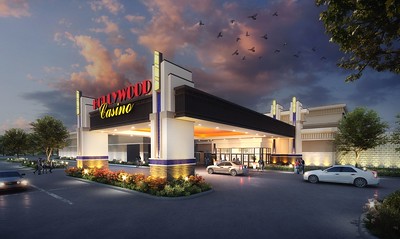
The $120 million Hollywood Casino York will open in an 80,000-square-foot space formerly occupied by the Sears anchor store at the York Galleria Mall. It will offer 500 slot machines, 24 table games, a sportsbook and online betting parlor, and several restaurants.

The license will be tied to the license for Penn’s flagship Hollywood Casino at Penn National Racecourse in Grantville, outside of Harrisburg. It was the first project to receive preliminary approval under Pennsylvania’s 2017 gaming expansion law, which created Category 4 mini-casinos. Category 4 casinos are limited to 750 slots and 30 table games, which can be increased to 40 on request. They must be tied to an existing land-based license.

Construction is already under way at Hollywood Casino York, and it is expected to open in about 12 to 13 months, Penn National officials told regulators at Wednesday’s gaming board meeting before the unanimous vote. The facility is expected to create 260 construction jobs, and after operations are stabilized, it expects to have a full-time workforce of 200 people and generate about $1 million in annual tax and fee revenue for Springettsbury Township, the host community.

Penn National also has promised $175 million for traffic improvements surrounding the York Galleria Mall.

“This being the second project that has been approved at an existing mall (the first being Stadium Casino’s Live! Casino Pittsburgh) that has lost a significant amount of retail business,” board spokesman Doug Harbach told the York Dispatch. “This type of project certainly should boost the amount of visitors to that facility and hopefully spur some renaissance to that facility.”

Penn National won the preliminary license with a bid of more than $50 million, by far the largest bid in any of the Category 4 auctions. It is the third mini-casino to receive final licensing from the board.

Georgia Businessman Proposes Casino

The Georgia House Special Committee on Economic Growth is conducting a statewide listening tour to gather public input on gambling. The topic at the recent Columbus session included upcoming legislation to allow sports betting, horseracing and casinos in Georgia.

Local businessman Bob Wright said if lawmakers pass casino legislation and voters approve it, he plans to develop a $200 million, upscale destination casino resort on the Chattahoochee River in south Columbus. He made the same proposal in 2016, but the bill allowing the development did not pass the legislature.

Wright said south Columbus is an area that “needs a lot of help” in terms of housing and jobs. “It really needs an economic catalyst to really turn that part of our city around. We think the economic impact of a destination resort will have a tremendous effect on Columbus and our city as well as contribute to the HOPE scholarship and other needs,” he said.

The 15-member committee is led by co-chairmen House Speaker David Ralston and state Reps. Alan Powell, Brett Harrell and Ron Stephens. Powell said he’d like to see gaming revenue directed to the state’s healthcare budget. He noted horseracing alone could produce an additional $1 billion for Georgia’s economy.

Expanding gambling would require a two-thirds majority in both houses; the constitutional amendment would then have to be approved by Georgia voters. Other legislation would spell out the counties in which casinos could be located–which possibly could prevent a casino in Columbus. A second referendum approving a casino would be held in those counties. Earlier this year, the Columbus city council voted unanimously in support of legislation that would allow a casino in the city.

District 7 Councilor Mimi Woodson, representing the district where Wright’s proposed casino would be located, said it would be a “game-changer.” She added, “No doubt this would create jobs and improve the quality of life for many people in District 7, throughout the city of Columbus and this region. This is the perfect district for this proposed economic development.”

Toyia Tucker, a candidate for Columbus City Council, stated, “We have to get out of just the gambling aspect, but look at the destination resort and what all it brings as far as concerts and also jobs. And we need jobs in this community.”

Eldorado Sells Three Properties

Eldorado Resorts recently closed on the $385 million sale of Isle Casino Cape Girardeau and Lady Luck Casino Caruthersville in Missouri and Mountaineer Casino Racetrack and Resort in West Virginia to Century Casinos and real estate investment trust VICI Properties.

The Missouri casinos could have faced federal antitrust issues as part of the $17.3 billion sale of Caesars to Eldorado. The combined new entity will operate 60 casinos in 18 states.

Eldorado CEO Tom Reeg said, “The agreements to divest Mountaineer Casino, Isle Casino Cape Girardeau and Lady Luck Casino Caruthersville are consistent with our continued focus on reducing debt ahead of the expected closing for the Caesars Entertainment transaction in the first half of 2020.”

Century Casinos Co-Chief Executive Officers Erwin Haitzmann and Peter Hoetzinger said in a joint statement, “We are very excited to be expanding into Missouri and West Virginia. Cape Girardeau, Caruthersville and Mountaineer are great additions to our portfolio. We look forward to working with the staff and communities to continue the current success at these properties into the future.”

Century Casinos now operates 18 casinos worldwide including 7,185 gaming machines, 285 table games and 3,400 employees including 336 in Cape Girardeau. The publicly traded company’s annual net operating revenue is $400 million.

VICI President John Payne said the transaction brings more diversification to the company’s tenant roster and adds a new market in West Virginia. “We are excited to partner with Century, as they are expert operators of small to mid-sized regional assets and we look forward to supporting the Century team in further growing their U.S. regional gaming platform,” Payne said.

When the Caesars merger is complete, Eldorado still will operate three Missouri casinos: Lumiere Place in St. Louis, Isle of Capri in Boonville and Harrah’s North Kansas City.

Century Casinos acquired the operations of the three properties for $107 million, and VICI Properties acquired the land and real estate for $278 million. Century will operate the casinos under a master lease with an initial total annual rent of $25 million and an initial term of 15 years, with four five-year tenant renewal options.

Eldorado and Caesars shareholders and the Missouri Gaming Commission previously approved the merger. According to the agreement, Eldorado will pay $8.40 per share in cash and 0.0899 shares of Eldorado stock for each Caesars share, or $12.75 per share. The combined business will be called Caesars and its shares will be traded on the Nasdaq.

Both companies pledged to reduce the number of casinos in markets where federal anti-trust issues could exist, and to reduce overall corporate costs by $500 million. Current Caesars CEO Tony Rodio said the company expects to reduce costs by $75 million to $100 million by the time the deal closes.

As part of the merger, Caesars sold three Harrah’s brand casinos in Atlantic City, Laughlin, Nevada and New Orleans to VICI Properties for a combined $1.8 billion. VICI will lease the operations back to Eldorado for total annual rent of $154 million.

Eldorado also is selling Isle of Capri Casino Kansas City in Missouri and Lady Luck Casino Vicksburg in Mississippi for $230 million to Twin River Worldwide Holdings.

Is Illinois Alderman’s Vote a Conflict of Interest?

A Champaign, Illinois television station recently asked if Rockford Alderman Natavias Ervins’ vote to support Hard Rock International’s plan for a casino to be built by Ervins’ former employer posed a conflict of interest. Ervins had listed Ringland-Johnson Construction as his employer on his Facebook page.

The broadcast elicited a response from attorney Bobbie Holzwarth, Rockford’s lead lawyer on casino matters, who said the vote was not a conflict of interest because the information on his Facebook page was outdated. “He has worked for Ringland-Johnson in the past, but he was not employed by them at the time the casino law was passed or when the city was looking at the proposals,” Holzwarth said.

Ervins, a member of Carpenters Local 792, has not worked for Ringland-Johnson since November 2017two years before he voted on the casino plan. He now works as a carpenter for Jack Hall Construction of Rockford, according to union records, and his Facebook page has been updated. A Rockford casino is one of six new casinos included in the state’s new gambling law.

Brad Long, business representative for Carpenters Local 792, said most carpenters work for whatever company has work available. “If he was working for the company, he probably should have abstained, but he wasn’t and hadn’t been for a while. You still have a right as a community member and as an alderman, to voice an opinion on what he thinks is best for the community. He shouldn’t have to sacrifice his voice and should be able to vote like the rest of the aldermen did. It’s not like it was a tight vote even.”

Eleven aldermen, including Ervins, voted October 7 to certify Seminole Hard Rock International’s $310 million proposal to develop a 65,000-square-foot casino, a Hard Rock Café and a 1,600-seat Hard Rock Live venue at the former Clock Tower Resort site. Following the vote, 815 Entertainment LLC, Seminole Hard Rock International’s partner with dozens of local investors, applied to the Illinois Gaming Board for a casino license.

Alderman John Beck abstained from the vote after his employer, the Rockford Park District, endorsed the project after reaching an agreement for financial support from Hard Rock if it won the license.

Pennsylvania Targets Illegal ‘Skill Games’

State police in Pennsylvania have raided five restaurants in Dauphin and Cumberland counties and seized what they say are “suspected illegal gambling devices.” The machines are marketed under the “Pennsylvania Skill” brand, and the manufacturers and operators claim they are legal because of a “skill stop” feature that allows the player to stop the third reel in a spin, purportedly using skill to determine when to stop the reel to afford the best chance of a jackpot.

The state’s not buying the skill element, stressing that the machines are nearly identical to slot machines. While a Commonwealth Court ruling last month held that “games of skill” are not subject to the state Gaming Act, the machines seized from the five liquor-licensed establishments do not fall under that category, state officials say.

Former Pennsylvania congressman Tom Marino, who now works at Pennsylvania Skill manufacturer Pace-O-Matic, issued a statement condemning the seizure.

“Though we applaud the Pennsylvania State Police for seizing games that are clearly illegal and have no judicial support, we are disheartened in the fact that the Pennsylvania State Police has used this opportunity to continue to harass Pennsylvania Skill, who have the only adjudicated/legal game in the state.

“Pennsylvania State Police have desperately tried to tie our legal, court adjudicated Pennsylvania Skill games to those manufacturers operating illegal gambling devices.” He said the company will challenge the action in court, and expressed confidence the company will be successful.

“Investigations into illegal gambling activities in the commonwealth… will continue during this time,” State Police spokesman Ryan Tarkowski told Lancasteronline.com. “The state police continues to view the so-called games of skill, which have proliferated throughout the state, as illegal gambling devices and will continue to vigorously pursue all legal avenues to combat this unlawful and detrimental activity.”

Meanwhile, legislation pending in the state Senate Judiciary Committee would ban games of skill in the state—a bill that has the support of the state’s casino licensees, who view the games as unlicensed and illegal competition.

Pennsylvania casinos are pushing the ban in a coordinated effort. Casino representatives have sent every member of the state House and Senate a photo of two adults playing a skill game with a teen and a child in tow, and have set up a telephone hotline through which citizens can alert officials to the locations of the machines.

The casinos also have launched a media blitz against the skill games, including full-page ads in 11 newspapers across the state.

Caesars Southern Indiana Debuts New Casino

Officials with Caesars Southern Indiana last week celebrated the grand opening of the new $90 million land-based casino—part of the internationally known Caesars gaming and entertainment brand. The new casino replaces the 21-year-old riverboat casino that operated as Horseshoe Southern Indiana.

After 18 months of construction, guests can now enjoy the 110,000-square-foot integrated facility, combining dining, retail, entertainment and gaming in one multi-faceted space.

“With completely new gaming facilities, increased amenities and new restaurant offerings, Caesars Southern Indiana will elevate the experience for our guests,” said Caesars Southern Indiana Senior Vice President and General Manager Brad Seigel. “We look forward to making each visit memorable with the exceptional service, friendly team members, and thrilling gaming and entertainment that our guests have come to love at our home here in Southern Indiana.”

Relocating from the existing four-story riverboat location, the land-based casino will feature new, modern amenities including:

  • Wide variety of real slot machines, table games, poker, and sportsbook
  • Piazza, the new food and dining area, with five restaurants offering a variety of culinary options
  • Volt Lounge, a new bar and lounge, featuring live entertainment each weekend and craft cocktails
  • Juno Bar in the center of the gaming floor with several large flat screen TVs encircling the top of the bar
  • Laurel Lounge, an exclusive area for Caesars Rewards VIPs, with outdoor balcony
  • High limit gaming areas complimented by a private parlor
  • Non-smoking gaming area

The on-site sports betting venue called “The Book” is also now open in its permanent location in the casino, allowing guests to bet on a variety of sports, including football, basketball, baseball, hockey and many more. The Book is open Monday through Friday from 12 p.m. to midnight and on weekends from 10 a.m. to midnight. The facility will be equipped with 30 large television screens and a combination of wagering windows and kiosks, along with a full staff to assist guests.

In addition to the spacious new one-story casino as well as the gaming and entertainment upgrades, guests can dine at Piazza, the new food and dining area with five restaurants. A wide variety of culinary options will be available, including, pizza, Mexican and Asian restaurants sharing space with a 24-hour restaurant serving burgers and other fare, and a home-style restaurant serving fried chicken, barbecue ribs and other dishes.

Caesars Southern Indiana has also completed renovations to meeting and convention spaces to accommodate larger groups with updated meeting, conference and convention amenities.

Peninsula Pacific to Buy Iowa Hard Rock

Peninsula Pacific Entertainment, which currently owns half of Hard Rock Hotel & Casino Sioux City, has announced an agreement with Warner Gaming to purchase 100 percent of the property. The agreement is expected to be finalized in the second quarter of 2020 based on regulatory approvals.

“Hard Rock Hotel & Casino Sioux City is a highly successful property that offers the best dining, gaming and entertainment experience in the region,” said M. Brent Stevens, Chairman and Managing Partner of Peninsula Pacific Entertainment. “We have a long history with Hard Rock, and in Iowa communities, and we are excited to continue to grow our community engagement and investment in Sioux City.”

No changes are expected to the day-to-day operations of the hotel and casino. All employees will continue with the organization.

“We have enjoyed the opportunity to be a part of Hard Rock Hotel & Casino Sioux City over the last six years,” said Bill Warner, CEO of Warner Gaming. “Moving forward, the property is in great hands with Peninsula Pacific Entertainment, and I look forward to seeing it continue to grow and thrive.”

The hotel and casino, which began operating in 2014, offers premier entertainment including more than 800 slot machines; 26 table games including craps, poker, blackjack and Texas hold ‘em; and three dining options, including the AAA Three Diamond-rated gastropub, Main + Abbey. Guests can also stay in one of the hotel’s AAA Four Diamond-rated luxurious rooms.

“Providing outstanding service and quality is a never-ending priority at each of our Peninsula Pacific Entertainment properties, including Hard Rock,” said Stevens. “This is a step in our direction to continue

improving the Siouxland with an exceptional place to work, a memorable place to stay or play, and a way for us to contribute to the region’s economy.”

When the agreement is finalized, Hard Rock Hotel & Casino Sioux City will operate under the Peninsula Pacific Entertainment umbrella of companies, which includes del Lago Resort & Casino in Waterloo, New York, DiamondJacks Hotel and Casino in Bossier City, Louisiana, Colonial Downs Racetrack in New Kent, Virginia, and Rosie’s Gaming Emporium locations in Richmond, Hampton, and Vinton, Virginia.

Wind Creek Details Pennsylvania Hotel Plans

Wind Creek Bethlehem is following through on the promise of its owner, Alabama’s Poarch Band of Creek Indians, to make substantial improvements to the former Sands Bethlehem, purchased earlier this year from Las Vegas Sands Corp.

In plans filed with the city of Bethlehem, Pennsylvania, Wind Creek detailed plans for a $90 million, 270-room hotel tower to be built next to the existing 282-room hotel and adjacent Wind Creek Event Center. According to the plans, the rooms would be on upper floors, and the ground floor would include a ballroom, meeting space, business center, banquet kitchen and bar. The second floor would include a pool and deck with patio tables. A state-of-the-art spa also would be included.

According to a report in the Allentown Morning Call, the casino plans to break ground in the spring on the new expansion. Construction would take approximately 14 months.

“We will work closely with Wind Creek to move this project forward,” Bethlehem Mayor Robert Donchez told the newspaper.

The project was previewed by Wind Creek, the gambling and hospitality arm of the Alabama tribe, when it closed on its $1.3 billion purchase of the Sands Casino Resort Bethlehem on May 31, as part of what CEO Jay Dorris at the time called a plan to transform the casino into the “No. 1 resort destination in the Northeast.”

Included in that plan is a $250 million project to transform the historic No. 2 Machine Shop—part of the Bethlehem Steel plant that once occupied the space—into a 300,000-square-foot adventure and water park that also would include a roughly 400-room hotel.

Sports Betting Hall Announces New Members

The Sports Betting Hall of Fame has announced the names of five inductees who will be added to the lineup next year at the Betting on Sports America conference in New Jersey, organized by SBC.

The inductees are:

  • Raymond Lesniak, former Senator New Jersey
  • Jay Rood, COO, Bet.Works
  • Roxy Roxborough, legendary Las Vegas oddsmaker
  • Victor Salerno, president, USBookmaking & US Fantasy Sports
  • Sara Slane, former senior VP, American Gaming Association

They will be welcomed into the Hall of Fame at a special ceremony during Betting on Sports America, being held once again at the Meadowlands Exposition Center April 28-30, 2020.

Sue Schneider, SBC’s vice president of growth and strategy, said the second edition of the U.S.-based inductees represents a number of stalwarts from the sports betting industry.

“All five of these individuals are among the trailblazers of sports betting in the United States,” she said. “From operators, legislatures, oddsmaker, and industry advocates this group also shows the depth and breadth of the overall industry within the U.S.”

Delegates at the conference will have full access to the induction ceremony. Full details of the event will be released at a later date.

Last year saw Art Manteris, Dennis Drazin and Chris Christie inducted into the Hall of Fame at a ceremony in Manhattan that also featured NFL record holder and Pro Football Hall of Fame member Morten Andersen.

The Ink Is Dry: Sports Betting & iGaming Are Legal in Michigan

Call it an early Christmas present for sports bettors in Michigan. With the stroke of a pen on Friday, December 20, Governor Gretchen Whitmer signed a bill that will introduce legal sports betting and iGaming to the state. Whitmer signed another bill that sets up regulations for fantasy sports.

Bets will not be taken for a couple of months, as the state’s commercial and tribal casinos first must go through the licensing process. Residents likely will not be able to bet on the Super Bowl in February, but could place wagers during the NCAA men’s division basketball tournament, aka March Madness.

The package of iGaming bills first landed on Whitmer’s desk on Friday, December 13. The sports betting piece, HB 4916, included no language about legalizing sports betting at brick-and-mortar sportsbooks. The bill’s sponsor, Brandt Iden, said that’s because such language wasn’t required.

“Retail sports betting has always been legal,” he noted, since the U.S. Supreme Court lifted the federal ban on sports wagering in 2018. “In 1996, the voters voted on a referendum that would allow the three commercial casinos in Detroit to allow Class III games, and sports betting was on that list.” No retail sportsbooks opened because Class III gaming in Michigan is taxed at 22 percent, Iden pointed out.

During the negotiations, Whitmer sought tax rates of 15 percent and 18.25 percent, for tribal casinos and their commercial counterparts. The new legislation sets the rate at a far more palatable 8.4 percent, with Detroit casinos to pay an additional 1.25 percent tax to the city.

Whitmer called the new industry “a bipartisan win” for the state, with taxes going to fund public school education and aid first responders with certain cancers. The Michigan Department of Treasury estimates the bets will bring in $19 million in new revenue; Whitmer’s office calculated a boost of $4.8 million for the School Aid Fund and $4 million for the First Responder Presumed Coverage Fund.

Marvin Beatty, vice president of community and public relations at Greektown casino, one of three casinos in Detroit, told the Detroit News that sports betting will start at retail books, then migrate online.

Beatty called Friday a “huge day” for the state and sports bettors. “It’s all new revenue,” he said. “We are absolutely excited about sports betting being legalized and about what it can mean for the casino, for the state of Michigan and for the city of Detroit.”

“They basically opened up the floodgates,” agreed Frank Fantini, CEO of Fantini Research.

In a statement, Iden said the new laws brings Michigan into “the modern era of gaming. We’ll have a safe, regulated environment for the thousands of Michigan residents who for years have been forced to travel to other states or play on risky offshore sites.”

The loyal opposition includes Senator Ed McBroom. Before the bill’s passage, McBroom blasted “the business of gambling,” and said it “does everything it can to take the largest possible legal amount of money from every user it can.”

Analyst Alex Calderone said the move is a good one. “Michigan finally jumping on the legalization bandwagon makes a lot of sense,” he said in a statement. “This will result in sizable incremental tax revenues that otherwise would have gone uncaptured by the state. The only parties that stand to lose from this legislation are those who operate illegally under the black markets.”

Iden hopes Michigan will follow the lead of neighboring Iowa and Indiana, which both legalized sports betting in May 2019 and offered sports betting within a few months.

Consultant Brendan Bussmann of Global Market Advisors said March Madness is “doable, but it’s tight.”

At least the state has no NFL contender—Forbes magazine has called the Detroit Lions longstanding members of the “Non-Super Club,” on a list of several teams who “might never make it to a Super Bowl.”

PA Sports Betting Passes $1 Billion Mark

The state of Pennsylvania celebrated one year of legal sports betting since Hollywood Casino at Penn National Gaming opened the first retail book, and celebrated in a big way—the state’s retail and online sportsbooks passed the $1 billion mark in total handle.

The milestone was achieved thanks to $316.4 million in wagers recorded for November. Handle has jumped every month since April, and in leaps and bounds since August, when handle rose from July’s $59 million to $109 million. The NFL season has accelerated sports betting handle, which rose from $194.5 million in September to $241.2 million in October and a record $316.5 million in November.

More than 84 percent of wagers have been made online, mostly through mobile devices. Pennsylvania‘s surging mobile sports betting market topped $266 million in handle last month, another record for the state. Mobile handle jumped 34.3 percent over the previous record from October. Overall handle grew 31.2 percent while total revenue rose 15.9 percent to $20.6 million, according to the state Gaming Control Board.

Leading the sport betting surge was comparatively tiny Valley Forge Casino, along with its partner, FanDuel. Considering both retail and online betting, Valley Forge accounting for 36 percent of total sports betting handle. Rivers Philadelphia (formerly SugarHouse), one of the first retail sportsbooks and the first Pennsylvania online sportsbook, generated almost 21 percent of bets.