Author: Casino Connection Staff

California Sportsbook Proposals Compete

Several weeks after a consortium of 18 California gaming tribes introduced a campaign to amend the constitution to legalize sportsbook for tribes and racetracks but not card clubs, two legislators plan hearings on a bill, ACA 16, with a much wider appeal. Question is, do the legislators, Rep. Adam Gray and Senator Bill Dodd, have the political clout to oppose the tribes?

At this juncture, ACA 16 is a shell bill that needs to be filled. Gray is the chairman of the Assembly’s Governmental Organization Committee, and his counterpart in the Senate is Dodd. Starting in January, they plan to hold many hearings before a final bill emerges, probably next June.

In order to be placed on the November 2020 ballot, ACA 16 would require a two-thirds yes vote from both chambers of the legislature.

Hearings were supposed to have started in November, but Dodd halted his after wildfires broke out in his district. Coincidentally, the tribes filed their ballot initiative around the same time.

Dodd told LegalSportsReport.com, “Frankly, I didn’t expect it, but it really wasn’t a surprise. They obviously have firm beliefs on what they see should be happening in this area, and that’s their right. But I represent all the people in the state of California, not just the tribes. And I think our approach to this should be more holistic.”

Dodd said the tribes’ initiative is meant to benefit only them and the racetracks, and doesn’t address what many believe is the only lucrative form of sportsbook, online. New Jersey, for example, gets 80 percent of all sports betting revenue from mobile wagering.

“When you look at all gaming interests in California—FanDuel, DraftKings, sports teams, cardrooms … and all these things—so many people were left out of this initiative,” Dodd said. We’ve got to consider them as well as the racetracks and tribes.”

Without including mobile, he said, “sports betting will remain in the shadows in the state of California.” He prefers to shine a light on it and tax it to benefit public education. Excluding card clubs, which operate in cities more than tribal casinos do, would also hobble revenue from sports betting, said the senator.

In an exclusive interview with GGB News on the final day of his eight years as president of California Nations Indian Gaming Association (CNIGA), Steve Stallings commented on Dodd’s proposal. Stallings is also a council member of the Rincon Band of Luiseño Indians, a member of the 18 member consortium.

“We think any expansion ought to be methodical and well-tested,” said Stallings. “Dodd said our initiative doesn’t include online. That doesn’t mean it can’t later be amended. California voters gave us a mandate to keep gaming on reservations. With this we do that, but help some racetracks that need some shoring up to stay competitive.”

Asked why the measure elbows out card clubs, Stalling said, “The state has not enforced the simple statute that 21 is not allowed in card clubs. Why would you expand gaming in facilities that are conducting illegal gaming?”

He further addressed Dodd’s concerns: “Like with internet poker and any gaming expansion, state government sees expansion as a panacea to solve all problems—we know that going in. Most states the taxation on sports betting is not going to solve any budgetary issues. We are concerned about consumer protection and underage gaming.”

Noting that Dodd’s bill would take two-thirds vote in the legislature, he added, “Tribes are not supportive of that process.

“I think we hear a lot of numbers about international sports betting, that’s not true of the domestic market, and it does need to have some regulatory controls to make it competitive for everyone,” Stallings continued. “We are concerned that the game be conducted properly. It’s a low margin business, but for tribes, it is a way to drive business. We know even from Las Vegas for a test case that most of that money in terms of revenue even for online betting is around major sporting events such as the Super Bowl and the Final Four, and those things drive traffic. Everyone is going to come up with economic impact, I don’t think previous attempts have proven those numbers outright.”

Stallings said he believes the expansion of gaming in the Golden State should follow an incremental path. “Online is a major expansion of gaming and that’s more of an issue for tribes. Tribes feel this is a more practical way to incremental sports betting over time.”

Note: Stallings’s successor, James Siva, was elected the following day. Stallings said the new CNIGA board will be following the same policy on sports gaming as the old one.

Needless to say, the position of the state’s card clubs on this issue is somewhat different.

In an exclusive interview with GGB News, Kyle Kirkland, president of the California Gaming Association, which represents the state’s card clubs, said the tribal proposal does more than not allow a place for card rooms at the table. “It gives them tools to bully us.”

He said, “The proposed tribal initiative is a self-serving effort by some tribal casinos to expand their gaming monopoly and ignores the Legislature’s effort to enact comprehensive and inclusive sports betting legislation to protect and benefit all Californians. The tribal initiative limits venue choices, facilitates tribes’ ability to disrupt non-tribal gaming competition like cardrooms and offers no transparency into tribal gaming operations. The hidden purpose of this initiative is to expand the tribal monopoly on gaming activities and harm the California cardroom industry and the communities that cardrooms support.”

A seldom mentioned feature of the tribal initiative, he pointed out, “is it gives them the ability to play craps and roulette, which is currently outlawed in California.” Tribal casinos do offers forms of those games, but they are based on cards, rather than dice or an actual roulette wheel.

But the part that the card clubs really don’t like is the following section:

  1. The Private Attorneys General Act for the Gambling Control Act

(a) In addition to any other penalty provided by law, any person in violation of any conduct made unlawful by Chapter 10 (commencing with Section 330) of Title 9 of Part 1 of the Penal Code shall be liable for a civil penalty of up to $10,000 per violation in a civil action brought in the name of the people of the State of California by the Attorney General. In addition, the Attorney General is empowered to enforce this section by issuing a closure order of twenty-four (24) hours for the first offense, a closure order of forty-eight hours (48) for the second offense, and a permanent closure order for the third offense.

(b) Any person or entity that becomes aware of any person in violation of any conduct made unlawful by Chapter 10 (commencing with Section 330) of Title 9 of Part 1 of the Penal Code may file a civil action for civil penalties as provided in subdivision (a), if prior to filing such action, the person or entity files with the Attorney General a written request for the Attorney General to commence the action. The request shall include a dear and concise statement of the grounds for believing a cause of action exists.

(1) If the Attorney General files suit within 90 days from receipt of the written request to commence the action, 770 other action may be brought unless the action brought by the Attorney General is dismissed without prejudice.

(2) If the Attorney General does not file suit within 90 days from receipt of the written request to commence the action, the person or entity requesting the action may proceed to file a civil action.

“This is clearly aimed at card rooms,” said Kirkland. “It gives them their own actions against unlawful and illegal gaming. They can take matters into their own hands if the attorney general doesn’t. That is aimed directly at card rooms They want to be able to use civil courts to enforce the Gambling Control Act. It’s problematic, if they go to AG, they can institute their own suits.”

Under current law, gaming tribes aren’t able to sue directly over violations of the Gambling Control Act. They have to go the attorney general. “You don’t get to enforce the speed limit yourself. You have to get the CHP to do it. It gives tribes open field to use private lawsuits to bully cardrooms,” he said.

Kirkland continued, “If we are going to do sports betting, Gray’s bill is the better approach. The tribes leave it to tribes, and makes the average sports bettor go to a tribe or racetrack. It doesn’t have mobile gaming. Gray’s approach is to be more inclusive and recognize that mobile game is where the money is.”

He added, “If you are really going to do this, you need to look at all the stakeholders, and to have something for the state. The tribal initiative has nothing for the state. It’s a relatively small amount they would put back to the state. There are all sorts of stakeholders, the sports leagues, the teachers, the lotteries, cardrooms. You have to acknowledge that all of them exist.”

Kirkland concluded, “From our standpoint we’d like to see something more inclusive and the effort by the tribes to appoint themselves to be cop is an overreach.”
Sports Team Owners Buy Into Digital Media

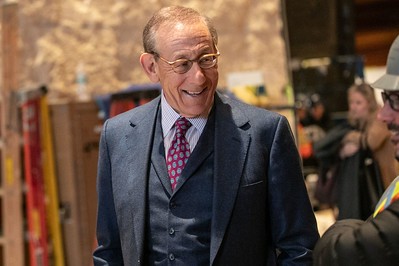
Billionaire Stephen Ross, owner of the Miami Dolphins, is the latest team owner to invest in the Action Network, a new sports gambling digital media company. Ross’ RSE Ventures contributed a portion of the $17.5 million fundraising round earlier this year, according to a Bloomberg story November 27.

“As more and more states legalize sports betting, we believe that a new media company will emerge to service this sector, one that best integrates data and content,” said Matt Higgins, RSE’s co-founder and CEO. “The Action Network has a unique blend of imaginative content creators and data miners. It’s a compelling combination that’s translating to impressive growth in subscriptions.”

Owners of the Chicago Cubs, Philadelphia 76ers and New Jersey Devils have also anted up for Action Network.

“It’s affirming to our strategy to have all four of the major U.S. sports as investors,” Action Network CEO Patrick Keane said. “To be able to call on the counsel of these kinds of owners is super-helpful to the company.”

Action Network is just the latest marriage of pro teams and sports betting. In the past 12 months, the NFL signed its first-ever casino partner and made a wider deal with Sportradar AG to distribute its data to gambling operators in the U.S. and abroad. Teams such as the Dallas Cowboys and New York Jets have signed their own deals with casinos and sports betting operators. Kraft Group, which owns the New England Patriots, was an early investor in DraftKings, which is now a licensed operator.

The Dolphins have not been involved much with sports betting, which remains illegal in Florida. Last year, the team urged Floridians to vote no on a ballot initiative that would have made it harder to legalize sports betting statewide. The initiative passed anyway.

Action Network was launched in 2017 by the Chernin Group, led by media mogul Peter Chernin. The company is looking to be a one-stop shop for sports bettors, offering podcasts and news from its stable of about 30 reporters and editors. Paid subscribers get access to betting-market trends and other analytic tools.

The fundraising was led by private equity firm Fertitta Capital. Other investors included Blackstone Group’s David Blitzer, co-owner of the 76ers and Devils; the owners of the Chicago Cubs; 6721 Capital, a fund formed by sports marketing executive Casey Wasserman and the investment banking firm Code Advisors; and Bitkraft Esports Ventures, the world’s first eSports-specific venture capital fund.

The NFL stands to profit more from widespread legal sports betting than any other U.S. league. A 2018 study by the American Gaming Association and Nielsen found that the NFL’s projected revenue boost was $2.33 billion, more than double that of the next closest league, and four times the NBA’s opportunity.

Michigan Sports Betting Bill at the Finish Line

Michigan is finally ready to approve sports betting and iGaming now that the state’s tribes have come to the table and agreed to an outline, according to state Senator Curtis Hertel Jr. He says the negotiations with Democrat Governor Gretchen Whitmer are going well, and he expects the bills to be voted out of a Senate committee this week.

“Negotiations are going well,” Hertel told LegalSportsReport.com. “I fully expect the bills will be on the governor’s desk and signed before Christmas.”

Personal relationships helped move the bills forward, as Whitmer once worked for Hertel Sr. when he was speaker of the House. And because Hertel is in the same party as Whitmer, there was more likelihood of an agreement.

But the major roadblock was overcome when the state tribes agreed to the arrangement.

Republican state Rep. Brandt Iden, the sponsor of sports betting legislation in Michigan, said the state’s tribes generally support his measure—as long as it offers a level playing field with the state’s commercial casinos.

“I’ve worked for the past four years very directly with the tribes,” said. “If the tribes opposed sports betting—if they believed it violated their exclusivity under the state gaming compact—they could threaten to withhold revenue sharing payments to the state.”

Michigan has compacts with 12 tribes operating 24 casinos. Seven of those have agreements requiring them to pay 2 percent to 12 percent of net winnings to the Michigan Strategic Fund. In 2018, those payments totaled $53.4 million, beyond the $16 million to $20 million expected from sports betting. All 12 tribes that have casinos pay 2 percent of their net winnings to local governments, totaling $30.1 million in 2018; they would not be impacted by any dispute over sports betting.

Observers note the tribes could be at a disadvantage on sports betting since they don’t have the advanced technology found at MGM’s Detroit casino, for example. However, Iden noted that tribes could hire sports betting operators with the proper technology. Also, he said, sports betting would allow tribes to draw on a statewide betting market, not just players who live near or visit their casinos, of which several are located in small northern communities.

Bryan Newland, chairman of the executive council of the Bay Mills Indian Community, operator of the Bay Mills Casino in Brimley, said he’s excited about sports betting. “We just feel like this is the next step in the evolution of gaming. I just think it’s important that Michigan as a state, and the tribes included, not miss the boat on this,” he said.

But while the tribes are open to sports betting, Governor Gretchen Whitmer’s administration is concerned that betting and online gaming, also included in Iden’s legislation along with daily fantasy sports, may cannibalize lottery sales. Whitmer vetoed an online gaming bill lawmakers passed last year for the same reason. Since it began, the Michigan Lottery has generated more than $250 million in proceeds for education.

The legislation that passed in the House Ways and Means committee in October raised gaming tax rates to 8.75 percent for tribal casinos and 12 percent for commercial casinos; the treasury report called for 15 percent and 18.25 percent. The report also required nearly double the taxes and licensing fees for online gaming and sports betting included in Iden’s draft legislation. In addition, the report wanted online slots removed from online gaming proposals, claiming they too closely resemble some digital lottery games.

Iden was frustrated over the treasury report’s requirements, but felt a compromise could be reached. He said Whitmer’s representatives had refused to take part in discussions. However, his bills are now in a state Senate committee and Whitmer’s representatives reportedly have rejoined negotiations.

Even if his legislation passes, Iden said, another issue may be the need for Whitmer’s approval for tribes that signed the first state compacts in 1993 to offer sports betting. That’s because those early compacts spelled out the games that could be offered in each casino; later compacts simply mentioned broad categories of games.

New York Tribal Casinos Ink Sportsbook Deals

In the new era of sports betting, the union of pro teams and casinos makes perfect sense. The latest partnership involves Seneca Resorts & Casinos and the Buffalo Sabres of the National Hockey League through the team’s owner, Pegula Sports & Entertainment. The deal comes on the heels of a similar arrangement with the NFL’s Buffalo Bills, also owned by Pegula.

The agreement with the Sabres happens as Seneca prepares to make sports betting available at its three tribal gaming properties. Customers will be able to place wagers on ice hockey, football, basketball and other sports.

Melissa Free, Seneca Gaming Corp.’s senior vice president of marketing, told SportsPro.com, “Sportsbooks will bring so much more excitement to the fans and Seneca Resorts & Casinos is thrilled to be in the epicenter of all that energy.”

Last month the Seneca Sports Lounge opened at the Sabres’ KeyBank Center, which has the capacity to introduce sports betting in the future.

“The lounge has become a popular destination for premium ticketholders at KeyBank Center this season,” said Dan Misko, PSE’s senior vice president of business development. “We look forward to the opening of the sports lounges at Seneca’s three properties, which will create another attraction for Bills and Sabres fans.”

The Seneca Nation is planning to open three new sportsbooks in the upcoming weeks. This includes a new sportsbook at the tribe’s casino in Buffalo. This new partnership with the Sabres could allow Seneca Resorts to open a fourth sportsbook. The Sabres’ KeyBank Center has Seneca Sports Lounge in the arena. It is possible that the Seneca Nation could open a new sportsbook in the KeyBank Center itself.

“The Seneca Sports Lounge has become a popular destination for premium ticketholders at KeyBank Center this season. We look forward to the opening of the sports lounges at Seneca’s three properties, which will create another attraction for Bills and Sabres fans,” said Misko.

Analysts: Illinois Sports Betting Could Be Worth $5.2 Billion

Illinois gambling regulators have not yet established a timeline for the launch of sports betting, included in the state’s new gambling expansion law. But consultants at Global Market Advisors (GMA) estimate that bettors could place $5.2 billion in wagers by 2023, closely trailing the $5.5 billion projected to be wagered in Nevada.

GMA was among the companies that responded to the Illinois Lottery’s recent request for information to help it shape its own “lottery sports” parlay wagering pilot program.

Another consultant, Camelot Lottery Solutions, said about 450,000 Illinoisans are ready to place bets once sportsbooks launch at casinos and racetracks, as well as large stadiums like Wrigley Field and the United Center. Camelot also said 4 million more casual fans could place bets once sports betting goes live—not to mention the 27,000 black market gamblers already wagering with their local bookies.

The French consulting firm FDJ Gaming Solutions said a “strong sports tradition and great teams in all major leagues will be able to generate enthusiasm around sports betting” in Illinois.

GMA’s low sports-betting handle projection for 2023 was $2.8 billion. That still would rank Illinois at the sixth highest projected handle in the U.S., behind California, Texas, Florida, New York and Nevada. The state would receive $168 million to $338 million in sports betting revenue, the company projected. That’s a 15 percent cut of revenue, according to the new law. Cook County would add another 2 percent. Governor J.B. Pritzker’s office estimated sports betting would generate $58 million to $102 million annually for his capital projects program.

Neighboring states have shown promising returns from sports betting. For example, Iowa bettors have wagered $94 million since sports betting launched in August, producing $862,000 in tax revenue. Indiana sports betting started in September and has brought $1.1 million in tax revenue on a $92 million handle.

Legislators supporting the new gaming law hoped sports betting would go live in time for the Super Bowl in February, but observers now say that’s unlikely. The Illinois Gaming Board announced it will release applications for sports betting licenses sometime this month.

Racing Commission Sets Subsidies, Dates for New Jersey Tracks

Amid the record setting sportsbooks, it’s sometimes easy to forget that The Meadowlands and Monmouth Park host horse races. In fact, without the racing, the two tracks could not offer sports betting.

The New Jersey Racing Commission has approved the 2020 meets at the state’s race tracks. The approval of the dates represents a five-day reduction in live racing at the thoroughbred-only Monmouth but a 12-day expansion of thoroughbred race dates at The Meadowlands, a harness facility where thoroughbreds have run briefly over the past seven years on its turf course.

“While we see a decline in the number of race dates at Monmouth Park—from 61 race dates in 2019 to 56 in 2020—the overall number of thoroughbred race dates in New Jersey will increase from 69 in 2019 to 76 in 2020. The decrease at Monmouth Park is more than offset by the increase in the number of dates at Meadowlands, from seven in 2019 to 19 in 2020.  Races at Monmouth Park have been shifted to the Meadowlands because the track at Meadowlands is being converted to dirt,” said Leland Moore, a spokesman for the racing commission.

The Meadowlands will feature 90 harness dates in 2020, along with the 19 thoroughbred race days. Freehold also runs harness races.

Dennis Drazin, the head of Monmouth’s operating company, said that plans so far call for the cards at The Meadowlands to include dirt races as well. The dates approved for the track go from October 2 to December 5, with racing scheduled for two nights a week, he said in the Daily Racing Form.

Drazin and The Meadowlands owner, Jeff Gural, have agreed to share the costs of converting the harness surface for a thoroughbred track and reconverting it back for harness races.

The expansion of racing at The Meadowlands will give New Jersey thoroughbred racing greater visibility, considering cards will be held at night, Drazin said. The Meadowlands is also close to New York City, and the track has become the number one destination in New Jersey for sports betting.

The Monmouth Park meet will be run along its traditional dates, opening on May 2, and closing in late September. Racing will be initially conducted on a two-day per week schedule, expanded to three days a week in the summer, and then pared back to a two-day week in September, Drazin said.

The state provides a $20 million a year subsidy for track purses, divided equally between the thoroughbred industry and the standardbred, or harness, industry. Of the funds allocated for thoroughbreds, 100 percent goes to Monmouth Park. For standardbred, 60 percent goes to The Meadowlands, 16 percent to Freehold, 12 percent to the New Jersey Sire Stakes, six percent to purse bonuses for New Jersey sired horses, and six percent for breeders’ awards purses.

Atlantic City Casino and Hyatt End Partnership

The partnership between Ocean Casino Resort and Hyatt Hotels Corp. is no more.

The Press of Atlantic City reported Ocean will “no longer be operated as a Hyatt-affiliated hotel or within The Unbound Collection by Hyatt brand.” The hotel will continue its normal business operations with Hyatt until 11:59 p.m. Dec. 31, according to the website.

“Due to our continued success, our hotel volumes no longer permit preferential booking for Hyatt Loyalty guests,” said a casino statement. “We are grateful to Hyatt for the impetus it gave us for our grand reopening.”

The partnership between Ocean and Hyatt’s luxury brand, The Unbound Collection, was among the first announcements by the former Revel Casino Hotel before it reopened in June 2018.

The deal put Ocean’s 1,399 guest rooms and resort on a platform with Hyatt’s collection of first-class international destinations. However, the Atlantic City hotel was rarely displayed prominently on the Hyatt website and prospective guests often had to search to find reservation information for Ocean.

The Exhale Spa, a 32,000-square foot fitness and health club at Ocean, is also owned by Hyatt, but will not be affected by the change.

The state Division of Gaming Enforcement said Ocean had the highest average rate per occupied hotel room through the first nine months of 2019 and the second-highest occupancy rate among the city’s nine casino properties. In the third-quarter of 2019, Ocean reported an occupancy rate of 99.6 percent with an average rate of $219.01 per occupied room.

Researchers: Put A Cap on AC Casino Licenses

Atlantic City gets no respect.

Gaming revenues are up, and sports betting is breaking records. The resort has a myriad number of amenities, from restaurants to entertainment, from the boardwalk to the beach.

Yet the latest headlines harp on whether there are too many casinos in the city since June 2018, when the Hard Rock and Ocean Casino opened.

A report from Rutgers University’s Edward J. Bloustein School of Planning and Public Policy says new casinos did not grow the market, but took customers away from existing casinos. It suggests the resort cannot sustain itself in such a crowded atmosphere unless the state caps the number of licenses.

Oversaturation also played out more than a decade ago when Pennsylvania first got casinos and took a huge bite out of the profitability of the existing Atlantic City gaming halls. The results culminated in the closure of five properties between 2014 and 2016, including the Taj Mahal and Revel (reborn respectively in 2018 as the Hard Rock and Ocean Resort).

Between 2016 and 2018, the properties that remained enjoyed better results. But what’s really helped Atlantic City was sports wagering. AC was first out of the gate with the new industry after the Supreme Court overturned a widespread ban on sports bets. New Jersey brought the suit that challenged the law, giving the state a head start.

But even revenues from sportsbooks and online gaming cannot overcome the loss of table games and slots, said Joe Lupo, property president for Hard Rock. “Most of that money goes to third party, online providers,” he said. “It takes profitable revenue for capital to be spent and property improvements to be made.”

New Jersey Governor Phil Murphy’s Atlantic City Working Group commissioned the Rutgers study at a time when state policymakers consider a cap on gaming licenses, an idea that has bipartisan support.

The support seems logical. In the four quarters prior to the debuts of Hard Rock and Ocean, average gross gaming revenues for a roughly 2,000-slot Atlantic City casino was $336 million. That figured dipped to $283.6 million after the new properties came online, said Rutgers researchers. Additionally, total revenues per-slot slid from $169,000 to $146,000.

According to figures released November 14 by the state Division of Gaming Enforcement (DGE), total gaming revenues for Atlantic City casinos increased 13.6 percent last month compared to the same period in 2018. Strong gains from online gaming—up 69 percent—and sports betting—up 170.7 percent—pushed total revenues to $266.2 million. Year to date, Atlantic City casinos have reported $2.7 billion in total gaming revenues, putting the $3 billion annual benchmark within reach for the first time since 2012, when 12 casinos operated and there were no online casinos or sportsbooks.

Statewide, sports bettors placed more than $487.9 million in legal wagers, with 85 percent of those bets done either online or via a mobile app.

“New Jersey sportsbooks have surpassed Nevada’s in recent months, and it continues to show significant promise for the gaming industry,” said Steve Callender, president of the Casino Association of New Jersey (CANJ) and senior vice president of operations for the East Region of Tropicana Atlantic City’s parent company, Eldorado Resorts Inc. “We are optimistic as we approach the end of this year that we will finish 2019 out in a strong position.”

Rummy Pandit, executive director of the Lloyd D. Levenson Institute of Gaming, Hospitality and Tourism at Stockton University, told GGB News last month’s reported revenues were the highest for October since 2011. Total gaming revenues in Atlantic City have increased for 17 consecutive months, dating to June 2018, when Hard Rock and Ocean both opened.

Still, Rutgers study says dark clouds hover. Casino win, which is revenue from slot machines and table games, increased by 0.8 percent, accounting for $202.3 million. But Bally’s Atlantic City, Golden Nugget Atlantic City, Resorts Casino Hotel and Tropicana Atlantic City reported less casino win last month than in October 2018. Year to date, casino win is down for all seven of the casinos that were open prior to the arrival of Hard Rock and Ocean.

“The Atlantic City casino industry is vulnerable to challenges from within, and competition from outside the state. The data is really stark,” Jim Johnson, former special counsel for the Atlantic City transition, told a legislative panel.

Lupo agrees that the city has too many casinos.

“The numbers are obvious,” he told GGB News. “Nine properties is too much supply.  To ensure enough revenue to see capital and property enhancements, I would guess six is the right number in the Atlantic City market. I don’t see anything changing unless there is less supply.”

To be sure, Lupo’s property has done very well, thank you. “Hard Rock has made an impact with a vibrant, new brand, while adding a great product. Atlantic City is a resort destination and the properties must differentiate themselves from the outer markets with better product and energy, which we have been able to achieve.”

As for the cap, there are multiple sides to any argument, Pandit said. “While curtailing or limiting the number of competitors in a given market can positively impact the profitability of existing operators it can also create stagnation. Unchecked competition can be volatile and a serious economic risk, while also being the catalyst for growth and innovation.”

The Rutgers study created an analysis of the potential revenue impact should a new 2,000-slot machine venue open in Atlantic City, Delaware, New York, or Philadelphia. These concerns come into play next year when Cordish Companies’ Live! Hotel and Casino opens in Philadelphia. The casino in the stadium district could divert $63 million to $150 million in gambling revenue currently being spent in Atlantic City casinos, per the Associated Press.

Eldorado’s recent acquisition of Caesars Entertainment has fueled speculation that the merged company will shutter or sell one of their combined Atlantic City casino inventory, a group of four casinos that includes the Tropicana, Bally’s, Harrah’s and Caesars. Tropicana may be the likeliest to go on the block. Analysts now think Eldorado would sell Bally’s only if New Jersey regulators force the company to do so to allay over-concentration concerns. A new $11 million sportsbook recently opened at the property, and with sports betting soaring, Eldorado may not want to part with Bally’s unless it has to.

“Without knowing their corporate strategy and having intricate knowledge of their operations, it is impossible to say” what Eldorado will do, Pandit said. “Whatever decision they make, we can expect it will demonstrate an overall strategy to create synergy for the merged properties and increase their profitability and stability moving forward while enhancing shareholder value.”

The idea to cap casino licenses received support from some lawmakers. Democratic Assemblyman Ralph Caputo panned a proposal to restore casino operations to the Showboat, which currently operates as a non-gambling hotel. Bart Blatstein, the owner of the Showboat Atlantic City Hotel, has proposed circumventing a deed restriction on the Boardwalk property that prohibits gaming by building a new casino on an adjacent lot.

“That’s just a bad idea,” said Caputo, a former Atlantic City casino executive.

Assemblyman Vince Mazzeo of Atlantic County said in a statement, “There’s no denying that progress has been made, but we need to make Atlantic City truly prosper again before the city is returned to local control.”

Everi, Nugget Partner in New Jersey

Atlantic City-based GoldenNuggetCasino.com has exclusively launched Everi Holdings’ player-favorite Triple Threat and six other titles for online real-money play in New Jersey.

GoldenNuggetCasino.com is now fully integrated with Everi’s Remote Game Server (RGS), providing direct access to the Company’s premium land-based titles for its iGaming platform, including additional titles expected to follow the exclusive launch.

“Our RGS integration with GoldenNuggetCasino.com is another significant milestone for our Interactive division as it positions us to accelerate the growth of this business by delivering world class gaming content directly to licensed online real-money gaming operators in New Jersey,” said David Lucchese, Everi executive vice president, digital and interactive business. “We are excited to partner with one of the most successful online casino operators in the U.S. and deliver to the GoldenNuggetCasino.com player community our deep library of compelling titles that continue to perform well in land-based casinos.”

“Everi’s land-based stepper titles and entertaining video slot games represent a unique content profile that we know will resonate well with our online players,” said Thomas Winter, senior vice president and general manager of online gaming at Golden Nugget. “Current Everi titles such as Black Diamond have been performing extremely well and we are excited to integrate directly with their RGS to provide us access to even more of their high-quality gaming content.”

Everi’s RGS currently supports a library of 30 titles and is expected to exceed 50 titles by year-end. Everi designed its proprietary RGS using state-of-the-art system architecture enabling the Company to develop and distribute compelling player-preferred content directly to operators. This content includes award-winning three-reel mechanical games and attractive video slots, all built to deliver the exact same look, game features, and math as their land-based counterparts with the added player feature to play games in landscape or portrait mode. Everi’s RGS offers robust data analytics and real-time reporting and can support custom-built games for operators.

Virginia Casino Study: More Speculation Than Certainty

On November 25, the Virginia Joint Legislative Audit and Review Committee (JLARC) released the results of a 10-month study that reviewed other states’ gaming laws, evaluated the fiscal and social impacts of gaming in those states, and projected the benefits of a legal casino industry in the Old Dominion State.

Conducted by the Innovation Group (TIG) and Regulatory Management Counselors (RMC), the study found that casinos in five approved cities—Richmond, Norfolk, Portsmouth, Danville and Bristol—could generate $970 million in total revenues and $260 million in tax revenues based on a 27 percent tax rate; nearly one-third of the total revenues would come from a Richmond casino—$297 million—with Bristol bringing up the rear—$130 million.

Legal sports wagering was estimated to produce $55 million in taxes yearly, with online casinos bringing in another $82 million. Altogether, the new industry could create 10,000 jobs.

The study, commissioned under Senate Bill 1126, noted that revenues could soar if a gaming hall was built in Northern Virginia, which was not included in the scope of the original bill. A casino there, which would pull from the Maryland and Washington, D.C. markets, might be the real jackpot, potentially bringing in an additional $155 million in taxes, creating 3,200 more jobs, and allow Virginians to gamble at home, retaining $100 million in revenues now spent out of state. But Senator Thomas Norment, who spearheaded the legislation to introduce casinos in the state, said approving a Northern Virginia casino would be “ a complete folly,” as the property would compete directly with the massive MGM National Harbor and Cordish Companies’ Live! Casino & Hotel Maryland.

The study suggested five “resort-style” casinos in the authorized locations could reduce revenues from historical horseracing (HHR) to the tune of $300 million. The latter industry segment helps to subsidize Virginia’s live horseracing industry and is fairly new, having launched in the state in April. The horseracing industry is already up in arms at the prospect of new competition, according to an article in the Richmond Post-Dispatch that was posted on the website of the Virginia Equine Alliance. The report said Colonial Downs Group, owners of a horse racetrack in New Kent County and four Rosie’s HHR Gambling Emporiums Rosie’s, said the opening of five or more casinos without an opportunity to compete for the licenses would “lead to job losses and a loss of tax revenue for localities and the state” by undermining a new industry that’s invested $300 million in Virginia since 2017.

“This would send a terrible message to other job creators and capital providers looking to invest in Virginia,” spokesman Mark Hubbard said.

In a statement, Colonial Downs Group urged lawmakers not to “undo what legislators approved just two years ago.” The study said five statewide casinos would cause live horseracing purses to drop by $9 million a year.

Casinos could also siphon off some $30 million in profits from the Virginia Lottery, which supports K-12 public education. In the last fiscal year, the lottery generated more than $600 million after prizes were paid out, but officials said those profits already are being reduced due to competition from thousands of unregulated, unlicensed and untaxed video machines. The lottery said HHR machines present much less of a threat than the so-called skill games in bars and convenience stores across the state. The study said allowing unregulated and untaxed machines could harm other types of gambling and leave consumers unprotected.

In Bristol, one of the locales approved for a casino, developers said the venue would be operated by Hard Rock and would employ up to 3,000 people by its fifth year. The study, however, estimated 1,000 jobs would be created. United Company President Martin Kent said, “There’s some things pointed out that obviously didn’t seem consistent with what our understanding was. We’ve got to go through the whole report.”

The Pamunkey Indian Tribe also expressed concern about the study’s results. The tribe can operate a casino under federal rather than state law if it chooses. Tribal spokesman Jay Smith said, “The Pamunkey Tribe has been marginalized for centuries and deserve some protections as they seek to gain financial independence and improve the lives of their members. The study recommendations do not sufficiently protect Virginia’s only tribe with federal gaming rights.”

He noted, “The Senate bill protected Virginia’s only tribe with federal gaming rights by allocating two localities for them to operate a casino,” Norfolk and Richmond.

Smith said, “We look forward to working with the General Assembly and the governor to ensure adequate protections are in place for the Pamunkey Tribe.”

Representatives for skill-machine operators Queen of Virginia said the company is willing to work with the General Assembly on regulations for its industry. Lobbyist Tom Lisk said, “We would hate to see Virginia ban a game that has been legal, that is legal so far, and take this away from the businesses and the citizens that enjoy playing them.”

The study recommended the lottery regulate casinos and other new forms of gaming. In response, Family Foundation President Victoria Cobb said using the lottery “would only ensure that state government has a vested interest in promoting harmful and irresponsible gambling in perpetuity.”

The study did note problem gambling would increase with casinos and other new forms of gaming, and the state has few resources to pay for problem gambling prevention and treatment. It said the state could use gaming revenue to pay for services offered by the Department of Behavioral Health and Developmental Services.

The report recommends requiring a competitive selection process for awarding casino licenses to maximize the revenue benefits and minimize risks. It also suggests that the state hire an independent consultant to evaluate the fiscal and economic benefits of casino proposals before developers are selected.

Republican Minority Leader State Senator Thomas Norment said with Democrats assuming power in the state, the legislature may not be capable of resolving the issue of gambling. “That’s not a partisan comment, that is based on institutional history,” Norment said. State Rep. Mark Herring, who will become House Majority Leader in January, also was unsure of the next steps for expanded gambling. He said the Democratic caucus “has not explored that in-depth yet.”

Whatever happens next is not likely to happen fast. The JLARC report recommends legislation that would require a competitive selection process for awarding casino licenses to maximize the revenue benefits and minimize risks and the retention of an independent consultant to evaluate the fiscal and economic benefits of each proposal.

“I think the state would be remiss if it did not include local input,” said JLARC Associate Director Tracey Smith.

The study recommends the lottery as the best way to regulate casinos, but Family Foundation President Victoria Cobb said that “would only ensure that state government has a vested interest in promoting harmful and irresponsible gambling in perpetuity.”

The study recommends that the state “establish a dedicated, stable funding source for problem gambling prevention and treatment, even if additional forms of gaming are not authorized.”

The casinos would require a minimum $200 million capital investment, and the five cities cited in the legislation are not guaranteed to be selected. As Smith said, they are not “necessarily the best localities.”

Norment added, “Just because we specified some locations within the legislation, there should not be an assumption that we really had the expertise to know what we were doing.”

Encore Boston Harbor Bids For Business

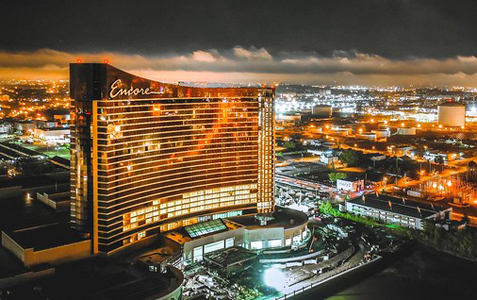
In an effort to soften its image as a casino that only cares about high rollers and to widen its appeal to the casual player and the “hometown” the $2.6 billion Encore Boston Harbor has eliminated its $50 able game minimums and parking fees.

Five months after Wynn opened the mega-casino in Everett within view of the Boston skyline, Brian Gullbrants, the newly ensconced president of the casino told the Massachusetts Gaming Commission, “The last thing we want to do is be a Vegas casino in Boston. We want to be a Boston casino in Boston.” He added, “We want to be Greater Boston’s hometown casino. And we want everyone to come and feel welcome and like they can have a great time there, whether they are playing or not playing.”

The Encore also plans to introduce a tiered loyalty rewards system early next year that makes it easier for players of all financial levels to rack up points.

Although the casino is dropping parking fees, the existing fees for buses and water shuttles will remain.

Gullbrants, the replacement of Robert DeSalvio, who opened the casino, told the commission: “We thought we could charge for parking here in Boston, and we were wrong,” he said. “We have now made self-parking free for all guests, 24/7. We thought we could charge for some of the transportation like boats and premiums buses. We were wrong.”

Although the Encore has posted strong numbers overall, especially for table games, slots revenues have been less robust, accounting for less than half of the resort’s total gross in the first three months. The fourth month was the lowest yet, $22.5 million in table game revenues and $22.2 million from slots.

Earlier this month Wynn Resorts CEO Matt Maddox told investors during a quarterly report that the company was making some top executive changes, with a new senior vice president of communications, Eric Kraus and executive vice president, Jenny Holaday, in charge of gaming operations.

Maddox commented, “We’re learning each and every day to become more local, make sure we’re giving the customers what they want.”

Crime Statistic Rise

Correlation may not be causation, however crime statistics have risen in the town of Everett since the Encore Boston Harbor opened there in June, giving police food for thought.

Police data collected by the Massachusetts State Police Gaming Enforcement Unit and the Everett Police Department in the past five months indicates that criminal activity at the casino increases beginning at 11 p.m., with arrests most likely to happen between 2 a.m. – 4 a.m.

Police have arrested more than 160 people at the casino since it opened, reported WCVB-TV last week, with disorderly conduct, assault and battery, larceny and cheating being the most common charges. Auto accidents and fights are the two top police responses.

As a result, there is always plenty of activity at the Malden District Court on Monday mornings as persons arrested on the weekend are arraigned.

Gayle Cameron, one of five who sits on the Massachusetts Gaming Commission, said these statistics do not surprise her. She formerly was in charge of the casino crime unit of the New Jersey State Police, which enforced the law in Atlantic City. “We anticipated there’d be some issues,” she told WCVB-TV. “Yes, there is some criminal activity, and the bigger issue is around some drunk and disorderly behavior.”

In a report to the commission from an analyst, the panel learned that the casino was built on land that had been a dead industrial area, and that crime activity went from virtually zero to the activity seen now.

The analyst, Christopher Bruce, told the commission: “Communities close to Encore will likely see increases in crimes and calls for service.”

Everett Police Chief Steven Mazzie added, “It’s right in line with our research, with what we thought we’d see.”

Both the city and State Police anticipated higher crime near the casino and increased staffing as a result.

Beating the Drum for Table Games in the Big Apple

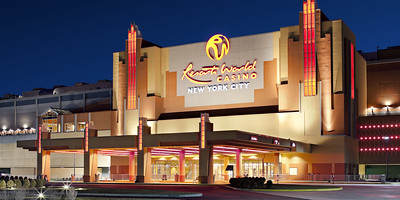
Resorts World Casino New York City is looking ahead to the prospect of competition in the Big Apple and has launched a public relations blitz to ensure it’s not forgotten in Albany when that time comes.

Resorts World, located at Aqueduct Racetrack in Queens, is the largest racino in the country, with some 4,000 slots and electronic table games, and it’s been hugely successful since opening eight years ago. But management is concerned about what happens when up to three full-scale casinos open in the city sometime early in the next decade, all with live table games, which currently are prohibited in the metropolitan area.

To make its case, the property has launched a “Good Neighbor Network” with an accompanying television advertising campaign emphasizing its community ties and the economic benefits it has brought to the borough.

The “Good Neighbor Network” is aimed at helping civics and arts groups in Queens elevate their public profiles and raise money. Run by the casino’s director of public relations and community development, Michelle Stoddart, the program gives access to the Resorts World website to dozens of organizations to promote their activities, conduct fund-raising and find volunteers.

“When Resorts World Casino New York City was in development, it made a promise to be a good neighbor to the Queens community, and it has clearly kept that promise,” Tom Grech, president of the Queens Chamber of Commerce, said in statement.

The accompanying ad is slated to air for the next two weeks on cable and broadcast TV in New York City and the surrounding suburbs, as well as Albany.

Resorts World, meanwhile, is lobbying for a new license that will permit live table games and is backing that effort with a $400 million expansion slated for completion next summer that will add 400 hotel rooms, new restaurants and more meetings and conventions space.

Seth Bornstein, executive director of the Queens Economic Development Corp., hailed the investment, saying, “This ambitious development illustrates Resorts World New York City’s long-term commitment to, and belief in, Queens.”

Who Will Get MGM Grand?

It looks like MGM Resorts International and MGM Growth Properties are closing in on a sale-leaseback of the MGM Grand on the Las Vegas Strip in partnership with a third party.

MGM Growth announced the news in a November 19 filing with the Securities and Exchange Commission. It added that Mandalay Bay, which it already owns, could be part of the deal, underscoring its desire to structure the transaction around a joint venture. It could be similar, perhaps, to MGM’s recent sale of Bellagio to a real estate investment trust (REIT) created by Blackstone Group in which MGM owns 5 percent.

The inclusion of Mandalay Bay, which of course enhances the value for a prospective outsider sizably further supports the likelihood that a joint venture is the way this will go.

The other key is MGM Growth’s close, just days after the SEC filing, on a sale of 24 million new shares at $31.25 each𑁋half to a quartet of investment banks underwriting the sale, half on the open market. This will net some $700 million-plus to help fund the purchase and finance future acquisitions.

This furthers MGM’s desire to reduce its current 68 percent stake in MGM Growth, which has purchased 13 MGM properties to date since the casino giant spun it off for that purpose back in 2015. MGM wants its ownership below 50 percent.

Jefferies gaming analyst David Katz is among those who see the share sale in this respect as “conceptually positive for MGM Resorts,” and he’s told investors he believes the intent of the joint venture is to get it below 30 percent. This, in turn, implies a significant buy-in on the part of this as yet-unidentified third party, as does the intention stated in the filing to have the JV assume some of MGM Growth’s debt.

For its part, MGM has made no secret of its desire to unload the Grand by the end of the year. Antsy investors have been after the gaming giant to do something about the stock, which has languished in recent years relative to the size and diversity and obvious quality of the portfolio as meaningful growth opportunities continue to shrink both in the U.S. and abroad.

Somewhere down the road there’s New York City, which is why the company in partnership with MGM Growth paid $850 for the Empire City racino in Yonkers.

But the big prize is Japan. MGM is vying for a license to develop a megaresort in Osaka that could cost in the range of $10 billion. There will be a Japanese partner or partners assuming a chunk of this.

Still, even $5 billion is a lot of money for a company that’s already leveraged to the tune of some $15 billion. And so back in January, MGM announced the formation of a special committee of independent directors to assess the potential value of the company’s remaining Las Vegas real estate and figure out how best to realize it. Leading this group is Keith Meister, managing partner and chief investment officer for Corvex Management, which owns around 4 percent of MGM.

“(Meister) approaches things from a real estate perspective,” Bloomberg Intelligence senior gaming analyst Brian Egger told GGB News, “and he’s taken an activist role.”

If MGM Growth did bid on Bellagio𑁋and it’s not saying either way, according to statements by CEO James Stewart on the last earnings call𑁋this is why they didn’t get it.

Blackstone, which gobbled up Hilton in 2007 and didn’t blink five years ago at paying $1.73 billion for the Cosmopolitan Las Vegas, offered more, a lot more: almost as much as MGM Growth paid for the Borgata, MGM National Harbor, Empire City and Northfield Park combined, according to research Bloomberg shared with GGB News.

Of course, it’s the Strip, and it’s Bellagio𑁋”superior location, margins and amenities,” as Egger and BI gaming analyst Caitlin Noselli note.

But that’s not all: Bellagio’s $4.25 billion price tag works out to 17.3 times the $245 million MGM will pay in annual rent to continue to operate the resort, way above the 12.7 times BI expected based on past deals with MGM Growth.

In dollar terms, the $245 million is more than double what any four of the properties above are fetching. Which is not surprising. What may be surprising is that, as a multiple of EBITDA, it’s in fact lower: 53 percent versus the 66 percent MGM generally is paying to MGM Growth.

Arguably, this allowed Meister & Co. to be a little generous in their $825 million sale of Circus Circus to Phil Ruffin, which coincided with the Bellagio sale. Ruffin paid an estimated 9.5 times EBITDA, by BI’s estimate, an eminently reasonable valuation viewed against comparable transactions. Admittedly, it’s a very old casino hotel. But it’s still a very profitable one. And, again, it’s the Strip, albeit the remote north end of it.

Then there’s the value behind the value𑁋Circus Circus’ land bank, 102 acres in all, 34 of them idle and developable. The 9.5 times Ruffin paid assumes MGM let Circus Circus go for $238 million for the unoccupied land: $7 million an acre. Two years ago, when Wynn Resorts bought the 38-acre site of the old Frontier Hotel, which isn’t all that far away, they paid Crown Resorts $8.8 million per acre, $336 million in all.

MGM expects to net around $4.3 billion from both sales.

Is it that MGM could afford to be flexible in its dealings with MGM Growth up to now, because it owns most of it? If so, the problem with such self-dealing—if it can be called that—is that it gets in the way of top-shelf prices, Bellagio prices. And the Grand Meister’s committee is going to want something in that ballpark in terms of a higher sale price to rent and lower rent to EBITDA. It’s why MGM wants to get out from under its REIT.

It also makes a compelling case for MGM Growth’s pursuit of a joint venture with outside money. It doesn’t want to miss out on the last bricks-and-mortar MGM wholly owns on the Las Vegas Strip. To avoid that, it appears it will get creative.

Resorts World Vegas Delays Opening

Resorts World Las Vegas last week announced updated plans for the US$4.3 billion luxury resort casino. New amenities will include a 5,000-seat theater to host A-list residencies and corporate events; a dynamic 75,000-square-foot nightlife and daylife concept; a 50-foot diameter video globe that will display more than 6,000 square feet of LED content; and additional luxury suites, villas and penthouses with individual lobby experiences, open balconies and a sky casino.

Projected to open in summer 2021, Resorts World Las Vegas will combine traditional and modern architecture, weaving a new luxury hotel experience into the fabric of Las Vegas with Asian-inspired touches, progressive technology and world-class guest service. The resort was previously expected to debut late in 2020.

“Our team has been working diligently to perfect the vision for Resorts World Las Vegas and we are excited to begin sharing that concept with Las Vegas and the greater hospitality communities,” said Scott Sibella, president of Resorts World Las Vegas. “We believe Resorts World’s unique design and commitment to providing cutting-edge amenities and captivating experiences, is the foundation to curating a thoughtful resort experience that aims to redefine the luxury hotel standard in Las Vegas.”

In addition to the new entertainment venues and guest room enhancements, the resort is expected to feature a myriad of premier facilities and amenities, including:

  • A next-generation 110,000-square-foot casino complete with slots, table games, high-limit gaming areas, private gaming salons, dedicated poker room, and a 14,000-square-foot Entertainment Zone, which includes a race and sports book and featured live entertainment
  • Two resort towers housing 3,500 guest rooms
  • 350,000 square feet of meeting and banquet space
  • A 27,000-square-foot world-class spa
  • A 220,000-square-foot pool complex with seven unique pool experiences including an 1,800-square-foot infinity pool with spectacular views of the Las Vegas Strip
  • The 100,000-square-foot West Tower LED screen (one of the largest LED building displays in the world) and 19,000-square-foot East Tower LED screen
  • Extensive food and beverage portfolio featuring a wide range of cuisine from authentic street food to Michelin star dining, including concepts new to the Las Vegas Strip

Resorts World Las Vegas will seamlessly blend the technology and luxury appeal of an urban contemporary resort with the traditions and time-honored details of the Resorts World brand. From a lush outdoor pool oasis with bold accents and rustic textures, to an interior color palette of warm gold and cream hues, each space will have its own identity and will be equally as inviting and immersive as it is unique.

Additional details about the project, including hiring and group sales information, will be announced in the coming months.

Resorts World Las Vegas is being developed by Genting Berhad, which has affiliated integrated resorts in the Americas, Malaysia, Singapore, the United Kingdom and the Bahamas. Construction for Resorts World Las Vegas, one of the largest hotel construction sites currently in the U.S., includes a team of approximately 1,500 construction workers on-site each day at the 88-acre parcel of land. For more information, visit www.rwlasvegas.com

Rhode Island, Twin River in Negotiations

Twin River Worldwide Holdings, operator of Rhode Island’s two casinos, is negotiating with Governor Gina Raimondo over a new regulatory agreement that covers its share of revenues from the state-sponsored casinos, which provide the state’s third largest revenue source.

An agreement was supposed to have been reached by November 13, but that deadline passed.

Twin River operates more than 5,000 VLT slot machines at the casinos in Lincoln and Tiverton and keeps 28.05 percent of the gross. It retained an estimated $149.9 million last year, and the state kept about $400 million.

Marc Crisafulli, executive vice president of Twin River, told the Providence Journal, “Our master contract … says if the state VLTs take a downturn as a result of competition from Massachusetts or elsewhere that we have the opportunity to reset our net VLT rate based upon that.”

He added, “It’s worth millions of dollars, but as part of this agreement we’ve agreed to refrain from doing that for this state fiscal year and if we reach a permanent agreement by November 13, which we hope to do, we’ll waive that provision forever.”

He concluded, “In exchange for that we would be updating the regulatory agreement to allow us to invest and continue to grow the way we want to nationally.”

Twin River and the governor are also engaged in a battle in the state house over the 20-year, $1 billion contract Raimondo has proposed with International Game Technology (IGT) to operate all the slot machines and the state lottery. Twin River argues there should be competitive bidding on the contract.

Twin River formed a consortium with Scientific Games, IGT’s largest competitor in game manufacturing, to oppose the proposed contract and make a bid of its own. Its main objection is the provision that IGT can provide up to 85 percent of the machines in the two facilities. Twin River claims IGT’s machines have performed under par compared to Scientific Games’ machines.

Last month during the legislature’s hearings over the contract, Crisafulli claimed the governor’s chief of staff had threatened “consequences” if the company opposed the deal. That official, Brett Smiley, denies making the alleged threat.

Crisafulli said the threat came during “an ongoing conversation” about how a debt refinance by the company might affect its licensing agreement with the state.

During a quarterly conference call with investors, Twin River CEO George Papanier said the dispute with the state might not be put to bed until 2020.

But he downplayed the long-term effects of the dispute, claiming, “We’ve enjoyed good discussions and we’ll continue to work in partnership.”

In related news, Twin River is expanding. It currently operates four casinos and a racetrack. In the spring it hopes to finalize the purchase of three casinos in Black Hawk, Colorado. These properties’ worth is expected to increase due to the recent vote by Colorado voters to approve sports betting for the state’s three casino towns. Twin River is also purchasing two casinos in Mississippi from Eldorado Resorts early next year.

Investors learned that the company’s revenue grew in the third quarter by 17 percent. To $129.3 million, largely because of the acquisition of Dover Downs in Delaware.

The Rhode Island casino were affected by the opening of the $2.6 billion Encore Boston Harbor in June. That caused total revenue in Rhode Island to plummet 9.3 percent from the year before.

Papanier called the Boston area casino the “only competitive threat the company is seeing” to any of its properties.

New Jersey Set Another Sports Betting Record

Thanks to all four major sports operating in the same month, New Jersey set a new record in sports betting in October. Figures released by the state Division of Gaming Enforcement show the state’s casinos and horse tracks took $487 million in sports bets last month.

The figure broke the previous record of $445 million, set in September.

The back-to-back records make New Jersey a threat to take over leadership of the U.S. sports betting market from Nevada some 18 months after New Jersey won the Supreme Court battle which legalized sports betting.

“Sports wagering is certainly claiming a seat at the table, with its October revenue share at seven percent of total gaming revenue, compared to 2.96 percent in October, 2018,” Rummy Pandit, executive director of the Lloyd Levenson Institute at Stockton University told the Associated Press.

Jeff Gural, who operates the Meadowlands Racetrack in East Rutherford, just outside New York City, said New Jersey’s success is due in part to New York officials’ failure to approve mobile sports betting; bets can only be made in person at upstate New York casinos.

“It’s clearly a factor of New York sitting on its hands,” Gural said. “It’s not going to last forever.”

The Meadowlands track, which is affiliated with the FanDuel and PointsBet sports books, dominates New Jersey’s sports betting market, a fact attributed in large part to its proximity to New York City. It earned nearly $25 million in sports betting revenue in October after paying out winning bets and other expenses, up from $3.5 million in November, 2018. Resorts Digital, affiliated with DraftKings, was next at $10.5 million in revenue. Monmouth Park Racetrack earned $2.8 million in sports betting revenue and the Ocean Casino Resort took in $2.3 million.

October also was a great month for internet gambling, which was up 69 percent from a year ago to $45.2 million. The figures show how reliant Atlantic City’s casinos have become on the extra money from sports bets and online bets. Without those two, the casinos saw their revenue rise by less than one percent to $202 million.

Overall, including casino games, internet gambling and sports betting, total gambling revenue in the state rose 22.9 percent to $293.8 million.

Excluding sports betting, the casinos’ collective revenue for in-person and internet gambling increased 13.6 percent to $266.2 million.

Ocean Casino Resort had the largest monthly increase, up almost 47 percent from a year ago to $21.3 million. Golden Nugget grew nearly 22 percent to $31.9 million. Hard Rock went up 16.4 percent to $28.2 million, and Borgata was up 10.5 percent to $61.1 million. Caesars rose 7.8 percent to $21.7 million, and Harrah’s grew 1.2 percent to $24.1 million.

Resorts fell 10.6 percent to $12.3 million; Tropicana declined 8.9 percent to $26.3 million; and Bally’s tumbled 6.2 percent to $13.8 million.

Pennsylvania Tops Sports Betting Record

Pennsylvania sportsbooks easily topped their previous handle record, set in September, of $194.5 million. In October, Pennsylvania online and retails ports books handled $241.2 million bets, a 24 percent increase over September.

Revenue hit $19.1 million, down 1.1 percent from September. October had a win percentage of 7.9 percent.

Pennsylvania’s five online sportsbooks generated $198.7 million in October, representing 82 percent of the state’s total handle, mainly via mobile device. That puts Pennsylvania in line with New Jersey, where about 85 percent of all bets originate online.

Pennsylvania bettors have quickly adopted online sports betting—growing from 65 percent of all bets in July.

“Online betting will unquestionably be the driver to future growth in Pennsylvania,” said Dustin Gouker, lead analyst for PlayPennsylvania.com. “Most encouraging is that Pennsylvania’s online market is still expanding with new brands, including DraftKings. That should only encourage more growth.”

The sports betting surge was led by FanDuel Sportsbook, which accounted for a 48.9 percent share of total handle, according to the Pennsylvania Gaming Control Board. FanDuel accounted for 57.3 percent of online bets.

“Pennsylvania’s online market is finally maturing, and that is certainly the most important reason for the growth in the state’s handle,” said Jessica Welman, sports betting analyst for PlayPennsylvania.com. “The path for more growth is clearer now. A major brand like DraftKings coming online, coupled with intense interest in the (Philadelphia) Sixers, Flyers, and Penguins, will almost certainly give a boost to the already steady growth we’ve been seeing.”

FanDuel Sportsbook at Valley Forge Casino Resort continues to dominate the online market, accepting a record $113.9 million in October bets, up from $85.1 million in September. FanDuel generated $8.1 million in revenue, up from $7.1 million in August.

Rivers-Pittsburgh continued to lead the retail market, accepting $7.7 million in bets in October, up from $7.3 million in September. That yielded $699,611 in revenue, down from $957,791.

“FanDuel’s grip on the online market could loosen with increased competition from FOX Bet and DraftKings,” Gouker said. “Overall, though, the increased competition will be a benefit to bettors, giving them more choices and spurring product innovation.”

NHL Taps Into Sports Betting Opportunities

On October 8, the Pittsburgh Penguins’ official Twitter account tweeted, “In his last game, Matt Murray had a .933SV percentage,” noting the hockey goaltender’s stat.

“Will his save percentage tonight be OVER or UNDER that against the Jets?” the tweet continued. “Have any hot takes about tonight’s game? Visit betrivers.com to play for real.”

A week later, another tweet invited fans to wager on whether or not forward Jake Guentzel would have a multi-point game against the Colorado Avalanche.

Since the U.S. Supreme Court overturned the Professional and Amateur Sports Protection Act last May, the NHL has advanced a progressive strategy toward legalized sports gambling. It wanted teams to capitalize on local marketing opportunities rather than wait until the league negotiated large-scale deals, and the Penguins have taken advantage.

“I think we all sit here and watch what fantasy football has done for football and what fantasy sports has done for sports in general, and yeah, I believe this is going to bring more eyeballs to the sport,” said Terry Kalna, the Penguins’ senior vice president of sales and broadcasting. “That’s a good thing for the sport.”

When Gary Bettman became commissioner in 1993, Nevada was the only state with legal sports gambling. In 2012, in a deposition filed in an attempt to block New Jersey’s push for legal sports betting, Bettman said the atmosphere the NHL wanted at its games was “inconsistent with sports betting.” The Supreme Court decision altered his viewpoint.

“A lot of this goes way back with the commissioner and deputy commissioner, Bill Daly, as far as their understanding of this business and having been involved in various legislation over decades,” said Keith Wachtel, the NHL’s executive vice president of global partnerships and chief revenue officer. “We were in a position to understand the potential market.

Post-decision, individual states still needed to legalize it, and New Jersey did, about a month after the court’s decision. That put the New Jersey Devils in the middle of a changing environment and forced the league to react. Fortunately, they had some experience in sports gambling’s mecca.

The NHL’s association with Las Vegas dates back to 1991, when it staged a preseason game between the New York Rangers and the Los Angeles Kings outside of Caesar’s Palace, the league’s first outdoor game. The league has held year-end award ceremonies there for a decade. In 2017, the Vegas Golden Knights, an expansion franchise, played their first game.

“What we also saw was, when we put a team in Las Vegas, the handle on hockey, not just the Golden Knights, but the handle on hockey, in the first year rose 80 percent,” Wachtel told the Pittsburgh Post-Gazette. “It’s the largest growth, percentage-wise, they’ve ever seen from a given year on a sport.”

In March 2018, before the Golden Knights’ first season concluded with a run to the Stanley Cup final, Wynn Las Vegas became an official resort partner. Last October, the Devils partnered with William Hill, one of the world’s biggest bookmakers, in the first such partnership since New Jersey legalized sports betting.

“We’re excited that the leagues are getting behind it,” said Jamie Shea, the head of DraftKings Digital Sportsbook. “I think everybody realized, this is happening. So how do we do it where we work together?”

The NHL has deals with MGM, FanDuel and William Hill. During the league’s research, its executives learned a few things. The bookmakers’ margins are low, around five percent, maybe a shade higher for mobile. There wasn’t a ton of money to be made in the short term, but long-term fan engagement held promise. The league also has not mandated the purchase of its official data.

“They took a very progressive view from Day 1,” said Kip Levin, FanDuel’s president and chief operating officer. “I think they saw this is a reality and with this reality comes opportunity.”

The league’s next unveiling will require the purchase of proprietary data because it can’t be found anywhere else. Using microchips worn by players and embedded in pucks, cameras in the arenas and antennae in the rafters, the NHL plans to release unprecedented puck and player tracking later this season.

Uninfluenced by weather or that night’s starting pitcher, most hockey over/unders are 6 or 6.5 goals. The league began developing the technology for broadcast enhancement—think how a strike zone and pitch velocity are a standard part of every Major League Baseball broadcast—but legalized betting added one more use for information like the speed of a slap shot or that night’s fastest skater.

“Once PASPA got overturned,” Wachtel said, “a light bulb went off.”

PGA Plans Expanded Bets for 2020

The PGA Tour expects to roll out expanded prop betting for the 2020 season, a move which will provide bettors with the opportunity to wager on a shot-by-shot basis. The wagers could include live betting on the number of greens hit in regulation by a golfer during a single round, as well as individual props on whether a golfer will birdie a certain hole.

The roll out comes on the heels of a September agreement that designates IMG Arena as the official data distributor for media and betting purposes across all events on the PGA Tour schedule. IMG Arena will gain bettor-sector exclusivity for the delivery of live, shot-by-shot match and event data to global operators.

Through the partnership, the Tour will use its proprietary ShotLink system to create countless new markets for betting on golf, said Senior Vice President for Tournament Administration, Andy Levinson. While encouraged by the added fan engagement that live shot-by-shot betting could generate, the PGA remains concerned on the potential integrity risks that could arise, namely from pirated data.

“If an operator decides to use some form of pirated data, there is no way they will be as accurate as ShotLink,” Levinson told Sports Handle.

Data collection on the PGA Tour is not an easy proposition. During an average event, ShotLink tracks thousands of data points. For each shot, ShotLink creates 25 data points, according to Levinson. Based on a tournament with 144 entrants at the start of a week (with an average score of 70 per round), ShotLink will track more than 30,000 shots.

“In theory, there will be thousands of betting opportunities based on the shot information,” Levinson said.

The data collection system is extremely costly. For each event, Tour workers lay approximately three miles of fiber-optic cable across more than 100 acres, Levinson said. The cable is in addition to numerous lasers and a three-pronged high-speed camera system around each green to track a ball’s flight path.

As a result, Levinson anticipates data pricing for IMG Arena’s golf betting packages to be a bit more expensive than those for other sports. While a data collection system in an NBA or NHL arena only needs to be installed once at a venue, the PGA Tour must repeat the process dozens of times a season. Pricing will likely be based on a percentage of an operator’s gross gaming revenue.

Sports betting and technology services provider Kambi supplied sportsbooks with live proposition bets from the 2018 Ryder Cup, as well as several 2019 tournaments. Although Kambi did not supply books with length-of-drive bet types at the Ryder Cup, it did provide closest-to-the-pin wagers. When Tiger Woods won last month’s ZOZO Championship in Japan, Kambi offered props on Woods’ birdie total in the first round and whether he would record an eagle. Unlike the closest-to-the-pin and longest drive wagers, the bets on birdie totals per round are as clear as the final score of a baseball game.

The PGA Tour does not have any plans to build on-site sportsbooks at individual events. During horse racing’s Triple Crown, some venues set up betting windows inside VIP tents for high rollers. At the PGA’s Northern Trust in August, FanDuel hosted a sports-betting themed lounge at Liberty National Golf Club in Jersey City, N.J. where bettors could wager via mobile phones only.

There is a clear distinction between a lounge that allows mobile betting versus a physical sportsbook that must be licensed and pass strict regulatory requirements. At present, online sports betting is legal in more than a dozen states nationwide, but no Tour events on the remainder of the 2019-20 schedule are in jurisdictions where mobile is live.

But next fall, an annual event at West Virginia’s Greenbrier will be on the 2020-21 schedule. Mobile wagering is legal in West Virginia. By the first half of 2020, mobile sports betting could go live in Illinois and Tennessee and could be legalized in several other states, including Michigan and Ohio, all locales hosting tournaments. Attractive prop bets could bolster handle for a sport that is looking for new ways to cater to Millennials.

Said Levinson: “Hopefully our fans will be able to engage with our sport in a way they have never been able to before.”

DraftKings Gets New Hampshire Monopoly

Granite staters should be able to place bets on the Super Bowl next month as New Hampshire prepares to roll out sports betting.

DraftKings, a daily fantasy sports company based in Boston has been selected by the New Hampshire Lottery Commission to operate mobile and retail sportsbook. This poises the Granite State to become the second in New England (following Rhode Island) to offer sports betting.

The legislature voted to authorize sports betting earlier this year. The lottery invited RFPs in August. The RFP specified a scoring system that DraftKings ultimately scored highest in. The lottery received 13 bids of which three companies were finalists: DraftKings, Roar Digital, a joint venture of MGM Resorts International and GVC Holdings, and Kambi.

The executive council of the commission, which is appointed by Governor Chris Sununu, voted 3-1 last week to approve a six-year contract with DraftKings. The vote allows for two-year extensions to the contract. DraftKings will pay the state 51 percent of gross gaming revenue for mobile wagering and 50 percent of the gross from brick and mortar locations. The lottery anticipates rolling out the app in January. Retail locations should be taking bets by the end of winter or beginning of spring, said the lottery.

The law authorizes up to ten cities to host sports betting and up to five online sportsbook operators. It doesn’t prevent the state from contracting with only one. DraftKings’ offer of 51 percent sealed the deal for its exclusive contract as did its promise to implement sports betting by January.

Voters in the towns of Berlin, Claremont, Laconia, Manchester and Somersworth have all voted within the last few weeks to host sports betting within their city limits. Franklin could vote in the spring to join them.

Parlay-style wagers are allowed, but not single-game or live in-game betting. Betting is not allowed on college games that happen within the state or involve New Hampshire college teams.

In addition to approving the contract with DraftKings, the council approved an amendment to an existing contract with Intralot, which supplies the lottery’s technology. The amendment allows it to provide sports betting on machines that are already selling lottery tickets. It will pay the state 19.25 percent on the gross.

Sununu, who has been very enthusiastic about sports betting, and has said he wants to be one of the first to place a bet, Tweeted last week: “We moved fast to get this done, and the deal is a win for NH. We are partnering with a world-class company to provide a first-rate customer service experience.”

Charlie McIntyre, director of the New Hampshire Lottery, added, “Today’s affirmative vote begins a partnership with DraftKings that will offer our players an exciting opportunity to participate in sports betting with a trusted partner.” He continued, “The introduction of sports betting will broaden the appeal of the New Hampshire Lottery and engage new and existing customers, while generating millions of dollars in additional revenue to support education.”

McIntyre also spoke about the lottery’s interest in recruiting more cities to allow sportsbook retail locations. “The New Hampshire Lottery appreciates and respects the voting process in New Hampshire. With five cities voting to allow sports book retail locations, we can continue with the sports betting implementation process, developing a responsible system that engages players and drives revenue for education in New Hampshire.”

He said the lottery hopes that mobile sports betting would go live in January.

DraftKings’ spokesman Matt Kalish issued this comment: “We look forward to collaborating further with the New Hampshire Lottery to bring the DraftKings experience to sports fans in the Granite State.”

There are critics of the deal, and one called it a “rush job.” Others observed that the state ended the possibility of a competitive market that vendors have repeatedly asked for in hearing after hearing before state legislatures.

But DraftKings’ high percentage offer was the clincher. And that was probably the highest priority for the lottery since New Hampshire Public Radio quoted McIntyre as having told the executive committee: “The best money is out of state money.”

Before bettors can make wagers online they will need to create an online account at a brick and mortar casino.