Author: Casino Connection Staff

Another Extension for Wire Act Enforcement

The Department of Justice has extended the period in which enforcement would begin of a 2018 memo that made online gaming and lottery sales illegal once again. The 2018 memo countermanded a 2011 memo that determine that Wire Act of 1962 only applied to sports betting, not online gaming or sales of lottery tickets via the internet.

The DOJ last week extended the deadline on enforcement of the 2018 decision until June 30, 2020 because of a suit filed by the New Hampshire Lottery challenging the decision. The memo’s deadline had already been extended until December 31. A circuit court ruled in favor of New Hampshire, but the DOJ appealed. Deputy Attorney General Jeff Rosen said the extension would continue until the case is resolved and then 60 days thereafter should the DOJ win the appeal.

The ruling will delay any enforcement of sales of multi-state lottery sales such as MegaMillions and Powerball, as well as any interstate agreements on poker and casino game liquidity. Even interstate online gaming could be at risk if the state allows information from out-of-state sources to enter the state.

Analysts say that the original 2018 decision was payback from the Trump administration to mega-donor Sheldon Adelson, the chairman and CEO of Las Vegas Sands, who is a vociferous opponent of online gaming. Several Democrat presidential candidates, including Joe Biden, support the original 2011 memo.

In a statement provided to CDC Gaming Reports by the Joe Biden campaign, the former vice president “doesn’t support adding unnecessary restrictions to the gaming industry like the Trump administration has done.”

The Biden campaign also provided a brief comment concerning a proposed bill backed by Senate Minority Leader Charles Schumer (D-NY) and Senator Mitt Romney (R-Utah) that would establish federal guidelines for sports wagering.

While not coming out in opposition to the measure, Biden said he “believes states and federal authorities should cooperate to ensure that gambling is safe, fair, and corruption-free.”

Biden addressed members of Culinary Workers Local 226 in Las Vegas last week. The union, Nevada’s largest, represents some 60,000 non-gaming employees in hotel-casinos on the Strip and downtown. Union members asked questions on healthcare and immigration reform but shied away from gaming-specific questions.

In a statement from the campaign, Biden called gaming and tourism “huge drivers of Nevada’s economy, (supporting) more than 360,000 jobs.” Biden said the current administration’s “effort to turn its back on the international community” has “resulted in recent drops in international travel to the United States.”

Rhode Island Mobile Sports Betting Hurt by In-Person Signup

The rollout of Rhode Island’s mobile sports betting is lagging behind the bricks-and-mortar variety. Experts blame the requirement that players must register in person before participating.

In October the state’s sports betting handle grew 27.4 percent, to $28.3 million over the previous month. Although the mobile handle increased 78 percent over September to $5.9 million that was only 20.7 percent of the total, according to figures issued by the state. The month before mobile betting was 14.8 percent of the handle, according to the Department of Revenue.

Rhode Island has the example of other states that have successfully introduced mobile sportsbook apps to compare to. The most successful so far is New Jersey, where mobile wagering accounted for about 84 percent of the total handle in October. Pennsylvania wasn’t far behind with 82 percent in October.

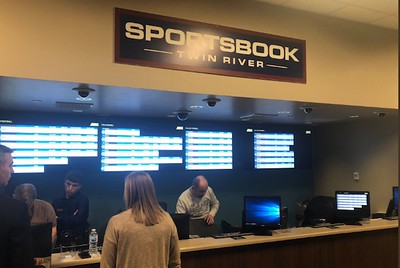
The reason the Ocean state is lagging behind appears to be its requirement that players physically visit one of its two Twin River casinos, in Tiverton and Lincoln to activate their accounts after they have downloaded the app. This will be hard to change since it’s a requirement of the state constitution.

As of this writing, 17,199 patrons have registered their accounts with the Rhode Island Lottery. Of those, 7,834, or 45.5 percent, finished the process and activated their accounts at one of the two casinos. A similar percentage was reported in October.

Nor does an activated account equal wagers being placed. Of the active accounts, 37.4 percent had been funded to make wagers as of December 2, according to the Lottery.

Since the app went live in early September more than 485,000 bets have been placed. The average sized bet is about $19.

A third of those registering are residents of other states, led by neighboring Massachusetts, which doesn’t yet have sports betting of any kind. However, 73.7 percent are from Rhode Islanders.

Lincoln and Tiverton are both short drives from the Bay State border, and within an hour of Boston.

No Amendment Required For Kentucky Sports Betting

At a recent meeting of the Kentucky Interim Joint Committee on Licensing, Occupations and Administrative Regulations, sports gaming attorney Daniel Wallach said a constitutional amendment would not be required to allow sports betting in the state. Legislation pre-filed by committee chairman and state Rep. Adam Koenig would authorize sports betting at racetracks, the Kentucky Motor Speedway and online/mobile platforms.

South Florida-based Wallach, founder of Wallach Legal and co-founder of the University of New Hampshire School of Law’s Sports Wagering and Integrity Program, said, “The Kentucky constitution does not impede this legislative body from authorizing or licensing sports wagering within the commonwealth.” He noted other states’ constitutions “go much further than Kentucky’s. Kentucky’s constitution only prohibits a narrow species of gambling, which is lotteries.”

Wallach said sports betting actually was discussed during Kentucky’s constitutional debates of 1890. “The debates conclusively demonstrate that the ban on lotteries was not meant or designed to include sports betting or ban other forms of wagering or betting. How do we know that? We know that because they considered it. They expressly considered sports betting and other forms of betting,” Wallach said. He added because it requires a certain level of skill, sports betting does not fall under the definition of lotteries.

State Senator Damon Thayer said Wallach’s testimony indicates a constitutional amendment isn’t required to allow sports betting. “One thing the opponents of sports wagering cannot say is that this issue hasn’t been fully vetted because it has been, before this committee, multiple times. I think your testimony today provided an exclamation point before we head into session next month and the House considers Rep. Koenig’s bill.”

Louisiana Misses Sports Betting in 2019

During Louisiana’s 2019 legislative session, amendments to sports betting bill undermined its support and momentum, paving the way for its defeat in the House in June.

But Ronnie Jones, chairman of the Louisiana Gaming Control Board, said the “lack of a collaborative approach” provided legislators with a ready-made excuse to oppose it. In a recent interview with US Bets ahead of his appearance at ICE North America next May, Jones said there was plenty of blame to go around, including from the industry itself.

“They didn’t do what I think is absolutely essential in the discussion of proposed legislation: offer a united front. As the bill neared its eventual demise, the 20 casinos in the state diverged and even hedged on offering their support.”

Some operators wanted to wait for the perfect bill in a future session, others wanted to push through what was on the table or were even noticeably absent from participation in the process. The last-ditch amendments, including mandating use of official league data and the expansion of video poker terminals, complicated the issue at a crucial time in the process.

Jones hopes legislators offering a sports betting bill in 2020 collaborate with stakeholders and each other to gain feedback. Next year’s spring session begins on March 9 and will probably bring a new attempt, along with bills pushing for a parish referendum, a constitutional requirement for new forms of gaming.

Taxes are another impediment. Although any new proposal can establish a regulatory structure and provide for the manner and location of sports betting operations, they cannot cover any taxation or fee issues, adding further delays to legalization. Bills addressing taxes in the state are only considered every other year, an opportunity that was missed last summer.

Unless a special session is called, Louisiana will not be able to authorize—and implement—sports betting until 2021, Jones said.

In the meantime, “thousands of dollars are bet by Louisiana residents on all manner of sports day in and day out,” Jones said, often through illegal bookies or using unregulated online channels.

For Jones, the primary focus has always been on the indirect benefits to licensed locations and the communities where they are located, rather than direct profit.

“The addition of sports betting to Louisiana’s gaming landscape would, as originally proposed, drive business to casino locations where we believe visitors would buy food and drink, spend the night in a room, visit the spa and retail offerings, and perhaps even play a table game or two,” he said.

Despite figures from across the country showing that mobile/online is where consumers make a vast majority of wagers when there are available platforms, Jones recommends ushering in legal wagering at brick-and-mortar sportsbooks first, before opening the market online.

“I, on the other hand, have absolute confidence in mobile applications like those in New Jersey, but legislators simply aren’t there yet. And I will always be respectful of the opinion of those policy makers,” Jones said.

Illinois Sportsbook Ready For Wagers

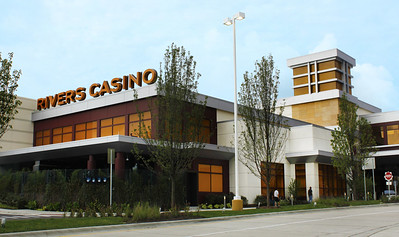
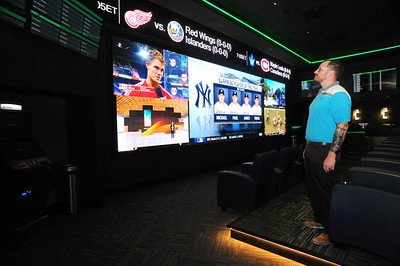
Rivers Casino in Des Plaines, Illinois, recently opened the 4,840-square-foot BetRivers SportsBar, even though bettors can’t place wagers yet. Owners Rush Street Gaming and Churchill Downs Inc. are waiting for the Illinois Gaming Board to issue sports betting rules and regulations and to start taking sports betting license applications, which will cost $10 million. Rivers Casino General Manager Corey Wise said, “We want to be prepared and primed once we know what the Illinois regulatory requirements are. We’re ready to go once the state is ready to go.”

The new venue features a state-of-the-art 47-foot-wide ultra HD LED video wall that can broadcast up to 27 games at a time. The space also includes 13 additional TVs, 32 leather lounge chairs, a full-service island bar and more than two dozen bar seats with video gambling touch screens. In addition, there are five betting windows and a betting kiosk.

Rivers Casino also recently installed eight new table games just outside the sports bar, for a total of 67 throughout the facility. Also, thanks to the state’s new gambling law, Rivers is moving to expand gambling positions from 1,200 to 2,000 positions.

Also, Rivers, which opened in 2011 as Illinois’ tenth riverboat casino, recently became the first in the state to be approved by the state gaming board for land-based gambling. That has allowed Rivers to install 115 slot machines throughout the casino site, including the skywalk from the parking garage to the main gaming floor and at the front entrance. Previously games only could be installed above the casino’s single-level, 44,000-square-foot gambling floor, which was built over a 6-inch-deep, 144,000-gallon water tank. The new law removed the requirement that casinos be built over water.

Construction recently began on adding 750 new parking spaces to the 5-story, 1,550-space parking garage. The $24 million project will be completed in summer 2020.

Two Missouri Bills Would Give Pro Leagues ‘Royalty’

Missouri could be the first state in the U.S. to pay professional sports leagues and the National Collegiate Athletic Association a royalty—formerly called an integrity fee—on sports betting handle.

Two bills filed December 1 also would make Missouri the third state to mandate the use of official league data for in-play bets; Tennessee and Illinois already allow the mandate.

Under state Senator Denny Hoskins’ SB 567, sportsbook operators would pay leagues a royalty of 0.25 percent, and tax sports betting revenue at 9 percent. Remote registration for mobile betting would be allowed. The sports betting license application fee would be $25,000 with an administrative fee of $50,000 the first year and $10,000 every five years. The mobile application fee would be $25,000 with a $50,000 annual renewal fee. The Missouri Lottery Commission would regulate sports betting.

Under state Senator Tony Leutkemeyer’s SB 754, operators would pay leagues a 0.75 percent royalty, with sports betting revenue taxed at 6.25 percent. Remote registration would be allowed. The license application fee would be $10,000 with an annual administrative fee of $5,000 and a $10,000 fee every five years. The mobile application fee would be $10,000 with a $5,000 renewal. The Missouri Gaming Commission would regulate sports wagering.

In the Missouri House, state Rep. Dan Shaul intends to file a sports betting bill. He chairs an interim committee that researched sports betting and recently issued a report. It’s not clear if his bill would include a royalty to professional leagues.

The Missouri General Assembly’s pre-filing period began December 1 and the 2020 session will begin January 8.

FanDuel to Give Massachusetts Fantasy Fans Access to Horse Racing

When it comes to fantasy sports and sports betting, horse racing can get lost in the new digital wave. At least for one Massachusetts track, that may change.

The Massachusetts Gaming Commission gave the green light last week for Suffolk Downs to add a new mobile deposit wagering provider, one that seeks to market horse racing to a new audience.

FanDuel will offer a racebook in an attempt to draw players of the sports entertainment technology company’s daily fantasy sports contests to horse racing. Massachusetts is the second state to approve FanDuel for racing, joining California.

Owned by Flutter Entertainment, FanDuel is a sister company of horse racing broadcaster and mobile betting platform operator TVG. Indeed, FanDuel’s home page includes a racebook link that sends visitors directly to TVG.com.

TVG will continue to operate at Suffolk. The commission approved it, Xpressbets, TwinSpires, and NYRA Bets as advanced deposit wagering providers.

In a discussion with commissioners, Suffolk Downs COO Chip Tuttle said the newly approved site will use TVG as its platform, but incorporate FanDuel branding. The FanDuel site, while using TVG data, also will be developed for those more used to using a daily fantasy location.

FanDuel, in a presentation, said offering its own branded racebook provides a solution to problems facing the sport company’s daily fantasy players, Casino.org said. Racing is looking for ways to gain exposure, while DFS players are looking for more opportunities to play. A perfect union.

With thoroughbred and harness races scheduled nationally and abroad nearly every five minutes, it allows people to stay engaged and bet on multiple races in a short time frame. FanDuel, meanwhile, can leverage its database of 8 million customers—about a million of which are active— and market a new gaming opportunity to them. The company’s research shows that less than 5 percent of its daily fantasy players are active on TVG.

“I think the idea was those customers want to stay under the brand, as opposed to introduce a new brand that they may not have heard of or understand,” Tuttle said.

Commissioner Bruce Stebbins said he was “somewhat encouraged” by FanDuel’s decision to market horse racing to a new audience.

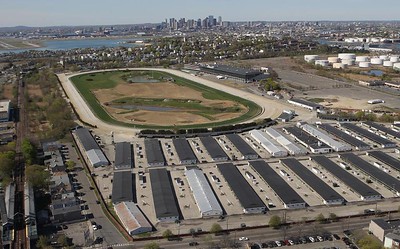
Located in East Boston, Suffolk Downs was the region’s home to live thoroughbred racing for nearly 85 years. That ended in June, when the track held its last racing meet. The final week of that meet coincided with the grand opening of Wynn Resort’s Encore Boston Harbor. Encore, located about four miles west of the track, precipitated Suffolk Downs closing five years ago when the commission chose Wynn for the Boston-area casino instead of a Mohegan Gaming and Entertainment proposal that would have been built at the track and guaranteed racing continued for 15 years.

Simulcasting is available at Suffolk Downs five days a week throughout the year.

Sports Betting Increases Viewership for Games

When sports betting emerged as legal, proponents said it should have a positive impact on viewership of games. Seems the prognosticators were correct.

To date, 13 states have some sort of legalized sports gambling. Only Oregon came aboard during the NFL season. Despite involving just a quarter of the country, viewership has grown—a lot.

Television ratings for games is up more than five percent from last season, or roughly 17 million additional pairs of eyes, according to Gambling USA. Most notably, digital viewing has shot up a significant 49 percent compared to last season, as well.

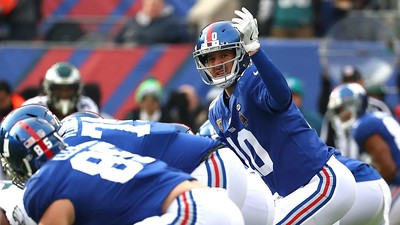
“That is certainly a big influence,” said New York Giants co-owner and treasurer Jonathan Tisch in a recent interview on CNBC. “Obviously, if you’re betting on a certain game, you’re going to watch to see what happens and you’re going to watch until the bitter end because there are many games won on a field goal with three seconds left.”

While NFL heavyweights were prepared for sports betting to become official, Tisch thinks the future will bring opportunities for fans to place wagers at stadiums where the games are being played. After all, his Giants team plays within the same complex as the FanDuel Sportsbook at Meadowlands Racetrack—the most lucrative sportsbook in New Jersey.

“I think the NFL is getting ready for it,” he said. “Due to the NFL’s revenue-sharing structure among its 32 teams, decisions about how to distribute betting revenue would need to take place at a level beyond just one franchise.”

Kentucky Hopes 2020 Is Lucky for Online Poker

When 2019 began, Kentucky looked like it was on track to become the fifth state to legalize online poker, after Nevada, New Jersey, Delaware, and Pennsylvania. West Virginia beat it to the punch, but the Bluegrass State could still become No. 6.

Bill H 175, introduced by Rep. Adam Koenig this past spring, would have legalized both online poker and sports betting. Online poker would be regulated by the state lottery under the bill, while the Horse Racing Commission would oversee sports betting and daily fantasy sports.

The effort failed to secure the 60-vote supermajority needed to pass. Koenig vowed to return in 2020, according to OnlinePokerReport.com.

There are good reasons to expect the next incarnation of H 175 to pass. One has to do with Kentucky’s legislative system. Lawmakers work on a two-year cycle, with the state’s budget laid out in even-numbered years. In those years, the rules work differently for bills related to revenue. If a bill proposed in a non-budget year seeks to generate or appropriate revenue, it requires approval from 60 percent of the 100-member House to pass.

In a budget year, however, it requires only a simple majority of 51 votes.

Even years also have longer sessions, giving Koenig more time to secure the required votes. The sponsor has indicated that he expects his fellow lawmakers to be more focused on tax revenue this year as they work on the budget. Under projections from 2019, legal sports betting and poker would drive $20 million to $50 million in revenue to the state annually.

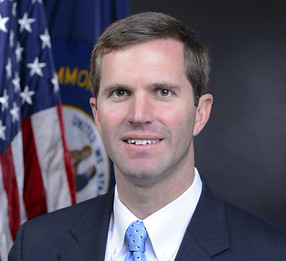
Also, Kentucky just elected a new governor. When Andy Beshear was the state’s attorney general, he urged lawmakers to legalize gambling. He argued that the tax revenue created could be used to fund harm-reduction programs and patch the hole in the state’s pension program.

As chief executive, Beshear can have the final say on Kentucky online poker. Koenig will still need to find the necessary votes, but having the overt approval of the governor should make it easier.

Kentucky lawmakers who were previously on the fence, meanwhile, may regret the missed opportunity. Most neighboring states in the Midwest have already passed similar legislation, and the rest appear to be on their way too. Success elsewhere may be seen as a model of what to expect in Kentucky, and the tax dollars being generated should inspire some budgetary jealousy.

At the moment, Michigan is the only other state having a serious conversation about regulating online poker.

Kentucky’s next legislative session begins January 7.

Atlantic City Casino Owner Supports Government Overhaul

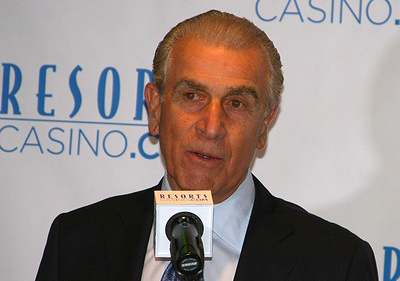
Resorts Casino Hotel owner Morris Bailey has contributed more than $126,000 to Atlantic City Residents for Good Government, a political action committee that wants to change Atlantic City’s form of government from the current mayor-council format to a council-manager style.

Besides Bailey’s significant contributions to the PAC, unions with ties to Atlantic City and South Jersey have also donated. The bricklayers and allied crafts, plumbers and pipefitters, painters, roofers, electrical workers, elevator construction, casino workers and building trades unions have all donated, based on filings with the New Jersey Election Law Enforcement Commission.

Iron Workers Local 399, where New Jersey Senate President Steve Sweeney serves as general vice president, donated $5,000 shortly after the petition was announced in June.

The unions that donated also have ties to the Casino Reinvestment Development Authority (CRDA) executive board. Representatives, members or officers of the bricklayers and allied crafts (Richard Tolson), electrical workers (Edward Gant) and building trades (William Mullen) all sit on the CRDA board, as does Resorts President Mark Giannantonio.

The PAC hoped to gather enough signatures on a petition to force a ballot referendum in which city residents would decide whether the municipal government should change. If it did, the number of council members would shrink from nine to five and a directly elected mayor would be eliminated. Instead, a mayor would be selected annually from among the five at-large council members and a city manager would serve as the chief executive.

Under the 2016 legislation that gave the state direct oversight of the city’s finances, the Department of Community Affairs can treat successful referendum efforts in Atlantic City as advisory, and the state agency can reject a ballot decision regardless of the electorate’s choice.

Former state Senator Ray Lesniak, Unite Here Local 54 President Bob McDevitt, Bailey and Giannantonio have all worked in some capacity to support the petition, believing the current style of representation has allowed too many elected officials to further their own self-interests at the expense of the city and its residents.

The city’s mayors have a long history of bad deeds and illegally lining their own pockets. Last fall, former mayor Frank Gilliam pleaded guilty to committing wire fraud after stealing some $87,000 from a youth basketball team he co-founded in 2011. In addition to paying back the money, Gilliam faces up to 20 years in prison and a fine of “$250,000 or twice the gross gain or loss from the offense.”

Others in the mayoral hall of shame include Michael J. Matthews, arrested by the FBI in 1983 for accepting a $10,000 bribe from an undercover federal agent and for accepting money from Philadelphia mob boss Nicodemo “Little Nicky” Scarfo; James L. Usry, arrested in 1989 for taking a $6,500 bribe from a state police informant as part of an alleged influence-selling conspiracy; and Bob Levy, a former lifeguard and Vietnam veteran, who embellished his military service to collect more benefits.

Gilliam, who will be sentenced on January 7, was replaced by council member Marty Small, whose own questionable past includes charges of drug distribution in 1993 and arson in 2005. Small was never convicted, but the charges were loudly proclaimed during the 2017 mayoral race in a Gilliam campaign mailer that read, “Marty Small’s checkered past is bad for Atlantic City’s future.”

Opponents of the PAC proposal see the petition as a coup attempt by powerful outsiders who want to exert their influence over one of the state’s largest economic engines. Union leader McDevitt said the group has obtained enough valid signatures and will submit the petition in the coming weeks.

In response to the criticism facing the petition effort, McDevitt said opponents have a “vested interest in maintaining the status quo.”

With Pro Sports Teams, AC Just Can’t Win

Back in the 1990s, the owners of a proposed minor league sports team approached Atlantic City, asking to bring an affiliated team to town. The story, widely circulated at the time, was that most city council members were convinced these investors wanted a financial contribution. So the majority voted no. The owners went to Trenton, where the team now flourishes as the Trenton Thunder, an affiliate of the New York Yankees.

Alas, when Atlantic City government came to its senses, Major League Baseball rules had changed. Post-Thunder rules barred an affiliated team in any county that abutted a city where a major league team played.

Atlantic County abuts Camden County, which abuts Philadelphia. Sorry, Atlantic City.

So the city secured an independent team, the Surf, which lasted from 1998 to 2008 before folding, the most successful pro team in the city’s history. Atlantic City also became home to the Boardwalk Bullies ice hockey team, the Seagulls basketball team, and this past year, the Blackjacks of the Arena Football League.

Lack of attendance eventually doomed the first three teams. In the case of the Blackjacks, the league failed. It was forced to declare bankruptcy in the wake of a multimillion-dollar lawsuit by a Pittsburgh-based insurance carrier, which had provided workers’ compensation coverage for the league between 2009 and 2012.

The league considered various scenarios to try to keep afloat, wrote Press of Atlantic City columnist Dave Weinberg. One involved turning it into a traveling league, in which teams would practice at a central location, then play games in Las Vegas and Jim Whelan Boardwalk Hall. But the Atlantic City end would have failed.

“While the Blackjacks drew decent crowds in their first season, fans wouldn’t give up a beach day or casino night to watch random teams that had no ties to the community,” Weinberg said.

The shore resort seems doomed when it comes to pro teams.

There are two angles to consider when assessing the success or failure of Atlantic City sports teams, said Rummy Pandit, executive director of the Lloyd D. Levenson Institute of Gaming, Hospitality and Tourism at Stockton University.

“First, it’s a matter of population. Atlantic City itself has a relatively small year-round residential population with sometimes limited disposable income to be spent on entertainment, such as attending a sporting event,” Pandit said. “Second, it’s a function of geography. Whereas inland teams may draw an audience from a 360-degree radius, coastal teams, bordered by the ocean on one side, may only be able to tap into an audience from a 180-degree radius.”

Still, the AFL had a good run before Atlantic City came along. In its 32-year history, the league helped more than a few players reach the top levels of the sport, Weinberg said. An unheralded quarterback named Kurt Warner spent three seasons with the Iowa Barnstormers in the mid-90s before signing on with the St. Louis Rams. “Before he flopped as Washington Redskins coach, Jay Gruden was AFL MVP in 1992 and led the Tampa Bay Storm to four ArenaBowl titles as their quarterback,” he said.

Thing is, Atlantic City became arguably the most popular stop in the league, Weinberg wrote.

AFL Commissioner Randall Boe said, “We’re all disappointed that we couldn’t find a way forward, and we wanted to thank our fans, our players, coaches, everyone who loved the Arena Football League. We all love the game and tried very hard to make it successful, but we simply weren’t able to raise the capital necessary to grow the league, resolve the substantial legacy liabilities and make it financially viable.”

But perhaps there’s a brighter future ahead.

Population and geography are not insurmountable obstacles, Pandit said. “If Atlantic City continues diversifying its economy and bringing new employers into the area we should expect the year-round residential population, and audiences for sports teams, to increase.”

Moreover, as Atlantic City expands its tourism season beyond the peak summer months, there will be greater synergy between sporting events, often played from fall through the spring, and activities in the resort, he said.

Meantime, Weinberg wrote, “The cool Blackjack jerseys are probably in a storage shed somewhere, along with the Atlantic City Surf caps with waves on the front, the Boardwalk Bullies shirts with the skating bulldog logo and the Seagulls tank tops that featured the unofficial state bird and a basketball.”

Glebocki Named CEO of Atlantic City’s Ocean Resort

The chief financial officer of Ocean Casino Resort in Atlantic City has become the next CEO of the property.

Terry Glebocki, who has three decades of financial experience, worked in management at Ocean’s predecessor, the $2 billion Revel casino, which opened in April 2012 and closed in September 2014.

Glebocki succeeds Eric Matejevich, who served as interim CEO for most of 2019. He in turn replaced Frank Leone, who was let go in February after Luxor Capital acquired the fiscally-troubled casino from developer Bruce Deifik. Deifik died in a car accident in April.

“It’s a very exciting time to be at the helm of the property,” Glebocki said in an announcement. “I look forward to working with the management team and all our team members to continue to meet property goals. We have many announcements planned for 2020.”

The latest data from the Division of Gaming Enforcement indicates that the third quarter of 2019 was Ocean’s strongest financial performance; the property reported $10.2 in gross operating profit and $79.9 million in net revenue.

“In the third quarter, the property set records for revenues, hotel occupancy and profits,” said a company press release. “October was Ocean’s fourth consecutive month of double-digit growth.”

Glebocki becomes the only female CEO in Atlantic City, although there are many women in Las Vegas and across the country who lead casino resorts.

East Coast Gaming Congress Speakers Announced

The 24th East Coast Gaming Congress and NexGen Gaming Forum will be held April 27-28, 2020 at Harrah’s Waterfront Conference Center in Atlantic City. The trade show will feature keynote addresses from top executives from eight of the leading gaming operators, along with leaders from gaming suppliers, sports-betting operators, lotteries and government agencies.

In addition to traditional bricks-and-mortar gaming, the show’s agenda will focus on cutting-edge issues that range from sports betting to esports to iGaming.

The list of speakers includes:

  • James Allen, Hard Rock International & Seminole Gaming
  • Greg Carlin, Rush Street Gaming
  • David S. Cordish, The Cordish Companies
  • Jay Dorris, Wind Creek Hospitality
  • Holly Gagnon, Seneca Gaming Corp.
  • Mario Kontomerkos, Mohegan Gaming & Entertainment
  • George Papanier, Twin River Worldwide Holdings
  • Thomas Reeg, Eldorado Resorts

More than 650 gaming operators, equipment manufacturers, regulators, attorneys, architects, analysts, public officials, investors and other gaming-related professionals are expected to attend ECGC.

For more information, visit EastCoastGamingCongress.com.

In Las Vegas, Nothing ‘Stays Here’ Forever

Next year could be a disappointing one for the Las Vegas resort industry as a slowing national economy makes its impacts felt in the city’s hotels and casinos.

That’s the forecast from Dr. Stephen Miller, director of the Center for Business and Economic Research at the University of Nevada Las Vegas (UNLV). Miller tempered his analysis with some good words for the broader local economy, which remains robust compared to the rest of the country, both in terms of retail sales𑁋up 6.7 percent through September𑁋and population growth, which the center expects to exceed 2 percent in 2020 and 2021.

“I think people should feel comfortable about the future of the Southern Nevada economy over the next two years,” he said at an annual briefing sponsored by UNLV and the Las Vegas Global Economic Alliance. “But as is always the case, you should keep some of your powder dry, because you never know when the next recession will come.”

He’s not as optimistic as Chris Thornberg, a founder of Southern California-based Beacon Economics and director of the UC Riverside School of Business Center for Economic Forecasting and Development, who also spoke at the event. Thornberg expects GDP nationally to rise a healthy 2.5 percent in 2020.

“I call it the un-recession,” he said. “It’s been a year since all these pessimists and bears have been telling us the expansion is over. You don’t see anything in the statistics that suggests an economic slowdown occurring at all. Rumors of this expansion’s demise are highly overrated.”

Miller, on the other hand, predicts a slide of more than a percentage point in each of the next two years compared to 2018’s 2.9 percent increase.

Along with that, he said the center expects visitation to Las Vega will finish strong in 2019𑁋up 0.8 percent year-on-year𑁋but it will rise only 0.3 percent in 2020 and could decline by 0.4 percent in 2021.

Next year will be a flat one for hotel occupancy as well, he said, but that will change for the better in 2021 with the opening of Resorts World Las Vegas, the Strip’s first mega-attraction in a decade, which should help bump occupancy up by around half a percent.

Gaming revenue growth will not measurably increase, but will finish roughly even with the center’s prediction for 2019 of plus-1.3 percent and then dip to 1.2 percent in 2021.

The counter to all this is that McCarran International Airport continues to set passenger records—up 3.5 percent through October—and Miller said he finds it strange that gaming and hospitality aren’t following suit.

He suggested part of this could be blamed on declining visitation from people driving from Southern California, noting that traffic at the border at I-15 is down 1.1 percent through October, according to official counts, and was down 3.7 percent in October alone.

“The question is whether that is parking fees and resort fees,” he said. “That may play into it, but whether it’s big enough to keep the visitor volume soft, I don’t know.

“The leisure and hospitality industry has been soft for a couple of years now,” he added, “but the unknown factor that plays into this over the next five years is supposedly 12,000 rooms coming online. There was a shortage of rooms, and the question is, will those new rooms bring in visitors? That’s hard to forecast.”

He compared the situation to that of Reno, terming it “a tale of two cities” in which Northern Nevada has diversified its economy “much more” than Las Vegas with significant additions like the Tesla giga-battery factory and its thousands of jobs and with other industries.

Some 15 percent of Reno’s employment is tied to leisure and hospitality, down from the high 20s before the Great Recession, while Southern Nevada’s remains largely unchanged at closer to 30 percent.

But that’s to be expected, he said, because gaming and hospitality is more than 70 percent of the Southern Nevada economy.

“We have done some good work, but we have some more to do. As an economist, we say we are smarter than the market and try to plan and give incentives to locate here, but are we smarter than the market? I am not so sure we are.”

It does appear, however, that Las Vegas tourism officials are wondering whether changing circumstances shouldn’t call forth a new mantra to replace the famed “What Happens Here Stays Here” that’s served the city for so long.

The Las Vegas Review-Journal says it may have been Aerosmith’s Steven Tyler who introduced the new thinking during a recent performance at the Park Theater on the Strip, where the band is in residence until February.

“When I say, ‘What happens here,’ you say, ‘Only happens here!’” the singer repeatedly told the crowd.

Following on this the Review-Journal hinted that a larger campaign would soon be unveiled to roll out “What Happens Here Only Happens Here” as the new slogan.

Actually, the Las Vegas Convention and Visitors Authority and R&R Partners, the ad agency behind “What Happens Here Stays Here,” have been at work crafting a new image to present to the outside world for a couple of years, and as with “What Happens Here Stays Here,” which was conceived when visitation plummeted after the 9/11 attacks, it was trauma that’s prompted the latest re-think.

In the wake of the October 2017 mass shooting at an outdoor concert on the Strip, the deadliest such attack in U.S. history, which took more than 50 lives and left hundreds injured, the LVCVA and R&R came up with a toned-down message that played off the #VegasStrong slogan that was sweeping Twitter feeds after the tragedy. “What Happens Here” was shelved in favor of a new spot featuring a cityscape and the voice of Las Vegas native and retired tennis star Andre Agassi, who asked, “What is strength? Strength is valet parkers who become medics, mothers who become emergency responders.”

Early the following year, as if to signal a return to normalcy, “What Happens Here Stays Here” was revived with a new spate of television and online ads.

As for “What Happens Here Only Happens Here,” it conveys a similar appeal to tourists looking for what they can’t find anywhere else, but on a different and arguably more expansive level, as Michael Green, a professor of history at UNLV, suggested to the Reno Gazette-Journal.

In other words, if it’s not about the gambling anymore, maybe it’s not necessarily about the “sin” either. Instead, what separates Las Vegas from the rest of the competition nowadays, Green said, is its uniqueness as a 24/7 destination of non-stop spectacle, defined by A-list entertainment, top-shelf restaurants and high-end shopping, not to mention world-class casinos and, more recently, major league sports.

“You go to the other places to get your bachelor’s, but Las Vegas is where you go for the graduate degree in fun,” he said. “You warmed up over there. That’s the bullpen. Come here to get in the game.”

Rio Deal Closes

The sale of the Rio casino hotel in Las Vegas closed last week when Caesars Entertainment sold it to the Dreamscape Companies, owned by Eric Birnbaum. The $516 million deal includes $40 million in financing by Caesars, which will operate the property for at least the next two years, paying a rent of $45 million a year. There is an Dreamscape option for another year at a cost of $7 million.

The Rio has been home to the World Series of Poker since 2004 and it will continue to be held there at least through 2020. The deal does not include WSOP, which may be moved to another Caesars property after 2020. That will be determined by the new owners of Caesars Entertainment, Eldorado Resorts, when that deal closes sometime in 2020.

Rio will also still be connected to the Caesars Rewards program and available for any member.

Birnbaum was quick to squelch a longtime rumor that the Rio would be demolished and replaced with a stadium to house a Major League Baseball team.

“I love baseball,” Birnbaum told CDC Gaming Reports last week, “but this is a campus with a building and a location that has unbelievable potential.”

Birnbaum said he will take the two years of Caesars management of the property to lay out plans for development. He says he’ll hire a “seasoned gaming veteran” to operate the property at that time, but gave no hint about what he had in mind.

“We have a long runway ahead of us and we’re not ready to give away all the secrets,” Birnbaum told CDC. “Suffice to say, whatever we do, we will reimagine the property.”

Missouri First State to Approve Eldorado-Caesars Deal

The Missouri Gaming Commission recently approved the $17.3 billion sale of Caesars Entertainment to Eldorado Resorts, plus the sale of Eldorado’s Isle Casino Cape Girardeau and Lady Luck Caruthersville to Century Casinos Inc. to avoid antitrust issues. Missouri thus becomes the first of 18 states to OK the transaction that also will require Federal Trade Commission approval.

In June, Colorado Springs-based Century Casinos and real estate investment trust VICI Properties agreed to acquire the two Missouri casinos plus the Mountaineer Casino, Racetrack and Resort in West Virginia for a combined $385 million, of which Century will pay $107 million for the operations. In a statement, Century said it expects the transaction to close by the end of the year.

Eldorado will sell Isle of Capri Casino Kansas City in Kansas City, Missouri and Lady Luck Casino Vicksburg in Vicksburg, Mississippi for $230 million to Twin River Worldwide Holdings.

When the Caesars merger is complete, Eldorado still will operate three Missouri casinos: Lumiere Place in St. Louis, Isle of Capri in Boonville and Harrah’s North Kansas City.

Caesars and Eldorado shareholders approved the merger last month.

The terms call for Eldorado to pay $8.40 per share in cash and 0.0899 shares of Eldorado stock for each Caesars share, or $12.75 per share. The combined business will be called Caesars and its shares will be traded on the Nasdaq. The new company currently operates a total of 60 gaming properties in 18 states, including nine in Las Vegas and four in Atlantic City.

Caesars CEO Tony Rodio, in response to both companies’ pledge to reduce overall corporate costs by $500 million, said Caesars will reduce costs by $75 million to $100 million by the time the deal closes.

Also as part of the merger, three Caesars properties under the Harrah’s brand in Atlantic City, Laughlin, Nevada and New Orleans were sold to real estate investment trust VICI Properties for a total of $1.8 billion. VICI will lease the operations back to Eldorado for total annual rent of $154 million.

Ruffin Discloses Plans for Circus Circus

The new owner of Circus Circus on the Las Vegas Strip says the resort will be getting a new 2,000-seat theater to house a new Cirque du Soleil show, “The Illusionists,” currently playing in New York.

Billionaire Phil Ruffin owns Treasure Island on the Strip, which hosts Cirque’s long-running Mystere. He announced the $11 million venue in a hearing before the Nevada Gaming Control on his application for a license to run Circus Circus, which he is buying from MGM Resorts International for $825 million.

The board unanimously recommended approving the license, which is scheduled to come before the Nevada Gaming Commission for final consideration on December 19.

Ruffin told the board he plans to remake the property’s 10-acre RV park, the last one operated by a resort company on the Strip, into a sand beach with a wave pool similar to one at Mandalay Bay.

Beyond that, not much else will change at the 50-year-old resort in the near term, he said, although the sprawling 124,000-square-foot casino will be modified to include more stadium-style games, and the sportsbook will be turned over to William Hill as part of a 50-50 partnership.

Ruffin said he has no immediate plans to refurbish Circus Circus’ 3,700 hotel rooms and no immediate plans for a 37-acre outdoor events area adjoining the property at Las Vegas Boulevard and Sahara Avenue. The Adventuredome indoor theme park, a moneymaker that attracts 2.5 million visitors a year, also will be retained.

He said also he intends to keep nearly all the existing employees.

NFL to Staff, Players: You Bet, You Lose

Arizona Cardinals defensive back Josh Shaw, a bit player on the injured reserve list of the NFL team, found out the hard way not to gamble on national league games—and unwittingly became the poster boy for this bad behavior. In the aftermath of his bet on a three-team parlay in Las Vegas (it included his own team) Shaw was suspended from the league through 2020, and the league sent a memo to all employees reaffirming that gambling on football is grounds for termination.

“All NFL Personnel are prohibited from placing, soliciting, or facilitating any bet, whether directly or indirectly through a third-party, on any NFL game, practice or other event,” the policy states. “This includes betting on game outcome, statistics, score, performance of any individual participant, or any other kind of ‘proposition bet’ on which wagering is offered.”

The NFL has suspended only a handful of players for betting. The highest-profile case was in 1963, when Paul Hornung of the Green Bay Packers and Alex Karras of the Detroit Lions received season-long bans. Both returned the following season. In the most recent case, Baltimore Colts quarterback Art Schlichter was suspended in 1983 for betting on NFL games and other sporting events. He, too, was reinstated the following year.

The Cincinnati Bengals drafted Shaw in 2015. After playing his first three seasons in Cincinnati, Shaw split time between the Chiefs and Buccaneers last season, and on March 18 was signed by the Cards to a one-year contract worth $850,000.

Shaw made the parlay bet on November 10 at the Caesars sportsbook in Las Vegas. The reportedly losing bet “was on the second halves of three Week 10 games and included the Tampa Bay Buccaneers, who were leading the Cardinals 17-13 at halftime,” sources told ESPN. “Parlay bets, because they require multiple correct picks, typically have not been associated with point-shaving or game-fixing schemes.”

Roger Goodell issued the following statement: “The continued success of the NFL depends directly on each of us doing everything necessary to safeguard the integrity of the game and the reputations of all who participate in the league. At the core of this responsibility is the longstanding principle that betting on NFL games, or on any element of a game, puts at risk the integrity of the game, damages public confidence in the NFL and is forbidden under all circumstances.”

Shaw will appeal his suspension and can petition for reinstatement on or after February 15, 2021, if the appeal is denied.

Mohegan Sun PA Joins Online Sports Betting

Customers can now bet on sports at Mohegan Sun Pocono without stepping foot in the casino. Mohegan Sun Pocono partnered with Kindred Group to launch online sports betting in Pennsylvania. The sportsbook and casino products can be found on the Mohegan Sun website, and mobile apps can be found at pa.unibet.com.

The online betting option began after Unibet Sportsbook opened inside the casino in Plains Township.

“After a successful launch of our betting lounge, Unibet Sportsbook at Mohegan Sun Pocono, we are thrilled to take the partnership with Mohegan Sun online and bring the Pennsylvanian guests a state-of-the-art online gambling experience, including the best casino games and an impressive sportsbook,” Manuel Stan, Kindred U.S. senior vice president, told the Citizen’s Voice.

Aviram Alroy, vice president of interactive gaming at Mohegan Gaming & Entertainment, said the sportsbook lounge is a “highly engaging and joyful experience.”

Mohegan Sun Pocono and Kindred Group’s online sports betting initiation follows Mount Airy Casino Resort’s start in September.

Mount Airy in Monroe County partnered with the Stars Group and FOX Bet for its online sports betting, and the casino also opened a 3,800-square-foot sportsbook in the former Gypsies Lounge space. In November, Mount Airy partnered with PokerStars and FOX Bet to create the first online poker option in the state.

Through the Gaming Expansion Act of 2017, Pennsylvania Gaming Control Board spokesman Doug Harbach said sports wagering is offered at 12 retail locations along with seven online sites, while online casino games are now available at five sites in Pennsylvania. In addition to Mohegan Sun Pocono and Mount Airy, the sites are licensed through Hollywood Casino at Penn National Race Course, Rivers Casino Philadelphia and Parx Casino.

Harrah’s Partners with Philadelphia Eagles

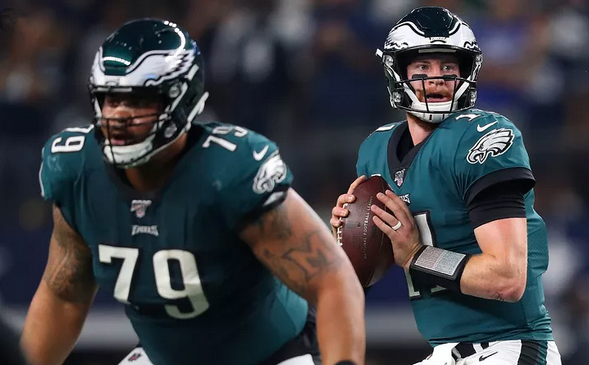
Harrah’s Philadelphia Casino and Racetrack in Chester, Pennsylvania has become the latest gaming property to sign a partnership with a professional sports team since the repeal of the federal ban on sports betting in May 2018. Harrah’s announce that the property has signed a marketing deal with the NFL’s Philadelphia Eagles.

The deal, which includes in-stadium signage and branding, “Eagles Legends” appearances at the property, plus email and direct-mail marketing, will further enhance Caesars Entertainment’s already existing exclusive marketing deal with the National Football League. Specific terms of the deal were not disclosed.

“Harrah’s Philadelphia prides itself on partnering with organizations that share our same core values, and the Philadelphia Eagles are the gold standard in terms of customer service, community engagement, and on-the-field product,” said Chris Albrecht, senior vice president and general manager of Harrah’s Philadelphia. “We each have passionate and loyal fan bases, and we look forward to connecting with them in new and innovative ways and providing them with exciting experiences through this partnership.”

Harrah’s Philadelphia will serve as the presenting sponsor of the Eagles “Drive Summary” video board feature as well as the team’s “Scratch and Win” game in its mobile application. The casino also will have a branding presence in select email campaigns to the Eagles fan base, as well as in the Eagles Pro Shop located at Lincoln Financial Field. In addition to branding opportunities, Harrah’s Philadelphia will host Eagles Legends at its entertainment complex. Casino guests will also enjoy commemorative Eagles Caesars Rewards cards, co-branded apparel and gifts and Philadelphia Eagles branded table games.

“World-class entertainment and a strong commitment to the customer experience are synonymous when you think of Harrah’s Philadelphia,” said Catherine Carlson, Philadelphia Eagles senior vice president, revenue and strategy. “This new partnership will enable us to work creatively with Harrah’s through innovative ways to further engage with Eagles fans. We look forward to offering special Eagles experiences and co-branded touchpoints with Harrah’s Philadelphia year-round.”

Earlier in 2019, Caesars Entertainment, Harrah’s parent company, inked a multi-year sponsorship deal with the NFL that allows Caesars to provide unique experiences for fans by using its casino properties, celebrity chefs, premier music artists and a wide range of entertainment options. Caesars had the exclusive right to use NFL trademarks in the United States and the United Kingdom to promote Caesars casino properties and activate at key NFL events including the Super Bowl and NFL Draft.