Author: Casino Connection Staff

MGM Continues Selloff

MGM Resorts International is considering selling MGM Springfield but retaining control of the casino’s daily operations. The plan resembles the $4.25 billion sale and leaseback of the Bellagio Hotel & Casino on the Las Vegas strip, announced on October 15.

In a conference call with investors on October 30, MGM Chairman and CEO Jim Murren said a similar real estate sale for the iconic MGM Grand in Las Vegas would likely post by year’s end. The Springfield, Massachusetts property along with Las Vegas’ Aria and Vdara are being contemplated using the same blueprint as Bellagio, he said.

Murren plans to use the proceeds from the sales to reduce debt and invest in new growth opportunities, including a potential $10 billion casino in Japan and sports betting in the U.S.

In a statement to The Republican, MGM said it was “proud of our work in our Springfield community and is committed to building on our shared accomplishments. This partnership has resulted in thousands of jobs and millions of dollars of revenue in the area, and we look forward to expanding our engagement in the commonwealth. Previous financial transactions made by MGM focus exclusively on the transfer of real estate and have no bearing on the property’s management or operations.”

Springfield Mayor Domenic J. Sarno told MassLive.com the city has a strong host community agreement with MGM. “Part of this mandates the city and the Massachusetts Gaming Commission (MGC) must approve any and all adjustments to said agreement,” he said.

MGM Resorts International and Blackstone Real Estate Income Trust formed a 95 percent/5 percent BREIT-led joint venture to acquire the real estate assets of the Bellagio in a sale-leaseback transaction. As part of that deal, MGM Resorts signed a long-term agreement to lease the Bellagio from the joint venture and continue to manage, operate and be responsible for all aspects of the property on a day-to-day basis.

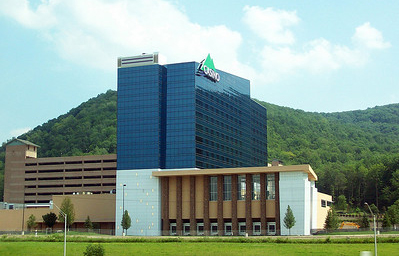
MGM Springfield opened in the city’s south end in August of last year at a cost of nearly $1 billion. The casino has not performed as well as initially expected. The venue has brought in less than two-thirds of the $418 million in gross gaming revenue (GGR) MGM executives told the state the casino would see during its first year. Through this past August, the resort has generated GGR of $273.8 million.

During the years of debate over whether to allow casinos in Massachusetts, proponents invariably said the state was losing out on a revenue jackpot enjoyed by Connecticut and other states where gambling was legal.

The hoped-for windfall promised as a selling point from the three operations has yet to materialize. And expectations are morphing into a more prosaic reality, according to the Boston Globe.

Three months after it opened to much fanfare, Encore Boston Harbor is on pace to come in more than $100 million less than anticipated in first-year gambling revenues. And although the slots-only Plainridge Park casino is taking in more money per machine than the other two casinos, business in Plainville has also dropped off in recent months.

The disappointing trends have some wondering whether the industry didn’t fully understand how tough it would be to attract gamblers in a regional market that has become increasingly competitive.

It’s too early to say legalized gambling is a bust in Massachusetts. The MGC notes that the state has collected about $460 million in gaming revenue since Plainridge opened in 2015. While less than what was hoped for, it’s still a hefty take. The state gets 25 percent of gaming profits from Encore and MGM and 49 percent from Plainridge.

“At the end of the day, it doesn’t really matter whether casinos’ tax revenue overestimates are honest projections or driven by political gimmicks,” said Lucy Dadayan, a senior researcher at the Urban Institute, a Washington, D.C., think tank. “What matters is that casino tax revenues are behind the projections and not meeting the promises.”

The early shortfalls contrast sharply with the upbeat sales pitches casino companies made when they were seeking public support and regulatory approval. Les Bernal, national director of the group Stop Predatory Gambling, said the overly optimistic public relations campaigns were carefully calculated. “They deliberately oversell how much revenue they’re going to bring into the state,” Bernal told the Globe, “because there’s no merit to the business.”

Industry observers say there’s time to turn things around, especially at Wynn Resorts’ $2.6 billion Encore casino in Everett, which is still ramping up following its June debut.

“Going into these multibillion dollar openings, the expectations are high without necessarily a realistic sense of how long it takes to develop these businesses,” said Harry Curtis, a managing director who follows gaming and hospitality stocks at the financial firm Instinet.

Curtis said it can take a year and a half to realistically assess the overall success of a new casino. Also, he said, factors such as the performance of Encore’s hotel and restaurants must be part of the equation.

Many in the industry also believe that the introduction of sports betting—should Massachusetts choose to legalize it—could help. Though in-house sportsbooks are not a major revenue driver for casinos, they can get people in the door to eat, drink, watch sporting events, and perhaps gamble on other games.

Massachusetts isn’t the first state where casino revenues have fallen short of predictions. It’s a tough industry, especially in the Northeast, where the market is growing ever more crowded. Upstate New York, in particular, has recorded a string of disappointing casino results in recent years. Revenue projections typically are based on market studies of the demographics around a proposed casino, with particular attention given to economic factors such as disposable income.

Clyde W. Barrow, a professor at University of Texas Rio Grande Valley who has followed the Northeast’s gambling market, said such models can be useful. But they’ve also been confounded in recent years both by the increasing competition in the region and by an apparent drop in the propensity of people to spend money on gambling after the Great Recession.

Another major reason the projections can be wrong, Barrow said, is that casino operators have a significant incentive to cast their prospects in the sunniest possible light. Wynn Resorts, for instance, had to persuade the Massachusetts Gaming Commission to choose its proposal over one from the operators of Mohegan Sun.

Encore has brought in $166.8 million since it opened June 23, which puts it on pace to come in below the $800 million in first-year gross gaming revenue predicted in 2014. The gambling commission sought to counter this tendency to inflate the numbers by doing an independent assessment of the companies’ estimates. It predicted MGM Springfield could take in $500 million in gross gaming revenue by its third year and Encore could reap between $705 million and $825 million by its third year.

There is still time to meet those goals—Encore is not far off track to hit the low end of the projection—but Barrow believes regulators should have been more skeptical.

“The commission just got dazzled by the bells and whistles that Wynn and MGM dangled in front of them,” he said.

The gambling commission said the casinos should be judged on more than gaming revenue. Together, the three operators spent close to $3.6 billion to build their facilities. And the industry has created thousands of new jobs. About 4,800 people work at Encore, and MGM said it employs about 2,300. But that number is hundreds lower than when it opened.

“Gaming as an economic development tool is a long-term play,” Elaine Driscoll, spokeswoman for the commission, said in a statement. “It is a dynamic industry that is accustomed to market and regulatory changes and gaming expansions. It will take time to truly assess the economic outcomes of the commonwealth’s decision to authorize expanded gaming.”

In a statement, MGM Springfield president Michael Mathis said the company is still developing its business here. “We recognize in this early ramp-up period that results will continue to vary month to month as our operation, programming, and customer base stabilizes,” he said.

MGM also emphasized its other businesses, such as retail, dining, and entertainment events. Officials from Wynn and Plainville declined to discuss their financial results.

The Next Big Strip Deal—How About Tropicana?

Is it time for Penn National Gaming to cash out of the Las Vegas Strip?

Some say the time might never be better.

Penn, the giant among U.S. regional operators—41 casinos owned or operated in 19 states—said on its latest earnings call that it’s received “unsolicited interest” in some of the 34 acres on the corner of Tropicana Avenue and Las Vegas Boulevard where its 1,470-room Tropicana stands.

“We’re continuing to engage in those conversations,” CFO B.J. Fair said. “We’ll see where they take us.”

With interest in Strip real estate higher than it’s been at any point since the end of the recession, and deep-pocketed private investors providing the catalyst—think of the multiples Bellagio, the Rio and Circus Circus have fetched in recent weeks—Penn is likely to find itself with a number of options, all of them attractive, as Stifel Financial analyst Brad Boyer told GGB News.

“Obviously, it’s a great location. And there’s a lot of buzz around the south Strip right now, with the Raiders coming in, and people are probably looking at that land and saying, ‘Hey, we can come in here and make a go of something.’”

Boyer is told the real estate alone could be worth as much as $20 million an acre—a hefty incentive for publicly traded Penn to subdivide it and keep the Trop, which, interestingly enough, is the last major resort the company wholly owns.

“Clearly there’s a greater value in that land than any multiple you can put on the operation,” Boyer said. “Most of the conversations I hear are about carving up individual land parcels and trying to engage third parties in that.”

Then again, things are changing at Penn National, long-time CEO Tim Wilmott is retiring, and it’s possible the leadership is looking more toward a future that lies in what Boyer terms a “hyper-localized focus”: building loyalty from the bottom up, keying on synergies at the property level, enhancing the service quotient, leveraging technology to market more effectively.

“Which tells me they would be interested in selling the whole thing if the right offer came along,” Boyer says.

Certainly the gaming landscape is changing in profound ways, too, and there’s a growing sense that with the nationwide expansion of legal sports betting, vast opportunities await to connect with customers via all kinds of new interactive platforms, and the industry has barely scratched the surface.

“I would call it an evolution of our thought process,” Fair said on the call. “Given this conversion of interactive between sports betting and (internet) casinos, we think that it’s going to be even more important for us to have a very localized on-channel approach where you’re engaging with guests both digitally as well as in brick-and-mortar casinos. It doesn’t mean that the Las Vegas hub-and-spoke won’t work or isn’t working. It just means that we believe that we’re going to be very focused on moving customers around our network, and that’s going to happen at a more local level and across the interactive activities that we’re offering our customers in markets where it’s legal.”

Locals have always been the sweet spot for Penn anyway, as reflected in a third quarter in which same-store strength combined with jurisdictional expansion and the growth of sports wagering to drive a 77 percent increase in total adjusted EBITAR on revenues that topped $1.35 billion, an increase of better than 71 percent.

The company’s “West” segment, which includes the Trop and M Resort Spa Casino, farther south in the suburb of Henderson, performed admirably, too, but it’s a relatively small part of the story, accounting for around 12 percent of total revenues year to date.

The company also is focused on reducing long-term debt, which stands currently, in interest-bearing terms, at around 5.6 times on a lease-adjusted basis. The goal, as stated on the earnings call, is to get that to 5.0 by the end of next year.

“It makes sense to probably just unload (the Trop), that’s my read of it,” says Boyer.

To a gaming operator, that could be a tough sell: an aging casino hotel, one of the oldest remaining on the Strip, capable of generating, as a guesstimate, maybe $60 million a year in EBITDA. Then again, some smart East Coast money just paid $516 million for the off-Strip Rio in a short-term sale-leaseback arrangement with Caesars. The Trop certainly would be attractive to a private REIT on similar terms. And there is that prime location.

“There is this notion in the real estate world that this is irreplaceable real estate,” said Boyer. “There is only one Las Vegas Strip. That’s why Blackstone paid 17 times (rent) for Bellagio.”

Circus Circus and its sizable land bank went to Phil Ruffin at a 13x multiple in a deal valued at $825 million, a real estate play primarily with a lot of similarities to the Tropicana. Conservatively speaking, say, at 12x, the Trop could easily sell for north of $700 million. That’s a tidy premium of around 25 percent-30 percent to what Penn paid for it four years ago and reinvested in it. And that’s without entirely factoring in the value of the land. With that in mind, would upwards of $800 million be out of the question?

As Penn COO Jay Snowden put it on the call, and rightly so, “Nothing’s done until it’s done.”

But the Tropicana is definitely for sale, and somebody’s going to buy it, and it’s a safe bet it’ll be sooner rather than later.

In related news, the company has shown some geographic gains and losses around the country. Third-quarter results pointed to positive results in many areas, even as some locales suffered. Overall revenues grew 7.5 percent, but dropped 19 percent at Plainridge Park in Massachusetts. The company also expanded sports betting opportunities and added properties in Louisiana and Detroit.

Snowden said the company had some “unsolicited interest” in its Illinois-based slot route operator, Prairie State Gaming, and yes, those land holdings at Tropicana Las Vegas. “We’re continuing to engage in those conversations,” Snowden said. “We’ll see where they take us. We’re encouraged by some of those conversations, but nothing’s done until it’s done.”

Penn National CEO Tim Wilmott added that the “fluidity of these discussions” make it impossible to put a timetable on any conclusion.

Penn’s net income rose 4.6 percent to $43.7 million during the three-month period, while cash flow increased 15.2 percent to $407.9 million.

“Our results for the quarter reflect the consistency of the consumer that we have seen over the last year,” Wilmott said in a statement. He said the company’s expected cash flow was lower due to “a greater-than-expected impact from a new competitor in the northeast.”

Wilmott said the Wyomissing, Pennsylvania-based giant was able to balance some of the impact “by strong performances in other markets.”

Stifel analyst Steven Wieczynski said Penn National’s operating results in the quarter “were pretty much right down the middle,” adding that the company “continues to execute on its strategies of driving profitable revenue growth and further refining the cost structure across its portfolio.”

Penn National expanded its sports betting operations by opening facilities at a casino in Iowa and at two in Indiana. The gaming giant also opened a sportsbook at the Meadows Casino near Pittsburgh, and one of the company’s “skin” partners has launched online sportsbooks in West Virginia and Indiana and will soon be live in Pennsylvania.

The company also acquired Margaritaville Bossier City in Louisiana and Greektown in Detroit both in partnership with real estate investment trust VICI Properties. Penn National also launched its internet gaming operations in its home state.

“We are very encouraged by early market share results from these operations and are excited about the new growth opportunity,” Wilmott said. “Our industry leading regional casino footprint positions us well to capitalize on the rapidly expanding sports betting and iGaming markets in a way that maximizes shareholder value.”

Jefferies gaming analyst David Katz called the company’s quarterly results “as-expected” but added his focus is on where Penn National progresses moving forward.

Macau in Running for Trump-Xi Summit?

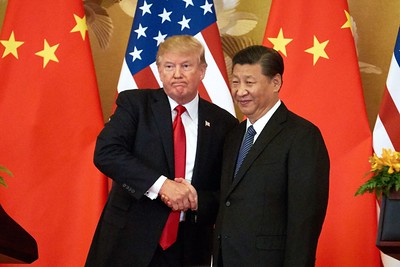
The Beijing government reportedly has proposed Macau as a possible location for President Xi Jinping and U.S. President Donald Trump to meet this month to sign the first installment of an agreement that could end the ongoing trade war between the two superpowers.

Citing a report by U.S. TV network Fox News, Reuters reports the proposal came after protests in Chile induced the government of the South American country to cancel this month’s Asia-Pacific Economic Cooperation summit, where Xi and Trump initially planned to meet.

Macau is one of several locations on the table, according to Reuters and Bloomberg, both citing sources with knowledge of the negotiations.

China’s Foreign Ministry, meanwhile, dismissed as “pure speculation” a report by the Macau Daily Times, citing sources of its own, that Macau has already been given the nod.

“The venue could move to China, the U.S., or any third-party country. The two sides will surely talk about it,” said China’s former Vice Minister of Commerce Wei Jianguo.

If Macau is selected, it will be Trump’s first visit to the Chinese casino hub and the second for Xi, who is scheduled to be on hand for celebrations in December marking the 20th anniversary of the former Portuguese colony’s return to China.

New York Gears Up for Gaming Tax Fight

Some critics of the New York State gaming landscape say tribal casinos enjoy an unfair tax advantage in the form of revenue-sharing payments that are much lower than the rates levied against their commercial competition. Some kind of fix may be in works for next year. That’s when things could get messy.

Researchers with the New York Gaming Commission will weigh in on the status of the industry, including tribal and commercial casinos, racetracks, racetracks with casinos, off-track betting and lottery outlets, along with a range of knotty issues surrounding a possible expansion into internet gambling and expanding sports betting online.

Headline-generating topics also will include the planned expansion of Las Vegas-scale casinos to New York City and other downstate areas where they don’t operate currently.

But none will kick up more dust than the question of whether gaming tax rates should somehow be equalized.

The commission is reviewing proposals from several prospective contractors and is slated to select one to conduct the study by the end of the year. If that happens, the results are expected in June.

And that’s when the tax issue will begin pressing some especially hot buttons.

The problem is that New York’s four commercial casinos have failed to deliver the revenue boost the state treasury and everyone else expected, missing their own revenue forecasts in each of the three years since they entered the market beginning in 2016. Two of them—del Lago Resort & Casino in the Finger Lakes and Resorts World in the Catskills, representing thousands of jobs and more than $1 billion in combined capital investment—have undergone ownership changes in the midst of particularly dire straits financially.

This, in turn, has cast a spotlight on the tribal competition, which is taxed at lower rates, although “taxed” is a misnomer because Indian tribes, sovereign entities under federal law, are immune from state levies. Rather, the three New York tribes engaged in casino gaming—the Oneidas, Senecas and Mohawks—pay the state 25 percent of their annual slot machine revenues under the terms of federally mandated compacts that grant them exclusivity over wide swaths of territory surrounding their operations.

The four commercial casinos pay an additional 10 percent tax on the revenue from their table games and sports betting, plus their machine games are taxed at higher rates: 37 percent in the case of del Lago, which is located between the exclusivity zones carved out for the Oneidas and Senecas, and Tioga Downs Casino Resort, located near Binghamton in the south. Resorts World Catskills in Monticello pays 39 percent. Rivers Casino & Resort in Schenectady pays 45 percent.

Rates also vary among the eight racinos. They’re limited to video lottery machines, which are slot machines for all intents and purposes, as far as consumers are concerned, and represent yet another source of competition.

The idea of leveling the playing field by raising the tribes’ contributions is a no-go legally. Still, the likelihood is strong that they’ll push back against any adjustments that substantially lower the rates paid by the commercial competition.

The bad blood between the two sides already has figured in a decision by the Senecas, angry over del Lago’s 2017 opening at the western edge of their exclusivity zone, to stop sharing revenue altogether. The tribe, which operates casinos in Buffalo, Niagara Falls and Salamanca, claims their obligation ended with the expiration of their original compact in 2016. The state, which to date is out more than $250 million in payments as a result, argues that a seven-year compact extension negotiated a decade ago means the payments are still in force. An arbitration panel has sided with the state, but the Senecas are challenging that ruling in federal court.

The Oneidas, meanwhile, have issued a statement defending their right to negotiate separate compact terms, blasting the idea of rate equalization as a “bailout” and a “scheme” to “alter the state’s carefully crafted gaming rules.”

“The existing rules were the product of months of negotiations, and the Oneida people made significant financial and legal sacrifices to reach a deal with the state and counties, at significant cost to our operations,” said Joel Barkin, the tribe’s vice president of communications.

“The Oneida Indian Nation has held up its end of the bargain and is now proud to be generating more than $70 million this year alone to state and counties, and we have never asked to renege on the deal,” he said. “By contrast, commercial casinos have made massive and unrealistic promises to their shareholders and to the region, then consistently failed to meet their obligations. The solution for them is to get their houses in order and not give them yet another taxpayer gift that could drain even more public revenues from our state.”

Investors Worried Over Palms’ Wobbly Restart

The failure of a costly nightclub at Las Vegas’ Palms Casino Resort is adding to mounting concerns among investors about the off-Strip property’s ability to deliver on the nearly $680 million that owner Red Rock Resorts has plowed into remaking it.

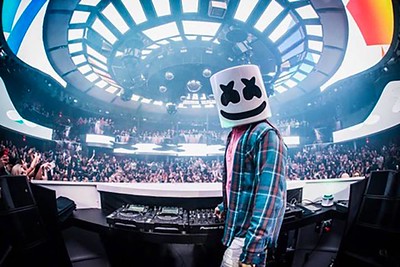
Locals giant Red Rock Resorts reported a $26.8 million loss in the third quarter, most of it stemming from the decision to close the venue, Kaos, a flashy 73,000-square-foot indoor-outdoor playground that included a pool and day club and was known for shelling out millions for big name acts such as DJ Marshmello and singer Cardi B.

Costs associated with terminating long-term agreements with several artists and employment agreements with Kaos’ management accounted for most of the losses, Red Rock said. The company expects to pay similar one-time charges of between $16 million and $22 million over the next two quarters.

Speaking on the quarterly earnings call earlier this month, CEO Frank Fertitta III said the club’s customers weren’t spending enough to justify the cost, and may have even discouraged other guests from coming to the resort. They “did not have spendable money, we didn’t see the crossover into the casino,” he said, adding that Las Vegas’ nightlife boom with its superstar DJs and high-priced bottle service may have peaked.

“It doesn’t appear that the market has grown enough for the amount of supply,” Fertitta said. “The cost of entertainment is excessively high, and we just made the decision to focus where the fish are.”

Developed by George Maloof Jr., the Palms opened in 2001 under the ownership of the Maloof family, whose fortune, like the Fertittas’, also was based in casinos catering to the Las Vegas locals market. The property helped establish the city as a nightlife destination with its rooftop Ghostbar, a popular hangout for a youthful cadre of A-listers and the setting for the MTV reality show Real World: Las Vegas. Maloof was mostly able to offset the notoriously low returns of celebrity cachet with a solid trade in slot play and food and beverage aimed at the city’s residential gamblers.

Red Rock had other ideas in mind when it bought out Maloof in 2016 for $313 million and committed nearly three times that to renovate and expand, adding high-end restaurants and pricey works of contemporary art, among them a 60-foot-tall bronze sculpture to adorn Kaos.

Red Rock grew net revenue company-wide by 13 percent in the quarter to $465.9 million and cash flow was up 1.5 percent to $119.5 million. But a shadow is hanging over the near-term outlook on the stock, mainly because of the Palms, whose GM Jon Gray was fired last month ahead of the bad news.

“Red Rock’s core business (excluding the Palms) continues to grow nicely in Las Vegas,” Union Gaming Group analyst John DeCree noted. “However, the many moving parts at the Palms right now make it difficult to forecast when that property will begin contributing meaningfully to the bottom line relative to its capital investment.”

Stifel Financial gaming analyst Steve Wieczynski said he views it as a work in progress. “We believe margins could remain a little uneven over the next several quarters as the company works to fine tune costs while figuring out the proper product offerings.”

Riverwalk Opens Near Encore Boston Harbor

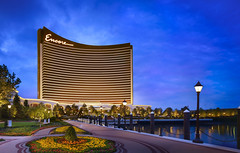
Encore Boston Harbor, the $2.6 billion Wynn Resorts property that opened in June, has kept its commitment to develop a waterfront playground and walkway on the Malden River in Everett, Massachusetts. The attraction, which links to the Northern Strand Community Trail, was part of Wynn’s development deal with the city.

The site was once part of a polluted former General Electric facility that was off-limits to the public, reports MassLive.com.

“The Rivergreen Playground and Riverwalk restores life to a previously inaccessible waterfront and creates a natural attraction for everyone in Everett and beyond to enjoy,” said Brian Gullbrants, who recently replaced Robert DeSalvio as president of Encore Boston Harbor.

As part of its agreement with Everett, Wynn Resorts spent more than $68 million to clean up the area that was contaminated by Monsanto and other major companies that once did business in the region.

“The new Rivergreen Park located along the Malden River Greenway is a tremendous asset for everyone to enjoy for years to come,” Everett Mayor Carlo DeMaria said in a statement.

Atlanta Approves Casino Ballot Question

City Council members in Atlanta, Georgia voted to push for a vote in the city on a legal casino in the city. By a 12-2 vote, they approved an ordinance to request the Georgia General Assembly to propose the nonbinding ballot question asking, “If the state of Georgia legalizes gambling, should Atlanta, Georgia, be considered a possible destination location?”

Councilwoman Marci Collier Overstreet said, “This legislation is about putting power in the hands of the people. Our constituents should be able to have their say on this issue. Studies also show a correlation between providing ballot questions and increased voter participation.” Overstreet said she hopes to have the question on ballots in March 2020 or the next available ballot.

At a recent hearing of the state House Special Committee on Economic Growth, Atlanta Motor Speedway President Ed Clark proposed a $1 billion casino resort development adjacent to the existing racetrack.

Before expanded gambling can happen in Georgia, two-third of both legislative chambers must approve a constitutional amendment, followed by a statewide referendum.

Governor Brian Kemp has said he’s against legalized gambling, but won’t stand in the way of a statewide voter referendum on the issue as long as all the proceeds from gambling go to the HOPE Scholarship program.

Chicago Lawmaker Charged In Bribery Scandal

Illinois state Rep. Luis Arroyo resigned November 1 from the House of Representatives following the release of a 12-page federal complaint that he bribed a legislative colleague with an offer of $2,500 a month if he’d support Arroyo’s sweepstakes legislation.

Arroyo handed over the first payment on August 22 at a suburban Chicago restaurant, not knowing his colleague was wearing a wire. “I’m going to give you this here. This is, this is, this is the jackpot.” At an earlier meeting, Arroyo asked the senator if he wanted the $2,500 checks each month for six months or each month for a year. The senator responded, “A year sounds great.” The Sun-Times said the senator was Terry Link but Link denies it.

Arroyo was arrested October 28, charged with attempting to bribe an

unnamed state senator to introduce legislation to legalize sweepstakes machines. Arroyo, who has represented the 3rd District on the West Side since 2006, appeared in Chicago federal court November 4 on one count of federal program bribery. If convicted, Arroyo faces a maximum of 10 years in prison. He was released on a personal recognizance bond,

The complaint said Arroyo is the manager of the lobbying firm Spartacus 3 LLC. Its clients included the owner of video sweepstakes machine firm. According to legislative records, Arroyo did not introduce any sweepstakes measures and there was little support when it was inserted into an expanded gambling measure 18 months ago.

The complaint refers to the senator only as a cooperating witness. It said the senator agreed to wear a wire in hopes of receiving a reduced sentence for filing false income tax returns.

At an early meeting, after listening to Arroyo explain the legislation, the senator asked, “What’s in it for me? I’m looking for something, you know? I’m in the twilight, you know.” Arroyo assured his colleague he could be trusted to say nothing about their arrangement.

“My word is my bond and my reputation,” Arroyo said, according to the complaint.

Puerto Rican-born Arroyo is chairman of a House appropriations committee and on the public utilities and transportation committees. He was elected the general assembly’s assistant majority leader in 2017.

California’s Hard Rock Opens with a Smash

The $450 million Hard Rock Hotel & Casino Sacramento at Fire Mountain lived up to its name last week, opening October 30 with a guitar smash (the Hard Rock version of a ribbon-cutting) and kicking off a celebration that was planned to last through the weekend with a concert by Def Leppard at Toyota Amphitheater, which is about a mile from the casino.

Fire Mountain is the 12th Hard Rock-branded property owned by the company and the first in the Golden State. The project broke ground in 2016. It employs 1,300 permanent employees, 70 percent of them from the Yuba-Sutter area.

The resort in Wheatland is a joint venture of the Estom Yumeka Maidu Tribe of the Enterprise Rancheria of Northern California and Hard Rock International. The former has been waiting since 2002 for a casino; that’s the year it applied to the Department of the Interior to put land into trust.

The resort includes a casino with 1,587 slots and 57 gaming tables, high-limit gaming rooms, 169 hotel rooms and suites, the Kumi Event Center, convention space and a ballroom, outdoor pool and deck area. The hotel rooms offer Crosley turntables and Fender guitars that can be reserved to play in the room (with headphones.)

Dining includes six restaurants total: two Asian restaurants, Council Oak Steaks and Seafood, a Fresh Harvest buffet, and of course, the iconic Hard Rock Café.

Jon Lucas, chief operating officer of Hard Rock International, hailed the debut, saying, “We are extremely excited that Hard Rock Hotel & Casino Sacramento at Fire Mountain is able to open its doors to locals, travelers, and lovers of the Hard Rock brand. The development of the property has been such an amazing endeavor, and we could not have done it without the incredible partnership between the Enterprise Rancheria Tribe and the Seminole Tribe of Florida.”

Tribal Chairwoman Glenda Nelson declared, “This project is the first of its kind, with two tribes joining together to bring this integrated resort to life. We are proud of our partnership with Hard Rock and the Seminole Tribe, and we are enthusiastic to continue collaborating to provide guests with an unparalleled entertainment destination experience.”

Mark Birtha, president of Hard Rock Hotel & Casino Sacramento at Fire Mountain, added, “Guests are welcomed with our unique brand of Hard Rock hospitality; it’s a combination of the vibe of our beautifully designed building blended with the passion for service from our team members.”

Hard Rock’s signature collection of hundreds of pieces of music memorabilia were highlighted by a Harley-Davidson motorcycle once owned by Eddie Van Halen. “It’s almost like we’re creating a Vegas-style experience right here in Northern California,” Birtha said.

The opening festivities included a $100,000 donation from the Hard Rock Heals Foundation and the casino to the Enterprise Community Foundation, the charity operated by the Enterprise Rancheria Tribe.

SugarHouse Is Now Rivers Philadelphia

Philadelphia’s first gaming property, opened in 2010 as SugarHouse Casino, is now Rivers Casino Philadelphia.

The casino originally was branded to reflect its historic origins, on the 22-acre former site of the Jack Frost Sugar Refinery. The casino’s owner, Rush Street Gaming, was the majority owner of another Pennsylvania casino, its principal Neil Bluhm having acquired majority interest two years earlier in what had been dubbed the Majestic Star. Bluhm changed the name of that property to Rivers Casino Pittsburgh, in a nod to its famous location at the confluence of Pittsburgh’s three rivers.

In 2011, Rush Street opened the largest riverboat casino in Illinois, naming it Rivers Casino Des Planes. And in 2017, Rush Street opened its fourth casino in Schenectady, New York, branding it Rivers Casino Schenectady.

The renaming of SugarHouse, effective October 24, completes the consistent branding of all of the developer’s gaming properties.

“Since receiving our casino license in 2006, gaming in Pennsylvania has evolved tremendously,” Rush Street CEO Greg Carlin said in a June announcement of the pending name change. “Keeping pace with the changing landscape has been paramount to our success. Creating a unified brand is another example of how we’re anticipating and responding to the competitive market for gaming.”

Last week, Carlin issued a new statement, saying, “Having a unified brand will provide a seamless customer experience across the commonwealth with our bricks-and-mortar casinos, mobile and online, and even our sportsbooks, all part of the Rivers Casino family.”

The company’s online sportsbook, PlaySugarHouse.com, has yet to be rebranded.

Latest Data Deal Joins NBA, DraftKings

The NBA last week agreed to a multiyear deal making DraftKings the latest official sports betting operator with the league.

“NBA games are among the most captivating, dramatic and widely-consumed sports entertainment products globally, and the advocacy of the league around legal sports betting further demonstrates its consistent foresight to innovate for the betterment of the fan experience,” Ezra Kucharz, chief business officer at DraftKings told the Associated Press. “The correlation between sports betting and fan engagement is proven, and we look forward to the opportunities that being an authorized gaming operator of the NBA will unlock for consumers.”

Scott Kaufman-Ross, senior vice president and head of fantasy and gaming for the NBA, said the league is excited to team with DraftKings, which has established itself as one of the leaders in the sports betting landscape and has a passionate NBA following. “Our partnership will provide our fans with an authentic and enhanced gaming experience and help us further protect the integrity of our games.”

Boston-based DraftKings joins a half dozen others, including MGM and longtime daily fantasy sports rival FanDuel, with deals that allow them the rights to official betting data and NBA logos.

Professional sports leagues have long banned any connection to gambling. But now they embrace it and seek to profit from both daily fantasy sports and outright gambling on games. Last year, the U.S. Supreme Court tossed out a law that in effect prohibited sports gambling in most states.

The league says it will work with DraftKings to protect the integrity of NBA games.

New York Tribe to Enter Sports Betting Fray

New York’s Seneca Indian Nation has entered into a joint venture with gaming service providers Kambi Group and Bragg Gaming Group to bring sports betting to its three casinos in Buffalo, Niagara Falls and Salamanca.

The sportsbooks are expected to be up and running by year’s end.

Kambi, well-known as a B2B provider in the international iGaming space, will provide technology and trading management for the books. Bragg will provide marketing, operations and player account management through its proprietary Oryx Gaming platform, which also includes a large portfolio of casino, betting and lottery games with land-based, online and mobile applications.

The partnership is the first in the U.S. for Bragg, which is based in Canada and trades on the Toronto Stock Exchange.

Kambi is headquartered in Malta and trades in Stockholm. “Entering the market with two such strong partners as Kambi and Seneca is an ideal scenario,” said CEO Dominic Mansour.

The Seneca openings will bring the number of New York sportsbooks to 11, all limited to in-person wagering under the state’s current regulatory scheme. The others are at the Oneida Indian Nation’s three casinos north and east of Syracuse and the four commercially owned casinos in Schenectady; the Finger Lakes between Syracuse and Rochester; Monticello in the Catskills; and in the south near Binghamton close to the Pennsylvania border. A gaming resort owned by the St. Regis Mohawk Tribe near the Canadian border in the northeast also plans to open a sportsbook this fall.

Michigan House Passes Sports Betting Act

The Michigan House of Representatives recently voted 63-45 to pass the amended Lawful Sports Betting Act, which would legalize sports betting and internet gambling. The bill now moves to the Senate which has until the end of the year to pass the legislation and send it to Governor Gretchen Whitmer, who’s not 100 percent on board with it yet.

State Rep. Rebekah Warren explained, “We’re getting ever so much closer to having a package of bills that meet all of those objectives: can get the majority vote that’s needed, the super majority vote when it’s needed and get the administration to sign off with Governor Whitmer’s signature. Unfortunately, there are a couple of pieces of this package that are not quite ready yet. Please hear me saying the goal is to get to ‘yes,’ we are just not ‘yes’ today.”

The sports betting bill would tax revenue at 8.75 percent but Whitmer previously endorsed a report asking for a 15 percent tax rate on sports betting; the three Detroit casinos’ sportsbooks would be taxed at 12 percent. Initial licensing fees would cost up to $1 million.

In addition, the House-passed bill mandates the use of official league data if it’s offered on “commercially reasonable terms.”

Iden said he worked for 10 months on the bill to secure approval from the state’s commercial casinos, Indian tribes and sports teams. He said supporters included DraftKings, FanDuel, MGM, iDEA Growth, Lake Superior Chippewa, Huron Band of Potawatomi, Greektown Casino, Motor City Casino, National Basketball Association, Major League Baseball, Professional Golf Association Tour and the Detroit Pistons.

“This substitute, really, I think helps to bring all the stakeholders that participated in the conversation on board. We had a lot of in-depth discussion as it related to the rules and regulations and how sports betting was going to be outlined in the state. We obviously know other states are ahead of us as it related to this issue. Indiana and Illinois have already moved forward. Ohio is quickly on our heels,” Iden said.

Still, he and Majority Vice Chair state Rep. Jim Lilly expressed frustration over the lack of dialog regarding sports betting with Whitmer and her administration. “As much as it pains me to say, the governor’s office has not put in much time up to this point. While I think we’re still interested in finding a landing spot, you have to be willing to be part of the conversation if you want to be part of the end outcome,” Lilly stated.

Mohegan Sun Pennsylvania Applies for Sports Betting

Mohegan Sun Pocono is set to open the first non-casino sportsbook in Pennsylvania’s Lehigh Valley. Downs Racing LP, the licensee for Mohegan Sun Pocono, last week filed a petition with the Pennsylvania Gaming Control Board to conduct sports wagering at The Downs at Lehigh Valley, the racetrack casino’s 28,000-square-foot off-track betting parlor in Hanover Township, Lehigh County.

The company also announced it is filing a petition with the state Horse Racing Commission for approval to renovate The Downs at Lehigh Valley to accommodate sports wagering.

“The facility is ideally located for a sports wagering operation, as it is easily accessible to sports fans and travelers alike,” the petition reads.

The petition does not disclose specifics of the sportsbook or planned renovations at The Downs, which also includes a large center bar and full dining room. The petition, which does not provide a timeline for the sportsbook’s opening, says jobs in security, admissions and food and beverage will be created at the operation.

Vegas’ Full House Cuts Sports Betting Deals

Full House Resorts of Las Vegas has concluded agreements that will allow the regional casino operator to offer sports betting at its casinos in Indiana and Colorado.

The deals with Churchill Downs, Wynn Resorts and British betting exchange operator Smarkets will bring sports wagering to the Rising Star Casino Resort in Rising Sun, Indiana, and Bronco Billy’s in Cripple Creek, Colorado, where the state’s voters last week narrowly approved legalization.

The agreements call for Full House to receive a onetime $3 million access fee for the Indiana book and $3 million for Colorado plus a minimum of $7 million annually from commissions at the two operations.

Full House said the revenue injections will help finance an expansion with a parking garage project at Bronco Billy’s and support a bid the company has submitted for a gaming resort planned in Waukegan, Illinois.

The company also operates a sportsbook at its Silver Slipper Casino Resort in Bay St. Louis, Mississippi.

Nasdaq-listed Full House based also has a casino in Fallon in central Nevada and operates the casino, poker room and sports book at the Hyatt Regency Resort, Spa and Casino on Lake Tahoe.

Washington Casino Signs NHL Sponsorship Deal

A sponsorship deal between the new NHL team in Seattle, the Oak View Group and the Muckleshoot Casino holds potential for all sides as state lawmakers push to legalize sports gaming.

Muckleshoot reps gathered last month at the site of the $930 million KeyArena to announce the deal and offer a traditional land-blessing ceremony to signify the region’s tribal heritage. Auburn-based Muckleshoot becomes the official casino of the NHL team—which has not yet announced its name—and at the arena, where it will have a luxury suite, be the named sponsor of all power plays during hockey games and also have signage advertising its expanded gaming and resort amenities.

Conrad Granito, general manager of the casino, said the arrangement will help inform sports fans and concert-goers about its ongoing property expansion, including a new events center and 400-room hotel expected to be completed in conjunction with the KeyArena’s planned reopening in mid-2021.

But Granito, who expects the expansion to generate a 10 to 20 percent hike in the casino’s 12,000 to 15,000 daily customers, said the partnership could facilitate a future sports-betting arrangement.

“I think the partnership is one where you see a lot of tribes and gaming entities have partnerships either directly with teams or directly with leagues,’’ Granito told the Seattle Times.

Muckleshoot also plans a separate deal with the Seahawks, but more on the tribal side than its money-making casino arm. The Seahawks already have a sponsorship agreement with the Snoqualmie Casino allowing use of the team’s logo for promotions, while the Mariners have one with Emerald Queen Casino to sponsor its pocket schedule and assorted merchandise.

Where the Muckleshoot deal differs is the scope and the potential for future gains on the gaming side for the new NHL team in a sport where national TV revenue lags behind other major leagues. While sports gaming represents only a fraction of the gambling that occurs nationwide, the American Gaming Association estimates the NHL could reap revenue gains of $216 million annually from it, about a third of its current national TV intake.

The NHL last year inked a partnership with MGM Resorts International allowing the gaming giant access to proprietary puck-and-player-tracking data the league began collecting this season. That data can be used to help odds makers in efforts to be more accurate as well as in setting various proposition bets.

Washington has some of the nation’s strictest anti-gaming laws, and sports betting remains illegal. But amid a nationwide push to legalize such betting in numerous states, a bill was sponsored in the state legislature last winter by Majority Caucus Chairman Eric Pettigrew and seven others calling for professional and college sports gambling to be allowed within tribal gaming facilities.

House Bill 1975 also calls for the legalization of online sports gaming within those tribal areas. Washington remains the only state where any form of internet gambling is a Class C felony.

The bill was the only one of three pro-gambling efforts approved by a House committee last spring before stalling ahead of a vote. But Pettigrew, who last month was hired by NHL Seattle as a community ambassador and director of suites operations, has vowed to keep pushing and hopes the bill passes by next year.

Harrah’s Cherokee Officially Sponsors Carolina Panthers

Officials at Harrah’s Cherokee Casinos in North Carolina announced the casinos and resort brad recently signed a 5-year deal to become an official sponsor of the National Football League’s Carolina Panthers. The sponsorship includes mentions during broadcasts, branding rights at the Bank of America Stadium and special events for the casino’s top customers.

Harrah’s Cherokee Regional Vice President of Marketing Brian Saunooke said, “The most visible way that the sponsorship will be represented is through broadcast TV and radio. The Harrah’s Cherokee brands will be mentioned, and logos shown for pregame, also in-game and postgame on a rotation, so it’ll be different each game.”

Saunooke added, “In-stadium, we have the naming rights for Panther’s Champions Village, which is a hospitality location within the stadium. So, it’s actually going to be the Harrah’s Cherokee Champions Village. And we’re the sponsor for the 5th Quarter post-game show.”

Harrah’s Cherokee Casinos is owned by the Eastern Band of Cherokee Indians.

Live! Philly Approved for Online Sportsbook

The Pennsylvania Gaming Control Board last week granted a sports-betting certificate to Stadium Casino LLC, the subsidiary of Baltimore’s Cordish Companies that just topped off preliminary construction of Live! Casino & Hotel Philadelphia, slated to open around a year from now.

The board also held at its regular meeting that Stadium Casino can create its online sportsbook before the physical casino is built. In the end, the board overruled its own staff, which had recommended preventing online wagers until the casino had officially launched its retail sportsbook. Cordish officials argued at the meeting that the 2017 law authorizing sports betting did not prohibit casino from launching online before its physical facility is operational. The board agreed.

The board deferred a decision on another argument made by Cordish officials, concerning sports betting at its satellite facility outside Pittsburgh. Preliminarily, the board held that the $10 million fee the operator paid for the sports betting facility does not apply to the satellite casino, stating that the company must pay an additional fee to run sports betting at Live! Casino Pittsburgh, slated to break ground this week on construction in a former anchor department store in Westmoreland Mall, 30 miles from downtown Pittsburgh.

Cordish officials argued that since Category 1 racetrack casinos currently pay no fee to extend sportsbooks to their off-track betting facilities, Category 2 stand-alone casinos like that in Philadelphia should not be double-dipped on that fee.

The board is expected to rule on that fee at it November 20 meeting.

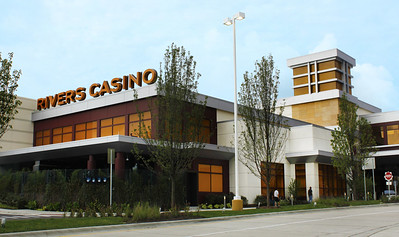
Rivers Casino Awaits Gaming Board Approvals

Work has begun on an expansion project at Rivers Casino in Des Plaines, Illinois in anticipation of the property being approved for a sports betting license. Officials said the Cube lounge will be transformed into a sportsbook that could open before the end of the year. Churchill acquired a majority interest in Rivers in March.

In a quarterly earnings call with investors, Churchill CEO Bill Carstanjen said the sportsbook’s exact opening will depend on final approvals from the Illinois Gaming Board. In addition, he said, Rivers will expand from 1,200 gambling positions to 2,000, which is allowed in the new gambling bill passed in June. Carstanjen said 115 slots and eight table games will be installed on the single-level 44,000-square-foot gaming floor by year’s end, again depending on gaming board approval.

Meanwhile, plans are being developed for a casino expansion to accommodate more slots, table games and amenities. Carstanjen noted that a $24 million expansion of the parking garage already has begun and will be completed in July 2020.

“We have very strong views and plans around what we want to see happen there, but we can’t determine regulatory approval for our expansion plan,” he said. “I think the state is incented to move the process along. I think the state wants to see more casinos in the market. I think the state wants to see a maximization of income from gaming. And I think they’ll work with all delivered speed.”

Opened in 2011, Rivers generates more revenue than any other Illinois gaming hall, with $440 million in adjusted gross receipts in fiscal 2019. Nine other Illinois casinos experienced revenue declines, according to a September report.

Yahoo, MGM Resorts Bring Online Betting to Fantasy App

Yahoo Sports and MGM Resorts struck a multi-year deal last week to bring online betting to Yahoo’s fantasy sports app.

Starting this month, fans in New Jersey will be able to wager on Yahoo’s fantasy app through BetMGM according to TheWrap. The platform expects to spread to more states that adopt rules similar to New Jersey. Fans can bet on the NBA, NHL, baseball, football, golf, tennis and college sports.

“The historic partnership with Yahoo Sports and BetMGM will change the future of fandom, providing new ways for sports fans to go beyond engaging with content and interact through commerce,” Guru Gowrappan, the CEO of Verizon Media, Yahoo’s parent company, said in a statement. Currently, 60 million fans use the fantasy app each month.

Terms of the deal were not disclosed. As part of the arrangement, MGM and Yahoo will work together on several content experiences, including live events from the NBA and NHL in the years ahead.

MGM CEO Jim Murren praised the agreement as a way to expand the company’s reach in the U.S. “Integrating Yahoo’s leading fantasy sports operations and content with BetMGM’s world-class sports betting and interactive platform positions us to drive market share and large-scale adoption among sports fans,” he said.

Both the NBA and NHL support the agreement.

“As sports betting continues to transform the industry, this partnership brings together the power of two trusted partners of the NBA,” NBA Commissioner Adam Silver said in a release. “By working together, MGM Resorts and Yahoo Sports will offer fans unprecedented ways to engage with our games.”

Added NHL Commissioner Gary Bettman, “The expanding sports betting landscape presents exciting opportunities to increase fan engagement and leverage emerging technologies. MGM Resorts, a valued partner of the NHL, along with Yahoo, a leading media brand, will connect fans to the action on the ice in new and innovative ways.”

Brendan Bussmann, director of government affairs for Las Vegas-based gaming and hospitality research firm Global Market Advisors, told the Las Vegas Review-Journal Yahoo and MGM add another layer to the sports betting mix.

“When you start going down that path, I think that’s when things start getting interesting.” New exposure of MGM among Yahoo users could potentially drive new sports-wagering dollars for the company, whether they in existing markets or potential new jurisdictions, he said.

The partnership brings the U.S. one step closer to resembling sports gambling abroad. Fans of the English Premier League, for example, can place soccer bets inside the stadium while watching a match. ESPN and Fox Sports have both leaned into gambling in the last year as well, launching their own sports betting shows.