Author: Casino Connection Staff

Ruffin to Buy Circus Circus in Las Vegas?

Fresh off a hotly rumored sale of its Las Vegas crown jewels, Bellagio and the MGM Grand, MGM Resorts International is reportedly close to selling Circus Circus to Kansas billionaire Phil Ruffin.

The Las Vegas Review-Journal reports that MGM and Ruffin, who owns the TI farther south on the Las Vegas Strip, reached a handshake agreement in September on a deal, which includes land on the southwest corner of Las Vegas Boulevard and Sahara Avenue known as the Las Vegas Festival Grounds.

If the rumor proves true, it will be the second time the two parties have shaken hands. The first was in 2009, when MGM was reeling from the global financial crisis and desperate to complete CityCenter, and Ruffin took the TI𑁋then known as Treasure Island𑁋off the company’s hands for $746 million.

Ruffin also owns around 50 percent of Trump International in Las Vegas and has expressed interest in acquiring a Strip property from Caesars Entertainment, which sold the off-strip Rio last week and may be looking to unload more Las Vegas assets under new owners Eldorado Resorts.

Much as it was a decade ago, MGM is motivated on several fronts. Anxious to raise funds for a megaresort in Japan and under pressure from activist investors to cut costs and monetize the real estate under its last four wholly owned casinos, the company is reported close to a deal with private equity giant Blackstone for Bellagio and the Grand. That sale, coupled with a sale of Circus Circus, would leave only the new Massachusetts casino, MGM Springfield, which is under a right of first offer with the company’s majority-owned REIT, MGM Growth Properties, the owner of the rest of the MGM portfolio.

Terms of a deal with Ruffin had not been disclosed at press time, although Macquarie Securities analyst Chad Beynon estimates the 3,767-room Circus Circus𑁋known for its indoor Adventuredome amusement park and the only RV park on the Strip𑁋could be worth between $850 million and $950 million, describing it as a cash cow that belies its 50-plus years.

Beynon notes that from 2015 to 2017, Circus Circus posted the fastest percentage growth in average daily room rate and cash flow among MGM’s Strip properties.

It generated $17.7 million in cash flow in the second quarter on $65.9 million in net revenue, with an average daily room rate of $88, up from $81 year on year, and an 87 percent occupancy rate.

“It’s not glamorous, but a lot of Las Vegas isn’t glamorous,” UNLV gaming expert David Schwartz told the Review-Journal.

It also sits on around 60 acres that could become a lot more valuable with mega-projects like Resorts World Las Vegas, the Drew Las Vegas, the refurbished, rebranded Sahara and the Las Vegas Convention Center expansion set to transform the North Strip.

“There’s a lot of upside to the property,” Schwartz said. “I think it’s really poised for revival.”

Brendan Bussmann, a partner at industry researchers and consultants Global Market Advisors, agreed. “It’s an opportunity to start a resort from the ground up. There is a tremendous desire to have an asset on the Las Vegas Strip.”

Circus Circus’ endurance as one of the Strip’s great value-oriented and family-friendly offerings dates back to 1968, when Caesars Palace founder Jay Sarno opened it with a gaming floor situated beneath a replica of a giant circus tent where acrobats would swoop above the blackjack tables and slot machines in live performances.

“Circus Circus was Sarno’s tribute to his and everyone’s childhood dream of running away to the circus,” said UNLV Associate Professor Michael Green.

In the 1990s, it became a flagship of gaming entrepreneur William Bennett’s publicly traded Circus Circus Enterprises, which later morphed into Mandalay Resort Group and ultimately was acquired by MGM.

“Circus Circus didn’t invent the idea that you welcome families, but they found the niche and they stayed in the niche,” Green said. “Now, it’s a money-making son of a gun.”
Farewell, Barron Hilton: Vegas Founding Father Dead at 91

Hotel icon Barron Hilton, one of the fathers of modern-day Las Vegas, died September 20 at his home in Los Angeles. He was 91.

Hilton, who took over the family’s famed hotel chain in 1966 and led it for 30 years, was instrumental in bringing mainstream legitimacy to Las Vegas with his purchases in 1970 of the Flamingo Hotel and the off-Strip International, later renamed the Las Vegas Hilton.

At the time, Hilton Hotels was the first company listed on the New York Stock Exchange to enter the casino business, and it coincided with the beginnings of the push by Nevada regulators to eliminate the influence of organized crime, which for decades had held sway over much of the industry.

“His father started the hotel business, but the gaming part of the company was something that Barron really took ownership of and really felt was his,” said Marc Grossman, a vice president with Hilton Hotels from 1992 until he retired in 2007.

It didn’t come easy. Barron “really had to convince the board of directors to get involved in the gaming business in Las Vegas,” Grossman said.

But it paid off.

It was “a good signal for Nevada—and especially Las Vegas𑁋that this was a decent place for corporations to invest,” said Michael Green, an associate professor of history at the University of Nevada, Las Vegas.

Hilton Hotels did extremely well by it too. At one point, the Flamingo was one of the most profitable in the Hilton chain, and Barron oversaw expansions of both the Flamingo and the Las Vegas Hilton and spearheaded the company’s expansion into Reno and Laughlin. By the early ’90s, with Las Vegas in the throes of its first great era of expansion, gaming accounted for about two-thirds of Hilton’s business.

Grossman believes he never got the credit he deserved as an innovator, particularly “his foresightedness that a mainstream hotel company could be a force in the gaming business, thereby having two good revenue streams.”

But then, unlike his father, Hilton founder Conrad Hilton, a larger than life character who relished his celebrity status, “Barron lived a much quieter life,” Grossman said, enjoying activities such as fishing, hunting and aviation.

He also spent a lot of time in Nevada, where he owned a ranch, the Flying M Ranch near Hawthorne in north of the state.

“Barron had this real affinity for Nevada,” Grossman said.

The ranch was sold in 2016 for $19.4 million to the National Fish and Wildlife Foundation.

Born in Dallas in 1927, Barron Hilton served as a Navy photographer during World War II and remained an avid pilot throughout his life. He joined Hilton Hotels in 1951 after first establishing himself as an entrepreneur and businessman in his own right, running a successful orange juice products company, an oil company and an aircraft-leasing business. He also founded Carte Blanche, a consumer credit card, and was a charter owner of the American Football League, founding the then-San Diego Chargers, and playing a role in overseeing the AFL-NFL merger.

A decade after his retirement, Hilton’s 2,800 hotels were purchased by The Blackstone Group. In 2008, the gaming operations were swallowed up in the private equity buyout that transformed Harrah’s Entertainment into Caesars Entertainment.

He is survived by eight children, 15 grandchildren𑁋among whom are famed heiresses Paris Hilton and Nicky Hilton𑁋and four great-grandchildren.

Hilton was chairman emeritus of the Conrad N. Hilton Foundation and left about 97 percent of his estate to the foundation, which expects the donation to grow its endowment from $2.9 billion to $6.3 billion.

“He was a great and very generous man,” said David Siegel, owner of the Westgate, as the Las Vegas Hilton is now known. “I am proud to own his famous hotel.”

Sacramento Gaming Scene to Get Hard Rocked

The $440 million Hard Rock Hotel & Casino Sacramento at Fire Mountain is due to open October 30. The northern California gaming scene may never be the same again.

There is already plenty of competition in the gaming market north of California’s Bay Area. However, the joint project of Hard Rock, owned by the Seminole Tribe of Florida and the Estom Yumeka Maidu Tribe of the Enterprise Rancheria will kick that up a notch.

The new casino resort will open with 1,800 slot machines, 50 gaming tables and video poker on a 60,000 square foot gaming floor. Another 500 slots will be added by 2021.

The casino itself will have new high tech floor and service systems to speed up jackpot payouts, response times and beverage ordering.

The hotel will have 170 rooms with 31 suites. The resort will have six restaurants, retail shopping, meeting space and spa.

Casino President Mark Birtha told CDC Gaming Reports that the slots mix will include old and new games and popular themed games. Soon the casino will announce vendor partnerships that will lead to a lounge dedicated to premiering new themed games that will be linked to a progressive jackpot.

“We expect to have a good mix of titles everybody knows and loves with new titles that people are going to be really excited to come and play,” said Birtha.

Hard Rock expects to make table games a strong component for the casino and recently recruited Paul Mollo to be in charge of table games. Mollo comes to the resort from the Seminole Hard Rock Hotel & Casino Tampa. He will be seeking to add new Asian games to cater to what is expected to a clientele that will have a high percentage of Asian players.

The new floor and service systems will enable players to fill jackpots and order beverages at their games, without having to wait for attendants, said Birtha. In a previous interview he had said, “The goal is to make all of this more user-friendly,” he said in an interview last month. “We have the resources to do this differently and do it in a way guests want. We’re excited to make it happen.”

The new entry into the market will be competing with the Harrah’s Northern California, owned by the Buena Vista Band of Me-Wuk Indians, which opened in April with 950 slot machines and 20 gaming tables. Plus the more established casinos in the region that includes Thunder Valley Casino Resort in Lincoln and Cache Creek Casino Resort in Brooks.

None have the scope of the new Hard Rock, according to casino consultant Ken Adams, a senior analyst for CDC Gaming Reports, who calls it “an entirely different competitor,” with larger corporate resources than its rivals.

It took a long time for the Enterprise Rancheria to bring this casino to a reality. They first applied to put land into trust in Yuba County in 2003. Eventually they broke ground on a smaller Class II casino called Fire Mountain Resort that was brought down by lawsuits from rival tribes who successfully argued that the land was too far removed from the tribe’s aboriginal homeland.

Eventually the lawsuits were settled, the governor negotiated a Class III gaming compact that enabled the tribe to move forward in partnership with Hard Rock.

VGTs Go Live at Second PA Truck Stop

The Bald Eagle Truck Stop in McElhattan, Pennsylvania became the second truck stop in the state to go live with a video gaming terminal lounge, under the 2017 law permitting qualifying truck-stop locations to add up to five VGTs.

“A lot of people seem to like it, It’s a nice way to get out of the house,” said Sunny Singh, owner of Bald Eagle Truck Stop, in an interview with the Williamsport Sun-Gazette. “We’ve gotten a lot of regulars to come in to play, but we’ve definitely seen some new faces, or faces that we don’t see very often, that are coming up more and more now that we have these games.

Singh added that he sees no reason for the state to make a move like Illinois did recently, upping the allowable VGTs in its truck stops, bars and taverns to six. “If we’re constantly full and we have people getting turned away or waiting for long periods of time to get a machine, then we would definitely wouldn’t be opposed to upping the amount that we have,” he said. “But if we always have one or two empty seats, there’s no reason to add more.”

Illinois Racing Board Reluctantly Grants Arlington Dates

The Illinois Racing Board unanimously but reluctantly approved Arlington International Racecourse’s requested 68 race dates for 2020, even though owner Churchill Downs recently announced it would not pursue the casino license it had sought for decades. Board Chairman Jeffrey Brincat said the dates were approved at the 91-year old racetrack “for the good of racing in Illinois.”

Churchill Downs General Counsel Brad Blackwell emphasized the company was not going to shut down Arlington or move the track after 2021, despite the heavy tax load under the state’s new gambling law. A press release issued last month said the racino tax structure made the investment “untenable” and added it would consider “moving the racing license to another community in the Chicagoland area or elsewhere in the state,” and could not commit to live racing beyond 2021.

However, Churchill had lobbied for years for a racino license, along with other Illinois horseracing interests who have considered casino gambling the best way to boost declining horseracing purses. Blackwell said, “We’re still trying to figure this out. We don’t have all the answers now, but we’re committed to finding them. We would appreciate your patience as we do so.”

Churchill Downs officials said the corporation will invest in a sports-betting license once the Illinois Gaming Board finalizes the application process. Churchill Downs also owns Rivers Casino in Des Plaines, located just 11 miles from Arlington, and it’s hoping to open the newly authorized Waukegan casino.

Brincat said the board still wants Arlington to eventually pursue the 1,200 allowable slots and table games at the historic racetrack. He said, “We would like to see this continuously develop.” But Illinois Thoroughbred Horsemen’s Association President Michael Campbell said, “I am deeply disappointed to see the board kick the can down the road. Churchill Downs was not held accountable. They have an obligation to racing. The genesis of their company was racing. It’s just wrong at every level.”

Hawthorne and Fairmount racetracks also received their race dates, along with a new harness racing and gambling venture proposed for Tinley Park by Hawthorne General Manager Tim Carey and video gambling developer Rick Heidner. Their company Playing in the Park LLC will open the state’s first new racetrack in nearly 75 years at the site of the shuttered Tinley Park Mental Health Center. The Racing Board approved their 12 requested race dates between December 6 and 29, 2020. The company still needs approval from the Illinois Gaming Board for up to 1,200 slot machines and table games.

Carey said their $450 million plan for Tinley Park includes a 4,000-seat grandstand, a concert festival ground in the middle of the mile-long track, plus a full backstretch, hotel, sportsbook, parking garage and upscale restaurant.

Blackstone Eyes Bellagio, MGM Grand

MGM Resorts International has had three of its independent directors on the case since January find ways to wring more value from the company’s extensive real estate holdings.

Their mission, according to MGM: “to enhance free cash flow per share, maximize value of the owned real estate and MGM’s equity holdings, preserve the company’s financial stability and position the company for continued growth” in line with the gaming giant’s existing strategy.

In part, it was a response to pressure from institutional investors like Corvex Management, which holds just under 4 percent of NYSE-traded MGM and whose managing partner, Keith Meister, a protĂ©gĂ© of Carl Icahn’s, is one of the three.

Then there’s the “continued growth” part—Japan, to be specific. MGM wants to be in Osaka with partners with a killer resort that could cost upwards of $10 billion to develop.

The work of this ad hoc committee “is at the forefront of what MGM has been thinking about,” Brian Egger, senior gaming and lodging analyst for Bloomberg Intelligence, told GGB News.

And Meister has been in the forefront of that. “He approaches things from a real estate background,” Egger said, “and he’s taken an activist role.”

Enter private equity giant Blackstone Group.

Blackstone likes hospitality assets. Its $154 billion real estate portfolio includes Hilton Hotels and Motel 6, to name just two. And they know the Las Vegas Strip. They acquired the Cosmopolitan five years ago as something of a distressed asset, got it at a 60 percent discount, and have made of it one of the markets biggest turnaround stories.

For Meister and company, getting Blackstone to the table to discuss a possible purchase of Bellagio and MGM Grand, the last two crown jewels of gaming MGM owns—10,000-plus hotel rooms and about 315,000 square feet of casino space between them—would be a deal for the ages.

They appear to be close, too, according to Bloomberg News, which cited unnamed sources last week in reporting that the two have reached an “advanced” stage in negotiations for a gaming REIT-style arrangement in which Blackstone would own the resorts and lease back their operations to MGM.

For MGM, “It’s simply that they have an opportunity to monetize the real estate, and there’s only three properties left (counting Circus Circus) to do this with,” Egger explained. “I think it’s a combination of an internal mandate to monetize the real estate and the activist investors who’ve been brought in to optimize the value of that real estate𑁋and to fund expansion, particularly in Osaka, and find a way to do this without over-leveraging. It’s about balancing competing objectives: to keep leverage within manageable levels and pursue Japan.”

It’s a motivated buyer as well, as Egger sees it. “If Blackstone were looking at attractive hospitality assets, certainly they’d be looking at these two. These would qualify.”

While nothing was known publicly last week about the terms of a potential deal, Egger, who crunched the numbers for a report Bloomberg issued in July, believes it could be worth more than $6 billion and possibly as much as $7 billion.

He looked at three benchmarks: 1) operations, which he values at 13 times EBITDA for Bellagio and 12.5 times for the Grand; 2) likely rental payments, which he estimates at two-thirds of underlying EBITDA, based on previous sales MGM negotiated with its MGM Growth Properties REIT, which owns most of the rest of the company’s gaming assets; and 3) the value of the real estate as a multiple of the rents, which he places at upwards of $3.9 billion for Bellagio and $2.9 billion for the Grand.

It’s a very big deal, in other words, one tailor-made to further MGM’s ambitions and those of Blackstone, which recently raised $20.5 billion for its ninth real estate fund, topping its predecessor by close to $4 billion.

They won’t be the last deals the Strip is likely to see either, especially looking ahead to the moves Eldorado Resorts is expected to make to digest its $17.3 billion acquisition of Caesars Entertainment.

“It would not be surprising to see more single-property transactions as opposed to the large corporate transactions,” Egger said. “We’ve certainly seen a lot of M&A in gaming, but mostly in the regional sector. Transactions of this size, like Caesars, those are unique.”

Meanwhile, Bloomberg also reported that a possible sale of Circus Circus to TI owner Phil Ruffin is being discussed. The 50-year-old Circus Circus, designed by Las Vegas legend Jay Sarno, is a outlier in the MGM Las Vegas Strip portfolio. Located at the north end of the Strip, Circus Circus is considered a “bargain” property, attracting low rollers and families.

Ruffin bought TI (Treasure Island) from MGM soon after that company bought Mirage Resorts, which developed TI and the Mirage on the same piece of land.

Massachusetts Spurns Bluhm Casino—Again

The backers of a casino on the Brockton Fairgrounds in Plymouth County, Massachusetts have been spurned again by the Massachusetts Gaming Commission. A clearly frustrated real estate and casino mogul Neil Bluhm last week told commissioners: “I don’t honestly know how long you expect us to be hanging around here for Brockton.”

Clearly, the answer is considerably longer. The MGC voted 3-1 against reopening the casino license proposal that Bluhm’s Mass Gaming & Entertainment first submitted to the state several years ago, and which the commissioned rejected in the spring of 2016.

At that time, commissioners indicated they were creating as clear a field as possible within the southeastern part of the state for the Taunton casino planned by the Mashpee Wampanoag Tribe (Taunton is 15 miles from Brockton). But they also said that the MG&E project had inadequacies.

Commissioner Eileen O’Brien reiterated that fact when she said her own reason for opposing the project in 2016 had to do with the small (146-vote) margin of victory for a 2015 citywide vote on the project, as well as design flaws.

She said, “All of those factors to me … cut against us reconsidering it at this point.” She added, “No one has forgotten Region C,” the only casino region in the state without a casino. “We are all fully aware it’s out there. I think that’s a conversation for another day.”

Bluhm is the owner of Rush Street Gaming, which runs casinos in Illinois, Pennsylvania and New York. He argues that the commission was clearly motivated in 2016 by the fear of saturating the market. That fear is no longer justified, he said, because the Taunton casino is going nowhere at the moment due to a federal court judgment that the decision that put the land into trust for the tribe violated the 1934 Indian Reorganization Act. The tribe is appealing that decision, and also have backed a law in Congress that would put the land into trust for them by fiat.

Commissioners agreed that they clearly have the authority to revisit earlier decisions, however they thought the reasons presented by MG&E were insufficient to trigger such an action. Some members of the panel thought that doing so would be unfair to other groups that might want to bid on serving Region C.

Bluhm complains that he has spent millions of dollars and five years on the Brockton proposal. He told the panel: “I don’t honestly know how long you expect us to be hanging around here for Brockton. But to vote that you are not going to reopen this under any circumstances? I don’t know how I could continue to hang in here on behalf of Brockton.”

He argued that the state would get $55 million in tax revenues from $351 million in annual revenues from the casino. The city of Brockton would benefit from $10 million paid to it as a casino host city, he said, plus 2,000 construction and 1,800 permanent jobs. MG&E would also pay the city more than $13 million to help mitigate traffic and pay for more police and firefighters.

Brockton Mayor Moises Rodrigues asked commissioners to take the city’s faltering economy into account. Brockton has “crumbs,” he said, “and we don’t have the ability to do much for ourselves because we often feel the state doesn’t do much to help us out.”

However, a candidate for city council, Anne Beauregard, last week argued that many residents oppose a casino on the fairgrounds and called for finding another alternative. She declared, “I am thrilled we can finally put this to bed. We can start looking at a productive use for the fairgrounds that’s advantageous to the future of the community of Brockton.”

MG&E attorney Roberto Braceras commented that inaction will enable nearby casinos in Rhode Island to cement their market hold and suck away revenues from the Bay State. He said, “The point we’re making is there are no viable alternatives. If this commission decides it’s not going to consider this question, then Region C may never be tapped.”

New Jersey Devils Partner With Unibet

Unibet, a new sports betting platform that just went live in New Jersey, signed a significant, multi-year sponsorship deal with the NHL’s New Jersey Devils, NJBIZ reported.

Additionally, Hockey Hall of Famer Martin Brodeur, who served as Devils’ goalie for 21 years, has been named Unibet’s brand ambassador to magnify the company’s presence in the New Jersey market.

Through the partnership, Unibet will receive an in-arena and digital presence and its customers will enjoy special experiences and hospitality. The deal marks Unibet’s first with a U.S. based professional sports team and its first significant investment in the U.S. market.

“New Jersey Devils fans are some of the most passionate and educated hockey fans in the world,” said Brodeur, who also works as executive vice president of business development for the team. “The sportsbook app developed by Unibet offers dedicated Devils fans a really special, new way to engage with the game they love.”

Committed to supporting sports betting worldwide and with an understanding that the U.S. is the fastest growing sports betting market in the world, Unibet was eager to enter the market, significantly invest in New Jersey, and partner with the Devils following the legalization of sports betting in the state last year. Unibet revealed its casino product to players in New Jersey in June. The company hopes to rollout in Pennsylvania later this year, followed by expansions elsewhere.

“We are incredibly excited over our partnership with New Jersey’s beloved Devils, and especially over welcoming goaltending legend Martin Brodeur to our team,” Unibet’s U.S. marketing head Arnas Janickas told NJBIZ. “Together with the Devils and Prudential Center, Unibet players will enjoy a greater entertainment and hospitality experience, and now with our newly launched sportsbook in New Jersey we anticipate a long and successful partnership with the team.”

NASCAR All In With In-Race Betting

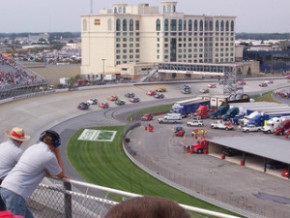
For well over a century, horse racing fans could go to Churchill Downs and wager on any of the slate of races scheduled for the day. NASCAR Cup Series champion Kyle Busch has long wondered why the same does not hold true for auto racing.

Wonder no more, Kyle. Since the U.S. Supreme Court overturned the sports betting ban last year, NASCAR has moved to answer Busch’s wishes. The racing organization plans to partner with multiple casinos to bring in-race betting to fans.

The initial phase involves a limited selection of bets available in select sportsbooks. Gamblers in New York (Resorts World Catskills), Iowa (Q Casino) and Mississippi (Pearl River) could participate as part of the in-race betting plan. Such bets include stage winners and outright winners. Currently, books only offer pre-race bets on the winner, head-to-head matchups, group props and futures. Now, bettors will have the opportunity to make a bet based on what is happening in the race, said a report from CBS Sports.

“In-race betting in particular can be 70 percent to 75 percent of all bets placed,” Scott Warfield, NASCAR’s managing director of gaming, told US Bets. “Something that gets fans to watch an extra 15, 30, 45 minutes is of real value. If someone has a prop bet on who will lead the most laps, that might postpone their mowing the lawn because they want to watch as many laps as possible. Every lap can be a betting opportunity.”

Over time, NASCAR plans to expand its in-play options with a heavy focus on the 2020 season. Potential bets would include fastest laps times, number of lead changes and the number of passes throughout a race. In May, NASCAR partnered with the organization Genius Sports, a company that stores data and provides it to books in order to create betting lines. The company will serve a key role in integrating live betting into NASCAR.

Las Vegas native Busch said in an interview with CBS Sports last year the approach is a good one. “You know I don’t think there’s a negative to it. I think you look at a lot of different jurisdictions across the country have kind of gotten into more of the casino-type atmospheres. I think it’ll put more eyeballs on the sport.”

NCAA Lobbies for Federal Sports Betting Legislation

Betting on March Madness is lucrative for sportsbooks, but if the NCAA has its way, no one will be able to bet on collegiate games.

The National Collegiate Athletic Association is looking for federal legislation on sports betting. Any such move will be met with a legal challenge as a result of the U.S. Supreme Court decision to overturn the sports betting ban last year, but that won’t stop the body from trying to exert its influence on legislation that is now in the early stages of discussion between Senator Chuck Schumer (D-New York) and Senator Mitt Romney (R-Utah), according to ESPN.

The legislation could be similar to the Sports Wagering Market Integrity Act that was introduced in December by Schumer and since-retired Senator Orrin Hatch (R-Utah), but never gained momentum.

The latest version has no timeline.

“We are absolutely supportive of federal regulation,” said NCAA Vice President of Hearing Operations Naima Stevenson Starks, a point person on sports betting. “It’s fairly daunting to think that every state would have a different set of regulations. Having some minimum standards, we are very supportive of and have been an active proponent of.”

Currently sportsbooks operate in 13 states with several more with legislation approved. No state has banned wagering on collegiate sports, although New Jersey does not allow betting on games involving in-state colleges like Rutgers and Seton Hall. The bill introduced by Schumer and Hatch last year did not include a prohibition on betting on college sports.

In the meantime, the NCAA has ramped up educational efforts for student-athletes and referees, who are now dealing with a new landscape, where a legal sportsbook may be operating just down the street from campuses and arenas. Student-athletes have received educational materials and referees given access to an instructional video on best approaches to dealing with sports betting issues. The NCAA also has instituted enhanced background checks for officials.

The NCAA has entered into a formal partnership with an international company to monitor the betting markets domestically and internationally, and an ad hoc committee on sports wagering has been created by the group’s board of governors. In August, the sports wagering committee determined that player availability reporting at this time “would not advance student-athlete well-being nor protect the integrity of competition.”

Fox Boosts Collaborations with Sports Betting, NFL

Prior to the Thursday night game between the Philadelphia Eagles and the Green Bay Packers, the Philadelphia affiliate, Fox 29, launched a pre-game program dealing with sports betting. Consider it a portent of things to come.

Props and Locks expects to occupy half of the station’s usual 30-minute local pre-game show, according to the Philadelphia Business Journal. The show features Fox 29 anchor Scott Grayson as host, former Eagles linebacker Garry Cobb as in-studio analyst and Fox Bet gambling expert Todd Fuhrman live via satellite from Las Vegas. Fuhrman, a mainstay on FS1’s daily studio show, Lock It In, brings an informed opinion on the state of sports wagering talking about odds and trends heading into the game.

Fox 29 Vice President and General Manager Dennis Bianchi said the genesis for the new program revolves around increasing interest from viewers and advertisers in sports betting, legal in New Jersey, Pennsylvania and Delaware, both in casinos and sportsbooks as well as online.

“This is a new product category and we are always looking for a way to be effective with it,” Bianchi told the Journal. “And we think this type of program will be engaging for fans and generate new business.”

Props and Locks is sponsored by Fox Bet, a sports betting platform which debuted in New Jersey earlier this month by Fox Corp. In May, Fox Sports bought just under 5 percent of Canadian company The Stars Group, the parent of PokerStars and BetStars, for about $236 million. The Stars Group is licensed for internet gambling in New Jersey through an affiliation with Resorts Casino Hotel in Atlantic City.

This season marks the first in which bettors in Pennsylvania and New Jersey can bet on the NFL in person and online. Local radio, television, digital and print sports media outlets are lining up cash in. Late last month, iHeartMedia launched a third Philadelphia sports talk station, The Gambler. The new station is a mix of national Fox Sports Radio programming and an afternoon drive program hosted by Sean Brace called The Daily Ticket, which will center on sports betting.

In other news, Online Poker Report said Fox Sports Super 6, a new free-to-play sports prediction game, premiered this month. The app, part of the partnership between Fox Sports and The Stars Group, appears to be a success from the get go. It earned 280,000 downloads in the first week and is already the third-ranked trivia app in the iOS App Store.

The company has unsurprisingly taken inspiration from a similar product—also called Super 6—which Sky Betting and Gaming has run in the UK for years. TSG acquired Sky in a multi-billion-dollar deal last year.

Players have a chance to win up to $250,000 in a trio of weekly contests. Despite awarding cash prizes, Super 6 is not considered a gambling product because it doesn’t require any money from participants. It is therefore available to play throughout the U.S., minus Washington State.

The release came just days after Fox Bet went live in Pennsylvania, the second state in which the Fox-TSG sports betting platform is now available.

Sky’s version of Super 6 revolves around English Premier League soccer and asks player s to predict the exact scores of six matches each week. The jackpot triggers if one or more players get all six correct. Otherwise, the players who came the closest split a smaller consolation prize.

Fox Sports Super 6 is very similar, but with three contests per week. The Saturday and Sunday games use college football and NFL games respectively. Given the much greater range of likely results in football however, asking for an exact score would be too much. Players need only specify the winning team and margin of victory.

There is also a Thursday NFL contest that requires more predictions, like number of yards for a specific player or total points scored in the game.

The Stars Group reported there were 425,000 entries in the first week, so it seems likely the jackpot will hit every few months at worst.

New Jersey and Pennsylvania, the only states where Fox Bet is currently active, have a combined population of around 22 million residents. That’s less than seven percent of the US total. Add in the other states where online gambling is legal but TSG doesn’t yet have a license, and it’s still only a little over 15 percent.

Of the 280,000 people who downloaded Super 6 in the first week, then, it’s likely that fewer than 20,000 are legally able to register, deposit, and wager on Fox Bet right now.

The jackpot did not hit in the first week, but Fox Sports still paid out $65,000 in prizes. Add in the cost of developing, maintaining, and marketing the app, and it looks like an expensive proposition in terms of cost per acquisition.

Super 6 seems like a long-term strategy for the U.S. market. If it wasn’t, Fox Sports and TSG likely wouldn’t offer it nationwide. It’s a gamble, predicated on the assumption that many more states will legalize online sports betting in years to come.

While it’s probably true that less than 10 percent of Super 6 users are legally able to become Fox Bet customers right now, that number will likely increase many times over in the next few years. Establishing brand recognition and acquiring a database of future customers’ figures to pay off down the road.

That sort of proactive marketing is more or less a necessity given the competition that Fox Bet will face in new markets as they open.

New York Jets Ink Sponsorship Deal with 888casino NJ

The NFL’s New York Jets franchise and 888casino NJ have linked up with a new sponsorship agreement that sees the company’s promotional materials displayed significantly throughout the MetLife Stadium at home games.

SBCAmericas reported that this marks the second gaming deal completed by the Jets. MGM signed on as an official gaming partner last year.

For 888casino NJ, the Jets contract gives them a presence in the New Jersey gambling sphere, where companies are already competing intensely for market share. Yaniv Sherman, head of group commercial development at 888, said: “We couldn’t be happier with this deal. Partnering up with the New York Jets is a dream come true for us. We are so excited to be the first New Jersey online casino to sponsor an NFL team.

“At 888casino NJ, we are always looking to score huge wins—this one certainly ranks right up there among the best of them.”

Under the terms of the deal, 888casino NJ will feature the Jets on their website and in reciprocation, 888’s branding will be displayed in the team stadium and other locations. Additionally, 888casino NJ will also be allowed to use the New York Jets logo and other branding in marketing materials, advertisements during games and throughout the team’s online and social media spaces.

FanDuel’s Addition Fuels PA Sports Betting

The Pennsylvania Gaming Control Board posted $83.2 million in sports wagers for August, thanks largely to Valley Forge Casino Resort’s partnership with sportsbook and daily fantasy giant FanDuel. According to the numbers, the new FanDuel online sportsbook offered by Valley Forge took in $35.3 million in wagers for the month, more than a third of the total.

FanDuel’s brand advantage also edged Pennsylvania closer to New Jersey in percentage of sports wagers placed online, at 76.3 percent. New Jersey takes 85 percent of its sports bets through online wagers.

Overall, Pennsylvania’s sports betting handle at nine retail locations and four online operations jumped from $59.3 million in July to $109 million in August. Revenue more than doubled, from $2.9 million to $6.3 million.

Among Pennsylvania’s online operators, the handle and revenue figures in August were:

  • FanDuel: $35.3 million/$2.9 million
  • Play SugarHouse: $25 million/$1.7 million
  • BetRivers: $16.9 million/$1 million
  • Parx: $6 million/$620,573

Total: $83.2 million/$6.3 million

The retail sportsbooks’ handle and revenue in August:

  • SugarHouse: $5.4 million/$816,768
  • Parx: $5 million/$722,945
  • Rivers: $4.9 million/$631,012
  • Valley Forge: $2.5 million/$175,330
  • Hollywood: $2.1 million/$309,171
  • South Philadelphia: $2 million/$337,680
  • Harrah’s: $1.9 million/$251,296
  • Presque Isle: $1.2 million/$282,384
  • Oaks: $942,856/$48,230

Total: $25.8 million/$3.6 million

Does New NBA Rule Benefit Sports Bettors?

Each year, sports leagues introduce rules changes, some minor, some not so. The National Basketball Association made a few for the coming season, including one adapted this month. The rule, approved by league officials, required starting lineups be set 30 minutes prior to tip-off, rather than 10. The seemingly minor change could be construed as catering to sports bettors.

By instituting the change, the NBA satisfies multiple interests, according to The Action Network. Fair play, for one. Respect for players’ health privacy, and for a public looking for the most information possible.

To quote the sentiment of several executives and coaches: “It’s about gambling. All of it.”

Last season, that pre-game active roster report was due 10 minutes prior to tipoff. The league proposed moving it to 30 minutes. Coaches preferred 45 minutes to avoid an overlap with team meetings. The league passed on that recommendation in an effort to “increase transparency for teams, media and fans,” based on a league statement.

In the end, the coaches were OK with 30 minutes so long as it was enforced. Of course, pre-game injuries like a twisted ankle may impact the lineups.

The latest change comes alongside a directive toward more transparency under the leadership of NBA Commissioner Adam Silver. This push has delivered initiatives like the two-minute report and changes to requirements for injury and illness reporting.

Such knowledge lets potential consumers decide whether to purchase game day tickets if the star center is going to be out because of a freak injury. And it helps level the playing field in the interest of fair play.

At the same time, these issues also face some resistance from the players due to the sensitive nature of health conditions. Players need to share information on their availability and progress with the team, but they also deserve the right to pursue the best path to protecting and improving their health. All of these factors only serve to further complicate efforts the league may pursue in the future.

But it’s clear many think the league efforts to monetize a growing interest in wagering on the sport is influencing this particular move.

“The wider the information window is, the more gambling there will be,” a source told The Action Network. “The more gambling there is on the game, the better viewership will be, and ratings were way down last season.”

NBA local ratings were down 4 percent last season, per Sports Media Watch, and the playoffs suffered similar drops.

None of the NBA’s gaming partners specifically requested changes to the league’s injury reporting or policies, per a league spokesman. Scott Butera, president of interactive gaming for MGM Resorts, an official league partner, confirmed they have not made official requests to the league on this front.

“We’re not driving that conversation,” Butera said. “We do support consistency in injury reporting to the benefit of everyone involved, but it’s a tricky subject that involves both player safety and integrity of the game, both of which are paramount to our concerns.”

Still, Matt Chaprales, PointsBet USA’s head of content, says the changes would benefit NBA bettors by and large, particularly prop bettors.

“Because of the nature of injury or ‘load management’ scratches – which are often announced late—NBA markets can shift drastically just minutes before tipoff,” Chaprales said in a statement. “In many cases, the market will already begin moving before a key player is officially downgraded, which is a testament to the nexus of information professional bettors are privy to.”

Jeff Sherman, vice president of risk management at the Westgate Superbook, on the other hand, said most casual bettors bet when it’s convenient for them, so he doesn’t see a drastic change in that. Sherman also believes most sharp bettors are aware of the same information and patterns that the books are, so the additional time to wager with all the necessary information isn’t going to help them much, either.

According to Sherman, the modern media environment means the books are typically already aware of a player’s situation ahead of time. Twitter, in particular, provides constant updates from beat writers at practice and shoot-arounds, along with on-background reports from agents or the players themselves regarding their availability.

“Over the course of a season, sure, there will always be situations that catch you off guard,” Sherman said, “but for the most part that information is already present in the opening line; we don’t alter much after that official announcement.”

Where the true betting edge lies in all this is reacting quickly to major breaking news before books can adjust odds. To that end, three big-money NBA bettors polled by The Action Network declined comment on this story, specifically because of the edge they perceive that they hold under the current policies.

A Quarter of Voters Seen ‘Persuadable’ on Colorado Sports Betting Prop

A longtime pollster and observer of the Colorado political scene, Floyd Ciruli, sees the vote on Prop. DD, which would legalize sports betting in the state’s three casino towns, as “a coin toss,” although he leans a little bit towards the yes column.

Mainly because the casinos don’t oppose it—in fact, they enthusiastically support it—and because it would benefit the state water project, which almost everyone can agree on. “They are giving the money to state water plan. If they had made it more general there would have been war over it. They went the smart way there,” Ciruli said in an exclusive interview with Global Gaming Business News.

The casinos in the state’s three gaming towns are the key element here. Although casinos can’t pass a gaming referendum by themselves, their opposition is usually the kiss of death.

The vote will be the seventh on casino gaming since the first casino set up shop in October 1991. Ciruli recalls that vote in 1990.

“Our governor (Roy Romer) at that time was against it, but it made it through. It was sold as helping three dilapidated historical cities,” Ciruli said.

There was a follow up vote in 1992. “Since then there have been several ‘needy cities’ and small counties and racetracks that said they would go under without slot machines.”

Every one of those initiatives, he says, “went down to crushing defeat, at 60 percent – 80 percent levels. Almost all of them had campaigns against them but at a certain point the public attitude was, ‘We aren’t going to do this.’ They didn’t buy that it would take jobs away,” he said.

There has never been a public sentiment to expand gaming beyond the three casinos cities of Central City, Cripple Creek and Black Hawk.

“We passed one expansion, in 2008, to allow the three towns to raise betting limits to $100, add games and stay open all the time. Of course, the casinos were for it, and it was seen as useful for the casinos but not an expansion,” he told GGB News.

Based on that history, there is a presumption that if they had gone with the New Jersey proposals (for sports betting throughout the state) that the public might have opposed.

“For that reason,” he said, “and because the casinos are for it and not against it, they ought to be able to get it done. The voters see the downside is limited and upside is useful.”

Ciruli calls himself “the longest surviving pollster” in the state. He has been doing non-partisan polling since the mid-‘80s, mostly for the media. He founded Ciruli Associates, a research and consulting firm specializing in public policy and research, in 1985.

His last poll on sports betting was a survey of Adams County likely 2019 voters that was done for the Denver Post. Adams County is one of the largest metro counties in the state. His poll showed about 42 percent against Prop. DD.

“I listened to the campaign most recently. They agreed that in their opinion there are upwards of 20 percent to 25 percent that doesn’t have a thought on it,” he said.

The campaign is just now starting in earnest, he says. “They have a couple of major advantages,” he told GGB News. “Typically they have no chance if the casino industry is against it. They are backing it. I know they are telling people they will have over a million to spend and I don’t think the opposition will have $50,000.”

He describes the one person who has filed in opposition to Prop. DD as “kind of a crackpot. He’s not showing up to speak. He’s going to ground. The other group that is potentially an opponent is a Christian foundation group. Historically in votes on gaming expansion the opposition was district attorneys, governors and religious groups. But what would mainly kill it was that the industry would spend all the money they could to defeat it.”

Ciruli believes that 25 percent is “persuadable.” He anticipates that supporters will have advertising saying that the agricultural community believes it’s a good thing—because of the Colorado water plan. “The business community will come out in favor. The water community is going to be in favor, and the major utilities,” he said.

People Ciruli talks to favor doing something about water.

“They are concerned about it. I think it’s a popular beneficiary. If they can credibly make the case that this expansion is confined and a limited proposal they will have a good chance to persuade them.” He adds, “I don’t think it will be a landslide. If there is no money behind the ‘no’ campaign the public will come down on the side of it, but not by much.”

N.H. Sportsbook Gold Rush Begins

A total of seven New Hampshire cities have expressed an interest in being among the 10 that legalize sportsbooks and have joined to put referendums on the November ballot. The most recent was Nashua, the state’s largest border town, where Charlie McIntyre, executive director of the New Hampshire Lottery, told the board of aldermen, “We are looking for high-end, sort of sports-bar entertainment.”

Other cities that chose to put measures before the voters include the state’s largest city, Manchester, as well as Laconia, Franklin, Dover, Concord and Berlin. Claremont, Portsmouth and Somersworth are studying the issue.

The state Office of the Lottery has an open Request for Proposal (RFP) for sports betting operators. The bill passed by the legislature two months ago allows for licensing up to five mobile platforms and 10 brick-and-mortar sportsbooks.

The law requires that cities that want to host sportsbooks put this question to the voters: “Shall we allow the operation of sportsbook retail locations within the town or city?”

New Hampshire has a unique charity casino program, in which a selected charity collects 35 percent of the proceeds and the state lottery gets 10 percent. The River Casino Sports Bar in Nashua is one such casino, with 12 tables and eight poker tables.

In an exclusive interview with GGB News, Jim Rafferty, general manager of River, explained why he’d like to offer a sportsbook at the operation near the Massachusetts state line.

“When charity casinos in New Hampshire were authorized a dozen years ago, myself and a bunch of gamers said, ‘That sounds like fun,’” said Rafferty. “You have a charity for every day you operate. It’s not a great way to make money, but if the worst case happens, you’ve given a lot to your local charities and that isn’t bad.”

Compare that to giving 40 percent to the state, “and it evaporates,” said Rafferty. “If you give it to the Boys and Girls Club at your local city, you can see what they did with it. Why not? Over the 12 years we’ve done it, we’ve raised $3 million and we’re proud of that. Maybe if we get sports betting, that will help even more.”

His casino is a casino and a sports bar. “We’re very sporty,” said Rafferty. “If any charity casino should have sports betting, it’s the River. The state authorizes 10 brick-and-mortar locations for sport betting and we have twelve charity casinos,” Raffety says. “It’s a natural place for them to be. We have the cages and surveillance system.”

He notes that the lottery’s RFP (which is still out) suggests the lottery will “look positively” on agents that include retail at charity casinos. “That’s because they think it’s a positive place to go,” Rafferty told GGB. “We have a bunch of people calling us to say that they’re going for mobile licenses and asking us to join them.”

The RFP schedule calls for technical submissions this week, with price proposals due September 30, notification of selection to be announced October 17, with final contracts to be approved by November 20.

Rafferty’s casino did not bid. “We considered reaching out, but we’re very actively trying to be part of other bids as their retail component.”

He doesn’t expect sports betting to be a big money maker for his casino—but says it will attract players who will then avail themselves of the casino’s other amenities.

“I’ve been in the business too long and closed a couple of sportsbooks because it was more economical to put slots,” he said. “We know it’s a low-margin business. People are really good at it. The reason for us to do it is the side play. If people are cashing in a sports bet, they’ll make a play and the charities and I will benefit. We do a great business on Patriot game days. Those are 16 of our biggest days of the year. Our sports bar is packed. We think sports betting increases that feeling and makes it more positive.”

Brick-and-mortar establishments will get nothing from the mobile apps, which will be subject to a separate bidding process by providers. But Rafferty says 20 percent of bettors want to go the casino and experience the excitement of sports betting. “We think that 20 percent will grow as people have a lot more fun,” he said, especially if people are watching an exciting game and the betting kiosk is beckoning them.

“The ball is on the five-yard line and people will make those exotic bets that will be really profitable to the sportsbook operator,” said Rafferty, who lobbied the Nashua board of aldermen to put the sports betting measure on the city ballot. “We’ll provide staffing and cage services and clean the place and include them in our whole marketing. The state wants the marketing skin to be localized.

“I was up to my eyeballs in getting it on the ballot,” he added. “I spoke to the aldermen and said it was a good thing to do. I think the two charity casinos in Nashua and the charities will benefit greatly. Some aldermen were concerned that none of the proceeds would go to charity, but I think it doesn’t matter because it will bring people here to play roulette and other games that do contribute to charity.”

New Hampshire has a different attitude toward taxes than most states—it generally dislikes them. It has no sales tax or income taxes, although its property taxes are high compared to most states. But its residents do like buying lottery tickets and financing things with lottery profits. So squeezing money out of sportsbook seems just like the winning ticket to residents of the Granite state.

Philadelphia Hockey SRO Level to Include Sportsbook

The Wells Fargo Center, home of the NHL’s Philadelphia Flyers, will open a new standing-room-only level for this season, filled with amenities that will include the facility’s second PlaySugarHouse sportsbook.

Called the Assembly Room, the SRO level will feature a lounge-style setting with two bars, two restaurants and a communal dining area as well as the PlaySugarHouse “sports lounge.” It is part of a partnership between the Flyers and Philadelphia’s SugarHouse Casino, which also operates PlaySugarHouse online casinos in New Jersey.

The other PlaySugarHouse sports lounge at the facility will be at the New City Terrace, a nearly 6,500-square-foot lounge with club seats, bar, tables, and a 22-by-eight-foot tall video wall with dozens more video screens.

Michigan Pols At Odds Over Sports Betting Tax

The Michigan House Regulatory Reform Committee recently approved H-4916, the Sports Betting Act. It moves to the House Ways and Means Committee, chaired by Republican state Rep. Brandt Iden, author of the legislation. But despite the progress, Iden said Democratic Governor Gretchen Whitmer’s office “is just not communicating about this now. The governor is not communicating about the budget either at this point in time. The governor’s office is just not communicating, and that’s been part of the issue from Day One.”

Iden added, “She walked away from the negotiation, so that makes it difficult to get her thoughts on any potential for sports betting or iGaming if she’s not at the table. I’m trying to ensure that we look at all possible angles and options to get this done. The budget makes the most sense to me because this is new revenue, but it’s difficult without the administration there to get their thoughts on how they want this structured.”

The government will shut down on October 1 if the legislature and governor can’t agree on a budget. In preparation, the state sent layoff notices to 48,000 employees.

Iden said, “We are working hard to avoid a government shutdown. That never goes well for anybody. It’s not what we want. It’s crazy to me that the governor’s team continues not to be interested in the revenue sports betting and iGaming bring in when the new administration is looking for revenue. They’re looking at raising taxes but not interested in iGaming revenue.”

Iden’s legislation would legalize mobile and in-person sports betting at the three Detroit casinos and 23 tribal casinos. It proposes taxing sports betting at 8 percent, compared to Whitmer’s demand of 15 percent. Iden’s bill also proposes a $200,000 initial licensing fee while Whitmer wants $1 million for a license from the commercial casinos and large tribal casinos. Iden said he’s willing to discuss raising the sports betting tax rate if the governor communicates with him.

Iowa Sports Betting Generates $8.5 Million in First Month

According to the Iowa Racing and Gaming Commission, since sports betting became legal on August 15, gamblers wagered more than $8.5 million at 13 of the state’s 19 casinos where sports betting is offered. They turned a profit of $2.2 million and the state received nearly $150,000 in tax revenue. Currently 14 casinos offer on-site sportsbooks, and seven of those also offer mobile sports betting. It’s expected to eventually be offered at all 19 Iowa casinos.

Iowa Gaming Association President and Chief Executive Officer Wes Ehrecke said “Sports betting is an exciting and historic opportunity for those who enjoy watching pro and college sports, who will look forward to being able to place wagers in a regulated, legal and fun environment.” He noted Iowa’s commercial gaming industry “is considered a viable part of Iowa’s economy and adding value to the state’s entertainment and tourism industries.” He added legal gambling generates $1 billion in annual economic impact.

Prairie Meadows Racetrack & Casino in Altoona led the rest with $3.4 million in sports betting handle, of which two-thirds was wagered through its sports betting app. (Self-service sports betting kiosks there have been shut down while operator William Hill determines out why they recently came on in the middle of the night). Ameristar Council Bluffs took in the most in on-site, with a 2-week handle totaling $1.36 million. Harrah’s and Horseshoe, both owned by Caesars Entertainment, both opened sportsbooks on August 23 and brought in a combined $640,000.

Tribal casinos WinnaVegas in Sloan, Blackbird Bend in Onawa and Meskwaki in Tama all have a Class III license but do not yet offer sports betting. Michael Tobias, director of live games at the Sac & Fox’s Meskwaki Bingo Casino Hotel, said the tribe is working with outside partners on a sportsbook and also will offer a mobile gaming app. “Yes, it is in the plans. We’re probably a few months out. We’re waiting for some things to develop,” Tobias said.

Prairie Flower Casino in Carter Lake, operated by the Ponca Tribe, has a Class II license. Kathryn Rand, co-director of the Institute for the Study of Tribal Gaming Law and Policy at the University of North Dakota, said, “There’s a big stumbling block for the Prairie Flower. If the relationship with the state is not good, it makes it difficult to establish a compact.”

In 2007, the Poncas received permission from the National Indian Gaming Commission to build a casino in Carter Lake, near Council Bluffs, on land the tribe had purchased eight years earlier. Iowa and Nebraska joined Council Bluffs in a lawsuit against the commission, which reaffirmed its approval for the casino in 2017 and again in April. The tribe opened the Prairie Flower on November 1, 2018, with litigation still pending.

Tribal spokesman Jimmy Centers said it is “slightly premature” for the tribe to pursue a compact that would allow Class III gambling at Prairie Flower, but “we want to keep having conversations with the state of Iowa. It’s time to put the lawsuits behind us.”

Tennessee Lottery Seeks Sports Betting Overseer

The Tennessee Education Lottery recently issued a Request for Proposal (RFP), due September 26, for a company to vet potential sports betting operators. The company selected will help the lottery “assess the financial stability” of any company that bids for and potentially applies for a sports betting license. The RFP does not indicate when a vendor will be selected.

The only gambling currently available in Tennessee is the lottery. In April the legislature passed a measure allowing mobile-only sports betting; Governor Bill Lee didn’t sign it nor did he veto it, so it became law on July 1, making Tennessee the only state in the U.S. to legalize mobile-only sports wagering. However, it’s unlikely to be available until the second half of 2020 or later.

The state also recently filled a five-person commission to “enforce and supervise” sports betting.

Tennessee’s sports betting law calls for a 20 percent tax rate on adjusted sports betting gross revenue. It’s the first state in the U.S. to mandate using official league data; Illinois became the second this summer. The law allows betting on professional and college sports but prohibits in-play prop bets on college sports. Bettors must be 21 years or older.