Author: Casino Connection Staff

PayPal Verboten for Online Gamblers in Germany

The German government has ordered payment processors including PayPal to refrain from working with online casino operators that target gamblers in the country. PayPal’s German-language guidelines will file the transactions under “prohibited activities.” The new rules will take effect on October 21, 2019.

Last December, major gaming group GVC Holdings announced that PayPal would not be available as a payment option for casino product in Germany across all its brands.

The state of Schleswig-Holstein is the only place in Germany where online casino gambling is legal. Previously issued online casino licenses expired earlier this year, but were reinstated in June until mid-2021, when German authorities hope a permanent gambling regulatory framework that will apply to all states will take effect.

New York Gaming Commission to Study Online Gambling

The New York Gambling Commission wants information encompassing the state’s entire gaming industry and will order a new study that along with sports betting could pave the way for other online betting, including poker.

The commission wants the study to look at “the entire gaming industry in the state, inclusive of the fiscal, economic, and social implications of gaming.” The commission is expected to select a company to conduct the study this week.

The commission will select the company to conduct the study on Monday at its regular meeting.

“I’m hoping this study gives us a blueprint for the entire gaming picture in our state so we can use it as a road map to go forward and expand gaming,” said state Senator Joseph Addabbo Jr. according to Online Poker Report. “This is a comprehensive look at gaming in our state with an eye on the future.”

Areas to be studied include the possibility of adding up to three more casinos in the state and legalizing most forms of online gambling, including the state lottery.

Also to be studied, according to the commission’s request for proposal, are:

  • The performance of existing commercial casinos, video lottery gaming facilities (VLT), the state lottery, and tribal gaming facilities
  • The economic, fiscal, and social implications of the awarding of up to three additional commercial casino licenses
  • The impact an approved VLT facility in Orange County will have on existing gaming facilities and state revenues
  • The impact of a change in taxation rates for video lottery and commercial casino games and activities
  • Suggestions for the sustainability and growth of each market segment, including the long-term sustainability of Batavia Downs, Buffalo Raceway, and Vernon Downs
  • A look at the potential market for expanding sports wagering to VLT and off-track betting facilities
  • The market impacts of online sports wagering, lottery, and video poker

According to the American Gaming Association, New York’s gambling industry brought in $2.59 billion i in 2018. However, more than half of that total ($1.45 billion) was generated by two VLT facilities in the New York City area.

The commission wants the study to move quickly and be completed in time for the state’s next legislative session in 2020.

Major Gaming Console Companies Agree to Disclose Loot Box Odds

Three major video game console makers—Nintendo, Microsoft and Sony—say they will require game makers to disclose the odds of receiving specific items in loot boxes.

Loot boxes are sold by game publishers and contain various random game items of value to avid players. Since some items are deemed more valuable than others, the purchase of the loot boxes is seen by critics as a form of gambling.

The agreement was announced at a forum on video gaming by Entertainment Software Association Chief Counsel Michael Warnecke who said that the three major console makers “have indicated to ESA a commitment to new platform policies with respect to the use of paid loot boxes in games that are developed for their platforms.”

“Specifically, this would apply to new games and game updates that add loot box features,” Warnecke said. “And it would require the disclosure of the relative rarity or probabilities of obtaining randomized virtual items on their platforms.”

The ESA said the console makers “are targeting 2020 for the implementation of the policy.”

Warnecke also said that many game publishers in the association have agreed to voluntarily disclose such things as odds for their own games, but did not name specific companies.

However, a later press release said Activision Blizzard, Bandai Namco Entertainment, Bethesda, Bungie, Electronic Arts… Take-Two Interactive, Ubisoft, Warner Bros. Interactive Entertainment, and Wizards of the Coast” are among the major publishers that will start disclosing loot box odds “by the end of 2020.”

Apple has required similar odds disclosures in its iOS App Store games since late 2017 and Google began requiring odds for games on Android’s Play Store in May.

Several countries such as China and South Korea also require loot box equipped games sold in those countries to disclose odds.

New Zealand Opens Public Input on Online Gambling Regulation

The New Zealand government has opened a public consultation on online gambling in an effort to reduce harm caused by problem gambling in the country.

The country allows residents to play at offshore sites and its estimated that New Zealanders spent about $246 million on gambling in the last 18 months.

The public and industry stakeholders are asked to share their thoughts in a Public Discussion Document, and comments are to be submitted by September 30 to the Department of Internal Affairs’ Online Gambling Team.

“Our current Gambling Act is from 2003 and like a lot of legislation it is being challenged by the place of the Internet,” said Internal Affairs Minister Tracey Martin in a press release. “New technology has changed people’s behavior dramatically and the way New Zealanders gamble has changed too. It’s now timely to check whether our gambling rules are appropriate.”

At present, Lotto NZ and the TAB are the only New Zealand organizations able to offer online gambling, and it is illegal for overseas online gambling operators to advertise to New Zealanders, even though it is legal for them to play offshore sites.

“The problem we have is that, unlike domestic gambling operators, offshore online gambling operators do not pay to mitigate the harm their industry causes, nor do they contribute to the community through funding grants,” Martin stated. “We also need to assess whether they sufficiently protect vulnerable New Zealanders, particularly our young people who can spend a lot of time online.”

Iowa Sportsbetting Goes Live

Starting at 12 noon on Thursday, August 15, eight sportsbooks in Iowa casinos began taking the state’s first legal sports bets. Seven of those eight casinos are eventually expected to offer mobile wagering. The first eight sportsbooks are located at:

  • Prairie Meadows
  • Lakeside
  • Isle Waterloo
  • Isle Bettendorf
  • Rhythm City
  • Riverside
  • Ameristar Council Bluffs
  • Catfish Bend

Brian Ohorilko, administrator for the Iowa Racing and Gaming Commission, told Legal Sports Report that the rest of the 18 casinos that applied for sports betting licenses should be operational by NFL season starting September 5.

According the PlayIA.com, Iowa could compare with Nevada in sports betting revenue.

“Once the Iowa market reaches maturity, its potential is on par with what Nevada is today,” said Dustin Gouker, lead analyst for PlayIA.com and a veteran observer of the legal sports betting markets across the U.S. “That means a handle that will exceed $4 billion a year, and perhaps approach $5 billion. And as we have seen with the success of the early adopters of legal sports betting, such as New Jersey, the state should reap millions in tax revenue.”

PlayIA.com believes Iowa has much potential.

  • It will take Iowa five years or more to reach full maturity. But once it does, the state’s handle should eclipse $4 billion and even approach $5 billion. Those estimates are based in part on the handle that Nevada generates with a population that is similar in size to Iowa.
  • If Iowa reaches its full potential as a market, operators could generate more than $300 million a year in revenue, or “win” in gaming parlance.
  • With a tax rate of 6.75 percent, Iowa would generate more than $20 million a year in tax revenue if the win reaches $300 million a year.

In related news, a legislative panel voted last week to delay a portion of the new Iowa sports betting rules that would allow the state to collect some winnings of gamblers who owe child support, back taxes or criminal debt.

The regulations for sports betting in Iowa authorized casinos to request the Social Security numbers of sports bettors once they win $1,200 and then check the names of those winners against a database of people who are delinquent in their child support payments or back taxes or owe criminal fines.

Federal guidelines differ, and only require casinos to ask for the Social Security number of a sports bettor who has won $600 or more, if the amount is at least 300 times the wager.

Wes Ehrecke, president of the Iowa Gaming Association, said the casinos will propose a bill in 2020 that aligns the amounts with federal tax requirements and will likely add table games, such as blackjack and roulette, so debts could be collected on more gambling earnings.

“Come next session we’ll bring forth a bill hopefully that will have bipartisan support for to clarify that to the federal guidelines,” Ehrecke said.

NFL Signs Deals with Sportradar, Gateway Canada

In a huge sign that the National Football League is accepting the rise of sports betting in the country, the league announced an exclusive and expanded deal with Sportradar for the distribution of league data in areas where sports betting is legal.

The deal gives Sportradar the right to distribute NFL data in U.S. states and also internationally.

The NFL is the third major U.S. sports league to sign a data deal with Sportradar and the last of the four major leagues to enter into a data distribution deal aimed at sports betting.

“We are thrilled to become NFL’s exclusive data distribution partner, undoubtedly one of the most important partnerships in Sportradar’s history. We are confident we will maximize our strong partnership with the NFL and deliver ground-breaking products across the gaming, fantasy and the media worlds,” said Carsten Koerl, chief executive office of Sportradar in a press release. “As the unequivocal global leader in sports data, we are ideally positioned to support the NFL in providing innovative products to enhance the way fans experience the game and help maintain the continued integrity of the NFL competition.”

The deal means the NFL will also use Sportradar for integrity monitoring, and according to the league press release, the deal will “improve the speed and accuracy of NFL data and enhance protections for consumers.”

Details of the deal were not released, however, Sportradar will continue to package NFL in-game and play-by-play data for media as it has been for the last four years. That same data will now be packaged and sold directly to sportsbooks.

Sportsbooks will also have access to the NFL’s “Next Gen Stats” for tracking player data, and Sportradar will be able to distribute live streams of games to international sportsbook operators.

Financial terms for the deal were also not released, but the NBA signed a similar deal for six years with Sportradar for $250 million in 2016.

Sportradar and the NFL have been partnered since 2015 and the league is an investor and equity holder in the company, according to Forbes Magazine. As part of the original partnership, the two companies worked on the creation of Sportradar’s research platform, Radar360, which is used by the NFL league office and its teams, as well as by media outlets covering the sport, the report said.

“Sportradar has been an excellent partner for the last four years and has provided the league, our teams, and media marketplace with innovative data products,” said Hans Schroeder, Executive Vice President and Chief Operating Officer of NFL Media in a press release. “We look forward to working with Sportradar to deliver fast, accurate official league data that will innovate and improve experiences for our fans across platforms. It’s a new world and it’s a new day as far as the legalized sports-gambling landscape, and our view is, let’s be right. When we actually go to market, we don’t want to worry about being first, we want to be right.”

The NFL opens its 100th season on September 5. Four NFL teams now play in jurisdictions with legal sports betting and four more are in states that have legalized sports betting, but have not yet began betting.

In a related story, NFL broadcast partner CBS has also signaled that it may soften its stance on including gambling related information is its telecasts of games.

The network announced it will expand the use of augmented reality and use more high-speed cameras for its NFL coverage this fall.

CBS Sports chairman Sean McManus also said in an interview that the league is considering changing its policy of not discussing sports gambling topics in its broadcasts.

“We’re still talking about it,” McManus said. “We have not formulated our plan yet, but it’s under discussion and we’ll have a plan, obviously, by opening day.”

The NFL also announced a new casino partnership with Gateway Casinos & Entertainment in Canada which will also be a presenting sponsor of the NFL fantasy App in the country.

Under the deal, Gateway will have the right to use NFL trademarks in Canada to promote their properties and activate around key NFL events including the NFL Draft, Pro Bowl, and Super Bowl.

“We are thrilled to partner with the NFL in Canada as their first Canadian Land-Based Casino Partner. We know there are millions of football fans across Canada and to be able to offer exclusive, unique experiences to them at our properties is very exciting,” said Carrie Kormos , chief marketing and communications officer at Gateway Casinos in a press release. “This comes at such an exciting time as the NFL is celebrating 100 years of football this season and we look forward to celebrating with them as a new partner in Canada.”

According to the release, the multi-year sponsorship is focused on Gateway offering unique NFL experiences for their customers throughout their casino and food and beverage properties.

Two Pennsylvania Casinos Unveils New Sportsbooks

Two more Pennsylvania casinos joined the sports book club last week.

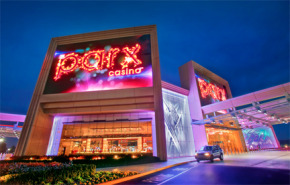
Parx Casino in Bensalem, Pennsylvania’s most profitable gaming property, celebrated the grand opening of its new Parx Casino Sportsbook on August 8.

The Parx Casino Sportsbook looks to set the industry standard with the new 7,400 square foot space that features a sweeping 156-foot HD media wall that can show up to 36 games at the same time. Additionally, the state-of-the-art space features six live tellers, 18 kiosks, 196 seats, three VIP areas, and a 38-by-14-foot bar with 38 seats and a dramatic four-tier light design hanging from above.

The bar features a full menu of beer, wine, spirits and cocktails. From the kitchen, there are game0day favorites including chicken wings, the Philly cheesesteak, a selection of burgers, and even a vegan “Impossible Burger.”

The grand opening of the Sportsbook follows the recent launch of the Parx Online Sports Betting App and the Parx Casino real-money online casino.

“Parx Casino is excited to cut the ribbon on the best sportsbook in the country,” said Senior Vice President of Interactive Gaming & Sports Matthew Cullen on August 8. “Parx aims to set the industry standard in this new and fast-growing arena. The timing couldn’t be better as we head into football season. We felt our local Eagles fans deserved to have the ultimate game-day destination to cheer on the Birds.

“Game day will soar to new heights as we present the absolute best gaming and entertainment experience of its kind. We have worked for nearly two years to expand our portfolio of offerings to give patrons the best of all types of legalized gaming. After the recent launch of online sports betting and our real-money online casino, the grand opening of Parx Casino Sportsbook completes this mission.”

Customers can expect their favorite ways to bet on sports at Parx, including spread, moneyline, total, props, parlays and teasers. Sports that will be available will include, among others, NFL football, NBA basketball, Major League Baseball, NHL hockey, college football and basketball, tennis, golf, MMA, boxing, auto racing and more.

The new sportsbook is open 24 hours a day, seven days a week with 10-16 hours of live teller assistance pending on sports schedules

The $10 million sportsbook follows a $58.5 million expansion over the last two years that included the Xcite Center, Parx Poker Room, Liberty Bell Gastropub, Oliveto and Parx Casino Beer Garden.

On the other side of the state, Churchill Downs Incorporated celebrated the grand opening of its BetAmerica Sportsbook on August 8 at Presque Isle Downs & Casino in Erie, Pennsylvania, coinciding with the start of this year’s NFL preseason. The new sportsbook, which features the addition of 50 state-of-the-art sports wagering kiosks at Presque Isle Casino, expands CDI’s growing national reach into sports betting.

CDI acquired Presque Isle Casino in January, establishing the iconic brand’s footprint in Pennsylvania and furthering its position in the growing sports betting arena.

“The legalization of sports wagering across the country presents a great opportunity for Churchill Downs to deliver more entertainment options to our customers,” said Bill Carstanjen, CEO of CDI. “We are excited to bring our industry-leading BetAmerica Sportsbook to the Pennsylvania market.”

“This has been an exciting and transformative year for our team at Presque Isle Casino,” said Kevin O’Sullivan, vice president and general manager of Presque Isle. “We’re confident that the addition of the BetAmerica Sportsbook will help us draw an even larger crowd of sports fans and racing enthusiasts from across Pennsylvania and from surrounding states. This is great news, not just for Presque Isle Casino, but for the Erie community at large that benefits from increased tourism and interest in our city.”

Half of the 50 new wagering kiosks are located within the newly renovated sportsbook area of the Presque Isle Casino, with the remainder accessible in the Hub center bar, Bar 90, the High-Limit Room and in the non-smoking area. This setup allows bettors to easily access odds and lines throughout the venue.

“Erie has already established itself as a go-to destination for many in our region, and the expansion at Presque Isle Casino will undoubtedly help us to draw even more visitors from near and far,” said Pennsylvania Rep. Ryan Bizzarro. “We’re excited to see this venue continue to grow in the years to come.”

Atlantic City’s Ocean Casino Owners Receive Interim Approval

New Jersey’s Casino Control Commission has granted interim authorization to New York Hedge Fund Luxor Capital Group as it continues its acquisition of Atlantic City’s Ocean Resort Casino.

The interim authorization gives the group temporary control of the property and sets up a more comprehensive review by the commission and the state Division of Gaming Enforcement to determine if Luxor will be granted a New Jersey casino license.

Ocean casino opened in June 2018 and almost immediately began experiencing financial difficulties. Testimony before the commission has reveled that the lost nearly $23 million in seven months and failed to satisfy prior financial conditions imposed by state gaming regulators.

That prompted Luxor, a principle investor, to move to acquire control of the casino from former owner Bruce Deifik in February through a trust agreement. Deifik later died in a car accident.

“We are excited to be of a part of Atlantic City’s future and Ocean Casino Resort’s continued success,” said Mike Conboy, Luxor partner and director of research according to the Press of Atlantic City. “We look forward to working with the employees and management team.”

Luxor has invested nearly $70 million into Ocean. About $50 million was used to pay down debt owed to the second primary lender, J.P. Morgan.

The casino has been on more solid financial ground since the change, reporting an 18 percent increase in revenue for July, the first month its revenues can be compared to 2018. The casino took in about $20 million in July and $21.49 million in June.

James Plousis, chairman of the Casino Control Commission said that while Ocean’s “financial condition has indeed improved, it remains critical that the regulatory authorities continue to monitor its ongoing financial stability through the ICA process at a minimum.”

“We are all acutely aware of this property’s past struggles. In fact, there were real questions as to whether this asset would ever be operational again,” Plousis said. “Acknowledging that it was not its original intention, I, for one, am pleased that Luxor has taken an ‘all in’ approach to its investment in Ocean. … By all accounts, it appears that Ocean is competitive and positioned to generate positive cash flow.”

The commission also approved Gary Van Hettinga as trustee of the casino while a permanent chief executive of Ocean is sought and final qualification of the hedge-fund group is being investigated.

Van Hettinga, of Egg Harbor Township, served as president and CEO of Resorts Casino Hotel for nearly two years.

Justice Department Appeals Wire Act Verdict

The Department of Justice is trying to get its way with the Wire Act after New Hampshire District Court Judge Paul Barbadoro ruled the 1961 Wire Act only applies to interstate sports betting but not online lottery sales or online casinos. The DOJ issued a notice of appeal last week of that decision.

The decision came after the DOJ issued a memo in 2018 that contradicted a 2011 memo that said the Wire Act only applies to sports betting. Since 2011, five states have approved iGaming and several more have legalized online sales of lottery tickets. New Hampshire initiated the suit after the 2018 memo seemed to shut down its approval of online lottery products.

The appeal was not unexpected. Jeff Ifrah, an attorney with vast experience with iGaming and founder of the online gaming lobby, IDEA Growth, issued a statement, saying while not unexpected, the appeal is unwarranted.

“The DOJ generally files appeals of adverse district court decisions as a matter of course,” he said. “We hope that, rather than engaging in a protracted, expensive and ultimately unsuccessful legal fight, the department will take this opportunity to negotiate a settlement which will focus the Wire Act and DOJ’s enforcement resources on the right targets—the unlicensed illegal offshore Internet gambling operators who do not create jobs or tax revenue in the U.S. and do not appropriately protect consumers.”

The appeal means that the First Circuit Court of Appeals will consider hearing the case. The court doesn’t meet until early October.

Hong Kong Sneezes, Macau Catches a Cold

Transportation disruptions and growing concerns over safety stemming from the unrest in Hong Kong are taking a toll on the casinos in neighboring Macau, according to reports from the Chinese gaming hub.

Hong Kong, a city of more than 7 million and a major Asian financial center, has suffered a wave of sometimes violent protests that started in June when demonstrators began pouring into the streets to oppose a bill, which the local government has since shelved, permitting Hong Kong residents facing trials to be extradited to courts in mainland China.

Protestors have stormed the offices of the city government, the liaison office of the Chinese government and recently forced the airport to close. Clashes with police firing tear gas have become a daily occurrence, and it’s reported that units of the Chinese military have been massing at the border.

Australia and the United States are among the nations that have issued Hong Kong travel advisories.

“When you have hundreds of flights canceled out of Hong Kong and some reluctance to travel, I do think that’s impacting the premium end of the business,” said Matt Maddox, chief executive of Wynn Resorts, the U.S. parent company of Macau casino operator Wynn Macau.

Macau is linked to Hong Kong, roughly 40 miles to the north, and its international airport by ferry service and, more recently, by a bridge that also connects to the mainland city of Zhuhai.

The disruption comes at a particularly bad time for the casino market, which is grappling with slowing economic growth in its principal feeder markets on the mainland and escalating trade tensions between Beijing and Washington.

July’s 3.5 percent drop in gaming revenues was sharper than analysts had anticipated, and industry executives and analysts say the protests are likely to affect revenues going into the fall in what is typically a busy period for the market.

At Hong Kong’s Shun Tak Center, where travelers board ferries from the airport for Macau, tour groups said the protests had caused their business to drop 30 percent or more from previous months.

The Macau Government Tourism Office is urging tour groups to bypass Hong Kong and make Macau and Zhuhai the first stops of their itineraries.

Analysts with Macquarie Capital, meanwhile, believe a challenging business climate on the mainland won’t be working to ease the situation any time soon.

“We focus on mainland private enterprises whose leaders, we believe, are today’s VIPs and premium mass,” the brokerage said in a note to investors. “As we look at private business conditions, the outlook is still bleak, with earnings slowing, defaults rising and registered businesses declining.”

The firm believes VIP betting volumes could shrink by 15 percent this year, partially offset by an 11 percent increase in mass market wagering, resulting in gaming revenue for all of 2019 roughly flat with 2018.

Big Week for Cordish In Pennsylvania

The Pennsylvania Gaming Control Board unanimously approved renewing a casino license for Stadium Casino LLC, and also modified its original requirement that the developer build an on-ramp to the Schuylkill Expressway, Interstate 76, to alleviate traffic congestion in the vicinity.

According to the Philadelphia Inquirer, the modification “puts the onus on government entities,” not the casino operator, to build the on-ramp.

The $700 million Live! Casino and Hotel Philadelphia, in the works since 2014, is expected to open sometime in 2020. Casino officials and the gaming board “privately negotiated the new terms of the on-ramp promise, which the board approved without comment,” the Inquirer noted. The gaming board did not explain how it arrived at the $3 million figure—far less than the $8 million to $10 million estimated for the on-ramp by the state Department of the Transportation, but more than the $2 million estimated by Stadium Casino’s lawyer, Richard W. Hayden, in a July hearing.

The company’s $3 million obligation will expire if the government does not have an approved and permitted on-ramp project in motion by August 2024, according to the gaming board’s order. If that happens, Cordish would be responsible only for $1 million in traffic-mitigation projects in South Philadelphia.

“They got away with not putting in the ramp,” said Ivan Cohen, a director of the Sports Complex Special Services District, which had argued for the on-ramp. The ramp requirement was added to the project during the bidding process between Cordish and Penn National Gaming; the latter company eventually withdrew from the race and Cordish agreed to build the ramp.

Hayden told the PGCB, “There’s very little, if any, value” to the on-ramp except on “Eagles game days.”

But neighborhood resident Judy Cerrone disagrees. She told the Inquirer, “We didn’t want the casino, but everybody wants the ramp. … It’s a nightmare. You can’t get in or out at all when there’s a game or a concert.”

Live! Philadelphia will be a full-scale Category 2 casino with a 240-room hotel, 2,200 slot machines and 150 table games.

In western Pennsylvania, Stadium Casino, the subsidiary of the Cordish Companies, received final approval from the Pennsylvania Gaming Control Board last week for its Category 4 mini-casino project in a former department store at the Westmoreland Mall in western Pennsylvania.

Dubbed Live! Casino Pittsburgh, the $150 million project, linked to the Philadelphia Live! casino, will create a 100,000-square-foot gaming, dining and entertainment destination at the 1.3 million-square-foot mall in Hempfield Township, around 30 miles from downtown Pittsburgh.

Live! Casino Pittsburgh will feature 750 slots and electronic table games and approximately 30 live-action table games, plus nationally recognized restaurants and live entertainment venues.

The project is expected to generate $188 million in annual economic impact, with an additional $148 million in economic impact from construction, including approximately 960 direct and indirect construction jobs, plus approximately 500 permanent new jobs for local and regional residents. In addition, the project will create numerous construction and operations vendor opportunities for local, minority, women-owned, and veteran-owned businesses, along with considerable support for local charities and nonprofits.

“We’re very excited and honored to have been awarded the license by the Gaming Control Board and thank them for their consideration,” said Joe Weinberg, managing partner of the Cordish Companies. “We look forward to working with state and local officials and the entire community as we move forward with development of a true world-class destination that will attract people from throughout the region for a unique gaming and entertainment experience.”

In a related matter during the hearing, Stadium Casino, LLC also received its Category 2 license renewal from the board for the primary Live! Casino & Hotel, currently under construction in South Philadelphia’s stadium district.

Chicago Casino Toddlin’

Soon after the Illinois legislature approved a massive gaming expansion bill, including an urban casino in Chicago, city government commissioned a study from Union Gaming Group to determine the best and most profitable outcome. The result? Unless taxes and fees are lowered, a Chicago casino would barely scrape by and wouldn’t attract serious bids from the major gaming companies.

In addition the report says the sites being considered would not draw enough tourists because they are located away from major tourist attractions and are unsafe or inconvenient.

With taxes and fees for a Chicago casino under the current legislation top off at 72 percent and operating costs around 30 percent, the report says even the most efficient—and lucky—casino would have profits in the single digits. Union Gaming says at best in any of the five locations suggested EBIDTA would only amount to $21.7 million. And when you add a $15 million license reconciliation fee, profits are impossible, said Union Gaming.

“The reconciliation fee alone would wipe out any profits generated for many years, if not decades,” the study said. “The return on investment profile for all five sites is subpar, if not negative over the five years projected.”

There were other reasons why the preferred locations were the big impediment, according to the report.

“Tourists generally will not patronize a casino in an area that is inconvenient relative to where they are staying or perceived as unsafe, nor will tourists be eager to book a room at a casino’s hotel if there are no other easily accessed attractions nearby,” the report noted. “For these reasons and more we would not expect a material number of tourists to patronize any of the five sites analyzed herein. Instead, these sites will primarily draw patrons from persons living within close proximity.”

The report recommended that the casino be “centrally located to high-quality hotels and other notable tourist attractions” in order to “meaningfully penetrate the robust tourism trends” of Chicago.

But tourism and convention officials are hesitant to site the casino downtown near the city’s massive convention building, the McCormick Center, for fear of losing convention attendees to the casino floor.

The Illinois Gaming Board has 90 days to ask the legislature to reconsider the terms of the bill for the Chicago casino.

Mayor Lori Lightfoot says now the state can reconsider the terms of a Chicago casinos.

“We have been clear from Day One that the creation of a new casino for Chicago has to be financially viable and address the revenue needs of the city of Chicago,” she said in a statement. “While the study confirms our concerns about the tax structure that the legislature passed, we know that this can be addressed, and we look forward to working with the governor and legislative leaders to revise the legislation.”

The report didn’t reject the notion of the city owning the casino and leasing to an operator-manager. This idea was shot down during the initial negotiations because of ongoing corruption scandals on city council. Lightfoot said she’s like it to be reconsidered.

“Obviously, that was something that we asked for,” the mayor said. “But I think we’re going work within the construct that we have just to make sure that we get the tax structure right.”

A successful Chicago casino, however, would return almost $260 million in revenue that now goes to Indiana casinos, where Caesars, Boyd, and Spectacle Entertainment now operate.

The report also stresses a long timeline for a Chicago casino. Assuming a license is issued in 2020, “which would then be followed by a two-year construction cycle with the casino opening on or about January 1, 2023. Given the illustrative one-year ramp period, we would largely expect 2024 to represent stabilized revenue and cash flow.” The goal of bringing more tax revenues for Chicago wouldn’t be reached until at least 2023.

That timeline was disputed by several of the major players, including Rep. Bob Rita, who would like to see a casino opened by late 2020.

“We need some time to analyze this, but the process is playing out a lot like we anticipated,” Rita said.

The bill also permits slots at Midway and O’Hare airports, which the report says would perform better than the slots in Nevada airports. With 500 machines at the airports, winning $200 a day, revenues could reach $37 million.

The South Side of Chicago isn’t a great location either, says the report. Proximity to a newly approved casino in southern Cook County, a new racino nearby and existing casinos in Aurora and Joliet make the South Side a saturated market.

In a survey of Chicago residents, about one-third of the 10,000 respondents wanted a casino downtown and a little less than one-third preferred an area that needed redevelopment.

Encore Boston Harbor Takes a Big Bite Out of Competition

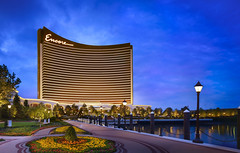
You’d expect the arrival of a category-killer like Wynn Resorts’ $2.6 Encore Boston Harbor to shake up the status quo in any regional gaming market𑁋and that’s precisely what’s happening, in the early going at least, in coastal New England.

In the first month, Encore grossed $48.5 million in gaming revenue, with $27.4 million coming from table games and $21.1 million from slot machines. The casino paid $12.1 million to the state in taxes.

But Encore’s impact on neighboring casinos was substantial.

Connecticut’s Foxwoods reported a 11.2 percent dip in slot revenue, while Mohegan Sun was hit even harder with a 15.1 percent decrease.

Foxwoods and Mohegan Sun ramped up promotional spending to counter the obvious threat to their premium table games business. No surprise there.

In neighboring Rhode Island, Twin River Worldwide Holdings wrapped up its second quarter with the expectation that combined 2019 operating income at its flagship Twin River Casino Hotel, which serves the greater Providence market from the town of Lincoln, and its smaller Tiverton Casino Hotel farther south, could drop by 10 percent.

No surprise there either, considering that in July, Encore’s first full month of operations, revenue from Twin River’s 4,000-plus machine games fell 17 percent compared to last year, while win from its 125 tables was down a whopping 34 percent.

This was worse than management and the analyst community had anticipated when the Q2 numbers were released. Coupled with news reports that management will be looking to lay off some tables staff, it was enough to send investors running for the exits. The stock (NYSE: TRWH) fell roughly 10 percent as early August unfolded, and currently is down more than 30 percent from its peak in April, when TRWH started life as a public company via a merger of the Rhode Island properties and Delaware’s Dover Downs Hotel & Casino.

Yet experts say it would be a mistake to write off the Rhode Island portfolio, and Twin River in particular, as inevitable casualties of the Las Vegas-scale competition Wynn has brought to metropolitan Boston.

That’s certainly the view of Frank Fantini, a noted publisher of gaming industry research and a long-time investment advisor in the space. “There has been a lot of speculation at this point. I think if you look at the results so far, it’s only been one quarter, and for the slow summer period this is normal.”

Stifel analysts Brad Boyer and Steven Wieczynski agree. “Call us crazy, but we are sticking with our Buy rating on TRWH shares following in-line 2Q19 earnings and news of Encore Boston’s greater than anticipated impact on the company’s flagship Lincoln, R.I., property,” they wrote in an August 13 research note obtained by GGB News.

Of course, the analysts are looking at share price as a function of TRWH’s broader prospects, and what they see is a well-managed mid-sized player in regional gaming nationwide with a solid balance sheet, access to capital, plenty of free cash flow, $170 million on hand to return to shareholders through buy-backs and a track record of growth through strategic M&A𑁋think Dover Downs and Hard Rock Biloxi, and last year’s deal with Century Casinos to acquire three properties in Black Hawk and, most recently, a $230 million all-cash deal with Eldorado Resorts to add Isle of Capri Kansas City and Lady Luck Vicksburg to the portfolio.

As Boyer told GGB News, “This isn’t a company that will be generating 70 percent of EBITDA from Twin River.”

But there’s a bigger picture framing Twin River, too, he says, and certainly it’s shifting, and will continue to do so as Encore ramps up. Yet, he wonders whether the longer-term fundamentals really have altered all that much.

“I think Twin River has locked down a convenience market, if you will, especially when you branch out from northern Connecticut, that market north to the coast. That’s always been fertile land for Twin River.”

He believes Twin River, a racino originally and a fixture of New England gaming since 1992, enjoys a “first mover” advantage that can’t be discounted, and geographically, a deeper, closer-in relationship with its core customer of machine gamers. That consumer demographic will reassert itself when fall arrives, they curtail their travel, and the convenience factor kicks in.

“Twin River obviously doesn’t have the amenities set of a Vegas-style resort property, and Encore comes into the market with a property that’s as good as anything on the Las Vegas Strip,” said Boyer. “If you’re a high-end table player really there’s no reason to go to Twin River. Especially on the table games side, players want the amenities, they want to be pampered, to be sent of Vegas, and all the rest of it. In that respect, Encore is probably hitting (Foxwoods and Mohegan Sun) more than anything. They’re really the only other resort-oriented properties in the market.”

Fantini said, “It’s going to be interesting as time moves on to see the impact of Encore on Foxwoods and Mohegan Sun, because they’re much more of a competitor in table game play.”

For Boyer, it’s instructive in this respect to look at Plainridge Park Casino in southeast Massachusetts, which took a percentage hit on the slot floor in July very similar to Twin River’s.

“Speaking with management there, they don’t expect that to hold. They think it should moderate,” he said. And he expects this will apply across the state line as well, where “weather and traffic favor Twin River.”

“One of the things I found interesting on the Wynn (second quarter) call,” Fantini noted, “they talked about the slots at Encore, they didn’t say they were bad on slots, but they did say they were looking for improvement. I think you can infer that they were disappointed.

“We don’t know what’s going to be true in six months, but the results so far are pretty much what you’d expect: the high-end companies are going to be stronger on tables, and mid-range companies like Twin River are going to be stronger on slots.

“Twin River can be happy being mainly a slots operation. Which is how they started.”

Atlantic City Sees Spurt in Casino Revenue, Sports Betting Revenue

July was another positive month for New Jersey’s gambling industry with Atlantic City casino revenue and statewide sports betting revenue increasing compared to 2018.

Atlantic City casinos took in $323 million, an increase of 7.8 percent from July 2018. Though it breaks a long streak of monthly double digit increases in revenue, July was the first month that revenue was compared to a full nine-casino market in the city. The Hard Rock Atlantic City and Ocean Casino Resort both opened in late June 2018 and immediately invigorated the market.

The state’s total sports betting handle—which includes sports books at the Meadowlands Racetrack and Monmouth Park racetrack—was more than $251.3 million with more than $213 million bet through online or mobile apps.

Overall, sports betting generated $6.82 million in revenue for the casinos and $17.88 million statewide. Year to date, Atlantic City casinos and their online/mobile sports betting partners have generated more than $48 million in revenue. Statewide, sports betting has generated $127.5 million in revenue, according to the Press of Atlantic City.

Online gambling brought in more than $39 million, an increase of nearly 52 percent from last year. Among internet-only entities, Resorts Digital took in $10.5 million in July, up nearly 169 percent from a year ago, and Caesars Interactive-NJ won just over $5 million, up nearly 35 percent, according to the Associated Press.

July was an especially good month for the Borgata Hotel Casino & Spa in Atlantic City. The casino took in nearly $88 million in casino and sports betting revenue. That’s a record for the casino—which just opened a new $12 million sports betting facility—and a 15 percent increase over 2018.

The Ocean Casino Resort took in $20.1 million from gamblers in July, up 18 percent from 2018. The figures indicate the casino, now under new ownership, has reversed its fortunes after losing money for its first several months of operations.

Hard Rock Atlantic City took in $40.7 million in July, an increase of nearly 25 percent from its first month a year ago. The Golden Nugget won $34.5 million in July, up 17.4 percent and Resorts, at $18.1 million, was up 1.8%.

The numbers, however, spell continuing trouble for Caesars Entertainment casinos. The company through its merger with Eldorado Resorts now owns four Atlantic City casinos,

According to an AP analysis of figures released by the New Jersey Division of Gaming Enforcement; Tropicana won nearly $33 million, down 11 percent and Harrah’s Atlantic City won just under $30 million, down 5 percent from a year ago. Caesars, brought in just under $25 million, down 15.2 present and Bally’s, at $18.2 million, was down 11.3 percent.

So far this year, the casinos have taken in $1.84 billion, an increase of more than 18 percent from the same period last year.

Massachusetts Mayor to Casino Committee: Get to Work!

Springfield, Massachusetts Mayor Domenic J. Sarno last week issued an executive order ordering the region’s Casino Advisory Committee conduct its first meeting by September 30—more than a year late.

The committee was supposed to have convened in August 2018, when MGM Springfield first opened. Quarterly meetings were then required under the city’s 2013 host community agreement with the $960 million MGM casino.

In a news release, Sarno stated, “The Advisory Committee will help make sure that both MGM Springfield and the City of Springfield are successful through the promotion of economic development initiatives involving travel, tourism, business development and job creation.”

In June and then again in August, Johnny Ray McKnight, a member of the 11-person committee, complained to the Massachusetts Gaming Commission that the body had never met, according to Masslive.com. Other members of the committee were appointed by Sarno, the Springfield city council, MGM Springfield and the Springfield Regional Chamber of Commerce.

In his complaint, McKnight suggested that the gaming commission fine the city and MGM Springfield.

Instead, Sarno took the lead, saying he was doing so “by authority vested in me as Mayor of the City of Springfield.”

Meanwhile, MGM will celebrate its first year of operations in Springfield on Saturday, August 24. The event will include appearances by the New England Patriots Cheerleaders, and Mayor Sarno and MGM Springfield President Michael Mathis will lead a “Happy Birthday” sing-a-long before blowing out the candles on a five-tier birthday cake. MGM Springfield will also host Aerosmith in concert at the nearby MassMutual Center.

Celebrate Labor Day with Cocktails and a Cruise

Usher in Labor Day weekend with the annual Atlantic City Cinefest Happy Hour Cruise fund-raiser aboard the iconic Cruisn 1 on Friday evening, Aug. 30, 2019. The one hour journey around the back bay departs the dock at Historic Gardner’s Basin at 6 p.m. Boarding begins at 5:30 p.m.

“We had a great time last year and raised a lot of funds too,” says Joelle Sokolic, president of the non-profit Cinefest.

The Cinefest is partnering with Atlantic City Cruises to raise funds for the 2019 event, Oct. 4 to 6. The organization earns 50 percent of each ticket sold on behalf of the festival.

Tickets for the cruise only are:

  • $20 for adults
  • $15 for seniors 62 and over
  • $10 for children 5 to 15.

A full cash bar is available or patrons can purchase the Cruise-n-Cocktail Package for $40, which includes house drinks, wine, beer, and soda.

“This calm water cruise is ideal, a relaxing cruise with great music and specialty cocktails that heads behind Brigantine Cove and into the Golden Nugget Marina,” says Captain Jeff George, president of Atlantic City Cruises. “What a great way to start the Labor Day Weekend.”

To reserve a place on the cruise, contact Joelle Sokolic, 609-515-2189 or jsokolic7@yahoo.com. To pay in advance and insure a ticket, contact Joelle to arrange for payment via Venmo. If spots are available, you can pay at the dock prior to the cruise. Cash only.

Atlantic City Cinefest, presented by Downbeach Film Festival, celebrates the art form of independent movie making. For more information, visit atlanticcitycinefest.org.

Cruisn 1 is operated by Atlantic City Cruises located at Historic Gardner’s Basin, 800 N. New Hampshire Avenue. For more information, visit atlanticcitycruises.com

Podcast with Joe Lupo, President, Hard Rock Atlantic City

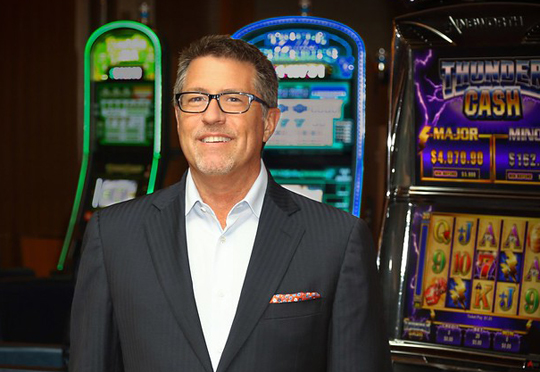
Joe Lupo spent 30 years with Boyd Gaming, most of it at the Borgata in Atlantic City where he held a variety of senior position. He joined Hard Rock International in 2017 when he was appointed to lead Seminole Hard Rock Tampa, one of the most profitable casinos in the U.S. He was brought into run Hard Rock Atlantic City in October 2018 just four months after the opening of the property. He has boosted revenues and cut costs using his extensive knowledge of the Atlantic City market. He spoke with GGB Publisher Roger Gros at his offices in the Hard Rock in July.

Atlantic City Sale Possible in Caesars-Eldorado Merger

Observers and analysts are studying the quarterly results filed last week by merger partners Caesars Entertainment and Eldorado Resorts for clues into the future of some of the casinos involved in the $17.3 billion tie-up—particularly in Atlantic City.

The Las Vegas Strip has taken up of much of the discussion about which of Caesars’ assets will be sold after the merger is consummated next year. More recently, though, the speculation has gravitated East.

Caesars owns three of the nine casinos in Atlantic City, a market that’s proving something of a drag on the company’s results, as the second quarter showed. While net revenues company-wide increased by 4.9 percent, or $103 million, compared to the 2018 quarter, they were down $47 million outside Las Vegas.

CEO Tony Rodio, formerly the chief executive officer of Tropicana Atlantic City, now owned by Eldorado, lauded the “solid results” achieved in the quarter, but noted they were “partially offset by competitive pressures in Atlantic City and other parts of our regional portfolio.”

Specifically, he said the three Atlantic City properties—Bally’s, Caesars and Harrah’s—“underperformed” compared to the other four casinos that were operating before last summer’s openings of Hard Rock Hotel & Casino Atlantic City and Ocean Casino Resort.

“Call me crazy, but I think we can improve things in Atlantic City a little bit,” he said.

It could be that the company needs to spend more money, he said.

“Particularly at Caesars Atlantic City, not so much at Harrah’s, I think that we could be deploying a little bit more capital dollars to create some incentives and some non-gaming amenities that give people a reason to come and visit our property. If you look at the properties that are successful—and I think Hard Rock is turning it around a little bit—it’s properties that have reinvested in the experience. And I think that we have failed to do that over the last couple of years.”

Eldorado, which entered Atlantic City last year with its acquisition of Tropicana Entertainment, reported net revenue down 3.5 percent year on year in its East Region portfolio. On the plus side, though, both operating income and EBITDA were up, indicating that Tropicana Atlantic City, unlike its Caesars competition, didn’t lose market share. In fact, 12-month EBITDA was “almost identical” to where it was before Hard Rock and Ocean opened, CEO Thomas Reeg said.

Eldorado, which has pursued an aggressive acquisitions strategy to grow from its Reno, Nevada roots to become a regional gaming powerhouse with 26 casinos in 12 states, reported second-quarter revenue of $637.1 million—a 39.5 percent increase over the same period in 2018—and record cash flow of $178.7 million. On the flip side, net income was down 48.7 percent to $18.9 million.

When the merger was announced last month, Reeg said he believed the new company could realize almost $500 million in synergies. He reiterated that point on Eldorado’s second quarter earnings call, leading some observers to suggest a sale of one of Caesars’ Atlantic City casinos is more possible than not once the merger is completed.

“If they sold an asset in Atlantic City, it wouldn’t be bad,” Robert Heller, CEO of Spectrum Gaming Capital, told The Press of Atlantic City. “They have too many assets. And they have now Tropicana, Caesars, Bally’s and Harrah’s, (and) that’s an awful lot of concentration in Atlantic City. So I think it’s a decent chance that they’ll sell one.”

Which does not preclude the likelihood that at least one of Caesars’ nine Las Vegas Strip resorts could also wind up on the block as well. In that regard, Reeg didn’t drop any clues on the call except to note that “operators not on the Las Vegas Strip that want to be on the Las Vegas Strip” have expressed interest.

Caesars could also sell assets on its own, a possibility, Reeg noted, that is not yet in Eldorado’s control.

Puerto Rico: Political Storms Could Stall Sports Betting

It was only a couple of months ago—April, to be exact—when Puerto Rican Governor Ricardo Rosselló shared his plans for a legal sports betting industry with Global Gaming Business, Casino Connection’s parent company.

In an interview with GGB publisher Roger Gros, Rosselló said he would bring legal sports betting, eSports and online gaming to the tiny commonwealth, set in the Caribbean about 1,000 miles southeast of Florida. He foresaw an industry that would restore jobs and help boost the island’s economy, devastated by Hurricane Maria in 2017.

But the legalization of sports betting may have been the last chapter of Rosselló’s public service career. In July, a series of vulgar text messages sent by the governor to his cronies in government went public. In the messages, he insulted women, homosexuals and U.S. lawmakers, and even ridiculed the suffering of Puerto Ricans in the aftermath of Maria, the Category 5 storm that killed almost 3,000 people.

Rossello apologized, and at first refused to resign. But eventually he bowed to public outrage and stepped down on July 24.

His sports betting legislation is now law, but the turmoil he left behind may stall the games package indefinitely, according to Brendan Bussman, partner and director of government affairs for Global Market Advisors, one of several U.S.-based firms that compiled studies of the nascent market.

“If not for the political forces on Puerto Rico right now, I think you could arguably have sports betting by the Super Bowl,” in February 2020, said Bussman. That timeline will certainly be a challenge, he added, “considering that within the last week, there have been three governors.” Rossello’s hand-picked successor, Pedro Pierluisi, came and went fast, and was replaced by Justice Secretary Wanda Vasquez, who may herself be replaced.

Currently there are 16 casinos in Puerto Rico as well as horserace betting. Betting on professional sports leagues hit the legislative front burner last summer, when the U.S. Supreme Court overturned the Professional and Amateur Sports Protection Act. That move opened the door to legal sports betting for states on the mainland and also in Puerto Rico, a U.S. territory.

Brian Wyman, principal consultant for The Innovation Group, which also conducted a study of the market, told GGB News last week that he has several recommendations for lawmakers who will be charged with building the regulatory framework for the new industry.

“If the goal is a healthy market, the tax rate needs to be in a range that allows operators to invest in their mobile and online platforms, invest and reinvest in their customer base, and invest in things like marketing,” he said. “Really high tax rates inhibit the operators’ ability to do that to the point that some in Europe have bowed out of the market.”

He said a tax rate “in line with Nevada’s” is a good place to start.

“The other thing we recommend: not having a monopolistic marketplace,” as competition spurs reinvestment, fair pricing and innovation, he said.

Rather than cannibalizing casino revenues, the TIG study noted, “sports betting activates a different demographic of customer than traditional slots and table games, and we actually forecast revenue upside from the increased casino visitation.”

Puerto Rico is “quite an attractive market with a big sports culture that’s essentially untapped,” said Wyman. “It’s also a destination market. You can imagine people traveling there for a Super Bowl party, March Madness or the fantasy football draft.”

While sports betting is seldom a revenue bonanza, there’s a reason the industry is spreading quickly across the United States (according to a CNBC report, by this time next year half of the 50 U.S. states may offer legal sports betting). The wagers bring in a new, energetic, and often younger customer base that tends to spend beyond the sportsbook, splurging on booze, food and entertainment, especially during peak sports seasons.

The TIG study forecasts revenues of $11 million to $29 million in fiscal 2019-2020 (the study was completed in March, before the current political upheaval), rising to as high as $87 million in fiscal 2023-24, depending on whether sports betting is allowed at casinos only, on mobile only, or is permitted at casinos, racetracks, OTBs, gallerias and mobile/online.

The GMA study estimates that land-based sports betting could generate $5.4 million in the first year and about $7.4 million by 2022. “I think legislators think, hey, sports betting is going to generate a lot of money, but they’re basing that on the amount people are wagering opposed to what is actually generated off that. Ninety-percent of every dollar goes back to the bettor in the form of payouts; that only leaves about 5 percent. After taxes, operations, marketing and all that, the numbers are small.”

It’s a drop in the bucket given Puerto Rico’s financial straits; in 2017, the government sought bankruptcy relief in federal court, the first time in history that a U.S. state or territory took that step. Lawmakers are working to restructure $120 billion in debt and pension liabilities. Add that to the devastation from Maria, which caused a reported $43 billion in damages.

“Obviously, this is not going to be a panacea for them, but a small piece of the pie,” observed Michael Soll, president of The Innovation Group. “Mostly it boils down to being the right thing for the island, repatriating some of the revenues” lost to black-market betting.

To succeed at all, the product must be compelling enough to draw sports bettors away from illegal bookies, Bussman said. But first the island must sort out its political mess—a process that will take a while.

“I still believe that if they could move forward, things would be able to get up and going in the next six months with the right regulatory structure,” Bussman told GGB. “But I think we’re in a holding pattern until the new governor gets through the turmoil of the last few months. She has a large task ahead of her to clean up the corruption that has occurred and regain the public’s faith in its government.

“I don’t see sports betting moving forward until those items get cleared up.”

Top Supplier Predicts PA Will Soon Surpass NJ in Sports Betting

The U.S. director of Kambi, the global supplier that provides sports betting

technology for three Pennsylvania casinos, predicts that the state, now deploying mobile and online sports wagering, will soon surpass New Jersey in sports betting handle.

Kambi U.S. Director Max Bischel said at an industry panel last week that the state will surpass New Jersey as the U.S. leader in sports betting within a year.

Kambi provides the platform and technology for retail sportsbooks at Parx Casino and for Rush Street Gaming’s SugarHouse in Philadelphia and Rivers in Pittsburgh.

Speaking at a Las Vegas conference, Bischel said he saw the amount wagered online “grow exponentially” in the weeks since the state has implemented mobile wagering.

“You take the fifth largest state and allow them to bet online and it becomes a game-changer in some respect,” Bichsel said. “It’s a significant multiple of what we see at retail. It’s very exciting. The size of the market is dramatically larger than what some have expected.”