Author: Casino Connection Staff

Deal Reportedly in Works for Sports Betting at New Jersey Track

Developer Cherry Hill Towne Center Partners has said in a court filing that it’s close to a deal with a company to operate a sportsbook at the former Garden State Park site in Cherry Hill, New Jersey. But the former operators of the track are trying to block the opening of a sportsbook at the site.

The defendants, including Greenwood Racing, operator of the Parx casino north of Philadelphia, say that a 1999 document permanently forbids any wagering activity on the site other than by Garden State Park Racing and its affiliates or successors. Greenwood has asked a judge for a preliminary injunction against the developer. A ruling could come in the next two months.

The fight began after New Jersey passed a sports betting law in 2018 that allowed sportsbooks at racetracks, including two that are closed—Garden State Park and Atlantic City Racecourse.

Garden State Park hasn’t seen racing since 2001. Since then, Cherry Hill Towne Center Partners has developed part of the area as a mixed-use residential and retail center. The company sued last year for the right to open a sportsbook on the site of the former racetrack’s oval.

According to the Associated Press, the developer wrote in a court brief that it “expects to select one of the potential sports wagering operators shortly” and has begun to build a facility to hold a sportsbook.

The company claims the dispute over the 1999 document can’t stop it from applying for a sports betting license with the state and also noted that one of its controlling members, Jack Morris, also is an owner of the Hard Rock Atlantic City casino and is in good standing with state casino regulators, the AP report said.

Churchill Downs Announces Corporate Expansion

In a recent conference call with analysts, Churchill Downs Chief Executive Officer Bill Carstanjen revealed that the Louisville facility will enclose the racetrack’s first turn area to build a hotel, a historical horseracing machine facility and premium seating for live racing. Carstanjen did not indicate the cost of the project but said the expansion should be completed in time for the 2021 Kentucky Derby.

In addition, he said Churchill Downs plans to expand Rivers Casino Des Plaines near Chicago; it purchased a 61 percent stake in the property for $407 million in March, and also will pursue of one of six new casino licenses allowed in Illinois’ new gambling expansion bill.

The plans highlight the success of the 10-month-old Derby City Gaming venue at Churchill Downs, featuring 1,000 historical horseracing machines. The location netted Churchill Downs $9 million on $21 million in revenue in the April-June quarter. “You can’t argue with a 42 percent earnings margin. It’s great,” Carstanjen said. The new historical horseracing facility also could offer up to 1,000 terminals, or more if the company can prove to the Kentucky Racing Commission “there is a market.”

Carstanjen added, “We obviously have a tremendous opportunity to utilize a hotel and that infrastructure around the Derby, but really, our meet as a whole. Anytime the Churchill Downs Racetrack is running is an opportunity to help fill the hotel. A big driver of the hotel will also be the attached historical racing machine facility. As you’re familiar, when you have an amenity like a hotel, you can keep guests longer and you can attract additional guests to the facility.”

Since 2010, Churchill Downs has spent $180 million on renovations and expansions, including a rooftop lounge, starting gates, new infield gate, large parking lot and new entryway on the racetrack’s west side.

Carstanjen said the Rivers Casino project will include adding 800 positions, for a total of about 2,000. The company will pay $24 million in licensing fees next year for the additional games allowed in the new gambling legislation, lifting the limit from 1,200 positions. Churchill Downs also will build a sportsbook, extend the parking garage and expand the gaming floor.

“To install the full 800 positions, Rivers will need to expand the existing building footprint, construct an extension of the parking garage and invest additional capital to support the expansion. However, Rivers can install approximately 200 to 250 additional positions quickly within its existing space,” said Carstanjen.

He noted the company also will apply for up to 1,200 gaming positions at its Arlington International Racecourse. The new expanded gambling law allows racetracks to add slots and table games. Carstanjen said, “The timing and full scope of the plan are still being sorted out.”

Also, he said Churchill Downs will pursue one of Illinois’ six new casino licenses at a cost of $10 million, but didn’t specify if the company would target the 4,000-position Chicago casino or a location in the south suburbs, Rockford, Danville, Waukegan or Williamson County.

“Illinois is really a puzzle because for anybody involved in the jurisdiction trying to figure out their plans—there are things you don’t know, like what your competitors are going to do, how many positions they might apply for and precisely where some of these new casinos are going to go, particularly in the Chicagoland market,” Carstanjen said.

Since it opened in 2011, Rivers Casino has generated far more revenue than any other Illinois casino. It posted about $442 million in adjusted gross receipts in 2018 and took in more than $219 million by the end of June, according to Illinois Gaming Board records.

Senate Committee OKs Simermeyer for NIGC

Senator John Hoeven, a North Dakota Republican and chairman of the Senate Committee on Indian Affairs, announced last week that the committee has approved the nomination of E. Sequoyah Simermeyer to serve as chairman of the National Indian Gaming Commission (NIGC).

“The committee unanimously voted to confirm Mr. Simermeyer, a member of the Coharie Indian Tribe of North Carolina to serve as chairman of the National Indian Gaming Commission,” said Hoeven in a statement. “Given his legal background, work experience, and current position at the NIGC, Mr. Simermeyer is well qualified for this appointment. I look forward to the moving his nomination to the full Senate for confirmation.”

On his nomination by President Donald Trump in June, Simermeyer received endorsements from many quarters including Interior Secretary David Bernhardt, who called him “the ideal candidate… I urge Congress to confirm him quickly.”

Earlier in his career, the nominee was counselor and deputy chief of staff to the Department of the Interior’s Assistant Secretary for Indian Affairs. He was also counsel for the Senate Committee on Indian Affairs.

Simermeyer is a graduate of Dartmouth College, Vermont Law School and Cornell Law School. Oklahoma attorney Gary Pitchlynn told Casino.org that the NIGC chairman “sets the tone for the relationship of the commission with tribes while policing the industry” and has “significant authority” under IGRA as the “first-line decision maker” in enforcement actions. He said Simermeyer “has a great deal of experience working with Congressional staff and tribes and can provide strength and credibility to the commission’s relationship with both.”

Colorado attorney Rory Dilweg said Simermeyer “has always been a fierce and compassionate advocate of Indian tribes. I expect he will remain so in his new position as chairman even while he must uphold the letter and intent of the Indian Gaming Regulatory Act.”

The NIGC oversees some 512 tribal gaming venues operating in 29 states. There are 114 full-time employees who work out of seven regional NIGC offices. The commission’s budget was about $25 million in the 2019 fiscal year. Its operations are funded through fees paid by tribal gaming operations.

If approved by the full Senate, Simermeyer will succeed Jonodev Osceola Chaudhuri in the role. Chaudhuri, a member of the Muscogee (Creek) Nation, left to become chairman of the Indian Law and Policy Group at Quarles & Brady in Washington, D.C.

The NIGC has jurisdiction over 512 licensed gaming establishments operated by 246 Indian tribes in 29 states. In fiscal year 2017, tribal gaming revenues reached approximately $32.4 billion. The commission currently has 114 full-time employees in seven regional offices wand operates with an annual budget of $25 million. The budget is funded through fees paid by tribal gaming operations and can be up to 0.080 percent of gross gaming revenue in keeping with the Indian Gaming Regulatory Act.

New York’s Empire Resorts Considering Bankruptcy

Unless Genting Malaysia acquires a controlling stake in Empire Resorts with plans to take the parent company of New York’s struggling Resorts World Catskills private, Empire has informed the Securities and Exchange Commission that it may have to declare bankruptcy.

Genting Group already exercises indirect control over publicly traded Empire (Nasdaq: NYNY) through Kien Huat Realty III, a family trust headed by Genting Chairman and CEO Lim Kok Thay and Empire’s majority shareholder.

The acquisition appears to signal that the global resort conglomerate has decided to take a direct role in managing the fortunes of Resorts World Catskills, which opened in February 2018 as the largest and most expensive of New York’s four new commercial casinos. It has failed to live up to its billing as the market’s category-killer and has lost millions of dollars every quarter.

Genting Malaysia, the group’s Kuala Lumpur-traded subsidiary, has proposed to invest US$128.6 million in cash through its Genting USA subsidiary to buy 13.2 million of Kien Huat’s Empire shares, representing roughly a 33.5 percent of Empire’s equity.

Genting USA and Kien Huat also propose to acquire the outstanding shares held by Empire’s minority shareholders for $9.74 a share, which will lead to Empire’s privatization as a joint venture between Kien Huat and Genting USA.

With 332 rooms and suites, 1,600 machine games and 150 live table games, Resorts World Catskills is, for all intents and purposes, Empire’s sole meaningful asset. The company closed its 1,100-machine racino at nearby Monticello Casino and Raceway earlier this year, and the ailing harness track that remains also faces an uncertain future.

Empire, meanwhile, has been losing money for years—2018’s net loss exceeded $138 million—and Resorts World has been its biggest disappointment. Despite being the closest of the commercial casinos to New York City, about 90 miles north of the metropolis in Sullivan County, its daily slot win is the lowest of the group, and earlier this year, it was granted approval from state regulators to slash its machine gaming inventory by 550 units from the 2,150 it opened with.

Kien Huat says the company is “unable to become financially self-sustaining” and stands at a “critical juncture”—thus the move by Genting Malaysia to take the operational reins.

Genting Malaysia said the acquisition will “better position” the Resorts World brand in the Northeast gaming market “through more effective cross-marketing” with Resorts World New York City, the mega-racino at Aqueduct Racetrack in Queens that is owned by another Genting Group subsidiary.

Genting said also that it plans to save money “by eliminating duplicative costs at Empire and RWNYC.”

Better Days Ahead for Illinois Track

When Jon Sloane first heard that the Illinois state legislature had approved an expanded gaming bill, he said, “Frankly, our first reaction was now let’s hope Governor Pritzker signs it.”

Other gaming bills under previous governors had come and gone, said Sloane, spokesman for Fairmount Park racetrack in Collinsville. “But we were confident (Pritzker) would sign it,” said Sloane. “He had been very encouraging before the bill passed.”

Not only did Pritzker sign the bill, which allows the 94-year old racetrack to offer casino-style gaming and sports betting, he also stopped by to celebrate. At the ceremony, Sloane said, Fairmount Park honored a 94-year old employee who has worked at the track 67 years.

The changes at Fairmount Park won’t happen immediately. “We hope to build a casino in 2020, but keep in mind, the first thing is various administrative bodies have to set up the parameters and procedures. It’s a massive undertaking at the beginning,” Sloane said. “But then our intent is to be up and running as soon as possible.”

Fairmount Park owners will invest about $50 million to upgrade the venue, he said. “It’s going to be a very big deal. It’s very exciting. We’ve been trying at least 20 years to get just slots, and this bill gives us everything we possibly could have wanted. But it’s still going to take a great effort and a big investment to physically transform the place.”

Pritzker said the expanded gaming measure will result in “more horses, more races, more days—and that means more jobs to this area.” State Rep. Jay Hoffman, whose 113th House District includes Fairmount Park, said, “The beauty of the bill is it also provides a very specific number of live races required to receive the additional gaming. So there has to be a minimum of 100 racing dates, up from 41.” In the past, he said, some of those races had fields of only four horses.

Hoffman old GGB News, “Illinois is the only state in the U.S. with casino gaming and horseracing without either revenue-sharing to help the racing purses or gaming at the tracks. As a result, the horseracing industry has gone through a steady decline. At Fairmount, we were just hanging on against great odds. We couldn’t offer the purses that attract the top horses. They’d go to Arkansas or Indiana to get bigger purses. This new law is a total game-changer.”

Hoffman, who was instrumental in getting the new law passed, explained why the timing was right, at last. “Three things occurred that made it a reality. First, we got a new governor who was interested in making sure the horseracing industry remained viable. Second, the gambling revenue will help pay for the governor’s $45 billion infrastructure program.”

Third, Hoffman said, “We were very vocal that we wouldn’t support further casinos, including one in Chicago, without making sure the horseracing industry would benefit from allowing expanded gaming at the racetracks. So there was the willingness and the need to find revenue for a capital bill. It all came together, things we had been working on for two decades.”

Sloane said casino gaming and sports betting are sure to attract new visitors from the St. Louis area. Pritzker emphasized, however, “Our goal is to expand the market, not to cannibalize from other casinos.”

Despite the challenges it’s faced, Fairmount Park has consistently had higher attendance per racing date than the other two tracks in Illinois, Arlington International Racecourse in Arlington Heights and Hawthorne Race Course in Cicero. “There’s a lot of interest in horseracing in the metro St. Louis area,” said Sloane. “All you have to do is go to Fairmount Park on a Tuesday afternoon.”

Can the lawmaker occasionally be spotted in the stands? “I enjoy it but I’m not very good at picking horses,” Hoffman said. “I like watching the crowds.”

MGM Springfield Faces Blackjack Suit

Blackjack players have filed a class action lawsuit against MGM Springfield in Massachusetts, saying it’s paying less than state regulations permit on winning hands at some tables.

The lawsuit, filed last week in Hampden Superior Court, echoes a similar suit filed recently against Wynn Resorts’ Encore Boston Harbor.

MGM Springfield denies the allegations and said it follows state regulations on the payouts. “We comply with all Massachusetts Gaming Commission regulations and feel confident that this lawsuit will be found to have no merit,” said MGM Springfield spokesman Saverio Mancini.

The lawsuit alleges that the casino paid customers odds of 6-to-5 when a player was dealt a blackjack. According to Massachusetts Gaming Commission rules, winning bets pay out 1-to-1 unless the player is dealt a blackjack, in which case the winning bets is paid out at odds of 3-to-2 or odds of 6-to-5. The odds are posted at each table.

In response to the suit against Encore, the Massachusetts Gaming Commission investigation and Enforcement Bureau issued a memo July 18 explaining the two different blackjack variations and it included photos of the odds on the blackjack table.

Elaine Driscoll, spokeswoman for the Massachusetts Gaming Commission, told MassLive.com that the commission is aware of the lawsuit and is determining the next steps.

Six Developers Compete For Waukegan Casino

The Chicago Director of Planning and Economic Development received six proposals for a Waukegan, Illinois casino by the August 5 deadline. The proposals include one from Potawatomi Hotel & Casino, operators of a Milwaukee gaming resort and Warner Gaming, partnering with Tap Room Gaming owner and former state Senator Michael Bond.

Potawatomi Hotel & Casino is owned and operated by the Forest County Potawatomi Community in northern Wisconsin. Chief Executive Officer and General Manager Rodney Ferguson said, “Having successfully operated in this gaming market for several decades, Potawatomi Hotel & Casino is a natural fit to develop this project and create the entertainment destination that Waukegan is seeking.” He noted its Milwaukee casino is one of the largest entertainment destinations in the Midwest with 6 million annual visitors.

Ferguson said the Waukegan Potawatomi Casino would be located at the Fountain Square development in Waukegan; the city has been holding the 32-acre site it owns specifically for a possible casino. He said a Waukegan casino would likely impact Milwaukee casino revenue, but that would happen if the Potawatomi or another developer operates the casino. “Our job is to minimize the impact,” he said.

Bond, noted for record-setting spending during the Waukegan alderman races this spring, said he expects the city’s selection process to be “fair, open and transparent.” He said his group’s proposal has the “winning formula” since it emphasizes partnerships with local restaurants, local hiring and the “great team” it established.

Bond’s partner, Warner Gaming, is noted for its locally specific approach to developing its facilities, Chief Executive Officer Bill Warner said. He stated his company could set up a temporary casino within four months of receiving a gaming license from the state—but only if it’s the city’s sole selection. Then construction could begin on the permanent location as early as April 2020. However, Warner said, if the city chooses to send several choices to the state, the schedule could be pushed back up to a year and a half.

Next, Waukegan city staff will vet the casino-license applicants and come up with a short list around August 26. Interviews with the remaining candidates will take place after Labor Day and a public hearing will be held in September. The Waukegan city council will forward their chosen finalists to the Illinois Gaming Board by October 25.

Rivers Celebrates 10 Years

On August 9, Rivers Casino Pittsburgh marked its 10th anniversary.

Rush Street Gaming and Walton Street Capital rescued a stalled Pittsburgh casino project from bankruptcy, rebranded it as Rivers and opened on August 9, 2009 with 3,000 slot machines, a handful of restaurants and a significant list of community commitments.

Ten years later, Rivers Casino Pittsburgh is among the city’s most vibrant and vital entertainment destinations thanks to continually expanding its value proposition and ongoing property-wide enhancements. “Time and time again, it’s proven to be a great place to work, a strong economic engine and a proud community partner,” said a press release from the company.

Today, Rivers Casino Pittsburgh welcomes approximately 3 million guests annually. Rivers has repeatedly been recognized with awards for progressive workplace development initiatives, its steadfast community engagement, its restaurants and its robust gaming floor—a favorite of slot players, table players and poker players alike.

“A decade ago we saw great potential for Rivers Casino in Pittsburgh,” said Rush Street CEO Greg Carlin. “And we still do. The gaming industry is always evolving and increasingly competitive, and we’re committed to keeping Rivers Casino Pittsburgh at the forefront. We’re grateful to the community for its continued support.”

Rush Street Gaming and its affiliates own and operate Rivers Casino Pittsburgh, along with three other market-leading casinos in Philadelphia, Pennsylvania; Des Plaines, Illinois; and Schenectady, New York.

In the past year alone, Rivers Casino Pittsburgh opened gourmet burger and shake restaurant FLIPT; added the Event Center, a new 25,000-square-foot grand hall for concerts, expos and galas; debuted the state’s top-performing Rivers Sportsbook; launched mobile and online sports betting; and recently unveiled plans for the Landing Hotel, opening in 2021.

Rivers Casino General Manager Bill Keena said, “Rivers’ tremendous team members have been instrumental in advancing our shared vision. For example, we built and launched our temporary sportsbook in 43 days. And now we’re expanding with a permanent state-of-the-art sportsbook opening this fall, plus adding a hotel. Our team members move mountains.”

Rivers has celebrated its 10th anniversary all summer long with a series of anniversary-themed promotions, such as a $10,000 cash drawing, a $10 Monday-Tuesday lunch at the casino’s popular Grand View Buffet, $10 in free slot play for $10 donations to 10 local charities, and an anniversary weekend concert with Frankie Valli and The Four Seasons, Aug. 10 and 11.

Rivers’ approximately 1,700 employees have voted Rivers Casino a “Best Place to Work in Pittsburgh” and “Top Workplace” multiple times since opening. Rivers has lived up to its commitment to hire local, with 93 percent of its workforce from Pittsburgh and the surrounding area. Approximately 40 percent of Rivers’ total workforce are women, many in executive and management positions. And 33 percent are African American, Hispanic or Asian, comparing very favorably to the diversity of Allegheny County overall.

Approximately 164 employees have been with the casino since Day One, and Rivers has announced more than 1,400 internal staff promotions since opening.

Day One employees and their guests have been invited to a special 10-year appreciation and recognition dinner on August 13, during which Rush Street Gaming and property leaders will be on hand to personally thank them for their contributions.

Since opening in August 2009, Rivers Casino has generated more than $1.5 billion in total tax revenue for the city of Pittsburgh, Allegheny County and the state. Of that amount, $11.5 million has been distributed to Pittsburgh and Allegheny County libraries.

The Landing Hotel Pittsburgh, a $60 million privately funded addition that breaks ground this summer, is expected to generate approximately $10.6 million in new annual tax revenues for the city, the county and the state. The Landing Hotel will bring approximately 128 permanent new hotel and casino jobs, along with 1,400 temporary construction jobs. Local construction firm Massaro Corporation will build the hotel.

Importantly, Rivers has also contributed $75 million to fund construction expenses for the NHL Pittsburgh Penguins’ PPG Paints Arena to date, and will continue to pay $7.5 million annually through 2038.

Over the years, Rivers has contributed $5 million to various Pittsburgh and Western Pennsylvania nonprofits, benefiting more than 100 local charities annually. Rivers Casino also has contributed $3 million to the Northside Leadership Conference and $3 million to the Greater Hill District Development Growth Fund.

Rivers Casino “Community Champions” volunteer more than 2,000 staff hours annually around town for painting shelters, riverfront cleanups and more. The casino chooses a monthly charity partner for featuring and fundraising on its gaming floor, and Rivers Casino’s leadership team is engaged on nonprofit boards of directors throughout the city.

Raiders’ New Home Has a Name—Allegiant Stadium

The Las Vegas Raiders’ $1.8 billion Las Vegas home celebrated its topping off last week with the announcement that it will be called Allegiant Stadium. The Vegas-based airline emerged victorious from months of negotiations between the NFL team and other companies vying to place their brands on the 65,000-seat domed stadium that’s set to open by next year’s NFL season.

“It speaks volumes about the Raiders and their commitment to Southern Nevada to be able to pick a local Las Vegas-based company,” Allegiant Air Chief Marketing Officer Scott DeAngelo said. “There is clear demand for Las Vegas as an NFL destination.”

At a ceremony held at the carrier’s Summerlin headquarters, Raiders owner Mark Davis told Allegiant CEO Maurice Gallagher, “The Raider family is very tight, and we’re just excited for you to join ours. I think we’re in the middle of a great relationship. I look forward to learning a lot more about the Allegiant brand. We’ve got 30 years ahead of us, so let’s make the best of it.”

Raiders President Marc Badain saluted the airline, saying, “What you’ve built here is very, very impressive, and we’re really excited to see how you all grow and grow with us. Obviously, the stadium project will raise your brand and raise awareness (of the brand).”

DeAngelo said he expects more Allegiant flights to and from Las Vegas on weekends the Raiders have home games.

Founded in 1997 as WestJet Express, Allegiant currently flies direct from Las Vegas to eight markets with NFL teams.

“We did a lot of research and Allegiant fans are NFL fans,” DeAngelo said. “We’re here to make Allegiant Stadium and Raiders games more accessible to the customers and fans we all serve.”

The stadium, located at the southern end of Las Vegas Boulevard, just west of the Strip near Interstate 15, is reported to be 55 to 65 percent finished and on target to open on time for the 2020 football season.

The venue, which will also host the home games of the football team of the University of Las Vegas, Nevada and other large-scale events, was funded in part by the Raiders and in part by taxpayer-backed bonds.

Wilmott to Step Down From Penn

Tim Wilmott joined Penn National Gaming in 2008 when it was a relatively small regional casino company, controlled by Peter Carlino, who was the chairman and CEO at that time. The company had completed the purchases of Hollywood Casino Corp. and Argosy Gaming before Wilmott came on board.

Wilmott, who worked his way up through the Harrah’s organization, first as a prestigious president’s associate and later as a regional vice president, was the perfect candidate to organize the organizational efficiencies that were required following those mergers.

Wilmott has also be chairman of the American Gaming Association since 2018, and his term is about to expire.

In 2012 Carlino set up the first gaming real estate investment trust (REIT) Gaming and Leisure Properties Inc. (GLPI) that set the stage for subsequent acquisitions,.

Under Wilmott’s watch, the company bought the M Resort at the far southern end of Las Vegas Boulevard and in 2015 came closer to the Strip with the purchase of the Tropicana.

But the big buy came in late 2018 when Penn bought Pinnacle Entertainment for $2.8 billion in cash and stock. Several other properties were sold to obtain regulatory approval, but the GLPI connection made that deal possible.

Last year, Penn went to another REIT, Vici Properties, a Caesars spinoff, the buy the Margaritaville Casino in Bossier City, Louisiana and the Greektown casino in Detroit.

Replacing Wilmott will be Jay Snowden, another Harrah’s/Caesars alumni, who joined Penn as COO in 2014, becoming president in 2017.

Wilmott says the timing was right for the transition.

“It was important for me to leave Penn when it was well-positioned to continue to grow and create shareholder value for the foreseeable future,” Wilmott said. “We now have a geographic footprint that in the long-term will create value for our shareholders. I’m also leaving at a time where we have a very strong management team that continues to run the businesses more efficiently and more effectively than anyone else in the regional gaming space, as evidenced by our results today. And finally, it was important to me to be able to turn over the keys to someone I can trust, who can take Penn to higher levels of excellence and value creation for shareholders.”

Penn Chairman David Holder said the chemistry was right.

“Tim and Jay have partnered closely over the last eight years, laying a strong foundation for sustained long-term value creation at Penn National, making Jay ideally suited to serve as our next chief executive officer,” he said.

Snowden said he’s ready for the challenge.

“Along with our board, senior management, corporate and property teams, we will continue to build on the foundation laid by (former Penn Chairman and CEO) Peter Carlino and Tim Wilmott,” Snowden said. “We are entering a very dynamic time for our company and I couldn’t be more excited, honored and humbled to lead this amazing company into the future.”

CT Governor’s Plan Would Put an End to East Windsor Casino

Connecticut Governor Ned Lamont last week proposed a plan that would turn the aging XL Center in Hartford into a casino, hand it over to the state’s two federally recognized tribes to operate gaming at the arena, and also bringing legal sports betting and iGaming to the state. The plan is contingent on the tribes’ agreement to drop their proposal for a jointly-run casino in East Windsor.

According to the Hartford Courant, Lamont’s proposal would allow the Mohegan and Mashantucket Pequot tribes, operators of Mohegan Sun and Foxwoods respectively, to also open a casino in Bridgeport, advantageously located near the New York City and Long Island markets. MGM Resorts International had proposed a casino of its own in Bridgeport and has filed a lawsuit against the Department of Interior to block the plans.

According to MGM’s suit, filed last week, changes by Interior to the compact between Connecticut and the tribes “facilitate commercial, off-reservation gaming by the tribal joint venture anywhere in Connecticut and state legislators have recently proposed granting the joint venture an exclusive, no-bid license to operate a casino in Bridgeport, Connecticut.

“The amendments thus confer a statewide, perpetual competitive advantage on the joint venture,” MGM said.

An end to the East Windsor casino plan MGM’s goal; its $1 billion casino in Springfield, right across the state line in Massachusetts, has failed to meet expectations for revenues and profits, and its plan to build a $675 million casino complex on Bridgeport’s waterfront has never received approval by the legislature.

The tribes plan a gaming resort called Tribal Winds to be developed at the site of the former Showcase Cinemas in East Windsor, right across the state line from the MGM Springfield. Construction has not yet begun on the site.

Lamont’s plan has been rejected so far by the tribes, who have spent nearly $20 million in planning, design and demolition costs on the $300 million East Windsor casino.

Ryan Drajewicz, Lamont’s chief of staff, said the governor’s “primary objective” is to “do what’s best for the state of Connecticut, not the narrow interests that so often dominate this issue at the expense of the citizens of this state.”

In return for giving up East Windsor, officials said the tribes would also receive permission to run sports betting across the state and conduct iGaming.

The XL Center, built in in the mid-1970s, operated by the Capital Region Development Authority and Comcast Spectacor, reportedly needs hundreds of millions of dollars in repairs and renovations. If the tribes were to take over the XL Center, it would be upgraded and continue to host NCAA basketball and minor league hockey.

Mashantucket Pequot tribal Chairman Rodney Butler said, “We’re looking at a global solution—looking at sports betting, online gaming, extended liquor hours, casinos in Bridgeport, casinos in Hartford, and we’re trying to wrap it all into one conversation. It’s complicated.”

Lamont said he’s motivated to develop a plan that can succeed, sans legal challenges. “If this gets stuck in the legal muck like it’s been for the last five years, we’re not going to show any progress,” Lamont said. “I wanted something that made sure we didn’t get stuck in a legal ditch for the next five years. … I wanted something that allows us to get going with sports betting and internet gambling.”

“Those aren’t things that I do or care particularly about, but that’s part of the 21st century,” he continued. “Our neighbors are beginning to do it, and I want to get going on it. I just worry that if we have a partial solution that leads to another round of litigation, we’re not going to be any better off.”

Democratic Senator Cathy Osten, a staunch supporter of the tribes, said, “I’ll revive any [gambling] idea that lets us get off the dime, and I don’t have to sit around and talk about gambling for the next three years—because in terms of my priorities, I’m not sure it’s in the top 20.”

Osten pointed out that the tribes are the seventh- and eighth-largest employers in the state and account for more than 15,000 jobs. Their casinos attract millions of customers every year with more than half of them coming from out of state. Over the past 27 years, the tribes have contributed $8 billion to the state in a revenue-sharing agreement that allows them to operate slot machines.

The Connecticut Mirror cited Andrew Doba, a spokesman for MMCT, the joint venture of the Mashantucket Pequots and Mohegans. “They are not willing to walk away from the Tribal Winds Casino in East Windsor, a project where they’ve invested nearly $20 million.”

Lamont seems stuck on the revitalization of the XL Center. “I’ve got a priority to fix the XL Center and make that what it should be, as a center for this growing city of Hartford,” he recently said. “And I’ve reached out to a number of different groups as we think about a public-private partnership, which is the best way for us to do it. It’s not simply a matter of the taxpayers throwing money at the XL Center, but working with a strong partner so it could be as vibrant as it could be.”

A bill filed by Osten would grant the tribes exclusive rights to online sports betting in Connecticut, authorize them to jointly operate the casino in Bridgeport and open sports-betting “entertainment zones” in Hartford and two other unspecified communities. The tribes countered that they already have exclusive rights to sports betting in Connecticut should it be legalized in any form here.

The tribes also say East Windsor would siphon customers from MGM Springfield, while a Bridgeport casino would cannibalize the tribes’ own Connecticut patrons, pulling from its Fairfield County and metro-New York.

The General Assembly passed legislation in 2017 that authorizes MMCT to build the East Windsor casino. MGM sued before the bill passed, claiming it would violate the equal protection and commerce clauses of the U.S. Constitution.

In another glitch, the tribes have yet to obtain financing for the $300 million project, and they still are fighting local zoning appeals that they say are financed by MGM. Both tribes have outstanding debts of $1.8 billion.

Iowa Sports Betting Launches August 15

The Iowa Racing and Gaming Commission recently approved emergency rules for sports betting and granted sports betting licenses to 18 casinos. The first sports wagers can be accepted at 12 noon on Thursday, August 15.

IRGC Administrator Brian Ohorilko said, “I think the majority of casinos in Iowa will have their brick-and-mortar operations ready to roll on August 15. It may not be expansive sports betting. For some, it may be a situation where they have kiosks and a few tellers, but it looks like many of them are planning on having something ready on that first day.”

Currently, Ohorilko said IRGC staff is meeting with each licensed casino to review the controls they have in place to provide protective measures, like verifying individuals are of legal age and reporting unusual wagering activity.

He added that 15 of the 18 casinos likely will offer mobile wagering in the near future. Their online operators’ controls also are being reviewed as part of the licensing process, and the Iowa Division of Criminal Investigation is checking their credentials before they can receive conditional mobile sports wagering licenses. Bettors will have to register on-site before they can place wagers online or on mobile phones.

At Riverside Casino & Resort, the Elite Sportsbook is nearly ready for wagerers, General Manager Dan Franz said. “We did a big renovation last year, the whole property, and this part of the property in particular was a place that we renovated somewhat with sports wagering in mind. What we need to do now is put in some TVs, some point-of-sales. We need to put in some kiosks and to hire a few people.”

He added, “People will come that maybe haven’t come down here in the past, and a different type of a market that’s going to come here and watch sports.”

Great River Entertainment Vice President of Operations Rob Higgins said the sportsbook at Catfish Bend Casino in Burlington will be ready for wagers on the 15th. The primary task, he said, is “getting the word out, making sure that people know they can come down here and take a look at it. And this is just another amenity to our fabulous facility with our existing casino and all of our entertainment.”

Renovations are continuing at Wild Rose Entertainment’s three Iowa casinos in Clinton, Emmetsburg and Jefferson, said Wild Rose Entertainment President and Chief Operating Officer Tom Timmons.

“Our customers have told us repeatedly that they want sports wagering. While this is new to Wild Rose and the state, it’s a natural next step in expanding our entertainment menu. I’ve been involved in Iowa gaming since 1989, and this is one of the biggest changes in 30 years.”

In addition to sports betting, the IRGC also approved daily fantasy sports rules and regulations. Ohorilko said DraftKings, FanDuel and Yahoo! Sports have applied for DFS licenses.

Tennessee Sets January Sports Betting Launch

Tennessee state Rep. Rick Staples, sponsor of the state’s new sports betting law, said he expects sports wagering will begin in January, in time for the Super Bowl.

“We would hope the sports betting launch could happen in October, but I don’t foresee that. It will be November at the earliest,” he said. “I have a pin stuck in January, in time for the NBA playoffs and March Madness in the spring. I really do believe that by the time the Steelers play in the Super Bowl in February, people will be able to place wagers in Tennessee.”

Staples said the Tennessee Education Lottery, which will oversee sports betting, currently is hiring new employees to help implement the new law, drafting rules and regulations and launching online and mobile sports betting applications. He noted, “The director of the lottery (Rebecca Paul Hargrove) is an international star in what she does. They have a tremendous staff and legal team. They’ll get it done. As soon as they line up the advisory council for sports betting they’ll be in great shape.”

Looking back on how the sports betting bill became a reality, Staples said he was surprised that his measure passed the Senate and House and wasn’t vetoed by Governor Bill Lee, who has expressed his opposition to gambling. “Everyone thought I was an idiot for trying it. To go from, ‘What were you thinking?’ to having it pass is amazing. It’s good to be the first in something that will generate, and maintain, dollars in our state,” he said.

So far, Tennessee is the only state to allow sports betting without brick-and-mortar sportsbooks. “We wanted to make sure we did online/mobile because that’s where the trend of the future is. Everyone is using their mobile devices. We were trying to keep with the trend,” Staples said.

Lee was willing to accept online/mobile platforms as opposed to allowing brick-and-mortar sportsbooks. He let the bill become law without his signature, but promised to veto any future gambling expansion measures.

There were some dramatic moments as Staples’ bill moved along the legislative process. At a March hearing, an amendment was discussed that would have prohibited betting on major holidays and on Sundays from 3 p.m. to 10 p.m.—peak sports hours. The amendment was defeated.

But Staples said that was just one of the hurdles he had to overcome. He explained, “I think you have to listen to your colleagues. I tried to be available for questions, knowing that this was new. There were a lot of whisper campaigns against the bill. We didn’t want to regulate the freedom of choice. It’s not for us to tell what people to do with their money. That was my argument against that amendment. There were a lot of things that could have stopped the bill. We worked through it with bipartisanship.” He added, “I think with any legislation, as you’re trying to argue the intent and maintain the character, you think anything could come off the rails.”

Tennessee’s sports betting law was the first to give professional sports leagues a mandate for using their data for in-game wagering, as long as it is below “commercially reasonable” pricing. Other states, including Illinois and Michigan, have used Tennessee’s law as a model. Staples commented, “A lot of people are trying to model our bill. For me personally, that’s amazing. I didn’t realize it would have the ripple effect for people outside of our state.”

NCAA Sanctions School for Sports Bets

In a move that sheds light on NCAA rules on sports betting, the association has fined the University of North Carolina Greensboro after finding that two school staffers made sports bets including on the university’s Spartans basketball team.

The association announced the sanctions as part of negotiated resolution agreement approved by the association’s Division I Committee on Infractions panel.

“The university and the NCAA enforcement staff agreed that the university failed to monitor and ensure compliance with NCAA rules when seven staff members did not initially report the activities of one of the two men, a women’s assistant basketball coach,” the association said in a press release. “The former assistant coach also violated NCAA ethical conduct rules when he did not cooperate with the NCAA investigation.”

The NCAA said six members of the school’s athletics department knew of the bets, but only two actually made the wagers.

The school’s athletics department received three years of probation and a $15,000 fine among other actions. Negotiated resolutions cannot be appealed.

According to the release, a former assistant coach for the women’s basketball team told investigators that “he placed an extensive number of online wagers on professional and college sports, including games involving the university’s men’s basketball team.”

The coach, however, eventually refused to cooperate with investigators and the association does not know “the full extent” of his wagering activities, the release said.

A former assistant director of UNC Greensboro’s fundraising organization was also found to have wagered “small amounts” online on professional and college sports, including at least one bet on the Spartans’ men’s basketball team.

The negotiated settlement was one of the first approved by the NCAA under new guidelines. The case also highlights the association’s restrictions on sports betting.

An association spokesperson, speaking to the website thelines.com, said individuals who fall within four categories are prohibited from wagering on any sport or provide information to individuals who are involved with “sports wagering activities.”

They include staff members of an institution’s athletics department, non-athletics department staff members who have responsibilities within or over the athletics department, staff members of a conference office and student-athletes.

Indiana Casinos Gear Up for Sports Betting

The Indiana Gaming Commission will vote August 28 to approve proposed sports betting regulations. Meanwhile, 10 of the state’s 13 commercial casinos and its three off-track betting sites have received temporary sports wagering licenses allowing them to start offering sports betting on September 1—just in time for the National Football League season kickoff on September 5.

Bets on professional, collegiate and international sports events will be taken on-site, with mobile and online betting to follow later this fall. IGC Executive Director Sara Gonso Tait said, “The timing is really up to the operators. The launch will be dictated by the operators getting us the info we need to review and approve for launch. At this point, it’s too early to tell when that will be. There’s a checklist of items that need to be done before launch, and the timing is dictated on the operators getting us that required information.”

Gonso Tait added, “What we’ve heard from other jurisdictions is retail is a little bit easier to launch and it can fold into existing casino operations. We’re pleased our operators so far have really focused on retail so that we can hopefully get those activities going as close to September 1 as possible. We know Hoosiers are very excited to have access to mobile wagering, but we’re going to launch it responsibly.”

Still, the pace is intense as Indiana casinos and OTBs hope to beat competitors for sports wagering, especially in Chicago and environs, where expanded gaming was approved in June. Caesars Entertainment Regional President Dan Nita said, “There is definitely a first-mover advantage, also knowing that the NFL football season is the most popular sport to wager on. The timing of it makes sense for us to get up and running as expeditiously as possible.”

Nita said Caesars will open sportsbooks at its casino in Hammond, near Chicago, its two Indianapolis-area casinos and its casino near Louisville, Kentucky. The operations simply will be called the Book.

In 2020, Horseshoe Southern Indiana will rebrand as Caesars Southern Indiana. Also, Caesars’ two racinos near Indianapolis–Harrah’s Hoosier Park and Indiana Grand Racing & Casino–will offer sports betting. Caesars’ off-track betting facilities in downtown Indianapolis, Clarksville and New Haven also will take sports wagers.

Most of Indiana’s casinos are located along Lake Michigan and the Ohio River, where operators hope to attract gamblers from non-sports betting states—Michigan, Ohio and Kentucky.

Boyd Gaming spokesman David Strow said the company’s Blue Chip Casino near the Michigan border and Belterra Casino on the Ohio River near Cincinnati are setting up sportsbooks. “We’re hopeful that it will draw in customers from throughout those properties’ markets, including Michigan and Kentucky,” he said.

Despite the push, sports wagering typically does not generate significant revenue for casinos. A report for the Indiana legislature showed the state could receive about $13 million a year in sports betting revenue with a 9.5 percent tax. In comparison, last year the state received $430 million in tax revenue from slots and table games.

Under the sports wagering law, bettors must be age 21 or older and must register in person at a casino. When mobile apps and online betting become available, bets only may be placed within state borders. The gaming commission predicted at least two-thirds of sports wagers will be placed online or on smartphones; 80 percent of sports wagers are online or mobile in New Jersey.

Draft emergency rules will be finalized at the IGC’s August 28 meeting. Following that, the commission will review stakeholders’ written submissions of suggested changes. Before a casino can take its first sports bet, it must get approval for internal controls; receive certification from Indiana Testing Lab; have an inspection of data center/server storage; set up self-restriction and voluntary-exclusion programs and meet geolocation requirements.

Live! Will Offer Retail, Online Sports Betting

Baltimore-based Cordish Companies, owner of the Live! Hotel & Casino under construction in Philadelphia, has become the 10th casino licensee in Pennsylvania to apply for a sports betting license. The Live! property, expected to open in December 2020, will offer both retail and online sports books.

The property also will offer sports betting at its satellite mini-casino, under construction in a former department store at the Westmoreland Mall in Western Pennsylvania.

Washington Redskins to Offer Preseason Telecasts with Gambling Twist

The Washington Redskins are planning preseason broadcasts that will follow a gambling theme by offering prizes to contestants that predict in-game outcomes.

Though the formula has been used during regular season games of the NBA’s Washington Wizards, it marks a first for an NFL teams. The NFL, however, does not broadcast regular-season games on local affiliates like other leagues.

The telecasts will be on the regional cable network NBC Sports Washington. The network will continue to offer a traditional telecast on its main channel, while the gambling-focused telecast will air simultaneously on its secondary channel, NBC Sports Washington Plus.

Damon Phillips, the network’s general manager, told the Baltimore Sun that Wizards games saw increased ratings and fan engagement when the in-game contests were available. He added that the interactive telecasts will also allow the network to be ready when legal online or mobile sports betting becomes available in its viewing area.

For these telecasts, the games are free to play and the network will give away $1,000 in cash to one winner each quarter of the game.

In a related story, NBC Sports Chicago announced it will add a weekday afternoon sports betting show to its lineup.

The show, “The Daily Line” will air live from 2 to 6 pm. Monday through Friday and is a video simulcast of a nationally syndicated NBC Sports Radio show that has been airing since January.

NBC Sports Chicago is one of six channels in four markets that will pick up the simulcast, which originates from NBC Sports Washington studios in Bethesda, Maryland.

DraftKings Signs Deals with MLB, PGA

DraftKings continued to solidify its position in the sports-betting market, announcing two new deals with Major League Baseball and the Professional Golfers Association respectively.

The deal with MLB names DraftKings as an authorized gaming operator with the league, meaning it can use MLB logos and will have access to official league data.

“DraftKings is proud to be designated as a Major League Baseball Authorized Gaming Operator,” said Ezra Kucharz, chief business officer at DraftKings in a press release. “This deal speaks to the commitment we have to our customers and sports leagues alike while providing the safest and most entertaining American-made sportsbook. As a result of this agreement, our customers will experience enhanced live wagering offerings for all MLB games.”

The deal is a small win for MLB in that a major sportsbook has signed on to use official league data. MLB and other professional leagues have been pushing to have sports-betting laws requires the use of official data, but so far have seen little success on the legislative front.

The data push is seen as a way of ensuring the league gets some financial benefit from the emerging sports-betting market in the U.S. in place of charging an “integrity fee,” another idea that’s been largely ignored by state legislatures.

“Buoyed by our collective commitments to drive innovation in the U.S. sports betting marketplace, the tools provided to DraftKings—including fast, rich and reliable data feeds and MLB brand marks—will be central to creating these powerful new ways to consume and connect with our sport,” said Kenny Gersh, MLB executive vice president, gaming and new business ventures in the release.

DraftKings is already the official daily fantasy partner of MLB in a deal signed in 2015.

Almost simultaneously, DraftKings also announced it has been named official daily fantasy sports partner of the PGA Tour.

“We are excited to partner with DraftKings, an industry leader in innovation and fan engagement, in this groundbreaking step for the PGA Tour,” said Luis Goicouria, PGA Tour senior vice president of media in a press release. “The partnership with DraftKings provides the Tour with a unique opportunity to innovate in a new industry and to further engage our fans.”

Under the deal, DraftKings will brand its PGA fantasy game the “PGA Tour DraftKings Fantasy Golf” and fantasy players will have the ability to receive real-time video highlights for golfers in their respective lineups. The deal will also create expanded Draft Fantasy Sports specific content offerings, as well as allow for brand integration into both the PGA Tour and DraftKings platforms.

The PGA Tour and DraftKings will collaborate on a variety of real-time product enhancements via the PGA Tour’s proprietary ShotLink data feed, the release said.

“Golf continues to grow in popularity among DFS players globally at DraftKings and is our fourth-largest sport in terms of engagement, out of 15 total offerings.” said Kucharz. “Our partnership with the PGA Tour signals a mutual commitment to excellence in customer experience along with a new era in golf fandom and engagement.”

DraftKings also announced a third new partnership, this time with Penn National Gaming in Pennsylvania. While Penn announced new partnerships with DraftKings Sportsbook, PointsBet, theScore and The Stars Group, it’s the first deal struck by DraftKings with a Pennsylvania casino to offer sports betting.

Finally, keeping up its whirlwind pace, DraftKings announced it’s opening a live online casino-games studio at the Hard Rock Atlantic City Casino. Through its New Jersey partnerships, DraftKings has introduced online casino gaming along with its online sportsbook in the state.

The studio will allow DraftKings to provide live dealers 24/7 rather than its current 15 hours a day. DraftKings worked with Evolution Gaming to develop the studio. The space will include six tables, five of which will offer blackjack, the company said in a press release.

Three D.C. Bars Take Step Towards Sports Betting

Three District of Columbia bars have made what is seen as a first step towards sports betting licenses, despite remaining uncertainty over the district’s plans.

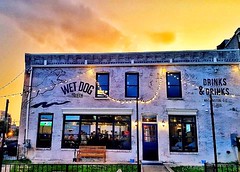
Duffy’s Irish Pub, the Wet Dog Tavern and the Brig all applied for new required liquor licenses, but the district lottery hasn’t said if it will allow bars to band together to create a shared gaming platform.

“The concept of having the network of bars together and the terms and the commercial agreements, those are very far along,” lawyer Jeff Ifrah told local WTYOP news. Ifrah heads Bet D.C., a coalition of bars hoping to have bars and restaurants included in the district’s sports-betting plan.

“The current problem is that there’s a lot of contingencies around what the regulations are going to look like, and there’s been no guidance on that from the lottery,” said Ifrah. “They’re obviously preoccupied with their own things right now, including standing up their own product.”

The D.C. sports-gambling law allows betting through the D.C. Lottery and at the district’s sports stadiums. It also allows betting at smaller venues such as bars and restaurants that would all need to create their own systems. The lottery hasn’t said how many licenses for smaller venues will be issued.

Bet D.C. wants to introduces an app that directs people to participating bars and restaurants that share expenses. Ifrah said economists running the numbers believe 10 bars would need to participate for the Bet D.C. network to generate a profit.

“The sports betting license applications aren’t even out yet, so we have no idea what those even look like,” Ifrah said.

Parx Backs Off Pennsylvania Mini-Casino

Officials of Parx Casino in Bensalem, Pennsylvania revealed last week that they are putting the brakes on the planned Parx mini-casino on the Interstate 81 corridor in Shippensburg Township, and are exploring alternative sites for the Parx satellite casino.

The PennLive news site quoted multiple sources in saying the reason is concerns over recent geological testing at the site done by Parx parent Greenwood Gaming and Entertainment that raised concerns about sinkholes. The report said there also was concern about the mini-casino sharing an access road with tractor-trailers headed to a distribution center in the warehouse complex adjacent to the casino site.

“There were significant issues that developed with the original site,” Parx Chief Marketing Officer Marc Oppenheimer told PennLive. “We are currently working with the Shippensburg community and leaders to identify alternatives in the community.”

The Shippensburg site, a 10-acre tract just off Exit 29 of I-81, was one of several in the township that had been under consideration before township supervisors approved the current construction site. PennLive quoted anonymous sources who said the company is looking for sites within Shippensburg Township with similar proximity to the interstate.

Parx held a public hearing in Shippensburg earlier this year, but according to the Pennsylvania Gaming Control Board rules, a change of location will require a second public hearing on the new site.

The Parx mini-casino is a Category 4 casino, created under Pennsylvania’s 2017 gaming expansion law. The mini-casinos must be linked to a current casino licensee, and are limited to 750 slots and an initial 30 table games, with a maximum of 40 tables, upon petition after opening.