Author: Casino Connection Staff

PA Judge Denies Casino Bid to Block iLottery Games

A Pennsylvania Commonwealth Court judge has handed the state’s casino owners a defeat in their effort to shut down slot-like iLottery games, denying a motion for an injunction that would block the games from being implemented.

Casino owners filed suite after the Pennsylvania Lottery began offering online games that are very similar to the casino-style slot games approved for the state’s online gaming program, which officially launched last week with a three-day test of online gaming portals tied to Greenwood Gaming’s Parx Casino and Penn National Gaming’s Hollywood Casino.

Pennsylvania’s 2017 gaming expansion law created the online gaming program. Operators paid $10 million for online gaming licenses that require 54 percent of revenue from online slot games to go to the state. The law also authorized the Pennsylvania Lottery to begin online ticket sales and online games. The latter, however, are very similar to the games in the casinos’ online portals. Under the law, slot games are exclusive to land-based casino operators.

The lawsuit claims the iLottery games are unfair competition, in that they provide an experience similar to casino games, without the operating cost and taxes.

Casinos are expected to appeal the decision favoring the lottery.

MLB To Launch Chinese ESports Tournament

Major League baseball’s first foray into eSports will take place in Chine, not the U.S. with a scheduled eight team tournament dubbed MLB: The Show.

“By appealing to a younger demographic with games that they enjoy, this will help increase the penetration of baseball into their lives,” said Shao Yinxin, director of marketing and media for MLB China in a press release.

Though based in China, the tournament fulfills MLB Commissioner Rob Manfred’s stated intention to pursue eSports. The National Football League, National Basketball Association and the National Hockey League have all made their own moves into eSports.

“Strategically, we see esports has kind of been a weak spot for us,” Manfred said at the SportTechie State of the Industry 2019 conference in February. “It is a real priority for us going forward. It is tough to say more than this but I’m pretty confident that in 2019 we will have a nice announcement in that space in terms of platform-based games.”

The tournament also enhances the league’s moves in the Chinese market. In 2018, MLB signed a multi-year deal with Tencent to live stream 125 games from the Chinese internet services provider’s PC, mobile and over-the-top platforms. In December 2017, the league also partnered with Beijing Enterprises Real-Estate Group to build 20 baseball facilities as part of a development project to grow the sport in the country.

In another story, gaming company Activision Blizzard announced that WISE Ventures investment fund, founded by Vikings owners Mark and Zygi Wilf, will field a Minnesota-based team as part of its upcoming Call of Duty league.

“Having watched closely as the ecosystem evolved and matured with the first few years of franchised leagues, we are confident in the long-term potential of what Activision Blizzard is building and in the esports industry as a whole,” Mark Wilf told CNBC.

Wilf also said that WISE Ventures is looking to expand into other eSports games and is exploring building an esports-dedicated arena in Eagan, Minnesota on the Vikings Lakes campus.

The Call of Duty league is set to launch in 2020 and now has seven announced teams.

Gambling.Com Announces First American Gambling Awards

Online gambling marketing group Gambling.com Group Plc. has announced the winners of its inaugural American Gambling Awards, which recognize achievements in the emerging U.S. online gaming sector.

The 14 winners were recognized for their leadership in the regulated, online U.S. gambling industry at a party hosted by ESPN+ host and fantasy sports analyst Matthew Berry on June 18 at Monmouth Park Racetrack in New Jersey.

Each winner received a custom-designed Golden Eagle trophy—an American-made, 11-inch, gold-plated, cast-pewter statuette of an American Bald Eagle. The inaugural awards featured more than 70 finalists, with a panel of more than 25 expert judges evaluating the nominations. To ensure the highest possible integrity, votes were tallied by PricewaterhouseCoopers. The 2019 American Gambling Awards winners are:

  • American Operator of the Year: Rush Street Interactive
  • Sports Betting Operator of the Year: FanDuel
  • Casino Operator of the Year: Rush Street Interactive
  • Poker Operator of the Year: WSOP
  • Fantasy Sports Operator of the Year: DraftKings
  • Horse Racing Operator of the Year: TVG
  • Payments Provider of the Year: Paysafe Group
  • Service Provider of the Year: Evolution Gaming
  • Corporate Transaction of the Year: Paddy Power Betfair’s acquisition of FanDuel
  • Responsible Gambling Award: National Council on Problem Gambling
  • Industry Supporter of the Year: Raymond Lesniak, former New Jersey State Senator
  • Lawyer of the Year: Ted Olson
  • Policymaker of the Year: J. Gary Pretlow, New York Assemblyman
  • Regulator of the Year: David Rebuck, New Jersey Division of Gaming Enforcement

The field of finalists was distinguished in itself, recognizing officials such as Susan Hensel, director of licensing for the Pennsylvania Gaming Control Board, who was a finalist for Regulator of the Year.

“The American Gambling Awards is our gift to the growing industry in America,” said Charles Gillespie, chief executive of Gambling.com Group Plc. “We are gamblers and we are American, and we are for the development of a responsibly regulated, competitive, modern online gambling market that serves the interests of the American consumer. It is our hope that the American Gambling Awards will bring positive attention to the leaders making this a reality.”

The American Gambling Awards party and trophy presentation was part of a week-long series of conferences, seminars and social events in and around Monmouth Park in conjunction with the one-year anniversary of New Jersey’s first legal sports bet. Attendees came from New Jersey, New York, Washington D.C., California, Tennessee, Michigan, Pennsylvania, Nevada, Florida, West Virginia and North Carolina.

The American Gambling Awards were launched in March 2019 as the first awards program to recognize excellence among operators, suppliers, advocates, policymakers, lawyers and regulators supporting the regulated online gambling market in the United States.

Amazon’s Twitch Acquires Social Platform Bebo

Streaming video platform Twitch has acquired social networking platform Bebo for about $25 million according to a report at the website TechCrunch. The acquisition is part of Twitch’s plan to increase its eSports business and the platform Twitch Rivals.

Bebo is an early social network platform that debuted in 2005 but never gained traction in the international marketplace. In its most recent incarnation, the platform organizes and runs eSports tournaments with a focus on amateur leagues.

Twitch has been developing its own eSports operation in the form of Twitch Rivals. The merger will focus on expanding Twitch Rivals with more features. The acquisition also comes amid reports that Amazon—which owns Twitch—is working on a new eSports streaming service.

In another matter, the Esports Integrity Coalition, based in Malta, has called for eSports stakeholders, governing bodies and licensed gambling operators to collaborate in addressing growing “betting integrity” concerns.

The group announced that 74 suspicious betting alerts were recorded during 2018, an increase of almost 75 percent from the previous year, with DOTA2 matches detailing a 100 percent in alerts. Ian Smith, ESIC Integrity commissioner, said the figures are a “wakeup call.”

“The numbers of suspicious bet notifications being received by ESIC now are alarming,” he said in a press release. “While we’re confident that most of the top-tier competitions are operating to the highest standards of integrity, we’re deeply concerned with what is happening in the lower echelons of esports. We are therefore today calling on game developers of the esports titles to join the other stakeholders and betting operators themselves in supporting additional integrity measures to tackle the issue.”

The group recently held a summit on the issue in Malta.

Recently, the eSports League of Legend suspended player Xiang “Condi” Ren-Jie for 18 months and banned manager Song “Hesitate” Zi-Yang for life for match-fixing.

DraftKings Begins DFS in Alabama

Alabama Governor Kay Ivey has signed legislation allowing for daily fantasy sports in the state three years after a ruling from the state attorney general blocked the contests. That opened the door for DraftKings to begin DFS operation in Alabama.

The law requires fantasy sports operators with more than $10 million in national gross revenue to pay an $85,000 annual fee to the state. Other operators would pay a $1,000 annual fee.

DraftKings rival FanDuel has not said specifically when it will re-launch in the state. That leaves DraftKings operating alone for the time being.

“We are constantly searching for ways to improve and innovate our products to ensure that we’re delivering what our customers want, which is evidenced in part by the industry-leading 13 different professional sports offered on our platform,” DraftKings Senior Vice President of Fantasy Sports Greg Karamitis said in a press release. “Over the last three years, DraftKings has continued to lead the way in the daily fantasy sports space, and we look forward to reestablishing ourselves as the premier DFS destination for fans in Alabama.”

DraftKings has also established a Fair Play Commitment Initiative to ensure a level playing field by prohibiting top-earning or more experienced players from entering casual and beginner contests, the release said.

Redevelopment Plan Approved for Atlantic City’s MGM Marina District

A plan for the development of about 82 acres in Atlantic City’s Marina District has been approved by the New Jersey Casino Reinvestment Development Authority. It should allow MGM Resorts International to move forward on building 200 luxury condominiums near the Golden Nugget Casino Hotel.

The plan allows the city to enter into redevelopment agreements and offer tax breaks and other incentives on the property, which will include a combination of multi-family housing and luxury development, according to Lance Landgraf, the CRDA’s director of planning. MGM and Boraie recently announced plans to build the luxury condos on about 14 acres of waterfront next to the Golden Nugget.

The land was previously zoned for casinos and other entertainment, but not housing, MGM attorney Jack Plackter told the Press of Atlantic City.

MGM owns the land for the proposed condominiums as well as another 69 acres of vacant land between Borgata Hotel Casino & Spa and Harrah’s Resort, Plackter said. He said MGM is hoping to create a market for second homes or vacation homes—common along the New Jersey Shore—in the city.

“The second-home market is an opportunity the city has never been able to take advantage of,” Plackter said. “Why wouldn’t people who live in New York and Philadelphia want a place to walk to world-class restaurants and to see great entertainment?”

In related news, the current proposed state budget for New Jersey includes an additional $4 million in aid for Stockton University, which maintains a new campus in Atlantic City. University President Harvey Kesselman told the Press the increase is crucial for the university to develop a $64 million residential complex across from its city campus.

“As a state-designated Anchor Institution in Atlantic City, we are committed to contributing to the economic diversity of the city and providing new opportunities for New Jersey residents,” Kesselman said in a press release. “The additional funds will allow Stockton to enhance its programs in Atlantic City and remain affordable and accessible to students, providing more options to help stem the out-migration of New Jersey residents to colleges in other states. We are hopeful the governor will agree.”

New Jersey Governor Phil Murphy had until June 30 to approve the budget or face a shutdown of services. Murphy has been at odds with the legislature over his desire to raise taxes on incomes over $1 million.

Also, state regulators approved a subsidy for Danish firm Ørsted to build wind turbines off Atlantic City. The proposed project is expected to create 15,000 jobs over its 25-year lifespan. The company recently opened an office in Atlantic City.

Atlantic City Pols Resist Change of Government Move

A move to change the form of Atlantic City’s municipal government under state law has brought out a tough response from the city’s current mayor and council, even though much of the running of the city is now under state control.

Members of City Council were joined by community leaders at a news conference at City Hall to oppose the change. Meanwhile, a letter from council has been sent to the state Office of the Attorney General and the recently created Office of Public Corruption requesting an investigation into the petition effort and its legality because of the involvement of casino executives in the city’s political process, according to the Press of Atlantic City.

Council President Marty Small Sr. said the petition effort was an attempt to “undermine local government” and “usurp” the authority of duly elected officials.

The petition seeks to change the government to a council-manager form—one of several models allowed for municipal governments under state law. The form eliminates an elected mayor in favor of a professional business manager.

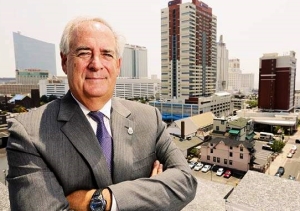
The drive is being led by Unite Here Local 54—the city’s largest casino workers’ union—its President Bob McDevitt, former state Senator Ray Lesniak (above) and Resorts Casino Hotel owner Morris Bailey.

McDevitt, an Atlantic City resident, told the Press he’s wanted to alter the form of city government for “over a decade.”

“We’ve had the same form of government since the late 1970s,” he told the paper. “In all those years, we have not moved forward.”

The city is under state oversight following the 2016 Municipal Recovery and Stabilization Act which gives the state Department of Community Affairs final authority over fiscal matters, contracts and ordinances.

The act also allows the DCA to treat referendums in Atlantic City as advisory and gives it the authority to reject a ballot decision regardless of the outcome, according to the Press.

According to information obtained by Council, the petitioners are shooting for an August 13 referendum on the change. However, they haven’t submitted a petition for the referendum to the City Clerk’s office. The petition needs 1,097 signatures before it can be submitted to the clerk for certification.

SLS Las Vegas Sued for Brand Fees, Restores Sahara Name

A co-founder of the SLS Las Vegas is suing the Strip casino’s new ownership for months of unpaid licensing fees. But those fees are now a thing of the passed since the current owner, Las Vegas Resort Holdings, owned by media tycoon and billionaire Alex Meruelo, has decided to revert to the property’s original name, Sahara Las Vegas.

California-based SBE Hotel Licensing, a unit of Sam Nazarian’s SBE conglomerate, which owns the SLS hotel brand, claims in an action filed in Nevada that new owner Las Vegas Resort Holdings has failed to pay at least $450,000 in fees dating back to November that allow the North Strip resort to use the SLS name and operate SBE-branded restaurants, including one fronted by celebrity chef José Andrés.

Meruelo purchased the struggling 1,600-room SLS in 2017 and has pledged to invest $100 million to turn it around.

A spokesman for Meruelo, whose holdings include several English- and Spanish-language TV and radio stations in California and a Reno casino hotel, the Grand Sierra Resort, said earlier this year that a name change could be in the cards for the SLS.

“We will be using the SLS name for another year and will evaluate our options with the brand moving forward,” he said.

That option was realized last week as a dramatic reveal of the new Sahara Las Vegas name. General Manager Paul Hobson said that the historic ties to the city, including a major road being named after it, helped them settle on the name.

“We landed on Sahara as being a very appealing option,” he told the Las Vegas Sun. “A lot of people speculated that it was going to be Grand Sahara Resort because that would match Mr. Meruelo’s Grand Sierra Resort property in Reno. We just thought that Sahara, without any modifiers, was powerful.”

Originally a joint venture between Nazarian’s Los Angeles-based SBE, which controls a global portfolio of hotel, restaurant and nightlife brands, and San Francisco-based Stockbridge Capital Partners, the SLS opened to acclaim three years ago at the site of the old Sahara Hotel Casino, which had closed in 2011. The partners spent $400 million to buy the property and another $415 million to turn it into a draw for younger gamblers and party-goers. It didn’t catch on, however, in part due to its remote location far from the main Strip action, and has steadily lost money. Nazarian eventually exited, selling his minority stake to Stockbridge, which sold out to Meruelo for an undisclosed sum.

N.Y. OKs New Venue for Monticello’s Slots

The New York legislature has given its OK to the company behind the struggling Resorts World Catskills to add machine games in neighboring Orange County.

The authorization came last week in language included in an omnibus bill passed after the official close of the 2019 legislative session. It’s intended to ensure that publicly traded Empire Resorts maintains some continuity in its investment in the Catskills following the company’s decision in April to close its failing racino at Monticello Raceway just six miles from Resorts World.

Despite its $1 billion price tag and relative proximity in Sullivan County to New York City, Resorts World has registered on average the lowest daily slot win of all the state’s full-scale casinos and earlier this year was granted regulatory approval to cut its machine numbers from an initial complement of 2,150 to 1,600.

The lackluster performance aside, its February 2018 debut sealed the fate of the racino at Monticello, which had been in operation for 15 years. In the months after Resorts World opened, the daily win at Monticello’s 1,100 video lottery terminals plunged 50 percent to a mere $75 per unit, a record low for the New York market.

“There is not enough business to justify the cost of operating it,” Empire CEO Ryan Eller said at the time.

The Orange County agreement calls for Empire to reopen the Monticello VLTs at a former chemical plant between the towns of Harriman and Woodbury. As such, it will be the first machine gaming operation in New York to operate outside a casino or racetrack. Lawmakers, however, said they do not intend it as a precedent for other struggling gaming halls in the state.

“I’m not particularly pro- or anti-gambling so I used this opportunity to deliver real, substantive economic benefits to the constituents I represent,” said state Senator Dan Skoufis, whose district includes Woodbury.

The agreement also looks to shore up the flagging 60-year-old harness track at Monticello Raceway by cutting it in for a share of the gaming revenue from the new location. Yonkers Raceway, located about 47 miles to the southeast in Westchester County, will get a piece as well to allay political concerns over the proximity to Yonkers’ Empire City Casino. It also requires Resorts World to pay to clean up the site, which the chemical plant left contaminated, and provides for $1.2 million in aid from the VLTs to offset the impact of municipal services for the project, which will employ around 400 local residents once it’s up and running.

Empire lauded the deal, saying, “Once final local approvals are granted, we will have a sustainable gaming footprint that will create new jobs in Orange County, while simultaneously preserving existing jobs and resort destination investment in Sullivan County.”

PA Senate Moves to Allow Communities to Block VGTs

Two Pennsylvania senators representing Lancaster County’s rural Amish country have succeeded in prompting approval by the full state Senate of a bill that would allow the county’s 60 conservative municipalities to opt out of allowing truck-stop video gaming terminals in their communities.

The bill, sponsored by state Senators Scott Martin and Ryan Aument, would fill a perceived gap in the massive gaming expansion law passed in late 2017, which contains a provision allowing communities to opt out of allowing Category 4 mini-casinos, but not truck-stop gaming.

The law as enacted permits locations that meet the qualifications of a truck stop to offer up to five VGTs each. Only municipalities in counties that host a stand-alone casino or racino may vote to ban the machines.

Every one of the 60 municipalities in Lancaster, the center of Pennsylvania’s religious Amish and Mennonite communities, voted to ban mini-casinos. The Pennsylvania Gaming Control Board has given preliminary approval to seven VGT applications in six counties. Five of those approvals have been issued for truck stops in Lancaster County, which does not host a traditional casino.

One of those approvals, for a Rutter’s convenience store and truck stop in the borough of Strasburg, is the subject of a lawsuit from Rutters, after local officials changed zoning laws so as to disqualify the location as an eligible truck stop.

“We are not in favor of the video gaming terminals, but that (decision) has been taken away from our hands,” commented Strasburg Mayor Bruce Ryder to Lancaster Online. “It was written in such a way that municipalities really have no say.”

Strasburg has counted its rural Amish community as one of its biggest tourist draws, including as a key filming location for the 1985 film Witness. Harrison Ford starred as a Philadelphia detective posing as an Amish man to protect a child who witnessed a murder.

The new bill would give communities 60 days after a VGT approval to ban the machines through a simple majority vote. “Citizens should have a voice in the gambling debate, which is why we sought to restore the principle of local control,” bill sponsor Martin told the PlayPennsylvania news site.

The bill now goes to the state House, and if passed, on to Governor Tom Wolf, who has remained quiet on the measure but is expected to either sign it or allow it to become law with no action on his part, according to PlayPennsylvania.

MGM Sues Insurer for Mass Shooting Defense Costs

MGM Resorts International is suing one of its major insurance providers for breach of contract, claiming the company is not fulfilling its obligation to cover legal bills MGM is incurring in the aftermath of the 2017 mass shooting on the Las Vegas Strip.

The suit, filed in U.S. District Court against Zurich American Insurance Company, is separate from the massive claims against the gaming giant from victims and family members of those who were injured or killed in the attack. The attack occurred the evening of October 1. A lone gunman opened fire on an outdoor music concert with an arsenal of automatic and semi-automatic rifles he’d stockpiled in a suite atop Mandalay Bay, which MGM owns. Fifty-eight people died and hundreds were wounded. The gunman killed himself as police closed in.

More than 4,000 people are seeking compensation from MGM, which denies any liability stemming from the shooting, the worst in U.S. history. It said in the Zurich suit that it is “vigorously defending itself in all of the cases.” It’s expected, however, that the gaming giant could wind up paying out as much as $800 million.

MGM has reported $751 million in coverage through multiple insurance providers, so the dispute with Illinois-based Zurich American, a unit of Switzerland’s Zurich Insurance Group, should not impact its ability to pay claims related to the shooting.

Rather, the action against Zurich is based on MGM’s contention that Zurich is not honoring the terms of a general liability policy that’s supposed to indemnify the company for the legal fees it’s incurring in defending itself, which already have climbed to “many millions of dollars,” according to the suit. These include court fees, attorneys’ fees, medical exams, summonses, process-serving, transcription of records, investigative services, dispute resolution and includes “substantial amounts” that Zurich “specifically approved,” according to the suit.

“The Zurich Policy is designed and intended, and reasonably was expected by MGM, to provide broad coverage for the most serious claims that MGM could face,” the suit says, alleging that Zurich is risking the loss of “crucial attorneys, witnesses, experts, consultants and evidence and threatening imminent damage to MGM.”

Zurich declined to comment, according to local news reports.

New Jersey’s Top Regulator Warns Offshore Bookies

New Jersey’s chief gaming regulator David Rebuck has a simple message for offshore bookmakers who accept illegal U.S. bets—you’ll never be licensed in his state, and may be barred from operating in other states too.

“A word of caution,” Rebuck told the All-American Sports Betting Summit audience at the Jersey Shore racetrack Monmouth Park. “We made a decision in New Jersey a long time ago: If you engage in taking offshore bets, or if you engage with or support companies that take bets outside of the U.S. from American customers with an offshore site…. You’ll never get licensed in New Jersey. So don’t waste your time. You’ve made your bed in the past, and you’ll have to live with it for a very long time.”

Rebuck underscored the remarks by pointing out the state’s six years of success in online gaming, now followed up by one year of legal sports betting. “If you’re not licensed in New Jersey, then I don’t know where you’ve been for the last 12 months,” Rebuck said. “If you’re licensed and operational—or even if you’ve just been approved—no state in the United States is going to find you unsuitable if you have our approval.”’

Rebuck also praised officials in states that have recently passed sports betting without “convoluted” language in their laws that he said would slow down the process considerably.

“My staff continues to work with out-of-state regulators and as they come in, I think they have a sense of relief in that the models that we have developed—they have confidence in them,” Rebuck said. “And by the time the end of August and football season rolls around, a number of these states—they’re going to make it.”

Hard Rock, Ocean Celebrate First Year in Atlantic City

It’s been one year since the Hard Rock Atlantic City and the neighboring Ocean Casino Resort opened on the Atlantic City Boardwalk and both casinos are still working to find their place in the market they expanded.

Ocean Casino Resort has gone through an ownership change and a minor rebranding while Hard Rock has seen its commitment to live musical performances bear fruit.

The ownership change at Ocean Casino Resort brought a new focus to the casino, something never stressed in its previous incarnation as Revel. In January Luxor Capital Group, a New York-based hedge fund and one of the principal investors, assumed control of the property.

According to Mike Donovan, chief marketing officer and senior vice president, the new owners have been trying to emphasize gaming while capitalizing on its hotel and non-gaming amenities.

“The property was never marketed as a casino before,” Donovan told the Press of Atlantic City. “It just feels completely different today than when I walked in the door in March.”

Joe Lupo, president of the Hard Rock casino, said changes there have been more incremental. The former Trump Taj Mahal Casino Resort underwent a $500 million transformation in 2017 and 2018, but many of those alterations happened behind-the-scenes, he said.

“So there weren’t these big changes that were made in the last year, but it’s more a refinement of how do we provide better access and a better customer experience,” Lupo told the newspaper.

Lupo took over for former property president Matt Harkness in late 2018. A former executive at Borgata Casino Hotel & Spa, he had been working at a Hard Rock property in Tampa before returning to Atlantic City.

Since his arrival, Lupo said Hard Rock has been refining its gaming options and that’s made a difference. In May, Hard Rock was second in the market in slot revenue. “You look at numbers and you’re able to see where patrons are playing. So we were able to identify games to be added or deleted,” he said. “We’ve been aggressive at gaining more slot product and adding more slots to the floor.”

At the Ocean Casino resort, more noticeable changes have been made. Cereal Town and Ivan Kane’s Royal Jelly Burlesque Club have closed, but the casino recently had a grand opening for its Wahlburgers restaurant, complete with an appearance by actor Mark Wahlberg.

Ocean also opened the largest sports betting facility in the city with the William Hill Sportsbook, a 7,500-squarefoot facility in the center of the gaming floor.

Ocean is making progress on its buffet and has installed a new elevator that makes it easier for hotel guests to enter the casino floor. “We heard what guests wanted and we’ve tried to respond to that,” Donovan said.

Both properties went all out the last week in June to celebrate their one-year anniversary, with a joint fireworks display and a Hard Rock-hosted parade down the Boardwalk. Food, drink and gaming promotions were also in the mix.

Hard Rock donated $200,000—double what they originally pledged—to five local organizations during a news conference: The Atlantic City Rescue Mission, Atlantic City Police Foundation, Avanzar, Turning Point Day Center and Covenant House each received $40,000.

Hard Rock International Chairman and CEO Jim Allen said it was all part of the casinos focus on the community. Hard Rock Hotel & Casino employs almost 3,900 people, 25% of which are Atlantic City residents.

Encore Boston Harbor Goes Live

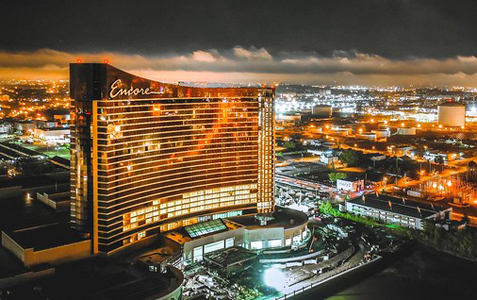
Wynn Resorts’ $2.6 billion Encore Boston Harbor, the third casino to open in the Bay State, swung open its doors last week in Everett, Massachusetts. By far the largest of the three casinos in the state, it has 3,100 slots, 231 gaming tables and VIP gaming rooms; 15 bars and restaurants, and many retail shops. The iconic 27-story bronzed curved hotel tower with 671 rooms has dominated the landscape for many months now

Thousands of patrons lined up for hours in the paths and harbor walk of the 33-acre site, some since the early morning. They cheered as VIPs and representatives of the 5,000 employees took part in the ribbon cutting.

According to Everett Mayor Carlo DeMaria, the land where the casino resort now sits went from “Superfund site” to “super site.” Addressing the crowd, many of them residents of the industrial city of 46,000, he said, “When you drive through Everett, you’ll no longer smell gas and sulfur and oils. But you’ll smell flowers and trees.” He added, “We will no longer be the back door to the city of Boston. We will now be the front door to the city of Everett.”

DeMaria noted that the whole process took eight years, from the day he envisioned a casino along the Mystic River to the opening. Five years ago, Wynn won the license for the Boston metro area. It included a massive environmental cleanup of the former Monsanto chemical site that returned much of what is now a river walk to a condition unseen for over a century.

Standing next to the mayor, Wynn CEO Matt Maddox recalled standing with DeMaria on what was then a blighted landscape. “Now there’s a thousand mature trees, 50,000 flowering plants, tens of thousands of shrubs and a living shoreline for the first time in 100 hundred years,” he said.

“Eight years ago the people of Massachusetts and the lawmakers… had the foresight to understand the opportunity for urban renewal, economic development for the finest integrated resort in the world,” said Maddox. “Those were the goals and I’m here to tell you that Encore Boston Harbor has achieved those goals.”

Cathy Judd, chairwoman of the Massachusetts Gaming Commission called the Encore an “international entertainment destination.” She thanked the developer for giving the public access to a waterfront that had been closed to them.

Guests included Elaine Wynn, the largest shareholder in the company and ex-wife of the company’s founder Steve Wynn, and Allan Zeman, chairman of Wynn Macau Ltd. After the ribbon-cutting, Elaine Wynn stood on a balcony watching the flower-covered carousel that greets guests and remarked, “We’re just waiting in happy anticipation. What I really love is how beautifully dressed everyone is, and respectful of our environment.”

Maddox predicted that the new resort would be his company’s “calling card to other cities and destinations around the world.” He added that the casino might be a template for both the company and the industry. “This isn’t a local casino. This isn’t regional gambling. This is the first time a major city has a five-star, large-scale, integrated resort,” he told GGRAsia. It is also the company’s first venture outside of its twin hubs of Las Vegas and Macao. It also has more square footage than the Wynn Las Vegas and Encore Las Vegas combined.

Maddox told the Associated Press, “What I see going forward is building these kinds of resorts within the city fabric, not as something an hour and a half away. This can be our calling card to other cities and destinations around the world, really.”

Last week the brokerage firm of Sanford C. Bernstein Ltd. in an open letter to Wynn Resorts’ CEO Matt Maddox was highly critical of the company’s less than weeklong but very public flirtation with selling the property to MGM Resorts. These talks happened in April shortly after the Massachusetts Gaming Commission issued its record $35 million fine for the gaming giant’s handling of decades of sexual allegations against its founder and disgraced former CEO Steve Wynn. But in the end, commissioners but did not revoke Wynn’s license to operate in the state. It found Wynn “suitable” to continue holding that license.

Maddox was personally criticized by the MGC for his lack of leadership and hit with an individual fine of $500,000 and had to agree to several conditions such as engaging an independent monitor for at least three years and getting leadership training. At that point the company seems to have contemplated leaving the state.

The brokerage company says this was a very bad idea. “While the discussions were quickly terminated, the news of such discussions even occurring so close to opening were disheartening,” said the letter from Sanford C. Bernstein Ltd.

Analysts cited in the letter including Vitaly Umansky, Eunice Lee and Kelsey Zhu said they were heartened by Maddox’s unequivocal statement several weeks later that the property was not for sale. They wrote, “Matt’s recent comments about no longer looking to sell is a welcome initiative. We see the potential of Encore Boston being a key growth driver and diversification component for Wynn Resorts.”

Referring to the controversy that involved his mentor and former CEO Steve Wynn, Maddox said in an interview last week, “The controversy is behind us. The transition is finished. Our eyes are on the future.”

The brokerage predicts that the property will outperform its competitors on the East Coast with a value “too big to ignore.” They wrote, “By 2020, over 41 percent of Wynn Resorts’ EBITDA (adjusted for minority interest) would be derived from U.S. properties, amongst which, 16 percent of the total should be derived from Encore Boston.”

This first true Las Vegas-style casino—there are two levels of casino floor— to open on the East Cast has 143 table games, including some stadium gaming terminals for novice players, and dealers will to give lessons. With a nod to the modern—and the millennials—all the poker tables have cell chargers.

The 3,100 coinless slots have a variety of the most popular games, from Game of Thrones to X-Files to various reel games. All levels of wagers, from penny to $500 minimums, are accommodated.

The poker room has 88 tables, including 11 high limit tables. There are six private VIP rooms where the minimum bet is $1,000 and which are staffed by “the most experienced dealers from around the U.S.,” not to mention butlers at the ready.

A true integrated resort, the Encore has plenty of things for non-gamblers to do. As Maddox put it, “This will definitely be, I think, a very vibrant casino, but we’re looking forward to the non-gaming assets doing quite well here.”

Its flagship nightclub Memoire will open one week from the ribbon-cutting with shows that will include Steve Aoki and DJ Diesel.

Outside is a six-acre waterfront park traversed by river walks. Patrons can be pampered with manicures, pedicures, makeup services, a barbershop and wander through shops selling high-end clothing and beauty supplies.

Devoted foodies will have 15 options to compel their interest, ranging from the casual sports bars On Deck to a classic steakhouse and an Italian eatery. Even a Dunkin’ next to the casino action. Plus dining that caters to Asian and seafood tastes. Not to mention a Vegas staple: the buffet.

Two of Boston’s most well-known purveyors of alcohol, Bully Boy Distillers and Lord Hobo are serving a gin exclusive to the Encore and Encore-branded beer. And since the casino recently won a waiver from the laws that require most bars to close at 2 a.m., players at the casino floor can be served complimentary drinks until 4 a.m.

Before the opening, officials of Everett, regional transportation authorities and casino management were actively encouraging as many people as possible not to drive to the Encore, at least for its opening day. Or ever, for that matter. Instead, they urged the 50,000 who were expected on peak days to employ public transportation.

Or as Mayor DeMaria put it: “If you want to have a nice day on Sunday, don’t drive.”

These options include free shuttles from the MBTA Orange Line’s Wellington and Malden Center stations; ferries from Boston across the Mystic River, buses from park-and-rides in the nearby towns of Londonderry, New Hampshire and Millbury and Rockland.

Cars can be accommodated at the casino’s parking garage and a large lot across the street, but parking rates are steep. There is no street parking in the city. The casino parking is so extensive that it’s color-coded, so motorists can find their vehicles easier.

The major traffic snarls that had been feared, and which were the main reason the casino opened on a Sunday, didn’t materialize. Players followed the advice of officials and took shuttles, ferries and Uber-like services to the resort.

Robert DeSalvio, president of Encore Boston Harbor, praised the results. “This morning demonstrated that guests will leave their cars at home if they have access to modern and convenient choices,” he said. “In the days ahead, we will continue to monitor traffic closely, but today we want to thank our visitors who embraced alternatives. Dozens of federal, state, and local agencies collaborated with us on plans, and the early results show great promise for the long term.”

The 671 hotel rooms range from 650 square feet to 5,800 square feet for the two penthouse suites on the top floor. All feature opulent Wynn furniture, 55-inch high-definition TVs, beds with high-thread count linens, high-speed Wi-Fi and espresso makers. There are even TVs in the bathrooms. The cost to rent these rooms are commensurate with their opulence, about $650 a night, on average.

Ahead of the casino’s opening the state was prepared to offer options for problem gamblers—a program called GameSense. This program, run by Massachusetts Council on Compulsive Gambling assists players in setting limits for themselves and sticking to them. It informs them of the actual odds of winning. The GameSense volunteers are trained to look for signs of addiction and guide patrons towards help and treatment: if they want it.

Meanwhile, four people were arrested on the opening day and two of them, residents of the Bronx, were accused of cheating together at roulette. Of the other two, one was charged with disorderly conduct and another with trespassing. A fifth person was issued a summons for possession of heroin.

Massachusetts State Police spokesman David Procopio didn’t emphasize the arrests, saying there were “no major incidents,” despite very heavy crowds. He credited the police with mainly shepherding minors away from the gaming floor and helping to defuse arguments and do crowd control.

In an interview after the opening, Mayor DeMaria told WGBH that jobs for residents was high on his list of hopes for the Encore. “A lot of our residents struggle to work two or three jobs,” he said. “Now maybe having this job here with good benefits and being all union employees working inside the facility, hopefully they don’t have to work as many hours. I’m hoping a lot of them walk to work if they can I’ll just take the shuttle down. It’s an exciting and surreal time. It hasn’t really hit me yet.”

He also talked about the transformation of the waters of the Mystic River and how he hopes the casino is the first brick in a series of redevelopments. “The scrap yards and used car lots—they’re going to be gone,” he said. “There are going to be other hotels and other restaurants providing more jobs, more taxes for the city (and) cleaning up environmental sites. For the first time in the last three years, since they started cleaning up the site, we got an ‘A’ rating to swim in the water out front of this facility. I mean, you and I would not even dare to think about jumping into this water out front. Now you can technically swim without getting sick or anything. That’s unbelievable.”

Some Wynn executives are hinting that the resort that just opened could be the beginning of even more—for example, on 11 acres the company just bought for future development. Encore Boston Harbor President Bob DeSalvio told the Boston Globe, “With the property that we have across the street, in conjunction with this as really a major anchor, there will be other hospitality and tourism-related assets that would work quite well with the property.”

The property, he said, could be used for apartments, convention space, dining, taverns and a large-scale concert venue. “We’re going to start with a blank canvas,” said DeSalvio.

Maddox added, “Our idea—I believe, along with the mayor’s—is to continue to redevelop this area so that it’s known as the entertainment district in the Northeast.”

Wynn is also looking with some anticipation about the possibility of sports betting being legalized in the Bay State, and how to take advantage of it if it is. Maddox said, “If the state of Massachusetts decides to do that, we have identified a place for it. We actually have a design that we worked out. We would be ready to move forward, if that opportunity exists.”

Wynn might also help finance a multi-million footbridge across the Mystic River to connect the casino to Assembly Square in Somerville, where the Orange Line MBTA station is—which would save patrons and workers walking a mile to the casino.

DeSalvio said, “We are expecting multiple stakeholders to participate because there will be so many beneficiaries to this kind of a project.” He added, “We will be there, but all we’re asking is that it’s a complete project.”

Now that the casino has opened, CEO DeSalvio estimates it will take about 90 days before it is running completely smoothly. He told the Globe: “I think for now our main goal is to get the resort open, gauge customer reaction, and then we’ll take a step back and look at all the assets and say, ‘What do we have? What’s working? If there’s things that aren’t working, how can we change them?’

Eldorado, Caesars Agree to $17.3B Merger

It’s been expected for weeks. It’s finally happened.

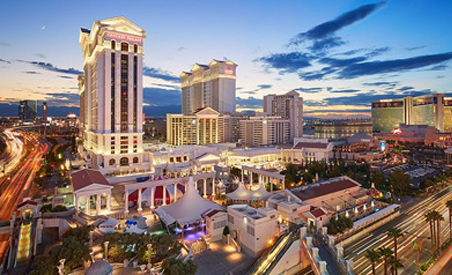
Eldorado Resorts and Caesars Entertainment have shaken hands on a merger of their two companies in a $17.3 billion cash-and-stock deal that will create the world’s largest casino operator.

Corporate raider Carl Icahn, who has amassed a controlling 28 percent stake in Caesars over the last several months, professed himself “pleased.”

Icahn, the main catalyst for the deal, had been pushing hard for a sale of the Las Vegas-based gaming giant, which had shed some $10 billion in debt through a reorganization in U.S. Bankruptcy Court of its largest operating company two years ago, but was unable to generate much lift under a share price that’s lagged below $10 ever since, despite an enormous portfolio of 53 properties in 14 U.S. states and five other countries.

Once Icahn swooped in, eventually claiming three seats on the board of directors, a sale was all but assured.

“This merger is the quintessential example of how an activist shareholder, working collaboratively with the board, can enhance value for all stockholders,” he said in a prepared statement accompanying the announcement of the merger last Monday. “The deal price represents a premium of 51 percent over Caesars’ trading price on the day before our representatives joined the Caesars board on March 1, 2019.”

Needless to say, that’s a huge profit for Icahn and a win overall for Caesars shareholders.

Eldorado is a relatively obscure Northern Nevada operator that went on a buying spree five years ago and transformed itself into a major player in the U.S. regional market with 26 casinos in 12 states. It will acquire all of Caesars’ outstanding shares for $8.40 in cash each and 0.0899 shares of Eldorado stock based on Eldorado’s 30-calendar day volume weighted average price per share as of May 23.

Based on that formula, the deal values Caesars’ equity at $8.54 billion, or $12.75 per share, and is worth in total approximately $17.3 billion, comprised of $7.2 billion in cash, approximately 77 million Eldorado shares and the assumption of Caesars outstanding debt of roughly $8.8 billion. Respectively, Eldorado and Caesars shareholders will hold approximately 51 percent and 49 percent of the shares of the combined company, which will retain the Caesars name.

Shareholders of both companies need to approve the merger, which is expected to close some time next year.

It’s the biggest casino sale since Caesars’ ill-fated leveraged buyout by TPG and Apollo Management in 2008 which ultimately landed the gaming giant in Chapter 11. Counting Eldorado’s 26 casinos—23 after a pending sale of two casinos in Missouri and one in West Virginia—it’s a massive portfolio, one that carries nowhere near the debt load of the Apollo-TPG deal but is sizable debt nonetheless. Eldorado shareholders reacted negatively to the announcement, sending the stock down more than 8 percent.

The $12.75 Eldorado is paying is paying per share also is a significant bump from the $10.50 it reportedly offered initially, according to sources cited by the New York Post. On average, analysts have pegged the stand-alone value of Caesars at $11.

“While Eldorado has been successful in rolling up gaming assets across the U.S., this acquisition of a whale operator is at a completely different level,” brokerage Sanford C. Bernstein wrote in a client note.

Eldorado has a market value of about $4 billion. At the end of the first quarter, it had long-term debt of about $3.06 billion.

Analysts also are skeptical of Eldorado’s expectation of $500 million in cost savings from the deal. Brian Egger of Bloomberg Intelligence, for one, has estimated them at about half that.

What appears certain is that the new Caesars will be looking to sell off assets, especially in Las Vegas, where they’re likely to fetch higher prices.

“I think that there’s more Strip exposure than we would need to accomplish our goals with our regional data base,” CEO Thomas Reeg said. “So I would expect that we would be a seller of a Strip asset, but that decision has not been made.”

The sale two weeks ago of the three Missouri properties is expected to ease regulatory approvals there, but questions remain in Atlantic City, where a merged Caesars/Eldorado company would control four of the city’s nine casinos—Caesars, Harrah’s, Tropicana and Bally’s. Although Caesars alone had previously controlled four casinos up until 2014 when it shuttered the Showboat, there were also 12 casinos open at that time. Bally’s seems to be a prime candidate for closure, but the rooms would likely remain open and Caesars absorbing the “Wild West” casino where a new sportsbook just opened.

It’s expected also that the deal will spell the end of Caesars’ aspirations globally, particularly in Japan, which has attracted interested from all the industry’s major players.

“The opportunity internationally is going to have to be, frankly, stupendous for us to be running in that direction. But no firm decisions have been made at this point,” Reeg said.

One firm decision has been made however, prior to the merger. The Gold Coast Bulletin in Australia has confirmed that Caesars will no longer be pursuing an integrated resorts in Queensland. The newspaper quoted Queensland Tourism Department Director Damien Walke as saying the deal was not “an attractive opportunity” for Caesars.

As for Tony Rodio, who Icahn pushed into the position of Caesars CEO, it’s expected he’ll remain in the job at least through the closing of the merger, and possibly after that.

Rodio ran Tropicana Entertainment when Icahn owned that company and reportedly was a key figure in the negotiations that led to Eldorado’s 2018 acquisition of Tropicana’s eight casinos for $1.8 billion.

Rodio said, “I’m familiar with Eldorado and its management team, and I look forward to collaborating with them to bring our companies together.”

In Sports Betting, Jersey Seizes Nevada’s Crown

For the first time ever, New Jersey sports books can say they have beat Nevada for the most wagers in a month-long period. In May, Jersey books generated $318.9 million in wagers, slightly more than the $317.4 million posted by Nevada regulators.

New Jersey sports betting launched just over a year ago, after the U.S. Supreme Court struck down the Professional and Amateur Sports Protection Act of 1992, which limited the action to Nevada and three other states. In addition to New Jersey, six other states have gotten into the bookmaking business and a dozen more are expected to follow, according to ESPN.

New Jersey regulators report that about $3 billion has been bet on sporting events in the state over the past year. DGE Director David Rebuck predicted to GGB magazine last year that his state would overtake Nevada by the end of 2019.

“While we all knew it would be successful, I don’t think anyone expected how quickly New Jersey would come to dominate the growth in the market in the year since our sports betting law took effect, or how advantageously New Jersey would be positioned to dominate the entire marketplace,” Governor Phil Murphy said at the All-American Sports Betting Summit hosted by Monmouth Park last month.

According to the Asbury Park Press, the FanDuel Sportsbook at the Meadowlands is leading the way with $84.6 million in gross revenues over the past year. Sports betting has generated more than $23 million in tax revenue for the state in its first year.

Pritzker Signs Illinois Gaming Bill

Illinois Governor J.B. Pritzker delayed singing a comprehensive gambling bill passed by the legislature a few weeks ago. Pritzker signed the bill as part of a $45 billion package dubbed “Rebuild Illinois,” that also includes new roads, bridges and infrastructure improvements.

Now that the bill is officially law, steps will begin to move forward with sports betting or other provisions of the 816-page gaming bill–including slots at O’Hare International and Chicago Midway International airports, casino-style gaming at horseracing tracks and six new casinos, including one in downtown Chicago.

As a result, the gaming board can now begin writing regulations for sports betting—which means it should be able to launch by football season.

Meanwhile, slots vendors are gearing up for new business as the legislation would allow the six new casinos and the state’s 10 existing casinos to offer a total of 30,000 new positions. Association of Gaming Equipment Manufacturers Executive Director Marcus Prater said, “These type of expansion opportunities don’t come along too often anymore. As suppliers, we’re certainly pleased.”

However, SunTrust Robinson Humphrey Analyst Barry Jonas said, “We’re seeing a lot of skepticism around the financial return from operations currently in the market and those not in the market. A lot of operators are hesitant to add on additional positions, add tables or slot machines, given the returns there.”

Jonas estimated about 15,000 to 20,000 positions would be added “assuming all the new casinos get built.” Those new units could generate $79 million to $224 million in earnings, with Scientific Games and IGT bringing in $20 million to $56 million of that total, Jonas said.

Taxes also will be a major consideration under the new gaming law, Jonas added. Currently casino revenue is taxed on a graduated scale; last year the state’s 10 casinos paid an effective tax rate of 33.8 percent, including state and local wagering and admission taxes, according to the Illinois Commission on Government Forecasting and Accountability. The new Chicago casino is expected to pay a 66 percent effective tax rate, with the proceeds divided between the city and the state, according to a SunTrust report. By comparison, Nevada’s tax on gross gaming revenue is just 3.5 percent to 6.75 percent.

Jonas stated that under the new gaming law sports betting applicants must pay $20 million for online licenses, then a tax of 5 percent of the adjusted gross revenue from the prior year, capped at $10 million; gross gaming revenue would be taxed at 15 percent.

Operators could face even higher taxes, Jonas said. The state tax rate on video gambling is 30 percent, but under the new bill that will increase by 3 percentage points starting July 1 and another 1 percentage point next year.

Of the 10 casinos currently operating in Illinois, seven are regional properties owned by Nevada-based companies Caesars Entertainment Corp., Boyd Gaming Corp., Penn National Gaming Inc. and Eldorado Resorts Inc.

Penn National Vice President of Public Affairs and Government Relations Jeff Morris said the company still is analyzing the bill. “This is the most massive gaming expansion package we’ve ever seen, all happening in a state that is already saturated from a gaming standpoint.”

Boyd Gaming, Caesars, Wynn Resorts Ltd. and Red Rock Resorts and Eldorado have not commented on Illinois plans. Las Vegas Sands Corp. spokesman Ron Reese said the company is “not currently exploring or considering any opportunities in Illinois.”

Former Nevada Governor Brian Sandoval, president of global gaming development at MGM Resorts International, said that company is reviewing the opportunities the new bill presents, with an emphasis on sports betting. “Illinois presents a new and dynamic market, and as a leader in gaming and sports betting, we will certainly consider our options there,” Sandoval said.

According to Jonas, slot manufacturers are expected to be the major beneficiaries of Illinois’ new gaming law. Scientific Games Executive Vice President and Group Chief Executive Derik Mooberry added, “We’re excited about it. It provides a lot of opportunities for us. We’ll be ready.” Scientific Games is one of the largest suppliers of slot machines and video gambling machines in Illinois, Mooberry said.

Phil O’Shaughnessy, vice president of global communications, trade shows and creative services at IGT, said the company also views the expansion as an opportunity.

“I think we’re well-positioned to have an opportunity for more IGT machines. We also recognize that the Chicago casinos will need to be established with an operator, and that will take time,” he said.

O’Shaughnessy added IGT has a presence in the Las Vegas and Reno airports, and most likely will place machines inside the Illinois airports, as allowed by the new gaming law.

Despite taxes and other considerations, the Chicago casino license will be highly sought-after by casino operators because of the city’s high volume of visitors—nearly 58 million in 2018 according to the city’s tourism bureau. Eilers & Krejcik Gaming Managing Director Chris Grove said, “Chicago provides a unique combination of population, significant economic opportunity and a proven interest in gambling, as evidenced by the regional market around Chicago. I think with the potential of the Chicago market, most, if not all, commercial operators are going to entertain the possibility.”

Grove added that casino operators interested in sports betting will find Illinois especially hard to ignore. “It’s one of the most recognized sports hubs in the United States. If you’re not in the Illinois market, your ability to compete in connected markets like Indiana and Iowa is compromised,” he said.

Another concern is gambling addiction. Illinois Council on Problem Gambling President Elizabeth Thielen said, “In other states where gambling has been expanded, typically you do see an uptick in problem gambling.” She noted the new gaming law sets aside money for problem gambling services. “It is really important that the money is used strategically to really look at researching what is the extent of the problem? Where are the gaps in services? Making sure that prevention as well as treatment and recovery support (are available) are all part of an overall plan. The more we can prevent or intervene early the more effective that funding will be.”

Across the state line in Indiana, Governor Eric Holcomb said he’s not concerned about a gaming expansion in Illinois. “I mean, this is an uber-competitive industry. It’s happening on all our borders, not just in Illinois. And obviously we had a productive legislative session, this past session, ourselves.”

In April, the Indiana legislature authorized relocating the Majestic Star casinos from Lake Michigan to a land-based site elsewhere in Gary. In addition, lawmakers allowed a new casino in Terre Haute and live dealers at the state’s horseracing tracks, lowered casino taxes and legalized sports betting. “We have to make sure that our industry is modernized and firing on all cylinders,” Holcomb said.

Maine Legislature Approves Sport Betting Bill

The Maine legislature last week approved a bill that will legalize sports betting in the state. All that remains is for Maine Governor Janet Mills to sign it, making Maine the sixth state to legalize sports book this year. The bill would allow sports betting at retail locations and existing casinos, and on mobile platforms and online.

The vote was 19-15 in the Senate and unanimously in the House.

The bill’s approval came at the end of a whirlwind of lawmaking activity during the last day of the legislative session that became an all-nighter. Five similar bills were considered before sections from each were combined into two bills that were debated over several committee hearings and workshops and finally on the Senate floor.

One version allowed mobile sports betting free of “tethering” to physical locations such as the state’s two casinos. The final version included that aspect, but also allowed for licenses at casinos, racetracks, Off-Track Betting operations and federally recognized Indian tribes.

Eleven entities fit those descriptions, including Bangor’s Hollywood Casino, Oxford Casino, the single racetrack, Scarborough Downs, four OTBs and four tribes. In addition, online/mobile providers can also participate without “tethering.” The approach has been called a “free-market” scheme.

The bill’s sponsor, Senator Louis Luchini had argued against any kind of “tethering.”

“We don’t require Amazon to tether to existing grocery stores and we don’t require Airbnb to tether to hotels,” he told the Press Herald at the time.

The law authorizes the Gambling Control Unit of the Department of Public Safety to award a sports betting license to any “qualified gaming entity,” and the entities that fit that bill are wide-ranging. They include daily fantasy sports providers FanDuel and DraftKings and a host of others. The latter has been offerings sports betting in New Jersey since last year when the Supreme Court lifted the federal ban on sports book.

The Maine bill does not allow minors to bet. Wagers on college and professional teams are allowed, except for events where Maine teams are participating. Brick and mortar sports book wagers are taxed at 10 percent and 16 percent for online wagers.

Licenses cost $20,000 for the first license or a license renewal. Funds raised would go into the state’s general fund, with some set aside for administrative expenses and 1 percent to fight gambling addiction.

The state expects to collect about $1,311,000 the first year and $2,622,000 the following year.