Author: Casino Connection Staff

Ohio Would Lead In Sports Betting Locations

The Ohio House Finance Committee recently held a hearing on a bill co-sponsored by state Reps. Dave Greenspan and Brigid Kelly that would legalize sports betting. Under the legislation, the Ohio Lottery Commission would regulate wagering at up to 1,000 brick-and-mortar locations, including sportsbooks at the state’s 11 casinos and racinos, plus sports-betting terminals at fraternal and veterans organizations with a liquor license and other locations. As a result, Ohio would offer more sports betting locations than any other state.

The legislation also would allow online and mobile sports wagering, which is included in the Senate version of the bill. One difference is the Senate measure would delegate regulation to the Ohio Casino Control Commission.

Greenspan said he’s worked on the sports betting bill for the past eight months and has met with “nearly 100 interested parties” in “numerous informational meetings.” The measure does not include an integrity fee, Greenspan said, adding the issue of requiring league data to determine the outcome of certain wagers has not been finalized. Sports betting revenue would be taxed at 10 percent.

Greenspan said he used West Virginia’s sports betting industry, also regulated by a state lottery, as the model for his legislation.

No date has been set for the next hearing on the bill.

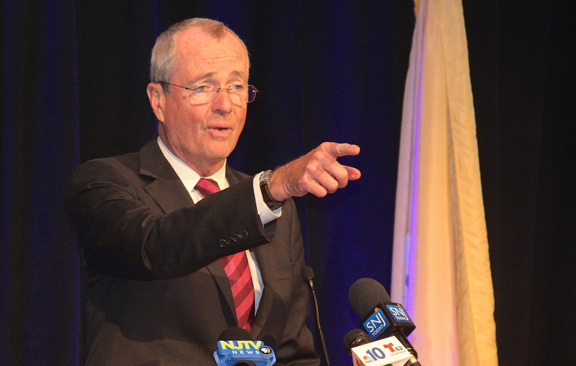
Gov. Phil Murphy Keynote Speaker for East Coast Gaming Congress

Spectrum Gaming Group and law firm Cooper Levenson, producers of the East Coast Gaming Congress & NextGen Forum, announced that New Jersey Governor Phil Murphy, Monumental Sports CEO Ted Leonsis and American Gaming Association President and CEO Bill Miller will deliver the keynote addresses for this year’s event, to be held June 12-13 in Atlantic City.

Murphy not only signed the enabling legislation in 2018 but also placed the first legal bets in New Jersey. He has been a vital supporter of his state’s gaming industry.

Miller, the recently installed President and CEO of the AGA, has been an important voice as sports betting rolls out across the country. Leonsis is founder, chairman, majority owner and CEO of Monumental Sports & Entertainment, which owns and operates the Washington Capitals, Washington Wizards, Washington Mystics, and Capital One Arena in downtown Washington, D.C. He was an early supporter of sports betting, offering his vision of how it can integrate with sports.

“Our keynote speakers encompass top decision-makers in the critical worlds of government, gaming and professional sports, a perfect combination to provide essential insight to our audience,” said Spectrum Gaming Group Managing Director Michael Pollock, a co-founder and organizer of the conference.

ECGC early-bird registration rates are still available at eastcoastgamingcongress.com.

ECGC, the second-longest-running gaming industry conference, annually attracts more than 500 gaming operators, regulators, equipment manufacturers, attorneys, architects, analysts, public officials, investors and other gaming-related professionals. The ECGC program this year also includes:

  • Day 1 NexGen Gaming Forum
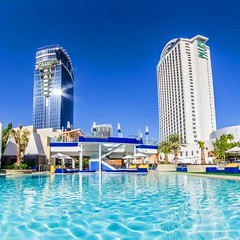
  • Day 1 Welcome Cocktail & Networking Party at The Pool at Harrah’s
  • Day 2 Leadership ThinkTank, where six prominent CEOs share their insights and visions
  • Three conference tracks: Sports and Gaming, Gaming Ops, and Gaming Market Analysis
  • Outstanding networking opportunities

ECGC is organized and produced by Spectrum and Cooper Levenson, Attorneys at Law. Other co-organizers and co-producers are the Friedmutter Group, an industry-leading architectural and design firm based in Las Vegas, and Sysco Corporation, the global leader in selling, marketing and distributing food products to restaurants, healthcare and educational facilities, lodging and gaming establishments.

Borgata Atlantic City to Unveil New Sportsbook

The Borgata casino in Atlantic City will open a $12 million sportsbook and bar titled the Moneyline Bar & Book on June 29.

The facility will also include a bar and lounge named Level One that will be connected to the sports bar.

“We knew we wanted to provide our guests with an experience that was more than a transactional venue for sports wagering,” Marcus Glover, Borgata’s president and chief operating officer said in a press release. “We felt Borgata’s guests deserved something that would advance the market by bringing together sports, culinary, entertainment, gaming, and nightlife into a destination experience.

The Borgata has been using its race book space for sports betting since opening its live sportsbook last June. Officials said the race book will continue to accept sports wagers even after the new facility opens.

The project will include six sports betting windows as well as self-service betting kiosks. It will also include 19 slot machines built into the bar and four blackjack tables at the cocktail lounge. The new, 8,000-square-foot facility will also include a 40-foot-wide by 11.5-foot-tall LED video wall and 17 additional 98-inch and 86-inch displays.

Borgata was the first casino to offer legalized sports betting in New Jersey. It joins eight other Atlantic City casinos that have state-of-the-art sports betting options.

Online PA Sports Betting Expected to be Huge

Online sports betting is now a reality in Pennsylvania, and industry observers are saying the market could end up being the most lucrative in the U.S.

SugarHouse Casino in Philadelphia held a three-day public testing period of its online sports betting systems at the end of May, after regulators gave their approval. The casino is expected to begin a 24 hours a day online operation starting in June.

Dustin Gouker, an industry analyst for the Play Pennsylvania gaming news website, predicts the Pennsylvania market will easily rival New Jersey’s online market, which handled nearly $300 million in wagers in March alone.

“It certainly could be bigger than Nevada or New Jersey is right now,” said Gouker. “If everything goes right, and everybody puts out a good app, they’re going to see billions of dollars wagered annually and revenue in the hundreds of millions. It’s going to be robust.”

“When you look at casino gaming overall, Pennsylvania is one of the largest states,” said David Forman, senior director of research for the American Gaming Association, in an interview with the Play Pennsylvania site. “In terms of gaming, Pennsylvania collects more tax revenue than any other state. The appetite for a legal sports betting market there is huge.”

Pennsylvania has been moving slowly on the online portion of its sports betting provision, passed as part of the major gaming expansion law in 2017, partly because of extra caution in light of the recent U.S. Department of Justice opinion that the 1962 Wire Act prohibits interstate exchange of sports betting wagers and information.

“Regulators are rightly focused on the integrity of the bets and making sure operators have reliable platforms to use,” Forman said. “All markets, with maybe the exception of New Jersey, have shown a learning curve. As other states learn and roll this our more broadly, we’ll see an impressive uptick in the amount bets and revenue raised.”

SugarHouse Casino, which has operated its Play SugarHouse sports betting site in New Jersey since last August, is the first to launch in Pennsylvania. Insiders say Rivers Casino, also owned by Rush Street Gaming, will be next up after that.

Meanwhile, the Pennsylvania Gaming Control Board has approved a sports-betting license for Mohegan Sun Pocono in Wilkes-Barre. The casino, which was the first to open in Pennsylvania, becomes the seventh of 12 casino licensees in the state approved for sports betting. There also are sports books at two off-track betting parlors.

The next licensee to launch a sports book likely will be Presque Isle Downs Casino in Erie, which has a license and expects to open sports betting soon. Mount Airy Casino Resort announced it will submit an application soon.

Borgata Babes Case Headed to Trial

After more than 10 years, cocktail servers at the Borgata casino in Atlantic City will get their day in court, after an appellate court ruled that the case can move forward.

The servers protested the casino’s weight policy for cocktail servers and the scanty costumes they were required to wear—which led to the case being dubbed the Borgata Babes case.

According to the Press of Atlantic City, the lawsuit was filed in 2008 by five of the original 22 women who claimed the dress code created a culture of humiliation and harassment. The women involved in the initial claim disputed a policy prohibiting the servers from gaining more than 7 percent of their body weight after they were hired, among other provisions.

The case has been dismissed by a trial court and appealed twice.

“After a decade of motion practice and appeals, plaintiffs are entitled to their day in court,” read the appellate court decision.

In 2015, an appellate court ruled that 11 women could still go to trial, but the Borgata sought and obtained the trial court’s permission to “renew” its summary judgment motion with limited additional evidence presented.

“The trial court should have followed its initial inclination and scheduled the case for trial, instead of giving defendant a second bite of the apple on summary judgment issues this court already decided,” the appellate judgment read. “The trial court had no authority to reconsider the same evidence we reviewed and reach a different legal conclusion from that evidence.”

According to the Press, four of the 11 women settled with Borgata and two others declined to go forward with the second appeal. The five remaining women in the suit — Tara Kennelly, Noelia Lopez, Cindy Nelson, Tania Nouel and Jacqueline Schiavo — are represented by Robert Herman, of Linwood.

In another matter, Atlantic City Mayor Frank Gilliam Jr. has settled a civil lawsuit with a casino nightclub director who he allegedly borrowed money from but failed to pay back, the Press reported.

According to court documents, Meredith Adele Godfrey and Gilliam reached a settlement over an unpaid $5,000 personal loan. Details of the settlement were not available.

FanDuel, DraftKings Ready to Challenge Illinois Exclusion

If Illinois enacts a sports betting law that seeks to exclude the daily fantasy sports companies FanDuel and DraftKings, the state will be quickly sued by both companies which will charge that the exclusion is unconstitutional.

An amendment to the state’s proposed sports betting bill seeks to block the two companies—which now offer online sportsbooks—to protect state casinos.

Lawyers for the two companies, said such an exclusion would not likely withstand a legal challenge.

“…As the amendment’s proponents have made abundantly clear in their committee testimony, the purpose of the amendment is not to seriously assess the suitability of potential operators, but instead to exclude two specific competitors who are leading the market in other states,” the attorneys for the fantasy sports sites wrote. “We believe FanDuel and DraftKings could make a strong claim that this selective targeting of winners and losers is not permitted by the Illinois or U.S. Constitutions.”

According to the Cook County Record, the report was authored by attorneys from the firm of Jenner & Block, of Chicago. The authors included Anton R. Valukas, a former U.S. Attorney for the Northern District of Illinois and former chairman of Jenner & Block; Ian H. Gershengorn, who served as Principal Deputy Solicitor General and Acting Solicitor General, under former President Barack Obama; Thomas J. Perrelli, who served as Associate U.S. Attorney General under Obama and now serves as chair of Jenner & Block’s Government Controversies and Public Policy Litigation Practice Group; and Clifford W. Berlow, a former Illinois Assistant Attorney General and is now a partner in Jenner & Block’s Appellate and Supreme Court Practice Group.

They said they had been hired by FanDuel “assess the constitutionality” of an amendment recently proposed by Illinois state lawmakers which would essentially block FanDuel and Draft Kings from participating in Illinois’ sports betting market for three years.

The Illinois Legislature is considering a number of proposals for sports betting. The exclusion amendment was added to a House version of the bill. It would basically ban FanDuel and DraftKings for having offered daily fantasy sports contests in the state at a time when the state’s attorney general issued an advisory opinion that DFS was illegal gambling under Illinois law.

In response to that opinion, the fantasy sites filed suit, asking the courts to declare they were not illegal gambling operations. After years of litigation, the state and fantasy sports sites settled the matter without a ruling, the Record reported.

The sites argue that supporters of the “bad actors” amendment are attempting to use the 2015 non-binding Attorney General’s opinion to give the opinion the force of law.

“In essence, the amendment would give legal effect to the Attorney General’s disputed advisory opinion after the fact and without judicial review, all to the benefit of and at the behest of particular in-state casinos,” the Jenner lawyers wrote.

But the bill is short on time.

As the Illinois legislative session winds down, state Rep. Mike Zalewski, chairman of the House Revenue and Finance Committee, said he plans to introduce a last-ditch sports betting amendment to H 1260 that would include the lottery, mandate the use of official league data for in-play wagers and lower the fees and taxes from two previous amendments.

The only issue that remains is a so-called “penalty box” for DraftKings Sportsbook and FanDuel Sportsbook, which is being negotiated with stakeholders, Zalewski said. “That remains the Number 1 issue to be decided upon and then I think we can file a final amendment. This issue consumes all the oxygen related to sports betting right now. We know we need to make a decision on whether to include a penalty box or not. We still haven’t reached a consensus way to move forward on this,” he stated.

Zalewski said he listened to stakeholders’ concerns and lowered the fees and taxes. However, he said the initial licensing fee per operator will remain at $10 million because Governor J.B. Pritzker’s proposed budget includes the revenue.

At the most recent hearing, Illinois Casino Gaming Association Executive Director Tom Swoik pointed out a previous amendment allowed sports betting at 2,500 retail locations. Swoik said it was unfair that casinos would have to pay $10 million for a sports betting license while it would be legal at so many other locations. Zalewski responded, “We think there’s room for a lottery pilot program. It’s a state asset so we think it’s important to see what they can do with sports betting.” He added, “We’ve heard feedback on the type of wagers lottery concessionaires could take, the number of locations, where the money would go. I think we solved those items.”

Despite the narrow time frame—the session ends May 31—Zalewski believes he can advance H 1260 through committee to the House floor soon after the amendment is introduced. “We’ve been working with the Senate. They know where we stand. This isn’t happening in a vacuum. I think there’s a desire to do sports betting in the governor’s office and two chambers,” Zalewski said.

Regarding the bill’s requirement that official league data be used for in-play wagers, Zalewski said Tennessee was the first state to pass a sports betting bill including that demand by professional leagues. “Tennessee going on official league data is indicative to us that we might not be the first state,” Zalewski said. However, he noted, “We could maybe survive that challenge.”

House Passes Mashpee Trust Bill

A tweet by President Donald Trump wasn’t able to kill the H.R. 312, the Mashpee Wampanoag Tribe Reservation Reaffirmation Act, and neither was a defection of two Democratic representatives from Rhode Island. The bill passed 275-to-146, with 47 Republicans crossing party lines to vote for putting land into trust for the Massachusetts tribe.

The bill still faces great uncertainty in the U.S. Senate.

The bill, if passed by Congress and signed by President Trump (a very big if) would put about 321 acres in Taunton and Martha’s Vineyard into trust for the Mashpees. It would allow them to build a $1 billion casino with its partner Genting Malaysia.

Rhode Island opposes the bill because it estimates a casino in Taunton would cost its two Twin River casinos about $37 million annually. Gaming is the Ocean State’s third largest source of government revenue. That amounts to about $300 million annually.

Rhode Island Governor Gina Raimondo’s spokesman said last week, “She thinks it is a bad bill and is focused on protecting Rhode Island’s revenue.”

President Trump had tweeted two weeks ago, calling on Republicans to oppose the bill, mainly because of its connection to Democratic presidential contender Senator Elizabeth Warren, whom he derides as “Pocahontas,” because of her claims of having Indian blood in her ancestry.

One of Twin River’s lobbyists, Matthew Schlapp, whose wife is White House communications director, is credited with swinging Trump’s opposition to the bill. Warren’s involvement doesn’t help, however.

Other critics of the bill accuse the Mashpees of “reservation shopping” because they found land outside of their ancestral homeland and purchased it for a casino and tribal offices.

Rep. William Keating, who sponsored the bill in the House, said the vote gave him hope that it might pass in the Senate. He told the Providence Journal in a phone interview, “That was a significant vote that helps its chances a great deal,” adding “I think the central issue was that this was the tribe of the first Thanksgiving. It was an easily identifiable tribe, the only one in New England that was not federally]recognized.”

The bill is probably the tribe’s last hope for a sovereign reservation. The 2015 land into trust decision by the Department of the Interior was overturned by a federal judge a year later after the tribe had already broken ground on the First Light Casino & Resort. The judge ruled that the Taunton residents who sued were correct in their argument that the tribe was not able to demonstrate that it was under federal jurisdiction in 1934, as required by the Supreme Court decision Carcieri v. Salazar. The tribe was recognized by the federal government in 2009.

The judge gave the department a chance to find another route for the tribe but it wasn’t able to. Last year the Trump administration reversed the department’s previous decision.

Keating declared, “To deny them the right to their land is an absolute disgrace. Without land, the Mashpee Wampanoag are essentially treated as a second-class tribe with no ability to properly govern [their] people or provide essential services such as housing and education initiatives.”

During the House vote, Keating added, “The cast of characters behind the scenes spewing misinformation is revealing. Cultural warfare to benefit bank accounts. Corrupt intent for personal gain, all in the form of a racist tweet. And some members of this body are eager to let him get away with it — but not me, not my co-sponsors and not the majority of this House.”

Rep. Joe Kennedy, who represents the town of Taunton, had characterized the vote as a “matter of right and wrong, of correcting a historical injustice that has been perpetrated for far too long.”

One of the leaders of the opposition, Rep. Paul A. Gosar, argued that the bill would enrich a foreign corporation, Genting Malaysia. “Do you really want to vote for a $500 million bailout for a foreign gaming corporation?” he demanded.

Now that the battle shifts to the Senate, Rhode Island Senator Sheldon Whitehouse spokesman Meaghan McCabe said he would oppose bringing the bill up for a vote.

A spokesman for the state’s other senator, Jack Reed, said he opposed it too.

DC Sports Betting Expects September Launch

The DC Lottery, which oversees sports betting in the District of Columbia, said sports betting regulations could be released in June, followed by the issuance of licenses. Legal sports betting could begin in September.

However, the launch of the lottery’s app is running behind schedule and is not expected to be available until January 2021—well beyond the start of the National Football League season. The delay is worrying sports bettors but also will impact the District’s fiscal 2020 budget which will begin in October. That’s because according to the projected budget, the sports betting app accounts for $84.1 million of the expected $91.7 million in sports betting revenue for FY2020.

The committee on finance and revenue has been negotiating with the app’s supplier, Intralot, while that company has been struggling financially. In fact the committee recently urged the DC Council to search for a new supplier. Council member Jack Evans wrote in the budget report, “The committee encourages the Lottery to continuously monitor whether to pivot to a competitive mobile marketplace, especially considering the project start of private sports wagering in September 2019 and the delayed timeline for the Lottery offering.”

Even without an app, sports betting will be available in DC later this year.

The first $200,000 of sports betting tax revenue will go toward problem gambling services and the rest will be divided between neighborhood safety programs and free child care.

Board to Vote on Sands Bethlehem Sale

The sale of Sands Casino Resort Bethlehem by Las Vegas Sands Corp. the Poarch Band of Creek Indians, owner of Wind Creek Hospitality, will be the subject of a special meeting at 1 p.m. May 29 in Harrisburg, Pennsylvania, Gaming Control Board Chairman David Barasch said at the start of the board’s meeting last week.

A vote on the sale, which officials of the Alabama tribe say will be followed by a $90 million hotel expansion immediately, has been delayed twice due to the multitude of sports betting applications, truck stop gaming issues and mini-casino applications the board has been handling, according to a board spokesman.

Meanwhile, more details emerged last week on the tribe’s plans for the property, on the land of the former Bethlehem Steel plant. In filings with the gaming board revealed by the Lehigh Valley Live website, Wind Creek Hospitality laid out plans to turn the former Bethlehem Steel No. 2 Machine Shop into a 300,000-square-foot indoor adventure/water park and hotel. Conceptual renderings show the long, vacant building transformed into a gigantic greenhouse-like structure between the SteelStacks and casino.

The tribe has pledged $100 million for the Machine Shop transformation, in addition to the $90 million hotel expansion. However, the Allentown Morning Call reported last week that the Poarch Band has set aside $250 million for the water park and adjoining hotel.

Within the park will be about 105,000 square feet of water rides, along with other activities like rock-climbing and zip lines, according to the plans submitted with the state.

Wind Creek told the gaming board it wants to begin the improvements as soon as it closes on the $1.3 billion sale of the South Side Bethlehem property.

NLRB Orders Station to Deal With Union

The National Labor Relations Board has ordered Station Casinos’ Palms Casino Resort to cease illegally refusing to recognize the Culinary and Bartenders Union and to begin negotiating with it.

The federal panel official certified the April 2018 union election and unanimously ruled that Station Casinos was in violation of federal law by refusing to recognize and bargain with the union. It added that the casino could not change working conditions before such an agreement is adopted.

Geoconda Argüello-Kline, Secretary-Treasurer for the Culinary Union issued this statement: “We demand that Station Casinos recognize their workers’ voices and votes at the Palms and begin contract negotiations in good faith immediately.”

Jeopardy! Champion to Speak at UNLV Conference

Jeopardy! champion James Holzhauer has been added to the speaker lineup or this week’s 17th annual International Conference on Gambling & Risk Taking at the University of Nevada, Las Vegas.

The UNLV International Gaming Institute, which is producing the four-day conference at Caesars Palace, added Holzhauer to a panel discussion on Thursday, May 30 with Andy Bloch, a professional poker player.

Bloch, who also lives in Las Vegas, was part of the MIT card-counting team in the 1990s, made famous in the book Bringing Down the House.

Holzhauer, who has won 23 straight matches and more than $1.7 million going into last week’s Jeopardy! show, will discuss how he attributes much of his game show success to sports betting.

Holzhauer’s emergence coincided with the first anniversary of the Supreme Court decision allowing widespread sports gambling outside Nevada. “That face happens to be clean-shaven and accompanied by tasteful button-down shirts and a math degree from the University of Illinois,” according to the Washington Post.

The panel will focus on the real-world applications of research and how experiences and knowledge in sports, sports betting, the game show, poker, and blackjack overlap with each other and with the world outside of gaming.

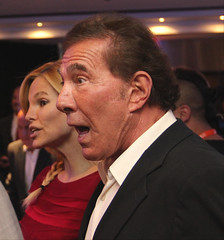
Steve Wynn Gives Big to the GOP

The Republican Party recently has accepted nearly $400,000 in donations from Steve Wynn. 

The April contributions included $248,500 to the Republican National Committee and $150,000 to the National Republican Senatorial Committee in April, according to a report last week from Politico citing two people familiar with the gifts, which are set to be disclosed publicly this month, the news website said.

The GOP defended accepting the money despite the 77-year-old billionaire’s history as an alleged sexual predator.

“Everyone is entitled to the presumption of innocence and due process,” said RNC Chairwoman Ronna McDaniel. “Over the last year and a half, multiple investigations into the allegations against Steve Wynn have concluded. Throughout this entire process, Steve has repeatedly and unequivocally denied wrongdoing, and he has not been charged with or found guilty of any crimes. At this point, there is no reason for refusing his support.”

Wynn resigned last February as chairman and CEO of Wynn Resorts, the Las Vegas-based casino giant he founded, following a report in The Wall Street Journal detailing accusations that he’d been harassing and assaulting female employees of the company for years.

He also stepped down as finance chairman of the Republican National Committee, a post he won after Donald Trump entered the White House in January 2017 in acknowledgement both of his stature as a longtime GOP megadonor and fundraiser and his friendship with Trump, who himself has been accused of sexual assault or harassment by some 19 women.

Last month, Wynn greeted Trump on the tarmac when the president flew to Las Vegas for a political rally.

As McDonald pointed out, Wynn has not been charged to date with any crimes, and he has steadfastly denied the accusations. Wynn Resorts, however, has not gotten off so lightly. Investigations by gaming regulators in Nevada and Massachusetts have resulted in $55 million in fines against company for failing to act on numerous in-house reports of his alleged misbehavior. In one case that was known to Wynn’s board of directors at the time and to some former high-level executives of the company, these included a payment of $7.5 million he made in 2005 to a former Wynn Las Vegas manicurist who accused him of raping her and making her pregnant.

MGM Plans Luxury Condos in Atlantic City

MGM Resorts International and Boraie Development LLC announced a plan to build 200 luxury condo units in Atlantic City’s Marina District, near MGM’s Borgata Casino.

“We believe there is strong demand in the high-quality primary and second home market, and Boraie is the best possible partner to execute this project,” MGM said in a press statement. “While we are very excited about this project and its potential positive impact on the city, at this time we have not yet established the project’s feasibility, and it is subject to extensive regulatory approvals.”

MGM Resorts owns the land where the housing project will be built. The plan is contingent on approval from the U.S. Army Corps of Engineers and the New Jersey Casino Reinvestment Development Authority, which has zoning and land-use oversight of the city’s Tourism District.

Boraie recently completed construction of Atlantic City’s first market-rate housing development in a half-century in the city’s South Inlet section, according to the Press of Atlantic City.

MGM has reportedly been in discussions with the city over the redevelopment of its marina properties, but no details have been released.

McDevitt Prevails Again in Atlantic City

Bob McDevitt has won a fifth term as president of UNITE HERE: Local 54, the city’s largest casino workers union. McDevitt defeated Al Tabei for the fifth consecutive time.

The winning slate included Vice President Javier Soto and Secretary-Treasurer Donna DeCaprio, both incumbents. The local casino industry employed more than 30,000 people in 2018, and Local 54 represents nearly one-third of Atlantic City’s casino and hospitality workers.

The losing side accused McDevitt and his team of forcing shop stewards to convince members to either vote for McDevitt or not vote at all. A van transporting members to the voting station was seen ejecting a worker who said she was going to vote against McDevitt. What the opposition calls “thugs” were surrounding the voting location intimidating members arriving to vote.

Of 16,000 eligible members, only 1,596 voted. McDevitt prevailed by 268 votes. Many of those who arrived to vote were challenged about their paid-up union dues, and eventually left without voting. Lawyers for Tabei and his slate believe there are grounds for a challenge and will seek to overturn the vote.

The election victory comes just months before negotiations will start on the next contracts with Atlantic City casinos. Opponents claim that the last three contracts have resulted in givebacks that have weakened the position of the union, cost jobs and reduced opportunities for union members.

Local 54 has a history of corruption. One of McDevitt’s predecessors, Roy Silbert, was removed from power in 1990, along with the union’s national president Edward Hanley, and accused of being controlled by the Philadelphia mob family of Angelo Bruno and later Nicky Scarfo. Silbert is now an MMA referee.

$800 Million Price Tag For Las Vegas Shootings?

In a filing with the Securities and Exchange Commission, MGM Resorts has reportedly said to expect damages of $800 million in connection with the lawsuits filed by victims of the shooting at Mandalay Bay on October 1, 2017 that killed 58 people and injured more than 800. The company says it has insurance that will cover $751 million of that total.

But that’s news to lawyers from the plaintiffs. Robert Eglet, who is negotiating for more than 2,500 of the victims, says talks have barely begun.

“We’re not even close to resolving all the terms and issues before we have a settlement,” said Eglet. “Nothing is signed. We have a long way to go before we have an agreement.”

The suits mostly allege that MGM is responsible for their physical and psychological injuries because the company allowed shooter Steven Paddock accumulate an arsenal of weapons in his Mandalay Bay room where he launched his attack.

MGM believes that such a settlement is possible.

“MGM’s stated goal regarding mediation is, as it always has been, to resolve these matters so that all impacted can move forward in their healing process,” spokeswoman Debra DeShong said in an statement.

“After multiple mediation sessions over several months, progress has been made, and while mediation is ongoing, the company believes it is reasonably possible that a settlement will be reached,” she said.

Eglet says nothing is certain.

“I wouldn’t be involved in mediation for three months if it wasn’t possible,” Eglet said. “But it’s not probable—it’s possible. We may get a settlement, but we may not.”

It’s unclear how many of the suits are under negotiation. MGM Resorts filed suit to consolidate the complaints into one lawsuit in a federal court where its liability could be defended, but was rejected by a judge. And when it was reported that MGM has sued the victims, an MGM boycott was launched by several victims groups.

MGM still doesn’t believe it is liable. The SEC filing said the company “continues to believe it is not legally responsible for the perpetrator’s criminal acts,” but would seek to settle “in the interest of avoiding protracted litigation and the related impact on the community,” according to the Las Vegas Review Journal.

Caesars, ESPN Partner on Studio at The Linq

Caesars Entertainment has scored a deal with ESPN to bring an ESPN-branded TV studio focused on sports betting to its Linq Las Vegas Hotel & Casino on the Strip.

The partnership calls for the creation of sports betting-themed content to air with segments of ESPN’s recently launched “Daily Wager” betting show and the integration of Caesars’ sports betting data and branding across all facets of the cable network’s programming.

ESPN said the studio will serve as its Las Vegas hub and will contribute to its linear, digital and social shows as well as ESPN.com and the ESPN app.

“The sports betting landscape has changed, and fans are coming to us for this kind of information more than ever before,” said Mike Morrison, vice president of business development at the network. “We are poised to expand our coverage in a big way.”

Slated for launch next year, the studio will be the second for Caesars on the Strip following a partnership concluded with Turner Sports in February that will create an outpost of Turner’s “Bleacher Report” show inside the sportsbook at Caesars Palace.

Caesars has been aggressive in seizing opportunities presented by a U.S. Supreme Court ruling last May that voided a longstanding congressional ban on sports wagering nationwide. Since then, eight states have legalized sports betting and at least a dozen more are expected to follow suit in the near future.

In January, the company announced a deal with the National Football League that establishes the Caesars as the league’s first-ever “official casino partner,” although the agreement doesn’t include sports betting.

Partnership deals have also been reached with the league’s Oakland Raiders, who are moving to Las Vegas in 2020.

Caesars and its casinos also have marketing deals with the NFL’s New Orleans Saints and Baltimore Ravens, the NHL’s New Jersey Devils, the NBA’s Philadelphia 76ers and is partnering with New York’s Oneida Indian Nation to run sportsbooks at the tribe’s three casinos.

“During the last few years, Caesars has spent a lot of time and money to re-energize the Caesars brand,” Macquarie Securities gaming analyst Chad Beynon said. “Given (both) this deal and prior ones, it’s quite clear to us that the Caesars brand will be prominently featured in a significant amount of programming and live events, giving them more connections with sports.”

Currently, the Las Vegas Strip is home to a studio at the South Point Casino developed in partnership with the Vegas Stats & Information Network, which features veteran sportscaster Brent Musburger and programming dedicated to discussing odds, betting lines and related content on satellite radio and streaming services.

Downtown Las Vegas casino operator Derek Stevens has said he plans to bring a VSiN studio to his new Circa Las Vegas resort, which is under construction and scheduled to open in 2020.

Sports Betting, Online Casinos Continue to Drive New Jersey Gambling Industry

New Jersey is celebrating the one-year anniversary of the U.S. Supreme Court striking down a federal ban on sports betting by announcing a sixth straight sports betting handle over $300 million in April.

Figures released by the state Division of Gaming Enforcement said the state’s casinos and racetracks took in about $314 million worth of sports bets in April. The state has seen about $2.64 billion wagered on sports since it was legalized in June.

April was marked by the start of the NHL and NBA playoffs as well as Major League Baseball’s season.

Also up impressively was revenue from online casinos, which was up about 59 percent to $36.5 million.

As an example of how online betting is influencing the state’s market, Paddy PowerBetfair—which also operates the FanDuel sportsbook at The Meadowlands—announced its online casino revenue was up more than 83 percent for the first quarter to $11.7 million. Betfair’s online casino is offered through a partnership with the Golden Nugget in Atlantic City, which is the state’s leader in the market.

Overall, the state saw an increase in gambling revenue of nearly 24 percent compared with a year ago, at over $265 million. Atlantic City’s nine casinos showed an overall increase of nearly 17 percent in revenue to about $251 million.

The figures are buoying Atlantic City just as it goes into its busy season, said James Plousis, chairman of the New Jersey Casino Control Commission in a press release.

“Gaming and leisure customers have many options, both online and on site, and Atlantic City is positioned for a great summer season with its addition of new sportsbook lounges and other exciting amenities,” he said.

Among the casinos, according to an analysis by the Associated Press, the Golden Nugget saw its revenue increase in April by 3.7 percent compared with a year ago, to $29.3 million. The Borgata increased its revenue by 2 percent, to $58.8 million.

However, the effects of the opening of two new casinos in June 2018 continue to hinder other casinos. Resorts saw its revenue decline by 24.2 percent in April, to $13 million; Caesars was down 24 percent to $22 million; Tropicana was down 9.7 percent to $27.7 million; Harrah’s was down 6.3 percent to $27.2 million; and Bally’s was down 4.7 percent to $14.5 million.

For the new casinos, Hard Rock saw $25 million in revenue and the Ocean Casino Resort saw $16.3 million.

For racetracks that offer sports betting, the Meadowlands reported $12.1 million in revenue from sports betting after paying off winning bets in April. Monmouth Park in Oceanport NJ saw $2.5 million in sports betting revenue. Sports wagering revenue also brought in more than $6.5 million for Atlantic City casinos and their online partners in April.

And, as the anniversary of the Supreme Court decision passed, many in the state noted that it was New Jersey that challenged the federal ban and opened up a new gambling industry which has been thriving in the state.

“Just one year ago, I was thrilled to see the Supreme Court finally side with New Jersey and strike down the arbitrary ban on sports betting imposed by Congress decades ago,” New Jersey Governor Phil Murphy told the Press of Atlantic City. “Between job and revenue growth, capturing this formerly underground industry has breathed new life into our racetracks and casinos.”

Fox, Stars Group to Launch FOX Bet Network

FOX Sports is teaming with the Stars Group to launch a sports betting network titled FOX Bet which will be offered in states and jurisdictions were sports betting is legal.

The Stars Group already has market access in 13 states for sports betting. The companies hope to launch the site by August in time for the NFL season.

FOX Sports will provide the Stars Group with an exclusive license to use certain FOX Sports trademarks and will invest $236 million to acquire 5 percent of the group. CNBC has also reported that FOX will have an option to acquire half of the group’s U.S. interests after 10 years.

Under the partnership, the Stars Group and FOX Sports expect to launch two products in the Fall of 2019 under the FOX Bet umbrella. One will be a nationwide free-to-play game, awarding cash prizes to players who correctly predict the outcome of sports games.

The second product, which will be named FOX Bet, will give customers in states with regulated betting the opportunity to place real money wagers on the outcome of a wide range of sporting events in accordance with the applicable laws and regulations, the companies said in a press release.

As part of the deal, Fox Corporation will acquire about 5 percent of the Stars Group through newly issued shares at a price of $16.44 per share.

The Stars Group will use the money—estimated at $236 million—for general corporate purposes and to pay down debt.

“We believe this strategic partnership uniquely positions us to build a leading betting business in the U.S., which represents one of the most exciting long-term growth opportunities for our company,” said Rafi Ashkenazi, chief executive officer of the Stars Group. “Leveraging our proven media partnership strategy with Sky Sports in the UK, we are excited to partner with FOX Sports to integrate wagering into sports media and drive customer acquisition and retention in the U.S.”

Under the commercial agreement, FOX Sports will grant to the Stars Group an exclusive license for the use of certain FOX Sports trademarks for a range of immersive games and online sports wagering, and certain exclusive advertising and editorial integration rights on certain FOX Sports broadcast media and digital assets.

As part of the transaction, FOX Sports will receive certain brand license, integration and affiliate fees. In addition, during the term of the commercial agreement, the Stars Group has agreed to a minimum annual advertising commitment on certain FOX media assets, the release said.

PA Mobile, Online Delays Costing Millions

Pennsylvania’s fledgling sports betting program is leaving millions in tax revenue “on the floor” by delaying implementation of online and mobile sports wagering, according to a report on the PennBets news site.

In New Jersey, where around 80 percent of sports wagers are mobile, sports betting revenue was $31.7 million last year, with $3.7 million to the state. In Pennsylvania, which has a larger population than New Jersey, the report notes that same $31.7 million would have yielded $10.8 million to the state, thanks to a 34 percent revenue tax.

That doesn’t even take into account the $10 million fee paid by licensees in Pennsylvania to offer sports betting.

Gaming board spokesman Doug Harbach acknowledged to PennBets that regulatory progress on mobile sports betting slowed after the U.S. Department of Justice reversed its former opinion on the 1962 Wire Act, declaring it does, in fact, apply to sports betting over the internet.

“We had bricks-and-mortar up in six months following the court decision,” Harbach said. “I don’t consider that slow. As for mobile, there is no doubt that the DOJ Wire Act interpretation announcement (in January) may have slowed things a bit, but our jurisdiction wanted to make sure we got this right above doing it fast.”

AGA Establishes Responsible Sports Betting Code

The American Gaming Association released a new set of self-regulations on advertising and marketing legal sports betting. The new “Responsible Marketing Code for Sports Wagering” was released on the one-year anniversary of the U.S. Supreme Court striking down the Professional and Amateur Sports Protection Act (PASPA).

AGA’s code, developed in coordination with its members, extends commitments made by individual companies through their own responsible marketing activities and those adhered to by all association members through the Responsible Gaming Code of Conduct. The new code includes self-imposed restrictions on target audiences, outlets and materials branding, while mandating responsible gaming inclusion. The tenets of the code apply to traditional and digital media marketing activity.

“For several years, the gaming industry has been committed to driving the illegal market out of business for the benefit of consumers, state and local economies and the integrity of both games and bets,” said Bill Miller, president and chief executive officer of the American Gaming Association. “The gaming industry has an obligation to extend our decades-long commitment to responsibility to this growing sector, and that’s exactly what this effort codifies.

“We are setting a high bar for sports betting advertising and will continue to ensure that everyone involved in the expansion of legalized sports betting across the country—gaming operators, sports leagues and teams, broadcasters and other businesses—rise to this standard.”

One part of the code calls for AGA members to be vigilant in only advertising sports betting products to adults. No cartoon characters, music or entertainers that appeal primarily to children are to be used in advertising, and media outlets and venues aimed at children under 18 are to be avoided.

Since PASPA was overturned, the breadth of business interests engaged in the sports betting ecosystem has expanded significantly. This code is a part of a continual effort by AGA to discourage illegal gambling, including the for-profit promotion of illegal, offshore operators.

AGA’s new code comes amidst the rapid expansion of legal markets across the country. Since PASPA was overturned in May 2018, seven new states began offering single-game legal sports betting. Six more states and the District of Columbia have authorized legal markets, and dozens more have introduced legislation to legalize and regulate sports betting.

In the past year, nearly $8 billion has been legally wagered on sports nationwide, $3 billion of which was wagered outside of Nevada. Post-PASPA, legal sports betting has generated $55.3 million in new state and local tax revenue.

According to a report last year from Evercore ISI, sports betting could create up to $7 billion in incremental advertising this year.