Author: Casino Connection Staff

New Jersey Sues DOJ on Adelson Connection to Wire Act Opinion

New Jersey Attorney General Gurbir Grewal has filed suit against the Department of Justice to obtain documents to determine Sheldon Adelson’s impact on the DOJ’s recent reversal of a legal opinion on the federal Wire Act which has challenged the legality of online gaming.

Adelson, owner of the Las Vegas Sands casino, has been personally financing an effort to get online gambling banned in the U.S.

New Jersey is one of four states that have legalized online gambling and the state now brings in about $350 million in online gambling revenue and about $60 million in taxes per year, according to the Associated Press.

In January, the DOJ reversed a 2011 department opinion that said the 1961Wire act applied only to sports betting where information crossed state lines. The new opinion ruled that all types of online gambling were covered under the act, which immediately cast doubt on the legality of all online gambling, including lotteries.

Media reports—including a report in the Wall Street Journal—suggested the new opinion was almost identical to an opinion written by Adelson lobbyists.

Grewal filed an information request in February seeking information about lobbying efforts by Adelson backed groups. The state has received no reply on the requests.

Attorney General Gurbir Grewal filed a document request in February and says he hasn’t received any records in response. The suit filed in U.S. District Court seeks the turnover of those records.

“Online gaming is an important part of New Jersey’s economy, and the residents of New Jersey deserve to know why the Justice Department is threatening to come after an industry we legalized years ago,” Grewal said in a news release. “It’s especially important that we figure out whether this federal crackdown is the result of a lobbying campaign by a single individual seeking to protect his personal business interests.”

Meanwhile, New Hampshire—which runs an online lottery—has also challenged the opinion in federal court. A ruling in that case is still pending.

The DOJ has waited to begin any possible enforcement of the new opinion, but a self-imposed grace period ends next month. New Jersey’s suit notes that it had requested an expedited release of the documents since possible enforcement of the new opinion begins June 14.

Meanwhile, the World Series of Poker announced it will still hold online tournaments this year under a player sharing agreement between Nevada and New Jersey despite concerns over the effect of the new opinion.

New Jersey, Delaware and Nevada have an agreement to share online poker player pools. Only Nevada and New Jersey, however, offer WSOP.com. Last year the famed poker event staged online tournaments sharing players between the two states and has scheduled several online events for this year.

Though the new opinion would clearly challenge the legality of those player sharing agreements, the WSOP says it will offer at least two of the online events that are scheduled before June 14.

Atlantic City’s Ocean Casino Resort May Finally Turn Profit

Atlantic City’s Ocean Casino Resort has greatly reduced its debt and will return to profitability in May, Eric Matejevich, the interim CEO managing the oceanfront property while an ownership transfer takes place recently told the Associated Press.

The property, which opened in 2012 as the Revel casino, has been a habitual money loser since its opening and eventually closed in bankruptcy. It was reopened last year under the ownership of the late Bruce Deifik, the Colorado developer who died in a car crash last month.

The resort had begun to run out of money in September, leading Deifik to relinquish ownership in January, after just six months. It is now being acquired by hedge fund Luxor Capital, which had agreed to take over and invest $70 million into the property.

Of the $70 million, Luxor used $50 million to pay down debt, leaving it with a greatly improved balance sheet, Matejevich told the AP.

“In a lot of ways, we’re going faster than we had imagined we could,” Matejevich said. “We’ve largely eliminated losses at the property and we are making a major effort to reintroduce this place to people.”

The casino won more from customers at slot machines in April than in any previous month, and recorded its second-highest hotel occupancy rate, he said. Official figures have not yet been released by state regulators.

The casino has also launched a new marketing plan emphasizing its casino offerings and is addressing customer complaints about the property. For example, the casino adding new elevators to make it easier to get to the casino floor from the hotel.

The casino is also adding 200 new slot machines, and has bought out the lease for the Royal Jelly burlesque club on its premises from operator Ivan Kane. Ocean will replace it by Memorial Day weekend with what it describes as a “speakeasy” club that will also offer burlesque, as well as tabletop gambling.

“Luxor is committed to operating Ocean and is pleasantly surprised by the speed of operating improvements at the property,” Matejevich told the wire service.

New Jersey’s Monmouth Park Racetrack Meet Benefitting from Sportsbook

Monmouth Park racetrack in Oceanport New Jersey is feeling the benefits of sports betting in the state—as well as some state purse subsidies—and has opened a 61-day meet that will see purses averaging about $500,000 daily.

Last year’s 52-day meet averaged $325,000 in daily purses and distributed approximately $4.3 million for stakes. This year’s sets 64 races for the meet which includes 15 new races worth $7.1 million according to Thoroughbred News Daily.

The $1-million TVG.com Haskell Invitational, will be held July 20, moving to Saturday from its usual Sunday slot. The other Grade I at the meet, the United Nations S., will take place June 22.

The increased purse money is attracting new trainers to the track including Kentucky Derby and Kentucky Oaks-winning trainer John Servis, who is actually returning to Monmouth for 2019 after a lengthy absence. He will have a string of 30 horses at Monmouth, the first time since the early 1990s that he’s had a significant presence at the track.

“The purse structure was very appealing to me,” Servis told Thoroughbred News. “I like the stakes schedule, too. It fits a lot of the horses I have. I’ve always enjoyed being at Monmouth Park. You’ll see me there a lot more. I’ll be back and forth between Parx and Monmouth a couple of times a week.”

Maximum Security, trained by Servis and disqualified as the winner of the 2019 Kentucky Derby, is also now being housed at Monmouth, according to local reports.

Trainers coming to Monmouth for the first time include Kelsey Danner, Jorge Duarte, Jeff Englehart, Raymond Handal, Michelle Nihei and Christopher Seale. The top five trainers from last year’s meet–Jorge Navarro, Jason Servis, Kelly Breen, Chad Brown and Patrick McBurney–are also returning, the News reported.

Monmouth Park is now home to the William Hill Race & Sports Book, the first sportsbook in the state to begin operating when sports betting went live in June in New Jersey. The track has also scheduled five new promotional days as part of the meet.

Report: MLB, NBA Playing ‘Hardball’ on Data Fees

According to a recent report, Major League Baseball and the National Basketball Association have been doing more than simple lobbying to get a royalty fee from emerging sports betting operations around the country.

The league’s, especially MLB, are demanding a royalty for their official data, which is critical for sportsbooks, especially for in-play betting. The league wants the royalty for data distributed by its licensed partners.

According to a report at the website SportsHandle.com, the leagues have formed a strategy they see as “playing hardball.”

“The National Basketball Association and Major League Baseball’s quest for a direct, off-the-top cut of legal sports bets has escalated well beyond lobbying at statehouses across the country,” the report said.

The article, citing unnamed sources, says the data firm “Sportradar, doing the bidding of Major League Baseball, told certain sportsbooks they will need to fork over a ‘royalty’ of 0.25 percent of wagers taken on MLB contests for access to the league’s official feed through Betradar.” The article also said a similar strategy was used for NBA information ahead of the league’s playoffs.

SportRadar issued a strong denial of the article to insidergaming.com, saying it was “inaccurate and bordering on libel.”

The league, commenting to Forbes Magazine, did not confirm or deny the story, but said the league feels it has a right to ask for such fees.

“MLB invests significant resources and capital to produce a fast, reliable and rich data feed that will allow sports books to create more engaging products for our fans and generate additional revenue from the ability to offer more types of markets and keep those markets open longer,” the league said. “The right to use our official data requires a direct license from MLB and the data will be supplied by one of our authorized data distributors.”

This is the first season the league is making their official data feed available to sports betting operators and the licensing structure was put in place prior to the start of the current season, officials told the magazine.

The Sportshandle story acknowledges that other data feeds are available to sportsbooks, but they may not be as fast as the official data feed, which could limit some in-play betting.

The league also said it can also offer more than just data through licensing fees.

“We have granted our data distributors a grace period during which they can supply our official data to operators while we negotiate deals for its use,” the league told Forbes. “In addition to a license to use official MLB data, the deals we are looking to strike also include rights to use other MLB intellectual property and access to certain marketing opportunities to further distinguish these legitimate operators from unlicensed operators, including offshore books, which will not have any access to such data, rights or marketing opportunities.”

Court Rules Atlantic City Casino Can Collect from Problem Gambler

A new Jersey state appellate court has ruled that Harrah’s Atlantic City can seek to collect a $160,000 debt from a gambler who argued he should not have been given credit because he is a compulsive gambler.

According to the Associated Press, the gambler had secured a $160,000 loan from Harrah’s through counter checks drawn on his bank. Harrah’s deposited those checks when he didn’t repay the loan, but the bank didn’t honor them due to insufficient funds.

The appellate court granted Harrah’s a summary judgment for $188,697.31, which included the initial loan, interest and attorney’s fees. The court ruled that the gambler did not provide evidence that Harrah’s was aware he had a gambling problem.

Kentucky Derby Bettors Lose $9 Million

In a shocking turn of events, Kentucky Derby favorite Maximum Security crossed the finish line first but became the first winner disqualified for interference in the race’s 145-year history. After reviewing videos for 22 minutes, officials disqualified Maximum Security and gave the win to long shot Country House. As a result, bettors who backed Maximum Security to win, place or show lost about $9 million, according to TwinSpires.com.

Country House, at 65-1, had the second-longest odds of any Kentucky Derby winner. Across the U.S. more than $6.2 million was wagered on Maximum Security to win and only $520,907 on Country House. The largest win bet reported on Maximum Security was $8,000, which would have paid a net $36,000, and the largest win bet on Country House was $2,500, paying a net $162,500, according to TwinSpires.com. Maximum Security also had $1,495,408 bet to place and $1,272,082 to show.

At the SuperBook at Westgate Las Vegas, Sportsbook Director John Murray said, “We went from a good-sized win to a good-sized loss. The SuperBook animal racing trade team is annoyed by the decision.”

At William Hill sportsbooks in Nevada, only 1 percent of bets and 1 percent of the total amount wagered on the Kentucky Derby futures market were on Country House, whose odds were as long as 80-1 in February at William Hill.

But one lucky bettor at the Mirage racebook turned $8 into $78,000 when he hit two identical $4 superfectas that paid $51,400 each, $39,065 after taxes. Mirage Sportsbook Shift Manager Scott Shelton said, “It was a miracle. He must’ve been a saint in a previous life running into buildings to get babies or something for everything to happen for him to cash those tickets. I don’t know if anyone else in the country bet $4 to win that super. To do it basically straight and have a horse come down so he can win, that was a miracle.” Shelton said the bettor, a regular at the Mirage, watched the race with his mother and “was basically in shock. He doesn’t bet big at all.”

Churchill Downs officials said Kentucky Derby wagering increased 10 percent to a record $165.5 million, beating last year’s record $149.9 million. Wagering from all sources on the 14-race card totaled a record $250.9 million, up 11 percent over 2018’s $225.7 million total.

City of Las Vegas Legalizes Pot Lounges

The city of Las Vegas will soon be one of the few municipalities in the country to host lounges where people can consume marijuana.

City Council voted 4-1 to permit the venues, endorsing a measure sponsored by Councilman Bob Coffin that sets the city, which includes the casino district surrounding Fremont Street, on a lone path in Nevada, whose Legislature declined to act this year on a statewide bill to allow the lounges.

Currently, only Denver, San Francisco, a handful of other California municipalities and some locations in Alaska permit venues for consumption.

“We are blazing a new trail here,” said Scot Rutledge, a principal with a firm called Argentum Partners that represents cannabis businesses.

Purchasing pot for recreational use has been legal in Nevada since 2017 under enabling legislation that makes no specific provision for consumption. But legislative experts agree that local governments could license it provided patrons were at least 21 years old and that use was not visible to the public.

Neighboring Clark County, which includes the Las Vegas Strip, has considered the lounges but decided earlier this year to wait for the Legislature to give its OK.

“The state will catch up,” Coffin said. “We can’t wait for the state to act.”

The bill passed despite opposition from the casino industry, which has been keeping the recreational industry at arm’s length for fear of running afoul of federal law, which still treats marijuana as an illegal drug.

The bill requires that consumers must be at least 21 years old and must bring their own marijuana into the location. Consumption cannot occur in the view of the public or in an outdoor area, and delivery to commercial locations is prohibited. The venues cannot provide, sell distribute or store the drug, but they may be located as close as next door to a distributor, and they may sell or distribute paraphernalia.

Permits to operate the lounges will be limited for the first year to the 12 recreational retailers currently licensed, the rationale being that they’ve already been vetted. They must apply for a special-use permit that costs $5,000 yearly and must be approved by City Council. They will also be required to meet odor standards and have plans for security, training, fire safety, air quality and sanitation. They must also be 1,000 feet from schools or casinos and 300 feet from protected institutions such as churches.

NASCAR Makes Deals with Action Network and Genius Sports

NASCAR has inked deals with two different companies to deliver high-quality sports betting content.

NASCAR and the Action Network recently announced a partnership to share sports betting content. Every week, NASCAR.com will feature editorial content and analysis from the Action Network, including expert PJ Walsh’s picks for NASCAR’s new props game, the NASCAR Props Challenge. In addition, the Action Network will share recommended picks and value bets for race winners plus head-to-head driver matchups via race-day content published on NASCAR.com.

NASCAR Managing Director of Gaming Scott Warfield said, “Sports betting presents a unique opportunity for NASCAR, so we want to immerse our fans in engaging and educational content around legalized gaming. We’re focused on strengthening NASCAR gaming content across platforms and the Action Network and its team of experts represent an integral part of our strategy.”

The Action Network Chief Content Officer Chad Millman added, “NASCAR has always been at the leading edge of innovation. We’re thrilled to be their partner as they continue to engage their audience with new and forward-thinking ideas.”

Launched before the start of the 2019 race season, the NASCAR Props Challenge is the sport’s first props-style game for fans. Prior to each Monster Energy NASCAR Cup Series race, the Action Network will share tips on NASCAR.com and ActionNetwork.com/NASCAR to help players try to earn points and win prizes in the 10-question game. In addition, the Action Network content will help fans strategize around NASCAR Fantasy Live.

NASCAR also recently formed a partnership with Genius Sports to develop an official NASCAR gaming offering for legal sportsbooks. Genius Sports will create a real-time gaming platform that provides up-to-the-minute odds plus a suite of traditional wagers and prop bets.

Last year, NASCAR also signed an integrity deal with Sportradar to develop a comprehensive sports gambling policy for the industry. In addition, the sanctioning body allowed all teams and tracks to sell marketing sponsorships to sports betting companies and licensed sportsbooks.

Meanwhile, NASCAR and Genius Sports,. a leading sports data company, announced a landmark deal that will see Genius Sports develop an official NASCAR gaming offering for legal sports books. The new agreement is the first step toward creating an advanced live betting product that will drive fan interest and deepen engagement around NASCAR race events, according to a press release issued by the supplier.

Genius Sports will utilize NASCAR’s official data feed to build a high-end live betting product to be sold to legal sports books around the world. Exclusive access to NASCAR’s official data allows Genius Sports to create a real-time gaming platform that provides up-to-the-minute odds and a suite of traditional wagers and prop bets. The new initiative will enhance the race-day experience and keep fans engaged with the sport for longer periods of time.

“Partnering with Genius Sports allows us to deliver a dynamic fan engagement platform in the rapidly growing world of legalized sports gaming,” said Brian Herbst, senior vice president, broadcasting and innovation, NASCAR. “This new relationship will provide another entry point to the sport, and complements our strategy to create a more immersive experience for fans.”

As a result of the agreement, Genius Sports becomes the exclusive provider of NASCAR data to licensed sports books. The new data partnership marks NASCAR’s first in the growing U.S. sports betting sector.

“NASCAR fans are some of the most devoted in the world, and we look forward to helping them to create a deeper, more connected experience that is both safe and secure as the business of sports betting continues to evolve in the U.S.,” said Mark Locke, Genius Sports CEO. “Furthermore, our global relationships will help bring the excitement of NASCAR racing to new audiences both within the United States and in new territories around the world.”

With 40 cars on the track reaching speeds of over 200 miles per hour, NASCAR’s official data is vital to the development of a gaming platform. Only licensed sports books in regulated territories will have access to the official data, providing greater transparency, accuracy and cooperation to monitor and safeguard NASCAR events.

Before the start of the 2019 season, NASCAR developed a comprehensive Sports Gambling Policy for the industry in which the sanctioning body granted all teams and tracks the ability to sell marketing sponsorships to sports-betting companies and licensed sports books.

NCAA Scraps Ban on Championships in Betting States

The National Collegiate Athletic Association has rescinded a policy in place for years that prohibited states with legal sports betting from hosting college championship games.

The change means major betting destinations such as Las Vegas can enter the running for the College Football Playoff National Championship, the Final Four of the NCAA Men’s Basketball Tournament and other post-season extravaganzas.

As soon as this summer, the University of Nevada, Las Vegas, Las Vegas Events and the Las Vegas Convention and Visitors Authority can jointly bid to host NCAA championships beginning with the 2022-23 academic year probably through 2026-2027

GOP Group Sues to Stop R.I. Sports Betting

A group led by several prominent Republicans of Rhode Island have sued to force the state to go to the voters for permission to have sports betting, something the legislature legalized last November.

The lawsuit is led by Dr. Daniel Harrop, who argues that the state constitution requires any “new types of gambling” to be submitted to the voters. Currently sports betting is offered at the state’s two Twin River casinos. He is allied with former state Republican Part Chairman Brandon Bell, and Joe Larisa Jr., a former chief of staff to then Governor Donald Carcieri, although he is paying for the suit.

Larisa told reporters last week, “This isn’t an anti-sports betting suit. It isn’t an anti-online sports betting suit. We are just saying let the people vote. If one provision of our Constitution is, ‘eh, we’ll disregard it this time,’ then all provisions of our Constitution are in jeopardy.”

The current GOP Chairman Sue Cienki added, “This is just about good government. Let the people decide.”

About a year ago the legislature passed a sports betting bill for the casinos in Lincoln and Tiverton. It went live the day after Thanksgiving amidst optimistic estimates of substantial tax revenues. Several months later lawmaker added mobile sports betting to the mix.

As of last month actual revenues for sports betting have been less than half what had been predicted, according to the state lottery, which operates the games. It was arrived at by a consultant hired by the Revenue Department, Christiansen Capital Advisors, LLC; according to that department’s spokesman, Paul Grimaldi.

Raimondo’s 2020 budget included an estimated $30 million from sports betting. Grimaldi said that much revenue won’t be realized until 2024. This fiscal year it estimates revenue of $2.65 million.

Those figures might have to be adjusted downward if the Mashpee Wampanoag tribe is able to open a casino in Taunton, Massachusetts, or if sports betting is legalized in the Bay State or Connecticut. The most profitable aspect of sports betting is mobile wagers, according to the consultant.

The state had hoped to make $11.5 million from sports book this year, but the predictable results of the Super Bowl made a big dent in those profits. The state gets 51 percent of the profits of sports book. If the profits are lower, it’s percentage reflects that.

Those who say the state legalized sports betting by legal means, argue that the voters previously authorized sports book when they voted for table games in 2012 and 2016, because the measure included references to Class III gaming.

That’s Governor Raimondo’s position. A spokesman responding to the lawsuit stated, “Multiple legal opinions have affirmed that sports betting was already approved by the voters. The revenue from sports betting supports investments in education, health care, infrastructure and more, and we remain confident that it will be upheld in court.”

Her administration promises to continue developing a mobile app and online betting portal while the litigation moves forward.

Last year when the legislation was moving forward House GOP Leader Blake Filippi unsuccessfully offered an amendment to require asking for an advisory opinion from the Rhode Island Supreme Court. At that time opponents raised the idea of eventually filing a lawsuit to challenge the law.

Senate President Dominick Ruggerio, who was sports betting’s chief cheerleader in the legislature fired off an email attacking the lawsuit: “Sports wagering is a popular entertainment option that helps to offset reliance on taxes,” he wrote. “It is stunning that a Republican group, which one might think would support individual liberties and lower taxes, would instead seek to obstruct legal sports wagering. All of the legal advice I have received has been consistent — the voters approved sports wagering when they approved casino gaming, and I am very confident that the state will prevail in any challenge.”

The GOP lawsuit states: “Unlike table games (and video lotteries in Tiverton), sports betting was never approved by Rhode Island voters,” the suit says. “Sports betting appeared nowhere in the 2012 or 2016 ballot questions expanding the types of gambling to be conducted at the casinos. … As a matter of law and logic, Rhode Island voters could not and did not knowingly approve a new type of gambling — sports betting — that was neither referenced in the questions nor handbooks.”

The GOP group argues that “Class III gaming” is too much of a catchall phrase and that voters could never have discerned from that description that it would include sports book. Especially since the Supreme Court at that time had not yet hinted that it would lift the ban on sports betting—something it did about a year ago.

Rhode Island is the only New England stand that offers sports book.

Caesars To Make MGM-Like Cuts

Strong hotel occupancy combined with a run of good luck to help Caesars Entertainment boost net revenue in its core Las Vegas Strip market by 5.8 percent in the first quarter.

Regional revenues also increased as the acquisition of Centaur Gaming offset tougher competition in Atlantic City and the temporary closure of some Midwest casinos due to bad weather.

In all, corporate-wide net revenues compared to Q118 were up 7.3 percent to $2.12 billion, mainly on the strength of a $50 million surge in Las Vegas to $953 million

Wynn Moves On From Massachusetts Decision

Wynn Resorts has survived its brush with the punishment end of the Massachusetts Gaming Commission with a $35 million fine that it can pay with two days of operating. revenue Now it is putting all its efforts into “bringing Greater Boston and New England a luxury hospitality and entertainment experience unlike anything the region has ever seen,” according to a company statement. Its $2.6 billion Encore Boston Harbor is scheduled to open in Everett on June 23, but may be delayed by a week or two, according to Wynn Resorts CEO Matt Maddox.

The company is bragging that it will outdo the “Red Sox, Celtics, Bruins, and Patriots combined” and attract more than eight million visitors in the next year.

Now that the shadow of having its license yanked has passed, the company is working at breakneck speed to hire and train about 5,500 employees, with 1,550 already hired. Not that it ever stopped, even in the midst of the investigation. The company says it expects to have all team members hired by June 1. “We’re bringing in people very quickly at this point,” said a spokesman.

To emphasize that fact, Wynn issued a statement last week noting that “Wynn Resorts CEO Matt Maddox and the board of directors have worked diligently to make the important and necessary changes to the company’s corporate leadership, governance, compliance programs and human resources policies,” all the while preparing to open its signature tower casino.

The statement continues, ”There is no place in the world like Encore Boston Harbor,” which sits on 33 formerly contaminated acres along the Mystic River in Everett. The 27-story hotel will include 671 rooms (104 of them luxury suites), 15 restaurants, spa, convention center, and a public harborwalk and park.” It notes that the casino will have 3,158 slots, 242 gaming tables, VIP poker, private gaming.

In the latest earnings conference call held late last week, Maddox commented on the reported interest in buying Crown Resorts, the Australian gaming giant. While he didn’t say that anything was happening with that deal, he did allude to possible purchase.

“While we are not pursuing any acquisitions at this stage, we will be looking at opportunities that you cannot replicate through development,’ he said.

“We believe that Asia will continue to grow faster than the West and if there are opportunities in those areas, we will take a look at it, but we do not have anything right now that we are focused on,” he said.

Wynn stock fell in the aftermath of the call after the company reported lower EBIDTA in both Macau and Las Vegas.

But the focus for the next month at least will be on Boston.

The Encore Boston Harbor will have 15 food and beverage venues. They include an elegant steakhouse; the Sinatra, high end restaurant and bar serving Italian cuisine; the Mystique, a casual Asian fusion restaurant; the Waterfront, serving seafood, snacks, craft beer and spirits; Oyster Bar; Bru, a fast-casual restaurant; Red 8, casual Chinese next to the gaming floor; Fratelli, casual Italian; The Buffet, all-you-can-eat dining next to the gaming floor; Dunkin’; Garden Café, casual dining serving locally grown seasonal cuisine; Garden Lounge, upscale craft cocktails; On Deck, a sports and burger bar; Memoire, an elevated boutique night club; Center Bar, a cash bar that caters to non-gaming guests.

“The investigation consumed a great deal of resources, at both the company and with the regulators,” said Maddox. “We feel very confident that it will be the nicest integrated resort on the east coast. We’re ready to open, but we may give ourselves another week, or not. We do not believe if we choose to appeal it will impact our ability to open the project at the end of June.”

The state is already spending the $100 million in taxes it expects to collect from the casino in the next fiscal year. It has included that amount in the upcoming budget.

As part of the ramping up toward the June opening, and with an eye towards even larger profits, the casino has asked special permission to serve alcohol until 4 a.m., but only on the gaming floor—and to playing customers. Most businesses in the state must cease serving alcohol at 2 a.m., but state law does allow exceptions. The commission already granted permission to the MGM Springfield, which opened in August. The commission requested public comment on the request before issuing an answer.

Less than a week after hitting Wynn with its record fine, the commission met to do everything to make the planned opening in June a smooth event. The five members listened to reports and issued needed approvals.

Peter Campot, in charge of Wynn Resorts’ design and construction arm, told commissioners, “We’re essentially on schedule and we expect to be in very good shape by the first of June.” He continued, “All of the slot machines are on the floor now and I think all of them are installed and we’re also installing gaming tables throughout. So if you walk through the facility right now it actually looks like a casino, which is pretty neat.”

The company plans to have all construction completed by June 1 and turn the facility over to operations managers. The city of Everett is expected to issue a certificate of occupancy on June 10.

In the intervening weeks, employees will be “in the final throes of finishing spaces throughout the facility” said Campot.

The commissioners learned that the hotel is almost completed and furniture is being installed. The convention center is also near completion. State inspectors are at work inspecting elevators and escalators.

Also nearly finished is the parking structure. Paving around the casino is about three-quarters complete. Landscaping will continue until the facility opens, said Campot.

On opening day, the casino will initiate an action plan it developed over the last year with law enforcement agencies from the state and surrounding communities.

President Robert DeSalvio says he was intimately involved in developing this plan. “I’m a little more than five years into the project and this was probably the number one topic we had at all of our public meetings, so I wanted to stay close to this one personally,” he told the commission.

The Encore Boston Harbor has hired more than 100 police to work at the casino during the opening. That includes 84 state police, plus officers from Everett, Boston Medford and the MBTA Transit Police. The U.S. Coast Guard and other police units will patrol the Mystic River and adjacent waterways. Other transportation officials will be on hand to deal with signal issues at the Alford Street Bridge.

DeSalvio told the commission “We’ve got this covered—air, land and sea,” adding, “We know that first week for sure is going to be a challenge, after that we’re going to wait and see what the midweeks are like … There’s clearly going to be a new kid on the block syndrome, you’re going to have a lot of initial trial and all of our partners have said that they will work with us all the way through that.”

Although signs will direct drivers to the correct routes to reach the casino, its advertising campaign will emphasize using public transportation the first week. “We’re trying anything and everything to make it easy for folks to hopefully choose anything other than using their automobile,” he said.

Meanwhile the MCG has piled up $1.2 million in fees by five law firms that it accrued from defending itself from a lawsuit by Wynn founder Steve Wynn. He sued the commission to try to prevent some personal information he says were protected by attorney-client privilege about allegations of sexual misconduct from finding their way into the report that the commission’s investigators provided to the panel.

Wynn’s lawsuit alleged that the company he founded had illegally turned over documents to the commission’s Investigations and Enforcement Bureau that were covered by attorney/client privilege. Eventually the suit was settled, with the commission agreeing to withhold some of the information that Wynn objecting to including in the report, which was later released to the public.

The year-long investigation was launched after an expose by the Wall Street Journal in January 2018 that detail allegations of sexual misconduct by Steve Wynn. The allegations led to his quick departure from the company a month later and complete divestiture of his interest in the company. The biggest scandal was that Wynn had paid a $7.5 million settlement to a manicurist who claimed he raped her and made her pregnant. This fact was kept from most of the company’s executives, and from the commission. Eventually just about every executive and attorney touched by the scandal was jettisoned and, under new CEO Mike Maddox, the company remade its image and corporate culture.

MGC has no intention of paying the bill itself. State law allows it to dun Wynn itself for the costs of any investigations associated with its gaming license. The Boston Herald found out about the expense through a public records request. Commission spokesman Elaine Driscoll told the Herald that Wynn Resorts would be responsible for covering the expenses, while adding that the invoices the paper uncovered, “might not be an accurate reflection of the true total.”

The $1.2 million Wynn will pay will be added onto the $35 million it was fined, and the $500,000 that CEO Maddox was fined personally. Presumably he will pick up that tab himself.

Officially, Wynn has not yet stated whether it will pay the fine. It has the option of appealing the fine in the courts. It has until May 31 to pay the fine, and a company spokesman said last week that it would make an announcement of its decision within that time.

Despite the frenetic activity leading up to the opening, there is a possibility that Wynn will decide not to accept the fine, and will instead choose to leave the Bay State.

Despite the personal fine on Maddox, the commission made clear that it doesn’t consider present company responsible for past sins. In its decision it wrote, “After a careful review of the record in this matter, the commission concludes that there is no substantial evidence to support a finding that Wynn MA, LLC, Wynn Resorts, Limited, or any of its associated qualifiers willfully provided false or misleading information to the Commission at any time during the RFA-1 licensing process.”

However, it added this significant comment, “… it is difficult to fathom why the existence of the allegations and settlements was not disclosed to the Commission in 2013 and 2014 during the RFA-1 and RFA-2 reviews.”

Those comments could provide fodder to the ongoing lawsuit by the Mohegan Sun, which has asked a Massachusetts state court to throw out the license awarded to Wynn. It also accuses the commission of not sufficiently investigating Wynn before it granted the license.

The Mohegan tribe reviewed the commission’s suitability investigation and then issued this statement from Chief of Staff Chuck Bunnell, “Mohegan Sun’s ongoing litigation challenging the award of the Region A license continues, and certain evidence from the suitability proceeding will likely be material to our litigation.”

The tribe lost the competition for the Boston metro license to Steve Wynn in 2014. It now claims the commission “arbitrarily and capriciously” awarded the license to Wynn over its proposal for a casino in Revere next to Suffolk Downs racetrack.

Proving that contention enough to win a judgment is a tough haul, says Richard McGowan of Boston College, a professor who studies gaming. He told the Day, “When you look at the legislation that established the commission, you see the commission has a lot of latitude.” He added, “The suit’s more of a nuisance than anything. At best, it’s a long shot.”

So, Wynn could be facing unknown expenses much higher than the $35 million it knows about.

Board Chairman Phil Satre laid out the possibility that his company might leave depending on the conditions imposed upon it during the three days he and other company officials were grilled by the commission. At that time he said, “Conditions on our license would depend on what they are, of course. I mean we have to evaluate that at that point in time …. If the conditions make it impossible for us to succeed here, then I think our board of directors is going to have to take that under consideration.”

Later, when Satre was asked by Commissioner Zuniga what the company would do if it was found “not suitable” to retain its license, he bristled somewhat: “Why would you care about that. I mean our financial condition at that time would not be an issue for you. It’s an issue for our shareholders … but why is it an issue for you?”

New Jersey Regulators Fine Gaming Innovation Group

The New Jersey Division of Gaming Enforcement has levied a $25,000 fine against Gaming Innovation group for a geolocation violation which allowed a gambler located outside of New Jersey to gamble on a state licensed site.

GIG has acknowledged the mistake and agreed to accept the fine.

The division said a complaint was filed in December and the fine was levied after an investigation. The division did not say which online platform allowed the error, but reports suggest it was connected to Hard Rock Atlantic City, which recently began taking online action.

New Jersey regulators have previously fined GAN in 2016 and PokerStars in 2017 for similar violations. Recently, they also fined Borgata and Caesars Interactive Entertainment New Jersey.

A New Deal for Mobile Betting in N.Y.?

The two New York lawmakers leading the charge for mobile sports betting now want to restrict phone and internet betting to the four upstate commercial casinos and the state’s tribal casinos, reining in their ambitions for the market in an attempt to break an impasse with Gov. Andrew Cuomo over legalization.

The new limits are among a series of major alterations to legislation offered by Queens Democrat Joseph Addabbo Jr. in the Senate and Westchester Democrat J. Gary Pretlow in the Assembly as the four commercial casinos Tioga Downs Casino and Resort in the Southern Tier, Rivers Casino & Resort in Schenectady, del Lago Resort & Casino in the Finger Lakes and Resorts World Catskills in Sullivan County gear up to implement regulations allowing them to offer in-person-only betting.

As amended, the bills would ban both remote and in-person betting from Resorts World Casino in New York City and from off-track betting outlets and professional sports stadiums statewide.

The new versions further clarify mobile sports betting by limiting it to the commercial casinos, where sports betting is already grandfathered in under their 2013 enabling law, and the casinos owned by the Oneida, Seneca and Mohawk Indian nations.

The lawmakers hope they restrictions will move Cuomo off his insistence that mobile betting requires an amendment to the state Constitution, which means approval in a statewide referendum and votes from consecutive sessions of the Legislation, a process that would push legalization out by at least two years and probably longer.

Pretlow and Addabbo believe mobile betting is critical to New York’s competitive position vis a vis neighboring New Jersey and Pennsylvania, and both hotly disagree with the governor over the need for a constitutional amendment, hence the new restrictions, Pretlow said, which make the bills “cleaner”.

“We wanted to get over the first hurdle, that first hurdle being mobile. Once we get over that, the rest can be easier,” he said.

“I had hoped the newly enacted New York state budget would have included authorization for mobile sports betting, but (an) agreement could not be reached by the April 1 deadline,” Addabbo said. “I continue to believe online wagering will create new jobs for state residents and provide a significant source of state revenue to fund education and other vital programs.”

The bills retain a controversial provision requiring operators to make royalty payments to sports leagues, but they now include licensing fees, a tiered structure for tax rates and new provisions for the protection of athletes and game officials and to address problem gambling.

The initial license fee would be set at $12 million with mobile betting revenue subject to a 12 percent tax, separate from the 8.5 percent assessed on land-based revenue.

In addition to the so-called “integrity fee” of 0.20 percent of all wagers a royalty for all intents and purposes the amendments require sports governing bodies to implement procedures to protect athletes, players, umpires, referees, club officials and personnel, and members of their families, from physical attacks, verbal threats or other forms of harassment.

The new problem gambling protections include a freeze on player accounts when lifetime deposits exceed $2,500 until the player acknowledges receiving information on problem gambling resources. Also, the New York Gaming Commission would be charged with preparing an annual report on the impact of mobile sports wagering on problem gamblers.

AC Lighthouse Offers Free Climbs for Mother’s Day

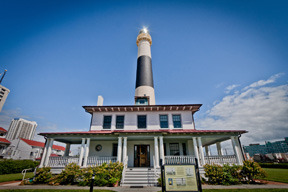
Looking for a memorable way to tell Mom she’s the light of your life? Then bring her to Absecon Lighthouse the weekend of May 11 and 12, because dear old Abby is treating Mothers to a free climb. Moms who show their “I Climbed” card at nearby Tony Boloney’s Pizza afterward will receive a free slice of pizza as a reward. 

Hours of operation are 11 a.m. to 4 p.m., with the last climb at 3:30pm. Parking on site is free and dogs are welcome on leashes in the museum. First lit in 1857, Absecon Lighthouse is New Jersey’s tallest lighthouse and the country’s third tallest lighthouse.

Absecon Lighthouse is a state-owned historic property administered by the non-profit Inlet Public/Private Association.  Located at 31 So. Rhode Island Avenue in Atlantic City, it is open to visitors Thursdays through Mondays, 11 am to 4 pm.

For more information about Absecon Lighthouse and its programs call (609) 449-1360 or visit us on the web at www.abseconlighthouse.org.

Atlantic City Free Public Library Classes and Programs for May & June

Computer, iPad classes offered for adults 55+ with impaired vision

The Atlantic City Free Public Library is holding Library Equal Access Program (LEAP) iPad and computer classes for adults ages 55 and older who are visually impaired.

The iPad classes will be held at the Richmond Branch Library (4115 Ventnor Ave.), and the computer classes will at the Main Library (1 North Tennessee Ave.). Registration is required. Please call 1-800-792-8322, ext. 812, to register. Also, those who need a ride to the classes can arrange for one by calling Atlantic County Transportation at (609) 645-5910.

The LEAP classes are sponsored by the N.J. Commission for the Blind and Visually Impaired, in partnership with Advancing Opportunities and the New Jersey State Library.

  • iPad Intermediate Class on May 14, 21, 28 and June 4 from 12-1:30 p.m. at Richmond Branch Library — iPad experience is a prerequisite for this course. In this intermediate class, build on your basic iPad skills to learn more about the accessibility features and assistive apps that are available.
  • Introduction to Computers & Accessibility on June 11, 18, 25 and July 2 from 12-1:30 p.m. at Main Library — Are you new to using computers or haven’t used them in several years? In this beginner computers class, participants will learn basic computer terminology, mouse and keyboarding skills, as well as how to navigate a computer. Also, learn about the software available on these computers that can help those with vision issues see and hear what’s on the computer screen.

Library to host College Admissions Workshop on May 16

College-bound students and their parents are invited to attend a College Admissions Workshop 101 program on Thursday, May 16, at 5 p.m. in the Main Library meeting room. The program is free.

An Atlantic Cape Community College representative, fluent in English and Spanish, will talk about the college admission process and answer questions.

Specific workshop topics will include: academic and career programs, student services programs, financial aid, NJ DREAMERS: Alternative Application and scholarships.

Contact Victor Moreno at (609) 343-4922 or email vmoreno@atlantic.edu for information.

CS21 workforce program provides guest services, computer training

The Atlantic City Free Public Library, in partnership with Atlantic Cape Community College, offers a training program – Communication Skills for the 21st Century Workforce (CS21) – to help present greater employability opportunities for local residents.

The CS21 program provides qualified disadvantaged, displaced and employed workers an additional opportunity to obtain workplace literacy services and career pathway training. The training is free for all participants.

The classes, taught by ACCC instructors, are held at the Main Library in the Learning Center for Computer Literacy, Education and Career Advancement. The library’s CS21 training program consists of two courses. Those interested can take one or both courses.

  • Computer Literacy Skills training – This 10-week program will provide the basic computer skills needed for those searching for employment, writing a resume, submitting applications online, utilizing email and performing tasks at the workplace.
  • Guest Services certification – Participants can earn a professional certification that is recognized by the hotel and hospitality industry in this two-week class. The instructor will teach using Guest Service Gold®, a program developed by the American Hotel & Lodging Educational Institute. The goal is to create guest service-oriented line-level employees who know how to engage with their guests to provide memorable guest service. Though focused on hotel careers, the class teaches skills that are applicable to many jobs in the general service industry.

Registration is required. Call CS21 coordinator Adrianna Martinez at (609) 345-2269, ext. 3044, or visit the Main Library Help Desk for more information.

Take me to your reader: Summer Sci-Fi Book Club begins in June

Teenagers and adults are invited to participate in the Atlantic City Free Public Library’s Summer of Sci-Fi Book Club. The group will meet once a month from June through August.
Those interested in the book club must have an Atlantic City Library card in good standing and sign up at the Main Library Help Desk. Call (609) 345-2269, ext. 3075, for information.

The Hitchhiker’s Guide to the Galaxy by Douglas Adams
Tuesday, June 18, at 5 p.m.
Read the book, watch the movie, or listen to the BBC podcast. This meeting will discuss the meaning of life and the misadventures of Arthur Dent.

Dune by Frank Herbert
Tuesday, July 16, at 5 p.m.
Read the book or watch the movie. At this meeting, participants will fold time and space to visit the planet Arrakis.

Fahrenheit 451 by Ray Bradbury
Tuesday, Aug. 13, at 5 p.m.
Read the novel, the graphic novel adaptation or watch the movie. This meeting will discuss Bradbury’s dystopian future where literature is on the brink of extinction — a librarian’s worst nightmare!

Camaro Parade at Hard Rock Atlantic City

Hard Rock Hotel & Casino Atlantic City will be celebrating the kickoff of their Car-A-Day In May giveaway with a parade of Camaros on the Atlantic City Boardwalk Saturday, May 4.

Wild Card Reward members have a chance to win a 2019 Camaro every day from May 1 through May 31, guaranteed. Drawings will take place daily Sunday through Thursday at 7 p.m. and Friday and Saturday at 8 p.m. with 31 Camaros given away throughout the month.

The parade of approximately 18 Camaros led by the South Jersey Camaro Car Club, kicks off at 12 p.m. on the Boardwalk from Rhode Island Avenue and will make its way down to Arkansas Avenue.

To conclude the parade, the Camaros will drive through the iconic Hard Rock Atlantic City Porte Cochere circling the 60 ft. Gibson Les Paul guitar.

The general public are encouraged to attend the parade. For more details, visit hardrockhotelatlanticcity.com.

Rodio Appointed Caesars CEO

Carl Icahn has gotten his pick for Caesars Entertainment’s new CEO, industry veteran Tony Rodio. But how long Rodio will keep the job could be another matter entirely, with two potential buyers currently poring over the gaming giant’s books and possibly more to follow.

The change in leadership was not unexpected. Neither was the choice.

With Caesars’ share price (Nasdaq: CZR) swooning through most of 2018, Chief Executive Mark Frissora tendered his resignation in November. But no replacement was immediately found, and when his contract expired in February, he agreed to stay on until the end of this month. That the replacement would be Rodio was a foregone conclusion once Icahn had amassed a controlling equity stake earlier this year