Author: Casino Connection Staff

Pointsbet Pays Off Moneyline Bettors in New Jersey for Duke, UCF Matchup

Pointsbet has rewarded New Jersey bettors that took the University of Central Florida in a straight moneyline bet against Duke in the early rounds of the NCAA Basketball Tournament despite UCF losing the game at the buzzer.

The Australian sports betting company that operates in the New Jersey market called the payout—which will be done with bonus bets—a “Good Karma” reward.

The company said it will also honor moneyline bets made at other bookmakers in the state. Bettors have to sign up at the site with their code “KARMA” and post their bet slip on social media to receive up to $100 in bonus bets. Obviously, the move is promotional and designed to get bettors to sign up for Pointsbet, but it is still unique in the market.

Duke was a 14.5 favorite in the game which ended with UCF missing two shots at the buzzer and Duke just avoiding a major upset.

PointsBet first created the Good Karma Payout to help bettors hurt in games swayed by officiating, such as the missed pass interference call that affected the outcome of the NFL’s NFC Championship Game.

In another matter, New Jersey Governor Phil Murphy has been announced as the keynote speaker at the Betting on Sports America conference scheduled for April 23-25 at the Meadowlands Exposition Center in New Jersey.

Murphy will share his vision for the future of sports betting in the state, organizers said.

While the state’s challenge to a federal ban on sports betting that eventually led to it being overturned by the U.S. Supreme Court was largely waged under former Governor Chris Christie, Murphy supported the effort and ultimately it was his name on the challenge heard before the high court. He also signed the state’s sports betting law.

“It is my pleasure to address delegates from the international sports betting industry who will join us here in New Jersey for the inaugural Betting on Sports America conference,” Governor Murphy said in a statement. “We are immensely proud of the integral part that New Jersey played in taking down PASPA and in doing so laying the solid foundations for legal sports wagering to be enjoyed by Americans across the nation. New Jersey has been a sports betting success story and we hope that other states seeking to go legal will replicate that positive experience.”

West Virginia OKs Online Gambling

West Virginia Governor Jim Justice let the March 24 deadline pass for vetoing the West Virginia Lottery Interactive Wagering Act, thus making the state the fifth in the U.S. to legalize online casinos and/or poker, following New Jersey, Pennsylvania, Delaware and Nevada. The state House passed the measure, H 2934, in February and the state Senate amended and approved the bill. The House accepted the changes and sent it to Justice.

Customers age 21 or older can play online poker and casino games within state lines. The state’s five casinos may apply for one of the five available permits at $250,000 each, renewable for $100,000 every five years. Platform and service management licenses will cost $100,000 and supplier licenses will cost $10,000. Online gambling revenue will be taxed at 15 percent.

Eilers & Krejcik Gaming estimated first-year revenue from online gambling would be about $11.6 million. But generating revenue was not the only motivation, said state Del. Jason Barrett. “Right now, online poker is illegal and it’s being done overseas and there are certainly some concerns there with the integrity of the games as well as making sure players are paid because it’s currently completely unregulated being offshore,” he said.

Observers said the most aggressive timeline would place an online gambling launch at 2020. The state allows three skins for each of the five casinos that offer sports betting; these deals could expand to include online gambling, observers said. Currently sports betting partnerships are the Greenbrier with FanDuel Sportsbook; Hollywood and Mountaineer with William Hill US; Mardi Gras and Wheeling Island, both owned and operated by Delaware North Companies, with Miomni.

But a dispute between Miomni and Entergaming has led to the closing of the sports books at Mardi Gras and Wheeling Island since March 6. The companies disagree whether Miomni has the right to use certain intellectual property. Miomni terminated its agreement with Entergaming in February.

In a letter to West Virginia Lottery Director John Myers, Delaware North President E. Brian Hansberry wrote he “believes that Miomni has and continues to infringe upon Entergaming’s intellectual property rights in relation to the use of proportions of the platform.” Hansberry also wrote Delaware North was unaware of the agreement between the two companies when it contracted with Miomni. He added the situation also has affected Delaware North’s online app, BetLucky.

Miomni and Entergaming have since traded allegations back and forth. Unfortunately, Hansberry noted, Wheeling Island and Mardi Gras have been unable to take bets on NCAA Basketball Tournament games, resulting in the loss of revenue for the state and disruptions for employees. He added, “We are evaluating our options” and working with both sides to resolve the dispute.

State Del. Shawn Fluharty, who led efforts to legalize sports betting, said, “It’s certainly frustrating because I worked for years to get the ball moving on this and got out in front of it early, help promote it, built a coalition with individuals involved in the lottery and casinos and really help kind of be the front man on sports betting to work so hard to see West Virginia get out in front of something.”

He added, “When you start thinking of disputes with intellectual property issues, they can go on forever. This could get ugly and ugly for a long time, which could make it ugly for West Virginia if we can’t get it resolved. If you’re Delaware North, honestly, the process should have been vetted better. So you’re telling me you enter into an agreement with Miomni, and then you don’t know who Miomni is working with. You don’t know that Entergaming and Miomni have a dispute. Are you absolutely unaware of it or did you not vet the process good enough?”

And Fluharty added, “We put the responsibility on regulators to make sure things like this don’t happen. So if you’re the lottery, you need to know every single entity that’s involved before allowing things to go live.”

Meanwhile, the sportsbooks closings resulted in handle of $2.8 million for the week ending March 15, the lowest since November which was a full month before Wheeling Island and Mardi Gras opened their sports books.

Virginia Gambling Bill Becomes Law

Virginia Governor Ralph Northam recently signed Senate Bill 1126, which legalizes casino and online gambling and sports betting. The bill instructs the Joint Legislative and Review Commission to conduct a comprehensive study of casino gaming regulations and submit a report by December 1. It also establishes the framework for the Virginia Lottery Board to establish guidelines for legalizing and overseeing online gambling and sports betting.

The measure allows Danville, Bristol and Portsmouth to hold voter referendums by January 1, 2021, to establish one casino per city, and also allows referendums in Richmond and Norfolk where the Pamunkey Indian tribe could open a casino. The Virginia Lottery Board cannot issue a casino license until July 1, 2020. The bill also requires the legislature to reenact the bill next session.

In addition, the measure states a gaming license only will be issued for projects with a $200 million minimum capital investment in land, facilities, infrastructure, equipment and furnishings.

Specifics regarding sports betting or online gambling, such as tax rates, market access, responsible gaming policies and more are not known.

But is a study truly necessary? Some lawmakers don’t think so, such as state Del. Mark Sickles, who sponsored a sports betting measure that would have taxed revenue at 15 percent, generating an estimated $41 million annually for the state. “I can’t even think of what the issues would be for a study unless you’re totally against wagering as a principle and you don’t care that illegal online betting is happening already. It’s just money out there we’re still leaving on the table,” he said.

State Del. Marcus Simon, author of an online sports betting bill that died in committee, said he’s not surprised the General Assembly wants to move cautiously on sports betting. “That’s sort of the culture of the Virginia General Assembly. We’re very rarely ever the first people to do things,” he said.

State Senator Chap Petersen, sponsor of another sports betting bill that died in committee, said, “The longer we wait, the more revenue we miss out on. There’s nothing wrong with a study, but I’m not quite sure what we’re studying,” he said.

But Colonial Downs Group Chief Operating Officer Aaron Gomes said he supported a study. “We believe in a thoughtful approach of evaluating the study outcomes before establishing a position on potential future legislation or any next steps,” he said.

Located outside Richmond, Colonial Downs, closed since 2014, will reopen in August and feature 600 historical racing machines. “Without historical horse racing machines, horse racing most likely would not be coming back to the Commonwealth. It brings a whole new demo into horseracing and offers an alternative to hopefully grow this sport,” Gomes said. The machines were approved as a form of gambling by the Virginia General Assembly in 2018. Other Colonial Downs gambling venues will open near Roanoke and Hampton later this year.

Cryptocurrencies in Gambling Estimated at $100 million

A new report from CryptoGamblingNews.com puts the values of cryptocurrencies dedicated exclusively to gambling currently at more than $100 million, down substantially from a peak of $1.5 billion in January 2018.

The report concludes that gambling-specific cryptocurrencies are now starting to stabilize following an uneven year for the global cryptocurrency market.

“The 2018 peak was fueled by speculation, but what we are seeing now is the emergence of a handful of platforms that are finally live and accepting wagers in these cryptocurrencies. The prices have reacted accordingly as demand for the coins increases,” CryptoGamblingNews.com said in a press release.

“Gambling remains a key early use case for cryptocurrencies and blockchain technology,” the release said. “We are seeing these projects implementing some fantastic features that are simply not possible with fiat currencies, such as provably fair games, full decentralization and near-instantaneous withdrawals.”

AGA: $8.5 Billion in March Madness Bets Mostly Illegal

Study: March Madness betting could cause $13 billion in lost productivity

The American Gaming Association has released a survey that estimates $8.5 billion will be wagered by Americans on the NCAA men’s basketball tournament, also known as March Madness, and that, despite the fact multiple states outside of Nevada already have legal sports betting, most of the money bet on the NCAA tournament will be wagered illegally.

Key findings from the survey, conducted by Morning Consult, include:

• 47 million American adults will wager $8.5 billion on March Madness;

• $4.6 billion will be wagered on a collective 149 million brackets by more than 40 million people;

• Nearly 18 million people will wager $3.9 billion at a sports book, online, with a bookie or with a friend;

• 4.1 million will place a bet at a casino sports book or using a legal app;

• 2.4 million will bet illegally with a bookie; and,

• 5.2 million will bet online, likely at illegal offshore sites.

“During this year’s tournament—the first in post-PASPA America—sports fans are expected to bet 40 percent more than they did on this year’s Super Bowl,” said Bill Miller, AGA’s president and chief executive officer. “Unlike any other sporting event in the country, March Madness attracts millions who fill out brackets, make casual bets with friends or wager at a legal sports book, which Americans can now do more than ever before.”

Miller indicated activity such as the millions bet on pools on brackets, technically illegal, contribute to the volume of illegal bets from bookies and offshore betting sites. “These results indicate there’s still work to do to eradicate the vast illegal sports betting market in this country, and we’re committed to ensuring sound policies are in place to protect consumers, like the 47 million Americans who will bet on March Madness,” said Miller.

Since the U.S. Supreme Court’s ruling in May 2018, more than $5.9 billion has been wagered in the now-eight states with legal, regulated sports betting, enabling consumer protections and generating valuable tax revenue for state, local and tribal governments across the country.

By the way, according to the study, in this year’s NCAA tournament a plurality of bettors favors Duke (29 percent) to win, followed by Gonzaga (9 percent), North Carolina (8 percent), Kentucky (7 percent), Virginia (5 percent ) and Michigan (5 percent).

Opinions on wagering with respect to NCAA sport are mixed at best. A separate poll released last week by The Associated Press-NORC Center for Public Affairs Research shows less support for legal betting on college sports than on the pros. Six in 10 in the survey want betting on professional sports to be legal in their state, far more than the 42 percent who feel that way about college athletics.

Among those who say they’re very interested in sports, 69 percent think betting on professional sports should be legal and 52 percent say the same about college sports. Among those who are not interested in sports, 50 percent favor betting on pro sports and 38 percent support wagers on college sports.

Men are somewhat more likely than women to support gambling on professional sports, 65 percent to 56 percent. Forty-five percent of men and 40 percent of women think betting on college sports should be legal.

Support for legal sports betting appears to cross political party lines: 65 percent of Democrats and 59 percent of Republicans want legal betting on professional sports, while only 47 percent of Democrats and 41 percent of Republicans think it should be legal to bet on college sports.

“People should be able to do what they want with their money,” said Karen Warnshuis of Clovis, California, where sports betting is not legal, in an interview with the AP. “If they want to bet on sports, then they should be able to. The one thing I don’t like about sports betting is it becomes questionable whether teams or individual players might do something bad. But then, that could have been happening before legal sports betting, too.”

The poll also found most people say they currently never gamble on sports, including online (89 percent), at casinos (79 percent) or among friends (63 percent). No more than 5 percent of Americans say they frequently take part in any of those forms of sports betting, according to the poll.

The AP-NORC poll of 1,063 adults was conducted March 14-18 using a sample drawn from NORC’s probability-based AmeriSpeak Panel, which is designed to be representative of the U.S. population. The margin of sampling error for all respondents is plus or minus 4.1 percentage points.

Meanwhile, the same week that AGA and AP released surveys on March Madness betting, a Chicago-based firm released a study showing one unanticipated result from wagering on the NCAA tournament: lost productivity.

Challenger, Gray & Christmas, a Chicago-based global outplacement and executive coaching firm, released a report last week that predicts U.S. employers will suffer a total of $13.3 billion in lost productivity due to having placed March Madness wagers.

The report found that about 75 million people are expected to spend an average of six hours watching the tournament while at work.

“It’s not just sports nuts watching the game and placing bets. It’s a lot of regular fans,” said Andrew Challenger, vice president of global outplacement for Challenger, Gray & Christmas, said in the report. “No doubt workers are spending their time after Selection Sunday researching teams for their brackets and watching games. Viewers can watch these games from anywhere, including behind a desk or out in the field.”

The report stated that employees spend an average of 26 minutes watching March Madness every day of the tournament. Challenger said business owners can expect to see employees streaming games, heading to local restaurants to watch live or discussing with co-workers, leading to hours of lost production.

“If it’s easy to gamble, you could be more distracted by it,” Challenger said. “Having a free pool that employees can enter into is something we really recommend… Companies can give away a gift card or benefit at the end. It gives employees a way to participate without having to gamble.”

Challenger suggested that employers set up a television or computer monitor for employees or offer extended breaks during game days.

“In a tight labor market, companies can use the tournament for recruiting, promoting how the office celebrates March Madness,” he said. “This could be especially effective among millennial and Gen Z workers.”

Eilers & Krejcik Gaming estimates that sports betting will be legal in 39 states by the end of 2023. The company estimates $15.2 billion in sports bets would be made on the NCAA tournament alone if sports betting was legalized across the country.

Michigan Online Gambling Bill Advances

Michigan state Rep. Brandt Iden’s gambling bill, H 4311, recently passed out of the House Regulatory Reform Committee in a 13-1 vote. The measure would allow online gambling, sports betting and daily fantasy sports. If it passes, Michigan would become the sixth U.S. state to legalize online poker.

A nearly identical bill was advanced by the same committee in a 12-3 vote 18 months ago. However, former Governor Rick Snyder vetoed the bill just before he left office. Both last year’s and this year’s bill would tax gambling revenue at 8 percent, plus another 1.25 percent from Detroit casinos. Committee members rejected a proposed amendment that would have raised the tax rate to 16 percent.

New Governor Gretchen Whitmer has expressed support for sports betting and appears to not oppose online gambling.

The next stop for the bill will be the House Ways & Means Committee, where Iden is the chairman.

ESPN Debuts Daily Wager

On March 11, ESPN debuted its first-ever program related to sports gambling, Daily Wager. According to one of its contributors, more is to come from the network.

Anita Marks, a former drive-time radio host on 105.7 The Fan in Baltimore and a contributor on Daily Wager, told Glenn Clark radio on March 12 that the ESPNews arm of the network could be all gambling in a few years.

“The ultimate game plan is for ESPN to turn this into a gambling channel maybe in the next few years,” Marks said. “When I was growing up as a kid I used to watch football games with my grandfather. We’d sit there and we’d talk about the games and the lines. And around 12 o’clock in the afternoon, I was the one who called his bookie.”

Marks said expansion of the sports betting landscape is imminent. “I think within the next three to five years we are going to see an explosion where the majority of states in the United States will have legalized gambling,” she said. The reason, she said, is that wagering makes even dull games more interesting. “The only reason I’m going to even spend a minute on that game is I have Buffalo plus-3.5 on the road at Miami and, oh by the way, I have (Bills quarterback) Josh Allen rushing for 50 yards,” she said. “That’s the only way I’m watching that game. And I think the majority of the country agrees with me.”

Daily Wager airs weeknights on ESPNews 6-7 p.m. Once the football season the starts, the show will expand to Saturday and Sunday. Saturday will exclusively cover betting on college football, and Sunday will be the NFL, Marks said.

“For (Disney) to take a huge step forward in broadcasting on this platform and create a daily wagering show called Daily Wager is a really big deal for this company,” she added. “I’m really thrilled to be a part of it and on the ground floor.”

AG: Maryland Sports Betting Needs 2020 Ballot Vote

Legal sports betting in Maryland will officially wait until 2021 at the earliest.

Last week, state Senate President Thomas V. Mike Miller Jr. called off efforts to use the state lottery to sidestep the requirement for a constitutional amendment to legalize and regulate sports betting. Lawmakers had been considering a move to enact sports betting as an additional “game” in the state lottery, which can be added without legislative action. That would have had state residents betting on sports possibly before the end of the year.

Miller declared that effort dead after Maryland Attorney General Brian Frosh told legislators that it would be illegal under the state constitution. That means a constitutional amendment approved by state voters, with legislation first passed to create a ballot question. That effort failed in 2018, which means lawmakers will now need to draft legislation next year to put a referendum on sports betting before voters in November 2020, meaning Maryland won’t see legal sports betting until some time in 2021.

Legislation will set up a regulatory structure and lay out how revenues would be distributed. The latest sports betting bill in the Maryland legislature would have taxed sports betting revenues at 20 percent—high by most standards, but well below the 36 percent being taken in Pennsylvania. Eighty percent of the state cut would go to an education trust fund, with 10 percent to local impact grants and 10 percent to a problem gambling fund. There would have been a one-time license fee of $300,000 and an annual renewal fee of $50,000.

Miller expressed disappointment in calling off the effort. “Everybody’s got a head start—Las Vegas, New Jersey… It’s very unfortunate,” he told the Washington Post.

Chelsea Five Gastropub’s April Burger of the Month Proceeds to Benefit FACES 4 Autism

In honor of Autism Awareness Month, Tropicana Atlantic City’s Chelsea Five Gastropub will donate a portion of proceeds from its April Burger of the Month to FACES 4 Autism, a local non-profit organization dedicated to providing education and support for children with Autism and their families.
 
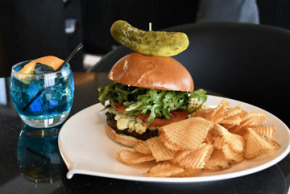
The April Burger is a Blackened Signature House Patty, topped with smoked blue cheese, tomato, arugula and a balsamic glaze, served on a brioche bun.  Chelsea Five will also highlight a specialty cocktail for the month – the Robin Egg, with 48 Blocks vodka, raspberry syrup, lime, champagne shrub, egg white and blue curacao.
 
The promotion launched in February with all proceeds from February & March going to the 200 Club of Atlantic and Cape May Counties. For every burger sold, Chelsea Five Gastropub donates $1 back to the local charity selected for that month. All benefits for the month of April will go to FACES 4 Autism. Since 2002, FACES 4 Autism has helped more than 750 families annually, with family support programs, special events, adaptive swim scholarships and Project Lifesaver scholarships.
 
Chelsea Five Gastropub offers guests an eclectic dining experience paired with panoramic ocean views. Guests can choose from an extensive beer list, cocktails and small bites menu. Menu highlights include Blue Crab Mac N’ Cheese, Yellowfin Tuna Tacos and White Cheddar Truffle fries for starters, the Ribeye Cheesesteak Sandwich, and entrees such as Buttermilk Fried Chicken, Shrimp & Grits, Cauliflower Steak, and Maple Whiskey Salmon. In 2018, the restaurant was named one of the best places to savor American food in Atlantic City by 6abc Action News. Most recently, Chelsea Five was named the 1st Place Judges Choice Award Winner in Atlantic City Weekly’s 2019 Wing Wars.
 
For more information about Chelsea Five Gastropub and Tropicana Atlantic City, please visit www.tropicana.net.

Atlantic City Headliners for April 2019

Hard Rock Hotel & Casino Atlantic City

Don Felder
Sound Waves at Hard Rock Atlantic City

Don “Fingers” Felder is renowned as a former lead guitarist of The Eagles, one of the most popular and influential rock groups of our time. Felder wrote some of the most legendary Eagles songs of all time including Hotel California, Lyin’ Eyes, Take It to the Limit, and innumerable other hits. Hear Fingers and his crew of outstanding musicians rock the stage on April 6th.

Date & Time: Saturday, April 6, 2019, 8:00 PM
Ticket Prices: $34.00 – $39.00
Contact: 609-449-1000 or visit https://www.hardrockhotels.com


Lifehouse
Sound Waves at Hard Rock Atlantic City

Lifehouse is an American alternative rock band comprising of Jason Wade, Rick Woolstenhulme Jr., and Bryce Soderberg. The group’s debut studio album, No Name Face, contained their first hit, “Hanging by a Moment”, released in 2001. Less than four years later, they released a more mellow and soft love-ballad called “You and Me”, which quickly grew in popularity amongst adults and even reached #1 on the Billboard US Adult Top 40 list!

Date & Time: Friday, April 12, 2019, 8:00 PM
Ticket Prices: $49.00 – $58.00
Contact: 609-449-1000; https://www.hardrockhotels.com


Billy Gardell
Sound Waves at Hard Rock Atlantic City

Billy Gardell stars in the CBS Hit television series, MIKE& MOLLY as Officer Mike Biggs. MIKE & MOLLY garners approximately 13 million viewers every week. Set to premiere this March, Billy is also the host of a new game show, Monopoly Millionaire’s Club, based on the hit board game and produced by the team behind Deal Or No Deal. As a standup comic, his comedy specials, “Billy Gardell: Halftime,” premiered on Comedy Central and “Billy Gardell Presents Road Dogs” premiered on Showtime.

Date & Time: Friday, April 26, 2019, 8:00 PM
Ticket Prices: $29.00 – $34.00
Contact: 609-449-1000; https://www.hardrockhotels.com


Kinky Boots
Sound Waves at Hard Rock Atlantic City

Kinky Boots is the winner of every major Best Musical award, including the Tony, the Grammy and London’s Olivier Award. Based on true events, this huge-hearted hit tells the story of two people with nothing in common—or so they think! Featuring 16 original songs by Cyndi Lauper, a book by Harvey Fierstein, and direction and choreography by Jerry Mitchell, this joyous sensation “struts its stuff with sparkle, stilettos and heart!” (Sydney Morning Herald).

Date & Time: Tuesday, April 30 – Friday, May 3, 2019, 8:00 PM each night
Ticket Prices: $35.00 – $75.00
Contact: 609-449-1000; https://www.hardrockhotels.com


Resorts Atlantic City

Frankie Z
Superstar Theater at Resorts Atlantic City

Frankie Z is a pop artist from New York who has performed in boy bands and pop groups across the world and reached the semi-finals in America’s Got Talent with his group, the “Struck Boyz”! Experience an evening that is sure to keep you dancing in the aisles all-night long. Enjoy your favorite ballads from the last several decades with Frankie Z’s new show “Dancin’ Through The Decades – Motown To Now”.

Date & Time: Saturday, April 6, 2019, 8:00 PM
Ticket Prices: $30.00 – $40.00
Contact: 609-344-6000; https://resortsac.com/entertainment/frankie-z


Borgata Hotel and Casino

Justin Willman
The Music Box at Borgata

Justin Willman is the star and creator of the Netflix original series Magic for Humans as well as a consultant and writer for a few film and television productions including America’s Got talent and The Goldbergs. He has been named “The freshest and funniest magician working today” by Playboy. Catch this trailblazing comic/magician live at the Borgata on April 6th.

Date & Time: Saturday, April 6, 2019, 9:00 PM
Ticket Prices: $ 29.00 / $ 39.00
Contact: 609-317-1000; https://www.theborgata.com


Chicago: Live in Concert
Event Center at Borgata

Chicago, formed in 1967, is one of the longest-running and most successful rock groups, and one of the world’s best-selling groups of all time, having sold more than 100 million records. In 1971, Chicago was the first rock act to sell out Carnegie Hall for a week. Get ready for a night out with Chicago at Borgata!

Date & Time: Saturday, April 13, 2019, 8:00 PM
Ticket Prices: $ 70.00 – $ 100.00
Contact: 609-317-1000; https://www.theborgata.com/shows/event-details/chicago-atlantic-city


Jerry Seinfeld
Event Center at Borgata

Best known for his sitcom that he co-created and co-wrote with Larry David, Seinfeld has been making the world laugh for more than three decades. Seinfeld, historically known as one of the best stand-up comedians of all time, will be in the Event Center on April 20.

Date & Time: Saturday, April 20, 2019, 7:00 PM & 10:00 PM
Ticket Prices: $99.00 – $199.00
Contact: 609-317-1000; https://www.theborgata.com/shows/event-details/jerry-seinfeld-atlantic-city


Lewis Black – The Jokes On Us Tour
The Music Box at Borgata

Lewis Black returns to Borgata this April.  Don’t miss this comedian, well known for his Comedy Central series, Lewis Black’s Root of All Evil.  Lewis Black will be at The Music Box on April 26 and 27.

Date & Time: Friday, April 26 & Saturday, April 27, 2019, 9:00 PM
Ticket Prices: $65.00 – $75.00
Contact: 609-317-1000; https://www.theborgata.com/shows/event-details/lewis-black-atlantic-city


Ocean Resort Casino

Kenny Loggins
Ovation Hall at Ocean Resort

Kenny Loggins’ remarkable four-decade-plus career has brought him five top 10 hits and several more songs on the Billboard’s Hot 100. He’s had smash hits on Hollywood’s favorite soundtracks, rocked worldwide stages, and found his way into children’s hearts while bringing his soulful, beautiful voice to platinum albums of a stunning variety of genres. His gift for crafting deeply emotional music is unparalleled, and it’s been a part of his life as long as he can remember.

Date & Time: Friday, April 12, 2019, 8:00 PM
Ticket Prices: $45.00 – $85.00
Contact: 609-783-8000; https://www.theoceanac.com/entertainment/shows-events/


Harrah’s Resort Atlantic City

The Price Is Right Live
The Concert Venue at Harrah’s Atlantic City

If you’re a fan of The Price Is Right™ on TV, you’ll no doubt love this exciting, live (non-televised), on-stage version of the show!

Date & Time: Friday, April 12, 2019, 8:00 PM; Saturday, April 13, 2019, 3:00 PM & 8:00 PM; Sunday, April 14, 2019, 8:00 PM
Ticket Prices: $33.00 – $53.00
Contact: 609-441-5000; https://www.caesars.com/harrahs-ac/shows


Gary Owen
The Concert Venue at Harrah’s Atlantic City

Get ready to laugh out loud with Gary Owen! Gary Owen has been entertaining America for more than a decade with his side-splitting comedy. Having performed to sold-out audiences in all the major comedy clubs and theaters across the country, Owen is one of America’s most loved comedians. This legendary comic is coming to The Concert Venue on April 19! Get tickets now!

Date & Time: Friday, April 19, 2019, 9:00 PM
Ticket Prices: $28.00 – $48.00
Contact: 609-441-5000; https://www.caesars.com/harrahs-ac/shows


Jim Whelan Boardwalk Hall

Claressa Shields Vs. Christina Hammer
Jim Whelan Boardwalk Hall

Undefeated middleweight world champions Claressa Shields and Christina Hammer will meet on Saturday, April 13 live on SHOWTIME to crown the women’s undisputed 160-pound world champion. The blockbuster unification from Boardwalk Hall in Atlantic City, N.J. will be the main event of SHOWTIME BOXING: SPECIAL EDITION live at 9 p.m. ET/PT and is arguably the most significant women’s boxing event in history.

Date & Time: Saturday, April 13, 2019, 7:00 PM
Ticket Prices: $ 32.00 – $ 147.00
Contact: 1-888-228-4748; http://www.boardwalkhall.com/events


Caesars Atlantic City Hotel & Casino

The Sound of Music
Circus Maximus Theater at Caesars Atlantic City

A brand new touring production of The Sound of Music is coming to Circus Maximus Theater for eight shows in April! The beloved musical story of Maria and the von Trapp Family will once again thrill audiences with its Tony®, Grammy® and Academy Award® winning Best Score, including “My Favorite Things,” “Edelweiss” and the title song. Don’t miss out on this extraordinary experience!

Date & Time: Tuesday, April 16 – Sunday, April 21, 2019, times vary
Ticket Prices: $48.00 – $68.00
Contact: 609-348-4411; https://www.caesars.com/caesars-ac/shows


Atlantic City Ballet Presents Sleeping Beauty
Circus Maximus Theater at Caesars Atlantic City

Audiences will get swept away into a sublime world of kings, queens, fairy godmothers and storybook creatures. The tale of Sleeping Beauty comes to life in the most majestic classical ballet of all time. Set to Tchaikovsky’s fabulous and familiar score and combined with Artistic Director Phyllis Papa’s stunning choreography, Sleeping Beauty is a timeless classic you can enjoy with the entire family. With special appearances by fairy tale favorites like Puss-In-Boots, Little Red Riding Hood, and of course, that kiss from the handsome prince, Atlantic City Ballet’s Sleeping Beauty will create a memory to cherish happily ever after.

Date & Time: Sunday, April 28, 2019, 4:00 PM
Ticket Prices: $20.00 – $45.00
Contact: 609-348-4411; https://www.caesars.com/caesars-ac/shows

DOJ Seeks to Dismiss New Hampshire Lawsuit on Wire Act

The U.S. department of Justice has filed papers in a lawsuit brought by New Hampshire and its state lottery challenging the DOJ’s new legal interpretation of the 1961 Wire Act.

The memo asks that New Hampshire’s request for a summary judgement be denied and the case dismissed.

While neither is likely to happen, the filing suggests that the DOJ will defend its new Wire Act interpretation.

In January, the DOJ reversed a previous opinion that the 1961 act applies only to sports betting where information was exchanged across state lines. The new interpretation holds that the act applies to all forms of gambling and includes internet betting.

The new opinion—which has not been put into effect yet—immediately calls into question the validity of multi-state lotteries and possibly all online gambling where information may be transmitted across state lines. New Hampshire has filed suit challenging the DOJ opinion and several states, including New Jersey and Michigan, have filed briefs in support of the challenge.

The DOJ memo says that the New Hampshire lawsuit should be denied for a lack of standing since no one has been charged under the new opinion and no constitutional issue has been named, among other arguments.

The attorneys general for New Jersey and Pennsylvania have also charged that the new opinion was issued to appease casino owner Sheldon Adelson, who has personally funded a lobbying effort to ban online gambling in the U.S.

The DOJ memo does not address that issue.

Funds Seized from Borgata Atlantic City Won from Prohibited Gamblers

The New Jersey Division of Gaming Enforcement has seized about $107,000 from the Borgata Hotel Casino & Spa in Atlantic City that was won from underage gamblers and others who had put themselves on self-exclusion lists designed to help problem gamblers.

The state has also fined Borgata’s online partner Bwin.party $81,000 for violations of the self-exclusion protocols.

The cases for Borgata involved gamblers under the age of 21 or gamblers who had been allowed to gamble at the casino sooner than allowed under self-exclusion time periods.

Borgata officials said they take compliance seriously and that casino personnel discovered the violations and reported them to the state.

“Borgata’s team members are well trained on responsible gaming policies, and we approach these requirements with the utmost importance,” said Marcus Glover, the casino’s president in a press release. “Borgata consistently self-reports to uphold our operational integrity, as indicated by the instances of forfeited funds rather than fines. Our company’s record of supporting regulatory efforts is unmatched and we will always strive to uphold the highest standards, not only in compliance, but in customer care and harm minimization.”

In Bwin.party’s case, online gamblers who had signed up for a five-year self-exclusion were allowed to gamble after only one year. The company was fined for incorrectly processing request to be removed from the lists.

The two companies identified 15 accounts in violation, terminated them, and Borgata reported the instances to the state according to the Associated Press.

The state also reported some other similar cases dating back to 2004. According to the AP, Bally’s forfeited $1,398; Caesars forfeited $3,530 and Hard Rock was fined $1,000 for underage gambling. Gaming Innovation Group was fined $2,000 for an internet gambling rule violation, and SG Digital was fined $1,000 for violating self-exclusion rules.

Four Gaming Giants Undergo Transitions

Four of the largest gaming companies in Nevada are undergoing often traumatic transitions, according to CDC Gaming Reports. Some are dealing with financial uncertainty and two are dealing with the losses of the visionaries who founded them in the late 1980s. They include MGM Resorts International, Caesars Entertainment, Las Vegas Sands and Wynn Resorts.

Between them the four companies account for 23 of the Las Vegas Strip’s most iconic properties, which own nearly two-thirds of available hotel rooms.

Steve Wynn, founder and CEO of the company that bears his name, was forced out about a year ago when the Wall Street Journal published an expose of a long list sexual harassment accusations against him. He not only resigned as CEO and president; he also sold all his company holdings.

Under a new CEO the company, which operates the Wynn Las Vegas and Encore has made a very public effort to remake itself and its corporate structure. It has added four women to its nine-seat board of directors, added new board chairman Phil Satre and its new CEO Matt Maddox has led a very public cleaning of the Augean Stables.

It has added aggressive new sexual harassment policies and last month agreed to pay the Nevada Gaming Control Board a $20 million fine to settle the complaint that former executives failed to deal with charges against Steve Wynn for years.

But its biggest challenge may be whatever decision the Massachusetts Gaming Commission makes regarding those same issues and whether the company should keep its license to operate a $2.5 billion casino near Boston—which is set to open in June.

Just as traumatic is the absence of Sheldon Adelson, founder of Las Vegas Sands, and who has been away from its day to day operations since December. The company has kept under wraps his treatment for lymphoma, but revealed his condition recently.

According to the company, Adelson, 85, is still performing his duties as chairman and chief executive officer but has handed over operations of the Venetian and the Palazzo to President Rob Goldstein and CFO Patrick Dumont, who is Adelson’s son-in-law.

Analysts point out that Adelson’s illness hasn’t kept it from being run in a prudent manner. As one analyst told the Nevada Independent that the company “remains in incredibly good hands.”

Up until recently Adelson, one of the 20 richest men in the world, has personally driven the company’s investment in properties in Macau and Singapore, from which the company takes two thirds of its annual revenues. The company is also lobby New York to allow casino development near the Big Apple itself.

MGM , which has 10 properties on the Strip, has put itself on a strict “diet”; announcing that it will cut payroll by $100 million over two years while buying out some of its most enduring executives, including CFO Dan D’Arrigo, and Scott Sibella, president of the MGM Grand Las Vegas. It hopes to improve cash flow by $300 million at the end of two years.

Its cost cutting regimen came as a result of pressure from investors who were unhappy that the stock’s price had last 25 percent of its value over the last year.

Caesars is dealing with a new minority owner, the 83-year-old Carl Icahn, who recently purchased 18 percent of the company through $1.023 billion in stock acquisitions, giving him three seats on the board of directors. He is pressing for the company to be sold or merged with another company. Eldorado Resorts has been mentioned as a possible suitor. Such a merger could create a company with more than 50 gaming properties in 18 states.

Because Icahn effectively controls the company, he is being required to be licensed by Nevada gaming regulators.

These corporate earthquakes are happening as the Independent reports that visitors are balking at rising costs to stay at a hotel in Las Vegas, including charging guests for parking. Guests can also hand over cash for using the spa, gym or WiFi on top of room rates.

University of Nevada at Las Vegas Associate Vice Provost for Faculty Affairs David Schwartz, who for years directed the school’s Center for Gaming Research, says the industry is facing challenges associated with being a mature industry, rather than a growing one.

He told the Independent: “It may be that new leadership, or at least new ideas, is necessary to face these challenges. To me, the MGM and Caesars issues seem more like symptoms than causes.” He added, “The structure of the industry doesn’t seem to be changing, as much as the faces around the table.”

Longtime Nevada Gaming Commission Chairman Tony Alamo Jr. says the companies’ issues should be viewed independently, rather than something affecting the industry. It is nowhere as serious as what affected the industry during the Great Recession, which Alamo witnessed since he has been on the commission since 2008. During that period Strip casino revenues plummeted around ten percent for two years running.

During that period the commission reviewed various reorganizations and a full bankruptcies. Today nothing like that is taking place, he says.

Before the period the greatest change came in the late 1960s when gaming began to be taken over by mainstream finance. That’s also when the first of the “mega resorts” began to open, says Schwartz.

According to SunTrust Bank gaming analyst Barry Jones, many of the issues facing the four companies signal a “changing of the guard at the top” that is typical of an industry that has been undergoing basic change for most of a decade.

He notes that MGM and Caesars grew to prominence through building casinos and consolidation. The importance of regional gaming markets fueled the real estate investment trust (REIT) industry beginning six years ago, which separated the owners of casino properties from those who manage them. So that, for example, MGM owns the controlling interest in MGM Growth Properties.

MGM and Caesars control more than two dozen properties through REITs.

Americans Say Pro Betting OK, College Not So Much

A new poll suggests that most Americans favor having legal sports betting in their states. They are, however, less comfortable with gambling on college games than the pros.

In a March 14-18 phone survey of 1,063 adults conducted by The Associated Press-NORC Center for Public Affairs Research, six in 10 respondents said they want betting on professional sports to be legal in their state, while only four in 10 feel that way about college athletics.

Support skewed higher in states where betting is already legal—71 percent favoring betting on the pros versus 59 percent in states that haven’t legalized. Those in favor of betting on college games likewise increased in the newly regulated markets but only to 47 percent, although that support was slightly higher (52 percent) among respondents who said they’re “very interested” in sports, while it was slightly lower (38 percent) among those “not very interested.”

Not surprisingly, men were bigger supporters than women of pro betting (65 percent versus 56 percent) and college betting (45 percent versus 40 percent).

Eight states have legalized sports betting since the U.S. Supreme Court struck down a longstanding federal ban

Atlantic City’s Showboat Hotel Could Reopen Casino

Atlantic City’s casino market could see a 10th casino open as plans are underway to re-open the third of five casinos that shut since 2014.

Philadelphia developer Bart Blatstein, owner of the Showboat Hotel, was granted preliminary approval for the New Jersey Casino Control Commission to seek a casino license. Blatstein bought the property in 2016 and re-opened it without casino gambling.

Blatstein said that he feels Atlantic City’s casino market can handle having 10 casinos again.

“There are 104 casinos in Las Vegas in the middle of nowhere,” Blatstein said. “We have nine casinos well within a short trip from one-third of the nation’s population. The market is looking for something different.”

Two formerly closed Boardwalk casinos reopened in June 2018 and immediately had an impact on the market. While overall casino revenue for the city is up substantially, six Atlantic Casinos won less from gamblers than in 2017.

Blatstein did not release many details of his plans, but did address one major concern. When Caesars Entertainment first closed the property in 2014 and then later sold it, they placed a deed restriction on the sale saying the hotel could not operate as a casino for 10 years, or until about 2024.

However, Blatstein said he can get around the restriction by building a new casino on land he owns adjacent to the casino and then connecting it to the hotel tower. The 123,000-square-foot lot off New Jersey Avenue is currently used for beach volleyball and is a separate property than the Showboat and not subject to the deed restriction, according to regulators.

Blatstein did say that he wants to build new to construct a facility that will attract a younger demographic and will emphasize sports and eSports.

“It needs to be different,” he said. “Young people are very mobile and very experience-oriented, so it will be designed accordingly.”

The Associated Press also reported that a report from the state Division of Gaming Enforcement says Blatstein plans to convert the property’s bus depot into a family entertainment center and that the new casino will a full range of slot machines, table games, sports betting and Internet gambling. A third-party management company would operate the casino, but no firm has yet been chosen, according to the state report.

Blatstein is also currently converting 400 hotel rooms at the property into 264 market-rate rental units. He said he hopes to break ground on a new casino structure in 2020.

Atlantic City saw four casinos close in 2014 when 12 casinos operated in the market. A fifth casino, the Trump Taj Mahal closed in 2016, leaving the city with seven operating casinos. Seven seemed a lucky number as the Atlantic City market stabilized. While casino revenue declined overall, all seven properties were operating at a profit.

In 2018, however, two casinos reopened. The Taj reopened as the Hard Rock Atlantic City and the former Revel casino reopened as the Ocean resort. Since the reopening, overall casino revenue for the city—which has also been buoyed by online gaming and sports betting—has soared, but seven casinos have seen revenue declines. The Ocean Resort has also struggled and is currently going through an ownership change.

NY/NJ Port Authority Considering Buying Atlantic City Airport

The Port Authority of New York and New Jersey is studying a possible purchase of Atlantic City International Airport or also running the airport according to a letter sent last week to New Jersey Congressman Jeff Van Drew.

“The Port Authority is committed to exploring the potential acquisition or operation of an air terminal outside of the Port District in New Jersey,” said the March 21 letter from Chairman Kevin O’Toole to Van Drew, D-2nd, and fellow South Jersey congressmen Donald Norcross, D-1st; and Andy Kim, D-3rd and obtained by the Press of Atlantic City.

“I have directed staff to immediately undertake a study utilizing industry leading consultants to consider the impact that the Port Authority could have in taking over an airport in New Jersey, including the Atlantic City International Airport,” he said.

The three congressmen had written a letter to the Port Authority suggesting it purchase the airport.

The South Jersey Transportation Authority currently owns and operates the Atlantic City airport, which is located in Egg Harbor Township. Spokesman Mark Amoroso told the Press that the authority is not in active talks with the Port Authority.

The Port Authority managed the airport from 2013 to 2017 for a fee of $500,000 a year but failed to bring in sustainable new flights or other services. However, the city’s casino industry and municipal finances have improved since then and other development initiatives have been funded at the under-used airport.

The Atlantic County government, for example, has funded the start of the Atlantic County Economic Alliance and the National Aviation Research and Technology Park at the airport.

The Press also said New Jersey State Senate President Steve Sweeney supports the idea of the Port Authority purchasing the airport according to sources.

Cuomo: No Casinos in NYC

Some of the world’s largest casino operators are showering Albany with glittering dollar signs in hopes of persuading legislators and Gov. Andrew Cuomo to let them set up shop in New York City.

Cuomo, so it appears, is having none of it.

“I am very skeptical about some casino deal put together by casino operators promising billions of dollars and everybody is happy,” the governor told reporters last week.

MGM Resorts International wants full-scale gaming for the VLTs-only Empire City Casino at Yonkers Raceway it bought last year for $850 million. Genting Group wants the same for its Resorts World New York City racino at Aqueduct in Queens. Las Vegas Sands is promising to invest upwards of $2.5 billion to build a ground-up gaming resort somewhere in the Big Apple.

The three have launched an aggressive lobbying campaign to lift a moratorium on new casinos before 2023.

The restriction dates back to 2014 and was designed to protect the four upstate operators that won competitive bids for licenses to run New York’s first commercially owned casinos. The licenses were granted after voters approved a constitutional amendment authorizing a total of seven commercial casinos as an economic development experiment. Accordingly, the Legislature decided that none of the initial investments could be in New York City. The four

Wynn is a Transformed Company, Executives Argue

Executives of the “new” Wynn Resorts plan to argue before the Massachusetts Gaming Commission that the Wynn company has been transformed from the company that Steve Wynn founded, ran, and then fled from last year after divesting himself from all company stock.

The MGC plans to begin hearings on the continued suitability of the company to operate the $2.6 billion Encore Boston Harbor on April 1.

Wynn resigned as chief executive officer and president in February 2018 after accusations of multiple sexual harassments were exposed in a Wall Street Journal piece the month before.

In a letter to shareholders ahead of the annual meeting in May, Wynn Chairman Phil Satre said the company has now “found our way out,” transforming from a “founder-led company” to a global enterprise led by a “refreshed, capable, independent and accountable board of directors.”

“In my 40-year career both in and out of gaming, I have never seen a company respond so quickly and decisively to adversity as this one,” Satre wrote. “Despite the challenges we faced on numerous fronts, last year was a successful year for Wynn Resorts financially and, more importantly, culturally. I am confident we have found our way and I’m excited about the future of Wynn Resorts.”

Wynn’s past has so far indelibly stained the company, something that the executives who now run it have tried to expunge from its corporate culture.

The Boston Herald got a hint of what the company will tell the commission when it was provided a memo by the company that has been filed with the state. “Over the past 12 months, Wynn Resorts has undergone a corporate transformation,” reads the memo. “The individuals who failed to live up to the company’s high standards and values have all been removed.” Including Steve Wynn, says the memo.

Since the founder left the company has independently investigated to discover which higher ups knew about Wynn’s accusations and did little or nothing about it.

It got rid of several members of its board of directors and executive team, except for Matthew Maddox, who is now chief executive officer.

It adopted a new, stricter “Preventing Harassment and Discrimination Policy” that applies to the highest level.

It will immediately report any instances of harassment to gaming regulators in Massachusetts and Nevada. Nevada just imposed a $20 million fine on the company for Wynn’s alleged activities, the largest such fine in the state’s history.

All employees will be required to attend sexual harassment training.

The company has created a process for investigating all such complaints and has hired former Boston Police Commission Ed Davis to help run its “compliance program.”

It ends by committing that “the inappropriate breakdown of controls experienced by the company during the Steve Wynn era never happens again.”

Satre says the company has created a new relationship with regulators.

“A critical step in achieving stability was to rebuild our relationship with regulators, beginning with fully supporting their investigations of the company,” he said. “I believe that complete transparency and cooperation are essential to creating a relationship of trust with regulators. We are now on the road to rebuilding that trust.”

Satre said the company was willing to bring the entire board to Massachusetts for the hearing, but confirmed that former Clinton press secretary Dee Dee Myers and Elaine Wynn, Steve’s ex-wife, co-founder of the company and its largest shareholder/

Others scheduled to testify include Maddox; Ellen Whittemore, executive vice president, general counsel and secretary; Craig Billings, CFO and treasurer; Robert DeSalvio: Encore Boston Harbor president; Rose Huddleston, senior vice president of human resources; Jacqui Krum, senior vice president and general counsel, Brian Gullbrants, Encore Boston Harbor executive vice president of operations; and James Stern, head of security

The company is preparing for a June opening for the massive casino that overlooks the Mystic River with the Boston skylight in the background. It is already holding job fairs to fill 5,800 positions.

Caesars, Eldorado in Merger Talks—Fertitta Looms

Caesars Entertainment and Eldorado Resorts are discussing a possible merger. But an old suitor could also be re-emerging.

A Reuters report, citing unnamed sources familiar with the situation, said Caesars, which is under increasing sale pressure from activist investors led by Carl Icahn, is assisting Eldorado with due diligence by providing some limited confidential financial information: an indication that talks are in an early, exploratory stage with no certainty that Eldorado will make a binding offer. Icahn now owns more than 28 percent of Caesars making him eligible to hold at least eight seats on the board of directors.

Caesars declined to comment, while Eldorado did not immediately respond to a request for comment, Reuters said.

Las Vegas-based Caesars emerged 18 months ago from a bankruptcy reorganization of its largest operating company with liabilities of around $9 billion, the legacy of a 2008 leveraged buyout of then-Harrah’s Entertainment by private equity giants TPG Capital and Apollo Global Management that buried one of the best balance sheets in gaming under nearly $30 billion of debt. The reorganization, which took more than two years to accomplish, reduced TPG and Apollo to minority shareholders and resulted in the appointment of a new chairman and CEO, while ownership of the operating unit’s casinos was spun off into a separately traded REIT controlled by its creditors.

Despite the conglomerate’s enormous size and diversity—53 properties in 14 U.S. states and five other countries—the shares of parent Caesars (NASDAQ: CZR) have never recovered.

Late last year, with CZR languishing below $9, billionaire Tilman Fertitta, owner of the Landry’s restaurant chain, offered a reverse merger with his much smaller Golden Nugget casino company that valued CZR at around $13 and would have placed Fertitta in control of the new entity. Caesars rejected it as inadequate.

The company remains attractively priced as a target. But its girth and the debt load limit the universe of potential acquirers. Like the other major Las Vegas Strip operators, it’s facing rising costs in its core market at the same time that visitation and gambling spend are stagnating and competition is increasing with the nationwide spread of sports betting. Last week, the company said it will be eliminating jobs at its Las Vegas headquarters as part of a plan to cut corporate expenses by at least $40 million annually.

Caesars was trading last week around $8.40 per share, giving it a value of $5.6 billion.

Eldorado, meanwhile (Nasdaq: ERI), is trading at upwards of $50. And Eldorado and Icahn have history.

Icahn, the corporate raider known for buying troubled companies on the cheap, slashing costs and flipping them at the right time for tidy profits, launched his pursuit of Caesars in January, buying a 5 percent stake and joining other activist investors in clamoring for a sale. He has steadily upped his holding since and is now Caesars’ largest individual shareholder with around 18 percent of the equity, three seats on the board of directors and possibly the last word on a replacement for lame-duck CEO Mark Frissora, who tendered his resignation in November.

Eldorado began life in the early 1970s as a single family-owned casino in Reno, Nev., that an aggressive acquisition strategy has turned into 26 casinos in 12 states. The company bought MTR Gaming in 2014 and Isle of Capri Casinos in 2017. Last year, the company entered the Chicagoland market with the purchase of the Grand Victoria Casino in Elgin, Ill., and shook hands with Icahn on a $1.85 billion deal to buy Icahn’s Tropicana Entertainment and transfer ownership of Tropicana’s seven casinos to Penn National Gaming’s Gaming and Leisure Properties REIT for $1.2 billion.

Eldorado’s market cap stands at $3.6 billion. It has $3.3 billion of debt.

The New York Post reported last week that Icahn has also had discussions with Fertitta about joining forces. According to the Post, Fertitta would buy some of Icahn’s shares and become a trusted partner in Caesars.

RI Legalizes Mobile Sports Betting

Rhode Island Governor Gina Raimondo last week signed a bill legalizing mobile sports betting. The state had been the only New England state to have sports betting. It now its “mobile” to that description.

Right now bettors need to place bets in person at one of the state’s two casinos in Lincoln and Tiverton.

Democratic Senate President Dominick Ruggerio and Democratic House Speaker Nicholas Mattiello were both enthusiastic proponents of the bill. Gaming is the state’s third largest source of governmental revenue.

Ruggerio commented, “Expanding to mobile gaming would provide a convenient option for those wishing to enjoy this form of entertainment, and open up the economic benefits beyond the walls of Twin River.” He added, “I can envision a group of friends from out of state spending an evening out in a local establishment where they can both watch the game and place a wager.”

Twin River is authorized to create an app to assist in making wagers. Bettors must be within the boundaries of the state to place their bets.

The governor expects to get $3 million in the upcoming fiscal year from mobile betting, even though the app is not expected to be ready until November.

Rhode Island has moved quickly to lock in its position as the first state in the region to offer sports betting after the U.S. Supreme Court lifted the federal ban against it in May. The first sports book wagers were placed the day after Thanksgiving last year. It was first introduced at Twin River Lincoln and a few weeks later at Twin River Tiverton.

According to a spokesman for Twin River, “In addition to wagering in the Sportsbook Bar & Grill at Twin River in Lincoln, at other terminals throughout the casino floors at both Rhode Island venues, and most recently, at self-service kiosks, our customers can opt to do so from the convenience of a mobile app.”

Twin River added its 17 self-service kiosks at Lincoln and five at Tiverton to reduce the time spent standing in the ticket line. The management wanted to add them in time for the March Madness tournament. Customers can find them scattered throughout the casino floor.

The Twin River Tiverton almost literally sits on the border between Rhode Island and Massachusetts. So it beckons to the Bay State with sports betting that that state does not yet offer.