Author: Casino Connection Staff

Atlantic City’s Resorts Casino Hotel Announces New Expansions

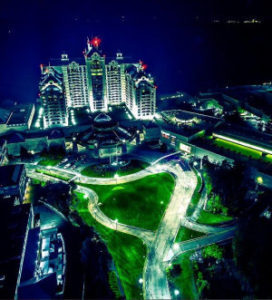
Resorts Casino Hotel in Atlantic City, New Jersey unveiled its newest $125 million renovations and announced new expansions last week.

Resorts opened its $35 million Jimmy Buffet Margaritaville and Landshark Bar & Grill Entertainment Complex, which includes an innovative iGaming Lounge dedicated to online gaming, along with a new casino floor with 800 new slots, a VIP player lounge and the revamped 480 room Ocean Tower. It also recently opened the DraftKings Sports Book at Resorts.

The expansion also included a $5 million Conference Center with 12,000 square-feet of meeting and event space with new monitors in every conference room that enables up to 500 people to wirelessly connect simultaneously.

Mark Giannantonio, president and CEO of Resorts declared during the celebration, “Since Morris Bailey purchased Resorts, it has undergone an overall transformation that really aligns with his vision for the property and has brought visitors of Atlantic City to our boutique-like hotel, along with an elevated level of service and entertainment that one can only expect from a powerhouse brand in the gaming and hospitality business.”

He added, “With more than 21-acres on the famed Atlantic City Boardwalk and significant improvements in the near future, Resorts Casino Hotel continues to position itself as a thriving, all-encompassing property, while increasing guest offerings and making crucial investments to encourage new and returning visitors to select Resorts as their go-to destination for entertainment in Atlantic City.”

Resorts plans to expand Jimmy Buffet’s with a 2,300 SF Boardwalk deck, “The Landshark Deck Bar” which will have 140 more seats and live entertainment.

60 More Days For Wire Act Enforcement

The U.S. Justice Department will delay any implementation of its new opinion on the 1961 federal Wire Act for another 60 days until June 14.

A memo on the delay was sent by outgoing Deputy U.S. Attorney General Rod Rosenstein to all U.S. Attorneys, assistant attorney generals and the director of the FBI.

“We have decided to extend that window an additional 60 day,” Rosenstein wrote. “Providing this extension of time is an internal exercise of prosecutorial discretion and does not create a safe harbor for violations of the Wire Act.”

The new opinion was released by the DOJ in January and reversed a 2011 opinion that held that the Wire Act applied only to sports betting and did not cover online betting held within a state’s boundaries. The opinion prompted three states—New Jersey, Delaware and Nevada—to legalize online gambling. Several other states also began online lottery sales and games.

The new opinion found that the wire act does apply to other forms of gambling than sports betting and calls into question any type of online gambling where information crosses state lines.

Immediately threatened our multi-state lotteries such as Power Ball and Megabucks and a poker player sharing agreement between Nevada, New Jersey and Delaware. However, all online gambling could be threatened if any information is routed to out-of-state servers.

New Hampshire, which has an online lottery, has challenged the opinion in federal court and New Jersey and Pennsylvania are also expected to take action challenging the opinion.

Some online media reports have said that U.S. District Judge Paul Barbadoro, who is hearing the New Hampshire lawsuit, strongly urged the DOJ to extend the delay in implementing the opinion.

New Hampshire is asking the court to vacate the opinion, confirm that the Wire Act does not apply to state lotteries, and permanently keep the Justice Department from acting on the opinion.

Rosenstein initially delayed implementation of the opinion for 90 days after it was released which would have ended April 15. He is now leaving office and whether the DOJ will move to enforce the opinion—barring any court rulings—will now fall to new U.S. Attorney General William Barr.

Barr is seen as a states rights advocate and many in the gambling industry hope he will decide to simply not take any enforcement actions against online gambling.

Atlantic City’s Ocean Resort Sorts Out Cash Problems

Atlantic City’s Ocean Resort casino has fixed its cash problems a trustee overseeing the properties transition to new ownership told the Associated Press.

The trustee, Eric Matejevich said the casino can meet state-imposed requirements to have at least $36 million on hand at all times.

He also said the casino is already starting to show significant improvement in business levels despite it being Atlantic City’s off-season. The casino plans to launch a new marketing plan stressing customer value and has a new operating philosophy—that Ocean Resort is a casino with resort amenities rather than a resort that also offers gambling, he said.

“The prior two owners advertised this property as a resort,” Matejevich told the wire service. “We view ourselves as a great casino property with beautiful resort amenities.”

The casino, which cost $2.4 billion to build, has never turned a profit since opening in 2012. Matejevich is overseeing the casino until New York hedge fund Luxor Capital assumes ownership of the property.

Matejevich’s immediate priority was to stop serious losses at the casino since it re-opened in June that left it consistently falling below state-mandated liquidity requirements. He said the crisis was solved by an infusion of cash from Luxor, which ultimately plans to plow $70 million into the property.

“We’re back in compliance, and we will remain in compliance,” said Matejevich, who formerly served as chief operating officer for the Atlantic Club casino in Atlantic City before it shut down in 2014. “We have a parent company that is a very significant New York fund that is committed to the asset. We’re starting to already see a fairly significant increase in our business levels.

“We are able to offer the best value proposition in Atlantic City,” Matejevich said. “We provide the best amenities in this market in our slot product, restaurants, sports book, entertainment venues, hotel rooms, and parking garage, at price points that are comparable to the most value-oriented properties in this market.”

Matejevich also told the AP that a plan to build add another 500 hotel rooms to the property is still on the table, though not guaranteed. And getting a buffet opened remains a top priority.

In another Atlantic City story, charges against Atlantic City Mayor Frank Gilliam Jr. for his role in a fight outside an Atlantic City casino nightclub in November have been dismissed.

Councilman Jeffree Fauntleroy II, who was also part of the altercation, pleaded guilty to an Atlantic City ordinance against impeding traffic in a public space and will pay a $500 fine.

According to the Press of Atlantic City, the pair of elected officials were charged with simple assault and harassment for their involvement in the fight at Golden Nugget Atlantic City on Nov. 11. Gilliam and Fauntleroy were recorded on security camera footage outside Haven Nightclub at 2:22 a.m. in a skirmish with three employees.

Gilliam and Fauntleroy pleaded not guilty in December after the complaints were transferred to Cape May County to avoid a conflict of interest in Atlantic County. All criminal charges against both elected officials were dismissed Thursday, which the complainants agreed to, the Press reported.

Another Attempt to Sell Atlantic City’s Former Atlantic Club Casino Falls Through

Atlantic City’s former Atlantic Club casino remains hard to sell as another potential deal for the property appears to have fallen through.

The Press of Atlantic City reported that last month a notice of settlement was submitted between Florida-based TJM Properties and buyer Jeffrey Smolinsky of North American Acquisitions in Atlantic County New Jersey. That notice has now been cancelled.

A TJM Spokesman had previously told the Press that no deal was in the works.

The Atlantic Club closed in January 2014 and was purchased four months later by TJM for $13.5 million from an affiliate of Caesars Entertainment Corp.

According to the Press, in 2017, a Ventnor development group wanted to buy the casino and convert it into a water park, but the deal fell through. Another deal collapsed a year prior when Pennsylvania-based Endeavor Property could not secure funding to buy the property.

Stockton University also explored buying the property, which neighbors its new Atlantic City campus. The university wanted the property’s nine-level parking garage and sought to have the casino and hotel property demolished. The deal fell through last September.

Churchill Downs to Invest in New Jersey, Pennsylvania Sports Betting Markets

Churchill Downs will continue to invest in online sports betting in markets like New Jersey, Pennsylvania and Illinois and continue to develop online products, according to CEO Bill Carstanjen.

During an earnings call with investors, Carstanjen said the company is looking to expand its online offerings into new markets.

“We will spend a modest amount on sports betting and iGaming markets in 2019 in New Jersey and Pennsylvania,” Carstanjen said. “We like states that we believe may ultimately grant access to sports and online casino gaming to their brick-and-mortar casino license holders. We have a deeply experienced online team, and an important objective for this team is to lead us beyond horse racing into sports betting and online casino wagering.”

Carstanjen said the extent of the company’s investment will rely on factors such as obtaining regulatory approvals and return on its initial investments. The company, however, has been pleased with its initial results in New Jersey.

 “We’ve been surprised how well we started in New Jersey because we have not yet marketed in any material way,” Carstanjen said. “We’re still awaiting approval from Apple to put our iOS app in the Apple Store.”

Churchill Downs is partnered with BetAmerica for its sports betting and online casino operations and also plans to plans to open a BetAmerica sportsbook at Pennsylvania’s Presque Isle Downs casino in Erie Pennsylvania this year. The company acquired the casino from Eldorado Resorts for $178.9 million. Carstanjen said the 1,275 square-foot sportsbook will feature 50 self-service betting kiosks and 50 televisions.

The company is also looking to enter the Illinois market by acquiring 50.1 percent of Rivers Casino in Des Plaines. The company signed a $407 million agreement in October that could potentially increase its ownership to 62 percent.

“If Illinois ultimately grants sports betting and iGaming rights to brick-and-mortar casino license holders,” Carstanjen said, “Rivers is in a casino market we have always valued.”

Churchill Downs generated net revenue of $219 million in the fourth quarter on 2018, up 22 percent from the prior quarter.

Adelson’s Cancer Eliminates Court Testimony

Las Vegas Sands Chairman and CEO Sheldon Adelson has cancer.

This fact was revealed last week after speculation over the 85-year-old’s health hit high gear. While there have been rumors for months that Adelson has been absent from the corporate LVS offices, preparation for the retrial of a lawsuit brought by former Macau operative Richard Suen brought the point home. LVS attorneys said Adelson was not prepared to testify due to the “dire nature of (his) condition, health and that he had, in fact, not participated in the company proceedings in terms of being physically present in Las Vegas at the company on Las Vegas Boulevard, since approximately Christmas Day.”

The next day, Las Vegas Sands issued a press release saying Adelson suffers from Non-Hodgkin Lymphoma, and that he is suffering from the side effects of the treatment.

“These side effects have restricted his availability to travel or keep regular office hours,” the statement said. “They have not, however, prevented him from fulfilling his duties as chairman and CEO.”

Non-Hodgkin Lymphoma is a blood cancer that can spread quickly, particularly among older patients.

Suen is suing Las Vegas Sands, alleging the company owes him millions of dollars for his assistance in helping LVS gain a gaming concession in Macau in 2002. This is the third trial over the lawsuit. The first two rounds found in Suen’s favor but the verdicts were later thrown out by appeals courts.

It’s not only Suen’s lawyers that have an issue with Adelson’s health, it’s also some of his shareholders. While Adelson controls over 50 percent of the stock of LVS, there are still many shareholder who would be concerned. Adelson missed the fourth-quarter earnings call because, according the LVS President Rob Goldstein, he was “under the weather.”

Judge Robert Bare said the 85-year-old tycoon will not have to testify or sit for a deposition in the civil trial, which is slated to commence this week.

Benjamin Edwards, an associate professor at UNLV’s Boyd School of Law, said there is no requirement under SEC regulations that force a company to divulge the health of an executive, but in this case, there’s reason to be concerned.

If a company knows an executive is ill, and they were described as a risk, this is something shareholders might want to know,” Edwards told the Nevada Independent. “If any key CEO is too ill to participate in depositions, it is likely material to shareholders because the same health issue may limit his ability to act on behalf of the company. Still, the mere fact that reasonable shareholders would probably like to know about it, of course, does not mean that the company automatically has an obligation to disclose it.”

Sanford Bernstein analysts Vitaly Umansky, Kelsey Zhu and Eunice Lee were quick to play down any potential negative impacts on one of the world’s largest gaming companies, noting that LVS and its Macau subsidiary, Hong Kong-listed Sands China, “both have strong management teams, and there is an internal succession contingency in place in the event of Mr. Adelson’s inability to perform his duties as chairman and CEO”.

“Should Mr. Adelson’s health situation worsen, we do not believe it would have negative implications with respect to any of Sands’ existing operations (whether it be in the U.S., Macau or Singapore),” the analysts said in a client note. “Nor should Mr. Adelson’s potential absence impact LVS chances in any potential Japan IR bid.”

Icahn Inks Deal With Caesars; Gets Three Board Members

With major investors joining Carl Icahn in pushing for a sale of Caesars Entertainment, the billionaire financier reached an agreement with the Las Vegas-based gaming giant for representation on the board of directors in a move that is likely to accelerate the search for a buyer.

The deal gives Icahn three board members— Keith Cozza, Courtney Mather and James Nelson—with the opportunity to appoint a fourth if the company’s CEO search doesn’t find a candidate acceptable to Icahn within 45 days. Caesars has been conducting a nationwide search to replace Mark Frissora for six months now. Frissora’s contract was recently extended through April.

But after initially calling on Caesars to halt the search, he now is proposing industry veteran Tony Rodio, who worked for him at Tropicana Entertainment as CEO, for the position.

Rodio worked for him from 2011 to 2018 at regional operator Tropicana Entertainment and was chief executive and a member of the Tropicana board when Icahn sold the company and its seven casinos last year for $1.85 billion to Eldorado and Penn National Gaming’s Gaming & Leisure Properties REIT.

Rodio moved to privately held Affinity Gaming, where he was named CEO in October. Affinity owns three Nevada casinos, including one in Las Vegas, and casinos in Colorado, Missouri and Iowa.

Caesars already has a shortlist of candidates but has indicated it’s willing to consider Rodio, according to Reuters, which cited sources who said the company also might offer Rodio the vacant position of chief operating officer as an alternative.


Widely respected in the industry, Rodio served more than three decades in the Atlantic City market and has held managerial positions with Hollywood Casino and Harrah’s Entertainment, which was later sold to form the conglomerate that is now Caesars. At Tropicana he was credited with overseeing improvements that helped boost revenues by 50 percent.

“Caesars would be a great opportunity for certain investors who have already expressed interest, and I’m glad the board will explore these opportunities,” Icahn said in a release. “Independent of strategic alternatives, I believe Caesars should also be focused on leadership succession, disciplined capital allocation, improving operating performance and optimizing real estate and other assets.”

Last week, Caesars’ largest investor issued a statement backing the corporate raider’s desire to see the company sold.

“Shareholder value would be best served and enhanced by an open sale process that will be presented to shareholders for a vote thereon,” said hedge fund Canyon Partners, which owns some 70 million shares, good for 10 percent of Caesars’ equity, according to Bloomberg data.

OppenheimerFunds issued a similar statement, aligning its 10 million shares with the activists.

The pressure is not expected to subside despite a fourth-quarter performance that surprised analysts on the plus side.

Caesars, which owns or operates 40 casinos in 13 states, grew total revenue by 11.3 percent to $2.12 billion in the three months ended December 31, boosted by the inclusion of two Indiana racetrack casinos the company acquired last summer. Revenue also was up a solid 7.8 percent in Las Vegas, where Caesars operates 10 resorts on or around the Strip, highlighted by a 10.9 percent jump in hotel room revenue. Cash flow company-wide was up 18 percent. Net income worked out to $198 million, good for 29 cents in earnings per share.

“A very good quarter, against reasonably muted expectations” is how Credit Suisse gaming analyst Cameron McKnight described it.

For all of 2018, revenue came in at $8.39 billion, and the company reversed a $368 million net loss to turn a profit of $303 million.

Frissora did not specifically address the sale pressure in a conference call with investors and analysts to discuss the results.

“We regularly engage with shareholders and we value their input,” he said in prepared remarks. “We intend to carefully evaluate Mr. Icahn’s suggestions, including his request for board representation, and will provide updates in due course.”

Caesars has responded to the activists by saying the company is open to “strategic alternatives,” including a sale, if the right offer comes along.

Billionaire Tilman Fertitta, owner of Landry’s restaurants and the NBA’s Houston Rockets, has proposed a reverse merger with his much-smaller Golden Nugget casino chain which would place him in command of both companies, but Caesars rejected the plan, valued at the time at roughly $13 a share, as inadequate. It’s been reported that regional operator Eldorado Resorts also explored a bid last year but didn’t make an offer.

Icahn, who earlier this month disclosed a 9.8 percent interest in Caesars, has owned a number of casinos over the years, although his only holding currently is the shuttered Trump Plaza Hotel and Casino in Atlantic City, which has been closed since 2014.

MLB Signs Deal with Sportradar

Major League Baseball and Sportradar have signed a “wide-ranging, multi-year partnership” making Sportradar the official global data provider for MLB.

The deal gives Sportradar international rights to provide MLB data to international media as well as sports betting operations. However, in the U.S. Sportradar will only exclusively provide data to the media.

Sportradar will also serve as the official supplier of MLB’s real time betting data feed in the U.S. where distribution to regulated sports betting operators will be on a non-exclusive basis through Sportradar and additional authorized distributors, according to a press release.

The length of the deal and financial details were not released.

Sportradar now has sports data deals with all four major U.S. sports leagues, but those deals are also not exclusive in the U.S.

However, according to the website Sports Handle, about 75 percent of Nevada sportsbooks already use Sportradar to acquire data relating to MLB. Sportradar collects the data from games in real time in stadiums and also provides sportsbooks with live in-play odds and related products reflecting on-field events.

There is a sports betting bill before Congress that would in part require sportsbooks to purchase “official” statistics form sports leagues. Some states, such as New York and recently Indiana, are including similar requirements in proposed sports betting legislation.

Las Vegas Strip Still a No-No for the NFL

The National Football League may have happily endorsed the Raiders’ move from Oakland, California, to a $1.8 billion stadium just west of the Las Vegas Strip, but that doesn’t mean the league has shed its age-old discomfort with gambling.

Even with the team coming to town—not to mention the city’s hosting of the 2020 NFL draft—the league is not moving off a ban on showing the Strip on TV commercials aired during games.

That’s according Rob Dondero, an executive vice president with R&R Partners, the advertising and marketing company of record for the Las Vegas Convention and Visitors Authority.

Speaking last week at the first-ever Las Vegas Global Sports Business Summit at the Las Vegas Convention Center, he reiterated that the NFL will “not let us show a shot of the Strip.”

 “They said we can include Red Rock,” he told attendees, though he added, “I guarantee we’ll find ways to get our points across.”

Dondero was at the day-long summit to discuss sports and branding and was one of several well-local leaders who appeared to speak on the city’s future as a sports destination.

MGM Resorts International executive Mark Prows offered his opinion that an NBA team might move to Las Vegas in about five years. At the same time, he cautioned that the market not get too far ahead of itself after the Raiders arrive in 2020.

He noted that when MGM and partner AEG designed the T-Mobile Arena, home of the NHL’s Golden Knights, they included only one level of suites because the Las Vegas market does not have roster of corporations and businesses to match markets such as New York and Los Angeles.

LVSportsBiz.com agreed that with a ranking around 40th among U.S. sports markets it’s difficult to say how many more major league teams the city’s 2.2 million residents and business community can support with ticket purchases and sponsorships.

Meanwhile, if the new Las Vegas stadium ever gets the ultimate NFL plum: the Super Bowl, that could mean another first for the city: the first billion-dollar economic impact event.

That’s according to Jonas Peterson, president and CEO of the Las Vegas Global Economic Alliance, who called sports “the purest form of economic development.” About two dozen speakers talked about sports marketing and the future of sports business in the region.

Peterson’s projections drew off of data from the 2018 game at U.S. Bank Stadium in Minneapolis and noted that the Super Bowl last year brought 125,000 visitors to Minnesota.

Southern Nevada will soon welcome the $1.8 billion Las Vegas stadium and $150 million Las Vegas Ballpark, and several new hotels. This, says Peterson, will lead to more investment in transportation.

Another of the speakers, Jeremy Aguero, principal for Las Vegas-based Applied Analysis talked about the development of professional sports in the city that began with the birth of the UFC and included National Finals Rodeo, minor league baseball and the NBA Summer League.

Howard, Westbrook to Speak at Betting on Sports America

Former Philadelphia Phillies star and MLB National League MVP Ryan Howard and former Philadelphia Eagles star Brian Westbrook will speak at the Betting on Sports America conference, to be produced by SBC (Sports Betting Community) April 23-25 at the Meadowlands Exposition Center in North Jersey.

Both former sports stars are partners in SeventySix Capital Athlete Venture Group, a capital group that invests in startup companies in the sports betting, esports and sports tech industries.

The two athlete/investors, along with SeventySix Capital Managing Partner Wayne Kimmel, will be discussing the active investments they’ve made and opportunities that they see in the rapidly growing sports betting business.

The investors will be speaking on a specially developed session titled “From Athlete to Entrepreneur: Venture Capital & Sports Betting,” in which they will discuss their passion for investing in game-changing sports tech and sports betting startups

“The opening up of sports betting restrictions has also opened up great opportunities for investment,” Howard said. “My partners and I at SeventySix Capital are investing in the elements within the sports betting industry that consumers need, including data collection, analytics and media, and we’re excited to share our insight at the Betting on Sports America conference in April.”

“My professional football career and transition into an investor has opened a lot of exciting opportunities in the sports tech world,” Westbrook added. “When you throw sports betting into the mix, the investment opportunities have the potential to hit new heights.

Rasmus Sojmark, CEO and Founder of SBC, said, “We are very pleased to get U.S. sports legends Ryan Howard and Brian Westbrook as part of the huge agenda we have at Betting on Sports America. The team at SeventySix Capital are visionaries when it comes to sports tech investment, so their expertise fits in perfectly to sports betting.”

Betting on Sports America is the largest dedicated sports betting trade event in the U.S.

Musk Pitches LV Tunnel Transit System

Eccentric billionaire Elon Musk, known for wanting to fly to Mars, has a slightly less ambitious project in mind for Las Vegas: A one-mile long tunnel transit system with self-driving electric cars to be created by his Boring Company and to serve a convention center that is due to expand by 30 percent.

Musk has proposed similar—although much larger—transit systems in other cities, notably Chicago and Los Angeles, only to encounter extensive opposition, but this time he may have gotten some traction.

His scheme for moving people around the convention center and possibly along the Las Vegas Strip, was endorsed last week by the Las Vegas Convention and Visitors Authority, whose CEO, Steve Hill, told the AP “It’s really innovative. I think it will be an attraction in and of itself, frankly.”

Musk’s company says it can build the system for between $35 million to $55 million and bring it online by January 2021. It would have up to four stations, each one opening on an entrance to the convention center. Its parallel tunnels would each run in one direction. Some of the cars would be Tesla Model X and Model 3’s some vehicles would carry up to 16 passengers. None would need drivers.

The project would take place in tandem with the expansion of the Las Vegas Convention Center, which hosts some of the largest conventions in the world, such as the Consumer Electronics Show. When completed, the center will be about two miles long. This long walking distance is what prompted tourist officials, who operate the center, to talk to Musk.

The authority board could vote on Musk’s company March 12 after which it would return with a full design and proposed contract in June.

Musk created the Boring Company after he became frustrated by driving in Los Angeles. He created a mile-long test tunnel last year and gave demonstration rides in December. His efforts have largely generated skepticism, opposition and ridicule. Until now.

Opposition to more test tunnels stopped his efforts in Los Angeles and a system similar to what he has proposed for Las Vegas is toppling on the edge of disapproval in Chicago. That system would transport people between O’Hare International Airport and the downtown.

Hill said he expected the city’s permit process to move things along, because Las Vegas is “committed to innovation,” he told the AP.

Las Vegas currently has 11.6 million square feet of meeting space. Under the $1.47 billion expansion it will add 3.5 million SF. According to Hill, only five U.S. cities even have 3.5 million SF. “It’s pretty remarkable what’s going on in Las Vegas right now, but it’s in respond to demand,” Hill said.

The first phase will be completed just in time for the January 2021 Consumer Electronics Show. Older space will be renovated in time to open two years later.

In 2018 Caesars Entertainment began building the $375 million Caesars Forum conference center that will have 550,000 SF including a 100,000 SF outdoor meeting and event center.

MGM Resorts International has expanded its Mandalay Bay Convention Center to more than 4 million SF and Wynn Las Vegas plans to add 400,000 SF next year.

Hill anticipates 600,000 new visitors in the city because of added convention space.

The city already hosts 22,000 conventions and trade shows. When such visitors come to the city they spend twice as much as someone coming for fun, according to Hill.

MLB Seeks Ban on Spring Training Bets; PA Folds

Casinos offered mixed reactions last week after Major League Baseball requested that legal sports books forego any wagering on spring training games.

MLB officials made the request out of “integrity concerns,” noting in a written request from MLB Deputy General Counsel Bryan Seeley that spring training games carry an increased risk of match-fixing concerns because they do not count in the standings.

“Spring training games provide greater opportunity for the misuse of inside information,” Seeley wrote in his request. “The outcome of games sometimes depends heavily on non-public managerial decisions that are made in advance and are independent of club or player performance, such as how many innings a pitcher will throw or in which inning minor league players will replace major league players…

“Spring training games are exhibition contests in which the primary focus of clubs and players is to prepare for the coming season rather than to win games or perform at maximum effort on every single play.”

The request was quickly rejected by Nevada regulators, who oversee the longest-running legal sports books in the U.S. The Nevada Gaming Control Board responded the day after the request, noting that the state’s sports books have long had controls in place to minimize concerns about match-fixing by MLB players, and that historically, there have been no problems associated with spring training.

Other casino regulators were not so quick to reject the request. Pennsylvania, which launched legal sports betting last December, was one of the jurisdictions that is honoring the request. The Pennsylvania Gaming Control Board agreed to restrict the state’s legal books from accepting spring training wagers.

“We acknowledge the concerns they raised concerning sports wagering on spring training games and we are examining these concerns,” said Doug Harbach, a spokesman for the Pennsylvania Gaming Control Board. “While we do this, we have requested Pennsylvania sports wagering operators to refrain from offering wagers on spring training games.”

According to the Penn Live website, many Pennsylvania casinos, including Hollywood Casino at Penn National Race Course, indicated they weren’t going to accept the wagers anyway, but others planned to add spring training games to their menus by last week.

“Everybody gets excited for baseball season when it’s here, so we wanted to stay in line with the other sports books around the country,” said Matthew Cullen, senior vice president of iGaming and sports for Parx Casino, in an interview with the news site.

New Jersey regulators were still reviewing the MLB request at press time.

Wynn Awaits Hearing by Massachusetts Gaming Commission

Recently the Nevada Gaming Commission voted 4-0 to order Wynn Resorts Ltd. to pay a record $20 million fine because some top officials were aware of sexual harassment accusations against founder and now former CEO Steve Wynn.

Now the company is waiting for the other shoe (or more likely a boot) to fall on the company from the Massachusetts Gaming Commission.

The Las Vegas Review Journal noted last week that the fine, while the largest ever recorded by the commission, is a “slap on the wrist” since it is a tiny share of the company’s annual net income.

Moreover, some would regard it as unfair for the company, whose leadership is almost 100 percent new, should pay for the sins of those who used to run it, especially since the executives, employees and investors had no part in the Wynn allegations.

Fair or not, the company next must run the gantlet of the Massachusetts Gaming Commission, which, if anything, is likely to be even less tolerant of past sins than the Nevada board. While the Nevada board never considered pulling Wynn’s license, that is a possibility in the Bay State, where Wynn is building the $2.6 billion Encore Boston Harbor in Everett overlooking the Mystic River, and which is scheduled to open in June. If that opening is to happen on time, the company will need to start hiring the 5,000 employees needed to staff it by the end of this month.

Finally, after months of delay caused by a lawsuit from ex-CEO Wynn over documents obtained by the commission that he claimed were protected by attorney-client privilege, the commission’s investigative arm is poised to issue its investigative report conducted over most of last year.

Wynn, the company and the commission in principle settled that lawsuit two weeks ago, which opens the way for the MGC to conclude its investigation and hold public hearings to decide what action should take regarding the Everett casino’s license, and whether the company is still “suitable” to hold it.

According to newly seated MGC Chairman Cathy Judd-Stein said the settlement would allow the commission to see “all material and substantive information required to make a fully informed decision.” This implies that not all but enough of the documents Wynn objected to were made available to the commission.

Wynn himself faces nothing from the commission, because it has already ruled that he is no longer a “qualifier” to hold a license in the state.

Former Boston police commissioner Ed Davis, who now owns a security firm, has been tapped to serve on a three-person committee that will ensure that the company is responding to complaint in the future at all of its properties worldwide. Those include, but are not confined to sexual harassment complaints. He has been on the committee for four months. The committee’s creation is part of the overhaul of the company’s corporate culture since Wynn’s departure.

Steve Wynn’s sexual harassment accusations first came to light in January 2018 with a Wall Street Journal expose that reported, among other things, that the gaming mogul paid a $7.5 million settlement to a manicurist who alleged that he forced her to have sex with him in 2005 and that she became pregnant. Under pressure Wynn resigned as CEO and sold all his holdings in the company he founded. He continues to maintain his innocence of the accusations. His departure sparked the yearlong investigations in Massachusetts and Nevada. None of the four company executives who knew about the allegations against Wynn are still employed there.

The Nevada report also includes information on another settlement, this one in 2006, with a cocktail waitress who also accused Wynn of forcing her into sex. The settlement this time was for $975,000. It also discusses allegations made by a flight attendant and spa employees and accusations against other executives who allegedly slept with cocktail servers.

The report criticizes the company for not following its own procedures for following up on complaints or applying those procedures to its CEO.

Before the commission holds hearings its investigators will review background information on the new executives who head the Wynn firm. Their final action will be to issue a report on how the company handled allegations against Wynn. Everything in the report will be available to the public. That underscores why Steve Wynn sued to keep some material about himself out of it.

The document that commission will read is much longer and detailed than the 22 page report that was given to the Nevada board. It is expected to include details of the investigation and how investigators obtained their findings.

The public hearing will give the Wynn organization a chance to argue for its continued fitness. It must at this point present “clear and convincing evidence of suitability” according to the Massachusetts law that authorized casinos. It must show that its executives team behaves ethically.

Ethics is not something the MGC has taken lightly in the past. In 2013 it raised alarms about possible ethical problems with Caesars Entertainment, which was competing for the license that Wynn eventually won. Caesars eventually withdrew from the bidding process. Also that year, the commissioned deemed Ourway Realty, which originally proposed the slots parlor at the Plainridge Racecourse was found to be “unsuitable” because of its “deeply troubling” financial processes.

In the intervening year since Wynn departed, the company is expected to show that it is virtually a reborn a company, as is shown by the presence of the compliance committee that Ed Davis is a member of.

That begins at the top with Matt Maddox, who was raised to be CEO a year ago. There’s also a new chairman of the board, Philip Satre, formerly chief executive office of Harrah’s Entertainment.

Maddox is likely to point to a rehauling of the company’s corporate culture, including creation of senior vice president of human resources, and the hiring of a human resources manager from the Marriott hotel company.

Wynn added new policies that make it easier for employees to make complaints, and which requires such complaints to be reviewed by several officials, including attorneys and executives. Such complaints may also be referred to law enforcement.

Employees are now given mandatory sexual harassment training.


MGM Springfield

The MGM Springfield is stepping up efforts to prevent people under 21 from playing on the casino floor. The numbers of minors apprehended in the casino have increased and the company says stopping them is a top priority. To aid them officials are asking parents and guardians to watch their children.

They point out that the casino offers many family-friendly amenities such as ice skating, the cinema and that public pathways that avoid the gaming floor are clearly marked. The casino insists that parents must always accompany their children while on the property.

It is casino policy to check ID’s of anyone who appears under 35 to prevent underage persons from buying alcohol or entering the casino area.

Nevada Hammers Wynn Resorts

The Nevada Gaming Commission punished Wynn Resorts with a $20 million fine—the largest in the history of gaming in the state—for years of inaction by former executives in the face of repeated allegations of sexual assault and harassment against founder and former Chairman and CEO Steve Wynn.

“We have a responsibility to send a message to every licensee. Zero tolerance,” said Commissioner Philip Pro, a former federal judge. “Penalties will be severe. This fine won’t break the bank of Wynn but sends an important message.”

The fine was the commission’s response to a settlement reached between Wynn Resorts and the Nevada Gaming Control Board on a 10-count complaint arising from a yearlong investigation by the board.

The company admitted as part of the settlement that at least seven former executives knew of Wynn’s alleged misconduct over the course of more than 10 years and repeatedly failed to do anything about it. A host of employees were victimized, including cocktail servers, salon and spa workers and flight attendants on the company’s private airline.

Though known to top management in no instance did the accusations result in timely investigations and other steps required by company policy, Nevada law and state gaming regulations.

The primary count in the complaint centered on an allegation that in 2005 Wynn raped a salon worker who became pregnant and that executives knew that Wynn had paid the woman $7.5 million in secret through an outside entity set up for that purpose. They also knew that in 2006 he paid a cocktail server $975,000 after “pressuring her into a non-consensual sexual relationship,” the complaint said, and that he regularly harassed and pressured massage workers into performing sexual favors.

“It’s not about one man,” said Pro. “It’s about a failure of a corporate culture to effectively govern itself as it should.”

Commission Chairman Tony Alamo Jr. said, “There are no winners here today, just losers on both sides,” saying both the state’s reputation and that of Wynn Resorts have suffered. The company’s shareholders have suffered enormously as well.

Wynn Resorts stipulated as part of the settlement that none of the executives in question are still with the company. The complaint did not identify them by name. The Control Board, in turn, agreed not to act against current Wynn executives and not seek to revoke the company’s Nevada gaming license.

The accusations first came to light in an explosive Wall Street Journal report published last January that was filled with testimony from women who claimed they were victimized by the casino tycoon when they were employed at the company’s Las Vegas Strip resorts.

Wynn denied the allegations but resigned two weeks later and subsequently sold all his stock.

His departure was quickly followed by a shakeup of upper management and a near complete purge of the board of directors, which now includes four women, as the company sought to save the license it Mount Airy had been awarded in Massachusetts to build a $2.5 billion megaresort outside Boston that is scheduled to open in June. The company has a new chairman, a new CEO, a new president, a new general counsel and a newly created position of senior vice president of human relations. Several new policies have been installed, many directed toward sexual harassment prevention. A compliance committee was created with numerous procedures to prevent any harassment allegation from going unchecked.

“This is a case about one person’s misconduct and the alleged mishandling by a small handle of people,” attorney Greg Brower, the company’s outside legal counsel, told the commission. “None of those people are with the company anymore. In response to these allegations, the company did not run and hide. The company stepped up and faced the very ugly accusations.”

How all this will play in Massachusetts is as yet unknown. Wynn’s name has been removed from the Boston-area project, which is now called Encore Boston Harbor, but Wynn Resorts’ continued suitability for a gaming license remains under investigation by the state Gaming Commission.

At issue is whether Wynn Resorts concealed information about the sexual abuse allegations to obtain the license.

The commission was expected to release its findings at the end of last year or early this year, but Steve Wynn sued, charging that investigators obtained certain documents related to the case that are protected by attorney-client privilege.

Last week, the MGC unanimously voted to settle its lawsuit with the disgraced Wynn Resorts founder Steve Wynn in such a way that will allow it to wrap up its investigation of the company Wynn founded and its suitability to continue to hold a license to operate a casino in Everett.

Details of the settlement, which were made in Clark County District Court in Nevada, were not made public immediately. The commission issued this statement: “Today the Massachusetts Gaming Commission voted to authorize its legal counsel to finalize an agreement guaranteeing that commissioners have access to important investigative information relevant to the Wynn Resorts suitability review.”

It added, “This action also eliminates the uncertainty of protracted litigation and allows the MGC to commence its preparations for an adjudicatory hearing and a robust, public review of its investigatory findings.”

Wynn Resorts issued this statement: “We have worked closely with attorneys for the Massachusetts Gaming Commission and for Steve Wynn to reach a resolution that allows the commission to receive the information it believes is necessary to complete its investigation.” It concluded, “We are hopeful a hearing before the commission will be scheduled soon.”

The commission is gathering information to determine if the company is still suitable to hold the license in light of sexual misconduct allegations that surfaced against the founder last year, and which forced him to resign and divest himself of all of his holdings.

At question now is whether the company was sufficiently tainted by Wynn’s many years to be able to meet the state’s standards for suitability. The current leadership of the company argues that it is essentially a different company than it was a year ago.

The commission had planned to vote on the matter in November, but Steve Wynn sued, saying that the commission was relying on information it obtained from company records that were, in essence protected by attorney client privilege.

Wynn sued the commission, its lead investigator, Karen Wells and the company he founded. Wynn continues to deny that he sexually harassed anyone, and sought to keep records relating to him from being released to the public record.

Now that the settlement has been reached the commission will finally be able to read its investigators’ report.

This comes none too soon since the $2.6 billion Encore Boston Harbor is planning to open in June.

But according to CommonWealth, a non-profit media outlet based in Boston, the MGC could be overruled for appearing to indicate the commission intends to rubber-stamp Nevada’s action and settle for a fine.

The flap has prompted Attorney General Maura Healey to weigh in, telling WGBH radio that her office might get involved.

 “They need to do their job, they need to do it well and to do it right, and I don’t care that a building’s been built,” she said. “The fact that this structure is built or near-built should not be what drives the decision-making of the commission.”

Connecticut Gaming Tribes Threaten to Stop Payments

As Connecticut’s Bridgeport delegation have begun to agitate for reconsideration of a bill that could allow a commercial casino in the state’s largest city, the state’s gaming tribes threatened to withhold their 25 percent share of slots revenue from the state.

Mashantucket Pequot Chairman Rodney Butler, whose tribe owns Foxwoods, drew a comparison to his telling his wife of 17 years that he would like to shop around for a new wife, new children and a bigger house. “I don’t think she’d appreciate that.”

Continuing the marriage metaphor Butler added, “It’s going to be a very expensive conversation.” He predicted that any such effort would end up in court.

The tribes’ tribal state gaming compacts, first signed in the 1990s, guarantees the tribes a monopoly on Las Vegas style gaming—in return for the 25 percent. If their exclusivity goes away, the tribes have the right to withhold the payment. Butler’s statement was that the tribes wouldn’t wait until a commercial casino is built before withholding the money.

Fifteen Bridgeport lawmakers are echoing the call MGM International—the arch-nemesis of the gaming tribes—for a competitive casino process. They want a casino on the waterfront. MGM has proposed a $700 million project, which it claims would create 7,000 jobs in the city. “We need to get people jobs in the city of Bridgeport because it’s literally life or death,” declared Rep. Chris Rosario. They have introduced SB 7055 “An Act creating the Connecticut Gaming Commission and creating a competitive bidding process for a resort-casino.”

The tribes instead support a bill by Senator Cathy Osten that would remove the state requirement that they get the nod of approval from the Department of the Interior on amendments to their state tribal gaming compact before they can begin building their joint $300 million satellite Tribal Winds casino in East Windsor, 14 miles from the MGM Springfield casino in Massachusetts. Two years ago the legislature approved of the partnership of the tribes and the formation of a tribal authority MMCT Venture to run the casino.

Osten’s bill is one of four gaming-related bills that will be discussed during hearings before the legislature’s Public Safety and Security Committee. She hopes to “fix” the situation where the tribes are stuck in the mud because the Interior Department has refused to give is approval on one of the two amended compacts. That requirement was a condition of the law that authorized the third casino.

The tribes and the state’s congressional delegation accuse former Interior Secretary Ryan Zinke of giving in to pressure from the Nevada congressional delegation, who, they allege, strongly lobbied Zinke to protect the interests of MGM, which is a Nevada company.

The Interior Department did recognize the amended Mohegan compact, but has remained silent on the Pequots’ compact. This caused the state and the tribe to sue in federal court and for the congressional delegation to urge an investigation by the department’s inspector general.

MGM has used every maneuver it could muster to fight the third casino, hoping to delay it as long as possible, to blunt that casino’s effect on the bottom line of the $960 million MGM Springfield, which opened in August. The tribes’ effort was quite publicly intended to ameliorate the effects of the Springfield casino on Foxwoods and the Mohegan Sun.

The tribes claim that the Tribal Winds Casino, could generate as much as $75 million a year in tax revenue to Connecticut and create 5,000 jobs.

Although Osten favors her simple fix of the problem, Public Safety and Security Committee Co-chairman Rep. Joe Verrengia is pushing for a comprehensive approach to all of the state’s gaming issues. He wants to create a gaming commission, using as his model that Massachusetts Gaming Commission, to be in charge of all of the state’s gaming.

Osten, whose district includes the tribal casinos, had a hot exchange during the hearing with Rep. Chris Rosario, one of the Bridgeport 15. Osten accused the Bridgeport delegation of trying to steal jobs from her district.

“I would not try to take jobs away from you. I would never try to do that. And that’s what is happening here,” Osten said. “This is truly the worst kind of work that is happening here. It is pitting region against region… I am more than frustrated with this.”

Rosario shot back, “Last time I checked the city of Bridgeport was in the state of Connecticut. That’s why I’m fighting. It’s life and death,” testified Rosario loudly. “Fifteen years ago, in 1994 or 1995, it was this body that failed the City of Bridgeport. They’re the ones that voted the casino down. My mother wanted a job there. I was a latch key kid. She worked three jobs… three jobs! My brother was incarcerated. She didn’t get a union job.”

Osten offered her own story: “I didn’t have a union job either and I started working when I was 14 years old and I was the oldest of seven kids and I took care of all of them!” she said. She said several times that she was “irritated” and “frustrated” by the Bridgeport lawmakers.

Verrengia several times admonished Osten for interrupting: “I certainly appreciate your passion, but I am asking you to be respectful,” he said.

Osten argued for the continued exclusivity of the tribal casinos, citing the long relationship between the tribes and the state. She hypothesized what might happen if someone tried to encourage competitors to Electric Boat or Sikorsky Aircraft Corp., which are both based in the state. “I posture that we would not invite Newport News up here to take the place of EB or try to bring a competitor of Sikorsky or Pratt & Whitney.”

The Bridgeport lawmakers contend that that compact’s time has passed and that the state would be better served by a competitive request for proposals that would allow the state to determine the worth of a casino.

Rep. Ezequiel Santiago declared that an open bidding process is “the way we do things here in Connecticut” and added, “It helps to make sure things are transparent, we have an opportunity to look at what’s the best out there for us.” He argued that Bridgeport’s proximity to the New York City and Long Island market, “makes perfect sense.”

Meanwhile officials of the city of Norwich joined other southeastern cities and towns to oppose the Bridgeport casino. They say the proposal threatens their region’s jobs and the tribes’ revenue sharing, which benefits their communities.

Norwich Mayor Peter Nystrom sent a strongly-worded letter to Governor Ned Lamont “to express my grave concern” about the apparent about face in the state’s attitude towards a third casino. He asked the governor to back last year’s vote that “came to the conclusion that a casino in Bridgeport was not in the best interest of the state of Connecticut.”

The Norwich town council also adopted a resolution opposing “a proposed MGM-run casino in Bridgeport” or “negotiations with MGM or any other commercial entity which may jeopardize the local effect of the compact with the Mashantucket Pequot and Mohegan Tribal Nations or risk a breach of the same.”

In speaking in favor of her bill to remove the requirement for federal approval before the tribes can begin building, Osten declared, “I am certain we are going to find Secretary Zinke acting in collusion with MGM executives.”

She was referring to a Washington D.C. grand jury that the Washington Post reported is investigating Zinke’s delay of the East Windsor casino.

Days before the hearing Osten said, “The stench surrounding Ryan Zinke’s role in this tribal delay is overwhelming, and the fact that a grand jury is now hearing new evidence about Zinke’s role in this is even more reason to pass Senate Bill 11 and get on with the business of creating jobs and growing Connecticut’s economy.”

The senator added, “We can’t let one man, who is now being investigated by federal authorities, stand in the way of what was green-lighted a year and a half ago by another Interior Department official. It’s outrageous.”

MGM commented on the possibility that Governor Ned Lamont might be open to a commercial casino in Bridgeport. MGM spokesman Uri Clinton, who is also president and CEO of the Empire City Casino in Yonkers, told reporters “The governor has been open to a serious policy proposal. The last governor simply was not.”

Sports Betting Debated in Connecticut Legislature

Concurrent with and deeply intertwined with the Connecticut legislature’s discussions of a third casino tribal casino is the issue of sports betting, and the Mohegan and Pequot tribes’ strongly asserted contention that its existing compacts give it exclusive rights to offer the wagers.

Those who want a piece of the action, including racetracks, note that sports betting was never mentioned in the compacts because it was banned by the federal government.

There are two sports betting bills, S 17 and S 665, for which the Joint Public Safety and Security Committee held 11 hours of hearings last week. The bills are largely shell bills, without any details.

Testifying before the committee was Pequot Chairman Rodney Butler, whose tribe operates Foxwoods and Pay Pineault, president and general manager of the Mohegan Sun.

Pineault projected that the tribes could put $8 million in sports book taxes into the state’s coffer the first year of operation and as much as $20 million once the industry matures.

Butler explained that his tribe believes that sports betting is a casino game, and therefore falls under the existing compacts. He added that since both tribal casinos slots revenues have trended down in recent years that they need the additional revenue.

Committee co-chairman Rep. Joe Verrengia said he doesn’t consider sports book to be a casino game since it resides almost exclusively on mobile platforms in most states. He argues that tribes shouldn’t have exclusive rights to offer it. “I believe that there are other stakeholders that should be part of this. To what degree and how that all shapes out, I’m not sure.”

Butler responded that he was willing to have that conversation. “It’s been a great partnership and, in our culture, we treat those with respect who treat us with respect. It’s been a respectful relationship up to this point, and hopefully moving forward, so we were absolutely open to that conversation.”

What position was taken by lawmakers largely determined on what part of the state they represent. If they represent district near existing Indian casinos, they tended to take the tribal position. If not, they leaned toward widening the availability of sports betting.

Also happening concurrently with these discussions are talks with the recently inaugurated Governor Ned Lamont and the tribes.

The issue of the “integrity fee” that sports leagues have so far unsuccessfully sought from state legislatures debating has resurfaced. The Connecticut legislature could be the first to grant that fee.

At the same Joint Public Safety and Security Committee hearings Rep. Joe Verrengia, the committee’s chairman proposed a 0.25 percent handle integrity fee of which a share would go to the Connecticut Department of Economic Development which would be used to pro exhibition games to the state, and support youth sports.

“I think there’s a distinct difference here in looking to partner with professional sports teams, and in return they would get up to a certain amount of revenue with the understanding that they would create more of a presence here in the state,” said the chairman.

He came up with the idea after sounding out NBA senior vice president Dan Spillane on his receptiveness for such a partnership.

His bill would also authorize the state’s tribal casinos and any commercial casinos, off-track betting to offer sportsbook. It would be offered on mobile platforms and online with remote registration. Professional and college sports bets would be allowed. Prop bets and in-game wagers would also be allowed.

Competing Casino Bills Move Forward in Connecticu

Two competing casino expansion bills have been moved forward in the Connecticut legislature.

The bills have split the legislature, with one side supporting a commercial casino in Bridgeport as proposed by MGM Resorts International, and the other side supporting the two gaming tribes’ efforts to build a third casino in East Windsor.

Without deciding between the bills, the legislative leaders compromised to allow both to move further towards votes. The Public Safety Committee voted unanimously to draft separate but competing bills.

One bill would create a competitive bidding process for the state’s third casino. That is the plan the Bridgeport delegation supports. The other bill would remove impediments to the Mohegan and the Mashantucket Pequot tribes building an East Windsor casino in a former cinema near Interstate 91. That project has stalled due to inaction by the Department of the Interior, whose approval is required for an amended tribal state gaming compact. State law requires the tribes to amend the existing compacts before the Tribal Winds casino can move forward—and obtain federal approval for the amendments.

Last week the Washington Post reported that the department’s decision not to approve of that casino is now under investigation by a federal grand jury. That grand jury is allegedly looking into allegations that former Interior Secretary Ryan Zinke lied to federal investigators about whether he was politically pressured to make that decision.

Chuck Bunnell, chief of staff of the Mohegan Tribe, commented, “I wish I could say I was shocked to hear that there might be a grand jury, and there might be investigations into political influence peddling. It’s extremely disappointing, but unfortunately, not shocking.”

He recalled that when his tribe got a letter detailing the department’s decision that it was cc’d to two Nevada lawmakers. MGM is based in Nevada.

The tribes have openly said they are building the East Windsor casino to blunt the effects of the MGM Springfield casino on their profits. Just as publicly MGM Resorts has pulled out all the stops to try to block that casino, or be able to compete for a commercial casino in the state.

During the committee’s proceedings, several lawmakers emphasized that their yes votes were only for moving the bills, and not whether they actually approved of them.

Chairman Joe Verrengia scheduled hearings on the competing bills for March 12, with a March 21 deadline to adopt one or none of them. “There’s still a lot of work to do,” he said.

Last year the competitive casino bill was approved in the House by a vote of 77-73, only to die in the Senate.

The tribes threaten to withhold the 25 percent of slots profits that they pay each year if the state begins the process of taking bids for a commercial casino. Last year they paid more than $250 million.

Last week almost two dozen officials and businesses of the eastern part of the state, who support the East Windsor casino lobbied Governor Ned Lamont and Lt. Governor Susan Bysiewicz in Hartford to say that they have benefited from the state’s relationship with the tribes. The leaders from Montville, Preston, Franklin, Salem, Groton and Norwich asked their support for the casino.

They were led by Senator Cathy Osten, one of the strongest supporters of the tribes, who declared, “We wanted to show the governor and lieutenant governor how in lock-step we are – from small towns like Franklin to the largest city in Eastern Connecticut, Norwich, Republicans and Democrats – we are in lockstep with supporting the tribal nations.” Referring to the Bridgeport bill, Osten added, “Last year we thought we had settled it. For it to come up this year is starting to pit region against region, and that’s not where we want to be.” She has accused Bridgeport lawmakers of trying to steal jobs from her region of the state.

Norwich Mayor Peter Nystrom added, “Everybody is talking about the needs of Bridgeport, and everybody acknowledges that. But we feel this issue is one the state shouldn’t engage in.” He estimates that if the state breaks the gaming compacts, his city will lose $2 million each year.

Massachusetts Treasurer Lobbies for Sports Book

Massachusetts Treasurer Deb Goldberg strongly lobbied lawmakers to allow the state lottery, which she oversees, to offer online lottery.

She notes that the online lottery in New Hampshire took in $1.3 million in revenue from online sales during its first three months.

The state allows online and phone wagers on horse racing, but currently lottery tickets must be purchased in brick and mortar retail operations. Many of those operators oppose Goldberg’s proposal.

She argues that the lottery needs to modernize and use mobile platforms to appeal to Millennials, who are not big purchasers of lottery tickets.

Goldberg told the legislators on the House and Senate Ways and Means committees “This is an operating company that needs to modernize, and what we are seeing across the world is a cannibalization of sales and the disruption caused for bricks-and-mortar companies by the internet.”

Forty-four states have lotteries, and 25 percent of those offer the games online. Goldberg expects others to do the same very soon.

At the same time Governor Charlie Baker is calling on the legislature to approve sports betting, and allow the state’s casinos and online vendors to offer it.

Goldberg said “I believe sports betting will happen this session. When sports betting is going, when daily fantasy sports is going, if we don’t have the lottery online, we absolutely must advertise more.”

Administration and Finance Secretary Michael Heffernan was asked if legal sports betting would affect other forms of gaming revenue. He said sports betting was “very symbiotic” with brick and mortar casinos because it encourages bettors to travel to them and take advantage of other casino amenities.

Heffernan added, “It’s also a different demographic, we believe, than what traditionally plays the Lottery. We’re supportive of the treasurer’s move to online lottery. It seems to be a different demographic from the folks that play in sports betting so we think it is not a reallocating of the same pie, it actually is growing the pie of revenues to the state versus cannibalizing another form of gambling.”

Goldberg also put in a pitch for putting the lottery in charge of sports betting if it is legalized. “If the legislature, as they move through their process, and it’ll be a pretty intricate process, that they would like to see sports betting be part of the Massachusetts State Lottery, we would be prepared to work with them to execute properly, and we would do it, I believe, very well,” she said.

New Hampshire Sues Over Wire Act memo

On February 15 the state of New Hampshire sued the Department of Justice over its recent memo reversing a previous policy on the federal Wire Act.

The newest interpretation is considered by several states, including New Hampshire as potentially preventing the state’s iLottery system from selling online lottery tickets.

The lawsuit names just sworn U.S. Attorney General William Barr and the DOJ as defendants, and the United States of America..

Others have joined the suit, including Neopollard, a technology and service provider for the New Hampshire Lottery, and iDEA Growth, a trade group advocating for regulated online gaming—and the parent company of Online Poker Report.

Neopollard, which provides similar services to lotteries in Michigan and Virginia, is seeking a declaratory judgement against the department. Its lead attorney is Theodore B. Olson, former U.S. Solicitor General who has argued 63 cases before the U.S. Supreme Court, 75 percent of them successfully.

New Jersey Senate President Stephen Sweeney has also threatened to file suit on behalf of his state.

In filing for iDEA Growth’s lead attorney Jeff Ifrah writes: “We trust that the New Hampshire Court will give appropriate weight to judicial precedent over political factors in making its decision, a decision sure to have a major impact on a fast-growing industry poised to offer significant economic benefits to states across the country.”

The federal Wire Act dates back to 1961, when it was part of then-Attorney General Robert Kennedy’s war on organized crime. In many ways it is almost a relic of the distant past, especially as it is interpreted to apply to today’s technology.

At the time the feds sought to try to dry up the mob’s money which was in large part derived from illegal sports betting and horse racing. It targeted the rapid transmission of gambling data and telephone services.

The challenge to the new interpretation includes Olson’s assertion that it is taking a major step without congressional authorization and could wreak the burgeoning new online poker and lottery industries. Not to mention online sports betting.

In his brief he writes, “Congress does not hide elephants in mouseholes, or in misplaced punctuation.”

Olson also argues that billions of dollars in iGaming are threatened by the new interpretation.

The plaintiffs also assert that the original purpose of the Wire Act was to attack illegal bookmaking rather than all forms of gaming. They quote RFK as saying that its purpose was to disrupt “race wire services.”

Virginia Legislators Approve Casino Bill

The Virginia General Assembly recently passed Substitute Senate Bill 1126 authorizing casino gambling in Virginia, regulated by the Virginia Lottery Board. The bill was approved 30-10 by the Senate and 64-33 by the House. Now it awaits the signature of Governor Ralph Northam, who previously said he would support development of commercial casinos in the state.

The measure would allow casinos in Bristol, Danville and Portsmouth, as well as in Richmond and Norfolk, two cities identified as potential sites for a casino owned by the Pamunkey Indian Tribe. Voter referendums would be required to be held in each city, and the state only could issue one casino license per city.

The legislation requires a comprehensive study on the impact of casino gambling. Senate Majority Leader Tommy Norment said, “My main concern was that before the General Assembly made a final policy decision on it, that they had the benefit of a study so that their votes would be informed.” If Northam signs the bill, the nonpartisan Joint Legislative Audit and Review Commission would have to complete the study by November 1. The Virginia Lottery Board would then be required to draw up rules and regulations by June 30, 2020 and begin issuing licenses on July 1, 2020. No referendums could occur unless the General Assembly re-enacts the legislation in the 2020 session. Casinos’ adjusted gross receipts would be taxed at 13-15 percent.

The measure also would require the Lottery Board to establish and implement a voluntary self-exclusion program. And, it would establish a Problem Gambling Treatment and Support Fund.

Jim McGlothlin and Clyde Stacy, developers of the proposed Bristol casino resort, said, “We are pleased that the General Assembly has created a framework for moving forward with this project. We appreciate the strong support of our entire legislative delegation, who all see the importance of bringing more jobs and additional tax revenue to the region.”