Author: Casino Connection Staff

Warren, Daines Propose Updated Addiction Legislation

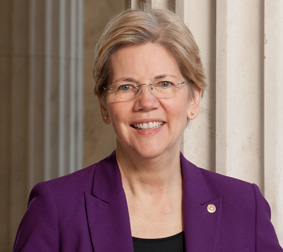
U.S. Senators Elizabeth Warren of Massachusetts and David Daines of Montana recently filed a bill that would require the Department of Defense to develop programs to treat active-duty service members with gambling addiction.

Under the measure, called the Gambling Addiction Prevention Act of 2019, the department would update its mental health regulations to include gambling disorder and offer resources about where service members can get treatment.

Warren said, “It’s our duty as Americans to honor the sacrifices service members and veterans make for our country. Senator Daines and I are reintroducing our bipartisan legislation to make sure veterans struggling with gambling addiction can get the treatment they need.”

According to the National Council on Problem Gambling, an estimated 56,000 active-duty service members are considered to have a gambling disorder; a Government Office of Accountability report showed that 514 active-duty service members or .03 percent were diagnosed with the disorder in 2017.

The proposed bill would require the department to add the words “gaming disorder” to its behavioral health regulations and guidance and make facilities raise awareness about gambling disorder and treatment options. The bill requires any facility offering gambling to include educational materials, a list of resources where service members can get help and protocols that encourage responsible gaming. The bill also calls for the Secretary of Defense to submit a progress report to the congressional defense committees.

An anti-gaming advocate, Warren said more than 3,000 slot machines at U.S. military bases abroad took in $100 million last year, at service members’ expense. She has asked the GAO to release its report about gambling problems among service members.

The report indicated that, despite the number of slots at U.S. military bases, the agency did not screen service members for gambling disorders. It also said less than 10 percent of servicemen and women with gambling problems seek help due to shame or misunderstanding of gambling disorder, defined by the military as a health and financial issue as well as a national security concern.

National Council on Problem Gambling Executive Director Kevin Whyte said, “I applaud Senators Daines and Warren for taking the lead on the GAP Act to address problem gambling in the military. NCPG believes there exists an ethical and economic obligation to protect our troops by preventing gambling addiction.”

Daines noted, “Far too many service men and women suffer from gambling addictions. This bill protects our troops by requiring the Defense Department to confront this growing problem head on.”

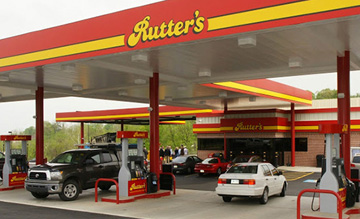
Rutters Approved for More Pennsylvania Truck-Stop VGTs

Against a backdrop of municipalities lining up to take advantage of a new law permitting them to ban video gaming terminals at truck stops in their municipalities, the Rutter’s convenience store chain is soldiering on, with approvals issued by the Pennsylvania Gaming Control Board at its July 10 meeting for VGTs at two more Rutter’s locations.

That makes three Rutter’s locations that have been approved for VGTs under provisions of the state’s 2017 gaming expansion law. That law allows five VGTs at each location that meets specific criteria defining a truck stop, including having a separate island for diesel fuel sales, and dedicated parking for at least 20 tractor-trailers.

Rutter’s has applied for VGTs at 21 of its 74 Pennsylvania locations. However, a law signed two weeks ago by Governor Tom Wolf throws those plans into question. Unlike the provision allowing satellite “mini-casinos,” the original law had no provision for local municipalities to opt out of the program. The new law creates a 60-day window in which any municipality can opt out of the program, banning VGTs in their jurisdictions by passing a simple resolution.

The law also rendered moot a lawsuit Rutter’s filed against the town of Strasburg, which used zoning laws to deny permission for Rutter’s to add VGTs in its Strasburg location. Strasburg was set to vote to ban the machines on Tuesday, a move expected of all the municipalities in the surrounding Lancaster County.

Last week, the board approved VGT gaming licenses for Rutter’s stores on the Susquehanna Trail in Manchester Township, York County, near Exit 22 of Interstate 83, and Kuhn Lane, Allegheny Township, Blair County.

Both stores approved Wednesday are among the newer generation of Rutter’s stores that the chain believes meet statutory definitions of truck stops.

In total, the gaming board has approved seven truck stop gaming locations to date. Sixty-five truck stop gaming applications have been received statewide.

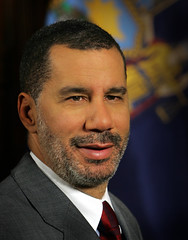
Sands Hires Ex-Governor in Big Apple Casino Push

Las Vegas Sands has hired former New York Gov. David Paterson to lead the gaming giant’s push for a casino in New York City.

The Big Apple is considered one of last major untapped gaming markets in the United States, and other industry leaders, notably incumbents MGM Resorts International and Genting, have made no secret of their desire to see full-scale casino gambling there.

“New York City is one of the few remaining good markets in the United States where you could see billions of dollars of investment in gaming facilities, provided that the tax rate and regulatory framework are set up properly,” said Brendan Bussmann, a partner with Global Market Advisors, an industry consultancy based in Las Vegas. “Every major gaming company will take a look at the market because opportunities like this are few and far between at this point.”

MGM and Genting operate thousands of machine games, respectively, at Empire City Casino at Yonkers Raceway and Resorts World New York City at Aqueduct Racetrack in Queens, but current state law prohibits them from offering Las Vegas-style house-banked slot machines and table games.

“Accelerating the conversion of Empire City to a fully licensed casino would immediately create new, well-paying jobs and billions in economic impact that could fund schools in Westchester and across the state,” the property’s President and CEO Uri Clinton said.

New York voters approved seven full-scale commercial casinos in a 2013 referendum. Four opened upstate between 2016 and 2018 with a seven-year head start included in the enabling legislation over potential downstate competition, effectively delaying casino development in New York City until 2023.

Las Vegas Sands, MGM, Genting—with other deep-pocketed bidders likely to join the fray—want to see the moratorium scrapped. Doing so would require them to compensate the upstate casinos to the tune of tens of millions of dollars, in addition to paying a license fee estimated at $500 million per casino and whatever percentage tax on gaming revenue is imposed.

LVS says downstate casinos could bring the state $1.5 billion in dedicated revenue and create 15,000 permanent union jobs and 15,000 union construction jobs.

Lawmakers, however, have been cool to an earlier start date, as has Gov. Andrew Cuomo.

“I’m not a great fan of the gaming industry, but it’s here, it’s real, states all around New York are doing it,” Cuomo said. “Obviously more people lose in gambling than win, and if there’s not a significant economic benefit to the state, or a region of the state, then I would rather not do it.”

The job facing Paterson, who served as governor from 2008 to 2010 and later chaired the New York State Democratic Committee, is to sway him the other way.

“Is it going to happen in 2023 or 2020? Why not start three years earlier?” said the former governor, who is joining LVS as a senior vice president. “This is really a tremendous opportunity to create jobs in New York.”

Mount Airy Opens Music Venue

Pennsylvania’s Mount Airy Casino Resort opened its new 20,000-square-foot concert venue last week with a concert by chart-topping performer Bruce Hornsby & The Noisemakers.

Mount Airy officials say the new ballroom/event center is the largest casino entertainment venue in northeastern Pennsylvania. It is part of a $40 million expansion project that added 100 hotel rooms and suits, and a 2,000-capacity, 26,000-square-foot covered outdoor concert pavilion.

Both new entertainment venues have distinguished the casino, located in Paradise Township in Pennsylvania’s Pocono Mountains resort region, as a major entertainment draw. Top performers are already booked into the new indoor venue, and the outdoor venue will offer shows this year alone by prominent acts including Alanis Morrissette, The Struts and The Charlie Daniels Band.

“We’ll have a full complement of events,” says Rich Berkowitz, president of Stroudsburg’s Sherman Theater, in an interview with the Allentown Morning Call. The theater will book the new event center with AEG, the world’s second-largest concert promoter. “We want people to make it a weekend here at Mount Airy and the whole of the Poconos.”

Vincent Jordan, Mount Airy’s vice president of marketing and gaming operations, told the newspaper the concert venue, like the overall expansion, was in response to customer demand. “It was necessary,” he said. “It’s based on demand, and we’re running 98 percent occupancy in the hotel, and that’s been for quite some time. So we definitely need more hotel rooms.

“And then, of course, as we do events with these concerts and shows, customers tell us, ‘Hey, we need a place to stay. We need to stay and enjoy the event.’ This is a destination resort. People like to come and experience the entire resort.”

Florida Casino Proposes Jai Alai Fronton

Eldorado Resorts, owner of Isle Casino Racing Pompano Park, and its joint venture partner, Cordish Companies of Baltimore, recently asked the city of Pompano Beach, Florida for permission to install a 300-seat jai alai fronton at the standardbred horseracing track.

Cordish Chief Executive Officer David Cordish said horseracing and jai alai could be offered at Pompano Park. “There could be both. Just speaking personally I find jai alai a fascinating and truly local sport with a great history.” He predicted “there will be a resurgence in the popularity of the sport.”

Jai alai promoters believe that’s already happening in South Florida, as the sport recovers from a sharp decline that occurred following a strike in the early 1990s. One sign of new life is evident at Magic City Casino in Miami, where the second jai alai season has just started. The venue closed its greyhound racing operation after voters approved a statewide constitutional amendment ending the sport. Its jai alai season runs from July 1 through November 30.

In addition, Gulfstream West, the former Calder Race Course, will start its second jai alai season August 1; horseracing is no longer offered there. The new jai alai season will begin at Casino Miami on August 1. Also, Dania Beach Jai Alai, which has offered jai alai for decades, recently underwent a multimillion-dollar renovation as part of the Casino at Dania Beach.

Arnaldo Suarez, general manager at the casino at Dania Beach, said, “Our ownership group and management firmly believe that jai alai can be re-energized within the South Florida community. It’s an icon of the city. It has brought thousands of people to our fronton.” He added when casinos drop racing operations and added jai alai, “it allows for potential new fans.”

Magic City Casino Chief Operating Officer Scott Savin noted, “We’re extremely happy with how things are going. Jai alai, quite honestly, was on death’s doorstep. So far we are on course. There’s more interest. Some days there might be only 30 people in our audience. Last Sunday we had over 250 people here. We encourage people to come out with their kids.”

Savin added operating a jai alai operation is more cost effective than a dog racing track. “On the real estate side, instead of needing the acreage for a track and kennels for dogs, now you’re talking about a fronton. With a glass wall front that separates the players from spectators, people can stand at the far end of the fronton and see the ball hitting the wall at a 125 or 150 miles per hour,” he said.

Eldorado Sheds Two More Properties

It’s been widely reported that once the $17 billion merger between Caesars Entertainment and Eldorado Resorts is finalized, many of the Caesars casinos will be on the market, including some Strip properties. But until then Eldorado is the seller. Last week the company shed two more properties to Twin River Worldwide Holdings, the Isle of Capri in Kansas City and Lady Luck Casino in Vicksburg, Mississippi, in a deal worth $230 million. Twin River owns two casinos in Rhode Island, Dover Downs Casino Hotel in Delaware, the Hard Rock Casino Hotel in Biloxi, Mississippi, and three small Colorado casinos.

For Eldorado, it continues a pattern of sales that began even before the Caesars deal was announced. The company previously announced the sale of three casinos to Century Casinos and the VICI REIT: Mountaineer Casino Racetrack and Resort in New Cumberland, WV; Isle Casino Cape Girardeau in Cape Girardeau, MO and Lady Luck Casino Caruthersville in Caruthersville, MO in an all cash deal valued at $385 million. The deals are expected to ease the regulatory hurdles that the Caesars deal may encounter, as well as adding significant money to complete the purchase.

Twin Rivers sees last week’s purchases as accretive to the company.

“Isle Kansas City and Lady Luck Vicksburg expand our geographic footprint with assets in attractive markets. We believe these assets are a great fit for our portfolio and see the opportunity to increase the net cash flow from these properties by our redevelopment and operating plans. In particular, in Kansas City, where the property lies within an area near downtown that has been targeted by local officials for development, we feel there is opportunity for capital investment in the property which we believe will have a transformative impact and integrate well with local development efforts in the area,” Twin River President and CEO George Papanier said in a statement.

Meanwhile, shareholders of Caesars Entertainment appear to have endorsed the Las Vegas-based gaming giant’s $17.3 billion merger with Eldorado Resorts by returning all eight members of the board of directors whose seats were up for re-election.

The vote, reported in a filing with the U.S. Securities and Exchange Commission, applied to eight of the 11 directors and includes three of the four directors corporate raider Carl Icahn installed after he amassed a controlling 28 percent of Caesars over the last several months and began pushing for a sale or merger to boost the value of the company’s perennially underperforming stock.

The eight, who will serve through the 2020 annual meeting, are: James Hunt, currently the chairman, John Dionne, Richard Schifter, Thomas Benninger, Juliana Chugg, Keith Cozza, Courtney Mather and Tony Rodio.

Cozza is CEO of Icahn Enterprises. Mather is managing director of Icahn Capital. Rodio, who was CEO of Tropicana Entertainment before Icahn sold it to Eldorado last year, took over as Caesars CEO in April.

Three members did not have to stand for re-election: Denise Clark and Don Kornstein and Icahn appointee James Nelson, a member of Icahn Enterprises’ board.

Rodio is expected to remain in place until the merger is completed sometime next year, pending an OK from the Federal Trade Commission and the approval of gaming regulators in 16 states.

On paper the merger will create the largest casino company in the world. Eldorado owns and operates 26 casinos in 12 U.S. states. Caesars’ gaming portfolio is comprised of 36 casinos and racinos owned or operated in 13 states, plus a racetrack in Kentucky. The company also owns or manages 13 casinos in Canada, Great Britain, Egypt and South Africa. The company also is pursuing a license for a megaresort in Japan, although Eldorado has said it likely will bring that to a halt.

Eldorado CEO Thomas Reeg, who will oversee the combined company, has said some regional properties will be sold to avoid federal antitrust issues.

“We’ll let the FTC tell us where they might have too much exposure,” said Union Gaming analyst John DeCree. “It’s not, in our view, going to be an impediment or roadblock to getting the deal closed.”

Reeg said he also expects to sell one or two of Caesars’ nine Las Vegas casinos, eight of which are on the Strip, prompting lots of speculation among observers and analysts about what will be sold and to whom.

Tilman Fertitta, the owner of restaurant giant Landry’s who tried to pull off a merger last year between Caesars and his Golden Nugget casino group, has been mentioned as a potential buyer, as has billionaire entrepreneur Phil Ruffin, who owns the TI on the Strip.

But as analysts point out, given the opportunity to buy a cash-generating Strip presence for a fraction of what it would cost to build one, there is likely to be no shortage of bidders.

It appears a virtual certainty, too, that at least one Strip resort will go, along with some regional assets, as Eldorado works to make the deal pencil out.

Eldorado is paying $7.2 billion in cash along with approximately 77 million shares and assuming roughly $8.8 billion of Caesars debt. It works out to $12.75 a share, a sizable premium over the $9 or so the stock has averaged over the last year and considerably above the $10.50 Eldorado reportedly offered initially.

Needless to say, for a company with a market value of around $4 billion and a little more than $3 billion of long-term debt it’s an expensive proposition. Eldorado management says there are some $500 million worth of synergies to be realized, but analysts are skeptical of that number.

On the labor front, what happens next is a matter of considerable concern among employees fearful of losing jobs and benefits.

As D Taylor, president of hospitality workers union UNITE HERE International, put it recently, “Where are they going to cut?”

A job action is already looming at Isle Casino Pompano Beach in South Florida, which Eldorado took over with its 2017 acquisition of regional operator Isle of Capri Casinos and shortly after laid off more than 80 union employees, about one-fifth of the property’s union workforce.

Earlier this month, 93 percent of Isle Pompano’s union employees voted to approve a strike if leadership calls for one.

“Employee frustration and dissatisfaction with the company’s constant reductions to staff levels and amenities for guests led to Saturday’s vote,” according to a statement from UNITE HERE Local 335.

Taylor, meanwhile, has vowed, “We will not stand by idly if the proposed Caesars-Eldorado transaction will lead to significant job losses, worse wages and benefits for our members, and lower state gaming tax receipts in the many communities where members we represent work and live.”

Atlantic City Waits for Eldorado Caesars Deal

As much of the gaming world waits to see the impact of the proposed Eldorado Resorts Caesars merger, Atlantic City is facing a dominance in the market by Eldorado seldom seen in the resort.

If the $17.3 billion deal between Eldorado Resorts and Caesars Entertainment is approved, the company would own four of Atlantic City’s nine casinos—Bally’s, Caesars, Harrah’s Resort and Tropicana—and control 40 percent of the city’s casino employees and 37 percent of total gaming revenue.

That presents a problem for New Jersey regulators, but most analysts are expecting Eldorado to begin making cuts in its resort holdings on its own.

Eldorado CEO Thomas Reeg has said he is looking for nearly $500 million in “synergies,” or cost-cutting and efficiency measures, from the proposed deal, according to various reports.

Bob Ambrose, an industry consultant and adjunct professor of casino management at Fairleigh Dickinson University told the Press of Atlantic City that cuts in Atlantic City would be no surprise.

“I’ve seen time and time again when these companies come in and they take over, that they look for ways to cut,” Ambrose said. “It’s just the nature of the beast that they look for this generic term called efficiencies.”

Ambrose said layoffs of casino workers would be one area the company would explore. That has already gained the attention of UNITE HERE Local 54, the casino union that represents nearly one-third of hospitality and hotel workers in Atlantic City.

“We’re going to be demanding answers,” Bob McDevitt, the union’s president told the Press. “We’ve had a lot of battles here in Atlantic City, and we’re up to whatever is put in front of us. But the one thing that workers desire is a workplace that is secure and where they can make money and provide for their families.”

Eldorado already operates Tropicana Entertainment and the city’s Tropicana Casino, and McDevitt said the relationship between the union and the casino’s management has been positive.

“Our hope is that Eldorado takes that philosophy to Caesars, but our concern is that it’s such a huge jump,” he said. “I’m patiently waiting to hear what Eldorado thinks as opposed to what people who observe the industry think.”

New Jersey Sports Betting Handle Tops $3 Billion in First Year

New Jersey passed the one-year mark for sports betting in the state last month and now has seen more than $3.2 billion bet on sports through the end of June.

Sports betting went live in New Jersey on June 14, 2018. Figures released by the state Division of Gaming Enforcement show the state’s casinos and racetracks handled $273 million worth of bets in June 2019.

In May, New Jersey finished ahead of Nevada in the amount of monthly sports bets placed, with $318.9 million wagered, about $1.5 million more than Nevada, whose June statistics will be released later this month.

New Jersey’s casinos and two horse tracks that offer sports betting collectively won nearly $284 million in June, up 21.5 percent from a year ago.

“I am frankly shocked at how well we have done,” Jeff Gural, operator of the Meadowlands Racetrack in East Rutherford, told the Associated Press.

The track has earned nearly $58 million in sports betting revenue after winning bets have been paid out—more than all Atlantic City sportsbooks combined.

“I expect that in this calendar year we will do $500 million in betting volume, which makes us the biggest in the world,” Gural said. “We totally dominate New Jersey, and as long as New York decides to force their residents to either bet illegally or drive to New Jersey, now that we have self-bet terminals available for the football season and American Dream opening next door, I would expect to see our revenues continue to grow.”

For the year, New Jersey casinos and tracks have earned $109 million on sports betting and paid $13.3 million in state taxes. Since sports betting started a year ago, New Jersey has collected $23.8 million, according to a press release from James Plousis, chairman of the New Jersey Casino Control Commission.

The month also brought good news to the Atlantic City casinos, which won a combined $278 million for the month, an increase of over 20 percent from last June. It’s the thirteenth straight month Atlantic City casino have seen a double-digit growth in revenue.

However, June was also the last month that the current nine casino market will be compared to the former seven casino market. Both the Hard Rock Atlantic City and the Ocean Casino Resort opened on June 27, 2018. Those openings stretched the market and only two of the original seven casinos saw revenue increases for June 2019.

The Borgata had its best June ever for table games, winning $22.3 million. The Borgata took in nearly $71 million in total revenue June, an increase of 7.7 percent from last year, according to an analysis by the Associated Press.

The Hard Rock was second at $32.5 million, Golden Nugget was third at $29.54 million, up 2.2 percent and Tropicana brought in $29.51 million, a decline of nearly 14 percent from a year ago.

Harrah’s won $24.5 million, down 17.3 percent, Caesars won $23.2 million, down 5.8 percent and the Ocean Casino Resort won $21.4 million. Bally’s won $16.1 million, down nearly 8 percent and Resorts won $15.5 million, down 5.1 percent.

Online gambling remained strong bringing in more than $38 million, an increase of nearly 68 percent from a year earlier. The Golden Nugget and its online partners led the market with nearly $13.6 million in online revenue.

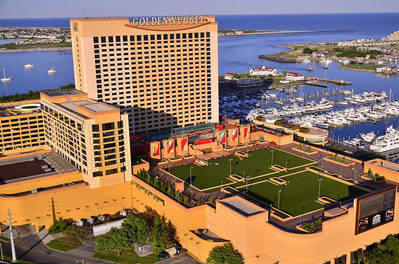
Golden Nugget Atlantic City Could See Online Revenue Pass Brick and Mortar

While really only a technicality, Golden Nugget Atlantic City could be the first U.S. casino to realize more revenue through online play than through its brick-and-mortar casino.

Through May, the difference between earnings generated from Golden Nugget’s online gaming portfolio and the brick-and-mortar property has been less than $3.5 million according to an analysis by the Press of Atlantic City.

In March, Golden Nugget and its online gaming partners—betfaircasino.com, playsugarhouse.com and nj.betamerica.com — set a record for internet gaming in New Jersey with $14.23 million in reported revenue, which was $3.4 million less than what the casino brought in from tables and slots, according to the Press.

The next month, the groups saw $13.85 million in revenue with the difference between online and casino revenue less than $1.6 million.

Of course, Golden Nugget AC splits its online revenues with its partners while keeping all of its brick-and-mortar revenue. Still, casino officials say the figures show the casino’s focus on online gambling.

Thomas Winter, senior vice president and general manager of online gaming for Golden Nugget, told the Press, that by focusing solely on the New Jersey market over the past five years, the casino and its online partners have an advantage over competitors whose attention is sometimes spread across multiple jurisdictions.

“As a trend, the growth is mostly online,” Winter said. “The good news is that it’s not really cannibalizing land-based revenue.”

Sports betting has also had a major impact on online gambling, with about 80 percent of sports bets in the state placed online.

“Sports bettors were not seeing themselves as casino players,” Winter told the paper. “But most of the online gaming growth is coming from sports betting players who sign up to bet on sports and then will start playing a bit of roulette, blackjack or slots. We believed the market was always there, but you had to offer a better product and user experience and educate people about online gaming. I believe this growth will continue.”

Online Casinos Launch in Pennsylvania

Pennsylvania became the third state to allow online casino gaming as three state casinos launched sites last week.

The Parx Casino in suburban Philadelphia and Penn National’s Hollywood Casino near Hershey launched online gambling as part of a three-day test watched by state regulators early last week. The Sugar House casino in Philadelphia launched its test two days later.

Pennsylvania joins Nevada, New Jersey and Delaware in allowing online gaming, though Nevada only allows online poker. The Pennsylvania sites have yet to roll out online poker.

Pennsylvania expanded its gambling laws in 20117 and allowed the state’s casinos to operate a full slate of casino-style gambling on websites and mobile applications for a license fee of $10 million.

Mohegan Sun, Harrah’s, Valley Forge, Presque Isle Downs, and Mount Airy casinos are slated to open online gambling sometime later in 2019.

Sports Betting Comes to New York

Sports betting has finally become a reality in New York, but without the lucrative addition of wagering by phone and online.

It’s been 14 months since the U.S. Supreme Court struck down a longstanding federal ban on bookmaking outside Nevada, and with the debut last Tuesday of Rivers Sportsbook at Rivers Casino & Resort in Schenectady, New York has joined eight other states in regulating the industry.

The opening was quickly followed 130 miles to the southwest with a planned opening last Friday of FanDuel Sportsbook at Tioga Downs Casino Resort near Binghamton.

The state’s other commercial casinos—del Lago Resort & Casino in the Finger Lakes and Resorts World Catskills in Monticello—will be joining the fray in the weeks ahead, as will the Oneida Indian Nation, which is partnering with Caesars Entertainment for sports betting at two of its three central-state casinos, and the Saint Regis Mohawk Nation, which has slated a fall opening at its Akwesasne Mohawk Casino Resort in Hogansburg in partnership with Canada’s the Stars Group.

“I’m glad we’re breaking grounds on sports betting, but it would’ve been nice to have the mobile component. But it’s a baby step,” said state Sen. Joe Addabbo, who has vowed to renew his push for mobile betting in 2020 after failing to win legislative approval for it this year.

The Queens Democrat, who chairs the Racing and Wagering Committee in the upper house, along with Mt. Vernon Democrat J. Gary Pretlow, his committee counterpart in the Assembly, point to neighboring New Jersey, which launched mobile and land-based sports betting a year ago, to argue that New York is losing out on tens of millions of dollars in revenue by refusing to allow consumers to bet on their phones and home computers.

New Jersey has booked more than $3 billion worth of sports bets in its first full year, more than 80 percent of them placed on a mobile device, with many coming from New York City-area residents making the short trip across the state line. FanDuel Sportsbook says one-quarter of its registered accounts in the Garden State belong to New York residents.

“Right now, Jersey is cleaning our clock when it comes to sports betting,” said Pretlow.

The Senate appears to be receptive to the pitch. Not so the leadership of the Assembly, where the remote option has never made it out of committee.

Sports betting was approved six years ago in the statewide referendum that amended the state Constitution to permit seven full-scale commercial casinos, four of them upstate, the other three allocated to the New York City area under a seven-year moratorium from the date the first upstate casinos opened. Under federal law, the approval was automatically extended to the state’s Indian tribes. But neither the referendum nor the enabling legislation that followed included remote betting, and Gov. Andrew Cuomo holds to the position that expansion into cyberspace requires another constitutional amendment 𑁋a lengthy and uncertain prospect that must go before the voters again and then win endorsement from successive sessions of the Legislature.

So, for now, bettors must journey to a casino to wager in person, effectively eliminating most residents of the Big Apple, for whom New Jersey is easier to get to than Resorts World Catskills an hour and a half away by car, or Rivers, which is about three hours away in the Hudson Valley.

Undaunted, Greg Carlin, CEO of Rivers parent Rush Street Gaming, believes his property’s 5,000-square-foot book, which features six betting windows, a lounge, a VIP area and 14 kiosks for wagering round the clock, will prove a draw in itself.

Managed in-house by Rush Street Interactive with technology shared with Pennsylvania’s SugarHouse Sportsbook and BetRivers Sportsbook in New Jersey, the book offers straight bets, parlays and totals on almost all major pro and college contests and in-play betting.

“We’re really not that far from New York City or certain places in Massachusetts and Connecticut,” Carlin said. “We have a beautiful hotel and property. People will want to come up and spend.”

North Carolina Approves Tribal Sports Betting

In North Carolina, the House recently voted 91-26 for SB 154, which would allow sports betting at the two casinos owned by the Eastern Band of Cherokees, Harrah’s Cherokee and Harrah’s Cherokee Valley River in Murphy, both operated by Caesars Entertainment. The Senate passed the legislation in April. Governor Roy Cooper will have 30 days to sign it. Cooper spokesman Ford Porter said the governor will review the measure before deciding whether to sign it into law.

The House also approved SB 574 establishing the 9-member North Carolina Gaming Commission. The board would oversee all current forms of gambling in the state, including the lottery, bingo, raffles and boxing. The bill also requires the commission to conduct a feasibility study on statewide sports betting. The measure was sent back to the Senate for further consideration.

SB 154 allows sports betting on professional and collegiate sports, including those in North Carolina. It does not allow online or mobile sports betting—only on-site wagering at existing tribal casinos. Bill sponsor state Rep. Kevin Corbin, whose district includes the Cherokee casinos, said it “does not geographically expand gaming in North Carolina. We’re not asking to legalize gaming, that was done 21 years ago. We’re not asking for internet or remote sports betting.”

Co-sponsor state Senator Jim Davis, whose district also includes the tribal casinos, added, “I’ve been a champion for expanding gaming opportunities for the Eastern Band of Cherokee Indians for years. They’ve been a great economic generator for the Western region of our state and I’m happy to play a small part in the good they do for this region.” He added, “I expect the governor will sign the bills. They are not controversial and we have strong bipartisan support.”

During deliberations, state Rep. Julia Howard unsuccessfully proposed an amendment to ban wagering on all college games. Opponents argued college sports are hugely popular in the state, led by Duke and the University of North Carolina. They said removing college wagering would eliminate more than half of the betting revenue tribal casinos are expecting.

Still, Eastern Band Principal Chief Richard Sneed said sports betting revenue will not be very significant. He said the tribe projects sports betting and off-track wagering will generate an additional $14 million in annual revenue, with $1 million going to the state. He noted the state already receives regular revenue sharing from tribal gaming operations.

Sneed said, “People are excited about sports betting, especially for a lot of folks that haven’t done sports betting besides office pools. We’re just excited to be able to offer it” if it becomes law, he said.

Regarding how the two sportsbooks will be branded and built, Eldorado Resorts’ announced partnership with Caesars Entertainment could have an impact. Observers said the sportsbooks could be branded and operated by William Hill US, which has an agreement with Eldorado, by Caesars or by DraftKings, which has a deal with Caesars.

Could Rossello Be Out Before Sports-Betting Gets In?

Legislation to bring legal sports betting to Puerto Rico, recently sent to Governor Ricardo Rosselló Nevares for his signature, may end up on the back burner amid controversy about profanity-laden texts in which he called a political rival a “whore,” labeled another one “the daughter of a bitch,” said a possible gubernatorial opponent was “off her meds,” and advised a U.S. federal financial oversight board to “Go f*** yourself.”

The messages between Rosselló and his top aides, published by Primera Hora, is the latest chapter in the unfolding soap opera that is the Puerto Rican government. The unsavory headlines could further incapacitate an administration that has faced multiple financial crises and investigations and filed for bankruptcy two years ago. At a July 11 press conference, Rosselló said he is “ashamed” of his texts but will not resign.

“Women are legitimately offended and there must be many apologies,” he said.

The vulgar comments first came to light when Jenniffer González, Puerto Rico’s non-voting representative in the U.S. Congress and a member of Rossello’s pro-statehood party, wrote on Twitter that “the sexist expressions in the governor’s group chat are offensive and unacceptable,” according to Bloomberg News. U.S. Representative Raul Grijalva, chairman of the House committee that oversees the island, called for Rosselló’s resignation after the U.S. Justice Department indicted his former education secretary and health insurance administration director over government contract awards.

Meanwhile, Rosselló has been tussling with the both the Trump White House and the U.S. financial oversight board over his request for billions in aid to help the island rebuild and recover after Hurricane Maria. Republican Rep. Greg Walden said the aid may not be approved unless greater oversight and “program integrity measures” are put in place on the island.

Last month, Treasury Secretary Raul Maldonado was fired after alleging a culture of corruption in his own department including influence peddling, issuance of fake licenses, destruction of documents and accessing confidential taxpayer records. Maldonado’s son, Raul Maldonado Nieves, later called the governor “corrupt,” and claimed Rosselló ordered an auditing firm to alter a report on Hurricane Maria aid that would have shown mismanagement in a relief effort involving his wife, Beatriz. The governor has denied the allegations.

According to CourtHousenews.com, 889 pages of “Chatgate” were leaked.

The texts showed “more than misogyny and homophobia on the part of the governor and his men, however: the public was exposed to total dysfunction among the top echelons of the island’s government in the middle of a historic storm that left thousands dead,” the website said.

Earlier this month, a number of high-ranking government officials, businesspeople and contractors were arrested by the FBI and charged with 32 counts of fraud and related charges. They include former Education Secretary Julia Keleher and former Puerto Rico Health Insurance Administration head Ángela Ávila-Marrero. The alleged fraud involves $15.5 million in federal funding between 2017 and 2019, reported NBC News.

In a statement that was at once apologetic and defiant, Rossello said, “I want to start by asking for forgiveness for my expressions in a private chat. I am the governor of Puerto Rico. I used a private chat and those flaws manifested themselves there. I would use it to release tension. Nothing justifies the words I have written and said.

“I will not resign. I am proud of the results we have obtained for our people. The answer is clear and blunt: I will not resign. I will continue working for our people. I can handle blows. I am a fighter and in the end, I guarantee victory. I am a resilient governor.”

Carlos Méndez Núñez, president of the commonwealth’s House of Representatives, said, “Impeachment isn’t on the table yet. But we reserve the right to evaluate if that’s merited.”

U.S. Rep. Raul Grijalva, chairman of the U.S. House Natural Resources Committee called on Rossello to “take a housecleaning approach as quickly and thoroughly as possible” to restore the public trust.

Indiana Sports Betting Opens September 1

The Indiana Gaming Commission recently released draft regulations to implement House Enrolled Act 1015, legalizing sports wagering in the state. If the rules are approved at the commission’s August 28 meeting, the state’s five casinos may begin taking in-person bets on September 1, at sportsbook windows or kiosks. Mobile and internet wagering will be allowed at a future date.

Dan Nita, Caesars regional president and Hammond Horseshoe general manager, said, “We’ve been encouraged by the draft regs. Maintaining the integrity of the operation is first and foremost. But each property is a bit unique. So the ability to have some flexibility as to how the sportsbook is laid out and where you place kiosks and what kind of screens you have, I think those are more operational in nature and so we’ve been pleased with that.”

Nita said Horseshoe will start construction on a 5,300 square foot sportsbook on the casino floor at the base of the escalator leading to the Village Square Buffet and the Venue concert hall. He said that location was chosen to maximize foot traffic and make people aware sports betting is available.

The sportsbook at the Blue Chip Casino in Michigan City will be run by FanDuel as part of a nationwide strategic partnership between the fantasy sports operator and Blue Chip owner Boyd Gaming. Sportsbook operators have yet to be announced at Ameristar Casino in East Chicago and the Majestic Star casinos in Gary.

Eldorado, William Hill Launch Iowa Sportsbooks

Reno-based Eldorado Resorts and William Hill US recently announced they will launch sportsbooks at Eldorado’s Isle Casino Hotel Bettendorf and Isle Casino Hotel Waterloo. William Hill officials said following regulatory approvals in August, customers at the two casinos will be able to wager through the company’s mobile application, on-site kiosks and the InPlay wagering menu. The two sportsbooks will create more than 50 new jobs.

Eldorado President Anthony Carano said, “Expanding the William Hill relationship to include Iowa offers our loyal customers a full complement of gaming action and plays an important role in providing guests the unbelievable experience.” William Hill President of Retail Operations David Grolman added, “These two Iowa destinations will offer sports fans amazing new opportunities to enjoy the games and teams they love in new and exciting settings.”

Under a strategic partnership formed last year, Eldorado granted William Hill the exclusive right to operate sports betting at all Eldorado owned or managed properties in the U.S. and to operate mobile sports betting in states where Eldorado obtains a license. Currently William Hill operates sportsbooks and mobile sports wagering for casinos and racetracks in Nevada, New Jersey, Mississippi, West Virginia, Pennsylvania, Delaware and Rhode Island.

Isle Casino Hotel Bettendorf will offer 12 55-inch odds boards and eight 65-inch viewing monitors. Isle Casino Hotel Waterloo will have eight 65-inch odds boards and 15 55-inch viewing screens for a total of more than 46 feet of viewing monitors.

Eldorado will have a 20 percent ownership stake in William Hill, valued at $50 million’ Eldorado also received 13.4 million ordinary shares of William Hill U.S. parent William Hill PLC, which is traded on the London Stock Exchange. In exchange, the sportsbook operator will have a 25-year deal to operate facilities in the company’s casinos where sports betting in legal. Eldorado also received 13.4 million ordinary shares of

William Hill officials said the Eldorado partnership could give William Hill US access to overseeing sportsbooks at Caesars Entertainment casinos that will part of the two companies’ upcoming $17.3 billion merger, expected to close in 2020. The transaction will create the world’s largest gaming company with 60 resorts in 16 states.

Iowa Governor Kim Reynolds signed sports betting into law this spring after both the state House and Senate passed legislation legalizing it.

Besides William Hill, Eldorado has a sports betting agreement with the Stars Group, which includes a presence on Fox Sports Network’s sports wagering application.

D.C. Council Approves No-Bid Sports Betting Contract

The District of Columbia Council has approved a controversial no-bid contract with Greek gaming technology supplier Intralot, under which Intralot will operate the district’s online sports betting and online lottery programs.

The council voted 7-5 to approve the contract despite concerns that there was no competitive bidding for the $215 million, five-year agreement. Critics complained that subcontractors hired by Intralot have connections to D.C. elected officials, and had previous contracts with the city government.

Intralot manages the D.C. Lottery currently, so the mobile and digital wagering on sports and lottery games completes a monopoly or the firm in the U.S. capital.

Bets will be taken online beginning as early as fall, and a smartphone wagering app is expected to go live next year.

But the day after the vote, it was revealed that the cousin of one of the councilmen was listed as the CEO of one of the companies involved in the no-bid contract. Although the cousin denies this, it’s just another questionable tie to public officials in D.C. Another councilman has close ties to a lobbyist employed by Intralot and the mayor has ties to a marketing firm that is profiting from the contract.

New Hampshire Approves Sports Betting

New Hampshire Governor Chris Sununu has signed a bill legalizing sports betting in the state at both physical sports books and through online mobile apps.

Though a launch date has not been set, Sununu said he wants to be a part of the festivities when sports betting begins.

Sununu declared, “We can do it with a lot of confidence because it’s being done responsibly, and it’s being done with an organization here at the lottery that just knows what they’re doing. They know how to get this stuff off the ground.”

“The only rule is, I want to place the first bet,” Sununu told the Associated Press.

Actually, the law prohibits betting on New Hampshire college teams and the state will limit the number of sports betting licenses to 10 for physical locations and five for mobile apps. New Hampshire is projecting that sports betting will produce an estimated $7.5 million for education in fiscal year 2021 and $13.5 million two years later. The state Lottery Commission will regulate the new industry.

The bill allows for stand-alone online sportsbooks and does not require operators to partner with a physical sportsbook. Analysts expect former DFS giants and now major sports betting brands DraftKings and FanDuel will both apply for licenses under this provision.

The New Hampshire Lottery will regulate sports betting and will also be able to offer sports betting games.

State lottery officials estimate that sports betting will bring about $10 million during the first year of operations. The funds will be earmarked for education.

Sports betting will be operated by the state lottery commission and be available both on mobile wagering platforms and at retail locations.

New Hampshire Lottery Director Charlie McIntyre told the New Hampshire Union Leader there are just a few vendors who are capable of running sportsbooks. “This is not for the faint of heart, in terms of the businesses who engage in this. They know what they’re doing.”

McIntyre, who made his legal chops as a prosecutor fighting organized crime, including mob-owned bookie operations, said one goal of the lottery “is to just migrate this from the illegal market that exists already.”

He also anticipates that sports betting will generate economic opportunities and encourage new betting operations to move into the market.

The lottery itself just completed a banner year, collecting more than $384.2 million in total sales and funneling more than $100 million into schools. This was a 15 percent increase over the previous fiscal year.

Sununu said it’s likely that sports betting will appeal to a different clientele from keno, which was unveiled last year in the state and brought in almost $27 million in gross sales at the end of the fiscal year.

The bill’s author, Rep. Timothy Lang, who joined the governor for the official signing ceremony held at lottery headquarters in Concord declared, “I’m happy that we’re bringing an illicit activity into the light for our citizens of New Hampshire and allowing for some consumer protections.”

The state does not have casinos, but sports “lounges” will be legal within the state and can placed within existing businesses, including bars or resort hotels. Municipalities have the right to approve having a sports lounge within its borders.

Before a launch date can be set, the lottery must develop regulations and prospective licensees will have to go through a Request for Proposal process. Also, physical sportsbooks would have to be constructed.

The law mandates that the state create a division of sports wagering to enforce the law. It also creates a Council for Responsible Gambling that will be funded with $250,000 a year collected from sports betting taxes. It will recruit from persons “qualified in the field of addiction or mental health services with a focus on problem gambling.”

Oregon Lottery to Launch Sports Betting in Two Months

The Oregon Lottery plans to launch sports betting in two months, just in time for the NFL season; becoming the first state in the Pacific Northwest to do so. It plans a three-phase rollout.

Because Oregon was one of the four states that was grandfathered in when the federal Professional and Amateur Sports Protection Act (PASPA) of 1992 was passed, it did not have a sports betting ban. For a time it offered the Sports Action parlay game. That game could come back as part of the rollout of sports betting, according to Lottery spokesman Matt Shelby, who was interviewed by PlayUSA.

The Lottery plans to offer both online sports betting and self-service sports book kiosks. In fact, its first offerings will be on mobile platforms. A few months later the kiosks will be rolled out at retailers, which will be able to have up to six of them. The third phase could include the return of the Sports Action parlay game.

The online product may include the ability to buy scratchers, Powerball and Megabucks. The sports book rollout will not include video lottery terminals (VLTs) said Shelby.

The Oregon Lottery is taking a lot of fire because of its technical partner, SBTech, which has been accused by Scientific Games, one of the rivals it outbid for the contract of offering online sports betting to countries where that is illegal. SBTech vigorously denies this and the Lottery said it conducted an extensive investigations where officers traveled to Europe and remains confident in SBTech, which also operates in Arkansas, New Jersey and Mississippi.

As recently as June several lawmakers introduced legislation in the House that would have banned such forms of sports betting. Those bills went nowhere and Shelby said he and his staff had been confident of the support of the governor, Kate Brown. “I don’t think we were ever all that concerned,” said Shelby.

He noted that several lawmakers began to earmark money from sports betting for favorite project, such as paying down the public employee retirement debt. He added, “There were a number of bills that made it through, or bonds that were approved, that used lottery revenue as the collateral for capital ponds. While on one hand a few legislators had general concerns about the direction we were going, as a body, the legislature was moving forward and dedicating that money.”

Later Senate Committee on Finance and Revenue Chairman Mark Hass declared that “no action will be taken” on the proposed amendment.

Now, with those distractions out of the way Shelby spoke confidently about rolling out some of the same services that SBTech now offers at the Golden Nugget Sportsbook in New Jersey. It will only offer professional sports betting for the time being. Shelby told PlayUSA: “We’re not going to say ‘never. But out of the gate, we felt that it was prudent to stick with pro sports at the moment.”

Part of that decision stems from the state’s experiences with the NCAA, which declined to put championship events in any state that offered sports book. Because of that stand Oregon stopped offering Sports Action in 2007.

Oregon’s university officials remain skittish about allowing collegiate betting. Shelby said he doesn’t want for them to be uncomfortable about sports betting, so the state will stick to professional sports for now.

There are a lot of uncertainties about what officials actually expect from the sports betting market. Shelby said, “We have lots of projections about what we think betting patterns are going to be and what revenue is going to be. But those are just projections. We’ll see what the market actually bears. At that point, you can start having conversations about what sports betting is yielding and what it could yield if we offered NCAA.”

Shelby knows that the state won’t maximize sports betting profits if it doesn’t include college games. “But we have a dual mission: It’s maximum profit for the state of Oregon commensurate with the public good,” he told PlayUSA. “If we were only interested in maximum profit, absolutely we’d offer collegiate betting. But we’re not a for-profit enterprise. We’re a state agency. … We approach things a little more cautiously than a casino.”

Six months after the initial rollout the statewide introduction will be complete. He says the state has a strong retail market. “The infrastructure is there,” said Shelby. “It’s just training people to support new hardware and working with retailers to figure out where the machines would go.”

The decision of which retailers will be approached has not gotten far. “You can’t just walk in and say, ‘I’m a new business, I want kiosks.’ We’re going to start with a number that makes more sense. … We want to make sure we’ll be placing these kiosks in places that make sense and are viable,” said Shelby. Although they will be relying on existing retailers, past history isn’t the only factor. “We know that sports betting draws a new type of consumers. So we can’t rely on data from our current offerings. We know there are potential retailers out there(that do not have lotto products that may be interested in having a sports betting kiosk.”

Eventually the Lottery will “provide mobile convenience toward Powerball or Megabucks tickets” as well as the ability to play scratchers, he said.

Shelby also said the Lottery wants to be socially responsible and not to encourage people with gambling problems. “We don’t want to be in a position where someone is spending hours at a bar and playing lottery and going home and grabbing a six-pack out of their fridge and then playing at home,” he told PlayUSA.

In his interview Shelby also addressed the controversy with SBTech, which was generated by Scientific Games, which called on the Lottery to investigate SBTech and even reconsider its deal with them. Oregon State Police even sent an office to Europe to investigate some of the claims.

Shelby dismissed any concerns about SBTech as having come largely from Scientific Games being disgruntled over losing the contract to a foreign provider. “We know the sports betting industry is a highly competitive industry. We know there’s a vendor that bid for this contract and did not get it that made some claims. We looked into those claims.” He added, “State police investigated. At the end of the day, they didn’t surface anything that was worth moving forward.”

Last week rumors circulated that DraftKings might be acquiring SBTech. Shelby said if that happens it wouldn’t affect the state’s relationship with the company. It WOULD require the state to do “due diligence” on DraftKings, however.

Maine Governor Puts Sports Betting Bill in Limbo

Maine Governor Janet Mills has put about 40 bills in limbo until the next legislative session, saying they need more review. Among them is a bill that would legalize sports betting.

Under Maine’s system, if a governor does not sign a bill or veto a bill during the legislature’s recess—it becomes law within three days of the legislature returning to session.

Under the law the governor will have three days to sign or veto the bills once the legislature returns to session. If the deadline passes without an action, the bills will become law.

The bill in question would allow casinos, racetracks, off-track betting operators and federally recognized Indian tribes to apply for a license to offer in person sports betting. It would also allow “untethered” mobile sports betting from providers such as DraftKings.

Governor Mills issued this statement: “The Legislature has passed a significant number of bills this session, and I take seriously my constitutional obligation to thoroughly review all of them, evaluate their implications and decide whether they are in the best interest of Maine people.” She added, “I will continue to review these bills and gather more information, and I look forward to acting on them at the beginning of the next legislative session.”

Senator Louis Luchini, the author of the sports betting bill, said he would use the time between now and January to “see if there’s anything we can do to make the bill better.”

It has been estimated that the state could bring in as much as $4 million in taxes from sports betting over two years.

DraftKings, which is waiting in the wings to find out the bill’s final fate, issued this statement through its spokesman, Jamie Chisholm: “We appreciate the diligent work and comprehensive approach of Chairmen Luchini and Rep. John Schneck, and the entire legislature, in passing legislation that if enacted will protect Mainers and deliver a blow to the thriving illegal market by embracing competitive, mobile sports wagering operations with robust consumer protections. We are hopeful that Governor Mills allows the bill to usher in an era of legal, regulated sports betting in the Pine Tree State.”

Some legislative leaders say they expect Governor Mills to call for a special session later in the summer, in which case the question of the 40 bills will come up again.

Has New App Solved iGaming’s Apple Problem?

Like William Tell, Rush Street Interactive has cored the Apple.

Until this week, Pennsylvanians who wanted to gamble online couldn’t do so via iPhones at four new mobile sportsbooks in the state: SugarHouseBet Rivers, Parx and Hollywood.

Earlier this year, Apple declared that its App Store would not offer any app that “provides access to real money gaming” unless it was written in iOS-native code—in other words, unless providers hurried up and rewrote the current code by the arbitrary deadline of September 3.

Rush Street Interactive, which runs SugarHouse and Bet Rivers, has reportedly found a way around a seemingly intractable problem. Its sites now prompt users to download an app called GeoGuard to access the PlaySugarHouse and BetRivers online books.

The app is available in the App Store—take that, Apple!—and should get some functionality on iOS devices.

Parx and Hollywood Casino still have no iOS-functional apps, but the move by RSI proves there are end-runs that will allow them to serve all their customers, iOS and Android alike.

What’s It All About, Apple?

iGamingPlayer.com talked to Kent Young, founder and CEO of Spin Games, for some perspective on the matter. He says Apple’s motives were three-fold:

  • It doesn’t want to be caught up in illegal transactions
  • It’s worried about the seesawing Wire Act, which may or may not put the kibosh on iGaming in the U.S.
  • It wants to shut out commercial entities that don’t line its pocket

Apple has a valid point about illegal transactions. That’s precisely why New Jersey lawmakers fought for a legal, regulated marketplace, so they could start to shut down the massive, multibillion-dollar black market. In highly regulated markets like Jersey and Pennsylvania, Apple has nothing to worry about.

“Is Apple aware of the structure and the compliant manner in which we have to operate, or the high level of security and scrutiny we have to go through?” asks Young. “We need to be licensed and have all products approved by a regulated laboratory or an approved third party. Our software needs to be housed in a secure environment that can be checked by regulators on a regular basis.”

In short, these systems rival Fort Knox for security, privacy and oversight. BTW, in this business, it’s the regulators’ job to sign off on gaming apps—and that authority cannot be usurped, even by the Sasquatch of Silicon Valley.

Stay tuned to see how more online sportsbooks get around this speed bump.