Author: Casino Connection Staff

Celebrate America Parade

Hard Rock Atlantic City will present the Celebrate America Parade on Saturday, September 7, 2019 starting at 5 p.m.

The parade will take place on the Atlantic City Boardwalk, stepping off at Metropolitan Avenue and concluding at Arkansas Avenue. The parade will span a 1.4-mile-long route where spectators are encouraged to bring American flags, lawn chairs and blankets to watch. The Celebrate America Parade is a family-friendly event for those looking to extend their summer and join the community in coming together to honor heroes with an unforgettable patriotic event.

Grand Marshal for the parade will be Miss America 1984, Suzette Charles, Atlantic County native, singer and entertainer. There will also be 2020 Miss America 2.0 Competition candidates from D.C., Miss Delaware, Miss Maryland, Miss New Jersey and Miss Pennsylvania riding in the parade.

Those who are looking to spot a celebrity will have the chance to see Philadelphia sports legends Larry Bowa, Bill Bergey and Dave Shultz who are all supporting the celebration. Atlantic City’s very own heroes and first responders from the Atlantic City Police Department and Atlantic City Fire Department will also be participating in the parade, as well as the HERO Campaign patrol vehicles, the Valley Forge Military Academy Band and Platoons, the Marching Cobras, the 78th Army Band, additional string and marching bands, military units, the Patriotic Farm Tractor from Iowa, diverse and cultural groups and more!

Sponsored by Pepsi®, the parade is the perfect way to close out the summer season.

For details visit: https://www.hardrockhotels.com

New Jersey Sports Betting Off to Fast Start

New Jersey was the first state in the U.S. to launch legal sports betting. Borgata, Ocean Resort, and Monmouth Park were first with retail betting onsite in June of last year. Online betting launched in August and September. Next month will provide the first year-over-year results.

How long will New Jersey’s advantage last? That remains to be seen. By the end of the year, all of Pennsylvania’s casinos should be operating sportsbooks, both online and in the casinos. Could New York be far behind?

But for now, sports wagering in the Garden State is healthy and growing.

“Consumers now have access to high-quality, state-of-the-start legal sportsbooks. New Jersey’s long legal battle was worth it, and the arrow is pointing up,”according to Brett Smiley, editor for industry publications SportsHandle.com and USBets.com.

The combined onsite and online handle topped $251.4 million in July and has exceeded $2.2 billion for the year, with online wagering the overwhelming favorite of bettors by more than 80 percent.

The total betting handle in May in New Jersey actually surpassed that of Nevada’s, $318.9 million to $317.3 million, according to Smiley.

“Just one year into the opening of a legal market, that’s very impressive,” he said.

New Jersey allows each licensed property to use up to three online brands. Caesars has Caesars and Caesars Interactive, while Resorts has Resorts and Resorts Digital, for example. With remote registration for all these sportsbooks available throughout the state, New Jersey has produced a robust, regulated market that is being viewed around the country as a model, Smiley said.

New Jersey hasn’t operated long enough to pinpoint which sport is the most popular among bettors. But based on Nevada sportsbook trends, football is the most popular among U.S. bettors followed by basketball, baseball and “other sports” including soccer and hockey.

“Peaks and valleys in sports betting handle correlates for the most part with the pro seasons,” said Rummy Pandit, executive director of the Lloyd D. Levenson Institute of Gaming, Hospitality & Tourism at Stockton University.

All three of the top sports are in play between September and June, but baseball only is operating come July and August. “When there’s no football or basketball, there’s always a lull and numbers dip. Those are the most heavily bet sports in the U.S. Plus, people vacation in the summer,” Pandit told GGB News.

A relative decline in sports betting handle from May through July and into August should be expected as fewer, and less popular games are played. “This reduces the opportunity for wagering and hence the overall handle,” Pandit said.

That contention is borne out by state Division of Gaming Enforcement numbers, which show the handle dropped from $318.9 million in May to $273.2 million in June and $251.4 million last month.

“Come September, when the football season starts, and October, when football, baseball, basketball even hockey overlap, we should expect to see significant increases in sports betting handle simply due to the increased number of games and opportunities to wager,” Pandit said. “The numbers are going to spike again.”

At a very reasonable tax rate on sports wagering (8.5 percent on retail gross revenue, 13 percent online), state coffers have added roughly $25 million since June 2018 and $15.5 million year-to-date. Sports wagering revenues year-to-date exceed $127.5 million with $79.5 million from the Meadowlands and Monmouth Park.

A good chunk of the bets at the FanDuel Sportsbook at Meadowlands are coming from New Yorkers; the racetrack is only eight miles away from New York City.

“Anecdotally, there’s a good number of New Yorkers and Pennsylvanians crossing borders to get down a bet online,” Smiley said. “As of July, sports betting is now legal and operational in New York, but only in person at brick-and-mortar properties which include four upstate commercial casinos and tribal casinos, most of which are in remote parts of the state.”

Pennsylvania’s online and retail market is live now too, so expect some of that clientele getting siphoned away from New Jersey. “But I expect in year two, New Jersey’s market will nevertheless grow as word spreads about the availability of safe and quality sportsbooks, by word of mouth and large marketing spends on radio, online and otherwise,” Smiley said.

New recreational bettors will continue to join in, too. “I think sometime this football season we’re going to see the betting handle approach $500 million in a month, which is what we’ve seen in Nevada,” he added. “In other words, momentum is only growing.”

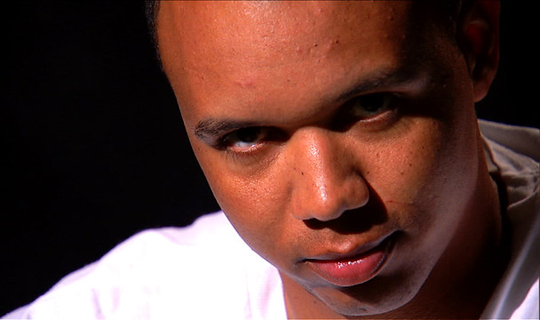
Borgata Grabs Phil Ivey’s Poker Winnings

Poker champion Phil Ivey forfeited his winnings from the World Series of Poker Players Championship to the Borgata in Atlantic City last June. The jackpot will go to pay part of the $9.6 million Ivey owes to the casino, winnings he was ordered to repay after it was determined that he practiced edge-sorting in baccarat.

In June, a strong run by Ivey led to a finish in eighth place out of 74 total entries at the Las Vegas Rio, good for $124,410. According to casino.org, Ivey never saw the money.

Ivey admitted to edge-sorting but was unapologetic for utilizing the method, saying only that the Borgata should be blamed for using faulty cards. In February, a federal judge in New Jersey ruled that Ivey and a partner must repay the Borgata the millions in winnings, plus an additional $504,000 the pair won playing craps with their baccarat haul.

“By using cards they caused to be maneuvered in order to identify their value only to them, Ivey and Sun adjusted the odds of baccarat in their favor,” U.S. District Judge Noel Hillman said in his ruling. “This is in complete contravention of the fundamental purpose of legalized gambling.”

Ivey told the Borgata he doesn’t have the money. The Borgata said it’s been able to locate only one bank account in his name in the United States, and it’s empty—this despite the fact that Ivey is been one of the most successful poker players in recent history, currently 14th on the all-time money list, with the Hendon Mob putting his live cash earnings at more than $26.3 million.

Ivey is the richest poker player originally from New Jersey, but it’s presumed that much of his fortune is located in banks not in the U.S., according to casino.org. The Hendon Mob lists Ivey as the No. 2 player in all-time popularity rankings. The list is compiled from the number of unique player profile hits each person has on the poker website.

PA Truck Stop Gaming Goes Live

The Rutter’s truck stop and convenience store along Route 30 in York, Pennsylvania recently opened its gaming room, becoming the first truck-stop location in the state to offer five video gaming terminals in a room tailored to the state’s strict specifications.

Nearly two years after Pennsylvania lawmakers passed a sweeping gaming expansion bill, truck stop gaming is finally here, with a dozen or more gaming rooms expected to open before the end of the year.

The provision of the 2017 expansion law, which permits up to five VGTs at qualifying truck stops around the state, was partly tailored on the VGT law in Illinois, with one huge difference: Unlike Illinois, there is no provision for VGTs at bars, taverns or private clubs, despite intense lobbying from the state’s tavern association. Illinois operators must compete with more than 30,000 VLTs at bars, taverns and truck stops, not to mention more new casinos, after the state passed its own massive gaming expansion bill this year.

The Pennsylvania legislature ultimately determined that VGTs in bars and taverns would saturate the gaming market, and threaten the cash cow provided by the 12 casinos across the state (soon to be augmented by a 13th in Philadelphia, plus several satellite “mini-casinos,” also created by the 2017 law).

Thus, the potential VGT market in Pennsylvania is a fraction of that in Illinois, not only because of the absence of bar VGTs, but because of more stringent requirements in Pennsylvania for truck stops. For instance, under a recent amendment to the Illinois law, truck stops averaging sales of 10,000 gallons of diesel or biodiesel fuel per month are permitted up to six VGTs each. A new “large truck stop” category allows up to 10 machines in locations with average monthly sales reaching 50,000 gallons. In Pennsylvania, locations must sell an average of 50,000 gallons to qualify for five VGTs.

Nevertheless, regulators are beginning to ramp up the new form of gaming. The Rutter’s location is one of 12 VGT licenses to gain final approval out of 71 applications so far.

According to Doug Harbach, spokesman and communications director for the Pennsylvania Gaming Control Board, applicants go through extensive scrutiny before an approval for VGTs. “They have to have a lot of things in order for us to recommend to the board an approval,” Harbach told GGB News.

“There are two phases. We have to look at criminal record; they have to attest to this and attest to that. We give them a conditional approval on that, and then we do more in-depth onsite inspections. That could be more than one visit—in order to make sure they are properly setting up the facility for cameras, and can sell the amount of gallons of diesel fuel they’re supposed to, that they have the acreage (the law requires at least three acres), that they have the parking spots for commercial vehicles the law outlines.

“All those have to be done, among other things, before an application can come to the board with a recommendation for approval.”

According to Harbach, the Rutter’s convenience store chain, which runs 72 stores in 14 counties across a vast swath of central Pennsylvania, has submitted the most truck-stop applications: 21. Five of those applications are for Rutter’s locations in Lancaster County, the heart of Amish country. That fact led to the first controversy surrounding truck-stop VLTs, as municipal officials began speaking out against any gambling in the conservative, rural region.

The dispute came to a head when the township of Strasburg used zoning laws to ban Rutter’s from opening a state-licensed VLT room in its store there, by reinterpreting local zoning laws. Rutter’s sued.

“All the things we were doing were perfectly legal in terms of our store being qualified for VGT gaming under the law,” Rutter’s CEO Scott Hartman told GGB News. “It was all primarily related to the fact that legislators in Lancaster County were still upset from two years ago when the law was passed, because they were not given the opportunity to opt out of VGT gaming at truck stops.”

The 2017 gaming expansion law gave local municipalities across the state 60 days to opt out of the mini-casino provision, banning the satellite facilities within their jurisdictions, with the option to opt back in at any point in the future. The same opportunity was not afforded the locals concerning truck-stop gaming.

“When the act passed, it gave them the opportunity to opt out of mini-casinos, and they did, but it did not give them the opportunity on the truck stops,” said Hartman. “So, they were still sort of festering that resentment over in Lancaster County, and therefore, when we went to apply for the local applications required to make the modifications to our store, that’s when a couple of the local municipalities said, ‘Hey, we don’t want VGTs in our backyard.’

“The lawsuits in two different municipalities were centered around the fact that their municipal codes did not prohibit us from putting those rooms in, and so, again, everything we were doing was under the law and their code didn’t prohibit us,” Hartman said. “That’s why we filed suit.”

In addition to Strasburg and Leola—the other Lancaster County township denying Rutter’s right to VGTs—Rutter’s filed suit against West Hempfield Township in Western Pennsylvania, which had held that zoning laws didn’t allow gambling at convenience stores.

The West Hempfield lawsuit was rendered moot when Stadium Casino was approved for a mini-casino there, allowing the township to opt out of truck stops under the 2017 law.

Before the other lawsuits could be heard, state lawmakers intervened, passing a targeted amendment to the expansion law giving the 60 municipalities in Lancaster County 60 days to pass resolutions to opt out of the truck stop gaming program. As of this writing, 37 municipalities, including Strasburg and Leola, had passed opt-out resolutions, and two more—Ephrata and Lancaster city—were poised to do so last week.

According to Hartman, Rutter’s is withdrawing the Lancaster lawsuits without prejudice, “so we would have the right to reopen it if in the future the municipality opted back in. We’re working with the local municipalities to assure we’re not permanently removing the rights we had all along, but just suspending the exercise of the lawsuit.”

Meanwhile, Rutter’s is soldiering on with the work needed to finalize its other VGT applications—and the company is not stopping at the 21 currently on file. “We currently have 10 we expect to be open this year,” Hartman said. “We have another 10 that we think will get approved in 2020, and then we have probably another 10 or 15 that are somewhere in between, with stores under construction and thus not eligible to be approved yet.

“We also have some that don’t currently meet the way they’re interpreting the definition of the code. We haven’t really addressed how to deal with that for a brand-new store. Does a brand-new store have to wait until they meet that requirement, or with a brand-new store that looks like a 50,000 gallons a month, smells like a 50,000 a month, and we all believe would do 50,000, is there a possibility of getting that approved before we meet the actual requirement?”

(The Illinois law, unlike Pennsylvania, provides that retailers can be approved for VGTs if they submit affidavits with supporting documentation showing estimated future or past sales.)

“We also have stores that are close to the number,” added Hartman, “and then the question becomes once they hit that number, can we get approved, or do we have to do it for so many months?”

As the nascent VGT program in Pennsylvania gets these details sorted out, the Gaming Control Board continues to process applications, giving each location the scrutiny required under the law. “These establishments have to put in place a number of things to make sure these games are being run with integrity,” says Harbach.

“They’ve got to have cameras in place. We have to be able to access those cameras back here at the Gaming Control Board. They have to have a dedicated space there; it has to be in view of personnel. The personnel has to take a training course in identifying problem gambling. There are things that they certainly do have to have in place, even though it’s just five machines.”

Harbach added that there will likely be no objections from current casino licensees to the expansion of the VGT market. “In regard to the whole market, we’re talking about five machines at this point, unless the legislature changes it,” he said. “If you take that times how many might eventually get approved based on what our applications are, you’re not talking about a significant market.”

He also said there are no expectations that other municipalities will be clamoring for an opt-out provision with respect to truck-stop gaming, as municipalities generally welcome new revenue.

“The other thing to remember is that there was also a first-phase opt-out for this,” he said, noting that under the 2017 law, “the counties in which a casino already resided—and there were 12 counties (out of 67)—could opt out, and 10 of the 12 opted out. So you’ve got 10 counties where none of them could be placed, period.”

Those include Philadelphia and Allegheny Counties, the two largest in the state.

As to whether Pennsylvania lawmakers will be satisfied with the VGT program as-is, or will bow to pressure from the tavern lobby, that remains to be seen. But all indications are that the casino lobby will prevail, and VGTs in the state will remain solely the companions of trucker showers, slushies and breakfast burritos.

Podcast with Aaron Gomes

Virginia is one of the last states to consider casino gaming. While no decision has been made, a legislative study has been mandated. In the meantime, however Peninsula Pacific Entertainment bought the state’s only racetrack, Colonial Downs, and the rights that came with it. Aaron Gomes has been running the operations in Virginia where Colonial Downs was recently approved to offer historic horse racing machines (HHRs). Gomes explains how Peninsula Pacific has established several “Rosie’s Gaming Emporiums” throughout the state with plans for more. He spoke with GGB Publisher Roger Gros at Colonial Downs racetrack outside of Richmond in August.

MGM Springfield President Calls First Year a Success

It’s been a year since MGM Springfield opened in Massachusetts’ third largest city, and despite the fact that the $960 million casino has underperformed in terms of expectations, its president, Michael Mathis, last week called the first year a success.

Mathis told a roomful of reporters during a 45-minute press conference, “I think there were a lot of naysayers that first said we would never build this. Then they said people wouldn’t come because it’s Springfield.” He added, “And a year later, six million visitors later, we’re knocking the cover off the ball on many, many facets of it.”

Mathis noted that the casino on 14 acres in the downtown area brought in “world-class entertainment” to the city’s once blighted South End, hired more than 2,500 people and found 40 percent of them in Springfield. Its original goal was 35 percent.

The president also pointed out that traffic congestion and increased criminal activity did not happen, as many predicted.

For July, the casino’s gross gaming revenue was $20.4 million, 2.23 percent higher than the previous month. Of that, $15.5 million came from slots and $4.9 million from table games. Originally, MGM told the Massachusetts Gaming Commission that the casino would bring in $418 million in annual gross, or $34.8 million a month. The closest the casino has come to that was in September 2018, when it grossed almost $27 million.

Mathis downplayed declines in gross gaming revenues and taxes paid to the state. He said other factors are important too, including jobs creation, local economic activity and the collateral effects of gaming on other business sectors. He added that the casino will take three years to fully realize its potential.

“It’s just a matter of when we are going to be able to get there,” Mathis said. “It’s going to take some time in a market like this. If you look at any other facility in the market, there’s always a ramp-up.”

In a separate statement Mathis said, “We continue to be pleased with our performance as we grew revenues and visitation in the month, notwithstanding the entry of a new competitor to the market. Visitors from across the region have responded well to the breadth of our overall entertainment, which included Aziz Ansari at Symphony Hall, Warrant and Firehouse in our plaza, and a strong Roar Comedy lineup in our Armory.”

He added, “We have a dynamic casino marketing program planned that includes four spectacular Aerosmith shows for our one-year anniversary, as well as food specials, free outdoor concerts, and a fun new Casino Bar. We are especially proud of the economic stimulus we have produced downtown in Springfield since our opening, as the city enjoys billions of dollars of investment since our entry into the market.”

Nevertheless, Springfield’s revenues are significantly overshadowed by the opening on June 23 of the $2.6 billion Encore Boston Harbor, which grossed $48.6 million in July, its first full month of operation.

By way of another comparison, Plainridge Park Casino in Plainville grossed $12.5 million in July, a 7.4 percent drop from June.

Competition from that quarter, as well as a stronger than anticipated loyalty to MGM’s archrivals in Connecticut, Foxwoods and the Mohegan Sun, have also been a factor, Mathis told reporters.

“This market has some really strong competitors that have been in the market for 20-plus years,” he said. “So, I think we underestimated that level of loyalty and what it would take for those customers to give us a shot. We’re a little behind in our first-year projections, but I feel good about the trajectory of it.”

The Mohegans and the Mashantucket Pequots always viewed the MGM Springfield as an existential threat and have done everything they could to blunt its effects on their revenues, including beginning to build a satellite casino in East Windsor 14 miles from Springfield. Nevertheless, Mathis downplayed MGM’s attempts to thwart the tribes and implied that the East Windsor casino is of minor concern. “Is the customer going to save 10 minutes to go to a facility that does not offer what we do?” Mathis asked.

He added that MGM is far more interested in developing a casino in Connecticut’s largest city of Bridgeport, where it could take advantage of a market that New York’s newer casinos have had to themselves for several years. “The focus is less on East Windsor and more on Bridgeport south. South is where Connecticut would be best served,” said Mathis.

Allies of the tribes in the Connecticut legislature have introduced a bill that would allow the tribes to operate a tribal casino in Bridgeport and once more head MGM off at the pass. This prompted MGM to file a federal lawsuit against the Department of the Interior for allowing a change to the tribal state gaming compact that allowed for off-reservation casinos.

At the beginning of this year, MGM International announced plans to reduce costs, operate more efficiently and place itself to take advantage of new technology. The company has already reduced some of its workforce. For example, MGM Springfield opened with 3,000 employees and now has 2,500. Mathis observed, “We right-sized the business throughout opening period. Employees go. Employees come.”

MGM International CEO James Murren alluded to Springfield’s less than spectacular first year when he told a conference call of industry analysts, “So if we’re behind in someplace, like we’re behind in Springfield, we’re ahead in many other places. And that is the value of being a diversified company.”

Cordish Grows Pennsylvania Footprint

Three years ago, Baltimore-based Cordish Companies was known to the gaming industry mainly for its flagship Live! Casino & Hotel, opened as Maryland Live! in 2012, one of the top two Maryland gaming venues.

It was a continuation of several Live! entertainment attractions Cordish has developed around the country since initiating the brand in 1999 with Baltimore’s Power Plant Live! Attraction. But it was the company’s first self-branded foray into gaming, after developing and opening the Hard Rock casino resorts in Hollywood and Tampa, Florida for the Seminole tribe.

Maryland Live! was built adjacent to Ann Arundel Mall, a major retail center, and the addition of a 17-story, 310-room five-star hotel has allowed the property to hold its own against competition from MGM National Harbor, opened at the end of 2016.

However, long before that property opened, Cordish had hedged its bets in a still-growing Pennsylvania gaming market. In 2014, along with partner Greenwood Gaming, owner of the Parx Casino, Cordish formed Stadium Casino, which was granted the license for the second casino in Philadelphia.

The project was picked by the Pennsylvania Gaming Control Board largely because of one major advantage over other applicants—the project’s location in the center of South Philadelphia’s Stadium District, home to all the city’s professional sports teams. As it happens, Cordish already had a presence there, in the Xfinity Live! entertainment district.

Live! Casino & Hotel Philadelphia, under construction with a targeted opening next year, is expected to draw on the foot traffic from NFL, NHL, NBA and Major League Baseball games, not to mention the location’s easy access from Interstate 95 and the established Cordish entertainment attractions.

For Cordish, however, one other advantage of sole ownership of the Philadelphia license is the privilege of bidding on one of the Category 4 “mini-casinos” created by Pennsylvania’s massive 2017 gaming expansion law. Category 4 casinos must be linked to a current land-based casino licensee, but are limited to a maximum 750 slot machines and 40 table games.

Two weeks ago, Stadium Casino was officially awarded the license for a Category 4 satellite casino that will have Cordish building its gaming footprint simultaneously in the state’s two largest metropolitan areas. The new Stadium mini-casino will be called Live! Casino Pittsburgh. It’s being built in the former Sears anchor store of the Westmoreland Mall in West Hempfield Township, near Route 30, around 30 miles from Pittsburgh.

The $150 million Pittsburgh property will be a 100,000-square-foot gaming, dining and entertainment destination, opening with 750 slots and 30 table games, as well as nationally recognized restaurants and entertainment venues.

The same day the Pennsylvania board approved Stadium Casino’s mini-casino license, it renewed the company’s license for Live! Casino & Hotel Philadelphia. Both properties are slated to open in 2020.

In an interview with GGB News, Rob Norton, president of Cordish Gaming Group, said inherent location and access advantages point to the success of both projects.


“Live! Casino & Hotel Philadelphia will be the only true luxury resort hotel/casino in the broader Philadelphia area,” Norton said, “and will set a new standard for both quality and offerings in the market. It will combine the best in gaming, great dining, live entertainment, and will elevate the Stadium District to a new level as a destination, as a place to watch, play and stay.

“Given the power of the location, access and amenities, we are certain it will quickly establish itself as the premier revenue-generating casino in the market.”

Norton said the Pittsburgh location offers unique advantages of its own. “Westmoreland Mall is itself a well-trafficked existing attraction in the region,” he said. “In addition, the ease of access to our site from a major interstate, coupled with our ample surface and structured parking, will create a highly compelling destination for gamers in the broader region.”

Cordish added that the company’s strengths, and its experience with the Live! brand, will transcend the inherent strengths of the locations. “The key is to provide customers a complete entertainment experience that encompasses far more than simply gaming or a specific amenity, and combine this with uniquely personalized and warm service,” he said. “Similar to what we’ve done at our flagship property in Maryland, this will encompass gaming, dining and entertainment attractions. In particular, we will have a major sports and event viewing venue that will be unparalleled in the market, and will provide for an upscale sports viewing and betting experience.”

Cordish says the company has been welcomed as a new corporate citizen in both of its new Pennsylvania locations. “We have received nothing but support from the community in each market,” he said. “For example, in Philadelphia, we have entered into an unprecedented Community Benefits Agreement with five community groups located in the neighborhoods immediately surrounding our project, including the South Philadelphia Communities Civic Association, the Sports Complex Special Services District, the Stadium Community Council, the Veterans Stadium Neighbors Civic Association, and the Whitman Council.

“The agreement provides additional benefits to improve the quality of life, and promote the general safety and welfare of the neighboring communities. We look forward to a close, productive working relationship that maximizes the benefits of our project in their respective markets.”

Cordish’s Pennsylvania adventure is a building block in the evolution of the company’s gaming division. “We’re building a true regional gaming expansion,” he said, “and are committed to continued growth of our gaming business.”

Atlantic City YTD Profits Tumble

Data released by the New Jersey Division of Gaming Enforcement (DGE) on August 22 reveals that gross operating profits for Atlantic City’s nine casinos plunged 16.8 percent from January through June, ending at $245.1 million, a decrease of $49.3 million.

Ocean Casino Resort lost nearly $1.2 million during April, May and June, the only casino in the city to report a gross operating loss for the quarter, according to Associated Press.

Gross operating profits reflect earnings before interest, taxes, depreciation, amortization, charges from affiliates, and other miscellaneous items as reflected on each casino licensees’ income statement. It is a widely-accepted measure of profitability.

Between 2014 and 2016, five of the then-12 casinos went out of business, and the remaining seven did well in a smaller market, where less competition meant higher profits for the survivors.

Casino profits from gaming, hotel stays, food and beverage, and entertainment also fell, according to Casino.org. For the second quarter of 2019, the industry’s occupancy rate was 81.5 percent, a 3.3 point decrease from the prior period. The occupancy rate in the industry’s casino hotels for the six months ended June 2019 was 77.1 percent, which is 4.3 percentage points lower than the comparable period last year, based on DGE numbers.

Despite this, local officials in Atlantic City continue to try and paint a warm picture for the New Jersey casinos. “The market was still adjusting to the new level of competition through the second quarter,” said James Plousis, chairman of the New Jersey Casino Control Commission.

Plousis told the Press of Atlantic City that overall net revenue increased 18.2 percent during the quarter. He also pointed out the thousands of jobs and new amenities.

“We are making money now,” Michael Donovan, Ocean’s senior vice president and chief marketing officer, told the Associated Press. “We made money in June, we made money in July and we continue to make good money in August. Overall, we’re happy with the results.”

Hard Rock posted an operating profit of $11.2 million for the quarter. It has grabbed market share and now ranks as the No. 2 casino in Atlantic City in terms of gambling revenue, trailing only the perennial market leader Borgata.

“We are very pleased with our continued success and increased profitability,” said Hard Rock President Joe Lupo. But he cautioned that healthy increases in monthly revenue reports are not translating into big profits for many individual casinos because of third-party online providers who get part of that revenue.

Illinois Expansion No Sure Thing

The expansion of gaming in Illinois is leading to some expected and unexpected consequences.

In a surprise move, officials at Churchill Downs Inc. recently announced that Arlington International Racecourse in Chicago will not seek a gaming license, though the historic racetrack has lobbied more than a decade to be allowed to offer casino gaming.

Churchill Downs CEO Bill Carstanjen said the company objected to a state law that would require the track to dedicate a portion of casino revenue to racing purses—a provision that’s not required by other gambling operations.

Carstanjen said, “Notwithstanding our steadfast commitment to the Illinois thoroughbred racing industry, and despite the good faith intentions of everyone involved in the passage of the Illinois Gaming Act, the economic terms under which Arlington would be granted a casino gaming license do not provide an acceptable financial return and we cannot reasonably proceed.

“The Chicagoland market has seen a significant proliferation of video gaming terminals over the last several years, and now faces the potential introduction of five new gaming facilities as well as increased gaming positions at existing casinos and video gaming outlets,” Carstanjen continued. “Arlington would enter this market with an effective tax rate that would be approximately 17.5 percent to 20 percent higher than the existing Chicagoland casinos due to contributions to the thoroughbred purse account.”

He concluded, “This disadvantage in a hypercompetitive gaming market, coupled with substantial licensing and reconciliation fees and new, unviable horse racing requirements in the Illinois Gaming Act, makes construction of a casino at Arlington financially untenable. It is with a heavy heart that we conclude that we can’t make this work.”

Carstanjen said horseracing would continue at the 91-year old Arlington Park at least through 2021, and the venue will apply for a sports betting license. He added that all options will be considered regarding the racetrack’s future, including moving its racing license to another community in the Chicago area or in Illinois.

As recently as August 1, Carstanjen said in an investors’ call that Churchill Downs would apply for at least some of the 1,200 gaming positions racetracks are allowed under Illinois’ new gaming law. “The timing and full scope of the plan are still being sorted out,” he said.

Arlington Heights Mayor Tom Hayes said he believes Churchill Downs is unwilling to compete with Rivers Casino in nearby Des Plaines, in which it owns 61 percent stake and where it recently announced expansion plans. Hayes said, “I’m a glass-half-full kind of guy. I’m looking at it as a positive. I’m hoping that we’re going to have Arlington International Racecourse in town for another hundred years.”

But in a statement, the Illinois Thoroughbred Horsemen’s Association (ITHA) said, “We are stunned and profoundly disappointed by Churchill Downs’ decision not to pursue supplemental gaming at Arlington Park in order to do its part to grow jobs and economic opportunity for thousands of Illinois men and women both at the track and throughout the state’s agribusiness community.”

ITHA noted that for more than a decade, Arlington Park sought casino gaming to help boost revenues and purses. Now that the state will allow it, Churchill Downs has “astoundingly” declined to seek a casino license, the statement said. “The company evidently plans to instead abandon its commitment to racing in Illinois and focus solely on its stake in the Rivers Casino and potentially other Illinois casinos not yet developed. Churchill has snubbed not only the working men and women of thoroughbred horse racing whose collective livelihood depends on live racing, but also all of the elected officials it has so intensely lobbied over the last decade.”

ITHA said Churchill Downs should be required to forfeit “the enormous financial advantages it enjoys by virtue of its now-annulled commitment to Illinois racing”—including millions of dollars in property tax breaks and a potential sports-betting license—which won’t help racing purses.

Horseracing advocate and former governor Jim Edgar recommended Churchill Downs sell Arlington. ”I wish Churchill would sell the track to somebody else if they don’t want to be in the horseracing business, but they don’t want to take a chance on competition to the casino. It hurts not only horsemen, but the whole state and the revenue coming in for infrastructure. Churchill is a business, and I think it’s pretty obvious they’re in the casino business. They own a big chunk of the casino down the road in Des Plaines and they’d rather do that.”

State Rep. Mark Walker, whose district includes Arlington Park, said, “It remains to be seen how well Chicago rolls out its casino, if it does. I think it’s risky for Churchill. I don’t know whether this is some kind of negotiating tactic. It doesn’t seem to be, but we’ll see. I love Arlington Park. I want to see it succeed.”

Although Churchill Downs won’t seek a gaming license at Arlington Park, it announced, together with Rivers Casino, that it will apply for a license to operate a casino in Waukegan. Hawthorne Racecourse in Stickney and Fairmount Park in Collinsville have applied for a gaming license, according to the Illinois Gaming Board.

Illinois’ two other existing racetracks, Hawthorne in Stickney and Fairmount Park in Collinsville, both have applied for casino licenses, according to the Illinois Gaming Board.

State Senator Terry Link said he told Carstanjen he hoped Churchill Downs would move forward with a racino while pursuing the Waukegan license. Link said he’s “not totally surprised” by the announcement. ”All these developers want more. If we would’ve said no taxes, they probably still would’ve asked for more. And in a true business world, I don’t blame them. But if we keep on giving this away, why are we even doing it?”

Meanwhile, the various aspects of the expanded gaming law are the prime topics among officials in Waukegan, Rockford, Bloomington and Danville, Illinois.

Under the state’s new expanded gambling law, Waukegan is one of six Chicago suburbs selected to have a casino. The city only has released the number of proposals it has received—six to date—not the developers’ names or details of their proposals.

Three of the six developers have released their own information, including North Point Casino, partnering with Warner Gaming; Potawatomi Hotel & Casino; and Churchill Downs, partnering with Las Vegas-based Full House Resort’s American Place.

At the recent Waukegan City Council meeting, opponents and supporters spoke regarding Tap Room Gaming owner and former state Senator Michael Bond, who is partnering with Warner Gaming on the proposed North Point Casino.

Some opponents noted of the nearly $400,00 donated since December 2018 to aldermanic candidates across Waukegan’s nine wards, 85 percent came from four groups connected to Bond or the video gambling industry, according to campaign disclosure forms. Four of the six candidates who received the money were elected.

North Point Casino is promoting its proposal through Facebook ads, a website and public endorsements, including one from the Black Chamber of Commerce of Lake County and one from the Lake County Building and Construction Trades Council. Black Chamber of Commerce of Lake County Director Arthur Gass, a pastor at Missionary Baptist Church, said, “We do know a casino will be coming to Waukegan, a reality that the community must accept.” He said he opposes gambling but his focus has to shift to making sure Waukegan residents are given priority in hiring as well as employee diversity.

Gass said his group has urged Waukegan City Council to recommend only the North Point proposal to the state, but Mayor Sam Cunningham said he plans to forward two to four proposals. City Attorney Bob Long said Waukegan could not recommend a single developer even if it wanted to. That would risk the Illinois Gaming Board rejecting the bid, and opening up the process again, to be run by the gaming board, or possibly selecting another community to host the casino, Long noted.

American Place also has launched a website about its proposal, which would include a 75,000 square-foot-casino, upscale boutique hotel with a helipad and private entrance, and a 1,500-seat entertainment center .

A short list of finalists was due to be released last week, according to city staff. Interviews with those candidates will be held after Labor Day and a public hearing will occur in late September. The council will then select the finalists and forward those recommendations to the Illinois Gaming Board by October 25.

Cunningham—who also received donations from Bond’s Tap Room Gaming during his mayoral campaign—said he played no role in the casino selection process. He said city staff and recently hired Chicago-based C.H. Johnson Consulting will recommend “the best product for Waukegan.”

Cunningham also questioned whether some aldermen’s concerns about the proposed North Point Casino had less to do with the project itself and more to do with Bond.

“Is it really anti-Michael Bond or anti-the project? If it’s anti-Michael Bond, then you’re not being the leaders that I need you to be. In this business, we’ve all got feelings that we don’t like, but you’re supposed to do what’s in the best interest for Waukegan,” he said.

Churchill Downs and Rush Street Gaming have proposed River Casino Waukegan, which would include a 1,625-position casino at Fountain Square, a former shopping mall, plus a sportsbook, poker room and Luxbar, an “upscale gastropub.” The project would create more than 1,200 permanent jobs and 900 construction jobs, and raise more than $150 million in annual revenue for the local economy.

Rush Street Gaming CEO Greg Carlin said, “We’re happy to be considered to develop and operate what we know will be a leading entertainment destination for the city of Waukegan, Lake County and the state of Illinois.” He added that a second Illinois Rivers Casino “creates a synergy in the market” that would attract gamblers throughout the region, “complementing–rather than cannibalizing–current local video gaming operators.”

Rockford also has been targeted as a casino host city. It’s located in Winnebago County, where that board recently passed a resolution in support of a location on I-90. Board Member Jas Bilich, who presented the resolution, said, “We’re trying to make sure we put this in the greatest revenue-generating location. That’s what a lot of constituents brought to my attention, as well as all the other city officials from city of Loves Park and Machesney Park.”

But Board Member Daniel Fellars added, “We want a competitive bid situation, we want a competitive process, we don’t want to tilt the scales in any one location. I don’t know what’s the right location for the county, all I know is I don’t think the county board has any business weighing in at this point.”

Video gambling machines are the focus in Danville and Bloomington. In Danville, aldermen are considering changing an ordinance that would deny a liquor license to any business that generates more than half of its revenue from video gambling. Under state law, a business must have a liquor license to host video gambling terminals.

The ordinance change is meant to discourage so-called gambling “cafés” from opening, in order to protect existing businesses and organizations like the American Legion, Veterans of Foreign Wars and Knights of Columbus, which don’t solely depend on gambling revenue but still need it to survive.

City officials considered grandfathering in existing businesses that receive more than half their income from gambling. However, liquor licenses cannot be transferred to a new owner when a business is sold, making a business less attractive to any potential buyer.

As a result, Mayor Rickey Williams Jr. said city staff are reviewing how other municipalities, including Champaign and Urbana, have written their ordinances regarding liquor licenses and gambling venues, hoping to find a solution.

“We do not desire that we become a gaming-café community, but how do you do that while protecting existing businesses?” Williams said.

In Bloomington, city council members recently voted to end the year-long-plus moratorium on issuing new video gaming licenses. The ordinance allows a maximum of 60 businesses with video gambling machines—meaning only eight more can be approved. City Attorney Jeff Jurgens said, “The documents call for it to be a first-come, first-serve basis. It’s going to be whoever is in line when the clerk’s office opens at 8 a.m., and it might be one of those situations similar to where you file your nominating petitions with the state Board of Elections.”

The council cut the license fee for fraternal organizations from $500 to $250. It also determined that all license holders, including large truck stops, will be allowed to have up to five gambling machines, although the new state law allows large truck stops to have 10.

Peter Pontius, director of loss prevention and compliance for B and B Amusement, which operates gaming machines at the Pilot Truck Stop, said that decision will drive truckers out of town, sending thousands of dollars in revenue to neighboring communities.

“McLean, Lincoln, Maroa, Chenoa, Decatur, Farmer City, LeRoy, and the list goes on. All those municipalities are going to have the ability to have 10 games at their large truck stops, which they all do. So, why are we allowing those dollars to leave Bloomington?”

Mayor Tari Renner said he preferred to let the market determine the right number of video gambling machines, but said he would not use his veto power. Councilwoman Kimberly Bray said, “I don’t think everybody got everything they wanted in this, but I thought the process worked very well, and I’d like us to replicate this process for some other topics that are going to be coming up as well.”

Genting Goes All In in New York

Genting is taking Resorts World Catskills private in a bid to turn the struggling casino’s fortunes around. The property couldn’t hope for an owner with deeper pockets, but the realities of New York’s upstate gaming market aren’t going to make it easy.

As the largest and most expensive of the state’s four commercial casinos, and the closest to New York City, Resorts World has been the biggest disappointment of the group. But all four have failed to generate the gaming revenues they expected in the bidding wars that won them their licenses five years ago. There have been sizable shortfalls in the case of Resorts World, which opened near Monticello just last February, and del Lago Resort and Casino, which debuted farther north and west in Tyre in the Finger Lakes region the year before.

The problem can be distilled down to this: upstate New York is packed with competition𑁋five upstate racetracks, all with machine games, including two mega-racinos in and around New York City. There is also an entrenched tribal gaming industry that numbers six full-scale casinos

All are beset by declining populations in the urban areas that comprise everybody’s bread and butter.

Even without the benefit of hindsight, it’s difficult to see how the powers-that-be in Albany were persuaded that dropping thousands more slot machines and scores of table games into this mix would grow the market at levels to support the nearly $2 billion in investment the four casinos represent.

The three that opened in 2016 and 2017 del Lago, Tioga Downs Casino Resort near Binghamton and Rivers Casino & Resort in Schenectady boosted statewide gaming revenues by around 30 percent, but finished their first 12 months a combined $230 million short of what they promised the state when they were licensed, a miss of 39 percent.

“The state was plagued with unrealistic expectations and unrealistic projections,” said Steve Gallaway, a founder and managing partner of Global Market Advisors, one of the industry’s leading research, analysis and business development groups, in an interview with GGB News.

Only Tioga Downs and Rivers have managed to break $200 in daily win-per-slot machine, and only Rivers has improved its average without cutting inventory; del Lago, which cost $440 million to build, finished its first calendar year with around $147 million in revenue, less than half of what it forecast. As Gallaway points out, it opened in the face of direct competition from an established 1,150-unit slot floor at Finger Lakes Race Course and the Oneida Indian Nation’s flagship Turning Stone Resort Casino, which boasts a golf course among its extensive list of attractions and has been central New York’s principal gaming destination for years.

The Seneca Nation’s three casinos in Buffalo, Niagara Falls and Salamanca, though farther west, present redoubtable competition as well.

“I don’t know why their projections were believed,” Gallaway said. “They didn’t make sense.”

There has been improvement. Results compiled by the New York State Gaming Commission show slot win of $40.5 million through the first four months of the financial year that began April 1, good for a daily win per unit of $185. It’s a modest haul compared to most of the Northeast, but 14 percent better than 2018’s average, albeit with around 160 fewer machines. Total revenue will surpass last year’s but not at the pace the current summer peak season would suggest.

In July, Moody’s Investors Service cited del Lago’s “slower than expected ramp up, single asset profile, and the highly competitive nature of the market in which it operates” in its decision to further downgrade its debt, this time to Caa3, while holding to its previous “negative” outlook.

Moody’s believes these factors “may impede the company’s ability to support its capital structure” which is to say, barring a significant turnaround in performance, a restructuring of its finances under the protection of U.S. Bankruptcy Court is looming.

Earlier this month, the Wilmot family, the New York real estate powerhouse that developed the resort, decided it had had enough and sold out to its 50 percent partner, Peninsula Pacific, a Los Angeles-based hedge fund, for an undisclosed sum.

Resorts World Catskills, the presumptive category killer of the upstate market when it opened a year and a half ago with a price tag in excess of $800 million, is on track in 2019 for around $200 million in gaming revenue, 30 percent below management’s forecast. In the first full year after it opened, it generated only $164.6 million. Its daily win-per-slot was the lowest of all four casinos over that period: a mere $122. From April through July of this year the average climbed to $217, but that’s after owner Empire Resorts obtained permission from the state to cut its inventory by more than one-third, more than 500 units, and closed its 1,100-machine racino at nearby Monticello Raceway.

Nasdaq-listed Empire lost $138.7 million last year and was headed for a worse year in 2019, losing $73.7 million through June, and was teetering on the brink of Chapter 11 when it threw in the towel earlier this month and agreed to a takeover by Genting Malaysia and Kien Huat Realty III, a family trust run by Genting Group Chairman Lim Kok Thay, which already owns 85 percent of Empire’s stock. The deal, which is expected to close the end of this year, calls for Empire to be folded into a new joint venture operating company 51 percent controlled by Kien Huat and 49 percent by Genting (USA), a subsidiary of Genting Malaysia. Kien Huat also is boosting its funding commitment by $25 million to help with Empire’s troubled finances.

The idea is that Resorts World Catskills will benefit from Genting’s global reach and, closer to home, from cross-marketing with the company’s giant Resorts World New York City at Aqueduct Racetrack in Queens, the highest revenue-generating racino in the world.

“We can bring synergies to both projects, and by just operating at a higher scale we’re going to be able to put the cost structure in a way that Resorts World Catskills can turn to black and we can make money going forward,” said Genting Americas President Ed Farrell.

Gallaway, for one, is skeptical. As he sees it, “Genting has always had control of that property.” The problem for Resorts World Catskills, in his view, is that its woes were built in.

“It’s not a resort. It’s a casino with a hotel attached. It’s a place you go to gamble. It’s not a Borgata, not even a Sands Bethlehem. It’s not a ‘wow.’ And it’s hard to get to.”

Not that he doubts Genting’s ability, given its enormous financial resources, to keep Resorts World Catskills afloat.

“It’s the other guys” he says, referring to del Lago ”that do have a debt problem.”

Hard Rock Bids on Greek Casino

At an August 23 press conference in Athens, Jim Allen, chairman and CEO of Seminole Gaming, announced that U.S.-based gaming giant Hard Rock International has submitted a binding offer for a €1 billion (US$1.1 billion) casino development planned for a former airport near the Greek capital.

The development will be self-funded with€250 million, supplemented by Greek and foreign bank loans, according to a report on Ekathemerini.com. The casino package includes a hotel, a conference center, restaurants and other entertainment areas.

Allen said that the project will respect local culture, incorporate local agencies, and create 3,000 construction jobs and 1,600 permanent resort jobs. He gave a timeline for development of 20 to 26 months. The casino complex will be part of a larger €8 billion (US$8.8 billion) mixed-use development at the former Elliniko Airport.

At present, Hard Rock is competing with Mohegan Gaming and Genting Malaysia for the project. Caesars had also shown an interest but dropped out after the company was acquired by Eldorado Resorts. Application must be received by September 30.

Penn Mini-Casino Gets Local Nod; Another Town Opts In

Pennsylvania’s planned Hollywood Casino York, Penn National Gaming’s mini-casino in the York Galleria mall, cleared an important hurdle last week when Springettsbury Township supervisors voted to approve the project.

Mini-casinos, created under Pennsylvania’s 2017 gaming expansion law, are satellite casinos connected to a current casino licensee that are limited to 750 slot machines and an initial 30 table games, with the tables maxing out at 40 upon supplemental request. Penn’s York facility was the first one approved, after the operator bid an industry-high $50 million for the license.

The township supervisors unanimously agreed that Penn had provided adequate redevelopment plans describing improvements, upgrades and changes that would be made in what was the mall’s former Sears anchor store.

The casino plans an initial 500 slot machines and 24 table games, eventually increasing to the maximum allowable offerings. The mini-casino is expected to generate 200 permanent jobs with an estimated average salary of $45,000, and to generate an estimated $1 million per year in new taxes for the township. The planned opening is in 2020.

The project has several more approvals to attain, including the Pennsylvania Gaming Control Board’s final approval.

Meanwhile, Sandy Township in west-central Pennsylvania has become the first municipality in the state to reverse its original decision to ban Category 4 satellite “mini-casinos.”

Mini-casinos, created under Pennsylvania’s 2017 gaming expansion law, are satellite casinos connected to a current casino licensee that are limited to 750 slot machines and an initial 30 table games, with the tables maxing out at 40 upon supplemental request. Under the law, local municipalities were given 60 days to “opt out” of the program through a simple resolution. They can vote to opt back in at any time.

Sandy Township was one of more than 1,000 of Pennsylvania’s 2,560 municipalities to opt out of the mini-casino program, voting to ban the satellite facilities just after the law was passed. Last week, it became the first to reverse its original decision, its board of supervisors voting 3-2 to opt back in.

At the public hearing leading to the vote, township supervisors commented that the benefits of job creation and new tax revenue outweighed the potential negative consequences of a new gambling venue.

“It brings a lot of jobs to the community,” said Supervisor Kevin Salandra. “It helps the tax base. You know, unfortunately, it’s a personal decision, whether the people want to partake in going to a casino or not. So, I don’t feel that my job as a supervisor is to legislate things like that. If it’s there, you can choose to go or not to go.”

Tribal & Lottery: Two Paths to Oregon Sports Betting

When the Chinook Winds Casino Resort in Lincoln City, Oregon opened its sportsbook on August 27, it became the only place on the state’s West Coast where bettors can place a sports wager:. But that monopoly will within a few weeks as the Oregon State Lottery jumps into the game.

The lottery and the casino took separate roads to a common destination. Chinook Winds, operated by the Confederated Tribes of Siletz Indians, got there first because it was easier to offer sports betting in a brick-and-mortar casino than to make sports betting available to consumers all over the state both on mobile platforms and eventually from kiosks at retail locations.

Last week, in an exclusive interview with GGB News, Will Robertson, Chinook Winds director of casino operations, talked about the sportsbook’s first day. Starting at 9 a.m., “We had a decent stream of business,” he said. “We anticipate the lines being much longer this Saturday with college week. This morning we had a decent crowd—steady business all day and steady business as we speak.”

Oregon became the second state with Indian gaming (after New Mexico) to take a sports bet without a formal act of the legislature. When Congress approved the Professional and Amateur Sports Protection Act (PASPA) OF 1992, Oregon was one of four states whose existing sports betting was grandfathered. The Indian Gaming Regulatory Act of 1988 says any form of gaming allowed by a state is also allowed for any federally recognized tribe within that state. Oregon offered a parlay game called Sports Action through the state lottery. It was discontinued voluntarily by the state in 2007 under pressure from the NCAA which threatened to not hold tournament games in Oregon .

Chinook Winds overlooks the beach, with panoramic views of the pounding Pacific surf. So players will be able to watch sporting events on four large screen TV’s in the Rogue River Steak House, “with a beautiful ocean view,” said Robertson. The 600-square foot lounge itself is “a small room with three teller windows and one 24-hour kiosk.” It has fifteen televisions and seats about twenty patrons. The teller windows are open from 8 a.m. to 11 p.m. seven days a week, and the kiosk operates 24/7.

“Basically anything you see in Vegas, you’ll see here. Futures. You name it, we have it,” said Robertson. That includes college NCAA, which the lottery will not take bets on, or any other college games for that matter.

Lincoln is a town of about 10,000 people, a two-hour drive from Portland. So it is somewhat limited in how many bets it will be able to take compared to the Oregon Lottery.

Robertson had no experience in sports betting. “When it was time to add sportsbook, I had to get some education,” he said—which was one of the reasons the tribe ended up choosing pick Las Vegas Dissemination Co. as technology provider. Robertson told GGB, “They were very hands-on. Their business model said how we wanted to operate. They’ve been extremely helpful. They were very forthcoming even before they were selected.” The company also offered off-track betting options that Chinook Winds might be able to choose down the road. “If we do choose to do that, it would be a seamless transition,” he said.

Asked if he expected a bump in business from being the only casino on the West Coast to offer sports betting, Robertson said, “Absolutely! We’re seeing it today. I recognized a couple of people, but some are new to us.”

Once things settle down, Robertson anticipates sports betting will be more of an amenity than a moneymaker. “Right now, it’s a reason for someone to make a trip to the coast. At some point it will level out and just be an amenity.”

When the Oregon Lottery unveils its “Oregon Lottery Scorecard,” it will enable bettors to wager from anywhere in the state using a mobile device. Phase II will introduce sports betting to brick-and-mortar retail operations through kiosks. Online sports betting is by far the most popular betting option in other states that have legalized sportsbooks. In New Jersey, for example, it accounts for 85 percent of the total.

Talking to GGB News, Oregon State Lottery spokesman Matt Shelby said the Oregon Lottery Scorecard will go live “soon. Right now we’re getting close. We hope to launch the mobile app soon. We have a mobile-based sports betting platform that we’re testing. What we find will drive the actual launch date.”

The lottery is testing two things: the mobile sportsbook and the lottery’s first e-commerce platform, which will allow for creating player accounts. “We want to make sure the sports betting works as it should, but that the player account syncs with the mobile sports book and the current claims and payment system.”

Shelby explained, “Up until this time, all of our play has been anonymous through retailers. If they win a large enough amount, they come to our office and get paid. For smaller amounts, they’re paid directedly at the retailer. What we’re doing is shifting from anonymous to known play.”

Players “are giving us their information on the front end,” Shelby said. Anonymous sales will still be used by lottery retailers. “But right now the player account will be required to place sports wagers,” he said.

The online rollout will be Phase I, said Shelby. “As soon as we get this mobile app rolled out, we’ll turn to our existing retailer network. Not everyone is going to want to download the app. Some will want to go into a brick-and-mortar retailer. We’ll place kiosks at retailers.”

Lottery officials don’t know yet how many retailers will participate, but a pilot program in early 2020 will target at least a few hundred. “The criteria need to be worked out,” said Shelby. “We’re not going to do a traditional beta; we’re doing a whole number of tests right now in a test environment and then when we’ll work to a live production environment. We’ll do additional testing with Oregon State Police and a third-party vendor.

“By the time we roll it out, we’ll know that the system is secure and a good user experience. What we’ll learn real soon is how to improve the user experience.”

The beauty of an app, he said, “is that you can release new versions. We need to know that the security is there and the financial transactions move as they’re supposed to. We don’t want to iterate with that in the wild, so to speak.”

The lottery is working with SBTech, a European-based provider, which also provides sports betting technology for New Jersey and Churchill Downs. “We’re their first state lottery and that was by design,” said Shelby. “We wanted to go with a vendor that could provide off the shelf.”

SBTech’s selection was controversial, especially after a vendor that wasn’t chosen accused SBTech of providing sports betting to nations where it’s illegal. The lottery investigated those claims and found nothing.

“It’s now pretty quiet on that front,” said Shelby. “The gaming industry is competitive. There are vendors who are searching for a leg up on their competition and we got wrapped up in that.”

Meanwhile, “People in Oregon are excited about sports betting coming back. They’re anxious to open an account and place a wager.”

Somewhat less excited about sports betting is Oregon state Senator Chuck Riley, who earlier this year sponsored a bill that would have prevented the lottery from offering sports betting. In an email to GGB News, Riley commented, “The point was not about sports betting but was a concern about online betting. Not only because it can be hacked, but the concern for children being able to play, and the increase in gambling problems because of the ease of use.”

Riley is concerned that the lottery introduced sports betting without any guidance from the legislature. “I do believe that the legislature has an oversight responsibility,” he wrote.

Asked whether he thinks the state will make enough money to justify the added expense of the rollout, Riley said, “We have been assured that it will, but no one knows for sure.”

New York Tribe Hints It Will Open Sportsbook

New York’s Seneca Indian Nation doesn’t offer sport betting yet at its three casinos, and has given no indications as to when it will. Even so, the tribe is looking for somebody to run it all.

Last week, the position of executive director of sportsbook and interactive gaming appeared in postings on the tribe’s website and on other internet job boards, according to news reports.

The post calls for someone to oversee the overall direction and management of all activities related to sportsbooks and online gaming𑁋though the latter is not yet legal in New York𑁋at the Senecas’ Niagara Casino & Hotel in Niagara Falls, Seneca Allegany Casino in Salamanca and Seneca Buffalo Creek Casino in Buffalo.

In June, the state Gaming Commission finalized regulations governing sports betting that allow only wagers placed by customers physically present at the properties. Remote wagering is on hold while various political factions in Albany try to sort through its legality absent an amendment to the state Constitution.

Since the rules went into effect, the Oneida Indian Nation has launched bookmaking at its flagship Turning Stone Resort Casino in Verona and its Point Place Casino in Bridgeport, with a third book set to open at the tribe’s Yellow Brick Road Casino in Chittenango in time for the start of NFL season.

The Saint Regis Mohawk Nation likewise has set a fall opening at its Akwesasne Mohawk Casino Resort in Hogansburg in the northeastern part of the state, near the Canadian border. Sportsbooks also are up and running at the three of the four commercial casinos in New York: Rivers Casino & Resort in Schenectady, Tioga Downs Casino Resort near Binghamton and del Lago Resort & Casino in Tyre in the Finger Lakes.

The Senecas currently are mired in a revenue-sharing dispute with the administration of Governor Andrew Cuomo, a battle that’s winding its way through the federal courts. It’s not known what impact, if any, it will have on the tribe’s sports betting plans.

As it stands, the tribe is asking that candidates for the executive director’s position have 10 years of industry experience, a broad knowledge of sports gambling and an understanding of related technology.

The job will be based in Niagara Falls.

MLS Philadelphia Union Partners with Parx Casino

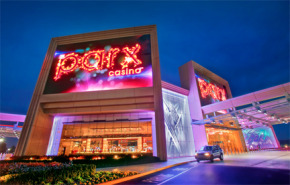
The Philadelphia Union of Major League Soccer announced a partnership with Parx Casino, Pennsylvania’s leading casino in the Philadelphia suburb of Bensalem, that will stadium naming rights, cross-marketing and cooperative promotion as Parx will become the official gaming partner of the team under a multi-year deal beginning in 2020.

Parx also operates the state’s second legal mobile sports book, as well as a retail book at the Bensalem property. As a part of the agreement, Parx Casino will be the Presenting Partner of the Halftime Show on all local broadcasts of Union games, and will be activating on the Toyota Plaza at Talen Energy Stadium on game days.

Street teams will be engaging fans to download the Parx app and take advantage of their deposit match and teach people how to responsibly make bets (for anyone 21 and over). Fans who download the app will be automatically entered to win prizes including a grand prize of an all-inclusive trip for four to the Union’s away game against New York Red Bulls.

“Parx Casino is the premiere destination for gaming and sports gambling, not only for the Philadelphia-area, but for the state of Pennsylvania as a whole,” said Jean-Paul Dardenne, senior vice president of corporate partnerships for the Philadelphia Union. “We are confident that our fan base will enjoy the added fun, perks and prizes of the Parx presence on game days.”

“We’re excited to partner with the Philadelphia Union and the fastest growing professional sport in the U.S.,” said Marc Oppenheimer, chief marketing Officer at Parx Casino. “MLS looks to be a great partner for the emerging legalized sports betting business. We look forward to working with the Union to maximize the value for their franchise and Parx.”

Sports Betting: The Talk of Oklahoma

At the recently concluded Oklahoma Indian Gaming Association Conference and Trade Show Tulsa, the main topic was sports betting. Oklahoma Indian Gaming Association Chairman Matthew Morgan said, “Every couple of years you see something kind of takes the attention of the country and right now it’s sports betting,” OIGA Executive Director Sheila Morago added, “We have literally five separate sessions here going on. We have people from the U.K., people from Ireland, all just talking about that specific topic.”

In the 15 months since the U.S. Supreme Court lifted the federal ban, sports betting has been legalized in 11 states; six more plus the District of Columbia have passed bills allowing it. But a sports betting measure has not yet been introduced in Oklahoma, which has the third most casinos in the nation.

“There is a market in Oklahoma. We’re preparing as though it’s coming sooner rather than later,” said Cherokee Nation Entertainment Chief Operating Officer Mark Fulton. He added CNE has been researching various potential partners and ways to offer sports betting services.

State Rep. Terry O’Donnell said, “From the legislative standpoint there has been an ongoing discussion about when that will eventually come to Oklahoma because Oklahomans are historically kind of sports crazy. I think the legislature is looking at it as a wait and see game.”

Notably, lawmakers are waiting to see what happens regarding tribal gaming compacts and Governor Kevin Stitt. After 15 years, the compacts are set to expire. Stitt said he’d like to renegotiate those compacts to give the state a larger share of casino revenue in exchange for exclusivity, but the tribes have said the compacts will renew automatically.

O’Donnell said, “The governor is open to expanding opportunities for the tribes, but what this looks like is something the governor and the tribes will need to discuss. I think it’s kind of universally accepted at the capital that it will be the sportsbook that reopens negotiations regardless of the legal issue. I think sports betting is the next big issue to be resolved.”

Meanwhile, the Cherokee Nation announced it has nominated Kim Teehee as a delegate to serve as its representative in the U.S. Congress. Principal Chief Chuck Hoskin Jr. said Teehee’s nomination, if approved, will mark the first time the Cherokee Nation has sent a representative to Washington. Hosking noted the right to representation dates back to 18th century treaties between the U.S. and Cherokee tribes.

The tribe, through its Cherokee Nation Entertainment subsidiary, operates 10 Oklahoma tribal casinos. With 300,000 members, the Cherokee Nation is the largest U.S. tribe.

Maverick Gaming Calls for Legal Sports Betting in Washington

Maverick Gaming, which has announced two separate casino purchases in recent weeks, last week called on the Washington legislature to legalize sports betting.

The Nevada-based, privately-owned company announced the acquisition of the Wizards Casino in Burien, near Seattle for an undisclosed price. The week before the company announced the purchase of five casinos, which brought its total number of properties to 19 in Washington. The purchases are subject to approval of the Washington State Gambling Commission.

Maverick CEO Eric Persson released a statement that said, “We continue our commitment to the state of Washington and the card room industry,” and which urged legalized sports betting, which Persson said could generate more than $50 million annually in taxes for the state. He said the purchase of the Wizards Casino will be funded through cash on hand and financing from a private investment firm, HG Vora Capital Management.

Persson’s statement continued, “As our footprint grows in Washington, we are very interested in helping the state see the potential tax revenue sports wagering can generate for Washingtonians.” He added, “We believe Maverick’s geographic diversity, coupled with our sports betting expertise, make the Maverick properties natural partners with the state in sports wagering.”

Persson and Justin Beltram founded Maverick Gaming two years ago. Besides the Washington properties, it owns the Wendover Nugget and Red Garter hotels in Wendover, Nevada, and the Red Lion Casino, Gold Country Casino, and High Desert Inn in Elko, Nevada.

FinCEN Watching Cryptocurrency Transactions

In the eyes of financial watchdogs, there’s no difference between cold hard cash, credit card funds, and digital currencies.

As far as America’s federal financial crimes agency is concerned, there should be no difference in how gaming operators monitor gambling transactions, whether they’re made at a mobile sportsbook with bitcoin or at a slot machine with pocket change.

At the 12th annual Anti-Money Laundering Conference in Las Vegas on August 13, Kenneth Blanco, director of the Washington, D.C.-based Financial Crimes Enforcement Network (FinCEN), a division of the U.S. Treasury, said the body has noted “a gap” in the reporting of suspicious transactions involving digital currencies, which are more prevalent in the sports-betting realm, and in transactions conducted online.

“FinCEN expects that your casino or card club is monitoring your sports betting programs for potentially suspicious activity,” Blanco said. “This includes offering sports betting through a mobile app.”

He warned operators to use all available information “to detect and report suspicious transactions…and ensure that this is accounted for in your policies, procedures, internal controls and risk assessments.”

Lasa Vegas-based gaming attorney Jeffrey Silver advises operators to pay close attention to the content—and the timing—of Blanco’s remarks.

A former Clark County Chief deputy district attorney and onetime member of the Nevada State Gaming Control Board, Silver recalls a similar compliance warning in the pre-iGaming era, from a former FinCEN director.

“It was quickly followed by some pretty significant fines” against big brick-and-mortar operators, Silver told GGB News.

To wit:

  • In 2015, Caesars Entertainment was hit with an $8 million penalty for “willful and repeated violations of the Bank Secrecy Act,” and ordered to engage in a “look-back” for suspicious transactions.
  • The same year, Trump Taj Mahal in Atlantic City was hit with a $10 million fine for similar offenses.
  • Smaller operators didn’t escape notice—in 2016, a $1 million civil penalty was levied against John Ascuaga’s Nugget of Sparks, Nevada, which was told to “re-think its AML defenses.”
  • The big daddy of fines—$75 million—was handed down to the Tinian Dynasty Hotel & Casino in the Northern Mariana Islands, a U.S. territory, also for Bank Secrecy Act violations.

All these operators “didn’t do the proper background work on their customers,” Silver said, adding that if today’s iGaming operators are not monitoring digital currency transactions, they should be prepared for painful consequences.

FinCEN has “delivered a shot across the bow,” Silver said. “It’s taking this moment to tell the industry that cryptocurrencies are just as important and just as subject to AML regulations. When they hand down millions in fines, they can say, ‘I told you so.’”

A certain amount of confusion may be inevitable as new sports betting operators flood the market, Silver suggested.

“There are no casinos that are not subject to the Bank Secrecy Act and Know Your Customer (protocols); they all must file reports in case of suspicious activities,” including any transaction that exceeds $10,000.

But these new online operators are not, strictly speaking, casinos, he said, and therefore may not legally fall under the BSA. That loophole will probably be quickly closed, he indicated.

In the meantime, “FinCEN “is reminding all these new operators, who are popping up everywhere in every state, that there are certain obligations they’ll have to follow,” according to Silver.

Blanco said reporting of suspicious use of virtual currencies, in particular, needs to be more “robust.” But gaming attorney Jeff Ifrah, a foremost expert in iGaming law, said U.S. gaming operators “have extremely robust compliance programs, and so do all betting operators. They’re used to that.”

And though some news reports use the terms “cryptocurrencies” and “digital/virtual currencies” interchangeably, Ifrah said they’re two wholly different things. Cryptocurrencies designed to mask the identity of the user are not used “in any regulated jurisdictions in the U.S.,” though they’re commonplace in some international jurisdictions, he said.

The problem with real cryptocurrencies—as the very name suggests—is that you don’t know who is using it or where it originated, said Ifrah. “The whole point is anonymity, and anonymity is not good when you’re talking about AML programs. If you’re an operator, you have an obligation to identify who your customer is, and the currency is grounded in anonymity, that’s a big red flag for any regulator.”

He recently discussed the matter with David Rebuck, head of the New Jersey Division of Gaming Enforcement. “He said there are way too many problems with payment processing and payment acceptance (of iGaming) by the banks. The last thing he wants is to introduce another problem by allowing cryptocurrencies. He’d like to wait for things to stabilize and essentially see banks accepting credit card transactions in this space, and then talk about crypto. But that’s a few years away.”

Ifrah does foresee a rise in branded currencies, however, and compares them to “Chuck E. Cheese coins, which essentially make it easier when you’re inside Chuck E. Cheese. You walk in, you get a bucket of coins, and there’s a certain level of efficiency to having some alternative token form. They can encourage you to buy more now, so you can hold the coins and return the next week. There’s some appeal to that” for gaming operators, he said.

Meanwhile, the essential message in Blanco’s presentation can be summed up in the following passage, in which he pointed out that FinCEN has noted a reduction in the number of SARs overall:

“There is a misconception that just because FinCEN has not publicly issued enforcement action against a casino or card club since last year that FinCEN is not looking at this financial sector,” Blanco said. “Let me assure you, this is not the case.”


In other words, you’ve been warned.

Indiana Commission Approves Sports Betting Rules

The Indiana Gaming Commission voted unanimously to approve emergency rules enacting House Enrolled Act 1015’s sports betting provisions. As a result, Indiana became the 12th state to offer legalized sports betting, starting Sunday, September 1. The state’s 13 casinos and three off-track betting sites will be able to offer sports wagering after applying and receiving approval from the IGC.

Five casinos have done that so far: Hollywood Casino Lawrenceburg, Indiana Grand Casino in Shelbyville, Ameristar Casino in East Chicago, Horseshoe Casino in Hammond, and French Lick Casino. IGC Executive Director Sara Gonso Tait said she expects other casinos to apply and be approved for sports betting soon.

Sports betting is projected to generate $87 million in annual tax revenue by 2024. Sports betting revenue will be taxed at 9.5 percent with all of the revenue going to the state.

Four casinos announced plans to open retail sportsbooks by the National Football League’s September 5 kickoff, but most operators’ sportsbooks will open by Week 2.

Penn National Gaming opened two sportsbooks on September 1–at Hollywood Casino in Lawrenceburg and Ameristar Casino East Chicago, where Chicago Bears icons Mike Ditka and Devin Hester placed the first wagers. Hollywood Casino plans a ceremonial ribbon-cutting on September 7 with Cincinnati sports legends Anthony Munoz and Tony Perez.

Penn National Gaming Chief Executive Officer Timothy J. Wilmott said, “The enthusiasm around sports betting has been growing since the federal ban was repealed last year, and we look forward to providing our patrons with another great amenity to enjoy at our facility.” Hollywood Casino Lawrenceburg Assistant General Manager Ryan Coppola said, “Our customers can’t wait to begin wagering on sports. This region is a hotbed of both professional sports and college athletics, and we hope to become a destination for fans from Indiana, Ohio, and Kentucky.”

Caesars Entertainment’s Horseshoe Hammond Casino is targeting its sportsbook opening for September 4. Boyd Gaming’s Blue Chip Casino in Michigan City will launch its FanDuel Sportsbook on September 5 and its Belterra Casino in Florence will kick off sports betting on September 9.

Tropicana Evansville announced it will offer sportsbook operator William Hill’s first Indiana sportsbook, expected to open this week. Guests and bettors will be able to access William Hill’s mobile app, kiosks and InPlay wagering options.

Tait said the commission has not received any requests to launch mobile sports betting but added, “A lot of jurisdictions have told us as regulators that retail is easier to launch because it folds into existing casino operations. Wisely, I think casino operators have chosen to do this two-tier approach. Right now, efforts are all on the retail side, but we’re still preparing to receive mobile requirements.” She added, “A lot of vendors are just now sending applications in” for online betting, which Tait said could begin in October. Under the new law, online bettors would first have to register in-person at a casino or OTB.

Tait said DraftKings Sportsbook and Churchill Downs have applied for sports betting vendor applications.

Also in Indiana, the pro-casino group Advance West Central Indiana Political Action Committee announced it will host public forums about the casino proposed for Terre Haute in Vigo County on September 3 and September 4. On the November 5 general election ballot, the casino issue will be the first referendum question: “Shall inland casino gambling be permitted in Vigo County?” The Vigo County referendum was authorized under House Bill 1015.

The Indiana Gaming Commission accept applications from potential operators of a Vigo County casino up to December 1. Spectacle Entertainment, operators of the Majestic Star casinos in Gary, and Full House Resorts have expressed interest in developing a Terre Haute casino.

Philippine Regulator Denies Offshore Targets Chinese Players

Victor Padilla of the Philippine Amusement and Gaming Corp. (PAGCOR) says none of the country’s offshore gaming operators are owned by Chinese companies and that their services are not available to gamblers on the Chinese mainland.

Padilla made the assertions at an August budget hearing shortly after Chinese Foreign Ministry spokesman Geng Shuang asked that the country “ban all online gambling” to keep it from being accessed by Chinese players.

“No companies are operated by Chinese corporations, because mostly the corporations are offshore companies which have local companies here in the Philippines,” Padilla said, adding that of 60 licensed Philippine Offshore Gaming Operators (POGOs) in the country, “only” 48 are operational. But some critics of the industry say there are many more than 60.

Despite many reports to the contrary, Padilla added that POGOs do not peddle their services to any countries that prohibit gambling.

“In our manual, we do not stream in any country which prohibits online gaming or gambling,” he said. Addressing assumptions that POGOs target mainland Chinese residents, he only said, “We are sure that a lot of players are Chinese because we all know that there are a lot of Chinese people all over the world.”

Earlier this month, China also asked the government of President Rodrigo Duterte to “punish” POGOs, casinos and other forms of gaming providers that purportedly illegally hire Chinese citizens. The Chinese Embassy in Manila claims that many Chinese citizens have been recruited into the Philippine gambling industry, with some “lured into and cheated to work illegally, with only tourist visas.”

The embassy also said a “huge amount” of Chinese funds are “illegally flown out” of China and into the Philippines through cross-border money laundering, the Philippine Inquirer reported.

At a recent State of the Nation address, Duterte applauded the growth of the online gaming industry, and urged PAGCOR CEO Andrea Domingo to expand it even further. Despite that endorsement, according to Reuters, the country’s anti-money laundering body is looking at the industry to determine the impact on the economy if POGOs stopped operating.

Benjamin Diokno, governor of Bangko Sentral ng Pilipinas (BSP) and head of the Anti-Money Laundering Council, has ordered the agency and the central bank’s financial stability team to “put some sense to this online gambling.

“What if all of a sudden they decide to pack up and leave? What will be the impact of that on the property sector, also the food industry, the restaurants? This is part of my job as BSP governor,” Diokno told an economic forum last Tuesday.

Asked if he thinks POGOs are being used as to launder money, Diokno replied, “Not necessarily.”

Also in the Philippines, PAGCOR may issue identification cards specifically for Chinese POGO workers to ensure the legality of their working visa and tax compliance, local media reports. Domingo told CNN Philippines that PAGCOR is working with government agencies on what it calls a “gaming employment license” (GEL).

Chinese POGO workers “cannot get a GEL, and they cannot work until they are properly documented by having properly, legally acquired working visa and having a BIR (tax identification number), so that they are able to pay their taxes,” she said.

According to Domingo, there are around 130,000 to 135,000 Chinese nationals employed in the gambling hubs, though some estimates more than double that figure.