Author: Casino Connection Staff

North Dakota: Electronic Pulltabs Could Take In $1 Billion

North Dakota State Gaming Director Deb McDaniel recently asked state legislators for addition staff since she expects the growth of electronic pulltab machines will lead gamblers to wager $1 billion during the current two-year budget cycle. McDaniel said the introduction of electronic pulltab devices about a year ago and recent budget cuts have put pressure on her office. Currently it has 12 full-time employees, but McDaniel said she’ll need “at least” twice as many to properly regulate gambling operations.

State lawmakers approved electronic pulltabs during the 2017 session. As of August 31, nearly 2,000 electronic pulltab machines were operating in 524 sites, conducted by 183 charitable gaming organizations, McDaniel said. The machines are found in 210 cities and all but five counties in the state. Gross proceeds increased from more than $569 million in 2015-17 to an estimated $841 million in the 2017-19 budget cycle, which ended in June, according to state figures.

Charitable Gaming Association of North Dakota President Janelle Mitzel said charities have enjoyed higher proceeds to be used for their missions, but their tax bills have effectively tripled due to a tax structure “flaw” related to electronic pulltabs. “While electronic pulltabs may be providing a small windfall to the state, it is robbing charitable organizations of revenue that would be put to better use in our local communities supporting these organizations and their missions,” Mitzel said.

Minnesota Lawmakers Have Look-See at Iowa Sportsbook

Minnesota state Rep. Pat Garofalo recently led a delegation of three dozen state lawmakers, legislative staff and lobbyists to the Diamond Jo Casino in Northwood, Iowa to observe the FanDuel Sportsbook that opened August 15. “Iowa is well positioned due to Minnesota’s lack of action. And you’re going to see a steady increase in Minnesotans choosing to spend their entertainment dollars in Iowa as opposed to Minnesota,” Garofalo said.

Opponents of legal sports betting include state Rep. Josh Heintzeman. He said, “My concern is accessibility. It’s one more challenge families face,” referring to the temptations young man typically face.

Along on the trip to Iowa, for which travelers paid $20 each, was Republican lobbyist Brian McDaniel, whose firm Franzen-Moore represents the Running Aces Casino & Racetrack in Columbus. Comparing legal sports betting to Sunday liquor sales, he said although that issue was a winner in public opinion surveys, it still took years to pass the legislature due to strong opposition. “Like marijuana, it’s gonna happen. It’s just a matter of when,” he said.

State Senator Karla Bigham, co-author of sports betting legislation with state Senator Roger Chamberlain, Taxes Committee chairman, also took the trip to Iowa. She said, “We’re one of the few states with a professional team in every league, and it feels like we’re not moving forward with something that would be a natural fit.”

State Rep. Jon Koznick, also along for the trip, said he’s still on the fence about legalizing sports betting in Minnesota.

Colorado Sports Betting Headed for the Ballot

Colorado’s three casino towns, Black Hawk, Central City and Cripple Creek, are anxious that Proposition DD passes in November so that they can start offering sports betting. But the potential for profits from the activity is largely speculative.

If the voters say yes, Colorado will become the 20th state in the U.S. to allow sportsbooks. No state officials expect that tax revenues will be expansive, but they hope for at least a small but steady stream that will be dedicated for the Colorado Water Plan, a water conservation program.

If approved, it will be the first expansion of gaming in the state since 2008, and the second since the voters approved of casino gaming in 1991 in three cities. It follows the Supreme Court’s 2018 decision striking down the 1992 federal ban on sports betting.

The ballot measure allows for collecting as much as $29 million in taxes, although forecasters for the legislature are more conservative, projecting about $16 million. According to some experts, it could take up to five years to reach that level. Setting the bar at $29 million means that policymakers won’t have to return to the voters to authorize higher taxes if sports betting brings in more than expected.

Even though legalized sports betting might not make much of a dent in the state’s economy or government funding, it will remove from the shadows something that’s been illegal for many years. The activity nationally is estimated to generate about $150 billion a year, although obviously illegal sports betting must be declining, since so many states are legalizing sportsbooks.

Critics of the plan, including Coloradans for Climate Justice, are unhappy that the water plan will be dependent on gamblers. They prefer that taxes be imposed on those who contribute to water shortages and climate change. They also oppose on principle some infrastructure construction because they fear it will contribute to climate change.

Aside from that group, there’s very little actual opposition to Prop DD and House Bill 1327 was approved overwhelmingly in both chambers of the legislature.

If passed, the measure would tax the net proceeds of sports betting at 10 percent, compared to the 20 percent casinos pay on casino gaming. It would take effect May 2020. Bettors could wager on professional and college games, plus Olympic contests, plus video and esports. High school contests would be excepted. Prop bets on the performance of an individual athlete, would not be allowed for college athletics.

Bets are restricted to the three casino towns, although they may be placed in person or online through licensed contractors who are connected to a brick and mortar casino, such as DraftKings or FanDuel.

Fantasy sports were previously legalized by the legislature in 2017.

Although the Colorado Water Plan will be the main beneficiary of taxes on sports betting, $2 million will go to the Division of Gaming, and 6 percent to mitigate decreases to payouts to local government from other forms of gaming and horse racing. The Colorado Office of Behavioral Health will get $130,000 to fight gambling disorders and for a crisis hotline.

That leaves nearly $15 million annually for the Colorado Water Plan.

Football Icons Launch Indiana Sports Betting

On September 5, opening day of legal sports betting, several Indiana casinos invited football icons to place the first wagers. For example, at Boyd Gaming’s Blue Chip Casino in Michigan City, retired Chicago Bears linebacker Brian Urlacher placed the initial wager at the FanDuel sportsbook. At the sportsbook at Penn National Gaming’s Ameristar Casino East Chicago, two former Chicago Bears legends, coach Mike Ditka and kick returner Devin Hester, were the first bettors.

Belterra Casino Resort near Vevay opened its sportsbook a few days later, with former Cincinnati Bengals quarterback Ken Anderson placing a $100 bet on the Bengals over the San Francisco 49ers.

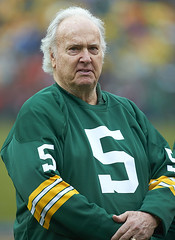
Horseshoe Casino in Elizabeth invited former Green Bay Packers star Paul Hornung, 83, to place the ceremonial first wager. The 1956 Heisman Trophy winner and Pro Football Hall of Famer was the first overall pick in the 1957 NFL Draft and won four NFL championships with the Packers as the team’s halfback and kicker. Ironically, Hornung also was suspended for the 1963 season by then-NFL Commissioner Pete Rozelle for gambling, after he and the late Alex Karras, then an all-pro defensive lineman with the Detroit Lions, were caught making $500 bets on NFL games with illegal bookmakers. Neither player bet on games involving their own teams, and both apologized. Still, they were suspended by then-NFL Commissioner Pete Rozelle for the 1963 season.

Caesars Entertainment Regional President Dan Nita said Horseshoe Hammond’s sportsbook, called the Book, was busy throughout the first full weekend of legal sports betting. “One person said September 5th felt like New Year’s Eve in here. There were long lines to place bets, already starting at 8 a.m. The seating area was at capacity,” Nita said. He noted bets ranged from the $5 minimum to tens of thousands of dollars.

At Hollywood Casino Lawrenceburg in southeast Indiana, sports betting began on September 1. Regarding the first full weekend of sports betting following that, Sportsbook Manager Hugh Aufill said, “It was a fantastic weekend. It was constantly busy and there was quite the level of energy Saturday and Sunday. All the tables and chairs were full. It was very, very successful and what I was hoping for, with constant business and constant lines.”

Aufill added, “The biggest advertiser I have is word of mouth. Based on the conversations I had, I think sports betting will grow throughout the year. Customers couldn’t wait to get their hands on the betting sheets for next week. This is just the start of the mountain we’re climbing.”

Prior to the launch of sports betting, for August 2019 the five northwest Indiana casinos posted a 1.1 percent increase, or $77.7 million, over August 2018, according to the Indiana Gaming Commission. Blue Chip Casino in Michigan City, Horseshoe Hammond and Majestic Star I Casino in Gary all posted slight increases, while Ameristar Casino in East Chicago and Majestic Star II in Gary saw slight decreases in revenue.

Compared to August 2018, Ameristar took in $19.5 million in revenue compared to $19.7 million, Blue Chip brought in $13.6 million compared to $13.4 million and Horseshoe took in $33.3 million compared to $32.3 million. Majestic Star I posted $7.5 million compared to $7.4 million and Majestic Star II brought in $4.8 million compared to $4.9 million.

Mohegan Sun Sues NHL Owner Over Bounced Bank Draft

The Mohegan Sun has sued the NHL Ottawa Senators owner Eugene Melnyk over five bank drafts worth more than $900,000 that the tribal casino alleges he wrote but which were dishonored by a Toronto Bank. He wrote the bank drafts over one weekend in March 2017. The casino filed suit in July.

A bank draft differs from a check in that payment is guaranteed by the issuer after a review of the account to determine if there are sufficient funds available is completed.

The casino seeks the money plus $15,000 in damages, costs and interest. Melnyk’s attorney offered no comment aside from the expectation of a “swift result,” according to CBC.

iGaming Gets a Breather: AGEM, Apple Talks Lead to 3-Month iOS Extension

Much of the gaming industry first learned of the Apple-online gaming controversy back in May, when SugarHouse.com in Philadelphia deployed its online platform and iPhone users—who comprise some 47 percent of smartphone subscribers—couldn’t get in on the games.

For reasons that have never been fully clear, Apple had decreed that its App Store would no longer offer any app that “provides access to real-money gaming, lotteries or charitable donation.” According to the order from Cupertino, “This functionality is only appropriate for code that’s embedded in the binary and can be reviewed by Apple”— i.e., not the standard HTML5 format—in other words, Apple wouldn’t offer mobile gaming apps in its ubiquitous online marketplace unless providers rewrote them to match its iOS native code.

In a master stroke of bad timing, the directive came down just as online gaming started to expand in the U.S. Worse, the tech giant demanded that iGaming providers redesign hundreds of gaming apps in warp time—by September 3. The decision could have been a major roadblock—even a dead end—for the iGaming industry.

Thanks to intercession from the Association of Gaming Manufacturers (AGEM), Apple gave the industry a break, and an additional three months to complete the complex overhaul. AGEM Executive Director Marcus Prater, who spoke to GGB News last week, said the gaming organization asked for an extension to Monday, February 10, 2020—a week after America’s premier sporting event, the Super Bowl.

Apple went the extra mile, and chose a later date of March 3.

“It was more than we asked for,” said Prater.

When the Apple mandate first came out last summer, AGEM worked with the American Gaming Association (AGA) on a response, drafting a joint letter to the Silicon Valley giant. But over several weeks, when the letter remained in limbo, AGEM decided to press on alone.

“We were worried about the timeframe—the September 3 deadline was looming,” said Prater. In its letter, AGEM asked for a meeting with Apple. When no response came, it tried again, copying Apple’s head of worldwide marketing and CEO Tim Cook.

“We got a phone call within a couple of hours,” said Prater.

AGEM members then met with Apple’s app review team. The resulting give-and-take helped each side understand the other’s expectations and challenges. “Apple needed to be aware of the regulatory structure we work in,” said Prater. “We laid it all out, but communications went cold again.
Then, lo and behold, Apple updated the developer guidelines” and pushed the deadline to March 3.

Though AGEM doesn’t take credit for the change, “we believe our case was heard and acknowledged,” said Prater. “At the heart of it was that anything that Apple wanted changed would need to be reviewed by the regulatory bodies in each jurisdiction—in the case of, say, New Jersey, the Division of Gaming Enforcement.

“There are more than 600 real-money games, and if they all needed to be reworked to Apple specifications, then theoretically they also would need to be approved by those regulatory bodies.” If Apple was worried about privacy, security or illicit transactions, AGEM helped it see that iGaming in the U.S. operates in a strict regulatory environment.

Kent Young, founder and CEO of Spin Games, with U.S. headquarters in Reno, Nevada, expressed relief at the development. “AGEM was instrumental in lobbying Apple, sending letters and having conversations to get it extended, which Apple did. It’s overall a very positive thing.”

He said the conversations added “a lot of clarity to how we can modify our games to work under the new rules. We have a happy medium in terms of how we can embed our games—or more appropriately, to partially embed our games to satisfy the new rules” without running afoul of regulators.

The extension notwithstanding, it’s not time to relax, he added. “Each and every game has to be modified in the next few months, and that’s a significant lift across the whole of the industry.”

While Apple’s motives in the matter have been questioned—one columnist called it an ‘iOS tax” and “an industry-killer”—Young said Apple may have been responding to pressure from the U.S. federal government to safeguard consumers as well as the integrity of any apps that are available in its store.

“Previously, clients would go in through the app and play a game that was essentially running outside the app,” Young said. “Now they want a significant amount of the game to be running on the app. That gives them more control from the standpoint of privacy and integrity. I think that was the motivating factor. And the sooner we can get these issues resolved, the better.”

By the time Apple changed the deadline, companies like GeoComply and Playtech were devising workarounds to keep the games live. “The solving of the riddle had already begun,” said Prater, adding that it can be viewed as a positive that the change was required early in the development of online gaming.

“As the industry continues to grow, we’ll look back and be thankful this was addressed now,” he said. “The App Store is an important marketplace. It’s Apple’s, and we have to play by their rules. We’re thankful they heard the industry’s message.

“We have more time to conform,” he concluded, “but there will be no second chance, I’m certain of that. We have six months to get it done.”

Pennsylvania Casinos Slow to Add iGaming

While online gaming in Pennsylvania picks up steam, online poker has yet to see a timeline in the state. Scientific Games says it expects to launch online sports betting on behalf of Caesars Entertainment sometime this month. PokerStars may also unveil the state’s first online poker site during September.

The official go-live date for both online poker and casino games in Pennsylvania was July 15, and expectations ran high that multiple operators planned to debut at the same time, said an article in Online Poker Report. That announcement came in mid-April, granting operators and regulators three months to get their ducks in a row. The goal was to prepare for a big, synchronized launch. However, only two operators came on board, while another joined in at the end of July. Today, PlaySugarHouse, Parx Casino and Hollywood Casino remain the only companies in business with online casinos.

In New Jersey, Caesars relies on two separate partners to power its digital portfolio. Scientific Games runs its sportsbooks, while 888 provides an online poker site in conjunction with WSOP New Jersey. Caesars earlier this year indicated it would use the Scientific Games platform at Harrah’s Philadelphia, and the 888 partnership will yield a WSOP-branded Pennsylvania poker site, too.

Four online sportsbooks are live today, most of which were already active before July 15. That makes it seem as if there were fewer hurdles for sports betting compared to casino games.

Although Caesars’ sportsbook and casino might appear in Pennsylvania this month, online poker is unlikely. The WSOP/888 partnership is entirely separate from Scientific Games, and 888 executive Yaniv Sherman told Pokerfuse that there is “no firm timeline.”

The Stars Group hasn’t offered firm details about when to expect PokerStars to debut in the Keystone State. However, Pokerfuse appears to have credible evidence that a launch is impending. The group’s new Fox Bet Sportsbook is also live as of last week.

Although the population of Pennsylvania is substantially larger than neighboring New Jersey, PokerStars will go a bit slower. For example, there is no tab for Zoom Poker, the fast-fold game. Zoom traffic works better with multiple states involved. As per regulations, PokerStars uses Mount Airy as its land-based partner while Caesars partners with Harrah’s Philly.

If those two companies do ultimately launch this month, that would mean that about half of the state’s online gambling operations expected to be live this year would be. Still to come: casino offerings from Valley Forge, Presque Isle Downs, The Meadows and Mohegan Sun Pocono.

West Virginia’s iGaming Obstacles

West Virginia has had an uneven history with gambling since the first racinos opened in 1995. The state was among the first to legalize online casino gaming, but still won’t be ready to unveil it until next summer.

According to USAOnlineCasino.com, West Virginia saw revenue from gaming increase from $28 million in 1995 to $943 million in 2008 when table games were legalized. Revenues fell during the Great Recession but rebounded to $600 million in 2018, the same year the state legalized sports betting.

The drive toward sports betting has not been smooth. Two of the sportsbooks closed. The mobile sports betting app also closed. Some of the issues speak to corporate and legal disputes between two gambling companies: Delaware North, which operates the Mardi Gras Racino and the Wheeling Island Racino, and Mionmi Gaming, which provides a platform for online sportsbooks. West Virginia has approved William Hill, FanDuel, and DraftKings to operate sportsbooks.

Still, the state is moving forward. Lawmakers approved online casino games in March, joining a Nevada, New Jersey, Pennsylvania, and Delaware. West Virginia law will allow people to play casino games, such as blackjack, craps, poker, slots, and roulette. The West Virginia Lottery is responsible for managing the online casinos.

The state has estimated it will be able to launch online poker rooms by the end of the year. The lottery corporation said it will take longer to put policies and procedures in place for other casino games. The lottery will contract with other businesses to offer online gambling platforms. The state plans to charge $250,000 for the initial gaming license. Renewals for online gambling licenses will cost $100,000. Companies that want to manage online gambling platforms will also pay $100,000. Suppliers for online gamblers will have to pay $10,000. The state will tax all online revenue at 15 percent.

Dutch Regulator Fines PokerStars

Dutch gaming regulator Kansspelautoriteit (KSA) has levied a fine of €400,000 (US$439,500) against the Stars Group and PokerStars for soliciting illegal offshore bets to Dutch consumers through the PokerStars.eu domain.

The fine came as a result of a six-month investigation by the KSA during the second half of 2018. It concluded that the site was accessible from the Netherlands though the Stars Group was not licensed in the country. According to iGamingBusiness.com, customers were able to deposit funds using iDEAL, an online payment method only available in the Netherlands.

Other factors included an in-site contact form published in Dutch and the mention of two Dutch problem gambling organizations. In addition, the Netherlands was not mentioned in a list of countries from which gambling via the website was not permitted.

The KSA also noted that the Netherlands classes poker as a game of chance, and only Holland Casino is allowed to offer real-money poker services at one of its land-based sites.

Online gambling, including poker, is currently illegal in the Netherlands, though the country is set to launch a regulated market in January 2021 after the Dutch Senate in February passed the Netherlands’ Remote Gambling Act.

New online gaming laws will come into force from July 1, 2020, subject to final approval from the Ministry of Justice and Security. After this, the KSA will draw up license conditions ahead of the proposed launch date six months later.

Only operators that have had no activity in the country for two years prior to the introduction of legislation will be eligible for a new online license.

The KSA fined Kindred Group’s Trannel International subsidiary last month also being handed a fine of €470,000. Kindred has since said that it intends to appeal the decision.

Il Mulino Named #1 U.S. Casino Restaurant

Il Mulino USA is thrilled to announce that Il Mulino New York at Hard Rock Hotel & Casino Atlantic City, located on the Atlantic City Boardwalk, was voted the Best U.S. Casino Restaurant by USA TODAY’s 10Best.com Readers’ Choice Awards.

“Il Mulino is known for serving the best authentic Italian dishes of Abruzzo paired with exceptional service. We are very proud of this top honor by USA Today’s Readers’ Choice Awards and look forward to continuing to offer guests a memorable dining experience at Hard Rock Hotel & Casino Atlantic City,” said Brian Galligan, President, Il Mulino USA.

USA Today 10Best Readers’ Choice Awards 2019 named twenty nominees in the Best Casino Restaurant category. The nominees were selected by a panel including editors from USA Today and10Best.com, and relevant expert contributors. And then readers voted during a span of four weeks on their choice for the top Casino Restaurant. Il Mulino New York at the Hard Rock Hotel & Casino Atlantic City was named Best U.S. Casino Restaurant: https://www.10best.com/awards/travel/best-casino-restaurant-2019/.

For more information on Il Mulino New York at the Hard Rock Hotel & Casino Atlantic City please visit: https://www.ilmulino.com/atlantic-city.

48 Stories Book Signing

Join us on 9/24 to celebrate 48 Stories – a collection of stories about Atlantic City

“48 Stories” Celebration & Book Signing – FREE

Tuesday, September 24th at 5pm
Stockton University Atlantic City – 3711 Atlantic Avenue
Residential Building Common Area
Validated parking available in adjacent parking garage

Mix & mingle with the subjects & creators 48 Stories while enjoying the spectacular ocean views at Stockton University Atlantic City. A selection of subjects will tell their story and all subjects & creators in attendance will be ready to sign copies of the book! Lite fare provided by Chico & Sons Atlantic City.

Featured Storytellers:

Councilman Kaleem Shabazz, Artist Kelley Prevard, Artist Luz Sanchez

Be sure to bring your copy of “48 Stories”. Books are $30 will be available for purchase at the event.

For more information and to RSVP please visit: 
atlanticcityartsfoundation.org/48storiesparty

AC’s Borgata Launches Another Renovation

Atlantic City’s Borgata Hotel, Casino & Spa, which recently completed a $12 million upgrade on the market-leading property, has already begun another renovations to the hotel.

When it’s completed early next year, the $14 million project will redo the hotel lobby and renovate 312 hotel suites. The lobby work, expected to be completed by the end of the month, includes a new bar and VIP check-in.

The lobby renovation will add coffee service, a tapas and cocktail menu, and three large-screen televisions. On weekends, it will include a piano bar.

The work follows a $12 million project that opened a new sports betting lounge and entertainment facility in June and comes just weeks after the casino unveiled its Moneyline Bar & Book, a sports betting facility and its associated Level One Cocktail Bar & Lounge.

The reinvestment bodes well for the property’s continued success. From January through July of this year, the Borgata, in Atlantic City’s Marina District, has won more than $455 million, more than twice its nearest competitors.

“By enriching our hotel product, we are ensuring each guest enjoys an optimal Borgata experience that begins as soon as they walk through the door,” Marcus Glover, Borgata president, said in a statement.

Sports Betting Revenues Skyrocket in New Jersey

In August, New Jersey’s combined sports betting handle more than tripled from the same month in 2018, putting it in place to pass Nevada once again.

“New Jersey has successfully managed to shrug off competition and continue to grow, and at a faster rate than initially expected,” according to PlayNJ.com. “With new operators launching in September and the NFL season in full swing, New Jersey’s upward trajectory should continue, even as neighboring Pennsylvania expands online sports betting.”

With football heating up, New Jersey sportsbooks accepted $293.6 million in bets for the month, according to official reporting. That’s up 17 percent from $251.3 million in July 2019.

August’s combined online and retail handle will likely surpass Nevada, which posted $247.6 million in August 2018. The bets yielded $25.2 million in revenue, up from $9.2 million in August 2018 and up from $17.8 million in July.

By amassing $3.8 billion in bets and nearly $250 million in revenue since launching in June 2018, online and retail sports betting in Jersey has generated $28.9 million in tax revenues for the state.

“By injecting $30 million in tax revenue in just over a year, there can be little question that sports betting has been an unqualified success for New Jersey,” said PlayNJ.com. “With a more mature industry ready as football gets into full swing, the next few months could show dramatic gains, too.”

Online sports betting continues to be the driving force, tallying $249.2 million in August bets. Online betting represented 85 percent of the state’s total handle, the same percentage as July.

New Jersey’s online casino and poker industry hit yet another monthly revenue record in August, and in doing so neared the total revenue generated in all of 2018. In all, online casino games and poker generated $41.1 million in August, topping the record of $39.3 million set in July.

August’s total—up 66 percent from $24.8 million in August 2018—gives the industry $297.9 million in revenue for the year. In just eight months, the industry has nearly eclipsed the $298.7 million the industry generated in 2018.

“Bettors’ thirst for online casino games in New Jersey seems to be unquenchable, and could feasibly generate nearly $500 million this year,” said PlayNJ analyst Eric Ramsey. “It’s conceivable the launch of online gambling in Pennsylvania could slow the momentum in New Jersey, but right now we’re seeing no signs of the growth letting up.”

The Golden Nugget in Atlantic City continues to dominate the market, generating $15 million in August, up from $14.9 million in July. Resorts Digital remained second with $7.5 million, up from $6.9 million in July.

NCAA Balks at Bill That Would Let Student Athletes Cash In

A law is before California legislators that would give college athletes the same rights to profit from their names, likenesses and images that professional athletes now enjoy. The proposal would violate a central tenet of the National Collegiate Athletic Association (NCAA).

California Senator Nancy Skinner’s “Fair Pay to Play Act,” which passed the California Senate in May by a vote of 31-4, is now before the assembly. The bill would allow college athletes to earn money through endorsements and sponsorships and ban organizations like the NCAA from enforcing policies that don’t allow those payments.

If it passes, it would almost certainly be challenged in court by the NCAA.

The senator stated during the debate on the bill that NCAA rules “disproportionately harm students from low-income families” and are “particularly unfair” to female athletes.

The bill got a major boost when basketball superstar LeBron James last week endorsed it on Twitter: “Everyone in California—call your politicians and tell them to support SB 206! This law is a GAME CHANGER. College athletes can responsibly get paid for what they do and the billions they create.”

Some like Gabe Feldman, director of the Tulane University Sports Law Program, believe the NCAA will have to make accommodations to its rules. He told the San Jose Mercury News, “I think the most likely outcome is that the NCAA modifies its rules to some extent. Whether that’s enough to make California back off, I don’t know. But if I had to guess, I’d say this is likely to lead to some rule changes.”


Line in the Sand

The NCAA’s Board of Governors is digging in its heels and talking tough, insisting it doesn’t intend to make any changes. In May, it appointed a working group headed by Gene Smith, Ohio State University athletic director, and Big East Commissioner Val Ackerman. The group issued a statement saying it didn’t intend to budge on its position that students shouldn’t be paid like professional athletes.

More recently, the group conceded that it’s at least looking at changing some of its rules, although it didn’t spell out which ones or make any members of the group available to speak to the press.

Lawyer Tim Nevius, a former University of Dayton baseball player—who once fought for the NCAA, and now takes legal cases that oppose the organization—agrees with LeBron that the possible adoption of the California bill will be a game-changer that will force the NCAA to make basic changes.

Nevius now runs a college sports law firm, Nevius Legal. In an exclusive interview with Global Gaming Business News, he told how he once worked for the NCAA helping to enforce its rules in high profile cases at various college campus. As a liaison to the Division I Student-Athlete Advisory Committee, he worked with athletes on NCAA legislation and policy considerations.

Nevius left the NCAA after five years and co-founded a college sports practice at Winston & Strawn in New York, where he switched sides and in 2014 led a federal antitrust lawsuit on behalf of Division I athletes to challenge NCAA rules that prohibit compensation in the multibillion-dollar college sports industry. He later started Nevius Legal, which represents college athletes on matters such as transfer waivers, drug testing appeals and navigating NCAA rules.

He helped launch the College Athlete Advocacy Initiative, which fights for college athletes’ rights and campaigns “to combat inequality and exploitation in the multibillion-dollar college sports industry. We unite passionate advocates with current and former athletes and influential figures to fight for fundamental fairness and meaningful reform in college sports.”

“That led me to where I am today,” Nevius said. “Not only being a college athlete but seeing all sides of these issues. There are some extreme inequities and injustice.”

His perspective in enforcement gave him the ability to work on behalf of athletes who have run afoul of those rules.

Money Matters
The No. 1 inequality, he says, is economic. “Where you’re dealing with a $14 billion industry where the labor force can’t share in revenues and can’t capitalize on their own name and likeness. Which is why I support Skinner’s bill.”

He explained, “Everyone likes to talk about ‘pay for play,’ but there are so many other things that need to be corrected. At most basic, representation. They have no representation in a system that’s rife for conflict of interest. Especially conflicts where athletes are caught in the middle and have no representative.”

He told GGB, “They’re promised an education, and NCAA loves to talk about athletes being students first. Yet we’re graduating certain cohorts of athletes at unacceptably low rates. Many of those who do graduate are not prepared for life beyond school, and that’s for a couple of reasons: because they have been told their entire lives that they’re athletes and that is their identity. So they’re being shuffled into majors not of their choosing and taking courses not in line with their career goals—but which don’t conflict with their sports.

“The practice is for them to be absolutely athletes first, and school is a secondary experience.”

Nevius points to U.S. Senator Chris Murphy’s Madness Inc. paper, which, according to the senator’s website: “called on the NCAA to compensate athletes. The report found that across the 65 Power Five conference schools, only 12 percent of all revenue goes toward student aid and scholarships, while 16 percent goes to coaches’ salaries.”

According to Senator Murphy: “The NCAA is broken. I am a big college sports fan, but I think most fans recognize that the NCAA today isn’t acting in the best interest of many student-athletes. College sports has turned into a multibillion-dollar industry where everyone’s getting rich except the students actually doing the work. Frankly, it’s a civil rights issue that no one is talking about. That’s why I’m speaking out.”

Nevius points to the section in the report relating to academics. “He (Murphy) talks about NCAA, about how it measures graduation success. A metric that has no relation. They highlight how NCAA manipulates numbers by excluding those who don’t graduate. Athletes are clustered into a handful of majors that are considered easier academically (i.e. they are less rigorous) and don’t conflict with that. The athletes aren’t given the opportunity to select engineering, or science or math. They’re essentially shuffled into majors that don’t match their academic interests, with friendly professors, less rigorous time commitments and reading requirements.”


Equal Opportunities

Skinner’s bill, says Nevius, “presents an incredible opportunity to correct longstanding economic inequities that exist in the NCAA system. And give the athletes the same opportunity as everyone else in this country, the right to use and profit from their own name and likeness.”

Nevius argues there’s no good reason to deny these rights. “What needs to be made clear is this is not some bill that simply accrues to benefit top athletes who sign a sneaker deal. It applies to all athletes in all sports and all genders to engage in self-employment, in social media and engage in commerce.”

College athletes have been forbidden to profit from YouTube videos or Go Fund Me campaigns to help raise money for injured athletes. “All are examples that the rules don’t apply to music majors or people outside of college. They can’t even sign an autograph for $5,” says Nevius.

Another example is swimmer Katie Ledecky who wanted to raise money to prepare for her Olympic effort next year. “These things should not be incompatible. Skinner’s bill would do exactly that,” he says.

Nevius was an attorney on two cases that challenged the NCAA’s rules, both on antitrust grounds. One of them, O’Bannon v. NCAA was an antitrust case where former UCLA basketball player Ed O’Bannon challenged the NCAA’s use of the images of former student athletes for commercial purposes. It argued that such images should revert to the athletes upon graduation. Although O’Bannon won in the lower courts, NCAA eventually appealed and won.

Nevius declares, “College sports every single year generates billions of dollars and the growth is exponential. In 2003 it was $4 billion dollars and in 2018 it was $14 billion, which is enormous.

“Here’s what I think from a gaming standpoint: You have the vast majority of college athletes living below the poverty line. If you give them the opportunity to earn extra income by utilizing their name and likeness, you will be relieving some of that economic pressure (and) deter them from otherwise engaging in under-the-table dealings with gamblers or bookies. That’s pretty clear. The less incentive you give people to engage in that type of behavior, the better. It affords athletes fundamental economic opportunities that will relieve that pressure.”

Nebraska College of Law Professor Josephine Potuto is skeptical about the ability of a state to enact legislation that affects a national private association—or whether such a law would pass constitutional muster. Potuto is well familiar with the NCAA, having chaired its committee on infractions.

In an interview with GGB News, Potuto said, “There’s a fair amount of law that says a state has a right to legislate about its own citizens but you can have a problem where a statute has extra-territorial effects past its borders.”

One criterion that could disqualify such a law is if it obviously targets a particular association. “No doubt this bill does that,” says Potuto. “Once a state is enacting legislation, if it’s doing it as police power for everyone, that at least is a plank that might not violate overarching federal policy. If the legislation looks to target a national association then it’s more likely to be trying to have an effect beyond its own borders.”

Potuto continued, “It’s doesn’t seem to me that the interest in California is focused on anything beyond the NCAA because it is the big dog of sports associations. The other piece of it is, I don’t think the California legislature is doing it because it wants California athletes not to compete. It’s doing it because it wants to make NCAA change its bylaws.”


Is A Change Coming?

When a university such as UCLA is a member of an association, the majority rules, she said. “If you want to challenge a rule that prevents college athletes from profiting from their name and likeness, you wouldn’t be able to do it in court,” she said. “The university could walk or create a new association. When the state tries to force a national association to change its rules, it’s disintegrative. It destroys the integrity of the association and its rules.”

She cited attempts for many years by different states to regulate the length of trucks that could ride on their highways. “You end up with no ability to have consistent rules or you end up having to move to the rules that are the least common denominator,” she said.

In Potuto’s opinion, it’s legal for a state to adopt a law saying a university can’t belong to an organization with such rules. “But when you have a state that says, ‘I like my policy choice better,’ then you have a conflict. Then the courts intervene. A national association needs to be able to have uniform rules. That becomes more critical when you talk about an association that deals with athletic competition. The Supreme Court has said that the essence of competition is that you have to have agreement. Whether the by-laws are right or wrong, if the national association can’t enforce them because in any state they say, ‘We like something different,’ then you can’t have a national association.”

One strategy the NCAA has used in the past when it disagreed with state laws is to declare those states off-limits to championship games. It did this for the four states that had carve-outs from the former federal ban on sports gaming: Delaware, Oregon, Montana and Nevada. It banned two other states because of their use of Confederate flags.

That’s more of a challenge when dealing with the most populous state in the nation, and at a time in history where the wave appears to be moving towards loosening the rules.

MGM, Buffalo Wild Wings Partner on Sports Betting

MGM Resorts International and its Roar Digital sports betting partner have entered into a multi-year deal with Buffalo Wild Wings that will see the national restaurant and bar chain participate in a variety of cross-marketed betting events and promotions.

The deal calls for the restaurants to display odds and point spreads in addition to hosting a free-to-play mobile contest called “Picks and Props” with prizes that include trips to Las Vegas and Atlantic City.

It also includes a pilot program slated for launch in New Jersey this year that gives customers inside the restaurants exclusive perks on the new BetMGM app, such as enhanced odds and free bets. The companies plan to expand the program with mobile betting in additional states where sports betting is legal.

In all, there are 1,200 Buffalo Wild Wings locations in the United States and at least one in every state.

“As the largest sports bar in the country, Buffalo Wild Wings has the opportunity to pioneer sports gaming experiences for fans, and we are taking the first critical step on that journey through our partnership with BetMGM,” the company’s president, Lyle Tick, said.

“This multiyear relationship will strengthen as states adopt sports betting regulations, with strategies already in place to drive customer adoption, engagement and loyalty,” said Adam Greenblatt, CEO of Roar Digital.

“The traditional sportsbook has been reinvented,” he added. “The sportsbook is now in your pocket on your mobile phone.”


Cordish Grows Pennsylvania Footprint

Three years ago, Baltimore-based Cordish Companies was known to the gaming industry mainly for its flagship Live! Casino & Hotel, opened as Maryland Live! in 2012, one of the top two Maryland gaming venues.

It was a continuation of several Live! entertainment attractions Cordish has developed around the country since initiating the brand in 1999 with Baltimore’s Power Plant Live! Attraction. But it was the company’s first self-branded foray into gaming, after developing and opening the Hard Rock casino resorts in Hollywood and Tampa, Florida for the Seminole tribe.

Maryland Live! was built adjacent to Ann Arundel Mall, a major retail center, and the addition of a 17-story, 310-room five-star hotel has allowed the property to hold its own against competition from MGM National Harbor, opened at the end of 2016.

However, long before that property opened, Cordish had hedged its bets in a still-growing Pennsylvania gaming market. In 2014, along with partner Greenwood Gaming, owner of the Parx Casino, Cordish formed Stadium Casino, which was granted the license for the second casino in Philadelphia.

The project was picked by the Pennsylvania Gaming Control Board largely because of one major advantage over other applicants—the project’s location in the center of South Philadelphia’s Stadium District, home to all the city’s professional sports teams. As it happens, Cordish already had a presence there, in the Xfinity Live! entertainment district.

Live! Casino & Hotel Philadelphia, under construction with a targeted opening next year, is expected to draw on the foot traffic from NFL, NHL, NBA and Major League Baseball games, not to mention the location’s easy access from Interstate 95 and the established Cordish entertainment attractions.

For Cordish, however, one other advantage of sole ownership of the Philadelphia license is the privilege of bidding on one of the Category 4 “mini-casinos” created by Pennsylvania’s massive 2017 gaming expansion law. Category 4 casinos must be linked to a current land-based casino licensee, but are limited to a maximum 750 slot machines and 40 table games.

Two weeks ago, Stadium Casino was officially awarded the license for a Category 4 satellite casino that will have Cordish building its gaming footprint simultaneously in the state’s two largest metropolitan areas. The new Stadium mini-casino will be called Live! Casino Pittsburgh. It’s being built in the former Sears anchor store of the Westmoreland Mall in West Hempfield Township, near Route 30, around 30 miles from Pittsburgh.

The $150 million Pittsburgh property will be a 100,000-square-foot gaming, dining and entertainment destination, opening with 750 slots and 30 table games, as well as nationally recognized restaurants and entertainment venues.

The same day the Pennsylvania board approved Stadium Casino’s mini-casino license, it renewed the company’s license for Live! Casino & Hotel Philadelphia. Both properties are slated to open in 2020.

In an interview with GGB News, Rob Norton, president of Cordish Gaming Group, said inherent location and access advantages point to the success of both projects.


“Live! Casino & Hotel Philadelphia will be the only true luxury resort hotel/casino in the broader Philadelphia area,” Norton said, “and will set a new standard for both quality and offerings in the market. It will combine the best in gaming, great dining, live entertainment, and will elevate the Stadium District to a new level as a destination, as a place to watch, play and stay.

“Given the power of the location, access and amenities, we are certain it will quickly establish itself as the premier revenue-generating casino in the market.”

Norton said the Pittsburgh location offers unique advantages of its own. “Westmoreland Mall is itself a well-trafficked existing attraction in the region,” he said. “In addition, the ease of access to our site from a major interstate, coupled with our ample surface and structured parking, will create a highly compelling destination for gamers in the broader region.”

Cordish added that the company’s strengths, and its experience with the Live! brand, will transcend the inherent strengths of the locations. “The key is to provide customers a complete entertainment experience that encompasses far more than simply gaming or a specific amenity, and combine this with uniquely personalized and warm service,” he said. “Similar to what we’ve done at our flagship property in Maryland, this will encompass gaming, dining and entertainment attractions. In particular, we will have a major sports and event viewing venue that will be unparalleled in the market, and will provide for an upscale sports viewing and betting experience.”

Cordish says the company has been welcomed as a new corporate citizen in both of its new Pennsylvania locations. “We have received nothing but support from the community in each market,” he said. “For example, in Philadelphia, we have entered into an unprecedented Community Benefits Agreement with five community groups located in the neighborhoods immediately surrounding our project, including the South Philadelphia Communities Civic Association, the Sports Complex Special Services District, the Stadium Community Council, the Veterans Stadium Neighbors Civic Association, and the Whitman Council.

“The agreement provides additional benefits to improve the quality of life, and promote the general safety and welfare of the neighboring communities. We look forward to a close, productive working relationship that maximizes the benefits of our project in their respective markets.”

Cordish’s Pennsylvania adventure is a building block in the evolution of the company’s gaming division. “We’re building a true regional gaming expansion,” he said, “and are committed to continued growth of our gaming business.”

Blackhurst Joins Caesars Board

Jan Jones Blackhurst has joined the Caesars Entertainment’s board of directors, replacing Richard Schifter, who resigned as a director effective September 5. Blackhurst, who has been a senior executive at Caesars since 1999, will continue in her current role of executive vice president, public policy and corporate responsibility, until October 1.

During her 20 years at Caesars, Blackhurst helped develop and grow the industry’s first responsible gaming practices to include an ambassador model for the gaming industry and the first industry code of commitment. Under her leadership, Caesars Entertainment has earned a perfect score in the Human Rights Campaign Corporate Equality Index for 10 consecutive years. Most recently, she led the Company’s Gender Equity Initiative. Ms. Blackhurst also served as Chair of the Caesars Foundation, strengthening communities through philanthropic activities and corporate gifts.

“Jan is not only a driven and accomplished leader, but she is also a legend in Las Vegas—the city’s first woman mayor and a popular leader in business and politics—and we are thrilled to welcome her to the board,” said James Hunt, chairman of Caesars Entertainment. “With her appointment, Caesars will continue to benefit from her vast experience, expertise and incredible relationships and I am confident she will bring valuable leadership and insight to our board.”

“Jan has had a groundbreaking career in the gaming industry and I am happy she will remain with us as a board member and trusted advisor,” said Tony Rodio, CEO of Caesars Entertainment. “Jan is known and widely respected for helping create a diverse, inclusive workplace, advancing environmental stewardship, advocating for important social issues and contributing giving to individuals, families and communities in need. Caesars has been very fortunate to develop and refine its social responsibility practices under her leadership. I thank Jan for her 20 years of distinguished service to our company, our team members and the communities we serve.”

Blackhurst commented, “I am delighted and honored to be joining the Board of Caesars. I have tremendous respect for Jim, Tony and the other board members and I look forward to working with them. I will continue to advocate that Caesars takes a leading role as a responsible corporate citizen. I am proud of the course we have charted and committed to continuing it.”

Blackhurst serves on numerous boards, including the board of directors of the U. S. Chamber of Commerce and the Women’s Leadership Board at the John F. Kennedy School of Government at Harvard University. She is chairwoman of the Nevada Resort Association and Las Vegas Stadium Authority.

She has also received many recognitions and accolades throughout her career including the Americanism Award from the Anti-Defamation League; the Woman of Diversity Award for “100 Years of Influence—Women Shaping the First 100 Years of Las Vegas.” She was named as one of the “Women Who Mean Business” by the Las Vegas Business Press. In 2014, she was one of the first women to be inducted into the American Gaming Association (AGA) Gaming Hall of Fame.

Blackhurst holds a bachelor’s degree in English from Stanford University and attended the University of Southern California’s School of Food Marketing Management.

Waukegan, Illinois Considers Five Casino Proposals

The city of Waukegan, Illinois is considering five development plans for a casino at the shuttered Fountain Square shopping center. The facility is one of the five suburban Chicago casinos authorized by the new expanded gambling bill; the measure also includes a downtown Chicago casino. Waukegan officials will submit their recommendations to the Illinois Gaming Board in late October.

Here’s a glimpse at the contenders’ proposals:

Churchill Downs—Rush Street Gaming. Louisville-based Churchill Downs Inc. and Chicago casino honcho Neil Bluhm’s Rush Street Gaming—partners in Rivers Casino in Des Plaines—want to expand the brand with Rivers Casino Waukegan. That facility would be located just 40 minutes from the Des Plaines venue, sparking concerns it could cannibalize Des Plaines’ $400 million in annual gross revenues. Churchill also owns Arlington International Racecourse, but recently announced it will not install slot machines or casino games there, although the new law would allow that. According to the proposal, the Waukegan venue would offer 1,625 gaming positions, a sportsbook, poker room and an “upscale gastrobar.” It would create 1,200 new jobs and generate $150 million annually for the local economy.

Waukegan Gaming. Waukegan Gaming, led by Chicago real estate developers Alan Ludwig and Richard Stein, currently is in litigation with the city of Waukegan. The company claims a 2004 redevelopment agreement granted it the exclusive right to develop and operate a casino in Waukegan. The company has partnered with Rush Street Gaming and Churchill Downs to implement its plan if the courts uphold the agreement. Waukegan Gaming and the city have agreed to an expedited discovery schedule; a hearing is scheduled for early October. The casino would be operated by former media magnate Peter Liquori’s Chesapeake Gaming Group.

Full House Resorts. Las Vegas-based Full House has proposed the $275 million-$325 million American Place, including a casino with 1,560 gaming positions and a sportsbook. The property also would feature the Mansion, an all-suite boutique hotel consisting of 20 “ultra-luxurious” villas with 24-hour butler service, a helicopter pad, private entrance and entertainment room. The venue would generate $13 million in annual economic development, company officials said.

Lakeside Casino LLC. Headed by former state Senator Michael Bond and Las Vegas-based Warner Gaming, the North Point Casino would offer up to 2,000 gaming positions, a 5,300-square-foot sportsbook, two-acre outdoor amphitheater, five restaurants and a smoking patio. Phase II would include a hotel, ballroom, conference area and retail/entertainment district. Bond has donated thousands of dollars in Waukegan elections through Tap Room Gaming, his video gambling company.

Potawatomi Hotel & Casino. The tribe owns the Potawatomi Hotel & Casino in Milwaukee but seeks to expand into Illinois. The proposed $343 million Waukegan Potawatomi Casino would offer a 130,000-square-foot facility with 1,850 gaming positions, three restaurants and a food court. Instead of building a hotel, the company would “create strategic alliances” with existing hotels. Potawatomi officials said the casino could open by December 2021. The project would create nearly 2,600 jobs and have an annual economic impact of about $394 million.

Waukegan Development Associates LLC. The company, led by real estate broker Andrew Hochberg, who also has a stake in Tap Room Gaming. It has offered $7 million to purchase the Fountain Square land where it would build Casino Fontana, a 38-acre complex. It would include a gaming floor with 1,380 gaming positions, two bars and several bars and restaurants. A second phase would include a luxury 5-story, 120-room hotel, dine-in cinema and a spa with a saltwater pool, a 21,000-square-foot multi-use facility and an outdoor festival space landscaped with a bridge and a replica of a famous Italian fountain. The venue would employ 1,000 people and generate $145 million in annual economic impact by its fifth year, officials said.

Atlantic City YTD Profits Tumble

Data released by the New Jersey Division of Gaming Enforcement (DGE) reveals that gross operating profits for Atlantic City’s nine casinos plunged 16.8 percent from January through June, ending at $245.1 million, a decrease of $49.3 million.

Ocean Casino Resort lost nearly $1.2 million during April, May and June, the only casino in the city to report a gross operating loss for the quarter, according to Associated Press.

Gross operating profits reflect earnings before interest, taxes, depreciation, amortization, charges from affiliates, and other miscellaneous items as reflected on each casino licensees’ income statement. It is a widely-accepted measure of profitability.

Between 2014 and 2016, five of the then-12 casinos went out of business, and the remaining seven did well in a smaller market, where less competition meant higher profits for the survivors.

Casino profits from gaming, hotel stays, food and beverage, and entertainment also fell, according to Casino.org. For the second quarter of 2019, the industry’s occupancy rate was 81.5 percent, a 3.3 point decrease from the prior period. The occupancy rate in the industry’s casino hotels for the six months ended June 2019 was 77.1 percent, which is 4.3 percentage points lower than the comparable period last year, based on DGE numbers.

Despite this, local officials in Atlantic City continue to try and paint a warm picture for the New Jersey casinos. “The market was still adjusting to the new level of competition through the second quarter,” said James Plousis, chairman of the New Jersey Casino Control Commission.

Plousis told the Press of Atlantic City that overall net revenue increased 18.2 percent during the quarter. He also pointed out the thousands of jobs and new amenities.

“We are making money now,” Michael Donovan, Ocean’s senior vice president and chief marketing officer, told the Associated Press. “We made money in June, we made money in July and we continue to make good money in August. Overall, we’re happy with the results.”

Hard Rock posted an operating profit of $11.2 million for the quarter. It has grabbed market share and now ranks as the No. 2 casino in Atlantic City in terms of gambling revenue, trailing only the perennial market leader Borgata.

“We are very pleased with our continued success and increased profitability,” said Hard Rock President Joe Lupo. But he cautioned that healthy increases in monthly revenue reports are not translating into big profits for many individual casinos because of third-party online providers who get part of that revenue.

Indiana Commission Approves Land-Based Gary Casino

The Indiana Gaming Commission and the Gary City Council both recently unanimously voted to allow Spectacle Entertainment to move its Majestic Star riverboat casino in Gary from Lake Michigan to a land-based site. It will be rebranded as the $300 million Hard Rock Gary and open by the end of 2020.

Spectacle Vice President and General Counsel John Keeler said Hard Rock will develop and manage the project. Keeler added Hard Rock’s involvement was a key component due to upcoming gambling expansion in Illinois—particularly in the Chicago market where Gary is located. “We thought we had to partner with somebody that was the gold standard of the casino business,” he said.

The project will include a 225,000-square-foot casino with 2,764 gaming positions, up from 1,683 at the Majestic Star boats, plus a 2,000-seat concert hall. A 200-room hotel and parking garage will be built in the second phase, Keeler said. He noted Spectacle has scaled back the project and due to the planned Chicago casinos. However, it will provide 1,600 jobs—an increase from the 950 at Majestic Star. The hotel will add another 200 employees, he said.

The land-based casino will be located just off the interstate, Keeler said, making it much more accessible than the Majestic Star boats. Spectacle will pay the state a $20 million relocation fee in five annual installments of $4 million each.

Additionally, under the local development agreement, the city will receive 3 percent of the casino’s annual adjusted gross receipts, with a minimum of $6.15 million. Revenue above that will be placed into a community development fund for charitable purposes, Keeler said. Spectacle also will pay the city 3 percent of revenues from mobile sports betting.

The Majestic Star operates under two casino licenses. Spectacle kept one for its new inland casino and gave up the other, which will move to the Terre Haute area in Vigo County. Other operators can apply for that license by December 1, as long as voters approve a casino in the November 5 referendum. Keeler said Spectacle and Hard Rock plan to apply for the license. Full House Resorts, owner of the Rising Star Casino in southeastern Indiana, also is interested.

The Advance West Central Indiana political action committee recently launched a campaign, including public forums, to promote a Vigo County casino. The group’s Chairman John Collett said the project would create 150 construction jobs and 400 new jobs, and generate $7 million in annual tax revenue for local schools and government.

In related news, the Indiana Lottery Commission reports that the Hoosier Lottery recently directed $312 million in profits to the state—a 2 percent increase over 2018. Hoosier Lottery proceeds to the state have increased by about 50 percent, up from $205 million in 2012, the last year before the lottery hired IGT Indiana to manage the state’s lottery operations.

Even so, lottery officials said the record profits did not achieve the goal of $410 million by 2018, set when IGT Indiana was hired in 2012. The company missed minimum income targets in 2014 and 2015; lower goals were established in a renegotiated 15-year contract in 2015, resulting in a $11.2 million performance bonus payment to IGT Indiana for this past year—the second year the company will receive such a bonus.

Officials said lottery ticket sales revenue increased about 6 percent to $1.35 billion, due to higher demand for scratch-off games and jackpot games like Mega Millions and Hoosier Lotto. Mega Millions ticket sales exploded in October when the jackpot reached $1.6 billion, the largest lottery prize in U.S. history. Hoosier Lottery officials expect a slight drop in revenue for the coming year due to a drop in jackpot game sales.

Lottery Executive Director Sarah Taylor said, “The skills and expertise of an international gaming company” helped improve lottery results.

Indiana directs $60 million of lottery proceeds to pension funds for teachers, police officers and firefighters; most of the balance goes toward lowering auto excise taxes.