Author: Casino Connection Staff

Atlantic City: Gaming Execs Say Clean Up the Blight

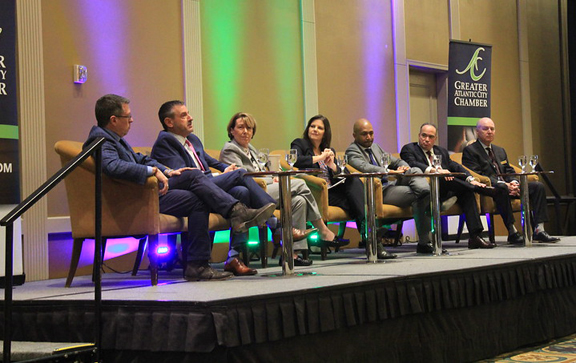
Last Thursday, a meeting room at the Sheraton Atlantic City was jammed to capacity as the AC Chamber hosted an executive panel of Atlantic City casino executives.

Leaders from five properties—Borgata, Tropicana, Resorts, Hard Rock and Ocean—talked with surprising candor about their hopes for the shore resort, and their frustration about the glacial pace of change.

First up were the positives, as the executives talked up respective, ongoing investments in their properties. According to Joe Lupo, president of Hard Rock Atlantic City, that resort—which opened in 2018, following a $500 million overhaul of the former Trump Taj Mahal—has plowed another $20 million into the property to redo suites, add three restaurants, and improve Hard Rock Live; he said to look out for “some other surprises” in 2020.

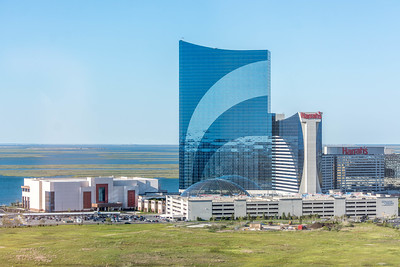
Ron Baumann, regional president for Caesars Entertainment, said the global operator has spent $300 million since 2016 to add convention space to Harrah’s Atlantic City, is renovating 400 hotel rooms, and brought in the only Gordon Ramsay restaurant on the east coast.

Terry Glebocki, CEO of Ocean Casino Resort, formerly Revel, said the property is “putting our casino first” by investing growth capital on the gaming floor, adding a new high-end slot room and a new Asian room, and making the massive resort tower more easily navigable.

Also in the plus column was the positive impact of sports betting on casino visitation. Marcus Glover, president and chief operating officer for Borgata Hotel Casino & Spa, said, “We figured it would be more of an amenity than a necessary revenue driver,” but added, “It’s great to see the visitation (sports betting) has brought” to the property. Mark Giannantonio, president and CEO of Resorts Casino Hotel, agreed, saying its DraftKings sportsbook “helped to transform our property.’

“Visitation has been incredible,” he said, “and we continue to try to monetize the visitation.”

Steve Callender, senior vice president of operations, East Region for Eldorado Resorts, Inc., which owns the Tropicana, noted that the Boardwalk resort is “seeing a pickup in food and beverage and non-rated table win” as sports betting brings in a “different dynamic, (and) younger people.” Non-gaming attractions will be the key to the city’s ongoing success, he said. “We need to give people the whole package to get them here.”

And Baumann said Caesars’ sportsbook “sold out every single inch of space for the Super Bowl,” attracting “a guest we’ve never seen before.” He agreed that non-gaming amenities are “critical to future of Atlantic City.”

The panel members were outspoken and frankly critical about the city’s ongoing, chronic problems: blocks of abandoned buildings and blighted storefronts, the placement of homeless services and drug treatment facilities right across the street from Boardwalk casinos, and the widespread perception that the city is crime-ridden and unsafe.

Glover said it’s not just perception. “A lot of it is reality,” he said, and added that there is no “silver bullet” that will quickly solve the problem. He urged the city to “separate social responsibility from entertainment and move out some of the blight. You need to get some wins and get some earned media about the positive things happening in Atlantic City.”

“Our buildings can’t be surrounded by drug addicts and prostitutes,” said Hard Rock President Joe Lupo. “The streetlights need to work. There’s a lot of work that needs to be done. The city needs to be in better shape. Go out and buy the biggest bulldozer the county has to offer, and you could probably make a lot of positive changes.”

Their candor was a bracing change and a call to action from companies that have invested collective billions in the city and seen many fixable problems remain unfixed. Callender griped about “three-foot potholes” near the entrance to his casino that have gone unrepaired, and the deplorable condition of Pacific Avenue. “It’s just awful,” he said.

The criticism followed comments last month from Jim Allen, CEO of Hard Rock International, who said Atlantic City “is going in the wrong direction” and is in worse shape than when his company bought the casino three years ago.

“We all agree we’re not pleased with where we are with the Tourism District,” said Giannantonio, speaking of an area encompassing the city’s downtown and casino areas. He said bringing down crime and sprucing up the area could bring in 20 percent to 30 percent more visitors, and do it quickly. Visitors who stay two to three days might stay longer if they felt good about leaving the cocoon of the resort, he added. “I’d like to see them stay four to five days, and venture out to experience a Tourism District that is a sunny place to be, so to speak.”

Lupo questioned spending by the Casino Reinvestment Development Authority, pointing out that, though CRDA has taken in $750 million in revenues derived from gaming since 2011, many critical improvements remain undone in the city. “Where are all these dollars going?” he asked. “There is a lot of blight out there … There needs to be positive change. We haven’t had any in the last five to 10 years.”

Glebocki demanded better maintenance of the city’s beaches and Boardwalk, saying, “That is our Strip. That is our Bourbon Street.”

Each of the executives said the city needs more flights into Atlantic City International Airport, a more stable political situation, and, in a comment from Baumann’s that drew laughter, “summer 12 months a year.”

Finally, asked if efforts by developer Bart Blatstein to revive gaming at the Showboat is a plus or minus, Baumann said, “The Northeast market is saturated; the last thing Atlantic City needs is another casino… It would be purely cannibalistic to do something along those lines.”

“Resorts is totally against an additional casino,” agreed Giannantonio. “It would be a bad move. It will certainly cause cannibalization of the existing properties.”

“The last thing this we need is another slot machine,” said Glover. “‘Tarzan’ at the Borgata is no different from ‘Tarzan’ at the Tropicana.”
AC’s Former Pier Shops Sold Back to Caesars

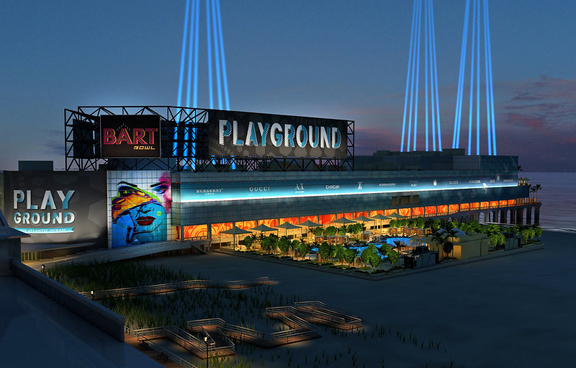
Bart Blatstein still sees a future in Atlantic City, but one without his Playground, the shopping and entertainment pier he bought from Caesars Entertainment five year ago.

A Philadelphia developer, Blatstein told the Associated Press on January 28 that he sold the pier complex for an undisclosed price to a subsidiary of Caesars Entertainment, and will concentrate his efforts on bringing gambling back to the Showboat, which he purchased to run as a non-casino hotel.

A Caesars spokeswoman confirmed the deal, saying the company will consider plans for the pier property over the next few months. “We are dedicated to working collaboratively with all stakeholders to position the city as a leading gaming and entertainment destination here on the East Coast,” Caesars said in a statement.

Blatstein would not discuss his plans for the Showboat in detail, saying he would have an announcement in the not-too-distant future of a “very significant development” there. “More than ever, I am extremely bullish on Atlantic City.”

Last year, the state Casino Control Commission gave Blatstein preliminary approval to pursue a casino license, and he said at the time he believes the market can handle another casino. He still feels that way. Should he succeed in restoring gambling there, the Showboat would become Atlantic City’s 10th casino. While such a move may add gaming revenue and employment, it would further dilute the already-lower earnings of the city’s casinos, which could threaten one or more of the existing casinos with failure.

Blatstein bought the pier—known at the time as the Pier Shops at Caesars—for $2.7 million, and reopened it as the Playground in June 2015. He said he invested $52 million in its renovation in the hope of reinvigorating some of the most prime but underutilized real estate on Atlantic City’s Boardwalk. Caesars retained ownership of the pier itself.

He added nightlife options and some retail outlets, but passenger traffic fell. Anchors including an Apple store, Tommy Bahama and Gucci have departed.

The absence of affordable, accessible parking helped sink The Pier Shops, and held back The Playground. The Playground offered valet parking nearby and free surface parking with a shuttle, which some potential customers found off-putting.

NJ Lawmaker Proposes Legal eSport Bets

If Essex County, New Jersey Assemblyman Ralph Caputo has his way, bettors in New Jersey will be able to wager on electronic sports competitions, known as eSports.

Caputo introduced legislation January 27 that would expand legalized sports betting to include skill-based competitions.

“Esports is the next big thing when it comes to sporting events,” said Caputo, chair of the Assembly Tourism, Gaming and the Arts Committee and a former Atlantic City casino executive. “The time is right for New Jersey to expand legal wagering beyond traditional sports.”

During a committee hearing, Caputo referenced esports’ surging global popularity as a key reason for his proposal.

“Throughout the country and the world, video game enthusiasts are flocking to see expert players compete in all kinds of digital games,” Caputo said, according to the Press of Atlantic City. “Whether they follow along online or in person, hundreds of millions of people watch esports each year.”

According to Newzoo, an online gaming data provider, there were some 450 million eSports viewers in 2019, and the gaming competitions generated more than $1 billion in revenue from various streams, such as sponsorship, advertising, merchandise and tickets.

Last year, the state Division of Gaming Enforcement permitted legalized eSports wagers for the League of Legends World Championship. The DGE offered this on a one-time basis and imposed conditions, such as a $1,000 maximum bet and no in-game wagering.

Atlantic City has hosted several eSports tournaments in recent years. Caesars Atlantic City hosted the city’s first event, Gears of War Pro Circuit,

In 2017. Harrah’s Resort Atlantic City held the Rainbow Six Siege Pro League event in 2018. In 2019, Jim Whelan Boardwalk Hall partnered with INGAME Esports and Caesars Entertainment to hold the Ultimate Gaming Championship’s Halo Classic tournament, and in June the venue will host an Overwatch tournament.

The Metro Atlantic Athletic Conference will hold eSports championship tournaments in conjunction with its men’s and women’s basketball tournaments to be held at Boardwalk Hall in March. A team from Stockton University won the Eastern College Athletic Conference Fortnite championship and placed second in the League of Legends championship last April.

AC Mayor Promises Trump Plaza Will Come Down

Since Marty Small Sr. was named mayor of Atlantic City in October by City Council, he has cited the passion he has for his hometown—he grew up in Atlantic City, and still lives there with his family—in stating his desire to do all in his power to restore the city to status as a premier resort destination.

Small, 45, is serving the remainder of the term of disgraced former Mayor Frank Gilliam, who resigned in October after pleading guilty to fraud charges. The former president of City Council, Small will be mayor at least until December 31, 2021, and has pledged to set the resort town on the right path.

His first months in office have revealed what a daunting challenge that will be, as he has fielded complaints—the latest from Hard Rock International CEO Jim Allen—that the city is not doing enough to make the city a place tourists will want to visit. Complaints have centered on urban blight, from shuttered casino hotels and other dilapidated vacant buildings to unsafe neighborhoods and infrastructure problems, including broken streetlights that have gone unrepaired for months.

Last week, at a luncheon staged by the PR Council of Greater Atlantic City, Small laid out his comprehensive plan for Atlantic City, expounding on and adding to many of the elements he first noted in early January, but noting that the plan is a “working document” that will change as needs arise.

Under the tagline “It’s a great day to be in the city of Atlantic City,” Small went through many of the accomplishments of his first 100 days in office, such as increasing internal communications among city officials—he said every city employee now has an email address and easy access to him as mayor—and a new dedication to serving the public with courtesy and transparency. He described his monthly “Night Out” for city workers, an Employee of the Month program and his own open-door policy as creating a newly positive atmosphere at City Hall.

Small outlined initiatives now under way such as the Atlantic Avenue Task Force, under which the city has beefed up its presence on the city’s main street and described a plan to transform the avenue into an attractive two-lane promenade.

Small laid out his “Perfect 2020 Vision” program, which aims to lower taxes, increase law enforcement, improve infrastructure, implement new programs for youth and seniors, and above all, address the same concerns previously voiced by Hard Rock’s Allen that the city must be seen as “clean and safe” for tourism to thrive.

He said the city is working with officials from Atlantic County and the state Casino Reinvestment Development Authority on a comprehensive infrastructure plan, with the assistance of retired Superior Court Judge Steven Perskie, the architect of New Jersey’s 1978 casino law who is now the mayor’s special adviser on policy. “Everybody needs to know your city is clean and safe if they are going to invest in it,” Small said.

Small also pledged an increased marketing effort, including a new effort in conjunction with national entertainment promoters to add events to the summer beach concerts and events at Gardner’s Basin that are already occurring. Also on the arts front, Small described the “KY & The Curb” program, which is transforming a building at the center of the historic African American entertainment district along Kentucky Avenue into the Kentucky Avenue Museum, which will share the building with state-of-the-art audio and video recording studios to serve local artists.

But the mayor’s biggest cheer from his audience came when he devoted a single PowerPoint slide to an image of the shuttered Trump Plaza surrounded by wrecking balls, with the caption “DEMOLISH TRUMP PLAZA.” He said the city is actively discussing a plan with billionaire Carl Icahn, who owns the abandoned and decaying center-Boardwalk property, under which the building—which has become a safety hazard as well as an eyesore, with debris falling from the structure to the street—will be demolished.

“The city of Atlantic City and Carl Icahn Enterprises are moving in the right direction to get Trump Plaza torn down,” Small said, adding, “We’re on the same page, and as long as we leave the politics out, this will be torn down sooner than we think.”

Asked following the event about the effort to repurpose the other vacant casino-hotel, the former Atlantic Club, and other general efforts to address the need to rid the city of vacant buildings by using eminent domain, Small said the city is going to be aggressive in addressing the concerns about the city’s appearance that were voiced previously by Allen and other business leaders.

“We want to be aggressive, and that’s why we’ll partner with CRDA, the Atlantic County Improvement Authority and other stakeholders that have the city of Atlantic City’s best interests at heart,” Small said. “We’re being aggressive with Trump Plaza. They don’t have to tear it down, as long as the building is up to code. But at the same time, they saw all the press coverage of our announcement that we want to take it down, and that’s a mutual interest. That goes for the Atlantic Club as well.”

Small’s assistant added that the new owners of the Atlantic Club have advised the city that a refurbishment plan is in place that will eventually allow the property to be reopened as a non-casino hotel.

“We’re going to be aggressive with any and every eyesore in the city of Atlantic City,” Small said. “Just because you’re paying the taxes and have the systems in the building up to code, that doesn’t mean it’s OK for debris to be falling on people. With our partners being on the same page, we’ll make it happen.”

Former AC Casino Owner Arrested for Fraud

Glenn Straub, who owned the former Revel Resort and Casino in Atlantic City for two years, was arrested in Florida on three felony charges involving false liens he filed against properties owned by an ex-girlfriend.

Straub owns the Palm Beach Polo & Country Club, which, according to the probable cause affidavit, filed fraudulent construction liens against properties owned by Jessica Nicodemo, 36, whom he dated for more than three years. Straub allegedly told Nicodemo the liens were done to protect him and keep Nicodemo in a relationship with him. He was concerned she would sell her house and move away, according to the affidavit.

Straub is charged with two counts of fraud and one count of grand theft in the case. He pleaded not guilty to all charges and was released on $11,000 bail.

Michael A. Gottlieb, Straub’s attorney in the case and a state representative, said his client is innocent of the charges.

“It was investigated to be a civil action, not a criminal action,” Gottlieb said, according to the South Florida Business Journal. “A request was made to get work performed, the work was performed, the work was not paid for, and a construction lien was filed. There was no fraud by Mr. Straub.”

Straub, who purchased the shuttered Revel out of bankruptcy court in 2015, announced a succession of grand plans for the casino, including circus acts and theme-park attractions, before missing several deadlines for reopening the $2.4 billion property. He ultimately sold it to developer Brue Deifik, who reopened the Boardwalk property as Ocean Resort Casino in 2018.

Record $26 Million Americans Wagered on Super Bowl LIV

In a nail-biting fourth quarter, the Kansas City Chiefs came from behind to beat the San Francisco 49ers 31-20 in Super Bowl LIV. Approximately 3 million more American adults were expected to wager on Sunday’s game than last year, according to data released by Morning Consult. The data, culled from a survey and released by the American Gaming Association, included these figures:

  • More than one in 10 American adults planned to bet on Super Bowl LIV, which was played this year at Hard Rock Stadium in Miami Gardens, Florida
  • Of the 26 million Americans expected to wager, close to 4 million planned to place a bet in person at a brick-and-mortar sportsbook, a 25 percent increase from last year
  • Nearly 5 million were expected to place a bet through an online or mobile platform, either through a licensed, legal operator or an illegal offshore book, a 19 percent increase from last year
  • Millions more planned to wager with a bookie, in a pool or squares contest, or casually with family or friends
  • 52 percent said they would bet on the Kansas City Chiefs, while 48 percent said they would bet on the San Francisco 49ers

“With 14 operational markets and another seven close behind, Americans have never before had so many opportunities to wager on the Super Bowl in a safe and legal manner, and clearly, they are getting in on the action,” said Bill Miller, president and CEO of the AGA. “With increased visitation to legal sportsbooks, we are successfully drawing bettors away from the predatory illegal market.”

Viewership for NFL games rose 5 percent in 2019, up another five points from the year before. This is yet another example of how the NFL will earn approximately $2.3 billion annually due to increased fan engagement from sports betting. Previous AGA research found that 75 percent of NFL bettors say they are more likely to watch a game they have bet on, and sports bettors are more interested in the NFL than any other professional sports league.

“I have absolute confidence that Americans didn’t start betting on sports when the Professional and Amateur Sports Protection Act was overturned,” continued Miller. “What makes this year’s Super Bowl remarkable is that more fans than ever before will have the reassurance that the integrity of their bets on the big game will be preserved. The continued expansion of legal sports betting—to the detriment of the illegal market—truly benefits all stakeholders, from enhanced fan engagement for teams to added tax revenue for state and local economies.”

For the sports leagues, more bettors have translated into more engagement. Previous AGA research found that 75 percent of NFL bettors said they are likely to watch a game they have bet. NFL viewership was up 5 percent in 2019, and another 5 points the year before.

“It’s good for fans, the leagues, teams, regulators and constituents,” said Miller.

The halftime show at the Hard Rock—which often generates as much excitement as the game—starred Jennifer Lopez and included cameos from DJ Khaled, Alex Rodriguez, Pitbull and Steven Van Zandt.

Hard Rock International debuted its first Big Game commercial at the end of the first half of the event broadcast on February 2.

Eight CEOs to Chart Gaming’s Future at ECGC, April 27-28

The nation’s second oldest gaming conference—the 24th Annual East Coast Gaming Congress—will held April 27-28 at Harrah’s Casino Resort. The show will include keynote speeches by New Jersey Governor Phil Murphy and American Gaming Association President Bill Miller, and will present recently retired Penn National Gaming CEO Tim Wilmott with a Lifetime Achievement Award.

The participating CEOs are:

  • James Allen, Hard Rock International & Seminole Gaming
  • Greg Carlin, Rush Street Gaming
  • David S. Cordish, The Cordish Companies
  • Jay Dorris, Wind Creek Casino and Hotel
  • Holly Gagnon, Seneca Gaming
  • Mario Kontomerkos, Mohegan Gaming & Entertainment
  • George Papanier, Twin River Worldwide Holdings
  • Thomas Reeg, Eldorado Resorts

“Those who will create the future of gaming are best positioned to help us understand that future, and we are honored to offer such an array of visionaries,” said conference co-founder Michael Pollock, managing director of Spectrum Gaming Group.

“This conference rests on the principle of having leaders speak to an audience of leaders, and we will again abide by that principle,” said conference co-founder Lloyd D. Levenson, CEO of the Cooper Levenson law firm.

Other conference topics will range from sports betting and esports to the future of i-lotteries and the “slot floor of tomorrow.”

More than 600 gaming operators, equipment manufacturers, regulators, attorneys, architects, analysts, public officials, investors and other gaming-related professionals are expected to attend ECGC. The full two-day conference schedule and registration is at www.ecgc.us. Early-bird registration savings are now available.

Coronavirus Creates Macau Ghost Town

The biggest news about the coronavirus and its impact on Macau gaming came in two forms: visitation statistics, and the outlook of the first casino operator to discuss the matter, Las Vegas Sands.

The declines and trend of declines in visitation, starting Friday, January 24 were startling:

Friday, January 24: -34.6 percent
Saturday, January 25: -59.0
Sunday, January 26: -74.1
Monday, January 27: -84.1
Tuesday, January 28: -87.3
Wednesday, January 29: -89.1

Ninety percent of business disappeared in one week. So much for comparison to the 2003 SARS epidemic, when visitation declined 35 percent.

But that doesn’t mean that gamblers have quit gambling. Jason Ader of SpringOwl Asset Management said that online gaming rose 90 percent during Chinese New Year—even though iGaming is illegal in China.

The conclusion: Macau gaming will bounce back when, as Las Vegas Sands COO Rob Goldstein said on the company’s fourth-quarter investor call, the storm passes.

And pass it will, Goldstein said, citing the list of epidemics in modern times, such as the Hong Kong flu and the Russian flu.

The same will be true in Macau. “You can count on pent-up demand,” Goldstein said.

The day after Goldstein’s comments, the stock jumped 2.32 percent to $66.20.

Apparently, investors agree.

Gaming REITS: See How They Run

Gaming and Leisure Properties and VICI Properties have been hitting new highs day after day. Recently, they had eight- and nine-day streaks of new highs.

Even though they dipped last Monday, when the overall stock market was rattled by news of the coronavirus spreading, they quickly resumed their upward march.

Generally, REITs are unexciting companies, as they hold real estate, collect rents, recycle properties and mostly make a life out of simple blocking and tackling.

But gaming REITs clearly have caught investors’ eyes. As analyst Jordan Bender of Macquarie pointed out, the stocks of the three gaming REITs advanced 36 percent last year, beating the S&P 500’s banner 31 percent leap and the All Equity REIT Index’s 29 percent rocket ride.

The reasons for the gains have been discussed in this space before:

  • The ability of REITs to create deal and rent structures that give higher valuations to properties in mergers and acquisitions have helped accelerate the number of acquisitions. That, by definition, means their property portfolios, and by extension their rental revenues, grow. In a sense, gaming REITs are in a growth phase.
  • The recent sale-and-leaseback deals that MGM Resorts has signed with Blackstone and its own REIT spin-off, MGM Growth Properties, has excited investors over Las Vegas Strip real estate values.
  • In a low interest rate environment, their dividends give income-oriented investors high returns, both in relative and absolute bases, even as their stock prices have risen. Gaming and Leisure Properties’ dividend yields 6.1 percent, MGP’s 5.9 percent and VICI’s 4.5 percent.
  • The combination of secure rents and high dividends make gaming REITs a safe haven, important always, but especially today, as many investors fear a recession may be looming. And now, there’s that growth kicker, though most of the big deals are by now in the past.

So, can the stocks continue their advance?

Bender thinks so, noting, among other things, that gaming REITs are still valued 30 percent below non-gaming peers.

Bender raised his target on GLPI to $50.

Vegas Retires Iconic ‘What Happens Here’ Slogan

It happened there, it stayed there, and as sales pitches go, it served Las Vegas well for the better part of a decade, wrapping the city up in a fantasy of uninhibited adult freedom where anything was possible and all of it was fun.

But as Billy Vassiliadis, CEO of R&R Partners, the advertising agency of the Las Vegas Convention and Visitors Authority, put it, it was time to move on.

“What Happens Here, Stays Here” was officially retired on Grammys night last Sunday with the first of a planned series of glitzy TV commercials to promote a fantasy for a new decade: “What Happens Here Only Happens Here.”

“It was iconic, it was cultural, there was a feeling of connectivity,” Vassiliadis told the Las Vegas Review-Journal, speaking of the old slogan. “So we couldn’t walk away from it. But we had to contextualize it. We sort of feel we bridged the icon to today. We kept the essence of it.”

The commercial featured a series of star-studded walk-ons by the likes of Shania Twain, Christina Aguilera, Aerosmith and UFC fighter Francis Ngannou to talk about the unique experiences the town encompasses.

“It’s a tip of the hat to all the residencies that are here, which has become a really cool new thing,” Vassiliadis said.

To coincide with it, at 6 p.m. that same night, marquees up and down the Strip lit up with the new slogan for roughly an hour.

The spot is set to run until the end of March, to be followed by a second one designed to challenge viewers to take a Vegas plunge.

“It was a matter of driving impulse decision-making,” Vassiliadis explained.

Still to come is the social media blitz.

“You don’t launch (campaigns) the way you used to,” Vassiliadis said. “It’s not about the brand offering itself up on a TV commercial. The audiences want to be the ones that push things out, that own it, that influence their peers.”

To that end, Instagram traps will be set up across the Strip, Fremont Street and McCarran International Airport, urging visitors to snap and share photos of themselves with art installations that have the slogan plastered across their exterior.

The social media piece could also include a new “Las Vegas” hashtag that comes with a mini-icon of the “Welcome to Fabulous Las Vegas” sign along with a Las Vegas emoji that will make the city only the second destination in the world with its own emoji, behind Tokyo.

R&R also is looking into ways to integrate “What Happens Here Only Happens Here” into airline experiences through partnerships with carriers like Frontier and Allegiant. Another partnership with Pantone Color Institute is set to unveil a set of “Neon Vegas” colors with names based on the new slogan.

The idea is to invest the new concept with a life of its own, to make it something more than just a TV spot or words on a billboard, to implant it into the collective consciousness to make it into something like … well, like “What Happens Here Stays Here”.

“It’s so wired into the city,” Vassiliadis acknowledged. “I don’t think people are going to stop saying it.”

Vermont House Leaders Cool to Gaming Expansion

Two years ago, Vermont Governor Phil Scott said expanded gaming was “not the answer to Vermont’s fiscal issues.”

Last week, the governor proposed to legalize sports betting and keno. House leaders signaled that they agree with the earlier stance.

Legislators in Montpelier indicated strongly that gaming—or at least keno—isn’t the way to go to solve the state’s bottom line issues, despite Scott’s claim in his budget address that it would bring in $4 million a year.

House Speaker Mitzi Johnson pointed out that the House has usually opposed expanding the state lottery. On the other hand, two committee chairmen in the Senate have proposed sportsbook legislation.

Senator Dick Sears, chairman of the Senate Judiciary Committee, is one of those sponsors. He doesn’t see keno legislation having legs: “No traction whatsoever,” he said. “There’s a lot of anti-gambling folks in the Legislature.” According to the Joint Fiscal Office, keno, which is typically played in restaurants and taverns, could raise up to $3.5 million in the first three years.

If Keno is approved, Scott wants to use it to fund subsidies for families who need childcare services.

In pushing for sports betting, Sears, who is working in conjunction with Senator Michael Sirotkin, chairman of the Senate Economic Development Committee, argues that many in the state already make sports bets online or cross state lines to do it. “There’s so much money going on in sports betting today that it seems to me that you know, now that states like New Hampshire entered into it, Rhode Island, that we should be doing it as well,” he said.

Rep. Tom Burditt has introduced similar legislation in the House, but only for physical retail operators. He told the OSGA newsletter: “I think that doing the sports betting is a win for Vermont, but if you can also have it so that you’re gaining some jobs it’s a win-win.” He added, “I think we’re losing out. There’s a lot of money to be made. People are going to be doing their sports betting anyway—whether it’s legal here, or not.”

In the 2017-2018 legislative session DraftKings and FanDuel, the two giants in online sports betting operators, spent $84,000 to lobby the legislature. So far, they have spent nothing for this session.

N.Y. Comptroller Says Casinos Owe Millions in Back Fees

A state audit says upstate New York’s four commercial casinos have been able to avoid paying a collective $13 million in fees because the state Gaming Commission failed to bill them.

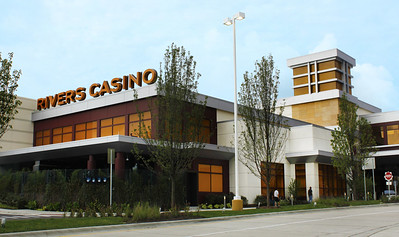
The state is supposed to collect fees from all gambling operations to cover the cost of maintaining a regulatory presence at their facilities. Everyone is paying up𑁋contributing to a combined $145 million collected over the last three years𑁋except Rivers Resort & Casino in Schenectady, Tioga Downs Casino Resort near Binghamton, Resorts World Catskills near Monticello and del Lago Casino & Resort in the Finger Lakes.

“The costs to regulate casinos in New York state are supposed to be shouldered by the casinos themselves, but the state Gaming Commission has let some of them slide on this responsibility,” said state Comptroller Thomas DiNapoli. “That has unfairly shifted expenses to taxpayers.”

The Gaming Commission responded by denying any fault and said the money will ultimately be collected. The problem was the state didn’t have regulations in place initially to collect the money, an oversight that has since been corrected, it said.

“The commission appropriately waited for the conclusion of the regulatory process which established rules and methodologies for regulatory fee assessment before issuing its invoices,” said a spokesman.

DiNapoli disputes that. “The commission should bill all casinos for oversight costs in a timely manner and come up with a plan to handle disputes with casinos over these charges as soon as possible,” he said.

Moreover, the audit said, the state has missed out on interest that would have otherwise been earned from the collection of the money.

“Failure to collect all gaming revenues due to the state decreases the amount available for additional school aid and real property tax relief and prevents interest that could have been earned or saved on accurately calculated revenues and promptly received payments.”

Tioga Downs owner Jeff Gural said he expects to the issue to be resolved soon.

“We have a good working relationship with the Gaming Commission and look forward to resolving this issue to the satisfaction of both parties.”

The audit also knocked the commission for not getting all the revenue verification documents available from the three Indian tribes with casinos𑁋the Senecas, Oneidas and Saint Regis Mohawks𑁋to better determine how much revenue they are bringing in and how much they owe the state.

The commission denies this as well, contending that it has multiple oversight measures in place.

“However, should the risk assessment indicate that these are insufficient, the commission will determine what additional steps may be necessary to confirm revenues and exclusivity payment calculations and implement same,” it said.

The Senecas’ bill has soared to more than $250 million, the result of a legal battle with the state over its revenue-sharing obligation. The tribe halted the payments three years ago, saying the obligation is no longer in force. New York says it is, and the state has won a ruling to that effect in binding arbitration and in a subsequent federal court ruling. To date, the money has yet to be paid.

Twin River Completes Purchase of Three Colorado Casinos

Twin River World Holdings (TRWH) last week announced that it has taken possession of three casinos in Colorado. Two days later added that it had formed a partnership with FanDuel to bring sports betting to the Centennial State.

Twin River closed the deal on the Golden Gates, Golden Gulch and Mardi Gras casinos in Black Hawk for $51 million, which it paid to Affinity Gaming. The company already owns Arapahoe Park near Denver.

Twin River previously completed a $230 million purchase of Isle of Capri Casino Kansas City in Kansas City, Missouri and the Lady Luck Casino Vicksburg in Vicksburg, Mississippi.

Twin River CEO George Papanier said in a statement: “We are very pleased to close on this transaction, the latest in our ongoing efforts to diversify our portfolio. We are excited to move forward with these new acquisitions and continue to make progress towards closing other previously announced purchases.”

The combined purchase gives Twin River 36,000 square feet of gaming space with 700 slots, 20 tables and a poker room.

TRWH and FanDuel Group also announced a market access partnership that will introduce FanDuel Sportsbook app to the Colorado market. This is the fifth state where FanDuel Sportsbook will be available. The Colorado purchases gave Twin River three licenses for offering sports book, which led to the partnership.

FanDuel Group CEO Matt King greeted the partnership with this statement: “Twin River has been engaged in sports betting since the beginning in Rhode Island and Mississippi, and they are an ideal partner as we continue to enter states that open up online and mobile sports betting.” King added, “Colorado has a sensible framework for sports betting, and we are excited to partner with a renowned gaming company like Twin River to bring our market-leading online sports betting experience to Colorado sports fans.”

Papanier added, “Completing the acquisition of these three properties expands our footprint in the Colorado market well beyond our Arapahoe Park racetrack and Off-Track Betting network. We are very excited for this newly-formed partnership with FanDuel that will allow us to bring sports betting to the greater Denver market.”

The FanDuel Sportsbook will be available once sports betting goes live in Colorado in May. It will offer point spreads, money lines, over/under, parlays, teasers, prop bets, round robins and live in-game wagers.

Indiana Commissioners Investigating Spectacle

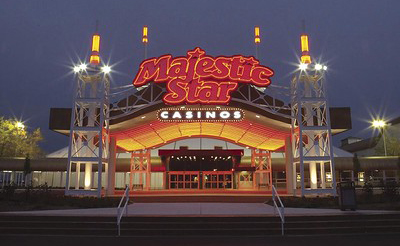
The Indiana Gaming Commission is investigating Spectacle Entertainment, owner of Majestic Star casino on Lake Michigan, which is seeking to open a new Terre Haute casino in Vigo County.

The probe relates to a political consultant’s recent guilty plea on federal charges of illegally funneling campaign contributions for an Indianapolis-based gaming company, allegedly Centaur Gaming, to former state Senator Brent Waltz, who unsuccessfully ran for Congress in 2016.

Court records indicate Charles O’Neil, formerly vice president of the Virginia-based consulting firm Strategic Campaign Group Inc., received more than $15,000 from Centaur through fake invoices and contracts for services prepared by the company’s vice president and general counsel. O’Neil admitted in federal court in Arlington, Virginia to arranging for several people to write checks to Waltz’s campaign in 2015 with casino company money funneled through a fake $38,500 contract with Strategic Campaign Group for political work, according to court documents. The “conduits” were then reimbursed for their contributions, court records said.

The scheme allowed the Indiana casino company to bypass federal election laws prohibiting corporate contributions and limiting individual contributions, according to court records. The plan also allowed the casino company to “disguise the fact that Company A”—allegedly Centaur Gaming—”was the true source of the funds,” court records indicate.

Spectacle President and Chief Executive Officer Rod Ratcliff and General Counsel John Keeler were top executives at Centaur Gaming, which sold Indiana’s two racinos in Anderson and Shelbyville to Las Vegas-based Caesars Entertainment in 2018 for $1.7 billion. Soon after they formed Spectacle to purchase the Gary casinos and in 2019 successfully lobbied state legislators to allow operations to move onto land. Ground was broken January 9 for Spectacle’s $300 million Hard Rock Casino Northern Indiana.

Gaming Commission Deputy Director Jennifer Reske said, “The Indiana Gaming Commission is aware of information contained in court filings in the Eastern District of Virginia referencing an Indiana gaming company based in Indianapolis in 2015, which we understand to be Centaur Gaming. Certain key people in that company now own and operate Spectacle Gaming, the holder of the Majestic Star Casino license in Gary. Spectacle is also currently undertaking a land-based casino project in Gary and pursuing the new casino license in Vigo County.”

She added, “The information we received is concerning and the commission has begun a review pursuant to its statutory responsibilities into this matter. The commission is working to ascertain the immediate impacts of this information upon the new casino construction project in Gary.”

Due to the situation, the commission canceled its February 7 meeting, where it was expected to approve Spectacle’s gaming license application for a $125 million Hard Rock Rocksino in Terre Haute. Spectacle is also the only company that applied to the Indiana Gaming Commission for the Vigo County license. Reske added, “Majestic Star Casino will continue normal operations at this time.”

Spectacle Entertainment issued a statement, noting, “Spectacle Entertainment has been made aware that a paid consulting firm, who once contracted with Centaur Gaming, has been implicated in charges related to campaign finance violations in Virginia. Spectacle pledges to fully cooperate with the Indiana Gaming Commission as it investigates this matter. We take such matters very seriously and we will share more information should additional details become available.”

Terre Haute Mayor Duke Bennett stated, “The gaming commission is a very professional group. They really dig into this stuff. I have always felt good about what they do to investigate anybody who has a license or wants a license. So I guess if some, you know, things shake out and that’s their job to vet those things and decide whether a particular entity is the right one or not. They’ll get that sorted out and we’ll all move on from that.”

Vigo County Commissioner Brad Anderson stated, “From what I understand, it was in 2015. There was no talk of Spectacle or anything like that, you know, in our community. You know, not knowing anything about Spectacle other than they are a large company. We just look at it as a great opportunity for our community with the jobs and the investment that Spectacle is willing to pay. The referendum showed that people want the gambling here–the majority–and the income and the tourism side of it.”

State Senator Jon Ford, one of the authors of the legislation that paved way for a Vigo County license, noted Indiana has some of the most stringent casino license requirements in the U.S. “This is part of the process. The Indiana Gaming Commission think they found something they want to look at further. It is part of what we have set up here at the state to make sure that we keep a very clean gaming industry. I think it is a delay at this point, but I am glad they are taking the time to step back and review the issue.”

The Terre Haute Chamber of Commerce issued the following statement:

“The Chamber remains committed to this project for the good of our community. We respect the gaming commission’s process in this matter and await next steps.”

Washington, D.C., attorney Brett Kappel, an expert in government affairs and public policy and a partner at the Akerman law firm, noted the prosecutions of O’Neil and his co-defendants could mean Centaur, Keeler and Ratcliff also could face federal charges, along with other employees who may have been involved. For someone to be criminally prosecuted, the government must show the violation was knowing and willful, Kappel said. “I wouldn’t be surprised if there’s already a sealed indictment of the company,” he commented.

However, the candidate who received the funds likely would not be prosecuted unless he knew about the scheme. “It is extremely rare for the candidate receiving the illegal funds to be prosecuted. I’ve never seen it happen unless they were actively involved in the scheme. That usually only happens when the candidate owns the company making the illegal contributions,” Kappel said.

Spectacle’s Rocksino plans call for a 100,000-square-foot venue including 1,200 slots, four restaurants, four bars, an enclosed, temperature-controlled walkway to the adjacent Home2Suites by Hilton hotel and a future on-site hotel. It would create 600 new jobs and generate more than $7 million for local governments and business development. Also, Spectacle would pay $3 million based on $100 million adjusted gross receipts and make a payment equal to 3 percent of the company’s net commission received from any sports wagering vendor.

Last year, Spectacle drew scrutiny when Ratcliff provided private flights for Governor Eric Holcomb and his wife, Janet, when Ratcliff was lobbying to change state gaming laws to benefit his company. The Indiana inspector general later said Holcomb violated no ethics rules by accepting the flights.

The flights were among $500,000 Ratcliff and his companies contributed in 2018 to the Republican Governors Association, which gave Holcomb $7.6 million of the $14.5 million he spent on his 2016 election campaign.

VICI Completes Purchase of Jack Cleveland

Real estate investment trust VICI Properties of New York announced it has closed on the acquisition of Jack Cleveland Casino and the Jack Thistledown racino in Ohio from Detroit-based Jack Entertainment for $843.3 million cash.

In its fifth tenant arrangement, VICI will lease the properties back to Jack Entertainment for total annual rent of $65.9 million through an initial 15-year deal and four 5-year tenant renewal options.

The Cleveland properties are the 28th and 29th gaming operations owned by VICI, a spin-off from Caesars Entertainment in 2017. VICI also has lease agreements for gaming properties operated by Caesars, Penn National Gaming, Hard Rock International and Century Casinos.

VICI President John Payne said Ohio is “one of the healthiest gaming markets across the country.” Ohio’s 11 casino properties collected $1.94 billion in total gambling revenue in 2019, up 4.2 percent or $77.6 million, over 2018’s $1.86 billion. Jack Cleveland came in third, generating $221.1 million of the total revenue. Opened in 2012, the property opened in 2012 and offers 1,300 slots; it’s connected with the Ritz-Carlton and Renaissance hotels, offering a total of 640 rooms. It ranks behind MGM Northfield Park racino with revenue of $253.6 million and Hollywood Casino Columbus with $229.2 million. The Cleveland area’s leading thoroughbred racetrack casino, Jack Thistledown racino opened in 2013 and offers 1,459 slots.

Jack Entertainment officials said the sale is part of the company’s plan to increase profit by selling off properties and focusing solely on running them, not owning them. So far, Jack Entertainment has signed operating agreements with Penn National Gaming, Hard Rock International and Caesars Entertainment.

VICI also is raising more than $2.5 billion in new debt due to its participation in the $17.3 billion Eldorado Resorts and Caesars merger. VICI said it will use $2 billion to complete several transactions included in the deal and the remainder to pay off $498.5 million in debt due in 2023.

As part of the merger, VICI purchased three Caesars properties under the Harrah’s brand in Atlantic City, Laughlin, Nevada and New Orleans for a total of $1.8 billion. VICI will lease the operations back to Eldorado for total annual rent of $154 million.

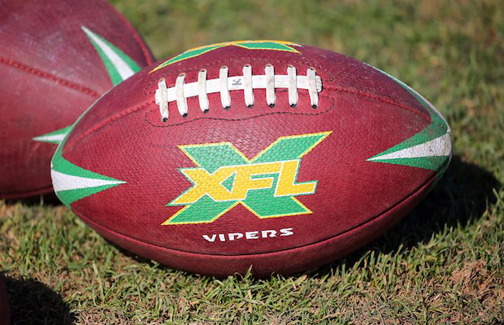
New Jersey OKs XFL Sports Betting

If Essex County, New Jersey Assemblyman Ralph Caputo has his way, bettors in New Jersey will be able to wager on electronic sports competitions, known as eSports.

Caputo introduced legislation January 27 that would expand legalized sports betting to include skill-based competitions.

“Esports is the next big thing when it comes to sporting events,” said Caputo, chair of the Assembly Tourism, Gaming and the Arts Committee and a former Atlantic City casino executive. “The time is right for New Jersey to expand legal wagering beyond traditional sports.”

During a committee hearing, Caputo referenced esports’ surging global popularity as a key reason for his proposal.

“Throughout the country and the world, video game enthusiasts are flocking to see expert players compete in all kinds of digital games,” Caputo said, according to the Press of Atlantic City. “Whether they follow along online or in person, hundreds of millions of people watch esports each year.”

According to Newzoo, an online gaming data provider, there were some 450 million eSports viewers in 2019, and the gaming competitions generated more than $1 billion in revenue from various streams, such as sponsorship, advertising, merchandise and tickets.

Last year, the state Division of Gaming Enforcement permitted legalized eSports wagers for the League of Legends World Championship. The DGE offered this on a one-time basis and imposed conditions, such as a $1,000 maximum bet and no in-game wagering.

Atlantic City has hosted several eSports tournaments in recent years. Caesars Atlantic City hosted the city’s first event, Gears of War Pro Circuit,

In 2017. Harrah’s Resort Atlantic City held the Rainbow Six Siege Pro League event in 2018. In 2019, Jim Whelan Boardwalk Hall partnered with INGAME Esports and Caesars Entertainment to hold the Ultimate Gaming Championship’s Halo Classic tournament, and in June the venue will host an Overwatch tournament.

The Metro Atlantic Athletic Conference will hold eSports championship tournaments in conjunction with its men’s and women’s basketball tournaments to be held at Boardwalk Hall in March. A team from Stockton University won the Eastern College Athletic Conference Fortnite championship and placed second in the League of Legends championship last April.

Sportsbooks, Casinos Pause to Honor Bryant

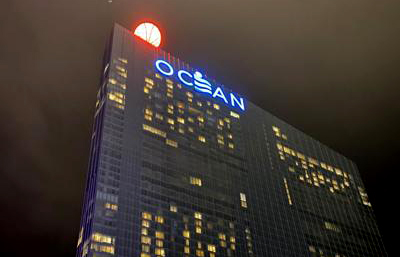
The sports world was shaken by the sudden death of NBA superstar Kobe Bryant in a January 26 helicopter crash. To honor the LA Lakers shooting guard, several sportsbooks including Circa Sports Las Vegas and Atlantic City’s Resorts Casino halted NBA betting temporarily, and Ocean Casino Resort in AC lit up its rooftop globe as a basketball the night of his death. Bryant, 41, died when a helicopter carrying him, his 13-year-old daughter Gianna and seven others to a youth basketball game crashed in heavy fog near Calabasas, California.

“For everyone asking, yes, our NBA betting menu is closed for the remainder of the day and will reopen tomorrow at 8am,” @CircaSports tweeted after the tragedy, reported Casino.org.

Resorts Atlantic City followed, tweeting, “Due to the unfortunate loss of NBA legend Kobe Bryant, we are paying our respects by closing all NBA markets for the evening—we will reopen these markets at 9am tomorrow morning.”

In another tribute, Pechanga Resort Casino in Temecula, California was awash in purple and gold lights, and put together a memorial to Bryant, who visited Pechanga several times with the Lakers to raise money for charity through the Lakers Youth Foundation and for team shoot arounds at the Pechanga Recreation Center on the reservation.

A statement from Pechanga said, “The team’s visits are always memorable, and the memorial will continue for days to come to help commemorate Kobe and his many contributions to our world.”

Bryant was an 18-time All-Star player and two-time NBA Finals MVP. His daughter, Gianna, hoped to follow in his footsteps as a player for the WNBA.

In Washington, Competing Sports Bills and a Tight Deadline

Competing sportsbook bills have been filed in Washington State, but the legislature’s relatively short 60-day session means that chances are narrowing that any of them will be adopted this year.

Because the state has a two-year budget and this is an off-year, any bill would have to be voted out of committee by the first week in February to have a chance for approval in 2020. Moreover, the state constitution requires a two-thirds majority in both chambers to expand gaming in any form.

Lawmakers who want to beat those odds have been fast on their feet, trying to beat the deadline. Two sports betting bills were recently filed. Both exclude college sports and include sports wagering on Indian reservations.

HB 2478, whose sponsor is Rep. Brandon Vick, provides for online mobile sportsbooks, and sports wager at card rooms, racetracks and tribal casinos. It would tax gross gaming revenue at 10 percent for card clubs and racetracks, with a $500,000 application fee. That tax wouldn’t apply to sports bets made at tribal casinos, or using mobile apps on tribal casinos. However, if a bet is made using a tribal app but off Indian lands, it would be taxed at 10 percent.

In an exclusive interview, Vick told GGB News, “We saw a bill last year that was tribal only. For me, I’m concerned that we haven’t had the full conversation, the full debate. We didn’t have an argument about why we shouldn’t have it.

“It’s a big step, especially in Washington, which has tight restrictions,” he added. “We need to have the debate about the proper venue and who would be interested. I think the other question is, if we’re going to have sports betting, are we meeting the customers where they want to be? Do they want to go tribal casinos? Do we want to look at the market?”

Vick said he’s less interested in bringing in more government revenue than in opening up an activity to state residents that many clearly crave, while generating new economic activity. “I’m not a guy who advocates more government revenue,” he told GGB. “I think we should do it by expanding economic opportunity.”

For him, he added, it’s “both a rights issue and a revenue issue. My priority would be on the rights side of it. There’s obviously people who want to sports-bet. I live on the border with Oregon, and know of friends who cross that bridge, place their bets and come home. If revenue is a side benefit, that’s fine too. It’s here, so let’s make the best system possible.”

Vick predicts a hectic legislative session. “It is a 60-day session. The committee is going to be very lively. I would take the ‘under’ on whether it’s going to come out this year. But the Speaker, Rep. Laurie Jinkins, and a lot of folks should have some input.”

He reiterated that a supermajority of 60 percent of both houses is required to pass any bill that expands gaming in Washington beyond card rooms. “I really, truly think that if we are going to do this—and it’s a high bar—we need a robust debate.”

Vick has served on the House Committee on Commerce and Gaming for eight years. The committee is in charge of what he calls “the vices”: gaming, alcohol and marijuana, and policies that address all three.

The House legislation is Vick’s first attempt at a sports betting bill, though “early on, I dabbled in online poker bill,” he said. He is expecting calls from representatives of the National Football League, Major League Baseball and other sports leagues to lobby for so-called “integrity fees” or royalties. “It hasn’t been part of the debate yet. The one oddity is that we have already excluded betting on in state institutions, to eliminate the potential conflict that might come of that.”

The man who stands to benefit the most if Vick’s bill passes is Eric Persson, chief executive officer of Maverick Gaming, the new and rambunctious entry into the gaming arena. Maverick recently acquired the lion’s share of the medium-sized card room casinos that dot the Washington landscape, and is adding others. It has 19 casinos and expects to have 25 total by March. Most are “neighborhood” card rooms averaging 25,000 square feet.

Persson prefers Vick’s bill for the simple reason that he basically wrote it. He notes that it “limits each operator to one skin and one license and has a $,500,000 fee to apply. Most important,” he said, “It has a 10 percent tax, which according to the American Gaming Association should generate $5 million for the state each year.”

He wrote the bill and found sponsors in the House and Senate to carry it. “We do extensive lobbying at the state capitol,” he said. “Really in June is when I started talking to them. It’s a short session and an election year and we think the most likely path is that it will pass in the next session.”

Governor Jay Inslee is running for reelection, said Persson, “and there are a record number of bills submitted to the House this session. I don’t think either the Native American bill or mine will pass this session.

“The purpose of this bill was to start the dialogue and help the public understand the number of benefits, and probably create a platform where the Native Americans and myself could work together to benefit everyone, Washingtonians included,” he added.

It wasn’t difficult to get a sponsor, Persson said. “We’re the largest cardroom holder in the state. Anytime you employ over 2,000 people and the average salary is over $75,000, you get their attention. When we close all our transactions, we’ll be one of the Top 20 employees in the state.”

By March, with 25 properties, he expects to employ more than 3,000 people.

Sports betting will help those enterprises by bringing in more customers, not necessarily because of the money the casinos will take in directly by processing the books. In Washington, the medium-sized casinos are hyper-local in their focus.

“In our casinos, 18 percent comes from food and beverage,” said Persson. “Ninety percent of play comes from within three miles. Sports betting is one more reason to come to the bar and watch and bet on your teams.”

Yet he also supports mobile sports betting. “One thing we’ve learned from focus groups is that there is a lot of concern about the illegal market. If you don’t legalize mobile wagering people, will bet offshore. If offshore doesn’t pay off when you win, you can’t go to the attorney general.”

Focus groups also revealed that Washingtonians are surprised to learn that when they play fantasy sports they are committing a crime, said Persson. “This bill cleans that up as well.”

As far as requests from the NFL, the PGA Tour and other sports organizations, Persson dismisses them as “a profit grab. The truth is no one is more incentivized to make sure that the NFL is providing a clean product than the NFL. Pro sports work closely with the FBI and sportsbooks to make sure their products are not being tampered with. It’s a profit grab.”

He noted that in Washington, as far as sports betting is concerned, bills submitted by tribes have only been for land-based sportsbooks. “One of the main reasons is that ecommerce purchases, if you make a wager, even on reservation, it’s taxed. They didn’t support it knowing all of the illegal betting, they don’t want to be subject to taxation. That’s why our bill will be successful. It will address an issue that Washingtonians want addressed, and that’s why I think we’ll be working with Native Americans to provide a service that will benefit all Washingtonians.”

Also of interest to Persson is that Maverick will likely provide its own sports betting operations in all the states where it offers the activity, rather than partnering with a company like FanDuel. “With the purchases we’re looking at,” he said, “we’ll be in Nevada, Washington, Colorado, Mississippi and Louisiana.”

He’s hired Bert Osborne—who ran sportsbooks in Las Vegas for more than 30 years—to run the system. “I think it makes us the most amount of profit. We don’t need a party to manage a portion of gaming that we think we have expertise in,” Persson said. “This will move the profit margin up by 50 percent. We think sports betting will be a great opportunity for our company.”

Maverick recently acquired the Eldorado Shreveport, a large property in Louisiana, from Eldorado Resorts for $230 million. That brings its total number of properties to 27. “We think we will have 35 by June,” said Persson. “Most likely we will be purchasing more in the Louisiana market.”

Another bill has been introduced in the legislature: HB 2368, which would allow tribal sports betting with onsite mobile platforms. There are currently 30 tribal casinos in the state. Many details are not addressed in the bill, such as licensing and taxation, but it would give professional sports leagues and the NCAA a role in rule-making.

The Gambling Commission would probably be in charge of sports betting. Last year, it held a “stakeholder” meeting that included Major League Baseball, which once again argued for a “data mandate” and royalties.

Last October, Washington’s neighbor, Oregon, launched mobile sports betting under the umbrella of the state lottery. No casinos take part.

Penn National to Acquire Interest in Barstool Sports

Penn National Gaming, Inc. has entered into an agreement to acquire a 36 percent interest in Barstool Sports, Inc., a leading digital sports media company, for approximately $163 million in cash and convertible preferred stock.

Under the agreement, Penn National will be Barstool Sports’ exclusive gaming partner for up to 40 years and have the sole right to utilize the Barstool Sports brand for all the company’s online and retail sports betting and iCasino products.

“This exciting new partnership with Barstool Sports reflects our strategy to continue evolving from the nation’s largest regional gaming operator, with 41 properties in 19 states, to a best-in-class omni-channel provider of retail and online gaming and sports betting entertainment,” said Jay Snowden, president and chief executive officer of Penn National.

“With its leading digital content, well-known brand and deep roots in sports betting, Barstool Sports is the ideal partner for Penn National, and will enable us to attract a new, younger demographic, which will nicely complement our existing customer database. In addition, with 66 million monthly unique visitors, we believe the significant reach of Barstool Sports and loyalty of its audience will lead to meaningful reductions in customer acquisition and promotional costs for our sports betting and online products, significantly enhancing profitability and driving value for our shareholders.”

Jon Kaplowitz, head of Penn Interactive, commented, “We look forward to introducing our 20 million mychoice customers to the Barstool Sportsbook brand through our retail sportsbooks and our interactive products. Our growing team of product and engineering talent at Penn Interactive is focused on what we anticipate will be a best-in-class sports betting app, which is expected to launch in the third quarter of 2020.

“Our team is excited to begin collaborating with Barstool Sports on ways to utilize its key talent and leading content to drive audiences to Penn National’s online gaming products and retail locations, as well as to special events and fan experiences.”

Erika Nardini, chief executive officer of Barstool Sports, said, “Barstool Sports is a dynamic content company that has grown into a media juggernaut thanks to some of the best talent and fans in the world. Over the last five years, Barstool Sports has brought its audience, creativity and expertise to the biggest sports betting and DFS operators in the country with great results.

“The chance to combine our content and fans with Penn National’s massive footprint, and to develop a unique and compelling omni-channel approach together, was for us a no brainer.”

Dave Portnoy, founder of Barstool Sports, added, “This opportunity is a dream of mine, and why I started Barstool Sports in the first place. Barstool Sports has a deep sports and gaming history, and from the moment we met Jay and the Penn National team we knew this could be an exciting and game-changing partnership, and we can’t wait to get started. I think with our shared vision and goals, we are uniquely positioned to be a leader in this business.”

Mike Kerns, partner at TCG, stated, “We’re excited to partner with Penn National on Barstool Sports’ next chapter. We have long believed in the power of Barstool Sports’ unique brand, and with Erika’s leadership and Dave’s vision, the company has realized remarkable growth over the last four years. We believe the marriage of the Barstool brand and passionate audience with Penn National’s gaming leadership will change the industry.”

“As we continue to execute on our omni-channel strategy,” said Snowden, “we plan to remain focused on our efforts to de-lever our balance sheet while building on our long-term progress in expanding operating margins at our regional casinos. As previously announced, our goal is to achieve a lease-adjusted net leverage level of 5.0x by the end of 2020.”

Penn National’s initial investment for 36 percent of the equity of Barstool Sports is comprised of approximately $135 million in cash and $28 million in shares of non-voting convertible preferred stock. After three years, Penn National will increase its ownership to approximately 50 percent with an incremental investment of approximately $62 million, consistent with the implied valuation at the time of the initial purchase.

Under the terms of the agreement, Penn National has immediately exercisable call rights, and the existing Barstool Sports shareholders have put rights exercisable beginning three years from closing, for the remaining Barstool Sports shares based on a fair market value calculation to be performed at the time of exercise.

Penn National also has the option to bring in another partner who would acquire a portion of Penn National’s shares of Barstool Sports. Penn National will have customary governance rights, including initially two seats on Barstool Sports’ seven-member board of directors.

Following the close of the transaction, entities affiliated with The Chernin Group, which previously owned approximately 60 percent of Barstool Sports, will own 36 percent of Barstool Sports, and the remaining 28 percent will be held by Barstool Sports’ employees, including Portnoy and Nardini.

The company expects to close the transaction in the first quarter of 2020, subject to customary closing conditions set forth in the purchase agreement.

Penn National Gaming will host an analyst day in June to discuss the Barstool Sports transaction further and expand upon the company’s omni-channel vision for the convergence of sports betting and casino gaming.

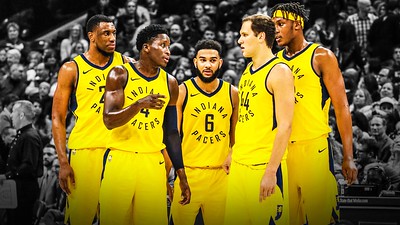
Indiana Pacers Latest to Link up with DraftKings

People who bet on the Indiana Pacers tend to follow the games longer—fan engagement, they call it. It attracts more sponsors for the team on the various platforms and in the arena and commands more money for broadcast rights.

So, it’s no wonder the Pacers have followed the New York Knicks, New York Rangers and Madison Square Garden itself in partnering with DraftKings as their official sports betting outlet.

The unofficial Pacers partnership comes shortly after Indiana legalized sports betting, along with online and retail sportsbooks, in 2019. DraftKings was the first to offer online betting at the start of October. It’s the most successful Indiana online sportsbook in the early months of the market.

In early January, the Madison Square Garden Company announced a marketing partnership that makes DraftKings the exclusive sports betting and daily fantasy sports partner of the Knicks and Rangers, as well as the famous arena. The agreement provides DraftKings with premier brand integration including digital platforms, in-game promotion and out-of-home signage.

“DraftKings has established itself as one of the most successful gaming companies in the industry and we are honored to continue our partnership with their incredible brand,” said Ron Skotarczak, executive vice president, marketing partnerships, The Madison Square Garden Company. “We are both committed to ensuring that our customers have the best possible experience and we look forward to continuing to work closely with DraftKings on programs and promotions.”

DraftKings’ partnership includes significant exposure at the Garden for all games and throughout broadcasts on MSG Networks. Integration during games will incorporate a variety of elements including digital and static signage throughout the arena, exposure on GardenVision, the multi-media display, and branding on the apron of the court for Knicks games and on the penalty box and visiting team bench for Rangers games. DraftKings will have the ability to set up activation areas at a variety of fan events the Knicks and Rangers hold throughout the year.

“We are proud to be named the official sports betting partner and continue as the daily fantasy partner for two of the most iconic franchises in all of sports that play there,” said Ezra Kucharz, chief business officer, DraftKings in a press release. “The emphasis on immersive engagement perfectly complements DraftKings and our likeminded commitment to experiential excellence.”

The integrated partnership between the two companies allows DraftKings to have a presence on the seven video boards on the outside walls of The Garden, which offer exposure to the more than a million people who walk by each day.

DraftKings hopes the Pacers deal will help cement its place as the leading sportsbook in the state, according to PlayIndiana.com. DraftKings has led Indiana sportsbooks in terms of total amount wagered and revenue generated since launch last fall.

For the Pacers, they obviously get something from the deal in terms of money, although the terms are unknown.

The Pacers, DraftKings and Madison Square Garden spokespeople declined comment.

In New York, Cuomo Says No to Mobile—Again

New York Governor Andrew Cuomo has again presented the state’s casinos with a major disappointment in the form of a budget proposal for the next fiscal year that does not call for the legalization of mobile betting.

That means New Yorkers will still have to travel to a casino if they want to bet on a sporting event. This is in line with current state law, which restricts wagering to the physical confines of the dedicated betting lounges at the four upstate commercial casinos𑁋Rivers Resort & Casino in Schenectady; Tioga Downs near Binghamton; Resorts World Catskills near Monticello; and del Lago Casino & Resort in the Finger Lakes and the casinos operated by the Oneida, Seneca and Mohawk Indian nations.

The spending plan does include one slight concession that will allow bettors to place their wagers from other areas of the casinos.

Not surprisingly, advocates of mobile betting complained anew that the state is losing tens of millions of dollars to neighboring jurisdictions that allow mobile betting, , principally New Jersey, the closest state to New York City.

“It is frustrating to know we will have to make these tough (budget) decisions when there is money out there just waiting for us to capture, but we refuse to take advantage of it,” said Queens Democrat Joseph Addabbo, who has been able in past years to get remote wagering bills passed in the state Senate only to see them die in the Assembly without a vote. “Mobile sports betting is benefitting New Jersey𑁋with approximately 25 percent of the state’s mobile wagering business coming from New York residents,” he said, “and it could provide the same positive results for New York.”

Cuomo does not necessarily disagree. With the state facing a $6 billion deficit in the next fiscal year, his budget envisions no new revenues from the casinos. But he maintains that legalizing betting over the internet requires an amendment to the state Constitution, a lengthy and uncertain process that depends on the assent of successive sessions of the Legislature and approval in a voter referendum. And without the governor on board, the political hurdles up to now have proved too difficult to surmount.

Sports betting was authorized at the commercial casinos in the legislation that authorized them back in 2013. At the time, a federal ban was in place that restricted the industry to Nevada and in limited form to three other states. After years of failed efforts by New Jersey to get the ban rescinded, the U.S. Supreme Court finally complied in May 2018. Several states have since legalized it. New York enacted its regulations last June, and books began opening in the state’s casinos last summer.

“We estimate that New York will only realize about 5 percent of its true sports betting potential if things stay as they are now,” said Chris Grove, managing director of Eilers & Krejcik Gaming, a national industry research firm.

“The reality,” he added, “is that consumers want convenient ways to bet, and the status quo for sports betting in New York is anything but. If the state is serious about siphoning off demand from the illegal market and generating real tax revenue, it needs to add online sports betting to the mix.”