Author: Casino Connection Staff

Kentucky Top Court to Decide on Historical Races

Kentucky racetracks and the Kentucky Horse Racing Commission presented oral arguments August 14 before the state Supreme Court over the legality of historical horse racing. Such machines resemble slot machines, but payouts are based on a parimutuel formula. Bets are determined by the outcome of previously run races.

The conservative Family Foundation filed suit claiming that because bettors wager on different events, they cannot be deemed pari-mutuel, thus they are not legal.

But the tracks and commission counter that state law permits carryover wagers like the Pick 6, and historical races are no different, according to Blood Horse.

Attorney Jay Ingle, who represents Kentucky Downs and Ellis Park, two tracks that offer historical racing, argued that Kentucky’s regulations on pari-mutuel wagering do not require patrons to place bets on the same events. His argument included the Pick 6 wager, where bettors have the chance to win a pool that was generated by bets on six previous races and did not pay out in full.

“(HHR wagering) is consistent with what goes on every day with big Pick 6 carryovers,” Ingle said.

The racing industry in the state has a lot riding on the Supreme Court’s decision because historical racing has increased purses since its approval in 2011. In fiscal year 2020 ending in June, bettors wagered more than $2.25 billion on historical racing games, which led to $15.6 million for the Kentucky Thoroughbred Development Fund and the resultant 27 percent purse growth between 2010 and 2019. Kentucky collected more than $33 million in excise tax revenue from the wagering last fiscal year, according to the state Public Protection Cabinet.

At Kentucky Downs, the machines have drawn people from across the border in Tennessee. Churchill Downs has aggressively tapped into historical racing as a revenue source. The case could put Kentucky tracks at a competitive disadvantage with tracks elsewhere if the Family Foundation prevails.

In 2014 the Kentucky Supreme Court ruled that the racing commission acted properly when it approved historical wagering. But the same decision opened the door for the Family Foundation to seek discovery in the lower courts.

Ingle made the case that the Supreme Court has decided the definition of pari-mutuel wagers as written, but the Family Foundation is pushing different elements to that definition that does not exist.

“What the Family Foundation is really doing here is trying to relitigate what this court was asked to do in 2014,” Ingle said.

Stan Cave, the attorney for the Family Foundation, countered that the court said in order to be pari-mutuel wagering, players have to be “betting among, against, or with each other on the same event or group of events.”

Kentucky Supreme Court Chief Justice John Minton Jr. claimed the decision belongs in the legislature not the courts.

“The General Assembly has been aware of the operation of historical horse racing machines for nine years now. It has been aware of this court’s opinion for six years,” Ingle said.

When the state refused to approve casino gaming, the tracks went to historical games. The games often show video of condensed horse races, according to the Associated Press.

As Casino Revenues Lag, iGaming Fills the Gap

Although brick-and-mortar casinos have suffered grievously from the effects of the Covid-19 pandemic, iGaming’s profits have increased handily during the same period.

A report from the American Gaming Association said that revenue from iCasino games totaled $402 million in 2020’s Q2, which is triple what online casinos made during the same period in 2019. That is a 253.8 percent increase.

This happened when almost every brick-and-mortar casino in the U.S. closed down for several months beginning in mid-March. During that period online poker operations in Delaware, New Jersey, Nevada and Pennsylvania set records (see below for details on Pennsylvania).

For the first time, online gaming beat sports betting, which had been growing exponentially a year ago and had reached $360 million. This can be blamed on the fact that very few major league sports are being played right now. Revenues for the leading sports betting company DraftKings have started to trend up as Major League Baseball returned to play—although without anyone in the stands. At the same time, however, the Summer Olympics in Tokyo were cancelled.

This compares to physical casinos whose revenues shrank by 80 percent in the second quarter, the AGA report said. Those casinos were only open a quarter of the number of days they had been last year at that time.

Casey Clark, vice president of the AGA, provided an explanation for why online games are booming. He told Business Insider, “Consumers like convenience. There was very little competition from brick-and-mortar casinos in the second quarter.”

Some of the more prominent companies that are taking part in this boom include MGM, which operates BetMGM and Caesars, which has CaesarsCasino.com and WSOP.com, along with Aristocrat, DraftKings and others.

There’s a high level of competition within the iGaming field between lotteries and casinos. At the moment online lotteries are ahead in this competition.

At first blush, there wouldn’t seem to be a lot of similarities between them since retail lottery sales are so different from land-based casino gaming. However, once you export the games online the obvious differences, online instant lottery “tickets” often look similar to video lottery terminals and slot machines. This brings legislators into the equation, since they have to weigh the benefits of one or the other or both.

Currently two states have online casino, but no online lottery. Five states have instant iLotteries, but no online casinos. Two casinos have online casinos and iLotteries. That places iLotteries well ahead in the game so far.

That trend has continued in 2020, with Rhode Island and Virginia launching online lotteries first as part of a sports betting bill that allowed online lottery ticket sales. West Virginia went live with its first iCasino two months later, and Michigan appears to be heading toward legalization of online gaming before the end of the year.

According to Clark, sports betting is legal in 22 states now.

Rhode Island’s 2019 sports betting bill also gave the lottery new powers to offer other forms of online wagering. Whether the lottery really intended to use those powers is unclear; but it was forced into activating them with gusto when the state’s two brick and mortar casinos were forced to close by the pandemic. It opened its iLottery game as a way to staunch the hemorrhaging of state funds.

At this time, the following states have online lottery: Georgia, Kentucky, Michigan, New Hampshire, Pennsylvania, Rhode Island and Virginia. Delaware chose a compromise: online casinos operated by the state lottery.

One reason why states tend to legalize online lottery over online casinos may be something as obvious as simplicity. Online casino legislation is by its nature complicated. Lottery legislation less so. Often it involves just changing a few words in existing legislation.

The other reason is that the state doesn’t need to share any of the proceeds with a casino. It keeps everything except for the payouts.

That’s the reason Massachusetts Governor Charlie Baker gives for why he’s such an enthusiastic promoter for legalizing sports betting in the Bay State. In July he declared, “I absolutely believe that, in addition to sort of the cross-border competition issues that would be addressed by doing something here in Massachusetts, it would certainly generate revenue and it would be something that a lot of people would be interested in here at home as opposed to doing across the border.”

In the Keystone State, help from soaring online gaming revenues that began during the pandemic shutdowns returned casino revenues to pre-Covid-19 levels in July.

Pennsylvania casino revenues returned to pre-pandemic levels in July, helped along by online gaming revenue that started soaring while brick-and-mortar casinos were shut down due to the Covid-19 crisis.

According to statistics released last week by the Pennsylvania Gaming Control Board, July gaming revenues reached $283 million in July, up 0.5 percent over $281.5 million a year ago.

Online slots, table games and poker generated $54.4 million in July, with online sports betting generating additional revenue of nearly $7 million. Total online gaming revenues constituted nearly 22 percent of all gaming revenue during the month.

The state launched iGaming in March 2019. According to Online Poker Report, sports betting surged in July, thanks to the return of many major league sports, with UFC, NASCAR and the first few games of the MLB baseball season joined by MLS and NBA, followed by wagering on the NHL’s Stanley Cup Playoffs. As a result, handle nearly doubled, from $88.3 million to $164.8 million.

Among the state’s 12 brick-and-mortar casinos, Parx Casino in Bensalem generated $59.9 million in revenue, up 14.4% from a year ago, one of three casinos to report increases in slot revenue. Total revenue at Parx was more than double the next closest Pennsylvania casino, the Wind Creek Bethlehem, where revenue was off 38 percent from last year.

Valley Forge Casino Resort, now owned by Boyd Gaming, reported a 57.7 percent revenue increase in revenue over last year. Valley Forge operates a FanDuel sportsbook.

In its first full month since reopening, Wind Creek Bethlehem logged gambling revenue of $28 million in July, a 38 percent year-over-year decline amid a pandemic that has limited occupancy to 50 percent.

It was the lowest full month of gambling revenue recorded at the casino since January 2011, when the facility—then Sands Casino Resort Bethlehem—reported nearly $27 million in revenue when it was only about six months into offering table games.

Cordish, GAN Launch iGaming Site

Cordish Gaming Group, a division of the Cordish Companies, last week announced the launch of PlayLive!, the operator’s new branded internet gambling business in Pennsylvania. The site will make its debut ahead of the company’s two new Pennsylvania casinos—Live! Casino Pittsburgh and Live! Casino & Hotel Philadelphia, which are slated to open in 2020 and early 2021, respectively.

PlayLive! will be the first branded online gambling site that has launched prior to the opening of its affiliated brick-and-mortar facilities.

Developed in partnership with GAN Ltd., PlayLive! offers more than 100 different gaming options, including classic slots like Cleopatra, Crazy Money, Game King Video Poker and Wheel of Fortune, as well as popular online titles such as Starburst, Gonzo’s Quest and Twin Spin. The site also features interactive table games including blackjack, roulette and baccarat with new games added regularly.

Players can also participate in Jackpot games such as Divine Fortune, Mercy of the Gods and Wheel of Fortune Hawaiian Getaway. Leaderboards display the current ranking of participants, creating an added layer of excitement for players.

The site also is intended to serve as a future hub for Pennsylvania residents to register for the national Live! Rewards customer loyalty program. The program is free to join and all players who register will receive the Classic (Red) Live! Rewards Card. All Live! Rewards members qualify for a variety of unique benefits and perks on both PlayLive! and at all Live! Casino & Hotel properties.

“As a leader in the gaming industry, Cordish understands the importance of innovation, and this site certainly illustrates our ability to enhance the traditional launch timeline of our new casino projects,” said Rob Norton, President of Cordish Gaming Group.

“PlayLive! will provide a sneak peek of our brand to the future guests of Live! Casino Pittsburgh and Live! Casino & Hotel Philadelphia. We leveraged many key learnings from the launch of our play-for-fun Live! Social Casino several years ago, and know that PlayLive! will enable us to connect with guests virtually until we can greet them physically. The site will definitely build buzz and excitement for what’s to come in Pittsburgh and Philadelphia soon.”

All games are configured as they would be at Live! Casino properties to ensure players get the same experience when playing their favorite game online as they will on the casino floor. In celebration of the site’s launch, PlayLive! will feature welcome offers of up to $750 deposit bonuses and 100 free spins. This site is accessible on desktop, mobile and via Android and iOS apps. For more details and to PlayLive!, visit www.playlive.com.

Rush Street Interactive Signs Tribal Deal Corners Slingo Market in Pennsylvania

Rush Street Interactive (RSI) last week announced two significant deals.

RSI, the developer and supplier of a leading social gaming product, Casino4Fun, announced the launch of a social casino and social sportsbook for Coushatta Casino Resort, operator of the largest casino resort in Louisiana. The Coushatta Casino4Fun site is powered by RSI’s proprietary iGaming Platform. The new social site offers gaming enthusiasts a large and growing catalog of over 300 fun and engaging online slots, table games, and live dealer games, as well as the ability to use the platform’s virtual economy to engage with a world-class sportsbook for free, all while offering Coushatta a digital platform for Customer Acquisition & Engagement.

“We are thrilled to offer our guests the popular amenity of online social gaming. We know Casino4Fun will create fun and excitement for our guests once they sign up to play,” stated Scott Sirois, general manager at Coushatta Casino Resort. “Our new website delivers social casino gaming excitement directly to our guests’ fingertips––anytime, anywhere. With hundreds of casino games available on the website, some with the option of interacting with a live dealer, this brings us to a new level of guest service in the gaming industry,” he concluded.

The RSI iGaming Platform powers Casino4Fun, the same technology driving RSI’s real money gaming sites, as well as in its omni-channel retail sportsbooks. The product has been built for the U.S. market from the perspective of a U.S. land-based casino operator.

“As more states move to legalize online casino and sports betting, forward-looking partners such as the Coushatta Tribe of Louisiana are selecting Rush Street Interactive’s Casino4Fun social casino product to position themselves early for success once online gaming is legalized in their state,” said Richard Schwartz, president of Rush Street Interactive. “This partnership will provide them with a powerful marketing tool to increase their current casino customer engagement, reactivate lapsed players, and acquire new customers cost-efficiently.”

RSI is currently live with Casino4Fun sites supplied to Rivers Casinos in New York, Pennsylvania, and Illinois, as well as a lottery focused partner. The success of the social gaming sites in those markets has attracted interest from commercial and tribal casino partners like the Coushatta Tribe that are looking to extend their gaming brands, cultivate & monetize their player databases, and increase return visitation to their properties.

Also last week, RSI extending its existing partnership agreement with Gaming Realms, which currently distributes its full Slingo Originals portfolio in New Jersey through the group’s Remote Game Server (RGS), to incorporate the additional state of RSI’s largest territory, Pennsylvania.

This is Gaming Realms first multi-state agreement with RSI, one of the fastest-growing gaming companies in North America, as the developer and licensor of mobile-focused gaming content continues to focus on increasing its presence in the U.S.

Under the terms of the expanded agreement, Gaming Realms’ Slingo Originals content will now be directly integrated into RSI’s platform, eliminating the need for distribution via a third-party aggregator. This direct integration with RSI for all U.S. markets, including any future markets the parties may decide to enter into together, is set to not only strengthen the relationship between RSI and Gaming Realms, but to offer a stronger user experience that leads to enhanced margins for the group.

Michael Buckley, executive chairman of Gaming Realms, commented: “We are incredibly excited to be expanding our existing licensing agreement with Rush Street Interactive, a major player in the U.S. gaming industry that has recently announced its intention to list on the New York Stock Exchange.

“The agreement underscores the quality and popularity of the group’s Slingo portfolio, and as we increase our foothold in the U.S. market, we are delighted to be able to bring our content to a new audience, starting in the U.S. State of Pennsylvania, where RSI leads in online casino market share.

“We look forward to continuing to work closely and expanding our relationship with such a highly acclaimed U.S. Operator, whilst remaining focused on our shared commitment to create and offer exciting and innovative content for players across all markets.”

Schwartz commented: “We are excited to extend our partnership with Gaming Realms to be the first online operator in Pennsylvania to bring these top quality and well-known casino games to our players.

Indiana Legislator Pursues iGaming Bill

Indiana state Senator Jon Ford said he’s working on language for an online casino bill he plans to introduce in 2021. But he cautioned there’s no guarantee the legislature could take it up; in fact, he said due to Covid-19, the session could be delayed until March and limited to the budget, pushing the iGaming bill back by a year.

Still, Ford presses forward. He noted, “With Covid-19, we’re still at 50 percent capacity at our casinos. I have no idea when that might be lifted. If we had iGaming, it would give those casinos a way to drive revenue for them and the state.”

The legislation would not include online poker, Ford said, because it’s more complicated and would require more discussion time. “When we get into online poker, there’s pooling and interstate compacts,. That may take more education to inform my colleagues than we’ll have time for next year. They’re still trying to understand in-play bets.” However, he added, “If my colleagues surprise me, we’ll be ready to go with everything.”

Ford said online casino gambling in Indiana would have similar structure as sports betting; he was instrumental in the passage of that legislation in 2019. The state’s 13 casinos would be allowed to apply for a license and partner with up to three mobile providers. Ford added he would have urged his colleagues to pursue online gaming even if Covid-19 never happened. “I think we need to do it because Michigan will have iGaming soon and we need to look at alternatives to help our casinos,” he stated.

Ford recalled some of his conservative colleagues, like House Public Policy Committee Chairman Ben Smaltz, were not comfortable with online sports betting. “There were some folks who didn’t want people to bet online and bet in their home. There will be some people who think online gambling is a big expansion of gaming in a conservative state. There’s still quite a few people that think that way.”

However, Ford stated the success of online sports betting—which surpassed $1 billion in handle in Indiana last month–will help him pass his iGaming bill. He said, “I think our success with online sports wagering and the demographics we’re attracting with it show there’s a whole group out there that we’re not touching. There’s a younger demographic that does not like to go to brick-and-mortar casinos, but they’re gambling online anyway. So if we can bring them into a regulated market, it gives casinos the opportunity to market to them and get their business.”

Portugal’s iGaming Revenues Bounce in First Half

Portugal’s gaming regulator, the Serviço Regulação e Inspeção de Jogos do Turismo de Portugal, or SRIJ, has published iGaming numbers for the first half of 2020. Online gaming earned €139 million (US$164 million), an increase of 44 percent over 2019, when iGaming brought in €96 million (US$113.4 million), reported CDC Gaming Reports.

Online casino turnover came to €1.3 billion, up 39 percent over the previous quarter, and revenue for Q2 was €48.4 million, compared to €35.3 million for the first quarter of 2020. Online casino turnover for the first half was €2.3 billion. Revenues peaked at €479.3 million in April and dropped to €372 million in June.

The highest number of players recorded was in March with 60,000. The lowest count was in May with 33,500. The SRIJ said the new industry has shown it’s able to “resist and adapt” despite the upheaval caused by Covid-19.

Despite the growth in revenue, sports betting stakes declined 1.5 percent to €239.9 million. Online casino stakes, meanwhile, grew roughly in line with revenue, to €2.29 billion.

“We can conclude that the closure of the casinos contributed to a significant increase in the respective volume of online gambling, which gradually stabilized, approaching the values ​​prior to [the novel coronavirus (Covid-19) pandemic,” the SRIJ said.

“This reality seems to indicate a preference of the players to bet in a regulated and controlled environment, because even though they are ‘used’ to frequenting physical spaces to play, they chose, instead, to play on legal online sites.

Podcast with Terry Glebocki, CEO, Ocean Casino Resort

It was almost four months that Atlantic City casinos closed their doors, enduring the effects of the Covid-19 pandemic. When they reopened in early July, there were strict guidelines on what they could and could not offer—inside dining being the most crucial. Terry Glebocki had only been CEO of Ocean Casino Resort since late last year when the shutdown order was given in mid-March. She explains how the casino stayed in touch with customers and employees during the shutdown, and how the reopening has performed. Players are flocking to Ocean with incentives provided by the casino and a pent up desire to gamble. Glebocki spoke the Roger Gros in July for an Atlantic City leaders roundtable to be published in the September issue of Gaming Law Review.

Eldorado, Caesars Deal Promises Uptick in AC

The dynamics go back to the early years of casino gaming in Atlantic City. In a move to placate shareholders, Company A buys Company B.

It’s how Caesars and Harrah’s ended up with a resumé of different owners over the years. The latest iteration of this formula brings Caesars, Harrah’s and Tropicana into the bosom of Eldorado Resorts Inc.; even if the Caesars name stands out front.

The $17.3 billion cash-and-stock merger of Eldorado and Caesars Entertainment Corp. creates the largest U.S. casino operator, with more than 50 casinos in 16 states.

And like many of the past acquisitions, the deal which requires Eldorado to invest in its new toys, including those in Atlantic City. The investment means properties don’t languish, but flourish. Under the terms of the merger, Eldorado must invest $400 million in its Atlantic City properties, $125 million more if the sale of Bally’s to Twin River falls through.

“The biggest benefit of the merger is the commitment to invest in Atlantic City and renovate the existing casinos,” Jane F. Bokunewicz, PhD, institute coordinator, of the Lloyd D. Levenson Institute of Gaming, Hospitality & Tourism, told GGB News. If Eldorado preserves the unique brand identify of each property, Atlantic City will still have diversity to attract visitors of all market segments, she said.

“It shows that Atlantic City is still interesting,” added Bob Ambrose, casino consultant, and adjunct professor, casino management.

The development budget is not chicken feed.

The Quarter at Tropicana, the retail dining and entertainment complex plus 500-room hotel tower, cost $280 million. Harrah’s convention center was built for $126 million. Both projects created competitive advantages for the individual properties but also grew visitation to the city by attracting more conventions to Harrah’s and new demographics of customers to the Tropicana.

“I would allocate most of the $400 million Eldorado has pledged to renovating Caesars. Its name has strong brand recognition, but the property has not been renovated as recently as Tropicana or Harrah’s,” Bokunewicz said.

Plus it shows signs of neglect. And the center boardwalk location doesn’t hurt.

While Caesars has always had regional market strength, its franchise is now expanded for customers within their Rewards program throughout Eldorado’s landscape. “At the same time other jurisdictions have benefitted from property sell offs by Eldorado through the merger which allows other operators to buy-in and add their brand creativity,” Ambrose said.

Caesars has outlined their upgrades publicly in terms of refreshed hotel rooms, review of gaming products and improved floor layouts, additional dining options as well as enhanced entertainment options, Ambrose said. “I am sure like any new owner all areas of each property are being scrutinized, in both front and back of the house,” he said.

The timing works well for all upgrades since properties have limited capacity requirements because of the Covid-19 pandemic.  “Also, with the protocols impacting present and future interior designs for all parts of the ‘customer touch-points,’ this will surely be reviewed in the process,” Ambrose said.

Mergers also bring new management leadership and fresh points of view to a market place, he said. “Diversity of ownership in a market this size is a plus.  It brings creativity and competition and a more strategic marketable environment where there are just more benefits for the customer.”

On the flip side, growth is often stifled when a single owner controls multiple properties, said Ambrose, a former casino executive.

The state Casino Control Commission at the last minute dropped a recommendation by the Division of Gaming Enforcement that Caesars also be required to remove deed restrictions on former properties Showboat, Coleridge and Atlantic Club.

In general, deed restrictions of any kind interfere with investors’ ability to create an innovative product, Bokunewicz said. “Investors may hesitate to purchase a property with restrictions which may be one reason why the Atlantic Club has been idle for so long. Competition works best when property owners are free to develop their vision for the property they have purchased.”

Ambrose is in agreement, but said, ”With the current pandemic situation and lack of market growth in Atlantic City, it may be a blessing in disguise. The resort doesn’t need more casinos, but rather diversity in ownership of the present properties, which we’re seeing.”

A market the size of Atlantic City can only support so many casino operations, he said.

Throughout New Jersey, online casino revenue in July surpassed $2 billion since its 2013 introduction. Sportsbooks posted the best month since the pre-pandemic February. Indeed, with baseball and the NBA resuming their seasons and the casinos re-opening, July marked a return to normalcy to an extent, according to PlayNJ.com analysts.

The state’s online and retail sportsbooks brought in $315.1 million in July, up 25.3 percent from July 2019 and up 91 percent from June, based on official figures released by the Division of Gaming Enforcement August 12. Gross revenue rose 65.2 percent in July to $29.6 million. The win produced $3.7 million in state taxes.

Sportsbooks did well, but the shutdown of major sports cost New Jersey books about $1.6 billion in bets. “August should be an unusually busy month for sports betting, and that will help make up a bit of the lost wagers,” said Eric Ramsey, analyst for PlayNJ.com. “The leagues have to stay healthy, though, or we will be right back to where we started.”

Online sportsbooks took in 93.9 percent of the state’s July handle. The Meadowlands led the market with $1.9 million in July. July’s $87.5 million in online casino and poker revenue was up 122.5 percent from July 2019 and topped the $85.9 million revenue record set in May.

Total gaming revenue fell 23 percent to $248.7 million compared to July 2019. Casino win—revenue generated from slot machines and table games—finished at $147.4 million, down from $277 million reported during the same month in 2019, according to the Press of Atlantic City.

Adding in the race tracks, and the industry won $264.5 million in July, a decrease of almost 21 percent from July 2019. After paying out winning bets, the Meadowlands Racetrack in East Rutherford made $14 million in sports betting revenue in July, up from $9 million a year earlier. Monmouth Park Racetrack in Oceanport made nearly $1.7 million, down from $1.9 million a year earlier, according to the Associated Press.

Casino Control Commission Chairman James Plousis sounded an optimistic note. “Visitors are again enjoying the playground by the sea that is Atlantic City,” he said. “While public health remains a concern, the tourism and gaming sector has started on the road to recovery.”

Ocean Casino Resort was the only one to have an increase in casino win. Its $23.6 million increased 23.1 percent over last year. Hard Rock Hotel & Casino Atlantic City took in $24.6 million, the industry leader.

Ocean CEO Terry Glebocki said last month’s results are “indicative of the momentum Ocean has created,” and credited her team’s ability to work within the state’s restrictions. “We’ve been continually adapting and expanding our offerings, staying within state protocols, to offer our guests the experience they deserve.”

For the first seven months of 2020, the casinos and tracks have made nearly $1.3 billion in revenue, down a third from the $1.9 billion.

Sports Books Lose Big as Big Ten, Pac-12 Cancel Seasons

On September 5, the No. 10-ranked Penn State Nittany Lions were scheduled to open the football season against the Northwestern Wildcats.

But that game and all the others on their schedule fell by the wayside when the Big Ten Conference cancelled the season August 11 to protect the health and safety of student athletes during the coronavirus pandemic.

The Pac-12 Conference followed suit the same day, and two other conferences—the Mid-American and Mountain West—postponed their games until next spring.

These seismic shifts create a void for sports bettors hoping for a fall season of games.

“The delay of college football’s Big Ten and Pac-12 conferences is a disappointment to many—the players, their families and classmates, and sports fans everywhere,” Joe Asher, CEO of William Hill U.S., told GGB News. “Unfortunately, this is a reflection of where we are in our country with the pandemic.  Obviously, this is a negative for our industry in the short term, but we take a long-term view on things like this, and there’s no doubt that all college football ultimately will return and our customers will bet on other sports until it does.”

College football ranked as FanDuel’s fourth most popular sport in 2019, certainly not a trifle when it comes to wagers, said Kevin Hennessy, director of publicity for the sportsbook. Even so, he added, “We support the decisions by the various conferences to protect the health and well-being of their players and fans.”

The development isn’t great for the industry, but it’s understandable, said William J. Pascrell III, a partner at Princeton Public Affairs Group. “The entire pandemic has had a deleterious effect on the industry. College basketball and football are huge movers. Now there’s less opportunity for betting.”

Both Big Ten and Pac-12 officials cited the risk of trying to keep players from contracting and spreading the coronavirus. Their decision to call the season before it began came less than a week after the Big Ten released a revised conference-only football schedule it hoped would help it navigate a fall season filled with potential Covid-19 disruptions.

“Every life is critical,” first-year Big Ten Commissioner Kevin Warren told the Associated Press. “We wanted to make sure we continually, not only in our words but in our actions, put the health and safety and wellness of our student-athletes first.”

“This was an extremely difficult and painful decision that we know will have important impacts on our student-athletes, coaches, administrators and our fans,” Pac-12 Commissioner Larry Scott said. “We know nothing will ease that.”

The Southeastern Conference and Atlantic Coast Conference still expect to play. So does the Big 12. The American Athletic Conference, Conference USA and Sun Belt haven’t decided on a course of action. Pascrell said it will be hard for other conferences to play this fall given the actions taken by the Big Ten and Pac-12. “I’m not optimistic we’ll see college football at all this year.

At this point, at least 40 percent of major college football teams will be MIA this season, a decision that will cost schools millions of dollars and disrupt longstanding traditions. What it all means for TV contracts remains a mystery.

Nebraska coach Scott Frost and Ohio State coach Ryan Day both had suggested that if the Big Ten did not play, their schools might look elsewhere for games. But could that jeopardize their standing in the Big Ten?

“It’s an unprecedented situation,” Pascrell said. “Sportsbooks hope the NFL launches, but it’s still a tenuous situation.”

The Nevada handle for football last year exceeded $1.87 billion, a record. Sportsbooks won $122.4 million, also a record, which includes both the NFL and college games, according to the Las Vegas Review Journal.

Those numbers might be cut almost in half if the college football season is put on ice.

“The real question is, are they postponing it or canceling it? Because if they postpone it until the spring, I don’t think it’ll be that bad for us,” said Westgate Sportsbook Director John Murray. “But if they outright cancel it like March Madness, that will be very, very bad. That was really a blow to us, to just lose the NCAA Tournament and never get it back.”

Nevada Gaming Control Board senior research analyst Michael Lawton indicated that, anecdotally, college football makes up 40 percent of the football handle. Relying on those figures, Nevada sportsbooks would see a $50 million loss in profits should the season be scuttled.

If the entire fall college season goes down, Murray expects the NFL to help fill the Saturday void.

“I doubt the NFL is going to sit idly by and let there be no football games on Saturday and play 10 games Sunday,” he said. “They’ll move games to Saturday and have double-headers or triple-headers. The ratings will be huge, and the betting handle will be huge.”

Despite the potential sports betting debacle, there’s hope for the future, Pascrell said.

“By the time we get around to NCAA basketball in early November, we should be in a better position. And we’ll prepare for a better 2021.”

Atlantic City Workers Say Casino Safety Is Lax

Despite a string of protocols to minimize exposure to Covid-19, workers at five properties said guest temperatures are not being taken with regularity. In an online press conference, members of Local 54 of the Unite-Here union named Caesars, Harrah’s, Bally’s, and the Tropicana as casinos not following the protocols. The Ocean Casino has been doing verbal screenings as well. The four Caesars casinos also rely on a verbal screening process to question guests.

The remaining four casinos—Hard Rock, Golden Nugget, Borgata and Resorts—have been taking temperatures, employees said.

“We stand on our belief that if you’re going to temperature check the employees for safety, you should temperature check the customers because we know where the employees came from, but we don’t know where the customers came from,” said Local 54 President Bob McDevitt.

The workers called on New Jersey Governor Phil Murphy to mandate physical temperature checks for anyone entering a casino, according to the Associated Press. As of August 10, Murphy did not respond for comment.

Donna DeCaprio, the union’s secretary-treasurer, said the union has documented at least 180 instances of casinos failing to verbally screen guests. The local also documented 75 cases with a lack of thorough hotel room cleaning.

“We’re not doing a good job even being partially open,” said Jason McKnight, a bartender at Harrah’s. “The rooms aren’t being cleaned on a daily basis the way they are supposed to. This is a lot of people in an enclosed place, and we’re not rising to the challenge.”

Caesars Entertainment took exception to the accusations. “Caesars Entertainment’s Atlantic City health and safety plan fully complies with all governmental directives,” said Steve Callender, the company’s regional president. “In addition to our enhanced cleaning protocols and other requirements that apply to our valued team members, all of our guests must pass a screening process before being allowed into our properties and must wear face masks in compliance with the governor’s orders.”

The Casino Association of New Jersey worked with AtlantiCare and Local 54 to develop protocols. But the mandatory temperature reads were not part of the final recommendations.

“If (the casinos) take the time to look at the guest, go through the questions, have them answer all the questions and really engage them, that’s better than a temperature read. But that’s not happening. It’s not even close,” McDevitt said.

Prior to each shift, all nine properties take employee temperatures. If the reading exceeds 100.3 degrees, the employee is sent home.

Janey Negron, a bartender at the Tropicana, said the casino has too many entrances and not all are covered.

“They do not take your temperature,” she said. “They just let you walk on by.”

Any Takers for Pennsylvania’s Next Mini-Casino License?

Pennsylvania’s 2017 Gaming Expansion Act authorized up to 10 Category-4 (satellite) slot operations, or “mini-casinos,” in the Keystone State.

Since then, only four of the licenses have been snapped up, with diminishing returns for the state in each round of bidding. To wit:

  • First, regional juggernaut Penn National paid $50.1 million for a license in York County.
  • Then Stadium Casino (aka the Cordish Co.), which is now building a casino in Philadelphia’s Stadium District, paid $40.1 million for a location 40 miles east of Pittsburgh.
  • Airy paid $21.2 million for a location in New Castle, between Pittsburgh and Youngstown, Ohio, but its financing fell apart and the license was rescinded.
  • A fourth bid was submitted by Greenwood Gaming and Entertainment Inc., operator of Parx Casino, which coughed up just $8.111 million to construct a satellite casino in Cumberland County. That project is in limbo because of geological issues at the site, and Parx is scoping out possible new locations.
  • Finally, last June, Penn National won a second license for a Hollywood-branded mini-casino in Morgantown, which bisects both Berks and Lancaster counties, paying just $7.5 million.

Subsequent rounds of bidding aroused no interest, and the auctions were supposedly shut down forever. On September 2, however, lawmakers will return to the well once more, hawking a fifth license in hopes of generating cash for Covid-starved state coffers.

According to a new report from Atlantic City-based consultancy GGH Morowitz, all current Pennsylvania casino operators and licensees are eligible to participate, subject to certain limits.

Some things remain the same: the minimum bid is $7.5 million for up to 750 slot machines, and winning bidders may pay $2.5 million to offer up to 30 table games at opening, with the option to add 10 more after a year.

And some things have changed. “The winning Cat-4 bidder may offer sports betting on-site at the new location or through online/mobile channels inside the state,” states the report by Cory Morowitz and William Allsup, “provided they purchase a $10 million sports betting license.”

Amid the upheaval caused by the virus—which shut down construction on the origina mini-casinos—“the gaming industry is adapting and looking forward,” the report states. “Whether it’s the white-hot online gaming and sports wagering markets or the few remaining greenfield markets that exist, the industry is looking to deploy capital.”

Looking Back, Looking Ahead

In January 2018, when the Pennsylvania Cat 4 licenses were first put out for bid, GGH Morowitz identified 15 desirable sub-markets ripe for the bidding, based on proximity to population density, a right-sized investment, promotional strategies and branding. That initial report was prescient, and predicted that Cat-4 bid amounts “would decline with each succeeding bid as marginal returns declined.”

Originally, GGH Morowitz concluded, “Cat-4 casinos could cannibalize existing markets, but would ultimately grow the total PA gaming market over time.” Each potential location would require careful analysis, and be “considered from the lens of a defensive acquisition or a strategic growth acquisition.”

“All of these conclusions remain valid,” the firm now states.

But given the recent lack of interest, will investors show up for the third round of bidding next month?

Could be. The Morowitz report points to four markets that are “still viable as potential Cat-4 locations,” located “mostly in the center of the state (Altoona, State College & Williamsport),” along with “the highest value location,” the New Castle/northern Pittsburgh market.

“Despite its competitive dynamics,” Morowitz writes, Newcastle is prime “simply due to its concentration of nearby population relative to the other markets.”

The other markets benefit from “significantly less competition, and all have relatively similar population and income characteristics,” the report states.

“One positive for the three smaller markets is that they have the potential to draw patronage from other smaller, underserved markets, as there are no casinos near the geographic center of the state” (prospective casino sites can’t be located within 40 miles of another casino location).

Will Covid Affect Values?

With the economy hammered by the coronavirus, along with a high state tax rate, plenty of existing competition, a steep cost of entry and the current state of the capital markets, “any Cat 4 bid will be constrained and the license fee will likely skew towards the minimum,” Morowitz writes.

Among the risks, of course, is “the continuing unknown impact of Covid,” and concerns that a second viral wave could again shut down the gaming industry. Add to that the “continued overhang of the prospect of VGTs at retail establishments in PA, something that has been bandied about for some time.

“As a benchmark, VGTs in Illinois, while growing the overall market, ultimately cannibalized casinos by 17 percent to 20 percent. Typically, this uncertainty is managed through a higher cost of capital or discount rate applied to cash flows associated with an opportunity.”

All these speed bumps notwithstanding, the report states, “The new availability of a New Castle location, reasonable demographics of other locations, and optionality to enter with a smaller right-sized offering, while keeping potential expansion into other forms of gaming available for future consideration, would seem to outweigh the risks associated with a bid in the current environment, Covid aside.”

In the opinion of the authors, “there should be demand for this license, and that demand should result in a price that exceeds the bid floor.

“Bottom line, for some, this is a bid worth making and winning.”

For additional information, contact Cory Morowitz at cory@morowitzgaming.com or call (609) 226-9426.

Sources: GGH Morowitz analysis, ESRI data

Gambling Soon to Be Legal in Ukraine

Ukrainian President Volodymyr Zelensky has followed through on a 2019 campaign pledge to bring legal gaming to the country. Last week, he signed Bill-22885D, which fulfills his promise to expand regulated gaming in the country beyond the lottery.

The bill approved by the Verkhovna Rada overturns an 11-year ban on gaming.

According to SBC News, the Ukraine Gambling Law will form a regulated marketplace for land-based and online casinos, retail and mobile sports betting, slot machine halls, online poker, totalizer contracts and lotteries. Important details must still be finalized, such as a licensing framework and industry tax rates.

Parimatch has confirmed that it will bid for one of the new operating licenses. CEO Sergey Portnov said: “I would firstly like to congratulate President Zelensky for delivering on his pledge to legalize gambling in Ukraine. He has shown that he is a man of his word and we fully support his agenda to liberalize the local economy. Parimatch has long argued that the development of a fair and regulated betting industry will really benefit Ukraine.”

Taxes will likely be decided once the Rada returns from recess in September. In June, Marusyak filed a new tax bill, 2713-D, which would set a 5 percent GGR tax on sportsbooks, 10 percent on online gambling and lotteries and 12.5 percent on slot machines. Bill 2713, jointly submitted by Oleh Marusyak and Marian Zablotskyi, sets the tax rate for all gambling and lotteries at 25 percent of GGR, while Deputy Oleksandr Dubinsky put forward bill 2713-2 which includes a similar proposal.

Meanwhile, Bill 2713-1, from Dmytro Natalukha, proposes a 7.5 percent tax rate on bookmaking, 12.5 percent on online gambling and 22 percent on lotteries.

Bill 2713-3, proposed by Artem Dubnov, would not levy gambling taxes but derive funds collected through license fees and normal business and income taxes.

Parimatch’s Portnov added: “We are fully committed to conquering our home market by delivering a product that can entertain the people of Ukraine. We are also proud that we can now contribute to the country’s economy and help grow its technology industry.

“However, for us to deliver these benefits in the long-term we need a fairer tax system which is currently too punitive and uncompetitive compared to similar international markets. It is vital that this is addressed as soon as possible to ensure the enduring viability of the industry in Ukraine.”

Portnov said a fair tax system would be important in securing the viability of gambling in Ukraine, especially as the country’s tax system was already “too punitive.”

“We are fully committed to conquering our home market by delivering a product that can entertain the people of Ukraine,” Portnov said. “We are also proud that we can now contribute to the country’s economy and help grow its technology industry.

“However, for us to deliver these benefits in the long-term we need a fairer tax system which is currently too punitive and uncompetitive compared to similar international markets. It is vital that this is addressed as soon as possible to ensure the enduring viability of the industry in Ukraine.”

Vegas Visitation Down 70 Percent in June

Visitation to Las Vegas in June came in at just over 1 million, a decline of 70.5 percent from the 3.6 million visitors who came in June 2019.

That’s not bad compared with the shutdown months of April, when volume fell 97 percent, and May, when it was down 95.9 percent, and the city drew a total of around 163,000 visitors combined.

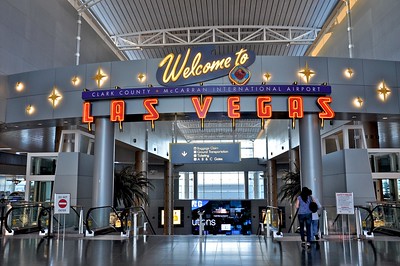
Passenger volume at McCarran International Airport was down 76.6 percent for the month.

Figures compiled by the Las Vegas Convention and Visitors Authority indicate the greater Southern Nevada market averaged just 95,396 available hotel and motel rooms during June, down from 149,627 rooms a year ago. The total number has since grown to around 115,000 as more properties reopened.

Total hotel occupancy was 40.9 percent for the month. Weekend occupancy came in at 51.8 percent. Midweek occupancy, absent conventions, was only 36.5 percent.

The average daily room rate was $104.07, a decline of 13.6 percent versus last year. Revenue per available room, a key metric of resort industry profitability, was $42.56, down 61.5 percent.

Through the first six months of the year, Las Vegas visitor volume is down 54 percent to 9.73 million. The flow of passengers through McCarran is down 53.8 percent.

Gaming revenues on the Strip are down a corresponding 47.9 percent. Downtown is off by 45.5 percent.

Study: PA Shutdown Cost $424 Million in Lost Taxes

A study by Pennsylvania’s Allegheny Institute has found that the state lost $424 million in tax revenue while the 12 casinos were shut down between March and June.

Pennsylvania casinos, which deal with some of the highest gaming revenue taxes in the nation, lost around $968.8 million in potential gaming revenue during the shutdown, which translated into the nearly half billion in tax losses.

The study, performed by Allegheny Institute research assistant Hannah Bowser and Executive Director Frank Gamrat, analyze three categories of gaming revenue sources—slot machines, table games and internet gaming. The iGaming operations, of course, were the sole bright spot, jumping 258.6 percent from $13.9 million in January to $50 million in June, the report said. But it was not enough to counter the loss of brick-and-mortar gaming.

“Though online gaming revenue from slots, table games and poker rose to record-setting highs, the total intake from January through June ($206.6 million) doesn’t even cover a quarter of the estimated losses from slot and table games,” the report authors wrote.

The authors estimate that casinos missed out on $143.5 million in slot revenue in March and another $415 million over the course of April and May. Even with the reopenings in June, they calculate another $140.3 million in lost revenue, for a total of $699 million, which translates into $381.1 million of lost tax revenue.

Table games accounted for a loss of $270 million in revenue and $43.1 million in taxes.

The analysis also examined the costs related to casino workers being out of work while their employers were shut down. Citing data from the Bureau of Labor Statistics, the authors wrote that employment in the amusement, gambling and recreation sector was down 70 percent in April, with many of those workers likely collecting jobless benefits during that time period.

“The total number of individuals employed by all 12 casinos in the commonwealth by the end of the 2018-19 fiscal year stood at 16,717,” Bowser and Gamrat wrote. “Since the lockdown included a complete stoppage of all nonessential functions and only a few managers and maintenance crews were likely deemed essential and kept on the job, it is safe to assume that most of the 16,717 casino employees were furloughed.”

Penn National Chief Optimistic on Regional Markets

Penn National Gaming CEO Jay Snowden said the massive losses in the second quarter of this year due to Covid-19 shutdowns do not overshadow “encouraging trends” in regional gaming markets, where Penn operates 41 properties in 19 states.

“We continue to make fundamental changes to improve our offerings and efficiencies across our organization,” Snowden said in a statement published by CDC Gaming Reports. “For example, we are working closely with regulators in several jurisdictions to introduce cashless, cardless and contactless technology to our casinos, which we believe will increase safety and provide improved service while delivering additional efficiencies and accountability.”

Snowden also touted Penn’s interactive gaming offerings, citing the Barstool Sports mobile wagering offering, expect to be launched in September in Pennsylvania and more states next year.

Caesars Kicks Off Virginia Referendum Push

In Virginia, Caesars Entertainment has officially launched a Caesars for Danville referendum campaign to educate voters about its proposed $400 million casino resort at Schoolfield. The referendum will be held November 3 and if it passes, Caesars plans to break ground by early 2021 and complete the project in 2023.

The campaign announced a committee of community leaders, who will be the liaisons between the community and the developers, said Caesars campaign advisor Tony Rodio. “That helps give us direction into knowing the community. It helps get our story across. We’re going to use traditional media, a lot of social media, boots on the ground, talking to people. We’ll give people in the community an opportunity to ask questions.”

Rodio said the project will create 900 construction jobs and 1,300 permanent jobs with benefits and average pay between $35,000 and $47,000 annually. The property’s gaming floor will offer 2,000 slots, 75 table games, 16 poker tables and a sportsbook, plus a 500-room hotel, 35,000-square-foot conference center, 2,500-seat live entertainment venue, restaurants and bars. The city of Danville expects to receive $34 million in annual gaming tax revenue.

Caesars Entertainment President and Chief Operating Officer Anthony Carano stated, “Caesars Entertainment has a long history of enriching the communities we serve, whether that be through our commitment to social responsibility or through our proven record of creating exhilarating experiences at our world-class resorts. Our diverse collection of destinations across the U.S. are synonymous with unparalleled service, impressive benefits through our Caesars Rewards loyalty program, superstar entertainment talent and culinary excellence. We will bring these same phenomenal offerings to the people of Danville to enjoy.”

Mayor Alonzo Jones added, “This is a once-in-a-lifetime opportunity for our community and breathes life back into an old industrial site. I hope my fellow residents will join me in voting yes to bring Caesars to Danville.”

Danville is one of five Virginia cities allowed under recently passed legislation to have a casino with the approval of local voters. The others are Richmond, Bristol, Portsmouth and Norfolk.

Rhode Island Town Sees Casino Money Again

After several months when it was not getting any money from its Twin River Tiverton Casino Hotel, the city of Tiverton is now getting paid again.

Because the city had relied on casino money and put it into the general fund, it found itself in a sticky situation earlier this spring when the casino closed due to Covid-19 and suddenly the money wasn’t flowing anymore. The casino closed in mid-March and didn’t reopen again for more than three months.

The city council went into panic mode to make drastic cuts to almost all programs to deal with not receiving $1.8 million of the $3.1 million it normally gets annually. Although the town had voted to host the casino under the impression that the state would make up any deficits to casino payments caused by declining profits, it later learned that didn’t apply when the casino was forced to shut down.

However that will never happen again. The council recently voted 5-2 that gaming funds will go into a reserve capital account and won’t be available to be spent until the following year.

Before the council took that vote Council President Patricia Hilton commented, “You have to learn from your mistakes.”

Councilmember Nancy Driggs, who voted against the ordinance, declared, “This ordinance is not ready for prime time,” because she wanted the council to take more time to write it.

School Committee Chairman Jerome Larkin supported the ordinance as “an opportunity for you guys to be fiscally responsible for the town” and compared putting gaming revenue into the operating budget as “counting your chickens before they hatch.”

Each year the town’s voters approve of the budget in a Financial Town Referendum, usually held in September.

Although the casino money is flowing again, it is not nearly as much as the town was being paid this time last year. Last year the casino was open 24/7 but now it is open 10 a.m. to 3 a.m. and fewer patrons are allowed to be inside.

In a normal year the town would receive between $4,000-$6,000 per week, but the payment sent to Tiverton on July 30 was $3,010.

In 2018 voters defeated by 13 votes a charter amendment that would have put all casino revenue toward capital, debt service and infrastructure, something that was recommended at the time by the town administrator.

Meanwhile, Twin River Worldwide Holdings, which although based in Rhode Island has become a national gaming presence over the last two years, reported that July’s results were “strong.”

CEO George Papanier reported August 11 that the company reopened all nine of its properties in five states by June 17. It also got its first profit results from its nearly acquired properties in Mississippi and Kansas City, Missouri that it purchased from Eldorado Resorts for $230 million.

Both properties generated “strong positive cash flow” and were “a great fit for our portfolio,” said the CEO.

Despite the “strong” description, TRWH ended Q2 with $28.9 million in revenue, a 79.8 percent decline over the Q1 numbers. This resulted in a net loss of $23.5 million and loss of $10.7 million in cash flow for the same period.

Papanier concentrated on the positives, singling out the Hard Rock Biloxi in Mississippi and Dover Downs in Delaware for strong cash flow and high market demand.

Twin River’s two Rhode Island properties slowly reopened including an invitation only period with just a few hundred guests allowed at a time. But since June 20, with higher capacity, revenue is expected to be 240 percent higher than June. Both casinos are reporting 60 percent of normal revenue.

Meanwhile, Dover Downs Hotel & Casino, Delaware’s only gaming facility operated by a public company, Twin River, reported a net loss of $2.36 million for the second quarter of 2020, with the Covid-19 shutdown resulting in gaming revenues plunging by some 70 percent.

Delaware’s three racinos were closed from March 16 to June 1 due to the pandemic, reopening with safety restrictions on June 1.

Dover Downs revenues through the first half of the year were almost identical to net income through the same period in 2019, but the casino’s profits are down $3.48 million. Dover Downs went from a gain of $1.33 million last year to a loss of $2.15 million halfway through 2020.

Gaming revenues plummeted from $21 million in the second quarter of 2019 to $6.08 million. However, total revenues for slots and table games for 2020 saw a slight increase through six months compared to 2019—$23.92 million versus $22.48 million.

Wynn Resorts Discloses Covid-19 Test Results

For weeks, Las Vegas casino operators have been testing thousands of employees for Covid-19 as a matter of policy. However, they are not required to share the results with the public. Not surprisingly, not one had volunteered to do so.

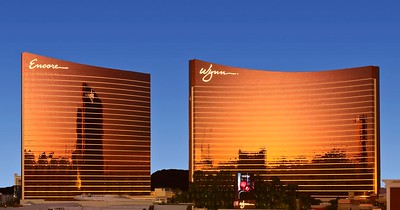
Or that was the case until Strip giant Wynn Resorts acted on its own earlier this month to breach the wall of secrecy and disclose that to date around 300 workers at Wynn Las Vegas, Encore and Encore Boston Harbor have tested positive for the potentially deadly virus.

Industry watchers are now wondering if Wynn’s action will induce other operators to open up.

“This pulls the cover off for everyone else,” said Nehme Abouzeid, president of consulting firm LaunchVegas and a former Wynn executive.

As he told the Las Vegas Review-Journal, “Customers and employees will ask other operators, ‘How come you’re not as forthcoming as Wynn?’”

Some companies, notably Station Casinos and Las Vegas Sands, tested all employees before they returned to work on June 4 and now regularly test some or all of them. LVS says it’s administered nearly 30,000 tests over the last three months. Station has reported more than 12,000. Others, like MGM Resorts International, only test staff who exhibit symptoms of the virus or have been in contact with someone who has it.

Only Golden Entertainment, operator of the Stratosphere and Arizona Charlie’s casinos in Las Vegas and hundreds of gaming taverns across the city and statewide, had gone as far as to provide a ballpark, disclosing on a recent earnings call that it’s seen a positivity rate of less than 2 percent of its nearly 6,000 tests performed.

Wynn’s infection rate corresponded with Golden’s at around 2 percent out of 16,750 tests performed, or “roughly 300” employees, as CEO Matt Maddox said on the company’s second quarter earnings call.

He said the company tested all of its employees before they returned to work and now follows an “algorithm” for monitoring staff and randomly testing 500-600 every couple of weeks.

He added that the company’s in-house contact tracers have determined “99 (percent) of those 300 people were exposed outside of Wynn.”

That doesn’t surprise Brian Labus, an epidemiologist with the University of Nevada, Las Vegas and a member of Governor Steve Sisolak’s medical advisory team. “Just because it’s a Wynn employee that tested positive doesn’t mean it had anything to do with Wynn or put any other co-workers or guests at risk.”

He’s not surprised by the rate of infection either, given the fact that gaming is Nevada’s largest employer.

But as a health expert he said it would be useful to know more, such as where the positive results occurred and how the algorithm identifies who to test.

“All we have is an answer at the very end of it. How they got to that number, we don’t know, so it’s hard to say what it really means.”

Amanda Belarmino, a hospitality professor at UNLV, agreed, but said she was heartened by the revelation that Wynn’s employees likely aren’t catching the virus at work because it could mean the company is identifying asymptomatic employees before they unknowingly spread the virus.

“I think it’s a very good sign in terms of the industry itself as a whole and Wynn properties, in particular, that they’re doing the right thing in terms of preventing the spread of the virus.”

In related news, Nevada regulators are pursuing disciplinary action against Reno’s Grand Sierra Resort for violating provisions of the state’s Covid-19 health and safety guidelines.

A three-count complaint filed by the Gaming Control Board identifies three dates in June and July when agents observed more than 75 guests in total not wearing facial coverings and not being told by employees to do so, as the guidelines require. Agents also observed as many as 50 guests not following social distancing guidelines while queuing for hotel elevators.

The complaint is the sixth leveled by the Control Board against gaming operators for violations of the Covid protocols. They include the Sahara on the Las Vegas Strip, which is owned by the same private company, Los Angeles-based Meruelo Group, that owns the Grand Sierra.

The properties could face fines depending on the outcome of the complaints.

Strange But True: Mississippi Casino Posts Best Month In History

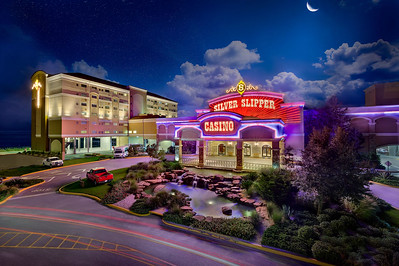
Las Vegas-based Full House Resorts reported its Silver Slipper Casino Hotel in Bay St. Louis, Mississippi posted the best month in its 14 years in June. Although only half of its slots were operational due to Covid-19 regulations, revenue surged by 28 percent, said Chief Executive Officer and President Dan Lee. He added cutting costs in marketing, payroll and other amenities helped improve margins.

“At this point, we’re not only surviving, but thriving. The Covid-19 shutdowns were a good opportunity to take a fresh start, get rid of the sacred cows and reexamine everything. And we did that,” Lee said.

Full House operates five casinos and resorts in Nevada, Indiana, Colorado and Mississippi which produced a total of $14.5 million in revenue in the second quarter—a drop of 65.2 percent compared to 2019 with a net loss of $6.7 million. The venues closed in mid-March due to the pandemic; all had reopened by mid-June.

Lee said the properties are following strict new health and safety protocols. For example, table games remain closed in Colorado and limited in other markets. Restaurants have cut back hours and capacity and no live events are being offered.

In addition, the casinos are operating with about 1,650 slots, slightly more than half their usual number. But, Lee noted, “It was a bit of a wake-up call. We don’t actually need that many slot machines. Slot machines are expensive and the casino actually looks better and feels better if you remove some slot machines.”

Lee said Full Houses’ regional properties have benefited from their significant drive-in customer base and not having to rely on resort amenities like nightclubs or conventions. He said the properties are attracting new customers, including younger players.

Still, there are numerous constraints, Lee noted. For example, buffets—which can cost more than $2 million annually—and 49-cent breakfasts are unlikely to return. Also, Lee said construction has halted on a parking garage at Bronco Billy’s in Colorado.

In addition, Lee said, “We’ll remain cautious on the payroll, on the number of employees, the hours of operations because who knows, things could turn. It’s possible, with the Covid-19 spikes around the country, that we could end up closing again. I think it’s very possible we could end up closing one place.”

IRS Targets DFS

In a surprising memo from the Internal Revenue Service last week, the agency ruled that companies that work in the daily fantasy sports industry will have to pay the same excise tax on entry fees as companies in the sports betting industry pay on wagers, 0.25 percent.

The memo was authored by Holly Porter, associate chief counsel for the IRS, and interprets entry fees as wagers and also recognizes that states where DFS is legal, it is interpreted as a skill game not gambling on a game of chance. But Porter says that doesn’t matter to the U.S. since there is no language in the U.S. code that differentiates between the two, as reported by Legal Sports Report.

“A DFS operator may try to differentiate taxable wagers from non-taxable entry fees into skill-based contests. In state courts and state legislature discussions of DFS, the issue of DFS’s legality within each state typically turns on whether DFS is a game of skill or a game of chance (that is, gambling) under the state’s laws.

“While these state rules are helpful context, the statutory language in IRC §§ 4401 and 4421 does not differentiate whether an activity involves skill, chance, or some combination of the two. Most importantly, whether DFS is a game of skill for state gambling statute purposes is not relevant for determining whether DFS is wagering for federal excise tax purposes.”

Since the same part of the U.S. code that authorizes the IRS to collect the quarter of a percent excise tax on authorized state wagers, the next line about unauthorized wagers could be even more devastating for the DFS companies. A excise tax of 2 percent could be collected in states that have not legalized DFS activity but allow the companies to operate.

And even worse, the memo brings up the potential of collecting these excise fees retroactively when it asserts that the companies should have been paying this tax all along on entry fees that now reach into the billions of dollars.

The IRS memo doesn’t hold the force of law, according to Legal Sports Report. The Unlawful Internet Gaming Enforcement Act of 2006 specifically carved out DFS as a game of skill and not a game of chance, which DFS companies have relied upon to make their case. Should the IRS attempt to enforce this memo, a court case would likely be the result.