Author: Casino Connection Staff

Unibet Launches Sports-Themed Online Games

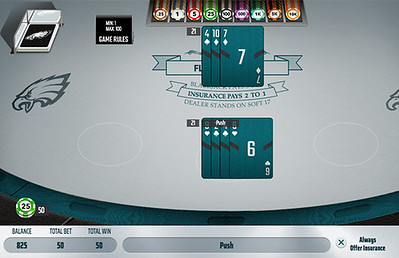
Online gaming platform supplier Unibet has launched the first professional sports-themed casino games ever in the U.S. In a unique collaboration with Philadelphia Eagles and Pala Interactive, Unibet is launching “Eagles Blackjack” and the “The Eagles Online Slot” in Pennsylvania.

Shortly after expanding the partnership with the Philadelphia Eagles to both the casino and sportsbook areas, Unibet, a part of Kindred Group, is launching the Eagles-themed game on the Unibet Betting & Casino mobile app and pa.unibet.com for customers in Pennsylvania.

In addition, Unibet will be launching the exclusive Eagles online slot game later this year, also in Pennsylvania.

“The partnership with the Philadelphia Eagles is truly special, and this is a great testimony of how two perfectly aligned organizations can deliver fantastic innovative products for their fans and customers,” said Manuel Stan, senior vice president of Kindred US. “I am extremely proud of the work done by both teams to release the first-ever professional themed sports casino game in the United States, and this is just the beginning.”

“We are excited to collaborate with a forward-thinking partner like Unibet, whose innovation continues to create new and exciting online opportunities for our fans,” said Catherine Carlson, senior vice president, revenue and strategy for the Philadelphia Eagles. “As the online gaming industry continues to emerge and expand in the marketplace, our partnership with Unibet takes us to a whole new level and allows us to be on the forefront of industry firsts, such as being featured in the country’s first professional sports-themed casino game.”

Google Ireland Fined For Italian Gambling Ads

The Italian communications regulator Agcom recently fined Google Ireland $118,250 for violating its Dignity Decree ban on gambling advertisements. A month-long investigation determined Google Ireland “violated the rules on advertising of games and betting” for foreign operators by allowing paid ads for sublime-casino.com to appear in Italian search-engine results.

Google was one of the first global companies to announce it would comply with Italy’s Dignity Decree. At the time, Google stated, “Starting July 16, 2018, only state lotteries with deferred drawing will be allowed to run gambling advertisements in Italy.” The Italian parliament passed the Dignity Decree in August 2018, banning nearly all forms of gambling advertising and sports sponsorships by gambling companies, to combat problem gambling in Italy. It took effect in January 2019.

In September, Agcom announced it would investigate Google Inc., Google Italy and Google Ireland Limited, for gambling ad violations. Agcom said since sublimecasino.com had paid for advertising, the search engine was “in no case” acting merely as a hosting service but “instead aimed at the direct promotion of bets and paid games.” Such activity is “expressly prohibited by national law,” as established under the Dignity Decree.

At the time, locally licensed operators correctly warned the decree would cause non-Italian gambling operators to rise in Google search rankings at the expense of licensed Italian operators.

Researchers to Study iGaming Impact on Problem Gambling

Researchers at Penn State University are using a state grant from the proceeds of the state’s soaring online gaming business for a comprehensive study on the effects of iGaming on problem gambling and responsible gaming efforts.

Glenn Sterner, the Penn State University Abington assistant professor of criminal justice who is heading the study, told the Penn Bets news site that 2,500 to 3,000 phone surveys will be conducted between November and June to assess the level of new online gambling by Pennsylvanians and to determine whether iGaming is causing any problem gambling problems.

“We want to have a good understanding of all of the interactive gaming activity in Pennsylvania,” Sterner told Penn Bets. “We want to understand trends over time, and if activities in one area affect activities in another area. … It gives us a lot of opportunity to help develop meaningful policy and results we can track from year to year.”

Pennsylvania logged more than $400 million in revenue from online and mobile casino games, and on sports bets made through the sportsbook apps. Online gaming was approved as part of the state’s 2017 gaming expansion law. That law also mandated the study on iGaming’s impact with respect to responsible gaming.

“This is the first time Pennsylvania has had a probability study focused solely on problem gambling,” Rachel Kostelac, a spokeswoman for Pennsylvania’s Department of Drug and Alcohol Programs, told the news site. “This report could show the need for changes to the prevention or treatment systems already in place, expansions of treatment and prevention, and potentially even a need for more funding related to prevention or treatment.”

The Department of Drug and Alcohol Programs receives nearly $5 million annually from gaming revenue to oversee programs related to problem gambling education, prevention, and treatment

additional risks.

“Our survey will build on previous work asking questions in ways that would help to signal” if someone has a gambling problem, Sterner said. “We are hoping to understand if there are behaviors that might signal those problems to the people developing policies and procedures (to combat gambling addiction).”

Evolution, Wynn Partner in U.S. iGaming Market

Sweden-based Evolution Gaming Group, a leading provider of live casino solutions for the iGaming market, has entered into a partnership with Wynn Sports Interactive (WSI) for the supply of live casino content and services for the U.S. market.

The partnership with WSI will see Wynn Sports offer Evolution’s live games initially in New Jersey with additional states to follow. The Evolution live games offered to Wynn Sports players include a wide selection of games streamed live from Evolution’s Atlantic City studio: roulette, blackjack, Infinite Blackjack, baccarat, Three Card Poker, Ultimate Texas Hold ‘em, and the Dream Catcher money wheel game show.

“Wynn is a brand synonymous with casino,” said Robert Amerine, vice president of corporate development at Wynn Resorts. “Our clear goal is to ensure that our players have access to the world’s very best online live dealer and RNG table games. Working with Evolution, we are confident we are delivering the best possible quality and choice to our players.”

Johan Nordstrom, chief executive officer-Malta and chief commercial officer at Evolution, added, “We are honored to be working alongside WSI in a move that further extends our reach in the U.S. The power of the Wynn brand with exceptional content is a potent combination. At the same time, we are very excited by the strong two-way cross-sell opportunity that exists between the sportsbook and live casino worlds.”

Twin River Casino Buys Bally’s Brand

The purchase of Bally’s Atlantic City by Twin River Worldwide Holdings was apparently the impetus for the Rhode Island-based company to complete a deal with Caesars Entertainment to buy the Bally’s brand for $20 million. Twin River paid $25 million for the Atlantic City property and said it would change the name, but the brand has a powerful history in the casino industry and would resonate in some jurisdictions.

Twin River chairman, hedge-fund investor Soo Kim, said, “This is an opportunity for us to revive a brand that is synonymous with American gaming.” Kim, co-founder of hedge fund Standard General, which owns 39 percent of Twin River, told the Post.

Bally Manufacturing started as a pinball manufacturing company in 1932 and later in the ‘30s started building slot machines. Bally became the dominant player in the slot manufacturing business throughout the 1960s. In the late ‘70s Bally entered the operating side in Atlantic City when they opened Bally’s at the third casino to open. The company later merged with Hilton Hotels in the mid ‘90s to create what was at that time the largest casino company in the world.

Twin Rivers announced it will “rebrand virtually all of its portfolio properties under the Bally’s name and logo.” The company’s recently purchased Missouri property, the former Isle of Capri, will take on the Bally’s brand in favor of the original name that replaced the Isle moniker, Casino Kansas City. Having a powerful brand will give Twin Rives significant marketing abilities across the country.

The deal with Caesars allows that company to retain the Bally’s name for its Las Vegas casino. While there was speculation that Twin Rivers could buy Bally’s Las Vegas, there was no confirmation of that. The newly restructured Caesars has said it will sell at least one Las Vegas Strip properties, and Bally’s could be a serious candidate.

Brendan Bussmann, director of government affairs for Global Market Advisors, told the Las Vegas Review Journal, that such a sale would make sense for Twin Rivers.

“Having a footprint on the Las Vegas Strip and a Nevada gaming license is still viewed as one of the gold standards in the global gaming world,” he said.

Another opportunity for Twin River would be a “Bally’s” branded sports book. Caesars didn’t use the Bally’s brand for any of its online operations so Twin River could develop one. There’s also a good chance that the corporate name could chance since Kim said the company’s stock ticker would change to something “more reflective” of the Bally’s brand.

Twin Rivers owns nine casinos across the country: two in Rhode Island, two in Mississippi, one in Delaware, one in Missouri and three casinos as well as a horse racetrack in Colorado.

Poker is Back at Borgata

Borgata Casino Hotel & Spa has reopened its poker room in Atlantic City. The popular poker hub went back into operation, with limited capacity, on October 21 at 10 a.m. following its closure earlier this year amidst the coronavirus crisis.

Borgata Poker will now operate with 30 socially distanced tables following the company’s comprehensive health and safety protocols designed to protect employees and customers.

“We are happy to welcome back our loyal players as we reopen Atlantic City’s market-leading East Coast poker destination,” said Melonie Johnson, President & Chief Operating Officer of Borgata Hotel Casino & Spa. “We have made some changes to enhance our guest’s experience and are excited to reintroduce live poker and the Borgata Poker brand more safely.”

All poker play will be live cash games on seven-handed tables with polycarbonate barriers. Borgata’s Bad Beat Jackpot will immediately initiate, giving players the opportunity to lose their hand but win a prize of $100,000. Hand sanitizing dispensers will be accessible throughout The Poker Room, with frequent disinfecting of high touch points. Masks are required in all public areas and spectators will not be permitted in The Poker Room.

Poker is the most difficult table game that casinos have had to contend with due to the pandemic. While blackjack, craps and other table games returned to all Atlantic City properties after reopening in July, poker, with its close player proximity, has remained closed at most casinos.

“A live poker room does not bring a great deal directly to the bottom line,” said Bob Ambrose, a gaming industry consultant, professor of casino management and former Atlantic City executive. “It does bring bottom line revenues to the other property amenities, such as restaurants, bars and even other non-poker gaming. … I would say you gain more from it as a marketing tool for visitation.”

Big events, such as the World Series of Poker, bring attention and visitors but not the kind of gaming revenue slots and other table games do. Casinos get a small commission in poker, known as the rake.

Borgata, with the largest poker room, generated nearly $17.9 million in poker revenue in 2019. Compare that to Bally’s and Harrah’s, which combined earned less than $5 million and it goes down from there.

But that doesn’t send poker rooms to the dust bin of history.

“Many serious players like the slower pace and methodical experience of a live game,” Ambrose said. “The poker footprint in the casino is a must have for diversification of gaming product and experience for the player.”

Las Vegas poker rooms have table capacity limits and dividers between players, and Borgata Poker will take its cues from them.

Earlier this year, Borgata implemented the MGM Resorts’ “Seven-Point Safety Plan,” a multi-layered set of protocols and procedures designed in conjunction with medical and scientific experts. The plan balances the high level of customer service guests expect from Borgata with policies that continually evolve based on data, science, and public health guidelines. Key initiatives from the plan include:

  • Employee screening, temperature checks and COVID-19 specific training.
  • Masks required in all public areas for both employees and guests (and provided free of charge).
  • Guest screening and temperature checks with limited casino entrance points.
  • A physical distancing policy with floor guides serving as reminders.
  • For areas where physical distancing presents challenges, polycarbonate barriers will be installed, or other measures will be used to reduce risks.
  • Standalone handwashing stations designed by MGM Resorts conveniently located on the casino floor.
  • Guestroom Attendants will wear masks and gloves while cleaning each room and will change gloves between guestrooms.
  • In addition to increased and enhanced routine cleaning of guestrooms and public spaces based on CDC guidance, electrostatic sprayers will be utilized in many large public spaces so that disinfectant is applied efficiently.

MGM, Borgata’s parent company, has compiled its own internal team and processes to respond if a guest or employee tests positive for COVID-19. They ask that if a guest tests positive after visiting one of its properties, they alert them through a special email address (covid19@mgmresorts.com). Borgata officials vowed to immediately report any positive test results to the local health department and assist with contact tracing to support the health department investigators.

Caesars Buys William Hill

Caesars Entertainment has bought William Hill for $3.7 billion, a deal approved by the board of directors.

The deal gives Caesars the remaining 80 percent of the U.S. joint venture it doesn’t already own through a deal struck by Eldorado Resorts before it bought Caesars. The deal allowed William Hill to run the sports books at Eldorado, and now was extended to the 50 properties under the Caesars brand.

Caesars indicated that it would likely sell the non-U.S. operations of William Hill, including the bookmakers in the UK, which have experienced a huge slump since the government lowered the betting stakes there. As a result, William Hill has closed almost 700 shops across Britain

The company turned its attention to the U.S. and has been successful in expanding its bookmaking operations in many states. The company operates retail sportsbooks in Nevada, Michigan, New Jersey, Indiana, West Virginia, Illinois, Colorado, and Iowa, and online in Iowa. It is also a licensed sports betting provider in numerous casinos in Mississippi and New Mexico and serves as the exclusive risk manager for the Delaware and Rhode Island sports lotteries.

“The opportunity to combine our land based-casinos, sports betting and online gaming in the U.S. is a truly exciting prospect,” Caesars CEO Tom Reeg said in a statement. “William Hill’s sports betting expertise will complement Caesars’ current offering, enabling the combined group to better serve our customers in the fast-growing U.S. sports betting and online market.”

William Hill Chairman Roger Devlin said the deal was a positive for the company and a “fair and reasonable” offer.

“The William Hill board believes this is the best option for William Hill at an attractive price for shareholders,” he said in a statement. “It recognizes the significant progress the William Hill Group has made over the last 18 months, as well as the risk and significant investment required to maximize the U.S. opportunity given intense competition in the U.S. and the potential for regulatory disruption in the U.K. and Europe.”

Former Caesars Owner Apollo Global Management also planned to submit a bid, but balked after Caesars said it might cancel the deal for William Hill to operate its sports books should Apollo prevail.

Most likely is the sale of the European assets. 888 Holdings said it would bid on that business, and Betfred founder Fred Done said he would be a player as well. Both the retail and online businesses would be available, but it’s unclear if a separate sale would be pursued. Truist analysts said the UK assets could be worth as much as $4 billion. A report last week that Done is considering topping the Caesars bid for the entire company. He is currently the second-largest shareholder in William Hill. At least 75 percent of the shareholders must approve any deal.

Most analysts believe the Caesars offer significantly undervalues the company but that the sports book deal prevented any other significant offers.

“William Hill is worth significantly more than the 272 pence Caesars bid,” Jefferies analyst James Wheatcroft said in a research note. “But with the recently revealed poison pill structure of the JV and now a WMH board recommendation, Caesars Entertainment is well-placed to realize the full upside.”

Greg Johnson, an analyst at Shore Capital, told the Financial Times that Caesars had “effectively snookered” rival bidders by threatening to pull out of its joint venture with William Hill in the U.S.

Paul Leyland, an analyst at Regulus Partners, said it was difficult to value the company given the wide range of valuations for a U.S. sports betting industry. Leyland called a $35 billion valuation “hopeful at best,” and said it’s risky “buying an operationally suboptimal business to deliver on a strategic vision that is still nascent.”

Two Iconic Atlantic City Restaurants Fold

The coronavirus pandemic put the final nails in the coffins of two of Atlantic City’s finest restaurants. Philadelphia restaurateur Stephen Starr told The Associated Press on October 6 that Buddakan and The Continental, which both closed in mid-March, won’t reopen.

But the decision did not rest just on the pandemic impact. Both were part of the unsuccessful former Playground Pier, which Caesars Entertainment repurchased from developer Bart Blatstein. When Starr opened the restaurants, the venue bore the name the Pier Shops at Caesars, which featured a restaurant row and a collection of high end retail shops. As Playground Pier, foot traffic was sparse and most of the retail stores abandoned ship during the past year.

Blame for the failure of the pier through various manifestations was placed on its location over the Boardwalk across from Caesars. Guests either had to find a parking space in a parking garage the casino also shares with a hospital, or find a space in a lot blocks away and walk to the pier. But the almost simultaneous opening of the more reasonably-priced and more convenient outlet stores known as The Walk in downtown Atlantic City certainly took business away from the Pier Shops and Playground Pier.

The two Starr restaurants employed more than 100 people in total.

“It was a nice run, but we had to say goodbye,” said Starr, who operates high-profile restaurants in Philadelphia, New York, Washington and Paris that remain in business. “We couldn’t continue in this environment with the coronavirus and the current state of the pier.”

The lack of conferences and concerts during the pandemic also cut down occupancy, said Kris Neff, executive chef at The Continental. “As far as destination restaurants in Atlantic City go, this is definitely a big loss.”

Starr made his decision in September when New Jersey allowed indoor dining to resume, but only at 25 percent of capacity. “We would have lost tens, if not hundreds, of thousands of dollars,” he said.

Atlantic City Deed Restrictions Don’t Boost Competition

For years, deed restrictions gave casino companies leverage to reduce competition. Nowhere is this more evident than in Atlantic City, much to the chagrin of developers.

The latest episode revolved around the Showboat, Claridge and Atlantic Club, all former casinos. Authorities hoped restrictions would end as part of the approval of the Caesars and Eldorado merger. They did not, perhaps because of objections from Hard Rock and Ocean Resort, the newest kids on the casino block and the ones closest to Showboat.

Analysts blamed too much competition for the closure of four casinos in 2014, with the customers going to casinos elsewhere on and off the island, according to the Press of Atlantic City.

Analysts also claimed reopening the former Revel as Ocean Resort and the Taj Mahal as Hard Rock might upend the financials at other casinos. Had restrictions been lifted and each property opened a casino, would it undermine an already tenuous financial picture.

How this plays out may be determined in court. Owners for the Claridge and Atlantic Club have appealed the decision from the Casino Control Commission to keep the restriction in place. Now the commission has more time to evaluate the pros and cons outside of the framework of a massive merger.

In other Atlantic City news, the New Jersey Assembly passed a bill September 24 which provides financial relief to a casino industry in Atlantic City, still struggling from the impact of Covid-19 pandemic. A 107-day shutdown of the casinos resulted in more than $112 million in operating losses and a reduction in staffing by almost half.

The state Senate approved its version in June, which was different enough to require changes to make the two bills coincide. The initial versions offered permanent and temporary relief, but the final bill scaled back some of these breaks, according to the Press of Atlantic City.

The legislation the Senate will receive offers a reduction in taxes paid on gross gaming revenue and a monthly deduction against gross gaming revenue equal to the amount of promotional gaming credits used by patrons. The breaks last for a year retroactive to July 2, the date casinos opened again.

The bill also requires casinos to try and bring back many of the former employees and hire new ones to meet increases in business.

“Remember, our goal is to get employment back up to pre-pandemic levels when over 27,000 local families held casino jobs,” said State Senator Chris Brown, a primary sponsor of the legislation. “We have to take these initial steps and develop a plan, not a bailout, to help our local economy recover as quickly as possible.”

Before the bill left committee, lawmakers eliminated tax breaks on hotel and parking fees and also scratched a section to have the Casino Reinvestment Development Authority pay for city marketing. One of the reasons for the cutbacks was a fear that the breaks would cut into the services geared towards seniors and the disabled which rely on casino revenue for funding.

“This bill has been a work in progress,” said Assemblyman Vince Mazzeo. “We all know that the casino industry is vital to the success of the local finances and to the over 30,000 individuals it employs. However, as we have said from the beginning, that success cannot come at the cost of the Atlantic County taxpayer or the hard working families who rely on the services provided by the casino revenues.”

Mazzeo and Assemblyman John Armato opposed another bill that would permit state treasury to provide interest-free loans to casinos, which would hurt the senior freeze and homestead rebate fund.

PA Lawmakers Hear Testimony on Skill Games, VGTs

Skill-game manufacturer testifies at hearing

A week after a Pennsylvania state Senate committee considered legislation to expand video gaming terminals from the current truck stops to bars and taverns, a state House committee held a public hearing in Ebensburg to consider the same subject, but with an added twist—possible inclusion of so-called “skill games” in the expansion.

Some estimates put the number of unregulated gaming machines purporting to use skill to determine results at more than 20,000, with slot-like games branded “Pennsylvania Skill” operating at locations as diverse as pizza shops and laundromats. The unregistered, untaxed machines are being battled in a campaign began in February by the American Gaming Association and the Association of Gaming Equipment Manufacturers.

Pennsylvania’s 2017 gaming expansion law approved up to five video gaming terminals, subject to the same licensing requirements as casino slots, at truck stops. However, after opposition from the casino industry, the law had been stripped of the provision allowing VGTs in bars and taverns. With the state strapped for revenue due to the Covid-19 casino shutdown, lawmakers are revisiting VGTs for bars.

However, the manufacturer of the Pennsylvania Skill games, Georgia-based Pace-O-Matic, is lobbying for its games—which continued to operate untaxed while the casinos were shut down due to the pandemic—be legalized and regulated under the new legislation being considered.

An official of Pace-O-Matic testified at the public hearing held by the House Democratic Policy Committee at the Ebensburg Municipal Building. The meeting was hosted by Rep. Frank Burns and was attended by several other committee members, some joining remotely.

Rick Goodling, director of state compliance for Pace-O-Matic, testified that the outcome of the Pennsylvania Skill machines is predominantly governed by skill, putting them outside the purview of gaming regulations governing random slot games. “A person with patience and skill can win at our game every time,” Goodling said.

However, an official of the state police, which has seized Pace-O-Matic games as illegal gaming machines, disputed that evaluation. “The element of chance outweighs any element of ‘skill’ that the manufacturer programs into the machine’s software,” testified Major Jeffrey Fisher, director of the Pennsylvania State Police’s Bureau of Liquor Control Enforcement.

Fisher said the “so-called skill games” are “illegal devices, and urged the lawmakers to provide “prompt clarity in the law regarding these types of devices, as this will facilitate compliance by business owners and licensees and provide law enforcement with a more efficient means to prosecute those who continue to violate the law.”

“I was just at a pizza shop for lunch today,” Burns said at the hearing, “and there was one of these machines in there. I was at the pharmacy yesterday, and there was a machine in there. These machines are popping up everywhere, and I refuse to believe that the people that own these businesses are criminals and that they’re trying to do something malicious. They believe that these machines are legal, and I think it’s our job to either provide clarity or to regulate this—either way—clarity on the law, or we regulate the industry that is bubbling under the surface right now.”

Representatives of bars, taverns and social clubs are pushing for VGTs to be legalized. Rep. Bill Kortz testified before the committee in favor of expanding VGTs to those locations, pointing to success at truck stops as evidence of their potential.

“I sure hope we can do something with the VGTs in the legislature,” said Kortz, “because I’ve had a VFW back my way shut down two years ago. They just couldn’t make a go of it. The Glassport American Legion, which is two miles from my home—several years ago, they couldn’t pay their light bill. I ran over there and put $300 down out of my pocket to keep them going.

“These machines help these clubs, and I know I’m preaching to the choir, but we need to do something to help these fraternal organizations, like the VFW, the American Legion, the volunteer fire departments, because it does help them pay the electric bill.”

Atlantic City Employment Falls in August

The nine casinos in Atlantic City employed 22,352 in August, based on figures supplied by the Division of Gaming Enforcement. In August 2019, the resort employed 6,233 more workers, up almost 22 percent. Of course, you can blame the coronavirus pandemic for the year over year decline. But the totals fell 2,528 compared to July, counting seasonal and temporary workers, as well as furloughed employees.

“We’re being careful and making sure we have the right demand before we bring people back to work,” said Steve Callender, regional president of Caesars Entertainment Inc. and president of the Casino Association of New Jersey. “The last thing we want to do is have people come back to work and then furlough them again.”

On August 31, Borgata Hotel Casino & Spa furloughed 2,295 employees.

“Borgata may have been impacted more than other properties since they have more of a nongaming footprint than others,” said Jane Bokunewicz, coordinator of the Lloyd D. Levenson Institute of Gaming, Hospitality & Tourism at Stockton University. “The food and beverage and convention jobs at Borgata would be among the most vulnerable under current circumstances.”

A number of casinos expect to slow down with the impending slower months in fall and winter.

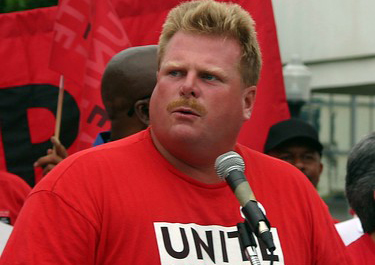
Bob McDevitt, president of Unite Here Local 54, said about 44 percent of the members were working before Governor Phil Murphy permitted indoor dining to return. For September, he estimated that number would reach almost 68 percent, according to the Press of Atlantic City.

Smoke-Free Casino Could Trigger a Movement

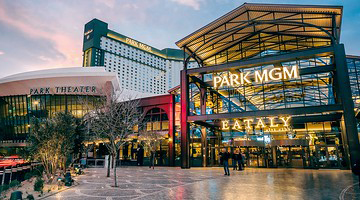
Park MGM reopened September 30 after being shuttered by the coronavirus pandemic. Amid the usual array of post-Covid-19 restrictions and requirements, the casino added another: no smoking.

On the surface, one casino ditching ciggies out of the dozens along the Strip and hundreds more throughout the country doesn’t seem to mean much, especially since similar proclamations failed to last when revenues tanked.

When the smoking ban topic would come up, nonsmokers cheered the prospect of smoke-free casino, smokers complained of discrimination while the properties worried about lost revenues, said Robert Ambrose, gaming industry consultant, adjunct professor of casino management and former Atlantic City casino executive.

Yet in places like Delaware, revenues declined, but recovered, said David G. Schwartz, professor and gaming historian at the University of Nevada, Las Vegas. “And we also have other jurisdictions like Maryland where smoking was never allowed.”

If Park MGM does reasonably well with its policy, other properties might voluntarily adopt no smoking, Schwartz said.

“They would have to weigh the pros against the cons,” he said.

While Park MGM’s decision would have been made regardless of Covid-19, the viral pandemic certainly made it an easier decision. Still, this time around may be different thanks in large measure because the Covid-19 pandemic, and its potential impact on the lungs.

“Covid-19 has put a greater emphasis on health and safety, so I think that it amplifies calls for non-smoking policies in casinos,” Schwartz said.

Indeed, this could start an avalanche of support for making other casinos smoke-free.

“The idea that smoking is central to sustaining revenue is outdated and not supported with facts. Smokers and non-smokers alike prefer breathing clean air while enjoying themselves at a casino,” said Bronson Frick, director of advocacy of Americans for Nonsmokers’ Rights and the American Nonsmokers’ Rights Foundation.

It’s a simple premise, Ambrose said. “If all of the states with casinos ban smoking, the smokers will adapt,” he said.

Pandemic aside, there are at least 822 state-regulated gambling facilities in the U.S. that are required to be 100 percent smoke free indoors by law, according to the Americans Nonsmokers Rights Foundation. A 2017 survey of more than 4,000 U.S. adults by the journal Public Health Reports found nearly 75 percent strongly or somewhat favored nonsmoking casinos. More telling is 40,000 deaths annually in the U.S. attributed to second-hand smoke, according to the American Lung Association.

New Jersey Governor Phil Murphy announced this month that he was reinstating a smoking ban inside Atlantic City casinos indefinitely, based on input from public health experts.

Some executives have pointed out that a complete non-smoking/vape-only casino may even draw more millennials and other younger visitors. Another potential plus for going smokeless: employees taking less sick time. And casinos absorbing lower maintenance costs on painting and cleaning, Ambrose said.

“I think this premise requires further study because there will always be people that smoke from all generations no matter what the data shows. The goal for casinos is to achieve an operational balance in creating an environment for all customer segments. Yet if states or tribal commissions ban smoking in casinos, then problem solved,” he said.

On the other side, there is also time-on-device to consider. “If the customer’s time playing is inhibited by the need to take a smoke break in a non-smoking casino their game cycle is broken and they may not return. Anytime off the game is potential revenue lost for the casino as well as state taxes,” Ambrose said.

Technology has improved air handling within the casino resort environment. When casinos closed for the pandemic, stake-holders worked on additional solutions, Ambrose said. “We have seen an arsenal of equipment modifications and new designs offering improved air handling. But even the best system will still work harder to filter the smoke should it return.”

Covid-19 also heightens the sensitivity to cigarette smoke. “In the middle of a pandemic, people’s lives are on the line like never before,” Frick said. “Covid-19 changed how we think about safe, healthy environments and where we spend time outside of our homes. If we can visit a casino that’s smoke-free and face lower risk levels of contracting the virus, then it’s clear we will choose that property over a casino that permits smoking.”

The viral pandemic could become the catalyst for spurring gaming companies to permanently ban indoor smoking, Frick said.

“This debate has many qualified voices to include the casino employees, customers, casino stake-holders concerned about their revenues, and the states, along with various tribal commissions,” Ambrose said.

Before the pandemic some properties offered smokers outdoor patio gambling, he said. Non-smokers were offered tables or slot areas on the main casino floor.  “This is a patch-work application and not a solution in that second hand smoke is still in the air,” Ambrose said.

Think about it. Smoking at a casino that requires masks as a condition to reopen, involves taking off a mask to smoke and exhaling droplets into the air, which can endanger patrons and employees.

“The pandemic is forcing not just gaming companies, but also the general public, to reconsider what a safe environment looks like. It’s hard to believe we could go backwards considering that respiratory concerns have risen to the forefront,” Frick said.

Workers also have concerns about spending hours in a dangerous environment in which they could be exposed to Covid-19 because guests smoke inside.

But there’s another side to the story.

Without doubt, Covid-19 has changed the dynamics of the conversation, said property president, Joe Lupo, of Hard Rock Hotel & Casino Atlantic City. “But we need to ensure we are making decisions based on good advice from healthcare officials vs. conjecture and perception from others. Decisions on smoking’s return once allowed by the state will be based on both revenue declines and learning more about Covid-19.”

Another factor will be the competitive marketplace comparing say Atlantic City with Pennsylvania, Lupo said

“In a time when we already know visitation is down and there are barriers to increasing revenues, aspects like smoking, which there is no debating the affects to slot revenue, will be looked at again I’m sure,” Lupo said.

Casinos are the last frontier for extinguishing smoking indoors, Frick said. “Just look at airplanes and restaurants, which we now take for granted as places that should obviously be smoke-free. In the future, we’ll look back at casinos the same way and wonder what took so long.”

In the days and weeks to come properties will work on concepts and casino designs that can adapt into an operational balance for smokers and non-smokers. Then again, Ambrose said, the Park MGM decision could cause casino dominos to fall, especially if it succeeds.

“They may be foretelling the future or at the very least they are keeping the topic in public conversation,” he said. “Las Vegas history shows us images of a casino floor ambiance with gambling, smoking and alcohol. I don’t think the future will host the same images. If non-smoking casinos become the law, then the debate is over.”

That said, Lupo said remaining smoke-free could have a price for a resort like Atlantic City.

“It would be a real blow to the city if that were the case, so I would not bet on it,” he said.

$1.2 Billion Biloxi Casino Resort Planned

Universal Music Group and the Dakia U-Ventures investment group announced they will develop a $1.2 billion casino and 1,000-room hotel, the first of three UMUSIC Hotels, at the site of the circa 1939 Broadwater Beach Hotel, which closed in 2005—destroyed by Hurricane Katrina. The other two will be built in Atlanta and Orlando. Mississippi Governor Tate Reeves said the Biloxi venture would bring “fun and economic growth for the people of Mississippi. Universal Music Group is a natural fit, considering the rich musical legacy of Mississippi and Biloxi in particular.”

The Biloxi city council approved a tourism tax incentive to redevelop the 266-acre site earlier this year. According to a press release, Universal officials said the development, which will create 2,500 new jobs, will be a “music-based experiential hotel” that will capture the location’s unique spirit and draw on its local culture. Dakia U-Ventures Chairman Robert Lavia said, “Every destination holds a great story just waiting to be told through its cultural heritage and its music. Through this new concept, we will both help people discover new ways to channel their love for music and the arts and help empower the transformation of communities worldwide through cultural, inspirational, creative and conscious collaboration.”

Furthermore, the statement said UMG “chooses cities that are inviting and influential, ones that are rich in music culture, where there’s always more to discover.” Biloxi Mayor Andrew “FoFo” Gilich added, “Music and entertainment have always been a part of Biloxi DNA.” He pointed out Elvis played and stayed in and around Biloxi in the late 1950s. Jayne Mansfield played her final show in Biloxi before she died in a car accident. Jimmy Buffett’s first professional gig was in Biloxi, which was a stop for many jazz and blues musicians.

The press release noted the UMUSIC Broadwater Hotel in Biloxi will provide a “stunning” performance venue, plus a golf course, spa and other amenities. The $1.2 billion price tag will make the casino resort the most expensive ever built in South Mississippi, surpassing the Beau Rivage Resort & Casino that was built in 1999 for $750 million to $800 million by Steve Wynn.

UMG describes itself as “the world leader in music-based entertainment,” involved in recorded music, music publishing, merchandising and audiovisual content in more than 60 countries. The company owns the rights to the music of the Beatles and Michael Jackson and represents many of the biggest names in music across many genres, including Dolly Parton, Taylor Swift, Lady Gaga, Elton John, Bon Jovi, Andrea Bocelli, Jennifer Lopez, Justin Bieber, Nasty C, Mariah Carey, Luke Bryan and the Escatawpa natives of 3 Doors Down.

The development meets the Mississippi Gaming Commission’s requirements that any new casino must be built within 800 feet of the high water line; it must have at least 300 hotel rooms and a fine dining restaurant; and must offer a unique amenity to draw visitors to the market—not just steal customers from the 12 existing Coastal casinos.

Also in Biloxi, Biloxi Capital LLC has proposed a $700 million casino resort at the 28-acre site of the old Tivoli Hotel. Following a presentation by Biloxi Capital, the Biloxi Businessmen’s Club wrote a letter to Mississippi Secretary of State Michael Watson supporting the tidelands lease agreement proposed by Biloxi Capital LLC.

Biloxi Businessmen’s Club President Cree Cantrell said, “People have talked for a long time about the need for an economic anchor in East Biloxi. When it determines the outcome of a proposed development of this size, $700 million in investment, 3,000 permanent jobs, that’s something we as members of the business community felt like we needed to force our opinion on. We’re believers in the free market and competition, so what we’re asking for from the secretary of state is what we feel like is a fair deal” regarding a tidelands lease agreement.

NY Casinos Haven’t Fully Recovered

Although New York State casinos have been open since September 3, they have not fully recovered.

Some areas of gaming have bounced back as good as before. Rivers Casino General Manager Justin Moore said last week that sportsbook was surpassing pre-Covid numbers. “This past Sunday our sports book was the busiest we’ve seen since reopening and the numbers match last year,” he said.

The Rivers casino has brought back two-thirds of its staff. But business isn’t exactly booming.   “Certain days of the week, there are no crowds. It’s very quiet. no wait to get inside the building,” Moore told WRGB Albany.

So far, no alcohol is being served at New York casinos, and poker still isn’t allowed.

Alex Tucker, general manager at Saratoga Casino Hotel, commented, “People’s habits have changed. And some people just don’t feel safe going out.” He added, “Our most loyal guests, customers that visit the facility quite often, have comeback very strong.”

He noted that six months is a long time and that in the interim, some customers have found other things to do.

Casino Closures Devastate Tribal Health Services

In March, 524 tribal casinos operated in the U.S. The number fell to zero by mid-April due to closures forced by the coronavirus pandemic. The first ones reopened in early May but it was a long road back. As of October 12, 470 were back in business, according to the American Gaming Association.

In the intervening months when the casinos were shut down, tribal communities suffered a devastating blow.

In an opinion piece published August 5 in Indian Country Today, Ernest L. Stevens Jr., chairman of the National Indian Gaming Association and former U.S. Senator, Ben Nighthorse Campbell, pointed out that Native Americas suffer serious disease and death at the highest per capita rate, and that includes Covid-19.

“Indian nations face catastrophic economic losses, and without additional support, many tribal businesses will never recover,” the article said.

The loss of revenue, especially from casinos forced to close for all those months, is disastrous for the health and well-being of tribal communities. Revenues fund essential tribal services including health care, schools, child and elder care.

“In an effort to help stop the spread of the virus, Indian nations suspended gaming, closed our hotels and all of our ancillary businesses in the first and second quarters of 2020. When tribal governments reopened our gaming, hospitality and tribal business in May and June, capacity was generally limited to 50 percent to allow social distancing. Masks and temperature checks are required for both employees and patrons. Conventions, concerts, and events are cancelled.”

Nationwide, Indian gaming ranks among the top dozen employers, creating 780,000 jobs, both direct and indirect. Gaming generates $35 billion in tribal government revenue in 2019.

Here are more sobering statistics: Tribal hospitality, spas, golf courses, gift shops, retail and convenience store enterprises generate an additional $6 billion in revenue. Native agriculture and natural resources generate $7 billion in sales, according to the Interior Department. The nationwide economic impact of Indian gaming (direct and indirect) is $105 billion, generating $36 billion in wages, $15 billion to vendors, and $15 billion in payments to federal, state and local government.

“Due to the pandemic, tribal government revenues will be down by $40 billion,” Stevens and Campbell said in the article.

Tribes have the ability to levy some taxes, but the governments that get to levy taxes tend to be state and county governments. “So tribes are kind of boxed out, and they have to earn revenue for governmental operations from other kinds of things like businesses,” said Dr. Miriam Jorgensen, research director for the Native Nations Institute at the University of Arizona.

Jorgensen, who is also the research director for the Harvard Project on American Indian Economic Development, added: “When those businesses are not able to generate any net revenues because they’re not able to be open, tribes really don’t have the flexibility they need to respond to public health crises.”

According to the Centers for Disease Control and Prevention, Native Americans are among those hit hardest by Covid-19. Per capita, Native Americans have the highest infection rates, the highest risk of hospitalization and serious injury.

“Tribal governments need $25 billion from Congress to address our needs, including lost revenue,” Stevens and Campbell said.

Native American patients are funded at $9,100 less per patient per year than Medicaid patients. “On Indian lands, we lack infrastructure: some remote homes do not have indoor plumbing. It’s hard for our Native families to wash hands without running water. Federal help is an essential lifeline,” said Stevens and Campbell.

The Indian Health Service, the most important source of healthcare for Indian Country, is usually funded at between 50 percent and 60 percent of need, according to the National Council of Urban Indian Health. Sometimes, the agency runs out of money in the middle of the fiscal year, which can force patients to forgo basic or serious healthcare, according to the Washington Examiner.

The lack of funding also creates worker shortages. Staffing is 20 percent lower than what the IHS recommends.

Casinos, even those that have gradually started to reopen, have not brought in the same revenue as in previous years that could have given tribes better odds of preventing severe Covid-19 outbreaks. Tribes are increasingly dipping into public coffers to fund public health services, Jorgensen said.

“Tribal governments have a different system for collecting public finance, that governmental revenue comes from, by and large, different sources for tribal governments than it does local governments,” Jorgensen said. “It’s been harder for them to find those additional public health dollars.”

In March, Congress passed the CARES Act, which allocated $8 billion to tribal governments to respond to the pandemic and assist the public health system. Failed negotiations between Democrats and White House officials on another round of coronavirus relief mean that there will be no extension of the December 30, 2020 deadline to spend CARES Act funding.

Court Decision on Historic Races Devastating

The Kentucky Horse Racing Commission is mulling over a request to ask the state Supreme Court to reconsider its ruling that a slot-like game that appears in three of the state’s historical racing venues is not pari-mutuel wagering. Such machines resemble slot machines, but payouts are based on a parimutuel formula. Bets are determined by the outcome of previously run races.

The racing commission considers historical racing crucial to the survival of live racing. The profits from the machines have generated millions of dollars in taxes that are directed to the horse racing industry, money given to enhance purses for winners.

The commission asked the Supreme Court to use another two weeks to revisit the September 24 decision. The court’s unanimous decision means Kentucky lawmakers will have to act to ensure an industry which produces more than that $2 billion a year can continue.

Pari-mutuel betting at live races is legal. Casino gambling is not, so if the court sticks with its conviction that historic races are not pari-mutuel but casino gambling, they will be outlawed.

“Thus, this Court’s decision directly impacts approximately 80,000 jobs and may significantly reduce horse racing’s $3.4 billion contribution to Kentucky’s economy,” the commission said.

Despite the ruling, the agency still permits the historic races to run.

“The Kentucky Horse Racing Commission respects the Kentucky Supreme Court’s decision. The commission is considering its options and will take action as soon as we come to an appropriate resolution,” the agency said in a statement to WDRB.

Cosmopolitan Deploys Metal Detectors, Restricts Entry

The rise in violence on Las Vegas’s Strip has led the Cosmopolitan of Las Vegas to adopt new procedures, including deploying metal detectors and restricting access on weekends.

On weekends, from 6 p.m. to 6 a.m. only those who have a reservation with the hotel or one of the restaurants, or Identity Rewards members, will be granted entry. Guests will be wanded with metal detectors, the resort said in a statement.

In addition, admission will be restricted to a few doors that will also have Metropolitan Police Department officers posted. Bags will be checked and “oversized alcoholic beverages or glass products” won’t be allowed in.

The Wynn Las Vegas and Encore casinos will be scanning guests for metal and screening bags. There will also be additional security guards.

MGM Resorts International spokesman Brian Ahern said its casinos have highly trained security personnel and updates staffing levels every week. He added, “We work very closely with Metro as they work diligently to reduce crime both on the Strip and off. We don’t believe that recent high-profile incidents are reflective of Las Vegas and the safety of our properties on the Strip.”

There has been a rise in violence on the Strip in recent weeks, including a man waving a gun at one nearby casino, the Aria; who was shot and killed by security officers—and a fatal stabbing at the Cosmopolitan itself.

September 27 a person was critically wounded on the Strip and another man was repeatedly shot near the Paris Las Vegas.

On a different date, three people were shot near a liquor store on Flamingo Road, which is near the Strip.

Over the weekend a man was shot at the Miracle Mile Shops. Another victim was hospitalized after being attacked by several people on the Strip.

Several such incidents were caught on video and went viral on social media, ginning up the local reaction.

Although some casinos are reacting to the perception of increased violence, most tourists have not been infected by fear—yet.

CDC Gaming Reports interviewed a tourist who had recently arrived in Las Vegas and was standing in front of the Bellagio fountains at midnight.

The tourist said, “I know Las Vegas has had a couple of issues recently, but I haven’t come across anything that would be alarming. I will say there are a lot more security guards that patrol the Strip now since I’ve been here before. I haven’t come into any encounters where it was an issue.”

The tourist’s remarks appeared typical. A Detroit residents visiting Las Vegas added, “I do feel safe on the Strip considering coming from where we come from.”

Another tourist, this one from Merced, California, commented, “Everyone is taking their precautions, doing what they need to do, wearing the masks. I feel pretty safe out here for the most part. I feel safer here than I would in San Francisco to be honest.”

Casinos that are trying to scramble back to some form of normalcy after reopening from the lockdowns are anxious that the city not suddenly acquire a new reputation for violence.

Barry Jonas, a senior gaming analyst at Truist Securities, told CDC Gaming Reports, “If you are hoping for a Vegas recovery, that is going to be significantly harder with increased crime, whether it is reality or just increased perception.”

The Metropolitan police have added patrols, increased cooperation with casinos on the Strip, and done some enforcements with undercover officers to take some guns off the streets. SWAT teams and Homeland Security officers are also patrolling late nights. They called this 30-day enforcement Operation Top Gun. It resulted in 64 confiscated firearms.

Metro Capt. Dori Koren, who is the commander for the convention center area, recently spoke before the Clark County Commission. “All of us recognize that the Strip, downtown, our tourist corridor is the economic engine of our state,” he said. “It is a top priority.”

Koren said the police are aggressively addressing the situation, but pointed out that violent crimes are actually no higher than normal—except for gun crimes and assaults, which are on the rise. Aggravated assaults have jumped 29 percent over 2019.

The captain said crime stats are “trending in the right direction” and noted that most of the crime in the tourist corridor involves visitors from out of state.

In an USA TODAY interview with Las Vegas Sheriff Joe Lombardo, he noted: “If you look at year-to-date numbers, violent crime on The Strip – and Las Vegas Boulevard in particular – is up 4% compared to last year. That’s through October 3.” The majority of those are aggravated assault, he said.

Lombardo said most metropolitan areas in the U.S. are experiencing similar numbers due to unrest fanned by the Covid-19 lockdowns and the resulting unemployment and lack of entertainment options for younger people.

He said, “Bad behavior, anxiety, unemployment, the inability to blow off steam is causing a lot of this to occur. Our nightclubs are closed, all our live entertainment is closed. There’s not a lot of release occurring not just in our jurisdiction but in Los Angeles and Phoenix and San Diego, where a majority of our visitors come from. They’re in lockdown more than we are.”

The Sheriff added, “We value our visitors. The Strip and gambling and tourism is our No. 1 industry. We can’t be slow to react to any issues associated with that industry. The Las Vegas Metropolitan Police Department – more so, I think, than any other department in the U.S. – is quicker to react to that type of issue. We started tracking this thing significantly in August. We dedicated a significant amount of my total resources to the Las Vegas Boulevard, Strip, Downtown and Fremont Street area.”

Las Vegas Convention and Visitors Authority President Steve Hill told CDC Gaming Reports that the Covid-19 outbreak sparked an upward swing in crime but added, “We have not seen an impact to visitation, nor have our resort partners. We’re all fiercely protective of our destination and committed to ensuring that Las Vegas continues to be a destination where visitors can come, enjoy all we have to offer and feel safe.”

Kansas City Casino Denied Covid Rent Relief

The city of North Kansas City, has declined to give a break in the rent to Harrah’s Kansas City Hotel & Casino, which had to close its doors for several months due to the coronavirus.

The casino is built on land near the Missouri River it rents from the city

The casino requested forgiveness for up to $410,000 in rent for the 75 days it was closed. General Manager Julie Sola told the city council last week: “During this time due to closure we did not have any revenues. Yet we still had a significant amount of expense.”

Council members were not sympathetic, although they thanked the casino for its involvement in the community. They pointed out that the city relies to a great extent on money from the casino to run its budget.

They said it wouldn’t be right to give a break to Harrah’s when other businesses were also hard hit this spring and summer.

Councilman Richard Stewart said, “I know it was rough. But it was rough for restaurants and theaters. And so far I don’t think they’ve asked for any tax deduction. That’s the problem I have: What do we tell these people if we pass this.”

Councilman Anthony Saper added, “We can’t do it for them if we don’t do it for everyone else.” He continued, “And from their balance sheet, they don’t seem to be in need of it. They’re simply putting it forward because it’s a possibility.”

In March Harrah’s collected $7 million adjusted gross receipts, compared to almost $18 million the year before. Since the lockdown was lifted, the casino is rebounding. Its gross for June, July and August was higher than the same months in 2019.

Harrah’s taxes to the city going into its gaming fund, which helps pay for capital improvements. That fund has declined from $10.4 million in 2010 to $7 million last year. Rent is $2 million a year or 2 percent of gaming revenues, whichever is larger. The rent provides 14 percent of the city’s general fund. It has also declined over the last dozen years, from $4 million in 2007 to $3 million in 2020.

Las Vegas Wins Bids for Major NCAA Events

Since the downfall of the ban on sports betting in 2018 the NCAA has ended its opposition to allowing major games to be played in Nevada.

As a result, the association NCAA tapped Las Vegas to host an NCAA Tournament men’s regional in 2023. This marks the first time the city served as a site for an NCAA championship round since 1991, when a women’s basketball regional played the Thomas & Mack Center.

The decision, announced by the NCAA on October 14, was one of 450 host sites named through 2026 for different sports. Nevada will host 11 events, including the 2026 men’s Frozen Four, according to the Associated Press.

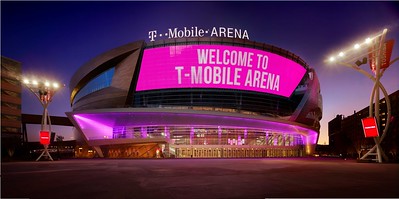
A partnership between MGM Resorts International and the University of Nevada Las Vegas applied to host the 2023 and 2026 men’s basketball regionals as well as the NCAA wrestling championships. The gaming giant also joined with Las Vegas Events to solicit the 2023 and 2026 Frozen Fours hockey’s college championship, according to the Las Vegas Review-Journal. The games expect to be played at T-Mobile Arena.

In addition, the Las Vegas Convention and Visitors Authority applied for multiple games from Division I to Division III between 2022 and 2026 to be held at various arenas.

“We were going to go for broke,” said Lisa Motley, LVCVA director of sports marketing and special events. “It was the first time we were able to put bids into the NCAA, and we’re serious about being the home for NCAA championships. We have to crawl, walk, run and prove to the NCAA that we can put on these marquee events.”

The NCAA basketball committee toured Las Vegas early this year, encouraging the resort to bid for a regional event rather than the initial rounds of competition.

The Final Four and College Football Playoff National Championship games rotate on a different cycle from the NCAA basketball and the earliest Las Vegas could play host would be the 2025 championship game and the 2027 Final Four.

Las Vegas Events president Pat Christenson said he has no doubt he could sell out a venue for either the wrestling or ice hockey championships. As for lesser-known events, the LVCVA turned in 98 applications, though that included multiple forms covering different years for the same event.

Motley said the NCAA suggested the city pitch Division II and III events in addition to Division I. Sports include golf, gymnastics, tennis, baseball, softball and soccer. UNLV helped with the bidding, she said.

“I think every event would assist us in better establishing people’s habits of coming back to Vegas,” Christenson said.

Hard Rock in Fight Over Land for Indiana Project

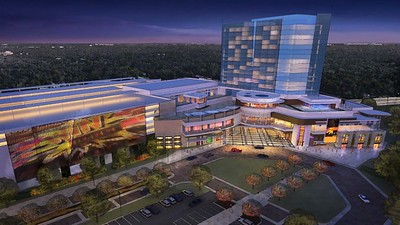
Hard Rock Casino is facing challenges over the ownership of several small land parcels needed to complete its $300 million, 200,000 square foot casino in Gary Indiana.

The battles are being fought out in Circuit Court and involve parcels as small as .04 acres, according to a report in the Times of Northwest Indiana.

Construction on the project began early this year on an about 30-acre site. Spectacle Entertainment, the developer of the project, has purchased several key parcels since December 2018 through its land acquisition arm, Windy City Acquisitions, according to the paper.

However, several small parcels are still being acquired. A lawyer representing one of the small parcel owners charged in court that the company has destroyed a small .04 acre parcel, literally bulldozing the site and fencing it off, denying owners access to the parcel.

Jynell D. Berkshire is an Indianapolis-based attorney representing a trust opened by an heir who is claiming parcel ownership.

Berkshire accused Windy City Acquisitions in a court filing Thursday of “bulldozing” its way through the pending tax deed case — the same way the firm has allegedly “bulldozed its way through destroying the subject parcel.”

“Windy City has, among other things, removed trees, torn down structures on the subject parcel, brought heavy duty equipment onto the subject parcel to remove dirt and reshape the land, and prevented respondent access to the parcel by totally enclosing the parcel inside locked fence,” layers said in court documents.

Rich Zeigler, vice president of development for Spectacle Entertainment, answered the charge in court saying the company had made a mistake fencing off the property as the company is still seeking the tax deed to the property.

The paper outlined several other cases where Spectacle is fighting to acquire small parcels through tax court. Most are pending in tax court and many involve convoluted trails of ownership.