Author: Casino Connection Staff

DraftKings, FanDuel Sign Pro Deals

Bryson DeChambeau became the first active pro golfer to represent a gaming company after he signed a multi-year deal with DraftKings on November 2. DeChambeau will become the face of golf for the sportsbook.

The golfer, ranked six in the world golf ranking, won his first major at the U.S. Open in September. Starting with the Masters, the DraftKings logo will appear on DeChambeau’s signature golf cap.

“Professional golf has been a key growth sport in both daily fantasy and sports betting, and our collaboration with Bryson DeChambeau is a notable new layer of mainstream brand exposure and fan experience,” said Jason Robins, co-founder and CEO, DraftKings.

Golf is the fourth-most-popular sport for daily fantasy at DraftKings, while golf sportsbook handle has grown 10 times year over year. Excluding NFL games, the 2019 Masters ranked among the top five highest-bet sporting events on DraftKings.

“The gaming industry has already helped golf reach broader audiences and DraftKings has been at the forefront of innovation for how people experience golf,” DeChambeau said.

The 2020 Masters takes place this month, with its final round overlapping with NFL games. To take advantage, DraftKings is offering a $100,000 free-to-play pool that captures the action of both sports. This is the first multi-sport pool DraftKings has developed.

Not to be outdone, the NBA’s Memphis Grizzlies announced a multi-year partnership with FanDuel the same day. The agreement applies to both sports betting and daily fantasy sports, and marks not only the Grizzlies first foray with a sports betting operator but FanDuel’s first with an NBA team.

FanDuel will have access to Grizzlies’ marks and logos to use across its online sports betting and daily fantasy sports products, as well as marketing assets ranging from in-arena signage at FedEx Forum to radio, television and digital advertising. FanDuel will present the team’s home and away television broadcast with multiple integrations to enhance the experience for fans watching from home.

“As we expand our sportsbook into Tennessee, partnering with the Grizzlies was a no-brainer, given the team’s popularity and longstanding success, as well as their fan-focused mindset,” said Mike Raffensperger, CMO, FanDuel Group.

FanDuel and the Memphis Grizzlies are offering unique promotions for new FanDuel Sportsbook customers in Tennessee:

  • Tennessee residents who sign up for the FanDuel Sportsbook and enter promo code “GRIZZLIES” will receive a $20 free bet with no deposit required.
  • The FanDuel Sportsbook app features a special risk-free first bet up to $1,000 for Tennessee customers. Any customer that doesn’t win their first bet is automatically refunded their wager, up to $1,000 in site credit.

The announcement comes on the heels of FanDuel’s launch of its online and mobile sportsbook in Tennessee.

NASCAR, Wynn Resorts Form Partnership

NASCAR and WynnBET have formed a multi-year nationwide sports betting partnership. WynnBET is the digital gaming division of Wynn Resorts, which is launching a national sports betting business. WynnBET will be an Authorized Gaming Operator of NASCAR, and will collaborate with NASCAR to create and promote sports betting experiences for U.S, racing fans.

NASCAR Senior Vice President and Chief Digital Officer Tim Clark said,

“Wynn is a trusted brand and our new relationship advances NASCAR’s position in the rapidly evolving gaming space, while delivering fans with another live in-race engagement tool.”

WynnBET has submitted an application to become a legal gaming operator in Virginia. The state legislature passed a bill earlier this year to legalize sports betting and grant up to 12 online sports betting licenses by the end of the year. If Wynn’s license application is approved, WynnBET will become the official online sportsbook for Richmond Raceway and Martinsville Speedway. A WynnBET Lounge will operate at each track.

Podcast with Dave Peña

Dave Peña came up with the concept for Boogie Nights when he realized there was no place for people who enjoyed the ‘80s culture in the nightclub scene. When he introduced the concept at Resorts Atlantic City years ago, it was an immediate success and he’s expanded his empire to many gaming jurisdictions. And now, he’s starting another venture along with ‘80s pop star Tiffany that will be more restaurant focused but just as retro. He spoke with Casino Connection Publisher Roger Gros in Atlantic City in September.

New Jersey’s Freehold Raceway Playing Catch Up on Sports Betting

Freehold Raceway, the last of three New Jersey tracks to offer sports betting, is trying to make up ground with a new sportsbook in a state where sports betting went live in late 2018.

The track is facing competition from Atlantic City casinos, the Meadowlands racetrack and Monmouth Park racetrack, which is located in the same county as Freehold. All of its competitors offer online sportsbooks.

Still, track officials are confident the Freehold sportsbook will find room in the market.

“It’s growing every day, and it’s in a great area,” said Matt Cullen, senior vice president of interactive gaming and sports for Pennsylvania’s Parx casino, which runs the sportsbook at Freehold told the Associated Press. “We’re really excited about it.”

Along with its in-person sportsbook, the track is seeking approval for up to three internet identities, or “skins” that are in the process of being approved by New Jersey gambling regulators. Cullen told the AP that he hopes to have an online site go live within a month.

In New Jersey, more than 80% of sports betting is done online or over mobile devices. The online bets are restricted to people physically present in New Jersey.

The track is also located only 17 miles from Monmouth Park. Monmouth County, however, is a densely populated part of the state and Cullen predicted Freehold will get sports betting customers from the western part of the county and surrounding areas who used to have to travel nearly to the coast to make sports bets at Monmouth Park.

“As far as people in the east and the folks who live by the beaches, that’s yet to be seen,” Cullen said. “Time will tell.”

Freehold track officials also said their live business has been growing despite not launching a full marketing campaign.

“We’re going to need to raise awareness in the area, to let people know Freehold is open for sports betting, especially since we were late to the party,” Cullen said.

Vegas Loop Game Changer for Las Vegas

In January, what will be dubbed the Convention Center Loop will open up in tunnels beneath the Las Vegas Convention Center. The $52 million transportation project, built by Elon Musk’s The Boring Company, will connect the existing center with its $980 million West Hall expansion. The Loop will transport convention attendees across the 200-acre campus in under two minutes in 16 passenger, self-guided Tesla vehicles.

If that’s where the story ends, the Loop would be little more than a nice, but expensive toy.

But Musk does not expect to limit his sights to a convention center campus. He envisions the Vegas Loop expanding the tunnel under the heavily congested Las Vegas Boulevard stretching as far north as downtown Las Vegas, throughout the Strip corridor, and as far south as the Allegiant Stadium. The last stop requires approval by the Stadium Authority, the owner of the stadium.

Given the congested boulevard, this seems like a godsend. “The Vegas Loop will be a game changer for our visitors seeking to quickly access world-class attractions and resorts throughout the destination in a fun and convenient way,” said Steve Hill, LVCVA president and CEO.

The Boring Company recently submitted a special use permit application to the City of Las Vegas and intends to file a land use—design review— application in Clark County, the first steps in the process.

The Boring Company did not respond for comment, but its website says fare prices, while project-specific, will be comparable to or lower than current public transportation fares. How is that possible? The system is low-cost, fast-to-build. In the case of Las Vegas, the Boring Company will fund the construction with stations paid for by the casino resorts that house them. No taxpayer dollars will be used to fund the project, said Erica Johnson, director of communications for the Las Vegas Convention & Visitors Authority.

The vehicles are designed to minimize exposure to airborne diseases such as Covid-19. The cars carry as little as one passenger. This allows Loop passengers to travel with people they know and reduces crowds.

Will it work in Las Vegas? Will it ever happen as conceived? Can it successfully move large numbers of people that seven mile distance in the fraction of time it now takes by above grade vehicles?

“Time has a way of revealing details that make a project like this change some original plans,” said Anthony Marino, a retired executive with the South Jersey Transportation Authority, an adjunct professor at Stockton University and Atlantic City analyst.

If it does work, how applicable is the tunnel system for other casino areas with multiple properties like South Florida and Atlantic City.

In South Florida, the concept could conceivably link the Seminole Hard Rock Hotel & Casino in Hollywood with casinos in casinos in Pompano Beach, Coconut Creek, Dania Beach, Hallandale Beach, Miami Gardens, Miami, as well as Hard Rock Stadium and maybe the Orange Bowl, Marlins Park and American Airlines Arena.

Such a system would present a Herculean task even for Musk. The number of miles far exceeds the compressed lineage in Las Vegas. Then there’s the number of jurisdictions with a say in the matter, creating a bureaucratic nightmare.

“This question should be answered via a feasibility study to determine travel demand among these specific types of traffic generators,” said Tish Burgher, communications manager for the Florida Department of Transportation.

A feasibility study such as this may be undertaken by either the Broward County Metropolitan Planning Organization and/or the Miami-Dade County Transportation Planning Organization as part of their Unified Planning Work Program.

“A defined study area, project scope, purpose and need does not currently exist; thus a determination on potential level of support cannot be made at this time,” Burgher said.

The Strategic Miami Area Rapid Transit (SMART) Plan was adopted by the Miami-Dade Transportation Planning Organization in 2016 as the vision for providing premium transit corridors in Miami-Dade County.

Atlantic City has a much smaller footprint than South Florida even if you include the three Marina casinos along with the Boardwalk properties.

Still, the Atlantic City layout is much more difficult to link than Las Vegas, Marino said. But the biggest obstacle to a Musk tunnel: Atlantic City doesn’t need it.

“Atlantic City doesn’t have the traffic problems that the Las Vegas Strip has. Truth is, surface traffic is rarely too onerous to impede movement between the Marina and Boardwalk even in their personal automobiles or in a regular taxi,” Marino said.

And if visitors want to go from point A to point B, they can take a Boardwalk tram, or if time is not of the essence, they can walk or take a rolling chair for nostalgia. Want to go from Caesars to Borgata, take another Atlantic City experience not available elsewhere: the jitney,

Atlantic City has had its share of unique transportation ideas, Marino said. An above grade Mag-Lev frictionless people mover system along the Atlantic City Expressway. Gondolas from the Boardwalk to the Convention Center and beyond. Neither found the financial backing of an Elon Musk. Or the kind of casino and authority support to make it happen, Marino said.

N.J. Lawmaker Seeks to End Ban on Some College Bets

New Jersey State Senator Paul Sarlo, who represents a district which includes MetLife Stadium, has introduced a bill calling for an amendment to the Constitution to lift the prohibition of wagers on college playoffs and championship games in New Jersey. If passed, the legislation, which would also allow betting on games played elsewhere involving New Jersey teams, could be on the ballot in November 2021, according to the Associated Press.

“These are games that are nationally televised, with a lot of interest all around the country, and a lot of people coming into the state from all over the country to witness these games,” Sarlo said. “Many of them would want to make a wager on these games, but they can’t do it in New Jersey. Why should we lose out on that money?”

State Senate President Steve Sweeney, who will cosponsor the bill, needs to ensure passage would not jeopardize the state hosting future tourneys.

“We have proven to date that we can so this safely and responsibly,” Sarlo said.

The change would not affect the ban on regular season wagers. Post-season games could include the NCAA basketball tournament or football bowl games.

Judge Orders Atlantic City Casino Exec’s Phone Examined

A Borgata Atlantic City executive who switched jobs to the city’s Ocean casino resort must turn over a personal phone for examination, a federal judge has ruled.

The examination will look to see if William Callahan had copied Borgata customer data or internal information from the casino before switching jobs. Callahan is accused of taking such information on the Borgata’s top customers.

U.S. District Court Judge Gloria Navarro has already ordered Callahan to turn over his Borgata-issued phone. The new ruling covers an additional phone.

Navarro also ruled that another former Borgata exec, Kelly Ashman Burke, cannot continue to work for Ocean in her current capacity. Burke was ordered to destroy any copies she or Ocean may have of Borgata’s 2020 marketing strategies.

However, Navarro said she was not granting permission for Borgata to engage in “a fishing expedition” on Callahan’s second phone and that the casino must identify ahead of time any customer whose information it believes may be stored on the device.

She also ordered Callahan to turn over any forensic copies that may exist of either of the phones at issue; his personal computers, any devices linked to his Apple iCloud account or other cloud‐based storage account, and the log‐in credentials for his cloud‐based storage programs that may contain trade secrets, according to CDC Gaming Reports.

“We are pleased with the court’s decisions and we look forward to continuing our efforts to protect our business,” said Debra DeShong, a spokesperson for Borgata’s parent company, MGM Resorts International according to CDC Gaming Reports. “We appreciate that the court took into consideration the hundreds of employees at Borgata and the economic damage that could have been done had these individuals been permitted to misappropriate customer information and other trade secrets in violation of their employment agreements and while working for a competing casino.”

Borgata has filed a lawsuit accusing Ocean of poaching several of its marketing executives in an attempt to “cripple” the casino by using secret details about its best and most profitable customers.

Ocean Casino Resort said in a press statement that it is “satisfied with the decision, which allows Mr. Callahan to continue his work in our hotel operations, as we tirelessly improve the experience for our loyal guests.”

“As to the decision regarding Ms. Burke, the order prevents her from working within the marketing department. We are currently considering other roles for Ms. Burke on the Ocean team,” the statement said. “Both Bill and Kelly are invaluable executives, and we are looking forward to a bright future with them.”

Borgata Atlantic City Reopens Poker Room

After being closed for seven months due to the Covid-19 pandemic, the Borgata poker room in Atlantic City has reopened to a limited capacity.

The casino has opened 30 of the room’s 77 tables with plexiglass dividers between players. The Borgata’s poker room is normally one of the largest in the country and hosts several World Poker Tour events. For the time being, the room will offer only cash games at seven-handed tables, the casino announced. Players will also be required to wear masks.

Borgata was slower to reopen than other Atlantic City casinos after state-ordered mandatory shutdowns this spring. Casinos were allowed limited openings for the July 4 holiday, but Borgata waited several more weeks to reopen.

Property President and Chief Operating Officer Melonie Johnson said in a press release that Borgata is happy to welcome back players and that they have made certain changes “to enhance our guests’ experience and are excited to reintroduce live poker and the Borgata Poker brand more safely.”

Last year, the Borgata poker room generated nearly $18 million in poker revenue of the $27.2 million reported by all five of the city’s poker rooms.

Atlantic City casinos are only operating at 25 percent of capacity, which is continuing to strain its workforce. The president of Unite Here Local 54, the city’s largest casino union, estimates that 75 percent of the union’s about 10,000 members are back to work but only at about half their former hours.

“There’s still a great need here for food and for support,” Robert McDevitt told the Press of Atlantic City at a recent food drive for casino workers sponsored by the Community Food Bank of New Jersey.

U.S. Casinos Seeking Covid-19 Recovery Relief

U.S. casinos want help recovering from four months of Covid-19 shutdowns and are seeking tax and regulatory relief from the government.

It’s estimated that more than $2 billion in tax revenue was lost while casinos were shut down for four months this year.

About 90 percent of casinos have since reopened, but are operating at restricted levels as the pandemic rages on. Additional financial aid is needed for casinos and their workers, the head of the gambling industry’s national trade group said.

In his State of the Casinos speech at the G2E 2020 conference—an online conference this year—American Gaming Association President Bill Miller said the industry is recovering, but needs government help.

“Gaming has never experienced a disruption like COVID-19,” he said. “Over two weeks in March, every casino in America was closed by government-mandated shutdowns, impacting each of the 1.8 million jobs we support.

“Gaming workers, their families, and the small businesses that depend on us have all been hit hard,” Miller said. ”And our states and communities are feeling it, too. In addition to COVID’s impact on businesses, jobs, and the well-being of our families, friends and colleagues, state budgets have been decimated by the pandemic.”

Miller pointed to Detroit, which lost $600,000 in gambling tax revenue for every day its casinos were shut, he said. The pandemic wiped out $209 million in gaming tax revenue in Maryland and $323 million in Pennsylvania, he added, according to a report by the Associated Press.

The industry has gained access to pandemic relief funds as part of a massive package Congress approved this year. Though he could not specify an amount. Miller said casinos will insist on inclusion in any future aid package.

In the meantime, casinos want liability protection so that businesses that follow public health guidelines cannot be sued by people who contract the virus. The industry also wants tax relief to help save jobs, alleviate COVID-19 expenses and help boost consumer travel.

According to the AP, a bill from Democratic U.S. Sens. Catherine Cortez Masto, of Nevada, and Republican Kevin Cramer, of North Dakota, would support the convention and trade show industries by establishing a tax credit for the cost of attending or hosting them in the United States from 2021 through 2023.

Finally, Miller said casinos have long been pushing for a switch to digital payments, which now can be seen as a public health measure.

LVS in Talks To Sell Vegas Strip Properties

The news that Las Vegas Sands is in talks for a sale of its Las Vegas Strip resorts has analysts wondering about the $6 billion price tag in a U.S. gaming market ravaged by the Covid-19 crisis. They suggest that a REIT deal could be in the works instead.

The discussions, described last week as in the early stages, were revealed in an October 27 Bloomberg report confirmed by an unnamed representative of the Las Vegas-based casino giant.

The story came less than a week after LVS reported an operating loss of $610 million for the three months ended September 30 on net revenues that were down 82 percent to $586 million compared to the same period last year.

The loss was significantly better than the $985 million reported in the second quarter, but the fallout from the pandemic continues to wreak havoc with the company’s expansive operations on the Strip and in its principal markets of Macau and Singapore.

And with the latter two historically accounting for some 85 percent of group-wide revenues, which last year totaled $13.7 billion𑁋not to mention 90 percent of property EBITDA𑁋 it appears management has decided to jettison assets that were non-core even before the pandemic hit in order to marshal resources to the maximum for an eventual recovery in Asia. This would allow the company to pay down some of its $3.97 billion in debt, restart the payment of dividends, which were suspended due to the pandemic, and recycle capital back into its higher ROI holdings in Macau and Singapore, where some $5.5 billion worth of redevelopment and expansion work is under way.

As a trio of Hong Kong-based analysts with brokerage Sanford Bernstein noted last week, “The Las Vegas operation makes up an almost immaterial portion of Las Vegas Sands’ value and profits.”

LVS also was viewed as a leading contender to develop a destination-scale resort in Japan before Chairman, CEO and majority shareholder Sheldon Adelson announced earlier this year that the company was backing out for regulatory reasons. At the same time, Japan is considered one of the most potentially lucrative gaming markets in the world, and it has been suggested that LVS could revisit its stance should conditions improve or Tokyo emerge as a candidate for a casino.

Another rationale advanced last week is that the company wants to keep its powder dry for a casino bid In New York City, where it’s viewed as a leading contender.

It appears also that management sees a recovery on the Las Vegas Strip as a dubious prospect given the clouds the pandemic has cast over the future of the conventions and meetings trade, the market’s lifeblood and a business LVS largely pioneered and on which its Strip holdings, which include the Sands Expo and Convention Center, are heavily leveraged.

For analyst David Bain of Roth Capital Partners a sale works out to “even greater ability to invest in significant worldwide gaming assets, which could offer far larger and stronger returns than its current basket of Las Vegas assets.”

As Alidad Tash, a Macau-based consultant and former advisor to LVS, put it: “(Adelson) has three areas he makes money, Las Vegas, Singapore and Macau. If I have to sell an asset to pay for supporting the other two, if I have three horses and I need to kill one to feed the other two, it would be Las Vegas. It just doesn’t generate as much.”

At $6 billion, equating to an implied price for the properties of 12 times 2019 earnings before interest, taxes, depreciation and amortization, “a deal could make sense,” said Credit Suisse analyst Ben Chaiken.

But for who, was the question posed last week.

“The pool of potential buyers who can write US$6 billion cheques for any real estate asset is typically small, but post-Covid and with negative earnings (currently) we think it is even smaller and is coupled with much less favorable capital markets,” Bank of America Corp. stated in a memo.

One “possible scenario” advanced by the Sanford analysts, among others, would be “a sale-leaseback transaction with a gaming REIT” in which LVS would step away from ownership of the properties but conceivably would operate them in exchange for fixed rent payments to a real estate investment trust.

“The sale-leaseback structure has been commonplace for casinos in the United States for some time with, for example, MGM Resorts International, Caesars Entertainment and Penn National Gaming having done such transactions,” they noted.

“We are not sure how much interest from strategic buyers there might be given the high absolute price, other reportedly available assets on the Strip, and the unique positioning of the properties,” said Morgan Stanley’s Thomas Allen. “However, given the potential for a cheaper OpCo price through a sale-leaseback and historically relatively steady EBITDA, there could be other interest.”

Then again, it’s possible LVS may prefer to exit the U.S. market entirely with a view to rebranding itself, in a manner of speaking, as a “Chinese” company headquartered in Macau.

Looking ahead to the expiration of the six Macau casino concession in 2022, such a move could relieve the company of some of the baggage that may be weighing down the three U.S. operators there as a consequence in part of the political tensions that have arisen between Beijing and Washington since the Trump administration took office.

While these considerations may or may not be minor, being a “less American company” could see LVS as “more acceptable or tolerated,” as one industry commentator told Macau-based news site Inside Asian Gaming.

“It’s definitely not fun to be in a ‘storm eye,’ positioned amidst a variety of disputes/tensions, both domestic and foreign,” he said. “What used to be ‘advantages’ during normal times can be harmful when the circumstances have changed substantially.”

But even as an “Asia-pure play casino company,” the Sanford analysts believe the Las Vegas Sands name would remain.

As they put it, “Nostalgia is strong.”

Atlantic City Casino Workforce Down 17.5 Percent

Atlantic City’s casino workforce is down 17.5 percent from last year as the resort continues to deal with the Covid-a9 pandemic.

According to data from the state Division of Gaming Enforcement, Atlantic City’s nine casinos reported 22,503 jobs in September 4,782 fewer jobs than reported in September 2019, a decrease of 17.5% year over year. That marks the third month the workforce was down after casinos reopened following a nearly four-month lockdown.

The last full month the city’s casinos reported an increase in total jobs, year over year, was June 2019, when the industry employed more than 29,000 people, according to an analysis by the Associated Press.

Steve Callender, president of the Casino Association of New Jersey and regional president for Caesars Entertainment Inc., said the closing of the city’s convention business and 25% property capacity restrictions are the main cause of the low employment numbers.

“It doesn’t surprise me that we’re down that far based on the capacity restraints that we have,” he told the AP. “We need help, and we need to be able to offer more of an experience for people. We think we’re ready to go to 50% indoor dining and, certainly, have meetings and gatherings where we have the ability to spread people out in the casino ballrooms and banquet halls).”

The September employment report also listed more than 4,800 jobs that are considered temporary or seasonal. Since July, the category has included “a significant number of individuals on furlough due to COVID-19,” according to the state gaming regulator’s report.

Callender said a good portion of the employees on furlough include banquet and restaurant employees, as well as front office staff who handle meetings and convention events.

Atlantic City casinos were forced to shut down in March. Leaving employees to seek unemployment benefits. Casinos reopened in July, but to a limited capacity. The industry has reported operating losses of more than $112 million during the period.

New Jersey CRDA Funds Human Trafficking Outreach

Atlantic City is a crossroads for the wrong reasons sometimes. The lure of cheap motels and rooming houses, the easy reach of major highways and the promise of quick money has led Atlantic County to a dubious distinction of a state hotbed of human trafficking. Indeed, counties such as Camden and Essex often see their underbelly migrating to Atlantic City.

As a step towards overcoming this problem, the Casino Reinvestment Development Authority approved a $233,945 grant October 20 to the Volunteers of America Delaware Valley to launch a pilot program. If successful, the program could serve as a model for other parts of the state, said CRDA Board Chairman Robert Mulcahy, according to the Press of Atlantic City.

“New Jersey is considered particularly vulnerable to the proliferation of human trafficking due to its dense population and location along the I-95 corridor,” Mulcahy said. “Our action confirms our commitment to combating the vulnerabilities of poverty and the lack of opportunity in Atlantic City and its surrounding areas.”

The program will spotlight community training, juvenile diversion, outreach and support services for victims.

“Traffickers take advantage of the area’s many hotels and use force, drugs and coercion to prey on vulnerable victims,” said CRDA Executive Director Matt Doherty. “These funds will allow VOA to establish a robust outreach to identify and assist victims ensnared in domestic or transnational trafficking in partnership with law enforcement.”

Volunteers of America has assisted victims in Atlantic City for about five years, using a pre-dawn street outreach team. Such teams see “a darker, unspoken truth: many victims of human trafficking are often mistaken for prostitution. The southern end of Pacific Avenue paints a bleak picture, with young women walking out of motels and rooming houses, controlled by handlers on each block who intently watch their every move,” the group said in its proposal to the CRDA.

The organization must identify potential victims, said Amanda Leese, senior vice president of VOA’s Safe Return and Navigator programs. “We’ll provide the necessary social service supports to these individuals and then leverage relationships with law enforcement to bring justice on behalf of those victimized by their perpetrators.”

Under the program, VOA’s primary focal point will be to expand victim services and training through increased networking with local schools, law enforcement and prosecutorial agencies to eliminate traffickers. In addition, VOA will provide community-based training sessions with law enforcement and social service agencies to create awareness and address misconceptions.

If past success is an indication, the program could work with 10 victims per year.

VOA will also collaborate with federal, state, county and local law enforcement in Atlantic City and provide quarterly reports to the state attorney general and the FBI’s Human Trafficking Task Force.

New British Lockdown Shutters Casinos Again

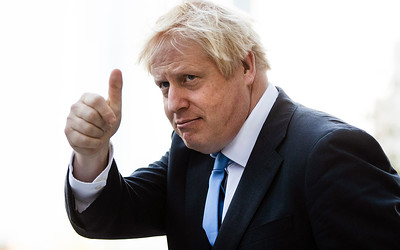
“Here we go again” was the common response last week around the UK last weekend when Prime Minister Boris Johnson broadened what had been regional shutdowns to the second national lockdown. That included casinos and bookmakers, most of whom were only open for less than two months. Johnson said the lockdown would last only until December 2, but the first lockdown was extended many times, especially for gaming establishments.

In addition to casinos and betting shops, pubs, restaurants, retailers and any non-essential business was to shut down for a month. What wasn’t shut down this time is sporting events. Midway through the football season, the Premier League will keep playing, without fans in attendance, as it has been all year. Mobile betting apps will clearly be utilized with the high-street shops shuttered.

Noting the previous experience with gaming establishments being closed long after other segments were reopened, the British Betting and Gaming Council urged the government to take a “science-based approach” to a second reopening.

BGC Chief Executive Michael Dugher pointed out that casino and betting shops have spent millions of pounds ensuring that their locations are safe and secure and any delay in reopening once the current lockdown is lifted, will only be arbitrary.

“Nothing matters more to our industry than the safety of our staff and customers, which is why we want to contribute to the national effort to defeat this virus,” said Dugher.

“We also welcome the support for businesses forced to close under the second lockdown.

“But when we exit this, the government must have a science-led approach and avoid the arbitrary and unnecessary decisions that led to random closures of casinos and betting shops, which damage employment and revenues to the Exchequer.”

Dugher pointed out that while betting shops were allowed to open following the first lockdown, it was another six weeks before casinos were permitted to reopen.

“It’s also important that when the latest lockdown is over, betting shops are allowed to open safely along with other non-essential retail, as they were in June,” he says. “Casinos, which have the best anti-Covid measures operating anywhere in hospitality and entertainment, should also reopen at the same time.”

Additionally, Dugher explains that betting shops are a principle agent for funding some of the sports leagues and organizations.

“At a time when there is widespread despair among sporting bodies,” he says, “the government also needs to recognize that a healthy betting industry is vital to the funding of sport, and that betting shops in particular are critical to the financing of horseracing.”

Meanwhile, Scottish casinos were forced to close last week when the government elevated them to Level 2, meaning that they spread Covid. Casino owners vigorously disagreed.

John O’Reilly, the MD of Rank’s Grosvenor casinos in Scotland, pointed out that his casinos have gone to extraordinary lengths to be safe.

“In our five Scottish casinos, we have ID scanning technology which captures the data of every customer entering our venues,” he says. “Thus far, across the UK, we have had over 400,000 customer visits from over 135,000 customers and we are aware of just two cases of customers having been positively tested for the coronavirus, neither of which have been in Scotland.

“Our venues are indisputably Covid-secure. Why must they therefore close in Level 2 whilst other hospitality industries can remain open?

“I write to you utterly confused as to why our venues must close in Level 2, extremely worried on behalf of thousands of my Rank colleagues who now face enormous job insecurity in Scotland which need not be the case, and in the hope that even at this late stage, you will follow the evidence.

“If we are treated in line with other areas of hospitality, we will be able to protect jobs, safely give Scottish customers something to be cheerful about, and play a full part in Scotland’s economic recovery.”

Circa Resort Opens in Downtown Las Vegas

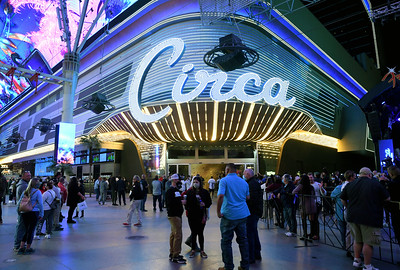
The $1 billion Circa Resort & Casino, which opened just after midnight Wednesday, October 28, represents a number of firsts and “largests.” The first casino resort to be built from the ground up in the downtown since 1980. The first adults only casino resort in the city. Nevada’s largest indoor bar, the “Longbar” 165 feet long. The world’s largest sportsbook with a 78 million pixel screen that 1,000 wagerers can view and which takes ten employees to operate.

Superlatives to describe the resort are ubiquitous, with one MC of the grand opening declaring, “When we stand at Circa, we stand at the threshold of another universe.”

It is also one of the largest and most ambitious casinos, at 1.25 million square feet, that pays tribute to the Golden Age of Las Vegas through its retro design, hospitality that will remind you of the good ol’ days and other homages to the city’s history.

This includes Vickie Vegas, a 25-foot high-stepping world-famous animated neon sign landmark that used to greet visitors to Fremont Street, which has been given a new life at the Circa.

“There’s small design elements from all the eras, and it was really important that we created a space that had elements that people could relate to but also done in a new, kind of exciting way,” Alice O’Keefe, Circa’s director of design and architecture told Best of Las Vegas. “It’s a blend of the old and new.”

She described how Vickie Vegas came to be where it is: “There was a cohesion because she’s this vintage sign in this new, shiny casino,” she said. “Her being here as a backdrop to the main entrance and above Barry’s Downtown Prime steakhouse and being able to see her from the second level, it all culminated and came together really nicely.”

But the nod to its past doesn’t keep the Circa from also employing a high tech system to move patrons around and breath-taking amenities brought to life by world-famous chefs.

The Circa was born in the brain and imagination of CEO Derek Stevens, who in June gambled everything that patrons would want to return to Las Vegas in large numbers when the city reopened after several months of the pandemic shutdown.

Several hours before the general public was allowed in, Stevens hosted a black-tie gala for some of Las Vegas’s glitterati and many of the partners that made the Circa possible, where he said, “For the past five years, the Circa team and our partners have been devoted to introducing a resort and casino experience that brings something totally new to Vegas, and in some cases, the country.” He added, “I will be the first to admit that 2020 has not been easy, but this talented group persevered and has delivered on this vision, 8 weeks early. I’m incredibly proud to be putting 1,500 people to work and that our doors are finally open for all to visit Circa.”

Once the public was allowed into the Circa, one of them, Andrew Citores, owner of Getaway Club, a travel agency, exclaimed to CDC Gaming Reports, “It’s absolutely amazing. There’s really nothing like this Downtown,” adding, “We’ve only seen 10 percent of it and we’re already so impressed. You would expect this property to be on the Las Vegas Strip.”

The resort is built around the three-story Circa Sports, where the hi-def screen, which takes 10 people to operate, can play 19 games simultaneously.

It can accommodate as many as 1,000 player in luxurious recliners and booths for groups, all with access to power outlets, Wi-Fi and tables. They can also have food delivered to them Circa’s selection of restaurants.

VSiN, the Sports Betting Network provides in-depth analysis from a permanent studio onsite.

The two-story casino offers 8,002 square feet of gaming, 1,350 slots and the celebrated Dancing Dealers at 49 tables.

The Garage Mahal has a satellite Circa Sports outlet next to the entrance. The eight-story parking structure can accommodate almost 1,000 cars. It is the first in the city built around ridesharing. It is well-lit, equipped with wifi and high-tech surveillance. The lighting is designed to eliminate dark corners. Co-owner Greg Stevens described it as “the brightest, cleanest parking experience you’ll see just about anywhere.” It is also fully integrated with Uber and Lyft—it was in fact designed with them in mind.

Stadium Swim offers six temperature-controlled pools, swim-up bars and a huge LED screen. The pool amphitheater has games running all day. There are 30 cabanas, including larger ones that can accommodate up to 50 guests. Derek Stevens calls it “an attraction,” telling the Sun, “A lot of pools in the history of Las Vegas were really designed as an amenity to the hotel. This hotel is almost an amenity to Stadium Swim.”

In a recent interview with GGB News, Stevens described the different kind of clientele—the independent traveler— he is aiming for with his casinos, and how that relates to how the city is coming back after Covid: “The bigger and mid-size conventions are going to take a little longer to return. But independent travelers are saying they want to come back to Las Vegas.”

To maintain guests’ safety from Covid-19, Stadium Swim employs state-of-the-art ultraviolet light sanitation, chemical monitoring systems that directly attack microbes, all reducing the need for chlorine.

The restaurant line up boasts names such as Barry’s Downtown Prime; Saginaw’s Delicatessen; pan-Asian cuisine from 8 East; Victory Burger & Wings Co.; Project BBQ, a permanent food truck offering Southern gourmet smoked meats, including the Hogstravaganza platter, an entire barbecued pig. Jack Pots is a 24-hour coffee shop created by restaurateur Paul Saginaw and coffee roaster Steve Mangigian.

Bars include Vegas Vickie’s where you can see the neon cowgirl kicking her boots high in the air; the Mega Bar, home of the 165 ft. long bar; the Circa Bar, serving 24 frozen cocktails and the Overhang Bar, which gives an aerialist’s view of the sportsbook screen.

The Marshall Retail Group put together the venues at the Circa, including Circa Collections and Fuel, offering apparel, souvenirs, treats etc. Circa Essentials has tables of merchandise dedicated to Elvis Presley, including Elvis bobbleheads. Another, Circa Swim caters to those who will be visiting Stadium Swim.

The 777-room hotel tower will open just prior to New Year’s.

Although Las Vegas has seen a 29 percent uptick in violent crime in recent weeks, especially gun crime and assault, Derek Stevens and his brother Greg are happy with their security measures. Derek told TripAdvisor, “There’s been a lot of evolution with security measures here over the past few months.”

Among the security arrangements: guests must use a room key to use the elevators. They will have access to their room’s floor and public floors, but prevented from visiting other floors—discouraging roaming the hallways. If friends or family are on another floor they can get their via a visit to the front desk.

Greg Stevens told the Las Vegas Review-Journal: “Our security plan was always our security plan. I just thought that was the right thing to do, and it’s what people appreciate. It wasn’t reactionary to anything. It’s just that the technology allows us to do this, so why wouldn’t you?”

In addition, the Circa employs ID and temperature scanning. The former prevents those under 21 from entering the adults-only resort. Greg Stevens commented on the ID checks: “We just think it’s going to create a more efficient and really better atmosphere. We think we can provide much better customer service.” He added, “If the line at the entrance starts backing up, that means we’ve got to get better. So we’ll figure it out. It may slow things down, but remember how it speeds other things up.”

A Downtown Revival

The new casino resort is a 35-story structure, the highest in the downtown.

David Schwartz, a gaming historian at University of Nevada Las Vegas (UNLV), told the Review-Journal that the Circa could lead a revival of Downtown. He said, “It’s literally been decades since we’ve seen an investment of this scale in Downtown Las Vegas. So I think this really speaks a lot to where he (Derek Stevens) sees that part of town going.”

He added, “I think it’s definitely a possibility that other people will see that Circa opened, and certainly if they are successful, will see they opened in the most challenging time possible in the last 50 years,.”

Mayor Carolyn Goodman reflected that the “energy” of last decades of the 20th century focused on building in the Strip, which she described as “not only in disrepair and boarded up,” but plagued by crime. It had been recovering from the Great Recession until the pandemic.

However several developments point to a resurgence of Downtown, including a renovation last year of the Stratosphere, rebranding it as “The Strat,” as well as plans for the National Atomic Testing Museum to relocate there and plans to reopen the Huntridge Theater. The mayor concluded, “I’ve been here since 1964, and this is the most exciting it’s been.”

Andrew Simon, chief executive officer of the Fremont Street Experience told the Las Vegas Sun that the opening of the Circa was a “game changer,” adding, “For 40 years, there has not been a new property built from scratch down here. That’s most of my life. It’s a huge deal for Fremont Street Experience.”

As Robert Lang of the Brookings Mountain West think tank at UNLV observed, the downtown was the original place where casinos grew in the city. Only later did the Strip’s giant resorts and conventions come to exemplify the city. The downtown, he says, “has re-emerged in recent years as a niche market for younger tourists who seek a traditional city and vibrant street life.”

“I hope people understand the importance and meaning of this property opening,” Nehme E. Abouzeid, president of consulting firm LaunchVegas told the Review-Journal. “Las Vegas is alive and well and reinvesting.”

A Top Sports Betting Team

Circa Sports director Matthew Metcalf has built the sportsbook on the premise of offering the highest posted betting limits, something that is also true of the other Stevens properties, the Golden Gate and The D.

Metcalf credits Stevens with creating a “mecca” for sports betters, “where they will be able to experience the electricity that can only be found in a Las Vegas sportsbook.” He recently wrote the Las Vegas Review-Journal that the Circa’s opening, “signals to the rest of the world that the demand for the Las Vegas-style sportsbook experience will always be there.”

This flies in the face of current wisdom that the great majority of income from sportsbook comes from online sales, which in some locations accounts for 85 percent of the total amount wagered.

Metcalf counters, “There is a certain energy that permeates a big-time sportsbook,” he said, adding, “It’s the combination of large sums of money being bet, professional and recreational bettors coming together, and the belief that this could be the day that you make the score of a lifetime.”

To do that he recruited a team that includes Nick Kalikas, a top expert on UFC betting, who originated fight lines until some years ago when he became professional bettor. Now he’s back working for the house.

Kalikas helps the Circa manage its risks, while still maintaining $25,000 limits on some fights.

Derek Stevens told the Las Vegas Sun his sports betting philosophy: “With the quantity of sports that’s now necessary to book, you’ve got to have specialists in every area.” He added, “The team Matt put together is pretty terrific.”

Metcalf has been dedicated to sports betting since 2003, when he graduated from the University of Florida, and wrote to several sports book names asking them to give him a chance.

He did that for a while before becoming a professional gambler, specializing on NASCAR and college football. This helped to inform his understanding of the big-time sports bettor and how to appeal to him.

He told the Sun: “I really didn’t understand how much I loved the customer service part of the sports book job until I quit to bet sports and saw how a lot of bettors were disrespected.” He added, “Not everyone was treated the same when they came in. It almost got to a point where I was offended on behalf of sports bettors, and I decided if I got back in the position, I was going to make sure I righted a wrong that had existed — not at all books, but many — for the last 20 years.”

Stevens and Metcalf worked well together, combining Stevens’s emphasis on football and future betting and Metcalf’s interest in low hold percentages, two-way markets and a strategy of keeping bettors happy.

Stevens declared, “Matt really clearly showed what his thought process was on how to build this business, how to build a book for scratch.”

Besides hiring Kalikas, Metcalf also recruited Chris Bennett and Jeffrey Benson, all based on a list in his mind of what he wanted to do. “I didn’t get everybody I wanted, and I still haven’t, but I knew Jeff from Palace Station as the best customer service person in the entire town… and Chris, I had been with him at the Hilton. I had to get Chris,” he told the Sun.

Benson was another person who moved to Las Vegas in 2011 right out of college because of his single-minded determination to get into the sports betting field. Benson recalled that he became friends with Metcalf who eventually asked him to go to work for him.

Benson is sportsbook operations manager at Circa. Besides personally answering many of the emails and phone calls that come through, he is the face of the operation to many people.

He commented, we’re going to try to make ourselves as available as possible. We’re going to have a lot more eyes on us now, and the chance to interact with a lot of new faces and people who are going to come see us for the first time when we open is something we’re excited about.”

Twin River, Gaming and Leisure Buy Tropicana in Indiana

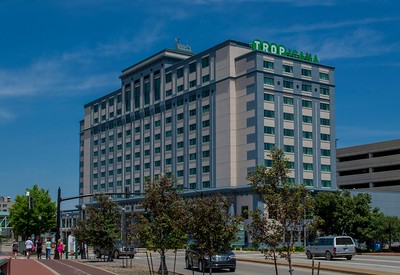
Caesars Entertainment Inc. reached agreement October 27 to sell its Tropicana Evansville casino in Indiana to Gaming and Leisure Properties and Twin River Worldwide Holdings for $480 million. Twin River will buy the casino operations for $140 million. GLPI, a real estate investment trust, will purchase the property itself for $340 million and lease it to Twin River for $28 million a year.

The deal could close by mid-2020, depending on regulatory approvals. Once approved, Indiana will mark Twin River’s 10th state where the company operates casinos.

Tropicana Evansville consists of a 45,000 square-foot casino, four restaurants, and a race and sportsbook. The complex also features 11,000 square feet of convention space adjacent to the casino and a Riverfront Event Center located across the street, according to CDC Gaming Reports.

In a separate deal, GLPI purchased Twin River’s Dover Downs in Delaware for $144 million, which will then be leased back to the casino company for $12 million a year. The two acquisitions allow Twin River to avoid going into cash reserves to contribute its portion of the Tropicana purchase, according to Casino.org.

As part of the approval of Eldorado Resorts purchase of Caesars Entertainment Corp., the Indiana Gaming Commission required Caesars to sell three of its five casinos in the state by year’s end. Tropicana Evansville is the first.

As part of the acquisition, Twin River obtains the rights to Tropicana’s sports betting and iGaming skins. On October 23, the commission approved William Hill to start offering online betting. However, online gaming is not yet permitted in Indiana, but could be on the agenda next year.

“It also provides us with access to an attractive Indiana gaming market, in which we will look to significantly advance our mobile and online sports betting and iGaming initiatives,” Twin River President and CEO George Papanier said in a statement.

Tropicana Evansville and Dover Downs will mark a new operating tenant for GLPI, which owns the land and buildings associated with gaming properties operated by Penn National Gaming and Boyd Gaming.

“We are excited to establish a formal relationship with Twin River as they represent another leading operator to add to GLPI’s growing platform,” GLPI CEO Peter Carlino said in a statement.

Truist Securities gaming analyst Barry Jonas saw the deals as a positive move by GLPI.

“We like the deal as it answers critics concerned over (mergers and acquisitions) and opens Twin River as a new partner for additional transactions,” Jonas said.

The four remaining Caesars properties are Horseshoe Hammond, located near Chicago, and Caesars Southern Indiana, located near Louisville, Ky., as well as Harrah’s Hoosier Park in Anderson and the Indiana Grand in Shelbyville. Caesars expects to retain Hoosier Park and Indiana Grand, both racinos less than an hour from Indianapolis. The company plans to expand table gaming at both properties.

Also last week, Twin River announced it would close the deal to buy the Bally’s brand from Caesars and change the name of the company to Bally’s Corporation, effective November 9. The ticker symbol on the New York Stock exchange will be BALY.

Soo Kim, chairman of Bally’s board of directors said in a statement, “The Bally’s brand embodies a rich history in American gaming and entertainment, aligns perfectly with our current and future growth strategy, and is ripe with untapped innovation potential to help us launch future entertainment services. We thank Caesars Entertainment for entrusting us with one of the industry’s most iconic brands.”

George Papanier, president and chief executive officer, commented, “This is an exciting and transformative moment for our company as we unite the high-quality customer offerings that span our increasingly national footprint under a singular preeminent brand. The Bally’s brand is core to our drive to become the first omni-channel gaming company to seamlessly integrate and operate physical casinos with digital solutions. We remain committed to employing our disciplined acquisition strategy, and leveraging regulatory incumbency as well as our retail customer database, to take advantage of the incredible growth potential that an online future offers.”

Meanwhile, the third quarter success of Gaming and Leisure, fueled in part by results from Hollywood Casinos in Baton Rouge, Louisiana, and Perryville, Maryland. A key cash flow measure and record revenue surpassed Wall Street forecasts.

Wyomissing Pennsylvania-based Gaming and Leisure said its operation funds were $182.2 million, or 83 cents per share, for the third quarter, up from $145.6 million, or 68 cents per share, a year earlier. Forecasts expected 81 cents per share.

Net income rose to $127.1 million, or 58 cents per share, from $90.5 million, or 42 cents per share, a year earlier. Year-to-year third-quarter net revenues and adjusted EBITDA rose by $2.8 million at Hollywood Casino Baton Rouge, which reopened in May, and $3.3 million, at Hollywood Casino Perryville, which reopened in June.

Third-quarter revenue for GLPI rose 7 percent to $307.6 million from $287.6 million, eclipsing the $283 million forecast of Seeking Alpha-polled analysts.

Carlino said the results reflected sound asset management and foresight.

“As a result,” he said, “we have no debt maturities before May 2023.”

Live! Pittsburgh to Open November 24

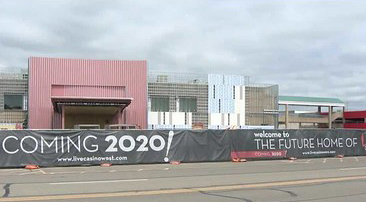
Cordish Companies’ Live! Casino Pittsburgh announced its plans for a Grand Opening to the public on November 24. It will be Pennsylvania’s first Category 4 casino to open. Sometimes called “mini-casinos,” these facilities were created under Pennsylvania’s 2017 gaming expansion law. They must be tied to an existing Category 1 (racino) or Category 2 (stand-alone) casino license.

In this case, the license is held by Stadium Casino, the Cordish subsidiary that owns the license for Philadelphia’s second casino, Live! Hotel and Casino Philadelphia in the city’s Stadium District, which is expected to open early next year.

Live! Casino Pittsburgh occupies a 100,000-square-foot space that formerly was a Bon Ton anchor store in the Westmoreland Mall, in suburban Hempfield Township, around 30 miles from Pittsburgh. The $150 million casino will offer the Category 4 maximum 750 slot machines, and 30 table games. The casino can petition regulators to add another 10 table games after opening.

The property also will feature a FanDuel Sportsbook (both retail and mobile), two restaurants, and a Sport & Social Steel City sports bar.

Prior to opening, the casino will hold charity events November 14-15 to benefit the Westmoreland County Food Bank. There is a ribbon-cutting ceremony slated for November 17, with the Grand Opening Celebration slated for November 24.

“We’re going ‘Live!’ to the general public on November 24th,” said Live! Casino General Manager Sean Sullivan in an interview session with local TV news reporters. “Live! Casino is the latest world-class venue to be opened by The Cordish Companies. It’s going to up the ante on entertainment for everyone in the Greater Pittsburgh region.”

Live! has developed a “Play It Safe” comprehensive plan to safeguard against the Covid-19 pandemic, focusing on mask requirements, temperature checks, social distancing, and repeated cleaning of high-traffic areas, slot machines and table games.

“Our priority is to provide a safe environment for our team members and guests,” Sullivan said. “We’ve gone through extraordinary measures to meet and exceed the state’s Covid-19 guidelines to ensure all of our guests have fun and feel safe.”

Stitt Won’t Appeal Compact Rulings

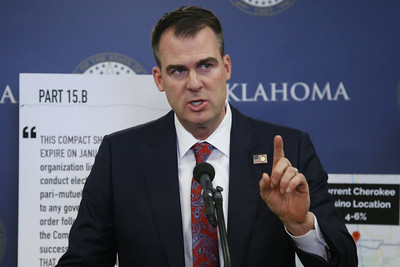
Oklahoma Governor Kevin Stitt recently announced he will not appeal a federal court judge’s ruling that the state’s tribal gaming compacts automatically renewed on January 1. Stitt said, “While I have chosen not to appeal this decision, I believe that the people of Oklahoma will demand a fair deal that benefits all 4 million Oklahomans.” He added he anticipated working with the state’s congressional delegation, other state officials and tribal leaders “to create an environment of fairness, clarity and unity.”

Stitt maintained the 15-year tribal gaming compacts expired on January 1, while tribes said they automatically renewed. Stitt had been seeking higher fees from the tribes in exchange for operating Class III gaming in the state. They pay 4 percent to 10 percent of revenue under the compacts. Stitt said Class III gaming would be illegal without a new compact.

Three of the state’s most powerful gaming tribes sued Stitt in U.S. District Court for the Western District in Oklahoma on December 31, seeking to clarify that the compacts automatically renewed. Several other tribes later joined the suit. In July, U.S. District Judge Timothy D. DeGiusti ruled in favor of the tribes.

The state has paid more than $1.5 million in legal fees to fight the tribal gaming compacts, according to figures released earlier this year.

One reason Stitt decided not to appeal DeGiusti’s ruling over the compacts is, “Our state is facing unprecedented uncertainty as a result of the U.S. Supreme Court ruling in McGirt v. Oklahoma,” a landmark U.S. Supreme Court decision involving tribal jurisdictional issues. “Therefore, it is essential for state and tribal leaders to join together to resolve the challenges this ruling presents for Oklahomans and their businesses,” he said.

In the meantime, the Comanche Nation and Otoe-Missouria Tribe said they will continue to operate under the 2020 gaming compacts they negotiated with Stitt’s office. Tribal officials said they believe the Oklahoma Supreme Court intruded on federal and tribal jurisdiction in its September 15 denial of a rehearing requested by Stitt about the validity of those gaming compacts. Attorney Rob Rosette, representing both tribes, said the casinos will continue to offer Class III gaming under the compacts. “That’s our legal position,” Rosette said.

He added neither tribe will offer house-banked table and card games or sportsbook betting, as allowed in the compacts, unless they are legalized by the Oklahoma legislature. Also, the tribes will observe the 4.5 percent exclusivity fee under the new compacts, not the higher 4 percent to 10 percent sliding rates paid by other tribes under the 2005 compact agreement, which automatically renewed on January 1.

Because they’re paying the lower rate, the Comanche Nation and the Otoe-Missouria Tribe, along with Stitt and U.S. Secretary of the Interior David L. Bernhardt, have been sued by the Cherokee, Choctaw, Chickasaw and Citizen Potawatomie nations. All Oklahoma tribes agreed to the same exclusivity terms that took effect in 2005.

Virgin Hotels Approved in Las Vegas

The Nevada Gaming Commission on October 22 licensed Mohegan Gaming & Entertainment to run Virgin Hotels Las Vegas, making it the first tribal gaming company to do so in the Strip corridor. The Nevada Gaming Control Board recommended unanimous approval earlier this month.

The property, once the site of Hard Rock Las Vegas, expects to open January 15 after a $200 million facelift, according to the Las Vegas Review-Journal. A fall opening was pushed back because of the Covid-19 pandemic. The property will follow protocols and directive from both Nevada and Mohegan Gaming.

Mohegan, which runs its flagship Mohegan Sun hotel-casino in Connecticut, will operate the 60,000-square-foot casino—with 650 slots and 50 table games—under an agreement with JC Hospitality LLC. Virgin Hotels will operate the property’s 1,110 guest rooms, which will be part of the Hilton Hotel’s Curio Collection. AEG will oversee the entertainment. The restaurant lineup will feature several outlets held over from the Hard Rock days.

“I will say that this is a very impressive group of individual applicants — very clean backgrounds with not a single hiccup,” said Commissioner Deborah Fuetsch, of Northern Nevada. “I anticipate this will be a win-win for Las Vegas and Mohegan Gaming & Entertainment.”

The Mohegan Tribe was not required to sign a compact with Nevada because the company leases and manages the property, which does not sit on sovereign tribal land, according to CDC Gaming Reports.

Mohegan Gaming’s nine properties expect to attract 25 million visitors by 2025 and employ more than 22,000. Mohegan Gaming CEO Mario Kontomerkos and longtime Nevada gaming executive Joe Hasson—named general manager in July—said the property will draw customers from Mohegan’s east coast casinos looking to visit Virgin. The property also presents the opportunity to cross-market with a planned $5 billion resort under development in South Korea.

While the resort opens in January, the pool complex won’t come online until March, complete with VIP cabanas, daybeds and a dayclub among the mix.

The resort pool adjoins the Promenade, which will feature the Event Lawn and a number of restaurants—Olives from Todd English; Hakkasan Group’s Casa Calavera; and Kassi Beach Club from restauranteur Nick Mathers—and Money, Baby!, a sports and entertainment venue from Clive Collective, according to Travel Agent.

The two-story dayclub, set for an April debut, will include an open-air stage for a DJ and a music festival. Bars and a poolside restaurant for casual beach food round out the offerings. The outdoor Event Lawn can attract concerts and private events, as does the connecting Manor.

“Our new five-acre pool and entertainment complex will connect the entire property,” said Richard “Boz” Bosworth, President and CEO of JC Hospitality, owner of Virgin Hotels Las Vegas, “and serve as a gathering place for guests.”

Pennsylvania Casinos Fined for Free Play Violations

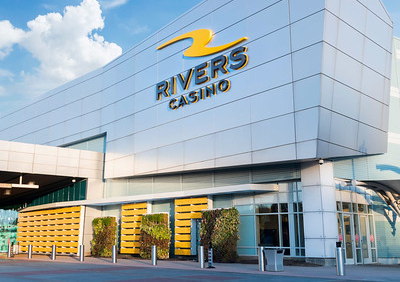
The Pennsylvania Gaming Control Board has issued fines to two casinos for violating the rules surrounding the issuance of free play. Mount Airy Resort and Rivers Casino Philadelphia both were fined for issuing free play comps in excess of the amount authorized under their “Comp Matrix” agreements.

Pennsylvania casinos must submit a Comp Matrix to the board, which, when approved, outlines which employees may issue free slot play and the maximum amount of the benefit authorized to be granted. Both casinos issued free play in excess of their authorized amounts.

The fine of $90,000 against Mount Airy was issued a fine of $90,000 after the gaming board for 491 instances where employees issued discretionary free slot play exceeding the authorized limit—totaling $262,500, including the alleged theft of $140,000 by one employee who has been formally charged with theft.

SugarHouse HSP Gaming was fined $45,000 fine for a similar offense at its Rivers Casino Philadelphia. The gaming board’s Bureau of Investigations and Enforcement found 405 instances in which discretionary free slot play was issued exceeding the property’s Comp Matrix. resulting in $25,562 in free slot play.

Cromwell Becomes Last Caesars Strip Property to Reopen

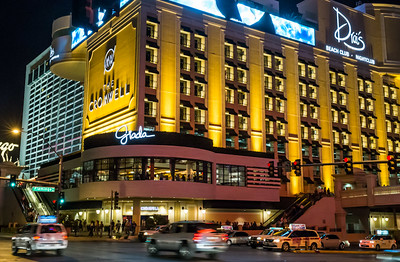
The last Strip resort to remain closed, The Cromwell Hotel Las Vegas, expected to reopen for adults only on October 29. Parent company, Caesars Entertainment Inc., said the boutique property’s hotel and gaming floor will operate seven days a week.

Josh Swissman, founding partner of Las Vegas gaming and hospitality consulting firm The Strategy Organization, said the new emphasis works well for a small location with a focus on its casino.

“There’s no better time to reinvent yourself,” Swissman said.

The policy change marks The Cromwell as the first Strip resort to institute such a plan. The all-new Circa Casino Resort in downtown Las Vegas has a similar age 21 and older rule.

“While Circa has said they are focused on the same 21-plus crowd, we will have to see if this is a long term play or something that is focused on the current climate. I’d view it was a test more than a trend,” Bussman said in CDC Gaming Reports.

For The Cromwell, the adults only theme is an edge other properties do not have post-Covid in the same way Park MGM reopened smoke free, said Brendan Bussmann, director of government affairs for Las Vegas-based Global Market Advisors, according to the Las Vegas Review-Journal.

“Cromwell sees a niche here,” Bussmann said. “It’s listening to customers, and now’s the most important time … to listen to customers to get the faith back up from tourists.”

Caesars picked the ideal casino to test the model, given its past history as Bill’s Gamblin’ Hall and Saloon before it was renovated in 2014. The property still has in-demand gaming offerings, including single zero roulette, double-deck blackjack, “EZ Baccarat” and 100-times odds on craps.

“They have a lot of the… offerings that savvy gamblers seek out,” Swissman said. “It only makes sense that a place that embraces the gambling experience as much as The Cromwell does makes an all-adult move.”

Given the less than stellar outlook of the city’s convention business (and) travel in the near future, it isn’t surprising to come up with a targeted market, said Mehmet Erdem, an associate professor at UNLV’s college of hospitality.

Then there’s brand differentiation, said Nehme E. Abouzeid, president of consulting firm LaunchVegas.

“It allows Caesars to segment its database and put compelling marketing offers in people’s hands, especially as the city tries to build back up its occupancy,” he said.

The lone part of The Cromwell to permit patrons under age 21 will be GIADA, the restaurant run by Giada De Laurentiis. Cromwell General Manager Ken Janssen said guests expect a focus on “hospitality, amenities, and personalized service.”