Author: Casino Connection Staff

Danville, Virginia Competitive Bidding Process Pays Off

Officials said the venue, opening in 2023, would generate $38 million in annual revenues, including $22 million to the city, $12 million in annual supplemental payments and $4.2 million in meals, sales, lodging and property taxes. City officials said the project will create 1,300 jobs.

In last month’s election, Virginia voters in Danville, Bristol, Norfolk and Portsmouth approved casino gambling by significant margins. Of the four cities, only Danville used a competitive bidding process to choose a casino operator.

The city issued a request for proposals in December 2019, and received responses from seven companies. Ultimately city officials chose Caesars Entertainment to develop a $400 million casino resort with 2,000 slots, 75 table games, 16 poker tables and a sportsbook, plus a 300-room 4-star hotel, 35,000-square-foot conference center, 2,500-seat performance venue, pool and spa.

Officials said the venue, opening in 2023, would generate $38 million in annual revenues, including $22 million to the city, $12 million in annual supplemental payments and $4.2 million in meals, sales, lodging and property taxes. City officials said the project will create 1,300 jobs. Meanwhile, Caesars Virginia LLC recently presented Danville Mayor Alonzo Jones with an upfront payment of $15 million, spelled out in the operator’s development agreement with the city if the casino referendum passed.

Jones said, “Today, we take another step forward in our partnership with Caesars Virginia. City council and city staff worked diligently in negotiations with Caesars Virginia to get the best possible outcome for our citizens and bring much-needed revenue. This payment is evidence of that effort, and we look forward to working with Caesars Virginia as this project advances from stage to stage.”

With the payment, the city can move forward with building a new $6 million police department headquarter. City council will determine later how to spend the $9 million balance. Danville City Manager Ken Larking said, “We want to make sure that we use these funds to improve the lives of our residents. This means addressing needs that we’ve not been able to afford and investing in projects and programs that will lead to a strong local economy with economic opportunity for all who choose to call Danville home.”

Richmond officials said they do plan to use a competitive bidding process to select a casino site and operator in summer 2021. Larking said he discussed Danville’s bidding process with Richmond leaders last month.

Larking said the competitive bidding process resulted in better proposals from casino operators. “They knew they were competing against others. If you try to negotiate behind the scenes with one or two companies, it doesn’t create the kind of environment that would push the developer to put forth their best effort.”

City Councilman Lee Vogler noted, “We felt like that competitive bidding ultimately give us the best deal rather than just jumping with whoever came to us early on. If you’re giving everybody a fair shot at it, it really eliminates any possibility of favoritism.”

The city council in Norfolk has chosen the Pamunkey Indian Tribe as its casino operator.

Portsmouth selected Chicago-based Rush Street Gaming for its casino project in November 2019. Portsmouth Director of Economic Development Robert Moore said the city did not hold a competitive bidding process but vetted five companies before choosing Rush Street. Moore said, “We knew what to ask for.”

Portsmouth officials said the $300 million casino project would create 1,400 construction jobs and 1,200 permanent jobs. The city expects to receive $16.3 million in annual tax revenue from the casino resort. It will be built on 52 acres owned by the city’s economic development authority, which would sell the property to the casino gaming provider for $10 million. Moore said the city and Rush Street are awaiting state licensing.

Recently the Bristol Virginia City Council voted unanimously to certify HR Bristol LLC as the city’s preferred gaming operator for the $400 million Hard Rock Bristol casino resort at the former Bristol Mall. HR Bristol, the only company to submit a proposal, is expected to apply for a gaming license by April 2021. The Virginia Lottery Board will have finalized casino regulations by then.

City Manager Randy Eads said, “The city has now completed everything it needed to in order to move this project forward.”
Mohegan Sun ‘Bubbleville’ Shows Sports Can Be Safe

For Tom Cantone, it began in March.

“When we and the entire planet closed, I sat in my office with total darkness all around me at Mohegan Sun thinking of a way to bring my team back who were all on furlough,” says Cantone, the senior vice president of entertainment and sports for the Connecticut casino.

Cantone says he reached out to several of his contact.

“This is a time when relationships matter,” he says. “I made one important phone call to our friends at Viacom and proposed that we turn our arena into a bubble broadcast center with no fans but we could still produce live content of their top two sports brands—Showtime Boxing and Bellator MMA. After many operational, legal and health related hurdles, and with no existing protocol playbook, we created one. I totally credit our Mohegan Sun management and our health department for establishing a pandemic guideline that became the protocol model for the state and industry. We combined that with Viacom’s Covid Task Force and after months of planning the first bubble broadcast was on July 24 ‘Live From Mohegan Sun Arena’ seen across the country. The television coverage we received with live opening footage of our property and continuous exposure during hours of  the broadcasts were a marketing bonus for our brand.”

The Mohegan Sun’s experiment in Covid-safe sports tournament protocols, which became known as Bubbleville, was extended to basketball. It has demonstrated a possibly viable method for ensuring the health of young college athletes, and maybe older ones too.

The two-week tournament of nonconference games was watched closely. It included teams from UConn, Boston College, Hartford, San Francisco, USC and BYU.

The different floors were cordoned off so strictly that the story is told of one coach who wanted to buy a candy bar had to be accompanied by a security detail.

Mohegan security details were deployed on every floor 24/7. Teams were strongly encouraged to move in groups rather than singly.

This experiment was spearheaded by Cantone, Greg Procino, vice president of basketball operations for the Naismith Memorial Hall of Fame and Gazelle Group CEO Rick Giles.

Procino told CBS Sports, “There is absolutely nothing that compares to this experience,” Procino said. “This experience has been a daily, round-the-clock rollercoaster that has forced all parties involved to be nimble and flexible. Add into that the layers of extra measures and plans needed from a health-and-safety protocol to carry out an event that has not existed in this type of format inside of our sport. And although we all trust our abilities to succeed, we continue to learn and adjust on a daily basis.”

Each team that participated had to provide documentation of negative Covid test results for every person in the party within 24 hours of travel and then had to submit to another test upon arrival and quarantine until the results came back.

“Our strict bubble protocols called for teams to submit the latest testing procedures that included saliva samples, and were tested both before arrival and upon arrival and then kept in quarantine to practice and play each game,” Cantone says. “They were also tested day before every game played as well.”

Anyone leaving their assigned floor required a security escort, and then transport to the Mohegan convention center, where meals and more tests awaited. The same protocol was in effect for traveling back to the Expo Center. And only those routes were employed.

Anyone outside of their rooms were required to be masked, unless actually eating or drinking. They were required to maintain 25 foot distance from persons not in their group.

Some schools had to cancel their participation because one team member tested positive.

“We expected some issues as the virus spiked around the country,” says Cantone, “but we had enough teams from many different basketball groups to successfully reschedule games and find opponents while they were here. It was a unique circumstance that everyone involved showed great flexibility with.”

Giles commented, “When Maine and Stephen F. Austin had to leave that first morning, it shocked my system. Candidly, it worried me about how this was going to work out. However, it reinforces how important it is to have tight protocols and we have been fortunate that our testing and security has enabled us pull this off.”

Procino added, “Nobody is bulletproof from the COVID-19 pandemic. We certainly don’t have all the answers and have no playbook, but we have the right team that has gotten us this far.”

More than two dozen teams participated in the event.

With the college basketball season under way with different protocols in every league, the NCAA is looking into putting their “March Madness” tournament inside a bubble. While Indianapolis is mentioned most frequently as a site, Cantone says he’d be eager to host the event at Mohegan Sun.

“With the success of Bubbleville and the Viacom residency,” he explains, “we have become the go-to staging area to produce and broadcast sports programming in a safe and healthy environment for players, coaches, and media outlets.”

California Tribes Near Putting Sports Betting on Ballot

A coalition of California’s gaming tribes and racetracks say they have gathered enough signatures, more than 1.4 million, to qualify a sports betting measure for the 2022 ballot. They only need to have 997,000 to qualify a referendum.

They made the announcement last week on Twitter.

Some argue that legalizing sports betting could help put a dent in the state’s gargantuan $54 billion debt caused by the ravages of the Covid-19 pandemic.

The pandemic initially delayed and almost derailed the 20 tribes’ efforts, which began about a year ago. However a state judge extended the deadline by 90 days during the summer.

The group’s spokesman Jacob Mejia, vice president of public affairs for the Pechanga Band of Luiseño Indians, declared that “more than 1.4 million Californians signed the petition, reflecting strong support to allow sports wagering in a responsible manner as set forth in the initiative.” He added that the initiative “will regulate sports wagering and generate new revenues for public safety, mental health programs, and more, while giving Californians the opportunity to participate in this activity.”

He speculated that the measure could end up on next year’s ballot if the legislature takes action to put it up earlier than state law says.

Some analysts estimate that the Golden State could generate over $1.4 billion in sportsbook bets the first year and double the following year if mobile and retail operators are combined. However, since the tribes’ initiative offers only brick and mortar sportsbook, that figure could be considerably smaller.

Deutsche Bank gaming analyst Carlo Santarelli wrote: “In a retail-only market, we believe state gaming revenue forecasts would likely need to be reduced by anywhere from 30-50%, if not more.”

The tribes’ antipathy towards the state’s 72 card clubs is contained within the provision that locks them out from participating in sports betting.

Another provision that is controversial prohibits betting on college or university games.

Santarelli sees the lack of mobile wagering as a “clear flaw,” adding, “We see the initiative, in its current form, as a net negative.”

He noted that there is a divide between tribal leaders on mobile sports betting, with some wanting it and others worried that it could eat into patronage at their physical casinos.

California lawmakers earlier in 2020 revived a previous bill that would have legalized sports betting but also allowed participation by cardrooms, racetracks and both mobile and retail sales.

They gave up their efforts in June. Of course, those earlier efforts started when the state was projecting a $5.6 billion surplus.

That bill was carried by Senator Bill Dodd and Representative Adam Gray. At the time Dodd declared, “We have a duty to bring illegal sports wagering out of the shadows and support our communities with the revenue,” said state Sen. Bill Dodd. “We can’t afford inaction.”

Dodd and his allies can’t help but notice that other states that have legalized sports betting are making significant tax revenues, the most prominent being New Jersey.

Opponents point to states that haven’t been as successful, and argue that the regulatory costs of sports betting would wipe out any potential profits to the state.

Flutter Increases Stake in FanDuel

Flutter Entertainment agreed to pay $4.2 billion to expand its stake in the sportsbook giant, FanDuel. The agreement, funded with cash and stock, buys out Fastball’s 37.2 percent stake. If approved by shareholders, Flutter will own 95 percent of FanDuel.

Boyd Gaming will own the balance. FanDuel runs eight retail locations at Boyd properties in Iowa, Indiana, Illinois, Mississippi, and Pennsylvania. “We view Flutter as a long-term strategic partner and intend to maintain our ownership stake and our strategic partnership,” Boyd spokesman David Strow said in an email Thursday.

FanDuel currently operates sports betting in nine states with different casino partners including Boyd: Colorado, Iowa, Illinois, Indiana, Michigan Tennessee, West Virginia, Pennsylvania, and New Jersey, according to CDC Gaming Reports.

Macquarie Securities gaming analyst Chad Beynon said Flutter’s deal suggests a FanDuel valuation of $11.2 billion, with Boyd’s 5 percent equity stake worth roughly $560 million.

When Flutter, Flutter, which owns European iGaming properties Paddy Power, Betfair and PokerStars, bought shares of FanDuel in 2018, the valuation was about $559 million, according to Bullpen Capital founder and managing director Paul Martino. Flutter had the option to buy the rest of the company. According to Bloomberg, Dublin-based Flutter overtook GVC Holdings in market value after buying Canada’s The Stars Group earlier this year.

“The fact that they had to acquire at near close to market value, I’m sure all of us early investors can breathe a bit of a sigh of relief as the result of that,” Martino said.

Clearly Flutter came out a winner, according to Justin Birnbaum at Forbes. The original deal had Flutter buying Fastball’s interest in 2023, but spent more to fast-track the transaction to get to reap the rewards of with the growth of sports betting in the U.S.

Sports wagering operates in 19 states and Washington, D.C. The industry drew $13 billion from American bettors, according to the American Gaming Association. With six more states passing bills to legalize and two others with active bills on the floor of state legislatures, that number is poised to grow—and FanDuel along with it.

“Our number one position in the crucial U.S. market is built on many of the assets we acquired through that transaction, supported by the broader Group’s capabilities. Our intention has always been to increase our stake in the business and I’m delighted to be able to do so earlier than originally planned and at a discount to its closest peer,” Flutter CEO Peter Jackson added.

FanDuel has formed partnerships with Fox Bet, Turner Sports and multiple professional teams such as the Detroit Pistons and the New York Giants. Its gross gaming revenue and market share are roughly 1.5 times and 1.7 times, respectively, as much as its closest competitor.

Still, FanDuel’s valuation is just over a fourth of DraftKings’ approximately $40.1 billion market capitalization, according to MarketWatch. However, Martino says this is a factor of Flutter’s complex ownership structure, overseas operations and ultimate liquidity.

“Sports betting is still relatively young as an industry, but we’ve managed to build a great leadership position being the first operator to go north of $1 billion of gross gaming revenue that we’re projected to do this year,” FanDuel CEO Matt King said. “And this transaction is really about accelerating Flutter’s investment in the U.S. market. The fact that you now have states who have been live for a couple years just makes it easier for new states to see, in living color, all the good things that happen when you do this.”

King said he expects the company’s online sportsbook to be available in 14 states and its online gaming products to be in four states, all by the end of 2021.

FanDuel’s rollout in Michigan is currently live in retail, with online gaming coming in a few weeks. The company expects to expand to Virginia in the first quarter of 2021. Flutter projects that its potential gross gaming revenue in the states it operates in could be worth as much as $9.1 billion at maturity.

Martino says Flutter could see 400 percent to 500 percent returns over the next decade as states continue to legalize sports gambling. So even if Flutter sacrificed on price, its high-cost U.S. land grab is worth every penny, Birnbaum said.

“These are going to be behemoth companies that are going to rival MGM and rival Caesars over the next decade,” Martino says. “The fact that these were little startup companies that started in fantasy sports, it’s amazing that they’re going to be topplers of some of the biggest casino companies in the U.S.”

And Now for Details of Maryland Sports Betting

Maryland voters in November decided Question Two by a larger than two-thirds margin to legalize sports betting in the state. It was that rarity, an issue with overwhelming bipartisan support.

Now, says Maryland Lottery and Gaming Director Gordon Medenica, “The devil’s in the details, and there will be many details to come,” before residents can actually play sports wagers.

The state is expected to take in from $20 million to $40 million in taxes, which would be used for elementary and high schools.

Sports betting rivals FanDuel and DraftKings cooperated to spend millions on advertising to convince the voters to support Question Two. Now they are expected to reap the benefits.

The state is surrounded by jurisdictions that have already made the move, including the District of Columbia. Residents were already able to make sports wagers before the voters legalized it, they just didn’t pay any taxes to their home state. But the constitution required a statewide vote.

Details that need addressing include how to award licenses and creating a framework for determining who is eligible to apply for one. Also to be addressed: will there be retail betting or online? Will online providers need to be based in a physical location?

Also to be decided: how to tax wagers.

Sports Betting Coming to Harrah’s North Carolina

The Eastern Band of Cherokee Indians and North Carolina Governor Roy Cooper recently agreed on amendments to the tribal-state gaming compact that would allow the tribe to offer sportsbooks, called the Book, at its Harrah’s Cherokee Casino Resort in Cherokee and Harrah’s Cherokee Valley River Casino & Hotel in Murphy.

Principal Chief Richard G. Sneed said, “We are excited to immediately begin implementing sports betting at our gaming properties. Covid-19 has negatively impacted funding for critical community services within our nation, so we welcome this new diverse revenue stream. The addition of these new services is a positive step towards a more stable and secure future for our tribal members and government operations.”

Harrah’s Cherokee Casinos Regional Senior Vice President and General Manager Brooks Robinson added, “Harrah’s Cherokee Casinos are excited and ready to receive sports fans in Murphy and Cherokee, North Carolina upon final approval.”

Submitted as an emergency resolution by Sneed, Resolution No. 362 (2020) was pass unanimously by the Eastern Band tribal council at its final session of the year. Sneed wrote in a letter to Tribal Council Chairman Adam Wachacha, “Sports wagering is a new and additional revenue source for the tribe. The pandemic has caused a contracting of the tribe’s budget and has put tribal program and entities at risk of financial jeopardy.”

Tribal Casino Gaming Enterprise Attorney Ann Davis said she hoped sports wagering would be in place by the end of January “or maybe in time for Super Bowl. I wouldn’t hold your breath though. There are two issues with the Department of the Interior—Covid-19 and the administration change.”

North Carolina Senate Bill 154 was introduced in February 2019 by state Senator Jim Davis. It passed the Senate on April 9, 2019 and the House in a 90-27 vote on July 15. Cooper signed it into law on Friday, July 26, 2019. The compact now goes back to him for his signature and then to the secretary of state and attorney general, before being sent to the Department of the Interior’s Bureau of Indian Affairs. The BIA will advertise a 45-day public comment period before the document can take effect.

Under the amended compact, sports betting can occur only on tribal lands and only for sporting events that take place outside the reservation. Bettors will have to place wagers on-site at either casino but eventually some limited online betting on tribal lands but outside a casino may be allowed, Davis said. “Once the geofencing software is available, we can geofence the reservation so that bets can be placed outside the casino, as long as they are placed on reservation lands.”

Eastern Band Chief of Staff Ashleigh Stephens said Cooper has asked for $191,000 a year to help defray any costs relating to problem gambling services or regulating sports betting. It’s estimated that we should have around $10 million gross revenues as a result of this, so $191,000 is a small price to pay.”

Kentucky Sports Betting Derailed

Kentucky state Rep. Adam Koenig, a longtime proponent of bringing sports betting to the state, recently said he’ll try again to get a bill passed in 2021 since his proposal failed to gain traction this year during the 30-day session. But sports betting legislation could be derailed again since the state Supreme Court ruled in September that a certain historical horseracing system used throughout the state does not meet the legal definition for parimutuel wagering. “As frustrating as it is for me to say because I’ve put so much effort into sports betting, I think it’s fair to say historical horseracing is going to be number one and it should be,” Koenig said.

In fiscal 2020, handle from historical horseracing exceeded $2.2 billion, generating $33.8 million in excise taxes for the state and creating larger purses for Kentucky’s horse racing industry.

Koenig said the Family Trust Foundation of Kentucky, which brought the civil suit, possibly could ask the state high court for a ruling on other historical horseracing systems offered in the state. However, he noted, “On the flip side, once people experience it and go home and realize their churches didn’t kick them out and life went on as normal after there was the vote, then maybe people will come back and say you know what, that wasn’t so bad, let’s talk about this,” meaning expanding gambling to include sports betting.

Of the seven states that border Kentucky, five have legal sports betting: Illinois, Indiana, Tennessee, Virginia and West Virginia. The issue is moving forward in the other two, Ohio and Missouri.

Koenig suggested that Kentuckians “hound their legislator. It sounds quaint, but it’s the truth. I need backup. Help a brother out. I’m with you in the fact that I want you to do it legally. Contact your legislators and don’t just do it once, keep on them. Because the opponents are louder than you and there’s fewer of them, but the legislators don’t know that because they aren’t hearing from the proponents.”

Michigan Mobile Sportsbooks Possible In January

The Michigan Gaming Control Board (MGCB) said online sportsbooks and casinos will be unveiled in mid-January. The board approved provisional licenses for 15 different platform providers for commercial and tribal casinos’ sportsbooks and casinos on December 10.

Among those selected: William Hill, FanDuel, BetMGM, Churchill Downs, DraftKings, Parx Interactive, Golden Nugget Online Gaming, PointsBet, Rush Street, and FOX Bet.

“The platform providers still must meet other regulatory requirements before online gaming and sports betting can launch in Michigan. The date will depend on how quickly they can fulfill the requirements,” Richard S. Kalm, MGCB executive director, said in a press release.

Conditions include testing the games and obtaining approval of internal controls. The operators can establish their accounts, but wagers cannot be accepted until Board approval.

Oklahoma Sports Betting Not Imminent

In Oklahoma, with tribal gaming compacts essentially a done deal, attention could turn to sports betting. Not that anyone’s in any hurry. Oklahoma Indian Gaming Association Chairman Matthew Morgan said, “There’s no clock ticking on when this needs to get done. I guess it could come up next legislative session, but it may not. I don’t think you’d see most tribal leaders in a hurry to get this done. It needs to be done correctly. And that’s probably going to take time.”

Morgan said the first step toward legalizing sports betting could be to mend relations between the tribes and Governor Kevin Stitt over the compact renewal dispute. “That relationship between the governor and tribal leaders needs to be repaired,” Morgan stated.

Stitt’s spokeswoman Baylee Lakey said, “The governor has been supportive of negotiating with Oklahoma’s tribes in good faith to expand opportunity for all parties and remains committed to working with all Oklahomans on top 10 solutions that deliver a stronger, more prosperous future for our state.” She added, “In April 2020, Governor Stitt negotiated new gaming compacts with the Otoe-Missouria Tribe and Comanche Nation. Among other provisions, the compacts stated sports betting would be permitted to the extent it was authorized by law.”

Stitt had authorized “event wagering” in the new compacts he negotiated with those two small tribes. However, the compacts were rejected by the Oklahoma Supreme Court due to Stitt’s claim he had the sole authority to negotiate compacts.

State Senate Pro Tem Greg Treat noted, “The Oklahoma Supreme Court made clear that any such change would require action by the legislature to amend state law. I’ve consistently said that I think sports betting or wagering is a potential negotiating point for the state in its compact negotiations with the tribes. If an overall compact agreement is reached that is beneficial to all Oklahomans, I will consider it.”

Morgan commented, “I would agree with Mr. Treat. I think he reads the landscape correctly. It has to be an agreement that benefits everyone.” He cautioned sports betting should not be seen as a “panacea” in terms of revenue. “You’re hoping for 3 to 4 percent at the end of the day. I don’t like people saying, ‘We’re going to get hundreds of million dollars.’ But it would help. Everything helps, when the state’s looking for money, when the tribes are looking. Something like sports betting could help.”

Oklahoma Lottery Executive Director Jay Finks said legalized sports betting “is a matter of time. We have so much gaming here in the state already. It’s kind of logical. It’s the next step.” Finks suggested tribal casinos could open sportsbooks while the lottery could oversee online sports betting and casino gambling. “But if you wait, you’re going to lose money to other states. Why not take advantage of it? Why be the last?”

Morgan said he couldn’t predict when sports betting could be legalized in Oklahoma. “I think tribal leaders are willing to have that conversation, but it has to benefit everyone. And there has to be respect. And it has to be in the parameters of what our markets will bear.”

DraftKings Bullish on Future

The CEO of DraftKings said if no new states added sports betting in 2021, he expects his company to experience 40 percent growth. That scenario is unlikely given the states expected to adopt either legislation or regulations. It’s conceivable, DraftKings could see hyper growth if more states join the club, Jason Robins told FOX Business.

DraftKings saw a major increase in numbers in the third quarter, with a 64 percent uptick in business compared to 2019.

“On average, more than a million monthly unique paying customers engaged with DraftKings each month during the third quarter,” the company indicated. Revenue rose 98 percent to $133 million, which was on target for analyst estimates.

Robins credited the growth to the return of major sports in the third quarter including the NBA, NHL, NFL and MLB. The company suffered major losses during the second quarter when the Covid-19 pandemic benched play.

Despite the positive figures, DraftKings had a third-quarter loss of $348 million, or an adjusted 57 cents per share, beating analysts’ expectations. DraftKings recorded a second-quarter loss of $161.4 million, or 55 cents per share, even as revenue grew 24 percent from the prior year to $70.9 million.

“Just this year, we’ve launched in three new states for online sports betting, four if you count New Hampshire. And we also launched two new states for iGaming so we’re hopeful that more states will take action next year and we’ll see even more of the population able to access DraftKings sports betting product,” Robins said.

New York may be the next state to legalize online sports betting, according to reports. New York Assemblyman Gary Pretlow told PlayNY that an online sports betting bill could be approved before the year ends.

Once a stumbling block to a deal, Governor Andrew Cuomo could accept legislation in the next revenue bill as a way to raise much needed tax dollars in the wake of the coronavirus pandemic.

According to Investor’s Business Daily, the bill would set a price of $12 million for an initial license and operators would pay a 12 percent tax.

Connecticut has yet to legalize sports betting, but that has not stopped DraftKings from signing a partnership with the tribe that owns Foxwoods December 7.

“This is a landmark deal in collaboration with the Mashantucket Pequot Tribal Nation as well as a critical next step to bringing America’s top-rated sportsbook app to sports fans in Connecticut,” said Matt Kalish, co-founder and president of DraftKings North America.

Governor Ned Lamont supports sports betting but not exclusivity for the Mashantucket Pequot and Mohegan tribes. According to the two tribal nations in Connecticut, their compacts give them the exclusive right to offer casino games, a right they interpret to include sports betting and iGaming. If that exclusivity is not honored, the tribes could cease payments to the state. The DraftKings deal with Foxwoods could produce $175 million in revenue for the state over a five year period.

Foxwoods might bring in more money without a DraftKings deal, but would have to pay the full cost of advertising and marketing. The sportsbook also brings younger patrons to Foxwoods.

As for enabling legislation, the Senate has bipartisan support for sports betting, but the House, like the Governor, opposes exclusivity. Lamont would prefer to avoid legal troubles with not only the tribes, but with MGM Resorts International, which filed suit in a federal dispute over a joint venture casino in East Windsor. Since the casino would not rest on tribal lands, the process should go out to bid, according to Sports Handle.

“I want to put forward something that works, that doesn’t result in litigation, that gets us off the dime,” Lamont told reporters at his regular briefing on the coronavirus.

Rodney Butler, chairman of the Mashantucket Pequots, said a bill will pass because it can help heal the economy.

“Sports betting will be legalized in 2021,” said Rep. Sean Scanlon, incoming House chairman of the finance committee. “You can bet on it. It’s one of my biggest priorities.”

In other DraftKings news, the company signed a multi-year agreement with the Nashville Predators that names the sportsbook as the official daily fantasy sports and sports betting operator for the team. The partnership comes as DraftKings kicks off its sportsbook in Tennessee, according to CDC Gaming Reports.

“As soon as the Tennessee Sports Gaming Act was passed in April, we immediately began our search for an experienced sports betting partner,” said Chris Junghans, executive vice president and chief revenue officer of the Predators.

DraftKings’ branding and content will become part of Bridgestone Arena, including virtual signage visible on TV, in the Lexus Lounge for all home games, with betting lines visible for in game and pre-game radio coverage.

The two will also share digital and social media content, such as overseeing the team homepage, app and social media giveaways. DraftKings will also be part of the Predator newsletter.

FanDuel Launches SG Sportsbook in West Virginia

Scientific Games Corp. has partnered with FanDuel Group, a Flutter Entertainment subsidiary, marking the U.S. operator’s first online sportsbook launch in West Virginia with the company’s world-class sports betting engine.

While the online FanDuel Sportsbook has been live in West Virginia since 2019, FanDuel Group debuted its new global sportsbook solution developed in partnership with Scientific Games, utilizing the OpenBet betting engine from the company’s OpenSports platform.

Going live with FanDuel Group in West Virginia marks the next chapter of Scientific Games’ longstanding sports betting partnership with Flutter Entertainment, which stretches over 20 years,

Alongside FanDuel, OpenBet is a key component powering Flutter Entertainment’s global sports betting platform for iconic brands like Betfair, Sky Bet and Paddy Power in Europe and Sportsbet in Australia.

“We are excited to roll out our next generation sportsbook technology throughout the United States, starting with West Virginia,” said Matt King, CEO of FanDuel Group. “Our global sports betting platform will offer customers an unrivaled betting experience and will cement FanDuel’s place as America’s number one sportsbook.”

Jordan Levin, group CEO, digital at Scientific Games, said, “Going live with FanDuel’s new sportsbook is a truly landmark moment in our rich history of servicing Flutter Entertainment brands. Utilizing OpenSports technology is a game-changer for FanDuel, and will introduce a new way of betting for its customers. Our dedicated team has been extremely agile and flexible, providing the operator with excellent service in West Virginia.”

Tennessee’s Sportsbook’s Fast Start

Tennessee’s sports betting market had a fast start on November 1, 18 months after legalization with the launch of four sportsbooks, including BetMGM, DraftKings, FanDuel and Action 24/7.

It outshone Colorado in November and was nearly as active as Indiana, both markets of similar size.

There are no official figures yet from the Tennessee Education Lottery Corporation (TELC) but figures from GeoComply indicated 13,278,318 transactions for Tennessee in November, compared to 10,148,006 for Colorado, 15,323,810 for Indiana and 53,904,907 for New Jersey.

A transaction is indicated each time a sportsbook user’s location is checked by GeoComply, which provides this service for the providers.

The Tennessee Education Lottery reported that the handle for November 1-8 was about $27 million. The books kept about $3.1 million of that in winnings with the state charging 20 percent tax on the adjusted gross.

This means the state’s November betting handle was as much as $135 million. The launch was assisted by the fact that it happened during the NFL season. Even so, the state is expected to pass the $200 million monthly handle mark by next spring.

According to Tina Hodges, an owner of Action 24/7, the only Tennessee-based sportsbook provider, interviewed by News4:“ Once we got out the first week and once we got both of our apps live, I could tell every day was just growing in momentum.” She added, “The number of dollars bet is going up every day. Every weekend is bigger than the previous weekend. Our registrations are growing every day.”

Action 24/7 started with a website and recently added Android and iOS apps. Hodges, who believes herself to be the only female bookie in the U.S., added, “We’re also one of the only, if not the only sports books that started from scratch. Most other people have partnered with a casino or have land-based operations.”

Hard Rock, Seminoles Launch Hard Rock Digital

Hard Rock International (HRI) last week announced the launch of Hard Rock Digital, as part of its ongoing commitment to innovation and diversification of its portfolio in high-growth markets. Hard Rock Digital is a joint venture with gaming industry veterans, and will be the exclusive Hard Rock and Seminole Gaming (SGA) vehicle for interactive gaming and sports betting, globally.

Hard Rock Digital will leverage HRI and SGA’s extensive database of more than 130 million customers and footprint of nearly 250 land-based venues across 76 countries to provide an omnichannel offering for interactive gaming and sports betting. Hard Rock Digital will be fully capitalized by SGA, HRI and its partners, providing full financial support and backing for this new joint venture. SGA maintains an investment-grade rating from both S&P Global Ratings and Fitch Ratings.

“With the launch of Hard Rock Digital, we are broadening our digital business, which enhances consumer experiences and offerings across our interactive gaming and sportsbook offerings,” said Jim Allen, chairman of HRI. “Hard Rock Digital also intends to pursue strategic branding and distribution opportunities both within the U.S. and globally. In the U.S. alone, the potential future market size is estimated at $7 billion for sports betting and $14 billion for online gaming.”

Hard Rock Digital will be managed by gaming industry leaders Rafi Ashkenazi, executive managing director and executive chair; Marlon Goldstein, executive managing director and CEO; and Matt Primeaux, executive managing director and president.

Ashkenazi will join Hard Rock Digital in 2021 following a garden leave period. Prior to the formation of Hard Rock Digital, the executives were part of the leadership team that facilitated the growth and transformation of several technology and interactive gaming businesses, including Playtech, The Stars Group, and FOX Bet.

The management team will report to a newly formed, independent board of directors for Hard Rock Digital, which will be chaired by Allen. Hard Rock Digital will be based in Hollywood, Florida.

“We are honored to join forces with Hard Rock International on this new venture,” said Goldstein. “Hard Rock International is consistently at the forefront of innovation and vision in the gaming industry, and the Hard Rock gaming, hospitality and entertainment venues are iconic worldwide. We look forward to providing an authentic digital experience for Hard Rock’s global fan base within a comprehensive, omni-channel offering.”

MGM Launches iGaming in Pennsylvania

BetMGM announced the launch of BetMGM Casino internet gaming site in Pennsylvania, bringing the digital gaming company’s online slots and table games to players in the Keystone State.

Available for download on both iOS and Android, as well as accessible via desktop, players can access slot tournaments, progressive jackpots exclusive to Pennsylvania, blackjack, roulette, and video poker, among other casino and slot games.

BetMGM’s integration with MGM Resorts’ M life Rewards program allows BetMGM customers in Pennsylvania to redeem their game play for experiences at MGM Resorts properties nationwide, such as Bellagio and MGM Grand in Las Vegas, Borgata in New Jersey, and MGM National Harbor in Maryland.

“With more than 140 different games, including our own in-house progressive jackpot network, we’re delivering the widest range of content currently available in the state,” said BetMGM CEO Adam Greenblatt.

This news comes on the heels of the recent announcement introducing BetMGM as the first gaming partner of the Pittsburgh Steelers. It also lays the foundation for the launch of BetMGM’s sports betting offering, which will be available statewide in the coming weeks, pending necessary regulatory approvals.

MGM Resorts International is continuing to benefit from, BetMGM, its joint venture with GVC Holdings. Shares in MGM Resorts rose nearly 2 percent to $30.48 after BetMGM’s announcement that its suite of online slots and table games will be available to players in Pennsylvania.

Group: Pandemic Has Worsened Delaware iGaming Problems

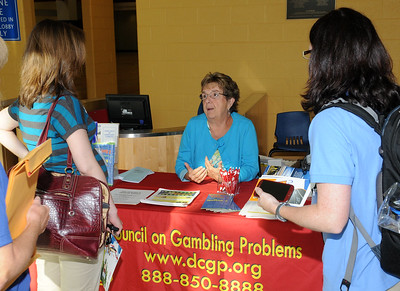
The head of Delaware’s main agency addressing problem gambling says the pandemic has worsened gambling problems due to an increase in online gaming, particularly among younger players.

“People are left to their own devices during the lockdown, and many people have been engaging in technology and different things that they never did before to pass the time of day,” said Arlene Simon, executive director of the Delaware Council on Gambling Problems, in an interview with Delaware radio station WDEL. “So there has been an explosion in popularity of online gaming and gambling.”

She said younger people are particularly vulnerable because they grew up in the digital age. “Particularly among the younger folk and the millennials, these are people who really know how to access online activities, and are more comfortable doing things online, than they are going into, say, a casino or a poker game or something of that nature,” Simon said. “And so we are finding a lot in the younger age groups that are having this problem.”

Simon added that the speed of internet play also contributes to the problem. “For somebody who is interested in gambling, speed is a strong factor. They don’t have to wait to get resolved,” she said to Peter MacArthur on WDEL’s DelAWARE. “Online gambling is very quick. It’s the same reason people buy scratch-off tickets, because they get an instantaneous result. And with online gaming, it’s so easy. If you have a credit card or a debit card, you use that and you don’t even think about how much money you’re spending or how much you’re putting on there, often until it’s too late.”

Everi Supplies Golden Nugget’s 777th Online Game

Everi Digital, a division of Everi Holdings, in conjunction with Golden Nugget Atlantic City, announced that a game designed by Everi Digital has launched on nj-casino.goldennuggetcasino.com in celebration of the online casino’s seventh anniversary. It is the 777th game showcased for Golden Nugget’s online players.

“Golden Nugget is one of the largest and most established online casinos in North America and hosts the largest online game library,” said David Lucchese, executive vice president of sales, marketing and digital for Everi. “We are honored to have been selected to design a custom game for this industry leader as part of their seventh anniversary.”

Warren Steven, senior director, Golden Nugget online gaming, said, “Everi has been a committed partner and has delivered an exceptional game for us to showcase.”

Lottery Commission Approves Full iGaming Licenses

The West Virginia Lottery Commission recently approved full iGaming licenses for the five casinos operating in the state: Mardi Gras, Wheeling Island, Mountaineer, Hollywood Casino at Charles Town and the Greenbrier Resort. Previously the casinos had been granted 270-day interim licenses. Each venue paid $250,000 for a 5-year license.

The Lottery Commission authorized allowing casino license holders to apply for an iGaming license earlier this year, following approval by the legislature. In November, iGaming generated $339,000 in revenue, according to West Virginia Lottery data.

Overall gambling revenue for November was $72 million, a $12 million drop compared with November last year. On-site and online sports betting and iGaming accounted for about $798,000 in revenue for November.

After five record-setting months, Limited Video Lottery adjusted gross revenue fell significantly in November. Revenue from 7,465 video lottery machines in 1,213 bars, clubs and fraternal organizations statewide decreased to $32.7 million in November, down 12 percent of $4.6 million from October, and down $40,000 from November 2019. The November drop-off follows several months of record-setting revenue that occurred after the bars and clubs were shut down for more than 10 weeks due to Covid-19. The all-time record month was June, the first full month after the shutdown, when LVL took in $40.88 million. For the first five months of fiscal 2020-21, LVL revenue is up about $6 million compared to the same period for fiscal 2019-2020.

Sales of traditional scratch-off and online lottery tickets also dropped in November to $14.3 million, down $3.6 million from October. However, racetrack video lottery grossed $39.7 million, up $4 million from October, and down just $10,000 compared to November 2019. Casino table games grossed $2.88 million, up about $770,000 from October, and roughly the same as November 2019 numbers.

For the month, overall Lottery revenue totaled $90.46 million, down $3.34 million from October, but up about $1.21 million from November 2019. The state took in Lottery profits of $40.82 million in November, down $710,000 from October.

For the first five months of fiscal 2020-21, the lottery grossed $463.34 million, a drop of $7.51 million from the same period in 2019. For the fiscal year to date, the state’s share of lottery profits was $207.75 million, a decrease of $4 million from the same period in 2019.

Meanwhile, Rush Street Interactive recently announced it will partner with Century Casinos to offer its iGaming app in West Virginia, making it the fourth mobile casino operator in the state. Rush Street’s BetRivers brand will be one of the skins offered by Mountaineer Casino, Racetrack & Resort in Park in New Cumberland, pending West Virginia Lottery approval next spring.

BetRivers West Virginia customers age 21 and up may register for an account now and enjoy free-play casino games on the site while the company awaits state approval.

RSI President Richard Schwartz said, “In neighboring Pennsylvania, RSI is the clear leader in online casino market share, thanks to our secure and reliable platform, player-first attitude, transparent approach to customer service, large game library, fast payouts and innovative playing experiences,. In partnership with Mountaineer Casino, Racetrack & Resort, we are pleased to have the chance to offer gaming fans in West Virginia the unparalleled experience and service our customers have come to expect via BetRivers.com.”

Through October, RSI’s PlaySugarHouse online casino posted a slots handle of $1.8 billion in Pennsylvania for the 2020-21 fiscal year. Statewide handle was $4.3 billion for the same period. No other iGaming slots operator achieved $750 million in that time frame.

Currently, DraftKings and BetMGM offer iGaming in West Virginia, and Golden Nugget Online Gaming recently acquired an online skin with the Greenbrier.

The West Virginia legislature approved iGaming in 2019 but finalizing and implementing regulations took more than a year. For the first three months since its September launch, iGaming—online slots and table games–took in $288.7 million, producing $7.3 million in revenue for operators and $1.1 million in taxes for the state.

In comparison, sports betting, which launched in West Virginia last year, has a total handle of $239.5 million for fiscal year 2020-21, which started in July; online wagers account for $164.3 million of that amount. Total sportsbook revenue is $18 million, including $1.5 million in tax revenue for the state.

Besides West Virginia and Pennsylvania, online casino gaming also is legal in New Jersey and Delaware, and will debut in Michigan within the next few weeks.

Michigan to Go Live with Online Wagers in January

The Michigan Gaming Control Board (MGCB) said online sportsbooks and casinos will be unveiled in mid-January. The board approved provisional licenses for 15 different platform providers for commercial and tribal casinos’ sportsbooks and casinos on December 10.

Among those selected: William Hill, FanDuel, BetMGM, Churchill Downs, DraftKings, Parx Interactive, Golden Nugget Online Gaming, PointsBet, Rush Street, and FOX Bet.

“The platform providers still must meet other regulatory requirements before online gaming and sports betting can launch in Michigan. The date will depend on how quickly they can fulfill the requirements,” Richard S. Kalm, MGCB executive director, said in a press release.

Conditions include testing the games and obtaining approval of internal controls. The operators can establish their accounts, but wagers cannot be accepted until Board approval.

China Moves to Clean Up Cyberspace

China’s Cyberspace Administration has shut down 105 mobile phone apps, including that of U.S. travel giant TripAdvisor, as part of a crackdown on internet content the government considers undesirable.

The agency said the apps are the first of many that will be taken down as part of a sweep targeting obscenity, pornography, prostitution, violence, fraud and gambling, according to a report on industry news site Asia Gaming Brief.

The goal, the agency said, is “to create a clear cyberspace.”

It wasn’t known why TripAdvisor was included, but AGB speculated it could be because the app allows travelers to book accommodations at resorts that include casinos.

Without providing details, the government said earlier this year that it is compiling a “blacklist” of foreign gaming jurisdictions from which Chinese citizens would be banned.

TripAdvisor had no comment, according to the report.

The site had ranked 150th in popularity in China’s Apple App Store, according to a recent survey cited by AGB.

Golden Nugget Online to Go Public, Split from Casino

The New Jersey Casino Control Commission last week granted a casino license to Golden Nugget Online Gaming LLC, and approved the internet casino subsidiary’s request to merge with a purpose acquisition company to become a public company traded on the Nasdaq exchange.

The move was approved at a special meeting of the commission the day before Thanksgiving, requested by Golden Nugget casino owner Tilman Fertitta. Federal regulators must still sign off on the deal.

The approval comes as Golden Nugget Atlantic City continues to be the market leaders in online gambling in New Jersey. In 2019, Golden Nugget reported more than $177 million in online gaming revenue. The land-based casino only generated $22 million more than online for the entire year. Through the first 10 months of 2020, Golden Nugget has won more than $263 million from online gaming.

The license granted to GNOC makes the entity an internet gaming affiliate of Golden Nugget casino. The entity itself will merge with publicly traded Landcadia Holdings II Inc., a “blank check” acquisition company established by Fertitta that currently trades under the symbol LCA. After the merger, the new public company would trade under the symbol GNOC.

At the special meeting, Golden Nugget Vice President and Treasurer Richard Liem testified that the merger would allow Golden Nugget Online, New Jersey’s top online gaming site, to access capital to enable it to compete with larger operators in the expanding U.S. iGaming market.

“You need to have adequate access to capital to be able to grow and compete effectively in this nascent and very quickly growing industry,” Liem said, according to the Press of Atlantic City.

A representative of the state Division of Gaming Enforcement, Dylan Thompson, expressed concerns at the hearing that the deal could hurt Golden Nugget Atlantic City, which has benefited greatly from the iGaming revenue boost.

“The transaction would deprive (the casino) of the much-needed cash flow from internet gaming on a permanent basis,” Thompson said.

Because of this CCC Chairman James Plousis recommended conditions be added to the merger agreement to protect the land-based casino’s revenues.

“While there may continue to be variations in Golden Nugget’s online gaming versus land-based gaming revenue, particularly as the industry as a whole works to recover from the impact of Covid-19, I am satisfied with the petitioners’ assurances that they are committed to Golden Nugget Atlantic City’s ongoing financial stability,” Plousis said, according to the Press. “I am convinced that Mr. Fertitta will protect Golden Nugget’s brand of excellence and elegance, and will do so by supporting, maintaining and ultimately growing the Atlantic City casino hotel facility.”

In related news, Golden Nugget Online Gaming entered into a definitive agreement with Danville Development on November 19 to provide online sports wagering and iGaming in Illinois when it becomes legal.

Golden Nugget also agreed to a joint venture with Wilmot Gaming Illinois to build a new casino in Danville, Illinois, pending regulatory approvals. The casino, when opened, will be branded Golden Nugget. Danville Development is a joint venture between Wilmot and GN Danville, LLC, a wholly owned subsidiary of Golden Nugget.

In addition to the online component, GNOG will provide a mezzanine loan in the amount of $30 million to Danville Development for development of the casino. The 20-year agreement required GNOG to pay Danville Development a percentage of its online net gaming revenue, subject to minimum royalty payments over the term.

“The Golden Nugget is a nationally recognized brand and strengthens the submission, provides additional opportunities, and upgrades the overall project,” said James A. Wilmot, vice president of Wilmot.

This marks the Golden Nugget’s first joint venture on a casino project, Fertitta said. “We are honored to be the one selected amongst numerous bidders for this opportunity by the Wilmot family after a highly competitive process.”

Golden Nugget Online Gaming also struck a deal November 23 with Greenbrier Hotel Corporation in West Virginia for the right to offer mobile sports and online casino wagering under the Greenbrier’s licenses, again subject to regulatory approvals. As with Danville, GNOG will pay the Greenbrier a percentage of its online net gaming revenue, subject to minimum royalty payments over the term.

“The partnership with the Greenbrier is an important milestone for Golden Nugget Online Gaming expansion plans,” Fertitta said.

Greenbrier President Dr. Jill Justice said Golden Nugget has proven itself as a market leader in the industry. “We’re confident it will deliver a product that matches the standard that defines ‘America’s Resort,’” Justice said.