Author: Casino Connection Staff

Key Players in Place for Connecticut Sports Betting Bill

Now that Connecticut Governor Ned Lamont has called for the passage of a sports betting bill in his State of the State address, most of the players are in their places for passage of such a bill. Lamont’s support has been necessary to bring all the parties to the bargaining table, especially the gaming tribes who operate the Mohegan Sun and Foxwoods.

At the January 6 address, the governor made a brief mention of sports betting. It was the first time he had gone on record supporting wagering on sports.

Senator Cathy Osten January 13 introduced SB 146, a “placeholder” bill of one paragraph that does no more than call for the passage of statewide mobile sports betting at the two casinos, permits online sales of lottery tickets and allows the lottery to also sell keno games online. It has been referred to the Joint Committee on Public Safety and Security.

Osten has been pushing such a bill for three years. Recently she said she thought the stars were aligned for passage, citing the fact that some opposition that existed last year has evaporated. Most particularly from MGM Resorts International, which had previously fought tooth and nail against expanding Indian gaming at the expense of commercial gaming. And which had tried to insert a very big foot in the door with a proposal for a commercial casino in Bridgeport. This year, however, MGM has its own problems in Massachusetts and doesn’t even have lobbyists in the state.

If Osten’s bill or something like it is adopted, the Mohegan and Mashantucket Pequot tribes will have exclusivity on sportsbook. Which is what they have always insisted is their right through their state tribal gaming compacts.

States around Connecticut have been busily passing sports betting bills, including Rhode Island and New Hampshire, while Massachusetts and Maine could do so this year. New York offers in-person sports betting. All are opportunities for Connecticut residents to cross state lines and make bets whose taxes go to states other than Connecticut.

Both Lamont and his predecessor tried to negotiate a deal with the tribes, without success. Last month Mashantucket Pequot chairman Rodney Butler commented on that: “In fairness, give Lamont the benefit of the doubt, it was a learning curve and new lawmakers didn’t fully appreciate what the tribes had done for the government, for the state. And they didn’t understand what sovereignty meant. But it was critical to get them to understand and it took longer than we wanted, but they needed to understand what sovereignty means and what a government-to-government relationship means.”

Now, it appears that Lamont largely accepts that view, which jibes with what Senator Osten’s bill would do.

There is plenty of time to craft such a bill since the legislative session doesn’t expire until June.

In anticipation of an eventual bill, Foxwoods recently announced a partnership with DraftKings and the Mohegan Sun last year chose Kambi Sports to manage retail sportsbook should it be legalized.

Arizona Governor Calls for Sports Betting

Arizona Governor Doug Ducey January 13 called for sports betting on and off of the reservations. The betting would include fantasy leagues, instant keno and mobile wagering.

This would require the legislature to repeal laws that prevent such activities. It would also require lawmakers to approve of new compacts that Ducey negotiated with the state’s gaming tribes. The existing 20-year compacts expire in 2022.

The governor says the new deal will be more profitable for both the state government and the tribes than the current arrangement.

A spokesman for Ducey commented, “Our goal is to bring Arizona gaming into the 21st century,” adding, “A lot has changed since the first compacts were signed, back when cellphones weren’t the thing they are now. The world looks a lot different today and our proposal is intended to reflect the way people live their lives today.”

Ducey has been pushing for new sources of revenue for several years. Three years ago he advocated keno being added to the games the Arizona Lottery offers, but that hit the brick wall of the existing compacts.

Some sports betting exists in the state at OTB and racetracks, where betting is allowed on horse and dog races. Those businesses are expected to lobby to get some share of what Ducey is proposing.

Oregon Governor Proposes Mobile Sportsbook Expansion

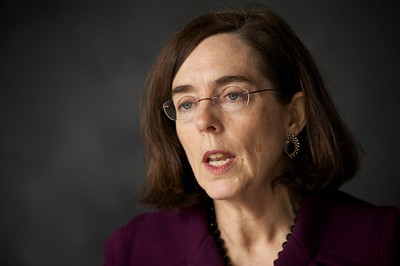
Oregon Governor Kate Brown has proposed taking sports betting away from the Oregon Lottery and its Scoreboard, which is widely perceived as being ineffective since its launch in October, and handing its regulation to the Oregon Racing Commission.

HB 2127 wouldn’t abolish Scoreboard, but it would empower the racing commission to award licenses to other entities and set the standards for operation while setting license fees at a very competitive $50,000 annually.

Scoreboard actually lost $2 million for the state during its first six months of operation.

The commission would also be authorized to set tax rates for sportsbook and decide advertising standards and who may be eligible to participate in betting. In other words, to decide whether someone who has a connection to a college or pro team is allowed to place a bet on them.

Sports betting would also be opened up to collegiate games while requiring that any provider purchase official league data as it sets in-game wagers.

Minnesota Lawmakers Introduce Sports Betting Bills

Minnesota state Senator Karla Bigham—the only state senator who supported sports wagering legislation last session—recently announced she will sponsor a bill that would allow tribal casinos and the state’s two racetracks to offer sports betting. At first, bets only could be placed in person; after one year, bettors could place bets online or on smartphones through tribal casino apps anywhere in the state. Bigham’s bill also would create a new Sports Wagering Commission.

She said sports betting could help the casinos and racetracks financially after Covid-19 setbacks. “Sports wagering is flagrantly done publicly by myself and others, but it is not legal. So why criminalize it? Let’s shine some light on it, let’s put some parameters around it and if the state makes a buck or two along the way, good for us,” Bigham said.

She added tax revenue is not a motivation. “You don’t do legislation like legalizing sports wagering, legalizing marijuana, legalizing fireworks—and I’m supportive of all those—to balance a budget,” she said.

Besides Bigham, state Rep. Pat Garofalo also will sponsor a sports betting bill, as he has for the past several sessions. He said, “I love Minnesota. I’ve lived here my whole life. I just don’t know why we have to be the 45th or 46th state to do everything. Our government can’t do anything quickly. We couldn’t get rid of regulation for 3.2 beer. We just recently allowed Sunday liquor sales. It’s a perpetual unwillingness to let adults act like adults.”

Garofalo’s bill, the same as the one he sponsored last year, would allow sports betting only at tribal casinos. Online and mobile wagering would not be allowed, at least initially. Like Bigham, Garofalo said revenue is not the key issue in the push to legalize sports betting. Instead, it’s a matter of consumer protection, restricting black-market gambling. “States around us are legalizing it and the vast majority of Minnesotans want to see it happen. It would provide consumer protections and allow law enforcement to focus on more important issues,” Garofalo stated.

Minnesota’s tribal nations, however, are not in a hurry to invest in sports betting which they don’t see as especially profitable although it could generate an estimated $30 million to $40 million in annual revenue. Also, it would allow non-tribal operators to participate in gambling in the state. Minnesota Indian Gaming Association Executive Director John McCarthy said his group’s membership “remain opposed to any and all expansion of off-reservation gambling.”

State Rep. Zack Stephenson, the new chair of the House Commerce Committee, said he has no firm position on sports wagering. However, he said the issue is unlikely to have the same urgency as the state budget and response to Covid-19. “We obviously have a really packed agenda, between the pandemic and the budget. I think that makes it pretty challenging to take on a host of other issues. My take would be that I think it’s probably not likely that we’ll do a lot on gaming unless there’s broad consensus among the stakeholders,” Stephenson said.

Governor Tim Walz hasn’t expressed much interest sports betting, although he said he’s open to it if the legislature is.

Mark Davis Buys Las Vegas Aces

Las Vegas Raiders football team owner Mark Davis January 14 bought the women’s basketball team the Las Vegas Aces from MGM Resorts International. The purchase, for an undisclosed amount, is subject to approval by the WNBA.

Davis said in a statement: “I am excited to announce that I have entered into an agreement to purchase the Las Vegas franchise in the WNBA from MGM Resorts International.” He added, “I will have more to say once I receive official approval from the WNBA Board of Governors and have had a chance to speak with the players, coaches and administrators of the team.”

MGM President of Entertainment and Sports George Kliavkoff commented, “Mark is a longtime champion of women’s basketball and we believe he is the right person to lead the Aces into a new era. We will continue our enthusiastic support of the WNBA, NBA and basketball in Las Vegas.”

The Aces had been playing at the Mandalay Bay Events Center, which is operated by MGM. It is unclear whether they will continue to play there.

WynnBet Now in Eight States

WynnBET, the casino and sports betting app from the global leader in luxury hospitality, Wynn Resorts, announce last week that it has secured market access in Ohio, subject to license eligibility and availability, legalization, and regulatory approvals. This marks the eighth state to be added to the rapidly growing list of jurisdictions where WynnBET plans to launch.

WynnBET is currently available in New Jersey, Colorado, and will soon open its virtual doors in Michigan. In addition, WynnBET has secured market access in Indiana, Iowa, Massachusetts, Nevada, and now Ohio; and has submitted for licensure in Tennessee and Virginia. To meet the demands of the quickly moving online sports betting and iGaming industry, WynnBET is fast-tracking discussions regarding market access in more than a dozen other large jurisdictions to be announced. Such market access and licensure are subject to legalization and required approvals by regulatory authorities in each jurisdiction.

Inspired by Wynn Resorts’ expertise in customer service, the WynnBET app offers an ultra-intuitive and highly responsive interface that delivers hundreds of sports betting options to delight both aficionados and beginners alike. With its acquisition of BetBull in 2020, WynnBET is built on a foundation of highly social sports betting technology and one-of-a-kind experiences so that wagering and winning can be a celebrated and shared experience.

PA Betting, BoscaSports Sign Content Deal

Global sports betting data supplier PA Betting Services has signed a global digital sports content deal with leading sports display platform supplier BoscaSports. The resulting service will provide bookmakers and racetracks a range of real-time sports betting updates.

Premium content from PA Betting Services including ratings, stats-based infographics and other bespoke material such as enhanced form guides, race cards and other sport specific content will be regularly refreshed across BoscaSports’ range of display screens in retail betting environments in the U.K., Ireland, Europe and North America.

PA Betting Services is part of PA Media Group, the parent company of PA, the national news agency for the U.K. and Ireland.

BoscaSports will draw on PA Betting Services’ expertise in data collection, sports coverage and content production in all major sports to create impactful displays at scale and in multiple languages. Among the sports covered by the partnership will be horse and greyhound racing and football, with tennis, golf and more to roll out in the future.

The content from PA Betting Services, which is already displayed in a number of independent U.K. retail bookmakers, as well as in Paddy Power shops and on the majority of UK racecourses, will also be used to power new domestic and international opportunities.

The partnership responds to an accelerated move towards completely paperless environments across the retail betting industry. By offering an end-to-end content and display solution for retailers, BoscaSports and PA Betting Services will enable brands to realize cost efficiencies, publish unique promotions, and tailor sport betting content to local outlets.

BoscaSports and PA Betting Services will also work together to develop new products aimed at driving betting activity, creating new revenue streams for retail operators and capitalizing on international growth opportunities.

“This partnership is a hugely significant step for BoscaSports to bring its digital platform to a global sports betting audience,” said Eugene Mitchell, CEO of BoscaSports. “PA Betting Services is providing world-class content across a range of sports, and we are now making that available to retailers in any market in a simple, cost-effective way, and with a proven track record on delivering innovation. We can also provide it in the local language through our automated translation engine, which we recently launched in the Italian marketplace.”

Richard Duncan, head of business development, racing and sports betting at PA Media Group, added, “Combining our expertise in sport editorial, data and content production with BoscaSports’ cutting-edge display technology will provide a much richer experience for passionate sports fans using retail betting shops around the world.

“The scale of BoscaSports’ digital display network will not only broaden the reach of our premium content, but also will allow retail environments to reflect the dynamism of the sports they cover.”

Star QB Favre Signs On as TwinSpires Spokesman

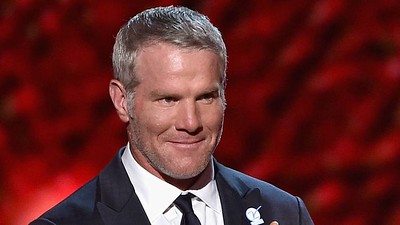
Pro Football Hall-of-Famer and Super Bowl champ Brett Favre has signed on as brand ambassador for TwinSpires, a Churchill Downs Inc. (CDI) brand that encompasses its iGaming, mobile sportsbook and online pari-mutuel wagering businesses.

The multi-year agreement makes Favre the face of TwinSpires’ new Bet Dedicated campaign, which “celebrates the brand’s expansion from offering online wagering on horse racing, to also including online sports betting and casino games.”

According to CDC Gaming Reports, Michigan will be the first state to launch the new campaign.

“As a campaign concept, Bet Dedicated is not only a reflection of our heritage, but also the brand promise we are making to our players,” said Sean Phinney, vice president of marketing for TwinSpires. “Brett epitomizes what it means to be dedicated, and we’re thrilled to have him star in this campaign as we launch the TwinSpires online sportsbook and iGaming platform into Michigan and other states.”

“I knew this was a campaign I could get behind the moment it was introduced to me,” said Favre. “I was never the biggest or the strongest or the fastest, but throughout my career I outworked the guys that had the same dream, because I was the most dedicated.”

CDI recently announced that all of its BetAmerica sportsbooks and its iGaming platform would rebrand as TwinSpires in the first half of 2021.

Virginia Books Scramble for Super Bowl Debut

The Super Bowl on February 7 is one of the largest sports betting events of the year. New Jersey, Pennsylvania, Indiana and other states will attract millions in bets. Virginia hopes to join the club.

The Virginia Lottery, charged with regulating sports betting in the Commonwealth, expects to issue a dozen licenses for mobile sports betting apps in time for the game. The legislature has to first establish the legal language, according to Sportsbetting.legal. Tax revenue projections could top $30 million a year, based on a 15 percent rate.

Mobile sportsbooks tied to the casinos permits revenues to come in without waiting for the physical casino to be built. Proposed Virginia casinos with sportsbook permits include:

  • Caesars Virginia—Danville
  • Hard Rock Hotel & Casino Bristol—Bristol
  • Norfolk Resort Casino—Norfolk
  • Rivers Casino—Portsmouth

The lottery prohibits betting on youth sports, the Olympics and collegiate competition where a Virginia team is involved. Another wrinkle: in-game bets will be accepted for pro sports, but NCAA games will be limited to pre-game wagers.

Puerto Rico Eyes Sports Betting by April

The new head of the gaming commission in Puerto Rico says he hopes to launch the U.S. territory’s sports betting market by April, to coincide with the start of the 2021 Major League Baseball season.

According to a report from SBC Americas, Orlando Rivera Carrión, the new executive director of the Gaming Commission of Puerto Rico, said a few steps need to be completed before sports betting is fully ready for launch. Those include establishing a budget to finalize sports betting regulations, and finalizing amendments to the sports betting law signed by former Governor Wanda Vázquez Garced in the last days of her term.

“The Sports Betting Division has no budget,” We need to provide one in order to finish the regulation,” Carrión told SBC. “We need to provide one in order to finish the regulation.”

The territory’s sports betting law, originated as Senate Bill 1534, authorized wagering on sports and esports in the country, with the mission of prompting “new industries and businesses to create jobs” and “new sources of revenue to sustain government programs and essential services.”

Indiana Sports Betting Handle Tops $1 Billion

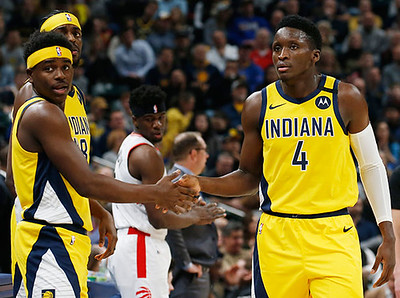
The Indiana Gaming Commission posted December sports betting results, with record handle of $313.1 million, resulting in a 2020 total of $1.23 billion. Mobile wagers accounted for 85 percent of the bets. Football made up 32 percent of the total and basketball brought in 29 percent. The previous handle record of $251 million was set in November. Sports betting produced $2.3 million in tax revenue for the state December and $13.2 million for the year. Since sports betting debuted in October 2019, Indiana sportsbooks have generated $2.2 billion in wagers.

Penn National Gaming’s Ameristar Casino in East Chicago brought in handle of $125 million in December. DraftKings, PointsBet, theScore and the Stars Group all operate mobile platforms there. The venue announced it plans to rebrand its on-site retail sportsbook as the Barstool Sportsbook.

PlayIndiana.com Analyst Jessica Welman said, “A lot went right this fall for sportsbooks, and it was on full display in December. The Indianapolis Colts, Notre Dame and Indiana football all continued to attract significant wagering. Then a full month of college basketball, which is more important in Indiana than almost anywhere else, and the start of the NBA season added a year-end boost.”

Gambling.com Group Vice President of U.S. Business Max Bischel stated, “2020 was a phenomenal year for sports betting in Indiana, which continued to break their own records month over month. Mobile betting was integral to the success of the market and will continue to grow its market share in 2021, likely growing to represent over 90 percent of all bets placed.”

Meanwhile, Indiana state Senator Jon Ford recently introduced Senate Bill 417, which would allow the state’s14 casinos and racinos to offer internet casino games and online poker. Ford said online wagering could produce up to $80 million a year in state tax revenue. He said he hopes the bill will get a hearing this month in Senate Public Policy Committee.

In addition, in a separate bill from Ford’s, state Senator Susan Glick introduced Senate Bill 267, which would allow video gaming terminals inside veterans’ clubs, like the Veterans of Foreign Wars and American Legion, which is headquartered in Indianapolis. Glick said revenue from the machines would help the organizations recoup revenue lost as a result of the Covid-19 pandemic.

Each organization would be allowed to install five video terminals, pay a $150 application fee, with permits renewable every three years. Manufacturers and distributors would pay the state $25,000 upfront, renewable annually for $10,000. Gaming revenue would not be taxed; the veterans’ groups would split the profits with the manufacturer and distributor. Wagers would be capped at $2 and players could win up to $599 on one spin.

The Indiana Licensed Beverage Association also has asked the state to allow its member restaurants to install video terminals. ILBA President Brad Klopfenstein said, “Bars and restaurants have been hurt as hard as or harder than any other industry in the state of Indiana. They need help.”

Klopfenstein said the machines could generate up to $100,000 per year for some restaurants. He noted the organization only wants to install the machines in counties where there are no land-based casinos.

Bluhm’s Empire Flourishes as Sports Betting Grows

Chicago billionaire Neil Bluhm, co-founder of the online casino and sports betting company Rush Street Interactive, has seen his empire flourish as more states have legalized sports betting.

His firm, which he founded in 2012, and has 53 percent stake in, added $1 billion to it assets when RSI merged with the blank check company dMY last month. It was an offshoot of Rush Street Gaming, which owns casinos in three states.

RSI, on the other hand, operates in nine states. Its main competitor is DraftKings, which operates in 11 states. It beats DraftKings in the online gaming market where it commands a 15 percent market share, although DraftKings dominates in the sports betting market, where RSI only has single figures.

RSI offers online sports betting and online casinos. Although it lost $90 million in the first three quarters of last year, sales are expected to grow $320 million this year. It went public last July by merging with a special purpose acquisition company and its stock value has more than doubled since then.

As Bluhm recently told Forbes, “We’re growing like a weed and we’re adding states all the time. The growth potential is tremendous.”

His share of RSI is worth $2.3 billion and his Rush Street Gaming share rounds his net worth up to $6.3 billion.

Bluhm’s empire has two possible roads forward for expansion. Currently sports betting is legal in 13 states and D.C. Far fewer states allow online casinos, but it would be a far more lucrative market if states started to open up to it. And states ARE starting to do that. Bluhm has said he expects more growth to occur in online casinos.

As long as Covid is a factor, online casinos will look good to states as a source of income that isn’t affected by it. States that are looking at allowing online gaming include Florida and New York.

BetMGM Opens Sportsbook At Nationals Park

The Washington Nationals and BetMGM recently announced BetMGM will open a sportsbook this summer at Washington Nationals Park. The deal makes Nationals Park the second D.C.-area professional sports venue to house a retail sportsbook, following Capital One Arena, and the second baseball stadium to announce an on-site sportsbook, after the announcement last summer by the Chicago Cubs and DraftKings for a yet-to-open sportsbook at Wrigley Field.

Lerner Sports Group Chief Operating Officer Alan Gottlieb stated, “The Nationals are thrilled to expand our strong partnership with MGM Resorts into the sports betting realm. As our official sports betting partner, BetMGM will further enhance the greatest in-venue fan experience in Washington, D.C. through its state-of-the-art entertainment products and services.”

The Nationals Park sportsbook will be located at the current Center Field Social space, previously used for special events. The 3,787-square-foot venue will have betting windows, electronic betting kiosks and a restaurant, and “provide a luxury viewing and sports betting experience that complements the existing experience at the MGM National Harbor Dugout Club, an 8-seat premier luxury sports box located on the field adjacent to the team dugout,” according to a statement. The sportsbook will not be accessible from inside the stadium but will be in a “non-ticketed space, which will allow it to remain open and operating 365 days a year,” officials said.

The multi-year deal also will include the use of BetMGM’s mobile wagering app within the area surrounding the ballpark, including a 2-block exclusion zone outlined under the District’s sports betting law of 2019. In addition, BetMGM will have signage inside the ballpark noting its affiliation with the Nationals as the team’s official sports betting partner. BetMGM also will create unique benefits for sportsbook players in its M Life and Red Carpet Rewards programs.

“This new partnership with the Nationals is our most in-depth partnership with a team and showcases the multitude of ways we’re able to engage fans in and out of stadiums. We’re extremely excited to work together to create unique experiences for Nationals fans and the broader D.C. metro area during and after games,” said Matt Prevost, chief revenue officer at BetMGM, a 50-50 joint venture between MGM Resorts and Entain PLC. Live in 11 states, BetMGM is Major League Baseball’s official gaming partner.

MGM National Harbor President Jorge Perez commented, “I can’t think of a better extension to MGM National Harbor’s longstanding partnership with the Washington Nationals. Fans will have the opportunity to experience America’s pastime in the most innovative and exciting way possible. We are thrilled to continue bringing world-class entertainment to the DMV.”

U.S. Appeals Court Upholds Legality of iGaming

A federal appeals court has turned back the Trump administration’s attempt to outlaw gaming on the internet.

The U.S. First Circuit Court of Appeals ruled in favor of the New Hampshire Lottery and its technology provider, NeoPollard Interactive, in a January 20 decision that reverses a 2018 opinion by the Justice Department’s Office of Legal Counsel (OLC) that threatened the legality of all online games, including poker, state-run lotteries and possibly sports betting.

At issue was the Wire Act, a law passed by Congress in 1961 that targeted organized crime by outlawing the use of phone lines to transmit betting information.

The OLC sought to overturn a settled interpretation of the act dating back to the Obama Justice Department, which declared in 2011 that it applies only to sports betting. The OLC pushed a new, broader interpretation, saying the act covers any action where gaming information is transmitted via the internet. This could have rolled back online gaming in the six states where it’s legal and jeopardized as well the sale of state lottery tickets on the web. It might also have clashed with a 2016 U.S. Supreme Court ruling that scrapped an age-old federal ban on sports betting and allows states to regulate the industry, including in cyberspace.

“A change in ruling could have affected not only online gaming that currently operates in a handful of states, but most significantly lottery states, including nearly every state in the Union,” said Global Market Advisors, a leading gaming research and consulting firm, which issued a report on the case. “This could have affected significant revenue sources, either for states that have seen an increase in online gaming revenue through the SARS-CoV-2 pandemic with the loss of lottery revenue, or for major multi-state jackpots such as Mega Millions and Powerball that support education and other services in numerous states.”

Experts say it’s doubtful, in any event, that the incoming Justice Department, led by Merrick Garland, President Biden’s pick for attorney general, would have shared the revised view. It’s expected the department will rescind it and revert to the 2011 interpretation.

“Under a new administration, the DOJ will likely not pursue a rehearing of the First Circuit ruling or petition the Supreme Court to review the case,” Daniel Wallach, an attorney specializing in gaming and sports wagering law, told industry news site CDC Gaming Reports.

Still, the appeals court ruling, which found the Trump interpretation plagued by a “lack of coherence,” is significant.

The three-judge panel said Congress “did indeed train its efforts solely on sports gambling” and that the 2018 reinterpretation “would most certainly create an odd and unharmonious piece of criminal legislation.”

“Neither common sense nor the legislative history suggests that Congress likely intended such a result,” they said, concluding that “We find the plaintiffs’ claims are justiciable and that the Wire Act applies only to interstate wire communication related to sports events or contests.”

The ruling upholds an earlier decision by a federal District Court judge in New Hampshire that “set aside” the 2018 reinterpretation. It concurs also with a ruling previously issued by the Fifth Circuit.

In its arguments NeoPollard claimed the Trump Justice Department’s action had little to do with the law and a lot to do with political cronyism, citing a report in The Wall Street Journal that linked the reinterpretation to a lobbying campaign by the late casino magnate Sheldon Adelson, an inveterate foe of online gaming and the largest donor to Donald Trump’s 2016 presidential run. A senior department official denied this.

“We are very pleased with the First Circuit’s decision, which restores the Wire Act to its intended scope and makes clear that state-run lotteries are not criminal enterprises,” said Matthew McGill, an attorney who represented NeoPollard in the case.

GMA said it hopes all the back and forth will move Congress to finally decide where gaming in the 21st century properly fits in terms of the law and the Constitution.

“This issue should not be governed by executive order or interpretation through the various memos,” the firm maintained in its report. “Both the Obama and Trump administrations were flawed in using this method to govern through the Department of Justice. The issue would be best served by Congress moving to modernize the 60-year-old Wire Act to clarify the act’s policy and no longer leave this to either of the other two branches of government.”

Cuomo Includes Mobile Betting in Budget Address

Governor Andrew Cuomo has made it official. He intends to steer New York’s legalization of mobile sports betting toward a state-managed system similar to a lottery.

The plan was formalized by the governor on January 19 in his State of the Budget address for the 2022 financial year.

Cuomo, who always held that sports wagering couldn’t be expanded to New Yorkers’ phones and laptops without a constitutional amendment, has relinquished that position in light of the Covid pandemic, which has ripped a hole in state finances estimated at $60 billion over the next two years.

Now he’s enthusiastic about the prospects of mobile sportsbooks, and recently described the state as “potentially the largest market in the nation.”

But as the three-term Democrat qualified this in his budget address, “The question isn’t whether or not we do mobile sports betting,” he said. “The question is more how and who makes the profit. This is very lucrative.

“One proposal is we allow casinos to run mobile sports betting. That’s very good for casinos and the people who support casinos.

“The second alternative is to have the people of the state of New York actually get the profits from mobile sports betting and run it the way we run the state lottery. That’s where it’s state-run and the state gets all the revenue.

“I’m with the people. I believe the people of the state should get the revenues. This is not a moneymaker for private interests to collect just more tax revenue. We want the actual revenue from the sports betting.”

According to his plan, the New York Gaming Commission would request proposals with the aim of selecting a provider, possibly more than one, to take bets at the four upstate commercial casinos. In return for the exclusivity, the state would expect a major share of the revenue. In New Hampshire, where sports betting is run by the state lottery in partnership with sports betting giant DraftKings, the state collects 51 percent.

It’s an ambitious plan. Cuomo’s Budget Director Robert Mujica estimates a fully mature market organized along these lines would garner the state $500 million a year, as opposed to a market-oriented, multiple-license system similar to New Jersey’s, which he says would generate only around $50 million.

A 2017 Oxford Economics study estimates that based on a 10 percent tax rate, New York could expect around $123 million in tax revenue a year. This is derived from the firm’s $235 million projection for California, the most populous state in the nation, in an open, competitive market.

On the other hand, Bank of America analyst Shaun Kelley stated his belief last year that legal sports betting could grow to a $15 billion market nationwide in 10 years, with $3 billion of it locked up by the four states with the largest populations𑁋California, Texas, Florida and New York. With about 4 percent of the market, New York could generate $600 million annually, he said.

Either way, Cuomo’s plan appears set for some robust debate with expanded betting’s leading proponents in the Democratic-controlled Senate and Assembly. The gaming committee chairs, respectively, Joseph Addabbo and Gary Pretlow, have jointly introduced a bill to allow the casinos to partner with two sportsbook operators each and would open the market to tribal casinos, OTBs and pro sports venues, permitting 14 licenses in all. At a 12 percent tax rate, the measure envisions $79 million for the state annually at full build-out.

“Unfortunately, at this point it differs with the governor’s intentions, but we are hopeful we can negotiate a successful mobile betting scheme,” Addabbo said at hearings on the bill last week. “This is an inclusive bill that has widespread industry support with analysts and legal scholars in the gaming industry. It really depends how we negotiate this during the budget process.”

It could depend on more than that. There are lawmakers who want to see the bill broadened to include the state’s racinos. There are also potential legal obstacles, some of which echo Cuomo’s previous opposition and center on whether the state Constitution, which was amended some years back to permit sports betting at licensed casinos only, allows the servers required to run such operations to be placed in non-casino settings.

Bennett Liebman, an Albany Law School attorney who previously served as an advisor to the governor on gambling issues, put it this way:

“You’re really playing with some difficult issues here,” he told industry news site SportsHandle. “I’m not sure everyone has thought it out.”

Indiana’s Ford Adds Poker to iGaming Measure

Indiana state Senator Jon Ford recently added online poker to his proposed bill that would allow online casinos.

Ford didn’t include online poker in his original legislation, drafted in October 2020, because he felt that might hurt the bill’s chances. However, following discussions with colleagues and industry officials, he said, “They didn’t think it would be as big an issue as I thought it would be.” He noted he could remove online poker from the measure if the outlook changed later.

The bill would authorize the state’s 14 casinos and racinos to offer online casino games including online poker, and permit each property to have three skins. Operators would pay an initial license fee of $100,000, plus a $25,000 annual renewal fee. Online gaming revenue would be taxed at 18 percent, with 3 percent directed to local governments and 3.3 percent going to problem gambling services. The Indiana Gaming Commission would regulate online gambling.

Ford said online gambling would generate $65 million to $80 million in annual tax revenue. “That certainly helps the argument,” he said. Another plus is the success of sports betting. According to Indiana Gaming Commission data, more than $1.7 billion was wagered on sports in 2020, resulting in $13 million for the state. Nearly 80 percent of sports bets were placed online. “Everyone’s pleasantly surprised with the success of sports wagering. A great percentage of revenue from sports wagering has come from online, so I think it pretty clearly shows the younger generation in Indiana really wants mobile gaming,” Ford stated.

Another bill, filed by Indiana state Rep. Alan Morrison, would repeal the requirement for Spectacle Jack, the new owner of the Terre Haute casino, to make a one-time payment of $1.2 million to the city of Evansville within its first year of operation. One-time payments of $900,000 and $600,000 would follow for the next two years.

The company also would be required to provide hold harmless funding to casino-host cities of East Chicago, French Lick, Hammond and Michigan City during the first four years of operation to compensate for potential revenue losses due to competition from the new Terre Haute casino.

These requirements were included as part of 2019 legislation allowing Spectacle Jack to move one of its gaming licenses to Vigo County.

Morrison said, “Indiana casinos are already taxed heavily, with much of that revenue meant to benefit the communities they’re located in. It’s bad policy to force these gaming establishments to share profits with other cities. Competition in the marketplace is good, and removing these mandatory payments levels the playing field for everyone.”

The measure has been referred to the House Ways and Means Committee.

Delaware Doubles iGaming Revenue

As shown in other states, revenues from online gaming more than doubled in Delaware last year, fueled by demand after the state’s three casinos shut down amid the Covid-19 pandemic.

Delaware Park’s online casino led the charge, earning $3.2 million for the year, up 121.7 percent over 2019. Dover Downs matched the total, coming in only $15,000 under Delaware Park for a 127.1 percent increase. Harrington Raceway earned $2 million

Delaware’s iGaming revenues were $8.4 million for the year, an increase of some 133.3 percent over 2019. Players wagered $227.7 million, up 78.8 percent year-on-year.

Lawmaker to Refile Bay State Sports Betting Bill

Massachusetts State Senator Brendan Crighton is preparing to file a bill to legalize sports betting in the Bay State.

Crighton has been pushing such a bill for two years. The new bill updates previous bills but adds a higher tax rate of 15 percent and a jump in licensing fees from $1 million to $10 million. He says the leadership has warmed to the proposal in the intervening time.

Crighton’s bill would allow the state’s existing casinos, the Encore Boston Harbor, MGM Springfield and Plainridge Park slots parlor to have licenses, plus any entity that holds a horse racing license. Mobile suppliers such as DraftKings could operate either retail or mobile sportsbook. The Bay state lost its last racetrack several years ago. Crighton’s bill would make it possible for one to open under the umbrella of the Massachusetts Gaming Commission.

It would also allow wagers on professional and collegiate teams except for colleges based in the state.

Senator Eric Lesser who was co-chairman of the Committee on Economic Development and Emerging Technologies that was responsible for studying sports betting in the last legislative session—but determined it shouldn’t be part of the economic development bill, has now come around with his own bill.

Last week he told the News Service the “time has come” to join other New England states. What opened his eyes was New York Governor Andrew Cuomo’s announcement that he wants sports betting in the Empire State to become mobile.

That Massachusetts could be left behind has been Crighton’s position from the first, shortly after the U.S. Supreme Court lifted the federal ban and effectively ended Nevada’s monopoly. Two years ago eight states had legalized sportsbook. Now 19 states and D.C. have and three other states are on the verge of legalizing and just need to complete writing the regulations.

Lawmakers and Governor Charlie Baker, who originally had opposed any kind of sports wagers on college teams have been forced to accept it in some form because other states have. Crighton, who originally wanted to exclude college sports, recently said, “If we want people to leave their illegal marketplace and come into a regulated one we need to keep that attraction available to them.”

His bill does not include an “integrity fee” of the type that sports leagues like Major League Baseball have lobbied for in every state considering sports betting.

All in all Crighton thinks his bill finally has a chance of success. He told the Lowell Sun: “After Covid hit, everyone’s focus was on the immediate public health crisis. And that focus really continued up until a few weeks ago. I do think we would have had a debate in other times had we not been dealing with that and I’m confident this session the Senate will be taking a serious look at this and there will be an appetite for debate.”

Mississippi Tries Again With Online Sports Betting

Mississippi state Senator Scott DeLano has introduced Senate Bill 2396 which would amend existing state law to allow online and mobile sports betting. Since sports betting was approved in August 2018, wagerers have been limited to betting on-site at land-based licensed casinos. If lawmakers approve the measure by July 1 and the governor signs it, online betting could launch in time for the 2021 National Basketball Association and National Football League seasons—but observers said that’s unlikely.

The bill did not include details about the number or cost of licenses or the tax rate on revenue. It did specify operators would be limited to one online sportsbook or one betting website per license.

Previously state Rep. Cedric Burnett filed similar bills in 2019 and 2020, which both failed.

Currently Mississippi has 30 casino properties that partner with numerous sports betting brands, including William Hill, MGM, IGT, Golden Nugget, Caesars, BetAmerica, FanDuel, DraftKings and more.

In 2019, sports betting took in more than $370 million in total handle, with $5 million going to the state in tax revenue. November revenue in November reached $8.1 million, a 113 percent increase over November 2020.

Iowa Expects to Benefit From Online Registration

Online sports betting operators Rush Street Interactive, BetMGM and PointsBet have opened sportsbooks in Iowa since the state’s in-person registration requirement expired January 1. Now Iowa bettors no longer have to go to one of the state’s 19 commercial casinos to open a sports betting account.

PlayIA.com Analyst Jessica Welman said, “The in-person registration requirement has unquestionably stunted the growth of Iowa’s online sports betting market, which is the main engine in every state where it is legal. With the requirement in place, Iowa would have never reached its potential as a market. Letting the requirement to expire is akin to correcting a mistake, and we expect Iowa to finally begin to blossom because of that correction.”

In 2019, PlayIA.com projected within five years, sports wagering would top $4 billion annually, with operators taking in revenue of more than $300 million a year and the state receiving more than $20 million a year in taxes.

According to PlayUSA Network, in November, Iowa casinos posted $87.2 million in wagers, ranking seventh out of the 18 states where sports betting is legal–but significantly below the $231.2 million in sports wagers placed in number six Colorado in November.

Since August 2019, Iowa gamblers have wagered $682.6 million in sports bets, with $53.4 million in operator revenue and $3.7 million in state taxes, according to the Iowa Racing and Gaming Commission.

Under state law, sports wagering revenue is taxed at 7.5 percent, with 6.75 percent going to the state’s General Fund. Operators must pay a $45,000 application fee and $10,000 annual license renewal, The Iowa Racing & Gaming Commission regulates sports betting.