Author: Casino Connection Staff

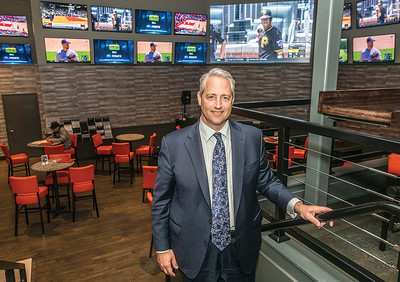
Fertitta Takes Landry’s, Golden Nugget Public

Texas casino and dining billionaire Tilman Fertitta, has taken his company public by merging with the special acquisitions company (SPAC) Fast Acquisition of New York. This gives Fertitta a 60 percent share of a company that’s already on the New York Stock Exchange.

The merged company has a combined value of $6.6 billion. This put’s the gaming sector of Fertitta’s empire, including Golden Nugget and his dining sector, Landry’s Inc., which has 500 restaurants.

Eventually Fast Acquisition will be re-christened as Golden Nugget Entertainment. It will not include Fertitta’s hotels or the Houston Rockets baseball franchise. He will be chairman and chief executive officer.

This gives the Texas billionaire the capital to compete with other gaming companies. He told the Houston Chronicle: “We’re looking to do some substantial mergers and acquisitions in gaming. We want to be aggressive in the M&A world.” Two years Fertitta was outbid by Eldorado Resorts when he tried to buy Caesars Entertainment.

The move represents Fertitta’s change in strategy, from a restaurant focus to building a casino empire and especially toward online gaming.

He told the Chronicle, “I’ve grown my huge net worth by being an opportunistic buyer, and yes, there’s going to be opportunities out there I want to seize upon.”

He said he hopes to be able to take advantage of acquisition opportunities created by the Covid-19 pandemic.

He told Bloomberg, “I want to do big gaming deals. Thirty years ago there was gambling in two states. Now we’re approving new states for online almost on a weekly basis.”

His company was slammed by the pandemic, but he says he expects earnings to rebound in 2021 and 2022, with increased buying leverage.

He plans to use the money realized from investors to retire some of the company’s $3.4 billion in debt.

Murphy Expands Capacity in New Jersey

When you’ve spent a year dealing with the economic uncertainty brought on by the coronavirus pandemic, little things mean a lot. On February 3, New Jersey Governor Phil Murphy increased capacities for casinos, gyms and restaurants to 35 percent from 25 percent, beginning February 5.

The easing of restrictions—in time for the Super Bowl—came about because the number of cases of Covid-19 have declined. Hospitalizations are also down 20 percent over the last three weeks. The increasing number of vaccinations also contributed to the restrictions being eased, according to CBS Philly.

“But when you’re inside and when you’re taking your mask off to eat and drink, just remember, that you are taking on more risk,” Murphy said. “We think it’s a responsible risk. It’s risk that can be safely taken.”

New Jersey will also end the unpopular 10 p.m. service limit on restaurants, but will continue to enforce a ban on sitting at bars.

“It creates a danger of close and prolonged proximity between and among patrons, bartenders and servers,” Murphy said. “However, municipalities or counties may continue to regulate the hours of operation of in-person restaurant service after 8 p.m. This approach gives local officials the ability to respond to unique situations where they are noticing noncompliance.”

Beverage service on the casino floor and restaurant service at the casino restaurants will be permitted after 10 p.m., as well.

The maximum number of people allowed inside a theater will be capped at 150.

“We believe that we can make this expansion without leading to undue further stress in our health care system,” Murphy said.

Live! Philadelphia Opens to Public

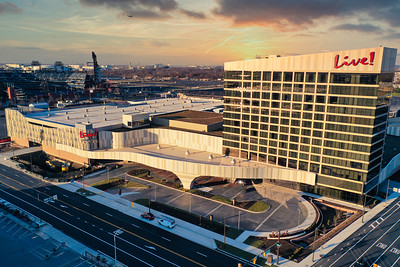
Live! Philadelphia opened its doors to the public at 8 p.m. on Thursday, February 4, a week before the Cordish Companies property stages its official grand opening on February 11.

The property had been open since January 19 for reservation-only Preview Days, and ultimately opted for a weeklong grand opening celebration culminating February 11 with a grand opening featuring fireworks in front of the South Philadelphia property.

“Our team members are ready to welcome the Philadelphia region to experience the world-class gaming and entertainment destination we have created, in a fun and safe manner,” said Joe Billhimer, executive vice president in charge of Cordish Gaming Group’s Pennsylvania properties. “Live! is the casino Philly has been waiting for and deserves, so we’re making it a priority to expand our grand opening festivities to ensure everyone can go Live! safely.”

To prepare for the opening, Live! has developed a comprehensive “Play It Safe” plan that focuses on masking, temperature checks, social distancing, and repeated cleaning of high-traffic areas, slot machines and table game equipment.

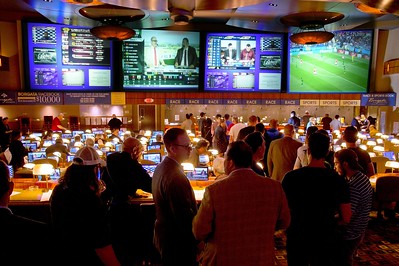
The 510,000 square-foot Live! property features 2,200 slot positions, which includes 80 electronic table games. There are 121 table games with plans to expand to 150, a dedicated 29-table poker room, the FanDuel Sportsbook and Lounge, a six-room Event Center that includes 15,000 square feet of customizable meeting and entertainment event space, and a variety of food and beverage options that include a number of local favorites. An attached multi-level parking facility is augmented by some 2,000 spaces in an outdoor surface lot.

The property also features the upscale 12-story, 208-room luxury Live! Hotel. For reservations, call 888-472-5483 or book online at Philadelphia.livecasinohotel.com.

14 States Could Legalize Sports Betting in 2021

More than 23 million Americans were expected to gamble $4.3 billion on Super Bowl LV, according to research from the American Gaming Association. Though total bets were expected to be down, because crowds couldn’t gather as usual at casino and neighborhood sportsbooks, online bets were expected to increase about 63 percent, for the same reason.

Sports betting has become big business in the U.S. Investment bank Morgan Stanley has forecast a $15 billion market for sports betting and internet gambling by 2025, an increase of 27 percent over current levels. As much as $10 billion of that is likely to come from sports betting, according to the Associated Press.

That’s big bucks, and big bucks are driving many U.S. states to consider sports betting as a source of fresh revenue in a battered economy.

At the end of last year, 20 states plus the District of Columbia had active sportsbooks. Another five approved sports betting, but had yet to go live. Of the remaining 25 states, as many as 14 could be in play this year, if not more, according to the American Gaming Association.

In these states—which include Kansas, Alabama, Georgia and Texas—efforts to legalize sports betting have been pre-filed or introduced in the legislatures, or else voter referendums have been scheduled. The list also includes Florida, where sports betting is unlikely unless the state crafts a deal that can pass muster with the Seminole Tribe.

“Ohio, Massachusetts, Kentucky, and Georgia already have a strong framework to start from this year by virtue of nearly legalizing sports betting last year,” said Jess Feil, AGA senior director of government relations. “While each state has its own unique considerations, we can hope to see at least six states cross the finish line and legalize sports betting this year.”

Even the 11 states not expected to act could consider some form of legislation this year, Feil added. ”Already, we see states that typically are not major players in the gaming industry with sports betting legislation pending, such as Hawaii. And while California doesn’t have active legislation right now, they’re making progress toward a statewide referendum in 2022.”

Visit the AGA website for an up-to-date map of U.S. states with sports betting.

Of course, these best laid plans are subject to change, but here’s where some of these states stand right now:

Alabama

Alabama’s current proposal, House Bill 161, would allow wagering on pro and college sports through licensed venues or through mobile sportsbooks.

The Alabama Sports Wagering Commission would regulate the process, including licensure and could issue as many as seven licenses, each costing $100,000. They would be good for five years, after which operators could renew for an additional $100,000. The legislation includes a 10 percent tax on gross sports betting revenues, payable weekly.

In addition, the bill establishes supplier licenses that carry a $1,000 fee, renewable each year. Management licenses also come with a $1,000 fee.

The bill also establishes the Sports Wagering Fund to distribute the money to various causes, including higher education scholarships. It’s currently with the House committee on Economic Development and Tourism. 

Massachusetts

The Bay State has introduced a bill sponsored by state Senator Brendan Crighton. SB 177 resembles legislation that failed in the past, but with a higher application fee and tax rate.

That prior proposals failed has confounded operators and sports teams, especially in Boston. Meantime, neighboring Rhode Island and New Hampshire legalized mobile sports betting, and Connecticut could follow suit this year.

The new fee for an application jumps to $10 million in this year’s bill, with a tax rate of 15 percent. The proposal prohibits wagers on local Massachusetts colleges and also mandates official league data.

In addition to mobile options, retail sportsbooks could be established at casinos, slot parlors and racetracks as well as Gillette Stadium, Fenway Park and the Boston Garden, according to SportsHandle.com.

“Looking at the states around us, folks are going to bet on sports whether or not we legalize this, but right now the money’s going to the black market and to other states,” Crighton said.

Georgia

In Georgia, House Bill 86, which would legalize sports betting, faces opposition from conservatives and also questions about how to avoid a constitutional amendment. On February 2, the Economic Development and Tourism Committee voted 20-6 to approve the bill, which now heads to the full House.

The measure calls for the Georgia Lottery Corp. to issue a minimum of six licenses to operators, each carrying a $900,000 annual fee. The state tax would be 14 percent. Committee Chair Ron Stephens said the tax could bring in more than $40 million for HOPE college scholarships, pre-K classes and child care.

The bill has the blessing of Atlanta’s four major league professional sports teams, according to the Associated Press. “The teams believe that fan engagement is what sports betting is all about,” Stephens told the committee.

If the lottery runs the show, a constitutional amendment would be unnecessary, as voters already went through the process in authorizing the lottery that way in 1992, Stephens said. That approach remains to be seen.

Kansas

The Kansas Senate has introduced a bill that could lead to as many as a dozen sportsbooks. Under the proposal, each of the state’s four commercial casinos could open a retail sportsbook. Each of the four can also partner with up to three online operators. The state left the door open for Native American tribes to renegotiate their compacts to allow sports betting as well.

The Kansas Lottery, which oversees the commercial casinos, would regulate sports betting, although some lawmakers prefer the Kansas Racing and Gaming Commission.

Senate Bill 84 would feature a 7.5 percent tax for in-person wagers and a 10 percent rate for online bets. The annual licensing fee remains to be decided.

The bill, now in the Senate Committee on Federal and State Affairs, could go through additional committees before the full Senate votes. The House would need to approve an identical version before heading to the Governor’s desk.

Impact On Early Adopters

At some point in the future, all 50 states plus D.C. could have sports betting. And what does that mean for the early entrants into the game, like New Jersey? The 800-pound gorilla of sports betting, New Jersey was the first state across the finish line after the Supreme Court overturned a sports betting ban in 2018. Residents in neighboring states like New York and Pennsylvania began to travel to New Jersey to place bets.

“As more states launch sports betting, especially online or mobile sportsbooks, New Jersey could lose those customers who traveled specifically across state borders to place their bets, but they’re unlikely to lose customers who are residents of New Jersey,” said Jane F. Bokunewicz, PhD, Institute Coordinator, the Lloyd D. Levenson Institute of Gaming, Hospitality & Tourism at Stockton University.

Connecticut, Maryland, Massachusetts, Rhode Island and Virginia could also affect New Jersey’s fortunes, but New Jersey, Pennsylvania and other states can capture more serious bettors by differentiating their sports betting product from other gaming jurisdictions, Bokunewicz said.

“Much will depend on how the different states choose to design their sports betting offering. Of those states that haven’t launched legal sports betting and may not be likely to in 2021, Florida is perhaps the one that would most impact New Jersey, given the frequency of travel between the two states,” she said.

But the impact among states is not a hard and fast rule, said the AGA’s Feil. “We’ve seen that when a state legalizes sports betting, the revenue of its neighboring states is not negatively impacted. For example, Indiana recently had a record October for sports betting, even with a robust Illinois market right next door.”

The hunger for legal sports betting is clearly on the rise. According to Bloomberg News, a man in Houston, where sports betting is illegal, flew from Texas to an airport in Colorado to make a legal $3.46 million bet on Tampa Bay.

Eventually, ubiquitous gaming options “could drive down revenues from states that might now be benefiting from a relative monopoly,” said David Schwartz, a gaming historian with the University of Nevada Las Vegas. “It’s hard to say whether the broader legalization would harm destination markets like Las Vegas, since this was not at all the case pre-pandemic.”

The bottom line is, casual bettors will place bets where it’s most convenient: in their back yard, if they have the opportunity.

PlayStar Casino Launches in New Jersey With Ocean

PlayStar Casino announced that it has entered into a multi-year agreement with Atlantic City’s Ocean Casino Resort, which will provide the newly established online casino brand market access to operate in New Jersey.

PlayStar Casino plans to launch in the second half of the year to players in the Garden State, subject to securing the necessary licenses and approvals from the state Division of Gaming Enforcement.

At the heart of PlayStar Casino’s online offering is an immersive experience that visitors receive every time they walk through the casino’s digital doors. According to the company, this will be achieved through “personalization, engagement, and exemplary customer service that makes players feel like the star of the show.”

“We are delighted to have secured access to the thriving New Jersey market through Ocean Casino Resort,” said Adam Noble, co-founder and executive vice president of PlayStar Casino. “We have shaped our proposition through extensive market research and analysis of customer behavior to ensure maximum engagement and entertainment. This is the first step towards PlayStar Casino becoming a favorite among players across the U.S.”

Joel Wikell, group founder and chairman of PlayStar Casino, added, “For me, it is great to be back in the game, as I founded Boss Media in the mid-1990s and brought many of the earliest online casinos to life. To get back in at this time, when the technology and possibilities have advanced so much, is genuinely exciting. And we’re looking forward to doing it all over again.”

Caesars Appoints New GMs in Atlantic City

Covid-19 or not, when two casinos see gaming revenue declines of more than 40 percent, it’s not surprising when someone gets a pink slip.

Caesars Entertainment in Atlantic City has parted ways with Ron Baumann, whose casinos saw a 46.8 percent decrease in revenues at Harrah’s, in the city’s Marina District, and a 43.8 percent dip at Caesars, located on the AC Boardwalk.

Gregg Klein will assume the role of senior vice president and general manager at Harrah’s. Joseph Lodise will take the same title at Caesars Atlantic City, according to the Associated Press.

Both men have experience in Atlantic City. Lodise, a Villanova grad, worked for Harrah’s for some ten years, serving as vice president of finance until his promotion to general manager with Caesars Entertainment’s Horseshoe Tunica casino in Mississippi in 2017. He spent six months as top man in another Caesars property in Mississippi before coming back to Atlantic City.

A Rutgers graduate, Klein joined Eldorado Resorts in 2018 as vice president of operations, initially working with Isle Casino in Waterloo, Iowa and then Tropicana Atlantic City.

New Jersey Radio Program Touts Gambler Court

Nevada has proven successful establishing gambling courts as a way to treat those who commit nonviolent crimes to feed their compulsive gambling habits. The effort, an alternative to prison, could make its way to New Jersey, a state that’s treated its drug offenders that way for more than two decades.

The idea came up when Dan Trolaro, assistant executive director with the New Jersey Council on Compulsive Gambling, appeared on the program “Hello, My Name Is Craig.” The radio show is hosted by Craig Carton, a recovering compulsive gambler.

“We know gambling is rampant in prison,” Trolaro said. “So for someone who struggles with this problem, putting them in prison when they were leading an otherwise law-abiding life may not be the best chance for their long-term recovery.”

Trolaro has sought the alternative for more than five years, according to NJ Online Gambling.

Former Nevada state judge Cheryl Moss supervised the Gambling Treatment Diversion Court program in Nevada from 2018 to 2020.

“There wasn’t much opposition to the idea, but there were questions about how overwhelmed we were going to be with cases,” said Moss, who was a family court judge for two decades.

But a lack of awareness led to only nine cases in the first two years.

“In my view, this absolutely has been successful,” Moss said. “It’s all about making changes. As a judge, you’re able to make those human connections. We had one young man, he couldn’t get a budget straight, and he kept jumping from one job to another. I assigned him a few projects, and he matured a lot.”

Moss said New Jersey could benefit from something similar, especially as sports betting flirts with $1 billion a month.

Unlike drug and alcohol treatment programs which receive funding on a federal level, gambling programs do not, Trolaro said. “The next three to five years are very concerning. We want to stay ahead of this.”

Carton said his show presents an honest discussion on the bad side of gambling.

“About 10 percent of people who gamble on a regular basis sadly go down the same rabbit hole that I went down,” he said.

Carton’s show led to an uptick in calls to the 1-800-GAMBLER help line from listeners and others who have a stake, Trolaro said.

Viva Las Vaccine?

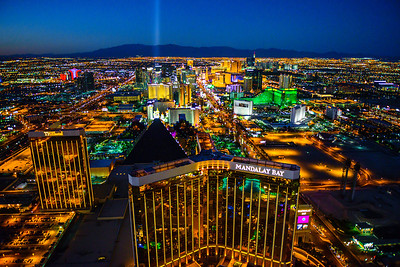
Americans are pining for social interaction. Las Vegas has plenty of that, in quantities like nowhere else. Now it’s a matter of counting down the weeks until it’s safe to visit.

That’s the theme of a new report from investment bank Truist Securities whose author, Senior Equity Analyst Barry Jonas, forecasts a “tidal wave of pent-up demand” for the kinds of experiences Sin City offers when Covid-19 vaccinations become widespread.

“We think investors are looking past near-term pressures, with an effective vaccine rollout drawing enthusiasm for the 2021 outlook,” Jonas writes.

The key is herd immunity, as the medical phrase goes, which should take hold when vaccination rate reaches around 75 percent of the adult population, according to the best science currently available.

“By late summer, all adults who want a vaccine should have access,” Jonas writes. He foresees a “Roaring 20s” style of recovery once that plateau is attained𑁋for U.S. gaming as a whole, and especially for tourism-dependent Las Vegas.

As widely reported, the town has endured probably the most punishing year in its history. Nevada’s No. 1 industry was shut down for 78 days between March and June 2020, and is still operating at capacity limits of 25 percent, along with a strict regimen of health, safety and cleaning protocols.

Gaming revenues statewide plunged by more than 34 percent compared to 2019. The total of $7.87 billion was the lowest since 1997, according to results compiled by the Nevada Gaming Control Board.

It was worse on the Las Vegas Strip, where the meetings and conventions trade has all but disappeared, and with it much of the midweek business that sustains hotel profitability. Visitation to Southern Nevada topped 42 million in 2019. In 2020, it barely surpassed 19 million. It was the lowest annual tally in 30 years.

On the gaming side, the market took a hit of more than 43 percent. The total of $3.73 billion was the lowest since 1996. December’s $272 million, a 50.6 percent year-on-year decline, was the lowest for the month since 1993.

But Jonas believes the Strip can claw back more than 23 percent of the losses this year, shaving them by more than half.

“We think it’s going to entirely rest on the vaccine,” he told GGB News. “I think it’s pretty clear that when people are reassured about safety, it will release a lot of pent-up demand. People are eager to make up for lost time.”

In terms of revenue per available room, a closely watched measure of hotel profitability, this could play out in an increase of as much as 25 percent, he said.

“When you look at the weekends, it’s basically been OK from an occupancy standpoint. It’s been close to 2019 levels. The question is more midweek. That’s the part we’re concerned about.”

As noted, the pandemic has battered convention-based tourism, the business that has largely driven the Strip’s growth in the 21st Century. For nine months in 2020, attendance was exactly zero. The year ended with a total of 1.7 million, down from 6.6 million in 2019.

Unlike with the leisure segment, the issues clouding the return of conventions are far less predictable. Companies have grown used to their employees working remotely and conducting meetings remotely. It may not be ideal, but the savings are difficult to argue with.

“There may be some structural changes” Jonas suggested to GGB News “some near-to-mid-term, some may be permanent where travel is deemed unnecessary in the current environment, in part out of health concerns. But it’s an expense issue, too.”

Which doesn’t diminish the value of meeting in person and doing business face to face, Jonas said. “There’s something about in-person that will never die.”

What’s unknown is how the new world of remote commerce will impact the number of live events, their frequency and the numbers of delegates companies will pay to send to places like Las Vegas.

“This could be a combination of more acceptance for video calls as well as a focus across business for more efficiencies and lower costs,” he said. “I’m not saying it will never return. But there will be a lag. Whether it’s a few quarters or a few years remains to be seen.”

Adding to the near-term unknowns is the sizable new room supply coming online this year in the form of Virgin Las Vegas and Resorts World Las Vegas, slated to debut in the second and third quarters, respectively.

Still, there’s a lot to be said for confidence.

Recent polling conducted by San Francisco-based Destination Analysts, a travel research company, found that 63 percent of Americans say they “desperately” need a vacation, and 84 percent are looking forward to planning a vacation in the next six months.

A Virginia-based firm, Heart+Mind Strategies, recently was commissioned by the Las Vegas Convention and Visitors Authority to conduct surveys aimed at gauging the future of business travel. More than 90 percent of respondents said in January that they miss the face-to-face interaction of in-person conferences. Fifty-eight percent professed to being burned out on virtual meetings and conferences. Seventy-seven percent said they would prefer attending conferences, conventions and trade shows in person. And 74 percent said they believe Las Vegas is best prepared to host them safely.

For Jonas, too, it’s a story he expects will end well, though it will take some time to unfold.

“Once we get to full vaccine rollout, looking ahead to 2022, I can see real enthusiasm around Las Vegas. Ultimately, gaming is an experiential endeavor. It’s the element for which there’s nothing quite like Las Vegas.”

In N.Y., Casino Tax Relief Could Be on the Way

New York’s four commercial casinos could petition the state for tax relief if they can prove hardship.

The proposal, included in Governor Andrew Cuomo’s 2021-22 budget plan, could reduce the tax rate on machine gaming revenue to 25 percent if the properties can make a requisite case, which would include providing state officials with “a complete examination of all financial projections.”

It’s possible they also will be required to reinvest the savings in their physical plants to enhance their marketability.

The casinos are taxed on slot win on a sliding scale, based on the demographics of their markets𑁋from a low of 37 percent at del Lago Resort & Casino in the Finger Lakes and Tioga Downs Casino Hotel in the Southern Tier to 39 percent at Resorts World Catskills Hotel & Casino in Monticello and 45 percent at Rivers Casino & Resort in Schenectady.

The four all pay 10 percent on table game revenue.

“We suggest that the burden be on the operator to demonstrate that tax relief is in best interest of state and operator,” said Mike Pollock, whose Spectrum Gaming Group has been commissioned by the state to compile a report covering all aspects of gaming in New York.

The upstate market was a challenging one for most of the venues even before the pandemic forced them to close last year for nearly six months and has them operating currently under capacity restrictions and other health and safety precautions.

It’s likely all four will seek the tax breaks.

“The challenges raised by the pandemic and the attendant closures made (the need) more critical, particularly raising questions as to whether some properties might need such consideration to remain going concerns,” said Spectrum Vice President Joseph Weinert.

As Rivers put it in a statement last week, “The Covid-19 pandemic presents an unprecedented economic disaster to the city of Schenectady and the state of New York, so we are encouraged that the governor’s budget prioritizes stabilization of the upstate casinos and the preservation of casino jobs.”

Indiana Regulators Order Spectacle Casinos to Stay Open

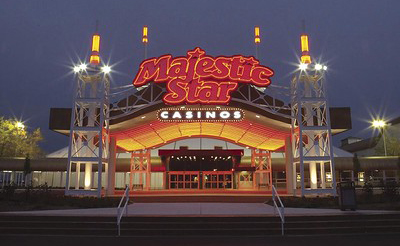
The Indiana Gaming Commission recently told Spectacle Entertainment it must operate its two Majestic Star Casinos in Gary at least until June.

Spectacle planned to close the casinos in March or April when its $300 million land-based Hard Rock Casino Northern Indiana in Gary was due to open. As a result of the commissioners’ order, the new venue could sit empty and unused even after construction is completed.

The commission took the action following a December vote that forced former Spectacle CEO Rod Ratcliff to give up his ownership stake in the company.

According to commissioners, Ratcliff was involved in a scheme to illegally funnel casino company money to a former state lawmaker’s unsuccessful 2016 Republican congressional campaign. He also is accused of failing to cooperate with the commission’s investigation, associating with others impeding the commission’s investigation, acting outside licensing conditions, improperly acquiring and transferring Spectacle ownership units and changing the terms of a trust agreement.

Ratcliff also had employees at his former company, Centaur Gaming, transfer $900,000 to his personal horse wagering account under the description “marketing other.” Ratcliff did not disclose the account’s earnings as required for his state gaming license, a filing said.

In addition, he allegedly offered executive positions at Spectacle Entertainment to two unnamed lobbyists, even though they had no previous casino management experience. One of them was given Spectacle ownership shares and then a “significant monetary settlement” when the job offer was withdrawn. The commission said those actions were not reported to state regulators, as required.

Last September, former Spectacle Vice President John Keeler was indicted on federal charges in connection with the illegal campaign contributions. Ratcliff hasn’t been charged in the federal case and he denies any wrongdoing.

Commissioners voted unanimously to impose a 90-day emergency suspension of Ratcliff’s occupational license. He still has a significant ownership stake in Spectacle, which also owns the Hard Rock property through a partnership and operating agreement with Hard Rock International.

Commission Executive Director Sara Gonso Tait said, “Unfortunately, the actions of parties associated with Spectacle have created a high level of uncertainty regarding both suitability and project timeline. Until an acceptable path forward is identified, the commission will continue to act within its authority to protect gaming revenues and employees at the current operation in Gary.”

The commission recently issued a new filing against Ratcliff that would result in permanent revocation of his gaming license. The filing stated that his “association with gaming in Indiana must cease.”

It said, “Any perception that Ratcliff’s multiple and brazen violations would not be met with the most significant consequence available would diminish the integrity and reputation of the industry and the commission. Furthermore, it would send a dangerous message to other Indiana licensees that such behavior will be tolerated in Indiana.”

Ratcliff has 20 days to respond to the filing against his gaming license before it’s considered by an administrative law judge and then the commission’s board, said Gaming Commission Deputy Director Jennifer Reske.

Ratcliff sued the gaming commission last month, claiming it wrongly acted against him since it didn’t allow a fair hearing on allegations that he continued to exert control over the company in violation of state orders. Ratcliff’s lawsuit also claims state regulators interfered with his efforts to sell his 22 percent share of Spectacle and that they tried to force him to accept a “fire-sale price” from Hard Rock International.

In a court filing, Ratcliff said, “When the curtains are pulled back, the commission’s actions evidence an apparent motivation to push Ratcliff out in favor of Hard Rock—the minority member in the project—so that Hard Rock can fully own and operate the Hard Rock Casino Gary.”

Meanwhile, Hard Rock’s website still states it’s scheduled to open this spring. It’s continuing to recruit, hire and train hundreds of employees. Hard Rock Chief Operating Officer Jon Lucas said the company is working with the gaming commission and Spectacle Entertainment to resolve the ownership dispute and “remains committed to the successful completion of the Hard Rock Northern Indiana project.”

When it does open, the Hard Rock Casino will offer 1,650 slot machines and 80 table games, a sportsbook and bar, six restaurants, including a Hard Rock Café, a Rock Shop retail store and a 2,000-seat Hard Rock Live concert venue.

L.A. Poker Rooms Reopen

Los Angeles card clubs were allowed to reopen by California Governor Gavin Newsom on January 26. They reopened, but with new strict guidelines, including only allowing outdoor play.

Card clubs have been shut down for two months, since the governor issued his second stay-at-home orders of the pandemic. His lifting of restrictions

included Los Angeles County, which had the most Covid cases of any county in the Golden State—it also has the largest population.

Besides operating outside, the card clubs may only operate at 50 percent capacity. Los Angeles has some of the largest card rooms in the world, such as the Commerce Casino, with 200 poker tables, Gardens Casino and Bicycle Casino, which each have more than 180 tables.

New Leadership, New Era for Las Vegas Sands

It’s difficult to think about the Las Vegas Sands Corp. (LVS) without founder Sheldon Adelson at the helm, but the billionaire’s successors are moving quickly to make their mark, promising both fidelity to Adelson’s legacy and a commitment to expand it.

As widely expected, on January 26 Adelson’s longtime right-hand man Rob Goldstein was confirmed as chairman and CEO, and Patrick Dumont was promoted to the No. 2 spot as president and chief operating officer.

Goldstein also was named chairman and CEO of Hong Kong-listed Sands China, the company’s Macau operator and principal money-maker, which is 69 percent owned by LVS.

The 65-year-old joined LVS in 1995 and has been president and chief operating officer since 2015. He served also as president of global gaming operations and is a member of the board of directors.

Dumont, 46, a son-in-law of Adelson’s widow and controlling shareholder Miriam Adelson, joined the company in 2010 and was promoted to executive vice president and chief financial officer in 2016. He is succeeded by Randy Hyzak, who joined the company in 2016 and served under Dumont as chief accounting officer. Dumont also is a director.

Goldstein was appointed acting chairman and CEO on January 7, four days before Adelson succumbed to a long battle with cancer at the age of 87, leaving behind a fortune estimated at nearly $36 billion and roughly 57 percent of LVS’ New York Stock Exchange-traded shares in the possession of various family trusts.

Goldstein’s confirmation, timed for the day before LVS reported sizable losses for the fourth-quarter and full year, satisfied Wall Street that continuity of leadership will be intact to answer the unprecedented challenges the Covid crisis has visited upon the billions the company has invested in Macau, in Singapore and on the Las Vegas Strip.

“Our spirits have been dimmer in these few weeks since his passing, but the future of the company he founded shines bright,” Goldstein said. “He would expect nothing less than an aggressive pursuit of the work he started, and I am determined to lead this company forward in a way that best honors his vision.”

Macau continues to be the priority, Goldstein said on the earnings call, stating that the company was prepared to up the $2 billion or so it’s currently pouring into the Chinese casino hub by another $5 billion to $10 billion, if that’s what it takes to maintain its license there.

The territory’s six casino concessions are scheduled to expire in June 2022, and the local government is expected to make fresh capital commitments a condition for renewal.

Adelson was a pioneer in Macau’s transformation into a gaming destination on a Las Vegas scale. It started in 2004 with the opening of Sands Macao, the city’s first Western-style casino hotel. Soon after, he recognized the potential of the swampy Cotai area, and proposed a new land mass for multiple casinos.

Today, the portfolio numbers five resorts representing in all around $15 billion in investments. They include the Venetian Macao, the Plaza and Four Seasons Hotel Macao, Parisian Macao and a three-hotel complex, formerly Cotai Central, that is slated to reopen in phases beginning February 8 as a remodeled themed resort called the Londoner Macao.

“When the Macanese government makes its decision I think we will continue upon a rather solid capital investment, which I know is how Sheldon felt, to grab that opportunity with both hands,” Goldstein said. “There is just no place like Macau, and we’re not done in Macau. We’re going to be there for many more years.”

The company also is moving forward on a $3.3 billion expansion of its Singapore megaresort, Marina Bay Sands.

Exploring greenfield markets in the U.S. will continue as well, with New York City and Texas topping the list.

“We’ve been looking at New York City for, what, 100 years. It’s an extraordinarily good opportunity for anybody,” he said.

In Texas, where it’s possible the state legislature will discuss casino legalization in the upcoming session, LVS has built a 50-strong lobbying team, according to news reports, to back up the lavish sums Adelson has donated to the campaign coffers of Governor Greg Abbot and other political leaders in the state.

“We’re deep in the hunt,” Goldstein said.

But in an apparent break from Adelson, his “great mentor and great friend,” as he termed him, he is launching LVS on a pursuit of opportunities in sports betting and other sectors of the digital gaming space, which has been one of the few bright spots in a U.S. gaming market ravaged by the pandemic.

Adelson was the industry’s most prominent foe of the industry’s expansion onto the internet and spent millions on lobbying and campaign contributions over the years to try to quash it.

“I have very strong thoughts about this, but I don’t want to talk about them at this time,” Goldstein said. “We are exploring it, and if we have something concrete to say we will tell you. Right now, it’s simply exploratory in the same way we explore lots of things over time. I saw something about the possibility of an IR in Thailand and we’re exploring that as well. Everything is up for grabs, and as a company our balance sheet enables us to have a very curious appetite to grow.”

The question is where and it’s a major one. The convention-based tourism model Adelson built at the Venetian and Palazzo on the Las Vegas Strip has been gutted by the pandemic. The twin resorts were in negative cash flow for 2020 to the tune of $124 million on total revenues that declined nearly 60 percent to $738 million. The company even has weighed selling the Strip business, though Goldstein made it a point to walk that back on the call.

“The customer demand for Las Vegas from 2022 to 2027 is unbelievable,” he said. “It may take significant time to recover, but the demand will be there. We remain bullish on Las Vegas.”

Macau revenues were down 69.7 percent year on year to $669 million and by 59.6 percent to $345 million in Singapore, though both markets returned to black in the fourth quarter in terms of adjusted property EBITDA to $47 million in Macau and $144 million at Marina Bay Sands.

Corporate-wide, LVS went from $5.38 billion in EBITDA in 2019 to a loss of $172 million in 2020 on total net revenues that plummeted to $3.61 billion from $13.78 billion the year before, a full two-thirds of that generated by Macau.

The net loss for 2020 came in at $1.68 billion.

The balance sheet remained strong, though, with $2.12 billion in unrestricted cash at year’s end.

“Our path forward is clear and remains true to the principles our founder was committed to for so many years,” Goldstein said. “We will continue supporting our people and the local communities in which we operate, reinvesting in our current markets, producing strong returns for our shareholders, and aggressively pursuing new development opportunities.”

Pandemic Ignites Support for Big Apple Casinos

The idea of a casino in Manhattan has always been the longest of longshots, but that could change, with credible support gathering around the possibility that the Covid crisis could tilt the odds.

The New York Times reports that it’s not just outside gaming companies doing the pushing either. With the legislature and the administration of Governor Andrew Cuomo staring down epic budget deficits, some serious New York City real estate interests with serious influence in Albany believe there are powerful ears willing to listen.

The reality is the pandemic’s damage hasn’t been limited to the state’s finances. Concerns are mounting about the marketability of office space now that businesses have gotten accustomed to their employees working from home. Tenants leased just 20.5 million square feet of Manhattan office space in 2020, a 64 percent decline year on year and “the lowest level experienced in at least two decades,” according to a recent report cited by the Times from real estate services firm Savills.

Now, property giants of the likes of Vornado Realty Trust and Morris Bailey, the owner of Atlantic City’s Resorts Casino Hotel, are pitching reels, wheels, cards and dice for their sizable holdings in and around Herald Square, sources told the Times.

L&L Holding Company is proposing a casino for the $2.5 billion, 46-story tower it’s building at 47th Street and Broadway whose plans include a theater and a luxury hotel.

“Times Square market is ripe for a high-end casino,” the company enthused in a presentation released in November that featured renderings of beautiful people gathered around roulette and blackjack tables and an image of Celine Dion performing before a packed house.

“Be the future,” it says.

Under the terms of a 2013 voter referendum, New York can award three downstate casino licenses beginning in 2023. Gaming interests have been pushing for years to accelerate the timetable𑁋led by Las Vegas-based MGM Resorts International, which owns the racino at Yonkers Raceway; Malaysia’s Genting Group, which owns a casino in the Catskills and the racino at Aqueduct Racetrack in Queens; and Las Vegas Sands, a giant of the pre-pandemic convention business on the Las Vegas Strip and a major player in Macau and Singapore.

They’re not alone. L&L is reported to be in talks with LVS and other operators. The Real Estate Board of New York, which represents nearly every major developer in the city, also supports speeding things up, according to the Times.

Up to now, Cuomo and legislative leaders have resisted these efforts, and neither has been a proponent of placing any of the licenses in Manhattan.

“I’m not a big fan of casinos, period,” said Manhattan’s Liz Krueger, who chairs the Senate Finance Committee.

Brad Hoylman, the senator whose district includes Times Square, said it “would be a fight to get me and a lot of other people to support a casino.”

Cuomo isn’t a fan of expanding gambling in any form. But the state is facing a budget shortfall over the next two years estimated at $60 billion, and as it would appear from his recent about-face on mobile sports betting, he might be more willing to listen than he’s been in the past.

For one thing, it’s expected the state will ask $500 million apiece for the licenses up front, not counting taxes “real money,” as pro-gaming Assemblyman Gary Pretlow told the Times.

“If I can raise a billion dollars without raising a penny in taxes, I think that’s a good deal.”

It’s the view of state Senator Joseph Addabbo, Pretlow’s counterpart in the upper house, that the licenses amount to nothing less than “gold.”

“Who wouldn’t want a gaming license in downstate New York?” he said. “The bottom line is it’s about location.”

At the same time, both are well aware that as things stand the political support is lacking.

As Pretlow put it, “Manhattan is off the map.”

The likelier course will be to convert the racinos—MGM’s Empire City Casino and Genting’s Resorts World New York City—to full-scale casinos with house-banked slots and live table games.

This promises to be immensely beneficial to the state in its own right, with sizable up-front license fees and at least a 10 percent tax on table revenue and up to 45 percent on machine games, based on the rates paid by the four upstate commercial casinos.

Probably a lot quicker and easier to make happen, too.

“For me, in my district, the opportunity to have full gaming would be an economic boon, not only for Yonkers, but for all of Westchester,” said Senator Shelley Mayer, who represents the county. “I’m fully on board for that.”

For the third license, Las Vegas Sands, for its part, has expressed interest in a site near Resorts World, and Pretlow told the Times he’s heard of interest in a site in Queens adjacent to Citi Field, home of Major League Baseball’s New York Mets.

Then again, this being New York, nothing involving gaming is ever quick or easy.

Genting would be likely to fight any proposal aimed at placing major competition in its backyard at Aqueduct.

There is also a lingering taint in the minds of some lawmakers surrounding the less than transparent dealings by which Genting got the Resorts World license in the first place, and some legislators want to put the licenses out for open bidding.

“We could speed up the process,” said Kruger, the Senate’s powerful Finance chair. “But the Legislature should have absolutely zero to do with the decision to decide who’s getting those awards.”

Kentucky Lawmaker Out to Save Historical Horseracing

Kentucky state Senator John Schickel introduced a measure to preserve historical horseracing operations—a vital revenue source for the state’s horseracing tracks and industry. The bill will be heard in the Senate Licensing and Occupations Committee, which Schickel chairs. Senate President Robert Stivers will co-sponsor the bill, Schickel said.

The bill aims to position historical horseracing on more solid legal ground, following last year’s state Supreme Court ruling that some forms of it are not parimutuel. The court recently rejected the request of a racing-group coalition to rehear the case. As a result, the industry is seeking legislative relief.

The Family Foundation, a conservative group responsible for taking the case to the state Supreme Court, has said the only way to legalize historical horseracing machines is by amending the state constitution. By going that route, the earliest the games could be legalized would be late 2022, following a statewide voter referendum. However, horse industry officials said without a quick legislative solution to keep the racinos open, a major Kentucky industry would experience huge job losses. Kentucky Thoroughbred Association President Braxton Lynch said, “Without HHR, we will see a mass exodus of horses from our racetracks and farms alike. It would mean empty barns, empty fields, empty jobs and less tax revenue. The existence of Turfway Park and winter racing in Kentucky would be at risk.”

In Lexington, Keeneland’s Red Mile historical horseracing venue already temporarily shut down “until there is more clarity surrounding the situation,” management said, and officials at Ellis Park in Henderson said that historical horseracing facility also may soon follow suit.

Schickel said his bill would address “maintaining the status quo.” It would ensure historical horseracing facilities “are able to continue operating, while employing Kentuckians, generating state tax revenue and strengthening our signature equine industry.”

Meanwhile, a coalition of 17 groups, led by the Kentucky Center for Economic Policy, said historical horseracing machines pay too little in taxes. The group said the machines currently are taxed at a rate much lower than regular slots in other states and other forms of legal gambling in Kentucky. As a result, the state is losing out on $91 million a year in tax revenue, according to coalition figures.

Currently the machines are “vastly under taxed” in Kentucky at 1.5 percent of the total handle wagered, or 18 percent of the gross commission after winnings are paid out, with 10 percent going back to the horseracing industry to support increased purses and 8 percent going to the state’s General Fund. Surrounding states tax gross commission on slots at 33 percent to 55 percent, the coalition noted. Officials said Kentucky’s tax rate on the total handle for live horseracing is more than double HHR at 3.5 percent, while 70% of gross commission from the Kentucky Lottery goes to the state’s budget; that’s nearly nine times higher than HHR machines’ 8 percent.

In a letter to lawmakers, coalition members said legalizing HHR “but failing to adequately tax it will continue to shortchange schools, health care, infrastructure and other vital services while giving the green light to further expand this rapidly growing form of gambling across the commonwealth.”

They noted last year, the total handle for historical horseracing in Kentucky was $2.2 billion, up 11 percent from 2019 and more than the state lottery and horseracing combined. However, the state collected only $33.8 million in taxes, of which the General Fund got $15.1 million; that’s because in 2014 the General Assembly established a much lower tax rate for historical horseracing than already was set for live races and simulcasting. In addition, under the law, much of the money collected from historical horseracing taxes go to purses and programs that benefit the horse industry, instead to the General Fund.

According to the coalition, if legislators expand the definition of parimutuel wagering but don’t increase the tax rate, they will be allowing “the continued proliferation and growth of casino-type gambling throughout the commonwealth without the associated benefit to Kentucky’s budget, while the associated social costs” of gambling increase. They pointed out since the machines operate like and look like slot machines, they should be taxed similarly.

Alabama Governor Supports Gaming Referendum

In 2020, Alabama Governor Kay Ivey appointed a study group on the impact of gambling on the state. The group’s report, issued in December, estimates that a lottery and casinos could generate net revenue of $500 million to $700 million annually, and sports betting could produce another $10 million.

In her 2021 State of the State address, Ivey spoke out in favor of a voter referendum on gambling. “I’ve never been an out-front champion on this issue, but I’ve always believed that the people of Alabama should have the final say,” she said. “If established in an accountable and transparent manner, good can come from this effort. The current system only costs the state money and the people don’t benefit in any way.”

In 1999, Alabama voters rejected a state lottery.

Ivey noted that a gaming compact with the Poarch Band of Creek Indians is possible, but her administration wouldn’t negotiate with the tribe until voters approve a constitutional amendment to authorize a gambling expansion.

“Having a compact is certainly one of the items on the table for consideration,” she said. “We haven’t started negotiations.”

For years, Poarch Band officials have said they’d be open to compact negotiations with the state. The tribe operates electronic bingo casinos in Atmore, Wetumpka and Montgomery, but as a sovereign nation does not pay state taxes on gaming revenue.

State Senator Del Marsh recently announced he will introduce

lottery and gambling legislation that would help fund college scholarships and expand broadband access. “The gaming issue in this state has gone unresolved in my opinion for years. And I think the gaming issue is a way to resolve some of our other problems, like scholarships for our young people and young adults wishing for career changes, perhaps. I think it’s a way to find a way to finally get statewide broadband for the state of Alabama.”

He added, “I think things have changed. I think overwhelmingly, from the polling data that I’ve seen, the people of Alabama are ready to address a lottery and casinos. Remember, all I want to do is put something before the people of Alabama to make a decision on. They make the ultimate decision.”

Ivey concluded, “I look forward to working with the men and women of the House and Senate to give Alabamians an opportunity to decide, once and for all, if a different approach to gambling is in the best interest of our state.”

Rio Las Vegas Owners Cleared for Licensing

The Nevada Gaming Commission, acting on a recommendation by the state Gaming Control Board, has declared the new owners of the off-Strip Rio Las Vegas to be suitable for licensing.

Eric Birnbaum and Thomas Ellis purchased the Rio from Caesars Entertainment at the end of 2019 for $516.3 million through Dreamscape, a New York-based property development firm they founded that focuses on the acquisition and development of assets in the hospitality, residential, retail, gaming and entertainment sectors. Its projects include a 700-room mixed-use complex In New York’s Times Square and a planned hotel In Miami’s South Beach. Birnbaum also owns the non-gaming Westin Las Vegas on East Flamingo Road behind Bally’s Las Vegas.

Dreamscape’s deal for the Rio calls for Caesars to pay the company $45 million a year to operate the 2,500-room casino hotel for two years. The agreement has since been extended another year as a result of the Covid crisis in order to give Birnbaum and Ellis more time to formulate their plans for the resort. In exchange, they will pay Caesars $7 million.

Birnbaum told the Gaming Commission the company will seek financing to remodel the property and plan to operate the gaming portion, for which they will eventually pursue a gaming license. They will contract out management of the hotel side, he said, under deals involving Hyatt Hotels and Texas-based Aimbridge Hospitality.

“If I were sitting here in March or April 2020, I would have had a pessimistic or dour outlook,” Birnbaum said. “But today, we’re revving up the engines a little quicker than we anticipated.”

He added, “We’re not a volume shop, a hedge fund or private equity. We don’t intend to own the property for two years and then sell it. We’re committed and passionate and we want to learn from best and do right by the city and everybody involved.”

Georgia Lawmaker Files Gambling Bills

In Georgia, state Rep. Ron Stephens, chairman of the House Tourism and Economic Development Committee, recently filed House Resolution 30 which would allow voters to determine if casino gambling should be allowed in the state. Stephens previously filed House Bill 86, which would legalize online sports betting in Georgia. He also plans to introduce legislation to legalize horseracing. Stephens said, “We’re back at trying to backfill the HOPE Scholarship and pre-K, and the destination resorts, along with the tourism piece, is the way to do it.”

Allowing casino gambling and horseracing would require a constitutional amendment, which would need the approval of two-thirds of both the House and the Senate and a majority of voter approval. Stephens pointed out legalizing sports betting only would require a majority vote in each chamber and the governor’s signature.

Supporters said expanding gambling would create thousands of jobs and generate hundreds of millions of dollars for the HOPE scholarship program, funded by the Georgia Lottery. Conservative groups and religious organizations oppose expanding gambling, claiming it would lead to more problem gambling and crime.

Penn National Casino to Open Later This Year

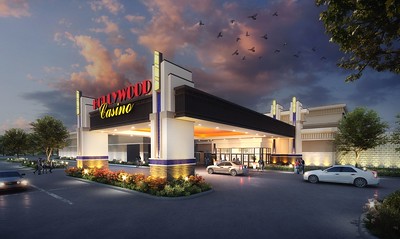
The Hollywood Casino at York Galleria, Penn National Gaming’s first Category 4 satellite casino, is slated to open in the second half of 2021, a Penn official told WHTM News in Harrisburg, Pennsylvania.

The mini-casino will be the second in Pennsylvania to open in a retail mall location, after Cordish Companies’ Live! Casino Pittsburgh in the Westmoreland Mall on the other side of the state. Category 4 casinos are limited to 750 slots and 40 table games, and must be tied to an existing Category 1 (racetrack) or Category 2 (stand-alone) casino license.

We expect to open during the second half 2021; more details to come in the coming months,” Jeff Morris, vice-president of public affairs for Penn National — which will own and operate the casino — said in an email to the news station.

Penn also has resumed construction on its second Category 4 casino, in Morgantown in Berks County. That also is targeted to open in the second half of 2021.

Bally’s: Curfews Hurting Rhode Island Casinos

Marc Crisafulli, executive vice president of strategy & operation for Bally’s Corp., says the two Rhode Island casinos are operating at a competitive disadvantage compared to other regional casinos because of the state’s Covid-19 restrictions, especially the 10 p.m. curfew on weekdays.

Bally’s operates the Twin River Casino in Lincoln and Tiverton Casino Hotel for the Rhode Island Lottery. Crisafulli told NBC, “We have capacity limitations, obviously all sorts of health and sanitary protocols, which will continue. But the curfew is a limiting factor for us.” He added, “From a competitive standpoint, we’re at a real disadvantage right now.”

Competitors in the region, including the Encore Boston Harbor and Foxwoods and the Mohegan Sun in Connecticut, already are or soon will be operating 24/7 he said.

Crisafulli said the casinos would continue to obey state regulations but added, “It’s just the fact that it’s a challenging environment right now with our competitors to the north and the southwest open more than we are.”

Connecticut Governor: A Sports Betting Deal Is Near

Connecticut Governor Ned Lamont says he’s close to making a deal on sports betting with Connecticut’s two gaming tribes, but he’s hedging his bets.

At a January 26 press conference, Lamont confidently said, “The tribes have been great partners for the state of Connecticut going back 25-plus years. I have no doubt we’re going to get this deal done.” Then he paused and added, “Knock on wood.”

In his first two years in office Lamont has tried several times to hammer out a gaming expansion bill only to run into the brick wall created by the tribes’ originally tribal state gaming compact with then Governor Lowell P. Weicker Jr. more than 25 years ago.

The fruits of that deal has been more than $8 billion paid by the tribes over the intervening years. The tribes stoutly insist that that compact guarantees them exclusivity on all casino games, and they insist sports betting is a casino game. Despite the clambering of other stakeholders, such as Sportech the state’s licensed OTB seller and the state lottery, for a share of the sports betting pie, they are sticking to their contention that they are entitled to all of it.

Recently Chuck Bunnell, the Mohegan tribe’s chief of staff, recently told reporters, “We’re hopeful. We’re not there.” The Mohegans own the Mohegan Sun.

Rodney Butler, chairman of the Mashantucket Pequots, who own Foxwoods, added, “We’re at the one yard line, and we just have to punch it in.”

Lamont will be presenting a budget package to the legislature on February 10 that will include his hopes for a sports betting bill—with or without a deal with the tribes in his pocket.

Recently a parade of representatives from all the interested parties pitched their arguments to the legislature’s Public Safety and Security Committee, conducted as a Zoom meeting.

One of the co-chairmen, Rep. Maria Horn, emphasized that the panel’s job was fact-gathering at that point and not policy-making. But representatives from Foxwoods Resort Casino and the Mohegan Sun, the Lottery and Sportech were clearly lobbying. The latter two wanted a share of the sports betting profits, the tribes wanted exclusivity.

Bunnell told committee: “We’re willing to talk and be reasonable and negotiate. That’s what partners do as they evolve and look at new things. But let’s do no harm by bringing someone else into Connecticut that isn’t currently here and not part of this arrangement that has been so beneficial to all of us.”

The tribes emphasized how generous they have been in paying 25 percent of their slots revenues over the decades, noting that few states get such a deal. Butler said, “It is the single largest expense of our business. In fact, most would be surprised to find that the largest financial beneficiary of Foxwoods is the state itself. The state annually receives more from Foxwoods than our lenders.”

Of course, when the tribes agreed to that percentage in the 1990’s they were guaranteed exclusivity not only in the state, but practically all of New England. For a time they were among the largest casino resorts in the world.

Today they have competition in New York, Massachusetts and Rhode Island. At the same time, Foxwoods is diversifying and recently announced that it would be opening a Foxwoods in Puerto Rico on the beachfront in San Juan.

The Mohegans began diversifying to other markets prior to the Great Recession of 2008. They already get profits from sports betting in New Jersey, Nevada and Pennsylvania.