Author: Casino Connection Staff

MGM Online Casino Goes Live In New Jersey

There’s another new online casino site in New Jersey and this one bears the name of MGM Resorts International.

PlayMGM.com launched in conjunction with MGM’s Borgata casino in Atlantic City. New Jersey online casinos must be partnered with an Atlantic City casino. The casino also offers two Borgata branded online sites as well as partnerships with PartyPoker and Pala casino’s online sites.

The playMGM brand is also active in Nevada through a sports betting app.

The New Jersey site is powered by GVC, which provides the software for the company’s Borgata branded sites. The new site is available through pc browsers as well as apps for iOS and Android.

The site has launched with casino games and slots, but also includes an online poker room which will share players with Borgatapoker.com and PartyPoker.

The site is also launching with an impressive 100 percent deposit match up to $2,000 on first deposits. The site carries a rewards program linked to the Borgata, but is not connected to MGM’s Mlife rewards program for its land-based casinos, according to a report at onlinepokerreport.com.

Borgata’s online sites were the early leaders in New Jersey’s iGaming industry, but recently Atlantic City’s Golden Nugget casino and its partnered sites have taken the lead in the state.

In another story, New Jersey State Sen. Raymond Lesniak said he plans to introduce a bill to allow gamblers in foreign countries, as well as Nevada and Delaware, to place internet bets in New Jersey.

Lesniak told the Associated Press that while the bill has not been written yet, he will propose that people in jurisdictions where online gambling is already legal be able to make online bets in New Jersey. The bill would also allow international operators to base their operations in New Jersey, and remove a requirement that computer servers be located within Atlantic City.

Lesniak said the move would enable other jurisdictions to pool their players with New Jersey and expand both markets.

“I’ve changed my mission from making New Jersey the Silicon Valley of Internet gaming to the Mecca of Internet gaming,” Lesniak told the AP. “Online gaming has helped Atlantic City to revive its casino sector with a success that we can expand in ways that will generate more revenue, create jobs and fuel technological innovation in gaming.”

New Jersey Settles Atlantic City Casino Tax Appeals

Atlantic City may be out from under one of its biggest financial drains as the state announced it has settled all of the resort’s pending casino tax appeal cases.

Governor Chris Christie said the state—which controls the city’s finances—has settled tax cases with seven of the city’s casinos. They are Bally’s, Caesars, Harrah’s, the Golden Nugget, Tropicana and the shuttered Trump Taj Mahal and Trump Plaza casinos.

The amounts of the settlements were not released, but Christie said an $80 million bond ordinance adopted by Atlantic City will cover the costs.

Christie, who pushed for the state’s takeover of the city’s finances late last year, called the settlements proof of the takeover’s effectiveness saying they were “the culmination of my administration’s successful efforts to address one of the most significant and vexing challenges that had been facing the city.”

“Because of the agreements announced today, casino property tax appeals no longer threaten the city’s financial future,” Christie said.

The settlements come about six months after the state settled the largest of the tax appeal cases with Borgata casino. The casino was owed $165 million in tax judgements, but settled for $72 million.

As the city’s casino industry started to decline in the late 2000s due to increased competition in neighboring states, tax appeals by city casinos became a major draw on the city’s finances. Both lost ratables and judgements to repay back taxes contributed to the city amassing about $500 million in debt.

Jeffrey Chiesa, who was appointed by Christie to oversee the city’s finances, said Atlantic City was “overwhelmed by millions of dollars of crushing casino tax appeal debt that they hadn’t unraveled” when the state took control in the fall. He said the city now has “a plan in place to finance this debt that responsibly fits within its budget,” according to a report at NJ.com.

Atlantic City Mayor Don Guardian told NJ.com that the settlements were “more good news for Atlantic City taxpayers that we have been working towards since 2014. When everyone finally works together for the best interest of Atlantic City’s taxpayers and residents, great things can happen.”

New Jersey Proposes Keno

Legislation has been introduced in the New Jersey Assembly to block the state lottery from offering a keno-style game.

Assemblyman Vince Mazzeo, who represents Atlantic County, said the Quick Draw lottery game steps on Atlantic City’s casino games and violates the state’s gambling restrictions.

“The state lottery is grossly overstepping their authority by essentially expanding casino-style gambling to bars and restaurants outside of Atlantic City,” Mazzeo said in a press statement. “Having keno drawings every 5 minutes is a clear end around the spirit of the 1970 State Lottery constitutional amendment.”

Quick Draw was approved by the Lottery Commission as a game to be played primarily in bars, restaurants, bowling alleys and other locations where players spend time dining or socializing according to the Press of Atlantic City. Mazzeo’s bill would limit lottery drawings to twice a day for each game.

AGA Releases New Responsible Gaming Code

Effort focuses on best practices

Officials of the American Gaming Association gathered at Stockton University outside of Atlantic City last week to announce a new responsible gaming code of conduct, to help casinos spot and prevent problem gambling. The announcement was part of the organization’s 20th Responsible Gaming Education Week.

The AGA’s code of conduct for responsible gaming has been republished in each of the past several years to mark the education week. It is designed to help raise awareness within the industry of problem gambling and help casinos shape responsible gaming efforts.

“This is a voluntary measure that we (in) the industry put together that really dictates how we work with our customers to protect them,” said Geoff Freeman, president and CEO of the American Gaming Association. “We have an obligation to protect them, make sure that they know the odds, make sure they know where to get help, give them the tools they need to protect themselves, and, in those instances where appropriate, to stay out of the casino environment.”

The event was moderated by David Rebuck, director of the New Jersey Division of Gaming Enforcement. “Our goal today is simple: to educate the public, policymakers and media on all the responsible gaming programs that the industry is dedicated to year-round, both here in New Jersey and in all other U.S. jurisdictions,” said Rebuck.

“We want to move away from just doing what we’ve done in the past or just doing small incremental improvements,” Freeman said of the newly revised code of conduct. “We need to move rapidly toward a deeper understanding of how we can make a more meaningful impact in fostering responsible gaming… This is a shift from the longstanding approach that focused exclusively on the prevention of problem gambling. The industry today is better positioned to go beyond an exclusive focus on prevention and promote responsible gaming practices.”

On a practical basis, Rebuck said, that means more training. “The industry will have the responsibility for training all of its employees to identify behavioral traits, and quite honestly, when you’re in a casino or at a racetrack, over time you begin to identify individuals you suspect may be having problems.”

Freeman said the new code is more deliberate and specific than past efforts. “For any regulated industry you can sit back and wait for regulators to tighten the screws or you can take the lead on your own, and that’s what the gaming industry has done here,” he said.

Russell Sanna, executive director of the National Center for Responsible Gaming, further explained the need for best practices to address responsible gaming. “What we really need to recognize in the context of responsible gaming is that responsible gaming practices and techniques are really for everyone in the industry,” he said, according to CDC Gaming reports. “As we take on new forms of gaming, we need to further that research to understand where there are risks and where there are not risks.”

Rebuck hosted an hour-long roundtable discussion as part of the event, which included Freeman, Sanna, Dean Hestermann, corporate director for issue management at Caesars Entertainment; and Patrick Harris of MGM Resorts International.

The organization hosted a similar roundtable discussion on responsible gaming Thursday in the Casino Lab at the University of Nevada, Las Vegas. That panel included Elizabeth Cronan, senior director of gaming policy, AGA; Congresswoman Dina Titus, Nevada’s 1st District; Alan Feldman, executive vice president of MGM Resorts International; Tim Richards, senior vice president of payment innovation, Everi Holdings; Dan Shapiro, vice president of strategy and business development, William Hill; Clark County Commissioner Chris Giunchigliani; Nevada Gaming Control Board member Terry Johnson; and Bo Bernhard, executive director of UNLV’s International Gaming Institute.

“The AGA is proud to be the leading voice behind the gaming industry’s continued commitment to responsible gaming,” said Freeman. “AGA members have made responsible gaming a year-round commitment, and will continue to train their employees in the most effective practices to ensure all our customers enjoy the casino gaming industry responsibly.”

Pennsylvania Budget Counts on Gaming

The Pennsylvania state Senate has passed a budget bill that counts on $200 million in revenue from expanded gambling, including online gaming and up to 10 satellite casinos that would be licensed to current land-based casino licensees.

While the Senate has not released details of the gaming expansion contemplated, a proposal brokered by Senate Republicans includes a provision for current casino licensees to bid for satellite casino licenses allowing up to 700 slot machines and 100 table games at a separate facility in an area of the state without current casinos, according to an Associated Press report, which added that the provision would authorize online gaming and set license and tax fees.

Beyond that, there was uncertainty how the gaming provisions of the budget bill will fare in the state House, which now takes up the measure. House and Senate differences have remained unresolved on the tax rate for online casinos—55 percent in the Senate; 14 percent-16 percent in the House—and on the biggest sticking point, video gaming terminals (VGTs) in bars and liquor-licensed establishments across the state.

House leaders have insisted on including VGTs in gaming expansion; senators have resisted. But debate on the issue is generally believed to be on hold until the fall session. Gaming revenues are a minor portion of a giant bill that seeks to close a $2.2 billion budget gap through a broad mix of tax increases and loans.

Meanwhile, among the gaming issues still to be resolved is the local host fee—the portion of slot revenues earmarked for local host communities of the 12 Pennsylvania casinos. The law’s original provision—2 percent of slot revenues or $10 million, whichever is higher—was struck down by the state Supreme Court on the basis that it comprised a higher percentage tax on smaller casinos.

Expansion measures in both chambers of the legislature would change that to a straight $10 million annual fee (also likely to be challenged by smaller casinos), but municipal officials in Pennsylvania last week wondered aloud whether they would receive their next scheduled host payment, due this month.

The city of Bethlehem receives $1.2 million a quarter from the Sands Casino Resort Bethlehem. Unlike operators like Rush Street Gaming, which owns casinos in Philadelphia and Pittsburgh, Las Vegas Sands has not promised to keep payments going absent a valid law. Bethlehem Business Administrator Dave Brong told the Allentown Morning Call the city will be able to ride out the storm until a new bill is passed. “What I will tell you, from a cash standpoint, is that we’re good,” Brong said. “We will be able to find cash in the bank at the end of the year if the worst-case scenario happens and things go unresolved,” Brong said.

Greyhound Racing Ending In Florida, Alabama

The Florida Greyhound Association has asked state gambling regulators to reconsider their decision to allow Miami’s Magic City Casino to discontinue live dog racing. The association’s “motion to intervene” stated ending racing at Magic City “will put its members out of business. The purpose is to forever end greyhound racing at the track. Many members are family owned businesses that have raced greyhounds at the race track for generations.”

Last month, in a first-of-its-kind ruling, the Department of Business and Professional Regulation, which regulates gambling through its Division of Pari-Mutuel Wagering, approved a request from the Havenick family to drop dog racing at its Miami facility. Under Florida law, parimutuels that want to offer lucrative slots and card games also must offer money-losing live dog or horse races. The racetracks want lawmakers to decouple live races from other forms of gambling, but proposed bill have failed in the legislature.

Former Lieutenant Governor Jeff Kottkamp, the association’s general counsel, drafted the motion. It claims the state incorrectly allowed the track and casino to convert its gambling license to a summer jai alai permit, so it can end racing but continue to offer slot machine play. “There appears to be no showing that Magic City meets the statutory qualifications to convert their permit to summer jai alai since it is now the only greyhound race track operating in Miami,” the motion said. It adds, “it cannot be said that the legislature intended to allow for the conversion of a parimutuel permit to a summer jai alai permit at a facility that operates slot machines.”

In 2004, Florida voters approved a constitutional amendment legalizing slots at existing jai alai frontons and horse and dog racetracks in Miami-Dade and Broward counties if the issue passed in referendums, in return for continuing to offer live races.

In neighboring Alabama, live dog races will end at the Mobile Greyhound Park at the end of August. The Poarch Band of Creek Indians, which purchased a 65 percent controlling interest in the track for $10 million in 2009, said the reasons were declining interest, prohibitive state gaming laws and decreasing revenue. The PCI Gaming Authority stated, “In 1991 there were 62 active greyhound tracks unsupported by other forms of gaming. Today, Mobile Greyhound Park is only one of two.”

Mobile Greyhound Park offered both live dog races and simulcast dog and horse races since 1973. The track will continue to offer simulcasts, PCI officials said. It has not been able to supplement the lost revenue because most other forms of gaming are illegal in Alabama. The state racing commission collects 7 percent of the proceeds from live races and 2 percent of proceeds from simulcast races. In the past that generated annual tax revenues of up to $8 million, but that figure has dropped dramatically over the past 25 years.

PCI officials also said 30 employees will be impacted, but the company was “fully prepared to assist each team member with locating and applying for opportunities at other Wind Creek Hospitality facilities including Pensacola Greyhound Park and Wind Creek Casino and Hotel in Atmore.” At the state racing commission, eight full-time employees currently work as coordinators, race inspectors and race judges.

PCI officials said they will help kennel owners with the relocation, adoption and ongoing care for approximately 400 greyhounds associated with the racetrack. Some may be moved to other tracks around the U.S. “We routinely place over 600 greyhounds each year through Mobile Greyhound Pet Adoption Kennel, and we have relationships with approximately a dozen other adoption agencies across the country that will help with placement. We have implemented a program which will support kennels with care, feeding, housing and veterinary services while each greyhound is matched to a suitable new environment,” the officials said.

Those interested in adopting a greyhound may contact the Mobile Greyhound Pet Adoption Kennel, (251) 653- 5000, Extension 102, for more details.

Pennsylvania Casino Owner Finally Appears at Gaming Board

Watche “Bob” Manoukian, the Armenian billionaire who is the financial backer of Greenwood Gaming and principal owner of Greenwood’s Parx Casino at Philadelphia Park in Bensalem, last week appeared for the first time before the Pennsylvania Gaming Control Board.

The appearance at last Monday’s board hearing was to answer questions concerning his ownership stake in Stadium Casino, the consortium of Greenwood and Baltimore-based Cordish Companies that won the license to build and operate Philadelphia’s second casino.

The license application was sent back to the board by the state Supreme Court after the appeal of the award to the Stadium partnership based on the so-called 33.3 percent rule, which holds that no licensee owning 85 percent or more of an existing casino may own more than one-third of a second property. Manoukian owns 85.84 percent of the Parx casino.

This is the second time the board is re-examining the issue with respect to Manoukian. In the first examination of the appeal, the board found Manoukian to be within the legal ownership limits.

Manoukian testified before the board last week that the terms of his ownership in the Stadium partnership fall well within the limits of the law. He demonstrated that he is transferring #34 million into a trust for his three sons, who each will own a portion of Stadium Casino’s planned Philadelphia Live! Casino Hotel in South Philadelphia. “I have recently signed a binding agreement to fund the trust by outright and irrevocable gifts, and I will do so—I promise,” Manoukian testified.

Manoukian told the board that the trust will effectively be the partner to Cordish in the casino, and that he will have no financial interest in the Philadelphia Live! project.

The parties in the case will now file briefs, before the board makes its decision.

Meanwhile, Pennsylvania state Rep. Scott Petri, chairman of the House Gaming Oversight Committee, has filed a bill to eliminate the 33.3 percent rule, with the goal of expediting disposition of the Stadium appeal and opening the second Philadelphia casino.

Connecticut Legislature Approves Gaming Compact Changes

The Connecticut Senate last week joined the House of Representatives in approving, by a vote of 27-8 amendments to the state tribal gaming compacts with the Mohegan and Mashantucket Pequot tribes, which will allow them to go forward with their proposed $300 million satellite casino on non-tribal land in East Windsor—providing that the federal government gives the need to the changes.

Now the compacts will be forwarded to the Bureau of Indian Affairs, which has 45 days to determine if they are within federal law.

Governor Dannel P. Malloy had already signed the amended compacts. In his signing statement the governor said, “Over the years, our state has maintained a longstanding partnership and compact with the Mohegan and Mashantucket Pequot tribal nations.”

The two tribal chairmen expressed their appreciation.

“Once again, state legislators have stood up to defend Connecticut jobs and revenue,” said Rodney Butler, the Mashantucket Pequot chairman. “We want to thank the House and Senate and the governor for approving these changes and doing the right thing for the state.”

Kevin Brown, the Mohegan chairman added, “We’re confident that the BIA will follow in the steps of the General Assembly, and that work will get underway very soon.”

The compacts allow for the casino to be located in East Windsor, near Interstate 91, in an abandoned cinema complex. The tribes will pay 25 percent of their revenues, the same rate that they pay for the Mohegan Sun and Foxwoods casinos. Each will also pay $1 million as a down payment.

During the just completed battle leading up to the adoption of the third casino legislation, the concentration of lobbyists in the state capitol representing MGM Resorts International and its rivals the Mashantucket Pequot and Mohegan nations, made it look, like one lobbyist describe it, as a scene from a crime movie.

The two sides spent a total of $3.2 million on lobbyists, with MGM spending $2.1 million.

MGM hired lobbyists and a former U.S. attorney general, Eric H. Holder Jr., and paid $900,000 for TV and digital media, all with the goal of preventing the legislature from authorizing the third casino, or possibly delay it as long as possible to reduce its threat to the MGM Springfield, which is scheduled to open in the autumn of 2018.

Tom Swan of the Connecticut Citizens Action Group, compared MGM’s big play to a game of blackjack. He told the Connecticut Post: “MGM gambled that hiring more and more lobbyists would work to their advantage — but they went over 21.” They were unable to convince many that their call for an “open, competitive” process was anything more than an attempt to keep money in Springfield.

MGM spent a lot of money because it stands to lose a lot of money. One estimate is that the third, satellite casino, could drain as much as $20 million from the $950 million MGM Springfield. One the other hand, the tribes pushed for the casino because their own estimates showed them losing possibly hundreds of millions of dollars to MGM if they didn’t take the defensive measure.

The common enemy pushed the Pequots and Mohegan tribes, once implacable gaming rivals, together by necessity. The good will generated by the tribes among lawmakers, and the last-minute decision by Governor Dannel P. Malloy to support the tribal casino in East Windsor, pushed it over the top.

Up until Malloy’s announcement, MGM felt that it was winning the public relations battle.

For example, it had its own Indian tribe, the Schaghticoke Tribal Nation of Kent, which argues that it should be allowed to operate its own casino close to the state’s boundary with New York state.

The lobbying effort for MGM was handled by Global Strategy Group, which was paid $1,477,688 according to state filing records. The two tribes spent $875,4000, of which the firm of Stu Loeser & Co., LLC was paid $137,924 and hired Andrew Doba, former spokesman for the governor.

Another lobbyist they hired, a former state representative, Peter Smith, told the Post, “The tribes have a long-standing partnership with the state, and they understood the Springfield casino would have a significant impact on Connecticut.”

Over 25 years the tribes have paid $8 billion to the state in revenue sharing. The estimate that 9,000 jobs might also be lost was also a factor for many lawmakers.

As Smith described it, “To mitigate that impact, we brought some ideas forward to protect the Connecticut jobs and revenue. Nothing precluded MGM from doing the same thing, picking a site in Bridgeport or Fairfield County and making a proposal. The more money they spent hiring lobbyists, bringing in high-profile names from Washington, TV ads and other things, it reinforced the fact that they were just protecting their investment in Springfield.”

Another lobbyist the tribe hired added, “Saving jobs is not a partisan issue. It’s a Connecticut issue and a human issue. Secondly, we wanted to keep revenue in Connecticut. That was our focus, and it took time to educate and to explain how MGM Springfield was going to impact our state and our jobs.”

Now that the tribes have won in the legislature, MGM will shift its efforts to killing the law in federal court. It will argue that the state legalized commercial gaming without voter approval and authorized a commercial casino with a competitive bidding process.

It has already lost one effort in federal court, and has appealed that. It is likely to challenge the new law with a new lawsuit, bringing up constitutional questions that didn’t necessarily apply when the law merely authorized the tribes to identify a site for a casino, as opposed to the new law, which authorizes the casino.

MGM may also attempt to lobby the Bureau of Indian Affairs to try to influence its decision on whether the amended compacts jibe with the Indian Gaming Regulatory Act (IGRA.)

The state has no law on its books that allows commercial gaming, which was why amendment the compacts was necessary.

Uri Clinton, who is both MGM’s vice president and general counsel, told the Connecticut Post: “We’ve had a very strong position that legally there are constitutional issues we’re going to be pursuing. Litigation is part of the strategy. We really made a significant investment in trying to get a seat at the table, and we really value access to the New York market if that opportunity presents itself. Some people thought we were just trying to block, but last year we made a significant commitment to the state and we’re planning to engage next (legislative) session.”


Delaware Legalizes DFS

Delaware became the 14th U.S. state to legalize and regulate daily fantasy sports when Governor John Carney signed a DFS bill into law, while a DFS bill in Maine has cleared the state legislature.

Delaware Governor John Carney signed a bill that cleared up the DFS issue in a state where the wagering had generally been considered illegal. The Delaware law imposes a $50,000 license fee and a 15.5 percent tax on gross gaming revenue from DFS sites.

Observers say the high fees and taxes are likely to shut out most operators other than huge sites FanDuel and DraftKings, which had been shut out of the state previously. It is the highest fee and tax structure for DFS so far in the U.S.

Under Delaware’s new law, the governor will choose the department charged with regulating the new DFS business, and that department will draft regulations. Consumer protection written into the law include language regarding truth in advertising, responsible gaming protocols, and separate of player and operational funds.

Residents must be at least 18 years old to wager on DFS sites, and the law bans contests based on college or amateur sports events, as well as horse racing. The law sunsets in 2019, when the government will call for a report on recommendations to revise the law.

Meanwhile, the Maine legislature approved its own DFS bill, sending it to the desk of Governor Paul LePage. There was no indication from LePage on whether or not he will sign the bill, according to DFSReport.com.

In Massachusetts, a special commission created to look into online gambling and daily fantasy sports has released a draft of its final recommendations. The commission recommended permanently legalizing DFS, but recommended DFS be classified as online gaming.

DraftKings disputed the classification of DFS as online gaming, saying in a statement, “DraftKings is proud to call Boston and Massachusetts home. We have more than 300 employees from 79 cities and towns across the state, and while we are committed to growing and innovating here, this provision, if adopted, could impact our ability to do that.”

Madison Square Garden Company Invests in eSports Team

The Madison Square Garden Company has invested in the well-known eSports organization Counter Logic Gaming.

While terms of the deal were not released, MSG has reportedly acquired a controlling stake in the team.

Counter Logic Gaming competes in a number of eSports games including League of Legends and Counter-Strike: Global Offensive. The team competed in the League of Legends World Championships in 2011, 2012, 2015, and 2016.

The team was founded in 2010 by George Georgallidis, who will continue to oversee the day-to-day operations, MSG said in a press statement. The team will also be able to benefit from the company’s ‘unmatched expertise in sports business, including marketing partnerships, media rights, event operations, ticketing, merchandise and fan engagement,’ the statement said.

Though MSG has hosted eSports events at Madison Square Garden—MSG hosted the 2015 North American League of Legends Championship Series Summer Finals—the acquisition is its most significant investment in eSports by the company.

“Since then, as we have been actively exploring opportunities to enhance MSG’s portfolio of live experiences, we have been keenly interested in eSports as a natural extension of our core business,” said David O’Connor, MSG’s president and chief executive in a press statement. “The sport now stands on the verge of enormous change, which we believe has the potential to generate significant growth.”

In another eSports story, Geico announced it will sponsor amateur eSports tournaments through ELeague, the eSports league launched last year by Turner Broadcasting.

The Geico ELeague Amateur Series will begin with a Street Fighter tournament at the PAX West gaming festival in Seattle in September. Specifics have yet to be announced.

“We’ve had this goal to launch an amateur series, and cultivate an amateur audience, for a while now, and Geico shared our vision,” said Seth Ladetsky, senior vice president of sales at Turner Sports told Bloomberg News.

FanDuel Leaves UK Market

Daily fantasy sports giant FanDuel has pulled its operations out of the UK after one year in operation there to focus on its U.S. operations and prepare for the upcoming NFL season.

FanDuel sent emails to British players about the closure and refunded player accounts. It later confirmed the exit on Twitter.

“As we approach the NFL season, we are allocating all of our resources towards ramping up a US product that consumers love and building out complementary fantasy sports products. There are over 53 million people playing fantasy sports in the United States and we are investing all of our resources on that market,” the company said in a press statement.

The move also comes just weeks after a planned merger with DFS rival DraftKings fell through due to opposition from the Federal Trade Commission. DraftKings is still operating in the UK.

FanDuel only began operations in the UK in August 2016, focusing mostly on the English Premier League. In its email, FanDuel said that ‘almost £1 million’ was won by its UK customers over the past year.

Also, Delaware Governor John Carney has signed DFS legislation that legalizes the games there and directs the state to create regulations for the industry.

The new law labels fantasy sports as a “game of skill” making it legal under Delaware’s gambling laws. Last year, the state’s Department of Justice warned DFS operators that their product was not legal under the state’s laws.

The legislation sets high fees for DFS operators including a 15 percent fee on their net adjusted revenues as well as a $50,000 annual fee.

In another DFS story, the Asian market for daily fantasy sports continues to grow as DFS operator Ballr has completed a soft launch focusing on the Asian market. The site now has 25,000 users, but the company is targeting an estimated 100 million smart phone users in the region, according to a story in the Asia Times.

“It’s a much younger business in Asia, so we’re having to start with a really simple game to increase engagement,” Sam Jones, founder and CEO of Ballr told the paper. “It would be naïve to put in place a really complex fantasy sport and then expect 15 countries to immediately get it.”

Ballr plans to focus on live play betting in Asia with users selecting a gaming event and a player to follow for a five-minute period. Players gain or lose points for every event involved in the games and users can view their rankings on a real-time leaderboard, the report said.

“What’s great about this region is the data around smartphone penetration,” Jones said. “One of the things we are going to have to do is build fantasy into the screen so our tagline doesn’t become sport’s second screen but, instead, sport’s only screen.”

Amaya Completes Stars Group Rebranding

Amaya Inc. is now officially The Stars Group as the company announced it has completed its rebranding and relocated its headquarters from Montreal to Toronto.

The company said it has received approval from regulators and will start trading on the Global Select Market under the “TSG” ticker symbol and on the Toronto Stock Exchange under the “TSGI” ticker symbol.

Amaya announced the name change in May. The company is the parent company of The Rational Group, which owns the PokerStars and BetStars online gambling brands.

Analysts believe the rebranding is an attempt to distance the company from controversies surrounding its founder, David Baazov, who is facing insider trading charges in Canada stemming from the company’s purchase of The Rational Group in 2014.

Casinonewsdaily.com also reports that the change comes a Hong Kong businessman is increasing his stake in the Canadian gambling company. Hao Tang currently holds more than a 15 percent stake in Amaya and has been acquiring shares since March 2017, the report said.

Tang is the person behind Goldenway Capital, a company that was revealed as one of the financial backers to support a failed bid by Baazov to acquire Amaya last year.

Beer and Whiskey Festival at Trop

Tropicana Atlantic City will hold its second annual Beer and Whiskey Festival in the Grand Exhibition Center on Saturday, October 14, 2017 from 2 p.m. to 8 p.m. While sampling a wide selection of beer and whiskey, guests will enjoy artisan crafters and live entertainment featuring John Eddie and His Dirty Ol’ Band.

John Eddie and His Dirty Ol’ Band will not disappoint guests as he performs a set list of popular songs, including “I’m Gonna Drink You Pretty,” “Jungle Boy,” and “LowLife (Living The Highlife)”, a song written by John Eddie and recorded by Kid Rock on his multi platinum “Rock And Roll Jesus” Album. The band will take the stage from 5:30 p.m. to 8 p.m.

Tropicana’s Beer and Whiskey Festival will showcase over 60 beers including, craft, domestic and imported, in bottle and drafts, 30 whiskeys. Food, including pretzels, will be for sale. Tickets for the event will include tasting glass, and beer and whiskey seminars.

Tickets for the Beer & Whiskey Festival are $30 in advance and $35 at the door. Tickets can be purchased in advance at the Tropicana Box Office and through Ticketmaster at www.ticketmaster.com or 1.800.745.3000. Tickets can also be purchased the day of the event in the Grand Exhibition Center. All guests must be at least 21, and must have identification.

Stay the night with special room rates starting at $299.99 on Saturday, October, 14. Call 1-800-345-8767 to book your reservation. Rate is based on double occupancy and does not include tax and fees.

Rum Month at Cuba Libre

In honor of National Rum Day on August 16, Cuba Libre Restaurant & Rum Bar, located in The Quarter at Tropicana Casino & Resort, will dedicatethe entire month of August to its favorite spirit with its annual Rum Month celebration, featuring special rum tasting flights available from August 1 to 30 during dinner and weekend brunch.

Then, on National Rum Day, all rums, rum flights, and rum cocktails will be offered at half-price at Happy Hour from 5 to 7 p.m. at the bar.

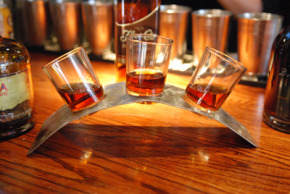
Cuba Libre has hand-selected two special rum flights in celebration of Rum Month, each consisting of three 1 oz. pours. The restaurant’s rum list showcases more than 90 varieties from Guyana, Haiti, Nicaragua and Tortola, and includes dark, light, spiced and aged rums for every taste. Guests looking for a particular flavor profile can ask their server for recommendations.

Cuba Libre’s special Rum Month tasting flights include:

Black Jack ($16)
Featuring dark, Navy style and spiced rums

  • Gosling Black Seal, Bermuda: Rich intricate molasses flavor that is well-balanced and nuanced with caramel, butterscotch, and vanilla.
  • Cruzan Black Strap, St Croix, Us Virgin Islands: Dark, navy-style rum with light undertones of licorice and black coffee featuring faint notes of vanilla and cinnamon.
  • Kraken Black Spiced, Trinidad & Tobago: High-proof, dark, aged rum. Rich brown color. Blended with 11 secret spices. Molasses, licorice, vanilla, and holiday baking spices.

Caribbean Stud Poker ($20)
Tasting flight of aged rums from the Caribbean

  • Ron Matusalem Gran Reserva, Dominican Republic, 15 Year: Aromas of oak, banana and orange peel with flavors of sweet butterscotch, vanilla, and brown sugar.
  • Zaya, Trinidad And Tobago, 12 Year: Complex aromas of vanilla and caramel with rich nutty flavors.
  • Barbancourt Estate Reserve, Haiti, 15 Year: Hints of clove and orange peel with subtle flavors of butterscotch and toffee accented by sandalwood and oak.

Cuba Libre’s special rum flights are available August 1 through 30 in the dining room and in the bar area beginning at 4 p.m. Monday-Friday, and 11:30 a.m. Saturday and Sunday. The half-price rums, rum flights and rum cocktails will take place on Wednesday, August 16 from 5-7 p.m. and are available in the bar area only.

Cuba Libre Restaurant & Rum Bar is located in The Quarter at Tropicana Casino & Resort in Atlantic City, NJ; Phone: 609-348-6700; for more information, visit www.CubaLibreRestaurant.com


Atlantic City Airshow 2017

Now celebrating its 15th year, the 2017 Atlantic City Airshow will return to the skies above the beautiful free beaches and Boardwalk in Atlantic City on Wednesday, August 23, 2017. GEICO will return as the presenting sponsor of this event, as announced by Greater Atlantic City Chamber President Joe Kelly, the show’s organizer.

The USAF Air Demonstration Squadron (“Thunderbirds”) is the air demonstration squadron of the United States Air Force (USAF). The Thunderbirds are based at Nellis AFB, Nevada and perform aerial demonstrations in the F-16C Fighting Falcon, and they also fly two F-16D twin-seat trainers. Much of the Thunderbirds’ display alternates between maneuvers performed by the diamond, and those performed by the opposing solos, all with magnificent accuracy and precision.

Free Admission – VIP Seating Available

2017 Airshow Lineup

Wednesday 23 August 2017

Time   Act
1030     Airspace Closes for Airshow, TFR in Effect
1140     US Army Golden Knights Flag Jump w/National Anthem
1148     US Army Golden Knights Mass Exit Show
1154     Rob Holland MXS Aerobatic Teaser
1158     NJ ANG 177th FW F-16 Flyby
1159     NJ ANG 108th WG KC-135 Flyby
1201     USAF 305th AMW C-17 Flyby
1203     USAF 305th AMW KC-10 Flyby
1205     NJ ANG Composite Wing Flyby (KC-135 & (2) F-16s)
1207     USAF 436th AMW C-5M Super Galaxy Flyby
1209     6ABC Chopper Flyby
1211     Medical Helicopter Flybys
1213     NJ State Police A139 Flyby
1215     Jim Beasley Jr. SNJ Aerobatics
1225     Customs & Border Patrol HH-60 & Fast Boat Demonstration
1235     US Navy T-6B Texan II Flyby
1237     US Navy MH-60S Seahawk Flyby
1239     US Navy E-2C Hawkeye Flyby
1241     US Navy MH-53E Super Stallion Flyby
1243     US Navy F/A-18C Hornet Demonstration
1258     US Coast Guard MH-65D Demonstration
1308     DE ANG 166th AW C-130H Hercules Flyby
1310     NJ-ArNG/NJ-ANG UH-60 Fast Rope Insertion & Extraction System Demonstration
1322     GEICO Skytypers
1340     Miss Geico Speedboat vs. GEICO Skytypers Race
1349     Jim Beasley Jr. P-51 Mustang Demonstration
1401     Army Golden Knights Mass Exit Show
1421     Randy Ball MiG-17 Demonstration
1436     Rob Holland MXS Demonstration
1450     USAF Thunderbirds Enlistment Ceremony
1455     USAF Thunderbirds
1700     Airspace Re-Opens, TFR Ends

Schedule is subject to change without notice due to mechanical considerations, weather conditions,
and other factors beyond the control of the Airshow.

Christie, New Jersey Urge Trump Administration Not to Ban Online Gambling

New Jersey Governor Chris Christie has signed a bill designed to convince his political ally President Donald Trump not to move to ban online gambling.

The bill, passed by the state’s legislature, also urges Congress not to enact such a ban.

Though Christie is friends with the president, Trump has been noncommittal on the issue telling the Associated Press last year “I have a lot of friends on both sides of this issue.”

Online gambling has been going strong in New Jersey since 2013 and now brings in about $20 million a month to the state’s Atlantic City casinos. That helped the city’s seven remaining casinos post a revenue increase last year, the first in a decade.

Las Vegas Sands owner Shelson Adelson, however, has led a long lobbying effort to have online gambling banned in the country, which could include not grandfathering the three states that now allow online gambling. Nevada and Delaware also allow online gambling.

Attorney General Jeff Sessions has also said he would be willing to re-examine a Department of Justice ruling that cleared the way for online gambling. The bill was passed before Sessions’ job security became an issue within the administration.

The New Jersey bill says a federal prohibition would negatively impact the state, “dismantling the investments that the state and Atlantic City casinos have already made to implement and regulate internet gaming.”

It says a ban would take away “economic and employment opportunities already realized” by the state and foreclose the future potential of the industry to “generate tens of millions of dollars in tax revenue, create high-tech software jobs, and foster valuable business ventures for Atlantic City casinos,” according to an AP report.

Resorts Atlantic City Launches DFS Game

Resorts Atlantic City has again grabbed a first in Atlantic City by offering a daily fantasy sports game at its online site.

Resorts was the first casino to open in Atlantic City and now may be the first casino outside of Nevada to offer a DFS product.

The game is called FastPick and players choose head-to-head matchups of real-world athletes. Gamblers choose an athlete with the casino playing the opposing match. An example would be a player choosing New England Patriots’ quarterback Tom Brady against Green Bay quarterback Aaron Rogers. Customers can choose three to 10 players from a variety of sports.

The game is initially available only at the casino’s online site in New Jersey, but officials said a version is planned for its Atlantic City casino.

“I’m very excited about this new business,” Resorts President Mark Giannantonio told the Associated Press. “We expect it to be exciting for our online customers, and soon, for those who play at our casino. The idea has always been for the brick-and-mortar casino to be integrated as much as possible with our online business.”

In a press release, Resorts Digital Gaming—which developed the game—said the game is designed to offer more equitable play than traditional DFS contests, which are often dominated by expert players.

“We’ve designed the platform to accommodate all sports fans who want to get a piece of the action but don’t have the time to compete effectively against the traditional ‘professional’ DFS players, said Ed Andrewes, president of EA Gaming Consultancy Company, lead consultant to Resorts Digital Gaming said in the release. “We couldn’t be more excited to introduce the next generation of fantasy sports.”

The introduction of the game comes as New Jersey awaits a U.S. Supreme Court hearing on its attempt to allow sports betting at racetracks and casinos. As a DFS game, Resort’s game does not violate federal law against sports betting.

New Jersey has also previously approved legislation allowing for fantasy sports at casinos and a bill to regulate DFS contests has been passed by the state’s legislature and is awaiting Governor Chris Christie’s signature.

Also, another of New Jersey’s online casinos is offering a new game based on Slingo—a combination of slots play and bingo. PlaySugarHouse.com has introduced the game at its online site.

“Slingo has been a fan favorite in the New Jersey game market for more than two decades, and we’re excited to bring Slingo to a whole new online audience,” said Richard Schwartz, President of Rush Street Interactive which operates the site and Philadelphia’s Sugar House casino. “On PlaySugarHouse.com for the first time ever, Slingo fans can play Slingo games from their own home or actually anywhere in New Jersey, have loads of fun, and win real cash!”

In another story, the New Jersey Lottery has just unveiled a new Quick Draw game in 400 locations across the state.

Quick Draw is a keno-style game in which winning numbers are electronically drawn and then displayed on a television screen that is installed in retail locations where tickets are sold. Drawings are held every five minutes, according to a press release.

“Quick Draw is a strong addition to the Lottery’s product lineup,” said Carole Hedinger, executive director of the New Jersey Lottery. “I’m confident that players will enjoy the fast-paced fun and excitement the game provides. Quick Draw creates a new level of entertainment in social settings.”

Report: Caesars Bankruptcy Blocked Capital Improvements at Atlantic City Casinos

A smaller investment in capital improvements at Caesars Entertainment’s Atlantic City Boardwalk casinos has resulted in a historic revenue dip at the two properties, according to a report by the New Jersey Division of Gaming Enforcement.

According to the report, since 2008, Caesars and Bally’s Atlantic City have spent a combined $176 million on capital improvements at the two Boardwalk properties. Meanwhile, Harrah’s Resort, which is owned by a separate arm of Caesars, spent more than $215 million and Borgata Hotel Casino & Spa spent more than $207 million on capital improvements, according to an analysis of the report by the Press of Atlantic City.

Regulators said they hope the recently approved Caesars bankruptcy reorganization, which could go into effect in late September, leads to more capital improvements at the properties

“The relatively low level of capital expenditures is, in the division’s view, one reason that the net revenues from Caesars AC and Bally’s remain well below historical levels,” the report said. “In the Division opinion, the projected capital expenditures for 2017 and 2018 would not be sufficient to address past deficiencies and provide a much-needed boost to their competitive positions.”

For 2017, Caesars Atlantic City has budgeted only $2 million for improvements, while Bally’s has budgeted $4.4 million. Funding for improvements in 2018 will increase to $5 million for both properties, according to the state report.

Caesars officials have said they intend to increase investment in the Boardwalk properties, but it could take some time.

“In the first few years, I suspect that there was not any impact,” said Eric Hession, chief financial officer for Caesars Entertainment, during a recent state Casino Control Commission hearing on the issue. “As the years went on, capital was a lot tighter. Bally’s and Caesars likely received less capital during that time.”

“We have done a small amount of rooms at Bally’s and roughly 450 rooms at Caesars, and those are performing well,” Hession said. “We are in the process of putting our capital plan to together for the next couple of years. Suites at Caesars are on that list, and we are looking at a block of 100 rooms at Bally’s for 2018/2019.”

New Jersey CRDA Pushing for Bigger Atlantic City Concerts

The New Jersey Casino Reinvestment Development Authority has signed two public-private partnerships with entertainment companies designed to attract larger concert events to Boardwalk Hall and the city’s Convention Center.

The Press of Atlantic City reported that the CRDA board approved spending up to $3 million in an agreement with Comcast NBC-Universal and up to $4 million on an agreement with William Morris Endeavor Entertainment to bring “destination events” to the two properties.

“We are excited to partner with WME/IMG and Comcast NBC Universal to further our mission and commitment to attract visitors by delivering exciting entertainment to Atlantic City across a broad range of events, many of which have never before been held in the city,” said Robert Mulcahy, chairman of the board in a press statement.

The moves are part of a continuing strategy to bring big name acts to the city. The most successful has been a three-year $6 million agreement with Live Nation to bring at least six events that attract 30,000 attendees or more to the city. That agreement has led to a successful summer beach concert series that this year included performances by pop star Pink and country star Brantley Gilbert. The two shows attracted a combined attendance of more than 60,000.

“In the midst of a hugely successful Summer Beach Concert Series, which has drawn at least 60,000 visitors to our city, the CRDA continues to creatively bring world-class entertainment to Atlantic City,” Mulcahy said.

Glover to Become Borgata Atlantic City President

MGM Resorts International has named Marcus Glover as president and chief operating officer of the Borgata Atlantic City.

He succeeds Tom Ballance, who is becoming executive vice president of operations for MGM Resorts. Glover will take over after he obtains the necessary approval from New Jersey casino regulators.

“Marcus’ proven leadership ability and wide range of skills will continue to serve the company well as he assumes this new role,” said Corey Sanders, MGM’s chief operating officer in a press release.

Glover joined MGM in 2015, serving as general manager and then president and chief operating office of Beau Rivage Resort & Casino in Biloxi, Mississippi. He previously served as senior vice president and general manager for Caesars Entertainment in northeastern Ohio, and as assistant general manager and vice president of operations for Harrah’s in St. Louis. He also held several leadership positions with Caesars in Mississippi and Louisiana, according to the release.