Author: Casino Connection Staff

Indiana Licenses Fantasy Sports Operators; NJ and Maine Pass Bills

In 2016, Indiana legislators voted to legalize and regulate fantasy sports. Recently, the Indiana Gaming Commission voted unanimously to approve three fantasy sports operators–DraftKings Inc., FanDuel Inc. and FantasyDraft LLC. Each paid the $50,000 initial licensing fee and underwent a background investigation. A fourth application was received and could be voted on at the commission’s September meeting.

Under the law passed last year, fantasy sports participants must be at least 18 years old. Lawmakers clarified the activity is not considered gambling, although the gaming commission will have regulatory authority.

A dozen other fantasy sports operators that filed a letter of intent, but not an application, will be notified to end unlicensed operations in Indiana or face fines.

In New Jersey, daily fantasy sports operators will pay a 10.5 percent tax on revenue in New Jersey under a bill passed by the state’s Senate.

The bill was previously approved by the state Assembly and now goes to Governor Chris Christie for his signature.

The bill sets a 10.5 percent tax on DFS revenue, but supporters called the bill a consumer protection measure, rather than a moneymaker for the state.

“It’s a consumer protection measure as opposed to something we’re looking to make a ton of money off of,” state Senator James Whelan, a sponsor of the bill told the Associated Press. “Hopefully the governor will sign this and we’ll be able to keep daily fantasy sports going in New Jersey. That was always the goal.”

Still, the bill is expected to generate $6.6 million a year in state taxes.

Like many state plans for regulating daily fantasy sports recently passed, the New Jersey bill applies only to daily contests and not season-long fantasy play. The New Jersey Department of Consumer Affairs would issue permits to daily fantasy sports operators. The bill also allows the state’s casinos and racetracks to partner with DFS companies.

The bill would also prohibit players who are under 18 and does not allow fantasy games linked to high school sports.

Though the bill has now easily passed the legislature, it’s unclear if Christie supports the bill. During his 2015 presidential run, Christie ridiculed attempts to regulate DFS contests, calling it a non-issue.

Meanwhile in Maine, that state’slegislature has also approved a measure that would legalize fantasy sports. The bill would classify DFS as a game of skill.

While the bill was passed with wide margins, Governor Paul LePage has not said what he thinks of the proposal, but has opposed gambling expansion through new casinos.

Tropicana Buys Atlantic City Hotel

The Tropicana Casino Hotel in Atlantic City has acquired the 330-room Chelsea hotel, a boutique non-gaming hotel across the street from the Tropicana. The two properties will be linked by a skybridge on the 5th floor and the new building will be called the Chelsea Tower.

“The Chelsea Tower is a great addition to our four existing hotel towers at Tropicana Atlantic City,” Tony Rodio, CEO and president, said. “Guests will be able to enjoy a boutique hotel feel while having full access to all resort options at Tropicana Atlantic City.”

The Chelsea was opened by former CRDA Director Curtis Bashaw in 2005, but failed to capture an audience and was hard hit from the 2007 recession onward. In 2013, it closed during the winter and finally closed for good in 2015.

IEP Morris LLC, a subsidiary of Icahn Enterprises owned by Carl Icahn, the majority owner of the Trop, purchased the Chelsea’s mortgage earlier this year.

“The capital and support of Icahn Enterprises, our controlling shareholder, has been instrumental in our success, and I appreciate Carl Icahn’s (IEP’s chairman and majority shareholder) continued support in the execution of our strategy,” Rodio said.

Hard Rock Appoints Matt Harkness as President of Hard Rock Atlantic City

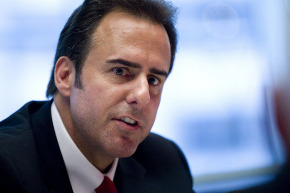
Hard Rock International last week announced the appointment of Matt Harkness as president of Hard Rock Hotel & Casino Atlantic City. As a New Jersey native with decades of gaming experience, Harkness’ appointment is a strategic move for the brand, bringing experienced gaming leadership to the significant property launch. Reporting directly to the chief operating officer for Hard Rock International, Jon Lucas, his appointment supports continued momentum surrounding the entertainment destination’s opening in the summer of 2018.

A new face to the brand, Harkness joins Hard Rock as an industry veteran with more than 30 years of managerial experience in the gaming industry. For 15 years, Harkness worked in Atlantic City for Trump Casino Resorts, serving as chief operating officer of Trump Plaza, senior vice president of marketing for Trump Taj Mahal, executive director of marketing for Trump Marina/Castle and executive director of casino administration for Trump Taj Mahal.

Additionally, Harkness was chief operating officer of Four Winds Casinos, spearheading casino operations and overseeing the planning and implementation of project development during his nine years with the company.

He most recently held the position of general manager at Lucky Dragon Hotel & Casino in Las Vegas, Nev., where he lead the operations team through pre- and post-opening.

“With his many achievements and successes in previous leadership roles, we look forward to Harkness bringing his wealth of knowledge in the gaming industry to Hard Rock Hotel & Casino Atlantic City,” says Jim Allen, chairman and CEO of Hard Rock International.

Tax Relief Too Little, Too Late, Says N.Y. Track Owner

New York’s legislature has approved a tax relief package to aid the state’s struggling racetracks. But whether it will succeed at averting at least one threatened closure remains uncertain.

The competitive landscape has changed dramatically for the tracks and their machine gaming offerings since the opening in the last year of three of four full-scale commercial casinos, with a fourth slated to debut next spring in the Catskills, 90 minutes from New York City.

A bill aimed specifically at improving Saratoga Casino Hotel’s prospects passed in both the Senate and Assembly before lawmakers adjourned for the summer. It allows small-to-medium-sized gambling facilities with up to 1,900 gaming machines to use 4 percent of their net win to make improvements.

Saratoga is battling competition from the new Rivers Casino and Resort, which opened in Schenectady in February, just 25 miles to the south.

A second bill, an Assembly measure designed to help the harness track and racino at Vernon Downs, has left Jeff Gural, chairman of Vernon Downs owner American Racing and Entertainment, “extremely disappointed.”

Gural criticized the bill as a “watered-down version” of a bill passed in the Senate to amend state tax law in relation to vendor fees for video lottery gaming at the track.

“While the revised bill passed by the Senate provided us with less tax relief than we had originally asked for, it was a step in the right direction as I certainly do not want to see 300 people lose their jobs,” he said.

Vernon Downs is reeling from competition in the Syracuse area from the Oneida Indian Nation’s Turning Stone Resort & Casino and Yellow Brick Road Casino and, more recently, the new del Lago Resort & Casino. Unlike the tribal casinos and new commercial casinos its license does not permit table games. Its racino, which houses around 760 machine games, claims to be losing about $150,000 a month.

American has announced plans to close the casino and food and beverage facilities in September and the track and its amenities in November. The property’s hotel will remain open until December 18, “out of respect to the many individuals who have scheduled weddings and other events at the facility for 2017,” the company has said.

Assemblyman Anthony Brindisi said in a news release he will introduce a bill in the Legislature’s fall session aimed at keeping all the track’s facilities open.

“My hope is the owners of Vernon Downs will continue to negotiate in good faith with the state to avoid having to lay off the hundreds of workers,” he said.

Augie Renna Named VP at Foxwoods

Foxwoods Resort Casino, a premier resort destination in the Northeast, last week announced that Augie Renna had joined the team as vice president of national marketing. Renna brings over three decades of casino marketing experience and leadership to the resort.

“I am proud to be a part of the team at Foxwoods Resort Casino,” said Renna. “For the last 25 years, Foxwoods and the Mashantucket Pequot Tribal Nation have built a world-class resort casino and I am excited to leverage my experience to help continue elevating the brand and growing consumer engagement.”

“Augie Renna is a dynamic talent with an exceptional player development background,” said Felix Rappaport, president and CEO of Foxwoods. “He is an invaluable asset who will help drive the growth of our brand nationally while spearheading player development strategies and strengthening communication with the most important part of our business, our customers. I have personally known Augie Renna since 1980. He is a legend in the gaming industry and a consummate professional.”

Renna has held multiple high-profile leadership and marketing positions throughout his career, and most recently was the president of national marketing for Tropicana Las Vegas. Prior to that he was the senior vice president at the Golden Nugget from 2011 – 2012, senior vice president of marketing at MGM Mirage from 1995 – 2011 and vice president of marketing at Trump Entertainment Resorts from 1991 – 1995.

In his role as Foxwoods’ vice president of national marketing, Renna will be responsible for the overall management and direction of player development activities in Atlantic City as well as the maintenance of the casino customer base. He will also explore opening additional branch offices in strategic locations to further build the Foxwoods brand.

State Bailout Saves N.Y. Racino From Closure

There are 300 very happy people at New York’s Vernon Downs this week.

The Syracuse-area racetrack and racino will not close, as was announced last month, which means 300 jobs have been rescued―along with $20 million in local government tax revenue―thanks to a $2 million bailout brokered by state lawmakers and Governor Andrew Cuomo after the Legislature had adjourned on June 28 for the summer.

The negotiations did no go well for two other tracks hoping for better deals of their own in the Empire State’s increasingly crowded gaming market: Batavia Downs in Genesee County in the west and Empire City Casino in Yonkers. Both came away empty-handed and will have to wait until lawmakers return to Albany in January.

“I’m thrilled because it has been such a struggle, and I’m mainly thrilled for my employees and the people at Vernon. It could have wiped out the town,” said Jeff Gural, who owns Vernon Downs and Tioga Downs in the south of the state.

“You just get to a point where you just want to be able to save and preserve these 300 jobs,” said Senator Joseph Griffo, who represented the track in the negotiations.

Claiming losses of $150,000 a month, Gural planned to shutter the entire Vernon Downs operation―the track, the gaming floor and a supporting hotel―beginning in September. That was averted when the Assembly and Senate agreed on a plan to kick back more of the state’s share of the take from its video lottery machine games. The basics are that Vernon Downs will keep 75 percent of the money that was going to the state Gaming Commission for administration of the VLTs. It will also get to use money designated for capital improvements to pay for operating expenses.

“It will probably let me break about even,” Gural said.

Empire City, which competes directly with the giant racino at Resorts World New York City in Queens, was pressing for a reimbursement from the state that will allow it to invest $180 million to build a hotel, parking garage and other amenities that would add 850 construction and permanent jobs. The Senate approved such a plan, but the Assembly did not act on it.

“Instead, Empire City will remain stagnant,” a spokesman for the facility said, “and the state will likely see a decline in education revenue.”

Batavia Downs, which was looking for tax parity with competing tracks in its market, saying it pays a higher rate than Finger Lakes and Buffalo Raceway, also came away disappointed.

“We are the only municipally owned gaming facility in the state. It does not make any sense to our member municipalities that private wealthy business owners pay a lower tax rate on their gaming facilities,” COO Michael Nolan said.

Batavia Downs is owned by Western Regional Off-Track Betting, which shares its profits with 15 counties and the cities of Rochester and Buffalo.

Seminoles Settle Blackjack Dispute With Florida

The Seminole Tribe and the state of Florida last week reached an agreement ending a dispute over the tribe’s exclusivity to house-banked card games in the state. The tribe sued the state in 2015 claiming that the approval of “player-banked” card games at state parimutuels violated its exclusivity and the state counter-sued, claiming the tribe’s five-year agreement granting the Seminoles exclusivity had expired. A judge ruled in favor of the tribe, which halted millions of dollars in payments it had made to the state in exchange for the exclusivity.

The new deal gives the tribe continued exclusivity under the original compact, which expires in 2030. The tribe will resume payments immediately. Including payments made in escrow, the state will receive $340 million over the next fiscal year. The catch, however, is the state is required to take “aggressive enforcement action” on banked card games and even electronic table games that mimic the real thing. Should that not happen, the tribe can halt payments once again.

The Florida Department of Business and Professional Regulation says it will abide by the agreement.

“DBPR is glad that the state of Florida has reached an agreement to resolve the ongoing litigation between the state and the Seminole Tribe,” said DBPR Secretary Jonathan Zachem. “This agreement ensures the continuity of the current Seminole compact and does not allow for any expansion of gaming.”

The challenge for the parimutuels is great since the money paid by the tribe is at least twice as much as the banked games would contribute to the state treasury.

The tribe says it’s a win-win for everyone, however.

“The settlement is one of the rare incidents where everybody benefits,” Barry Richard, attorney for the Seminole Tribe told the Miami Herald. “Nobody gave up anything. The state has an immediate infusion of money, and the tribe gets to continue its games.”

Rhode Island Casino Plans Near Approval

Twin River Management Group in Rhode Island is closer to being able to break ground on its $75 million casino in Tiverton at the northern edge of town. Last week the town’s planning board approved preliminary construction plans. A groundbreaking is expected later this month after final plans are approved.

The casino will be located on 45 acres near State Route 24 a short distance from the state line with Massachusetts, just across the line from Fall River.

Rhode Island and Tiverton voters approved of the casino in a referendum in November, although the local approval was by a very narrow margin. However, approvals by the city’s planning board and building permits were still required. Part of the board’s scrutiny was to determine if existing infrastructure could provide the power, water and sewer services to the facility.

According to Twin River Management Group Chairman John E. Taylor Jr. the casino will complete a traffic roundabout to handle traffic before it opens.

Some administrative approvals are needed at this point, but are not seen as standing in the way of the casino being built.

The casino will have 1,000 slot machines, 30 gaming tables, a restaurant, an entertainment venue, a parking garage and an 84-room hotel. Twin River plans to open it in about a year. It will use the license now used for operating the Newport Grand hotel, which will be closed.

When it opens, the Tiverton casino will be one of two in the state. The casinos collected about $600 million in 2016 and the state is expected to get up to $312 millions of that in taxes. Gaming is the third largest revenue source for state government.

The numbers the two casinos have been making have been in decline, which is one reason that Twin River wanted to relocate its new casino closer to the state line, where it expects to retain some of the market threatened by casinos that the Bay State is bringing on line.

Twin River has said it expects that relocating from Newport will increase its payments to the state to about $50 million, plus an additional $1 million from property, hotel and restaurant taxes.

Taylor told the planning board, “We are extremely grateful for the thorough and deliberate review process in which the Planning Board engaged. Like most of our interactions with Tiverton town government and its citizens, we were impressed by the collaborative nature of this process, which included hundreds of hours of document review, expert testimony and public input.”

Charity Casino Mulled for New Hampshire

The Union Leader reported last week that city officials are considering allowing a charity casino in Salem, New Hampshire, that would be dubbed Cheers Casino and Poker Room. The proposal is for a casino with a restaurant that serves light meals, 25 poker tables and other additional gaming tables.

Salem previously hosted a charity racetrack, Rockingham Park racetrack, that closed last year after operating since 1906. Unlike a commercial casino, a charity casino would make enough to cover expenses and apply the profits to charities.

Dan Dandreo, the owner of the prospective casino said he thinks the business would be a success because the charity casino at the racetrack was successful until the racetrack itself close.

“We had to figure out if it was going to be economically viable,” he said.

Although the casino has not yet been granted any approvals, the city of Salem recently approved a zoning ordinance that would allow charitable gaming projects and developers have introduced initial proposals to the planning board.

Adelson’s iGaming War Takes a Hit

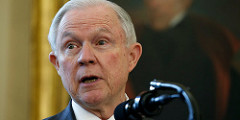
The Coalition Against Internet Gambling, funded principally by Las Vegas Sands Chairman Sheldon Adelson, ran into a hurdle last week. Encouraged by Attorney General Jeff Sessions who said during his confirmation hearings that he would review the 2011 Department of Justice memo that effectively legalized online gaming and lottery, the coalition hired a lobbyist to urge Sessions to revoke that memo.

But the lobbyist the group hired, Charles Cooper, a longtime friend of Sessions, turned out to be a problem. It seems Sessions hired Cooper as his personal attorney following the congressional investigations of Russia’s election influence. That put Sessions into conflict on the two issues, and he recused himself from any consideration of the memo’s status.

“There’s been a change in administrations, and that’s when fresh looks take place,” Cooper told Bloomberg News about the DOJ memo. “This particular legal issue has certainly struck us as sufficiently questionable that it ought to be reconsidered.”

Sessions seemed to indicate that he considered the memo questionable when he said during the confirmation hearings that he was “shocked” when it was issued in ’11.

“I would revisit it and I would make a decision about it based on careful study, and I haven’t gone that far to give you an opinion today,” he told the Senate committee.

The memo concluded that online gaming and lottery were not covered under the 1961 Wire Act, and contended on interstate sports betting was barred by the law.

Should the DOJ reject the memo, there is no consensus on what the consequences would be either to the states that currently offer iGaming or states now considering it, such as Pennsylvania, where Adelson’s company currently owns Sands Bethlehem. LVS is funding campaign to stop a high gambling expansion bill, but has focused not on online gaming but on legal slots in bars and restaurants.

Without Sessions, the DOJ gave no indication if and when the agency would review the memo.

New Report: Web Gambling Pays

With New Jersey about to finally get its day in the U.S. Supreme Court over a federal ban on sports betting, a new report is out trumpeting the benefits the state has reaped from its internet gambling industry.

The report, “Economic Impact of New Jersey Online Gaming: Lessons Learned,” sponsored by online gaming trade group iDEA (iDevelopment and Economic Association), says the intrastate market has made $998.3 million from its inception in 2013 through the end of last year, provided 3,374 jobs paying $218.9 million in wages and generated $124.4 million in tax revenue to state and local governments, including $83.5 million in gaming taxes.

iDEA says the research, which was compiled by Alan Meister of Nathan Associates and Gene Johnson of Victor Strategies, suggests such benefits could be replicated in other regions.

With New Jersey about to finally get its day in the U.S. Supreme Court over a federal ban on sports betting, a new report is out trumpeting the benefits the state has reaped from its internet gambling industry.

“The state’s operating environment and regulatory structure provides a portable model which can be implemented by other jurisdictions, bringing much-needed jobs and tax revenue,” said gaming attorney and iDEA co-founder Jeff Ifrah.

The study also claims that concerns raised during the initial debates over legalization have been unfounded.

“New Jersey iGaming is also a success from a regulatory perspective, with some of the strictest regulation protocols in the world,” Ifrah said. “These regulations guarantee that operators are accountable, and that players can trust that they will be protected.”

Several states are considering legalizing casino gambling on the internet, but currently only Delaware, Nevada, New Jersey and the U.S. Virgin Islands have regulatory schemes in place.

To download a full version of the report click here.

Delaware Moves DFS Bill

The Delaware House of Representatives is set to vote on a bill to legalize and regulate daily fantasy sports, in the latest attempt to boost sagging gaming revenues amid flat results from the state’s three racinos.

Sponsored by Rep. Charles Potter, HB 249 moved through the House Gaming and Parimutuels Committee last week. Operators also pay a 15 percent tax on their net adjusted revenues on top of an annual $50,000 fee.

Potter said the bill is needed because “a lot of people” play on unregulated DFS sites in the state. Orrick, Herrington and Sutcliffe LLP, which represents DFS giants DraftKings and FanDuel, estimates that some 150,000 Delawareans play at the sites.

“That will bring income into the state,” Potter told Delaware’s News Journal. “If you imagine you have 150,000 people that are playing right now, that number’s going to grow when it’s legal, so if a person bets an average of $100 a month, you can do the math.”

Potter added that operators would have to comply with “some of the strictest consumer safeguards” in the nation, including prohibiting minors and misleading advertising from their sites.

UK Football Association Ends Online Gaming Sponsorships

The UK Football Association has decided it can’t remain affiliated with gambling companies and cancelled a £4 million-a-year contract with UK bookmaker Ladbrokes.

The FA’s governing body conducted a three-month review of the appropriateness of the deal while the association has been strictly enforcing a ban on players and people connected to the sport betting on soccer matches.

The FA has been criticized for the affiliation, including by soccer player Joey Barton, who is serving an 18-month ban for gambling offences. Barton has accused the FA of hypocrisy on gambling issues.

“We would like to thank Ladbrokes for both being a valued partner over the last year and for their professionalism and understanding about our change of policy around gambling,” said Martin Glenn, FA chief executive in a press statement.

The English Football League, however, said the decision will not impact its own relationship with Sky Bet, which is in its fifth year.

A spokesman for the league told the UK’s Guardian newspaper “The EFL is of the firm belief that there is no conflict in having a commercial relationship with the gaming industry, as it is the FA who have the ultimate responsibility of enforcing any breach of the existing betting rules that all those who participate in our competitions have to adhere to.”

The FA said it will “continue to work with betting companies, including Ladbrokes, as they play a key role in sharing information on suspect betting patterns and so help in regulating the game.”

Colombia Moves to Block Unregulated Online Gambling Sites

Colombia’s new online gambling regulator Coljuegos has blacklisted 325 online gambling sites and ordered ISPs to begin blocking them in the country.

The move comes even as the regulator handed out its first gambling license to Wplay.co, a subsidiary of Aquila Global Group, a slots operator based in Medellin. It’s believed to be the first regulated online gambling brand in all of South America.

The blacklist includes some 325 websites, including global brands such as William Hill, PokerStars, Betfair, Paddy Power, and Ladbrokes.

“With this initiative, we seek greater resources for the health of Colombians, expanding the portfolio of games through innovative tools and tuning with the trend towards greater use of new technologies in the world,” said Juan Perez Hidalgo, president of Coljuegos in a press statement. “We are aware that the fight against illegality is not an easy task and less so with regard to technological platforms. That is why we are working in an articulated way with the National Police and the Ministry of Defense.”

Colombia passed online gaming laws in October. The new regulations impose a 15 percent levy on gross gaming revenue where the expected return to the player is equal or greater than 83 percent. Operators must also pay a fixed annual licensing fee of roughly $200,000, according to casino.org.

Colombian officials say they have had inquiries from more than 60 potential licensees and expect to award seven licenses this year.

Gamblers Challenge Portuguese Tax Laws

Portugal’s National Association of Online Gamblers has reacted to claims by Betclic that Portugal took 66 percent of its in-country revenue in taxes by challenging the tax laws.

The association says it has a petition with 4,600 which argues that taxes on online gambling should be reduced. Betclic Everest Group were the first company to receive an online sports betting license in Portugal but director Humbert Michaud said taxes had claimed nearly 66 percent of Betclic’s Portuguese revenue, according to a report at casinopedia.com.

Michaud said the company may have to consider its future in the country if tax relief is not introduced.

Online casino and poker operators licensed in Portugal pay a variable tax rate, starting with sites generating less than €5m a year in revenue paying a rate of 15 percent and growing as revenue increases, reaching a maximum of 30 percent, the report said.

Pennsylvania Down to the Wire

VGTs still major sticking point

Pennsylvania’s new fiscal year officially began Saturday, July 1. As the budget deadline week drew to a close, a gaming expansion package on which Governor Tom Wolf relied for $250 million of revenues in his budget remained mired in the state Senate.

As the week ended, lawmakers in both chambers of the Pennsylvania General Assembly concentrated on passing a bipartisan budget bill, which was expected to be signed by Governor Tom Wolf by Saturday. The issue of gaming expansion—specifically, reconciliation of the differences between House and Senate gaming bills—will be addressed along with a few other crucial tax and code issues after the July 4 holiday.

Senators had hoped to pass the gaming package along with the budget, but lawmakers have reached a sticking point. The main reason for the delay is a set of amendments state House members added to a previous expansion package passed by the state Senate. That package provided for the legalization and regulation of online gaming and daily fantasy sports, online gaming via tablets at state airports, online lottery sales, and a replacement of the local-municipality casino host fee struck down last year by the state Supreme Court.

The House bill, passed with little debate, includes all that, plus satellite slot casinos at off-track betting facilities, and the main sticking point said to be holding up the entire package—legalization of video gaming terminals (VGTs) at up to 8,000 liquor-licensed establishments across the state.

Proponents in the House—led by the measure’s sponsor, Pittsburgh-area Rep. Mark Mustio—say revenues from VGTs would boost local revenues in their districts by replacing what are now unregulated, “gray-area” machines with five to 10 games per establishment that would be taxed at 37.5 percent, plus a 4 percent local-share assessment. The measure is vehemently opposed by the state’s 12 land-based casino operators, who view what could be as many as 40,000 newly regulated slot machines as competition that could cannibalize their casino revenues.

The other main difference between the House-passed measure and the Senate bill remained the tax rate for online gaming. The bill passed by the Senate would tax online gaming revenues at 54 percent, a rate many feel would torpedo the entire online gaming program, since operators have said they would not seek a license at that tax rate. The House returned the measure to the Senate with online gaming revenues taxed at 16 percent, plus a 3 percent local-share assessment.

Late last week, state senators worked furiously with House leaders to craft a compromise bill. “There have been a number of meetings that have taken place in the past several days on trying to find a solution reconciling some of the differences between the House and Senate as it relates to an overall gaming proposal moving forward to the governor’s desk,” Senate Minority Leader Jay Costa told Online Poker Report. “Those conversations continue to take place, and we’re hopeful that we’ll be able to reach consensus before we leave on June 30.

“The House added a couple things that are having a difficult time getting through the Senate,” Costa said. “Video gaming terminals is an issue that I think a lot of members of the Senate are not supportive of, and that has become a roadblock, quite frankly, to reaching a consensus.”

On the tax-rate issue, Costa said he is willing to compromise. “I’m certainly willing to support a 25 percent rate on both items (iGaming and DFS), but there’s been pushback on that as well,” Costa said. “Other folks want to see 16 or 19 percent on table games. I think 25 percent is a fair middle ground, but others think 54 and 16 is the right rate.”

Meanwhile, the local-area host fee is a looming problem. Both bills replace the fee struck down by the court last year—2 percent of revenues or $10 million, whichever is greater—with a flat $10 million annual fee paid by casinos to their host communities. While casinos have threatened to challenge that provision on the same grounds as the earlier one (it creates a higher-percentage tax rate for smaller casinos), local municipalities hope the new fee is in place by the time the next installment on the fee is due in late July.

While many casinos have pledged to continue the quarterly payments regardless of the progress on a new law, others—notably Sands Bethlehem—have made no such commitment.

International Winefest at Golden Nugget

Take a trip around the world with wine at Golden Nugget’s International Winefest on August 25-26. Sample over 100 wines at this enjoyable and educational two-day event.

Wine and Jazz Reception Under the Stars
Friday, August 25 | 7pm-10pm | $49 | $39 with code NUGGET

Mingle with winery ambassadors, winemakers & wine enthusiasts for an evening under the stars on the Event Lawn. Enjoy wines from over 65 of the most prolific wineries complemented by award-winning cuisine.


The Grand Tasting
Saturday, August 26 | 7pm-10pm | $85 | $75 with code NUGGET

Sample over 100 wines from ten of the world’s most prestigious wine producing countries. Enjoy sampling wines from Italy, Spain, France, Portugal, Germany, United States, Australia, New Zealand, Uruguay and South Africa. This is truly an international wine experience.

For information or to purchase tickets visit: www.goldennugget.com

Study Calls New Jersey Online Gaming a Success

A recent report by the iDevelopment and Economic Association creates a rosy picture of New Jersey’s online gaming experiment, saying it has brought revenue, jobs and tax payments to the state.

The group says it is a trade association that exclusively represents the interests of the U.S. online gaming industry, and the study was peer reviewed by researchers at the University of Nevada, Las Vegas.

The study found that from 2013—when New Jersey began online gaming—through 2016, online gaming has directly and indirectly created $983 million in economic output for the state. Online gaming has also created 3,374 jobs, $218.9m in wages to employees, and $124.4m in tax revenue to state and local governments, including $83.5m in iGaming taxes, the report said.

“New Jersey’s experience provides valuable lessons for other US states considering iGaming legalization in the future,” said Jeff Ifrah, a gaming attorney and one of iDEA’s founding members. “The state’s operating environment and regulatory structure provides a portable model which can be modeled by other jurisdictions, bringing much-needed jobs and tax revenue. New Jersey iGaming is also a success from a regulatory perspective, with some of the strictest iGaming regulation protocols in the world; these regulations guarantee that operators are accountable, and that players can trust that they will be protected.”

The report also noted that there has been little evidence of online gaming contributing to underage gambling, money laundering or fraud in New Jersey’s online market—all concerns raised by opponents of online gambling. Also, rather than cannibalize land-based casino customers, New Jersey’s Atlantic City casinos have been seeing steady revenue gains and report attracting new players through their online sites.

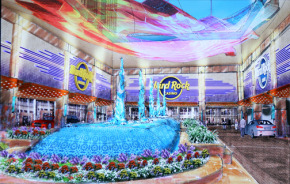
Hard Rock Atlantic City Plans Memorial Day 2018 Opening

Officials for Hard Rock International are shooting for a Memorial Day 2018 opening for their new Atlantic City casino.

But first, they’ll have to complete a $500 million renovation of what was the former Trump Taj Mahal casino, which the company bought for $50 million earlier this year. That process includes wiping away the entire Taj Mahal theme.

“We hope to start demolition by next month and full construction by August,” Joe Emanuele, senior vice president of design and construction for Hard Rock International, said during a Casino Reinvestment Development Authority board meeting as reported by the Press of Atlantic City.

The statement came as Hard Rock sought designation of an entertainment and retail district around the property.

“The planned renovations will transform the 4.2 million square feet of defunct casino hotel space into a state-of-the-art casino, hotel, retail, dining and entertainment facility, increasing employment opportunities and strengthening Atlantic City and New Jersey’s economies,” CRDA Board Chairman Robert Mulcahy said. “We look forward to seeing this project come to fruition.”

CRDA’s designation of an entertainment district would make Hard Rock eligible for a number of tax breaks, including a rebate on sales and use taxes on construction materials for the building and also the state luxury tax from hotel-room fees for 20 years or until the total rebate amount equals the cost of the project, the Press reported.

The city is eligible to designate 11 entertainment retail districts, Mulcahy said, and so far, has designated five others. A public hearing on the application is required and has not yet been scheduled.

In another Atlantic City casino story, Pala Interactive has successfully launched an online poker site in the state through its partnership with the Borgata casino. The site has completed its beta testing.

“The primary objective with our beta launch was to get our new poker platform/software in the New Jersey market without any major technical issues.” Pala Interactive Chief Marketing Officer Jeremy Clemons told onlinepokerreport.com. “While we have received a great deal of constructive input on features and functions from players including some minor bugs, we are pleased that we haven’t had any show-stopping issues and we are excited about that result.”

The site, however, is attracting only a handful of players as New Jersey’s online poker market is already crowded by five other operators, including PokerStars. Pala Interactive officials, however, have said they made the launch to help prepare for launches in other states that may approve online poker.

Feds Threaten DraftKings, FanDuel Merger

The Federal Trade Commission is seeking to block the pending merger of daily fantasy sports giants DraftKings and FanDuel saying a merged company will have dominant control of the DFS market.

The FTC in conjunction with the Offices of the Attorneys General in the State of California and the District of Columbia filed a complaint to temporarily block the merger until an administrative trial set for November.

A federal judge then temporarily halted the merger. Judge Ketanji Brown Jackson of the U.S. District Court for the District of Columbia approved a temporary restraining order that was agreed upon last week by the two companies and the FTC, according to the Associated Press.

Without the order, the merger could have been completed last week, court records show. The two DFS companies did not comment on the agreement.

The FTC opposed the merger as it would create a company controlling more than 90 percent of the U.S. market for paid daily fantasy sports contests.

“This merger would deprive customers of the substantial benefits of direct competition between DraftKings and FanDuel,” said Tad Lipsky, acting director of the FTC’s Bureau of Competition in a press statement. “The FTC is committed to the preservation of competitive markets, which offer consumers the best opportunity to obtain innovative products and services at the most favorable prices and terms consistent with the provision of competitive returns to efficient producers.”

DraftKing’s CEO Jason Robins and his FanDuel counterpart Nigel Eccles both previously expressed disappointment with the FTC’s stance and said the companies are weighing their options. In a message to employees, the companies are studying legal options to block the FTC, the Associated Press reported.

 “Please don’t let this regulatory setback distract you. DraftKings is poised for growth, whether or not we merge with FanDuel,” the message said. “In the days ahead, it will be business as usual as we prepare for the start of the NFL season.”

The two companies say the planned merger would not violate antitrust laws because daily fantasy sports is just one part of a larger fantasy sports industry.

The FTC, however, notes that the two companies are each other’s main competition and doubts that other fantasy sports operations—such as season-long contests—could provide real competition or be viewed as true competitors to DFS by consumers.

The FTC action also prompted opposition from Dallas Mavericks owner Mark Cuban.

“This is ridiculous. The only reason there is little competition is because of backwards and confusing regulations,” Cuban said on Twitter.

One of the announced reasons for the merger—announced in November—was FanDuel’s and DraftKings lengthy, state-by-state battle over DFS regulations as more than 30 states have moved to regulate the industry in some way. The two companies want to combine resources in those battles. A number of smaller DFS companies have closed in the face of tighter restrictions, licensing fees and state-imposed taxes.