Author: Casino Connection Staff

Atlantic City Boardwalk Music Series

The Atlantic City Boardwalk Music Series returns to Kennedy Plaza with free concerts every Thursday & Friday through the end of August.

Showtime 6:00 PM – 8:00 PM
Kennedy Plaza in front of Boardwalk Hall, Atlantic City, NJ

Music Lineup:
July 20  Poor Mouth Henry
July 21  Argo
July 23   TBD
July 24  Tree Rats
July 27  Argo
July 28 The Remedy Band
July 30  Craig Carey Band

July 31  Suburban Sensi
August 10  Poor Mouth Henry
August 11 The Remedy Band
August 13  Craig Carey Band
August 14  Suburban Sensi
August 17  The Remedy Band
August 18 Poor Mouth Henry
August 20  Dead Reckoning

Gardner’s Basin Music Series

The Gardner’s Basin Music Series will feature live music on every Wednesday from 4-6 p.m. Admission is free.

Music Lineup:
August 2  Six Mile Cross
August 9  Pure Acoustic Duo
August 16  Visions of Indecision
August 23   TBD
August 30  Rob McMahon

Absecon Lighthouse Celebrates National Lighthouse Day August 10

Absecon Lighthouse, New Jersey’s tallest, and the country’s third tallest Lighthouse, will be celebrating National Lighthouse Day on Monday, August 10th.  Kids up to 12 years old are invited to climb the lighthouse for FREE (must be accompanied by an adult) from 10am to 5pm.  But let’s not forget the grown-ups!  Enjoy a Full Moonrise Climb & Winetasting, while enjoying jazz tunes by Atlantic City’s very own Eddie Morgan Band, from 5:30 to 8:30Tickets are $20 to help preserve this important Atlantic City icon.

Dogs on leashes are always welcome in the garden and the museum.  Bring a lawn chair and hang-out…watch the sun set while you sip some wine, listen to classic soul tunes, stroll our 21bed community garden, 2-acre grounds, take in the historic outdoor exhibits, and chillax with us, because: SUMMER!

Absecon Lighthouse is a state-owned historic property administered by the non-profit Inlet Public/Private Association. Located at 31 So. Rhode Island Avenue in Atlantic City, it is open to visitors every day July & August, 10am to 5pm, and Thursdays until 8pm – last climb is 1/2 hour before closing.

For more information call (609) 449-1360 or visit us on the web at www.abseconlighthouse.org.

Straub Denies $220 Million Offer for Revel Property

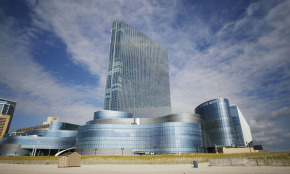
Developer Glenn Straub has been offered $220 million for his Ten casino property—formerly the Revel casino—according to a report in the Press of Atlantic City.

The offer comes from a New York City-based private equity firm according to Alex Fredericks, director of operations for Digital Launch, the company representing the firm. Fredericks did not name the firm.

Straub, however, told the paper he has received no such offer.

“I don’t know any private equity firms,” Straub said.

Straub bought the Revel for $82 million in bankruptcy court in August 2015, but so far has gone from one legal or regulatory battle after another and not been able to open any portion of the property, despite announcing several opening dates.

Digital Launch says it is a development and management firm that designs and implements strategies to effectively market product and talent through both the hard goods and digital commerce landscape, according to its website.

Straub’s latest battle over the property has dragged on for months. Straub says he does not need a New Jersey casino license to re-open a casino at the property as he only intends to lease the space to a casino operator. The state’s Casino Control Commission, however, ruled Straub needs full licensing. He has appealed that decision.

“If they rule in our favor, we will open the casino,” Straub said. “If they rule against us, maybe we will have to look for someone else.”

Such a move would please both city and state officials—including state Governor Chris Christie—who have called for Straub to sell the property to someone able to re-open it.

Online Gambling Continues to Drive Atlantic City Casino Revenue

Atlantic City’s seven casinos saw a $197 million land-based win for June—almost exactly even with June 2016—but thanks to a 23 percent increase in online revenue, the casinos were up 1.8 percent over last year.

If the numbers for the shuttered Trump Taj Mahal—which closed in October—are excluded, the revenue jump was 10.8 percent, according to an analysis by the Associated Press.

“These are solid numbers that show that casinos are attracting more business and increasing their market,” said Matt Levinson, chairman of the New Jersey Casino Control Commission in a press release. “Gaming revenue for the current operators has now increased every month this year compared to last year. So far this year, total gaming win at the seven casinos is up 11.1 percent, with six of the current seven operators outperforming last year.”

Caesars Atlantic City was the only casino to report a revenue decrease in June, down 1.9 percent to $24.6 million. The biggest percentage increase was posted by the Golden Nugget, up nearly 23 percent to $23.5 million, according to the AP.

Online revenue for the month was about $20.2 million. The Golden Nugget continued to lead the state’s online market taking in $5.5 million. The Borgata was second at $3.8 million.

For land-based revenue, the Borgata remained the revenue leader with $63.7 million it won from gamblers in June was more than twice as much as its closest competitor, the Tropicana, which won $31.9 million. Harrah’s was close behind at $31.6 million, according to the AP.

For the first half of 2017, Atlantic City’s casinos have won $1.29 billion, an increase of 3.5 percent over the same period last year.

New Jersey Moves to Limit Casino Closing Danger

New Jersey’s brief budget crisis earlier this month almost meant Atlantic City casinos would have to close, but a new bill would allow casinos to stay open indefinitely during a government shutdown.

Right now, New Jersey casinos can stay open for seven days during a shutdown. Governor Chris Christie only shut down the state’s government for three days before a budget compromise was adopted.

Casinos have to close during shutdowns since state regulatory agencies must monitor their finances and gaming action.

The new bill was proposed by state Senate President Stephen Sweeney and Senators James Whelan and Jeff Van Drew.

“The casinos continue to be the driving force for the economy in the city and the entire region. Atlantic City is turning around, and to allow the casinos to close now or at any time in the future would be destructive to the lives of the casino workers and their families and would create an economic riptide with negative consequences for the entire city and region,” Whelan said in a press release.

Florida-Seminole Agreement Concerns Parimutuels

The state of Florida recently agreed not to appeal a 2016 court ruling allowing the Seminole Tribe of Florida to offer blackjack through 2030. In return, the tribe will make revenue sharing payments to the state through the end of the 2018 legislative session if Florida “takes aggressive enforcement action” against designated player games that operate as banked card games at parimutuel casinos. The state will receive about $340 million over the next year from the tribe according to the settlement.

After the 2018 legislative session, or any time before that if the tribe doesn’t feel the state is shutting down the games aggressively enough, the tribe could end its revenue sharing payments. State Senator Bill Galvano, the state Senate’s point man on gambling legislation, said, “If the legislature does nothing, it will be status quo unless the tribe believes there are still table games out there past the 2018 session. And then, they can stop making payments.”

He added, “It’s a tough position for the state to be in. There are many parimutuels that have already started designated player games, and they are quite profitable. So, you’re going to have an enforcement challenge, and then from a legislative policy perspective, the choices have now been significantly narrowed. Do you maintain the status quo of gaming in Florida and rely solely on tribal payments, or do you now look to the parimutuel industry for the revenues in lieu of what you have with the tribe?”

The Seminole Tribe was guaranteed exclusive rights to offer banked card games, in which every player plays against the dealer instead of playing against each other, as in poker. Seminole Tribe lawyer Barry Richard said, “It’s really not complicated. If the players around the table are playing against one person, a bank, it’s a banked card game. If they all have the same bet in a pile and only one’s going to win, then it’s not a banked card game. The tribe is paying a huge amount of money, more than twice as much as all the parimutuels put together, for exclusivity, and that’s what they want. They’re paying for it, they’re entitled to it.”

However, the parimutuels said they’re acting within the law since the designated player who serves as a banker can rotate, like a dealer rotates in poker. If there’s no fixed banker, there’s no banked card game, said John Lockwood, the attorney for the Palm Beach Kennel Club and several other Florida parimutuels. “We’ve implemented game procedures to make sure we’re in compliance with the state law,” Lockwood said. The parimutuels said the state would be taking “aggressive enforcement action” against an activity that is legal—and lucrative. A study of 10 cardrooms by the Innovation Group found they made $55 million in revenue over five years.

Sarasota Kennel Club President Jack Collins Jr. noted, “As far as we’re concerned, we’re completely approved and legit. If you read into this little stipulation, the Seminole Tribe’s whole thing is they’re looking for a complete monopoly. We have the player-bank games now that we’ve been doing for the last couple years, and in the agreement it said they strictly want to enforce the state trying to stop us from what we already have, so that would obviously put us in a worse situation, which we don’t want.”

Richard responded, “It doesn’t matter what you label it. If what they’re talking about when they say a designated player game is a poker game in which the dealer rotates around the table, then that’s fine. But if, in any hand, everybody’s playing against a banker, that’s the issue. It doesn’t matter what they call it.”

More than two dozen parimutuel facilities and card rooms have been authorized by Florida state regulators to conduct “player-banked” games, since initial approval was given to the Palm Beach Kennel Club in early 2012. The Seminole Tribe sued the state in federal court in 2015, arguing the state violated the 2010 compact when it authorized player-banked games. The state countersued, and in a ruling last year, U.S. District Judge Robert Hinkle sided with the tribe, calling designated player games an “egregious example of the cardrooms’ attempt to evade the prohibition on banked card games.”

The state appealed that ruling, leading to the recent agreement.

In another case concerning the Seminole Tribe, Circuit Judge John Cooper in Tallahassee recently filed a written “final declaratory judgment” following his decision last month that he got it “wrong the first time” and now ruled pre-reveal games are illegal slot machines. The new order will allow Jacksonville distributor Gator Coin II to appeal to the 1st District Court of Appeal.

Cooper issued a previous ruling in March stating pre-reveal games were not slots because players had to “press a ‘preview’ button before a play button can be activated.” He said then if the game’s outcome is known, it is not a game of chance. Now, Cooper’s new order said, “to have a chance to receive an outcome other than what is currently displayed by the preview feature, the player must commit money to the machine to be privy to the next preview.” The order states that “play pattern” is an “illegal gaming scheme designed to circumvent prohibitions.”

In a hearing, Richard, the Seminole tribal attorney, explained to Cooper pre-reveal machines violate the tribe’s exclusive right to offer slots outside South Florida. The tribe could withhold revenue sharing funds with the state, amounting to “multi-billions of dollars,” Richard said.

Cooper said his reversal was “not based upon whether the tribe likes the original ruling or dislikes the ruling.” Instead, he reversed his opinion because of further evidence about how the pre-reveal games actually are played, he said.

The case originated when Department of Business and Professional Regulation agents found one pre-reveal game in a Jacksonville sports bar and told the proprietor the machine was an “illegal gambling device.”

Law Change May Hasten Philly Casino

Pennsylvania state Rep. Scott Petri, who is chairman of the House Gaming Oversight Committee, is looking to jump-start the anticipated groundbreaking on Philadelphia’s second casino by eliminating the gaming law provision that is the basis of appeals against the award of the license to the Stadium Gaming partnership.

Stadium Gaming is a partnership of Baltimore-based Cordish Companies and Greenwood Gaming, owner of the Parx Casino at Philadelphia Park in Bensalem, the most profitable casino in Pennsylvania. The license for the city’s second and last casino was awarded for a casino in the city’s sports stadium district, carrying the Cordish “Live!” brand. An existing Holiday Inn will be refurbished to create a boutique hotel connected to the casino.

The award of the license—as has every other casino license in Pennsylvania—was appealed by one of the losing bidders, in this case, Market East Associates, to the Pennsylvania Supreme Court. The appeal was joined by SugarHouse Casino, the current Philadelphia casino, which has opposed any second casino in the city.

With 12 casinos operating, no award of a casino license by the Pennsylvania Gaming Control Board has ever been overturned on appeal from losing bidders. However, in this case, the court has ordered the board to re-examine the ownership structure of Stadium Casino to assure the participation of Greenwood does not violate the gaming law’s restrictions on multiple casino ownership. The law states that no licensee that owns more than 85 percent of one casino can own more than a third of a second property.

Since Greenwood owns Parx, the law would forbid the company from owning more than 33.3 percent of the Philadelphia Live! project. The court directed the board to verify the ownership stakes in Stadium Casino.

Petri’s bill would eliminate the ownership limitations in the gaming law. “The one-and-one-third rule is really an archaic provision,” Petri told the Philadelphia Inquirer. “The gaming board would like it removed, so that’s what the bill does.”

Massive Data Breach Hits Hard Rock Hotels

Hard Rock Hotels & Casinos has reported a massive security breach linked to the hacking of a third-party platform handling hotel reservations for the gaming giant.

The Loews Hotel chain, which uses the same platform, also was victimized.

The attackers were able to grab unencrypted payment card information for hotel reservations, including cardholder names, card numbers and expiration dates, e-mail addresses, phone numbers and addresses. In some cases, security codes were also exposed.

The avenue for the thefts was Sabre Hospitality Solutions’ SynXis system, the backbone infrastructure for reservations made through hotels and travel agencies. According to Sabre, its software is used by roughly 36,000 hotel properties.

“The unauthorized party first obtained access to payment card and other reservation information on August 10, 2016,” Hard Rock said. “The last access to payment card information was on March 9, 2017.”

Hard Rock properties in Biloxi, Cancun, Chicago, Goa, Las Vegas, Palm Springs, Panama Megapolis, Punta Cana, Rivera Maya, San Diego and Vallarta are all affected.

The company operates 176 cafes, 24 hotels and 11 casinos in 75 countries.

Sabre first reported publicly that an investigation into a possible breach was under way in a quarterly SEC filing in May. News reports said the company did not reveal exactly how the system was breached but had hired cybersecurity firm Mandiant to investigate.

In the case of Loews the attackers were able to steal credit card, security code and password information. In some cases, e-mail addresses, phone numbers and street addresses were also exposed.

Table Players Loving MGM National Harbor

MGM National Harbor has emerged as a leading player in the East Coast table games market.

Of the $300 million the new casino has grossed on its gaming floor since opening in December, slot machines have accounted for 53 percent, a far smaller ratio than the Maryland average of 61 percent and significantly below the 64 percent averaged at Maryland Live!, MGM’s primary competitor.

Likewise, in nearby states, casinos rely far more on slots as their principal earner. Pennsylvania’s percentage was at 73-27 slots-to-tables in May. New Jersey has been in the low 70s range over the past 12 months; Ohio has trended in the high 60s.

“When you walk through MGM National Harbor and you see blackjack games at 10 a.m. with $25 limits, you can see that there’s just a lot of excitement,” said Alex Alvarado, vice president of Slot Operations at the property. “There’s a lot of not really seasoned gamers but just people looking for entertainment.”

The Washington, D.C.-area casino features 126 banked and 39 non-banked table games, which have combined to produce $136 million in gross revenue to date. The property’s 3,237 slot machines have grossed $152 million since opening. But the pit has been more profitable, accounting for 62 percent of earnings after taxes.

Maryland’s tax structure has a lot to do with that. Slots are taxed at an aggregate rate of 57 percent, while tables are taxed at 20 percent.

So MGM has netted $67 million from slot revenue but $109 million from tables.

Since last December, Maryland Live! has netted $101 million in slot revenues (though it keeps 49 percent compared to MGM’s 44 percent) against $92 million from tables. Similarly, Caesars Entertainment’s Horseshoe Baltimore has averaged $8.6 million in net table revenues per month against $6.3 million in slot revenues.

“Astute operators are going to look at that and say ‘OK, so suddenly this business, in a way, has been turned in a way on its head,” Alvarado said.

“When you think about it from an operator perspective, it’s tough to wrap your head around,” he continued. “How can all this labor that you put into a manual game and the speed that is semi-dictated by a player outperform a machine that you just brainlessly stuff money into, hit a button and it eats your money and gives you nothing back? Everywhere else I’ve ever been it’s the inverse of that.”

DraftKings, FanDuel Merger Off

The Federal Trade Commission’s move to block the merger of DraftKings and FanDuel was the straw that broke the camel’s back causing the two daily fantasy sports giants to scuttle the deal.

“FanDuel decided to merge with DraftKings last November, because we believed that this deal would have increased investment in growth and product development thereby benefiting consumers and the greater sports entertainment industry,” FanDuel CEO Nigel Eccles said in a statement Thursday afternoon.

“There is still enormous, untapped market opportunity for FanDuel, and we will continue to execute our strategy to grow our business and further expand the fantasy sports industry.”

DraftKings CEO Jason Robins said it was the right thing to do.

“We believe it is in the best interests of our customers, employees, and investors to terminate our agreement to merge with FanDuel and move forward as a separate company,” Robins said in a statement.

The FTC blocked the planned merger—which could have been completed last month—saying that combining the two companies would create a company that dominates more than 90 percent of DFS play in the U.S.

The two companies challenged the FTC ruling in court, filing papers that argue that the FTC’s ruling “reflects an unnecessarily rigid and uninformed application of the antitrust laws to an underdeveloped, nascent industry, and largely ignores rigorous economic analysis that has demonstrated unequivocally that prices are not likely to increase as a result of the transaction.”

The companies argued that the merger would actually create savings for players by making the companies more efficient and reducing redundant costs.

However, the FTC noted that the two companies are each other’s only real competitors.

“This merger would deprive customers of the substantial benefits of direct competition between DraftKings and FanDuel,” FTC Bureau of Competition acting director, Tad Lipsky, said last month.

The companies challenged the FTC ruling both in an administrative court and federal court, where the FTC received a preliminary injunction to block the merge.

The FTC was joined in the move to block the merger in federal court by the offices of the attorneys general in the District of Columbia and California.

Eccles outlined what he thinks is a bright future for FanDuel, even if the merger fell through. The company just unveiled a daily fantasy game based on golf tournaments and said the company plans to unveil a season-long fantasy product for the upcoming NFL season. He stressed—as the company has to the FTC—that daily fantasy sports is simply part of the larger fantasy sports market.

“Daily fantasy sports is a subset of that bigger market, and our mission is to convince that 57 million that daily fantasy sports is a better way to play,” Eccles told Recode. “If we can get 10 percent of that 57 million, then we have a huge business, so that’s our focus.”

Despite the rosy outlook from the companies, experts noted that neither company has yet reached profitability.

“The timing of the withdrawal from the merger appears to indicate that there is more behind the decision than cost savings,” Rachel Hirsch, an attorney for Washington, D.C.-based firm Ifrah Law, which specializes in FTC investigations, told ESPN.

“Perhaps these companies were worried about the information that would be revealed at the preliminary injunction hearing and how that would tarnish their brands. Win or lose, at the end of the day, image is everything to these companies, and they couldn’t afford adverse witnesses or data that could permanently impair their chances of recovering from a failed merger. One thing is for certain—after a failed merger, it will no longer be business as usual for one or both of these companies.”

RAWA Language Again Pegged for Spending Bill

Senators seek reversal of DOJ opinion

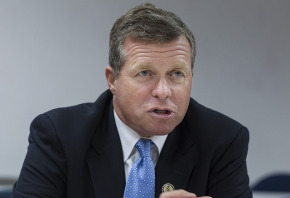
The Casino.org website cited a Washington, D.C. think tank in reporting that U.S. Rep. Charlie Dent, a Pennsylvania Republican, plans to insert language from the stalled Restoration of America’s Wire Act, or RAWA, into an upcoming federal appropriations bill.

RAWA is a bill supported by Las Vegas Sands Chairman Sheldon Adelson that would reverse the 2011 U.S. Department of Justice opinion that the 1961 federal Wire Act only banned online sports betting, and did not apply to online gaming. That opinion opened the way to legalization of iGaming by New Jersey, Delaware and Nevada, with several other states expected to pass bills legalizing it in the near future.

RAWA would state that all online gambling is illegal under federal law, and not just sports betting. Dent’s state, of course, is home to the Sands Casino Resort Bethlehem, which has opposed Pennsylvania’s bill to legalize iGaming, in line with Adelson’s position. Adelson has threatened to hold up expansion plans at the Sands if online gaming is passed.

The website’s report cited the Competitive Enterprise Institute, a Washington limited-government think tank, as the source of the report on Dent’s plans. This would be Dent’s second attempt to slip RAWA language banning internet gaming into an appropriations bill. In spring of 2016, he tried the same tactic, following the lead of Senate RAWA sponsor Senator Lindsey Graham of South Carolina. Both attempts to add RAWA as a rider to spending bills failed.

RAWA has not gathered sufficient support in either chamber of Congress to get out of committee. Hearings held in the House served to solidify opposition to the bill. The appropriations bill tactic was attempted as a way to sneak an iGaming ban through without debate.

Meanwhile, other opponent of online gaming in the U.S. Congress are taking another route in attacking the 2011 DOJ opinion. Senator Mark Warner of Virginia is leading an effort to pressure U.S. Attorney General Jeff Sessions to review the opinion that the Wire Act does not ban iGaming.

During his confirmation hearings, Sessions testified that he was “shocked” at the opinion that opened the gates to online gaming, and that we would re-examine the issue after a “careful study.” However, Sessions recused himself from considering the issue in June, after he hired longtime friend Charles Cooper as his personal attorney to deal with issues surrounding Russian meddling in the 2016 election. Cooper is a lobbyist for the Coalition to Stop Internet Gaming, the anti-online gaming lobby group funded by Adelson.

Warner wrote a letter to Sessions dated July 5 in which he urged the attorney general to revisit the issue, alleging that online gaming sites are “especially fertile platforms for the facilitation of money laundering, collusion and other illegal activities,” and that the “potentially predatory nature of online gambling represents a heightened threat to economically vulnerable populations.”

Senators Dianne Feinstein and Graham wrote a similar letter to Sessions in May, urging him to “restore the department’s longstanding practice of enforcing the Wire Act against online gaming by revoking the (2011) opinion.”

eSports Readies for Major Step Forward

Two major developments are ready to be announced for eSports leagues run by major video game publishers.

Activision Blizzard, based in Santa Monica, California, is expected to announce the owners of the first franchises in its new Overwatch League. Early investors are expected to pay about $20 million for the city-based franchises.

Also, Los Angeles-based Riot Games is closing franchise applications in its reconstituted North American League Championship Series in “League of Legends.” Franchises are scheduled to be named in November and expected to be valued at $10 million. The league is charging a $3 million fee for entrants.

According to a report at bizjournals.com, analysts predict that the Riot Games league could attract between 30 and 50 bids for 10 franchises. Reports say potential investors are coming from a wide range of interests from existing eSports organizations to traditional sports ownership groups.

This emphasis on the sale of permanent franchises is having an impact on the finances of eSports contests. According to the report, franchise holders in League of Legends will be entitled to 32.5 percent of league revenue, Riot has already secured an about $300 million technology development deal with BAMTech.

Activision’s Overwatch League is a new startup, but the game publisher says it will invest heavily in promoting the game and has promised revenue sharing and local team-level sponsorship and merchandising options, the report said.

While there remain many other games and leagues in eSports, these two new leagues are seen as offering more structure than its competitors.

“My feeling was six months ago … you didn’t know what was going on,” Sal Galatioto, president of the investment bank Galatioto Sports Partners, who has evaluated the offerings but isn’t handling any active deals told the website. “There wasn’t a lot of structure. Now there’s much more structure. You can do a better analysis of what exactly you’re investing in. You still have to figure out if it’s going to work.”

Meanwhile, Nate Nanzer, commissioner of the Overwatch League, tells Heroes Never Die—a website dedicated to the game—that the league is looking into offering a type of daily fantasy sports wagering on the league.

“Wagering (on who will win) is not something that we’re considering,” Nanzer told the website. “Fantasy has obviously proven to be something that fans love in traditional sports and are a great driver of engagement. We’re definitely looking into something like that.”

In another eSports story, the Australian Football League’s Commission has endorsed the AFL’s bid to expand into eSports.

The AFL said its expertise in “sporting governance, policing integrity issues and running competitions” put it in a strong position to aid the development of the Australian e-sports industry.

PokerStars to Bail Out PKR Players

PokerStars has agreed to reimburse about 60,000 players who lost money following the closure and bankruptcy of online poker room PKR.

PokerStars said it will reimburse all players with funds owed with “no strings attached,’ by depositing the money into their PokerStars accounts for immediate access, according to a report at Pokerfuse.

The “majority” of affected players already have accounts with PokerStars, the company said, and will have their PKR balance credited to their accounts. Players who do not yet have a PokerStars account will need to create one, but the funds will be made available for play or withdrawal without restriction, PokerStars told the website.

“The recent insolvency of online poker room PKR left tens of thousands of players short-changed, and left waiting alongside all of PKR’s other creditors,” a blog post from Eric Hollreiser, Head of Corporate Communications at PokerStars said. “This is what happens when players aren’t protected as they should be. It isn’t fair, it isn’t right. We’ve decided that we’re going to make those players whole and have signed an agreement with the court appointed Administrator to do so.”

Report: Google Play to Allow Gambling Apps

A report by UK-based digital agency Degree53 said that Google Play is lifting its ban on gambling apps for its Android app store.

The agency represents clients such as Betfred, 888 Holdings and OddsChecker and said Google has been emailing gambling operators to alert them to the change.

In a blog post by Degree53’s Managing Director Andrew Daniels, the company said Google is informing gaming firms that “beginning of August 2017, Google will accept applications for the distribution of gambling apps within the Play store in the United Kingdom, France and the Republic of Ireland. At a later date, this policy change may be expanded to new regions and countries.“

Gaming developers will be required to provide proof of their licensing in jurisdictions here they wish to make their Android apps available, the statement said.

Degree 53 announced that they would be offering services to operators to help get their iOS and new gambling apps in line with Google standards and to make sure gamblers will be able to take advantage of the latest Android features and services.

Free Zumba on the Boardwalk at Tropicana

Enjoy FREE Zumba classes on the boardwalk every weekend provided by AtlantiCare Life Center Fitness!

Hosted by Tropicana Atlantic City and AtlantiCare Life Center Fitness, all are welcome to learn Zumba with these fun, high-energy workouts. Beginning Friday, July 14, 2017 at Noon, the classes run until October 1, 2017.

Every Friday & Saturday at 12:00PM
Every Sunday at 10AM
Located at Boardwalk & Pavilion in front of Tropicana casino.

Free Yoga at Absecon Lighthouse in AC

ABSECON LIGHTHOUSE IN ATLANTIC CITY WILL HOST FREE GRACE & GLORY YOGA CLASSES ON THURSDAY EVENINGS

Absecon Lighthouse will be open every day July and August, from 10am to 5pm, and Thursdays until 8pm, with the last climb 1/2 hour before closing.  

Adding to the excitement of sunset climbs on Thursday nights will be FREE YOGA classes instructed by Northfield’s Grace & Glory Yoga Studio.  BYOM – bring your own mat!

Parking, exhibits & Keeper’s Cottage museum are free.  Admission to climb the 228 steps to the top is $7 for adults, $5 for seniors, $4 for children 4-12, and $3 for Atlantic City residents; active military are free.  Dogs on leashes are welcome on the two-acre lawn and in the museum space; water is always available on the porch.  

First lit in 1857, Absecon Lighthouse is the tallest lighthouse in New Jersey and the third tallest in the country.  It is the oldest man-made structure in Atlantic City, boasts a first-order Fresnel lens still in place at the top, and offers fabulous views of Atlantic City and Brigantine.  Absecon Lighthouse – 228 Steps – One Amazing Journey!

Absecon Lighthouse received a general operating support grant from the New Jersey Historical Commission, a division of the Department of State.  

For more information call (609) 449-1360 or visit us on the web at www.abseconlighthouse.org

Supremes to Hear NJ Sports Betting Case

High court will hear case in fall

The Supreme Court of the United States will hear the appeal of the state of New Jersey that challenges the federal law banning sports betting. The case will be on the high court’s docket in the fall.

The case appeals lower-court rulings striking down a New Jersey law that authorized state-regulated sports betting, meant to create sports books at Atlantic City casinos. Governor Chris Christie signed the law in 2014, drawing a swift lawsuit from the four major professional sports leagues and the NCAA. New Jersey voters overwhelmingly approved a sports betting referendum in 2011.

Arguments by the state’s lawyers have challenged the constitutionality of the federal 1992 Professional and Amateur Sports Protection Act (PASPA). The law bans sports wagering in all but four states that had previously approved some form of sports wagering. Of the four, only Nevada has full single-game sports betting; the other three have forms of parlay wagering.

“This federal takeover of New Jersey’s legislative apparatus is dramatic, unprecedented, and in direct conflict with this court’s Tenth Amendment jurisprudence barring Congress from controlling how the states regulate private parties,” Christie argued in the appeal before the Supreme Court.

New Jersey lawmakers crafted their sports betting law following an opinion by former U.S. Solicitor General Donald M. Verrilli, Jr., who asserted in a brief filed with the Supreme Court that New Jersey was free to repeal its state ban against sports wagering “in whole or in part” without violating PASPA.

The bill Christie signed into law did precisely what Verrilli had suggested—repealed the state ban on sports betting to institute a state-regulated system. However, the solicitor general’s office subsequently reversed Verilli’s opinion, saying that any state law authorizing sports betting would violate the federal ban. In May, current Solicitor General Jeffrey Wall filed a brief with the court recommending that the justices reject hearing New Jersey’s appeal.

The court’s decision last week to hear the case was a surprise to many, since the high court has typically followed the solicitor general’s opinion in declining to hear previous cases. In general, the Court only agrees to hear 2 percent to 3 percent of all cases referred to it, making any case a long shot from the beginning. The decision has given a boost to advocates of a PASPA appeal in suggesting the justices feel New Jersey’s arguments have merit.

None of those advocates has been more vocal than the American Gaming Association, which has been involved in a campaign to repeal PASPA as the New Jersey case has wound its way through the courts. In a press call immediately after last week’s announcement, AGA President and CEO Geoff Freeman said the court’s decision to hear the case is “another nail in the coffin of PASPA.”

“It’s another nail in the coffin of the failed ban on sports betting,” Freeman said, “which has created an unregulated $150 billion illegal market with no oversight for law enforcement and no accountability to regulators and no concern for the integrity of the games.”

Freeman repeated the AGA’s longstanding position that PASPA has failed to prevent sports betting, noting that while $150 billion was wagered illegally on sports in the U.S. last year, only $4.5 billion was wagered legally in Nevada.

He said that while adding one state to those offering legal sports betting is not going to solve this overall problem, the Supreme Court’s willingness to hear the case “furthers the likelihood of congressional hearings this fall” in the legislation introduced earlier this year to repeal PASPA, which is supported by the American Sports Betting Coalition, a group of lawmakers, law enforcement officials and local and state government the AGA assembled earlier this year.

Freeman also noted that the atmosphere in which the 1992 ban was passed no longer exists—the technology to regulate, control and monitor sports wagering, as proven by successful European programs, has advanced to the point of ensuring integrity both of wagering and the games themselves. He added that attitudes towards sports betting also have changed, with the heads of the major sports leagues—notably the NBA and the NHL—coming out recently in saying the federal ban should be at least re-examined if not outright eliminated.


Arizona, Louisiana, Mississippi, West Virginia and Wisconsin joined New Jersey’s effort to have the case heard by the Supreme Court.

In addition to holding the impromptu teleconference, the AGA and Freeman released a statement lauding the court’s decision to hear the appeal.

“The Professional and Amateur Sports Protection Act (PASPA) of 1992 has failed to protect sports and fans,” Freeman said in the statement. “PASPA, which is approaching its 25th anniversary, is fueling an unregulated $150 billion illegal gambling market that continues to deprive states of vital public funding for services such as law enforcement and infrastructure.

“We are pleased the Supreme Court appears to have responded favorably to our arguments as to why they should hear this important case. And we are hopeful their engagement will provide further encouragement for Congress to take the steps necessary to create a regulated sports betting marketplace in the United States.

“The gaming industry, and the American Sports Betting Coalition, is committed to working with all relevant stakeholders to build a system that protects states’ rights, fans and the integrity of sports.”

Meanwhile, reaction poured in around the industry to the Supreme Court decision. In Connecticut, representatives of both gaming tribes, the Mohegan Tribe and the Mashantucket Pequot Tribe, lauded the decision.

“We are pleased the Supreme Court has agreed that it should hear this important case,” Kevin Brown, chairman of the Mohegan Tribe, owners of Mohegan Sun, said in a statement. “And we are hopeful (the justices’) decision will provide further encouragement for Congress to take the steps necessary to create a safe and regulated sports wagering marketplace in the United States that will protect the players and the sports themselves. Mohegan is well poised to thrive in such a regulated marketplace.”

In an interview with The Day, Lori Potter, spokeswoman for the Mashantucket Pequot Tribe, which owns Foxwoods Resort Casino, also expressed hope that the decision will lead to the repeal of PASPA.

“We hope New Jersey’s case has a favorable outcome,” Potter said. “As gaming becomes increasingly competitive throughout our region, sports betting is a lucrative opportunity that would generate hundreds of millions in much-needed tax revenue for the state of Connecticut as well as tribal governments.”

Mississippi state Rep. Scott DeLano told the Biloxi Sun Herald that sports betting could usher in another golden age for the state’s casinos. “We feel this could be another 1990s for the state of Mississippi,” DeLano said, referring to the first explosion of construction and expansion for Mississippi casinos. “We want to be ready for any new investment that we can do in a responsible way. I would be surprised if we don’t get (sports betting) this coming session.”

Even Las Vegas casino operators, owners of a monopoly on legal sports betting, welcome expansion of wagering to other areas. “It’s not a bad thing for us,” MGM Resorts Sports Book Director Jay Rood told the Las Vegas Review-Journal. “Si
nce we’re a brand that’s beyond Las Vegas, we’re interested in it being allowed in other jurisdictions, especially the jurisdiction where we currently reside (in New Jersey).” MGM owns the Borgata in Atlantic City, as well as properties in several other states.

Rood also said he now believes legalized sports betting is just a matter of time. “At this point, it’s sort of inevitable,” Rood told the Review-Journal. “It will happen at some point; it’s just a matter of when.”

Wynn sports book director Johnny Avello agreed, telling the newspaper, “It’s going to happen. Five years ago, I would’ve said no. But we’ve definitely moved a lot closer to this happening.”

In Washington, D.C., U.S. Rep. Frank A. LoBiondo, whose district includes Atlantic City, welcomed the Supreme Court review.

“A long time coming, today’s announcement is welcome news to the citizens of New Jersey who overwhelming voted for a constitutional amendment to allow sports betting in our state,” LoBiondo said in a statement posted on his website. “The billion-dollar sports betting industry should not be limited to a few states, nor should the federal government stand in New Jersey’s way.

“I have long argued that legal sports betting will have a significant and positive impact on South Jersey, bringing tourism and tax revenue to the state and reinvigorating Atlantic City. I remain committed to seeing sports betting become legal in New Jersey, and today’s announcement strengthens that commitment.”

In an article in LegalSportsReport.com, Dustin Gouker writes that states should be proactive in passing sports betting legislation or risk playing catch up.

“If I were a lawmaker in a state with horse tracks, lotteries or casinos, I would have started working in earnest on passing a sports betting bill yesterday.

“That goes double for any state, like New York or Maryland, where a constitutional amendment is needed, and where the timeframe to enact a law would be longer…
 
“States that are first movers in the sports betting space will enjoy new revenue and attract more visitors to their facilities almost immediately.”

The states that have currently passed laws legalizing sports betting are Connecticut, Hawaii, Maryland, Michigan, New York, Pennsylvania, South Carolina and West Virginia.

Atlantic City Casinos Dodge Shutdown

New Jersey casinos dodged a damaging July shutdown as Governor Chris Christie and the state legislature reached a compromise over the state’s budget before any casino closings were needed.

Christie has ordered many state parks, beaches and non-essential offices closed after the legislature failed to approve a budget by July 1, the start of the state’s fiscal year. A 2008 law, however, allows casinos to stay open for up to seven days during a government shutdown.

Christie announced he would sign a budget compromise on July 3, and all state offices were open by July 5.

Atlantic City casinos are regulated by the state including the state Division of Gaming Enforcement and cannot legally operate if regulatory bodies are shut down for more than seven days. There were moves in Trenton to extend that date to keep casinos open, but the budget compromise was reached in time.

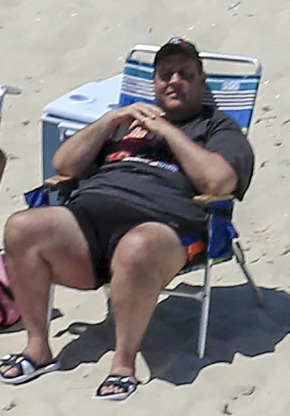
Christie—who took a lot of heat for pictures of he and his family lounging on closed Island Beach State Park—said he was saddened that the budget deal had come three days late, but said he’d sign it right away, the Associated Press reported.

The budget deal calls for a $34.7 billion budget that includes more than $300 million in Democratic spending priorities and is part of an agreement to overhaul the state’s largest health insurer, Horizon Blue Cross Blue Shield, the AP reported.