Author: Casino Connection Staff

New Jersey Regulators Approve Caesars Board Members

The New Jersey Casino Control Commission has approved the appointment of five new directors for Caesars Entertainment in the company’s bankruptcy reorganization.

Approved were Thomas M. Benninger, John M. Boushy, John M. Dionne, James S. Hunt and Marilyn G. Spiegel to be on Caesars’ board of directors.

“They have been selected through a process that went on during the bankruptcy and are independent of Caesars,” Paul O’Gara, an attorney representing Caesars told the commission according to a report in the Press of Atlantic City. “Each of them has various levels of experience.”

Already approved by the commission are Mark P. Frissora, CEO and president of Caesars; David Sambur, senior partner of Apollo Global Management; Rich P. Schifter, a senior advisory at TPG; and Don Kornstein, managing member of the strategic, management and financial consulting firm Alpine Advisors LLC.

A 10th member is expected to be appointed soon, O’Gara told the commission.

Caesars Entertainment Operating Co. filed for Chapter 11 in 2015 and settled its $18 billion bankruptcy case in January. Caesars split the company into a real estate trust and an operating company.

Ivey Must Wait on Borgata Appeal

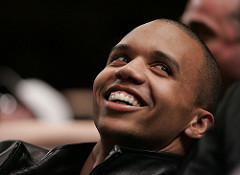
Poker player Phil Ivey will not be able to appeal his losing judgment in a suit with the Borgata Casino in Atlantic City until another case related to his edge-sorting at a baccarat table is settled.

U.S. District Court Judge Noel Hillman ruled that Ivey can’t appeal until Borgata concludes a similar case against the card manufacturer. The case stems from 2012 where Ivey and a partner exploited a defect in the cards used at a Borgata and also exploited “edge-sorting” techniques to win several million.

Borgata took the case to court and eventually won a $10 million judgment. Ivey, however, maintains that he never cheated and simply exploited flaws in the deck the casino should have noted.

Borgata has also filed a suit against Gemaco, the card manufacturer. The judge ruled that Borgata should resolve all its suits stemming from the incident before appeals can be heard.

The Sports Betting Push

All-inclusive advocacy campaign planned

The effort led by the American Gaming Association to repeal the 25-year-old federal ban on sports betting got new life last week with the announcement of a new coalition of government, law enforcement and business leaders with a mission to bring about the repeal of the Professional and Amateur Sports Protection Act (PASPA) of 1992.

The AGA last week launched the American Sports Betting Coalition (ASBC) in conjunction with representatives of local governments, regulators and law enforcement.

The ASBC will lead an all-inclusive advocacy campaign “focused on ending the failed sports betting law known as PASPA,” according to the announcement from AGA. “It brings together law enforcement officials, states’ rights advocates, policymakers and industry leaders—all of whom believe that it’s time to legalize and regulate sports betting in America. This diverse group of stakeholders is critical to pushing for legislative action in Washington, which is the first piece of the puzzle. Ending PASPA means states can then decide if they want to have sports betting or not.”

Among the inaugural members of ASBC are the Fraternal Order of Police, the National District Attorneys Association, the Major County Sheriffs Association, the National Conference of State Legislatures, the Competitive Enterprise Institute and numerous local government officials and veteran law enforcement officials, according to the organization’s website.

“The ASBC will empower law enforcement with robust regulations and 21st century tools,” the AGA said in its announcement. “The coalition will include an advisory council of law enforcement and state and local elected officials to solicit critical input as all invested stakeholders craft a solution.”

At the launch announcement, AGA President and CEO Geoff Freeman emphasized that support from business, law enforcement and the public of repealing the sports betting ban means the effort is reaching a tipping point.

“The American Gaming Association believes a perfect storm is aligning and now is the time to repeal a failing law,” Freeman said during the announcement—citing bipartisan support nationwide for legal sports betting. He also cited an Oxford Economics report concluding that legal sports betting in the U.S. could support more than 150,000 jobs.

“We are partnering with local and state elected officials, law enforcement and other diverse interests to tell Washington to get out of the way,” Freeman said. “Regulated sports betting is what fans want and sports integrity demands.”

PASPA banned sports betting in all but four grandfathered states—of which only Nevada is authorized to conduct full sports-betting operations. AGA has led the campaign to repeal the law, citing the massive, $150 billion illegal sports-betting market that accounts for more than 97 percent of all sports wagers in the U.S.

Freeman also said the AGA has hosted seminars for lawmakers showing the newest sports-betting technology being employed in Europe, demonstrating the tracking capabilities in place to ensure integrity of the games and system.

“They are tracking how much is being bet, who is betting it, where the bet is taking place, what is the betting history of these individuals, what games are they betting on, who’s playing in those games, who’s coaching those games, who are the trainers in those games, who are the officials in those games,” Freeman said. “All of that input goes into these algorithms that they built so that it is very easy for them to identify when there is an anomaly.”

The new ASBC group’s website, sportsbettingamerica.com, includes links to research on sports betting, and statistics showing the integrity of current operations.

“Nearly six in 10 Americans are in favor of ending the federal sports betting ban and allowing states to decide the question of legalization,” the group’s website says. “Fully 72 percent of avid sports fans are in favor of ending the ban; and nearly two in three Americans believe regulated sports betting would allow communities to benefit from additional tax revenue and job creation.

“But shifting public attitudes is only the first step towards ending the sports betting ban. To change the sports betting law, an entirely new policy environment must be created. The American Sports Betting Coalition brings together leaders in law enforcement, business, and organizations representing elected officials to advocate for a repeal of PASPA and give states the ability to decide the question of legalization.”

The group’s plan includes “education of policymakers, law enforcement and all relevant stakeholders on the wide-ranging negative impact created by a thriving, illegal sports betting market and the need for change,” according to the mission statement, which also pledges to “advocate for repealing the failed federal sports betting ban and granting states the ability to determine how to address sports betting; empowerlaw enforcement with robust regulations and 21st century tools to monitor and track sports wagering activity; and, “deliver for fans what they demand—a safe, legal, transparent environment for deeper engagement with the teams and sports they love.”

Meanwhile, New Jersey Governor Chris Christie, on the Boomer and Carton radio show on WFAN sports radio, expressed optimism that New Jersey’s case before the Supreme Court challenging PASPA will go in the state’s favor. If it does, he said sports betting could be in place at casinos and racetracks by early 2018—“certainly in time for the Super Bowl (in February),” Christie said.

The U.S. Supreme Court has yet to decide whether it will hear New Jersey’s appeal of lower-court rulings striking down its state law legalizing sports betting. Christie said if the high court rules in the state’s favor, Monmouth Park would be ready to accept bets “inside a week to 10 days.”

Since Christie signed the New Jersey law in 2014, most of the major sports leagues that challenged it have softened on the issue or repealing the ban on sports betting. Only the National Football League has remained steadfast in its opposition.

Last week, Sports Illustrated reported in Peter King’s “Monday Morning Quarterback” column that player’s union executives from all the major leagues have had several meetings to prepare for the potential legalization f sports betting, and the impact it could have on players.

“Yes, the sports unions have been discussing the issue, in particular around the integrity of our respective games,” NFL Players Association President George Atallah told MMQB. “We’re collaborating on it. We might be open to changes that are coming because of (legalized sports gambling), but before we get to the revenue aspect of it, do we have the infrastructure in place to prevent any sort of shenanigans? That’s the issue.”

Atallah said the union is currently studying how sports betting is conducted in Europe.

Pennsylvania House Passes Gaming Expansion Bill

VGTs, low online gaming tax at odds with Senate bill

The Pennsylvania House of Representatives raised the ante on gaming expansion in the state last week, passing its version of a massive gaming bill that would legalize online gaming and daily fantasy sports, along with tablet iGaming at airports, and replace the local-host fee for land-based casinos that was struck down last year by the state Supreme Court.

However, the House version of the gaming package adds could throw the future of the expansion package into question as the legislation goes back to the Senate with the new amendments.

The 675-page House bill, passed on a quick 102-89 vote after very little debate, adds provisions to the Senate-passed version that are likely to be hotly debated in the Senate—most prominently, inclusion of a controversial measure that would authorize video gaming terminals, or VGTs, at around 8,000 bars, taverns and other liquor-licensed establishments. The measure, which could result in nearly 40,000 VGTs across the state, faces strong opposition in the state Senate, and was one of the main reasons last-minute legislation failed at the end of last year’s session.

The VGT proposal also has been opposed by 11 of the state’s 12 land-based casino licensees, who predict it will siphon off their slot revenues.

The state Senate had cleared a version of the legislation that would legalize and regulate online gaming and daily fantasy sports, authorize gaming on iGaming kiosks and tablets at the state’s airports, and authorize sales of state lottery tickets over the internet. Additionally, it would replace the local-community host fee stuck down last fall by the state Supreme Court, with a $10 million flat fee to be paid by all casinos to the local host community.

House members retained all those provisions, but addressed what was seen by many as the biggest flaw in the Senate bill, a 54 percent tax rate for online casino games that had land-based operators stating they would not seek a license to operate iGaming with a revenue tax as high as the rate they pay for slots.

The bill passed by the House would tax all online gaming revenues at 16 percent, with licensees paying an additional 3 percent local share assessment on iGaming income. DFS contests, authorized for those 18 or older, would be taxed at 19 percent of adjusted revenues.

However, state senators will now receive a measure that goes far beyond a different tax rate in its difference from the Senate measure, including not only VGTs, but slot machines at off-track betting parlors and sports betting (pending repeal of the federal ban).

The House bill also includes gifts for individual districts, funneling a portion of revenue to benefit specific projects.

Many House members complained that the vote on the massive bill was forced only six hours after they received it. Republican Rep. Scott Petri, chairman of the House Gaming Oversight Committee, told the Associated Press the bill is “a complicated, convoluted regulatory scheme that we have no idea whether it’ll be effective… The only thing we know is once we make it law, the Gaming Control Board will be stuck with it, and we will be left with a surprising bill.”

Democratic Philadelphia-area state Rep. Madeleine Dean, in an op-ed piece for the Philadelphia Inquirer, also assailed the rush job on the legislation. “Whether you agree with expanding gaming in Pennsylvania or not, an expansion of this magnitude requires serious consideration to determine its effect, both fiscally and ethically,” Dean wrote.

“Unfortunately, legislators were given only six hours to consider this 675-page bill before being asked to cast a vote. In the end, I voted no—not because I oppose all gaming—but because there was no way to cast a responsible and informed vote. Mine was a vote against a failure of process.”

Both the state Senate and the governor’s office pledged an effort to work out a compromise bill that will allow expansion to move forward. Of particular urgency is the host-fee replacement, which has to be in place before the next local-share payment is due in July, but the state budget for the fiscal year beginning in July counts on incremental revenue from online gaming, DFS and airport tablet gaming to help plug a $3 billion budget deficit.

The largest sticking point going forward will likely be the VGT provision, which would authorize liquor establishments and truck stops to operate five to 10 VGTs each, with a 37.5 percent revenue tax and 4 percent local share assessment. Part of the revenue would go toward the state Lottery Fund that benefits senior citizens, fire and EMS grants and other programs.

“This has the potential to be a disaster for our children, our families and our communities,” Bucks County Republican Rep. Gene DiGirolamo told Penn Live.

“This legislation is bad legislation,” Rep. Stephen Kinsey, D-Philadelphia, told the Allentown Morning Call. “These machines could possibly be in every single neighborhood.”

However, Rep. Mike Sturla, a co-sponsor of the VGT measure, told the newspaper it is meant to regulate and tax an activity that already exists throughout the state. “We have 40,000 illegal VGTs that exist,” he said. “About time we finally regulate and control it and get some dollars for the citizens of Pennsylvania.”

The Pennsylvania Tavern Association also strongly supports the measure, which two weeks ago drew the opposition of Las Vegas Sands Corp. in the form of a $1 million statewide advertising campaign through a Sands-funded lobbying group.

Atlantic City Awarded Grants to Complete Boardwalk Connection to Gardner Basin

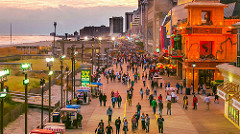
The City of Atlantic City has been awarded a $558,000 grant to complete the bike and pedestrian connection to Gardner Basin.

“Our goal has been to have the famed Atlantic City Board connect to Gardners Basin for the first time, with this grant this dream will become a reality” stated Mayor Don Guardian. “We thank the State for understanding how important this project is to the revitalization of our City.”

The grant will fund a path for bicyclists and pedestrians that will extend about 0.4 miles connecting Caspian Avenue to Gardners Basin. LED lighting, benches, landscaping, and other furnishings are included. This path will be protected by a bulkhead that will be built by the New Jersey Department of Environmental Development, Division of Coastal Engineering.

Mayor Guardian noted, “The NJDEP can fund coastal protection improvements like bulkheads but their funds cannot be used for amenities like pathways, so we had to look for another funding source.”

The grant is from the New Jersey Department of Transportation’s Transportation Alternatives Program. The Transportation Alternatives Program is very popular and extremely competitive. This year, 133 applications were received totaling over $100 million. Only 37 projects were funded statewide. Rutala Associates, a local planning firm, applied for this grant on the City’s behalf.

The $50 million reconstruction of the Boardwalk is under construction and is expected to be completed in 2018.

“When completed, the Inlet Boardwalk Project will not only provide a great pedestrian and biking amenity, but will also incorporate a seawall that will protect valuable waterfront properties and promote their development. These properties could never be developed in the past with all the flooding that occurred in the past,” Guardian added.

City capital funds are being used to leverage the Seawall/Boardwalk project along with grants from the Army Corps of Engineers, New Jersey Department of Environmental Protection and New Jersey Department of Community Affairs.

The award of a second grant was also announced yesterday, a $300,000 NJDOT Bikeway Improvement Grant to construct bike lanes on Atlantic Avenue and Ohio Avenue. The State had many applications for this $1 million fund for bike safety improvements and three projects were funded – Atlantic City, Bordentown and Ocean County.

The Atlantic Avenue bike lanes will run from Jackson Avenue, the Ventnor boarder, to Albany Avenue. With the construction of the new Stockton University campus in the Chelsea area of the City, provide safe areas to bike is a priority.

The Ohio Avenue bike lanes will extend from North Riverside Drive and to Atlantic Avenue, connecting the Venice Park neighborhood to Downtown.

“We have many, many bicyclists in Atlantic City and it is important that we provide safe bike lanes”, noted Mayor Guardian.

Last year, the City completed a two-way bike track on Maryland Avenue and this year a bike loop is being in the Inlet.

Both grants provide full funding so that City funds will not be needed to build these projects.

Hard Rock Ups Investment in Atlantic City Taj Mahal

Jim Allen, chairman of Hard Rock International told a local gaming conference that his company’s investment in the recently acquired closed Trump Taj Mahal casino could grow to $500 million.

“The building is tired,” Allen told the conference. “When we first bought it, we thought we would spend $350 million, then it became $375 million, then it became $400 million. We are now committed to putting a minimum of $500 million into that building. It does us no good to put some guitars on the wall and new carpets, and say, ‘I can take 5 or 10 percent of the business from Resorts or Harrah’s.”

The remarks were made as Allen gave the keynote address to the East Coast Gaming Congress at Harrah’s Atlantic City.

Hard Rock intends to open two separate arenas at the property with seating totaling 7,000 at the property as well as more than 2,400 slot machines. It is expected to open in summer 2018.

But part of the increase stems from trying to remove signs of President Donald Trump’s vision of the property. Trump originally opened the casino in 1990.

“It’s everywhere,” Allen said of Trump’s influence on the Indian palace-themed Taj Mahal. “The amount of money we’re going to have to spend to remove all those minarets and all that purple. Jesus! What were we thinking?”

Hard Rock led a group of investors that paid $50 million to purchase the property from billionaire Carl Icahn.

Allen also said that he has already met with casino union representatives in Atlantic City and promised to sign a contract with the union. Icahn closed the property after failing to resolve a bitter strike by Unite HERE of local 54, the city’s main casino union.

“There’s going to be no dispute with Local 54,” Allen said. “We are going to put people back to work. We’ll get it done. We’ll do it fair.”

Allen said he believed in Atlantic City’s future and said the city maintains a competitive advantage over casinos in surrounding states due to its low tax rate.

“Has anybody walked the casinos in Pennsylvania lately?” he asked. “It’s hard to reinvest in a building when you’re paying 45-50 percent of your revenue to the state.”

In another matter, Meadowlands operator Jeff Gural also spoke at the conference and said that a proposal to have Hard Rock International build a casino at the track in East Rutherford can wait as long as six years—time enough for New York state to open three more casinos.

A proposal to allow two new casinos in northern New Jersey—with the Meadowlands as a lead contender—was overwhelmingly defeated by state voters in November. Gural said he would rather wait until a referendum has a strong chance of passing rather than rushing a new referendum before voters.

“I can last as long as it’s going to take,” Gural said. “I’d rather wait six years until New York is either open or ready to open, and then voters will say, ‘Wait a minute.'”

Atlantic City Casino Revenue Rebounds in May

Despite a slight revenue dip in April, Atlantic City casinos saw a strong increase in revenue for May bringing in $229 million.

That’s a 4.3 percent increase over May 2016, even though the city has one less casino operating. If the revenue figures for the Trump Taj Mahal—which closed in October—are taken out, the city’s seven remaining casino saw a 12 percent increase in revenue.

Online gaming revenue in the state remained strong, increasing 27 percent over 2016 to $21 million, though that’s slightly less than online revenue for April of this year.

Only Bally’s Atlantic City saw a revenue decline for the month, with a dip of just 0.3 percent to $18.1 million.

“That’s a great start to the summer,” said Matt Levinson, chairman of the New Jersey Casino Control Commission. “With all of the events planned around the city for the summer, I anticipate we will see casino revenues continue to increase.”

According to an analysis of figures released by the New Jersey Division of Gaming Enforcement by the Associated Press, the Borgata casino continued to lead the market $71.8 million in May, an increase of 10.6 percent from May 2016. Tropicana Atlantic City was second with $32.8 million, up 21.5 percent from a year ago, and Harrah’s was third at $29.5 million, up 0.2 percent.

Caesars ($29.4 million) had the largest percentage increase, up 23.6 percent; the Golden Nugget won $24.5 million, up 17 percent, and Resorts won $15.3 million, up 9.8 percent, according to the AP.

For online gambling, the Golden Nugget was first in the market winning $5.9 million online. Resorts Digital and Tropicana were tied at $4 million each, while Caesars Interactive won $3.6 million and Borgata won nearly $3.5 million.

For the month, the casinos won $144 million at slot machines, down 3.6 percent, and $64.3 million at table games, up 19.2 percent. Through the first five months of this year, Atlantic City’s casinos have won $1.07 billion, an increase of 3.9 percent compared to the same period last year, the AP’s report said.

Lawmakers: PA VGT Law Would Help Nuisance ‘Stop-and-Gos’

Governor concerned over possible cannibalization from VGTs

A provision in the gaming expansion legislation passed by the Pennsylvania House of Representatives that would legalize video gaming terminals in liquor-licensed establishments across the state has its share of opponents among state senators now considering the package of legislation. But none are more vocal than lawmakers representing the Philadelphia area.

Most lawmakers who oppose the measure are joined by leaders of the 12 land-based casinos in saying the VGT measure, which would authorize from five to 10 video slots in each of thousands of bars and taverns—an estimated total of as many as 40,000 terminals—would cannibalize slot revenue from land-based casinos. (Proponents say the measure would simply legalize and tax the gray-area terminals already in place.) But Philadelphia lawmakers have another reason to oppose them—they say legal VGTs would boost the so-called “stop-and-go” convenience stores they have been trying to eradicate.

Stop-and-go stores are neighborhood convenience stores, delis and gas stations with liquor licenses that sell hard liquor by the shot. Local lawmakers view them as a nuisance that leads to loitering and public drunkenness. There are hundreds of these establishments in Philadelphia.

During debate of the VGT measure, which was added to the House measure along with other expansion measures before the package was sent back to the Senate, Philadelphia lawmakers complained that the stop-and-go stores are deteriorating the city, and the VGT measure would only make things worse. “This bill will give them slot machines and games,” said Rep. Stephen Kinsey. “We should not, and cannot, support this shots-and-slots legislation.”

Last week several Philadelphia-area House members proposed a new bill that would prevent stop-and-go’s from obtaining VGTs if the expansion package is signed into law. The bill would require tougher standards for a VGT license, including enforcement of requirements for seating, food sales and food preparation that are now routinely ignored.

“A stop-and-go establishment is right next door to my district office that is currently operating after being cited for various violations,” said Philadelphia Democratic Rep. Christopher Rabb, a co-sponsor of the bill, in an interview with the Philadelphia Inquirer. “Its owner is neither a resident of my district or the city, and has no known ties to the local business or civic community.

“The business regularly has intoxicated customers, loiterers and panhandlers, and serves dozens of unaccompanied minors from Henry Houston School every weekday afternoon. VGTs in businesses such as these that prey on historically marginalized communities would make them commercial super-predators.”

Pittsburgh-area Rep. Mark Mustio, who sponsored the VGT measure in the House, told the newspaper he agrees with the Philadelphia lawmakers on the stop-and-go issue, and tried to address it in the legislation by requiring small establishments to be inspected by a liquor control officer before getting a license.

The VGT provision is part of a broad gaming expansion package now before the state Senate that would legalize and regulate online gaming and daily fantasy sports, tablet iGaming at airports, satellite slot operations at off-track betting facilities and online lottery sales. It also contains a provision to replace the local-community host fee struck down last year by the state Supreme Court.

A group financed by Las Vegas Sands, the owner of Sands Bethlehem, is betting $1 million against VGTs.

“This proposal would destroy the brick-and-mortar casino industry and risk the nearly $1.4 billion in tax revenues that these establishments generate annually,” Michael Bailey, spokesman for Pennsylvanians for Responsible Government told the Allentown Morning Call. “Worse yet, because VGTs are designed to operate without employees, the 18,000 people casinos collectively employ in Pennsylvania will be put in serious jeopardy.”

The VGT issue, though, could be a major sticking point. For one thing, Democratic Governor Tom Wolf, while not outright opposing it so far, indicated last week that his own Department of Revenue officials say VGTs are likely to cannibalize some slot revenues, and that it would take at least a year to have regulations in place for the machines to actually begin earning revenue for the state.

Wolf’s budget for the fiscal year that begins July 1 includes $250 million from expanded gaming. At an unrelated event in Harrisburg last week, Wolf commented that any expansion measures in the bill before the Senate should be provisions that provide immediate revenue, and do not cut into current gaming income.

“I want real revenue, and I want net revenue,” Wolf said, according to the Associated Press. “I don’t want anything that we do in gaming or gambling to interfere with the revenues that are already in place. If it just cannibalizes and takes from one bucket called gambling to another, the commonwealth isn’t doing anything more than it has in the past.”

In addition to VGTs, Wolf was expressing opposition to a plan by Senate Republicans to borrow against future state revenues to fill the immediate budget gap of nearly $3 billion.

NIGC Shuts Down Washington Casino

The National Indian Gaming Commission (NIGC) has taken the drastic step of closing down the remaining operating Nooksack Indian Tribe’s casino in Washington. The commission issued a “notice of violation” (NOV) that said the tribe doesn’t have a legal functioning tribal council to operate the Northwood Casino and is in violation of the Indian Gaming Regulatory Act (IGRA) because four of its council members have expired terms due to a cancelled election.

The four items specified in the NOV are:

• The tribe failed to maintain its sole proprietary interest and responsibility for the conduct of any gaming activity.

• The tribe failed to submit the required attestation certifying that the construction and maintenance of the gaming facility adequately protects the environment and public health and safety.

• The tribe failed to maintain and operate the gaming facility in a manner that adequately protects the environment and public health and safety, which is evident in orders issued by the Environmental Protection Agency (EPA) detailing significant deficiencies of the Safe Drinking Water Act that have occurred at six water systems, including the Northwood Casino Water System.

• The tribe failed to perform required licensing actions for members of the Nooksack Business Corporation II (NBCII) who are primary management officials of the Northwood Casino.

The casino is located on tribal land in Whatcom County in the tribal village of Squahalish, near the town of Lynden.

This is the second casino of the tribe to close in less than two years.

Previous to the NIGC order a federal assistant U.S. attorney had already deemed the tribal council “unelected, unrecognized and illegitimate.”

The tribe has for several years been enmeshed in a bitter leadership struggle, typified by an action of the council in February 2013 “disenrolling” or removing as tribal members 306 individuals. The council said those being expelled did not have the required blood ties and had been falsely enrolled to begin with.

The NIGC ruling stated that currently no legitimate authority governs the tribe.

NIGC Chairman Jonodev Chaudhuri issued a statement saying, “We do not take lightly the issuance of notices of violation and closure orders against tribal gaming operations. We are taking this significant enforcement action only after a complete analysis of the unique circumstances involved, including a full review of the structure of the tribe’s governing and business bodies.”

In the 18-page order the NIGC issued did not come without several warnings from other federal officials, including letters from the Bureau of Indian Affairs, the highest authority overseeing tribes, saying that the tribal council could not legally have a quorum with four council members whose terms expired.

An election that was scheduled last year was cancelled because of its focus on the disenrollment issue. This prompted the federal government to withdraw its recognition of the council.

The tribe has already lost funding from various state and federal agencies, such that its only remaining source was the casino.

The tribe’s other casino, the River Casino, was closed in December 2015 due to the failure of the tribe to address a $15 million debt owed to a former management company.

The NIGC order also noted several violations, including the failure of the tribe to “maintain sole proprietary interest in and responsibility for the conduct of its gaming operation.” In addition, the Environmental Protection Agency has hit the tribe’s casino with six violations of the Safe Drinking Water Act.

The tribe has lashed out against the federal government by trying to sue for $13.7 million, claiming that its decision not to recognize the council was a violation of sovereignty. However, the case was dismissed by a federal judge who ruled that the tribe did not have the authority to file the suit.

The tribe has 30 days to appeal the NIGC’s decision. Meanwhile it could be fined $50,276 per day for each violation that isn’t addressed.

New Connecticut Casino Could Ruin OTB

With the knowledge that authorizing a third casino in Connecticut could hurt the existing off-track betting (OTB) facilities in the state, the legislature offered a Band-Aid for the potential damages, by authorizing an increase in the allowable licenses from 16 to 24.

That probably won’t help Sportech PLC, the British-owned firm that accounts for the lion’s share of OTB in the state and operates similar venues in California and the Netherlands. It hasn’t used all of the available licenses. According to state records, OTB parimutuel betting on horses, dogs and jai alai was $88 million.

The state collects a total of $590 million total from all gaming in the state, including OTB, casinos and the lottery. That’s down from the $717 million it collected in 2006, when competition began to ramp up in surrounding states. A large part, $266 million, comes from the Mohegan and Pequot tribes who pay 25 percent of gross revenues to the state, from two of the largest casinos in North America, Foxwoods and the Mohegan Sun.

To help the tribal casinos fight the potentially ruinous competition from the $950 million casino MGM Resorts International is building in Springfield, the tribes persuaded lawmakers to authorize a third casino. That could prove even more ruinous for the state’s OTB.

Ted Taylor, who operates Connecticut Gold Coast OTB in Stamford, told the Connecticut Mirror: “How do I end up being screwed? How is that fair?” His other operation, the Bradley Teletheater, is four miles from the Windsor Locks location that the tribal enterprise MCCT Ventures plans to open the third casino. He is spending millions refurbishing both operations.

Taylor anticipates that the Windsor Locks casino will drain away 35 percent of his business in that town and 20 percent from his other closest venues in Manchester, Hartford and New Britain.

That hit is coming just as Sportech has just finished investing about $20 million in the last five years in widening OTB’s appeal by adding more food, drink, comfort and high-tech goodies like a huge high definition screens at all its venues. It spent $5 million of that at Bradleys.

Taylor says Bradley’s is as much high-end restaurant as it is a high tech OTB.

“Yeah, it’s a little bit of both,” Taylor told the Mirror. “It’s the next generation of a gaming facility in accordance with our license. We know that what people want is great quality food and entertainment, and then some of them will game—and vice versa. So it’s presenting what is known historically as the OTB market in a different perspective, with a lot more style and panache than people might expect, to try to recover from years of not being so great.”

The only potential good news for Sportech in the recent gaming legislation was the provision that authorized a study to prepare for the possibility of sports betting, in case the U.S. legalizes it. Taylor figures that illegal sports betting in the state could be as high as $1 billion. Obviously, he would like to get some of that money if it becomes legal. Sports betting would mesh with OTB, which has a very small profit margin per wager, getting its profits from volume.

Meanwhile the Pequot and Mohegan tribes are crediting assistance from the Trump administration in getting the third casino bill over the finish line.

Both tribes attribute Jim Cason, associate deputy secretary of the Interior, with providing assurances that the Bureau of Indian Affairs, which is part of the department, supported the interpretation by the tribes that allowing them to operate a commercial casino would not violate their state tribal gaming compact that guarantees that their existing casinos would not be threatened by competition from commercial casinos. Some, including the state’s attorney general, George Jepsen, had worried that even a tribally owned commercial casino would break this provision. This line of inquiry was also put forward by critics of the opposed bill, and got serious attention given the 25 percent the tribes pay.

Cason provided assurances that the BIA did not view it that way.

Kevin Brown, Mohegan tribal chairman said last week “Jim Cason has been there for us … to ensure that our forward movement, our economic development, our partnership as tribes is respected.”

Mashantucket Pequot Chairman Rodney Butler, who joined Brown in presenting a ceremonial blanket to Cason, added, “Interior stood up for Indian Country, stood up for that government-to-government relationship.” He added, “We’re gratefully honored that Jim stepped up as he did.

All were appearing at the National Congress of American NCAI conference, which was hosted at the Mohegan Sun resort.

This isn’t the first time Cason has held this office. He held it in the last Bush administration, where he was criticized for opposing attempts by some tribes to have off-reservation casinos, something that critics say is exactly what the Pequot and Mohegan tribes did when they asked the legislature to authorize a casino in Windsor Locks. However, as Brown pointed out, they are doing so outside of the framework of the Indian Gaming Regulatory Act.

Cason credited career employees at the BIA and the Office of the Solicitor in Interior, who actually wrote the letter Cason signed.

Cason said he was happy to be back at Interior, and said of his new boss, Secretary Ryan Zinke, “I also have the privilege of working with a Secretary who is very much aligned with Indian Country’s interests.”

Now that the third casino has been authorized, the tribes hope to break ground on the $400 facility by fall and complete it by the end of 2018, about the time that the MGM Springfield is scheduled to open. MGM, which has been fighting the third casino in the halls of the state legislature and in the federal courts, lost another court round last week.

The 2nd U.S. Circuit Court of Appeals uphold a lower court’s decision to dismiss the lawsuit. MGM had claimed that the law put it at a competitive disadvantage. It agreed with the lower court that MGM’s fears were speculative and didn’t prevent it or other bidders from trying to compete in the state.

The court ruling said it might review the case if MGM is able to show that its feared harm was “sufficiently imminent” to cause it harm. Until then MGM’s fears were “purely speculative,” it said.

Uri Clinton, a counsel and vice president for MGM, said that moment could come as soon as when the state grants the tribes a license for the third casino.

In a separate but related development, the Mohegan Sun’s development arm has rebranded itself as Mohegan Gaming & Entertainment, to emphasize the “entertainment” part of the casino business.

CEO Mitchell Etess said in a statement, “The change in the name to MGE has been made to better reflect where we are today as far as an overall entertainment company and our advancement as a major player in commercial gaming worldwide.”

The Mohegan Sun opened in 1996 purely as a casino. It has since then added dining, retail stores, pro sports, a spa, and an 18-hole golf course. The tribe also operates casinos in Pennsylvania, Atlantic City and Washington state. Its first off-shore project will be in South Korea, where it is planning a casino with 1,500 slots and 250 gaming tables, hotel, shopping, entertainment and indoor amusement park.

Meanwhile Foxwoods has announced that it has signed an exclusive agreement with the Connecticut Lottery, the first time the lottery has partnered with a tribal casino on a scratcher ticket.

Felix Rappaport, president and chief executive officer of Foxwoods Resort Casino, said in a statement last week, “We are thrilled to offer a Foxwoods branded scratch ticket to the state of Connecticut in conjunction with the CT Lottery,” adding, “Through this partnership, we are bringing together two of the best gaming brands in the state to provide our loyal supporters with the opportunity to win exciting prizes only available through the Foxwoods High Roller scratch ticket. We look forward to building upon this relationship to continue providing our guests with innovative and fun ways to win in 2017 and beyond.”

The High Roller tickets will be available at many locations on the property, as well at nearly 3,000 CT Lottery vendors. The top prize is $125,000 but winners can also get overnight stays at the casino hotel.

The partnership helps to inaugurate Foxwoods’ 25th anniversary, noted Tribal Chairman Rodney Butler. “We greatly value our ability to give back to the local community, and the Foxwoods High Roller ticket provides us with an unparalleled opportunity to add to the nearly $4 billion dollars in revenue we have generated for the state.”

In addition, players whose tickets don’t show a prize will be able to redeem the coupons at Foxwoods for offers and prizes.

Foxwoods slots numbers for May declined 1 percent to $38.1 million, although the handle increased by 4.5 percent to $504 million. That’s the fourth month this year revenues declined.

Struggling N.Y. Racino Facing Closure

New York’s Vernon Downs racetrack and casino will close this fall unless the Legislature approves tax breaks ownership says are necessary to keep the venues competitive in the Empire State’s increasingly crowded gambling landscape.

With just weeks remaining in the legislative session the state Assembly has yet to act on a relief package already approved in the Senate, forcing owner American Racing and Entertainment to announce a staggered shutdown of the 65-year-old harness track and racino beginning in September.

“I am extremely disappointed that the New York State Assembly has yet to join the Senate in passing a bill that would ensure the survival of Vernon Downs,” the company’s chairman, Jeff Gural, said. “Vernon Downs is an integral piece of the fabric of this community―we employ hundreds of local workers, we provide millions of dollars in taxes to the local community and we offer a beautiful venue for the people of this region and state to enjoy.”

American Racing also owns the Tioga Downs harness track and racino in south-central New York. That facility got a new lease on life when it was granted a license as one of four full-scale commercial casinos authorized by the state’s voters back in 2013. The license allowed Tioga Downs to deploy Las Vegas-style table games, which previously had been reserved to the state’s tribal casinos. The new Tioga Downs casino opened in December.

Vernon Downs has not been so fortunate. Its location in the greater Syracuse region has it up against the Oneida Indian Nation’s much larger Turning Stone Resort & Casino in Verona and Yellow Brick Road Casino in Chittenango and, more recently, the new del Lago Resort & Casino, the third of the four commercial casinos. Del Lago opened in Waterloo in the Finger Lakes district in February with 2,000 machine games and more than 90 table games.

The competition led American Racing to delay to the start of the 2017 racing season. The casino, which houses around 760 machine games, claims to be losing about $150,000 a month. Its license does not permit table games.

“Every day that we remain open, we simply lose more money,” Gural said.

In line with New York state law, which requires 90 days’ notice for employees facing lay-off, the casino and its food and beverage facilities will remain open until September 10.

The track and its amenities will stay open until November 11, “to finish the scheduled meet and to minimize the impact on the employees and horsemen,” the company said.

The hotel will be last to close, “out of respect to the many individuals who have scheduled weddings and other events at the facility for 2017,” American said. Its doors are scheduled to shut on December 18.

MGM Grand Adding More Convention Space

MGM Grand has broken ground on an expansion to its convention center that will give the Las Vegas Strip resort more than 850,000 square feet of meeting and exhibition space.

The project, totaling 250,000 square feet, is scheduled to open next November with facilities that include two ballrooms of 49,000 and 32,000 square feet, three smaller ballrooms, 11 breakout rooms and a 5,500-square-foot outdoor courtyard for private events.

The expansion will give parent company MGM Resorts International more than 4 million square feet of space to market in one of the top convention cities in the United States. It’s the largest amalgam of privately owned convention space in Las Vegas.

It includes: Mandalay Bay, which features more than 2 million square feet; Aria with 500,000 (counting a 200,000-square-foot expansion scheduled to open next February); Bellagio with 200,000; The Mirage with 170,000; and Monte Carlo, Circus Circus, New York-New York, Luxor, Excalibur and Vdara contributing another 86,000 square feet.

Las Vegas Sands owns the second largest with 2.3 million square feet (including the Sands Expo and Convention Center), followed by Caesars Entertainment with just over 1 million, Wynn Resorts with approximately 290,000, and The Cosmopolitan with 190,000.

Girders Rise in Wynn Boston Harbor

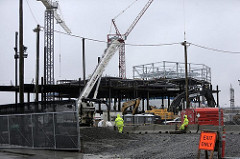
The $2.4 billion Wynn Boston Harbor casino in Everett, Massachusetts is starting to rise on the site of the former Monsanto Chemical plant along the Mystic River with a planned opening date of summer of 2019.

Now that the massive hazardous materials cleanup has completed, an underground garage is nearing completion and the girders are starting to go up for the casino resort itself.

Last week city officials and representatives from Wynn Resorts held a public meeting to give an update on the project to residents. The presentation included construction progress, job openings and the plans for the roads that will serve the resort.

Across the river in Boston proper city officials are trying to come up with a plan to relieve the congestion in Sullivan Square, in the Charlestown neighborhood, which is expected to be heavily impacted by casino traffic.

Sullivan Square is one of the city’s busiest intersections and well known for gridlock and a traffic circle that was installed in the 1950s. With the foreknowledge that Sullivan Square can only get worse once the Wynn Boston Harbor opens, city officials have released a plan to renovate the square, making it more pedestrian friendly and easier for drivers to navigate. Some of this is being funded by Wynn Resorts.

That work, which will cost $11 million, will begin in the autumn. It will create several new roads that will redirect some traffic away from the circle.

About 100,000 cars pass through the square each day, fed into it by seven surrounding roads that frequently become gridlocked. Some of these roads will be widened. Some will be redone to divert traffic around the square.

Currently the roundabout is considered something of a danger to people trying to cross the street. The owner of a gym whose clients use the square, told the Boston Globe: “It’s quite dangerous. I fear for my clients. It’s almost like there’s a blind spot for them and for the cars.”

Ultimately the city plans to replace the traffic circle with a street grid. Currently city officials are studying the final design for that grid.

According to James Gillooly, deputy director of the Boston Transportation Department, “The roadway is going to have excellent bicycle facilities, ample open space helping to buffer the residential community from the roadway, and it is going to handle the unavoidable regional traffic that it’s going to have to handle.”

In the process Rutherford Avenue will be altered to look less like a highway, with additional bike lanes and crossing walks and four acres of open space.


Plainridge Park

The Bay State’s first casino to come on line, Plainridge Park Casino in Plainville is testing a pioneering gambling addiction program and so far nearly 13,000 players have signed up.

A report on the “Play My Way” program was given last week the Massachusetts Gaming Commission. The enrollees represent about ten percent of the total eligible customers. The program allows those who sign up to voluntarily set up a spending budget, which the slot machines will remind them of as they approach the limit.

The program is considered cutting edge, perhaps the first of its kind in the U.S., although something similar has been tried in Australia, Canada, Norway and several other nations. Since its initiation with Plainridge, MGM Resorts has signed a deal with GameSense, the company that administers the Play My Way program, to start it in all MGM properties.

The program’s effectiveness is being evaluated by the Harvard Medical School and Cambridge Health Alliance.

Rhode Island Tribes Want to Search Casino Site for Burials

Two Rhode Island tribes want site work on the new Tiverton casino, stopped until they have a chance to search it for tribal burial grounds. If they find remains, they would like the opportunity to relocate them.

The Newport Daily News last week quoted an attorney for the Pocasset and Pokanoket tribes as wanting to use ground-penetrating radar on the casino footprint, which is a few hundred feet from the Massachusetts state line.

Twin River, which is building the casino, says it has already done archaeological work on the site without finding any sign of a burial ground.

The tribes say they are willing to go to court to enforce their demands.

Agreement Reached

In a separate but related development, more than 300 food workers at the Twin River Casino in Lincoln reached a tentative deal on a new contract—just minute after they had voted 327 to 5 to go out on strike.

The workers of Unite Here Local are employed at the 19 eateries of the casino. They were fighting against being charged for health benefits and for higher pay.

The union and the management issued a joint statement that “Twin River Management Group and UNITE HERE Local 26 are pleased to announce a settlement agreement.”

The clash was sparked when Twin River changed its health plan offered by the same company without collective bargaining, which the union violated federal labor practices.

Bill Would Ban Smoking in PA Casinos

Pennsylvania state Rep. Matt Baker has introduced a bill in the state House that ban smoking in the state’s casinos.

HB 1309 would remove all but two exemptions from the state’s 2008 Clean Indoor Air Act, which banned smoking in all indoor spaces, exempting hotels, casinos, bars, truck stops, private clubs and others. Baker’s bill would retain exemptions only for private clubs and so-called “cigar bars.”

Baker told the Penn Live website that he would prefer no exemptions, but included the two as a compromise “My personal preference is I’d like the most comprehensive smoke-free law possible, but it’s also important to listen to the other members,” he said. “I’ll try to do that without undermining intent of the legislation.”

Baker said his bill has the support of 60 major organizations, including the Pennsylvania Medical Society, the Family Physicians Society and the Pennsylvania Restaurants and Lodging Association. “Our position is that this is a health issue for our employees,” Melissa Bova, vice president of government affairs for the restaurant and lodging association, told Penn Live. “We do support elimination of these exemptions. We do want our employees to have a healthy place to work.”

The current law allows casinos to permit smoking on up to half their gaming floors. Penn National Gaming, which operates Hollywood Casino outside of Harrisburg, was quick to denounce the proposed smoking ban, spokesman Eric Schippers telling Penn Live it would have a “deeply negative impact on the casino business.” He told the site the restriction would drive customers, and revenue, away from the industry, “either by taking their pocketbooks and crossing the border to another state, or by spending less time playing and more time in the parking lot.”

The state tavern association is joining the casinos in opposing the bill. Current law allows bars to permit smoking if less than 20 percent of their revenue is from food sales.

Congressman Attempts End Run on Online Gambling Ban

Details are sketchy, but reports say Pennsylvania Republican Congressman Charlie Dent is attempting to attach language to ban online gaming to an omnibus spending bill before Congress.

Dent supports the online gambling ban proposed in the Restore America’s Wire Act bill supported by Las Vegas casino owner Sheldon Adelson. That bill has failed repeatedly to gain traction in the house and supporters, including Dent, tried to attach anti-gambling language to an appropriations bill last year. That effort also failed.

Little details about Dent’s plan have emerged and the congressman has not commented. The appropriations bill is not expected to be voted on until September.

RAWA is supported by Adelson and has gained backers in Congress such as Senator Lindsey Graham and Congressman Jason Chaffetz. However, the bill has drawn stiff opposition from conservatives who see it as trampling on state’s rights and political patronage for Adelson, who is a major republican donor.

If Dent is behind a move to insert the language, it also comes as his home state continues to debate legalizing online gambling. Three states currently allow legal online gambling—New Jersey, Nevada and Delaware.

In a related story, the New Jersey General Assembly passed a unanimous resolution calling for President Donald Trump to reject a federal online gambling ban.

The resolution says New Jersey, “Urges United States President Trump, members of his administration, and Congress to oppose measures and actions to prohibit states from authorizing and conducting Internet gaming.”

While a symbolic resolution, it does buoy the opinion that New Jersey will move quickly to challenge any proposed online gambling ban in court.

Vermont Legalizes Daily Fantasy Sports

Vermont Governor Phil Scott has signed a daily fantasy sports law making the state the 12th in the U.S. to adopt DFS regulations.

The Vermont law exempts DFS contest from the state’s gambling laws and sets a $5,000 registration fee for DFS sites through the state’s Secretary of State office.

The bill sets a minimum age of 18 to play DFS games and also restricts the use of computer programs that allow players to gain an advantage.

DraftKings and FanDuel, the two largest DFS operator that are in the process of merging, issued a statement supporting the law.

“More than 100,000—and growing—growing fantasy sports fans can now breathe easy, as the state has made it crystal clear: fantasy sports are welcome in Vermont,” the statement said. “On behalf of those fans, we want to thank Governor Scott and the legislature, particularly Senators Kevin Mullin and Dick Sears and Representatives Bill Botzow and Michael Marcotte, for updating state law to affirm fantasy sports are legal and establish some common-sense regulations for all companies to ensure consumers are protected. We look forward to continuing to work with Governor Scott’s team, Attorney General Donovan and members of the legislature on a final, comprehensive regulatory and tax structure.”

The law, however, does not set a tax rate for DFS sites, instead instructing the Governor’s administration to set a future rate.

The law does clear up a point of contention for the industry. The state’s former attorney general had ruled that DFS contests violate the state’s gambling laws.

In another DFS story, a recent report by Rutgers University in New Jersey found a that most DFS players also regularly play other forms of gambling. The study—which found problem gambling is growing in the state—acknowledged that DFS games have not been officially proclaimed as gambling and are often called games of skill.

The study found, however, that DFS players also reported they were frequent gamblers in other venues, whether on gaming machines, horses, bingo, casino table games or other gambling games of skill.

“Policy decisions regarding DFS regulation should anticipate a very high prevalence of gambling problems in this group and the negative consequences that typically accompany those problems such as employment, legal, relationship, financial, health and mental health problems,” the report said. “It is important to ensure there are prevention, education, and treatment resources developed for and available to this population.”

The survey and report were conducted by Rutgers University’s Center for Gambling Studies.

N.Y. Folds on Internet Poker

For the second year in a row the New York legislature has adjourned without passing a bill to legalize online poker.

As was the case in 2016, Senator John Bonacic’s legalization bill sailed through the upper house by a vote of 54-8 (it passed 53-5 last year) only to die in the Assembly without so much as a debate.

“There was some opposition; we’ll pick it up next year more than likely,” the bill’s Assembly sponsor, J. Gary Pretlow told the New York Daily News as the legislative session wound to a close last week.

It’s possible lawmakers could return to Albany over the summer, with mayoral control over New York City’s schools at the top of the list of unfinished business, but the chance that poker could make it onto the agenda is at best highly unlikely.

This year’s failure was particularly difficult pill for supporters to swallow because the bill passed by a 10-1 vote in the Assembly Racing, Wagering and Gaming Committee, which Pretlow chairs. But then, as it became obvious as the weeks went by, the measure was quickly running out of steam.

The reasons vary. The opening in the last seven months of three of four new commercial casinos may have altered the political landscape, leading some Assembly members to conclude that New York already has too much gaming. It is known that the state’s Indian tribes oppose the expansion of gaming onto the Internet in the face of the increasing competitive pressure they’re facing on the land-based side.

It’s known also that Assembly Speaker Carl Heastie, who was believed to be non-committal, had in fact come down on the opposition side.

Others point to concerns that the bill lacks sufficient consumer protections against cheating and collusion and question the efficacy of technologies to combat underage gambling.

Others blame a lack of common ground on whether poker is a game of skill or an expansion onto the Internet of another game of chance that may require an amendment to the state Constitution.

Similar disagreements are muddying the “bad actor” issue―that is, whether to ban offshore operators that marketed to American players in violation of the Unlawful Internet Gaming and Enforcement Act passed by Congress in 2006.

“I’ve heard they have some constitutional issues and disagreements over the penalties,” Pretlow said of his Assembly colleagues. “Some people say we don’t have strong enough penalties for bad actor, while some people say the penalties are too strong.”

Then there’s Gov. Andrew Cuomo, who hasn’t taken a public stance on web poker to date, but that hasn’t alleviated a feeling rumbling through the halls of the statehouse that he was leaning toward a veto.

This became more apparent last month in the wake of a federal complaint charging former Amaya CEO David Baazov with trying to hide an illegal contribution to Cuomo’s 2014 re-election campaign. Amaya is the parent company of Poker Stars, which was indicted by the U.S. Justice Department in 2011 for UIGEA violations and forced to close down its U.S. operations and accept a steep fine.

Baazov is no longer with the company, but as one of the world’s dominant web poker players, Poker Stars has emerged in the U.S. as the most prominent of the reputed “bad actors” whose presence fuels heated debate in states considering legalization, with some, like New Jersey, welcoming the company, while others, like California, remaining steadfastly opposed.

Coincidentally, or not, a year after Baazov’s alleged illegal contribution was made, Bonacic cut from his bill a UIGEA-related “bad actor” clause that likely would have barred Amaya/Poker Stars from doing business in New York. Then, earlier this month, with Pretlow’s Assembly bill fading fast, he reinserted a similar clause in his Senate version, a case perhaps of too little too late.

But there is a bright side as proponents look ahead to 2018, one of them being that the Legislature no longer wipes the board clean between non-election year sessions, which means that having already passed the Senate and the Assembly Racing, Wagering and Gaming Committee the issues are more likely to be addressed much sooner in the session.

Jamaica Drafts Online Gaming Regulations

Speaking at the recent Caribbean Gaming Show and Summit at the Montego Bay Convention Centre, Jamaica Minister of Finance and the Public Service Audley Shaw said the government is developing regulations for interactive and online gambling, both potential sources of revenue growth. “Due to the expanded use of technology and the need to facilitate the growth of the industry, we, as a government, have decided to fast-track legislation for interactive/online gambling ahead of the merger of the commissions that monitor the gaming industry. Already we have seen a growth in the mobile betting market, with a few local punters and Caymanas Track Limited offering text betting,” Shaw said.

Shaw was referring to the upcoming merger of the Betting, Gaming and Lotteries Commission, Jamaica Racing Commission and Casino Gaming Commission into a single entity, the Jamaica Gaming Commission. “It will allow us to better position Jamaica to take advantage of the emerging product offerings that now characterize the global landscape, such as internet and mobile gaming and their offshoots, which include virtual and fantasy betting. It will also provide the authorities with the flexibility to guide and promote the continued growth of the sector,” Shaw noted.

He added, as part of drafting new regulations, the BGLC will take steps to prevent money laundering and financing criminal activities. “Even as we keep pace with developments, we are also mindful of the vulnerability of the industry to be used by criminals for money laundering. This concern is what gave rise to the de-risking initiatives of large banks that have spurred smaller firms to improve their own supervisory protocols,” Shaw said.

States Debate, Reject Fantasy Sports

Several more states have either ruled on or are considering bills to legalize daily fantasy sports.

A North Carolina House committee recently voted 7-4 to reject a bill sponsored by state Rep. Jason Saine that would require fantasy sports operators to register with the Secretary of State’s Office and meet minimal operating standards.

Saine, who said he plays fantasy sports, stated his bill would prevent potential future industry abuses and protect the 1.6 million North Carolinians who already participate in the online contests. He said the bill would have exempted fantasy sports from being considered illegal gambling because the games do not meet the state’s definition of gambling, defined as “any game of chance.” Saine said fantasy sports contests are games of skill whose outcomes “are determined by accumulated statistical results and the performance of individuals. This definition clearly separates fantasy sports from gambling activity.”

FantasyDraft.com Chief Executive Officer Stephen Krombolz said, “The bill contains commonsense consumer protections that we’d like to embrace.” He told the committee the Cornelius, North Carolina-based company serves thousands of customers in the state.

However, North Carolina Family Policy Council lobbyist John Rustin said the bill would cause a “massive expansion of legalized gambling” in North Carolina. Currently gambling is limited to the state-run lottery and the Eastern Band of Cherokee Indians casinos. Rustin said there were too many variables in the fantasy sports contests that participants cannot control. “The elements of chance far outweigh the elements of skill,” he said.

Fantasy sports legislation is unlikely to be considered again in North Carolina until 2019.

That’s also the next opportunity for the Texas legislature to consider a fantasy sports measure, since a bill to legalize, regulate, license and tax fantasy sports operators was rejected. Sponsored by state Rep. Richard Raymond, the bill would have reversed a 2016 decision by Texas Attorney General Ken Paxton that a constitutional amendment was required to allow fantasy sports companies to operate in Texas.

Christian Conservative groups opposed the bill. Robert Kohler, a lobbyist for the Christian Life Commission of the Baptist General Convention, said, “They tried to fly a bill straight into an attorney general’s opinion.”

In Michigan, state Senator Curtis Hertel Jr. recently introduced a package of bills that would create legal definitions for fantasy sports, institute consumer protections for players and legitimize home leagues. Hertel said, “An estimated 1.6 million Michiganders participate in fantasy sports leagues every year. This legislation will ensure that games are fair and players are protected.” He added the legislation would guarantee privacy and security for players and assure the games are not affected by unfair policies.

Under the proposals, daily fantasy sports players must be at least 18 years old. DFS operators would be licensed by the state, though although players participating in home leagues would be exempt. Betting would not be allowed on college and high school sports. DFS employees would be banned from playing. And player funds would be kept separate from operating funds.

Hertel’s legislation package also requires DFS operators to make information available about problem gambling.