Author: Casino Connection Staff

Trump Back in the Casino Biz?

Analysts: Trump wouldn’t be Macau’s first choice

A company called DTTM Operations LLC, which has been linked to United States President Donald Trump and lists the mogul’s Trump Tower in New York as its base, has been granted four trademark approvals by the government of Macau, home of the world’s premier gaming industry.

The trademarks—related to real estate services, construction, hotels and conference facilities, restaurants, casino operations and hospitality—were granted June 7, according to Reuters, which cited online documents. The divisive American president has said he would pass on his business interests to a trust overseen by one of his sons along with a Trump Organization executive, the news outlet reported. But he would remain linked to the trust financially.

In 2005, Trump registered several trademarks in the Chinese territory under the names Donald J. Trump, DTTM and Trump Companhia Limitada. The new applications, posted in the government’s Official Gazette, are identical to four brands granted in 2006, but that lapsed earlier this year, reported GGRAsia. There are currently no Trump-branded businesses in Macau.

According to Newsweek, Trump also filed for trademark registration for Trump Tower and Trump International Hotel and Tower in Macau in 2006 and 2008. And last March, Mainland China approved 38 Trump trademarks, including ones for hotels and golf resorts. Macau Business stated, “Particularly noteworthy in the series of trademark applications requested is the one for ‘gambling and casino services and casino facilities.’”

The news has sparked questions about whether the onetime casino magnate will get back in the gaming business. Trump once owned three casinos in Atlantic City, all bearing his name: Trump Taj Mahal, Trump Plaza and Trump Marina. In 2016, the Trump Organization sold its stake in Trump Entertainment Resorts; the aging Taj Mahal, located on the Atlantic City Boardwalk, was recently acquired by Hard Rock International, which will reopen it as a casino resort under that brand.

Brokerage Sanford C. Bernstein Ltd in a note last week said Trump is unlikely to get back into gaming, though he might be tempted to nab a gaming concession between 2020 and 2022, when the current Big 6 concessionaires come up for review.

“It is more likely that Trump is just protecting the use of his brand name rather than trying to get a casino license in Macau (a prospect that we find to be impossible),” said Bernstein analysts Vitaly Umansky and Zhen Gong.

The Trump Organization told CNN Money it “has been zealously enforcing and protecting its intellectual property rights around the world for more than 20 years, particularly in jurisdictions where trademark infringement is rampant.” The trademark applications in Macau “simply represent a continuation of those efforts,” the company said.

And Alex Bumazhny, senior director for gaming at Fitch Ratings, told the Associated Press it would “be a long shot” for Trump-related businesses to win a gaming license in Macau. “If Macau does look west for a new gaming concessionaire, there are a handful of publicly traded gaming companies with more recent track records of developing and operating large-scale casino resorts,” he stated.

Disney Gives $500,000 More To Initiative

In July, Disney Worldwide Services contributed another $500,000 to a ballot initiative for a proposed constitutional amendment giving voters the “exclusive right to decide whether to authorize casino gambling” in Florida. According to the Florida Division of Elections, since April, Disney has contributed $1.5 million to Voters In Charge, the political committee behind the push to place the issue on the November 2018 ballot.

This spring the Florida Supreme Court approved the proposal’s ballot wording. Now Voters In Charge is collecting qualified signatures to be placed on the ballot; it has submitted 151,476 signatures and needs to submit a total of 766,200 valid petition signatures.

Last month Voters In Charge spent $282,305, mostly on petition gathering and verification.

Atlantic City Approves Casino Tax Debt Bond

The threat of possible bankruptcy for Atlantic City’s municipal government now seems unlikely as the city has bonded for $80 million to repay tax judgments brought by successful casino tax appeals.

The administration of New Jersey Governor Chris Christie had announced that the state team in charge of the city’s finances had settled all of the remaining casino tax appeal cases facing the city. At one time, the city faced nearly $500 million in debt mostly due to costly tax judgment won by its casinos.

Though city officials opposed the state’s takeover of the city finances in November, the tax settlements were met as welcome news.

Atlantic City City Council President Marty Small told the local Press of Atlantic City that the payments will be “good for the future of Atlantic City.”

“The tough part is over and it should lead to much-needed fiscal sustainability for the residents of Atlantic City,” he said.

Details of the settlements have not been released, but Christie previously said the $80 million ordinance would cover all of the cases. The settlements include several casino appeals with billionaire Carl Icahn the Press reported. Icahn owns the Tropicana casino and the shuttered Trump Plaza casino. Icahn also owned the Trump Taj Mahal before selling it to Hard Rock International.

The agreement settles tax appeals for Tropicana from 2015 and 2016, and Taj for 2014 through 2016 and for Trump Plaza from 2014 through 2017.

The state had previously made a settlement with the Borgata casino which was owed 165 million. That settlement was for $72 million.

In another sign the city is on the mend, the president of the American Gaming Association Geoff Freeman appeared at an association event at nearby Stockton University and said that the city is moving in the right direction.

He pointed to Hard Rock’s plans to re-open the former Taj Mahal in 2018, as well as a proposed joint venture between MGM Resorts International and Caesars Entertainment Corp., and the possible reopening of the former Revel, now known as TEN, according to the Press.

“The Atlantic City market is an exciting market right now,” Freeman said “There is no doubt the market right-sized itself over the last couple of years. While the closing of the facilities was painful for many, it strengthened the community; it strengthened Atlantic City’s potential for the future.

“What is exciting is that people are spending money in the city and not taking it out of the city,” Freeman said. “I think that should give people confidence and a quiet optimism about the future.”

He also pointed to the state’s court battle to allow sports betting—now before the U.S. Supreme Court—saying Atlantic City was uniquely prepared to take advantage of sports betting should it win the decision.

Saturation Fears Loom for N.Y.’s New Casinos

Less than a year into New York’s experiment in commercial casinos, revenue projections are falling by the wayside and operators say they expect more tough times ahead.

“The party is over,” said attorney John Donnelly, speaking for Schenectady’s Rivers Casino & Resort at a recent conference on gaming and racing law in Saratoga sponsored by Albany Law School.

Rivers generated $56.8 million in gaming revenue from its opening the first week of February through June 30, an annual pace that’s off by half from the $223 million a year the property is projecting by 2019.

Del Lago Resort & Casino in Tyre, near Rochester, which also opened in February, posted $63.1 million over the same period, down 42 percent from the $263 million it projected for its first full year.

Results at Tioga Downs Casino, which opened in December in Nichols in south-central New York in December, have been similarly disappointing, based on tax payments to the state that amount so far to around half the property’s first-year projections.

“I think the market is saturated and we’ve got a lot of work to do to get the revenues where they need to be,” said owner Jeff Gural.

Rivers, Tioga and del Lago are the first non-Indian casinos to open in the state since voters approved a constitutional change allowing the state to license up to seven such facilities four years ago. A fourth, Resorts World Catskills, is slated to come on line early next year. Also, the Oneida Indian Nation started construction this summer in Bridgeport on its third casino, the Point Place, featuring 65,000 square feet of gambling and entertainment space and scheduled to open next spring within 25 miles of the tribe’s flagship Turning Stone Resort Casino in Verona.

So, if anything, the market is only going to get more crowded. And that’s not counting the possibility of more casinos authorized by the referendum opening in New York City as early as 2023.

As Gural put it, “We are all fighting for the same customer.”

But one of the conference speakers, Robert Williams, executive director of the state Gaming Commission, noted that “it’s too early to draw any conclusions” about how the new properties are faring or will.

“The full amenities are not yet open,” he said.

Laura McAllister Cox of Rush Street Gaming, the parent company for Rivers, said that as in other regions the New York market will eventually undergo a period of “right-sizing”.

Pennsylvania Gaming Expansion Delayed Until Fall

The Pennsylvania General Assembly adjourned for the summer without passing an omnibus gaming package. Officially delayed until fall is passage of a massive gaming expansion package that includes the legalization online gaming and daily fantasy sports, tablet gaming at airports, the creation of satellite casinos linked to current gaming licensees, and a controversial measure that would place video gaming terminals, or VGTs, at each of some 8,000 bars and other liquor-licensed establishments around the state.

Also on hold until fall is a bill replacing the local-casino host fee declared unconstitutional last year by the state Supreme Court.

The final days of the extended legislative session were dominated by the state budget, as lawmakers raced to find was to fund an unbalanced $32 billion state budget for the fiscal year that began July 1. Gaming issues were pushed to the back burner as bills were passed to authorize a huge package of tax increases and borrowing to fill a deficit hold of more than $2 billion.

The gaming expansion package had been meant to raise an estimated $250 million of the budget gap, but state House and Senate leaders remain at odds of key components of the legislative package, such as a tax rate for online gaming—the Senate passed an unworkable 55 percent revenue tax; the House, 14 percent—and newly introduced measures like the creation of up to 10 satellite casinos, and the VGT measure, a House favorite opposed by most Senate leaders.

Perhaps the most pressing gaming issue left until fall is the local-community host fee, which the state Supreme Court held last September was unconstitutional under the state’s tax uniformity clause.

The gaming law passed in 2004 provided that casinos give 2 percent of revenues or $10 million annually, whichever was greater, to the local municipalities where they were located, to cover extra costs caused by the casinos. Since no casino ever logged $50 million in annual slot revenues, the tax constituted a flat $10 million fee. Mount Airy Casino, one of the smaller in the state, sued under the uniformity clause, and the high court ruled that the fee constituted a higher tax rate on smaller casinos, and instructed the legislature to pass a new fee that would pass constitutional muster.

Both chambers agreed on a measure that would create a flat $10 million fee for all casinos—prompting Mount Airy officials to say they will sue again on the same grounds if it was passed. The problem was that it was lumped in with the gaming expansion bills, and since House and Senate leaders were at odds on those measures, it is still pending.

Many communities—notably, Bethlehem, which counts on money from the Sands casino for 12 percent of its budget—are now left to scramble to replace the money in their local budgets, since the quarterly payment normally due in August will now not be made. City officials say they have enough reserve cash to carry them through the fall.

The Sands was not among several operators who pledged to continue quarterly payments until a new bill is passed.

Gaming Lab Opens in Massachusetts

A new “gaming lab” for Massachusetts called the Catch Institute is making its home with the Fall River-based Bristol Community College. Its job is to prepare students to become casino managers, and hopefully be hired by the casinos that are coming on line in the Bay State.

A ribbon-cutting for the lab was held last week. The director of the Catch Institute, John Caressimo, commented, “It’s a great opportunity for young people today who are looking for a good-paying job and for a job that there’s going to be tons of openings for.”

The first of its kind “gaming lab,” which is located in satellite campus in a two-level enclosed mall near Taunton, has the imprimatur of the Massachusetts Gaming Institute to funnel students into the new industry. It will train dealers for blackjack and poker and will offer an associate degree in gaming. To get the degree students will also have to complete typical AA degree class requirements, such as history and math.

The state has one operating slots parlor, with two major casino resorts that will open soon, one in Springfield in 2018 and one near Boston, the following year.

Another casino, Project First Light Resort & Casino, in Taunton, was begun by the Mashpee Wampanoag Tribe as an Indian casino, but has been halted by court rulings that question the action by the federal government that put the land there into trust for the tribe.

Caressimo alluded to the possibility of that casino opening someday when he said, “What it means for the community is that the community has a facility right in its own backyard where they’ll be able to get that particular training that they need for jobs.” He predicted that as many as 11,000 casino jobs will be available when all four casinos are in operation.


Taunton Casino

Meanwhile a federal court has agreed to delay proceeding in a lawsuit pursued by East Taunton residents against the tribe that challenges the Bureau of Indian Affairs’ authority to put the 151 acres of Taunton land into trust.

The delay will allow the Bureau, which is part of the Department of the Interior, to pursue a different category for putting the land into trust than the one that was rejected by the lower court.

In 2016 the U.S. District Court ruled for the neighbors. The Mashpees appealed to the 1st U.S. Circuit Court of Appeals.

In June, the bureau itself found that the tribe did not qualify to put land into trust under an alternate definition, but left the door open to yet another possibility, that the state of Massachusetts could stand in for the federal government when talking about the legal definition of whether the tribe had been “under federal jurisdiction” before 1934, the cut-off year that the landmark 2009 Supreme Court decision of Carcieri v. Salazar established as the criterion for putting land into trust.

A federal circuit judge agreed to delay the appeal under at least October 30. That’s the deadline the Interior Department has set for the tribe and opponents to submit evidence on the question of whether state authority can stand in for the federal government.


MGM Springfield

At its update last week to the Massachusetts Gaming Commission in Boston, the MGM Springfield reported that it once again is exceeding its goals for diversity hiring and contracting. The report was for the period ending March 30.

Brian Packer, the casino’s vice president of construction and development, reported on the $950 million casino, which will open in about a year. He reported that the hiring of minorities was 24.07 percent, beating the goal of 15.3 percent. The hiring of women was 10.27 percent, compared to the goal of 6.9 percent. The hiring of veterans was 10.37 percent, compared to the goal of 8 percent.

In the area of contracting for construction and design, 15.3 percent went to businesses owned by women, beating the 10 percent goal. For minority-owned businesses, the reality was 12.7 percent compared to the goal of 5 percent. Finally, MGM’s goal to do business with veteran-owned companies was 2 percent, but it actually achieved 7.1 percent.

As of March 30, MGM Springfield spent $183.6 million on construction and design costs. A balance of $313.2 million is left for those two categories.

In addition, the company has already spent $49.5 million on land, $85 million on license and application fees, $47.7 million on pre-opening expense and $11.3 million on off-site parcel improvements.

Packer also reported that the casino is on scheduled to open in September 2018. He said workers are preparing for winter, “to make sure the building is generally watertight” now that most exterior work is done. It is now framing interior walls.

MGM is also moving forward on its commitment to the city to provide 54 units of market-rate housing in the downtown. The city of Springfield recently gave it an extension to build the houses. The company has up to 18 months after the casino opens to meet its commitment.

So far, MGM has spent $5.5 million on improvements to roads, sidewalks and traffic signals in the downtown.

MGM is also looking for a vendor to operate the cinema that will be included in the casino complex.

Seth Stratton, vice president and legal counsel for MGM Springfield, told commissioners that the city and company are “on the same page on virtually every issue coming up.”

Wynn Boston Harbor Construction Observes First Year

Wynn Boston Harbor celebrated the first year since construction began on the $2.4 billion casino resort in Everett, Massachusetts, just across the Mystic River from Boston. Opening will be June 24, 2019.

Wynn Boston Harbor President Bob DeSalvio observed the milestone by giving a video update on the project, which is moving ahead of its original schedule. “We are excited to report all the work that has been done in just one year and to salute all the 750 tradespeople who have contributed to this project and got us to this point,” he said.

Wynn was awarded the license to build in the Bay State’s Boston Metro gaming zone by the Massachusetts State Gaming Commission in September 2014, at which time the estimated cost was $1.6 billion. Wynn was forced to bash through several tenacious legal challenges, with the largest being from the City of Boston. Finally, construction began August 3, 2016.

The construction has meant that the neighboring towns, such as Malden and Medford, have been paid mitigation of, respectively $1 million and $250,000 one time payments. But they will also get future payments. Everett has been paid a one-time $30 million and will get $25 million annually once the casino opens. The three cities will also be given preferential hiring of their residents. The casino is expected to employ more than 4,000.

In addition, the state will get about $209 million every year for racehorse development, a cultural council, state and local capital projects, transportation infrastructure and development. The casino company has also nearly completed its plan to operate an around the clock water shuttle between the harbor and the casino. A ground shuttle will also be operated between surrounding communities and the casino.

DeSalvio said the mega-casino will include in excess of 8,000 square feet devoted to night clubs, a dozen restaurants, a meeting space and convention center. There will be a steakhouse, Italian restaurant, sports bar, craft beer and ale house and, of course, a buffet.

MGM Springfield

The walls are going up at the $950 million MGM Springfield, where workers are installing sheetrock at the entertainment center and guest welcoming area.

Springfield attorney Cheryl Coakley Rivera told 22News “I’m very excited for the city of Springfield and I’m excited for the surrounding towns. So far, just look at the jobs this project has created- from the construction to the metal workers- not to mention what is going to happen when they start buying things, like for the kitchen.”

MGM is working towards a September 2018 opening.

October Launch For MGM GameSense

MGM GameSense, a new responsible gambling program, will launch in October, MGM Resorts International recently announced. Officials said the company’s 77,000 U.S. employees will start training in October. MGM Executive Vice President Alan Feldman said, “We should be in the forefront of defining and promoting responsible gaming. I’m not suggesting that we don’t want to help anyone who’s in crisis, because clearly we do. But defining what someone’s problem is can’t possibly be the realm of casino employees. It’s just not right. This is a tough enough thing to define and to diagnose if you’re a trained therapist, counselor, psychologist or even psychiatrist. This is a very, very tough subject to face.”

Developed by the British Columbia Lottery Corporation, MGM GameSense was licensed to MGM for an undisclosed fee. Regulators in Massachusetts , where the company will open a new property in Springfield next year, ordered operators in that state–MGM, Wynn Resorts Limited and Penn National Gaming–to adopt GameSense program. After reviewing the program, MGM officials decided to introduce it companywide. At first, GameSense will have a physical presence in MGM’s 10 Southern Nevada properties, then spread to the company’s casinos in Maryland, Michigan, Mississippi and Massachusetts.

Initially, MGM will set up GameSense signage and kiosks and train personnel to counsel players about addictive gambling behaviors. Later, MGM officials hope to integrate GameSense into the company’s mLife loyalty card program, so players can set limits and be alerted to the amount of time and money they’re spending on gambling.

In addition, MGM International announced it will donate $1 million over five years to the University of Nevada-Las Vegas’ International Gaming Institute to research compulsive gambling using data collected through GameSense. Brett Abarbanel, director of research at the institute, will coordinate the effort. The institute will share its findings with compulsive gambling researchers at the University of British Columbia and Harvard University.

Feldman stated, “Right now, we estimate that 75 percent of our customers play responsibly. Maybe we can push that to 80 or 85 percent.” He noted skeptics “jump to the conclusion that we are a predatory industry and we want to suck every last penny out of every guest we see. That’s just absurd. In fact, frankly, it’s quite the contrary. We far more often are telling people ‘No’ than we are doing things to encourage people to gamble more.”

He added, “When they land in Las Vegas, they know where they are and they know what they’re going to do. It’s like standing and watching people get off the plane. One guy comes off and he’s going to spend $100 and the next guy comes off and he’s going to spend $100,000. As long as they’re both able to afford it and are enjoying it, that’s their business and their choice.”

According to addiction experts, about 2.9 percent of the adult gambling population—or 2.5 million players—have a compulsive gambling disorder; 3 million more are considered problem gamblers and 15 million more are at risk. In Nevada, an estimated 2.2-3.6 percent of players have some form of addiction.

Louisiana Task Force Hears Fertitta Recommendations

The Louisiana Riverboat Economic Development and Gaming Task Force recently held a hearing in Baton Rouge on how Louisiana casinos can become more competitive with those in nearby states. The task force is touring the state, taking comments from invested operators before it makes recommendations to the legislature next year about amending Louisiana gaming laws.

About two dozen riverboat and racetrack casinos, plus one land-based venue, Harrah’s New Orleans, operate in the state. Riverboats can offer slots and table games, and racinos only can offer slots and video poker.

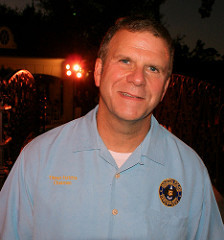
Fertitta Entertainment Inc. Chief Executive Officer Tilman Fertitta, owner of the Golden Nugget in Lake Charles, made numerous suggestions. First, he said Louisiana shouldn’t limit the number of slot machines on riverboat casinos and at racinos. “It is shocking to me how much business we lose to tribal gaming here in the state of Louisiana. What in the world is the difference in me having 1,600 slot machines or 1,700 slot machines when they can have 2,500?”Fertitta asked.

He also said riverboats are outdated and questioned why non-racetrack casinos still must be built on the water. He said barge inspections cost $100,000 a year, and he has spent $10 million to comply with moored barge laws, which also require a visible but nonfunctional paddle wheel. “Let’s not kid ourselves. That barge is concrete. It’s not going anywhere,” Fertitta said.

He also asked that the Golden Nugget Lake Charles riverboat be allowed to expand to surrounding land. In addition, Fertitta said taxing promotional play that casinos give away hurts marketing efforts and reduces revenue as well as total tax money collected. He noted tribal casinos do not pay these fees. He said a tax cap on promotional play would allow casino operators to market more aggressively and produce additional gambling revenue. “Don’t tax me to death on that. We’re trying to bring people in from everywhere. We didn’t build that resort for locals,” he said. Currently Louisiana riverboat casinos pay a maximum effective tax rate of 27.5 percent on net monthly proceeds and also pay a $3 per-patron admission fee to the state.

Fertitta also said online casino gambling should be legalized. His Golden Nugget Atlantic City is number-one in online revenue in New Jersey, he said. Online casino gambling could generate $70 million in gambling revenue in Louisiana in its first year. Fertitta warned the Louisiana needs to be prepared because internet gambling will be legal in up to 25 states by 2022.

Additionally, Fertitta pointed out the state’s jackpot verification rules affect the casino’s bottom line. “A slot machine is inactive for at least 10 minutes to allow for verification after a $10,000 jackpot is won. Mississippi and Nevada don’t require that verification until a $100,000 jackpot is won,” he said. Another issue for Fertitta was the purchasing process for vendors. He said the 21-page document that vendors must fill out for products or services costing more than $200,000 is overwhelming and causes lost business. “It just scares them. They feel like it’s an invasion of privacy. You can do a simple background check on one page,” Fertitta noted.

Fertitta said since the Golden Nugget opened in December 2014, it has Nugget has helped Lake Charles’ gambling revenue increase from $684 million in 2014 to about $898 million this year. He said the Golden Nugget and L’Auberge Casino Resort have worked well together to help expand the casino market in Lake Charles and statewide. “We are still growing our gaming base while not really hurting other people that much. We know that we have something special,” Fertitta said. He noted his recommendations are designed to help “everybody in the gaming industry” in Louisiana, not just the Golden Nugget.

One major issue of concern, however, is a possible smoking ban. Smoking still is permitted inside riverboat casinos in Lake Charles, but clean-air advocates are moving to ban it in more cities. In April 2015, following New Orleans’ smoking prohibition, Harrah’s was forced to end it. Corporate owner Caesars said the company has lost $70 million in revenue since being forced to go smoke-free. New Orleans allowed the casino to install a smoking area, but, Fertitta said, due to antiquated riverboat laws, the Golden Nugget riverboat doesn’t have room to build a smoke-free area.

Taskforce member state Senator Ronnie Johns said Lake Charles probably will have to consider a smoking ban soon, too. Fertitta responded Golden Nugget patrons will take their business to tribal casinos or Las Vegas if that happens.

Meanwhile, the East Baton Rouge Parish Metro Council approved a smoking ban similar to New Orleans’ on August 9. The ordinance, which will not take effect until June 2018, prohibits all smoking in public places in the parish, including casinos and bars.

Pinnacle Gaming’s L’Auberge Baton Rouge, Gaming and Leisure Properties’ Hollywood Baton Rouge and Tropicana Entertainment’s Belle of Baton Rouge expect to feel the impact, losing 10-15 percent of their revenue “and the job force that goes along with that,” warned Wade Duty, executive director of the Louisiana Casino Association.

Man Behind Maine Initiative Steps From the Shadows

An initiative that could authorize a casino in York County Maine that only one man is qualified to build has made it to the November 7 statewide ballot.

The Horseracing Jobs Fairness campaign—now officially Progress for Maine—is under investigation by the Maine Ethics Commission, which is trying to find out the source of $4.2 million, much of which was used to gather signatures.

Shawn Scott is the only person who would be able to build the York County casino because of the way the initiative is written. In 2003 Scott successfully pushed an initiative that allowed a racetrack in Bangor to become the state’s first slots parlor. He wasn’t able to build the casino due to a series of ethics inquiries, but he successfully sold the land for $51 million to Penn National, which opened the casino that today is the very successful Hollywood Casino.

Some estimate that a license to operate a casino in York County would be worth up to $150 million.

Scott apparently hopes to replicate that success story in York County. Until recently, Scott laid low and allowed his sister, Lisa Scott, to the be the public face of the effort. Now, however, he has emerged into the light and will be one of two people in charge of the campaign.

Scott is an international gaming entrepreneur; whose holdings include several casinos in Asia. A concern of the ethics commission is the Progress for Maine has ties with China. The other principal is David A. Wilson, who has links to Bridge Capital, which Scott also runs and which is based in the Northern Mariana Islands, a U.S. commonwealth. The company also apparently has affiliations with Koa Overseas Consultants, Ltd., a Chinese firm.

According to a spokesman for Progress for Maine, New York-based company and a Nevada company are the only two companies involved. Wilson and Scott are listed as principals of those companies.

The Nevada company, Capital Seven, LLC, was the company Scott used in 2003 to find that casino campaign.

The Ethics Commission is concentrating its fire on $4.3 million that Lisa Scott originally provided, and which can be traced to Bridge Capital.

All this means is that the players remain the same. Only the public face of the campaign has changed to become Shawn Scott.

Meanwhile the commission says it is being denied financial information that is central to its investigation. Lisa Scott is objecting to providing some of the information that the commission seeks.

The commission was scheduled to meet last week to consider Scott’s objections.

Executive Director Jonathan Wayne wrote to the commission, “The documents requested in the subpoena for Ms. Scott are highly relevant to the commission’s investigation into the financing of the Maine initiative, and are not unreasonable or oppressive.”

Wayne added, “She argues that personal information and information that is irrelevant to the commission’s investigation should be redacted from the records produced under the subpoena.” He asked the commission to back his subpoena.

Similar objections were raised by Scott’s attorneys in July, when she was given 60 more days to gather the documents and provide a log of records that they want to be exempt from disclosure.

The effort to qualify the ballot measure has been controversial from the start in 2015 when the first attempt foundered after the Secretary of State invalidated more than half of the signed petitions. This led to another effort in 2016, which was successful. The new name for the political action committee, Progress for Maine, was registered last week.

The problems with the filing arose after the committee filed campaign finance documents that failed to disclose several companies, which were added later. The late filings could theoretically lead to a fine of $4.5 million, equal to the amount raised so far.

Several leaders of the legislature have also attacked the process. The attacks have been bipartisan, with the chairman of the Veterans and Legal Affairs Committee, which oversees elections, declaring that the initiative had exploited the referendum process.

The committee has considered putting a competing question on the November ballot.

Meanwhile Progress for Maine has hired the same consulting firm that worked for the Brexit campaign last year: Goddard Gunster. The campaign last week paid $80,000 to the Washington D.C. marketing firm, which specializes in social media and website development, but is also renowned for its involvement in controversial referendums, such as the campaign that resulted in Britain voting to leave the European Union. It claims to have won 90 percent of the campaigns it has worked on. One of those was to successfully fight the ban large soda containers that former New York City Michael Bloomberg fought for several years ago.

Gerry Gunster, the firm’s chief executive officer, compared the two campaigns last week in an interview with Maine Public: “People thought, 60 percent of them, that the country was heading in the wrong direction. In the United States that number was right about the same. That’s the same number in two different countries that change is going to happen. And it did,” he said.

One reason for bringing Gunster into play might be to counter the almost totally negative publicity that the initiative campaign has operated under almost since the beginning.

Meanwhile, opposition to the ballot measure: Question 1, is forming. One of the first to announce opposition was Churchill Downs. Followed by Penn National Gaming, which owns the Bangor casino, and the Christian Civic League of Maine.

Big Plans for Palms, Palace Station

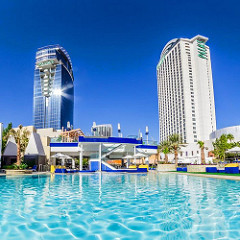
The Palms Casino Resort acquisition helped lift Red Rock Resorts to second quarter net revenues of $403.5 million, a nearly 15 percent year-on-year increase.

The purchase figured prominently in the total, as same-store revenues grew by only 2.7 percent, and adjusted EBITDA of $119.5 million missed the consensus estimate by $5 million, due again in large part to the Palms, which proved a drag on margins.

The Las Vegas locals giant reported a net loss for the quarter of $25.9 million.

“Red Rock investors will need to wait until 2019, and potentially second half of 2019, until Red Rock’s true EBITDA and margin potential is fully realized,” said Macquarie’s Chad Beynon.

Red Rock is planning to plow $146 million into the Palms to renovate the casino floor and the convention facilities and add two new restaurants and a café, luxury movie theaters and upgrades to the exterior and guest reception areas.

Palace Station is getting a $76 million makeover on top of a $115 million capital improvement program already under way that includes a new bingo hall and buffet, expanded parking and an exterior facelift.

The additional capex calls for the addition of luxury movie theaters, new restaurants, a resort pool, a new race and sports book and renovations to the poker room and casino floor.

“We’re very bullish on our Palace Station location,” said CEO Frank Fertitta “That’s where we started. It’s right in the middle of town. We see all these new things happening in Las Vegas with the expansion of the convention center and NFL football coming to Las Vegas as reasons to invest now.”

Sands Bethlehem Opens Blackjack Stadium

In Pennsylvania, Sands Casino Resort Bethlehem recently opened a 44-seat blackjack stadium. Located in front of the Steelworks Buffet, the blackjack stadium is part of $5 million in second-quarter capital expenditures at Sands Bethlehem, said spokeswoman Julia Corwin. Sands President and Chief Operating Officer Brian Carr stated it’s “an exciting new addition that offers players a customized and action-packed experience.”

In stadium blackjack, players sit at a touchscreen connecting two live blackjack tables and place bets on up to two games at once, plus side bets. Minimum bets can be as low as $5. “With the ability to play two games at once and a $5 minimum, this offering will give our guests an exciting new way to play one of the world’s most popular casino games,” Carr said.

Slightly more than a year ago, Sands opened a 150-seat electronic table games stadium, the nation’s largest, offering electronic baccarat and roulette and designed to attract millennials.

Electronic table games contributed nearly $5.5 million of Sands Bethlehem’s $235.1 million in total table games revenue for the 2016-2017 fiscal year. That total was a 3 percent increase from the previous year, and $65 million ahead of second-place Parx Casino in Bucks County, according Pennsylvania Gaming Control Board figures.

Builder Claims SugarHouse Owes $14 Million

Skanska USA Building Inc. recently sued Sugarhouse HSP Gaming LP in Common Pleas Court for $14 million over unpaid work at SugarHouse Casino in Philadelphia. The New Jersey-based American arm of the global Skanska construction and general contracting group, Skanska USA Building claims the Chicago-based owners of SugarHouse Casino agreed to pay $123 million for work on an expansion that opened in May 2016, more than doubling the size of the only state-licensed gambling complex in the city.

The expansion added several new restaurants, an event center, a poker room, hundreds of slots and dozens of table games and a 7-story parking garage. The project also resulted in 500 new full-time jobs, bringing the workforce to 1,700.

Skanska said during construction SugarHouse made changes totaling $8 million that have not been paid for–including the kitchens used by Geno’s Steaks and Saxbys Coffee, waterproofing, ceilings, a large chandelier, armored car bay and more. Furthermore, Skanska said the casino deducted more than $1 million in claimed “liquidated damages” from its payments. The company only has been paid $118 million and filed the lawsuit for the balance. Mason Avrigian Jr., partner at Post & Schell PC in Philadelphia, representing Skanska, noted, “There are subcontractors with balances that are awaiting payment.”

Since last fall, a dozen subcontractors who worked on the SugarHouse expansion—drywall, electrical, steel, fencing, cabinetry, food service equipment, floor coverings and others–also have filed mechanics’ liens seeking payments totaling more than $10 million. Several are attempting to collect what they are owed from Skanska. Some builders also said they are owed money and are considering legal action.

SugarHouse spokesman Jack Horner said, “We can’t comment on pending litigation.” However, he noted, “It is the obligation of the general contractor to pay the subcontractors. Unfortunately, the general contractor has not done so, and the subcontractors have filed liens to protect their interests. It is important to SugarHouse that the subcontractors who built our expansion are compensated fairly and that our general contractor meets its obligations to them.”

Shawn R. Farrell, a partner at Cohen Seglias Pallas Greenhall & Furman in Philadelphia, representing several SugarHouse subcontractors, said, “This is not normal. I don’t see a resolution anytime soon.”

eSports Being Considered for 2024 Olympics

Tony Estanguet, co-president of the Paris bid committee for the 2024’s Olympics, has told the Associated Press he intends to with the International Olympic Committee to discuss including eSports competitions as official medal sports in the Paris game in 2024.

“We have to look at it because we can’t say, ‘It’s not us. It’s not about Olympics,’” Estanguet told the wire service. “The youth, yes they are interested in eSport and this kind of thing. Let’s look at it. Let’s meet them. Let’s try if we can find some bridges. I don’t want to say ‘no’ from the beginning. I think it’s interesting to interact with the IOC, with them, the eSports family, to better understand what the process is and why it is such a success.”

The move is part of a growing trend by the Olympic Committee to recognize eSports. The IOC recognizes the eSports Asian Games. Forty-five national delegations and about 10,000 players took part in the most recent Asian games three years ago in Incheon, South Korea.

The Olympic Council of Asia has also announced that eSports will be a medal sport at the 2022 Asian Games in China.

However, IOC president Thomas Bach, has not fully backed eSports at the games.

“We are not yet 100 percent clear whether eSports is really sport, with regard to physical activity and what it needs to be considered sport,” Bach told Inside the Games in a recent interview.

In another matter, Nielsen Entertainment has debuted an analytics platform that will track eSports data to help sponsors and advertisers have a better understanding of the industry’s growth and engagement.

“There’s a high demand for reliable, independent measurement of value in eSports,” Howard Appelbaum, the president of Nielsen Entertainment, said in a press release. “We’re excited to enhance our client offerings and provide the industry with solutions that will help guide and optimize investment decisions in this exciting, growing space.”

Nielsen has developed Esport24, a syndicated sponsorship tracking service for eSports tournaments. The service measures brand exposure in eSports tournaments representing a variety of titles, event formats and geographic locations based on the same methodology that allows traditional sports rights holders and brands to quantify value and benchmark performance, the release said.

Nielsen has also created an eSports advisory board of industry stakeholders who will provide insight to help shape the future of eSports audience measurement and valuation. Members include representatives from ESL, ESPN, Facebook, FIFA, Major League Gaming/Activision Blizzard, NBA 2K League, The Next Level, Sony PlayStation, Turner, Twitch, Twitter, Unilever and Google YouTube.

GameCo Teams With Steve Aoki on Video Game Gambling

GameCo has partnered with Steve Aoki—a musician, DJ and eSports franchise owner—to develop a skill-based video gambling machine that will appeal to millennials.

The game is titled Steve Aoki’s Neon Dream and is scheduled to appear in casinos before the end of summer. The theme of the game is based on Aoki’s 2014 album Neon Future, and is a first-person game where players fly over an endless track through a world of color, collecting coins while listening to various house and electronic dance tracks from Aoki’s Dim Mak label, the release said.

“I can’t wait for my fans to see what GameCo has done with Neon Dreams,” Aoki said in the release. “Using Dim Mak’s music, and a host of images from our collection, the video game really is a neon dream and I am proud to be working with GameCo as we revolutionize the gaming floor.”

GameCo has positioned itself as a leader in creating skill-based gambling games, which so far have had mixed results in U.S. markets. The company expects to release 10 more title before the end of 2017, the release said.

GameCo has placed it gaming machines—dubbed VGMs—in Atlantic City, Connecticut, and North Carolina casinos. The company has also opened an office in Las Vegas.

However, at least in Atlantic City, response to the machines was underwhelming and many VGMs have already been removed from casino floors.

PokerStars Readies Australian Exit

PokerStars says it will finally exit the Australian market by mid-September in the face of new gaming regulations in the country that did not legalize online poker.

The new gambling laws—called the Interactive Gambling Amendment Bill and passed by the country’s Senate earlier this month—essentially ban online poker as well as in-play sports betting. Legislators say the new laws essentially closes a “grey” market in the country for both types of betting.

While the law allows online sportsbooks to be licensed, by not recognizing online poker and casino games as legal, it essentially bans both types of online play as those operators cannot secure licenses. Unlicensed sites accepting Australian players would face steep fines.

The law also includes a number of consumer protections such as regulations against operators offering lines of credit to gamblers.

PokerStars has said repeatedly that it would probably leave the market if the rules went into effect. The company, part of the now-called Stars Group, did not name an exit date, but said in an e-mail to Australian players it would likely leave the market by the middle of September as the new rules go into effect.

“We’ve been aware of this day coming. We’re proud to have seen the Australian poker community grow so strong over the last decade,” the email said.

The Australian Online Poker Alliance has been fighting the new laws, saying that by not licensing reputable online poker and casino games operators, Australian players will move to less secure unlicensed offshore sites.

“The overwhelming majority of online poker websites used by Australians are run by legitimate companies that are licensed elsewhere in the world,” the alliance said in a press statement. “There are no poker operators licensed domestically in Australia and current legislation does not provide any way for these overseas operators to be licensed and provide secure services to Australian players. The risk therefore is that these major players will withdraw leaving smaller offshore, unlicensed operators, creating an “unsafe poker environment.”

In another matter, PokerStars has announced it is releasing a new social gaming app designed to help it retain a brand presence in regulated international markets such as Australia.

The app, titled Play, is scheduled to be released in Australia and the U.S. PokerStars does have an online presence in New Jersey, but nowhere else in the U.S. The company says the app will eventually be rolled out worldwide.

Players will be able to enjoy a range of free-play poker games, including Hold ‘em and Omaha ring games as well as Spin & Go tournaments. Additionally, players will also be able to access a range of slots, similar to those currently found inside PokerStars’ real money platform, the company said in a press release.

Microsoft Hosts League of Legends Events

Microsoft continues to build its presence in the eSports world. On August 26, the tech giant began hosting weekly League of Legends events at its brick-and-mortar stores across the U.S., Canada, Puerto Rico and Australia. Partnering with ASUS Republic of Gamers and HyperX, the “ROG Arena at Microsoft Store” competitions invite up to eight teams of local players to sign up for 5-on-5 battles. The only requirement to compete is an active League of Legends account; Microsoft will provide Windows 10 ROG G752VS gaming laptops, mice, mouse pads and headsets.

Microsoft already hosts similar eSports events at its stores, including games ranging from Counter Strike to FIFA. The company also offers the Mixer NYC Studio, a dedicated digital production shop at its Manhattan flagship store where gaming tournaments are held before a live audience. It also hosts the Halo World Championship.

In 2016, Microsoft created a new way for Xbox Live users to hold eSports tournaments. It also acquired Beam and renamed its game streaming platform to Mixer, which competes with Amazon’s streaming platform Twitch that it acquired for $970 million in 2014.

Disney Looking to Host eSports

The Disney Corporation could get into the eSports business utilizing a major venue at its Orlando leisure complex, Forbes magazine reports.

The contests would be held at the ESPN Wide World of Sports Complex, which spans 220 acres and has facilities for hosting over 70 types of sports. The 20-year-old facility is used to host youth events.

Disney officials said they often look for new events and have seriously been considering eSports contests, which are based on competitive video game playing.

“We are trying to keep up with what sports are breaking and how we can be involved in them,” Faron Kelley, vice president of sports at Disney World told the magazine. “eSports is a big one we are looking at and are very excited about it.” It has an ideal home.

The Orlando facility is scheduled to open a new 8,000-seat, multi-purpose indoor stadium. The stadium was designed to accommodate cheerleading and dance events, but could handle many other types of events as well.

“It is exciting because it isn’t just cheer, it’s basketball, it’s volleyball, it’s eSports with gaming. We are absolutely looking at eSports and it’s a wonderful venue for that,” Kelley told Forbes.

Kowall Reviewing Michigan Online Gaming Bill

In Michigan, while the legislature is in recess most of August, state Senator Mike Kowall is working on a new draft of the online gambling bill, SB.203. He first presented the Lawful Internet Gaming Act, SB.889, in 2016. It passed the Senate Regulatory Reform Committee and moved to the Senate floor, but died there. This year, Kowall’s bill includes input from Native American tribes, land-based casino representatives and other interested parties. The bill gained numerous co-sponsors and also passed the Senate Regulatory Reform Committee and moved to the Senate. Instead of fizzling out, Kowall is revising it. Kowall’s Legislative Director Dave Biswas said significant progress has been made on SB.203 and the latest feedback has been very positive.

Certain elements have remained the same, including having the Michigan Gaming Control Board create a framework for the industry, allowing the state’s land-based casinos to apply for online poker and casino game licenses and permitting eventual interstate compacts with other states.

One change would give tribes sovereignty to amend their state compacts to regulate their own online gambling sites. They still would be required to follow the Michigan Gaming Control Boards’ age requirements, geolocation technology and responsible gambling protections. In addition, , brick-and-mortar casinos would be required to wait 12 months before launching their online gambling sites, so tribes would have time to make the appropriate changes to their state compacts and prepare to launch their sites.

Poker Players Alliance Executive Director John Pappas noted, “Michigan is progressing but rather slowly. The bill was updated a few weeks ago, but not all gaming stakeholders are satisfied with the changes. I don’t think we’ll see any more movement until the end of summer or early fall.”

In September, when legislators return to Lansing, Kowall’s office plans to meet with tribal leaders, casino representatives, gaming board members, lawmakers and other interested parties to resolve details before the draft is finalized and released to the public. That could occur for the 2017 session or, if it takes longer to smooth out differences, online gambling approval may have to wait until 2018.

Maine Passes DFS Law

Maine has approved a daily fantasy sports bill that classifies daily fantasy sports as a game of skill and sets a 10 percent tax on gross revenue.

DFS operators will need to have revenue of more than $100,000 and pay a licensing fee of $2,500. DFS games on collegiate or amateur sports are not allowed in the state.

“Maine is now the 15th state to adopt a regulatory framework to protect the right to play fantasy sports, protect consumers and help a booming piece of the tech economy continue to grow,” said Marc La Vorgna, a spokesperson for both of the two largest DFS operators, DraftKings and FanDuel in a press statement. “Thanks to action by the legislature up to 200,000 Mainers will continue to enjoy our new national pastime, fantasy sports, under a framework of sensible, light-touch consumer protections.”

In New York, that state is currently considering amendments to its DFS law to block “proposition” betting at DFS sites. The amendments were proposed by the state’s gambling commission.

According to a report at legalsportsreport.com, the amendments would block games that resemble proposition bets, such as whether an individual athlete or a single team will surpass an identified statistical achievement.

The traditional games offered by FanDuel and DraftKings do not resemble proposition bets, but other schemes such as FastPick—in which players pick head-to-head matchups of players—could meet the criteria. New York based Boom Fantasy offers FastPick, which just went live through New Jersey’s Resorts online casino site.

The proposed amendments are opposed by the original author of the state’s DSF law, State Senator John Bonacic, who wrote a letter to the commission cited in the report.

“When I drafted S.8153, 1 intended to ensure enough flexibility to cater to many different styles of interactive fantasy sports gameplay,” Bonacic’s letter reads. “Competition generated between established incumbents like DraftKings and FanDuel, and innovative startups like Boom Fantasy, will lead the way to a robust industry for all.”

However, the commission argues that proposition betting could be considered more like traditional sports betting, which is still illegal under state law.

In another story, DraftKings announced a new game designed to attract casual players to its site.

The game is called “Pick’em,” and changes the usual player salary cap system to a tiered system.

“This is our most significant release we’ve made … in a really long time,” co-founder Matt Kalish said at a press conference. “It’s the thing we’ve had in mind the most as we were building up the platform.”

Instead of assigning salaries to Players—which has been the approach of contests by both DraftKings and FanDuel—the Pick’em system allows DFS players to choose lineups from “tiers” of available real-life players. Players select one player from each of several tiers.

Pick’em is available initially for the NFL, Major League Baseball and soccer contests, but the company expects to expand into other sports as well.

Finally,in an international development, India’s High Court has ruled that daily fantasy sports games are games of skill and not gambling.

The court ruled in the case of a resident of Chandigarh state who filed a suit against fantasycricket.dream11.com under the country’s Public Gaming Act for illegal gambling after losing money in two DFS contests.

However, the Punjab and Haryana High Court in India ruled that DFS play requires a substantial degree of skill, judgment and discretion, and cannot be considered gambling.

The court rejected the petition on grounds that the player himself “created a virtual team,” by choosing players, showing that fantasy sports games require substantial skill, efforts and statistics, according to a report in the India Times.

In the 29-page order, the high court also ruled that fantasy sports is not gambling, meaning it is a business activity that is protected by the right to free trade and commerce guaranteed under the country’s Constitution.