Author: Casino Connection Staff

Lucky Dragon Headed for Auction

Las Vegas’ shuttered Lucky Dragon Hotel and Casino will be auctioned off on October 30, hopefully to a buyer with a better business plan than the developer who believed he’d created a resort to which deep-pocketed Asian players would throng.

If not, the 203-room hotel and 27,500-square-foot casino on Sahara Avenue near Las Vegas Boulevard, quite a distance from the main Strip action, could be foreclosed on by its main creditor, Snow Covered Capital. SCC could then shop it around, its 2.5 acres possibly attractive to someone looking to develop non-gaming meetings or residential space or an e-sports venue.

For now, though, Michael Parks of real estate services giant CBRE said an auction is the best way forward.

“For the right visionary and owner, this site and amenity-rich property represents an excellent opportunity to own a first-rate Las Vegas hospitality property distinctly situated between the blossoming north end of the Strip and the gateway to Downtown Las Vegas,” he said.


Conceived by developer Andrew Fonfa and built at a cost of $160 million, the Lucky Dragon opened in November 2016 as Las Vegas’ first ground-up casino hotel since the Great Recession and was hailed at the time as the forerunner of a boutique style of resort geared to a very specific gaming and tourism demographic, and as far as Las Vegas goes, a lucrative and well-established one.

Sheathed in red, with Chinese-language signage, a bilingual staff, an authentic pan-Asian food and beverage offering that included a tea sommelier, and a gaming floor weighted toward baccarat, pai gow and sic bo, it looked like a slam dunk.

But it may have been too targeted, according to Parks, who said Strip casinos do well because they “market to a wide audience”.

There were other problems as well. The off-Strip location proved a detriment, discouraging foot and vehicular traffic, and when it came to operational wherewithal, Fonfa lacked the capitalization to compete with the megaresorts on comps, credit, luxury and transportation.

In any event, the paint was barely dry when restaurants began closing, and Lucky Dragon’s troubles were apparent.

In February, 15 months after opening, Fonfa pushed the property into a Chapter 11 reorganization in a bid to avoid defaulting to SCC, which loaned him some $50 million after the city of Las Vegas rejected his request for millions in subsidies. Another $89 million is owed to 179 individual investors from outside the U.S. who’d hoped to trade $500,000 each for a shot at citizenship under the federal EB-5 visa program.

The casino was closed around the same time as the bankruptcy filing, and when no buyers were found to rescue the property out of reorganization it was left to limp along with only the hotel and the remaining restaurants. Those closed on October 2.

The auction will be held at the Nevada Legal News building on Fourth Street near Charleston Boulevard.

Massachusetts Agency Seeks Input on Region C License

The Massachusetts Gaming Commission is seeking input from residents of the southeastern part of the Bay State as to whether it should reopen the bidding process for Region C.

This is the region that includes Taunton, where the Mashpee Wampanoag tribe would like to build the First Light Casino & Resort but have been stymied by the courts and the Department of the Interior. The MGC in 2016 by a vote of 4-1 rejected a proposal for a commercial license in Brockton in deference to the tribe, which still had a hope that the Interior Department would figure some way around the court judgment that the tribe’s land into trust process was fatally flawed. The 321 acres that was put into trust is now in legal limbo.

The 2011 legislation that authorized casino gaming in the state called for three casino resorts, in three zones, and one slots parlor. Only the license for Zone C has not been filled.

The developers, Mass Gaming & Entertainment, which includes Rush Street Gaming and their partners, the owners of the Brockton Fairgrounds, propose a $677 million casino resort on the fairgrounds. In June they sent a letter asking that the commission reexamine their application in the light of the tribe’s faltering steps. The commission’s legal counsel advised it to do a comprehensive study of the gaming market of Region C to determine if it has significantly changed since its earlier ruling.

This is not the first time that rejected applicants have asked for a reconsideration. In those cases staff has advised the commission: “ (it) … may not have the ability to reconsider the denial of a gaming license, and if it did have the authority, it did not have a process to reconsider the denial of a gaming license.”

In response, the commission opened a comment period for residents. It is asking whether it should review “the status of the Mashpee Wampanoag Tribe’s litigation regarding land in trust, and the status of proposed federal legislation on the issue.”

Other questions address whether there is a demand for a new casino in the region; whether former agreements related to the bid process should be considered valid, whether past votes by host communities would be considered valid and whether a new element should be added to the mix: sports betting and daily fantasy sports.

The comment period will end November 30. Comments will be accepted by email of postal mail.

A complication to rehearing the Brockton proposal is the fact that the commission didn’t just reject it because of the tribe’s casino, but because the developer “did not articulate a clear vision or provide any well-developed plans as to how it would achieve the same quality of results in Brockton as it has at its properties in other jurisdictions.”

Mashpee Tribal Chairman Cedric Cromwell congratulated the panel on “not allowing themselves to be bullied.” He added, “It’s also a relief to hear the gaming commission will not automatically entertain the shenanigans of a deceitful developer.”

Cromwell is referring to Neil Bluhm, owner of Rush Street Gaming, which has financed some of the lawsuit by residents of Taunton that has, for the moment, stalled the tribe’s progress.

A bill has been passed in the House but not in the Senate that would put the land into trust, bypassing the Interior Department.

Last week the Mashpee tribe filed a new lawsuit in U.S. District Court against the Interior Department, challenging its ruling that the tribe is ineligible to put the land into trust since that would violate the Supreme Court’s 2011 Carcieri v. Salazar ruling. At the same time the tribe’s attorney sought a stay in its appeal of the earlier judgement by a federal judge that the department used as the basis for its ruling.

Two West Virginia Casinos to Offer Sports Betting

Wheeling Island Hotel-Casino-Racetrack in West Virginia has partnered with London-based Miomni Gaming to provide a turnkey retail and mobile sportsbook, as Miomni does for 50 casinos in Nevada. A fall launch date is planned, according to owners Delaware North.

The service will also be offered by Delaware North’s other West Virginia casino, Mardi Gras Casino and Resort, near Charleston. Delaware North also operates casinos in Arizona, Illinois, Ohio, New York and Arkansas.

Together the companies will offer turnkey sports betting technology to other casinos all over the U.S.A.

The state Lottery Commission has issued a temporary license for Miomni, which has provided the same service in Nevada for six years.

The two casinos aim at a casual yet “high energy” sports atmosphere. Kim Florence, regional president and general manager for both casinos, added, “We think this will become a great draw to bring people from across the state and outside of West Virginia to experience these exciting resorts.”

The company’s vice president of marketing for its gaming division, Luisa Woods, added, “The partnership with Miomni will allow us to serve a new market of casino operators anxious to benefit from gaming expansion cost-efficiently, while increasing the visibility of their brand, deepening their customer relationships and enhancing the quality of their service offerings.”

Sands, Valley Forge In; Rivers Out for PA iGaming

Seven casinos apply for iGaming licenses

Sands Casino Resort Bethlehem and Valley Forge Casino Resort have become the two latest casinos to sign onto the state’s new online gaming business.

The application by the Sands, unanimously approved last week by the Pennsylvania Gaming Control Board, is contingent on the property’s sale to Wind Creek Hospitality, the operator owned by Alabama’s Poarch Band of Creek Indians. Before the $1.3 billion sale—the local licensee operating the casino will be PCI Gaming—was announced, Sands was considered the least likely Pennsylvania licensee to opt for an iGaming license, as the chairman of its parent company, Sheldon Adelson, was well known for his opposition to online gaming.

It was clear the iGaming application was made on behalf of Wind Creek, Gaming Control Board spokesman Doug Harbach told the Lehigh Valley Live news site.

“We are only applying for the interactive gaming certificates because of the pending sale of the Sands Bethworks Gaming assets to PCI Gaming,” Sands General Counsel Michael Magazzu told the board before the approval. “If not for that pending acquisition, Sands Bethworks Gaming would not be applying for these interactive gaming certificates.”

In a deal announced in March, the Poarch Band of Creek Indians is working to acquire the property for $1.3 billion.

According to Online Gaming Report, PCI Gaming hasn’t chosen a supplier for its interactive platform. The tribal group does operate a social casino in Alabama, though, so it has some relevant expertise in the space.

Meanwhile, Boyd Gaming, which is acquiring the Valley Forge Casino for $280.5 million, submitted its iGaming application and made a presentation to the board. on the other hand, gave a presentation to the board showcasing its partner, FanDuel Group. Boyd and FanDuel announced the partnership, their first joint venture, in August.

IGT will provide the platform for Valley Forge, offering all three categories of interactive gaming—slots, table games and poker. It plans to launch online sports betting in the future, likely under the FanDuel Sportsbook brand.

Boyd’s presentation included mock-ups of the website, with plans to bring live-dealer games over from New Jersey. FanDuel subsidiary Betfair deploys its live-action table game products in the New Jersey iGaming market.

The board also approved Valley Forge’s application subject to proposed conditions, and because of its technological head-start, observers say Valley Forge could be the first Pennsylvania casino up and running with an online gaming side.

The two approvals bring the number of Pennsylvania casinos applying for online gaming permits to seven of the 13 licensees, a development that surprised many, since the state’s onerous iGaming tax is equal to its tax on land-based slot revenues at 54 percent, in addition to a $10 million application fee for the full complement of online games. Both are far higher than any other jurisdiction.

While the number of online applicants grew, one casino has backed out of the iGaming sweepstakes. Rush Street Gaming, owner of the Rivers Casino in Pittsburgh and SugarHouse in Philadelphia, withdrew its application for online gaming submitted for Rivers Casino.

“Rivers Casino Pittsburgh intends to provide iGaming to Western Pennsylvania and the Commonwealth; however, we’re taking additional time to explore the various options for doing so,” a Rivers Casino spokesman told Online Gaming Report. “Rivers is actively pursuing a sports wagering certificate to offer both land-based and mobile sports betting.”

Rush Street Gaming already operates iGaming in New Jersey through the site playsugarhouse.com, affiliated with the Golden Nugget Atlantic City.

The two approvals bring the number of Pennsylvania casinos applying for online gaming permits to seven of the 13 licensees, a development that surprised many, since the state’s onerous iGaming tax is equal to its tax on land-based slot revenues at 54 percent, in addition to a $10 million application fee for the full complement of online games. Both are far higher than any other jurisdiction.

Beginning October 15, the board will accept applications for iGaming petitions for a period of two weeks from “qualified gaming entities” outside the state.

FanDuel Opposes Florida Amendment

Fantasy sports operator FanDuel is urging Florida voters to oppose Amendment 3, titled “Voter Control of Gambling in Florida.” The proposed constitutional amendment would “ensure that Florida voters shall have the exclusive right to decide whether to authorize casino gambling,” according to the ballot summary for the November 6 election.

FanDuel officials said Amendment 3 “pretends to give voters more power, but the reality is it makes it more difficult to protect your right to play fantasy sports.” Also the proposal would “make it impossible to bring sports betting to Florida. If Amendment 3 passes, the legislature will no longer have the power to authorize sports betting in Florida.”

John Sowinski, president of Voters In Charge, the political group promoting Amendment 3, said it “does not prohibit sports gambling. What it does is gives the final say on this and other casino gambling decisions to Florida voters. Likewise, it does not affect traditional fantasy sports pools.”

Sowinski recently spoke at a forum on the topic hosted by the Seminole County Regional Chamber of Commerce. “We don’t think casino licenses should be for sale to the highest bidder in Tallahassee. It should be an issue that’s decided by voters,” he said.

Also in attendance was Jamie Shelton, representing the Best Bet Jacksonville cardroom. “This is and should be a legislative matter and it should be dealt with by the people we elect to represent us in the state of Florida,” Shelton said.

Seminole County Regional Chamber of Commerce President and state Rep. Jason Brodeur noted tourism makes up a considerable portion of Florida’s revenue, so, as a lawmaker, he said he has to consider the state’s family-friendly image.

“If I believe that that equity is going to be jeopardized by changing the way we are viewed as a state that’s something I have to consider as a legislator. As an individual, I think the voters should be in charge,” Brodeur said.

The amendment has the backing of Disney Worldwide and the Seminole Tribe of Florida, who together have donated $36.3 million to Voters In Charge. According to September 28 filings with the state Division of Elections, Disney had contributed $19.6 million and the Seminole Tribe $16.7 million.

Two political action committees have been formed to oppose Amendment 3. Citizens for the Truth About Amendment 3 has raised more than $6 million and Vote NO on 3 has raised $981,832, according to the filings.

Citizens for the Truth About Amendment 3 received $500,000 from the Tampa Bay Buccaneers, $400,000 from Los Angeles-based Elevated LLC, $250,000 from the St. Petersburg Kennel Club and $145,000 from Cardroom Tech.

Vote NO on 3 received all of its funding from West Flagler Associates, the parent company of Miami’s Magic City Casino. The group’s chairman is Isadore “Izzy” Havenick, whose family operates Magic City and Naples-Fort Myers Greyhound Racing & Poker in Bonita Springs.

Both groups claim the wording of Amendment 3 is designed to fool voters. The Citizens for Truth About Amendment 3 website states, “On its face, the amendment ballot language appears to empower voters. However, what Amendment 3 really does is cost education funding hundreds and hundreds of millions of dollars. Because the referendum would be statewide, voters in one part of the state would decide whether a gaming facility can open somewhere else. This would benefit larger companies that have the resources to gather hundreds of thousands of signatures needed for a referendum.”

The PAC maintains the proposal would cost Florida schools $200 million in new tax revenue annually. In addition, the measure could remove some slot machines and designated player games, costing schools another $330 million in tax proceeds over the next 10 years.

Amendment 3 requires 60 percent voter approval to pass. However, a recent Florida Chamber of Commerce survey indicated it’s supported by 54 percent of voters, with 28 percent opposed. The issue could be determined by the 18 percent of voters who were undecided. The Chamber and the League of Women Voters support the amendment.

Louisiana Parishes To Vote On Daily Fantasy Sports

In Louisiana, an advocacy group called Fairness for Fantasy Sports claims it was created by residents to educate voters on the importance of taxing and regulating daily fantasy sports in the state. But financial disclosures indicated DFS operator FanDuel gave $154,000 to the group; the only other donation was $250 from the political consultant who manages it.

FanDuel is promoting DFS ahead of the November 6 election since referendums in every parish will determine if voters want to allow daily fantasy sports. The referendums are the result of House Bill 484, sponsored by state Rep. Kirk Talbot. It was one of three gaming bills passed during the latest legislative session and signed by Governor John Bel Edwards in May.

The measure would classify DFS as a game of skill, give oversight to the state gaming control board and allow contests based on professional and amateur events. It states, “If a majority of the qualified electors in the parish voting on the proposition vote for the proposition, then fantasy sports contests shall be permitted, subject to the enactment of licensing, regulation and taxation.”

As a result, DFS could become legal in some parts of Louisiana and not in others. If just one parish votes to legalize DFS, a new bill must be introduced in the legislature to determine tax rates, licensing fees and geofencing restrictions to make sure bettors are within parish limits.

Louisiana Gaming Control Board Chairman Ronnie Jones said geofencing will be the most complex issue regarding DFS. “There are 64 parishes in Louisiana. Say only a quarter of them vote yes on the referendum. Can you imagine how complicated that will be to carve out individual parishes? Nobody is talking about what it might cost to implement geofencing.”

Jones said he expects Talbot to introduce a companion bill next year to establish tax rates and additional fees.

Other gaming bills that passed in the last session include Senate Bill 316, which will allow Louisiana’s 15 riverboat casinos to move ashore; and Senate Bill 184, which will ease restrictions for truck stops that qualify for video poker machines.

Jones said sports betting will be a major issue in 2019, especially since neighboring Mississippi is the only state in the South with legal sports betting. “People in southeast Louisiana are headed to the coast every weekend,” Jones said.

On October 24, sports betting will be among the topics discussed at a Senate hearing.

Springfield Tourism Bureau Proposes Hotel Tax

The Greater Springfield Convention & Visitors Bureau isn’t giving up its campaign to impose a new 1 percent assessment on hotel guests in the city of Springfield, Massachusetts, despite the fact that the tax died in a committee of the city council last week.

The tax would add 1 percent to the existing 5 percent tax on hotel room stays in seven hotels in Springfield which includes the just opened 252-room MGM Springfield casino hotel. The money raised would be earmarked for boosting tourism in the Greater Springfield area.

The opening of the MGM Springfield is generally believed to have bolstered the business of all of the area hotels.

The bureau estimates the tax would raise at least $250,000 annually.

The Bureau is also supporting a similar tax being proposed in the legislature. This proposal failed this year but will be introduced again in 2019. That legislation would allow cities to impose the tax only if a tourism destination marketing district is created.

PokerStars Offering Play’n Go Content in Italy

PokerStars is now offering content from developer Play’n Go in Italy under a partnership agreement signed earlier this year.

PokerStars Italy will offer a full suite of games from Play’n Go.

“We will be supplying our full suite of games to their customers in the Italy, which fits with the original focus of the partnership – which was to expand the slots offering in regulated markets and facilitate a move into the Italian region in this quarter,” Play’n Go said in a press release. “We are already very known in the Italian market and have had a particularly strong presence over the last couple of years,” the company said.

The multi-year partnership between Play’n Go and PokerStars Casino was announced in June and sees the provider supply its full suite of games via a direct integration into the PokerStars Casino platform, with a key focus on expanding their slots offering in regulated markets, the release said.

PokerStars is also scheduled to launch Play’n Go games in Spain and Denmark.

Sweden Receives 55 Applications for Online Gambling Licenses

Sweden’s opening up of its online gambling regulations has led to about 55 online betting sites applying for licensing in the country.

The country previously only allowed Svenska Spel to operate in Sweden, but is now allowing other companies to seek licensing under a new liberalized betting code adopted in June. Lotteriinspektionen, Sweden’s gaming regulator, opened applications for online gambling licenses in early August.

The regulator said it is reviewing more than 60 companies overall and 55 applications from online casino and sports betting operators, most of which are based outside the country. The regulator has also said that not all of the applications are complete and it has begun talking with affected companies to include missing information.

Regulators have said that the new gambling legislation’s primary focus is to install regulation, which protects gamblers betting in Sweden. Starting in January, anyone operating in Sweden must obtain an authorized license, which ensures they will protect players from excessive gambling, block underage gamblers and only offer bonuses to customers on their first gambling occasion.

Licensed operators will pay a tax of 18 percent of revenue made through Swedish gamblers.

World Poker Tour Partners With FansUnite

The World Poker Tour has taken a step into the cryptocurrency world announcing a new marketing partnership with Vancouver based start-up FansUnite.

FansUnite is an ethereum blockchain protocol that is “revolutionizing the sports betting world,” the company said in a press release. The platform is rooted in cryptocurrency, which the company says can be used security and smaller operator margins. FansUnite plans to run its sportsbook at margins of just one percent, the release said.

The company’s platform can also run daily fantasy sports contests and online poker as well as other applications that rely on sports/gaming data. The technology is currently in its alpha testing stages, with a public token sale anticipated later this year.

Advisors to the company include former NFL player Ryan Mundy, cryptocurrency pioneer Peter Kroll, and WPTDeepStacks founder Chris Torina.

The deal with the WPT is a marketing deal that includes social media promotion, on-site promotions in Europe and Asia and integration into European broadcasts, among other advertising initiatives, the release said.

 “We are thrilled to introduce FansUnite to the WPT’s millions of poker players and fans across the globe through television, digital media, live events, and more,” said WPT CEO Adam Pliska. “We look forward to furthering strategic partnership integrations and activations with FansUnite.”

The deal is designed to get the FansUnite Brand exposure before the site officially launches.

“Over the last two decades the World Poker Tour has been at the forefront of gaming entertainment. WPT’s worldwide reach, instant name recognition, hundreds of thousands of players and millions of fans make them the class of their industry,” said Darius Eghdami, CEO of FansUnite. “This partnership introduces FansUnite to millions of poker fans across the globe, and gives WPT partners the first look at our industry-changing technology.”

The company hopes for a full launch in early 2019, the release said.

Borgata Atlantic City Seeks Ivey’s Nevada Assets in Lawsuit

Borgata Atlantic City has asked a federal court to allow it to search in Nevada for about $10.1 million it is owed by professional poker player Phil Ivey.

Ivey lost a lawsuit brought by the casino charging that he illegally used “edge sorting” techniques to win about $10 million from the casino playing baccarat. Though a judge ruled that Ivey did not cheat, he did gain an unlawful advantage over the casino through the process—where he and a partner exploited defects in the markings on cards used in the game—and had to repay his winnings.

Ivey is appealing the ruling and has asked a court to delay Borgata’s collection saying that paying out the amount before the appeals are heard would irreparably harm his business ventures.

However, Borgata has apparently been looking to locate Ivey’s financial assets in New Jersey and has been unable to find any.

“Borgata has been unable to locate any assets of defendants in New Jersey. Borgata identified a bank in which Ivey maintained an account. A writ of execution was returned and the bank indicated there were ‘no funds,’” the filing said.

Borgata was able to locate a Wells Fargo bank account in Ivey’s name. On Oct. 2, the bank informed the casino the account was empty, the filing said.

Ivey appears to split residency between Macau and Mexico, but wants to collect money from Ivey’s assets in Nevada.

“Although the extent of Defendant Ivey’s business holdings is unclear, it is believed that Ivey Poker, LLC is the entity behind Ivey League, Ivey’s poker-oriented website,” the filing said. “Ivey’s holdings have been estimated at $100 million, and the above shows these holdings, at least those that are ascertainable, are based in Nevada. Ivey has also disclosed a luxury home in Cabo San Lucas, MX on his social media account. It is possible that one of Ivey’s Nevada entities is the ultimate owner of this home.”

A decision on the casino’s request is expected in early November.

New Jersey Sports Book Revenues Double With Football

The September revenue numbers for Atlantic City came in and the results were muddled by superior earnings in online gaming revenue and sports betting. For the land-based gaming results, Borgata, as usual, came out head with $60 million in gross gaming revenues. But it was down 13.5 percent from September 2017. Most of the other casinos experienced declines for the month, led by a steep drop at Caesars, down almost 25 percent for the month. Only the Tropicana posted a less than 1 percent increase.

The two new casinos were the difference makers. Both opened in late June. Hard Rock posted revenues of $26 million, good enough for third place in the market. Ocean Resorts, however, was looking up at all other casinos with a $15 million gross gaming win.

The big news for the month was the almost doubling of sports betting revenue from August. Clearly the catalyst was the opening of the NFL season and the addition of more physical and online gaming choices. But the surprise was the complete dominance of the two former daily fantasy sports companies, FanDuel and DraftKings. Between the two of them, they accounted for $11.3 million of the $12.6 million digital revenue for New Jersey sports books.

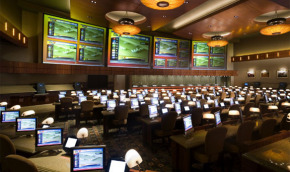
And digital clearly is the choice of New Jersey bettors, already surpassing the $11.4 million bet at the bricks-and-mortar sports books.

Discounting “futures” bets—wagers on events that have yet to be completed—New Jersey sports books held 7.9 percent.

PlaySugarhouse.com—an online casino and sports betting site from Philadelphia’s Sugar House casino that operates in New Jersey through a partnership with Golden Nugget Atlantic City—announced that the start of the NFL season more than doubled action at its online sportsbook in September.

“We’re very happy with the numbers we are seeing,” said Mattias Stetz chief operating officer of Rush Street Interactive, which operates SugarHouse Online Sportsbook & Casino in a press release. “We see that the player base is continuing to grow as the word spreads about the quality and volume of the different live in-game bets at PlaySugarHouse.com. We are at the start of the football season and are excited to see our numbers keep climbing.”

The casino said about 80 percent of its bets are being made on mobile devices and that the sports book play has also led to an increase in play at its online casino site.

SEPTEMBER NEW JERSEY SPORTS BETTING REVENUE

Property (Digital Partner)    September Digital       September Casino       September Total         August Total

Resorts (DraftKings, BetStars)       $8.5                            $.28                               $8.8                             $3.0

Meadowlands (FanDuel)                $2.9                           $4.4                               $7.3                              $3.1

Monmouth Park (William Hill)        $.7                             $2.1                               $2.8                              $.9

Borgata (playMGM)                       $.1                             $2.2                               $2.5                               $.9

Ocean Resort (William Hill)            $.3                             $1.0                              $1.4                               $.5

Golden Nugget (SugarHouse)        $.6                             $.5                                $1.1                               $.2

Bally’s (Caesars online, 888)         $.1                             $.4                                 $.5                                $.3

Harrah’s                                       N/A                            $.3                                 $.3                                $.3

Totals:                                         $12.6                         $11.4                             $24.0                            $9.0

All revenue in $millions

Continent 8 Locates in Atlantic City

Continent 8—one of the largest online gaming data center and network solutions providers in the U.S.—announced it will integrate their data centers in Caesars Atlantic City and Ocean Resort Casino with locations in Mississippi, Nevada, Pennsylvania and West Virginia.

The company said the multi-state capacity will create a “seamless suite of hosting and network managed services for those seeking to enter the growing sports betting market in the United States,” according to a company press release.

“Serving the rapidly expanding online sports betting industry, Continent 8’s integration of state-of-the-art data centers across multiple states and gaming jurisdictions provides a hub and spoke technology platform to help companies successfully enter the marketplace,” said CEO Michael Tobin. “In 2019, Continent 8 will further increase network capacity with additional expansion in the states of New York and Ohio, and other states as legislation evolves.”

Continent 8 and the Casino Reinvestment Development Authority have previously announced a deal for the company to construct a new data center at the Atlantic City Convention Center. The company plans to build the nearly 6,000-square foot, $5 million data center by April 2019 and will pay CRDA $101,000 annually in rent, according to the Press of Atlantic City.

In addition Continent 8, based in the Isle of Man, plans to assist casinos in esports tournamnets, a new gaming sector that could help boost casino revenue in the winter months. Esports, or competitive video game tournaments, is one of the fastest growing activities in the nation, generating nearly $1 billion a year in the global market.

Esports is also attractive to the millenial generation, which grew up on video games, and Atlantic City casinos are eager to tap into that segment of the population. Stockton University is joining the Eastern College Athletic Conference’s intercollegiate esports competition, building a room at its Galloway campus, near Atlantic City, which should bring players—and gamblers—to the East Coast market.


Fertitta Offers Caesars a Merger

Tilman Fertitta, billionaire owner of the Golden Nugget casinos, the Landry’s restaurant chain and the NBA’s Houston Rockets and host of CNBC’s Billion Dollar Buyer reality program, has approached Caesars Entertainment with a merger offer that values the Las Vegas-based casino giant at $13 a share.

Sources cited by Reuters and CNBC said Fertitta is looking to interest Caesars in a reverse merger in which Caesars would be the acquirer and Caesars shareholders, including private equity firms Apollo Global Management and TPG Capital, would be shareholders in the combined company, with Fertitta as chairman and CEO.

Caesars (NASDAQ: CZR), coping with general softness in its prime Las Vegas Strip market, had seen its shares plummet 28 percent year to date as of last Tuesday after warning of slower Q3 growth with its second-quarter earnings report in August. The stock leapt after Reuters first reported the offer on Wednesday. It was up more than 12 percent to $10.25 at the close on Thursday.

However, it was far from clear late last week how the offer would fly, with Caesars commanding a market capitalization of around $7 billion after last week’s rally and Fertitta’s net worth pegged by Forbes at $4.5 billion.

Caesars, Apollo and TPG declined to comment, while Fertitta and his representatives were similarly mum, according to Reuters.

Fertitta, 61, is best known for building Landry’s into a nationwide powerhouse featuring brands such as Saltgrass Steak House and Joe’s Crab Shack. He owns more than 600 restaurants in all, including the McCormick & Schmick, Morton’s and Rainforest Café chains.

His closely held Golden Nugget operates casinos in Downtown Las Vegas and Atlantic City and in Laughlin, Nevada, Lake Charles, Louisiana, and Biloxi, Mississippi. Considered well-run and benefiting from significant reinvestment, particularly in Las Vegas and Atlantic City, the portfolio generates $250 million to $300 million in annual EBITDAR, according to gaming analyst Carlos Santarelli of Deutsche Bank.

One of the keys to his success has been to feature his restaurants in his casinos and to aggressively market them together via advertising and a customer loyalty program.

His combined holdings were good for $650 million in EBITDA last year on total sales of $3.5 billion, according to data compiled by the Bloomberg Billionaires Index. But he borrowed heavily to buy the Rockets for $2.2 billion last year, and his company’s current debt stands at around $4.3 billion.

A merger with Caesars would dramatically increase his casino holdings—with the vastly expanded restaurant cross-marketing opportunities that go with that, not to mention a big-time entry into the burgeoning U.S. sports betting market—while enabling him to fold his debt into the larger company.

Caesars, which has been an aggressive acquirer in its own right, could see the prospects playing nicely into its own plans as well.

The parent of brands that include Caesars, Harrah’s and Horseshoe, Caesars owns or operates 49 casinos in 13 states and in Great Britain, Canada, Egypt and South Africa. Caesars recently acquired two racinos in Indiana.

But the company missed out on the Macau boom—which it’s looking to compensate for by planting its flag in Japan, South Korea and Australia—and a protracted bankruptcy reorganization has forced it to play catch-up domestically and internationally with mega-rivals MGM Resorts International, Wynn Resorts and Las Vegas Sands.

The one jurisdiction that might cause a problem for the proposed combination would be Atlantic City. Caesars owns three properties out of nine in the resort, and with Fertitta’s Golden Nugget, it may constitute as too much capacity for one company if determined by the state Division of Gaming Enforcement. Some speculate that the lagging Bally’s could close or one of the properties could be sold to a company like Boyd Gaming, which until recently operated the Borgata with its former partner and now sole owner, MGM Resorts.

Caesars is still paying down around $9 billion of debt, but the reorganization, which was concluded last autumn after 18 months of difficult wrangling with creditors, allowed it to shed more than $10 billion of obligations stemming from Apollo’s and TPG’s 2008 acquisition of Harrah’s Entertainment and gave it a REIT partner to offload its real property onto and furnish leverage for diversifying out of Las Vegas. Last November, the company concluded a deal to buy privately owned Indiana casino and horse racing company Centaur Holdings for $1.7 billion and is currently exploring a multibillion-dollar bid for Jack Entertainment, the casino operator owned by Quicken Loans founder Dan Gilbert.

Sources close to Fertitta’s plan said it calls for exchanging stock in a private company owned by Fertitta for shares in Caesars at the same multiple that Caesars currently trades. There would then be somewhere between a $2 billion and $3 billion “Dutch” tender to give Caesars shareholders an option to sell, with Fertitta emerging as the largest single shareholder. Caesars also would sell the land and buildings associated with Landry’s and Golden Nugget to a REIT, using some of that cash to repurchase its own shares. Vici Properties was a Caesars spinoff formed last year and currently owns a majority of the Caesars real estate. It’s not clear if Vici has had any role in the ongoing negotiations.

The deal would not affect Fertitta’s 100 percent ownership of the Rockets, CNBC said.

Santarelli calculates the $13 offer at 8.5 times his 2019 EBITDAR estimate for Caesars, saying, “At the very least, it brings interested parties to the table and reminds investors that nonsensical valuations don’t go unnoticed within the industry.”

Conversely, Cameron McKnight of Credit Suisse said Golden Nugget’s high-quality portfolio would be additive and sees potential synergy opportunities around sports betting, while Fertitta would be a great addition to Caesars management as he’s well-known and respected and a successful cost-cutter. He reiterated his “outperform” rating on CZR and has named the stock his top gaming pick.

McKnight said the proposed deal is just the latest example of consolidation within the gaming industry.

Chad Beynon of Macquarie Securities said last week he was holding to his $15 target for CZR, implying the offering price could go higher.

Fertitta is a cousin to Frank and Lorenzo Fertitta, who own and operate Red Rock Resorts (formerly Station Casinos), based in Las Vegas. The relationship between the cousins has reportedly been tense for years.

Eldorado Resorts Finalizes Tropicana Acquisition

Eldorado resorts has completed a $1.85 billion acquisition of Tropicana Entertainment, which includes the Tropicana casino in Atlantic City.

That was followed quickly by a report that the company may be abandoning online gambling in New Jersey and has fired its online staff there.

Tropicana Entertainment sold its real estate properties to Gaming and Leisure Properties for $1.21 billion. Gaming and hotel operations were merged into Eldorado Resorts, which will lease the properties for $640 million.

New Jersey’s Casino Control Commission has already granted temporary approval to Eldorado to operate the New Jersey casino. However, the commission is still considering granting a full casino license to the company.

 “Our acquisition of Tropicana marks a continuation of Eldorado’s successful history of rapid growth through strategic, accretive acquisitions,” said Gary Carano, chairman and CEO of Eldorado in a press release. “Through this combination, we have significantly expanded the scale of our gaming operations, further diversified our geographic reach into new markets—some of which have already adopted sports wagering legislation and minimized market-specific risk.”

In a quick first move, the company dismissed Tropicana’s in-house staff that ran the casino’s online gambling site in New Jersey, according to the website online poker report, which cited unnamed sources.

The report said the sources, who were not employees of the casino, feel the move stems from a lack of interest in online gambling from the company.

Tropicana’s online sites have been a steady player in New Jersey, reporting about $3.7 million in revenue in August and usually average over $3 million a month. However, the sites—which includes a partnership with VirginCasino.com—have slipped in position and significantly trail the market leader GoldenNugget.com which brought in 8 million in August.

Tropicana’s online sites are run by Gamesys and the move could simply be designed to transfer day-to-day operations to that company, the report noted.

Clearer is the company’s interest in sports betting in New Jersey. The company has partnered with William Hill to operate a sports book at the Atlantic City property, which is reportedly under construction.

Eldorado operates casino hotels in 12 states, including Colorado, Florida, Illinois, Indiana, Iowa, Louisiana, Mississippi, Missouri, Nevada, New Jersey, Ohio and West Virginia.

Deal to Sell Closed AC Casino Falls Through

A third attempt by the owners of the closed Atlantic Club casino in Atlantic City has fallen through as developers could not meet a timeline needed for the acquisition by Stockton University.

The university wanted to buy the property and include it in its neighboring Atlantic City complex, but wanted the casino tower razed while keeping the land and the casino’s parking garage.

TJM Properties of St. Petersburg, Florida, which owns the casino said the deal has been called off. No purchase price was ever disclosed.

“Stockton University negotiated a very good deal to purchase the property, but the university needed far more time then we were willing to provide to them without any assurances,” Terence McCarthy, TJM’s president told the Associated Press. “Our organization feels that Stockton University will bring great economic development to Atlantic City, and therefore offered them a deal unlike any other, which unfortunately did not and will not happen moving forward.”

The Atlantic Club closed on Jan. 13, 2014. It was jointly bought by Tropicana Entertainment and Caesars Entertainment, with Caesars maintaining control of the buildings and property.

Caesars then sold it to TJM for $13.5 million, with a deed restriction stating it could not be used as a casino. TJM officials told the AP that it is in talks with Caesars to try to have the deed restriction removed, which could make the property more marketable as Atlantic City’s economy improves.

Hard Rock Changes Atlantic City President

Just three months after the opening of Hard Rock Atlantic City, Hard Rock International is making a change at the top.

The casino announced it is replacing Matt Harkness with Joe Lupo, a former Borgata executive effective November 1. Officials did not say why the change was being made.

Harkness oversaw the planning, construction and opening of Hard Rock which was formerly the Trump Taj Mahal. Lupo, who runs Hard Rock’s Tampa casino, was a vice president at the MGM-owned Borgata. He was formerly vice president of operations at Borgata, overseeing gambling, marketing and entertainment.

“I would like to thank Matt for his contribution to Hard Rock Hotel & Casino Atlantic City and appreciate his efforts leading the successful opening of this exceptional property,” said Jon Lucas, Hard Rock International’s chief operating officer.

Hard Rock said Harkness will assume “new responsibilities,” but did not say specifically what they would be.


State Control of Atlantic City Will Continue

New Jersey’s fiscal control of Atlantic City will continue under a recommendation from a special counsel appointed by Governor Phil Murphy.

The report from the counsel, Jim Johnson said that government, civic engagement and community partnerships still must improve in the resort. Murphy said he is still reviewing the independent report, but said he agreed with its conclusions.

“This report goes beyond Atlantic City’s finances and outlines tasks to address chronic issues so that everyone can share in the new opportunities emerging in the city,” Murphy said in a press statement. “Without a doubt, positive things are happening in Atlantic City. However, if we want to see today’s progress endure long into the future, we have to tackle longstanding challenges such as poverty, unemployment, affordable housing and public health. Most importantly, we must invest in the people who live and work here.”

The report recommends the state continue overseeing Atlantic City through 2021 as originally set by state law while working with local entities to enhance the resort’s outlook, according to the Press of Atlantic City. Murphy had said during his fall election campaign that he wanted to end the state’s control of the city.

The state first moved to takeover the resort’s finances in 2016 as the city faced massive municipal debt and was being rocked by casino’s challenging—and winning—their tax assessments. Under state law the casino agreed to make payments in lieu of taxes and cease making tax challenges.

The report was also critical of the state Casino Reinvestment Development Authority, which is charged with using specially assessed casino funds to redevelop the city. The report found that the authority focused too much on tourism and not enough on quality of life issues.

The report found that the authority “had not lived up to its potential” and “made investment choices that often had little to do with the core interests of the city.”

“Much of public policy in and about Atlantic City has been hampered by two things: one, a lack of coordination, particularly between CRDA and the city and, two, a single-minded focus on bold, even singular solutions,” according to the report.

The report lists several recommendations for the city.

“In order to accomplish these initiatives, Atlantic City must reject approaches based on silos and silver bullets and work to develop in a broad, inclusive and comprehensive way,” Johnson said in the report. “Stakeholders in the city will have to do many things well, but they don’t have to do them all at once.”

According to the Press, the report’s recommendations include:

• Focusing on the fundamentals of local government by building the capacity and talent of municipal employees through training and better technology to deliver essential services, respond to constituent concerns, collect more revenue and plan for development and growth

• Building a diverse economy by supporting the stability of the gaming industry, developing jobs with the potential for growth and higher wages, supporting the health of small businesses and creating career ladders within the casino industry

• Improving amenities that affect residents’ quality of life and can attract new residents by developing strategic projects such as a food market, walkable neighborhoods, and after-school and summer programs for children

• Enhancing the city’s strengths by using the network of neighborhood civic associations, arts organizations and cultural institutions, introducing non-partisan community engagement tools and building a community collaboration database

• Addressing social challenges and creating pathways to opportunity by providing support for households facing foreclosure, rehabbing vacant and abandoned homes and selling them to working families at affordable prices, tackling public health issues such as infant mortality and obesity, identifying state grant programs to support the city’s youth, and developing training programs to prepare unemployed residents for work

The transitional report’s review team also proposed the creation of a state coordinating council to implement the recommendations and keep people “on task and accountable for results,” the Press said.

City officials said that in response to the report, the CRDA zoning office—the authority controls development in the city’s tourism zone—will move to the resort’s City Hall to help streamline the development approval process.

Also, Moody’s Investor Services, reacting to the report, said the continued state control of the resort was a credit positive, but warned that the city could not continue to make progress without the state’s intervention.

“While the continued oversight is a credit positive, the city is far from being financially secure,” the Moody’s report said. “The (Johnson) report, which has received preliminary approval from the governor and is being reviewed in detail, lays out a strong vision for the future. But the devil is in the details and it remains for the city, state and CRDA to demonstrate that they can turn this vision into a sound plan. Even then, a plan is only as good as its execution.”

The state report also comes after the city’s casino industry enjoyed one of its best summers in recent memory. According to an analysis by the Press, compared to summer 2017, the number of visitors to the resort increased by more than 260,000, the casino industry employed nearly 6,700 more people and gaming revenue was up by $54.8 million.

“The summer of 2018 was the best summer in recent years for Atlantic City,” said Kevin Ortzman, president of the Casino Association of New Jersey and regional president for Caesars Entertainment Corp.’s Atlantic City properties. “Casinos saw significant gains this summer in employees, visitors and gaming revenue. This growth demonstrates that the casino industry’s investment in Atlantic City’s transformation into a first-class resort and business conference destination is working.”

States Push Back Against ‘Integrity Fees’

Kentucky appears set to join West Virginia in rejecting any sports betting regulation scheme that carves out a piece of the action for the country’s major pro sports organizations.

The West Virginia Lottery Commission has approved permanent rules that don’t include the so-called “integrity fees”; while across the border in Kentucky, a joint House-Senate committee working on a bill to establish legal bookmaking in the Bluegrass State doesn’t contemplate them either.

Looking ahead to an expected wave of state legalizations, the NFL, NBA, Major League Baseball and the PGA Tour are shopping the idea to lawmakers and members of Congress that their game data is intellectual property which they own exclusively. Betting operators therefore should pay them for it—a royalty, of sorts, which essentially is what the fees are.

It’s a novel idea—considering that Nevada, which has been booking bets legally for more than 60 years, has never recognized any such obligation—and a controversial one, because bookmakers need the data to settle wagers, but they contend their business model is based on such narrow revenue margins, generally in the range of 5 percent, that they can’t afford to pay for it and still make a profit.

John Cavacini, president of the West Virginia Gaming and Racing Association, warned that casinos will consider taking legal action if any such fee is imposed.

“Emergency rules can only be amended to include the legislative intent of the statute that was put in place and passed by the legislature,” Cavacini said, according to the WVNews.com website. “The real argument is between the casinos and major league sports as to whether major league sports can charge us statutorily as a part of the rules and regulations, for information and data. But we don’t believe the emergency rules can contain anything in them that is not authorized with legislative intent when the bill passed.”

Lawmakers feel the same way. “The legislature clearly chose not to include integrity fees in the authorizing legislation or some of the other provisions you’ve mentioned,” said West Virginia Del. Paul Espinosa, according to the site.

“It’s absolutely the same as integrity fees,” added Cavacini. “It’s a money grab by major leagues ports to try to confiscate from casinos, or the state of West Virginia or somebody.”

Opponents of the fees also argue that the leagues don’t need the money because they’ll be raking in plenty of new revenues from a legal nationwide betting market in the form of expanded advertising and sponsorships and increased fan engagement resulting in greater demand for media rights and increased sales of tickets and merchandise. The American Gaming Association, the commercial casino industry’s federal lobbying arm, has released a study commissioned from Nielsen Sports that projects a $216 million revenue bump for the National Hockey League alone. For the NFL it could top $2 billion, according to an earlier Nielsen study also commissioned by the association.

In Kentucky, where legislation is expected to be introduced as soon as January, lobbyists are already tussling over the issue.

“The first words out of my mouth were ‘You’re not getting an integrity fee,’” state Rep. Alan Koenig, who chairs the joint committee, told Sports Handle, an internet handicapper. “Vegas has been taking sports bets since 1949 and they don’t pay an integrity fee, so does that mean that they were not on the up and up?”

In an interview with the Lexington Herald Leader, Rep. Jason Nemes, a member of the committee, echoed Koenig’s position. “If we provide sports leagues with that fee, what will Kentucky get in return? Can you say ‘nothing.’”

“They want a piece of the action, which means a piece of the money,” former Gov. Julian Carroll, a state senator and also a member of the committee, told Sports Handle. “The consensus of legislators is no way.”

The committee, which has met twice, is expected to take testimony again this Wednesday in what Koenig intends as an educational session for lawmakers.

No representatives from the major sports leagues have been invited, he said.

One Year Later

The bright lights of the Las Vegas Strip went dark last Monday night in remembrance of the 58 people killed and the hundreds injured one year to the day in the deadliest mass shooting in U.S. history.

Dimming of the resort marquees, along with the “Welcome to Fabulous Las Vegas” sign, started at 10:01 p.m., the moment the shooting started. Earlier in the day they displayed images of the Strip with a message that proclaimed “One Year Braver; One Year Closer; One Year Kinder; One Year Prouder; One Year Stronger. #VegasStronger.”

The city hosted a series of events in the days surrounding the anniversary, which was marked by gatherings of people at various locations along the famed neon boulevard waiting for the marquees to go dark.

A reporter for The Associated Press made note of a small bouquet of dried flowers wedged inside a padlock on a portion of a chain link fence surrounding the 15-acre site of the outdoor country music festival that descended into a bloodbath when Stephen Paddock, a resident of the nearby town of Mesquite, opened fire on the crowd with an arsenal of automatic and semi-automatic weapons he’d brought to a suite on the 32nd floor of the adjoining Mandalay Bay hotel. Paddock killed himself as police closed in, leaving whatever motive he had for his madness to die with him.

The white crosses placed at the “Fabulous Las Vegas” sign last year for each of the dead were moved for the anniversary to the rotunda of the Clark County government building, where they were displayed with photos of the victims. News reports say a museum is planned in the suburb of Henderson where they will be housed permanently.

All but five of the more than 500 victims were tourists.

Some “scattered remembrances” of the tragedy were visible elsewhere around town, AP said—among them a makeshift memorial garden Downtown comprised of painted stones and pictures hung in newly planted trees.

But residents and tourists alike appear mostly to have moved on, the wire service said.

“We don’t have a lot of long traditions here. You can see it with buildings. Casinos come up, casinos get knocked down. People tend to look forward, not back,” said Pauline Ng Lee, a community activist and chairwoman of the Nevada Republican Men’s Club.

“A lot of people have probably put it out of their minds,” said Steve Sisolak, who chairs the County Commission and is a 2019 gubernatorial candidate. He said he expected the anniversary “to bring up a lot of feelings, good and bad.”

Much of the bad feelings have centered on lawsuits filed nationwide by victims and their families seeking damages against casino giant MGM Resorts International, owner of Mandalay Bay and the site where the massacre occurred.

Perhaps the worst feelings, though, were engendered by MGM itself, which earlier this year sued 1,900 of the victims in federal courts in nine states in a bid to leverage a post-9/11 federal law that immunizes companies from liability for acts of terrorism if they’ve pursued and received a special anti-terrorism certification from the Department of Homeland Security. The company that organized the music festival has that certification, and MGM argued that as the contractor it enjoyed the same protections. The lawsuits were filed in a bid for federal jurisdiction over the myriad damage claims MGM faces in state courts so the company could make its case for immunity.

The suits sparked an outcry from attorneys for the victims and a social media campaign to boycott MGM properties. An assemblywoman from Queens, N.Y., has gone as far as calling on the state Gaming Commission to void the company’s planned $850 million purchase of Yonkers Raceway and its adjoining Empire City Casino.

Aravella Simotas, in a letter to commission Chairman Barry Sample, called MGM “unfit to operate in New York state.”

“These victims have already suffered through an unimaginable trauma,” she said. “It is unconscionable for MGM to use a twisted legal strategy to prevent them from seeking damages and holding the company accountable for its failure to adequately protect them from harm.”

An effort by MGM to have the 19 suits that have be filed this for against the company for alleged shortcomings connected to the October 1 shootings failed last week. A federal court permitted all suits to go forward separately, and MGM said it would defend each individually in that case.