Author: Casino Connection Staff

Sports and Gaming—Perfect Together

The signs are clear for every smart pro sports team and league executive to read.

PASPA, the Professional and Amateur Sports Protection Act, the federal government’s age-old ban on bookmaking, has been relegated to the constitutional dust heap. Sports betting is now legal in six states. Dozens more will be legalizing in the years ahead. The broad landscape that sports and corporate gaming have always shared, in one way or another, is fundamentally shifting. It’s time to shed those quaint reservations about gambling and dive in to where the money is.

The company that owns the National Hockey League’s New Jersey Devils, the National Basketball Association’s Philadelphia 76ers and a major New Jersey sports arena is among those going all in.

Harris Blitzer Sports and Entertainment will allow bookmaking giant William Hill and casino titan Caesars Entertainment to open lounges at the Devils’ home at Newark’s Prudential Center to promote sports betting to customers with gambling accounts on their mobile phones.

Neither facility can accept cash bets, which are restricted in New Jersey to Atlantic City casinos and the state’s racetracks, but it’s pretty close.

Mind you, sports betting has taken off in New Jersey. More than $336 million in bets have been placed since it began in mid-June, and mobile betting is the fastest-growing segment. In September, $105 million of the nearly $184 million worth of bets placed in the state were done online or via cell phone.

As with William Hill, the agreement will enable Caesars, which owns three casinos in Atlantic City and a casino outside Philadelphia in the city of Chester, to “connect with engaged sports and live event fans to promote its new sports book and mobile sports betting app throughout the Garden State,” a Harris Blitzer spokesman said.

It provides Caesars with space for a 5,000-square-foot branded restaurant and bar on the Pru’s main concourse and gives the company exposure on the arena’s 80 digital boards and 4,800-square-foot outdoor LED board. Caesars branding also will appear on tickets, wristbands, concourse pillars, signs, staff uniforms and more.

Caesars will also have a presence at 76ers games through advertising placements, although sports betting is not yet legal in Pennsylvania.

In Maryland, Caesars’ Horseshoe Baltimore casino has struck a cross-promotional and marketing deal with the NFL’s Baltimore Ravens, and in Las Vegas the company has written its name into the future of the league’s Las Vegas Raiders with a 15-year agreement as a “founding partner” of the team’s $1.9 billion, 65,000-seat domed stadium scheduled to open for the start of the 2020 season.

It’s the Raiders’ first partnership with a casino operator, one that provides Caesars with a branded stadium entrance and drop-off zone, digital signage and media, radio and print marketing in addition to alumni, player and cheerleader appearances. Total Rewards members will have access to a Caesars-branded “Owners Suite” at the 50-yard line, VIP dinners on the field, training facility events, fantasy camp participation, stadium tours and tickets to home games and most stadium events.

“Caesars will become an essential part of the game time ritual for Raiders fans everywhere,” said Chris Holdren, the company’s chief marketing officer. “From activations to exclusive experiences, fans of the silver and black will see Caesars as their home on game day.”

Though larger in scope the agreement is similar in concept to cross-marketing relationships recently concluded between the Dallas Cowboys and the Chickasaw Indian tribe’s WinStar World Casino in Oklahoma and the NHL’s Las Vegas Golden Knights and Southern California’s San Manuel Casino, owned by the San Manuel tribe.

Not to be left behind, MGM Resorts International has extended its long marketing arm into the NFL with an agreement making the gaming giant the “official gaming partner” of the New York Jets.

Coming just days after MGM sealed a historic partnership agreement with the National Hockey League, the Jets deal, like the NHL partnership, is corporate-wide. MGM calls it the “most comprehensive and integrated gaming partnership in the NFL”.

Its duration and financial terms weren’t disclosed, but the basics of it are that MGM gets stadium signage, social and digital sponsorship and advertising on Jets’ produced television shows and game day radio broadcasts to promote the company’s properties, of which several are in East Coast markets: Borgata in Atlantic City, MGM National Harbor in Maryland near Washington, D.C., the new MGM Springfield in Massachusetts and, at some point next year, Empire Casino and Raceway in Yonkers, N.Y., almost within shouting distance of midtown Manhattan.

The Jets and MGM also will join forces on a non-gambling mobile play-along predictive game—“I Called It presented by Play MGM,” a variation of the Jets’ current free-play “I Called It” game enhanced with more features, expanded prizing and deeper leaderboards featuring Jets fans.

Like the Jets deal, the NHL partnership is company-wide, providing MGM access to the league’s media platforms and events to market its properties and enabling the company to leverage a host of NHL promotional opportunities ranging from the Stanley Cup Playoffs to the NHL All-Star Game and the NHL Winter Classic and the NHL Stadium Series.

And like the Jets deal—and the pioneering data-sharing deal the company reached with the National Basketball Association earlier this year—technology also figures prominently.

MGM, which owns 50 percent of the T-Mobile Arena on the Las Vegas Strip, home of the NHL’s Las Vegas Knights, will have access to “previously unseen enhanced NHL proprietary game data” generated by the league’s state-of-the-art tracking system.

Like the NBA agreement it resolves a lot of sticky intellectual property rights issues dating back to when most of the major pro sports leagues and the NCAA fought the legalization of sports betting. When the U.S. Supreme Court rendered that moot earlier this year, the leagues have been petitioning state and federal authorities for the right to charge betting operators for access to the game data they need to settle bets. They say it’s intellectual property. They say also the fees are necessary to ensure the integrity of the games. Bookmakers say the fees would eat up much of their profits and price them out of the competition with offshore books. They also argue the data is not the property of the leagues, pointing to the obvious fact that Nevada bookmakers have been using the information for decades.

Experts like Irwin Raij, co-chair of the sports group at international law firm O’Melveny & Myers, see MGM’s partnerships with the NBA and NHL as a “practical solution” to the controversy that likely will be copied.

“MGM believes in the free market,” said Chairman and CEO James Murren. “We believe that there are going to be winners and losers in sports betting. We intend to be the winner. We don’t want to be the winner because someone else is boxed out of the opportunity.”

The fact that both agreements are non-exclusive means they won’t be the last for either partner, and that in itself is a clear signal that the leagues are moving away from their fee demands in favor of finding innovative ways to package proprietary data that benefit both themselves and betting operators—in this regard providing technologies that significantly enhance the potential range of in-play betting opportunities.

Not every deal is flying smoothly, however.

The Jets’ have signed a sponsorship agreement with an overseas online casino operator—888 Holdings—that NFL authorities are concerned may have crossed the line.

As it stands, several massive banners outside the team’s MetLife Stadium on the New Jersey side of the New York metro area bear “888.com” in broad letters.

The problem is, NFL rules still forbid the advertising of sports-betting sites with exceptions made for fantasy-sports sites at NFL stadiums and on its broadcasts. Sources close to the Jets told The New York Post the ads don’t violate league policy because they don’t specifically name 888sport, the company’s sports-betting site.

It remains to be seen whether the banners will stay.

As for the strength of the embrace in which big-time sports and big-time gaming now find themselves, it’s only going to get stronger.

“The fact of the matter is the world has changed,” as NHL Commissioner Gary Bettman put it. “The way people consume sports has changed, and frankly, whatever views anybody had a year ago have been changed by the fact that the Supreme Court ruled on PASPA.”

Evolution Live Casino to Join PokerStars Casino NJ

Evolution Gaming announced it has agreed to a deal with the Stars Group to provide its Live Casino dealer-assisted online table-game product in New Jersey through the PokerStars Casino NJ portal.

The Stars Group, a longstanding Evolution customer operating a dedicated Live Casino environment for PokerStars Casino at Evolution’s main central European studios in Riga, Latvia, will use Evolution’s recently opened studio in Atlantic City for its latest New Jersey product launch.

Already operating in New Jersey, the Stars Group operates other online gaming brands in the state, including PokerStars and BetStars.

“We have worked with the Stars Group since 2015, during which time we have worked together in a number of regulated markets in Europe,” said James Stern, director of business development & land-based sales at Evolution.

“The immediate popularity of our Live Casino tables at our Atlantic City studio has exceeded even our high expectations. I am confident that PokerStars Casino New Jersey’s customers will be drawn to Live Casino, and enjoy the thrill of playing at our wide range of live roulette, blackjack and baccarat tables.”

In addition, Evolution Gaming announced the launch of its first totally scalable, dealer-assisted table. Evolution’s Live Infinite Blackjack adds a unique twist of the traditional blackjack game to the company’s extensive live table games portfolio, while providing an unlimited number of seats at a single blackjack table.

Available on desktop, tablet and smartphone, Infinite Blackjack is an innovative solution that guarantees players a blackjack seat at all times, in contrast to traditional blackjack tables where only seven seats are available at each table.

Online players take their virtual seats at the table, with a mix of physical and virtual cards being dealt in real time by a professional live dealer. A limitless number of players are dealt the same initial two-card hand, but thereafter each player can make his or her own betting decisions and end with a different hand. Throughout the game players can interact with the dealer, just like in a real casino.

Todd Haushalter, chief product officer at Evolution, said, “With Infinite Blackjack we finally cracked the code on how to make a one-to-many blackjack game fun and without having to make any rule changes. We did this using advanced game software, that combines the live dealing of physical cards and virtual cards directly to each individual player. This enables the dealing of individual hands for each player at the table, irrespective of how many players there are at any given time.”

Live Infinite Blackjack streams live from Evolution’s primary central studios in Riga and is available now to all Evolution licensees.

New York Judge Rules DFS is Gambling

Daily Fantasy Sports in New York has just gotten complicated as a state judge has ruled that the contests are a form of gambling and the state should have sought a constitutional amendment to allow the contests when it legalized them in a 2016 law.

Albany County Supreme Court Acting Justice Gerald Connolly ruled for plaintiffs who had challenged the legality of the law under the state’s constitution. The state’s law concluded that DFS contests are games of skill and did not violate the state’s gambling restrictions, meaning a statewide referendum was not needed to legalize the games.

Connolly said in his ruling that DFS contains heavy elements of chance and therefore constitute gambling.

“No research, investigation, skill or judgment of the [DFS] participant can effect such future athletic performances,” Connolly said.

However, Connolly also acknowledged that research affects a DFS player’s chances to win and that the games are “predominated by skill rather than chance.”

The suit was brought by several anti-gambling groups including Stop Predatory Gambling. Connolly ruled that they conclusively demonstrated that while winning a DFS contest requires a certain amount of skill, it also requires just enough luck to fall within the state’s definition of gambling, according to an analysis by CalvinAyre.com.

However, Connolly also agreed that the state legislature did have the authority to remove DFS from the state’s definition of illegal gambling.

The ruling leaves DFS sites in New York in a relative state of limbo, although it is not expected that the state will move to shut down DFS sites as the case moves through appeals. A spokesperson for New York Governor Andrew Cuomo also told the New York Daily News the Governor’s office was reviewing the ruling.

New York is also considering legalizing sports betting. The two biggest DFS companies—FanDuel and DraftKings—have also moved into sports betting in states that have legalized the practice since a U.S. Supreme Court decision struck down a federal ban. Both companies are active in the neighboring New Jersey sports betting market.

For its part, DraftKings issued a press statement that focused on what it sees as the positives in the ruling.

“We are pleased that the court upheld the New York legislature’s decision to decriminalize daily fantasy sports contests and that DraftKings can continue to offer their services to players,” the statement said. “We are continuing to study the court’s decision invalidating the regulatory structure and are committed to working with the legislature.”

Frissora to Exit Caesars

Mark Frissora, hired five years ago to bring Caesars Entertainment out of bankruptcy, will leave the company in February when his contract expires. The contract had a renewal clause that would have tacked on one year annually if neither Frissora or Caesars took action. But the decision to allow Frissora to leave has several possible implications.

Caesars last month rejected a reverse merger from Landry’s and Golden Nugget owner Tilman Fertitta saying it wanted to concentrate on long-term shareholder value. But the company said it would be open to other opportunities to increase shareholder value, possibly a message that it would be open to another buy out attempt.

Shareholders, and some of their “activist” brethren, have been uneasy with a lack of movement in the stock price since the company emerged from bankruptcy, although Caesars has bought two racinos in Indiana and announced several non-gaming efforts, including a luxury hotel in Dubai.

Frissora’s departure is viewed by some analysts as a sacrifice to investors who wanted change. The company will now employ a recognized search firm to find Frissora’s replacement. The share priced jumped almost 10 percent when the announcement was made after the market closed.

One possible successor could be Anthony Sanfilippo, the departing CEO of Pinnacle Entertainment, which was just acquired by Penn National Gaming. Sanfilippo is a former Caesars (when it was Harrah’s) executive who is very familiar with the industry. His work at Pinnacle would undoubtedly qualify him for the job.

Savor Borgata Restaurant Week

A week-long celebration of the culinary arts, Savor Borgata Restaurant Week will take place Sunday, November 4 through Friday, November 9, leading up to Savor Borgata The Ultimate Food Experience on Saturday, November 10, 2018.

Atlantic City’s Borgata Hotel & Spa will offer specials at the following restaurants, as well as overnight stay packages.

Lunch – 3 Course Meal | $19 per person 
• The Metropolitan 
• N.O.W. 

Dinner – 3 Course Meal | $39 per person
• Angeline by Michael Symon
• Izakaya
• Wolfgang Puck American Grille

Dinner – 3 Course Meal | $65 per person
• Bobby Flay Steak
• Old Homestead Steak House

To book a table visit https://www.theborgata.com/dining/events/savor-borgata-restaurant-week


Tuckahoe Brewing Co. presents The Art of Beer

The Tuckahoe Brewing Co. in Egg Harbor, New Jersey will open “The Art of Beer” on November 2, an art exhibition curated by local artist Mike Bell featuring creative and unique works of art with a common theme… BEER.

Come view some inspiring art and taste some of New Jersey’s finest craft beers. A portion of the proceeds from this event will be donated to the South Jersey Field of Dreams and Breast Cancer Awareness.

Cash bar featuring 16 Tuckahoe beers on tap, with a special can release of Tuckahoe’s newest juicy IPA “Arc of Visibility” The first 16 oz. release of the new Artist Series.

The idea for the show was developed by Tuckahoe partner, Matt McDevitt, Sales Manager Rob Callaghan and artist Mike Bell while sampling some tasty Tuckahoe beers. Art and craft beers go hand in hand. Beer brewing is comparable to painting a canvas, it is a creative process from beginning to end, both involving the blending of different elements. Both artists and brewers are imaginative and adventurous with their craft. Craft beer label art has become a key piece of the craft beer experience, so we decided to expand on that idea and bring art to the brewery. There were no restrictions given to the artists, they were free to create anything, with any medium. Whether it be painting, drawing, sculpture or photography, the common thread is the beer theme. Any subject matter, just include a beer reference or create something using a beer vessel, such as a beer can, growler or keg.

Featuring the following local NJ artists;

Mike Bell, Jon Baker, Rob Reed, Rodney Ibarra, Diane Roberts, Tania Pamoles, Kristian Gonyea, Cindy Magee, Elise Bond, Dave Reosch, Tim Smith, Don Swenson, Syndea SmithJordon and Kevin Reilly.

Visit: http://tuckahoebrewing.com

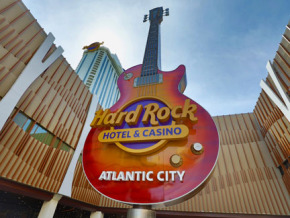
Hard Rock Atlantic City to Unveil Veteran’s Rewards Program

To kick off the Veteran’s Day celebration on November 11Hard Rock Hotel & Casino Atlantic City has unveiled the Wild Card Rewards’ Veteran’s Program open to all active duty military, all veterans, members of the Army and Air National Guard, Army Reserve, Navy Reserve, Marine Corps Reserve, Air Force Reserve, Coast Guard Reserve, and all active military and veteran spouses.

The Sunday afternoon celebration will consist of Free Parking for everyone, a ceremony to celebrate local Veterans who will also receive their own Veteran’s Reward Cards, a complimentary buffet for all Veteran’s members, and a party with live music and desserts for all of our service men and women.

To enroll in the program, veteran’s must present their Active Duty, Reserve, Guard, Retiree, Spouse, or Department of Veterans Affair identification cards. Other valid forms of identification for enrollment include Form DD-214, Certificate of Release, or a valid state issued ID card or driver’s license with the “veteran” designation.

Benefits of the Wild Card Veteran’s Program include an automatic upgrade to Elite status with complimentary self-parking, a limited edition Hard Rock Veteran Pin, Buy One, Get One Buffet Monday through Thursday, 15% discount at Hard Rock Cafe, 20% off all regular priced services at the Rock Spa, 20% off Hotel Rooms Sunday through Thursday, and special Veteran’s Events throughout the year.

Reports: Caesars-Fertitta Merger a No Go

The board of directors of Caesars Entertainment was expected last week to unanimously reject a merger offer from casino and restaurant tycoon Tilman Fertitta. Later in the week, Caesars hired Goldman Sachs to fend off any attempt at a takeover by activist investors.

News of Fertitta’s overture had sent Caesars’ shares soaring, but the board was reported to believe the complex reverse merger would saddle the Las Vegas-based casino giant, only one year out from a massive bankruptcy reorganization, with too much debt.

“That is certainly not attractive,” a source close to the internal discussion at Caesars told The New York Post.

The company still carries a debt load of around $9 billion, way down from $25 billion of debt that drove it in 2015 to seek refuge in U.S. Bankruptcy Court, the result of a 2008 leveraged buyout by private equity funds Apollo Management and TPG Capital.

If anything, Caesars’ policy since the reorganization has been to make up for lost time by growing through selective strategic acquisitions in the U.S. in partnership with VICI Properties, the real estate investment trust forged out of the reorganization, and to aggressively pursue opportunities in South Korea, Australia and key emerging markets such as Japan.

In a move designed in part to help it diversify away from a business model heavily weighted toward the Las Vegas Strip, Caesars committed $1.7 billion last year in conjunction with VICI to acquire Centaur Holdings, a privately owned operator with casinos and racetracks in the Indianapolis area, and is pursuing a $1 billion-plus deal with VICI to acquire Jack Entertainment, another Midwest operator with six casinos in Cleveland, Cincinnati and Detroit.

Another twist developed last week, when rumors circulated that MGM Resorts might be interested in acquiring Caesars if it could do so in a friendly takeover. There have been no reported talks between the two gaming giants and neither would comment on the rumors.

In hiring Goldman Sachs, which has a team dedicated to defending against activist investors, Caesars hopes to create an orderly and controllable sale process if that is going to happen. And an unnamed gaming analyst told the Post that Caesars shareholders “want something to happen,” and that Caesars CEO Mark Frissora, whose contract is up in February, is likely to listen.

Wall Street analysts say combining with Fertitta’s five closely held Golden Nugget casinos and his scores of Landry’s and other well-known restaurant franchises would boost earnings of the enlarged company through cost-cutting and leveraging loyalty programs. But the new entity also would need to sell assets, including casinos, to reduce high debt levels post-merger.

JPMorgan analyst Daniel Politzer put the potential increase in earnings at between $100 million and $200 million a year. But he noted at the same time that the assumption of Fertitta’s debt, about $4 billion, according to published reports, would saddle the combined company with a leverage ratio of about 5.5 times, high by gaming industry standards.

“We assume that Fertitta could help finance the transaction with sale leasebacks at some casino properties (Las Vegas, Laughlin, Atlantic City), and the combined entity would also likely divest an Atlantic City property. We assume Bally’s, as it is the smallest contributor,’’ Politzer said.

Bothe Politzer and Credit Suisse analyst Cameron McKnight said Fertitta’s offer underscores how undervalued many of the listed U.S. gaming giants have become as visitation and convention attendance has softened in Las Vegas over the course of 2018. The shares of major Las Vegas gaming operators have tumbled more than a quarter from their peak earlier this year.

“We believe the overarching takeaway is that strategic and financial buyers recognize the seemingly silly valuations most operators have traded to in the recent swoon,’’ Politzer said.

Tropicana Atlantic City Launches New Jersey Sports Book

Tropicana Atlantic City has opened a sports book in its North Tower casino, making it the seventh Atlantic City casino to offer live sports betting.

The sports book was launched in partnership with William Hill, which also operates sports books in the state at Monmouth Park racetrack in OceanPort NJ and the Ocean Resort casino in Atlantic City.

The first bet at the temporary facility was for the Los Angeles Lakers to beat the Denver Nuggets the night of the opening.

In Atlantic City, only the Hard Rock casino has yet to open a live sports book. Caesars Atlantic City also has not opened its own sports book, but is sharing a temporary facility at its Bally’s Atlantic City property.

Along with its North Tower facility, Tropicana plans to add sports betting kiosks around its property.

“I think it brings a new customer,” Tropicana general manager Steve Callender told Philly.com. “Especially the millennials who grew up playing fantasy sports and might not want to play slot machines or table games, but they’ll bet games. And there’s an existing market that will give people something else to do. We’ve been waiting a long time for this.”

The casino was part of Eldorado resorts recent acquisition of Tropicana Entertainment from billionaire Carl Icahn—which delayed the opening of the sports book as the company sought various licensing approvals from state regulators.

The casino has not announced whether it will launch an online component. Upon taking over the Atlantic City property, Eldorado quickly fired the casino’s online staff operating the online casino site Tropicana.com in New Jersey. However, it is unclear whether the firings mean the company is not interested in online gaming or will simply outsource management of the sites.

Meanwhile, William Hill also announced it will operate a sports betting lounge at Newark’s Prudential Center, home of the NHL’s New Jersey Devils.

The facility will not include a live sports book, but the company will have “ambassadors” on hand to assist patrons in downloading William Hill’s New Jersey online sports betting app. Other than that, the lounge will appear as a normal William Hill sports book with games broadcast on more than 20 screens including odds boards displaying the menu of betting options across all sports.

Odds will also be displayed on the center’s scoreboard and the facility will be open for every event in the venue, including concerts, according to a report at ESPN.

“Our goal has always been to make Prudential Center the home of sports and entertainment in New Jersey, but ultimately our mission is to create the most dynamic fan experience in the industry today, and the William Hill Sports Lounge will play a part in amplifying fan experience here,” said Hugh Weber, president of the Devils’ ownership group, Harris Blitzer Sports & Entertainment in a press release.

Joe Asher, William Hill U.S. CEO, told ESPN that the company sees New Jersey as one of the key sports betting markets in the U.S. even though six states now offer sports betting.

“We’re spending a considerable amount of marketing dollars in New Jersey,” Asher told ESPN. “It is going to be a very competitive and expensive landscape for the next couple of years. A think a lot of companies in the space feel the need to push hard in the state as a testing ground to prove they can be everywhere. In a way, it’s like the Iowa caucuses in politics.”

William Hill operates one of eight online sports books in a very competitive market in the state. Last week, three of those online sports books—PlayMGM, BetStars and 888—launched iOS versions now available on the Apple App Store. The launch means that all eight of the state’s online sports books are available in iOS and Android versions.

And in a related story, William Hill U.S. said it suing sports betting rival FanDuel—which operates the sports book at the Meadowlands Racetrack in East Rutherford—for allegedly copying its “how to bet” guide for customers.

William Hill US filed a copyright infringement lawsuit in U.S. District Courts saying that FanDuel blatantly duplicated their guide, even using the same hypothetical examples William Hill uses to explain bets. The suit says FanDuel also lifted block copy from William Hill’s guide as well as graphs and diagrams.

The lawsuit seeks unspecified damages against FanDuel, including any profits it made by using the allegedly copied guide.

“We are not litigious people, but this is ridiculous,” Asher told ESPN. “If the court finds in our favor, a portion of the proceeds will fund scholarships for creative writing programs at New Jersey universities.”

Atlantic City’s Ocean Resort Opens Esports Lounge

Atlantic City’s Ocean Resort has taken a step to help the city become a center for eSports by opening “the Den,” an on-property esports facility.

The opening was part of an esports gaming festival held at the casino through a partnership with Fox Marketing’s Gameacon. The festival featured panels, esports competitions, and showcased new games. Organizers said it was the first time a casino has partnered to host Gameacon.

Casino Vice Chairman Jordan Deifik said The Den “is a place you go and hang out with your friends.”

“It’s similar to the den you had growing up in your house,” Deifik said, according to CDC Gaming Reports. “Not only do I believe in esports, but I see it exploding as a field that’s becoming legitimized with all of the investment that is going on. The research of esports is now such that it’s being taken seriously on the level of football, baseball and other major sports.”

Atlantic City has been making strides to become a center for esports play.

“We’re trying to find a way to capture a piece of that exploding market that is esports now but also to drive that younger demographic, the millennial, to the property,” Deifik said. “It made all of the sense in the world to try and find a way to position ourselves as the preeminent esports property for the East Coast. That’s what we’re trying to do.”

The Den is a 5,600-square-foot facility that features PCs, arcade games, and more traditional games found in bars.

U.S. Operators Eye Elliniko

Changes in online license investment

A pool of six gaming operators interested in a casino at Greece’s Elliniko International Airport has dwindled to just three. All of them are U.S.-based: Caesars Entertainment, Hard Rock International and Mohegan Gaming. France’s Group Lucien Barriere, the Las Vegas Sands Corp., Melco Resorts & Entertainment and other, smaller investment and construction companies have bowed out, reported eKathimerini.com.

The bidding has not yet officially begun for the license to run an integrated resort near Athens, and a winner may not be announced until the first quarter of 2019, the website reported.

Local developer Lamda Development has been chosen to build the integrated resort, which is part of a larger privatization program and a condition of the country’s third bailout package, reported Casino News Daily.

The winning bidder will be expected to build a 600,000-square-meter (6.45 million-square-foot) resort worth about €1 billion (US$1.138 million). The larger complex will include hotel towers, convention facilities, food and beverage options and retail as well as other attractions. According to a 2016 report by the Greek Foundation for Economic and Industrial Research, the resort will create 10,000 construction jobs, and 75,000 permanent jobs after it opens.

DC, Maryland, Virginia Legislatures May Legalize Sportsbook

Lawmakers in Virginia, the District of Columbia, and Maryland are moving towards legalizing sports wagering in those states.

Currently the only place for Beltway denizens to bet on the Super bowl or other sporting contests is at the Hollywood Casino at Charles Town Races in West Virginia—a considerable drive.

Sports betting became legal there in September and so far has accounted for $9.5 million in its first five weeks.

D.C. Councilman Jack Evans has introduced a bill, supported by six council members and the mayor, that would bring sportsbook to the district as early as new spring, or, as Evans puts it by “Opening Day” of Major League Baseball.

Evans sees an online component, as well, noting that several area arenas and hotels have shown interest in signing up.

Maryland lawmakers tried and failed to put a referendum on the ballot earlier this year, but some are aiming at another bite at the apple, this time aiming for the 2020 ballot. Unlike Virginia, there are casinos in Maryland.

Maryland Governor Larry Hogan’s office issued this statement: “Legalizing sports betting in Maryland will require action by the General Assembly and ultimately a referendum on the ballot,” adding, “The governor has previously expressed support for the rights of states to make this determination and we anticipate this issue will be debated in the next legislative session.”

Opponents of runaway gaming expansion, such as the National Council on Problem Gambling, are dismayed at the “gold rush mentality” among many states, as Keith Whyte, executive director put it. States are only looking at the taxes and profits and not at the social costs, he says. He fears that soon bets will be made by smartphone while players watch games on TV, or in the stadium. They will, he says, be “able to bet on every single performance by every single athlete on every single play of every single game,” something that is unprecedented in modern history.

Virginia state Del. Marcus Simon recently announced in the next session of the General Assembly, beginning in January, he plans to introduce a measure to legalize sports betting. “I think there will be some appetite for this. I think there is certainly a revenue opportunity in Virginia. We already see a lot of our residents’ dollars go across the river to the MGM casino, and we lose out on a lot of opportunities to capture some of that revenue.”

Simon said although casinos are illegal in Virginia, sports books could be offered at horseracing tracks and off-track betting facilities. “And there is probably a way to facilitate online sports gaming as well,” he said. Simon added his bill would make sports betting legal as of July 2019. However, he commented, “I wouldn’t be surprised at all if the folks in the General Assembly decide it needs another year of study so we can figure out how it might work. That said, I want to get the process started.”

Simon said he’s also drafting a companion bill he calls a sports bettor’s bill of rights. “So consumers and people who engage in this kind of activity will have some basic consumer protections and they can feel confident that their money will be protected and they are participating in a fair game,” he said.

Governor Ralph Northam’s spokesperson Ofirah Yheskel said, “Governor Northam believes any future proposal to expand sports gaming here in Virginia should be considered with the input of the General Assembly and the communities that will be impacted in order to fully assess the benefits and potential consequences for existing industries and businesses.”

Meanwhile, more than 1,000 people recently gathered in downtown Bristol to express their opposition to a proposed casino in the vacant Bristol Mall property—even though last month the Bristol city council unanimously approved a resolution in support of the proposal. The project would have to be approved by the state legislature, which also would have to change state law to allow casino gambling. Officials said the facility would require 18-24 months to open.

Developers of the Bristol Resort & Casino recently released site plans for the project, showing gaming areas, restaurants, shopping and other amenities.

At the protest, the crowd included more than 40 religious leaders and members of their congregations. Several said they fear a casino would lead to more crime, addiction and poverty. Organizers said they have distributed nearly 2,000 yard signs and gathered hundreds of signatures on petitions.

Sources: Greenwood, Cordish Could Sell Philly License

Pennsylvania’s Greenwood Gaming and Baltimore’s Cordish Companies, partners in Philadelphia’s Stadium Casino project—previously known as Philly Live!—may be preparing to sell their partnered license for the city’s second casino, according to sources in multiple publications.

“Sources are telling us that the Philly Live! casino project is dead in the water,” tweeted Roger Gros, publisher of Global Gaming Business magazine. “The two owners, Cordish and Parx, will ask permission from the PA gaming board to sell the license. No confirmation yet, but very reliable source.”

The PlayPennsylvania.com news site also reported the sale rumors, citing confirmation from Chris Krafcik of Eilers & Krejcik Gaming.

The $50 million fee for the Category 2 casino license is only one cost to be considered by any entity that would purchase the project. The partnership has pumped twice that into the property. In addition to the casino license, the Stadium Casino partnership has turned over $40.1 million to the Pennsylvania Gaming Control Board for a mini-casino license, and has identified a former Sears store in Westmoreland Mall near Derry, Pennsylvania as the location for the satellite facility; and has shelled out a $10 million fee to offer full online gaming.

Some have estimated that the mini-casino at the mall will open before the main parent facility, as construction is only at the beginning in Philadelphia and the mini-casino is planned for an existing building.

Any buyer presumably would be required to take on the satellite-casino and online gaming licenses attached to the primary license, unless Stadium withdraws its supplemental applications prior to selling the primary license.

The gaming news sites could only speculate on the reasons the Stadium partnership could pull out of the market. The Online Poker Report suggests Greenwood is concerned the Stadium project would draw customers away from its Parx property in the Philadelphia suburb of Bensalem, and the difficult tax environment in Pennsylvania as possible reasons for Cordish to pull out.

Parx Files Application for Shippensburg Mini-Casino

Greenwood Gaming has applied to the Pennsylvania Gaming Control Board for a license to open a Category 4 mini-casino near Shippensburg, tied to its primary casino in Bensalem, Pennsylvania.

The proposed site lies in Shippensburg Township, just east of the Franklin County line. It is home to Shippensburg University.

According to a report on the PennLive.com website, the casino is targeting a 2020 opening if it wins the license.

“The applicant has some control of the site, but it must also obtain all required permits locally to satisfy the board and gain the award,” Gaming Control Board spokesman Doug Harbach told PennLive.

“The board will also look at the same issues as with any casino licensing including… whether the applicant is likely to maintain a financially successful, viable and efficient business operation in that location, and is likely able to maintain a steady level of revenue growth. Certainly, there could special conditions attached to the license as well.”

“We are happy about the site,” Greenwood Chief Marketing Officer Marc Oppenheimer told PennLive. “We’re looking forward to building there and running a great business there.”

Oppenheimer said initial plans call for 475 slot machines and 40 table game betting positions in a casino that, once open, will be within 25 miles of 300,000 residents. The casino would be visible with easy access from Interstate 81.

Steve Oldt, chairman of the Shippensburg Township board of supervisors, told the news site that local officials are “excited” about the project, which he noted will provide significant revenue that currently does not exist with a large tract of land on which the university sits off the tax rolls.

“We’ve been waiting for it to happen, and we’re looking forward to working with (Greenwood) and trying to make it as pleasant and painless as we can, Oldt told PennLive.

Horseshoe Casino, Baltimore Ravens Announce Marketing Deal

The Horseshoe Casino Baltimore announced a first-ever official marketing partnership with the NFL’s Baltimore Ravens, whose M&T Bank Stadium is walking distance from the casino.

Baltimore Ravens Senior Vice President of Corporate Sales and Business Development Kevin Rochlitz joined former Ravens and NFL Hall-of-Famer Jonathan Ogden and Caesars Regional President and Horseshoe Casino General Manager Erin Chamberlin at the casino for the announcement, which represents the second-ever partnership between a National Football League team and a casino.

The agreement is also the first of its kind between a NFL team and a Caesars Entertainment casino.

“Horseshoe Casino Baltimore has become a popular destination, particularly for Ravens fans before and after our home games,” Rochlitz said. “We’re enthused about this partnership and believe it will further enrich the entertainment appeal surrounding M&T Bank Stadium. Additionally, we feel it will help contribute to the exciting development taking place throughout the area.”

The partnership brings together the two anchors of Baltimore’s developing Southern Gateway Entertainment District, which earlier this year welcomed global sports entertainment leader Topgolf. Topgolf is slated to open in 2020 along Stockholm and Warner streets.

“It is an honor for us to officially partner with our neighbor, the Baltimore Ravens,” said Chamberlin. “We are two strong Baltimore brands that are committed to the city and the region. We both offer a unique entertainment product with broad and complementary appeal. And, we share a common commitment to transforming the southern gateway into an unrivaled entertainment district that adds renewed energy and excitement to the area.”

“It’s a great thing for us and a great thing for Horseshoe,” Rochlitz told the Baltimore Sun. “The opportunity to merge our brands together allows our fans to do certain things inside Horseshoe Casino, and we’re going to be working on some consumer promotions that they’re going to announce to rewards members. It also allows a great opportunity for our fans to come in here to the casino and win certain prizes.”

“Horseshoe Baltimore has always been a great place for Ravens fans to come, and with this agreement it’s about to get even better,” Chamberlin told the Sun. “One of the things that we think is a really big opportunity for us is to show people that we’re not just a casino, not just slots and table games, we have a lot of great restaurants, a lot of great bars.”

The Dallas Cowboys became the first NFL team to partner with a casino last month, when WinStar World Casino became a corporate sponsor for the team.

Oklahoma Tribes Explore Sports Betting

At the recent annual meeting of the United Indian Nations of Oklahoma Kansas and Texas, sports betting was the major topic. Creek Nation Chief Executive Officer Pat Crofts said, “We view sports betting with a lot of excitement. We are going to be dealing with a lot of new legislators and a new governor. So the one thing we know is it won’t happen quickly.”

Crofts said he and other tribal officials recently toured sports betting facilities on the Mississippi Gulf Coast. “Those sports books are drawing customers from all over the southeastern United States. They come in to make a few bets on the games and stay for a day or a weekend. It has brought a lot of new customers into their facilities. We think that could happen here, too, especially those casinos down near the Red River,” Crofts said.

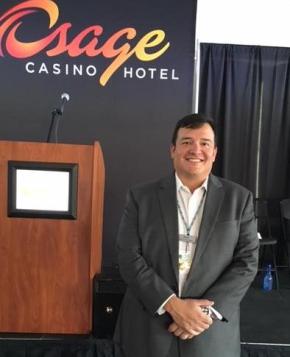
He predicted sports betting could be legalized in Oklahoma as early as next summer. Others have suggested 2020 is more likely, such as Osage Casinos Chief Executive Officer Byron Bighorse. “I think 2020 might be the earliest for us, and that would be a pretty aggressive calendar. We have an upcoming election of our state’s new governor. We will need some type of legislation. Sports betting is a complex issue with a lot of variables. There are a lot of steps that need to be taken before you will see sports books start popping up around the state.”

Before tribal casinos could offer sports betting, the legislature would need to pass legislation to amend tribal gaming compacts to allow sports betting, and the governor would have to sign off on it. Oklahoma tribes will begin renegotiating state gambling compacts next year and into 2020. Some tribal compacts contain an evergreen clause allowing the agreement to continue for a defined period if the existing agreement is not renegotiated or properly canceled. The Innovation Group President Michael Soll noted, “We don’t know what will happen legislative-wise in your state. However, what we do know is that Oklahoma may have more gaming-possible tribal land than any other state.”

Michell Hicks, former chief of the Eastern Band of Cherokees and president at Chief Strategy Group in Cherokee, North Carolina, cautioned tribes need to take their time regarding sports betting. He said, “The door has been opened. However, it is very important that every tribe make sure it is a concept they want to do. Then, you have to make sure it is a critical piece of what you can do. It takes a lot of planning. I think it is wise to take your time and do what is best for each tribe. It is different for everyone.”

Caesars Entertainment Senior Vice President of Strategic Development and Enterprise Gaming Walt Fales agreed. He added, “These things can take a long time. Sometimes, there is a long lead time. However, my suggestion is for tribes to do their homework and start working now. Investigate what they want to do and how best to operate it. So when an agreement is reached, you can shorten the time it takes to get up and running.”

Fales said tribes should not consider sports books a big profit center. “I think in many cases sports betting is more of an amenity for your customers. The margins are very small, and it is a complex addition. However, I would compare it to providing food and beverage or entertainment. It is something your customers want, and they want it to be convenient.”

Tribes considering sports betting also need to consider taxes. SG Digital Vice President Kevin Vonasek said depending on the tax rate, some wagerers could go online or to a sports book at a casino in a neighboring state. “You have to monitor your competition, what they are offering, either within your state or in neighboring states.” Currently, Mississippi is the closest state to Oklahoma where wagerers can legally place a sports bet.

In addition, the experts noted, tribes will have to determine how their sports books actually will operate. Many have hire established sports betting operations with experience in setting lines and training personnel. Cherokee Nation Entertainment Chief Operating Officer Mark Fulton noted, “There’s going to be a gold rush on talent for guys who make the lines.”

Odds Looking Good For Legal Sports Betting Next Year In Indiana

The Indiana General Assembly’s Interim Study Committee on Public Policy recently voted 9-0 to recommend that the 2019 General Assembly consider legalizing sports betting. During the 4-hour session, committee members discussed the level of taxation; who could be licensed to take bets; the types of bets allowed; major league integrity fees; betting restrictions; and more.

Committee members said the state’s 13 casinos would be the likely locations for sports betting, along with two racinos in central Indiana, and they also supported allowing online and mobile sports wagering. Bettors already can wager on horseraces via mobile devices or online, and also gamble using smartphones inside a casino.

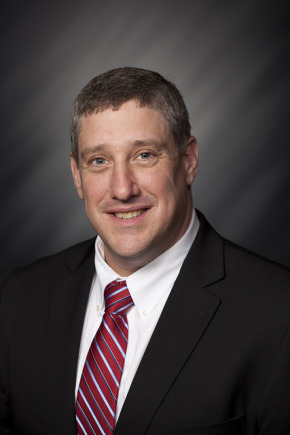
Committee Chair and state Rep. Ben Smaltz said the committee’s vote is a neutral recommendation to continue to work on the complex issue of sports betting. “My concern is the weeds, the details, the data, the regulations, the funding. How is all that going to work?” he asked.

The Indiana Gaming Commission would regulate sports betting if it’s approved by the state legislature. IGC Executive Director Sara Tait told the committee sports betting “is something that has been successfully regulated elsewhere for years, so we’re not going to have to reinvent the wheel.”

Committee members heard the results of a report commissioned by the IGC, indicating within the first five years, sports betting, in-person and online, would create 2,281 direct and indirect new jobs and total $256 million a year, including $38 million to the state in annual new tax revenue in the fifth year, using a 9.75 percent tax on gross revenue plus licensing fees. In Nevada, sports betting operator keep only 4-6 percent of the total handle. “Sports betting is a low-margin business that appeals to a broad audience,” the report said.

Proponents also noted sports betting could help increase Indiana’s overall gaming market, since sports bettors tend to be younger and more affluent than the average casino patron. Also, legal sports betting could help eliminate bets placed through bookies and other illegal “black market” gambling operations. “On balance, we believe the risks associated with delaying sports betting beyond the 2019 legislative session clearly outweigh the rewards,” the report said. It added Indiana could lose money to the black market if it doesn’t offer mobile online betting, restricts wagers on college sports or sets the tax rate too high.

State Sen. Ron Alting, chairman of the Senate Public Policy Committee which oversees gaming legislation, said he expects a sports betting measure will be filed in January when the legislature reconvenes. Meanwhile he urged colleagues to continue to study sports betting in other states and talk to gaming experts and major sports leagues. “You definitely need to dot your I’s and cross your T’s on this. We don’t want to write ‘a’ bill, we want to write the best bill,” he said.

State Rep. Ben Smaltz, chairman of the House Public Policy Committee, said sports betting is not an expansion of gaming, in response to several conservative Republican legislators’ opposition. Smaltz said he considers sports betting as another option, like adding new slot machines. “My concern is that we need details and data, the regulations, the funding. How is all that going to work?” he asked.

Casino Association of Indiana President Matt Bell outlined for legislator what his group hopes for in terms of sports betting. He said the IGC should regulate sports betting; licensing fees should be reasonable and licenses limited to already-licensed casinos; mobile sports betting, wagering on in-state teams and in-game betting should be permitted; participants must be age 21 or older; the tax rate should be a “single digit”; and no integrity fees should be paid.

National Basketball Association Counsel Dan Spillane disagreed with the last point, causing some tense moments at the hearing. “We certainly are not saying that unless we get compensation from legislation that we’re not going to do everything within our power to protect the integrity of our sport. That’s absolutely not the case,” he said. But he said the NBA will need to invest additional resources to monitor integrity since sports betting is being forced on the leagues against their will.

State Rep. Jim Lucas responded, “You should be working — and it sounds like you are — working hard to maintain that integrity. I don’t understand that more pressure is going to be put on you if somebody else is betting on it. You should be maintaining that integrity no matter what, whether some somebody is betting a dollar on you or a million dollars on you. I don’t care.”

Rhode Island Candidates Spar on Gaming

The Providence Journal last week asked Rhode Island’s gubernatorial candidates a question relating to gaming expansion. Gaming is the third largest source of revenue for state government.

The question was directed to — incumbent Democrat Gina Raimondo, Republican Allan Fung, Moderate Party candidate William Gilbert and independent candidates Joe Trillo and Luis-Daniel Munoz. Trillo declined to answer.

In light of the fact that the state budget is more dependent on gaming revenue that it was four years ago and there are proposals to expand gaming, the candidates were asked: “Is the state’s reliance on gambling a cause for concern and, if elected, would you support allowing either online betting or betting at more locations than the current Twin River casinos?”

A spokesman for Governor Raimondo replied: “We need to keep expanding our economy. When it comes to the casinos, we did everything we could to be in as strong a position as possible to benefit from the federal ruling regarding sports betting. The Governor and her team will continue to evaluate.”

Munoz replied: “In general, I do not think that Rhode Island’s economy should be reliant on gambling. I also do not believe in monopolies for any industry that has already been legalized.”

Gilbert’s answer was: “I don’t oppose the expansion of online gambling venues as it is in keeping with personal freedom and liberties, but I also don’t like reliance on gambling as a state revenue source. I believe we should be more focused on travel and tourism with gambling as a component of that total tourism package.”

The Fung campaign replied: “Mayor Fung would be supportive of online betting. However, he would demand that any expansion of betting outside of Twin River Casinos be put on a local ballot for approval or disapproval. There has to be an element of local control.”

West Virginia Sports Books Collect $10 Million

In West Virginia, where sports betting has been legal for two months, sports books have taken in about $10 million in wagers, giving the state more than $200,000 in tax revenue. Weekly sports betting totals have been steadily climbing, making it likely the state will collect its projected $5.5 million after one year.

Hollywood Casino, the first West Virginia operation to open a sports book in late August, has taken in more than $9 million wagers, resulting in $2.3 million in revenue, not including outstanding futures bets. Hollywood’s handle has grown each week since opening, reaching more than $2 million for the most recent reporting period, October 6012.

Week 1: $457,788

Week 2: $1,104,008

Week 3: $1,713,845

Week 4: $1,829,347

Week 5: $1,875,615

The Greenbrier’s FanDuel Sportsbook opened two weeks after Hollywood’s. The latest numbers are:

Week 3: $87,763

Week 4: $75,222

Week 5: $178,666

Week 6: $105,442

Total handle: $447,094

Total revenue: $75,697

Taxes due: $7,570

The Greenbrier’s fairly remote location in the Appalachian Mountains is a disadvantage. However, its branding partnership with FanDuel is a big help. FanDuel Sportsbook operates the resort’s brick-and-mortar facility, but a digital sports book is expected soon. Hollywood is partnered with William Hill for online/mobile betting.

West Virginia Lottery Deputy Director Doug Buffington said the state’s fifth and last casino, Mountaineer Casino, Racetrack and Resort in Chester, recently paid the $100,000 annual fee for a sports betting license. Mardi Gras Casino and Resort and Wheeling Island, both owned by Delaware North, announced they soon will start field tests of sports betting equipment, Buffington said.

Unikrn Gets Isle of Man Licensing for Cryptocurrency, Esports Betting

Unikrn has been granted licenses for cryptocurrency and real-money online gambling on esports from the Isle of Man.

Unikrn CEO Rahul Sood said the licensing was part of the company’s “biggest launch since 2014,” and that it is the “the world’s first and only blockchain-based live wagering backend with regulated real-money and crypto betting.”

According to CalvinSyre.com. Unikrn Limited is now listed as a license holder on the Isle of Man Gambling Supervision Commission website. The company already has a real-money online gambling license from the Malta Gaming Authority.

Sood said Unikrn will offer esports betting in Europe, South America and Southeast Asia. In the U.S., players will be limited to betting on their own gameplay versus other players in the 41 states in which ‘skill-based betting’ is legal. However, no launch date for the U.S. has been announced, CalvinAyre.com reported.

Sood said that the company passed a rigorous test of its anti-money laundering and digital wallet processes in getting Isle of Man licensing. Sood told the Associated Press that the license means there is “finally a legitimate, regulated operator in the space that has a pretty competitive offering.”