Author: Casino Connection Staff

Full House Rejects Z Capital Offer

Full House Resorts has rejected a $132.5 million buyout offer from Z Capital Partners, owners of Nevada-based Affinity Gaming. In a letter to Nevada-based Z Capital Partners Chief Executive Officer James Zenni, Full House Chairman Brad Tirpak and Chief Executive Officer Dan Lee wrote, “Our board has unanimously determined that the potential transaction referenced in your letter is not in the best interests of Full House Resorts and its stockholders.”

Tirpak and Lee wrote the offer of $1.79 per share “reflects a stark and fundamental disconnect from our board’s understanding of the company’s value, as well as that of third-party investors and analysts.” The offer was 35 percent lower than Full House’s closing price on October 19. Full House’s board and management own 17 percent of the company’s stock.

Furthermore, Tirpak and Lee told Zenni, “Your letter indicates a price without specifying a transaction structure or providing evidence of financing. The price dramatically undervalues the company’s business and does not remotely reflect the company’s strategic value and future prospects. Our board and management team see significant upside to the company’s current and recent trading prices based on already-completed capital projects across our existing portfolio as well as established or prospective organic growth opportunities in Colorado, Indiana and New Mexico, among other places. Based on our review, we are fully confident that our strategic plan will deliver value for our stockholders far superior to the value your letter indicates.”

Full House currently is expanding its Bronco Billy’s casino in Cripple Creek, Colorado and recently made an offer to build a racetrack, casino, luxury hotel and golf course complex near Clovis, New Mexico. It’s also exploring opportunities in Washington state.

Zenni had said Z Capital and Affinity Gaming would bring significant operational capabilities and expertise to Full House. He said the acquisition would be funded by debt. The offer arrived soon after Affinity hired former Tropicana Entertainment Chief Executive Officer Tony Rodio as chief executive officer (see “People” section of GGB News).

If the merger happens, Rodio would be the head, according to Zenni. “Tony is one of the top executives in the gaming industry and I’m confident that he is the right person to drive Affinity’s continued growth and enhanced commitment to the player experience. I look forward to working closely with him in this new role,” said Zenni.

Zenni added, “With an experienced and dedicated management team, Affinity would bring significant operational capabilities and expertise that we believe would further propel the combined company’s growth and unlock unrealized potential for Full House stockholders.”

Z Capital would have added Full House’s five casinos in four states to its 11 Affinity properties in four states. However, Tirpak and Lee cautioned Zenni, the acquisition would present “significant execution risks” in Nevada and Colorado where both companies operate casinos. Affinity also operates in Missouri and Iowa, and Full House in Mississippi and Indiana.

Roth Capital Partners Gaming Analyst David Bain, who previously estimated Full House at $3.80 and $4.50 per share, said the offer was too low in a note to investors before Full House released its rejection letter. Bain said, “We believe the offer lacks credibility and is somewhat irregular.”

Macquarie Gaming Analyst Chad Beynon maintained his $3.25 per-share estimate on Full House, noting Z Capital’s offer contains too many unknowns to determine if it’s a good value. Beynon added a takeover could lead Affinity to become a public company and expand, but not if the deal primarily is just for cash.

Another analyst noted, “We find Z Capital’s offer a head-scratcher unless it was intended to impact share prices for negotiations below FLL’s current trading value.”

Interestingly in September, Full House officials met at Z Capital’s offices in Lake Forest, Illinois with Managing Director Andrei Scrivens. Tirpak and Lee wrote, “Our purpose was to express potential interest in acquiring certain of Affinity Gaming’s assets. We remain interested in doing that.”

Lee, formerly chief executive officer at Mirage Resorts in 1990s and CEO at Pinnacle Entertainment, took over Full House in 2015. Lee led a shareholder takeover of Full House at that time. In Nevada, the company operates Stockman’s in Fallon and manages the Hyatt Regency in Lake Tahoe. The company also owns the Rising Star in Indiana and the Silver Slipper on the Mississippi Gulf Coast.

Zenni’s Z Capital currently has more than $2.3 billion of regulatory assets under management, with five casinos in Nevada, including three Primm resorts at the California state line and the Silver Sevens near the Las Vegas Strip.

November 2018 Headliners in Atlantic City

Borgata Hotel Casino & Spa

Adam Devine: Weird Life Tour 2018
The Music Box, Borgata Hotel Casino & Spa, Atlantic City, NJ
Friday, November 2, 2018 ● 8:00 p.m.
Adam Devine will bring his “Weird Life Tour” to the Music Box at Borgata. One of the most sought after young comedians and actors in the comedy world, Adam is best known as a co-creator, writer, and star of the hit Comedy Central show “Workaholics”, for which he was named one of THR’s “Top 50 Showrunners” and one of Variety’s “2013 Ten Comics to Watch.

Tickets:  $49.00 – $55.00
Visit: www.theborgata.com/shows/events/all-events

Doobie Brothers
The Event Center, Borgata Hotel Casino & Spa, Atlantic City, NJ
Saturday November 3, 2018 ● 8:00 p.m.

Don’t miss the legendary Doobie Brothers. Active for five decades, the group has sold more than 40 million albums worldwide, with hits like “What a Fool Believes,” “China Grove,” “Black Water” and many others.

Tickets:  $59.00 – $99.00
Visit: www.theborgata.com/shows/events/all-events


Team Coco Presents Conan & Friends
The Music Box, Borgata Hotel Casino & Spa, Atlantic City, NJ
Saturday November 3, 2018 ● 8:00 p.m.
Conan O’Brian, America’s favorite tall, redheaded, self-deprecating TV funnyman is coming to Borgata with a star-studded group of friends including Rory Scovel, James Veitch, Marina Franklin, and Flula Borg. See Team Coco live at The Music Box at Borgata.

Tickets:  $79.00 – $89.00
Visit:  www.theborgata.com/shows/events/all-events


Insieme Tour: Michele Zarrillo / Sal Da

The Music Box, Borgata Hotel Casino & Spa, Atlantic City, NJ
Saturday November 17, 2018 ● 8:00 p.m.
An international tribute band, dedicated to the best known Italian showman in the world.

Tickets:  $80.00 – $100.00
Visit:  www.theborgata.com/shows/events/all-events


Hard Rock Atlantic City

Elvis Costello
Etess Arena – Hard Rock, Atlantic City, NJ
Saturday November 3, 2018 ● 8:00 p.m.
Elvis Costello, perhaps best known for the songs, “Alison”, “Pump It Up”, “Everyday, I Write The Book” and his rendition of the Nick Lowe song, “(What’s So Funny ‘Bout) Peace, Love and Understanding,” began writing songs at the age of thirteen. 2017 marked the 40th anniversary of the release his debut record, My Aim Is True. Now this dedicated singer/songwriter is touring with his new album Look Now with his band The Imposters. A classic that shouldn’t be missed.
Tickets:  $62.50 – $102.50
Visit: www.hardrockhotelatlanticcity.com


Bret Michaels
Sound Waves – Hard Rock, Atlantic City, NJ
Thursday November 8, 2018 ● 8:00 p.m.
Bret Michaels, is an American singer-songwriter and musician. He gained fame as the lead singer of the glam metal band Poison who have sold over 40 million records worldwide and 15 million records in the United States alone
Tickets:  $69.00
Visit: www.hardrockhotelatlanticcity.com


Daryl Hall and John Oates
Etess Arena – Hard Rock, Atlantic City, NJ
Friday November 16, 2018 ● 8:00 p.m.
The dynamic duo of Daryl Hall and John Oates, better known as Hall & Oates, have come together once again. Daryl Hall is generally the lead vocalist; John Oates primarily plays electric guitar and provides backing vocals.
Tickets:  $100.00 – $300.00
Visit:  www.hardrockhotelatlanticcity.com


Bob Dylan
Etess Arena – Hard Rock, Atlantic City, NJ
Saturday November 17, 2018 ● 8:00 p.m.
Singer-songwriter, author, artist and yes, Nobel Prize winner Bob Dylan brings his massive catalogue to the Hard Rock. You never know what to expect from this moody, reclusive master, but as an influential figure in popular music and culture for more than five decades, Dylan never disappoints.
Tickets:  $50.00 – $120.00
Visit: www.hardrockhotelatlanticcity.com


Foreigner
Etess Arena – Hard Rock, Atlantic City, NJ
Friday November 30, 2018 ● 8:00 p.m.
With ten multi-platinum albums and sixteen Top 30 hits, Foreigner is universally hailed as one of the most popular rock acts in the world.
Tickets:  $50.00 – $100.00
Visit: www.hardrockhotelatlanticcity.com


Golden Nugget Hotel Casino

Paul Anka
The Grand, Golden Nugget Hotel Casino, Atlantic City
Saturday November 10, 2018 ● 9:00 p.m.
One of America’s all time living legends, live in concert on Saturday, November 10 in The Grand at Golden Nugget Atlantic City.
Tickets: $75.00 – $95.00

Visit: www.goldennugget.com


Tropicana Hotel Casino

Toto: 40 Trips Around the Sun Tour
Tropicana Showroom, Tropicana Hotel Casino, Atlantic City, NJ
Friday November 9, 2018 ● 9:00 p.m.
TOTO released their brand new Greatest Hits package titled 40 Trips Around The Sun on Legacy Recordings (a division of Sony Music) in February of this year. Now the hit-makers are on tour bringing you their best tracks.
Tickets:  $70.00 – $99.00
Visit: https://tropicana.net

 
Lou Neglia’s Ring of Combat 66
Tropicana Showroom, Tropicana Hotel Casino, Atlantic City, NJ
Friday November 16, 2018 ● 8:30 p.m.
Brawlers and bruisers go head to head in Lou Nieglia’s Ring of Combat 66 Championship Mixed Martial Arts
Tickets:  $125.00
Visit: https://tropicana.net


The Guess Who
Tropicana Showroom, Tropicana Hotel Casino, Atlantic City, NJ
Friday November 17, 2018 ● 8:00 p.m.
The Guess Who is a Canadian rock band, formed in Winnipeg in 1965. Initially gaining recognition in Canada, the group found international success from the late 1960s through the mid-1970s with many hit singles, including “No Time”, “American Woman”, “Laughing”, “These Eyes”, “Undun” and “Share the Land”.
Tickets:  $35.00 – 55.00
Visit: https://tropicana.net


Resorts Casino Hotel

Air Supply
Superstar Theater Resorts, Atlantic City, NJ
Saturday November 10, 2018 ● 8:00 p.m.
Australian soft rock duo Air Supply features singer-songwriter and guitarist Graham Russell and lead vocalist Russell Hitchcock. Performing their hits “All out of Love,” “Making Love out of Nothing at All,” “Lost in Love,” and many more
Tickets: $55.00 – $100.00
Visit: https://resortsac.com/entertainment-and-shows


Caesars Hotel Casino

Rhett & Link
Circus Maximus Theater, Atlantic City, NJ
Friday November 9, 2018 ● 9:00 p.m.
Rhett & Link are a comedic duo known for hosting the most-watched daily show on the Internet, Good Mythical Morning. On Friday, November 9, Rhett & Link are bringing The Tour of Mythicality to Circus Maximus Theater. This tour features a blend of comedic yet personal storytelling, performances of their hit songs, offbeat life advice and fan Q&A.
Tickets:  $40.00 – $60.00
Visit: https://www.caesars.com/caesars-ac/shows


Atlantic City Ballet Presents “It’s A Shore Holiday”
Circus Maximus Theater, Atlantic City, NJ
Saturday November 24, 2018 ● 7:00 p.m.
Let the Atlantic City Ballet help you get into the holiday spirit! This “radio city-esque” review features a blend of contemporary and classical dance all set to your most beloved holiday tunes. With singers and a live band, you will be transported to a Holiday Winter Wonderland that will capture your inner child’s imagination. This delightful show will bring out the holiday spirit in everyone.
Tickets:  $20.00 – $45.00
Visit: http://www.acballet.org/attend


Harrah’s Hotel Casino

Dweezil Zappa
The Concert Venue, Harrah’s Atlantic City, NJ
Saturday November 3, 2018 ● 9:00 p.m.
Rock guitarist, Dweezil Zappa is bringing his Choice Cuts Tour to The Concert Venue. Son of legendary musician Frank Zappa, Dweezil has fashioned his own bold and assertive rock style.
Tickets:  $25.00 – $35.00
Visit: www.caesars.com/harrahs-ac

 
Home Free: A Country Christmas 2018
The Concert Venue, Harrah’s Atlantic City, NJ
Saturday November 24, 2018 ● 9:00 p.m.

Home Free is bringing new music, new production, more country and holiday favorites to The Concert Venue on Saturday, November 24. The 5-man band has become known for their show-stopping performances that mix their signature no-instrument, all-vocal music with their quick-witted humor.
Tickets:  $23.00 – $43.00
Visit:  www.caesars.com/harrahs-ac


Matt Franco
The Concert Venue, Harrah’s Atlantic City, NJ
Friday November 30, 2018 ● 9:00 p.m.
As the first and only magician ever to win NBC’s America’s Got Talent, Mat Franco takes an innovative approach to magic-making that’s driven by pure joy. His live shows offer boundless fun and a stunning sense of thrill and wonder for audiences of all ages. Prepare to be amazed!
Tickets:  $30.00 – $50.00
Visit:  www.caesars.com/harrahs-ac


Ocean Resort

Wayne Brady
Ovation Hall, Ocean Resort Atlantic City
Saturday November 10, 2018 ● 9:00 p.m.
5-time Emmy winner and Grammy nominee Wayne Brady performs at Ovation Hall!
Tickets:  $45.00 – $95.00
Visit:  https://www.theoceanac.com/entertainment/shows-events/


Rain: A Tribute to the Beatles
Ovation Hall, Ocean Resort Atlantic City
Saturday November 17, 2018 ● 8:00 p.m.
Rain – A Tribute to the Beatles is a stunning concert and theatrical event that takes you back in time with the legendary foursome. To celebrate the 50th anniversary of Sgt. Pepper’s Lonely Hearts Club Band, RAIN is performing the historic album live, note for note, in its entirety. This multimedia spectacular is the next best thing to seeing the Beatles!

Use promo code SKCC1 for an exclusive discount; 100 percent of each ticket sold through this code will benefit the Barbara Ann Colameco (B.A.C.) Cancer Transportation Fund at Jefferson Health

Tickets:  Starting at $30 using promo code SKCC1.
Visit:
https://giving.jefferson.edu/giving/events/skcc-rain.html


Boardwalk Hall Atlantic City

Sesame Street Live! Let’s Party
Boardwalk Hall, 2301 Boardwalk, Atlantic City NJ
Saturday November 3 – Sunday November 4, 2018 ● 11:00 a.m. & 3:00 p.m.
From the moment the curtain rises, parents and children alike will be on their feet dancing along to a pop-infused soundtrack with new Sesame Street friends and live emcees Casey and Caleb. Guests will sing along to new and familiar songs, like “I Love Trash” and “C is for Cookie,” with Oscar the Grouch and Cookie Monster; dance to the beat with Elmo; explore a wintry wonderland when Abby Cadabby’s magic goes awry; take flight with Big Bird to learn about some of his fabulous feathered friends; and discover new cultures in an interactive Spanish lesson with Rosita.
Tickets:  $18.00 – $98.00
Visit:  http://www.boardwalkhall.com/events


American Finals Rodeo
Boardwalk Hall, 2301 Boardwalk, Atlantic City, NJ
Friday November 9 ● 9:00 p. m. – Saturday November 10, 2018 ● 7:00 p.m.
The American Finals Rodeo is the capstone to the entire rodeo season for the American Professional Rodeo Association. The top 12 competitors in each event vie for the #1 spot. Rodeo contestants from all over the Northeast earn points with each placement towards the season’s standings. The American Finals Rodeo is the oldest and largest finals rodeo in the Northeast. The iconic Boardwalk Hall in Atlantic City is one of the most prestigious venues in America. This is where it all comes together to decide which cowboys and cowgirls will get awarded the American Finals Rodeo Championship buckles!
Tickets:  $9.00 – $99.00
Visit:  http://www.boardwalkhall.com/events

Morton’s Offering 3-Course Halloween Special

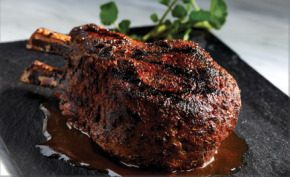
Morton’s Steakhouse at Caesars Casino in Atlantic City will offer a 3-course signature dinner this Halloween, October 30-31 for only $36. Come celebrate at Morton’s with this great deal (tax and gratuity not included).

The menu offers some classic dishes:

~ Choice of Appetizer ~

Beefsteak Tomato & Mozzarella Salad
Prosciutto Wrapped Mozzarella
Chopped House Salad, Dijon Vinaigrette Dressing Cup of Lobster Bisque

~ Choice of Entrée ~

Grilled Bistro Filet, Blue Cheese Bacon Mashed Potatoes
Pork Chop
Shrimp Scampi Capellini
Honey-Balsamic Glazed Salmon Vegetable Relish
Chicken Piccata, Garlic Wilted Spinach, Crispy Fried Capers

~ Choice of Accompaniment ~

Bleu Cheese Bacon Mashed Potatoes
Charred Broccolini
Brussel Sprouts, Sauteed with Bacon and Onion

~ Choice of Dessert ~

Cheesecake, Sea Salt, Caramel
Chocolate Espresso Mousse
Mixed Berries & Whipped Cream
Crème Brulee

$36.00 not including tax or gratuity
Visit: www.mortons.com/atlanticcity

New Jersey Directs Sports Betting Revenue to CRDA

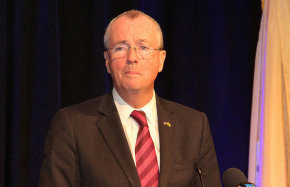
The New Jersey Casino Reinvestment Development Authority has a new source of funding as Governor Phil Murphy has signed a bill that will send 1.25 percent of sports betting revenue to the redevelopment agency.

However, the tax revenue will be used for marketing and promotion of Atlantic City and not redevelopment projects. The new tax is added onto the 8.5 percent revenue tax at land-based sportsbooks the 13 percent tax on online sports betting. The bill goes into effect in December.

The 1.5 percent tax on the state’s two racetracks that run sports books—the Meadowlands Racetrack in East Rutherford N.J. and Monmouth Park racetrack in Oceanport N.J.—will be distributed directly to each facility’s host municipality. The state’s remaining sportsbooks are in Atlantic City casinos.

The bill returns some funding to the authority since it lost its main source of funding from casino redevelopment taxes last year. That money has now been directed to help pay down Atlantic City’s municipal debt under a package of bills passed last year to save the city from bankruptcy.

Still, Atlantic City Mayor Frank Gilliam, who sits on the authority board, said he would rather have seen the new tax also go to the city.

“As mayor, I’m never going to be happy with revenue generated in Atlantic City going to a state agency when it could have been used to help the city,” Gilliam told the Press of Atlantic City. “History has shown that marketing money has not been spent wisely.”

Since sports betting started in the state in June, it has generated nearly $16.5 million in revenue through August with $8 million coming from Atlantic City casinos and their online or mobile partners.

“After a three-year hiatus, we are looking forward to filling the void with much-needed promotion of Atlantic City as a world-class vacation destination,” said Larry Sieg, CRDA director of communications and marketing in a press release. “Our team looks forward to having the opportunity to once again get the DO AC brand into the consumer market to increase visitation and economic impact.”

The bill signing comes about a month after a state audit report on CRDA was released which contained numerous criticisms of how the authority handles its finances and several deals it has made to promote the city through special events.

VSiN Lands at Ocean

Atlantic City’s Ocean Resort casino and Vegas Stats & Information Network are teaming up to launch live studio broadcasts from the resort.

According to a press release, former NFL executive and Ocean City New Jersey native Mike Lombardi and VSiN host Jonathan Von Tobel will anchor the 10 a.m. broadcasts live Saturday and Sunday mornings from the William Hill Sports Book at Ocean Resort.

The VSiN network, which features legendary broadcaster Brent Musburger, was created by his nephew, Brian Musburger, and brother, Todd Musburger last year. The network is based at South Point casino in Las Vegas, where a special studio was build adjacent to the sports book.

“Our goal for the William Hill Sports Book at Ocean Resort Casino is to maintain its status as the new epicenter for sports betting on the East Coast,” said Ocean Resort Casino owner Bruce Deifik in a press release. “So, to be able to enhance that reputation by partnering with broadcast pioneer VSiN and esteemed industry leaders Brent and Brian Musburger was an easy and exciting decision for us to make.”

VSiN is financially backed by former Philadelphia Phillies All-Star Ryan Howard and his venture capital firm, SeventySix Capital.

“As sports betting legalization continues to expand across the country, VSiN will be where it needs to be to cover these markets,” said VSiN CEO Brian Musburger in the release. “Bruce Deifik’s Ocean Resort has made a significant commitment to the sports betting scene in New Jersey by opening the most impressive sports book in Atlantic City.”

NetEnt Signs Deal with Churchill Downs

Churchill Downs plans to enter the New Jersey online gambling market could be advanced by a new deal with NetEnt for online casino games.

NetEnt will deliver its full portfolio of online casino games to Churchill Downs, which has targeted early 2019 for the launch of both an online casino site and an online sports betting site in the state. The company has already announced a partnership with Golden Nugget Atlantic City and tech provider SBTech for the launch.

Erik Nyman, managing director for NetEnt’s Americas business, said in a press release that the addition of its games will become an “important contributor” to growth in online casino for Churchill Downs.

The move also comes after NetEnt promised it was working on deals to reverse a slowdown on the company’s UK-based revenue.

Churchill Downs has also applied for an online gaming license in Pennsylvania.

In another story, Rush Street Interactive—which runs the playsugarhouse.com online casino and sportsbook in New Jersey—has apparently switched its partnership on sports betting from Golden Nugget Atlantic City to Monmouth Park racetrack in Oceanport NJ.

Online casino sites in New Jersey must be partnered with an Atlantic City casino, but online sportsbooks can also be partnered with the two racetracks in the state—including the Meadowlands Racetrack—that have sports books.

Golden Nugget’s sports book cannot accept bets on NBA games under New Jersey regulations as the casino’s owner, Tilman Fertitta owns the NBA’s Houston Rockets. The transfer of playsugarhouse’s sports book to Monmouth Park would presumably allow the site to accept wagers on the NBA.

PlaySugarHouse’s online casino site remains partnered with Golden Nugget.

Penn National Completes Pinnacle Deal

Wyomissing, Pennsylvania-based Penn National Gaming has finalized its $2.8 billion purchase of 12 casinos operated by Las Vegas-based Pinnacle Entertainment. Announced late last year, the Penn-Pinnacle deal had to be approved by 14 different state gaming authorities and the Federal Trade Commission. Penn National Chief Executive Officer Tim Wilmott said, “Our acquisition of Pinnacle Entertainment marks a significant milestone in Penn National’s 24-year history of growth as a public company.” He added Penn National will realize about $100 million in cost savings due to the Pinnacle acquisition. In addition, Pinnacle’s corporate headquarters will remain in Las Vegas.

To resolve any potential federal anti-trust issues, Las Vegas-based Boyd Gaming agreed to acquire the operations of four Pinnacle casinos in three states for $575 million. Boyd now operates 29 casino properties in 10 states. Penn and Boyd lease the Pinnacle casino operations from real estate investment trust Gaming and Leisure Properties, which owns the land associated with the resorts.

One still-pending transaction is Penn National’s partnership with real estate investment trust VICI Properties to jointly acquire Margaritaville Resort Casino in Bossier City, Louisiana for $376 million.

As a result of the deal, Penn National now operates a total of 40 casinos and racetracks in 18 states, with more than 49,000 gaming machines, 1,200 table games and nearly 9,000 hotel rooms. The company employs more than 30,000 people. It’s the second-largest gaming company by properties in the U.S. after Caesars Entertainment, which operates nearly 50 U.S. properties.

“Penn National is poised for continued growth with a portfolio of premiere gaming facilities and more than five million active customers in its player rewards database,” Wilmott said in a statement. “With the expected incremental free cash flow to be generated from our expanded base of operations, we believe we are well positioned to reduce leverage, evaluate additional accretive strategic growth investments and opportunistically return capital to shareholders.”

Boyd is buying Pinnacle’s two Ameristar casinos in Missouri and the Belterra gaming brands in Indiana and Ohio. Boyd Chief Executive Officer Keith Smith said the purchase “significantly expanded our portfolio and enhanced our free cash flow profile at a compelling multiple. We have gained a strong presence in three of the Midwest’s largest gaming markets, with access to millions of potential new customers.”

In September, Boyd completed a $280.5 million acquisition of the Valley Forge Casino Resort near Philadelphia.

GLPI Chairman, Chief Executive Officer and President Peter M. Carlino commented, “The successful completion of this transaction demonstrates our ability to create value for our shareholders through complex and unique structures. Additionally, it shows our readiness to partner with our tenants to help them grow and achieve their own strategic goals. Through this transaction, we have added an economic interest in two additional high quality regional gaming facilities, increasing our annual real estate income by $45.3 million. In Boyd, we have added a new tenant that is highly regarded in the gaming space and is an active consolidator of casino assets and operations Further, in announcing our 2019 dividend guidance, we are pleased to demonstrate our commitment to accretive growth and increasing returns to shareholders.”

Gubernatorial Candidates On Sports Betting

Here’s a roundup of where candidates for governor in select Western states stand on sports betting.

In Arizona, Governor Doug Ducey said he would not oppose sports betting at the state’s 55 OTB parlors. The state has tribal casinos but no commercial casinos. State tribes are opposed to such an idea.

In Arkansas, Governor Asa Hutchinson stated he opposes sports betting. However, a ballot measure would allow it if it passes.

Colorado: Republican Walker Stapleton has not directly said he supports sports betting but indicated he would appreciate the potential revenue. Other candidates have not stated their positions.

Iowa: Sports betting was a major topic among legislators earlier this year but it wasn’t legalized. Both Governor Kim Reynolds and Democratic challenger Fred Hubbell do not consider sports betting to be a significant issue.

Kansas: Republican Kris Kobach, Democrat Laura Kelly and independent Greg Orman said they all support legal sports betting..

Minnesota: Republican Jeff Johnson and Democratic challenger Tim Walz have not stated an opinion on sports betting.

New Mexico: Sports betting is not a major issue for either Republican Steve Pearce or Democrat Michelle Lujan Grisham.

Oklahoma: Republican candidate Kevin Stitt said the state would benefit from revenue from gambling, including, by inference, sports betting. Democrat Drew Edmondson has not stated an opinion on sports betting.

South Dakota: Republican candidate Kristi Noem said she was “opposed to expanding gambling,” and Democratic candidate Billie Sutton stated legalizing sports betting would be up to the voters.

Texas: Incumbent Governor Greg Abbott opposes any expanded gambling in the state. Democratic challenger Lupe Valdez has not directly endorsed sports betting but she said if it becomes legal in Texas, revenue should go toward education and public services.

Wyoming: Neither candidate has taken a stand on sports betting, which has not been addressed by the legislature.

Meanwhile, back east. the two candidates to succeed Connecticut Governor Dannel P. Malloy both recently weighed in on sports betting in the state.

In the summer Malloy called for a special legislature session to address sports betting, but negotiations with the Pequot and Mohegan tribes collapsed. The tribes argue that they and they alone a guaranteed the right to offer sports betting because their existing tribal state gaming compacts give them exclusive rights to casino gaming.

However, many contend that casino gaming does not include sports betting since only in Las Vegas have casinos offered sportsbook.

Ned Lamont, Democrat nominee for governor said last week that he sees sports betting as one way to fund property tax reduction. “I gotta show we’re gonna have a significant cut in property taxes and how I pay for it,” he said. “So it’ll be a priority for me first thing next year.”

GOP nominee Bob Stefanowski takes it a step further: “We need to look at it further. It’s just starting to come out. Unfortunately, Dan Malloy has left us with a situation that we can’t rule too many things out, and if it’s gonna happen in the country anyway, then we need to look at how to control it and get some revenue out of it.”

Independent candidate Oz Griebel said he prefers to negotiate a deal with the tribes to make way for sports betting.

NBA & MLB Could See $1.7 Billion From Legalized Sports Betting

Annual revenues for Major League Baseball (MLB) and the National Basketball Association (NBA) may increase by $1.1 billion and $585 million, respectively, due to widely available, legal, regulated sports betting, according to a new Nielsen Sports study commissioned by the American Gaming Association (AGA).

The study analyzes the revenue streams that legal sports betting could generate for both professional leagues: revenue as a result of spending from betting operators on advertising, data and sponsorship, and revenue generated as a result of increased consumption of the leagues’ media and products.

According to Nielsen Sports, greater fan engagement and viewership could boost the two leagues’ total annual revenue from media rights, sponsorships, merchandise and ticket sales, producing $952 million for MLB and $425 million for the NBA from increased consumption of the leagues’ products.

“The four major sports leagues will earn a collective $4.2 billion from widely available legal sports betting, further proving that working together with the gaming industry will pay dividends for all sports stakeholders,” said Sara Slane, senior vice president of public affairs for the American Gaming Association. “Legal sports betting will also create substantial opportunities for state and local economies, generating tax revenue, jobs and supporting small businesses across the country.”

AGA recently released revenue projections for the NFL and NHL, showing that those leagues and teams stand to gain $2.3 billion and $216 million, respectively, from widely available, legal, regulated sports betting.

Today’s research shows that legal sports betting could help generate additional revenues of $160 million for the NBA and $154 million for MLB as a result of spending by betting operators and data providers. The study projects that gaming operators may spend $64 million on MLB advertising and $57 million on the NBA – which may directly increase the leagues’ rights fees by the same amount. Sponsorship revenues from gaming operators would provide an additional $78 million for the NBA and $62 million for MLB. The NBA and MLB are also projected to earn $25 million and $28 million from data rights, respectively.

To quantify the value of a legal sports betting market to the NBA and MLB, Nielsen Sports surveyed more than 1,000 adult sports fans – including NBA and MLB fans – and self-identified sports bettors nationwide to model how a national, legal sports betting market would affect the sports consumption habits of non-bettors, casual bettors and avid bettors, and how this change in consumption would translate to increased revenue.

Wynn Probes by Massachusetts, Nevada, Nearing Close

Investigations of Wynn Resorts Ltd. and its former CEO by the Massachusetts Gaming Commission’s investigative team and gaming investigators in Nevada are nearing their completion, with the Bay State team likely to issue their report first.

Both probes began in February, scant weeks after the Wall Street Journal first published its expose of Steve Wynn and his history of alleged sexual harassment over several decades, including what had remained hidden until then: a $7 million hush payment to a massage therapist who claimed the gaming mogul had tried to rape her.

While those allegations led to Wynn’s rapid defenestration as CEO from the company that still bears his name, followed by his divestiture of all stocks, the investigations were just ramping up.

During the intervening months Wynn has vigorously denied all sexual wrongdoing while the company’s new CEO insists it is operating under a new corporate culture after several holdovers from the old regime were forced out.

The new regime has cooperated with both investigations while conducting its own internal investigation—which it has shared with Nevada and Massachusetts regulators.

Much is at stake for the company in Massachusetts, where it is building the $2.5 billion Encore Boston Harbor in Everett along the Mystic River, across from the Boston skyline. The license that would be required when the work is completed next June could be withheld by the MGC.

The question of whether the Massachusetts or Nevada teams will finish their probes first appears to turn on several factors. On the one hand, because it has operated in that state for many decades, Nevada investigators have far more witnesses to interview. On the other hand, the Massachusetts Gaming Commission just lost its chairman, Stephen Crosby, who resigned recently under criticism that he had already made up his mind about the culpability of Wynn. Governor Charlie Baker hasn’t yet appointed a successor, although an interim chairman, Gayle Cameron has been approved.

Also a factor is that the states have much different gaming regulations. Massachusetts’ is nearly brand new, while Nevada’s is weighty and old.

The MGC is seen as releasing the investigators’ report, taking testimony from witnesses, including members of the corporation, and hearing the views of the public. That could take several days, according to a spokesman. Then the commission would retire to a closed door session to make its decision.

Nevada operates under a two tiered regulatory system. The three-member Gaming Control Board will consider information presented to it and then determine if regulations were violated and if disciplinary action should be recommended. The five-member Nevada Gaming Commission will be the judge and determine the outcome of any complaint. Although the report will be confidential, the facts will be discussed in a publicly available document.

Another important difference: In Massachusetts Steve Wynn has been removed as a “qualifier” from the casino license. In Nevada an administrative hold has been placed on him, so that he still effectively holds the license pending the outcome of the investigation.

Chubby Checker Honored at Casino Entertainment Awards

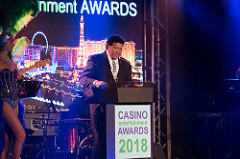
Chubby Checker, one of the icons of early rock ‘n roll, was honored October 10 as Casino Entertainer of the Year at the sixth annual Casino Entertainment Awards, which were presented at the Hard Rock Hotel and Casino.

Bill Engvail was named Casino Comedian of the Year and the Commodores were named Casino Musical Artists of the Year. The Righteous Brothers and Victor Drai were given the Casino Entertainment Legend awards.

Other CEA recipients included:

• Legends in Concert received the CEA for Casino Production Show of the Year.

• Hard Rock Live at Hard Rock Rocksino Northfield Park was named Showroom/Theater of the Year.

• Battery Park at Hard Rock Sioux City received the Casino Arena/Amphitheater of the Year award.

• Monica Reeves, Director of Entertainment, Station Casinos, was named Casino Entertainment Executive of the Year.

• Scott Thomas, CEO, Buzz Entertainment, was named Independent Talent Buyer of the Year.

• Seth Shomes, Vice President and Head of the Casino Division at United Talent Agency, was named Casino Booking Agent of the Year.

D.C. Council Holds Sports Betting Hearing

The District of Columbia is moving towards a vote on a sports betting bill after holding a hearing before the district’s City Council Finance & Revenue Committee.

Councilman Jack Evans—a principal sponsor of the district’s bill and chair of the committee—said he wants to see the district move quickly as ports betting is growing in the U.S. and could soon be legal in Maryland and other district neighbors.

The bill would set D.C.’s Office of Lottery and Gaming as regulator for sports betting and would tax gross revenue at 10 percent. Tax revenue would be split equally between early childhood education programs and the D.C. Commission on the Arts and Humanities.

The key question in the bill is exactly who would be allowed to apply for sports betting licenses.

One proposal has the city lottery office running any online sports book, presumably by outsourcing operations to a gaming tech company.

Officials from both DraftKings and FanDuel—which have both launched sports books in New Jersey—told the committee that more competition would lead to more revenue for the district. However, a sole site through the lottery could lead to a stagnant market with few options for consumers they said, according to a report by the website Sportshandle.

Lottery officials, however, said the office could easily handle a sports book operation.

Also, since the district has no casinos, its sports book operations would launch online and then possibly move to land-based sites. Lottery officials noted that as many as 1 million people are in the D.C. market.

Evans is hoping for quick movement on the bill.

“We’re hoping to get this bill in final form right after November 1,” said Evans. “If a vote from this committee is in favor, then it will go to full council.”

AGA Inducts 2018 Gaming Hall of Fame

From a state legislator who’s gaming legalization bill opened up America to casinos to a man who sparked the racino revolution, the 2018 class of the American Gaming Association’s Gaming Hall of Fame was inducted during G2E last week.

Peter Carlino was responsible for helping to get the racino industry off the ground with Penn National Gaming, growing from one racetrack to a nationwide company that now boasts 38 casino properties. He recently helped to launch the real estate investment trusts in the gaming industry with the formation of Gaming & Leisure Properties Inc., the first casino REIT soon followed by spinoffs from MGM and Caesars.

Richard Haddrill was a longtime CEO of Bally Technologies and encouraged innovation at all levels of technology. He is currently vice chairman of Scientific Games, which acquired Bally’s in 2014. He is also a former chairman of the AGA.

As a gaming regulator in Nevada, Phil Hannifin helped to oversee the removal of organized crime influence over the state’s gaming industry and the ushering in of corporate ownership. As a casino executive, Hannifin worked for Howard Hughes’ Summa Corporation, Harrah’s casino, the original MGM Grand, and became a board member for Reno-based Fitzgerald’s, helping to lead a single-property company to a nationwide seven-casino organization.

 Steve Perskie was a young assemblyman in New Jersey when he authored the Casino Control Act, which permitted gaming in Atlantic City, located in his district. He later served as the chairman of the state’s chief regulator, the Casino Control Commission, helping to reform a bloated organization. He later served as a judge in the state. The success of legal gaming in New Jersey is credited with encouraging the spread of casinos across the country.

Casinos, Sports Betting Pushed in Virginia

Gaming interests have hired lobbyists to push sports betting and casinos in the Virginia legislature in the session that will begin soon.

Gaming giants such as Caesars and MGM have deployed dozens of lobbyists in the last few weeks in the wake of May’s landmark decision by the U.S. Supreme Court that lifted the federal ban on sportsbook and left its legalization up to the states. So did the slot machine manufacturers Pace-O-Matic, Castle Hill Gaming and Powerhouse Gaming.

So far, states that have created a sports betting regulatory framework include New Jersey, Mississippi, Delaware and West Virginia. Nevada already had operated sportsbook for decades. More than a dozen state legislatures have proposed but so far not passed some form of legislation.

One of those lobbyists, Brian Hess, who will be representing the Sports Fan Coalition, told the Virginia Mercury “I can almost guarantee you there will be legislation for sports betting in Virginia.” The group he represents seeks consumer protections, privacy and the ability for those with a gambling problem to self-exclude from any system that is legalized.

Because Virginia one of the first states to legalize daily fantasy sports two years ago makes it ripe for sports betting, Hess says.

Chris Krafcik, an industry analyst who is the managing director Eilers & Krafcik Gaming, notes that MGM and Caesars operate several casinos across the border in Maryland that draw customers from Virginia.

“We believe both companies are lobbying in Virginia mainly in an effort to protect the flow of foot traffic from Virginia to Maryland, or to ensure they are eligible to operate under any casino-enabling legislation introduced in Virginia, or both,” he says.

MGM conceded as much when it issued a statement that the company “looks forward to working with policy makers as the commonwealth considers gaming-related matters.”

For many years opposition to expanded gaming in the Old Dominion formed a monolithic bloc of conservatives lawmakers. However, this block has cracked in recent years, as seen when the legislature allowed historical racing machines at racetracks and off-track betting operations. The Virginia Racing Commission is poised to allow 3,000 of these machines statewide.

At the same time the Pamunkey Indian Tribe wants to build a $700 million casino in New Kent County and business interests in Bristol want permission to build a destination casino in that city. They have hired seven lobbyists to push the project as creating jobs in a part of the state that is struggling economically.

Such arguments have never worked before in Virginia. For many years Senator Louise Lucas, who represents Portsmouth, has unsuccessfully promoted gaming for that city while arguing that the state was missing out on millions of dollars in taxes and economic stimulation and handing it over to other states. Each year her bills have died in committee.

House Speaker Kirk Cox talks as if nothing much has changed. He told the Washington Post several months ago that he did not support expanded gaming.

Aides to Governor Ralph Northam said he is talking to his constituents and believes that if any legislation goes forward it should be required that a host city’s voters approve of any projects in advance.

Legislative aide Dylan Bishop, commented, “There are considerable hurdles in the legislature regardless of where our office stands on it.”

Poll Shows Florida’s Amendment 3 Will Pass

According to a new poll conducted by Associated Industries of Florida, 70 percent of likely voters will vote yes on November 6 for Amendment 3, Voter Control of Gambling in Florida. Only 15 percent said they planned to vote against it, and the remaining 15 percent were undecided. The proposal, which requires 60 percent approval to pass, would give Florida voters—not legislators–the “exclusive right to decide whether to authorize casino gambling” in the state. It excludes tribal casinos.

Previously, a poll commissioned by the Florida Chamber of Commerce found 54 percent of voters supported the amendment, 28 percent opposed it and 18 percent were undecided.

The AIF poll was conducted Oct. 8-10 and has a margin of error of 3.1 percentage points. No sample size was given.

As of October 5, Voters In Charge, the political committee sponsoring the amendment, had raised $36.75 million. Disney Worldwide Services gave more than $19.5 million of that amount and the Seminole Tribe of Florida gave $17.8 million. The majority of the remainder of the group’s funding came from No Casinos, a committee chaired by John Sowinski. Voters in Charge has $6.17 million cash on hand according to state records.

Also as of October 5, two groups opposing the amendment, Citizens for the Truth About Amendment 3 and Vote NO on 3, have raised a total of $7 million. The majority of support for Citizens for the Truth About Amendment 3 has come from West Flagler Associates, the parent company of Magic City Casino and the Flagler Dog Track in Miami. The group also received $1.4 million from the Tampa Bay Buccaneers. It has nearly $4.2 million cash on hand.

The National Football League’s Tampa Bay Buccaneers donated to Citizens for the Truth, and so did the Miami Dolphins, under the name South Florida Sod, which gave $500,000. MGM Resorts International and other horse and greyhound racetrack operators also donated.

Other opponents include several Florida lawmakers, such as state Rep. Clay Yarborough, who said gambling “is taking up a lot of time each legislative session whenever we have these proposals put in front of us. We need to be focused more now on important issues like funding greater school safety measures and mental health programs and public safety.”

Another Amendment 3 opponent is Jacksonville cardroom Bestbet President Jamie Shelton, who said, “This is more toward me and what I do here in Northeast Florida. It creates a monopoly for the Seminole Tribe in South Florida, using your constitution as a vehicle to create that.” Shelton said if the proposal passes, his operation would lose 200 jobs and $250 million in tax revenue that goes to education would be lost over the next 10 years. The Florida chapter of the American Legion also opposes Amendment 3, claiming it could affect charitable gaming, like raffles or pull tabs.

If it passes, the amendment would require any future gambling changes to be voted on as a citizens initiative. To be placed on the ballot, they are required to have a number of verified petition signatures equal to 8 percent of the votes cast in the last presidential election; that number also must equal 8 percent of the district wide vote in at least 14 of the state’s 27 congressional district to avoid targeting voters in just one district. For example, Voters In Charge had to get 766,200 verified petition signatures for Amendment 3 to be placed on the November 6 ballot.

Mount Airy Submits Mini-Casino Plan

Pennsylvania’s Mount Airy Casino Resort submitted its plan for a mini-casino to the Pennsylvania Gaming Control Board, based on its successful bid last February of just under $22 million to qualify for one of the 750-slot, 30-table game casinos created under last year’s gaming expansion law.

Mount Airy’s plan is for a mini-casino as part of an entertainment complex on 100 acres of land in Big Beaver, Pennsylvania, on the Ohio border in Lawrence County. Mount Airy officials initiated discussions with Beaver County officials on workforce development and possible local impact. Under the Category 4 regulations, the operator is required to open the casino by late 2019.

“While the due diligence process is under way, we’re enthusiastic about working with the community on job training and other partnerships,” Mount Airy Marketing and Gaming Operations VP Vincent Jordan told the Beaver County Times. “We are looking forward to communicating our plans and are appreciative of all the help and collaboration we have received from Beaver County officials.”

“It’s great to see another organization and business come into Beaver County who is willing to and will be a great neighbor to our community,” said Daniel Camp, chairman of the county board of commissioners, according to the Times. “I think them being here this early prior to breaking ground is a sign that shows the commitment to the community and the project.

“From the due diligence we have done here, we know what the Mount Airy organization does for the community in Mount Pocono. We’re excited for them to bring that here, along with the family-sustaining jobs they will be providing for workers from Beaver County and all through the region.”

According to the construction plan, the initial phase of the project will include a casino and restaurants, with a second phase of expansion to provide additional entertainment amenities. The project will create an estimated 400-500 permanent jobs and 300 construction jobs.

Lawsuit Dismissal Bogs Down Connecticut Casino

The dismissal of a lawsuit by Connecticut’s two gaming tribes to try to force the Department of the Interior to dislodge an approval of the amendments to the tribal state gaming compacts—rulings the tribes need to open a casino in East Windsor—means the casino is stuck in the mud. The department has been sitting on the approvals for more than a year.

The East Windsor casino is being proposed by MMCT Venture, a joint authority of the Mashantucket Pequot and Mohegan tribes. The changes to the gaming compacts took note of the fact that the tribes would be operating the first commercial casino in the state’s history. Their existing compacts give the tribes exclusivity to operate gaming in return for paying 25 percent of their revenues to the state.

The fear from lawmakers and the attorney general was that without an amended compact, the case could be made that the tribes were violating the compact by competing against themselves.

The purpose of the third, satellite casino, located near the border with Massachusetts, is to blunt the effects of the recently opened $960 million MGM Springfield, which has begun to drain some customers from the Bay State. East Windsor is about 14 miles from Springfield. The tribes have published studies that estimate that the MGM casino could cost the tribes hundreds of millions of dollars and thousands of jobs.

The Pequot tribe has already seen a 5.2 percent decline in slots revenue since the MGM Springfield opened in August and the Mohegans have seen an 8 percent drop.

At one time the East Windsor casino seemed inevitable. The governor approved it and the legislature passed a bill that made it possible.

But, largely thanks to public and private efforts in and out of the courtroom MGM was able to place effective roadblocks every step of the way. All along MGM claims that its rights under the Equal Protection Clause of the U.S. Constitution were violated when the legislature allowed the tribes to build a casino without opening the license up to competitive bid.

Apparently MGM’s under the radar lobbying with the Department of Interior proved to be strategic, since the Department’s approval is absolutely necessary, unless the legislature goes back and removes the requirement. However, that has been complicated by the fact that since the legislation was approved, MGM has introduced the proposal for a casino in Bridgeport. This had the effect of peeling back a significant part of the legislature from supporting the tribes.

The next step for the tribes is to appeal the federal judge’s dismissal of their case. Meantime, the longer the MGM Springfield operates without local competition, the more it cements its loyalty base—even in Connecticut.

MGM hailed the legal ruling with a statement: “The thorough and unambiguous federal court ruling can only be seen as a clear rejection of the Tribes’ insistent efforts to obtain a no-bid commercial casino license in Connecticut. It has become increasingly apparent that the Tribes’ promises of legal victory, no matter how often they are repeated, prove hollow.”

MGM argues that the state should open itself to competitive bidding if it wants more revenue from gaming: “Connecticut residents are best served by the state spending less time in court and more time on real opportunities to maximize economic development and job creation. That’s why each passing month makes it more obvious that the most productive path forward for Connecticut is to pass legislation calling for competitive bids on any new commercial casino in the state, and to get started on that process.”

Andrew Doba, spokesman for MMCT, told 22 News: Doba said, “We’re still reviewing our options following the court’s decision. Obviously, not what we wanted, but we feel confident that there’s a path forward for us and we’re looking at what those options are for us.”

Meanwhile the state’s congressional delegation was able to persuade the Inspector General of the Interior Department to investigate the department’s handling of the tribes’ requests.

The Mashantucket Pequot Tribal Nation has filed new papers to try to revive the lawsuit. It has introduced new accusations, including that the Department of the Interior bowed to “undue political pressure” that was applied to Interior Department Secretary Ryan Zinke at a “private dinner at a steakhouse in Las Vegas, Nevada,” where he was told by the White House to reject the amended tribal compact.

The papers claim that interference by the White House and the Nevada congressional delegation “tainted the administrative process.”

The papers mention Senator Dean Heller and Rep. Mark Amodei, both of Nevada by name because they were CC’d on the letter that was sent to the tribe informing it that the agreement would not be approved. MGM is based in Las Vegas, Nevada, so their interference is assumed to have been to benefit that company.

Interestingly, the Department did publish the Mohegan tribe’s amended compact in the Federal Register. But the casino can’t open until both compacts are published. The Pequot’s amended compact remains unpublished.

Illinois Hearing Focuses On Sports Betting

In Illinois, lawmakers from two House subcommittees met in Springfield for a second hearing on expanded gambling. The first session, held in August, focused on adding up to six new casinos, offering slots and table games at racetracks and slots at airports and daily fantasy sports. The recent session focused on sports betting. State Rep. Bob Rita, chairman of both subcommittees, led the hearing.

Regarding gambling expansion, state Rep. Lou Lang emphasized the importance of “doing it right” and avoiding the example of Pennsylvania, which is charging sports betting operators comparatively high tax rates which could work in favor of illegal sports books.

One of five legislators who sponsored a sports betting bill in the most recent session, Lang said, “We have to consider this a piece to some larger puzzles that we have. This is not a cash cow, although it is an important tool for economic development.”

Lang said he’s not opposed to professional sports leagues’ integrity fee, as long as the state would receive some value in return. “I don’t have a problem giving major league sports a fee, but I want to give them a fee for something. Not a fee for nothing. I have proposed to them that any fee they get ought to be in exchange for information we need, like data, pictures, videos, demographic and marketing information. That would help us market sports betting in Illinois, and that would give us something for anything we might pay them.”

Chicago White Sox General Counsel John Corvino stated, “Now I’m sure that we all recognize the risk that sports betting poses to the integrity of our game.” Without directly asking for a fee, Corvino asked lawmakers to include provisions that would protect sports teams’ integrity.

MLB Vice President of Government Relations Josh Alkin referred to an integrity fee as a “royalty,” and also requested the ability to restrict certain wagers and the mandated use of official data.

National Football League Players Association Public Policy Counsel Joe Briggs listed several requests related to data and expressed concerns about the personal safety of athletes as a result of sports betting, referring to a recent beer-throwing incident in Massachusetts. Briggs commented no state has passed a sports betting law with sufficient provisions, but he said discussions with New York legislators were progressing.

National Basketball Players Association General Counsel Clarence Nesbitt asked lawmakers to write laws to “clarify that players own their own performance and biometric data.” Referring to LeBron James’ undisclosed injury during last year’s NBA Finals, Nesbitt said players should have discretion over the release of such information. “LeBron’s integrity is clearly beyond reproach and needs no defense from me. We need you to leave the choice of data disclosure in LeBron’s capable hands , if you’ll pardon the pun.”

State Rep. Michael Zalewski, chair of the House Revenue Committee, said lawmakers will need to determine whether sports betting should be limited to brick-and-mortar locations or if online wagering should be allowed. “If we added mobile, then you would talk about a real opportunity to have revenue affect the state of Illinois,” he said.

Zalewski also asked lawmakers to include daily fantasy sports in any gambling expansion legislation. Regarding DFS operators FanDuel and DraftKings, he said, “They’ve been good corporate citizens. We want them to continue to flourish in Illinois. We want them to have comprehensive regulations.” Zalewski noted DFS “can sort of be the tie that binds the different industries and the bricks-and-mortar to one unifying approach going forward. All of these things have the opportunity to bring the stakeholders together and figure out the best path forward.”

Boston Casino Expected to Impact Local Traffic

The city of Melrose, Massachusetts will be able to use $100,000 in mitigation funds sent its way by the Massachusetts Gaming Commission to help alleviate expected traffic problems from the Encore Boston Harbor when it opens next June.

The mitigation fund will be used to improve the 2.5 mile commuter corridor along

Pleasant and Washington Streets leading toward MBTA transit station at Maiden’s Oak Grove.

The funds were formally accepted at the most recent meeting of the city’s Board of Aldermen. The grant was awarded even though the city doesn’t directly abut Everett, where the casino is rising.

The casino plans to offer shuttle service for its own employees. A city official told the board: “They’re encouraging their employees to travel to the casino on the Orange Line. And the last step on the Orange Line is Oak Grove, which abuts Melrose.”

Nevertheless, the increased traffic is expected to glut the commuter corridor that leads to the transit station. The MGC agreed with that argument and authorized the grant, a quarter of which is set aside for a study of existing traffic and pedestrian conditions. The rest will go toward implementing the study’s recommendations.

Recommendations that could be made include improved crosswalks, ADA compliant ramps and maybe new or relocated bus stops.

Some of the traffic analysis has already begun in advance of the funding. City officials monitored how the traffic was along the corridor during the summer.

The Alderman who represents the area that contains the corridor said a study he and the Melrose Police Department conducted showed the area already has heavy traffic by pedestrians already.

The Alderman, Shawn MacMaster, added “We’re going to see more foot traffic, and we’re going to see more traffic in general, which I think makes it very clear that there are some improvements that we should be looking at.”

Because Melrose was considered a “neighboring community” instead of a “surrounding community” it didn’t get as much mitigation funding as other cities.

MGM Springfield

In its first month in business the $960 million MGM Springfield earned $27 million, which is under expected results. Of that, $8.8 million came from gaming tables and the remainder from slot machines.

The figures were released by the Massachusetts Gaming Commission, and included those for the other operating casino, Penn National’s Plainridge Park Casino. The combined gross revenues were $41.3 million.

The MGM Springfield reported $9.5 million during its first eight days of operation. The rest of the month’s revenue never approached that weekly high. MGM has projected that it would bring in $418 million for the first year of operation, but at the current rate of less than $1 million per day, that amount is unlikely.

MGM’s National Harbor casino in Maryland generated $41.9 million in December 2016 after only being open for three weeks. Maryland’s population is 6 million compared to 7 million for Massachusetts.

In spite of these discouraging numbers, MGM Springfield President Michael called the opening month’s figures “on track” with expectations. He cited September’s “solid visitor volume” and said hotels and restaurants in the complex had solid numbers of guests “eager to experience what our new resort has to offer.”

Nevada Casinos Push for Online Sports Betting Registration

Nevada casinos are ready to go fully online for patrons setting up sports betting accounts and asked the Nevada Gaming Control Board to change regulations requiring such sign-ups to be done on the premises of land-based sports books.

“We believe the technology has advanced to the point where remote verification is possible,” Mark Russell, counsel for MGM Resorts told the commission at a special meeting according to Legal Sports Report.

During testimony at the meeting, however, officials for the Nevada Resort Association—a trade group representing the state’s casinos—said that the association has not taken an official position on full online registration.

“Generally, our members of our association are comfortable with the status quo in that, if you go through a marketing plan process, then you can sign people up for a wagering account on premises. So, we are comfortable with that status quo,” Scott Nielson, representing the association, said.

The board took no action at Tuesday’s meeting. Chairwoman Becky Harris told Legal Sports Report that she plans to engage stakeholders to continue discussion of remote registration.

In another matter, William Hill has asked the commission to give regulators the power to overturn sports book errors that result in payouts.

The company made the request after a situation in New Jersey where Paddy Power Betfair’s FanDuel made a mistake that accidentally placed the Denver Broncos at 750-1 odds to win a game instead of the correct 1-6 odds.

FanDuel initially refused to pay the winnings, but eventually paid winners after the incident received extensive media coverage.

William Hill wants to allow regulators to void such payments. The board has not acted on the request and is seeking input, according to reports.