Author: Casino Connection Staff

Report: Congress ‘Unlikely’ to Impose Sports-Betting Regulation

A prominent analyst with Height Capital Markets is predicting that the U.S. Congress is “unlikely” to pass legislation to impose federal regulation of legalized sports betting at any time soon.

Height Capital analyst Stefanie Miller wrote that the trend of states enacting individual regulatory regimes for sport betting will continue for the foreseeable future. “We continue to expect a number of state legislature will reconvene in early 2019 and begin enacting their own sports betting regimes,” Miller wrote in a report cited by Seeking Alpha.com.

Miller predicts that 18 states will have legalized, state-regulated sports betting by the time the 2019 NFL season begins in under a year. This, she said, is likely to slow the push by some in the U.S. Congress to impose a federal regulatory structure, or to push for a restoration of the pre-2011 interpretation of the Federal Wire Act to ban interstate transmission of sports-betting transactions and information.

The American Gaming Association has been at the forefront of fighting federal oversight of sports betting, typically citing the fact that the states have successfully regulated the gaming industry for decades.

“Just as Congress has refrained from regulating lotteries, slot machines, table games and other gambling products, it should leave sports betting oversight to the states and tribes that are closest to the market,” Sara Slane, the AGA’s senior vice president of public affairs, said in prepared remarks before a meeting of the U.S. House Subcommittee on Crime, Terrorism, Homeland Security and Investigations on legalized sports betting.

One major conservative political action committee agrees. According to Legal Sports Report, the American Conservative Union, which stages the annual Conservative Political Action Conference (CPAC), is one of six advocacy groups that sent letters to Congress last week urging lawmakers to back off federal regulation of sports betting.

According to the letter, 90 percent of CPAC attendees favor leaving sports betting regulation to the states.

“While we appreciate the work the subcommittee is undertaking and feel it is important to hear the perspective of individuals with expertise in this area, we hope that members of Congress look to what the courts have said on this issue and allow states to be the arbiters on the question of sports betting,” the ACU letter said.

Pennsylvania OKs Sports-betting Licenses for Parx, Hollywood Casinos

The Pennsylvania Gaming Control Board unanimously approved the state’s first two sports-betting operations at Parx Casino in Bensalem and the Hollywood Casino at Penn National Race Course in Dauphin County.

Parx officials plan to launch on-site sports betting in November at the Bensalem casino, followed by a satellite sportsbook at its South Philadelphia Turf Club in the stadium complex. They also hope to launch online sports betting in January, according to a report at Philly.com.

The land-based sportsbook at the Hollywood Casino, should be ready to begin in the “next few months,” Daniel Ihm, the casino’s general manager told the website.

In a related matter, SugarHouse Casino in Philadelphia has reportedly applied for a sports betting license. Harrah’s Philadelphia also recently applied for a sports betting license. The two applications are likely to be heard by the board next month.

In a press release, Sugarhouse said it intends to offer a full range of bets on American and international sports, and will construct its permanent sports book on its existing gaming floor.

The board also approved two online gaming licenses for the Valley Forge Casino Resort in King of Prussia and the Sands Casino Resort Bethlehem. The board has already approved online licenses for Parx, Harrah’s Philadelphia Casino & Racetrack in Chester, and Mount Airy Casino Resort in the Poconos.

The Sands Bethlehem license is notable as the casino is owned by Sheldon Adelson, who has been a vocal opponent of online gambling. However, negotiations are underway for the Poarch Creek tribe to buy the casino, and reports said the casino made the application to meet state deadlines.

The Poarch Creek operate a social gaming website that they hope to transform into a real-money online site through the casino, local reports said.

However, online gambling’s launch date is still uncertain as the board must still issue approvals and licensing for a variety of online service providers as well as review the casinos’ internal controls and testing of equipment and software before betting can begin.

Dover Downs Adds NASCAR Betting

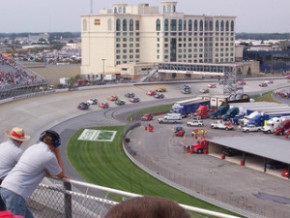
Dover Downs Racetrack, which is part of Dover Downs Casino, began offering betting at its popular NASCAR racetrack, as part of the state’s sports betting program managed by the Delaware Lottery.

Full sports betting became legal in Delaware under a previous law with May’s U.S. Supreme Court decision removing the federal ban on sports wagering. Race fans began placing bets at the track during last weekend’s NASCAR tripleheader at Dover Downs Racetrack.

A Delaware Lottery kiosk was set up near the Monster Monument at Victory Plaza for the NASCAR weekend.

Dover Downs Casino staff will took bets from the kiosk on Saturday’s NASCAR Xfinity Series and Sunday’s Monster Energy series playoff races. The kiosks also offer a full menu of sports wagers.

Dover Downs Racetrack Assistant Vice President of Marketing Gary Camp told Delaware Public Media that Las Vegas-based William Hill US will set the odds for individual drivers.

“They will crunch the numbers. They will be looking closely at qualifying speeds and practice sessions and they’ll come out with odds that reflect who is performing well on the track,” said Camp.

This is the first time in NASCAR history fans can legally bet on a race on location. Multiple types of wagers can be placed on the races including the season championship winner, matchups between manufacturers and head to head matches.

“So, you know, you’ll be able to possibly bet Jimmy Johnson will finish higher than Kyle Bush, for example, and just anything this that will keep you more engaged with the racing on the track we think will be a positive,” said Camp in the Delaware Public Media interview.

NFL Broadcasts Avoiding Odds Talk; NBA, Not So Much

No national broadcaster on any of the major TV networks airing National Football League games has mentioned anything relating to sports gambling. The fact that the U.S. Supreme Court in May removed the federal ban on sports wagering has not changed the policies of any NFL telecasts, be it Fox Sports, CBS, NBC, ESPN or the NFL Network.

Sporting News last week quoted unnamed sources who confirmed a moratorium on sports betting information in game broadcasts or any of the pregame shows such as Fox NFL Sunday, The NFL Today on CBS, NBC’s Football Night in America, and ESPN’s Sunday NFL Countdown.

Fox Sports Executive Producer John Entz confirmed the ban on sports-betting information to the publication. “To this point, gambling on any sport has not been a topic for our announcers live during games, and I don’t expect that to change much this NFL season,” Entz said in a statement to Sporting News.

In short, don’t expect Terry Bradshaw or Bill Cowher to report how your favorite NFL team performed against the spread.

But the NBA has other ideas. In the first measure of its agreement with MGM, the NBA is offering $1 million to anyone who predicts the correct over/unders for total victories over the season. The odds against that happening are astronomical, but it demonstrates the acceptance of sports betting by the NBA.

There is no cost to enter the contest but it likely demonstrates the NBA getting comfortable with traditional betting models.

Washington D.C. Aims for Sports Betting by 2019

The Washington D.C. city councilman who introduced a sports betting bill for the district said he is optimistic that sports betting could begin by spring of next year.

“If everything falls into place, sports betting will be live by baseball’s opening day next year,” D.C. Councilmember Jack Evans said in an interview with Legal Sports Report. “Here’s how I see it. We have a hearing on October 17 and if all goes well, the bill will be out of committee by the end of the month,”

City council’s Committee on Finance and Revenue will hold a public hearing October 17 to discuss the “Sports Wagering Lottery Amendment Act of 2018,” which was by Evans in September.

Sports betting has been legalized in Delaware and West Virginia, but so far Maryland and Virginia have not moved forward on potential sports betting bills in those nearby markets.

The D.C. sports betting bill must pass both a vote from the finance committee and another from the full 13-member council. Any bill passed by the council and signed by the mayor must go to Congress for a 30-day review. If turned down by Congress, the bill would die unless the disapproval is vetoed by President Trump.

Under the bill, sports betting would be regulated the D.C. Office of Lottery and Gaming, which is overseen by a chief financial officer. Licenses would cost $50,000 and operators will pay a ten percent tax on gross sports betting revenue. Revenue will go to fund early childhood development, and arts and humanities programs.

The bill allows for both on-site and online sports betting. Evans said hotels and sports arenas could be potential sites for sports betting operations.

“Hotels are a market that we want to tap into,” Evans said. “The goal is to establish a model bill for the rest of the country to use.”

Third Connecticut Casino Dealt Critical Blow

A federal court judge last week put a third Connecticut casino owned by the state’s two gaming tribes in jeopardy when he issued a 58-page opinion. Judge Rudolph Contreras of the U.S. District Court of the District of Columbia ruled that Connecticut and the Mashantucket Pequots have no legal standing to ask Department of the Interior Secretary Ryan Zinke to accept revisions to the state’s existing gambling agreement with the tribe.

The tribes had proposed a casino in East Windsor, just 12 miles from the new MGM Springfield casino. The third facility was designed to blunt losses to the new casino.

When the state legislature passed a bill that changed the compacts in 2016, it was contingent on approval from Interior to make sure that the state’s current revenue stream from the two existing tribal casinos wouldn’t be interrupted. And to make matters worse, he gave MGM Resorts the right to intervene should the tribes and state appeal his decision. MGM has proposed its own third casino in Bridgeport, which it contends would benefit the state greatly, but has been blocked because no bidding process had been established.

“The thorough and unambiguous federal court ruling can only be seen as a clear rejection of the tribes’ insistent efforts to obtain a no-bid commercial casino license in Connecticut,” MGM said in a statement Sunday night. “It has become increasingly apparent that the tribes’ promises of legal victory, no matter how often they are repeated, prove hollow.”

The tribes responded that they wanted to continue to fight.

“We remain committed to both seeing this process through and to the people of Connecticut and our partners in state government,” Andrew Doba, a tribal spokesman, said.

The state attorney general’s office also issued a comment.

“We are disappointed with the court’s ruling, which we are continuing to review as we evaluate possible next steps,” it said.

Complicated compact language and procedures for considering revisions make any appeal problematic.

MGM, meanwhile, says the state should stop fighting and start cooperating.

“Connecticut residents are best served by the state spending less time in court and more time on real opportunities to maximize economic development and job creation,” MGM said in the statement. “That’s why each passing month makes it more obvious that the most productive path forward for Connecticut is to pass legislation calling for competitive bids on any new commercial casino in the state, and to get started on that process.”

Massachusetts Gaming Commission Picks Leader as Wynn Investigation Arrives

When Massachusetts Gaming Commission Chairman Stephen Crosby decided he had enough late in September, the organization was faced with a dilemma. Who would have enough independence to determine if the investigation of Wynn Resorts and Encore Boston Harbor would have credibility. While Crosby seemingly bent over backwards to be fair, he was recently deluged with letters and potential lawsuits that charged him with favoritism toward one side or another.

The commission decided who would assume Crosby’s position was answered last week when the four remaining members appointed Gayle Cameron as chairwoman. Cameron is a former deputy superintendent of the New Jersey State Police and was first appointed to the gaming commission in 2012. While in New Jersey, she was head of the State Police investigations division, which oversaw investigations at the Division of Gaming Enforcement, an arm of the State Police.

Crosby had been accused by Mohegan Gaming and Entertainment, which lost the bid to the Wynn Resorts and has filed suit to challenge alleged irregularities in the licensing process, of favoring Wynn Resorts. The name of the Massachusetts property has been changes from Wynn Boston Harbor to Encore Boston Harbor, but the Mohegans believed the fix was in.

At the same time, Crosby revealed he has received a letter from a lawyer for Steve Wynn, the former chairman and principal shareholder of Wynn Resorts, accusing him of “false and derogatory statements” to the press and of already deciding to pull the Wynn license.

Crosby said none of it was true.

“There has never been a shred of truth or accuracy to any charge of bias, favoritism, corrupt practice, ethics violations, or prejudgment in my execution of this job,” he said in his resignation letter.

The commission’s investigation of Wynn and his former company are expected to be completed shortly, and hearings should begin soon thereafter.

Pennsylvania Officials at Odds on Proposed Comp Room Tax

Pennsylvania’s Luzerne County is seeking a tax on complimentary hotel rooms booked by the Mohegan Sun Pocono casino.

The tax is being sought by Chief Solicitor Romilda Crocamo and Assistant Solicitor David Schwager, but the county controller’s office is resisting it. Controller Michelle Bednar recently released a 14-page report arguing against the proposed tax. The solicitor’s office released a seven-page report opposing the controller.

The solicitor’s office has recommended that the county pursue collection of unpaid and unreported taxes on the comp rooms awarded by the casino hotel. County Manager C. David Pedri has indicated the county will proceed with collection action against Mohegan Sun.

It is a subject likely to ultimately be resolved in the courts.

Bednar’s report argues that language in the county tax ordinance indicates taxes are due if the room is occupied “for consideration,” which she maintains means “for payment.”

“Since no payment is exchanged in the case of complimentary rooms, we assert that complimentary rooms are not subject to the hotel tax. Furthermore, we believe that to charge hotel tax on complimentary rooms would demonstrate non-compliance with county regulations,” the report said.

A previous controller’s office review of the Mohegan Sun hotel tax paid in 2016 said Mohegan Sun was entitled to a $7,323.48 refund for taxes paid on complimentary rooms for January 2016.

Florida Poll Show Shrinking Support For Gaming Amendment

In a poll of 622 voters conducted by the Florida Chamber of Commerce September 19-24, 54 percent said they’ll vote yes on Amendment 3, which would give voters exclusive rights to authorize new casino gambling through citizen-initiated ballot measures. Twenty-eight percent said they’ll vote no and the rest were undecided.

Two months ago, a poll by Hill Research Consultants indicated 71 percent of voters would vote yes, 18 percent would vote no with the remainder undecided.

In the most recent poll, 41.5 percent of those questioned said they were registered Democrats, 40.5 percent were Republicans and 18 percent did not belong to one of the major parties. The poll has a margin of error of 4.4 percentage points.

In September, Voters in Charge, the political group behind Amendment 3, received $5 million from Disney Worldwide and from the Seminole Tribe of Florida, according to newly filed campaign finance reports. To date,

Disney has spent nearly $19.7 million to Voters in Charge and the Seminoles have spent nearly $16.8 million.

Meanwhile Melbourne Greyhound Park recently contributed $50,000 to the political committee Don’t Lose Your Control Inc., bringing the racetrack’s total contributions since early August to $145,000, according to the Florida Division of Elections. The committee, which is at least the third PAC formed to oppose Amendment 3, has received no other contributions. The other committees, Citizens for the Truth About Amendment 3 and Vote NO on 3, merged to raise more than $4.1 million as of September 14, reports indicate.

Construction Begins on High-Tech Vegas Arena

Construction is officially under way on the MSG Sphere, an 18,000-seat high-tech entertainment arena that appears destined to change the experience of seeing a live event in Las Vegas.

Nevada Gov. Brian Sandoval led the list of dignitaries who journeyed to Sin City for a ceremonial groundbreaking on September 27, hosted by Las Vegas Sands and Madison Square Garden Company, which are jointly developing the venue just east of the Strip on LVS land adjoining the company’s Venetian megaresort and Sands Expo & Convention Center.

“I was thinking to myself, this truly is the next chapter in the history of the evolution of the entertainment capital of the world,” Sandoval said to a gathering of some 300, which included LVS Chairman and CEO Sheldon Adelson, President and COO Rob Goldstein and Jim Dolan, chairman and CEO of MSGC.

“When you look at the Sphere, it is unlike anything on planet Earth,” the governor continued. “This will be the first of its kind, right here in Las Vegas, Nevada.”

Dolan noted, “Do you suppose when they broke ground for the Eiffel Tower that people knew what it was going to be? I’m pretty sure they didn’t. I think this is going to be like that.”

Slated to open in 2021, the Sphere will encompass 580,000 square feet and will top off at 360 feet, a height that ensures it will be a prominent addition to the Strip skyline. It will feature fully programmable video imagery on its exterior as well as interior surface, highlighted by a 170,000-square-foot spherical indoor display plane. Sound will be transmitted through thousands of tiny speakers embedded in the walls so the clarity will be same from any seat, front row or back. Spectators will be able to feel programmable vibrations via an infrasound haptic floor system. The “beam-formed” technology, as it’s called, will direct sound with laser-like precision so that performers will be able to hear instruments and vocals without wires. Similarly, speakers at an event will be able to reach their audience in different languages in different parts of the building wirelessly.

MSG unveiled the technology at a presentation at Radio City Music Hall in New York earlier this year and has taken it on the road to Southern California and London.

The company reportedly has a commitment to develop a Sphere in London, but Las Vegas will be the first to open.

Quebec to Appeal Ruling on Online Gambling Blocks

Quebec will challenge a Canadian Supreme Court decision that the province’s attempt to block unlicensed online gambling sites would be “unlawful,” according to local reports.

The province passed a law in 2016 that would require ISPs to block players’ access to any gaming sites that are not licensed by the Quebec government. About 2,200 sites are expected to be affected.

The national government adopts gambling legislation, but those laws can be amended by the provinces.

Opponents of the Quebec amendments say it would give the provincial government a monopoly over the province’s iGaming industry as only online casinos and lotto sites from province-owned Loto-Quebec would be available to gamblers.

Lawmakers, however, say the bill was passed to ensure consumer protections for online players in the province. Quebec also loses significant revenue to offshore gambling sites. Under the law, would face fines of up to C$76,000 for each separate offence.

The Canadian Wireless Telecommunications Association also argued that requiring ISP’s to block the sites would be costly and violates the idea of net neutrality. The association said such bans are not effective.

The attorney general of Quebec has filed a notice of appeal to fight the Supreme Court’s ruling that the law is illegal. Even if the appeal is granted, the bill may have to be redrafted before it can be re-approved, local reports said.

Autumn by the Sea: An afternoon with the World’s Largest Pipe Organ

Boardwalk Hall’s musical heritage will take center stage on Sunday, October 14, 2018, with Autumn by the Sea. For the first time, the Historic Organ Restoration

Committee will premiere a double concert featuring both pipe organs in the historic building in the same afternoon! Local organist and choir director Scott Breiner will command both the Kimball pipe organ in the Adrian Phillips Theater and the mighty Midmer-Losh in the Main Arena, the largest pipe organ ever built and the world’s largest musical instrument. The concert will feature a variety of selections including classical, hymns, hits from stage and screen and popular music. There will truly be music for the masses, the exact reason these instruments were placed in the building when it was built.

The concert begins at 3:00 PM, doors open at 1:00 for walkthroughs of the largest pipe organ in the world. Tickets are $20.00 and can be purchased at the Boardwalk Hall Box Office or ticketmaster.com.

Atlantic City Tattoo Expo

The Atlantic City Tattoo Expo, one of the East Coast’s longest running tattoo conventions, is returning for its 15th Season at Bally’s Atlantic City, November 2nd through the 4th, and will showcase some of the country’s most well-known tattoo artists as well as some local favorites!

Better known as “Drawin’ the Wild Card,” The Atlantic City Tattoo Expo will take over the 6th floor ballroom of Bally’s and will be surrounded by casino gaming, amazing eateries and a 1200 room hotel, making this a perfect spot for the 2018 event. 5,000 plus attendees are expected to assemble over the weekend, invading this gaming space for the love of ink and entertainment.

While the main focus of the expo is the opportunity to meet and get tattooed by over 100-plus tattoo artists from around the globe, the expo also offers live entertainment, tattoo contests, seminars, parties, meet and greets and unique exhibitors including a variety of clothing, jewelry and novelty vendors.

The Atlantic City Expo promises to bring fun, fanfare and freaks for your enjoyment during this 3 day extravaganza that celebrates everything ink, ink culture, the weird, the wonderful and taboo.

When:  Friday, November 2 – Sunday November 4, 2018
Friday 5:00 PM – 11:00 PM
Saturday 11:00 AM – 11:00 PM
Sunday 11:00 Am – 6:00PM

Tickets: $20.00 One Day Pass $35.00 Teo Day Pass $50.00 Three Day Pass
Visit: https://www.actattooexpo.com  


Atlantic City Hosts The American Finals Rodeo

The American Finals Rodeo returns to the iconic Boardwalk Hall in Atlantic City for two exciting nights Friday November 9th at 9pm and Saturday November 10th at 7pm.

The event will feature competitors from all over the world. The top contestants in bareback riding, steer wrestling, breakaway roping, barrel racing and bull riding compete at this Final.

The American Finals Rodeo is the capstone to the entire rodeo season for the American Professional Rodeo Association. The top 12 competitors in each event vie for the #1 spot. Rodeo contestants from all over the Northeast earn points with each placement towards the season’s standings.

The American Finals Rodeo is the oldest and largest finals rodeo in the Northeast. The Boardwalk Hall in Atlantic City is one of the most prestigious venues in America. This is where it all comes together to decide which cowboys and cowgirls will get awarded the American Finals Rodeo Championship buckles!

Tickets: $9.00 – $99.00
Visit: http://www.boardwalkhall.com

Three Pennsylvania Casinos Apply For Sports Betting License

At its meeting on October 3, the Pennsylvania Gaming Control Board is expected to approve sports betting licenses for Penn National Gaming’s Hollywood Casino in Harrisburg and Greenwood Racing in Bensalem, which previously submitted license applications. Harrah’s Philadelphia is planning to submit an application at the meeting. All three must pay the state’s $10 million license fee within 60 days of application. The state’s 10 other licensed gaming operators have not yet applied for sports gambling licenses.

Besides the fee, under the state’s sports betting law, operators also must pay a 36 percent tax on gross winnings. Specifically, 34 percent of sports wagering revenue will go to the state’s general fund, and 2 percent will be used “exclusively for grants for projects in the public interest in the Commonwealth,” according to the legislation.

In comparison, New Jersey taxes sports betting revenue at 8.5 percent, West Virginia at 10 percent and Nevada at 6.75 percent. Nevada gaming attorney Kate Lowenhar-Fisher said a high tax rate like Pennsylvania’s could help illegal bookies thrive. “Some of the bills that states have considered or even passed have been really a boon to the illegal bookmakers, because the economics are ridiculous. It makes it impossible for a legal or regulated bookmaker to make any money,” she said. Sports betting only offers slim profit margins for casinos, so “if you levy a bunch of taxes and fees, you’re going to kill it,” Lowenhar-Fisher said.

Last fall, Pennsylvania passed sports betting as part of a huge legislative package including mini-casinos with up to 750 slot machines and 30 table games each; Penn National Gaming, which owns and operates Hollywood Casino near Harrisburg, will develop mini-casinos in York and Lancaster counties. The expanded gambling measure also included online gambling, daily fantasy sports and slot machines at truck stops and airport gaming lounges.

Meanwhile, a coalition of Pennsylvania casinos recently filed suit in Commonwealth Court seeking an injunction to stop the Pennsylvania Lottery from providing illegal, simulated casino-style online games. In May, the Pennsylvania Department of Revenue, which oversees the lottery system, launched iLottery, offering casino-like games online and on mobile devices. The lottery’s website offers a “demo” that anyone—including children—can play, as long as they indicate they’re age 18 or older. Casino operators point out they must follow strict regulations that players are at least age 21, or face thousands of dollars in fines.

Casino operators also note although state law makes it illegal for the lottery to offer and use casino-style games, it launched online games that imitate slot machines, with the same titles and/or themes as slot machines on casino floors.

Pennsylvania casinos are required by law to provide space for lottery ticket vending machines. The casinos have made more than $5 billion in property investments, created more than 18,000 jobs and spent $230 million annually for goods and services from local businesses. In 2016-17, casinos contributed $2.3 billion in slots tax revenue plus $132 million to host communities to use for local projects.

New Jersey Pledges Fight Against Illegal Online Sports Betting

David Rebuck, the head of New Jersey’s Division of Gaming Enforcement, recently testified before the state Assembly Tourism, Gaming and the Arts committee.

He said that with eight approvals for online sports sites in the state, no further applications are pending. But, he said there has been interest expressed in the state by several offshore betting operations.

“We have a huge interest in operations from Europe, who have been very successful doing gambling over the years, coming to the United States right now,” Rebuck told the committee. “Some will not make it, I can assure you. And some will not even apply.”

Rebuck said the illegal gambling market is “massive” in the U.S.

“They are extremely robust,” he said. “They make our operations look like a five-and-dime store.”

Rebuck said the DGE is always looking for ways to combat illegal sites.

“We’ve been researching this with our law enforcement partners to get a better understanding of how they operate in the United States,” he said. “At this point in time, we’ve identified over 108 illegal websites that take sports wagers from every state in the United States today. They’re very good at what they do.”

The division has warned operators about “significant consequences” for conducting business with companies violating federal law.

“You will not get licensed in New Jersey,” Rebuck said. “And I will fight you to get licensed in any state.”

New Jersey CRDA Defends Its Financial Performance

The New Jersey Casino Reinvestment Development Authority responded to a critical state audit of its finances and spending by saying it has always conducted its own audits of its finances and worked to correct problems.

An audit by the state Office of Legislative Services and the Office of the State Auditor was the first state audit of the authority and differs from a statutorily required audit each year. The recently released audit criticized the authority for the way it tracks millions of casino reinvestment dollars spent on Miss America, beach concerts and The Walk outlets in Atlantic City.

“I want to make sure that the public understands that the Casino Reinvestment Development Authority is audited annually by one of the top independent accounting firms in the nation,” said Board Chairman Robert Mulcahy, reading from a prepared statement. “Those professional audits have resulted in unmodified clean opinions, confirming the authority’s design, implementation and maintenance of internal controls relevant to the preparation and fair presentation of financial statements. I think that’s very important in terms of things that have been said or done.”

The CRDA’s most recent internal audit was conducted by Mercadien Asset Management, of Hamilton Township, Mercer County, New Jersey. Other firms, including Wiss & Company LLP and Friedman LLP, have been used by the authority in prior years, according to the Press of Atlantic City.

The state audit, however, concluded that although CRDA’s financial transactions were relevant, the manner in which certain expenditures, contracts and agreements were executed were not “always reasonable” or an “effective and efficient use of its funds,” according to the Press.

The board had previously said it welcomed the state audit and will work with the state to correct any concerns.

Mulcahy, however, said the timing of the OLS report “did not allow for the inclusion of major, new financial control initiatives, which have been put in place.”

“The CRDA Board responded to the major legislative changes of 2011, including the absorption of the Atlantic City Convention Center and Boardwalk Hall, which was a complicated process requiring the adoption of new systems, which have now been implemented,” Mulcahy said. “The CRDA Board had to again deal with legislative changes in 2016 by redirecting the authority’s priorities and appropriately rightsizing and streamlining staff creating savings and efficiencies, including the $55 million that we have given to Atlantic City to pay for their bonds. While doing so it has maintained the investments, contributing to much of the new growth in Atlantic City.”

Mulcahy also noted that CRDA has put $1.9 billion into Atlantic City, adding, “I say that so that there is some perspective about what the agency has done for the area here.”

However, the report also comes as the authority is continuing to be criticized for financial support it gives the Miss America Organization. This year was the last year of a three-year, $12.5 million contract between the authority and the pageant. The contract provided an about $4 million subsidy to the pageant for holding the event in Atlantic City.

However, it’s appearing unlikely that CRDA will continue the subsidies. Both Atlantic City Mayor Frank Gilliam—who sits on the CRDA board—and Doherty have said that the subsidy is more than the CRDA can afford.

“I don’t believe that Miss America should be $4.5 million. I don’t think that we should pay that,” Gilliam told the Press. “I think that there’s a place for her if they’re willing to truly, in my opinion, reconfigure how the pageant operates and how the event is going to be.”

The state audit criticized the authority for not tracking how its money was spent by the Miss America Organization in previous contracts and for not doing an economic impact study on holding the pageant in the resort before entering into the recently expired contract.

However, the authority does intend to go back into negotiations with the pageant.

“CRDA was happy to partner with Miss America to host the 2019 competition held in Atlantic City earlier this month,” Doherty said. “It is premature to discuss the future of Miss America in Atlantic City.”

Still, when asked if CRDA would be comfortable allocating the amount of money it has in the past to bring Miss America back, Doherty said, “No,” according to the Press.

Part of the reason is a legislative change in the state that has diverted casino reinvestment funds from the authority to help pay down Atlantic City’s municipal debt until 2026.

D.C. Councilman Proposes Sports Betting

District of Columbia Councilman Jack Evans recently introduced the Sports Wagering Lottery Amendment Act of 2018, which would allow sports betting Washington, D.C. Evans said five other council members are co-sponsoring the bill, along with Democratic Mayor Muriel E. Bowser and Democratic City Councilman Phil Mendelson. The bill was been referred to the Finance and Revenue Committee, where Evans serves as chairman. Laws passed by the 13-member city council are subject to Congressional approval.

Evans said, “Today, we take the first steps towards capturing this exciting new stream of revenue, instead of watching District resident dollars fill the coffers of other jurisdictions. The District of Columbia will be the leader in a fast-growing industry. The city should take advantage of our ability to act before the Maryland or Virginia legislatures to create a thriving sports betting market, which will attract consumers to the District and generate revenue for District residents.”

Under Evans’ bill, sports betting operators would pay a $50,000 licensing fee and a 10 percent tax on sports betting gross revenue. Athletes, coaches and game officials would be prohibited from placing sports bets. Revenue would be divided between early childhood education programs and the D.C. Commission on the Arts and Humanities, with any surplus funds directed to the city’s general fund.

Evans added, “The legislation’s purpose is to legalize sports betting in the District of Columbia, while also creating strong regulatory structures that ensure consumer confidence. The Councilmember’s office worked closely with the District’s Lottery to craft legislation that would maximize the revenue realized by the District. Residents and visitors will be able to bet both online or in person, and the Lottery will have broad powers to ensure the integrity of the system.”

Chief Financial Officer Jeffrey S. DeWitt’s spokesman David Umansky stated, “The lottery has worked with Councilman Evans providing technical assistance in order that it will be able to regulate and operate the program should the council and mayor approve it in a way that maximizes the return to the District.”

Neither Maryland nor Virginia has moved toward legalizing sports betting yet. However, sports wagering is legal in nearby New Jersey, Delaware and West Virginia, and soon will be available in Pennsylvania. The sports book at Hollywood Casino in Charles Town, West Virginia is less than 65 miles away.

Scientific Games Supplies Systems for Hard Rock AC, Plans Hard Rock Lottery Game

The newly opened Hard Rock Hotel & Casino in Atlantic City uses a comprehensive system and games package provided by Scientific Games Corporation.

“We hope this deal has helped give Hard Rock a competitive advantage in their markets and with their players,” commented Cath Burns, senior vice president of gaming systems at Scientific Games.

The company installed key systems products such as SDS, CMP, CMP Cage, Business Intelligence (BI), iVIEW4, iVIEW DM, Elite Bonusing Suite (EBS), and Beverage Ordering Service System (BOSS).

In addition to the systems purchase, Hard Rock Hotel & Casino Atlantic City also installed a substantial number of Scientific Games’ slot and table games, including over 500 slot games with popular titles such as Ultimate Fire Link, 88 Fortunes and 5 Treasures. Table game titles such as Three Card Poker, Ultimate Texas Hold ‘Em and Fortune Pai Gow Poker were part of more than 20 table games and side bets added to the table games pit.

“We have a longstanding partnership with Hard Rock and the Seminole Tribe, which has included collaborating on innovative new technologies for casino operations which enhance both the employee experience and as well as the end customer experience,” said Burns.

“This collaboration has given Scientific Games valuable input and feedback in developing our top-tier systems and gaming products, which we hope has helped give Hard Rock a competitive advantage in their markets and with their players.”

Hard Rock International is owned by the Seminole Tribe of Florida, which is one of Scientific Games’ largest and most progressive systems users in South Florida. Hard Rock Hotel & Casino Atlantic City, built on the bones of the shuttered Trump Taj Mahal, was one of two new Atlantic City casino properties opened on June 28.

Scientific Games is taking its relationship with the Hard Rock brand further in its lottery supply division. The company announced a new, exclusive three-year contract for lottery instant “scratch” games with Hard Rock International, owner of the Atlantic City property and the Hard Rock Florida casinos.

“Scientific Games is known for our game innovation, and our game design studios cannot wait to begin creating products featuring the Hard Rock brand to add a cool edge to our customers’ instant games,” said Kyle Rogers, executive vice president, lottery licensed brands for Scientific Games. “The Hard Rock brand is ubiquitous with music, fun and good times. We welcome this legendary brand into Scientific Games’ licensed properties portfolio and believe lottery players will share our enthusiasm.”

“We’re excited to extend our collaboration with Scientific Games’ Gaming and Interactive groups to another vertical, and look forward to seeing the Hard Rock brand reach new audiences globally,” said Kresimir Spajic, senior vice president of online gaming for Hard Rock International.

Scientific Games provides game entertainment, technology and services to more than 150 lotteries globally.

Knights, William Hill Ink First NHL Partnership

William Hill US has signed a historic partnership with the Vegas Golden Knights, the first between a sports book operator and a National Hockey League franchise.

William Hill and the Knights, who return to the T-Mobile Arena on the Strip this fall after a Cinderella first season that brought them to the Stanley Cup final, will cross-promote each other through various media, advertising and promotional platforms, including Hills ads on the arena’s dasher board and in other areas visible on television. The bookmaker also will have the right to display league-wide odds on the giant videoboard above the rink during intermission. The two companies also will collaborate on away game watch parties.

William Hill is already the dominant sports betting operator in Nevada with 108 books, and its partnership with the Knights will go a long way to ratcheting up the company’s profile with the rest of the NHL and the other major sports leagues.

“It certainly gets the rest of the NHL thinking about deals, and it puts William Hill in a good position as a first mover,” said Union Gaming analyst John DeCree.

“We are delighted to be leading the way with William Hill in this space,” said Knights President Kerry Bubolz.

Elements of the partnership will be rolled out during the remainder of the league’s exhibition season and be fully in place for the start of the regular season October 4 against the Philadelphia Flyers.