Archives: Articles

This is the example article

California Tribes’ Slot Machine Revenue Threatened

Five California gaming tribes are involved in a technical dispute with Governor Gavin Newsom that may delay the renewal of their tribal state gaming compacts. That, in turn, could force them to turn off their machines—and potentially lose millions.

The tribes are Robinson Rancheria, the Hopland Band of Pomo Indians, the Chicken Ranch Rancheria of Me-Wuk Indians, Blue Lake Rancheria and the Chemehuevi Indian Tribe. All the tribes are coming to the end of the original compacts they signed with the state in 1999 and were supposed to renew in 2020, but an automatic 18-month extension was added. The deadline to renew is now June 30.

These tribes object to several provisions the Newsom administration seeks to add to the compacts. Without compacts they can’t legally operate slots.

Most other tribes have renewed their compacts with the state. However, the five tribes are involved in a lawsuit Chicken Ranch Rancheria v. Gavin Newsom. The tribes argue that Newsom’s new provisions would violate the Indian Gaming Regulatory Act (IGRA.)

Some provisions they oppose including those on enforcing spousal and child support orders and the imposition of state law on the environment, minimum wage, and the labor code, among others. They say they violate tribal sovereignty.

Robinson Rancheria tribal Chairman Beniakem Cromwell told the Press-Democrat: “We closed ourselves for 125 days during the pandemic.” He added, “We know how devastating it is.”

He added, “This has nothing to do with revenue. It’s education for members in higher education or vocational school. It’s elders’ monthly social welfare. We use that revenue for after-school programs, sports teams. We fund employees at our elder center, our education center, our tutors.”

The attorney representing four of the tribes, Les Marston, explains that the tribes don’t oppose the goals of the provisions the governor insists on. He told the Press-Democrat: “Supporting children. Making sure spouses are adequately compensated. You really think tribes aren’t going to do that on their own?” He added, “How paternalistic is that? The issue here is the tribes’ right to govern themselves under their own laws, which is guaranteed to them by the Constitution of the United States.”

Last year federal judge Anthony Ishii ruled in favor of the tribes, writing, “The Tribal Plaintiffs have met their burden of producing evidence the State Defendants did not negotiate in good faith by raising topics in negotiations that were beyond the scope permitted by IGRA or which required some form of meaningful concession in return.”

But Nelson Rose, an expert on Indian gaming law, points out that on the rest of the issues raised in the lawsuit, the tribes didn’t win. The judge ruled that the governor didn’t have the authority to impose the provisions that they could also be the subject of negotiations.

Inevitably, the ultimate decision will be made by a higher court, where the state appeal is headed. However the case is decided could set precedent for gaming tribes throughout California. Several tribes have pending compact negotiations. If the five tribes win, some of them might demand to return to negotiations on some points that the state forced them to accept.

Gas Prices No Problem for Vegas Tourism—So Far

With gasoline prices at record highs, visitation to Las Vegas apparently is unaffected. According to a Newsbreak report, Las Vegas Convention and Visitors Authority (LVCVA) Vice President of Research Kevin Bagger said Strip tourism typically does not decline due to higher fuel costs, and traffic from Southern California along Interstate 15 was up more than 2 percent in the first month of the year.

“Over the years, there have been spikes in gas prices that historically haven’t had significant impacts on travel demand,” Bagger said in an interview in March. “We are keeping an eye on it because inflation is at a level that we haven’t seen for quite some time.”

According to AAA, gasoline prices in the Las Vegas Valley averaged almost $5.37 for a gallon of regular unleaded last month—$2 a gallon higher than a year ago and up roughly $1.30 from February. Only California has higher per-gallon prices, about $6.

Boyd Gaming Chief Financial Officer Josh Hirsberg told attendees at a recent investor meeting organized by Truist Securities last week that the company’s casinos haven’t experienced any material loss of business because of gas prices rising throughout the country. But if the spike continues over the long term, he warned that could slow business in many drive-in gaming destinations across the U.S.

MGM Resorts International CFO Jonathan Halkyard made similar statements to Well Fargo Securities gaming analyst Daniel Politzer on March 23.

“Consumer demand recovered throughout the first quarter, with recent (hotel) occupancy trends better than expected,” Politzer wrote in a research note.

Politzer said Las Vegas has been a market with roughly 50 percent drive-in business versus 50 percent fly-in business, although MGM Resorts “skews more toward fly-in given in its premium room product.”

Despite his positive view toward the Strip, he did worry that any additional spike in fuel costs could “create some near-term demand choppiness for the leisure/transient customer.”

AAA said people are still traveling despite the high gas prices. Overall February online bookings were up 42 percent over 2021 and up just 1 percent from pre-pandemic 2019. “Las Vegas remains the top destination for hotel bookings,” AAA said.

Private Firm Plans $3 Billion Arena near LV Strip

A private global development group is planning a $3 billion project to include a $1 billion, 20,000-seat arena just south of the Las Vegas Strip at the intersection of Las Vegas Boulevard and Blue Diamond Road.

Sports and entertainment venue developer Oak View Group is planning to break ground next year on the 25-acre development, with tentative plans for completion by 2026, according to a report in the Las Vegas Review-Journal. According to the report, the project will include a hotel, casino and amphitheater in addition to the arena and entertainment district.

“South of the Las Vegas Strip represents one of the few areas of potential future growth of the gaming and entertainment corridor,” said Tim Leiweke, CEO of Oak View Group, told the Review-Journal. “This unprecedented project is an industry game-changer, and we will usher in the evolution of Las Vegas as the new entertainment and sports capital of the world.”

The project also is adjacent to a planned station on the new Brightline high-speed rail line planned to link Las Vegas and Los Angeles, a project that also includes plans for a new Major League Soccer stadium, built by billionaire Wes Edens, co-CEO of Fortress Investment Group, who owns Brightline.

“If those two projects happen, I think it’s phenomenal,” Leiweke said. “We’re excited because it really builds something dynamic as a live entertainment zone that is connected directly to Southern California. Just a huge boon for not only Las Vegas and Nevada, obviously for our campus as well.”

Leiweke told the newspaper that although no professional sports team is currently linked to the planned arena, his company is interested in pursuing an NBA franchise. “We would join the governor, Clark County and the business leaders and the tourism industry to aggressively pursue a franchise, should one become available,” he said. “But we’re under no belief, expectation or direction today that that’s imminent.”

Also included in the project is Hollywood producer Jerry Bruckheimer and former Raiders President Marc Badain.

Oak view Group was the developer of the Climate Pledge Arena at Seattle Center, where the NHL’s Seattle Kraken play, as well as the UBS Arena in New York, the new home of the NHL’s New York Islanders.

Clock Runs Down for Alabama Gambling Legislation

Along with Nevada, Utah, Alaska and Hawaii, Alabama is just one of five states without a state lottery−and it’s likely to remain that way. Facing an April 7 deadline and issues that have blocked gambling legislation for years−conservative opposition, disagreements on how to use proceeds and turf wars over lucrative electronic gambling machines−state Rep. Chip Brown said his lottery bill will have to wait until next year. “I would say more than likely, just given the time constraints, that we won’t be moving forward to put it on the floor,” Brown said.

Brown’s bill would direct lottery proceeds to college tuition, college debt relief and bonuses for retired employees.

In the Senate, state Senator Greg Albritton’s gambling bill also is unlikely to come to the floor for a vote. It would establish a lottery, five casinos, two satellite casinos and sports betting, with the proceeds going toward college education.

Both the House and Senate measures would be constitutional amendments, requiring two-thirds of each chamber and approval of a majority of voters.

Brown said he thought he was “right there” regarding having enough House votes to pass his bill, but he didn’t believe it would get through the Senate. Still, he defended his measure. “There’s a lot of people that would prefer just a lottery, and people who prefer casino gaming and sports betting. So I’d like to see us address those as all separate packages, rather than one overall package,” he said.

State Rep. Reed Ingram said he’d vote against Brown’s bill and was generally pessimistic about its chances of passing. He said Republicans would filibuster the bill if it came to the floor. “If they do try to push it, I think it divides our caucus, and that’s one thing we don’t need. We’re looking at the speaker, we’re looking at the people in leadership we’re electing the next quadrennium. In my opinion, it’s in our best interest to set it aside,” Ingram said.

Last year, a comprehensive gambling bill passed the Senate after months of negotiations. But it crumbled in May after lengthy negotiations in the House and an unsuccessful attempt by House Republicans to turn it into an exclusively lottery bill.

Alabama Republican voters, however, appear to support a state lottery. A recent survey of Alabama Republican primary voters, commissioned by Alabama Daily News and Gray Television, indicated 43.5 percent agreed the state should legalize and tax a lottery, sports betting and casinos; 20.5 percent said they supported only legalizing a lottery; and 25.7 percent said they opposed any gambling expansion.

Caesars Virginia to Generate $38 Million in Taxes Annually

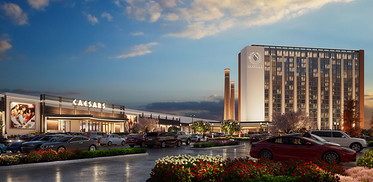
In Danville, Virginia, officials are looking ahead to the 2023-24 budget, which is expected to include revenue from the $500 million Caesars Virginia casino resort in Schoolfield, opening in late 2023. The venue is projected to generate $38 million in annual revenue by its third year of operation. Danville City Manager Ken Larking noted, “We won’t know the actual number for sure until it actually opens and then we’ll see what it looks like in reality.”

That anticipated $38 million would include $12 million in annual payment from Caesars, $22 million in yearly gaming tax revenue and $4.2 million in other tax revenue including sales, lodging, meals and property taxes.

An interim report from the Investing in Danville committee and an analysis by the financial consulting firm PFM indicated citizens wanted the casino tax revenue to be used for public education and economic development, followed by public safety, infrastructure, community health, quality housing, financial stability and quality of life amenities.

Caesars Virginia will include a casino with more than 1,400 slots and 75 table games, Caesars Sportsbook and a 25-table World Series of Poker Room, plus a 500-room hotel with a spa, pool area and fitness center; 40,000 square feet of meeting and convention space; numerous restaurants and bars; and an entertainment venue for up to 2,500 guests. The project will create 900 construction jobs and 1,300 permanent jobs.

Founded in 1903 by Dan River Inc., Schoolfield was one of the largest textile mill villages in Virginia and the South. The three prominent smokestacks at the site, known as the Three Sisters, will anchor the new casino, officials said. Also, a common design element will be red brick and tonal colors, a reference to Danville’s textile history.

Culinary Union Going After Station Licenses

The ongoing battle between Station Casinos and the Culinary Union entered a new phase when the union attacked the operator on two fronts. The union appealed to the Nevada Gaming Control Board to revoke the operator’s gaming licenses, saying Station is “unsuitable” for a Nevada license after repeated failures to bargain with the union.

Separately, the Culinary Union filed a mass action lawsuit against Station, alleging it violated Nevada’s Right to Return law by failing to return furloughed employees to their jobs.

In a statement, Culinary officials urged the Nevada Gaming Control Board to investigate the suitability of Station Casinos “for failing to adhering to federal labor law.”

But apparently the union has no problem with Boyd Gaming, whose CFO has bragged about not re-hiring furloughed employees.

In the statement, Ted Pappageorge, the union’s secretary treasurer, said Station’s ongoing practices have violated labor laws, citing allegations currently before the National Labor Relations Board.

“The Culinary Union is confident the state’s gaming regulators will want to take action against Station Casinos after they have reviewed the ample documentation and evidence of the company and its affiliates’ disregard of federal law, including the current allegations before the NLRB,” Pappageorge said. “No one has a right to a revocable, privileged Nevada gaming license—gaming regulators have a duty to make sure license-holders, like Station Casinos, are always operating in way befitting Nevada’s gold standard of gaming industry regulation.”

Station wasted no time in responding. “The Culinary Union seems unable to win the hearts and minds of our team members, so they just continue with their harassment and their thuggish attempts to intimidate Station Casinos, whose employees voted us the top casino employer in Las Vegas,” a Station Casinos spokesperson told station KLAS in Las Vegas.

Station also has indicated employees voted to decertify the union at Boulder and Palace Stations, where the company no longer recognizes the union as a bargaining agent. The union alleges the decertification votes were illegal, and that union members were intimidated by Station management to vote against the union.

The union already has won several court rulings. An Oct. 25, 2021, injunction issued by U.S. District Court Judge Gloria Navarro stated the National Labor Relations Board would likely rule that Red Rock Casino Resort and Spa had violated federal labor law in its campaign to defeat the union in an election.

The union made an official request to gaming officials to review Stations Casinos’ suitability to hold a license. The Gaming Control Board meets April 6 and April 7 in Carson City.

Station, after signing contracts recognizing the Culinary Union at seven of its properties, closed two Fiesta properties and sold the Palms. Maintenance workers at the Palms have since petitioned the NLRB to decertify the International Union of Operating Engineers at that property. More recently, slot technicians at Red Rock Resort, owned by Station parent Red Rock Resorts, Inc. petitioned the national board to decertify the same union.

Last year, an NLRB administrative judge found Station’s parent company, Red Rock Resorts, Inc., “has engaged in contumacious conduct by failing to respond fully to a federal subpoena issued by the NLRB.”

“The Control Board does have jurisdiction over federal law violations on licensed properties. This is arguably a violation of federal law under the National Labor Relations Act,” said Ruben Garcia, Boy Law Professor at the University of Nevada, Las Vegas, in an interview with Nevada Current. “They also have an interest in ensuring suitable operations, and if you’re violating that would seem to be unsuitable.”

The mass action complaint alleges that Station—Nevada’s third-largest private employer and owner of nine casinos in Las Vegas—has operated “in flagrant violation of its obligations as an employer and has not recalled hospitality workers back to work as mandated by SB386.”

At the height of the Covid-19 pandemic, 98 percent of Culinary Union members were laid off and currently 80 percent are back to work. While a majority of unionized workers already have extended recall protections in their contracts, a majority of workers protected by SB386 are not unionized.

“The Culinary Union is proud to have won the Right to Return for over 350,000 hospitality workers in Nevada,” the union said in a statement announcing the lawsuit. “SB386 gave hundreds of thousands of union and non-union casino, hospitality, stadium, and travel-related employees, who were laid off, through no fault of their own, the Right to Return to their jobs as business returns. Every Republican member in the 2021 Nevada Legislature voted to not support SB386.”

In its press release, the union noted SB386 Right to Return mandates;

  • Workers laid off after March 12, 2020 for economic reasons due to the pandemic are eligible for Right to Return. Protections in SB386 begin July 1, 2021 and expire August 31, 2022.
  • Hundreds of thousands of union and non-union hospitality, airport, casino, travel, and stadium workers (including third party operators at hotels and casinos such as retail shops, restaurants, bars, and parking facilities) are protected.
  • Covered employers (that have 30 or more employees) must make offers to laid-off employees when they have job openings for the same or similar positions as the employee worked previously.
  • Workers who receive job offers have 24 hours to accept or decline and must be available to work within five days of receiving an offer.

Meanwhile, the Culinary Union rallied last week outside the Foley Federal Building in Downtown Las Vegas to call on the Internal Revenue Service to change the tax method for tipped workers, saying the tax had been hiked without consulting organized labor.

The IRS tip allocation rate estimates how much a tipped employee usually makes, and taxes them at a rate deemed appropriate. The IRS lowered the allocation rate in 2020 and 2021 due to the pandemic, but raised the rates again at the beginning of 2022—according to the union, higher than pre-pandemic levels in many cases.

“These are good jobs” said Pappageorge, according to the Las Vegas Review-Journal. “These people are making a decent living, but these are average working-class jobs that the IRS is going after them instead of going after the biggest corporations and billionaires out there.”

Boyd Gaming, like many other operators, including Station Casinos, made significant cuts to promotions, comps and other marketing expenses in reaction to the Covid-19 crisis. The operator also cut staffing by 40 percent, from 25,000 before the 2020 shutdowns to 15,000 today.

According to the company’s chief financial officer, Boyd Gaming is in no hurry to bring either promotions or staffing back to pre-pandemic levels. In a meeting with Truist Securities analyst Barry Jonas, Boyd CFO Josh Hirsberg and Director of Corporate Finance Jake Mulcahy said there was “no going back” to pre-pandemic promotional levels.

As far as staffing, the executives said current plans for the next 12 to 24 months call for augmenting a workforce down by 10,000 employees by adding only 1,000 to 1,500 new hires.

“While some of the increased staffing will ease pressures on existing staff, (management) believes other hires will drive incremental revenues,” Jonas wrote in a note following the meeting. He added that new investments in technology will reduce its reliance on labor.

Riviera Site Sold to Siegel Group

One of the last remaining large tracts of land on the Las Vegas Strip was purchased last week by the Las Vegas-based Siegel Group. The site of the former Riviera hotel, the 10-acre plot at one time was owned by the Las Vegas Convention and Visitors Authority and was once planned as the entrance to the city’s convention center on the Strip. The Siegel Group reportedly paid $75 million in cash for the property, a bid lower than other bidders, but because the sale would close within 45 days, the lower offer was accepted.

The Siegel Group operates low-priced apartments and extended stay complexes along with retail shops and restaurants in Las Vegas. The group recently sold the off-Strip Artisan Hotel to a Los Angeles developer that plans to convert it into a “cannabis friendly” hotel.

Siegel Group founder Steve Siegel says his company has been shopping for land on the Strip for quite some time.

“We’ve been waiting years to acquire a large piece of land in the Strip, and have been watching this site for a long time,” Siegel said in a statement.

“When this opportunity presented itself there was no question that we had to purchase it. This is a phenomenal property that will one day soon have a development worthy of such an irreplaceable location on the Las Vegas Strip.”

The land is adjacent to the expansion of the convention center and just north of Wynn and Encore Las Vegas. It is across the Strip from the new $4 billion Resorts World Las Vegas and just south of the Fontainebleau, scheduled to open sometime in 2023.

Hard Rock Announces Temporary Virginia Opening

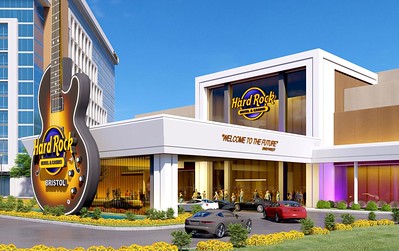
In Virginia, Hard Rock International announced its temporary casino, Bristol Casino−Future Home of Hard Rock, will open July 8 at 500 Gate City Highway. The temporary facility will offer 30,000 square feet of gaming space with 900 slots, 20 tables, a sportsbook and non-smoking and high-limit gaming areas. The venue also will include a Hard Rock retail store, restaurant, grab-and-go food outlet, sports bar and lounge and smoking sports lounge. The facility will create 600 jobs.

Jon Lucas, chief operating officer at Hard Rock International, said, “We are excited to open the casino and welcome guests. As Virginia’s first casino, Bristol Casino−Future Home of Hard Rock will be a wonderful addition to the Hard Rock global portfolio of dining, hotel and entertainment properties.”

Allie Evangelista, president at Hard Rock Hotel & Casino Bristol, said, “I cannot wait to open the doors on July 8 for our temporary casino in Bristol. We continue to hire new team members daily and are working hard to fill remaining positions. Visitors will be thrilled to enjoy fantastic gaming and dining opportunities at our new property.”

Nevada Supreme Court Reverses Steve Wynn Ruling

The Nevada Supreme Court has reversed the decision of a lower court that held state gaming regulators had no right to deem former casino mogul Steve Wynn unsuitable to hold a gaming license.

The case stemmed from the Nevada Gaming Control Board’s complaint in 2019 asking that Wynn be declared unsuitable for a state gaming license, due to reports of inappropriate relationships with subordinates, unwanted sexual advances and sexual harassment when he was chairman of Wynn Resorts. Wynn challenged the decision in court, claiming the board was not authorized to decide the matter because he had given up his gaming license in 2018, shortly after the scandal became public.

Judge Adriana Escobar of the Clark County District Court agreed with Wynn, holding that the board did not have standing to decide on the matter. Last week, seven justices on the Nevada Supreme Court reversed that ruling, holding that Escobar should not have decided the matter because the Nevada Gaming Commission, the final arbiter in gaming matters, had not yet ruled on the gaming board’s recommendation to find Wynn unsuitable for licensing.

The state regulators appealed the ruling, and the high court overturned the decision last week.

“We conclude that the district court lacked jurisdiction to entertain Wynn’s petition,” Justice Abbi Silver wrote on behalf of the state’s high court. “Accordingly, we reverse the district court’s order granting Wynn’s petition and remand this matter to the district court with instructions to dismiss the petition for lack of jurisdiction.”

The court did not rule on the merits of the arguments made by Wynn attorney Colby Williams during the January 3 hearing of the case, in which William argued the regulatory agencies have no authority over Wynn now.

The justices agreed that a judicial review of the Wynn case was “precluded because only final orders may be reviewed, and the district court properly found that the commission’s order is not final.”

Gaming Control Board Chairman Brin Gibson said in a statement the agency was “pleased with the ruling. We are reviewing the decision with legal counsel to determine next steps.”

The gaming board’s complaint will now go back before the Nevada Gaming Commission.

“We’re disappointed that they didn’t reach the ultimate issue, but we’re gratified that all of our arguments can still be presented when we go back to the commission, and then if necessary, back to the court,” Wynn attorney Williams told The Nevada Independent.

Most Massachusetts Senators Support Sports Betting

The State House News Service contacted the offices of the 40-member Massachusetts Senate and found that 24 senators support sports betting. Despite that support, Senate President Karen Spilka hasn’t brought the measure the House overwhelmingly passed, to the floor.

Governor Charlie Baker, who will retire from office at the end of this year, is also continuing to press for the Senate to act on a bill—which he has done for four years. On March 24 Baker said it was inevitable that some bill would pass, “whether it’s that, or some other version, I think at this point this is a fact of life.” He added, “And for people in Massachusetts – literally many do – to just drive over the border, to be able to participate in something that is another form of entertainment, I think is unfortunate.”

The House bill, passed by a vote of 156-3, is unmoved in the Senate Ways and Means Committee, where it has resided since last summer. House Speaker Ron Mariano has criticized the Senate for its “stubborn reluctance to take the bill up.” The bill would authorize sports betting in restaurants, taverns and casinos throughout the Bay State. The survey indicated eight senators who were noncommittal.

But the News Service survey indicates that it is Senate President Spilka, rather than the senators as a whole, who has refused to move the bill. The Senate leader declined to respond to the News Service poll, except to comment that the Senate is “working towards a consensus to bring the bill to the floor.” She did not indicate a timetable for when that might happen.

She added, “Many, many of the senators — basically to paraphrase — again said the devil’s in the details, so once we have consensus, the intention is to do that very fast,” and continued, “It honestly doesn’t matter where I stand. If we’re able to reach a consensus, the intention is to bring it to the floor and debate it on the floor and let the senators decide.”

Recently the Black Economic Council of Massachusetts, the Association of Black Businesses and Professionals, and the Massachusetts Latino Chamber of Commerce sent letters to the Senate endorsing Senator Adam Gomez’s bill. It would permit smaller retailers to get gaming licenses.

Commenting about his own bill, Gomez said, “My bill, S.264, is unique in that it provides our local bars and restaurants the opportunity to offer sports wagering and retain the patrons they may lose to casinos.”

The letter from the Black and Brown organizations stated: “Because there are currently no Black or Brown owned casinos and/or sports wagering mobile applications, any legalization regulating this exclusive industry in the Commonwealth which does not include an option for approved retailers (bars, restaurants, private clubs) will inevitably fail in delivering true diversity, equity and inclusion.”

Senate President Pro Tempore Will Brownsberger said there are “unresolved questions about the scope of activities that should be eligible for sports betting, how to set it up, how to regulate it, and how to share the revenue it generates.”

Senator Michael Brady said, “I’m a strong supporter of sports betting. As you know, I filed legislation regarding sports betting in the budget and in other means. I think we’re losing revenue…to other states around New England. A lot of people I know in my district, my constituents, want it. … I know there was concerns about local colleges in Massachusetts. … I’m willing to look at that. But I think it’s long overdue. I think we missed the ball when Tom Brady, even though he played for Tampa Bay, when he went to the Super Bowl there.”

Senator Eric Lesser added, “Yes, Senator Lesser does support sports betting. He filed a bill to legalize it and said bill was reported favorably from the Joint Committee on Economic Development and Emerging Technologies and referred to Senate Ways & Means.”

And Senate Majority Whip Mike Rush said he supports sports betting “in all forms.”

Caesars Partners with Mets as Baseball Season Opens

Caesars Sportsbook has become the New York Mets official sports betting partnership both parties announced April 6.

A multi-year deal includes VIP experiences and hospitality for team members and a Caesars Sportsbook at the Metro Grille in Citi Field, according to CDC Gaming Reports.

“New York is a key state for us following the successful launch of our Caesars Sportsbook app in January,” said Caesars Digital Co-President Chris Holdren in a statement. “The Mets’ fanbase is one of the most loyal in baseball and this partnership offers us the chance to treat those passionate fans like Caesars.”

The 13,000-square-foot space in the Metro Grille will feature a multi-tiered dining room and an outdoor patio seating overlooking the left field.

Caesars gains access to Mets logos and marks, visible in-game signage during TV broadcasts, and broadcast and digital content.

Caesars Sportsbook is an authorized gaming operator of MLB and is currently live in 23 states and jurisdictions, 17 of which are mobile. Caesars operates the largest number of retail sportsbooks across the country.

Kentucky Sports Betting Bill Gets Second Reading

In Kentucky, two gambling-related bills, HB 606 and HB 609, got a second reading just before a 10-day veto recess began on March 31. Legislation must be read three times in the House and Senate before it can pass.

HB 606, which has bipartisan support in the House, would allow seven horse racetracks in the state to offer online poker and have one skin each for sports betting, plus offer fantasy sports. HB 609 would allocate $50 million from a $300 million settlement with PokerStars to fund problem gambling services.

At the end of the recess, the Senate will have to act on any pending legislation on April 13 and 14, before the legislature adjourns. Having the bills be read twice gives Koenig and Senate Majority Floor Leader Damon Thayer time to seek support. “I’ll be fighting for passage until 11:59 p.m. April 14, when the legislative session ends,” Koenig said.

The bills’ sponsor, state Rep. Adam Koenig, said, “HB 606 is very much alive. Not saying it is going to pass, but I’m having active conversations with Senators and believe there is a path. We went from four years ago, where you could only bet on sports in Nevada, to now 33 states and the District of Columbia where sports betting is legal. It’s everywhere. It doesn’t matter what party the state is run by, Democrat or Republican. It’s a non-partisan issue.” Koenig noted when legalizing sports betting first was suggested three years ago, analysts estimated it would raise $22.5 million in annual tax revenue.

Still, sports betting has plenty of opposition in Kentucky. Martin Cothran, spokesman for the conservative Family Foundation, said, “We don’t sense any desire on the part of state lawmakers to expand gambling in this state two years in a row. There is just no sentiment for getting into another ugly and divisive fight on gambling just a year after historic horseracing slot machines only barely made it through.” Senate President Robert Stivers also is opposed to HB 606. But Governor Andy Beshear said he supports it since Kentuckians are spending gambling money in Indiana.

Also in Kentucky, the American Gaming Association recently sent a letter to state legislators, encouraging them to pass House Bill 608 which would ban unregulated skill games that have proliferated in the state since 2021. HB 608 passed a House committee March 16.

Kentucky Lottery Senior Vice President, Communications, Public Relations and Social Responsibility Chip Polston said approximately 1,400 machines are operating in lottery retailer locations in 71 counties, excluding those in bars and restaurants. Kentucky Lottery President Mary Harville said the number of illegal machines in Kentucky is up 42 percent since November 2021, which is projected to cut into revenue earmarked by the lottery for college scholarships.

Chris Cylke, AGA senior vice president, government relations, said the so-called gray machines are “very much different than the legal regulated products that our industry offers which undergo rigorous testing. It is a bit of a zero-sum game in terms of allowing these things to continue operating. There will be economic impacts, but also impact on responsible gaming. On the policymaking side, this is something that needs to have a lot of attention paid to it. These things clearly fall outside of what we would determine as a responsible operating environment.”

Kansas Sports Betting Bill On Hold

The Kansas legislature is adjourned until April 25, when the state Senate is expected to take up SB 84, which would legalize mobile and retail sports betting in the state.

The House voted 63-49 to advance a final version of the measure on April 2, after a conference committee agreed to changes. The Senate did not take up the bill before lawmakers adjourned for a 3-week veto break. Actually, the Kansas University Jayhawks’ national championship run prevented votes before the recess, since so many legislators traveled to New Orleans for the Final Four.

In a surprise move, the measure earmarks 80 percent of state tax revenue from sports wagering to a special fund for financing a professional sports facility. That provision was slipped into the package negotiated at the request of House leadership, as Kansas City Chiefs officials continue to evaluate proposals to build a National Football League stadium on the Kansas side of the state line with Missouri.

Following approval in the Senate, Governor Laura Kelly is expected to sign the bill. She recently told reporters, “I know so many people who go to Iowa every weekend to bet on sports. I’d like for them to stay here and spend their money in the state of Kansas.”

The Senate passed its sports wagering measure last year, and the House advanced its version March 30. Both proposals legalized retail and mobile sports betting through the state’s four casinos, with three skins each. The final version hammered out in the conference committee includes a 10 percent tax on both mobile and retail wagering revenue and allows casinos to partner with up to 50 retailers. Also, a casino can request an additional online skin in partnership with a major league sports team; in Kansas, that would be Sporting Kansas City of Major League Soccer.

The Kansas Racing and Gaming Commission would regulate sports betting. The bill allows wagering on professional and collegiate sporting events, so Kansas University fans could bet on the National Collegiate Athletics Association National Champion Jayhawks.

In addition, Native American tribes, which own six casinos in Kansas, would be allowed to amend their gaming compacts to include sports wagering.

The Kansas Lottery estimated legalized sports betting could generate $10 million annually for the state by 2025.

Missouri Sports Betting Legislation Heads to Senate

The Missouri House recently passed two sports betting bills and sent them to the Senate Appropriations Committee. The measures would legalize mobile and retail wagering at the state’s 13 existing casinos.

A coalition of Missouri casinos and professional sports teams had significant input on the legislation. Analysts projected Missouri sports betting’s annual handle could reach $150 million.

Provisions of HB 2502, sponsored by state Rep. Dan Houx, include an 8 percent tax rate, reduced from 10 percent and funds for problem gambling services. The state’s pro teams will be allowed to partner with online operators but they will not be allowed to have sportsbooks on premises inside stadiums or arenas. Casinos also will be permitted to have mobile platform; up to 39 online betting skins would be allowed. Houx said, “This is the first time we got everybody to the table and got 99 percent of the people to the plate.”

The bill will face opposition in the Senate, including state Senator Denny Hoskins, a longtime supporter of sports betting. Hoskins wants video lottery terminals legalized, but agreed to address sports betting and VLTs in separate legislation. However, he said the House bills favor casinos. He said he’d support a higher tax rate and a bill that “benefits Missouri taxpayers, education, and Missouri veterans’ homes.”

The full Senate has until May 6 to vote on the sports betting bills. The legislative session will end May 13.

South Dakota May Allow Mobile Wagering in Casinos

The South Dakota Commission on Gaming recently announced a plan to allow sports wagers to be placed on mobile apps inside Deadwood casinos. SCCG Executive Secretary Susan Christian said, “It’s not going to be a fast plan. Everybody just needs to be patient.”

Sports betting has been legal in the state for just over six months. At the moment, a few Deadwood casinos are the only places in the state that offer sports betting, and only on kiosks or betting stations located throughout their facilities. The new plan would allow mobile sports betting apps to take bets as long as they are made inside casino properties. Software would be installed to detect bets made from outside the casinos.

In its first four months, from September through December, South Dakota sports betting operators took in $2.7 million in sports bets. In comparison, neighboring Wyoming, which allows statewide online betting, had handle of $40.3 million with 300,000 fewer residents. In January, a record $835,000 was wagered on sports at the casinos, with $493,000 bet on the National Football League playoffs and $148,000 on National Collegiate Basketball Association Men’s Basketball Tournament games.

Mike Rodman, Deadwood Gaming Association executive director, said,

“Sports wagering continues to gain momentum and grow in Deadwood.” He said February could be a record-breaking month due to the Super Bowl. Also, the NCAA has filled the state’s casinos with people betting on college basketball. “This is typically a slower time of the year for us. This opportunity for sports wagering has really been a shot in the arm for Deadwood. We’re excited to see what it brings,” Rodman said.

Sports wagering opponents include Governor Kristi Noem and tribal operators of 12 Native American casinos in the state.

AJ Andrews Joins BetMGM as Brand Rep

BetMGM, a leading sports betting and digital gaming company, announced today the signing of AJ Andrews, Major League Baseball Network (MLBN) personality and the first female to win the Rawlings Gold Glove Award, as the company’s newest brand ambassador and content creator.

Throughout the upcoming baseball season, Andrews will appear on behalf of BetMGM on the air, on social media and at fan events.

“I am so grateful for the opportunity to dive further into the sports betting industry as a brand ambassador for BetMGM,” said Andrews. “As I continue to advocate for more opportunities for women in sports, I’m excited to have this new platform to creatively share and inspire others.”

Andrews’ impact on the sports scene started at Louisiana State University, where she led the Lady Tigers to two Women’s College World Series appearances. She began her professional career with the Chicago Bandits in 2015, and the following year made history with the Akron Racers as the first woman to win a Rawlings Gold Glove Award, an award previously exclusive to the best defensive fielders in Major League Baseball.

Andrews continues to garner awards and accomplishments such as the Rally Spike Award as the league’s stolen base leader.

Matt Prevost, BetMGM chief revenue officer, said, “AJ is an all-around powerhouse who has been a trailblazer in sports throughout her career. BetMGM is proud to welcome her to the team as a new personality in sports betting.”

Alabama Fails to Pass Gambling Legislation

All four of the lottery bills working their way through the Alabama legislature failed to go the distance this session. Not one passed out of its original chamber.

In the House, Speaker Mac McCutcheon previously said he wouldn’t bring the measures to the floor unless they had the votes to pass. State Senator Greg Albritton said since the bills were withdrawn from the House, the Senate declined to pass the legislation and then have it fail. Frustrated, Albritton said, “I have not gotten any responses, adequate responses, other than they just don’t want to deal with it.” Albritton said he’ll finish out the session and consider re-introducing the legislation again in the next session.

Joe Godfrey, president at the Alabama Citizen’s Action Program, said, “Great news to report. It appears that all gambling expansion bills are dead for this legislative session. Thank you for your prayers and for contacting your legislators concerning this issue.”

Albritton commented religious and conservative groups “should not stop the legislature from doing its duty in gaining control of this industry and regulating it.” Gaming tax revenue would have been directed to education.

Georgia Rejects Sports Betting Again

In Georgia, the 2022 legislative session, like several before it, ended without a sports betting bill.

There was a brief moment of hope when, in a surprise move, a House committee resurrected two bills that had gone nowhere after the Senate passed them in 2021. The committee amended the bills to give lawmakers the option of passing sports wagering through the lottery or letting voters decide. The full House did not act on either bill.

Both bills included a 20 percent tax on sports betting revenue, a $100,000 application fee and $1 million in license fees, with proceeds going toward education. With the same tax rate on revenue, Tennessee took in $39 million last year, analysts said.

The next chance for Georgia to pass a sports betting bill will be 2023, and sports betting apps most likely would not be able to launch until late 2024.

That’s because the state lacks the regulatory structure other states have in place to oversee casinos and racetracks.

Derek Schiller, chief executive officer of the defending World Series champion Atlanta Braves said, “I was incredibly disappointed. I know for a fact we did everything we could to try, and so I don’t think there’s an issue with our effort or the efforts of the other pro teams in town. We worked closely with a bunch of the different constituencies involved in trying to put together a framework for a bill that we thought would work. And we ultimately couldn’t even get that bill voted on.”

He added, “There’s so much illegal sports betting going on in the state of Georgia that we have to bring that out of the shadows and regulate that. I suppose it’s mostly disappointing because this is something whose day and time should have come already. At some point in time, I think logic should prevail in this. And at this point in time, it hasn’t.”

Ainsworth Online Slots Launched with Cordish Live in PA

Gamblers in the Keystone State of Pennsylvania can now play online slot games from Ainsworth Game Technology. Last week, Ainsworth and Cordish Live launched the digital portfolio.

“We’re excited to bring Ainsworth’s library of online slot games to Pennsylvania via the GAN SuperRGS,” said Ainsworth Interactive General Manager Jason Lim. “Ainsworth is committed to enhancing the online player experience for Cordish Live with our latest games and new innovative content.”

Managing Director of GAN Giuseppe Gardali added: ‘We are thrilled to rollout Ainsworth content in another state via the GAN SuperRGS. We aim to bring the best, most engaging game experiences to operators and their players and the Ainsworth portfolio certainly ticks all these boxes. We look forward to rolling out more titles to the Pennsylvanian market in due course.”

GiG Completes Sportnco Acquisition

Gaming Innovation Group Inc. (GiG) has signed an agreement to acquire iGaming company Sportnco in a deal first announced in December. The plan will include the issuance of new shares to Sportnco shareholders and SkyCity Entertainment Group Ltd.

Sportnco is a leading platform providers of turnkey betting and gaming solutions for operators in regulated markets through its in-house developed sportsbook and player account management system PAM. According to a news release, the combined company will enhance and strengthen GiG’s position as one of the industry leading platforms and media providers with innovative and proprietary products and creating one of the largest and fastest growing providers in regulated iGaming with an unparalleled regulated geographical footprint.

Sportnco has international presence and operates as a leading B2B supplier in France and Spain and is active in other European jurisdictions such as Belgium, Portugal and Greece, as well as in several high-growth Latin American markets. It is also well-positioned to enter the U.S. sportsbook market.

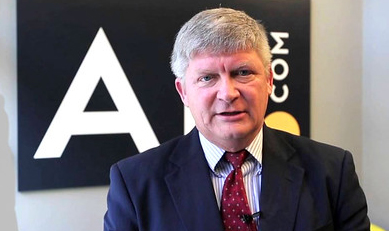
“It is with tremendous excitement that we now step forward into the next chapter in GiG’s history,” said GiG CEO Richard Brown. “The team at Sportnco have built a tremendous business, one that is highly complementary to GIG’s offering both in product but also addressable market increase, and now the work begins to realize the truly existing growth opportunities that the business combination can pursue. We welcome both the owners of Sportnco and SkyCity as shareholders and the staff of Sportnco into GiG organization and now move forward with full focus on the execution of the post-merger integration plan.”

Hervé Schlosser, CEO and founder of Sportnco, added, “Together with all the teams and shareholders who have built the success of Sportnco and Tecnalis, we are extremely proud of the journey we have accomplished since 2008, and of our integration today into the GIG group. I look forward to opening this new chapter as I am confident that, together, we will offer stronger technology solutions for our customers in the fast-growing regulated markets.”

Sportnco’s geographical presence complements GiG’s current offering. Together, they will be licensed in 25 markets, currently with around 55 clients. Through the acquisition, GiG has increased both short- and long-term addressable markets meaningfully. Sportnco’s tier 1 sportsbook product is strong, and the acquisition is expected to create attractive commercial, operational, and technological synergies, as well as enable cost savings and accelerated growth.