Archives: Articles

This is the example article

Ontario iGaming Goes Live April 4, Could Create 2,600 jobs

PlayCanada estimates that Ontario’s new online gaming market could create 2,600 jobs when it goes live April 4. Half those jobs could be high-quality with better-than-average salaries, the news outlet reported, and at least 30 operators will be entering the market.

PlayCanada tracks the Canadian gaming market. It compiled its report from data gained from economists and industry insiders.

PlayCanada managing editor Robyn McNeil, who also wrote the report, commented, “The truth is that online casinos and sportsbooks often act as a tide that lifts all boats, expanding the market to the benefit of all industry stakeholders.”

Dustin Gouker, who is in charge of the Play network of news sites, said, “Land-based casino operators will have to adjust, but the introduction of private online gambling operators should be a net benefit for Ontario and beyond. Ultimately, the benefit of regulated, private online gambling operators to the economy will be tangible.”

Among operators that have been approved are LeoVegas Group, Play’n GO, Rush Street Interactive, Gaming Realms, Bragg Gaming Group, 888 Holdings, Inspired Entertainment and Kambi.

DraftKings and FanDuel, which also plan to enter the market, have decided not to offer daily fantasy sports contests in the province.

FanDuel announced it wouldn’t offer DFS “due to a change in government regulations.” It also stated: “Ontario residents can participate in daily fantasy contests while physically located in other provinces and within US states where daily fantasy is permitted,” adding, “Additionally, Ontario residents will be able to utilize the FanDuel Sportsbook and Casino products launching in Ontario beginning April 4th.”

DraftKings issued a similar announcement.

Canadian Gaming Association President and CEO Paul Burns explained: “So you can’t ‘mingle’ players from other jurisdictions with players from Ontario,” adding, “There are legal issues unresolved around having international liquidity in Ontario which we hope are resolved in the coming months. This is the most significant barrier to offering DFS.”

The Alcohol and Gaming Commission of Ontario (AGCO) offered a clarification: “At this time, Ontario players can only participate in games with other players located in Ontario. Choosing whether or not to offer pay-to-play fantasy sports is an individual business decision that rests with registered operators. Free-to-play fantasy sports have been and will continue to be allowed to be offered after the new iGaming market launches on April 4, 2022.”

In a related development, Google has begun accepting ads on regulated sportsbooks in the Ontario sports betting market. Google will allow gaming ads from lotteries and private licensed operators.

This is a positive development for legal operators, since Google will not be accepting ads from gray market operators.

Rush Street Interactive Earns RG Check Accreditation

Last week, Rush Street Interactive, Inc. announced that it has become the first U.S.-based online casino and sports betting company to receive RG Check iGaming Accreditation from the Responsible Gambling Council (RGC) for its BetRivers.com and PlaySugarHouse.com sites.

RG Check is a rigorous responsible gaming accreditation program developed “to meet or exceed all existing responsible gaming regulatory requirements,” RSI announced. Accreditation, reviewed by a panel of independent responsible gaming specialists, is valid for three years.

In a release, RSI said it was especially proud to announce this achievement during March, Problem Gambling Awareness Month, and remains focused on being at the forefront of this important topic.

“Receiving RG Check Accreditation is a testament to our commitment and execution of RSI’s corporate social responsibility strategy, which includes the continued implementation of the Company’s responsible gaming initiatives,” said CEO Richard Schwartz. “We want to ensure our valued customers and employees are equipped with the tools and resources necessary to help ensure a culture of safe, fair and fun gaming experiences.”

“RG Check is a clear demonstration that an operator prioritizes and embeds responsible gambling into the core of its operations. RGC commends BetRivers.com and PlaySugarHouse.com for achieving RG Check Accreditation,” said Shelley White, CEO of the Responsible Gambling Council. “This achievement represents RSI’s commitment to transparency, player safeguards, duty of care and continuous improvement, as well as contributes to creating a culture of responsible gambling and sustainable play. RG Check is an invaluable tool for managing risk and increasing the effectiveness of RG programming. RGC is proud to provide continuous support to RSI’s harm minimization efforts.”

Rush Street Interactive is currently live in 13 states in the U.S. and also internationally in Colombia. This week, BetRivers real-money online casino and sportsbook will go live in Ontario, Canada which will become the third country where RSI operates real-money online gaming.

Australia Seeks to Block Offshore iGaming Sites

The Australian Communications and Media Authority (ACMA) has issued blocking orders aimed at offshore websites that illegally offer online gaming and affiliate marketing.

The orders included the websites Pokies Parlour and Ninja Spins, and affiliate sites Pokies Online Casino, CasinoAus, Australian Casino Sites and AU Online Casino.

ACMA has requested that the country’s internet providers block the sites. The Authority made its first blocking request in 2019 and has since then blocked 426 illegal gambling websites.

Gaming Arts, Gamesys to Partner Online

Las Vegas-based slot supplier Gaming Arts, LLC announced it has entered into an exclusive five-year content agreement with Gamesys, a Bally corporation, to provide Gamesys with access to its full library of games for deployment into online, real-money gaming worldwide.

Under the agreement, Gamesys and Gaming Arts will work together to identify, convert and deliver titles from the growing Gaming Arts library of successful casino slot games to all online real-money gaming markets, in which Gamesys operates around the world. The games will be featured prominently as part of Gamesys’ online offering. The deal also calls for Gaming Arts to develop new games for Gamesys.

“This is a truly defining moment for Gaming Arts,” said Mike Dreitzer, CEO of Gaming Arts. “As one of our first forays into online gaming, we couldn’t be more pleased than to partner with Gamesys/Bally to deliver our exciting game portfolio to online real-money global gaming markets everywhere.

“Gamesys/Bally is a proven, world-class provider of online games. The fact that they are partnering with us in this exclusive way, and have committed to feature our games within their global portfolio, represents a very exciting opportunity to introduce Gaming Arts content to an entirely new segment.

“This is just the first aspect of our partnership. Going forward, Gaming Arts will work closely with Gamesys/Bally as part of a larger omnichannel strategy to deliver the best-of-breed games in the online space as well as land-based casino formats.”

Nick Wright, senior vice president of business development, interactive at Bally’s Corp., added, “Bally is delighted to partner with Gaming Arts and to have exclusive access to their popular and proven game portfolio for use in online gaming. We look forward to expanding our relationship with Gaming Arts across multiple channels.”

“Gaming Arts is very pleased with this new partnership,” said David Colvin, chairman and founder of Gaming Arts. “This partnership with Gamesys/Bally is a big step forward for us on so many levels. We look forward to working together in the exciting days ahead.”

WSOP.com Live in Michigan

Michigan has become the fourth state to offer the World Series of Poker online site, along with New Jersey, Nevada, and Pennsylvania, according to CDC Gaming Reports.

“We’re sorry it’s taken so long,” said World Series of Poker at Caesars Entertainment Senior Vice President Ty Stewart in a statement, “but WSOP.com is ready to make up for our late entry with industry-leading promotions, the biggest weekly tournaments, and player appreciation benefits like freerolls to the Main Event in Las Vegas.”

As part of its offerings, WSOP.com has signed a partnership with 2009 Main Event champion and Michigan resident Joe Cada. As the local poker ambassador in Michigan, Cada will play Michigan residents. Any resident who can outlast Cada in the 2022 WSOP Main Event will walk away with a $1,000 bonus.

Cada also will host live streaming sessions, participate in bounty events, and host live tournaments in Michigan.

“It’s go-time in Michigan,” Cada said in a statement. “I know a lot of local players are excited that WSOP.com is finally live in the state and I’m personally looking forward to getting to know all the great poker players at tournaments and online events soon. Game on!”

WSOP.com says the site is the only one where Michigan players may earn entry into WSOP offline events, including the Main Event. The tournament will be held at Bally’s Las Vegas Hotel and Casino and the Paris Las Vegas Hotel and Casino on the Vegas Strip for the first time starting on May 31.

WSOP.com features live-action games from No Limit Hold ’em to Pot Limit Omaha, as well as a full slate of daily guaranteed tournaments, exclusive 2022 WSOP satellites to gold bracelet events in Las Vegas.

White Hat Inks U.S. Deal with Resorts Digital

On April 5, White Hat Studios, the content division of major iGaming platform provider White Hat Gaming, announced it is continued its expansion in the U.S. with a major deal with Resorts Digital Gaming.

The agreement sees Resorts offering its online casino customers in New Jersey a broad selection of slots, jackpot games, Megaways titles and more from White Hat Studios’ market-leading portfolio of proven hits.

Daniel Lechner, vice president of sales and marketing at White Hat Studios, said: “Resorts Digital Gaming clearly understand the importance of offering customers premium gaming titles that maximize engagement and we are delighted to be able to provide the content their players are seeking.

“Our games are tried and tested in mature markets, and we are excited to see them perform for Resorts Digital Gaming’s customers in the Garden State.”

Ed Andrewes, CEO at Resorts Digital Gaming, added, “Our success to date has been as a result of curating a catalogue of first-class content and we are thrilled to have bolstered this library significantly with the addition of titles such as Deal or no Deal, Worms and Ted.

“White Hat Studios are an exciting new addition to the US market who offer titles that have proven themselves to be effective in other markets. We look forward to a mutually beneficial partnership.”

The division was created following the asset purchase of Blueprint Gaming’s catalogue of games last year, with the Resorts agreement the latest in a string of subsequent high-profile content deals across the states.

Dutch Online Market Smaller Than Projected

The online gaming market in the Netherlands may be smaller than originally projected. René Jansen, chairman of de Kansspelautoriteit (KSA), made the assertion during his annual report on 2021.

The report said that 634,000 online gaming accounts were created between the launch of the market in October 2021 and the beginning of March.

Jansen noted that many players open multiple accounts, so the actual number of players might be fewer than expected.

He said, “Please note this does not mean that there are so many players (on legal sites) in the Netherlands.” Jansen added, “An unknown number of players have an account with several providers. So there are (probably considerably) fewer than 634,000.”

He continued, “This is an important insight, because earlier estimates have been made of approximately 1 million Dutch people who—occasionally or more often—participate in games of chance on the internet. There is even a recent survey that came in at 1.8 million. Those estimates therefore seem exaggerated, particularly because a number of large providers without a license no longer offer their services in the Netherlands from 1 October.”

Podcast with Paul and Phil Juliano, Senior Executives at Bally’s

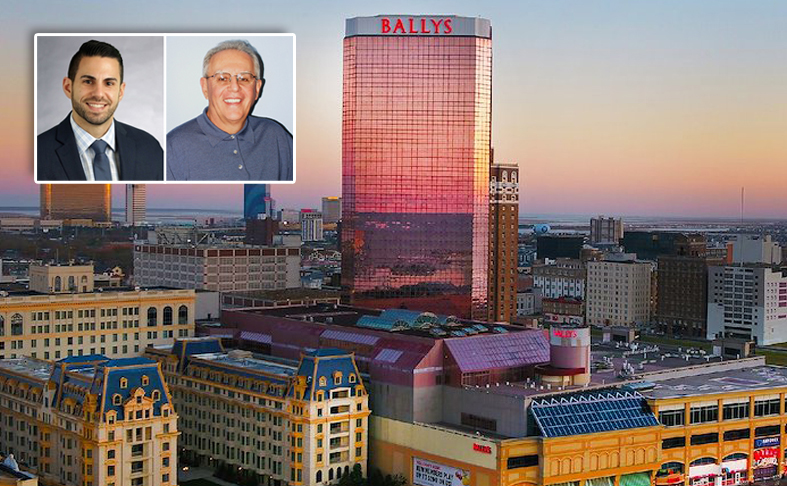
When the Twin Rivers company of Rhode Island bought Bally’s Atlantic City in April 2020, it changed the entire company. Already a fast-growing gaming company, the purchase of Bally’s and its signature brand gave Twin Rivers a classic gaming identity. Since then the company has rebranded all of its casinos. Helping to make that happen are the father-son team of Phil Juliano, Bally’s executive vice president, casino operations and chief marketing officer, and Paul Juliano, the senior vice president of operations. While the Bally’s Atlantic City buy was important, the property required a complete renovation, something that Phil says will happen by Memorial Day. Paul, meanwhile, outlines the changes in Atlantic City and across the Bally’s portfolio of properties. They spoke with Global Gaming Business (Casino Connection’s parent company) Publisher Roger Gros via Zoom in late February.

How Much Pain from AC Smoking Ban?

When Covid-19 restrictions ended, casinos in Atlantic City ended the smoking ban. But a number of employees and anti-smoking groups are pushing lawmakers to end the loophole that permits smoking on a quarter of the casino floor.

Little by little, the effort is gaining legislative momentum.

The employees say the secondhand smoke harms their health. The casinos say a smoking ban harms the gaming revenue, which in turn could cost jobs and tax revenue to the state.

A February report from the Spectrum Gaming Group and commissioned by New Jersey’s casino industry seems to bolster the gaming hall claims of possible economic catastrophe. As many as 2,500 jobs could be jettisoned. Gambling revenue could decline almost 11 percent and non-gambling revenue, 6.5 percent while tax revenues may fall by as much as $44 million.

The story says while smokers represent 21 percent of the gamblers in Atlantic City, they tend to spend more time and money in the casino, not to mention if they went outside for a smoke, that’s less time to gamble, according to the report.

“Now is not the time to enact a smoking ban,” Joe Lupo, president of Hard Rock Atlantic City and of the Casino Association of New Jersey, said in a statement accompanying the study.

The Greater Atlantic City Chamber supported Lupo’s position, warning that a smoking ban would cost jobs and hurt local businesses.

“A smoking ban would have a negative impact on the casino industry, resulting in significant job losses (and) decline in revenues, which in turn would hurt local businesses and vendors that rely on the industry for their economic livelihood,” said Michael Chait, chamber president. “We recognize the concerns of casino employees who support a smoking ban, but we also must keep in mind that thousands of employees and their families will be impacted by lost jobs if a ban is passed.”

The stance cost the chamber at least one member.

“We highly value our membership in the Greater A.C. Chamber, but as a public health agency we cannot continue to be members of an organization that places financial interests above health,” Atlantic Prevention Resources Executive Director, Bob Zlotnick said. “As a member of the local community, we would stand to be impacted by any loss in local business, but we cannot in good conscience put a price tag on the health of our families and neighbors.”

Casino visitation reached a 20 year low in 2021 most of it the result of Covid-19. In person gambling revenue in 2021 was 5 percent less than 2019, pre-pandemic. Lupo also noted the casino workforce has yet to reach their pre-pandemic levels.

“If you had asked the tavern and restaurant owners, when we put in the smoking ban, they were upset with me,” he told NJBIZ. “Years later they all said, ‘You know what, guv, we were wrong.’”

Lupo rejected the comparison patrons “do not travel any great distance to go to a restaurant or bar,” just so they can smoke. Casino guests would just as soon visit Pennsylvania casinos where smoking is allowed rather than New Jersey.

“The primary concern for New Jersey casinos is not that guests will stay at home, but that they will travel to another casino in Connecticut or Pennsylvania where smoking is permitted instead of coming to Atlantic City,” Lupo said.

Three of the casinos in the Philadelphia area—Parx, Rivers and Live!— voluntarily banned smoking, leaving Valley Forge and Harrah’s where smoking continues. Parx told NJBIZ that the reception has been positive from guests.

“Even many smokers have given positive feedback and have not minded going to the smoking patio. Employees are extremely happy with the change, especially the table games team,” said their public relations director, Carrie Nork Minelli.

The 43-page Spectrum study indicated a causal relationship between a smoking ban and economic impacts on the casinos, but it might not be cut and dried.

“The content of the report has a lot of caveats,” said Peter Chen, an analyst at the progressive think tank New Jersey Policy Perspective. “It seems like there are a lot bigger factors at play, which the authors of the study acknowledged.”

Lupo nonetheless cautioned that considering the casino staffing shortages, and the loss in their revenue, “we see no reason to believe that these declines would not last as long as neighboring jurisdictions continue to permit smoking on casino floors.”

As in New Jersey, Pennsylvania casinos had to go smoke-free when they partially reopened amid the pandemic in 2020. Those mandates have been lifted, and more than a dozen Pennsylvania casinos now allow indoor smoking on the floor.

The expectation is that “lack of secondhand smoke exposure will improve team member health and have a long-term positive impact,” while Parx’s increasing market share would offset any loss of revenue from the smoking ban, Minelli said.

Five more state Senators came out in favor of banning smoking on the casino floor. They bring the total of primary or co-sponsors to 13, or one third of the Senate. The five are Senators Andrew Zwicker (D); Jon Bramnick (R); Joseph Cryan (D); Fred Madden (D); and Robert Singer (R).

“New Jersey should not allow any worker to be subjected to cancer-causing secondhand smoke while on the job,” said Senator Zwicker. “I’m co-sponsoring S264 because it’s past time that we eliminate the casino smoking loophole and finally protect the health of casino workers. This is a commonsense bill and an urgent matter for thousands of Atlantic City casino employees.”

Smoking inside should no longer be acceptable in casinos, said Senator Bramnick. “Employees have the right to breathe while working without the harmful effects of tobacco smoke.”

Employees expressed gratitude to the growing list of senators.

“All we’re asking is to be treated like every other worker in the state of New Jersey. We refuse to continue choosing between our health and a paycheck,” said Pete Naccarelli, co-leader of Casino Employees Against Smoking’s Effects (CEASE), according to Insider NJ.

New Jersey Governor Phil Murphy said he would sign a smoking ban if it arrived on his desk.

A.C. Can Fix What’s Wrong Prior to NYC Casino Debut

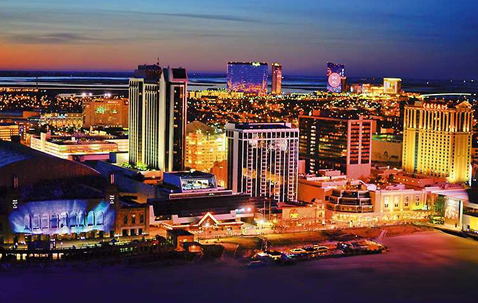
In 2006, the first casinos In Pennsylvania opened up. The result proved devastating to Atlantic City. The impact on gaming revenues was so bad—coupled with the recession—that several plans for new casino resorts were scuttled.

Atlantic City has yet to reach the level of revenue from 2006.

Now comes what could be a prospect almost as bad: three casinos in the New York City area.

At a forum on March 4 sponsored by the Greater Atlantic City Chamber, executives from Hard Rock, Resorts, Tropicana, and Bally’s discussed the ramifications of these developments. They agreed the resort has time to upgrade their own businesses to compete with New York.

“New York is coming,” said Joe Lupo, president of Atlantic City’s Hard Rock casino. “We have some time in Atlantic City to really make an impact,” he said.

The consensus said the casinos in New York won’t be ready for three years at least. But if two of the licenses went to existing casinos in Yonkers and Queens, they would be ready sooner the addition of table games they are not authorized to offer.

If Atlantic City, its casinos, and state officials can work together to address blight, poor infrastructure and safety concerns the impact would be far less.

The executives said it is essential that Atlantic City carry out a sustained “clean-and-safe” initiative.

“If we could wake up and Atlantic City was this perfect seaside community, we would weather those threats,” said Mark Giannantonio, president of Resorts. “Make Atlantic City as great as it can be in the next two or three years. Look at what is right in front of you: cleanliness and safety issues.”

Atlantic City Mayor Marty Small made a clean-and-safe initiative a big part of his plans for this year during his state of the city speech last month.

“Clean and safe, clean and safe, clean and safe: That just has to be the mantra,” said Paul Juliano, senior vice president of Bally’s Corp. “You change perception by reality.”

Panelists say Atlantic City has certain advantages that a casino in Manhattan or elsewhere in the city cannot touch.

“We have something special here in Atlantic City,” said Jacqueline Grace, senior vice president of the Tropicana, speaking of the ocean and the Boardwalk. “It’s hard to compete with that. People are still going to want to come down to the shore.”

Lupo said specific, concrete plans need to be made to advance some efforts already under way in the city.

“We need to see some funding from the state and some real planning from the city. The streets need to be paved. There needs to be more lights. There needs to be more police on the streets,” Lupo said.

New York Casino License Could Cost a Whopping $1 Billion

New York isn’t called the Empire State because of Star Wars. It’s because New York does everything in a big way, and that includes gambling, especially in and around New York City.

Want proof? The record setting rollout of mobile sports betting. More than $3.5 billion has been bet since the wagers began January 8. The high tax rate for sportsbooks is another—51 percent. But why stop there?

The license fee for one of three so-called downstate casinos—New York City and environs—was expected to be $500 million. But the state Senate has proposed doubling the fee for a nice round $1 billion.

Both the Senate and the Assembly each must produce a one-house budget for the next fiscal year, which begins April 1. The Senate version included the following: the state gaming commission’s board “shall determine a licensing fee to be paid by a licensee within thirty days after the award of the license which shall be deposited into the commercial gaming revenue fund; provided however that such licensing fee shall be no less than one billion dollars per license.”

There you have it. Except the Assembly one-house plan makes no mention of a figure. The two houses will negotiate the fee as part of the budget process.

As for three licenses, the Senate proposal has hinted in strong language that two of those licenses be awarded to Resorts World New York in Queens and Empire City in Yonkers. The proposal encourages state regulators to “consider private capital investment made previous to the effective date” of the license, according to Politico.

This year, the treatment of gaming in the state budget could open the state up to more online sportsbooks and accelerate the awarding of downstate New York casinos. For that to happen, though, current proposals need to survive the reconciliation process.

An amendment from Senator Joe Addabbo would bump up the process of licensing downstate casinos from 2023 to 2022. State law does not allow the new licenses to be given out until 2023, but Governor Kathy Hochul proposed state budget moves up the timeline. It would give Class III licenses to MGM Empire City in Yonkers and Resorts World NYC in Jamaica. That would allow those properties to transform from “slot parlors” to fully-fledged casinos with retail sportsbooks and table games. Then, another Class III license would be the prize in a bidding process. Bidders for that final license are expected to be Las Vegas Sands, Bally’s Corp., Hard Rock International and other big players in the industry.

Perhaps overshadowed but also of importance is a pair of gambling measures in the budget. The Senate plan also doubles the current eligible sportsbook operators to 16, while the Assembly goes to 14 vendors, but 30 percent of them would be minority owned businesses.

New York’s mobile sports betting action continues to concentrate in the four major operators at the same time state leaders seek to expand the number of sportsbooks.

The handle for the week ending March 6 came in at almost $340 million with FanDuel’s market share at 40.5 percent, DraftKings at 25.6 percent, Caesars at 18 percent and Bet MGM at 10.8 percent. The remaining 5.1 percent was divided among WynnBET, PointsBet and BetRivers, according to Play USA.

Legislators in both the state Senate and Assembly have introduced companion bills that would usher in at least five new operators by January and more beyond that, lowering the tax rate for all operators from 51 percent, the highest such rate in the nation. State Assemblyman J. Gary Pretlow told NY Online Gambling this week he is looking to add 10 new operators in the long run, lowering the tax rate to 25 percent.

“The big guys are still going to glom up a lot of the major players, but it gives someone else a shot,” Pretlow said.

“We’re looking more toward conversion: if you can convert an existing facility to a full-fledged casino, then that would be acceptable,” he said. “If we can do a conversion, then it’s a slam dunk for Genting-owned Resorts World and MGM’s Empire City.”

If approved, the state Gaming Commission would establish a bidding process to apply for the licenses, similar to how four upstate casinos were picked in 2014. So strong support among lawmakers does not guarantee Genting and MGM would be an automatic pick.

Although Manhattan or Brooklyn would be acceptable for a third casino, opposition from both boroughs might sink each.

Senate Finance Chair Liz Krueger says if the bidding goes forward community support would be a critical factor in the siting. “I just want to make sure that they cannot bigfoot any specific neighborhood to take a casino that they don’t wish to have there,” she said.

Asked if she thought Manhattan residents would back a local casino, she responded: “My gut is that there would not be community support for a casino in almost anywhere in Manhattan.”

Will New York online sportsbooks get the tax break, grow in number?

Addabbo believes the statute does not allow the tax rate to be changed, according to PlayNY. Then again, budget reconciliation is meant to iron out differences between the Senate and Assembly. Then again, with three operators accounting for more than 90 percent of the sportsbook market in New York, will adding more operators make up for the loss of tax revenue? Do the math.

The request for proposals includes a scoring factor that boosts diversity in the market, embracing minorities, women, and service-disabled veterans in applicant ownership, leadership, and workforce, according to CasinoBeats.

Should online casinos survive, commercial casinos and tribal nations would have the option to run online slots and table games within state boundaries, for a $2 million fee.

Meanwhile, as New York State enjoys the meteoric rise of mobile sports betting, lawmakers see more gold in online and land-based casinos in and around New York City, and a potential marriage of sports betting and horse racing.

Legislators have different opinions about how the state should help save the racing industry. Opposing bills are bouncing around the legislature.

Last November, New York Senator Joe Addabbo introduced a bill that would legalize fixed-odds betting on horse races in the state. S7536 would also permit state racetracks to house sports betting kiosks. The New York Racing Association welcomes the opportunity.

Last month, a coalition of legislators from both chambers introduced a pair of bills in both the state General Assembly and Senate. A07745 and S07260 would repeal tax exemptions for certain racehorses. A08468 and S07260 would redirect tax funds from video lottery terminal revenue that currently goes to support the state’s racetracks to other items in the state budget.

“At a moment when our working-class communities so desperately need funding for critical services like education, human services, and economic justice, to prop up a deadly industry that often abuses and neglects the horses in its care and is known for violations of workers’ rights, with $230 million of New York taxpayers’ dollars, is not right,” New York Senator Robert Jackson said.

Addabbo said the bills would kill the horse racing industry in the state.

Yet, the action on all the bills in both chambers has stalled for weeks. Work on the state’s budget for the next fiscal year has taken precedence in the New York Senate. That’s also shifted focus as far as the future of gambling in New York goes as well.

Addabbo pushed online casinos, a law he admits is a long shot.

Given Pretlow’s hesitation to push for it and Addabbo’s pessimism, that conversation could fizzle out altogether soon. That would clear the way for the dialogue to turn back to the future of horse racing.

Most of the debate could center on the coalition bills as opposed to Addabbo’s fixed-odds proposal. The coalition, officially the Campaign to End Horse Racing Subsidies, has some strong allies.

There are also organizations outside the state legislature that have gone on the record against the quartet of bills. They have formed their own group called We Are NY Horse Racing. The members include:

Both groups have started creating messaging to provide their spin to the public.

Perhaps most important to the future of these bills, Addabbo and Pretlow chair the gaming committees in their respective bodies. S08485 is currently on Addabbo’s committee. The other three could very well go through those committees if they do proceed.

It seems that Addabbo’s vision for the future of horse racing in the state is not only to maintain its current level of support but expand its offerings. Those two visions are irreconcilable. Someone is about to be disappointed, and the gates on the track to one of these outcomes could open soon.

In related news, the sportsbook subsidiary of Caesars Entertainment Inc. will add a new horse racing wagering app in the spring in New York. The app, The Caesars Racebook app, in partnership with NYRABets LLC, will offer bettors the opportunity to place a wager on races from more than 250 tracks around the world.

“Following our successful roll-out of Caesars Sportsbook, we’re delighted to launch Caesars Racebook in partnership with NYRABets,” Dan Shapiro, senior vice president and chief development officer of Caesars Digital, said in a release. “NYRA conducts world-class horse racing and NYRA Bets has access to the best horse racing content from around the world, including from Caesars-operated racetracks.”

New Jersey Lawmakers Consider More iGaming

November marks the end of the legislation that permitted iGaming in New Jersey. The law sunsets unless the legislation is extended. You would hope it would be a no-brainer as New Jersey has set the pace for online casinos In the country, according to NJ Online Gambling.

In 2014, iGaming produced $122.8 million in revenue. By 2021, online casino play set a record with $1.37 billion in revenue.

But all is not rosy. The state Division of Gaming Enforcement adds online casino revenue together with brick-and-mortar casino revenue to calculate the “payment-in-lieu-of-taxes” the casinos pay to the Atlantic City and the state. The online companies, which run iGaming operations, keep a majority of that revenue.

If that weren’t enough, the operators, whether from the U.S. or overseas, complain that they have to pay a large share of their revenue to casino companies. The 2013 law requires an online company to partner with a casino to offer its gambling.

“Who knew it would be so valuable?” Assemblyman Ralph Caputo mused. “Online casino revenue really kept the lights on down there.”

Caputo has sponsored a bill to extend the 2013 provisions by another 10 years, but wants the committee to review the impact of online casino gaming on the overall culture.

“Through these conversations, we have to have an analysis of whatever social impact there might be,” Caputo said. “We know how productive it is in terms of revenue.”

Caputo said he does appreciate that various companies are “fighting for their share of revenue, and the margins can be slim.”

In Solidarity with Ukraine, Gaming Groups Cut Ties with Russia

Several international gaming groups are cutting ties and canceling projects in the Russian Federation in response to Russia’s invasion of Ukraine— although some don’t state that as the specific reason.

Hong Kong-based casino NagaCorp Ltd. has “indefinitely” suspended development of its casino complex near Vladivostok in the Primorye Integrated Entertainment Zone and may try to dispose of it altogether.

According to market analyst Terry Ng of Daiwa Capital Markets Hong Kong, sanctions imposed on Russia by the international community may affect NagaCorp’s ability to operate a casino there. NagaCorp also operates the NagaWorld casino in Phnom Penh, Cambodia.

The Malta Gaming Authority (MGA) has informed licensees that they must screen potential business partners for involvement in the Ukraine invasion; cease any transactions with Russian parties; and freeze assets that might originate in Russia.

Australia-based Aristocrat Leisure Ltd. told GGRAsia it hasn’t supplied gaming machines to Russia for years, has no current gaming business there and has suspended its mobile games in that market. “Operating in Russia is currently not viable,” Aristocrat stated.

The company added, “To date, Aristocrat has assisted over two-thirds of our Ukraine-based employees and their families to voluntarily relocate, either internationally or to safer locations within the country.” The company has about 1,000 employees working at its Pixel United operation in that country. It plans to open a new office in Poland.

Aspire Global has terminated its contract with the Russian National Lottery, “effective immediately.” The sports, eSports, casino game and data provider BETER has also ended business with all partners based in Russia.

Major U.S. sportsbooks have stopped taking wagers in Russia or Belarus. Boston-based DraftKings was the first to make the announcement, adding that it has no commercial relationships with sports organizations in either nation. DraftKings’s announcement was made in a tweet headed by a Ukrainian flag. DraftKings has an office in Kyiv, Ukraine’s beleaguered capital city.

FanDuel followed with a similar announcement, with Caesars Sportsbook making the same announcement on the same day. The next day, sportsbook tech provider IGT, the Colorado Division of Gaming and Penn National Gaming’s operator Barstool followed suit.

According to Forbes, Caesars confirmed that it has also closed its betting market on Russian soccer, hockey, table tennis and volleyball, and PointsBet is no longer accepting bets or posting lines for Russian and Belarus based professional sports leagues.

Westgate Las Vegas Superbook Director John Murray says it previously took action on Russian soccer, but stopped after the invasion. “It was an easy decision,” he says. “It’s minor part of the business and we don’t deserve to be praised for it. Given the climate and everything that’s going on in the world right now, we just felt like it was better to get rid of it.”

Polish company Statscore tweeted, “We do not wish to provide any sports data and live scores for competitions organized by countries that just savagely assaulted other nations or helped in this process. Therefore, from March 1st, you will no longer witness any Russian and Belarusian competitions in our offer.”

Bet365 also pulled out of Russian operations last week and gave customers until March 15 to withdraw funds from their accounts.

Cyprus-based Parimatch, which announced March 3 that it would withdraw its franchise from Russia, has launched a €2.9 million ($US3 million) fund to support the Ukrainian Armed Forces. Parimatch was one of Ukraine’s first online businesses, founded in Kyiv in 1994.

According to sources, the European Lotteries (EL) also called on its members to suspend Belarussian and Russian lottery providers and to stop taking bets from those countries. A statement on its website said, “EL and its members condemn the war acts of Russia against Ukraine. As Ukrainian society is under violent attack, EL and its members stand united against this war, call for peace and share their solidarity with the EL members in Ukraine and the people of Ukraine.”

Swedish company Leo Vegas has also withdrawn from the market.

Gaming Industry Ukraine has announced an initiative to raise £250,000 (US$326,000) to support Ukrainian refugees. More than 2 million people have fled their homes, heading to Poland, Hungary and Slovakia.

On March 5, Fortnite developer Epic Games posted a message to Twitter saying, “Epic is stopping all commerce with Russia in our games in response to its invasion of Ukraine.”

Gaming data giant Genius Sports published a statement on its website saying, “As a result of events in Ukraine, we are ceasing all commercial operations in Russia and Belarus. At all times our priority remains ensuring the safety and well-being of our colleagues, their families, and loved ones in the region. Our thoughts are with the Ukrainian people. #standwithukraine.”

Bally’s AC Names Monty General Manager

Bally’s Atlantic City has named Michael Monty, formerly assistant GM, as the property’s new general manager. Nicholas Polcino, the former GM, is moving to another Bally’s Corp. property in the Northeast, not identified by the operator, as GM.

Monty, a military veteran and Yale University graduate, will oversee the day-to-day operations of Bally’s AC and its nearly 1,500 employees.

Polcino, an industry veteran whose gaming career started at Bally’s AC, successfully guided the property through the ownership change as the property was purchased from Caesars Entertainment by Bally’s Corp., formerly Twin Rivers Holdings.

Monty is a former captain in the U.S. Army. He graduated from Army Ranger School and earned a bachelor’s degree from the U.S. Military Academy. His military resume includes combat service as a platoon leader in Afghanistan.

Monty also earned an MBA from the Yale School of Management.

After working in real estate and private equity, he joined Bally’s Corp. (then TRWH) in 2018 as director of corporate finance, focusing on acquisitions and development of casino resorts, slot routes, and gaming technologies.

Chicago Mayor Nears Casino Decision

Chicago Mayor Lori Lightfoot is getting closer to deciding which one of five casino proposals she’ll present to the city council. In a recent interview with Crain’s, Lightfoot hinted it would be “fair” to say one or two of the bids for a downtown casino will not meet the city’s standards.

Lightfoot said within the next few weeks her office will issue a report ranking the five bidders “in terms of meeting the various criteria that we’ve set forth.” She said another round of public comment would follow that, then she’ll select her choice to recommend to the full council.

Three of the five casino proposals—Bally’s McCormick Place, Rush Street Gaming’s Rivers Chicago McCormick and Hard Rock One Central—have based their plans on property controlled by the Metropolitan Pier and Exposition Authority. The agency would vote on making its property available to the city if one of those projects are chosen. The two other bids are Bally’s proposal for the Tribune Publishing Center on the near north side and Rivers 78 between the South Loop and Chinatown.

Lightfoot said she’s carefully scrutinizing each developer’s financial capabilities to make sure their plan will benefit the city immediately and not depend on future on performance. She said, “We’ve got to make sure that we’ve looked at the financials from every possible angle. I have zero interest in getting into a financial relationship with anybody that cannot deliver. This cannot be a city funded casino. That’s not the plan. My expectation is that the one that we ultimately select is one that’s going to have met all those financial diligence checkpoints.”

According to MPEA Executive Director Larita Clark, 38 percent of McCormick Place clients were “very supportive” of a casino near the campus as opposed to on it; another 38 percent were “somewhat supportive” and 25 percent were “somewhat opposed.”

Meanwhile, Friends of the Parks Executive Director Juanita Irizarry said the group favors Rush Street’s Rivers Chicago McCormick, Neil Bluhm’s proposal at Lakeside Center, the oldest and least-used building at McCormick Place. Friends of the Parks’ goal is to preserve open space along the lakefront. Bluhm is a native Chicagoan and is politically connected to many elements in city government.

Irizarry said Rivers Chicago McCormick “has reached out to” Friends of the Parks and has been “the only team to do so.” She said Bluhm and his partners are “listening to our concerns” and paying close attention to “ways people and animals benefit from the lakefront. As we’ve consistently advocated for, the current proposal imagines greening in the parking area that returns more than five acres of asphalt parking lots to public parkland.”

Irizarry noted Bluhm’s plan would install a green roof atop Lakeside Center, enhance the McCormick Bird Sanctuary and create five more acres of public plaza surrounding the building “without expanding” the existing footprint. She said, “Such access is the idea that we envisioned back in the early ’90’s when we advocated for a new public entrance that makes it possible to enter the building from the lakefront path. This access for visitors, including those who are not using the casino, would activate this space that has blocked east-west access to the lakefront for decades, instead inviting all Chicagoans to enjoy the glory of Lake Michigan from a perch above the parkland.”

The $1.3 billion project with 2,600 gaming positions would cost $700 million less than the most expensive plan. Officials said the proposal would provide “much-needed restoration and deferred maintenance” of Lakeside Center. There is no hotel included in the Lakeside Center project, Rush Street Gaming says it will work with surrounding hotels to house customers of the casino.

Bill Submitted to Raise Jackpot Limit Reporting

It was back in 1977 when a bill became law in the United States that required casinos to report to the IRS players who win a jackpot of $1,200 or more. In 1977, that was considered a lot of money, but not so much in 2022. Several members of the Gaming Caucus in the House of Representatives have co-sponsored a bill that would raise that limit to $5,000, a figure still not equal to the ’77 level of $1,200 when you account for inflation.

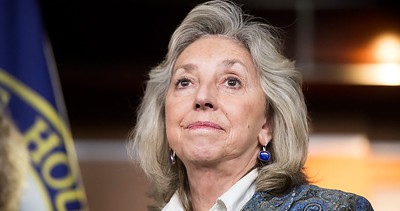
But $5,000 would allow the casinos to avoid the paperwork and red tape that halt a player’s enjoyment of the jackpot with the previous limit, which often can take 30 minutes or more. Last week, Nevada Representatives Democrats Dina Titus and Steven Horsford and Republican Mark Amodei, , were joined by Pennsylvania’s Guy Reschenthaler, and Maryland’s Anthony Brown in introducing the Shifting Limits on Thresholds (SLOT) ACT.

The effort has been a priority of the American Gaming Association for a few years, but it rarely reached the traction that it did last week.

“Today’s legislation is an important and commonsense step to modernize gaming regulations while supporting our industry’s full recovery,” stated American Gaming Association President and CEO Bill Miller. “Representatives Titus and Reschenthaler, along with the Congressional Gaming Caucus, are important champions of our industry and I appreciate their relentless efforts to address this outdated rule.”

Titus said the time has come to update the regulation.

“The current threshold for reporting slot winnings was set at $1,200 in 1977 and has not been updated in the 45 years since. If indexed for inflation, the threshold would be around $5,000. Due to inflation, the number of jackpots hitting that threshold, triggering a shutdown of the machine and necessitating excessive paperwork requirements for the patron, has increased dramatically,” said Titus. “This creates an unnecessary burden on the gaming industry, an economic driver for Southern Nevada and other communities nationwide where slot machines exist. While I believe appropriate taxes should be collected on winnings, raising the threshold would reduce paperwork and ensure this is accomplished more efficiently.”

In Pennsylvania, where gaming has expanded rapidly Reschenthaler says the lower limit hurts his state.

“The 1977 slot jackpot reporting threshold hurts both Pennsylvania’s gaming industry and its patrons,” he said. “Because the threshold has not kept up with inflation, it has resulted in a drastic increase in reportable jackpots, which trigger tax burdens for winners and compliance burdens for casinos. Increasing the threshold will eliminate this onerous red tape, ensuring the gaming industry can continue to support good-paying jobs and foster economic growth in southwestern Pennsylvania and across the country.”

In Nevada, Virginia Valentine, president of the Nevada Resort Association, said the bill would remove friction between the patrons and the casinos.

“It’s incredibly overdue and will be a welcomed move by guests and the resort industry as it reduces paperwork and streamlines the process for certain jackpots,” she said. “Any time you can make a process smoother and more efficient, it enhances the overall customer experience and increases the likelihood of a return visit.”

Station Casinos Breaks Ground On Durango Casino & Resort

Station Casinos and hundreds of its team members celebrated the future of Durango Casino & Resort with a ceremonial groundbreaking last week. The company also unveiled the resort’s new logo and icon and shared additional property renderings of its latest resort, which is slated to open in late 2023.

The groundbreaking ceremony included Red Rock Resorts, Inc. Chairman and CEO Frank J. Fertitta III, Vice Chairman Lorenzo J. Fertitta, and 300 team members amidst a pop-up preview of the casino resort, including inspirational hotel vignettes set across the construction site providing an innovative glimpse of what guests can expect. Additional executives attending included Scott Kreeger, president of Red Rock Resorts, Inc., Bob Finch, COO of Red Rock Resorts, Inc., and Bill Richardson, principal of W.A. Richardson Builders.

“Station Casinos is bullish on the local and overall Las Vegas gaming market, which is why we are investing $750 million in Durango Station,” said Kreeger. “This brick-and-mortar investment will create thousands of construction and permanent jobs, generating tens of millions of dollars in economic impact and tax revenue to the state and county.”

W.A. Richardson Builders, LLC has been selected as the project’s construction manager. The architect of record will be Las Vegas-based Friedmutter Group; both firms will be led by Station Casinos’ in-house design and construction teams. The company will also partner with various interior design firms, including Looney & Associates and Avenue ID, the designers responsible for the hotel lobby and bar, which the company unveiled last week.

Upon arrival, guests will immediately be greeted by natural stone-clad floors and walls, while the texture, light, and neutral tones flood the space. Durango’s inviting hotel lobby has relaxed energy and breeze while thoughtful design and warm light greet guests at the open doors. The stunning room effortlessly flows into the lobby bar, where cozy nooks, cool sofas, and one-of-a-kind art pieces create the perfect chemistry of conversations, relaxation, and a sense of place.

The lobby bar is a private oasis tucked away from the hotel’s main entrance. The lobby bar takes inspiration from travels worldwide and the beautiful palette of the desert landscape; the space exudes sophistication, simplicity, and softness. The lobby bar provides numerous seating groupings to create a collaborative environment, a place for guests to socialize and sip cocktails, plug-in and work, or dine, both inside and out.

Previously announced details about the project include:

  • 83,000 square feet of casino space offering the latest games and an open floorplan seamlessly blending indoor and outdoor socializing spaces
  • Hotel tower with over 200 beautiful guest rooms and suites
  • Four signature food and beverage outlets
  • Exciting food hall concept featuring fast-casual favorite restaurants and eateries
  • State-of-the-art race and sportsbook
  • Serene resort pool space with private cabanas and environmentally friendly event lawn
  • 20,000 square feet of meeting and convention space
  • 40 electric vehicle charging stations

• Multiple bike lanes to access the property with ample bike parking

Chicago Residents Oppose 78 Casino Project

A majority of survey respondents from Chicago’s South Loop and neighboring communities say they oppose a proposal that would put a casino in The 78 megadevelopment in the vicinity.

According to WBEZ News, about 74 percent of those surveyed said they are “highly unsupportive” of the casino proposal. More than 75 percent of respondents said a casino is not an appropriate use “for a healthy, vibrant riverfront.”

Last Tuesday, the 78 Community Advisory Council hosted a virtual meeting to share the results of the survey, which contacted 380 area residents. More than 100 community members joined the Zoom call.

Four other sites are on the table for a Windy City casino: the Lakeside Center of McCormick Place; the Marshaling Yards near McCormick Place; the Chicago Tribune printing site in River West; and the One Central development near Soldier Field.

“We believe it was important to take the temperature of folks in … South Loop, Chinatown, Pilsen and Bronzeville, regarding a proposal for casino as part of the 78,” said Josh Ellis, a member of The 78 council. Mayor Lori Lightfoot announced the council in December 2019 to serve “as a conduit for community input as construction moves forward over the next three years.”

Ellis told participants on the Zoom call that initially, “a casino was not part of the original proposal. It wasn’t part of anybody’s proposal in Chicago” until 2019, when the Illinois General Assembly passed a gaming expansion bill.

The survey showed that a minority of respondents were optimistic about new jobs and increased revenue for the city and state, but far more were opposed due to concerns about increased crime and traffic, gambling addiction among low-income residents and potential negative impacts on schoolchildren in the area. They also cited concerns that some local families would move from the neighborhood if the casino is built.

“This is got to be the absolute worst site they can possibly pick for a casino,” said Shadan Tofighi, a resident whose condo overlooks the future site of The 78. “I can’t imagine where in the world you would have a casino next to a neighborhood with an elementary school, a whole bunch of children’s activities, parks, and people who have been living there for 30 years or so.”

Elisa Bell, another South Loop resident who is also a child psychiatrist, agreed. “I can only imagine the increase in traffic, crime and the possibility of harm to our youth and community activities in that park and other places around in these areas. I’m really against this project because I foresee a lot of problems.”

A community group called South Loop Community Against a Casino is also collecting signatures for its petition opposing the gaming industry from coming to their community.

Scientific Games Rebrands as ‘Light & Wonder’

Scientific Games Corp. last week announced a rebranding of its company and its name—it will now do business as Light & Wonder, Inc., “a game company singularly focused on creating great games and leveraging technology to enable a seamless player experience across all platforms,” according to a press release.

It’s not the first rebranding for the company originally known as Bally Manufacturing, Inc. The slot supplier was subsequently Bally Gaming and Bally Technologies before its merger with lottery supplier Scientific Games.

The company is in the process of shedding the lottery business that was the origin of Scientific Games, which was founded in 1973. Last year, SG agreed to sell its lottery business to Brookfield Business Partners for $6.1 billion, and the name of the company was sold too. Gaming CEO Matt Wilson said the decision to re-brand was required since Brookfield valued the brand of Scientific Games in the lottery space.

It is also shedding its sports betting business, to Endeavor Group Holdings for $1.2 billion.

The name change is meant to emphasize its remaining core business of creating game content for brick-and-mortar casinos, online casinos and social casinos through its SciPlay division.

According to the company, Light & Wonder will a deliberate cross-platform approach to bring great game franchises to players anywhere, at any time including games in land-based casinos, online and mobile and in both real money and free-to-play social gaming markets.

“We are thrilled to introduce the world to Light & Wonder, a company that will build great games and franchises that offer players a seamless experience across platforms,” said CEO Barry Cottle, who celebrated the launch with employees at the company’s Las Vegas headquarters.

“Our powerful new strategy required a powerful new identity to distinguish us and our unique offerings and capabilities. Our new name and identity are born from our winning strategy to be the leading cross-platform game company and will inspire our people to make great products for our players.”

The new identity, Light & Wonder, was born out of the company’s strategic vision and input from key stakeholders. It also reflects the company’s focus on creating great content, hardware and systems that connect iconic titles across any place or channel.

Cottle said the new name “evokes the kind of feelings we want to capture in the work we do every day, excitement, inspiration, imagination and maybe even a little bit of magic and certainly a lot of fun.

“We already have a world-class team powered by the brightest game creators in the business, and in transforming into a growth company who invests in our people and products, we will serve our players even better wherever and whenever they play,” Cottle told the Wall Street Journal. “That’s where the world is trending because in iGaming, particularly in the United States, the land-based operators are getting digital licenses, and they want to provide their players 360-degree access to the games that they have.”

As part of the transformation, the company’s new website featuring iGaming and land-based casino products, technology and services will now be lnw.com. This new portal to the company offers a look at player-favorite games, as well as platforms, systems, player account management and hardware.

Light & Wonder will operate under an assumed name until a legal name change is complete in the spring. At that time, the company intends to start trading under a new stock ticker it has registered, LNW, on the Nasdaq.

The rebranding announcement came after Scientific Games’ fourth-quarter earnings call, in which it announced total revenues from continuing operations at $580 million, beating all analyst estimates.


“The better than expected quarter coupled with the announced share repurchase authorization should draw a positive reaction in the shares,” wrote analyst David Katz of Jefferies Equity Research. “Although we are generally maintaining our estimates, we expect that as the pending divestitures close in the coming 1-2 quarters, expectations should solidify and valuation should become clearer.”

Jeffries rated SG stock as a “buy,” with a price target of $96 per share, compared to $62 on the day of the report.

“It’s the way players play these days,” said company Chairman Jamie Odell at the earnings call. “They like to play on phones and play on screens. We’re already seeing increasing examples of where games are being launched, at the same time, across platforms, allowing all that extra dollar to come through and to get extra excitement of playing the same games on different platforms.

“So for us, it’s inevitable that that’s the way that play is going to go, and we’re going to facilitate it with great IP, great processes, great technology, and content, which we deliberately developed to make sure it can work easily across those platforms.”

Cottle added, “Operationally, we are very pleased with the strong performance we achieved in the quarter, which capped what was an outstanding year, as we grew double-digits on both top and bottom line and generated substantial cash flow while laying the foundation for future growth.”

In a GGB News exclusive, hear Light & Wonder Gaming CEO Matt Wilson explain the reasons and wisdom of the choice of Light & Wonder as the company’s name in this week’s GGB Podcast.

Alabama Senate Committee Approves Gambling Bill

The Alabama Senate Tourism Committee recently advanced a proposed constitutional amendment to permit a state lottery, sports betting, eight full casinos with slots and table games and two smaller venues.

The measure, plus a companion bill to establish a state gaming commission and draft operating rules, now goes to the state Senate. Similar legislation was approved last year but time ran out before it reached the House.

State Senator Greg Albritton, the bill’s sponsor, said the bill would give Alabamians a much-desired state lottery and “grab control” of gambling by allowing a limited number of casino sites. Alabama remains one of five states without a lottery. Albritton said, “The people have been ready for this vote for years.” If three-fifths of legislators approve the bill, a statewide referendum on the amendment would be held in November.

Casinos would be located at the four existing dog racetracks in Greene, Jefferson, Macon and Mobile counties and at venues operated by the Poarch Band of Creek Indians, who would be allowed to open another location in DeKalb or Jackson County. Also, two smaller casinos with 300 slots each would be allowed in Houston and Lowndes counties. Lottery revenue would go to education scholarships. Casino and sports betting revenue would fund broadband, health care and Medicaid expansion.

Under Albritton’s bill, online sports wagering revenue would be taxed at 20 percent. Retail and online sports betting operators would be required to be licensed by retail casinos, the bill said.

If approved, the measure would authorize Governor Kay Ivey to negotiate with Poarch Band representatives to amend the state’s gambling compact with the tribe. Ivey said she’d support the legislation if it reaches her desk.

Opponents argued the bill would essentially hand the casino licenses to a few select operators. State Rep. Kelvin Lawrence said, “We shouldn’t be, as a legislature, in the posture of picking winners and losers.” He said passing the measure would limit the number of machines in a county, leading to the closure of an existing facility in his county.

Lobbyist Heather Coleman Davis, representing another Greene County operation, said, “The competitive bid process that it mentions in this piece of legislation is actually more of a rigged bid process because the current owner is given the opportunity to offer one dollar over the winning bid to secure the license at the end of the day.”

Tourism Committee Chairman state Senator Del Marsh urged the House to take up the gambling proposal if it’s approved by the Senate. He said a lottery and casinos are the top issues constituents inquire about when he returns to his district. “I think the people of this state want to have something to vote on and make a decision on,” Marsh said.

In 2020, Governor Kay Ivey commissioned a study that showed a lottery could generate $300 million in annual tax revenue for the state; casino gaming could bring in $400 million; and sports betting could produce $10 million.