Archives: Articles

This is the example article

Pamunkeys Plan Temporary Virginia Casino

In Norfolk, Virginia, City Manager Chip Filer told the city council that state law would allow the Pamunkey Indian Tribe to apply for a temporary operating permit before its permanent $500 million HeadWaters Resort & Casino would open. The temporary facility would have to be located in the “footprint where the casino will be located.” The city’s Director of Economic Development Jared Chalk confirmed the Pamunkey Indian Tribe already has approached the city regarding a temporary license.

One site under consideration is the Norfolk Boxing + Fitness Center and the Hits at the Park Restaurant located at the Norfolk Tides stadium in Harbor Park. The boxing center has been closed since the Covid-19 pandemic began in March 2020 and the restaurant typically is only open when the Tides play. HeadWaters spokesman Jay Smith said, “The Pamunkey Indian Tribe, in coordination with the development of its HeadWaters Resort & Casino, is excited to discuss with the city of Norfolk the possibility of opening a restaurant and lounge with limited gaming. No decisions have been made at this point, but we will continue to have conversations with the city about this opportunity. We are ready to make a major investment in the stadium, create job opportunities and begin providing tax revenue to the city, if this is something they would like to pursue.”

Construction has not begun on the site. Chalk explained one reason is site work can’t begin until permits are issued. Also, the Virginia Lottery Board has yet to award any casino licenses. But Deputy City Manager Patrick Roberts said that’s expected in June or July, followed by a 2-year construction period.

The Pamunkey Tribe and developers are eager to open a temporary facility as soon as possible to get a jump on Portsmouth’s $300 million Rivers Casino, just seven miles away. It’s expected to open in February 2023. Filer said, “The mayor has stressed we don’t want a tent, we don’t want cargo containers, we don’t want a trailer with air conditioning in it. If you are going to something, we want to see it in a permanent spot. In something that looks good and represents the area. The restaurant and the boxing center I think are absolutely possibilities for that.”

Councilwoman Andria McClellan stated the boxing center must be relocated before the city commits to using the site for a casino. She noted boxing has been viewed as a way to help prevent gun violence. “We need a plan in place before we consider that. Where that boxing center goes and who pays for it,” she said.
Oregon Bill Would Curtail Greyhound Wagering

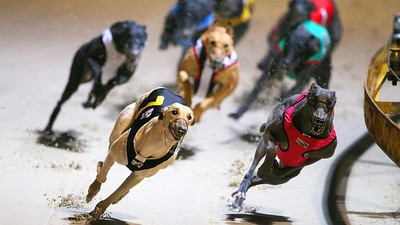
Oregon Senate President Peter Courtney recently introduced a bill that would make it illegal for sports betting operators to accept wagers on greyhound racing.

The senator is no fan of horse racing either, but knows he would be tilting at windmills if he tried to shut that industry down in his state. So he was satisfied for the moment to go after greyhound racing.

The Senate Judiciary and Ballot Measure 110 Implementation Committee held its first hearing on SB 1504 a week later. Nine states still allow live greyhound racing, and two of them are phasing it out. However, Oregon is a “multijurisdictional hub” for advance deposit wagering (ADW) operators that take parimutuel bets. So all greyhound racing bets come through Oregon.

Due to that, the Oregon Racing Commission would lose an estimated $7 million if SB 1504 becomes law.

Eventually the bill was amended until it was considerably different from the original draft. The part that punished operators for accepting dog racing bets was removed.

A part remained that banned future licensing of live greyhound races—of which there have been none for 18 years.

Courtney, who is retiring at the end of this year, included this statement about his now largely gelded bill: “The greyhound, which is a magnificent animal by anyone’s description, and one that I believe deserves our attention, because it is my understanding, from credible sources, the treatment of these animals is really very difficult to talk about.” He added, “They’re beaten very badly at times because they’re not winning, they’re doped, there are scratches all through their faces, they are put in cages that they cannot turn around in. I could go on and on. … I don’t want that in my state, I don’t like it, and I’m going to do everything I can to stop it.”

Rep. David Gomberg explained to US Bets what he thought happened with the bill: “Somebody got nervous,” he said. “If we eliminate the hubs, we would forgo a lot of money used for track veterinarians, state fairs, things like that.”

Churchill Downs and US Off-Track, which operate ADW wagering in the state, made large investments in lobbyists and the bill was largely revised.

Churchill Downs Requests New Indiana Location

In a recent presentation to the Indiana Gaming Commission, Churchill Downs officials requested moving its $260 million Vigo County casino from near Haute City Center to Margaret Avenue near Interstate 70 in Terre Haute. Churchill Downs Senior Vice President of Corporate Development Jason Sauer said the new east-side location is larger, more accessible and preferred by the public.

IGC General Counsel Dennis Mullen said a review of statutes and regulations indicated the location change did not require the approval of commissioners. However, commission staff requested that Churchill Downs officials provide an update due to the impact of the change.

Sauer noted the proposed 50-acre site is double the size of the initial property, which offers opportunities for later growth. Also, it’s in a thriving commercial area where additional development is planned. Also, Sauer said elected officials, citizens and other stakeholders urged Churchill Downs to build on the east end.

Before construction can start, the property has to be rezoned from agricultural to commercial use and the Federal Aviation Administration has to approve the project due to proximity to the airport. Also, a variance must be granted to exceed 125 feet in height. Sauer said Churchill Downs expects to close on the property in April or May after all land-use approvals and permits have been issued. Then ground could be broken in May, followed by a 14-month construction schedule.

Sauer said, “Suffice to say, we are extremely excited about entering the Indiana gaming market, but not just entering the market. It’s how we are doing it. We are extremely excited about this project. It’s been quite a while for the people of Vigo County for this casino to get off the ground.”

Georgia Senate Committee Approves Horseracing Bill

The Georgia Senate Regulated Industries Committee recently passed Senate Resolution 131, which would leave it to voters to allow horseracing. The committee also passed Senate Bill 212, which would establish a Georgia Horse Racing Commission to license and regulate up to five racetracks in the state. Similar legislation passed the Senate last year but stalled in the House.

A recent study by Georgia Southern University showed building three horseracing tracks would create a $1.28 billion industry and more than 8,500 jobs. Supporters said expanding gambling also would generate hundreds of millions of dollars to fund education, health care or rural broadband. Conservative and religious groups oppose expanding any form of gambling because they said it’s an addictive habit that breeds crime.

Constitutional amendments require approval from two-thirds of each chamber, then a voter referendum requiring a majority to approve allowing horseracing in the state.

SB 212 would tax total money wagered at a racetrack at 3.75 percent, to be used for gambling addiction services, education, health care and rural development.

Bettors could wager on real-time live races at a Georgia racetrack or another track simulcasting at the Georgia facility. Slots or other types of gambling would not be allowed.

Georgia Baptist Mission Board Lobbyist Mike Griffin, said, “This would probably be the lesser of three evils. My experience of being here through the years is that typically one thing leads to another. Two years from now there’s a possibility this group will be back here saying, ‘We’re going to have to add more types of gambling in here because we’re not making money.’”

Nebraska Legislative Committee Passes Casino Limits

The Nebraska legislature’s General Affairs Committee recently advanced a bill to allow casinos in the six Nebraska counties with licensed horseracing tracks: Douglas, Lancaster, Adams, Dakota, Hall and Platte, all in eastern and central Nebraska. The bill now moves to the full legislature.

According to the measure, operators wishing to develop a casino elsewhere in the state would have to wait for the Nebraska Racing and Gaming Commission to conduct a detailed study on the potential impact on the state, which would be due by January 1, 2025.

State Senator Tom Briese, committee chairman, said the measure strikes a balance with developers and communities that want to build casinos on one side, and gambling opponents concerned about casino saturation in the state. Previous proposals put specific limits on the number of casinos and the distance between locations. “I think we’ve truly reached a middle ground on this,” Briese said.

Florida Jai-Alai Fronton Keeps Sport Alive

Magic City Casino in Miami could become the last venue in the U.S. to offer professional jai-alai, the fastest ball sport in the world. Magic City Casino Chief Operating Officer Scott Savin said, “This is it, you know? If this fails, there will be no professional jai-alai in the United States so it’s sort of an all hands on deck.”

Savin added, “We have an incredibly dedicated roster of players,” like former Canes and National Football League player Tanard Davis, who turned to jai-alai to earn a living even though he’s not sure it will survive. Davis said, “We control the destiny of where jai-alai goes. If you ask anybody, ‘Would you want to be the last survivor on a sport where it has so much tradition?’ Yes.”

Younger players also are becoming more interested in playing jai-alai professionally, including second-generation player Chris Bueno. He said, “I think we’re adapting very well in the fact that now we have outlets that are putting us into these smart TVs and into other apps. Now we have eyes on us that weren’t watching us before.”

The sport, which started in the U.S. in the 1920s, gained a huge following in Florida and several other states in the ‘70s and ‘80s, after parimutuel betting was allowed on it.

Interest in jai-alai has faded but Savin said the sport may survive thanks to online betting and new streaming services. “We’re out to 105 million homes right now which is up from less than a million last year. LaLigaSportsTV in Spain, with 1.9 million subscribers, shows all our games. We put a video up on TikTok, in the first six weeks it had 10 million hits. Our goal is to get it in front of literally millions more people than have seen it over the last 20 years.”

Ever the optimist, Savin said, “We’re going to keep playing the game. We have a small niche following that seems to be building every day and we’re going national, we’re going international.”

Besides Magic City Casino, professional jai-alai is offered at frontons in Mexico, France and Spain.

Anti-Smoking Advocates Laud PA Bill

Anti-smoking advocates are applauding a bill introduced last week by Pennsylvania legislators that would remove the exemption provided to casinos from the state’s indoor smoking ban. The bill is sponsored by state Senator Jay Costa and Rep. Dan Frankel.

“We applaud Senator Costa and Rep. Frankel for prioritizing the health of casino workers who deserve to the same protections from deadly secondhand smoke as nearly every other worker in the commonwealth,” said Cynthia Hallett, president and CEO of Americans for Nonsmokers Rights.

“Getting rid of smoking in casinos is a win-win for workers and the industry, as we’ve seen several Pennsylvania casinos thrive while operating without indoor smoking—a common-sense decision supported by the majority of residents.”

AGA: March Madness Could Break Betting Records

The Super Bowl is in the rearview mirror. The NBA and NHL playoffs loom in the distance. And MLB is almost a month away from the first pitch.

That must mean March Madness is front and center. According to the American Gaming Association, the industry trade group, 17 percent of the adult population—or 45 million adults—will bet $3.1 billion on the tournament.

“There’s no doubt this year will generate the highest legal handle in March Madness history,” said AGA President and CEO Bill Miller in a statement.

Of the 45 million bettors, 20.9 million will wager at retail sportsbooks, online, with bookies or casually with friends. Also, 36.5 million will bet through bracket contests or similar pools. Americans could spend 76 percent of their betting budgets outside of brackets, up 55 percent from last year.

With new jurisdictions legalizing sports betting since last year’s tournament, 29 million more adults can legally wager in Arizona, Connecticut, Louisiana, Maryland, North Dakota, South Dakota, Washington, Wisconsin, and Wyoming.

“If you’re getting in on the action, have your game plan to bet responsibly. That means setting a budget, keeping it fun, learning the odds and playing legally,” Miller said.

This year, for the first time in AGA tracking, Americans plan to spend a greater share (76 percent) of their betting budget through non-bracket channels, up 21 percent from 2021.

New York Could Lower Sports Betting Taxes

A lot of folks thought the tax rate of 51 percent for New York sportsbooks was way too high. Yet in the early going this year, mobile betting still broke all records for handle. The state has generated $104.4 million in tax revenue from $3.16 billion in sports betting handle, according to PlayNY.

Not wishing to rest on the state’s laurels, Assemblyman Gary Pretlow introduced an amendment to lower the rate for online sportsbooks by bringing in additional skins over the next two years. Senator Joe Addabbo plans to introduce a matching amendment in the Senate, according to NY Online Gambling.

The bill calls for the number of approved sportsbooks from nine to at least 14 by January 31, 2023, which would lower the tax rate to 35 percent. Then push to reach a minimum of 16 skins by January 31, 2024, bringing the tax rate to 25 percent).

“Gary and I always had this vision of increased skins. We’ve done this well with only seven (recently eight) active. But that just goes to show you that more skins would possibly make us even more competitive,” Addabbo told PlayNY.

The next round of sportsbooks includes Bet365, Fanatics, Penn National Gaming/Barstool Sports, FoxBet and theScore, along with those who made no bid at all.

Pretlow’s bill also seeks more minority-controlled operators. Fanatics, which was left out, planned to name Jay-Z as vice chairman as well as being a board member. Minority policymakers have made their disappointment known for failing to bring in minorities.

Pretlow said the process made it difficult for smaller operators to compete in the state and made for a less diverse group of operators.

Losing bidders from the initial round of applicants would be automatically eligible to reapply, operators that did not bid in the first round also are eligible, the deadline for 2023 submissions is Sept. 1, and at least two licenses are reserved for businesses that are at least 5 percent minority owned.

“I think it will increase the sustainability of the market, but the tradeoff is likely less tax revenue, at least in the short term,” said policy analyst Ulrik Boesen of the nonprofit Tax Foundation.

Addabbo said, “If the intent is with the NYS Gaming Commission and the governor’s office to have this conversation, we should have it. But if there’s not then we’re going to stick to the 51 percent and the sound, solid base that we’ve already formed with mobile sports betting in NY.”

Insider Trading on Brady?

Westgate SuperBook Vice President Jay Kornegay is convinced some bettors knew Tom Brady was coming out of retirement when they placed big bets on his NFL team, the Tampa Bay Buccaneers.

Speaking to the Las Vegas Review-Journal, Kornegay said, “There’s not a doubt in my mind that they knew he was coming back when they placed those wagers” on March 10. Two days later, after all of 40 days in the rocking chair, Brady announced he would return to play for another season.

“It wasn’t a guy with a Tom Brady jersey at the counter,” said Kornegay. “It was a player that we would describe as sharp. With that type of play and the announcement we heard that he was unretiring, there was information that was shared prior to his official announcement.”

Kornegay said he’s certain “that information leaked,” giving those bettors an inside track and an unfair advantage. “I don’t think I’ve ever said the NFL really needs to investigate something,” he continued. “But this is something they need to look into and how it got out, because there are many books that took some sizable wagers in the middle of last week.”

Brian McCarthy, NFL vice president of communications, had no comment regarding Kornegay’s concerns. After Brady’s big announcement, the SuperBook lowered Tampa Bay from 14-1 to 10-1 to win the Super Bowl and from 7-1 to 5-1 to win the NFC. The SuperBook may have to pay out six figures in several states if Tampa Bay wins Super Bowl XVII.

“If it was Jameis Winston at quarterback, we wouldn’t have a problem with it,” Kornegay said. “But when it’s Tom Brady you have a six-figure liability with, we’re certainly not comfortable with it. That’s a biggie. It’s not about a player being in or out of a game tonight. You’re talking about the best quarterback of all time playing or not playing.”

At BetMGM, the Bucs’ odds to win the Super Bowl moved from +2500 to +850 when Brady announced he would return, ranking third behind the Buffalo Bills and Kansas City Chiefs. Tampa Bay is +375 to win the NFC for the second time in three seasons.

FanDuel Pulls Out of Connecticut DFS

FanDuel has voluntarily taken itself out of Connecticut’s daily fantasy market by letting its provisional license lapse February 27.

FanDuel confirmed to LSR that its contests won’t return until the approach of the NFL season. According to the company, a change in state regulations meant FanDuel could not offer paid-entry contests.

“The new regs required us to make some changes to our DFS platform that need engineering time to complete.”

A new DFS license will not be required as the new licenses for all three gaming options are rolled into one.

But Connecticut’s Department of Consumer Protections denied that any regs were changed. Both FanDuel and DraftKings had issues with the apps, which the regulators treat like gambling apps.

The primary issue is a 30-minute pop-up requirement designed to get the players to take a break and log out. The two-element authentication also is a problem.

Connecticut is the only state that requires this for DFS, which makes it a bit harder to implement given the single platform used across the country,

DraftKings daily fantasy app is still available for Connecticut players.

End of In-Person Signups Could Mean Explosion in Illinois Sports Bets

Just in time for March Madness, on Saturday, March 5, Illinois permanently eliminated the in-person registration requirement for sports betting. Analysts said online betting could result in a record $1 billion in legal sports bets in Illinois this month.

PlayIllinois.com analyst Joe Boozell said, “People are not willing to drive to a casino or retail sportsbook, in order to sign up for a sports betting account. This change will allow Illinois to reach its full potential as a sports betting state.”

Illinois lawmakers approved sports wagering in 2019 as one provision of a comprehensive gambling expansion bill; however, unlike most states, the new law required customers to sign up at a casino sportsbook in order to place an online wager. Rivers Casino Des Plaines was the first casino to open a sportsbook, in March 2020, and later was the first to offer mobile sports betting, in June 2020, as casinos remained closed due to Covid-19. Governor J.B. Pritzker temporarily suspended the in-person registration requirement, allowing bettors to create accounts and wager online. But he reinstated it in April 2021 as Covid-19 restrictions eased statewide.

The state has nine operating retail sportsbooks, with seven that offer online sports betting; three more are expected to launch soon. Observers said the 10-month waiver on in-person registration enabled FanDuel and DraftKings to advertise heavily in Chicago, sign up new mobile customers and become the top-grossing sportsbooks in the state. They partner with downstate brick-and-mortar facilities venues.

According to the Illinois Gaming Board, more than $7 billion was wagered in Illinois last year, with about 95 percent of wagers placed online. The sportsbooks generated $525 million in adjusted gross, with the state receiving tax revenue of $79 million and Cook County receiving about $6 million.

Chris Grove, a partner with the California-based research and consulting firm Eilers & Krejcik Gaming, said remote registration will benefit FanDuel, DraftKings and BetMGM the most. He said they already have begun aggressive advertising campaigns to sign up Chicago customers. Grove stated, “We’ll definitely see an uptick in marketing in Illinois. Your ability to capitalize on that marketing as an operator increases by several orders of magnitude if all you need to do is to get someone to download an app as opposed to drive into East St. Louis.”

DraftKings Director of Sportsbook Operations Johnny Avello said, “Mobile registration is an important factor for the success of legalized sports betting in Illinois. We are thrilled that the legislature has lifted the artificial barrier of in-person registration and is now allowing customers to register their DraftKings Sportsbook accounts remotely.”

In addition to Rivers Casino Des Plaines’ BetRivers, Chicago-area online sportsbooks include PointsBet, partnered with Hawthorne Race Course in Stickney; Caesars Sportsbook at Grand Victoria Casino in Elgin; and Barstool Sportsbook at Hollywood Casino Aurora. In December, the city of Chicago approved sports betting at sports venues, eventually allowing a DraftKings sportsbook at Wrigley Field and a FanDuel sportsbook at the United Center.

The Illinois Gaming Board recently approved BetMGM, the nation’s third-largest sportsbook behind FanDuel and DraftKings, as the online sports betting platform for Par-A-Dice Casino in East Peoria. Its online app, which went live March 5, is Illinois’ seventh online sportsbook. Observers said BetMGM’s launch will drive more sportsbook promotions and more competitive offers.

“Illinois has had one of the weirdest sports betting rollouts in the country, but it’s also one of the most successful markets. Illinois is so populous and has such rabid fan bases, it’s a recipe for a robust market,” Boozell said.

Still, many people are worried that easy access to mobile apps will lead to underage gambling. Illinois Council on Problem Gambling Administrator Bill Johnson noted calls to Illinois gambling helplines, especially from younger men, have sharply increased since sports betting was made legal in 2020.

Johnson said although sports betting apps utilize a variety of security measures and players must be at least 21 years old to place a legal sports wager, “A lot of our young people in the world today are very tech savvy. So I imagine this going to be an issue for us down the road.”

MLB Players Got Three Gambling Concessions in Contract

When MLB and the players union hammered out a new collective bargaining agreement, players negotiated three new concessions pertaining to sports gambling, according to US Bets.

In July 2019 Benjamin Tucker Patz, a professional gambler known as Parlay Patz, threatened to kill members of the Tampa Bay Rays after they lost a game to the Chicago White Sox. Although such threats are rare, that they exist at all in a new era where sports betting is becoming so prevalent is reason enough to take steps to protect players.

The new CBA addresses this: “All clubs will be required to institute enhanced ballpark safety measures [and] a hotline will be developed for the purpose of reporting threats made against players or their families relating to sports betting.”

Another sports betting related issue deals with the sale of biometric data: the clause states “it shall be illegal for Major League Baseball and any club to sell and/or license a player’s confidential medical information, personal biometric data, or any nonpublic data used to evaluate player performance in practices or training sessions.”

The third clause gives players the right to sign deals and partnerships with   gambling operators in the same manner teams and leagues do. MLBPA negotiator Bruce Meyer said last week that the new CBA “allows players to profit from their names and likeness in new ways.”

South Carolina Lawmakers Propose Mobile Horse Race Betting

South Carolina state Rep. Russell Ott has sponsored a bill allowing legal betting on horseraces online. Revenue would be taxed at 10 percent and money raised would support the horse industry in the state. Betting would be limited to three online apps. Gamblers would be required to create and deposit money into an account before they could place a bet. The bill also was filed in the Senate.

Ott said, “We are not talking about opening casinos. We’re not talking about different forms of brick-and-mortar or bookies or even walking up to a teller at a horserace and placing a bet.”

He added, the state would select who “operates these different types of activities on your mobile device, where folks can go in the privacy of their home and place wagers on races across the country.”

Ott acknowledged getting the legislation passed will be a challenge. South Carolina did not allow school raffles and church cakewalks until 2015. But he stressed his bill does not “open up gambling like the wild, wild west.”

State Senator Katrina Shealy, the Senate sponsor, said South Carolinians already are wagering online.

“It’s technically illegal,” she points out, “but a lot of people are doing it. People who are going to gamble are going to gamble.” She noted revenue from online horserace wagering would go toward a “legitimate good cause.”

The legislation would establish a seven-member commission that would license and regulate up to three sports betting companies. The commission would distribute the state’s share of the winnings to applicants to support

public equestrian trails, college equestrian sports and veterinarian programs, equine therapy programs for veterans and troubled teens and inmate groomer-training programs, among possibilities. Other uses for the funds include incentives for owners to keep their horses in South Carolina.

A House-Senate committee studied the state’s equine industry before writing the measure. Ott, who served on the committee, said, “We have a very proud history of horse ownership and horseracing in the state of South Carolina. But unfortunately, we have lost ground to other states that have been able to offer incentives to their different communities through raising revenue through things like advance deposit wagering.”

House Minority Leader Todd Rutherford, who’s long advocated for legalizing sports betting, said it’s about personal freedom.

Observers said if the bill passes, it’s likely to be vetoed by Governor Henry McMaster, who in 2000 opposed the creation of a state lottery.

Ohio Regulators Release Batch 5 Sports Betting Rules

The Ohio Casino Control Commission recently released its fifth batch of proposed sports wagering rules. Batch 5 rules focus on supplemental Type-A and Type-B proprietor licensing, required procedures and general proprietor duties. Public comment on Batch 5 will be accepted through March 18.

The new rules state the OCCC can issue additional Type-A sports gaming proprietor licenses if the applicant meets specific requirements, such as showing “a substantial, considerable and ongoing need for additional Type-A sports gaming proprietors” based on proven market data and any additional information requested by the OCCC.

In addition, a facility in a county with a population of 50,000 to 100,000 can receive a Type-B sports betting license if the county received at least 5 million visitors for tourism.

The Batch 5 rules also address general proprietor duties regarding sports gaming systems, sports gaming accounts, wagering rules, tickets, reserve funds, tournaments, advertising, promotions and bonuses, sports gaming event and wager type requests, sports governing body prohibited persons, sports governing body data requests, state university data requests, information technology, the security and safety of confidential information, incident reporting, accounting and revenue audits, external audits and other reports and internal audit.

The rules also address patron complaints, stating that sports wagering proprietors must notify a patron of their right to file a written complaint whenever a sports gaming proprietor refuses to pay alleged winnings or if a patron’s sports betting account, wagers, wins or losses is disputed.

Sports betting is not expected to go live in Ohio until later this year. Governor Mike DeWine signed bill HB 29 into law on December 22; it states sports betting must start by January 1, 2023.

Rules have been released in batches according to subject matter. Batch 4 rules were released February 22.

Massachusetts Senate Continues to Block Sports Betting

Some Massachusetts legislators blame their colleagues in the Senate and Senate President Karen Spilka for stalling legal sports betting in the Bay State.

The House has voted twice in the last two years to advance such legislation, which has foundered in the Senate. House Speaker Ron Mariano says he’d like to negotiate with the Senate on the bill, but says no one is willing to take him up on it.

The speaker recently told Bloomberg, “It’s extremely frustrating, the amount of money we’re leaving on the table by just this stubborn reluctance to take the bill up.” He continued, “We have, I think, a good bill. Obviously, I’m willing to negotiate. But it takes two people to negotiate.”

The Senate president has a history of opposing gaming legislation. Recently, after the House overwhelmingly passed sports betting legislation by a vote of 156 to 3, Spilka commented, “Some senators want to do it, some are uncertain they want to do it.”

Senator Michael Rodrigues, chairman of the committee that holds the bill, said, “We are actively engaged in discussions and meetings with all the principals. It’s very complicated. It’s very broad. And we’re processing it.”

Spilka herself commented that senators are still divided and she is waiting for a consensus to develop. Massachusetts Governor Charlie Baker, who leaves office at the end of this year, has said he would like to sign a sports betting bill before he leaves.

Missouri Legislature Takes Up Sports Betting Bills

The Missouri Senate Appropriations Committee recently reviewed three sports betting bills but took no action. Two of the bills, SB 1046 and SB 1061, are the same as House legislation, HB 2502. The House Administrative Oversight Committee previously passed that measure in a 13-1 vote, advancing it to the House floor.

State Rep. Dan Houx, the bill’s sponsor, said, “I feel confident we’ll get it out of the House.” Previously, Houx’s measure passed out of the Special Committee on Public Policy. That committee’s chairman, state Rep. Dan Cupps, still wants an amendment directing payment to rural counties where online bets originate. “We’re working through that but we don’t believe it’s constitutional,” Houx said.

In addition, Houx said the proposed 10 percent tax rate on sports betting still is lower than some than some legal jurisdictions, but he believes it’s in line with neighboring states like Iowa and Illinois.

In the Senate, SB 1046, sponsored by state Senator Dan Hegeman, and SB 1061, sponsored by state Senator Tony Luetkemeyer, would legalize retail sports betting at the state’s 13 casinos. Thirty-nine skins would be allowed, including one to each of the six professional teams in the state, with the rest divided among the six Missouri casino operators.

Like Houx’s House measure, sports betting revenue would be taxed at 10 percent. Also like Houx’s, bill, the Senate bills are backed by a coalition including the state’s professional sports teams, casinos and the Sports Betting Alliance. St. Louis Cardinals President Bill DeWitt III said, “We want to make sure there is no temptation for fans to go to other states for better pricing, or have taxes choke the economics of the operators who we need to be successful.”

The third Senate bill, SB 643, sponsored by state Rep. Denny Hoskins, would legalize retail sports betting at the state’s casinos and give them each one online skin. Also, it would allow the Missouri Lottery to offer retail parlay bets. The bill includes a tax rate of 21 percent which is the same rate for casino gaming revenue. A legislative fiscal note estimated Hoskins’ proposal could generate $163 million for the state; Luetkemeyer said his measure could produce $21 million.

Minnesota Sports Betting Bill Moves Ahead

In Minnesota, the House Committee on Government Finance & Elections voted 7-5 to move the sports betting bill HF 778 to the Senate Judiciary Committee. The bill is sponsored by Democratic state Rep. Zack Stephenson and Republican state Rep. Pat Garofalo.

Stephenson said, “This legislation will bring about the most significant change to Minnesota’s gaming laws in many years. State lawmakers in the Minnesota House have crafted a thoughtful bill based on respectful consultation with sovereign tribal nations, professional sports teams, experts in problem gaming and many other stakeholders. This is the year we get sports betting done in Minnesota.”

Garofalo added, “The current sports gambling black market is indefensible. A majority of states have abandoned the underground market and instead chosen a legalized sports gambling marketplace. It is time for Minnesota to do the same.”

The proposed legislation would allow Minnesotans aged 21 and older to place bets on-site or online. Revenue would be used to fund a regulated market, provide grants to address problem gaming and sports integrity and provide grants to youth sports teams in areas with high juvenile crime.

Earlier attempts to legalize sports betting have faced opposition from the state’s 11 tribal casinos. However, this bill would create two master mobile sports betting licenses with 20-year terms, which would go to the state’s Native American tribes. The tribes could then receive up to 11 operator permits for online sportsbooks and could partner with third-party platform providers to conduct mobile wagering.

Stephenson explained, “This bill includes both brick-and-mortar sports betting at tribal casinos, as well as statewide mobile sports betting operated by the tribes in partnership with commercial operators. To put that in plain terms, if this bill passes, Minnesotans will be able to visit sports betting lounges at casinos all across Minnesota and they’ll also be able to wager on sports on their smartphones anywhere in the state.”

Minnesota Indian Gaming Association Executive Director Andy Platto said, “Tribal leaders hope to soon be as comfortable with the details as they currently are with the general framework. HF 778 in its current form recognizes that tribes as the states gaming experts are in best position to operate Minnesota’s sports wagering market.”

A similar bill pending in the Senate would allow racetracks to apply for sports betting licenses, but tribes are not likely to give up control of the lucrative market. Sam Krueger, executive director of the Electronic Gaming Group, said the Senate bill “picks winners and losers in this industry. We are not against sports betting. We are against bills that allow our chief competitors, the tribes, to vastly expand outside of their existing jurisdictions without allowing the charities a reasonable path to compete and grow going forward.”

Opponents of HF 778 include the group Citizens Against Gambling Expansion. Spokesman Jake Grassel said the bill could lead to increased addiction which would impact state finances. He said, “By creating a marketplace for this next generation to gamble from their couch, coffee shop or dorm room, we are creating a generation that will lose their hard-earned monies and likely their future to betting on entertainment.”

Stephenson told the committee illegal sports betting already is happening in Minnesota and that 40 percent of sports betting tax revenue would go to treating problem gambling. He said, “We need to be honest here. Most people can gamble without issue, but for a small subset it is a real problem. We would devote more resources than ever before to confronting this problem.”

Kentucky House Committee Passes Sports Wagering Bill

The Kentucky General Assembly’s Licensing, Occupations and Administrative Regulations Committee unanimously approved HB 606, a sports betting bill that would legalize retail and online sports betting, daily fantasy sports and online poker. Sports betting would be allowed at licensed Kentucky horseracing tracks and the Kentucky Speedway. The bill now moves to the House floor.

The bill’s sponsor, state Rep. Adam Koenig, earlier said, “Certainly the votes are there on the House floor. It’s a matter of getting my fellow Republicans to see the importance of it, the freedom aspect, the need to provide support and protections for our citizens. I’m hopeful, but I’ve learned that I may like and want to legalize sports betting, but I may not be the best line maker.”

Koenig noted gamblers spend billions of dollars illegally in the state each year. “I think it’s important to bring those people out of the shadows, to dry up the black market, and make sure the people of the state have the benefits of their government protecting them,” he said.

The measure would tax sportsbooks at 9.75 percent and online sports wagering at 14.25 percent. Koenig said sports betting could deliver $20 million in annual tax revenue for the state. Unlike his three previously submitted sports betting bills, Koenig’s measure does not include an in-person registration requirement for online betting.

Last year, Governor Andy Beshear said he would sign sports betting legislation. A recent poll conducted by advocacy group Kentucky Sports Betting Now found 65 percent of Kentucky residents support sports betting.

Koenig sponsored two other gambling bills this session. One proposes a 1.5 percent tax on all parimutuel bets, including historical horseracing, simulcast bets and advance-deposit wagering. Another would create a $225 million fund to provide problem gambling services, to be paid for out of the state’s 2021 settlement with an internet gambling site.

Another bill, sponsored by state Rep. Killian Timoney, would ban slot-like gray machines that have proliferated in convenience stores across the state.

Sports Betting Allowed At New Orleans Fair Grounds

The New Orleans city council recently voted 5-0 to end the 17-year ban on sports betting at the New Orleans Fair Grounds, owned by Churchill Downs Inc. Previously only horseracing and slot machines were offered at the venue. The vote brings the track in line with other casinos in the state that offer sportsbooks.

Following the vote, Fair Grounds General Manager Doug Shipley said, “We need it because all our competitors have it. We’re the only ones that don’t have it. It’s not going to be like a Harrah’s-Caesars type of mega-sportsbook. This is more or less just to serve the folks who are already there.”

The city planning commission previously recommended approval, noting Churchill’s plans did not require new construction. Shipley said a sportsbook would be set up with two dozen televisions in an existing 1,500-square-foot multi-purpose event space.

In 2005, the city council allowed Fair Grounds owner Churchill Downs Inc. to add slot machines at the facility. However, council members stipulated no wagers could be taken on televised sports other than horseracing.

In 2020, parishes were allowed to hold referendums to determine if they wanted to allow sports betting at casinos and online. Most approved by a wide margin, including Orleans Parish.

The planning commission released a report including several letters of support from nearby residents. However, two members of the Fairgrounds Citizens Advisory Committee stated Churchill Downs had not complied with other rules in 2005 and had not fully complied with its commitment to pay for a 4-officer, 24/7 New Orleans police patrol. In response, Shipley said Churchill Downs pays $600,000 a year for the patrol.